Tag: Gemini 1.5 Pro

  • NotebookLM’s Audio Overviews: Turning Documents into AI-Generated Podcasts

    NotebookLM’s Audio Overviews: Turning Documents into AI-Generated Podcasts

    In the span of just over a year, Google’s NotebookLM has transformed from a niche experimental tool into a cultural and technological phenomenon. Its standout feature, "Audio Overviews," has fundamentally changed how students, researchers, and professionals interact with dense information. By late 2024, the tool had already captured the public's imagination, but as of January 6, 2026, it has become an indispensable "cognitive prosthesis" for millions, turning static PDFs and messy research notes into engaging, high-fidelity podcast conversations that feel eerily—and delightfully—human.

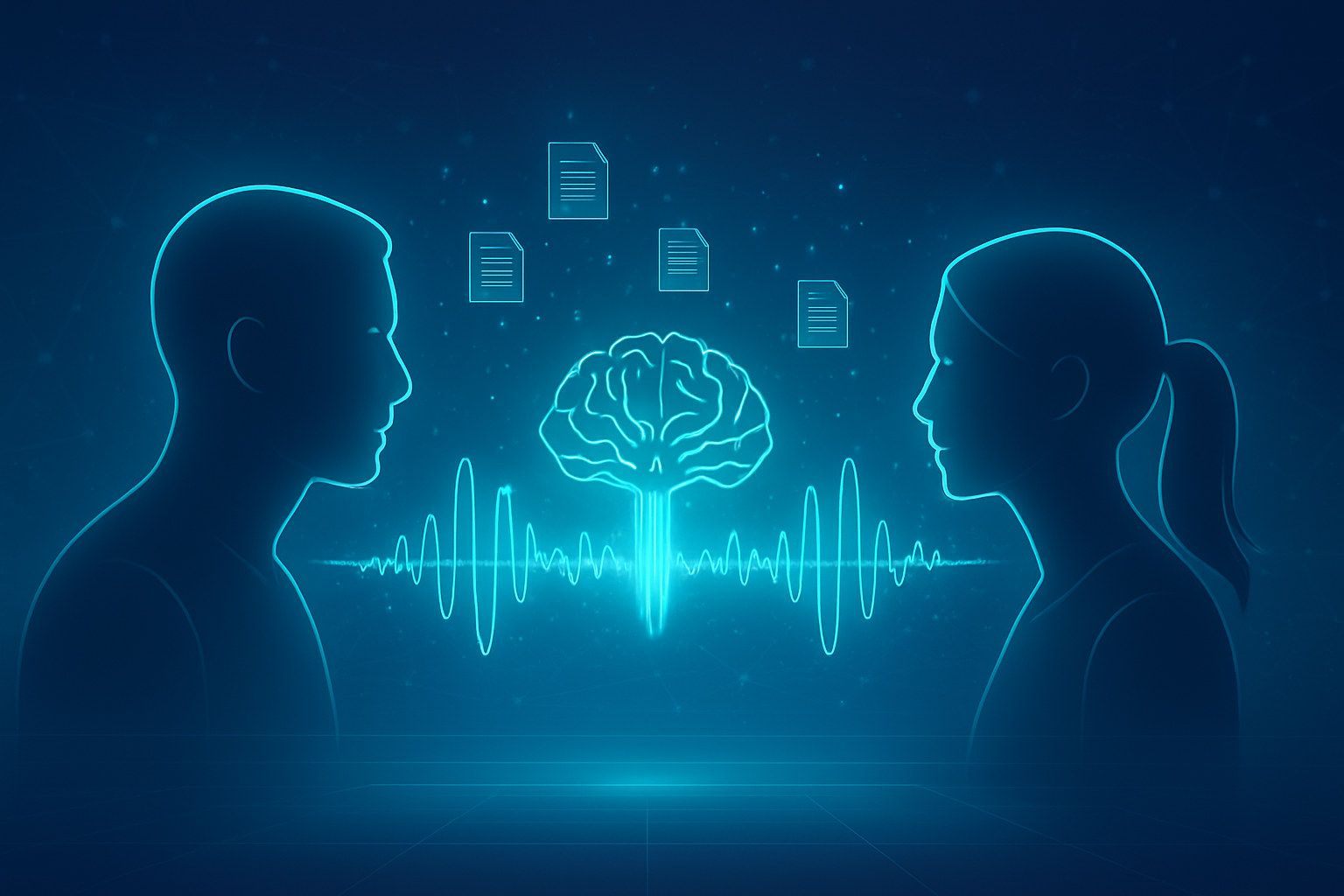
    The immediate significance of this development lies in its ability to bridge the gap between raw data and human storytelling. Unlike traditional text-to-speech tools that drone on in a monotonous cadence, Audio Overviews leverages advanced generative AI to create a two-person banter-filled dialogue. This shift from "reading" to "listening to a discussion" has democratized complex subjects, allowing users to absorb the nuances of a 50-page white paper or a semester’s worth of lecture notes during a twenty-minute morning commute.

    The Technical Alchemy: From Gemini 1.5 Pro to Seamless Banter

    At the heart of NotebookLM’s success is its integration with Alphabet Inc. (NASDAQ: GOOGL) and its cutting-edge Gemini 1.5 Pro architecture. This model’s massive 1-million-plus token context window allows the AI to "read" and synthesize thousands of pages of disparate documents simultaneously. Unlike previous iterations of AI summaries that provided bullet points, Audio Overviews uses a sophisticated "social" synthesis layer. This layer doesn't just summarize; it scripts a narrative between two AI personas—typically a male and a female host—who interpret the data, highlight key themes, and even express simulated "excitement" over surprising findings.

    What truly sets this technology apart is the inclusion of "human-like" imperfections. The AI hosts are programmed to use natural intonations, rhythmic pauses, and filler words such as "um," "uh," and "right?" to mimic the flow of a genuine conversation. This design choice was a calculated move to overcome the "uncanny valley" effect. By making the AI sound relatable and informal, Google reduced the cognitive load on the listener, making the information feel less like a lecture and more like a shared discovery. Furthermore, the system is strictly "grounded" in the user’s uploaded sources, a technical safeguard that significantly minimizes the hallucinations often found in general-purpose chatbots.

    A New Battleground: Big Tech’s Race for the "Audio Ear"

    The viral success of NotebookLM sent shockwaves through the tech industry, forcing competitors to accelerate their own audio-first strategies. Meta Platforms, Inc. (NASDAQ: META) responded in late 2024 with "NotebookLlama," an open-source alternative that aimed to replicate the podcast format. While Meta’s entry offered more customization for developers, industry experts noted that it initially struggled to match the natural "vibe" and high-fidelity banter of Google’s proprietary models. Meanwhile, OpenAI, heavily backed by Microsoft (NASDAQ: MSFT), pivoted its Advanced Voice Mode to focus more on multi-host research discussions, though NotebookLM maintained its lead due to its superior integration with citation-heavy research workflows.

    Startups have also found themselves in the crosshairs. ElevenLabs, the leader in AI voice synthesis, launched "GenFM" in mid-2025 to compete directly in the audio-summary space. This competition has led to a rapid diversification of the market, with companies now competing on "personality profiles" and latency. For Google, NotebookLM has served as a strategic moat for its Workspace ecosystem. By offering "NotebookLM Business" with enterprise-grade privacy, Alphabet has ensured that corporate data remains secure while providing executives with a tool that turns internal quarterly reports into "on-the-go" audio briefings.

    The Broader AI Landscape: From Information Retrieval to Information Experience

    NotebookLM’s Audio Overviews represent a broader trend in the AI landscape: the shift from Retrieval-Augmented Generation (RAG) as a backend process to RAG as a front-end experience. It marks a milestone where AI is no longer just a tool for answering questions but a medium for creative synthesis. This transition has raised important discussions about "vibe-based" learning. Critics argue that the engaging nature of the podcasts might lead users to over-rely on the AI’s interpretation rather than engaging with the source material directly. However, proponents argue that for the "TL;DR" (Too Long; Didn't Read) generation, this is a vital gateway to deeper literacy.

    The ethical implications are also coming into focus. As the AI hosts become more indistinguishable from humans, the potential for misinformation—if the tool is fed biased or false documents—becomes more potent. Unlike a human podcast host who might have a track record of credibility, the AI host’s authority is purely synthetic. This has led to calls for clearer digital watermarking in AI-generated audio to ensure listeners are always aware when they are hearing a machine-generated synthesis of data.

    The Horizon: Agentic Research and Hyper-Personalization

    Looking forward, the next phase of NotebookLM is already beginning to take shape. Throughout 2025, Google introduced "Interactive Join Mode," allowing users to interrupt the AI hosts and steer the conversation in real-time. Experts predict that by the end of 2026, these audio overviews will evolve into fully "agentic" research assistants. Instead of just summarizing what you give them, the AI hosts will be able to suggest missing pieces of information, browse the web to find supporting evidence, and even interview the user to refine the research goals.

    Hyper-personalization is the next major frontier. We are moving toward a world where a user can choose the "personality" of their research hosts—perhaps a skeptical investigative journalist for a legal brief, or a simplified, "explain-it-like-I'm-five" duo for a complex scientific paper. As the underlying models like Gemini 2.0 continue to lower latency, these conversations will become indistinguishable from a live Zoom call with a team of experts, further blurring the lines between human and machine collaboration.

    Wrapping Up: A New Chapter in Human-AI Interaction

    Google’s NotebookLM has successfully turned the "lonely" act of research into a social experience. By late 2024, it was a viral hit; by early 2026, it is a standard-bearer for how generative AI can be applied to real-world productivity. The brilliance of Audio Overviews lies not just in its technical sophistication but in its psychological insight: humans are wired for stories and conversation, not just data points.

    As we move further into 2026, the key to NotebookLM’s continued dominance will be its ability to maintain trust through grounding while pushing the boundaries of creative synthesis. Whether it’s a student cramming for an exam or a CEO prepping for a board meeting, the "podcast in your pocket" has become the new gold standard for information consumption. The coming months will likely see even deeper integration into mobile devices and wearable tech, making the AI-generated podcast the ubiquitous soundtrack of the information age.


    This content is intended for informational purposes only and represents analysis of current AI developments.

    TokenRing AI delivers enterprise-grade solutions for multi-agent AI workflow orchestration, AI-powered development tools, and seamless remote collaboration platforms.
    For more information, visit https://www.tokenring.ai/.
  • The Omni Era: How Real-Time Multimodal AI Became the New Human Interface

    The Omni Era: How Real-Time Multimodal AI Became the New Human Interface

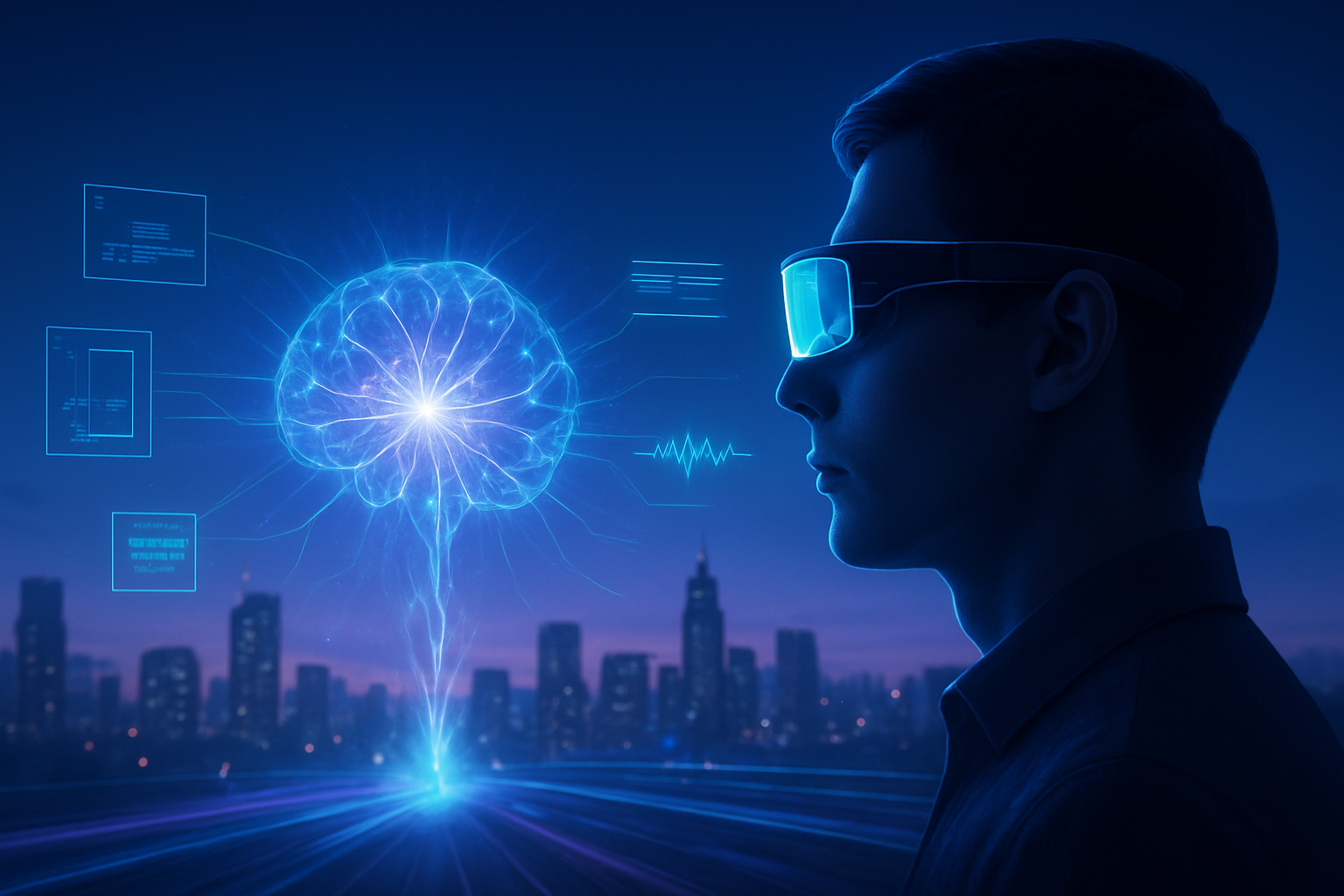
    The era of "text-in, text-out" artificial intelligence has officially come to an end. As we enter 2026, the technological landscape has been fundamentally reshaped by the rise of "Omni" models—native multimodal systems that don't just process data, but perceive the world with human-like latency and emotional intelligence. This shift, catalyzed by the breakthrough releases of GPT-4o and Gemini 1.5 Pro, has moved AI from a productivity tool to a constant, sentient-feeling companion capable of seeing, hearing, and reacting to our physical reality in real-time.

    The immediate significance of this development cannot be overstated. By collapsing the barriers between different modes of communication—text, audio, and vision—into a single neural architecture, AI labs have achieved the "holy grail" of human-computer interaction: full-duplex, low-latency conversation. For the first time, users are interacting with machines that can detect a sarcastic tone, offer a sympathetic whisper, or help solve a complex mechanical problem simply by "looking" through a smartphone or smart-glass camera.

    The Architecture of Perception: Understanding the Native Multimodal Shift

    The technical foundation of the Omni era lies in the transition from modular pipelines to native multimodality. In previous generations, AI assistants functioned like a "chain of command": one model transcribed speech to text, another reasoned over that text, and a third converted the response back into audio. This process was plagued by high latency and "data loss," where the nuance of a user's voice—such as excitement or frustration—was stripped away during transcription. Models like GPT-4o from OpenAI and Gemini 1.5 Pro from Alphabet Inc. (NASDAQ: GOOGL) solved this by training a single end-to-end neural network across all modalities simultaneously.

    The result is a staggering reduction in latency. GPT-4o, for instance, achieved an average audio response time of 320 milliseconds—matching the 210ms to 320ms range of natural human conversation. This allows for "barge-ins," where a user can interrupt the AI mid-sentence, and the model adjusts its logic instantly. Meanwhile, Gemini 1.5 Pro introduced a massive 2-million-token context window, enabling it to "watch" hours of video or "read" thousands of pages of technical manuals to provide real-time visual reasoning. By treating pixels, audio waveforms, and text as a single vocabulary of tokens, these models can now perform "cross-modal synergy," such as noticing a user’s stressed facial expression via a camera and automatically softening their vocal tone in response.

    Initial reactions from the AI research community have hailed this as the "end of the interface." Experts note that the inclusion of "prosody"—the patterns of stress and intonation in language—has bridged the "uncanny valley" of AI speech. With the addition of "thinking breaths" and micro-pauses in late 2025 updates, the distinction between a human caller and an AI agent has become nearly imperceptible in standard interactions.

    The Multimodal Arms Race: Strategic Implications for Big Tech

    The emergence of Omni models has sparked a fierce strategic realignment among tech giants. Microsoft (NASDAQ: MSFT), through its multi-billion dollar partnership with OpenAI, was the first to market with real-time voice capabilities, integrating GPT-4o’s "Advanced Voice Mode" across its Copilot ecosystem. This move forced a rapid response from Google, which leveraged its deep integration with the Android OS to launch "Gemini Live," a low-latency interaction layer that now serves as the primary interface for over a billion devices.

    The competitive landscape has also seen a massive pivot from Meta Platforms, Inc. (NASDAQ: META) and Apple Inc. (NASDAQ: AAPL). Meta’s release of Llama 4 in early 2025 democratized native multimodality, providing open-weight models that match the performance of proprietary systems. This has allowed a surge of startups to build specialized hardware, such as AI pendants and smart rings, that bypass traditional app stores. Apple, meanwhile, has doubled down on privacy with "Apple Intelligence," utilizing on-device multimodal processing to ensure that the AI "sees" and "hears" only what the user permits, keeping the data off the cloud—a move that has become a key market differentiator as privacy concerns mount.

    This shift is already disrupting established sectors. The traditional customer service industry is being replaced by "Emotion-Aware" agents that can diagnose a hardware failure via a customer’s camera and provide an AR-guided repair walkthrough. In education, the "Visual Socratic Method" has become the new standard, where AI tutors like Gemini 2.5 watch students solve problems on paper in real-time, providing hints exactly when the student pauses in confusion.

    Beyond the Screen: Societal Impact and the Transparency Crisis

    The wider significance of Omni models extends far beyond tech industry balance sheets. For the accessibility community, this era represents a revolution. Blind and low-vision users now utilize real-time descriptive narration via smart glasses, powered by models that can identify obstacles, read street signs, and even describe the facial expressions of people in a room. Similarly, real-time speech-to-sign language translation has broken down barriers for the deaf and hard-of-hearing, making every digital interaction inclusive by default.

    However, the "always-on" nature of these models has triggered what many are calling the "Transparency Crisis" of 2025. As cameras and microphones become the primary input for AI, public anxiety regarding surveillance has reached a fever pitch. The European Union has responded with the full enforcement of the EU AI Act, which categorizes real-time multimodal surveillance as "High Risk," leading to a fragmented global market where some "Omni" features are restricted or disabled in certain jurisdictions.

    Furthermore, the rise of emotional inflection in AI has sparked a debate about the "synthetic intimacy" of these systems. As models become more empathetic and human-like, psychologists are raising concerns about the potential for emotional manipulation and the impact of long-term social reliance on AI companions that are programmed to be perfectly agreeable.

    The Proactive Future: From Reactive Tools to Digital Butlers

    Looking toward the latter half of 2026 and beyond, the next frontier for Omni models is "proactivity." Current models are largely reactive—they wait for a prompt or a visual cue. The next generation, including the much-anticipated GPT-5 and Gemini 3.0, is expected to feature "Proactive Audio" and "Environment Monitoring." These models will act as digital butlers, noticing that you’ve left the stove on or that a child is playing too close to a pool, and interjecting with a warning without being asked.

    We are also seeing the integration of these models into humanoid robotics. By providing a robot with a "native multimodal brain," companies like Tesla (NASDAQ: TSLA) and Figure are moving closer to machines that can understand natural language instructions in a cluttered, physical environment. Challenges remain, particularly in the realm of "Thinking Budgets"—the computational cost of allowing an AI to constantly process high-resolution video streams—but experts predict that 2026 will see the first widespread commercial deployment of "Omni-powered" service robots in hospitality and elder care.

    A New Chapter in Human-AI Interaction

    The transition to the Omni era marks a definitive milestone in the history of computing. We have moved past the era of "command-line" and "graphical" interfaces into the era of "natural" interfaces. The ability of models like GPT-4o and Gemini 1.5 Pro to engage with the world through vision and emotional speech has turned the AI from a distant oracle into an integrated participant in our daily lives.

    As we move forward into 2026, the key takeaways are clear: latency is the new benchmark for intelligence, and multimodality is the new baseline for utility. The long-term impact will likely be a "post-smartphone" world where our primary connection to the digital realm is through the glasses we wear or the voices we talk to. In the coming months, watch for the rollout of more sophisticated "agentic" capabilities, where these Omni models don't just talk to us, but begin to use our computers and devices on our behalf, closing the loop between perception and action.


    This content is intended for informational purposes only and represents analysis of current AI developments.

    TokenRing AI delivers enterprise-grade solutions for multi-agent AI workflow orchestration, AI-powered development tools, and seamless remote collaboration platforms.
    For more information, visit https://www.tokenring.ai/.

  • The Infinite Memory Revolution: How Google’s Gemini 1.5 Pro Redefined the Limits of AI Context

    The Infinite Memory Revolution: How Google’s Gemini 1.5 Pro Redefined the Limits of AI Context

    In the rapidly evolving landscape of artificial intelligence, few milestones have been as transformative as the introduction of Google's Gemini 1.5 Pro. Originally debuted in early 2024, this model shattered the industry's "memory" ceiling by introducing a massive 1-million-token context window—later expanded to 2 million tokens. This development represented a fundamental shift in how large language models (LLMs) interact with data, effectively moving the industry from a paradigm of "searching" for information to one of "immersing" in it.

    The immediate significance of this breakthrough cannot be overstated. Before Gemini 1.5 Pro, AI interactions were limited by small context windows that required complex "chunking" and retrieval systems to handle large documents. By allowing users to upload entire libraries, hour-long videos, or massive codebases in a single prompt, Google (NASDAQ:GOOGL) provided a solution to the long-standing "memory" problem, enabling AI to reason across vast datasets with a level of coherence and precision that was previously impossible.

    At the heart of Gemini 1.5 Pro’s capability is a sophisticated "Mixture-of-Experts" (MoE) architecture. Unlike traditional dense models that activate their entire neural network for every query, the MoE framework allows the model to selectively engage only the most relevant sub-networks, or "experts," for a given task. This selective activation makes the model significantly more efficient, allowing it to maintain high-level reasoning across millions of tokens without the astronomical computational costs that would otherwise be required. This architectural efficiency is what enabled Google to scale the context window from the industry-standard 128,000 tokens to a staggering 2 million tokens by mid-2024.

    The technical specifications of this window are breathtaking in scope. A 1-million-token capacity allows the model to process approximately 700,000 words—the equivalent of a dozen average-length novels—or over 30,000 lines of code in one go. Perhaps most impressively, Gemini 1.5 Pro was the first model to offer native multimodal long context, meaning it could analyze up to an hour of video or eleven hours of audio as a single input. In "needle-in-a-haystack" testing, where a specific piece of information is buried deep within a massive dataset, Gemini 1.5 Pro achieved a near-perfect 99% recall rate, a feat that stunned the AI research community and set a new benchmark for retrieval accuracy.

    This approach differs fundamentally from previous technologies like Retrieval-Augmented Generation (RAG). While RAG systems retrieve specific "chunks" of data to feed into a small context window, Gemini 1.5 Pro keeps the entire dataset in its active "working memory." This eliminates the risk of the model missing crucial context that might fall between the cracks of a retrieval algorithm. Initial reactions from industry experts, including those at Stanford and MIT, hailed this as the end of the "context-constrained" era, noting that it allowed for "many-shot in-context learning"—the ability for a model to learn entirely new skills, such as translating a rare language, simply by reading a grammar book provided in the prompt.

    The arrival of Gemini 1.5 Pro sent shockwaves through the competitive landscape, forcing rivals to rethink their product roadmaps. For Google, the move was a strategic masterstroke that leveraged its massive TPv5p infrastructure to offer a feature that competitors like OpenAI, backed by Microsoft (NASDAQ:MSFT), and Anthropic, backed by Amazon (NASDAQ:AMZN), struggled to match in terms of raw scale. While OpenAI’s GPT-4o and Anthropic’s Claude 3.5 Sonnet focused on conversational fluidity and nuanced reasoning, Google carved out a unique position as the go-to provider for large-scale enterprise data analysis.

    This development sparked a fierce industry debate over the future of RAG. Many startups that had built their entire business models around optimizing vector databases and retrieval pipelines found themselves disrupted overnight. If a model can simply "read" the entire documentation of a company, the need for complex retrieval infrastructure diminishes for many use cases. However, the market eventually settled into a hybrid reality; while Gemini’s long context is a "killer feature" for deep analysis of specific projects, RAG remains essential for searching across petabyte-scale corporate data lakes that even a 2-million-token window cannot accommodate.

    Furthermore, Google’s introduction of "Context Caching" in late 2024 solidified its strategic advantage. By allowing developers to store frequently used context—such as a massive codebase or a legal library—on Google’s servers at a fraction of the cost of re-processing it, Google made the 2-million-token window economically viable for sustained enterprise use. This move forced Meta (NASDAQ:META) to respond with its own long-context variants of Llama, but Google’s head start in multimodal integration has kept it at the forefront of the high-capacity market through late 2025.

    The broader significance of Gemini 1.5 Pro lies in its role as the catalyst for "infinite memory" in AI. For years, the "Lost in the Middle" phenomenon—where AI models forget information placed in the center of a long prompt—was a major hurdle for reliable automation. Gemini 1.5 Pro was the first model to demonstrate that this was an engineering challenge rather than a fundamental limitation of the Transformer architecture. By effectively solving the memory problem, Google opened the door for AI to act not just as a chatbot, but as a comprehensive research assistant capable of auditing entire legal histories or identifying bugs across a multi-year software project.

    However, this breakthrough has not been without its concerns. The ability of a model to ingest millions of tokens has raised significant questions regarding data privacy and the "black box" nature of AI reasoning. When a model analyzes an hour-long video, tracing the specific "reason" why it reached a certain conclusion becomes exponentially more difficult for human auditors. Additionally, the high latency associated with processing such large amounts of data—often taking several minutes for a 2-million-token prompt—created a new "speed vs. depth" trade-off that researchers are still navigating at the end of 2025.

    Comparing this to previous milestones, Gemini 1.5 Pro is often viewed as the "GPT-3 moment" for context. Just as GPT-3 proved that scaling parameters could lead to emergent reasoning, Gemini 1.5 Pro proved that scaling context could lead to emergent "understanding" of complex, interconnected systems. It shifted the AI landscape from focusing on short-term tasks to long-term, multi-modal project management.

    Looking toward the future, the legacy of Gemini 1.5 Pro has already paved the way for the next generation of models. As of late 2025, Google has begun limited previews of Gemini 3.0, which is rumored to push context limits toward the 10-million-token frontier. This would allow for the ingestion of entire seasons of high-definition video or the complete technical history of an aerospace company in a single interaction. The focus is now shifting from "how much can it remember" to "how well can it act," with the rise of agentic AI frameworks that use this massive context to execute multi-step tasks autonomously.

    The next major challenge for the industry is reducing the latency and cost of these massive windows. Experts predict that the next two years will see the rise of "dynamic context," where models automatically expand or contract their memory based on the complexity of the task, further optimizing computational resources. We are also seeing the emergence of "persistent memory" for AI agents, where the context window doesn't just reset with every session but evolves as the AI "lives" alongside the user, effectively creating a digital twin with a perfect memory of every interaction.

    The introduction of Gemini 1.5 Pro will be remembered as the moment the AI industry broke the "shackles of the short-term." By solving the memory problem, Google didn't just improve a product; it changed the fundamental way humans and machines interact with information. The ability to treat an entire library or a massive codebase as a single, searchable, and reason-able entity has unlocked trillions of dollars in potential value across the legal, medical, and software engineering sectors.

    As we look back from the vantage point of December 2025, the impact is clear: the context window is no longer a constraint, but a canvas. The key takeaways for the coming months will be the continued integration of these long-context models into autonomous agents and the ongoing battle for "recall reliability" as windows push toward the 10-million-token mark. For now, Google remains the architect of this new era, having turned the dream of infinite AI memory into a functional reality.


    This content is intended for informational purposes only and represents analysis of current AI developments.

    TokenRing AI delivers enterprise-grade solutions for multi-agent AI workflow orchestration, AI-powered development tools, and seamless remote collaboration platforms.
    For more information, visit https://www.tokenring.ai/.
  • Google Solidifies AI Dominance as Gemini 1.5 Pro’s 2-Million-Token Window Reaches Full Maturity for Developers

    Google Solidifies AI Dominance as Gemini 1.5 Pro’s 2-Million-Token Window Reaches Full Maturity for Developers

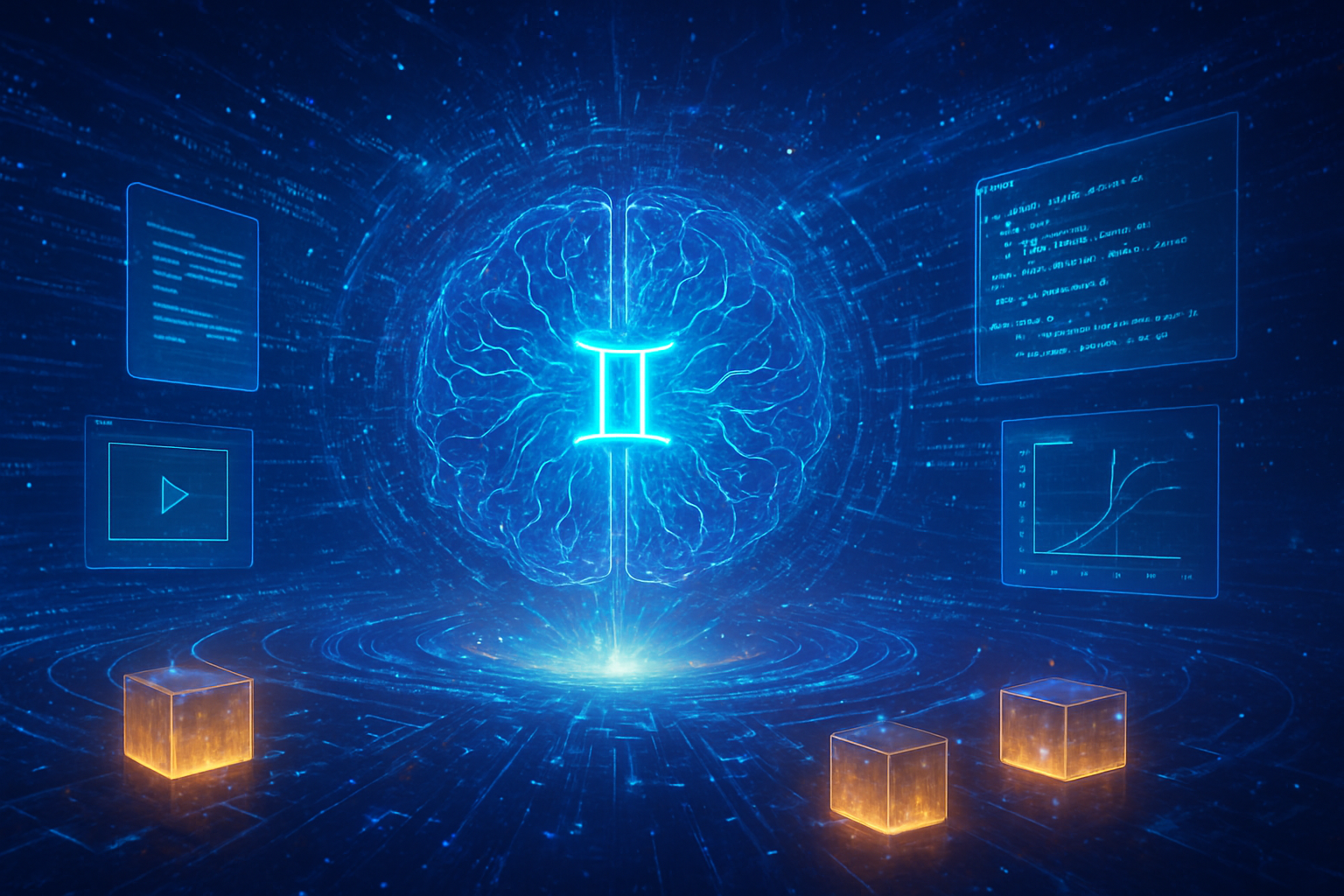
    Alphabet Inc. (NASDAQ: GOOGL) has officially moved its groundbreaking 2-million-token context window for Gemini 1.5 Pro into general availability for all developers, marking a definitive shift in how the industry handles massive datasets. This milestone, bolstered by the integration of native context caching and sandboxed code execution, allows developers to process hours of video, thousands of pages of text, and massive codebases in a single prompt. By removing the waitlists and refining the economic model through advanced caching, Google is positioning Gemini 1.5 Pro as the primary engine for enterprise-grade, long-context reasoning.

    The move represents a strategic consolidation of Google’s lead in "long-context" AI, a field where it has consistently outpaced rivals. For the global developer community, the availability of these features means that the architectural hurdles of managing large-scale data—which previously required complex Retrieval-Augmented Generation (RAG) pipelines—can now be bypassed for many high-value use cases. This development is not merely an incremental update; it is a fundamental expansion of the "working memory" available to artificial intelligence, enabling a new class of autonomous agents capable of deep, multi-modal analysis.

    The Architecture of Infinite Memory: MoE and 99% Recall

    At the heart of Gemini 1.5 Pro’s 2-million-token capability is a Sparse Mixture-of-Experts (MoE) architecture. Unlike traditional dense models that activate every parameter for every request, MoE models only engage a specific subset of their neural network, allowing for significantly more efficient processing of massive inputs. This efficiency is what enables the model to ingest up to two hours of 1080p video, 22 hours of audio, or over 60,000 lines of code without a catastrophic drop in performance. In industry-standard "Needle-in-a-Haystack" benchmarks, Gemini 1.5 Pro has demonstrated a staggering 99.7% recall rate even at the 1-million-token mark, maintaining near-perfect accuracy up to its 2-million-token limit.

    Beyond raw capacity, the addition of Native Code Execution transforms the model from a passive text generator into an active problem solver. Gemini can now generate and run Python code within a secure, isolated sandbox environment. This allows the model to perform complex mathematical calculations, data visualizations, and iterative debugging in real-time. When a developer asks the model to analyze a massive spreadsheet or a physics simulation, Gemini doesn't just predict the next word; it writes the necessary script, executes it, and refines the output based on the results. This "inner monologue" of code execution significantly reduces hallucinations in data-sensitive tasks.

    To make this massive context window economically viable, Google has introduced Context Caching. This feature allows developers to store frequently used data—such as a legal library or a core software repository—on Google’s servers. Subsequent queries that reference this "cached" data are billed at a fraction of the cost, often resulting in a 75% to 90% discount compared to standard input rates. This addresses the primary criticism of long-context models: that they were too expensive for production use. With caching, the 2-million-token window becomes a persistent, cost-effective knowledge base for specialized applications.

    Shifting the Competitive Landscape: RAG vs. Long Context

    The maturation of Gemini 1.5 Pro’s features has sent ripples through the competitive landscape, challenging the strategies of major players like OpenAI (NASDAQ: MSFT) and Anthropic, which is heavily backed by Amazon.com Inc. (NASDAQ: AMZN). While OpenAI’s GPT-4o and Anthropic’s Claude 3.5 Sonnet have focused on speed and "human-like" interaction, they have historically lagged behind Google in raw context capacity, with windows typically ranging between 128,000 and 200,000 tokens. Google’s 2-million-token offering is an order of magnitude larger, forcing competitors to accelerate their own long-context research or risk losing the enterprise market for "big data" AI.

    This development has also sparked a fierce debate within the AI research community regarding the future of Retrieval-Augmented Generation (RAG). For years, RAG was the gold standard for giving LLMs access to large datasets by "retrieving" relevant snippets from a vector database. With a 2-million-token window, many developers are finding that they can simply "stuff" the entire dataset into the prompt, avoiding the complexities of vector indexing and retrieval errors. While RAG remains essential for real-time, ever-changing data, Gemini 1.5 Pro has effectively made it possible to treat the model’s context window as a high-speed, temporary database for static information.

    Startups specializing in vector databases and RAG orchestration are now pivoting to support "hybrid" architectures. These systems use Gemini’s long context for deep reasoning across a specific project while relying on RAG for broader, internet-scale knowledge. This strategic advantage has allowed Google to capture a significant share of the developer market that handles complex, multi-modal workflows, particularly in industries like cinematography, where analyzing a full-length feature film in one go was previously impossible for any AI.

    The Broader Significance: Video Reasoning and the Data Revolution

    The broader significance of the 2-million-token window lies in its multi-modal capabilities. Because Gemini 1.5 Pro is natively multi-modal—trained on text, images, audio, video, and code simultaneously—it does not treat a video as a series of disconnected frames. Instead, it understands the temporal relationship between events. A security firm can upload an hour of surveillance footage and ask, "When did the person in the blue jacket leave the building?" and the model can pinpoint the exact timestamp and describe the action with startling accuracy. This level of video reasoning was a "holy grail" of AI research just two years ago.

    However, this breakthrough also brings potential concerns, particularly regarding data privacy and the "Lost in the Middle" phenomenon. While Google’s benchmarks show high recall, some independent researchers have noted that LLMs can still struggle with nuanced reasoning when the critical information is buried deep within a 2-million-token prompt. Furthermore, the ability to process such massive amounts of data raises questions about the environmental impact of the compute power required to maintain these "warm" caches and run MoE models at scale.

    Comparatively, this milestone is being viewed as the "Broadband Era" of AI. Just as the transition from dial-up to broadband enabled the modern streaming and cloud economy, the transition from small context windows to multi-million-token "infinite" memory is enabling a new generation of agentic AI. These agents don't just answer questions; they live within a codebase or a project, maintaining a persistent understanding of every file, every change, and every historical decision made by the human team.

    Looking Ahead: Toward Gemini 3.0 and Agentic Workflows

    As we look toward 2026, the industry is already anticipating the next leap. While Gemini 1.5 Pro remains the workhorse for 2-million-token tasks, the recently released Gemini 3.0 series is beginning to introduce "Implicit Caching" and even larger "Deep Research" windows that can theoretically handle up to 10 million tokens. Experts predict that the next frontier will not just be the size of the window, but the persistence of it. We are moving toward "Persistent State Memory," where an AI doesn't just clear its cache after an hour but maintains a continuous, evolving memory of a user's entire digital life or a corporation’s entire history.

    The potential applications on the horizon are transformative. We expect to see "Digital Twin" developers that can manage entire software ecosystems autonomously, and "AI Historians" that can ingest centuries of digitized records to find patterns in human history that were previously invisible to researchers. The primary challenge moving forward will be refining the "thinking" time of these models—ensuring that as the context grows, the model's ability to reason deeply about that context grows in tandem, rather than just performing simple retrieval.

    A New Standard for the AI Industry

    The general availability of the 2-million-token context window for Gemini 1.5 Pro marks a turning point in the AI arms race. By combining massive capacity with the practical tools of context caching and code execution, Google has moved beyond the "demo" phase of long-context AI and into a phase of industrial-scale utility. This development cements the importance of "memory" as a core pillar of artificial intelligence, equal in significance to raw reasoning power.

    As we move into 2026, the focus for developers will shift from "How do I fit my data into the model?" to "How do I best utilize the vast space I now have?" The implications for software development, legal analysis, and creative industries are profound. The coming months will likely see a surge in "long-context native" applications that were simply impossible under the constraints of 2024. For now, Google has set a high bar, and the rest of the industry is racing to catch up.


    This content is intended for informational purposes only and represents analysis of current AI developments.

    TokenRing AI delivers enterprise-grade solutions for multi-agent AI workflow orchestration, AI-powered development tools, and seamless remote collaboration platforms.
    For more information, visit https://www.tokenring.ai/.