Tag: Gemini AI

  • AI Cinema Arrives: Google’s Veo 3 Rollout Brings 4K Photorealism and Integrated Audio to the Masses

    AI Cinema Arrives: Google’s Veo 3 Rollout Brings 4K Photorealism and Integrated Audio to the Masses

    The landscape of digital creation has shifted fundamentally this month as Alphabet Inc. (NASDAQ: GOOGL) finalized the wide public rollout of Veo 3. This landmark release represents the transition of generative video from a technical curiosity into a production-ready tool capable of outputting cinema-grade 4K content with native, high-fidelity audio synchronization. By integrating these capabilities directly into the Gemini app and launching the professional-grade "Flow" platform for filmmakers, Google has effectively democratized high-end visual effects and cinematography for creators across the globe.

    The significance of this development cannot be overstated; it marks the first time a major technology firm has provided a unified pipeline for visuals, sound, and identity consistency at this scale. For the millions of users with access to Gemini AI Pro and Ultra, the ability to generate a minute-long, 4K narrative sequence with realistic dialogue and ambient soundscapes is no longer a futuristic concept—it is a live feature. As of January 26, 2026, the creative community is already grappling with the implications of a world where the barrier between a script and a finished film is now measured in seconds rather than months.

    Technical Capabilities and the "3D Latent Diffusion" Breakthrough

    Veo 3, specifically version 3.1, utilizes a groundbreaking "3D Latent Diffusion" architecture that treats time as a spatial dimension, allowing for unprecedented physical consistency across frames. Unlike earlier iterations that often suffered from "morphing" or flickering, Veo 3 maintains the structural integrity of skin textures, fabric movements, and complex environmental lighting at a native 4K resolution (3840×2160). Perhaps the most striking technical advancement is the integration of 48kHz synchronized audio. This allows the model to generate not just the video, but the accompanying sound—ranging from perfect lip-synced dialogue to intricate musical scores—all guided by a single multi-modal prompt.

    The platform introduces a feature called "Ingredients to Video," which addresses one of the most persistent hurdles in generative AI: character and object consistency. By uploading up to three reference images, filmmakers can ensure that a protagonist’s appearance remains identical across multiple scenes, even under different lighting conditions or camera angles. Furthermore, the model supports native 9:16 vertical video for mobile-first platforms like YouTube Shorts and TikTok, alongside traditional cinematic aspect ratios, making it a versatile tool for both social media influencers and independent documentarians.

    Initial reactions from the AI research community have been largely celebratory, with many noting that Google has successfully bridged the "uncanny valley" that plagued previous models. Dr. Aris Thorne, a senior researcher at the Institute for Digital Ethics, noted that "the temporal stability in Veo 3.1 is the closest we have seen to true physics-based simulation in a generative model." However, some industry experts have pointed out that the model still occasionally experiences "hallucinatory physics" during extremely fast-paced action sequences, requiring creators to perform multiple "re-rolls" to achieve a flawless take.

    Market Implications: Google vs. The Field

    This rollout places Alphabet Inc. in a dominant position within the generative media market, directly challenging the dominance of specialized AI video startups and established rivals like OpenAI. While OpenAI’s Sora initially set the standard for video quality, Google’s integration of Veo 3 into the existing Gemini ecosystem and its specialized "Flow" suite provides a strategic advantage in terms of workflow and accessibility. For professional filmmakers, Flow offers a project-management-centric interface that includes granular controls for object removal, scene extension, and multi-track audio editing—features that turn a generative model into a legitimate creative workstation.

    The competitive pressure is also being felt by traditional software giants like Adobe (NASDAQ: ADBE), whose Creative Cloud suite has long been the industry standard. By offering cinema-grade generation within the same environment where scripts are written and edited (Gemini), Google is creating a closed-loop creative ecosystem. This could potentially disrupt the VFX industry, as small-to-mid-sized studios may now find it more cost-effective to use AI-generated plates for backgrounds and secondary characters rather than hiring large teams for manual rendering.

    Moreover, the tiered subscription model—where Google AI Ultra subscribers gain priority access to 4K upscaling—suggests a shift in how tech giants will monetize high-compute AI services. By locking the most advanced cinematic features behind professional paywalls, Google is signaling that it views Veo 3 not just as a consumer toy, but as a high-value enterprise tool. This move forces other players to accelerate their own public rollouts or risk losing the early-adopter professional market to Google’s all-in-one ecosystem.

    Ethical Boundaries and the "AI Cinema" Era

    The arrival of Veo 3 represents a pivotal moment in the broader AI landscape, signaling the end of the "silent film" era of generative AI. By combining vision and sound into a single, cohesive generation process, Google is mimicking the way humans perceive and experience reality. This holistic approach to media generation aligns with the industry trend toward "omni-modal" models that can reason across text, image, audio, and video simultaneously. It moves the conversation beyond simple image generation and toward the creation of entire digital worlds.

    However, the widespread availability of such powerful tools brings significant safety and ethical concerns. To combat the potential for deepfakes and misinformation, Google has embedded SynthID watermarking into every frame and audio track generated by Veo 3. This imperceptible digital signature is designed to survive cropping, compression, and filtering, allowing users to verify the provenance of a video via Google’s own verification tools. While this is a major step forward for transparency, critics argue that the sheer volume of high-quality AI content could still overwhelm current detection systems and erode public trust in visual evidence.

    The cultural impact is equally profound. As independent creators gain the ability to produce Hollywood-level visuals from their bedrooms, the "gatekeeper" status of traditional film studios is being challenged. This mirrors previous milestones like the advent of digital cameras or YouTube itself, but at an exponential scale. We are witnessing the birth of "AI Cinema," a genre where the primary constraint is no longer the budget or the size of the crew, but the imagination of the prompter.

    Future Horizons: From Minutes to Features

    In the near term, we can expect Google to further refine the "Flow" platform, likely adding real-time collaborative features that allow multiple directors to edit a single AI-generated project simultaneously. There is also significant buzz regarding "Interactive Veo," an experimental branch that could allow viewers to change the direction of a narrative in real-time, effectively blurring the lines between cinema and gaming. As compute efficiency improves, the current 60-second limit for continuous narrative blocks is expected to expand, potentially allowing for the generation of full feature-length sequences by the end of 2026.

    Despite these advancements, the industry must still address the legal and philosophical challenges surrounding training data and intellectual property. As AI models become more capable of mimicking specific cinematic styles, the debate over "fair use" and compensation for the artists whose work informed these models will reach a fever pitch. Experts predict that the next major breakthrough will involve "Controllable AI Actors"—digital entities with persistent memories and personalities that can be "hired" by different creators for recurring roles across various films.

    Conclusion: A New Chapter in Visual Storytelling

    The wide public rollout of Veo 3.1 is more than just a software update; it is a declaration of the new reality of digital media. By providing cinema-grade 4K resolution, integrated 48kHz audio, and the professional Flow environment, Google has set a new benchmark for what generative AI can achieve. The inclusion of SynthID serves as a necessary, albeit complex, safeguard in an era where the distinction between real and synthetic is becoming increasingly blurred.

    Key takeaways from this rollout include the arrival of true identity consistency and the integration of professional filmmaking workflows into consumer-grade AI. As we move through the early months of 2026, the tech industry and the creative world will be watching closely to see how these tools are utilized—and how traditional institutions respond to the rapid democratization of high-end production. The era of the AI-powered auteur has officially begun.


    This content is intended for informational purposes only and represents analysis of current AI developments.

    TokenRing AI delivers enterprise-grade solutions for multi-agent AI workflow orchestration, AI-powered development tools, and seamless remote collaboration platforms.
    For more information, visit https://www.tokenring.ai/.
  • The Local Intelligence Revolution: How 2026 Became the Year of the Sovereign AI PC

    The Local Intelligence Revolution: How 2026 Became the Year of the Sovereign AI PC

    The landscape of personal computing has undergone a seismic shift in early 2026, transitioning from a "cloud-first" paradigm to one defined by "On-Device AI." At the heart of this transformation is the arrival of hardware capable of running sophisticated Large Language Models (LLMs) entirely within the confines of a laptop’s chassis. This evolution, showcased prominently at CES 2026, marks the end of the era where artificial intelligence was a remote service and the beginning of an era where it is a local, private, and instantaneous utility.

    The immediate significance of this shift cannot be overstated. By decoupling AI from the data center, tech giants are finally delivering on the promise of "Sovereign AI"—tools that respect user privacy by design and function without an internet connection. With the launch of flagship silicon from Intel and Qualcomm, the "AI PC" has moved past its experimental phase to become the new standard for productivity, offering agentic capabilities that can manage entire workflows autonomously.

    The Silicon Powerhouse: Panther Lake and Snapdragon X2

    The technical backbone of this revolution lies in the fierce competition between Intel (NASDAQ:INTC) and Qualcomm (NASDAQ:QCOM). Intel’s newly released Panther Lake (Core Ultra Series 3) processors, built on the cutting-edge 18A manufacturing process, have set a new benchmark for integrated performance. The platform boasts a staggering 170 total TOPS (Trillions of Operations Per Second), with a dedicated NPU 5 architecture delivering 50 TOPS specifically for AI tasks. This represents a massive leap from the previous generation, allowing for the simultaneous execution of multiple Small Language Models (SLMs) without taxing the CPU or GPU.

    Qualcomm has countered with its Snapdragon X2 Elite series, which maintains a lead in raw NPU efficiency. The X2’s Hexagon NPU delivers a uniform 80 to 85 TOPS, optimized for high-throughput inference. Unlike previous years where Windows on ARM faced compatibility hurdles, the 2026 ecosystem is fully optimized. These chips enable "instant-on" AI, where models like Google (NASDAQ:GOOGL) Gemini Nano and Llama 3 (8B) remain resident in the system’s memory, responding to queries in under 50 milliseconds. This differs fundamentally from the 2024-2025 approach, which relied on "triage" systems that frequently offloaded complex tasks to the cloud, incurring latency and privacy risks.

    The Battle for the Desktop: Galaxy AI vs. Gemini vs. Copilot

    The shift toward local execution has ignited a high-stakes battle for the "AI Gateway" on Windows. Samsung Electronics (KRX:005930) has leveraged its partnership with Google to integrate Galaxy AI deeply into its Galaxy Book6 series. This integration allows for unprecedented cross-device continuity; for instance, a user can use "AI Select" to drag a live video feed from their phone into a Word document on their PC, where it is instantly transcribed and summarized locally. This ecosystem play positions Samsung as a formidable rival to Microsoft (NASDAQ:MSFT) and its native Copilot.

    Meanwhile, Alphabet’s Google has successfully challenged Microsoft’s dominance by embedding Gemini directly into the Windows taskbar and the Chrome browser. The new "Desktop Lens" feature uses the local NPU to "see" and analyze screen content in real-time, providing context-aware assistance that rivals Microsoft’s controversial Recall feature. Industry experts note that this competition is driving a "features war," where the winner is determined by who can provide the most seamless local integration rather than who has the largest cloud-based model. This has created a lucrative market for PC manufacturers like Dell Technologies (NYSE:DELL), HP Inc. (NYSE:HPQ), and Lenovo Group (HKG:0992), who are now marketing "AI Sovereignty" as a premium feature.

    Privacy, Latency, and the Death of the 8GB RAM Era

    The wider significance of the 2026 AI PC lies in its impact on data privacy and hardware standards. For the first time, enterprise users in highly regulated sectors—such as healthcare and finance—can utilize advanced AI agents without violating HIPAA or GDPR regulations, as the data never leaves the local device. This "Privacy-by-Default" architecture is a direct response to the growing public skepticism regarding cloud-based data harvesting. Furthermore, the elimination of latency has transformed AI from a "chatbot" into a "copilot" that can assist with real-time video editing, live translation during calls, and complex code generation without the "thinking" delays of 2024.

    However, this transition has also forced a radical change in hardware specifications. In 2026, 32GB of RAM has become the new baseline for any functional AI PC. Local LLMs require significant dedicated VRAM to remain "warm" and responsive, rendering the 8GB and even 16GB configurations of the past obsolete. While this has driven up the average selling price of laptops, it has also breathed new life into the PC market, which had seen stagnant growth for years. Critics, however, point to the "AI Divide," where those unable to afford these high-spec machines are left with inferior, cloud-dependent tools that offer less privacy and slower performance.

    Looking Ahead: The Rise of Agentic Computing

    The next two to three years are expected to see the rise of "Agentic Computing," where the PC is no longer just a tool but an autonomous collaborator. Experts predict that by 2027, on-device NPUs will exceed 300 TOPS, allowing for the local execution of models with 100 billion parameters. This will enable "Personalized AI" that learns a user’s specific voice, habits, and professional style with total privacy. We are also likely to see the emergence of specialized AI silicon designed for specific industries, such as dedicated "Creative NPUs" for 8K video synthesis or "Scientific NPUs" for local protein folding simulations.

    The primary challenge moving forward will be energy efficiency. As local models grow in complexity, maintaining the "all-day battery life" that Qualcomm and Intel currently promise will require even more radical breakthroughs in chip architecture. Additionally, the software industry must catch up; while the hardware is ready for local AI, many legacy applications still lack the hooks necessary to take full advantage of the NPU.

    A New Chapter in Computing History

    The evolution of On-Device AI in 2026 represents a historical turning point comparable to the introduction of the graphical user interface (GUI) or the transition to mobile computing. By bringing the power of LLMs to the edge, the industry has solved the twin problems of privacy and latency that hindered AI adoption for years. The integration of Galaxy AI and Gemini on Intel and Qualcomm hardware has effectively democratized high-performance intelligence, making it a standard feature of the modern workstation.

    As we move through 2026, the key metric for success will no longer be how many parameters a company’s cloud model has, but how efficiently that model can run on a user's lap. The "Sovereign AI PC" is not just a new product category; it is a fundamental redesign of how humans and machines interact. In the coming months, watch for a wave of "AI-native" software releases that will finally push these powerful new NPUs to their limits, forever changing the way we work, create, and communicate.


    This content is intended for informational purposes only and represents analysis of current AI developments.

    TokenRing AI delivers enterprise-grade solutions for multi-agent AI workflow orchestration, AI-powered development tools, and seamless remote collaboration platforms.
    For more information, visit https://www.tokenring.ai/.
  • The Jarvis Revolution: How Google’s Leaked AI Agent Redefined the Web by 2026

    The Jarvis Revolution: How Google’s Leaked AI Agent Redefined the Web by 2026

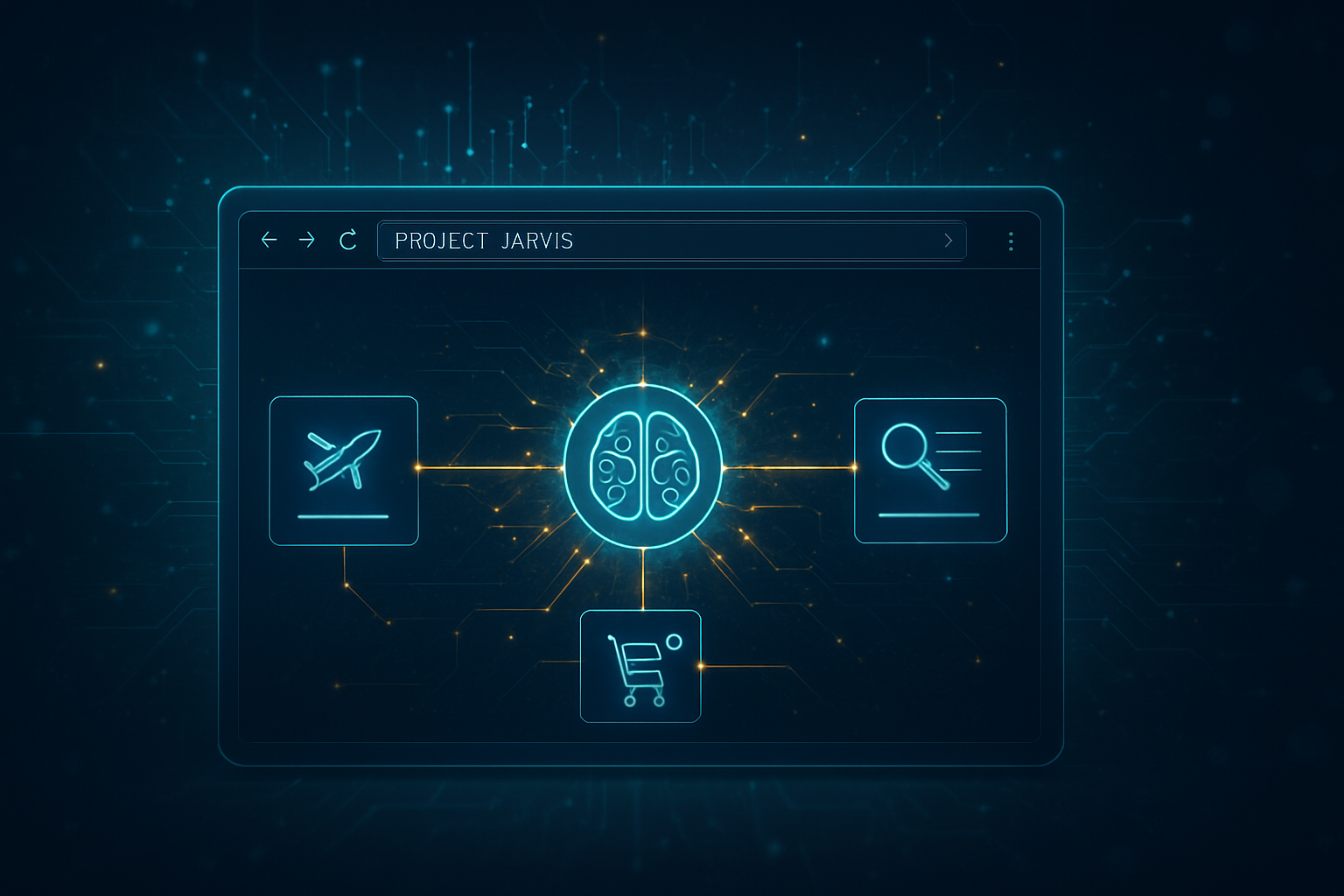
    In late 2024, a brief technical slip-up on the Chrome Web Store offered the world its first glimpse into the future of the internet. A prototype extension titled "Project Jarvis" was accidentally published by Google, describing itself as a "helpful companion that surfs the web with you." While the extension was quickly pulled, the leak confirmed what many had suspected: Alphabet Inc. (NASDAQ: GOOGL) was moving beyond simple chatbots and into the realm of "Computer-Using Agents" (CUAs) capable of taking over the browser to perform complex, multi-step tasks on behalf of the user.

    Fast forward to today, January 1, 2026, and that accidental leak is now recognized as the opening salvo in a war for the "AI-first" browser. What began as a experimental extension has evolved into a foundational layer of the Chrome ecosystem, fundamentally altering how billions of people interact with the web. By moving from a model of "Search and Click" to "Command and Complete," Google has effectively turned the world's most popular browser into an autonomous agent that handles everything from grocery shopping to deep-dive academic research without the user ever needing to touch a scroll bar.

    The Vision-Action Loop: Inside the Jarvis Architecture

    Technically, Project Jarvis represented a departure from the "API-first" approach of early AI integrations. Instead of relying on specific back-end connections to websites, Jarvis was built on a "vision-action loop" powered by the Gemini 2.0 and later Gemini 3.0 multimodal models. This allowed the AI to "see" the browser window exactly as a human does. By taking frequent screenshots and processing them through Gemini’s vision capabilities, the agent could identify buttons, interpret text fields, and navigate complex UI elements like drop-down menus and calendars. This approach allowed Jarvis to work on virtually any website, regardless of whether that site had built-in AI support.

    The capability of Jarvis—now largely integrated into the "Gemini in Chrome" suite—is defined by its massive context window, which by mid-2025 reached upwards of 2 million tokens. This enables the agent to maintain "persistent intent" across dozens of tabs. For example, a user can command the agent to "Find a flight to Tokyo under $900 in March, cross-reference it with my Google Calendar for conflicts, and find a hotel near Shibuya with a gym." The agent then navigates Expedia, Google Calendar, and TripAdvisor simultaneously, synthesizing the data and presenting a final recommendation or even completing the booking after a single biometric confirmation from the user.

    Initial reactions from the AI research community in early 2025 were a mix of awe and apprehension. Experts noted that while the vision-based approach bypassed the need for fragile web scrapers, it introduced significant latency and compute costs. However, Google’s optimization of "distilled" Gemini models specifically for browser tasks significantly reduced these hurdles by the end of 2025. The introduction of "Project Mariner"—the high-performance evolution of Jarvis—saw success rates on the WebVoyager benchmark jump to over 83%, a milestone that signaled the end of the "experimental" phase for agentic AI.

    The Agentic Arms Race: Market Positioning and Disruption

    The emergence of Project Jarvis forced a rapid realignment among tech giants. Alphabet Inc. (NASDAQ: GOOGL) found itself in a direct "Computer-Using Agent" (CUA) battle with Anthropic and Microsoft (NASDAQ: MSFT)-backed OpenAI. While Anthropic’s "Computer Use" feature for Claude 3.5 Sonnet focused on a platform-agnostic approach—allowing the AI to control the entire operating system—Google doubled down on the browser. This strategic focus leveraged Chrome's 65% market share, turning the browser into a defensive moat against the rise of "Answer Engines" like Perplexity.

    This shift has significantly disrupted the traditional search-ad model. As agents began to "consume" the web on behalf of users, the traditional "blue link" economy faced an existential crisis. In response, Google pivoted toward "Agentic Commerce." By late 2025, Google began monetizing the actions performed by Jarvis, taking small commissions on transactions completed through the agent, such as flight bookings or retail purchases. This move allowed Google to maintain its revenue streams even as traditional search volume began to fluctuate in the face of AI-driven automation.

    Furthermore, the integration of Jarvis into the Chrome architecture served as a regulatory defense. Following various antitrust rulings regarding search defaults, Google’s transition to an "AI-first browser" allowed it to offer a vertically integrated experience that competitors could not easily replicate. By embedding the agent directly into the browser's "Omnibox" (the address bar), Google ensured that Gemini remained the primary interface for the "Action Web," making the choice of a default search engine increasingly irrelevant to the end-user experience.

    The Death of the Blue Link: Ethical and Societal Implications

    The wider significance of Project Jarvis lies in the transition from the "Information Age" to the "Action Age." For decades, the internet was a library where users had to find and synthesize information themselves. With the mainstreaming of agentic AI throughout 2025, the internet has become a service economy where the browser acts as a digital concierge. This fits into a broader trend of "Invisible Computing," where the UI begins to disappear, replaced by natural language intent.

    However, this shift has not been without controversy. Privacy advocates have raised significant concerns regarding the "vision-based" nature of Jarvis. For the agent to function, it must effectively "watch" everything the user does within the browser, leading to fears of unprecedented data harvesting. Google addressed this in late 2025 by introducing "On-Device Agentic Processing," which keeps the visual screenshots of a user's session within the local hardware's secure enclave, only sending anonymized metadata to the cloud for complex reasoning.

    Comparatively, the launch of Jarvis is being viewed by historians as a milestone on par with the release of the first graphical web browser, Mosaic. While Mosaic allowed us to see the web, Jarvis allowed us to put the web to work. The "Agentic Web" also poses challenges for web developers and small businesses; if an AI agent is the one visiting a site, traditional metrics like "time on page" or "ad impressions" become obsolete, forcing a total rethink of how digital value is measured and captured.

    Beyond the Browser: The Future of Autonomous Workflows

    Looking ahead, the evolution of Project Jarvis is expected to move toward "Multi-Agent Swarms." In these scenarios, a Jarvis-style browser agent will not work in isolation but will coordinate with other specialized agents. For instance, a "Research Agent" might gather data in Chrome, while a "Creative Agent" drafts a report in Google Docs, and a "Communication Agent" schedules a meeting to discuss the findings—all orchestrated through a single user prompt.

    In late 2025, Google teased "Antigravity," an agent-first development environment that uses the Jarvis backbone to allow AI to autonomously plan, code, and test software directly within a browser window. This suggests that the next frontier for Jarvis is not just consumer shopping, but professional-grade software engineering and data science. Experts predict that by 2027, the distinction between "using a computer" and "directing an AI" will have effectively vanished for most office tasks.

    The primary challenge remaining is "hallucination in action." While a chatbot hallucinating a fact is a minor nuisance, an agent hallucinating a purchase or a flight booking can have real-world financial consequences. Google is currently working on "Verification Loops," where the agent must provide visual proof of its intended action before the final execution, a feature expected to become standard across all CUA platforms by the end of 2026.

    A New Chapter in Computing History

    Project Jarvis began as a leaked extension, but it has ended up as the blueprint for the next decade of human-computer interaction. By successfully integrating Gemini into the very fabric of the Chrome browser, Alphabet Inc. has successfully navigated the transition from a search company to an agent company. The significance of this development cannot be overstated; it represents the first time that AI has moved from being a "consultant" we talk to, to a "worker" that acts on our behalf.

    As we enter 2026, the key takeaways are clear: the browser is no longer a passive window, but an active participant in our digital lives. The "AI-first" strategy has redefined the competitive landscape, placing a premium on "action" over "information." For users, this means a future with less friction and more productivity, though it comes at the cost of increased reliance on a few dominant AI ecosystems.

    In the coming months, watch for the expansion of Jarvis-style agents into mobile operating systems and the potential for "Cross-Platform Agents" that can jump between your phone, your laptop, and your smart home. The era of the autonomous agent is no longer a leak or a rumor—it is the new reality of the internet.


    This content is intended for informational purposes only and represents analysis of current AI developments.

    TokenRing AI delivers enterprise-grade solutions for multi-agent AI workflow orchestration, AI-powered development tools, and seamless remote collaboration platforms. For more information, visit https://www.tokenring.ai/.
  • The End of the Search Bar: How Google’s AI Agents are Rewriting the Rules of Commerce

    The End of the Search Bar: How Google’s AI Agents are Rewriting the Rules of Commerce

    As the 2025 holiday season draws to a close, the digital landscape has shifted from a world of "search-and-click" to one of "intent-and-delegate." Alphabet Inc. (NASDAQ: GOOGL) has fundamentally transformed the shopping experience with the wide-scale deployment of its AI shopping agents, marking a pivotal moment in the evolution of what industry experts are now calling "agentic commerce." This transition represents a departure from traditional search engines that provide lists of links, moving instead toward autonomous systems that can talk to merchants, track inventory in real-time, and execute complex transactions on behalf of the user.

    The centerpiece of this transformation is the "Let Google Call" feature, which allows users to offload the tedious task of hunting for product availability to a Gemini-powered agent. This development is more than just a convenience; it is a structural shift in how consumers interact with the global marketplace. By integrating advanced reasoning with the massive scale of the Google Shopping Graph, the tech giant is positioning itself not just as a directory of the web, but as a proactive intermediary capable of navigating both the digital and physical worlds to fulfill consumer needs.

    The Technical Engine: From Duplex to Gemini-Powered Agency

    The technical foundation of Google’s new shopping ecosystem rests on the convergence of three major pillars: an upgraded Duplex voice engine, the multimodal Gemini reasoning model, and a significantly expanded Shopping Graph. The "Let Google Call" feature, which saw its first major rollout in late 2024 and reached full maturity in 2025, utilizes Duplex technology to bridge the gap between digital queries and physical inventory. When a user requests a specific item—such as a "Nintendo Switch OLED in stock near me"—the AI agent doesn't just display a map; it offers to call local stores. The agent identifies itself as an automated assistant, queries the merchant about specific stock levels and current promotions, and provides a summarized report to the user via text or email.

    This capability is supported by the Google Shopping Graph, which as of late 2025, indexes over 50 billion product listings with an staggering two billion updates per hour. This real-time data flow ensures that the AI agents are operating on the most current information possible. Furthermore, Google introduced "Agentic Checkout" in November 2025, allowing users to set "Price Mandates." For example, a shopper can instruct the agent to "Buy these linen sheets from Wayfair Inc. (NYSE: W) if the price drops below $80." The agent then monitors the price and, using the newly established Agent Payments Protocol (AP2), autonomously completes the checkout process using the user's Google Pay credentials.

    Unlike previous iterations of AI assistants that were limited to simple voice commands or web scraping, these agents are capable of multi-step reasoning. They can ask clarifying questions—such as preferred color or budget constraints—before initiating a task. The research community has noted that this shift toward "machine-to-machine" commerce is facilitated by the Model Context Protocol (MCP), which allows Google’s agents to communicate securely with a retailer's internal systems. This differs from traditional web-based shopping by removing the human from the "middle-man" role of data entry and navigation, effectively automating the entire sales funnel.

    The Competitive Battlefield: Google, Amazon, and the "Standards War"

    The rise of agentic commerce has ignited a fierce rivalry between the world's largest tech entities. While Google leverages its dominance in search and its vast Shopping Graph, Amazon.com, Inc. (NASDAQ: AMZN) has responded by deepening the integration of its own "Rufus" AI assistant into the Prime ecosystem. However, the most significant tension lies in the emerging "standards war" for AI payments. In late 2025, Google’s AP2 protocol began competing directly with OpenAI’s Agentic Commerce Protocol (ACP). While OpenAI has focused on a tight vertical integration with Shopify Inc. (NYSE: SHOP) and Stripe to enable one-tap buying within ChatGPT, Google has opted for a broader consortium approach, partnering with financial giants like Mastercard Incorporated (NYSE: MA) and PayPal Holdings, Inc. (NASDAQ: PYPL).

    This development has profound implications for retailers. Companies like Chewy, Inc. (NYSE: CHWY) and other early adopters of Google’s "Agentspace" are finding that they must optimize their data for machines rather than humans. This has led to the birth of Generative Experience Optimization (GXO), a successor to SEO. In this new era, the goal is not to rank first on a page of blue links, but to be the preferred choice of a Google AI agent. Retailers who fail to provide high-quality, machine-readable data risk becoming invisible to the autonomous agents that are increasingly making purchasing decisions for consumers.

    Market positioning has also shifted for startups. While the "Buy for Me" trend benefits established giants with large datasets, it creates a niche for specialized agents that can navigate high-stakes purchases like insurance or luxury goods. However, the strategic advantage currently lies with Google, whose integration of Google Pay and the Android ecosystem provides a seamless "last mile" for transactions that competitors struggle to replicate without significant friction.

    Wider Significance: The Societal Shift to Delegated Shopping

    The broader significance of agentic commerce extends beyond mere convenience; it represents a fundamental change in consumer behavior and the digital economy. For decades, the internet was a place where humans browsed; now, it is becoming a place where agents act. This fits into the larger trend of "The Agentic Web," where AI models are granted the agency to spend real money and make real-world commitments. The impact on the retail sector is dual-edged: while it can significantly reduce the 70% cart abandonment rate by removing checkout friction, it also raises concerns about "disintermediation."

    Retailers are increasingly worried that as Google’s agents become the primary interface for shopping, the direct relationship between the brand and the customer will erode. If a consumer simply tells their phone to "buy the best-rated organic dog food," the brand's individual identity may be subsumed by the agent's recommendation algorithm. There are also significant privacy and security concerns. The idea of an AI making phone calls and spending money requires a high level of trust, which Google is attempting to address through "cryptographic mandates"—digital contracts that prove a user authorized a specific expenditure.

    Comparisons are already being made to the launch of the iPhone or the original Google Search engine. Just as those technologies changed how we accessed information, AI shopping agents are changing how we acquire physical goods. This milestone marks the transition of AI from a "copilot" that assists with writing or coding to an "agent" that operates autonomously in the physical and financial world.

    The Horizon: Autonomous Personal Shoppers and A2A Communication

    Looking ahead, the near-term evolution of these agents will likely involve deeper integration with Augmented Reality (AR) and wearable devices. Imagine walking through a physical store and having your AI agent overlay real-time price comparisons from across the web, or even negotiating a discount with the store's own AI in real-time. This "Agent-to-Agent" (A2A) communication is expected to become a standard feature of the retail experience by 2027, as merchants deploy their own "branded agents" to interact with consumer-facing AI.

    However, several challenges remain. The legal framework for AI-led transactions is still in its infancy. Who is liable if an agent makes an unauthorized purchase or fails to find the best price? Addressing these "hallucination" risks in a financial context will be the primary focus of developers in 2026. Furthermore, the industry must solve the "robocall" stigma associated with features like "Let Google Call." While Google has provided opt-out tools for merchants, the friction between automated agents and human staff in physical stores remains a hurdle that requires more refined social intelligence in AI models.

    Experts predict that by the end of the decade, the concept of "going shopping" on a website will feel as antiquated as looking up a number in a physical phone book. Instead, our personal AI agents will maintain a continuous "commerce stream," managing our household inventory, predicting our needs, and executing purchases before we even realize we are low on a product.

    A New Chapter in the Digital Economy

    Google’s rollout of AI shopping agents and the "Let Google Call" feature marks a definitive end to the era of passive search. By combining the reasoning of Gemini with the transactional power of Google Pay and the vast data of the Shopping Graph, Alphabet has created a system that doesn't just find information—it acts on it. The key takeaway for 2025 is that agency is the new currency of the tech world. The ability of an AI to navigate the complexities of the real world, from phone calls to checkout screens, is the new benchmark for success.

    In the history of AI, this development will likely be viewed as the moment when "Generative AI" became "Actionable AI." It represents the maturation of large language models into useful, everyday tools that handle the "drudge work" of modern life. As we move into 2026, the industry will be watching closely to see how consumers balance the convenience of autonomous shopping with the need for privacy and control. One thing is certain: the search bar is no longer the destination; it is merely the starting point for an agentic journey.


    This content is intended for informational purposes only and represents analysis of current AI developments.

    TokenRing AI delivers enterprise-grade solutions for multi-agent AI workflow orchestration, AI-powered development tools, and seamless remote collaboration platforms.
    For more information, visit https://www.tokenring.ai/.
  • Google Shatters Language Barriers: Gemini-Powered Live Translation Rolls Out to All Headphones

    Google Shatters Language Barriers: Gemini-Powered Live Translation Rolls Out to All Headphones

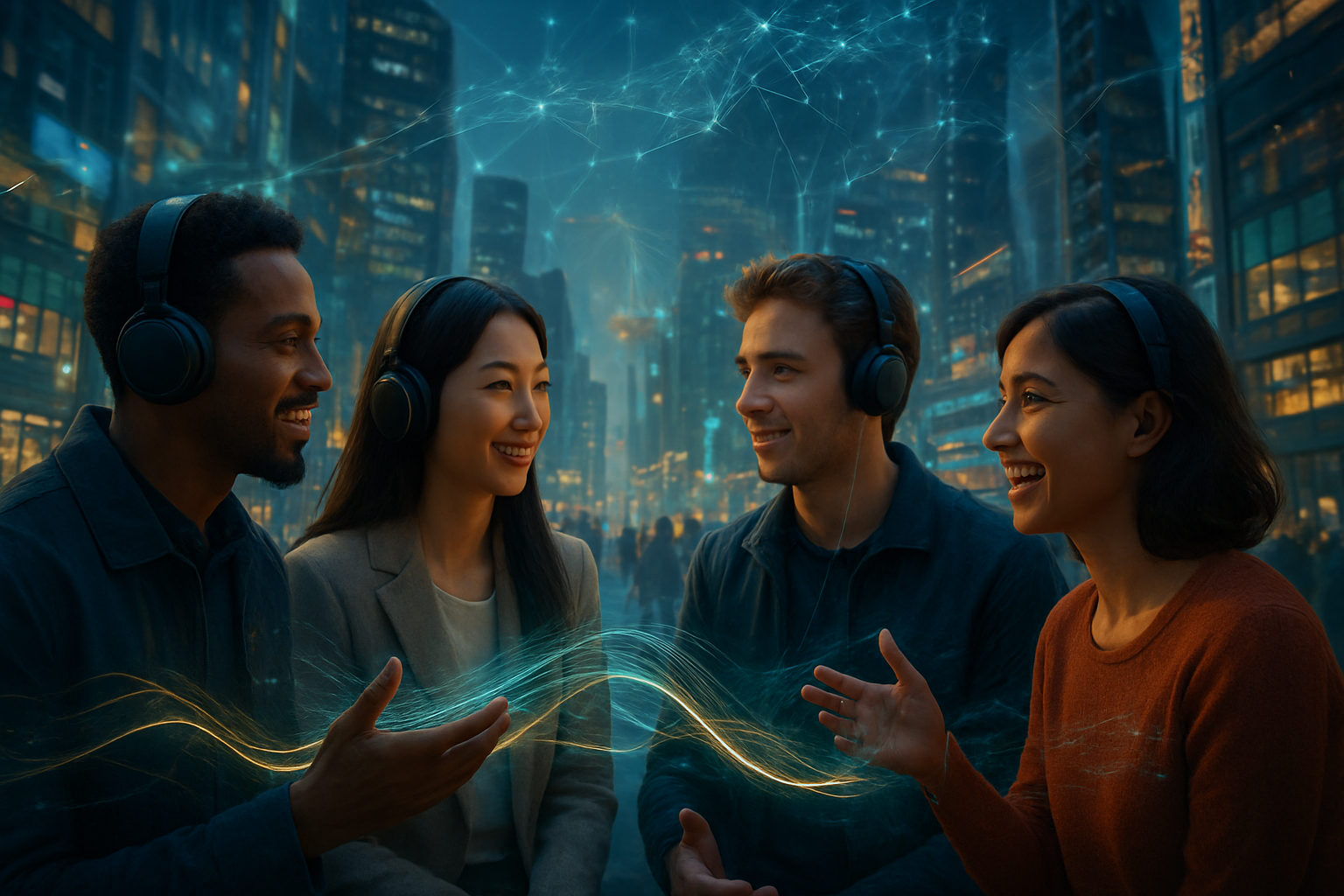
    In a move that signals the end of the "hardware-locked" era for artificial intelligence, Google (NASDAQ: GOOGL) has officially rolled out its Gemini-powered live audio translation feature to all headphones. Announced in mid-December 2025, this update transforms the Google Translate app into a high-fidelity, real-time interpreter capable of facilitating seamless multilingual conversations across virtually any brand of audio hardware, from high-end Sony (NYSE: SONY) noise-canceling cans to standard Apple (NASDAQ: AAPL) AirPods.

    The rollout represents a fundamental shift in Google’s AI strategy, moving away from using software features as a "moat" for its Pixel hardware and instead positioning Gemini as the ubiquitous operating system for human communication. By leveraging the newly released Gemini 2.5 Flash Native Audio model, Google is bringing the dream of a "Star Trek" universal translator to the pockets—and ears—of billions of users worldwide, effectively dissolving language barriers in real-time.

    The Technical Breakthrough: Gemini 2.5 and Native Speech-to-Speech

    At the heart of this development is the Gemini 2.5 Flash Native Audio model, a technical marvel that departs from the traditional "cascaded" translation method. Previously, real-time translation required three distinct steps: converting speech to text (ASR), translating that text (NMT), and then synthesizing it back into a voice (TTS). This process was inherently laggy and often stripped the original speech of its emotional weight. The new Gemini 2.5 architecture is natively multimodal, meaning it processes raw acoustic signals directly. By bypassing the text-conversion bottleneck, Google has achieved sub-second latency, making conversations feel fluid and natural rather than a series of awkward, stop-and-start exchanges.

    Beyond mere speed, the "Native Audio" approach allows for what engineers call "Style Transfer." Because the AI understands the audio signal itself, it can preserve the original speaker’s tone, emphasis, cadence, and even their unique pitch. When a user hears a translation in their ear, it sounds like a natural extension of the person they are talking to, rather than a robotic, disembodied narrator. This level of nuance extends to the model’s contextual intelligence; Gemini 2.5 has been specifically tuned to handle regional slang, idioms, and local expressions across over 70 languages, ensuring that a figurative phrase like "breaking the ice" isn't translated literally into a discussion about frozen water.

    The hardware-agnostic nature of this rollout is perhaps its most disruptive technical feat. While previous iterations of "Interpreter Mode" required specific firmware handshakes found only in Google’s Pixel Buds, the new "Gemini Live" interface uses standard Bluetooth profiles and the host device's processing power to manage the audio stream. This allows the feature to work with any connected headset. Initial reactions from the AI research community have been overwhelmingly positive, with experts noting that Google’s ability to run such complex speech-to-speech models with minimal lag on consumer-grade mobile devices marks a significant milestone in edge computing and model optimization.

    Disrupting the Ecosystem: A New Battleground for Tech Giants

    This announcement has sent shockwaves through the tech industry, particularly for companies that have historically relied on hardware ecosystems to drive software adoption. By opening Gemini’s most advanced translation features to users of Apple (NASDAQ: AAPL) AirPods and Samsung (KRX: 005930) Galaxy Buds, Google is prioritizing AI platform dominance over hardware sales. This puts immense pressure on Apple, whose own "Siri" and "Translate" offerings have struggled to match the multimodal speed of the Gemini 2.5 engine. Industry analysts suggest that Google is aiming to become the default "communication layer" on every smartphone, regardless of the logo on the back of the device.

    For specialized translation hardware startups and legacy brands like Vasco or Pocketalk, this update represents an existential threat. When a consumer can achieve professional-grade, real-time translation using the headphones they already own and a free (or subscription-based) app, the market for dedicated handheld translation devices is likely to contract sharply. Furthermore, the move positions Google as a formidable gatekeeper in the "AI Voice" space, directly competing with OpenAI’s Advanced Voice Mode. While OpenAI has focused on the personality and conversational depth of its models, Google has focused on the utility of cross-lingual communication, a niche that has immediate and massive global demand.

    Strategic advantages are also emerging for Google in the enterprise sector. By enabling "any-headphone" translation, Google can more easily pitch its Workspace and Gemini for Business suites to multinational corporations. Employees at a global firm can now conduct face-to-face meetings in different languages without the need for expensive human interpreters or specialized equipment. This democratization of high-end AI tools is a clear signal that Google intends to leverage its massive data and infrastructure advantages to maintain its lead in the generative AI race.

    The Global Impact: Beyond Simple Translation

    The wider significance of this rollout extends far beyond technical convenience; it touches on the very fabric of global interaction. For the first time in history, the language barrier is becoming a choice rather than a fixed obstacle. In sectors like international tourism, emergency services, and global education, the ability to have a two-way, real-time conversation in 70+ languages using off-the-shelf hardware is revolutionary. A doctor in a rural clinic can now communicate more effectively with a non-native patient, and a traveler can navigate complex local nuances with a level of confidence previously reserved for polyglots.

    However, the rollout also brings significant concerns to the forefront, particularly regarding privacy and "audio-identity." As Gemini 2.5 captures and processes live audio to perform its "Style Transfer" translations, questions about data retention and the potential for "voice cloning" have surfaced. Google has countered these concerns by stating that much of the processing occurs on-device or via secure, ephemeral cloud instances that do not store the raw audio. Nevertheless, the ability of an AI to perfectly mimic a speaker's tone in another language creates a new frontier for potential deepfake misuse, necessitating robust digital watermarking and verification standards.

    Comparatively, this milestone is being viewed as the "GPT-3 moment" for audio. Just as large language models transformed how we interact with text, Gemini’s native audio capabilities are transforming how we interact with sound. The transition from a turn-based "Interpreter Mode" to a "free-flowing" conversational interface marks the end of the "machine-in-the-middle" feeling. It moves AI from a tool you "use" to a transparent layer that simply "exists" within the conversation, a shift that many sociologists believe will accelerate cultural exchange and global economic integration.

    The Horizon: AR Glasses and the Future of Ambient AI

    Looking ahead, the near-term evolution of this technology is clearly headed toward Augmented Reality (AR). Experts predict that the "any-headphone" audio translation is merely a bridge to integrated AR glasses, where users will see translated subtitles in their field of vision while hearing the translated audio in their ears. Google’s ongoing work in the "Project Astra" ecosystem suggests that the next step will involve visual-spatial awareness—where Gemini can not only translate what is being said but also provide context based on what the user is looking at, such as translating a menu or a street sign in real-time.

    There are still challenges to address, particularly in supporting low-resource languages and dialects that lack massive digital datasets. While Gemini 2.5 covers 70 languages, thousands of others remain underserved. Furthermore, achieving the same level of performance on lower-end budget smartphones remains a priority for Google as it seeks to bring this technology to developing markets. Predictions from the tech community suggest that within the next 24 months, we will see "Real-Time Dubbing" for live video calls and social media streams, effectively making the internet a language-agnostic space.

    A New Era of Human Connection

    Google’s December 2025 rollout of Gemini-powered translation for all headphones marks a definitive turning point in the history of artificial intelligence. It is the moment where high-end AI moved from being a luxury feature for early adopters to a universal utility for the global population. By prioritizing accessibility and hardware compatibility, Google has set a new standard for how AI should be integrated into our daily lives—not as a walled garden, but as a bridge between cultures.

    The key takeaway from this development is the shift toward "invisible AI." When technology works this seamlessly, it ceases to be a gadget and starts to become an extension of human capability. In the coming weeks and months, the industry will be watching closely to see how Apple and other competitors respond, and how the public adapts to a world where language is no longer a barrier to understanding. For now, the "Universal Translator" is no longer science fiction—it’s a software update away.


    This content is intended for informational purposes only and represents analysis of current AI developments.

    TokenRing AI delivers enterprise-grade solutions for multi-agent AI workflow orchestration, AI-powered development tools, and seamless remote collaboration platforms.
    For more information, visit https://www.tokenring.ai/.