
Tag: Gemini Live

  • The Sound of Intelligence: OpenAI and Google Battle for the Soul of the Voice AI Era

    The Sound of Intelligence: OpenAI and Google Battle for the Soul of the Voice AI Era

    As of January 2026, the long-predicted "Agentic Era" has arrived, moving the conversation from typing in text boxes to a world where we speak to our devices as naturally as we do to our friends. The primary battlefield for this revolution is the Advanced Voice Mode (AVM) from OpenAI and Gemini Live from Alphabet Inc. (NASDAQ:GOOGL). This month marks a pivotal moment in human-computer interaction, as both tech giants have transitioned their voice assistants from utilitarian tools into emotionally resonant, multimodal agents that process the world in real-time.

    The significance of this development cannot be overstated. We are no longer dealing with the "robotic" responses of the 2010s; the current iterations of GPT-5.2 and Gemini 3.0 have crossed the "uncanny valley" of voice interaction. By achieving sub-500ms latency—the speed of a natural human response—and integrating deep emotional intelligence, these models are redefining how information is consumed, tasks are managed, and digital companionship is formed.

    The Technical Edge: Paralanguage, Multimodality, and the Race to Zero Latency

    At the heart of OpenAI’s current dominance in the voice space is the GPT-5.2 series, released in late December 2025. Unlike previous generations that relied on a cumbersome speech-to-text-to-speech pipeline, OpenAI’s Advanced Voice Mode utilizes a native audio-to-audio architecture. This means the model processes raw audio signals directly, allowing it to interpret and replicate "paralanguage"—the subtle nuances of human speech such as sighs, laughter, and vocal inflections. In a January 2026 update, OpenAI introduced "Instructional Prosody," enabling the AI to change its vocal character mid-sentence, moving from a soothing narrator to an energetic coach based on the user's emotional state.

    Google has countered this with the integration of Project Astra into its Gemini Live platform. While OpenAI leads in conversational "magic," Google’s strength lies in its multimodal 60 FPS vision integration. Using Gemini 3.0 Flash, Google’s voice assistant can now "see" through a smartphone camera or smart glasses, identifying complex 3D objects and explaining their function in real-time. To close the emotional intelligence gap, Google famously "acqui-hired" the core engineering team from Hume AI earlier this month, a move designed to overhaul Gemini’s ability to analyze vocal timbre and mood, ensuring it responds with appropriate empathy.

    Technically, the two systems are separated by thin margins in latency. OpenAI’s AVM maintains a slight edge with response times averaging 230ms to 320ms, making it nearly indistinguishable from human conversational speed. Gemini Live, burdened by its deep integration into the Google Workspace ecosystem, typically ranges from 600ms to 1.5s. However, the AI research community has noted that Google’s ability to recall specific data from a user’s personal history—such as retrieving a quote from a Gmail thread via voice—gives it a "contextual intelligence" that pure conversational fluency cannot match.

    Market Dominance: The Distribution King vs. the Capability Leader

    The competitive landscape in 2026 is defined by a strategic divide between distribution and raw capability. Alphabet Inc. (NASDAQ:GOOGL) has secured a massive advantage by making Gemini the default "brain" for billions of users. In a landmark deal announced on January 12, 2026, Apple Inc. (NASDAQ:AAPL) confirmed it would use Gemini to power the next generation of Siri, launching in February. This partnership effectively places Google’s voice technology inside the world's most popular high-end hardware ecosystem, bypassing the need for a standalone app.

    OpenAI, supported by its deep partnership with Microsoft Corp. (NASDAQ:MSFT), is positioning itself as the premium, "capability-first" alternative. Microsoft has integrated OpenAI’s voice models into Copilot, enabling a "Brainstorming Mode" that allows corporate users to dictate and format complex Excel sheets or PowerPoint decks entirely through natural dialogue. OpenAI is also reportedly developing an "audio-first" wearable device in collaboration with Jony Ive’s firm, LoveFrom, aiming to bypass the smartphone entirely and create a screenless AI interface that lives in the user's ear.

    This dual-market approach is creating a tiering system: Google is becoming the "ambient" utility integrated into every OS, while OpenAI remains the choice for high-end creative and professional interaction. Industry analysts warn, however, that the cost of running these real-time multimodal models is astronomical. For the "AI Hype" to sustain its current market valuation, both companies must demonstrate that these voice agents can drive significant enterprise ROI beyond mere novelty.

    The Human Impact: Emotional Bonds and the "Her" Scenario

    The broader significance of Advanced Voice Mode lies in its profound impact on human psychology and social dynamics. We have entered the era of the "Her" scenario, named after the 2013 film, where users are developing genuine emotional attachments to AI entities. With GPT-5.2’s ability to mimic human empathy and Gemini’s omnipresence in personal data, the line between tool and companion is blurring.

    Concerns regarding social isolation are growing. Sociologists have noted that as AI voice agents become more accommodating and less demanding than human interlocutors, there is a risk of users retreating into "algorithmic echo chambers" of emotional validation. Furthermore, the privacy implications of "always-on" multimodal agents that can see and hear everything in a user's environment remain a point of intense regulatory debate in the EU and the United States.

    However, the benefits are equally transformative. For the visually impaired, Google’s Astra-powered Gemini Live serves as a real-time digital eye. For education, OpenAI’s AVM acts as a tireless, empathetic tutor that can adjust its teaching style based on a student’s frustration or excitement levels. These milestones represent the most significant shift in computing since the introduction of the Graphical User Interface (GUI), moving us toward a more inclusive, "Natural User Interface" (NUI).

    The Horizon: Wearables, Multi-Agent Orchestration, and "Campos"

    Looking forward to the remainder of 2026, the focus will shift from the cloud to the "edge." The next frontier is hardware that can support these low-latency models locally. While current voice modes rely on high-speed 5G or Wi-Fi to process data in the cloud, the goal is "On-Device Voice Intelligence." This would solve the primary privacy concerns and eliminate the last remaining milliseconds of latency.

    Experts predict that at Apple Inc.’s (NASDAQ:AAPL) WWDC 2026, the company will unveil its long-awaited "Campos" model, an in-house foundation model designed to run natively on the M-series and A-series chips. This could potentially disrupt Google's current foothold on Siri. Meanwhile, the integration of multi-agent orchestration will allow these voice assistants to not only talk but act. Imagine telling your AI, "Organize a dinner party for six," and having it vocally negotiate with a restaurant’s AI to secure a reservation while coordinating with your friends' calendars.

    The challenges remain daunting. Power consumption for real-time voice and video processing is high, and the "hallucination" problem—where an AI confidently speaks a lie—is more dangerous when delivered with a persuasive, emotionally resonant human voice. Addressing these issues will be the primary focus of AI labs in the coming months.

    A New Chapter in Human History

    In summary, the advancements in Advanced Voice Mode from OpenAI and Google in early 2026 represent a crowning achievement in artificial intelligence. By conquering the twin peaks of low latency and emotional intelligence, these companies have changed the nature of communication. We are no longer using computers; we are collaborating with them.

    The key takeaways from this month's developments are clear: OpenAI currently holds the crown for the most "human" and responsive conversational experience, while Google has won the battle for distribution through its Android and Apple partnerships. As we move further into 2026, the industry will be watching for the arrival of AI-native hardware and the impact of Apple’s own foundational models.

    This is more than a technical upgrade; it is a shift in the human experience. Whether this leads to a more connected world or a more isolated one remains to be seen, but one thing is certain: the era of the silent computer is over.


    This content is intended for informational purposes only and represents analysis of current AI developments.

    TokenRing AI delivers enterprise-grade solutions for multi-agent AI workflow orchestration, AI-powered development tools, and seamless remote collaboration platforms.
    For more information, visit https://www.tokenring.ai/.
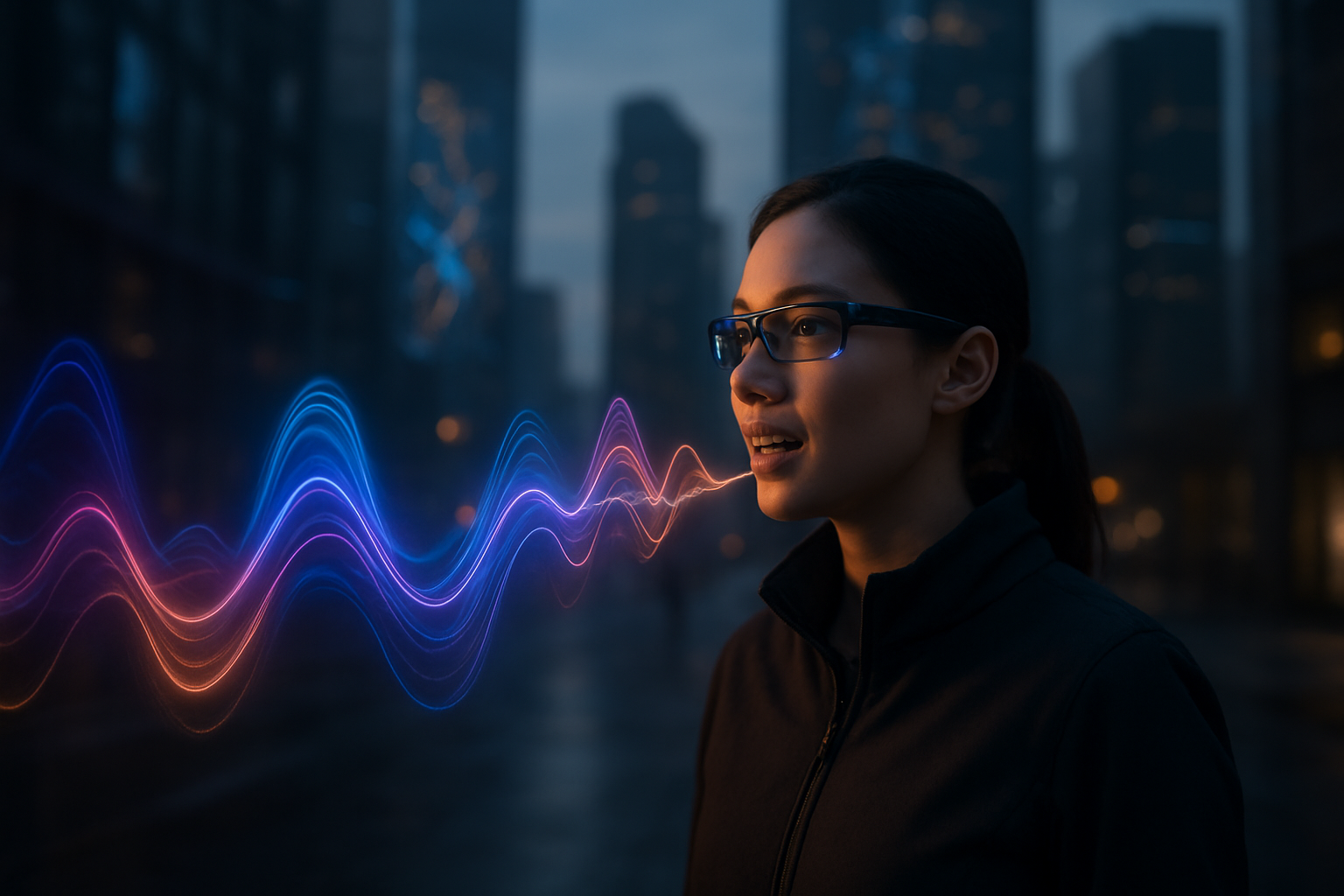
  • The End of the Silent Screen: How the Real-Time Voice Revolution Redefined Our Relationship with Silicon

    The End of the Silent Screen: How the Real-Time Voice Revolution Redefined Our Relationship with Silicon

    As of January 14, 2026, the primary way we interact with our smartphones is no longer through a series of taps and swipes, but through fluid, emotionally resonant conversation. What began in 2024 as a series of experimental "Voice Modes" from industry leaders has blossomed into a full-scale paradigm shift in human-computer interaction. The "Real-Time Voice Revolution" has moved beyond the gimmickry of early virtual assistants, evolving into "ambient companions" that can sense frustration, handle interruptions, and provide complex reasoning in the blink of an eye.

    This transformation is anchored by the fierce competition between Alphabet Inc. (NASDAQ: GOOGL) and the Microsoft (NASDAQ: MSFT)-backed OpenAI. With the recent late-2025 releases of Google’s Gemini 3 and OpenAI’s GPT-5.2, the vision of the 2013 film Her has finally transitioned from science fiction to a standard feature on billions of devices. These systems are no longer just processing commands; they are engaging in a continuous, multi-modal stream of consciousness that understands the world—and the user—with startling intimacy.

    The Architecture of Fluidity: Sub-300ms Latency and Native Audio

    Technically, the leap from the previous generation of assistants to the current 2026 standard is rooted in the move toward "Native Audio" architecture. In the past, voice assistants were a fragmented chain of three distinct models: speech-to-text (STT), a large language model (LLM) to process the text, and text-to-speech (TTS) to generate the response. This "sandwich" approach created a noticeable lag and stripped away the emotional data hidden in the user’s tone. Today, models like GPT-5.2 and Gemini 3 Flash are natively multimodal, meaning the AI "hears" the audio directly and "speaks" directly, preserving nuances like sarcasm, hesitations, and the urgency of a user's voice.

    This architectural shift has effectively killed the "uncanny valley" of AI latency. Current benchmarks show that both Google and OpenAI have achieved response times between 200ms and 300ms—identical to the speed of a natural human conversation. Furthermore, the introduction of "Full-Duplex" audio allows these systems to handle interruptions seamlessly. If a user cuts off Gemini 3 mid-sentence to clarify a point, the model doesn't just stop; it recalculates its reasoning in real-time, acknowledging the interruption with a "Oh, right, sorry," before pivoting the conversation.

    Initial reactions from the AI research community have hailed this as the "Final Interface." Dr. Aris Thorne, a senior researcher at the Vector Institute, recently noted that the ability for an AI to model "prosody"—the patterns of stress and intonation in a language—has turned a tool into a presence. For the first time, AI researchers are seeing a measurable drop in "cognitive load" for users, as speaking naturally is far less taxing than navigating complex UI menus or typing on a small screen.

    The Power Struggle for the Ambient Companion

    The market implications of this revolution are reshaping the tech hierarchy. Alphabet Inc. (NASDAQ: GOOGL) has leveraged its Android ecosystem to make Gemini Live the default "ambient" layer for over 3 billion devices. At the start of 2026, Google solidified this lead by announcing a massive partnership with Apple Inc. (NASDAQ: AAPL) to power the "New Siri" with Gemini 3 Pro engines. This strategic move ensures that Google’s voice AI is the dominant interface across both major mobile operating systems, positioning the company as the primary gatekeeper of consumer AI interactions.

    OpenAI, meanwhile, has doubled down on its "Advanced Voice Mode" as a tool for professional and creative partnership. While Google wins on scale and integration, OpenAI’s GPT-5.2 is widely regarded as the superior "Empathy Engine." By introducing "Characteristic Controls" in late 2025—sliders that allow users to fine-tune the AI’s warmth, directness, and even regional accents—OpenAI has captured the high-end market of users who want a "Professional Partner" for coding, therapy-style reflection, or complex project management.

    This shift has placed traditional hardware-focused companies in a precarious position. Startups that once thrived on building niche AI gadgets have mostly been absorbed or rendered obsolete by the sheer capability of the smartphone. The battleground has shifted from "who has the best search engine" to "who has the most helpful voice in your ear." This competition is expected to drive massive growth in the wearable market, specifically in smart glasses and "audio-first" devices that don't require a screen to be useful.

    From Assistance to Intimacy: The Societal Shift

    The broader significance of the Real-Time Voice Revolution lies in its impact on the human psyche and social structures. We have entered the era of the "Her-style" assistant, where the AI is not just a utility but a social entity. This has triggered a wave of both excitement and concern. On the positive side, these assistants are providing unprecedented support for the elderly and those suffering from social isolation, offering a consistent, patient, and knowledgeable presence that can monitor health through vocal biomarkers.

    However, the "intimacy" of these voices has raised significant ethical questions. Privacy advocates point out that for an AI to sense a user's emotional state, it must constantly analyze biometric audio data, creating a permanent record of a person's psychological health. There are also concerns about "emotional over-reliance," where users may begin to prefer the non-judgmental, perfectly tuned responses of their AI companion over the complexities of human relationships.

    The comparison to previous milestones is stark. While the release of the original iPhone changed how we touch the internet, the Real-Time Voice Revolution of 2025-2026 has changed how we relate to it. It represents a shift from "computing as a task" to "computing as a relationship," moving the digital world into the background of our physical lives.

    The Future of Proactive Presence

    Looking ahead to the remainder of 2026, the next frontier for voice AI is "proactivity." Instead of waiting for a user to speak, the next generation of models will likely use low-power environmental sensors to offer help before it's asked for. We are already seeing the first glimpses of this at CES 2026, where Google showcased Gemini Live for TVs that can sense when a family is confused about a plot point in a movie and offer a brief, spoken explanation without being prompted.

    OpenAI is also rumored to be preparing a dedicated, screen-less hardware device—a lapel pin or a "smart pebble"—designed to be a constant listener and advisor. The challenge for these future developments remains the "hallucination" problem. In a voice-only interface, the AI cannot rely on citations or links as easily as a text-based chatbot can. Experts predict that the next major breakthrough will be "Audio-Visual Grounding," where the AI uses a device's camera to see what the user sees, allowing the voice assistant to say, "The keys you're looking for are under that blue magazine."

    A New Chapter in Human History

    The Real-Time Voice Revolution marks a definitive end to the era of the silent computer. The journey from the robotic, stilted voices of the 2010s to the empathetic, lightning-fast models of 2026 has been one of the fastest technological adoptions in history. By bridging the gap between human thought and digital execution with sub-second latency, Google and OpenAI have effectively removed the last friction point of the digital age.

    As we move forward, the significance of this development will be measured by how it alters our daily habits. We are no longer looking down at our palms; we are looking up at the world, talking to an invisible intelligence that understands not just what we say, but how we feel. In the coming months, the focus will shift from the capabilities of these models to the boundaries we set for them, as we decide how much of our inner lives we are willing to share with the voices in our pockets.


    This content is intended for informational purposes only and represents analysis of current AI developments.

    TokenRing AI delivers enterprise-grade solutions for multi-agent AI workflow orchestration, AI-powered development tools, and seamless remote collaboration platforms.
    For more information, visit https://www.tokenring.ai/.