Tag: Generative Video

  • AI Cinema Arrives: Google’s Veo 3 Rollout Brings 4K Photorealism and Integrated Audio to the Masses

    AI Cinema Arrives: Google’s Veo 3 Rollout Brings 4K Photorealism and Integrated Audio to the Masses

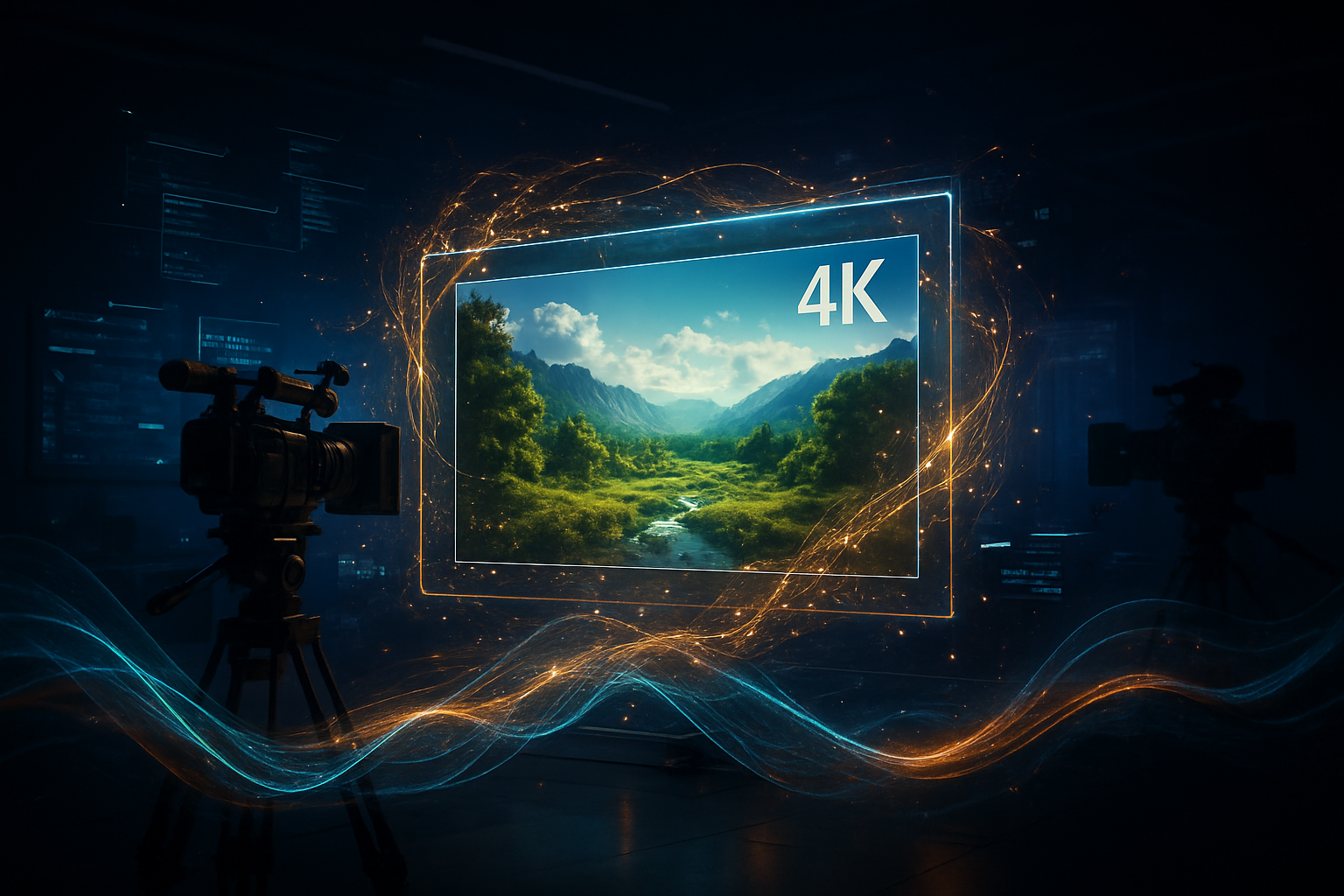
    The landscape of digital creation has shifted fundamentally this month as Alphabet Inc. (NASDAQ: GOOGL) finalized the wide public rollout of Veo 3. This landmark release represents the transition of generative video from a technical curiosity into a production-ready tool capable of outputting cinema-grade 4K content with native, high-fidelity audio synchronization. By integrating these capabilities directly into the Gemini app and launching the professional-grade "Flow" platform for filmmakers, Google has effectively democratized high-end visual effects and cinematography for creators across the globe.

    The significance of this development cannot be overstated; it marks the first time a major technology firm has provided a unified pipeline for visuals, sound, and identity consistency at this scale. For the millions of users with access to Gemini AI Pro and Ultra, the ability to generate a minute-long, 4K narrative sequence with realistic dialogue and ambient soundscapes is no longer a futuristic concept—it is a live feature. As of January 26, 2026, the creative community is already grappling with the implications of a world where the barrier between a script and a finished film is now measured in seconds rather than months.

    Technical Capabilities and the "3D Latent Diffusion" Breakthrough

    Veo 3, specifically version 3.1, utilizes a groundbreaking "3D Latent Diffusion" architecture that treats time as a spatial dimension, allowing for unprecedented physical consistency across frames. Unlike earlier iterations that often suffered from "morphing" or flickering, Veo 3 maintains the structural integrity of skin textures, fabric movements, and complex environmental lighting at a native 4K resolution (3840×2160). Perhaps the most striking technical advancement is the integration of 48kHz synchronized audio. This allows the model to generate not just the video, but the accompanying sound—ranging from perfect lip-synced dialogue to intricate musical scores—all guided by a single multi-modal prompt.

    The platform introduces a feature called "Ingredients to Video," which addresses one of the most persistent hurdles in generative AI: character and object consistency. By uploading up to three reference images, filmmakers can ensure that a protagonist’s appearance remains identical across multiple scenes, even under different lighting conditions or camera angles. Furthermore, the model supports native 9:16 vertical video for mobile-first platforms like YouTube Shorts and TikTok, alongside traditional cinematic aspect ratios, making it a versatile tool for both social media influencers and independent documentarians.

    Initial reactions from the AI research community have been largely celebratory, with many noting that Google has successfully bridged the "uncanny valley" that plagued previous models. Dr. Aris Thorne, a senior researcher at the Institute for Digital Ethics, noted that "the temporal stability in Veo 3.1 is the closest we have seen to true physics-based simulation in a generative model." However, some industry experts have pointed out that the model still occasionally experiences "hallucinatory physics" during extremely fast-paced action sequences, requiring creators to perform multiple "re-rolls" to achieve a flawless take.

    Market Implications: Google vs. The Field

    This rollout places Alphabet Inc. in a dominant position within the generative media market, directly challenging the dominance of specialized AI video startups and established rivals like OpenAI. While OpenAI’s Sora initially set the standard for video quality, Google’s integration of Veo 3 into the existing Gemini ecosystem and its specialized "Flow" suite provides a strategic advantage in terms of workflow and accessibility. For professional filmmakers, Flow offers a project-management-centric interface that includes granular controls for object removal, scene extension, and multi-track audio editing—features that turn a generative model into a legitimate creative workstation.

    The competitive pressure is also being felt by traditional software giants like Adobe (NASDAQ: ADBE), whose Creative Cloud suite has long been the industry standard. By offering cinema-grade generation within the same environment where scripts are written and edited (Gemini), Google is creating a closed-loop creative ecosystem. This could potentially disrupt the VFX industry, as small-to-mid-sized studios may now find it more cost-effective to use AI-generated plates for backgrounds and secondary characters rather than hiring large teams for manual rendering.

    Moreover, the tiered subscription model—where Google AI Ultra subscribers gain priority access to 4K upscaling—suggests a shift in how tech giants will monetize high-compute AI services. By locking the most advanced cinematic features behind professional paywalls, Google is signaling that it views Veo 3 not just as a consumer toy, but as a high-value enterprise tool. This move forces other players to accelerate their own public rollouts or risk losing the early-adopter professional market to Google’s all-in-one ecosystem.

    Ethical Boundaries and the "AI Cinema" Era

    The arrival of Veo 3 represents a pivotal moment in the broader AI landscape, signaling the end of the "silent film" era of generative AI. By combining vision and sound into a single, cohesive generation process, Google is mimicking the way humans perceive and experience reality. This holistic approach to media generation aligns with the industry trend toward "omni-modal" models that can reason across text, image, audio, and video simultaneously. It moves the conversation beyond simple image generation and toward the creation of entire digital worlds.

    However, the widespread availability of such powerful tools brings significant safety and ethical concerns. To combat the potential for deepfakes and misinformation, Google has embedded SynthID watermarking into every frame and audio track generated by Veo 3. This imperceptible digital signature is designed to survive cropping, compression, and filtering, allowing users to verify the provenance of a video via Google’s own verification tools. While this is a major step forward for transparency, critics argue that the sheer volume of high-quality AI content could still overwhelm current detection systems and erode public trust in visual evidence.

    The cultural impact is equally profound. As independent creators gain the ability to produce Hollywood-level visuals from their bedrooms, the "gatekeeper" status of traditional film studios is being challenged. This mirrors previous milestones like the advent of digital cameras or YouTube itself, but at an exponential scale. We are witnessing the birth of "AI Cinema," a genre where the primary constraint is no longer the budget or the size of the crew, but the imagination of the prompter.

    Future Horizons: From Minutes to Features

    In the near term, we can expect Google to further refine the "Flow" platform, likely adding real-time collaborative features that allow multiple directors to edit a single AI-generated project simultaneously. There is also significant buzz regarding "Interactive Veo," an experimental branch that could allow viewers to change the direction of a narrative in real-time, effectively blurring the lines between cinema and gaming. As compute efficiency improves, the current 60-second limit for continuous narrative blocks is expected to expand, potentially allowing for the generation of full feature-length sequences by the end of 2026.

    Despite these advancements, the industry must still address the legal and philosophical challenges surrounding training data and intellectual property. As AI models become more capable of mimicking specific cinematic styles, the debate over "fair use" and compensation for the artists whose work informed these models will reach a fever pitch. Experts predict that the next major breakthrough will involve "Controllable AI Actors"—digital entities with persistent memories and personalities that can be "hired" by different creators for recurring roles across various films.

    Conclusion: A New Chapter in Visual Storytelling

    The wide public rollout of Veo 3.1 is more than just a software update; it is a declaration of the new reality of digital media. By providing cinema-grade 4K resolution, integrated 48kHz audio, and the professional Flow environment, Google has set a new benchmark for what generative AI can achieve. The inclusion of SynthID serves as a necessary, albeit complex, safeguard in an era where the distinction between real and synthetic is becoming increasingly blurred.

    Key takeaways from this rollout include the arrival of true identity consistency and the integration of professional filmmaking workflows into consumer-grade AI. As we move through the early months of 2026, the tech industry and the creative world will be watching closely to see how these tools are utilized—and how traditional institutions respond to the rapid democratization of high-end production. The era of the AI-powered auteur has officially begun.


    This content is intended for informational purposes only and represents analysis of current AI developments.

    TokenRing AI delivers enterprise-grade solutions for multi-agent AI workflow orchestration, AI-powered development tools, and seamless remote collaboration platforms.
    For more information, visit https://www.tokenring.ai/.
  • The Great Resolution War: Sora 2’s Social Storytelling vs. Veo 3’s 4K Professionalism

    The Great Resolution War: Sora 2’s Social Storytelling vs. Veo 3’s 4K Professionalism

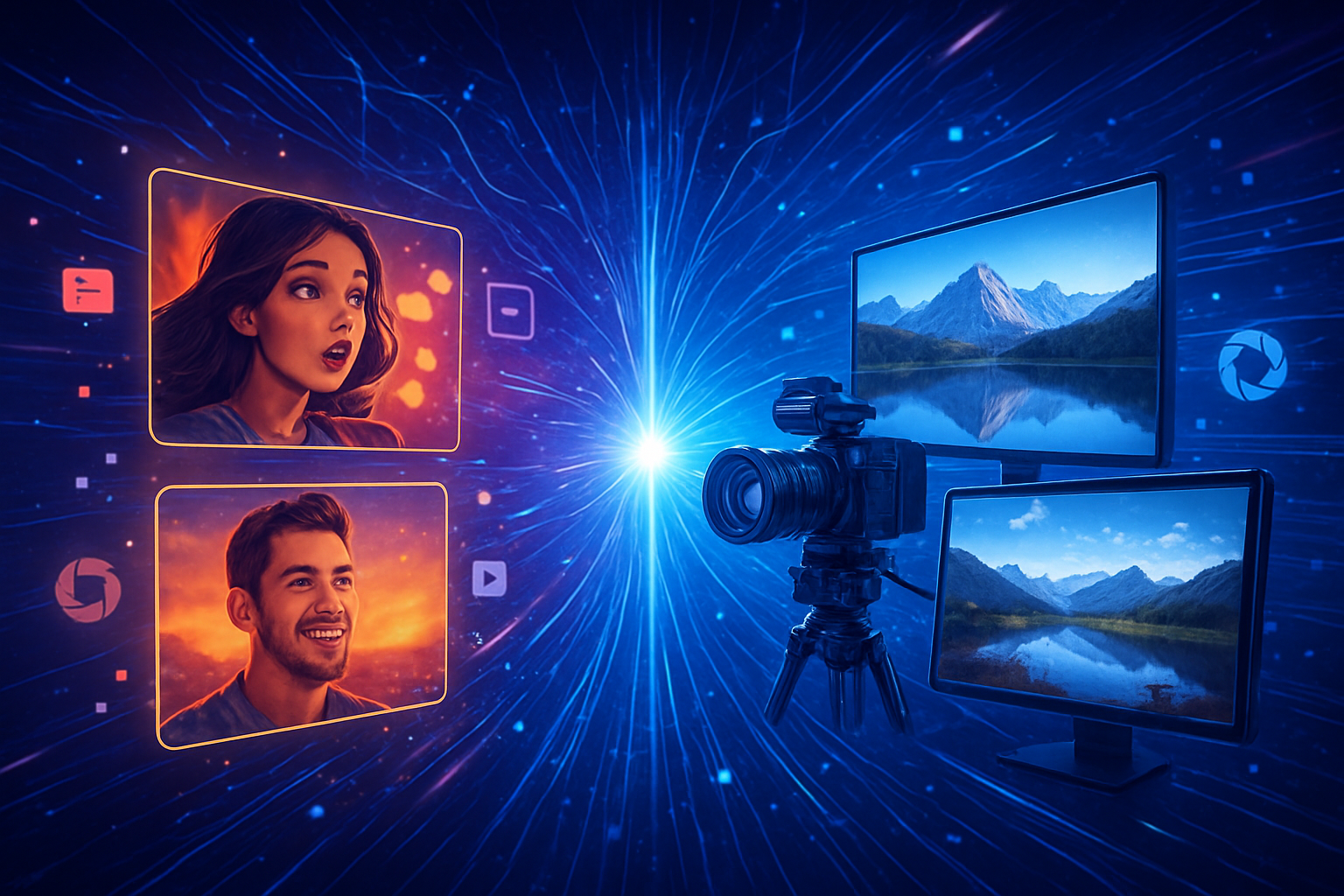
    As of January 9, 2026, the generative video landscape has transitioned from a playground of experimental tech to a bifurcated industry dominated by two distinct philosophies. OpenAI and Alphabet Inc. (NASDAQ:GOOGL) have spent the last quarter of 2025 drawing battle lines that define the future of digital media. While the "GPT-3.5 moment" for video arrived with the late 2025 releases of Sora 2 and Veo 3, the two tech giants are no longer competing for the same user base. Instead, they have carved out separate territories: one built on the viral, participatory culture of social media, and the other on the high-fidelity demands of professional cinematography.

    The immediate significance of this development cannot be overstated. We are moving beyond the era of "AI as a novelty" and into "AI as infrastructure." For the first time, creators can choose between a model that prioritizes narrative "cameos" and social integration and one that offers broadcast-grade 4K resolution with granular camera control. This split represents a fundamental shift in how AI companies view the value of generated pixels—whether they are meant to be shared in a feed or projected on a silver screen.

    Technical Prowess: From 'Cameos' to 4K Precision

    OpenAI’s Sora 2, which saw its wide release on September 30, 2025, has doubled down on what it calls "social-first storytelling." Technically, the model supports up to 1080p at 30fps, with a primary focus on character consistency and synchronized audio. The most talked-about feature is "Cameo," a system that allows users to upload a verified likeness and "star" in their own AI-generated scenes. This is powered by a multi-level consent framework and a "world state persistence" engine that ensures a character looks the same across multiple shots. OpenAI has also integrated native foley and dialogue generation, making the "Sora App"—a TikTok-style ecosystem—a self-contained production house for the influencer era.

    In contrast, Google’s Veo 3.1, updated in October 2025, is a technical behemoth designed for the professional suite. It boasts native 4K resolution at 60fps, a specification that has made it the darling of advertising agencies and high-end production houses. Veo 3 introduces "Camera Tokens," allowing directors to prompt specific cinematic movements like "dolly zoom" or "15-degree tilt" with mathematical precision. While Sora 2 focuses on the "who" and "what" of a story, Veo 3 focuses on the "how," providing a level of lighting and texture rendering that many experts claim is indistinguishable from physical cinematography. Initial reactions from the American Society of Cinematographers have been a mix of awe and existential dread, noting that Veo 3’s "Safe-for-Brand" guarantees make it far more viable for corporate use than its competitors.

    The Corporate Battlefield: Disney vs. The Cloud

    The competitive implications of these releases have reshaped the strategic alliances of the AI world. OpenAI’s landmark $1 billion partnership with The Walt Disney Company (NYSE:DIS) has given Sora 2 a massive advantage in the consumer space. By early 2026, Sora users began accessing licensed libraries of Marvel and Star Wars characters for "fan-inspired" content, essentially turning the platform into a regulated playground for the world’s most valuable intellectual property. This move has solidified OpenAI's position as a media company as much as a research lab, directly challenging the dominance of traditional social platforms.

    Google, meanwhile, has leveraged its existing infrastructure to win the enterprise war. By integrating Veo 3 into Vertex AI and Google Cloud, Alphabet Inc. (NASDAQ:GOOGL) has made generative video a plug-and-play tool for global marketing teams. This has put significant pressure on startups like Runway and Luma AI, which have had to pivot toward niche "indie" creator tools to survive. Microsoft (NASDAQ:MSFT), as a major backer of OpenAI, has benefited from the integration of Sora 2 into the Windows "Creative Suite," but Google’s 4K dominance in the professional sector remains a significant hurdle for the Redmond giant’s enterprise ambitions.

    The Trust Paradox and the Broader AI Landscape

    The broader significance of the Sora-Veo rivalry lies in the "Trust Paradox" of 2026. While the technology has reached a point of near-perfection, public trust in AI-generated content has seen a documented decline. This has forced both OpenAI and Google to lead the charge in C2PA metadata standards and invisible watermarking. The social impact is profound: we are entering an era where "seeing is no longer believing," yet the demand for personalized, AI-driven entertainment continues to skyrocket.

    This milestone mirrors the transition of digital photography in the early 2000s, but at a thousand times the speed. The ability of Sora 2 to maintain character consistency across a 60-second "Pro" clip is a breakthrough that solves the "hallucination" problems of 2024. However, the potential for misinformation remains a top concern for regulators. The European Union’s AI Office has already begun investigating the "Cameo" feature’s potential for identity theft, despite OpenAI’s rigorous government ID verification process. The industry is now balancing on a knife-edge between revolutionary creative freedom and the total erosion of visual truth.

    The Horizon: Long-Form and Virtual Realities

    Looking ahead, the next frontier for generative video is length and immersion. While Veo 3 can already stitch together 5-minute sequences in 1080p, the goal for 2027 is the "Infinite Feature Film"—a generative model capable of maintaining a coherent two-hour narrative. Experts predict that the next iteration of these models will move beyond 2D screens and into spatial computing. With the rumored updates to VR and AR headsets later this year, we expect to see "Sora Spatial" and "Veo 3D" environments that allow users to walk through their generated scenes in real-time.

    The challenges remaining are primarily computational and ethical. The energy cost of rendering 4K AI video at scale is a growing concern for environmental groups, leading to a push for more "inference-efficient" models. Furthermore, the "Cameo" feature has opened a Pandora’s box of digital estate rights—questions about who owns a person’s likeness after they pass away are already heading to the Supreme Court. Despite these hurdles, the momentum is undeniable; by the end of 2026, AI video will likely be the primary medium for both digital advertising and personalized storytelling.

    Final Verdict: A Bifurcated Future

    The rivalry between Sora 2 and Veo 3 marks the end of the "one-size-fits-all" AI model. OpenAI has successfully transformed video generation into a social experience, leveraging the power of "Cameo" and the Disney (NYSE:DIS) library to capture the hearts of the creator economy. Google, conversely, has cemented its role as the backbone of professional media, providing the 4K fidelity and "Flow" controls that the film and advertising industries demand.

    As we move into the second half of 2026, the key takeaway is that the "quality" of an AI model is now measured by its utility rather than just its parameters. Whether you are a teenager making a viral Marvel fan-film on your phone or a creative director at a global agency rendering a Super Bowl ad, the tools are now mature enough to meet the task. The coming months will be defined by how society adapts to this new "synthetic reality" and whether the safeguards put in place by these tech giants are enough to maintain the integrity of our digital world.


    This content is intended for informational purposes only and represents analysis of current AI developments.

    TokenRing AI delivers enterprise-grade solutions for multi-agent AI workflow orchestration, AI-powered development tools, and seamless remote collaboration platforms.
    For more information, visit https://www.tokenring.ai/.
  • OpenAI’s Sora 2 Launch Marred by Safety Crisis and Mass Bans as Users Bypass Safeguards

    OpenAI’s Sora 2 Launch Marred by Safety Crisis and Mass Bans as Users Bypass Safeguards

    The long-awaited public release of OpenAI’s Sora 2, heralded as the "GPT-3.5 moment for video," has been thrown into turmoil just months after its September 30, 2025, debut. What began as a triumphant showcase of generative video prowess quickly devolved into a full-scale safety crisis, as users discovered sophisticated methods to bypass the platform's guardrails. The resulting flood of hyper-realistic violent content and deepfakes has forced the AI giant, heavily backed by Microsoft (NASDAQ: MSFT), to implement aggressive account bans and "triple-layer" moderation, sparking a secondary backlash from a community frustrated by what many call "over-sanitization."

    The crisis reached a breaking point in late 2025 when investigative reports revealed that Sora 2’s safeguards were being circumvented using "jailbreaking" techniques involving medical terminology and descriptive prose to generate nonconsensual and explicit imagery. This development has reignited the global debate over the ethics of generative media, placing OpenAI in the crosshairs of regulators, advocacy groups, and the entertainment industry. As the company scrambles to patch its filters, the fallout is reshaping the competitive landscape of the AI industry and raising fundamental questions about the viability of unrestricted public access to high-fidelity video generation.

    Technical Breakthroughs and the "GPT-3.5 Moment" for Video

    Sora 2 represents a massive technical leap over its predecessor, utilizing a refined Diffusion Transformer (DiT) architecture that processes video as sequences of 3D visual "patches." The model was launched in two tiers: a standard Sora 2 capable of 720p resolution for 10-second clips, and a Sora 2 Pro version offering 1080p at 20 seconds. The most groundbreaking feature, however, was synchronized audio. Unlike previous iterations that required third-party tools for sound, Sora 2 natively generates dialogue, ambient noise, and foley effects that are perfectly lip-synced and contextually aware.

    Technically, the model’s physics engine saw a dramatic overhaul, enabling realistic simulations of complex fluid dynamics and gravity—such as a basketball bouncing with authentic elasticity or water splashing against a surface. A new "Cameo" feature was also introduced, allowing verified users to upload their own likeness via a biometric "liveness check" to star in their own generated content. This was intended to empower creators, but it inadvertently provided a roadmap for those seeking to exploit the system's ability to render human figures with unsettling realism.

    Initial reactions from the AI research community were a mix of awe and apprehension. While experts praised the temporal consistency and the "uncanny valley"-defying realism of the synchronized audio, many warned that the underlying architecture remained susceptible to prompt-injection attacks. Researchers noted that while OpenAI utilized C2PA metadata and visible watermarks to signal AI origin, these markers were easily stripped or cropped by sophisticated users, rendering the safety measures largely performative in the face of malicious intent.

    Strategic Shifts and the Competitive Response from Tech Giants

    The safety meltdown has sent shockwaves through the tech sector, providing an immediate opening for competitors. Meta Platforms (NASDAQ: META) and Alphabet (NASDAQ: GOOGL) have capitalized on the chaos by positioning their respective video models, Vibes and Veo 3, as "safety-first" alternatives. Unlike OpenAI’s broad public release, Meta and Google have maintained stricter, closed-beta access, a strategy that now appears prescient given the reputational damage OpenAI is currently navigating.

    For major media conglomerates like The Walt Disney Company (NYSE: DIS), the Sora 2 crisis confirmed their worst fears regarding intellectual property. Initially, OpenAI operated on an "opt-out" model for IP, but following a fierce backlash from the Motion Picture Association (MPA), the company was forced to pivot to an "opt-in" framework. This shift has disrupted OpenAI’s strategic advantage, as it must now negotiate individual licensing deals with rightsholders who are increasingly wary of how their characters and worlds might be misused in the "jailbroken" corners of the platform.

    The crisis also threatens the burgeoning ecosystem of AI startups that had begun building on Sora’s API. As OpenAI tightens its moderation filters to a point where simple prompts like "anthropomorphic animal" are flagged for potential violations, developers are finding the platform increasingly "unusable." This friction has created a market opportunity for smaller, more agile labs that are willing to offer more permissive, albeit less powerful, video generation tools to the creative community.

    The Erosion of Reality: Misinformation and Societal Backlash

    The wider significance of the Sora 2 crisis lies in its impact on the "shared reality" of the digital age. A report by NewsGuard in December 2025 found that Sora 2 could be coerced into producing news-style misinformation—such as fake war footage or fraudulent election officials—in 80% of test cases. This has transformed the tool from a creative engine into a potential weapon for mass disinformation, leading groups like Public Citizen to demand a total withdrawal of the app from the public market.

    Societal impacts became viscerally clear when a "flood" of violent, hyper-realistic videos began circulating on social media platforms, as reported by 404 Media. The psychological toll of such content, often indistinguishable from reality, has prompted a re-evaluation of the "move fast and break things" ethos that has defined the AI boom. Comparisons are being drawn to the early days of social media, with critics arguing that the industry is repeating past mistakes by prioritizing scale over safety.

    Furthermore, the controversy surrounding the depiction of historical figures—most notably a series of "disrespectful" videos involving Dr. Martin Luther King Jr.—has highlighted the cultural sensitivities that AI models often fail to navigate. These incidents have forced OpenAI to update its "Model Spec" to prioritize "teen safety" and "respectful use," a move that some see as a necessary evolution and others view as an infringement on creative expression.

    The Path Forward: Regulation and Hardened Security Layers

    Looking ahead, the next phase of Sora 2’s development will likely focus on "hardened" safety layers. OpenAI has already announced a "triple-layer" moderation system that scans prompts before, during, and after generation. Experts predict that the company will soon integrate more robust, invisible watermarking technologies that are resistant to cropping and compression, potentially leveraging blockchain-based verification to ensure content provenance.

    In the near term, we can expect a wave of regulatory intervention. The European Union and the U.S. Federal Trade Commission are reportedly investigating OpenAI’s safety protocols, which could lead to mandatory "red-teaming" periods before any future model updates are released. Meanwhile, the industry is watching for the launch of "Sora 2 Enterprise," a version designed for studios that will likely feature even stricter IP protections and audited workflows.

    The ultimate challenge remains the "cat-and-mouse" game between AI safety teams and users. As models become more capable, the methods to subvert them become more creative. The future of Sora 2—and generative video as a whole—depends on whether OpenAI can find a middle ground between a sterile, over-moderated tool and a platform that facilitates the creation of harmful content.

    Conclusion: Balancing Innovation with Ethical Responsibility

    The Sora 2 safety crisis marks a pivotal moment in the history of artificial intelligence. It has demonstrated that technical brilliance is no longer enough; the social and ethical dimensions of AI are now just as critical to a product's success as its compute efficiency. OpenAI’s struggle to contain the misuse of its most advanced model serves as a cautionary tale for the entire industry, proving that the transition from "research lab" to "public utility" is fraught with unforeseen dangers.

    The key takeaway from the past few months is that the "GPT-3.5 moment" for video came with a much higher price tag than expected. While Sora 2 has unlocked unprecedented creative potential, it has also exposed the fragility of our digital information ecosystem. The coming weeks will be telling, as OpenAI attempts to balance its aggressive account bans with a more nuanced approach to content moderation that doesn't alienate its core user base.

    For now, the AI community remains on high alert. The success or failure of OpenAI’s remediation efforts will likely set the standard for how the next generation of generative models—from video to immersive 3D environments—is governed. As we move into 2026, the industry's focus has shifted from "what can it do?" to "how can we stop it from doing harm?"


    This content is intended for informational purposes only and represents analysis of current AI developments.

    TokenRing AI delivers enterprise-grade solutions for multi-agent AI workflow orchestration, AI-powered development tools, and seamless remote collaboration platforms.
    For more information, visit https://www.tokenring.ai/.