Tag: Geopolitics

  • China’s Semiconductor Quest: A Race for Self-Sufficiency

    China’s Semiconductor Quest: A Race for Self-Sufficiency

    In a bold and ambitious push for technological autonomy, China is fundamentally reshaping the global semiconductor landscape. Driven by national security imperatives, aggressive industrial policies, and escalating geopolitical tensions, particularly with the United States, Beijing's pursuit of self-sufficiency in its domestic semiconductor industry is yielding significant, albeit uneven, progress. As of October 2025, these concerted efforts have seen China make substantial strides in mature and moderately advanced chip technologies, even as the ultimate goal of complete reliance in cutting-edge nodes remains a formidable challenge. The implications of this quest extend far beyond national borders, influencing global supply chains, intensifying technological competition, and fostering a new era of innovation under pressure.

    Ingenuity Under Pressure: China's Technical Strides in Chipmaking

    China's semiconductor industry has demonstrated remarkable ingenuity in circumventing international restrictions, particularly those imposed by the U.S. on advanced lithography equipment. At the forefront of this effort is Semiconductor Manufacturing International Corporation (SMIC) (SSE: 688981, HKG: 0981), China's largest foundry. SMIC has reportedly achieved 7-nanometer (N+2) process technology and is even trialing 5-nanometer-class chips, both accomplished using existing Deep Ultraviolet (DUV) lithography equipment. This is a critical breakthrough, as global leaders like Taiwan Semiconductor Manufacturing Company (TSMC) (NYSE: TSM) and Samsung Electronics (KRX: 005930) rely on advanced Extreme Ultraviolet (EUV) lithography for these nodes. SMIC's approach involves sophisticated multi-patterning techniques like Self-Aligned Quadruple Patterning (SAQP), and potentially even Self-Aligned Octuple Patterning (SAOP), to replicate ultra-fine patterns, a testament to innovation under constraint. While DUV-based chips may incur higher costs and potentially lower yields compared to EUV, they are proving "good enough" for many modern AI and 5G workloads.

    Beyond foundational manufacturing, Huawei Technologies, through its HiSilicon division, has emerged as a formidable player in AI accelerators. The company's Ascend series, notably the Ascend 910C, is a flagship chip, with Huawei planning to double its production to around 600,000 units in 2025 and aiming for 1.6 million dies across its Ascend line by 2026. Huawei has an ambitious roadmap, including the Ascend 950DT (late 2026), 960 (late 2027), and 970 (late 2028), with a goal of doubling computing power annually. Their strategy involves creating "supernode + cluster" computing solutions, such as the Atlas 900 A3 SuperPoD, to deliver world-class computing power even with chips manufactured on less advanced nodes. Huawei is also building its own AI computing framework, MindSpore, as an open-source alternative to Nvidia's (NASDAQ: NVDA) CUDA.

    In the crucial realm of memory, ChangXin Memory Technologies (CXMT) is making significant strides in LPDDR5 production and is actively developing High-Bandwidth Memory (HBM), essential for AI and high-performance computing. Reports from late 2024 indicated CXMT had begun mass production of HBM2, and the company is reportedly building HBM production lines in Beijing and Hefei, with aims to produce HBM3 in 2026 and HBM3E in 2027. While currently a few generations behind market leaders like SK Hynix (KRX: 000660) and Samsung, CXMT's rapid development is narrowing the gap, providing a much-needed domestic source for Chinese AI companies facing supply constraints.

    The push for self-sufficiency extends to the entire supply chain, with significant investment in semiconductor equipment and materials. Companies like Advanced Micro-Fabrication Equipment Inc. (AMEC) (SSE: 688012), NAURA Technology Group (SHE: 002371), and ACM Research (NASDAQ: ACMR) are experiencing strong growth. By 2024, China's semiconductor equipment self-sufficiency rate reached 13.6%, with notable progress in etching, Chemical Vapor Deposition (CVD), Physical Vapor Deposition (PVD), and packaging equipment. There are also reports of China testing a domestically developed DUV immersion lithography machine, with the goal of achieving 5nm or 7nm capabilities, though this technology is still in its nascent stages.

    A Shifting Landscape: Impact on AI Companies and Tech Giants

    China's semiconductor advancements are profoundly impacting both domestic and international AI companies, tech giants, and startups, creating a rapidly bifurcating technological environment. Chinese domestic AI companies are the primary beneficiaries, experiencing a surge in demand and preferential government procurement policies. Tech giants like Tencent Holdings Ltd. (HKG: 0700) and Alibaba Group Holding Ltd. (NYSE: BABA) are actively integrating local chips into their AI frameworks, with Tencent committing to domestic processors for its cloud computing services. Baidu Inc. (NASDAQ: BIDU) is also utilizing in-house developed chips to train some of its AI models.

    Huawei's HiSilicon is poised to dominate the domestic AI accelerator market, offering powerful alternatives to Nvidia's GPUs. Its CloudMatrix system is gaining traction as a high-performance alternative to Nvidia systems. Other beneficiaries include Cambricon Technology (SSE: 688256), which reported a record surge in profit in the first half of 2025, and a host of AI startups like DeepSeek, Moore Threads, MetaX, Biren Technology, Enflame, and Hygon, which are accelerating IPO plans to capitalize on domestic demand for alternatives. These firms are forming alliances to build a robust domestic AI supply chain.

    For international AI companies, particularly U.S. tech giants, the landscape is one of increased competition, market fragmentation, and geopolitical maneuvering. Nvidia (NASDAQ: NVDA), long the dominant player in AI accelerators, faces significant challenges. Huawei's rapid production of AI chips, coupled with government support and competitive pricing, poses a serious threat to Nvidia's market share in China. U.S. export controls have severely impacted Nvidia's ability to sell its most advanced AI chips to China, forcing it and Advanced Micro Devices (AMD) (NASDAQ: AMD) to offer modified, less powerful chips. In August 2025, reports indicated that Nvidia and AMD agreed to pay 15% of their China AI chip sales revenue to the U.S. government for export licenses for these modified chips (e.g., Nvidia's H20 and AMD's MI308), a move to retain a foothold in the market. However, Chinese officials have urged domestic firms not to procure Nvidia's H20 chips due to security concerns, further complicating market access.

    The shift towards domestic chips is also fostering the development of entirely Chinese AI technology stacks, from hardware to software frameworks like Huawei's MindSpore and Baidu's PaddlePaddle, potentially disrupting the dominance of existing ecosystems like Nvidia's CUDA. This bifurcation is creating a "two-track AI world," where Nvidia dominates one track with cutting-edge GPUs and a global ecosystem, while Huawei builds a parallel infrastructure emphasizing independence and resilience. The massive investment in China's chip sector is also creating an oversupply in mature nodes, leading to potential price wars that could challenge the profitability of foundries worldwide.

    A New Era: Wider Significance and Geopolitical Shifts

    The wider significance of China's semiconductor self-sufficiency drive is profound, marking a pivotal moment in AI history and fundamentally reshaping global technological and geopolitical landscapes. This push is deeply integrated with China's ambition for leadership in Artificial Intelligence, viewing indigenous chip capabilities as critical for national security, economic growth, and overall competitiveness. It aligns with a broader global trend of technological nationalism, where major powers prioritize self-sufficiency in critical technologies, leading to a "decoupling" of the global technology ecosystem into distinct, potentially incompatible, supply chains.

    The U.S. export controls, while intended to slow China's progress, have arguably acted as a catalyst, accelerating domestic innovation and strengthening Beijing's resolve for self-reliance. The emergence of Chinese AI models like DeepSeek-R1 in early 2025, performing comparably to leading Western models despite hardware limitations, underscores this "innovation under pressure." This is less about a single "AI Sputnik moment" and more about the validation of a state-led development model under duress, fostering a resilient, increasingly self-sufficient Chinese AI ecosystem.

    The implications for international relations are significant. China's growing sophistication in its domestic AI software and semiconductor supply chain enhances its leverage in global discussions. The increased domestic capacity, especially in mature-node chips, is projected to lead to global oversupply and significant price pressures, potentially damaging the competitiveness of firms in other countries and raising concerns about China gaining control over strategically important segments of the semiconductor market. Furthermore, China's semiconductor self-sufficiency could lessen its reliance on Taiwan's critical semiconductor industry, potentially altering geopolitical calculations. There are also concerns that China's domestic chip industry could augment the military ambitions of countries like Russia, Iran, and North Korea.

    A major concern is the potential for oversupply, particularly in mature-node chips, as China aggressively expands its manufacturing capacity. This could lead to global price wars and disrupt market dynamics. Another critical concern is dual-use technology – innovations that can serve both civilian and military purposes. The close alignment of China's semiconductor and AI development with national security goals raises questions about the potential for these advancements to enhance military capabilities and surveillance, a primary driver behind U.S. export controls.

    The Road Ahead: Future Developments and Challenges

    Looking ahead, China's semiconductor journey is expected to feature continued aggressive investment and targeted development, though significant challenges persist. In the near-term (2025-2027), China will continue to expand its mature-node chip capacity, further contributing to a global oversupply and downward price pressure. SMIC's progress in 7nm and 5nm-class DUV production will be closely watched for yield improvements and effective capacity scaling. The development of fully indigenous semiconductor equipment and materials will accelerate, with domestic companies aiming to increase the localization rate of photoresists from 20% in 2024 to 50% by 2027-2030. Huawei's aggressive roadmap for its Ascend AI chips, including the Atlas 950 SuperCluster by Q4 2025 and the Atlas 960 SuperCluster by Q4 2027, will be crucial in its bid to offset individual chip performance gaps through cluster computing and in-house HBM development. The Ministry of Industry and Information Technology (MIIT) is also pushing for automakers to achieve 100% self-developed chips by 2027, a significant target for the automotive sector.

    Long-term (beyond 2027), experts predict a permanently regionalized and fragmented global semiconductor supply chain, with "techno-nationalism" remaining a guiding principle. China will likely continue heavy investment in novel chip architectures, advanced packaging, and alternative computing paradigms to circumvent existing technological bottlenecks. While highly challenging, there will be ongoing efforts to develop indigenous EUV technology, with some experts predicting significant success in commercial production of more advanced systems with some form of EUV technology ecosystem between 2027 and 2030.

    Potential applications and use cases are vast, including widespread deployment of fully Chinese-made AI systems in critical infrastructure, autonomous vehicles, and advanced manufacturing. The increase in mid- to low-tech logic chip capacity will enable self-sufficiency for autonomous vehicles and smart devices. New materials like Wide-Bandgap Semiconductors (Gallium Nitride, Silicon Carbide) are also being explored for advancements in 5G, electric vehicles, and radio frequency applications.

    However, significant challenges remain. The most formidable is the persistent gap in cutting-edge lithography, particularly EUV access, which is crucial for manufacturing chips below 5nm. While DUV-based alternatives show promise, scaling them to compete with EUV-driven processes from global leaders will be extremely difficult and costly. Yield rates and quality control for advanced nodes using DUV lithography present monumental tasks. China also faces a chronic and intensifying talent gap in its semiconductor industry, with a predicted shortfall of 200,000 to 250,000 specialists by 2025-2027. Furthermore, despite progress, a dependence on foreign components persists, as even Huawei's Ascend 910C processors contain advanced components from foreign chipmakers, highlighting a reliance on stockpiled hardware and the dominance of foreign suppliers in HBM production.

    Experts predict a continued decoupling and bifurcation of the global semiconductor industry. China is anticipated to achieve significant self-sufficiency in mature and moderately advanced nodes, but the race for the absolute leading edge will remain fiercely competitive. The insatiable demand for specialized AI chips will continue to be the primary market driver, making access to these components a critical aspect of national power. China's ability to innovate under sanctions has surprised many, leading to a consensus that while a significant gap in cutting-edge lithography persists, China is rapidly closing the gap in critical areas and building a resilient, albeit parallel, semiconductor supply chain.

    Conclusion: A Defining Moment in AI's Future

    China's semiconductor self-sufficiency drive stands as a defining moment in the history of artificial intelligence and global technological competition. It underscores a fundamental shift in the global tech landscape, moving away from a single, interdependent supply chain towards a more fragmented, bifurcated future. While China has not yet achieved its most ambitious targets, its progress, fueled by massive state investment and national resolve, is undeniable and impactful.

    The key takeaway is the remarkable resilience and ingenuity demonstrated by China's semiconductor industry in the face of stringent international restrictions. SMIC's advancements in 7nm and 5nm DUV technology, Huawei's aggressive roadmap for its Ascend AI chips, and CXMT's progress in HBM development are all testaments to this. These developments are not merely incremental; they represent a strategic pivot that is reshaping market dynamics, challenging established tech giants, and fostering the emergence of entirely new, parallel AI ecosystems.

    The long-term impact will be characterized by sustained technological competition, a permanently fragmented global supply chain, and the rise of domestic alternatives that erode the market share of foreign incumbents. China's investments in next-generation technologies like photonic chips and novel architectures could also lead to breakthroughs that redefine the limits of computing, particularly in AI. The strategic deployment of economic statecraft, including import controls and antitrust enforcement, will likely become a more prominent feature of international tech relations.

    In the coming weeks and months, observers should closely watch SMIC's yield rates and effective capacity for its advanced node production, as well as any further updates on its 3nm development. Huawei's continued execution of its aggressive Ascend AI chip roadmap, particularly the rollout of the Ascend 950 family in Q1 2026, will be crucial. Further acceleration in the development of indigenous semiconductor equipment and materials, coupled with any new geopolitical developments or retaliatory actions, will significantly shape the market. The progress of Chinese automakers towards 100% self-developed chips by 2027 will also be a key indicator of broader industrial self-reliance. This evolving narrative of technological rivalry and innovation will undoubtedly continue to define the future of AI.


    This content is intended for informational purposes only and represents analysis of current AI developments.

    TokenRing AI delivers enterprise-grade solutions for multi-agent AI workflow orchestration, AI-powered development tools, and seamless remote collaboration platforms. For more information, visit https://www.tokenring.ai/.

  • US Export Controls Reshape Global Semiconductor Landscape: A Deep Dive into Market Dynamics and Supply Chain Shifts

    The global semiconductor industry finds itself in an unprecedented era of geopolitical influence, as stringent US export controls and trade policies continue to fundamentally reshape its landscape. As of October 2025, these measures, primarily aimed at curbing China's access to advanced chip technology and safeguarding US national security interests, have triggered a profound restructuring of global supply chains, redefined market dynamics, and ignited a fierce race for technological self-sufficiency. The immediate significance lies in the expanded scope of restrictions, the revocation of key operational statuses for international giants, and the mandated development of "China-compliant" products, signaling a long-term bifurcation of the industry.

    This strategic recalibration by the United States has sent ripples through every segment of the semiconductor ecosystem, from chip design and manufacturing to equipment suppliers and end-users. Companies are grappling with increased compliance burdens, revenue impacts, and the imperative to diversify production and R&D efforts. The policies have inadvertently spurred significant investment in domestic semiconductor capabilities in China, while simultaneously pushing allied nations and multinational corporations to reassess their global manufacturing footprints, creating a complex and evolving environment that balances national security with economic interdependence.

    Unpacking the Technicalities: The Evolution of US Semiconductor Restrictions

    The US government's approach to semiconductor export controls has evolved significantly, becoming increasingly granular and comprehensive since initial measures in October 2022. As of October 2025, the technical specifications and scope of these restrictions are designed to specifically target advanced computing capabilities, high-bandwidth memory (HBM), and sophisticated semiconductor manufacturing equipment (SME) critical for producing chips at or below the 16/14nm node.

    A key technical differentiator from previous approaches is the continuous broadening of the Entity List, with significant updates in October 2023 and December 2024, and further intensification by the Trump administration in March 2025, adding over 140 new entities. These lists effectively bar US companies from supplying listed Chinese firms with specific technologies without explicit licenses. Furthermore, the revocation of Validated End-User (VEU) status for major foreign semiconductor manufacturers operating in China, including Taiwan Semiconductor Manufacturing Company (NYSE: TSM), Samsung (KRX: 005930), and SK Hynix (KRX: 000660), has introduced significant operational hurdles. These companies, which previously enjoyed streamlined exports of US-origin goods to their Chinese facilities, now face a complex and often delayed licensing process, with South Korean firms reportedly needing yearly approvals for specific quantities of restricted gear, parts, and materials for their China operations, explicitly prohibiting upgrades or expansions.

    The implications extend to US chip designers like Nvidia (NASDAQ: NVDA) and Advanced Micro Devices (NASDAQ: AMD), which have been compelled to engineer "China-compliant" versions of their advanced AI accelerators. These products are intentionally designed with capped capabilities to fall below the export control thresholds, effectively turning a portion of their engineering efforts into compliance exercises. For example, Nvidia's efforts to develop modified AI processors for the Chinese market, while allowing sales, reportedly involve an agreement to provide the US government a 15% revenue cut from these sales in exchange for export licenses as of August 2025. This differs from previous policies that focused more broadly on military end-use, now extending to commercial applications deemed critical for AI development. Initial reactions from the AI research community and industry experts have been mixed, with some acknowledging the national security imperatives while others express concerns about potential stifling of innovation due to reduced revenue for R&D and the creation of separate, less advanced technology ecosystems.

    Corporate Chessboard: Navigating the New Semiconductor Order

    The ripple effects of US export controls have profoundly impacted AI companies, tech giants, and startups globally, creating both beneficiaries and significant challenges. US-based semiconductor equipment manufacturers like Applied Materials (NASDAQ: AMAT), Lam Research (NASDAQ: LRCX), and KLA Corporation (NASDAQ: KLAC) face a double-edged sword: while restrictions limit their sales to specific Chinese entities, they also reinforce the reliance of allied nations on US technology, potentially bolstering their long-term market position in non-Chinese markets. However, the immediate impact on US chip designers has been substantial. Nvidia, for instance, faced an estimated $5.5 billion decline in revenue, and AMD an $800 million decline in 2025, due to restricted access to the lucrative Chinese market for their high-end AI chips. This has forced these companies to innovate within compliance boundaries, developing specialized, less powerful chips for China.

    Conversely, Chinese domestic semiconductor firms, such as Semiconductor Manufacturing International Corp (SMIC) (HKG: 00981) and Yangtze Memory Technologies (YMTC), stand to indirectly benefit from the intensified push for self-sufficiency. Supported by substantial state funding and national mandates, these companies are rapidly advancing their capabilities, with SMIC reportedly making progress in 7nm chip production. While still lagging in high-end memory and advanced AI chip production, the controls have accelerated their R&D and manufacturing efforts to replace foreign equipment and technology. This competitive dynamic is creating a bifurcated market, where Chinese companies are gaining ground in certain segments within their domestic market, while global leaders focus on advanced nodes and diversified supply chains.

    The competitive implications for major AI labs and tech companies are significant. Companies that rely on cutting-edge AI accelerators, particularly those outside of China, are seeking to secure diversified supply chains for these critical components. The potential disruption to existing products or services is evident in sectors like advanced AI development and high-performance computing, where access to the most powerful chips is paramount. Market positioning is increasingly influenced by geopolitical alignment and the ability to navigate complex regulatory environments. Companies that can demonstrate robust, geographically diversified supply chains and compliance with varying trade policies will gain a strategic advantage, while those heavily reliant on restricted markets or technologies face increased vulnerability and pressure to adapt their strategies rapidly.

    Broader Implications: Geopolitics, Supply Chains, and the Future of Innovation

    The US export controls on semiconductors are not merely trade policies; they are a central component of a broader geopolitical strategy, fundamentally reshaping the global AI landscape and technological trends. These measures underscore a strategic competition between the US and China, with semiconductors at the core of national security and economic dominance. The controls fit into a trend of technological decoupling, where nations prioritize resilient domestic supply chains and control over critical technologies, moving away from an interconnected globalized model. This has accelerated the fragmentation of the global semiconductor market into US-aligned and China-aligned ecosystems, influencing everything from R&D investment to talent migration.

    The most significant impact on supply chains is the push for diversification and regionalization. Companies globally are adopting "China+many" strategies, shifting production and sourcing to countries like Vietnam, Malaysia, and India to mitigate risks associated with over-reliance on China. Approximately 20% of South Korean and Taiwanese semiconductor production has reportedly shifted to these regions in 2025. This diversification, however, comes with challenges, including higher operating costs in regions like the US (estimated 30-50% more expensive than Asia) and potential workforce shortages. The policies have also spurred massive global investments in semiconductor manufacturing, exceeding $500 billion, driven by incentives in the US (e.g., CHIPS Act) and the EU, aiming to onshore critical production capabilities.

    Potential concerns arising from these controls include the risk of stifling global innovation. While the US aims to maintain its technological lead, critics argue that restricting access to large markets like China could reduce revenues necessary for R&D, thereby slowing down the pace of innovation for US companies. Furthermore, these controls inadvertently incentivize targeted countries to redouble their efforts in independent innovation, potentially leading to a "two-speed" technology development. Comparisons to previous AI milestones and breakthroughs highlight a shift from purely technological races to geopolitical ones, where access to foundational hardware, not just algorithms, dictates national AI capabilities. The long-term impact could be a more fragmented and less efficient global innovation ecosystem, albeit one that is arguably more resilient to geopolitical shocks.

    The Road Ahead: Anticipated Developments and Emerging Challenges

    Looking ahead, the semiconductor industry is poised for continued transformation under the shadow of US export controls. In the near term, experts predict further refinements and potential expansions of existing restrictions, especially concerning AI chips and advanced manufacturing equipment. The ongoing debate within the US government about balancing national security with economic competitiveness suggests that while some controls might be relaxed for allied nations (as seen with the UAE and Saudi Arabia generating heightened demand), the core restrictions against China will likely persist. We can expect to see more "China-compliant" product iterations from US companies, pushing the boundaries of what is permissible under the regulations.

    Long-term developments will likely include a sustained push for domestic semiconductor manufacturing capabilities in multiple regions. The US, EU, Japan, and India are all investing heavily in building out their fabrication plants and R&D infrastructure, aiming for greater supply chain resilience. This will foster new regional hubs for semiconductor innovation and production, potentially reducing the industry's historical reliance on a few key locations in Asia. Potential applications and use cases on the horizon will be shaped by these geopolitical realities. For instance, the demand for "edge AI" solutions that require less powerful, but still capable, chips might see accelerated development in regions facing restrictions on high-end components.

    However, significant challenges need to be addressed. Workforce development remains a critical hurdle, as building and staffing advanced fabs requires a highly skilled labor force that is currently in short supply globally. The high cost of domestic manufacturing compared to established Asian hubs also poses an economic challenge. Moreover, the risk of technological divergence, where different regions develop incompatible standards or ecosystems, could hinder global collaboration and economies of scale. Experts predict that the industry will continue to navigate a delicate balance between national security imperatives and the economic realities of a globally interconnected market. The coming years will reveal whether these controls ultimately strengthen or fragment the global technological landscape.

    A New Era for Semiconductors: Navigating Geopolitical Headwinds

    The US export controls and trade policies have undeniably ushered in a new era for the global semiconductor industry, characterized by strategic realignments, supply chain diversification, and intensified geopolitical competition. As of October 2025, the immediate and profound impact is evident in the restrictive measures targeting advanced chips and manufacturing equipment, the operational complexities faced by multinational corporations, and the accelerated drive for technological self-sufficiency in China. These policies are not merely influencing market dynamics; they are fundamentally reshaping the very architecture of the global tech ecosystem.

    The significance of these developments in AI history cannot be overstated. Access to cutting-edge semiconductors is the bedrock of advanced AI development, and by restricting this access, the US is directly influencing the trajectory of AI innovation on a global scale. This marks a shift from a purely collaborative, globalized approach to technological advancement to one increasingly defined by national security interests and strategic competition. While concerns about stifled innovation and market fragmentation are valid, the policies also underscore a growing recognition of the strategic importance of semiconductors as critical national assets.

    In the coming weeks and months, industry watchers should closely monitor several key areas. These include further updates to export control lists, the progress of domestic manufacturing initiatives in various countries, the financial performance of companies heavily impacted by these restrictions, and any potential shifts in diplomatic relations that could influence trade policies. The long-term impact will likely be a more resilient but potentially less efficient and more fragmented global semiconductor supply chain, with significant implications for the future of AI and technological innovation worldwide. The industry is in a state of flux, and adaptability will be paramount for all stakeholders.

    This content is intended for informational purposes only and represents analysis of current AI developments.

    TokenRing AI delivers enterprise-grade solutions for multi-agent AI workflow orchestration, AI-powered development tools, and seamless remote collaboration platforms.
    For more information, visit https://www.tokenring.ai/.

  • China’s Silicon Ascent: A Geopolitical Earthquake in Global Chipmaking

    China’s Silicon Ascent: A Geopolitical Earthquake in Global Chipmaking

    China is aggressively accelerating its drive for domestic chip self-sufficiency, a strategic imperative that is profoundly reshaping the global semiconductor industry and intensifying geopolitical tensions. Bolstered by massive state investment and an unwavering national resolve, the nation has achieved significant milestones, particularly in advanced manufacturing processes and AI chip development, fundamentally challenging the established hierarchy of global chip production. This technological push, fueled by a desire for "silicon sovereignty" and a response to escalating international restrictions, marks a pivotal moment in the race for technological dominance.

    The immediate significance of China's progress cannot be overstated. By achieving breakthroughs in areas like 7-nanometer (N+2) process technology using Deep Ultraviolet (DUV) lithography and rapidly expanding its capacity in mature nodes, China is not only reducing its reliance on foreign suppliers but also positioning itself as a formidable competitor. This trajectory is creating a more fragmented global supply chain, prompting a re-evaluation of strategies by international tech giants and fostering a bifurcated technological landscape that will have lasting implications for innovation, trade, and national security.

    Unpacking China's Technical Strides and Industry Reactions

    China's semiconductor industry, spearheaded by entities like Semiconductor Manufacturing International Corporation (SMIC) (SSE: 688981, HKEX: 00981) and Huawei's HiSilicon division, has demonstrated remarkable technical progress, particularly in circumventing advanced lithography export controls. SMIC has successfully moved into 7-nanometer (N+2) process technology, reportedly achieving this feat using existing DUV equipment, a significant accomplishment given the restrictions on advanced Extreme Ultraviolet (EUV) technology. By early 2025, reports indicate SMIC is even trialing 5-nanometer-class chips with DUV and rapidly expanding its advanced node capacity. While still behind global leaders like Taiwan Semiconductor Manufacturing Company (TSMC) (NYSE: TSM) and Samsung (KRX: 005930), who are progressing towards 3nm and 2nm with EUV, China's ability to achieve 7nm with DUV represents a crucial leap, showcasing ingenuity in process optimization.

    Beyond manufacturing, China's chip design capabilities are also flourishing. Huawei (SHE: 002502) continues to innovate with its Kirin series, introducing the Kirin 9010 chip in 2024 with improved CPU performance, following the surprising debut of the 7nm Kirin 9000s in 2023. More critically for the AI era, Huawei is a frontrunner in AI accelerators with its Ascend series, announcing a three-year roadmap in September 2025 to double computing power annually and integrate its own high-bandwidth memory (HBM) chips. Other domestic players like Alibaba's (NYSE: BABA) T-Head and Baidu's (NASDAQ: BIDU) Kunlun Chip are also deploying and securing significant procurement deals for their AI accelerators in data centers.

    The advancements extend to memory chips, with ChangXin Memory Technologies (CXMT) making headway in LPDDR5 production and pioneering HBM development, a critical component for AI and high-performance computing. Concurrently, China is heavily investing in its semiconductor equipment and materials sector. Companies such as Advanced Micro-Fabrication Equipment Inc. (AMEC) (SSE: 688012), NAURA Technology Group (SHE: 002371), and ACM Research (NASDAQ: ACMR) are experiencing strong growth. By 2024, China's semiconductor equipment self-sufficiency rate reached 13.6%, with progress in etching, CVD, PVD, and packaging equipment. The country is even testing a domestically developed DUV immersion lithography machine, aiming for eventual 5nm or 7nm capabilities, though this remains an unproven technology from a nascent startup and requires significant maturation.

    Initial reactions from the global AI research community and industry experts are mixed but generally acknowledge the seriousness of China's progress. While some express skepticism about the long-term scalability and competitiveness of DUV-based advanced nodes against EUV, the sheer speed and investment behind these developments are undeniable. The ability of Chinese firms to iterate and improve under sanctions has surprised many, leading to a consensus that while a significant gap in cutting-edge lithography persists, China is rapidly closing the gap in critical areas and building a resilient, albeit parallel, semiconductor supply chain. This push is seen as a direct consequence of export controls, inadvertently accelerating China's indigenous capabilities and fostering a "de-Nvidiaization" trend within its AI chip market.

    Reshaping the AI and Tech Landscape

    China's rapid advancements in domestic chip technology are poised to significantly alter the competitive dynamics for AI companies, tech giants, and startups worldwide. Domestic Chinese companies are the primary beneficiaries, experiencing a surge in demand and preferential procurement policies. Huawei's HiSilicon, for instance, is regaining significant market share in smartphone chips and is set to dominate the domestic AI accelerator market with its Ascend series. Other local AI chip developers like Alibaba's T-Head and Baidu's Kunlun Chip are also seeing increased adoption within China's vast data center infrastructure, directly displacing foreign alternatives.

    For major international AI labs and tech companies, particularly those heavily reliant on the Chinese market, the implications are complex and challenging. Companies like Nvidia (NASDAQ: NVDA) and Advanced Micro Devices (AMD) (NASDAQ: AMD), historically dominant in AI accelerators, are facing growing uncertainty. They are being compelled to adapt their strategies by offering modified, less powerful chips for the Chinese market to comply with export controls. This not only limits their revenue potential but also creates a fragmented product strategy. The "de-Nvidiaization" trend is projected to see domestic AI chip brands capture 54% of China's AI chip market by 2025, a significant competitive shift.

    The potential disruption to existing products and services is substantial. As China pushes for "silicon sovereignty," directives from Beijing, such as replacing chips from AMD and Intel (NASDAQ: INTC) with local alternatives in telecoms by 2027 and prohibiting US-made CPUs in government PCs and servers, signal a systemic shift. This will force foreign hardware and software providers to either localize their offerings significantly or risk being shut out of a massive market. For startups, particularly those in the AI hardware space, China's domestic focus could mean reduced access to a crucial market, but also potential opportunities for collaboration with Chinese firms seeking advanced components for their localized ecosystems.

    Market positioning and strategic advantages are increasingly defined by geopolitical alignment and supply chain resilience. Companies with diversified manufacturing footprints and R&D capabilities outside of China may gain an advantage in non-Chinese markets. Conversely, Chinese companies, backed by substantial state investment and a protected domestic market, are rapidly building scale and expertise, potentially becoming formidable global competitors in the long run, particularly in areas like AI-specific hardware and mature node production. The surge in China's mature-node chip capacity is expected to create an oversupply, putting downward pressure on prices globally and challenging the competitiveness of other semiconductor industries.

    Broader Implications and Global AI Landscape Shifts

    China's relentless pursuit of domestic chip technology is more than just an industrial policy; it's a profound geopolitical maneuver that is reshaping the broader AI landscape and global technological trends. This drive fits squarely into a global trend of technological nationalism, where major powers are prioritizing self-sufficiency in critical technologies to secure national interests and economic competitiveness. It signifies a move towards a more bifurcated global technology ecosystem, where two distinct supply chains – one centered around China and another around the U.S. and its allies – could emerge, each with its own standards, suppliers, and technological trajectories.

    The impacts are far-reaching. Economically, the massive investment in China's chip sector, evidenced by a staggering $25 billion spent on chipmaking equipment in the first half of 2024, is creating an oversupply in mature nodes, potentially leading to price wars and challenging the profitability of foundries worldwide. Geopolitically, China's growing sophistication in its domestic AI software and semiconductor supply chain enhances Beijing's leverage in international discussions, potentially leading to more assertive actions in trade and technology policy. This creates a complex environment for international relations, where technological dependencies are being weaponized.

    Potential concerns include the risk of technological fragmentation hindering global innovation, as different ecosystems may develop incompatible standards or proprietary technologies. There are also concerns about the economic viability of parallel supply chains, which could lead to inefficiencies and higher costs for consumers in the long run. Comparisons to previous AI milestones reveal that while breakthroughs like the development of large language models were primarily driven by open collaboration and global research, the current era of semiconductor development is increasingly characterized by strategic competition and national security interests, marking a significant departure from previous norms.

    This shift also highlights the critical importance of foundational hardware for AI. The ability to design and manufacture advanced AI chips, including specialized accelerators and high-bandwidth memory, is now seen as a cornerstone of national power. China's focused investment in these areas underscores a recognition that software advancements in AI are ultimately constrained by underlying hardware capabilities. The struggle for "silicon sovereignty" is, therefore, a struggle for future AI leadership.

    The Road Ahead: Future Developments and Expert Predictions

    The coming years are expected to witness further intensification of China's domestic chip development efforts, alongside evolving global responses. In the near-term, expect continued expansion of mature node capacity within China, potentially leading to an even greater global oversupply and competitive pressures. The focus on developing fully indigenous semiconductor equipment, including advanced DUV lithography alternatives and materials, will also accelerate, although the maturation of these complex technologies will take time. Huawei's aggressive roadmap for its Ascend AI chips and HBM integration suggests a significant push towards dominating the domestic AI hardware market.

    Long-term developments will likely see China continue to invest heavily in next-generation technologies, potentially exploring novel chip architectures, advanced packaging, and alternative computing paradigms to circumvent current technological bottlenecks. The goal of 100% self-developed chips for automobiles by 2027, for instance, signals a deep commitment to localization across critical industries. Potential applications and use cases on the horizon include the widespread deployment of fully Chinese-made AI systems in critical infrastructure, autonomous vehicles, and advanced manufacturing, further solidifying the nation's technological independence.

    However, significant challenges remain. The most formidable is the persistent gap in cutting-edge lithography, particularly EUV technology, which is crucial for manufacturing the most advanced chips (below 5nm). While China is exploring DUV-based alternatives, scaling these to compete with EUV-driven processes from TSMC and Samsung will be extremely difficult. Quality control, yield rates, and the sheer complexity of integrating a fully indigenous supply chain from design to fabrication are also monumental tasks. Furthermore, the global talent war for semiconductor engineers will intensify, with China needing to attract and retain top talent to sustain its momentum.

    Experts predict a continued "decoupling" or "bifurcation" of the global semiconductor industry, with distinct supply chains emerging. This could lead to a more resilient, albeit less efficient, global system. Many anticipate that China will achieve significant self-sufficiency in mature and moderately advanced nodes, but the race for the absolute leading edge will remain fiercely competitive and largely dependent on access to advanced lithography. The next few years will be critical in determining the long-term shape of this new technological order, with continued tit-for-tat export controls and investment drives defining the landscape.

    A New Era in Semiconductor Geopolitics

    China's rapid progress in domestic chip technology marks a watershed moment in the history of the semiconductor industry and global AI development. The key takeaway is clear: China is committed to achieving "silicon sovereignty," and its substantial investments and strategic focus are yielding tangible results, particularly in advanced manufacturing processes like 7nm DUV and in the burgeoning field of AI accelerators. This shift is not merely an incremental improvement but a fundamental reordering of the global technology landscape, driven by geopolitical tensions and national security imperatives.

    The significance of this development in AI history is profound. It underscores the critical interdependency of hardware and software in the age of AI, demonstrating that leadership in AI is intrinsically linked to control over the underlying silicon. This era represents a departure from a globally integrated semiconductor supply chain towards a more fragmented, competitive, and strategically vital industry. The ability of Chinese companies to innovate under pressure, as exemplified by Huawei's Kirin and Ascend chips, highlights the resilience and determination within the nation's tech sector.

    Looking ahead, the long-term impact will likely include a more diversified global semiconductor manufacturing base, albeit one characterized by increased friction and potential inefficiencies. The economic and geopolitical ramifications will continue to unfold, affecting trade relationships, technological alliances, and the pace of global innovation. What to watch for in the coming weeks and months includes further announcements on domestic lithography advancements, the market penetration of Chinese AI accelerators, and the evolving strategies of international tech companies as they navigate this new, bifurcated reality. The race for technological supremacy in semiconductors is far from over, but China has undeniably asserted itself as a formidable and increasingly independent player.

    This content is intended for informational purposes only and represents analysis of current AI developments.

    TokenRing AI delivers enterprise-grade solutions for multi-agent AI workflow orchestration, AI-powered development tools, and seamless remote collaboration platforms.
    For more information, visit https://www.tokenring.ai/.

  • The Enduring Squeeze: AI’s Insatiable Demand Reshapes the Global Semiconductor Shortage in 2025

    The Enduring Squeeze: AI’s Insatiable Demand Reshapes the Global Semiconductor Shortage in 2025

    October 3, 2025 – While the specter of the widespread, pandemic-era semiconductor shortage has largely receded for many traditional chip types, the global supply chain remains in a delicate and intensely dynamic state. As of October 2025, the narrative has fundamentally shifted: the industry is grappling with a persistent and targeted scarcity of advanced chips, primarily driven by the "AI Supercycle." This unprecedented demand for high-performance silicon, coupled with a severe global talent shortage and escalating geopolitical tensions, is not merely a bottleneck; it is a profound redefinition of the semiconductor landscape, with significant implications for the future of artificial intelligence and the broader tech industry.

    The current situation is less about a general lack of chips and more about the acute scarcity of the specialized, cutting-edge components that power the AI revolution. From advanced GPUs to high-bandwidth memory, the AI industry's insatiable appetite for computational power is pushing manufacturing capabilities to their limits. This targeted shortage threatens to slow the pace of AI innovation, raise costs across the tech ecosystem, and reshape global supply chains, demanding innovative short-term fixes and ambitious long-term strategies for resilience.

    The AI Supercycle's Technical Crucible: Precision Shortages and Packaging Bottlenecks

    The semiconductor market is currently experiencing explosive growth, with AI chips alone projected to generate over $150 billion in sales in 2025. This surge is overwhelmingly fueled by generative AI, high-performance computing (HPC), and AI at the edge, pushing the boundaries of chip design and manufacturing into uncharted territory. However, this demand is met with significant technical hurdles, creating bottlenecks distinct from previous crises.

    At the forefront of these challenges are the complexities of manufacturing sub-11nm geometries (e.g., 7nm, 5nm, 3nm, and the impending 2nm nodes). The race to commercialize 2nm technology, utilizing Gate-All-Around (GAA) transistor architecture, sees giants like TSMC (NYSE: TSM), Samsung (KRX: 005930), and Intel (NASDAQ: INTC) in fierce competition for mass production by late 2025. Designing and fabricating these incredibly intricate chips demands sophisticated AI-driven Electronic Design Automation (EDA) tools, yet the sheer complexity inherently limits yield and capacity. Equally critical is advanced packaging, particularly Chip-on-Wafer-on-Substrate (CoWoS). Demand for CoWoS capacity has skyrocketed, with NVIDIA (NASDAQ: NVDA) reportedly securing over 70% of TSMC's CoWoS-L capacity for 2025 to power its Blackwell architecture GPUs. Despite TSMC's aggressive expansion efforts, targeting 70,000 CoWoS wafers per month by year-end 2025 and over 90,000 by 2026, supply remains insufficient, leading to product delays for major players like Apple (NASDAQ: AAPL) and limiting the sales rate of NVIDIA's new AI chips. The "substrate squeeze," especially for Ajinomoto Build-up Film (ABF), represents a persistent, hidden shortage deeper in the supply chain, impacting advanced packaging architectures. Furthermore, a severe and intensifying global shortage of skilled workers across all facets of the semiconductor industry — from chip design and manufacturing to operations and maintenance — acts as a pervasive technical impediment, threatening to slow innovation and the deployment of next-generation AI solutions.

    These current technical bottlenecks differ significantly from the widespread disruptions of the COVID-19 pandemic era (2020-2022). The previous shortage impacted a broad spectrum of chips, including mature nodes for automotive and consumer electronics, driven by demand surges for remote work technology and general supply chain disruptions. In stark contrast, the October 2025 constraints are highly concentrated on advanced AI chips, their cutting-edge manufacturing processes, and, most critically, their advanced packaging. The "AI Supercycle" is the overwhelming and singular demand driver today, dictating the need for specialized, high-performance silicon. Geopolitical tensions and export controls, particularly those imposed by the U.S. on China, also play a far more prominent role now, directly limiting access to advanced chip technologies and tools for certain regions. The industry has moved from "headline shortages" of basic silicon to "hidden shortages deeper in the supply chain," with the skilled worker shortage emerging as a more structural and long-term challenge. The AI research community and industry experts, while acknowledging these challenges, largely view AI as an "indispensable tool" for accelerating innovation and managing the increasing complexity of modern chip designs, with AI-driven EDA tools drastically reducing chip design timelines.

    Corporate Chessboard: Winners, Losers, and Strategic Shifts in the AI Era

    The "AI supercycle" has made AI the dominant growth driver for the semiconductor market in 2025, creating both unprecedented opportunities and significant headwinds for major AI companies, tech giants, and startups. The overarching challenge has evolved into a severe talent shortage, coupled with the immense demand for specialized, high-performance chips.

    Companies like NVIDIA (NASDAQ: NVDA) stand to benefit significantly, being at the forefront of AI-focused GPU development. However, even NVIDIA has been critical of U.S. export restrictions on AI-capable chips and has made substantial prepayments to memory chipmakers like SK Hynix (KRX: 000660) and Micron (NASDAQ: MU) to secure High Bandwidth Memory (HBM) supply, underscoring the ongoing tightness for these critical components. Intel (NASDAQ: INTC) is investing millions in local talent pipelines and workforce programs, collaborating with suppliers globally, yet faces delays in some of its ambitious factory plans due to financial pressures. AMD (NASDAQ: AMD), another major customer of TSMC for advanced nodes and packaging, also benefits from the AI supercycle. TSMC (NYSE: TSM) remains the dominant foundry for advanced chips and packaging solutions like CoWoS, with revenues and profits expected to reach new highs in 2025 driven by AI demand. However, it struggles to fully satisfy this demand, with AI chip shortages projected to persist until 2026. TSMC is diversifying its global footprint with new fabs in the U.S. (Arizona) and Japan, but its Arizona facility has faced delays, pushing its operational start to 2028. Samsung (KRX: 005930) is similarly investing heavily in advanced manufacturing, including a $17 billion plant in Texas, while racing to develop AI-optimized chips. Hyperscale cloud providers like Google (NASDAQ: GOOGL), Microsoft (NASDAQ: MSFT), and Amazon (NASDAQ: AMZN) are increasingly designing their own custom AI chips (e.g., Google's TPUs, Amazon's Inferentia) but remain reliant on TSMC for advanced manufacturing. The shortage of high-performance computing (HPC) chips could slow their expansion of cloud infrastructure and AI innovation. Generally, fabless semiconductor companies and hyperscale cloud providers with proprietary AI chip designs are positioned to benefit, while companies failing to address human capital challenges or heavily reliant on mature nodes are most affected.

    The competitive landscape is being reshaped by intensified talent wars, driving up operational costs and impacting profitability. Companies that successfully diversify and regionalize their supply chains will gain a significant competitive edge, employing multi-sourcing strategies and leveraging real-time market intelligence. The astronomical cost of developing and manufacturing advanced AI chips creates a massive barrier for startups, potentially centralizing AI power among a few tech giants. Potential disruptions include delayed product development and rollout for cloud computing, AI services, consumer electronics, and gaming. A looming shortage of mature node chips (40nm and above) is also anticipated for the automotive industry in late 2025 or 2026. In response, there's an increased focus on in-house chip design by large technology companies and automotive OEMs, a strong push for diversification and regionalization of supply chains, aggressive workforce development initiatives, and a shift from lean inventories to "just-in-case" strategies focusing on resilient sourcing.

    Wider Significance: Geopolitical Fault Lines and the AI Divide

    The global semiconductor landscape in October 2025 is an intricate interplay of surging demand from AI, persistent talent shortages, and escalating geopolitical tensions. This confluence of factors is fundamentally reshaping the AI industry, influencing global economies and societies, and driving a significant shift towards "technonationalism" and regionalized manufacturing.

    The "AI supercycle" has positioned AI as the primary engine for semiconductor market growth, but the severe and intensifying shortage of skilled workers across the industry poses a critical threat to this progress. This talent gap, exacerbated by booming demand, an aging workforce, and declining STEM enrollments, directly impedes the development and deployment of next-generation AI solutions. This could lead to AI accessibility issues, concentrating AI development and innovation among a few large corporations or nations, potentially limiting broader access and diverse participation. Such a scenario could worsen economic disparities and widen the digital divide, limiting participation in the AI-driven economy for certain regions or demographics. The scarcity and high cost of advanced AI chips also mean businesses face higher operational costs, delayed product development, and slower deployment of AI applications across critical industries like healthcare, autonomous vehicles, and financial services, with startups and smaller companies particularly vulnerable.

    Semiconductors are now unequivocally recognized as critical strategic assets, making reliance on foreign supply chains a significant national security risk. The U.S.-China rivalry, in particular, manifests through export controls, retaliatory measures, and nationalistic pushes for domestic chip production, fueling a "Global Chip War." A major concern is the potential disruption of operations in Taiwan, a dominant producer of advanced chips, which could cripple global AI infrastructure. The enormous computational demands of AI also contribute to significant power constraints, with data center electricity consumption projected to more than double by 2030. This current crisis differs from earlier AI milestones that were more software-centric, as the deep learning revolution is profoundly dependent on advanced hardware and a skilled semiconductor workforce. Unlike past cyclical downturns, this crisis is driven by an explosive and sustained demand from pervasive technologies such as AI, electric vehicles, and 5G.

    "Technonationalism" has emerged as a defining force, with nations prioritizing technological sovereignty and investing heavily in domestic semiconductor production, often through initiatives like the U.S. CHIPS Act and the pending EU Chips Act. This strategic pivot aims to reduce vulnerabilities associated with concentrated manufacturing and mitigate geopolitical friction. This drive for regionalization and nationalization is leading to a more dispersed and fragmented global supply chain. While this offers enhanced supply chain resilience, it may also introduce increased costs across the industry. China is aggressively pursuing self-sufficiency, investing in its domestic semiconductor industry and empowering local chipmakers to counteract U.S. export controls. This fundamental shift prioritizes security and resilience over pure cost optimization, likely leading to higher chip prices.

    Charting the Course: Future Developments and Solutions for Resilience

    Addressing the persistent semiconductor shortage and building supply chain resilience requires a multifaceted approach, encompassing both immediate tactical adjustments and ambitious long-term strategic transformations. As of October 2025, the industry and governments worldwide are actively pursuing these solutions.

    In the short term, companies are focusing on practical measures such as partnering with reliable distributors to access surplus inventory, exploring alternative components through product redesigns, prioritizing production for high-value products, and strengthening supplier relationships for better communication and aligned investment plans. Strategic stockpiling of critical components provides a buffer against sudden disruptions, while internal task forces are being established to manage risks proactively. In some cases, utilizing older, more available chip technologies helps maintain output.

    For long-term resilience, significant investments are being channeled into domestic manufacturing capacity, with new fabs being built and expanded in the U.S., Europe, India, and Japan to diversify the global footprint. Geographic diversification of supply chains is a concerted effort to de-risk historically concentrated production hubs. Enhanced industry collaboration between chipmakers and customers, such as automotive OEMs, is vital for aligning production with demand. The market is projected to reach over $1 trillion annually by 2030, with a "multispeed recovery" anticipated in the near term (2025-2026), alongside exponential growth in High Bandwidth Memory (HBM) for AI accelerators. Long-term, beyond 2026, the industry expects fundamental transformation with further miniaturization through innovations like FinFET and Gate-All-Around (GAA) transistors, alongside the evolution of advanced packaging and assembly processes.

    On the horizon, potential applications and use cases are revolutionizing the semiconductor supply chain itself. AI for supply chain optimization is enhancing transparency with predictive analytics, integrating data from various sources to identify disruptions, and improving operational efficiency through optimized energy consumption, forecasting, and predictive maintenance. Generative AI is transforming supply chain management through natural language processing, predictive analytics, and root cause analysis. New materials like Wide-Bandgap Semiconductors (Gallium Nitride, Silicon Carbide) are offering breakthroughs in speed and efficiency for 5G, EVs, and industrial automation. Advanced lithography materials and emerging 2D materials like graphene are pushing the boundaries of miniaturization. Advanced manufacturing techniques such as EUV lithography, 3D NAND flash, digital twin technology, automated material handling systems, and innovative advanced packaging (3D stacking, chiplets) are fundamentally changing how chips are designed and produced, driving performance and efficiency for AI and HPC. Additive manufacturing (3D printing) is also emerging for intricate components, reducing waste and improving thermal management.

    Despite these advancements, several challenges need to be addressed. Geopolitical tensions and techno-nationalism continue to drive strategic fragmentation and potential disruptions. The severe talent shortage, with projections indicating a need for over one million additional skilled professionals globally by 2030, threatens to undermine massive investments. High infrastructure costs for new fabs, complex and opaque supply chains, environmental impact, and the continued concentration of manufacturing in a few geographies remain significant hurdles. Experts predict a robust but complex future, with the global semiconductor market reaching $1 trillion by 2030, and the AI accelerator market alone reaching $500 billion by 2028. Geopolitical influences will continue to shape investment and trade, driving a shift from globalization to strategic fragmentation.

    Both industry and governmental initiatives are crucial. Governmental efforts include the U.S. CHIPS and Science Act ($52 billion+), the EU Chips Act (€43 billion+), India's Semiconductor Mission, and China's IC Industry Investment Fund, all aimed at boosting domestic production and R&D. Global coordination efforts, such as the U.S.-EU Trade and Technology Council, aim to avoid competition and strengthen security. Industry initiatives include increased R&D and capital spending, multi-sourcing strategies, widespread adoption of AI and IoT for supply chain transparency, sustainability pledges, and strategic collaborations like Samsung (KRX: 005930) and SK Hynix (KRX: 000660) joining OpenAI's Stargate initiative to secure memory chip supply for AI data centers.

    The AI Chip Imperative: A New Era of Strategic Resilience

    The global semiconductor shortage, as of October 2025, is no longer a broad, undifferentiated crisis but a highly targeted and persistent challenge driven by the "AI Supercycle." The key takeaway is that the insatiable demand for advanced AI chips, coupled with a severe global talent shortage and escalating geopolitical tensions, has fundamentally reshaped the industry. This has created a new era where strategic resilience, rather than just cost optimization, dictates success.

    This development signifies a pivotal moment in AI history, underscoring that the future of artificial intelligence is inextricably linked to the hardware that powers it. The scarcity of cutting-edge chips and the skilled professionals to design and manufacture them poses a real threat to the pace of innovation, potentially concentrating AI power among a few dominant players. However, it also catalyzes unprecedented investments in domestic manufacturing, supply chain diversification, and the very AI technologies that can optimize these complex global networks.

    Looking ahead, the long-term impact will be a more geographically diversified, albeit potentially more expensive, semiconductor supply chain. The emphasis on "technonationalism" will continue to drive regionalization, fostering local ecosystems while creating new complexities. What to watch for in the coming weeks and months are the tangible results of massive government and industry investments in new fabs and talent development. The success of these initiatives will determine whether the AI revolution can truly reach its full potential, or if its progress will be constrained by the very foundational technology it relies upon. The competition for AI supremacy will increasingly be a competition for chip supremacy.

    This content is intended for informational purposes only and represents analysis of current AI developments.

    TokenRing AI delivers enterprise-grade solutions for multi-agent AI workflow orchestration, AI-powered development tools, and seamless remote collaboration platforms. For more information, visit https://www.tokenring.ai/.

  • The Foundry Frontier: A Trillion-Dollar Battleground for AI Supremacy

    The Foundry Frontier: A Trillion-Dollar Battleground for AI Supremacy

    The global semiconductor foundry market is currently undergoing a seismic shift, fueled by the insatiable demand for advanced artificial intelligence (AI) chips and an intensifying geopolitical landscape. This critical sector, responsible for manufacturing the very silicon that powers our digital world, is witnessing an unprecedented race among titans like Taiwan Semiconductor Manufacturing Company (TSMC) (TPE: 2330), Samsung Foundry (KRX: 005930), and Intel Foundry Services (NASDAQ: INTC), alongside the quiet emergence of new players. As of October 3, 2025, the competitive stakes have never been higher, with each foundry vying for technological leadership and a dominant share in the burgeoning AI hardware ecosystem.

    This fierce competition is not merely about market share; it's about dictating the pace of AI innovation, enabling the next generation of intelligent systems, and securing national technological sovereignty. The advancements in process nodes, transistor architectures, and advanced packaging are directly translating into more powerful and efficient AI accelerators, which are indispensable for everything from large language models to autonomous vehicles. The immediate significance of these developments lies in their profound impact on the entire tech industry, from hyperscale cloud providers to nimble AI startups, as they scramble to secure access to the most advanced manufacturing capabilities.

    Engineering the Future: The Technical Arms Race in Silicon

    The core of the foundry battle lies in relentless technological innovation, pushing the boundaries of physics and engineering to create ever-smaller, faster, and more energy-efficient chips. TSMC, Samsung Foundry, and Intel Foundry Services are each employing distinct strategies to achieve leadership.

    TSMC, the undisputed market leader, has maintained its dominance through consistent execution and a pure-play foundry model. Its 3nm (N3) technology, still utilizing FinFET architecture, has been in volume production since late 2022, with an expanded portfolio including N3E, N3P, and N3X tailored for various applications, including high-performance computing (HPC). Critically, TSMC is on track for mass production of its 2nm (N2) node in late 2025, which will mark its transition to nanosheet transistors, a form of Gate-All-Around (GAA) FET. Beyond wafer fabrication, TSMC's CoWoS (Chip-on-Wafer-on-Substrate) 2.5D packaging technology and SoIC (System-on-Integrated-Chips) 3D stacking are crucial for AI accelerators, offering superior interconnectivity and bandwidth. TSMC is aggressively expanding its CoWoS capacity, which is fully booked until 2025, and plans to increase SoIC capacity eightfold by 2026.

    Samsung Foundry has positioned itself as an innovator, being the first to introduce GAAFET technology at the 3nm node with its MBCFET (Multi-Bridge Channel FET) in mid-2022. This early adoption of GAAFETs offers superior electrostatic control and scalability compared to FinFETs, promising significant improvements in power usage and performance. Samsung is aggressively developing its 2nm (SF2) and 1.4nm nodes, with SF2Z (2nm) featuring a backside power delivery network (BSPDN) slated for 2027. Samsung's advanced packaging solutions, I-Cube (2.5D) and X-Cube (3D), are designed to compete with TSMC's offerings, aiming to provide a "one-stop shop" for AI chip production by integrating memory, foundry, and packaging services, thereby reducing manufacturing times by 20%.

    Intel Foundry Services (IFS), a relatively newer entrant as a pure-play foundry, is making an aggressive push with its "five nodes in four years" plan. Its Intel 18A (1.8nm) process, currently in "risk production" as of April 2025, is a cornerstone of this strategy, featuring RibbonFET (Intel's GAAFET implementation) and PowerVia, an industry-first backside power delivery technology. PowerVia separates power and signal lines, improving cell utilization and reducing power delivery droop. Intel also boasts advanced packaging technologies like Foveros (3D stacking, enabling logic-on-logic integration) and EMIB (Embedded Multi-die Interconnect Bridge, a 2.5D solution). Intel has been an early adopter of High-NA EUV lithography, receiving and assembling the first commercial ASML TWINSCAN EXE:5000 system in its R&D facility, positioning itself to use it for its 14A process. This contrasts with TSMC, which is evaluating its High-NA EUV adoption more cautiously, planning integration for its A14 (1.4nm) process around 2027.

    The AI research community and industry experts have largely welcomed these technical breakthroughs, recognizing them as foundational enablers for the next wave of AI. The shift to GAA transistors and innovations in backside power delivery are seen as crucial for developing smaller, more powerful, and energy-efficient chips necessary for demanding AI workloads. The expansion of advanced packaging capacity, particularly CoWoS and 3D stacking, is viewed as a critical step to alleviate bottlenecks in the AI supply chain, with Intel's Foveros offering a potential alternative to TSMC's CoWoS crunch. However, concerns remain regarding the immense manufacturing complexity, high costs, and yield management challenges associated with these cutting-edge technologies.

    Reshaping the AI Ecosystem: Corporate Impact and Strategic Advantages

    The intense competition and rapid advancements in the semiconductor foundry market are fundamentally reshaping the landscape for AI companies, tech giants, and startups alike, creating both immense opportunities and significant challenges.

    Leading fabless AI chip designers like NVIDIA (NASDAQ: NVDA) and Advanced Micro Devices (AMD) (NASDAQ: AMD) are the primary beneficiaries of these cutting-edge foundry capabilities. NVIDIA, with its dominant position in AI GPUs and its CUDA software platform, relies heavily on TSMC's advanced nodes and CoWoS packaging to produce its high-performance AI accelerators. AMD is fiercely challenging NVIDIA with its MI300X chip, also leveraging advanced foundry technologies to position itself as a full-stack AI and data center rival. Access to TSMC's capacity, which accounts for approximately 90% of the world's most sophisticated AI chips, is a critical competitive advantage for these companies.

    Tech giants with their own custom AI chip designs, such as Alphabet (Google) (NASDAQ: GOOGL) with its TPUs, Microsoft (NASDAQ: MSFT), and Apple (NASDAQ: AAPL), are also profoundly impacted. These companies increasingly design their own application-specific integrated circuits (ASICs) to optimize performance for specific AI workloads, reduce reliance on third-party suppliers, and achieve better power efficiency. Google's partnership with TSMC for its in-house AI chips highlights the foundry's indispensable role. Microsoft's decision to utilize Intel's 18A process for a chip design signals a move towards diversifying its sourcing and leveraging Intel's re-emerging foundry capabilities. Apple consistently relies on TSMC for its advanced mobile and AI processors, ensuring its leadership in on-device AI. Qualcomm (NASDAQ: QCOM) is also a key player, focusing on edge AI solutions with its Snapdragon AI processors.

    The competitive implications are significant. NVIDIA faces intensified competition from AMD and the custom chip efforts of tech giants, prompting it to explore diversified manufacturing options, including a potential partnership with Intel. AMD's aggressive push with its MI300X and focus on a robust software ecosystem aims to chip away at NVIDIA's market share. For the foundries themselves, TSMC's continued dominance in advanced nodes and packaging ensures its central role in the AI supply chain, with its revenue expected to grow significantly due to "extremely robust" AI demand. Samsung Foundry's "one-stop shop" approach aims to attract customers seeking integrated solutions, while Intel Foundry Services is vying to become a credible alternative, bolstered by government support like the CHIPS Act.

    These developments are not disrupting existing products as much as they are accelerating and enhancing them. Faster and more efficient AI chips enable more powerful AI applications across industries, from autonomous vehicles and robotics to personalized medicine. There is a clear shift towards domain-specific architectures (ASICs, specialized GPUs) meticulously crafted for AI tasks. The push for diversified supply chains, driven by geopolitical concerns, could disrupt traditional dependencies and lead to more regionalized manufacturing, potentially increasing costs but enhancing resilience. Furthermore, the enormous computational demands of AI are forcing a focus on energy efficiency in chip design and manufacturing, which could disrupt current energy infrastructures and drive sustainable innovation. For AI startups, while the high cost of advanced chip design and manufacturing remains a barrier, the emergence of specialized accelerators and foundry programs (like Intel's "Emerging Business Initiative" with Arm) offers avenues for innovation in niche AI markets.

    A New Era of AI: Wider Significance and Global Stakes

    The future of the semiconductor foundry market is deeply intertwined with the broader AI landscape, acting as a foundational pillar for the ongoing AI revolution. This dynamic environment is not just shaping technological progress but also influencing global economic power, national security, and societal well-being.

    The escalating demand for specialized AI hardware is a defining trend. Generative AI, in particular, has driven an unprecedented surge in the need for high-performance, energy-efficient chips. By 2025, AI-related semiconductors are projected to account for nearly 20% of all semiconductor demand, with the global AI chip market expected to reach $372 billion by 2032. This shift from general-purpose CPUs to specialized GPUs, NPUs, TPUs, and ASICs is critical for handling complex AI workloads efficiently. NVIDIA's GPUs currently dominate approximately 80% of the AI GPU market, but the rise of custom ASICs from tech giants and the growth of edge AI accelerators for on-device processing are diversifying the market.

    Geopolitical considerations have elevated the semiconductor industry to the forefront of national security. The "chip war," primarily between the US and China, highlights the strategic importance of controlling advanced semiconductor technology. Export controls imposed by the US aim to limit China's access to cutting-edge AI chips and manufacturing equipment, prompting China to heavily invest in domestic production and R&D to achieve self-reliance. This rivalry is driving a global push for supply chain diversification and the establishment of new manufacturing hubs in North America and Europe, supported by significant government incentives like the US CHIPS Act. The ability to design and manufacture advanced chips domestically is now considered crucial for national security and technological sovereignty, making the semiconductor supply chain a critical battleground in the race for AI supremacy.

    The impacts on the tech industry are profound, driving unprecedented growth and innovation in semiconductor design and manufacturing. AI itself is being integrated into chip design and production processes to optimize yields and accelerate development. For society, the deep integration of AI enabled by these chips promises advancements across healthcare, smart cities, and climate modeling. However, this also brings significant concerns. The extreme concentration of advanced logic chip manufacturing in TSMC, particularly in Taiwan, creates a single point of failure that could paralyze global AI infrastructure in the event of geopolitical conflict or natural disaster. The fragmentation of supply chains due to geopolitical tensions is likely to increase costs for semiconductor production and, consequently, for AI hardware.

    Furthermore, the environmental impact of semiconductor manufacturing and AI's immense energy consumption is a growing concern. Chip fabrication facilities consume vast amounts of ultrapure water, with TSMC alone reporting 101 million cubic meters in 2023. The energy demands of AI, particularly from data centers running powerful accelerators, are projected to cause a 300% increase in CO2 emissions between 2025 and 2029. These environmental challenges necessitate urgent innovation in sustainable manufacturing practices and energy-efficient chip designs. Compared to previous AI milestones, which often focused on algorithmic breakthroughs, the current era is defined by the critical role of specialized hardware, intense geopolitical stakes, and an unprecedented scale of demand and investment, coupled with a heightened awareness of environmental responsibilities.

    The Road Ahead: Future Developments and Predictions

    The future of the semiconductor foundry market over the next decade will be characterized by continued technological leaps, intense competition, and a rebalancing of global supply chains, all driven by the relentless march of AI.

    In the near term (1-3 years, 2025-2027), we can expect TSMC to begin mass production of its 2nm (N2) chips in late 2025, with Intel also targeting 2nm production by 2026. Samsung will continue its aggressive pursuit of 2nm GAA technology. The 3nm segment is anticipated to see the highest compound annual growth rate (CAGR) due to its optimal balance of performance and power efficiency for AI, 5G, IoT, and automotive applications. Advanced packaging technologies, including 2.5D and 3D integration, chiplets, and CoWoS, will become even more critical, with the market for advanced packaging expected to double by 2030 and potentially surpass traditional packaging revenue by 2026. High-Bandwidth Memory (HBM) customization will be a significant trend, with HBM revenue projected to soar by up to 70% in 2025, driven by large language models and AI accelerators. The global semiconductor market is expected to grow by 15% in 2025, reaching approximately $697 billion, with AI remaining the primary catalyst.

    Looking further ahead (3-10 years, 2028-2035), the industry will push beyond 2nm to 1.6nm (TSMC's A16 in late 2026) and even 1.4nm (Intel's target by 2027, Samsung's by 2027). A holistic approach to chip architecture, integrating advanced packaging, memory, and specialized accelerators, will become paramount. Sustainability will transition from a concern to a core innovation driver, with efforts to reduce water usage, energy consumption, and carbon emissions in manufacturing processes. AI itself will play an increasing role in optimizing chip design, accelerating development cycles, and improving yield management. The global semiconductor market is projected to surpass $1 trillion by 2030, with the foundry market reaching $258.27 billion by 2032. Regional rebalancing of supply chains, with countries like China aiming to lead in foundry capacity by 2030, will become the new norm, driven by national security priorities.

    Potential applications and use cases on the horizon are vast, ranging from even more powerful AI accelerators for data centers and neuromorphic computing to advanced chips for 5G/6G communication infrastructure, electric and autonomous vehicles, sophisticated IoT devices, and immersive augmented/extended reality experiences. Challenges that need to be addressed include achieving high yield rates on increasingly complex advanced nodes, managing the immense capital expenditure for new fabs, and mitigating the significant environmental impact of manufacturing. Geopolitical stability remains a critical concern, with the potential for conflict in key manufacturing regions posing an existential threat to the global tech supply chain. The industry also faces a persistent talent shortage in design, manufacturing, and R&D.

    Experts predict an "AI supercycle" that will continue to drive robust growth and reshape the semiconductor industry. TSMC is expected to maintain its leadership in advanced chip manufacturing and packaging (especially 3nm, 2nm, and CoWoS) for the foreseeable future, making it the go-to foundry for AI and HPC. The real battle for second place in advanced foundry revenue will be between Samsung and Intel, with Intel aiming to become the second-largest foundry by 2030. Technological breakthroughs will focus on more specialized AI accelerators, further advancements in 2.5D and 3D packaging (with HBM4 expected in late 2025), and the widespread adoption of new transistor architectures and backside power delivery networks. AI will also be increasingly integrated into the semiconductor design and manufacturing workflow, optimizing every stage from conception to production.

    The Silicon Crucible: A Defining Moment for AI

    The semiconductor foundry market stands as the silicon crucible of the AI revolution, a battleground where technological prowess, economic might, and geopolitical strategies converge. The fierce competition among TSMC, Samsung Foundry, and Intel Foundry Services, combined with the strategic rise of other players, is not just about producing smaller transistors; it's about enabling the very infrastructure that will define the future of artificial intelligence.

    The key takeaways are clear: TSMC maintains its formidable lead in advanced nodes and packaging, essential for today's most demanding AI chips. Samsung is aggressively pursuing an integrated "one-stop shop" approach, leveraging its memory and packaging expertise. Intel is making a determined comeback, betting on its 18A process, RibbonFET, PowerVia, and early adoption of High-NA EUV to regain process leadership. The demand for specialized AI hardware is skyrocketing, driving unprecedented investments and innovation across the board. However, this progress is shadowed by significant concerns: the precarious concentration of advanced manufacturing, the escalating costs of cutting-edge technology, and the substantial environmental footprint of chip production. Geopolitical tensions, particularly the US-China tech rivalry, further complicate this landscape, pushing for a more diversified but potentially less efficient global supply chain.

    This development's significance in AI history cannot be overstated. Unlike earlier AI milestones driven primarily by algorithmic breakthroughs, the current era is defined by the foundational role of advanced hardware. The ability to manufacture these complex chips is now a critical determinant of national power and technological leadership. The challenges of cost, yield, and sustainability will require collaborative global efforts, even amidst intense competition.

    In the coming weeks and months, watch for further announcements regarding process node roadmaps, especially around TSMC's 2nm progress and Intel's 18A yields. Monitor the strategic partnerships and customer wins for Samsung and Intel as they strive to chip away at TSMC's dominance. Pay close attention to the development and deployment of High-NA EUV lithography, as it will be critical for future sub-2nm nodes. Finally, observe how governments continue to shape the global semiconductor landscape through subsidies and trade policies, as the "chip war" fundamentally reconfigures the AI supply chain.


    This content is intended for informational purposes only and represents analysis of current AI developments.

    TokenRing AI delivers enterprise-grade solutions for multi-agent AI workflow orchestration, AI-powered development tools, and seamless remote collaboration platforms. For more information, visit https://www.tokenring.ai/.

  • The New Silicon Shield: Geopolitical Tensions Reshape Global Semiconductor Battleground

    The New Silicon Shield: Geopolitical Tensions Reshape Global Semiconductor Battleground

    The global semiconductor manufacturing landscape is undergoing a profound and unprecedented transformation, driven by an intricate web of geopolitical tensions, national security imperatives, and a fervent pursuit of supply chain resilience. As of October 3, 2025, the once-hyper-globalized industry is rapidly fracturing into regional blocs, with the strategic interplay between the United States and Taiwan, the ambitious emergence of India, and broader global shifts towards diversification defining a new era of technological competition and cooperation. This seismic shift carries immediate and far-reaching significance for the tech sector, impacting everything from the cost of consumer electronics to the pace of AI innovation and national defense capabilities.

    At the heart of this reconfiguration lies the recognition that semiconductors are not merely components but the fundamental building blocks of the modern digital economy and critical to national sovereignty. The COVID-19 pandemic exposed the fragility of concentrated supply chains, while escalating US-China rivalry has underscored the strategic vulnerability of relying on single points of failure for advanced chip production. Nations are now racing to secure their access to cutting-edge fabrication, assembly, and design capabilities, viewing domestic semiconductor strength as a vital component of economic prosperity and strategic autonomy.

    A New Era of Chip Diplomacy: US-Taiwan, India, and Global Realignments

    The detailed technical and strategic shifts unfolding across the semiconductor world reveal a dramatic departure from previous industry paradigms. Taiwan Semiconductor Manufacturing Company (TSMC) (NYSE: TSM) remains the undisputed titan, controlling over 90% of the world's most advanced chip manufacturing capacity. This dominance has positioned Taiwan as an indispensable "silicon shield," crucial for global technology and economic stability. The United States, acutely aware of this reliance, has initiated aggressive policies like the CHIPS and Science Act (2022), allocating $53 billion to incentivize domestic production and aiming for 30% of global advanced-node capacity by 2032. However, US proposals for a 50-50 production split with Taiwan have been firmly rejected, with Taiwan asserting that the majority of TSMC's output and critical R&D will remain on the island, where costs are significantly lower—at least four times less than in the US due to labor, permitting, and regulatory complexities.

    Simultaneously, India is rapidly asserting itself as a significant emerging player, propelled by its "Aatmanirbhar Bharat" (self-reliant India) vision. The Indian semiconductor market is projected to skyrocket from approximately $52 billion in 2024 to $103.4 billion by 2030. The India Semiconductor Mission (ISM), launched in December 2021 with an initial outlay of $9.2 billion (and a planned second phase of $15 billion), offers substantial fiscal support, covering up to 50% of project costs for fabrication, display, and ATMP (Assembly, Testing, Marking, and Packaging) facilities. This proactive approach, including Production Linked Incentive (PLI) and Design Linked Incentive (DLI) schemes, has attracted major investments, such as a $2.75 billion ATMP facility by US-based Micron Technology (NASDAQ: MU) in Sanand, Gujarat, and an $11 billion fabrication plant by Tata Electronics in partnership with Taiwan's Powerchip. India also inaugurated its first 3-nanometer chip design centers in 2025, with Kaynes SemiCon on track to deliver India's first packaged semiconductor chips by October 2025.

    These localized efforts are part of a broader global trend of "reshoring," "nearshoring," and "friendshoring." Geopolitical tensions, particularly the US-China rivalry, have spurred export controls, retaliatory measures, and a collective drive among nations to diversify their operational footprints. The European Union's EU Chips Act (September 2023) commits over €43 billion to double Europe's market share to 20% by 2030, while Japan plans a ¥10 trillion ($65 billion) investment by 2030, fostering collaborations with companies like Rapidus and IBM (NYSE: IBM). South Korea is intensifying its support with a proposed Semiconductor Special Act and a ₩26 trillion funding initiative. This differs significantly from the previous era of pure economic efficiency, where cost-effectiveness dictated manufacturing locations; now, strategic resilience and national security are paramount, even at higher costs.

    Reshaping the Corporate Landscape: Beneficiaries, Disruptors, and Strategic Advantages

    These geopolitical shifts are fundamentally reshaping the competitive landscape for AI companies, tech giants, and startups alike. Semiconductor manufacturing behemoths like TSMC (NYSE: TSM), Intel (NASDAQ: INTC), and Samsung (KRX: 005930) stand to benefit from the influx of government incentives and the strategic necessity for diversified production, albeit often at higher operational costs in new regions. Intel, for instance, is a key recipient of CHIPS Act funding for its US expansion. Micron Technology (NASDAQ: MU) is strategically positioning itself in India, gaining access to a rapidly growing market and benefiting from substantial government subsidies.

    New players and national champions are also emerging. India's Tata Electronics, in partnership with Powerchip, is making a significant entry into advanced fabrication, while Kaynes SemiCon is pioneering indigenous packaging. Japan's Rapidus, backed by a consortium of Japanese tech giants and collaborating with IBM and Imec, aims to produce cutting-edge 2-nanometer chips by the late 2020s, challenging established leaders. This creates a more fragmented but potentially more resilient supply chain.

    For major AI labs and tech companies, the competitive implications are complex. While a diversified supply chain promises greater stability against future disruptions, the increased costs associated with reshoring and building new facilities could translate into higher prices for advanced chips, potentially impacting R&D budgets and the cost of AI infrastructure. Companies with strong government partnerships and diversified manufacturing footprints will gain strategic advantages, enhancing their market positioning by ensuring a more secure supply of critical components. Conversely, those overly reliant on a single region or facing export controls could experience significant disruptions to product development and market access, potentially impacting their ability to deliver cutting-edge AI products and services.

    The Broader Significance: AI, National Security, and Economic Sovereignty

    The ongoing transformation of the semiconductor industry fits squarely into the broader AI landscape and global technological trends, profoundly impacting national security, economic stability, and technological sovereignty. Advanced semiconductors are the bedrock of modern AI, powering everything from large language models and autonomous systems to cutting-edge scientific research. The ability to design, fabricate, and assemble these chips domestically or through trusted alliances is now seen as a critical enabler for national AI strategies and maintaining a competitive edge in the global technology race.

    The impacts extend beyond mere economics. For nations like the US, securing a domestic supply of advanced chips is a matter of national security, reducing vulnerability to geopolitical adversaries and ensuring military technological superiority. For Taiwan, its "silicon shield" provides a critical deterrent and leverage in international relations. For India, building a robust semiconductor ecosystem is essential for its digital economy, 5G infrastructure, defense capabilities, and its ambition to become a global manufacturing hub.

    Potential concerns include the risk of supply chain fragmentation leading to inefficiencies, increased costs for consumers and businesses, and a potential slowdown in global innovation if collaboration diminishes. There's also the challenge of talent shortages, as establishing new fabs requires a highly skilled workforce that takes years to develop. This period of intense national investment and strategic realignment draws comparisons to previous industrial revolutions, where control over critical resources dictated global power dynamics. The current shift marks a move from a purely efficiency-driven globalized model to one prioritizing resilience and strategic independence.

    The Road Ahead: Future Developments and Looming Challenges

    Looking ahead, the semiconductor landscape is poised for continued dynamic shifts. Near-term developments will likely include further significant investments in new fabrication plants across the US, Europe, Japan, and India, with many expected to come online or ramp up production by the late 2020s. We can anticipate increased government intervention through subsidies, tax breaks, and strategic partnerships to de-risk investments for private companies. India, for instance, is planning a second phase of its ISM with a $15 billion outlay, signaling sustained commitment. The EU's €133 million investment in a photonic integrated circuit (PIC) pilot line by mid-2025 highlights specialized niche development.

    Long-term, the trend of regionalization and "split-shoring" is expected to solidify, creating more diversified and robust, albeit potentially more expensive, supply chains. This will enable a wider range of applications and use cases, from more resilient 5G and 6G networks to advanced AI hardware at the edge, more secure defense systems, and innovative IoT devices. The focus will not just be on manufacturing but also on strengthening R&D ecosystems, intellectual property development, and talent pipelines within these regional hubs.

    However, significant challenges remain. The astronomical cost of building and operating advanced fabs (over $10 billion for a single facility) requires sustained political will and economic commitment. The global shortage of skilled engineers, designers, and technicians is a critical bottleneck, necessitating massive investments in education and training programs. Geopolitical tensions, particularly between the US and China, will continue to exert pressure, potentially leading to further export controls or trade disputes that could disrupt progress. Experts predict a continued era of strategic competition, where access to advanced chip technology will remain a central pillar of national power, pushing nations to balance economic efficiency with national security imperatives.

    A New Global Order Forged in Silicon

    In summary, the geopolitical reshaping of the semiconductor manufacturing landscape marks a pivotal moment in technological history. The era of hyper-globalization, characterized by concentrated production in a few highly efficient hubs, is giving way to a more fragmented, resilient, and strategically driven model. Key takeaways include Taiwan's enduring, yet increasingly contested, dominance in advanced fabrication; the rapid and well-funded emergence of India as a significant player across the value chain; and a broader global trend of reshoring and friendshoring driven by national security concerns and the lessons of recent supply chain disruptions.

    This development's significance in AI history cannot be overstated. As AI becomes more sophisticated and pervasive, the underlying hardware infrastructure becomes paramount. The race to secure domestic or allied semiconductor capabilities is directly linked to a nation's ability to lead in AI innovation, develop advanced technologies, and maintain economic and military competitive advantages. The long-term impact will likely be a more diversified, albeit potentially more costly, global supply chain, offering greater resilience but also introducing new complexities in international trade and technological cooperation.

    In the coming weeks and months, the world will be watching for further policy announcements from major governments, new investment commitments from leading semiconductor firms, and any shifts in geopolitical dynamics that could further accelerate or alter these trends. The "silicon shield" is not merely a metaphor for Taiwan's security; it has become a global paradigm, where the control and production of semiconductors are inextricably linked to national destiny in the 21st century.

    This content is intended for informational purposes only and represents analysis of current AI developments.

    TokenRing AI delivers enterprise-grade solutions for multi-agent AI workflow orchestration, AI-powered development tools, and seamless remote collaboration platforms.
    For more information, visit https://www.tokenring.ai/.

  • Taiwan: The Indispensable Silicon Shield Powering the Global Tech Economy

    Taiwan: The Indispensable Silicon Shield Powering the Global Tech Economy

    Taiwan has cemented an unparalleled position at the very heart of the global semiconductor supply chain, acting as an indispensable "silicon shield" that underpins nearly every facet of modern technology. Its highly advanced manufacturing capabilities and dominance in cutting-edge chip production make it a critical player whose stability directly impacts the world's economy, from consumer electronics to advanced AI and defense systems. Any disruption to Taiwan's semiconductor industry would trigger catastrophic global economic repercussions, potentially affecting trillions of dollars in global GDP.

    Taiwan's strategic significance stems from its comprehensive and mature semiconductor ecosystem, which encompasses every stage of the value chain from IC design to manufacturing, packaging, and testing. This integrated prowess, coupled with exceptional logistics expertise, ensures the efficient and timely delivery of the sophisticated components that drive the digital age. As the world increasingly relies on high-performance computing and AI-driven technologies, Taiwan's role continues to grow in importance, making it truly irreplaceable in meeting escalating global demands.

    Taiwan's Unrivaled Technical Prowess in Chip Manufacturing

    Taiwan is unequivocally the epicenter of global semiconductor manufacturing, producing over 60% of the world's semiconductors overall. Its domestic semiconductor industry is a significant pillar of its economy, contributing a substantial 15% to its GDP. Beyond sheer volume, Taiwan's dominance intensifies in the production of the most advanced chips. By 2023, the island was responsible for producing over 90% of the world's most advanced semiconductors, specifically those smaller than 10nm.

    At the forefront of Taiwan's semiconductor prowess is the Taiwan Semiconductor Manufacturing Company (TSMC) (NYSE: TSM). As the world's largest contract chip manufacturer and the pioneer of the "pure-play" foundry model, TSMC is an unparalleled force in the industry. In Q2 2025, TSMC held approximately 70.2% of global foundry revenue. More strikingly, TSMC boasts an even larger 90% market share in advanced chip manufacturing, including 3-nanometer (nm) chips and advanced chip packaging. The company's leadership in cutting-edge process technology and high yield rates make it the go-to foundry for tech giants such as Apple (NASDAQ: AAPL), Nvidia (NASDAQ: NVDA), AMD (NASDAQ: AMD), Broadcom (NASDAQ: AVGO), Qualcomm (NASDAQ: QCOM), and even Intel (NASDAQ: INTC) for their most sophisticated chips.

    TSMC's relentless innovation is evident in its roadmap. In 2022, TSMC was the first foundry to initiate high-volume production of 3nm FinFET (N3) technology, offering significant performance boosts or power reductions. Following N3, TSMC introduced N3 Enhanced (N3E) and N3P processes, further optimizing power, performance, and density. Looking ahead, TSMC's 2nm (N2) technology development is on track for mass production in 2025, marking a significant shift from FinFET to Gate-All-Around (GAA) nanosheet transistors, which promise improved electrostatic control and higher drive current in smaller footprints. Beyond 2nm, TSMC is actively developing A16 (1.6nm-class) technology for late 2026, integrating nanosheet transistors with innovative Super Power Rail (SPR) solutions, specifically targeting AI accelerators in data centers.

    The pure-play foundry model, pioneered by TSMC, is a key differentiator. Unlike Integrated Device Manufacturers (IDMs) such as Intel, which design and manufacture their own chips, pure-play foundries like TSMC specialize solely in manufacturing chips based on designs provided by customers. This allows fabless semiconductor companies (e.g., Nvidia, Qualcomm) to focus entirely on chip design without the immense capital expenditure and operational complexities of owning and maintaining fabrication plants. This model has democratized chip design, fostered innovation, and created a thriving ecosystem for fabless companies worldwide. The tech community widely regards TSMC as an indispensable titan, whose technological supremacy and "silicon shield" capabilities are crucial for the development of next-generation AI models and applications.

    The Semiconductor Shield: Impact on Global Tech Giants and AI Innovators

    Taiwan's semiconductor dominance, primarily through TSMC, provides the foundational hardware for the rapidly expanding AI sector. TSMC's leadership in advanced processing technologies (7nm, 5nm, 3nm nodes) and cutting-edge packaging solutions like CoWoS (Chip-on-Wafer-on-Substrate) and SoIC enables the high-performance, energy-efficient chips required for sophisticated AI models. This directly fuels innovation in AI, allowing companies to push the boundaries of machine learning and neural networks.

    Major tech giants such as Apple (NASDAQ: AAPL), Nvidia (NASDAQ: NVDA), AMD (NASDAQ: AMD), Qualcomm (NASDAQ: QCOM), Broadcom (NASDAQ: AVGO), Google (NASDAQ: GOOGL), and Amazon (NASDAQ: AMZN) are deeply intertwined with Taiwan's semiconductor industry. These companies leverage TSMC's advanced nodes to produce their flagship processors, AI accelerators, and custom chips for high-performance computing (HPC) and data centers. For instance, TSMC manufactures and packages Nvidia's GPUs, which are currently the most widely used AI chips globally. Taiwanese contract manufacturers also produce 90% of the world's AI servers, with Foxconn (TWSE: 2317) alone holding a 40% share.

    The companies that stand to benefit most are primarily fabless semiconductor companies and hyperscale cloud providers with proprietary AI chip designs. Nvidia and AMD, for example, rely heavily on TSMC's advanced nodes and packaging expertise for their powerful AI accelerators. Apple is a significant customer, relying on TSMC's most advanced processes for its iPhone and Mac processors, which increasingly incorporate AI capabilities. Google, Amazon, and Microsoft (NASDAQ: MSFT) are increasingly designing their own custom AI chips (like Google's TPUs and Amazon's Inferentia) and depend on TSMC for their advanced manufacturing.

    This concentration of advanced manufacturing in Taiwan creates significant competitive implications. Companies with strong, established relationships with TSMC and early access to its cutting-edge technologies gain a substantial strategic advantage, further entrenching the market leadership of players like Nvidia. Conversely, this creates high barriers to entry for new players in the high-performance AI chip market. The concentrated nature also prompts major tech companies to invest heavily in designing their own custom AI chips to reduce reliance on external vendors, potentially disrupting traditional chip vendor relationships. While TSMC holds a dominant position, competitors like Samsung (KRX: 005930) and Intel (NASDAQ: INTC) are investing heavily to catch up, aiming to provide alternatives and diversify the global foundry landscape.

    Geopolitical Nexus: Taiwan's Role in the Broader AI Landscape and Global Stability

    Taiwan's semiconductor industry is the fundamental backbone of current and future technological advancements, especially in AI. The advanced chips produced in Taiwan are critical components for HPC, AI accelerators, machine learning algorithms, 5G communications, the Internet of Things (IoT), electric vehicles (EVs), autonomous systems, cloud computing, and next-generation consumer electronics. TSMC's cutting-edge fabrication technologies are essential for powering AI accelerators like Nvidia's GPUs and Google's TPUs, enabling the massive parallel processing required for AI applications.

    The overall impact on the global economy and innovation is profound. Taiwan's chips drive innovation across various industries, from smartphones and automotive to healthcare and military systems. The seamless operation of global tech supply chains relies heavily on Taiwan, ensuring the continuous flow of critical components for countless devices. This dominance positions Taiwan as an indispensable player in the global economy, with disruptions causing a ripple effect worldwide. The "pure-play foundry" model has fostered an era of unprecedented technological advancement by allowing fabless companies to focus solely on design and innovation without immense capital expenditure.

    However, Taiwan's critical role gives rise to significant concerns. Geopolitical risks with mainland China are paramount. A military conflict or blockade in the Taiwan Strait would have devastating global economic repercussions, with estimates suggesting a $10 trillion loss to the global economy from a full-scale conflict. The U.S.-China rivalry further accelerates "technonationalism," with both superpowers investing heavily to reduce reliance on foreign entities for critical technologies.

    Supply chain resilience is another major concern. The high concentration of advanced chip manufacturing in Taiwan poses significant vulnerability. The COVID-19 pandemic highlighted these vulnerabilities, leading to widespread chip shortages. In response, major economies are scrambling to reduce their reliance on Taiwan, with the U.S. CHIPS and Science Act and the EU Chips Act aiming to boost local manufacturing capacity. TSMC is also diversifying its global footprint by establishing new fabrication plants in the U.S. (Arizona) and Japan, with plans for Germany.

    Environmental concerns are also growing. Semiconductor manufacturing is an energy- and water-intensive process. TSMC alone consumes an estimated 8% of Taiwan's total electricity, and its energy needs are projected to increase dramatically with the AI boom. Taiwan also faces water scarcity issues, with chip fabrication requiring vast quantities of ultra-pure water, leading to conflicts over natural resources during droughts.

    Taiwan's current role in semiconductors is often likened to the geopolitical significance of oil in the 20th century. Just as access to oil dictated power dynamics and economic stability, control over advanced semiconductors is now a critical determinant of global technological leadership, economic resilience, and national security in the 21st century. This historical trajectory demonstrates a deliberate and successful strategy of specialization and innovation that created a highly efficient and advanced manufacturing capability that is incredibly difficult to replicate elsewhere.

    The Road Ahead: Navigating Innovation, Challenges, and Diversification

    The future of Taiwan's semiconductor industry is characterized by relentless technological advancement and an evolving role in the global supply chain. In the near-term (next 1-3 years), TSMC plans to begin mass production of 2nm chips (N2 technology) in late 2025, utilizing Gate-All-Around (GAA) transistors. Its 1.6nm A16 technology is aimed for late 2026, introducing a backside power delivery network (BSPDN) specifically for AI accelerators in data centers. Taiwan is also highly competitive in advanced packaging, with TSMC significantly expanding its advanced chip packaging capacity in Chiayi, Taiwan, in response to strong demand for high-performance computing (HPC) and AI chips.

    Long-term (beyond 3 years), TSMC is evaluating sub-1nm technologies and expects to start building a new 1.4nm fab in Taiwan soon, with production anticipated by 2028. Its exploratory R&D extends to 3D transistors, new memories, and low-resistance interconnects, ensuring continuous innovation. These advanced capabilities are crucial for a wide array of emerging technologies, including advanced AI and HPC, 5G/6G communications, IoT, automotive electronics, and sophisticated generative AI models. AI-related applications alone accounted for a substantial portion of TSMC's revenue, with wafer shipments for AI products projected to increase significantly by the end of 2025.

    Despite its strong position, Taiwan's semiconductor industry faces several critical challenges. Geopolitical risks from cross-Strait tensions and the US-China competition remain paramount. Taiwan is committed to retaining its most advanced R&D and manufacturing capabilities (2nm and 1.6nm processes) within its borders to safeguard its strategic leverage. Talent shortages are also a significant concern, with a booming semiconductor sector and a declining birth rate limiting the local talent pipeline. Taiwan is addressing this through government programs, industry-academia collaboration, and internationalization efforts. Resource challenges, particularly water scarcity and energy supply, also loom large. Chip production is incredibly water-intensive, and Taiwan's reliance on energy imports and high energy demands from semiconductor manufacturing pose significant environmental and operational hurdles.

    Experts predict Taiwan will maintain its lead in advanced process technology and packaging in the medium to long term, with its market share in wafer foundry projected to rise to 78.6% in 2025. While nations are prioritizing securing semiconductor supply chains, TSMC's global expansion is seen as a strategy to diversify manufacturing locations and enhance operational continuity, rather than a surrender of its core capabilities in Taiwan. A future characterized by more fragmented and regionalized supply chains is anticipated, potentially leading to less efficient but more resilient global operations. However, replicating Taiwan's scale, expertise, and integrated supply chain outside Taiwan presents immense challenges, requiring colossal investments and time.

    Taiwan's Enduring Legacy: A Critical Juncture for Global Technology

    Taiwan's role in the global semiconductor supply chain is undeniably critical and indispensable, primarily due to the dominance of TSMC. It stands as the global epicenter for advanced semiconductor manufacturing, producing over 90% of the world's most sophisticated chips, which are the fundamental building blocks for AI, 5G, HPC, and countless other modern technologies. This industry is a cornerstone of Taiwan's economy, contributing significantly to its GDP and exports.

    However, this concentration creates significant vulnerabilities, most notably geopolitical tensions with mainland China. A military conflict or blockade in the Taiwan Strait would have catastrophic global economic repercussions, impacting nearly all sectors reliant on chips. The ongoing U.S.-China technology war further exacerbates these vulnerabilities, placing Taiwan at the center of a strategic rivalry.

    In the long term, Taiwan's semiconductor industry has become a fundamental pillar of global technology and a critical factor in international geopolitics. Its dominance has given rise to the concept of a "silicon shield," suggesting that Taiwan's indispensability in chip production deters potential military aggression. Control over advanced semiconductors now defines technological supremacy, fueling "technonationalism" as countries prioritize domestic capabilities. Taiwan's strategic position has fundamentally reshaped international relations, transforming chip production into a national security imperative.

    In the coming weeks and months, several key developments bear watching. Expect continued, aggressive investment in diversifying semiconductor production beyond Taiwan, particularly in the U.S., Europe, and Japan, though significant diversification is a long-term endeavor. Observe how TSMC manages its global expansion while reaffirming its commitment to keeping its most advanced R&D and cutting-edge production in Taiwan. Anticipate rising chip prices due to higher operational costs and ongoing demand for AI chips. Keep an eye on China's continued efforts to achieve greater semiconductor self-sufficiency and any shifts in U.S. policy towards Taiwan. Finally, monitor how countries attempting to "re-shore" or diversify semiconductor manufacturing address challenges like skilled labor shortages and robust infrastructure. Despite diversification efforts, analysts expect Taiwan's semiconductor industry, especially its advanced nodes, to maintain its global lead for at least the next 8 to 10 years, ensuring its centrality for the foreseeable future.

    This content is intended for informational purposes only and represents analysis of current AI developments.

    TokenRing AI delivers enterprise-grade solutions for multi-agent AI workflow orchestration, AI-powered development tools, and seamless remote collaboration platforms.
    For more information, visit https://www.tokenring.ai/.

  • The Silicon Supercycle: AI Chips Ignite a New Era of Innovation and Geopolitical Scrutiny

    The Silicon Supercycle: AI Chips Ignite a New Era of Innovation and Geopolitical Scrutiny

    October 3, 2025 – The global technology landscape is in the throes of an unprecedented "AI supercycle," with the demand for computational power reaching stratospheric levels. At the heart of this revolution are AI chips and specialized accelerators, which are not merely components but the foundational bedrock driving the rapid advancements in generative AI, large language models (LLMs), and widespread AI deployment. This insatiable hunger for processing capability is fueling exponential market growth, intense competition, and strategic shifts across the semiconductor industry, fundamentally reshaping how artificial intelligence is developed and deployed.

    The immediate significance of these innovations is profound, accelerating the pace of AI development and democratizing advanced capabilities. More powerful and efficient chips enable the training of increasingly complex AI models at speeds previously unimaginable, shortening research cycles and propelling breakthroughs in fields from natural language processing to drug discovery. From hyperscale data centers to the burgeoning market of AI-enabled edge devices, these advanced silicon solutions are crucial for delivering real-time, low-latency AI experiences, making sophisticated AI accessible to billions and cementing AI's role as a strategic national imperative in an increasingly competitive global arena.

    Cutting-Edge Architectures Propel AI Beyond Traditional Limits

    The current wave of AI chip innovation is characterized by a relentless pursuit of efficiency, speed, and specialization, pushing the boundaries of hardware architecture and manufacturing processes. Central to this evolution is the widespread adoption of High Bandwidth Memory (HBM), with HBM3 and HBM3E now standard, and HBM4 anticipated by late 2025. This next-generation memory technology promises not only higher capacity but also a significant 40% improvement in power efficiency over HBM3, directly addressing the critical "memory wall" bottleneck that often limits the performance of AI accelerators during intensive model training. Companies like Huawei are reportedly integrating self-developed HBM technology into their forthcoming Ascend series, signaling a broader industry push towards memory optimization.

    Further enhancing chip performance and scalability are advancements in advanced packaging and chiplet technology. Techniques such as CoWoS (Chip-on-Wafer-on-Substrate) and SoIC (System-on-Integrated-Chips) are becoming indispensable for integrating complex chip designs and facilitating the transition to smaller processing nodes, including the cutting-edge 2nm and 1.4nm processes. Chiplet technology, in particular, is gaining widespread adoption for its modularity, allowing for the creation of more powerful and flexible AI processors by combining multiple specialized dies. This approach offers significant advantages in terms of design flexibility, yield improvement, and cost efficiency compared to monolithic chip designs.

    A defining trend is the heavy investment by major tech giants in designing their own Application-Specific Integrated Circuits (ASICs), custom AI chips optimized for their unique workloads. Meta Platforms (NASDAQ: META) has notably ramped up its efforts, deploying second-generation "Artemis" chips in 2024 and unveiling its latest Meta Training and Inference Accelerator (MTIA) chips in April 2024, explicitly tailored to bolster its generative AI products and services. Similarly, Microsoft (NASDAQ: MSFT) is actively working to shift a significant portion of its AI workloads from third-party GPUs to its homegrown accelerators; while its Maia 100 debuted in 2023, a more competitive second-generation Maia accelerator is expected in 2026. This move towards vertical integration allows these hyperscalers to achieve superior performance per watt and gain greater control over their AI infrastructure, differentiating their offerings from reliance on general-purpose GPUs.

    Beyond ASICs, nascent fields like neuromorphic chips and quantum computing are beginning to show promise, hinting at future leaps beyond current GPU-based systems and offering potential for entirely new paradigms of AI computation. Moreover, addressing the increasing thermal challenges posed by high-density AI data centers, innovations in cooling technologies, such as Microsoft's new "Microfluids" cooling technology, are becoming crucial. Initial reactions from the AI research community and industry experts highlight the critical nature of these hardware advancements, with many emphasizing that software innovation, while vital, is increasingly bottlenecked by the underlying compute infrastructure. The push for greater specialization and efficiency is seen as essential for sustaining the rapid pace of AI development.

    Competitive Landscape and Corporate Strategies in the AI Chip Arena

    The burgeoning AI chip market is a battleground where established giants, aggressive challengers, and innovative startups are vying for supremacy, with significant implications for the broader tech industry. Nvidia Corporation (NASDAQ: NVDA) remains the undisputed leader in the AI semiconductor space, particularly with its dominant position in GPUs. Its H100 and H200 accelerators, and the newly unveiled Blackwell architecture, command an estimated 70% of new AI data center spending, making it the primary beneficiary of the current AI supercycle. Nvidia's strategic advantage lies not only in its hardware but also in its robust CUDA software platform, which has fostered a deeply entrenched ecosystem of developers and applications.

    However, Nvidia's dominance is facing an aggressive challenge from Advanced Micro Devices, Inc. (NASDAQ: AMD). AMD is rapidly gaining ground with its MI325X chip and the upcoming Instinct MI350 series GPUs, securing significant contracts with major tech giants and forecasting a substantial $9.5 billion in AI-related revenue for 2025. AMD's strategy involves offering competitive performance and a more open software ecosystem, aiming to provide viable alternatives to Nvidia's proprietary solutions. This intensifying competition is beneficial for consumers and cloud providers, potentially leading to more diverse offerings and competitive pricing.

    A pivotal trend reshaping the market is the aggressive vertical integration by hyperscale cloud providers. Companies like Amazon.com, Inc. (NASDAQ: AMZN) with its Inferentia and Trainium chips, Alphabet Inc. (NASDAQ: GOOGL) with its TPUs, and the aforementioned Microsoft and Meta with their custom ASICs, are heavily investing in designing their own AI accelerators. This strategy allows them to optimize performance for their specific AI workloads, reduce reliance on external suppliers, control costs, and gain a strategic advantage in the fiercely competitive cloud AI services market. This shift also enables enterprises to consider investing in in-house AI infrastructure rather than relying solely on cloud-based solutions, potentially disrupting existing cloud service models.

    Beyond the hyperscalers, companies like Broadcom Inc. (NASDAQ: AVGO) hold a significant, albeit less visible, market share in custom AI ASICs and cloud networking solutions, partnering with these tech giants to bring their in-house chip designs to fruition. Meanwhile, Huawei Technologies Co., Ltd., despite geopolitical pressures, is making substantial strides with its Ascend series AI chips, planning to double the annual output of its Ascend 910C by 2026 and introducing new chips through 2028. This signals a concerted effort to compete directly with leading Western offerings and secure technological self-sufficiency. The competitive implications are clear: while Nvidia maintains a strong lead, the market is diversifying rapidly with powerful contenders and specialized solutions, fostering an environment of continuous innovation and strategic maneuvering.

    Broader Significance and Societal Implications of the AI Chip Revolution

    The advancements in AI chips and accelerators are not merely technical feats; they represent a pivotal moment in the broader AI landscape, driving profound societal and economic shifts. This silicon supercycle is the engine behind the generative AI revolution, enabling the training and inference of increasingly sophisticated large language models and other generative AI applications that are fundamentally reshaping industries from content creation to drug discovery. Without these specialized processors, the current capabilities of AI, from real-time translation to complex image generation, would simply not be possible.

    The proliferation of edge AI is another significant impact. With Neural Processing Units (NPUs) becoming standard components in smartphones, laptops, and IoT devices, sophisticated AI capabilities are moving closer to the end-user. This enables real-time, low-latency AI experiences directly on devices, reducing reliance on constant cloud connectivity and enhancing privacy. Companies like Microsoft and Apple Inc. (NASDAQ: AAPL) are integrating AI deeply into their operating systems and hardware, doubling projected sales of NPU-enabled processors in 2025 and signaling a future where AI is pervasive in everyday devices.

    However, this rapid advancement also brings potential concerns. The most pressing is the massive energy consumption required to power these advanced AI chips and the vast data centers housing them. The environmental footprint of AI is growing, pushing for urgent innovation in power efficiency and cooling solutions to ensure sustainable growth. There are also concerns about the concentration of AI power, as the companies capable of designing and manufacturing these cutting-edge chips often hold a significant advantage in the AI race, potentially exacerbating existing digital divides and raising questions about ethical AI development and deployment.

    Comparatively, this period echoes previous technological milestones, such as the rise of microprocessors in personal computing or the advent of the internet. Just as those innovations democratized access to information and computing, the current AI chip revolution has the potential to democratize advanced intelligence, albeit with significant gatekeepers. The "Global Chip War" further underscores the geopolitical significance, transforming AI chip capabilities into a matter of national security and economic competitiveness. Governments worldwide, exemplified by initiatives like the United States' CHIPS and Science Act, are pouring massive investments into domestic semiconductor industries, aiming to secure supply chains and foster technological self-sufficiency in a fragmented global landscape. This intense competition for silicon supremacy highlights that control over AI hardware is paramount for future global influence.

    The Horizon: Future Developments and Uncharted Territories in AI Chips

    Looking ahead, the trajectory of AI chip innovation promises even more transformative developments in the near and long term. Experts predict a continued push towards even greater specialization and domain-specific architectures. While GPUs will remain critical for general-purpose AI tasks, the trend of custom ASICs for specific workloads (e.g., inference on small models, large-scale training, specific data types) is expected to intensify. This will lead to a more heterogeneous computing environment where optimal performance is achieved by matching the right chip to the right task, potentially fostering a rich ecosystem of niche hardware providers alongside the giants.

    Advanced packaging technologies will continue to evolve, moving beyond current chiplet designs to truly three-dimensional integrated circuits (3D-ICs) that stack compute, memory, and logic layers directly on top of each other. This will dramatically increase bandwidth, reduce latency, and improve power efficiency, unlocking new levels of performance for AI models. Furthermore, research into photonic computing and analog AI chips offers tantalizing glimpses into alternatives to traditional electronic computing, potentially offering orders of magnitude improvements in speed and energy efficiency for certain AI workloads.

    The expansion of edge AI capabilities will see NPUs becoming ubiquitous, not just in premium devices but across a vast array of consumer electronics, industrial IoT, and even specialized robotics. This will enable more sophisticated on-device AI, reducing latency and enhancing privacy by minimizing data transfer to the cloud. We can expect to see AI-powered features become standard in virtually every new device, from smart home appliances that adapt to user habits to autonomous vehicles with enhanced real-time perception.

    However, significant challenges remain. The energy consumption crisis of AI will necessitate breakthroughs in ultra-efficient chip designs, advanced cooling solutions, and potentially new computational paradigms. The complexity of designing and manufacturing these advanced chips also presents a talent shortage, demanding a concerted effort in education and workforce development. Geopolitical tensions and supply chain vulnerabilities will continue to be a concern, requiring strategic investments in domestic manufacturing and international collaborations. Experts predict that the next few years will see a blurring of lines between hardware and software co-design, with AI itself being used to design more efficient AI chips, creating a virtuous cycle of innovation. The race for quantum advantage in AI, though still distant, remains a long-term goal that could fundamentally alter the computational landscape.

    A New Epoch in AI: The Unfolding Legacy of the Chip Revolution

    The current wave of innovation in AI chips and specialized accelerators marks a new epoch in the history of artificial intelligence. The key takeaways from this period are clear: AI hardware is no longer a secondary consideration but the primary enabler of the AI revolution. The relentless pursuit of performance and efficiency, driven by advancements in HBM, advanced packaging, and custom ASICs, is accelerating AI development at an unprecedented pace. While Nvidia (NASDAQ: NVDA) currently holds a dominant position, intense competition from AMD (NASDAQ: AMD) and aggressive vertical integration by tech giants like Microsoft (NASDAQ: MSFT), Meta Platforms (NASDAQ: META), Amazon (NASDAQ: AMZN), and Google (NASDAQ: GOOGL) are rapidly diversifying the market and fostering a dynamic environment of innovation.

    This development's significance in AI history cannot be overstated. It is the silicon foundation upon which the generative AI revolution is built, pushing the boundaries of what AI can achieve and bringing sophisticated capabilities to both hyperscale data centers and everyday edge devices. The "Global Chip War" underscores that AI chip supremacy is now a critical geopolitical and economic imperative, shaping national strategies and global power dynamics. While concerns about energy consumption and the concentration of AI power persist, the ongoing innovation promises a future where AI is more pervasive, powerful, and integrated into every facet of technology.

    In the coming weeks and months, observers should closely watch the ongoing developments in next-generation HBM (especially HBM4), the rollout of new custom ASICs from major tech companies, and the competitive responses from GPU manufacturers. The evolution of chiplet technology and 3D integration will also be crucial indicators of future performance gains. Furthermore, pay attention to how regulatory frameworks and international collaborations evolve in response to the "Global Chip War" and the increasing energy demands of AI infrastructure. The AI chip revolution is far from over; it is just beginning to unfold its full potential, promising continuous transformation and challenges that will define the next decade of artificial intelligence.

    This content is intended for informational purposes only and represents analysis of current AI developments.

    TokenRing AI delivers enterprise-grade solutions for multi-agent AI workflow orchestration, AI-powered development tools, and seamless remote collaboration platforms.
    For more information, visit https://www.tokenring.ai/.

  • The New Silicon Curtain: Geopolitics Reshapes the Global Semiconductor Landscape

    The New Silicon Curtain: Geopolitics Reshapes the Global Semiconductor Landscape

    The global semiconductor industry, the bedrock of modern technology and the engine of the AI revolution, finds itself at the epicenter of an escalating geopolitical maelstrom. Driven primarily by intensifying US-China tensions, the once seamlessly interconnected supply chain is rapidly fracturing, ushering in an era of technological nationalism, restricted access, and a fervent race for self-sufficiency. This "chip war" is not merely a trade dispute; it's a fundamental realignment of power dynamics, with profound implications for innovation, economic stability, and the future trajectory of artificial intelligence.

    The immediate significance of this geopolitical tug-of-war is a profound restructuring of global supply chains, marked by increased costs, delays, and a concerted push towards diversification and reshoring. Nations and corporations alike are grappling with the imperative to mitigate risks associated with over-reliance on specific regions, particularly China. Concurrently, stringent export controls imposed by the United States aim to throttle China's access to advanced chip technologies, manufacturing equipment, and software, directly impacting its ambitions in cutting-edge AI and military applications. In response, Beijing is accelerating its drive for domestic technological independence, pouring vast resources into indigenous research and development, setting the stage for a bifurcated technological ecosystem.

    The Geopolitical Chessboard: Policies, Restrictions, and the Race for Independence

    The current geopolitical climate has spurred a flurry of policy actions and strategic maneuvers, fundamentally altering the landscape of semiconductor production and access. At the heart of the matter are the US export controls, designed to limit China's ability to develop advanced AI and military capabilities by denying access to critical semiconductor technologies. These measures include bans on the sale of cutting-edge Graphics Processing Units (GPUs) from companies like Nvidia (NASDAQ: NVDA) and Advanced Micro Devices (NASDAQ: AMD), crucial for AI training, as well as equipment necessary for producing chips smaller than 14 or 16 nanometers. The US has also expanded its Entity List, adding numerous Chinese tech firms and prohibiting US persons from supporting advanced Chinese chip facilities.

    These actions represent a significant departure from previous approaches, which largely favored an open, globally integrated semiconductor market. Historically, the industry thrived on international collaboration, with specialized firms across different nations contributing to various stages of chip design, manufacturing, and assembly. The new paradigm, however, emphasizes national security and technological decoupling, prioritizing strategic control over economic efficiency. This shift has ignited a vigorous debate within the AI research community and industry, with some experts warning of stifled innovation due to reduced collaboration and market fragmentation, while others argue for the necessity of securing critical supply chains and preventing technology transfer that could be used for adversarial purposes.

    China's response has been equally assertive, focusing on accelerating its "Made in China 2025" initiative, with an intensified focus on achieving self-sufficiency in advanced semiconductors. Billions of dollars in government subsidies and incentives are being channeled into domestic research, development, and manufacturing capabilities. This includes mandates for domestic companies to prioritize local AI chips over foreign alternatives, even reportedly instructing major tech companies to halt purchases of Nvidia's China-tailored GPUs. This aggressive pursuit of indigenous capacity aims to insulate China from foreign restrictions and establish its own robust, self-reliant semiconductor ecosystem, effectively creating a parallel technological sphere. The long-term implications of this bifurcated development path—one driven by Western alliances and the other by Chinese national imperatives—are expected to manifest in divergent technological standards, incompatible hardware, and a potential slowdown in global AI progress as innovation becomes increasingly siloed.

    Corporate Crossroads: Navigating the New Semiconductor Order

    The escalating geopolitical tensions are creating a complex and often challenging environment for AI companies, tech giants, and startups alike. Major semiconductor manufacturers such as Taiwan Semiconductor Manufacturing Company (NYSE: TSM) and Intel (NASDAQ: INTC) are at the forefront of this transformation. TSMC, a critical foundry for many of the world's leading chip designers, is investing heavily in new fabrication plants in the United States and Europe, driven by government incentives and the imperative to diversify its manufacturing footprint away from Taiwan, a geopolitical flashpoint. Similarly, Intel is aggressively pursuing its IDM 2.0 strategy, aiming to re-establish its leadership in foundry services and boost domestic production in the US and Europe, thereby benefiting from significant government subsidies like the CHIPS Act.

    For American AI companies, particularly those specializing in advanced AI accelerators and data center solutions, the US export controls present a double-edged sword. While the intent is to protect national security interests, companies like Nvidia (NASDAQ: NVDA) and AMD (NASDAQ: AMD) have faced significant revenue losses from restricted sales to the lucrative Chinese market. These companies are now forced to develop modified, less powerful versions of their chips for China, or explore alternative markets, impacting their competitive positioning and potentially slowing their overall R&D investment in the most advanced technologies. Conversely, Chinese AI chip startups, backed by substantial government funding, stand to benefit from the domestic push, gaining preferential access to the vast Chinese market and accelerating their development cycles in a protected environment.

    The competitive implications are profound. Major AI labs and tech companies globally are reassessing their supply chains, seeking resilience over pure cost efficiency. This involves exploring multiple suppliers, investing in proprietary chip design capabilities, and even co-investing in new fabrication facilities. For instance, hyperscalers like Google (NASDAQ: GOOGL), Amazon (NASDAQ: AMZN), and Microsoft (NASDAQ: MSFT) are increasingly designing their own custom AI chips (TPUs, Inferentia, Azure Maia AI Accelerator, respectively) to reduce reliance on external vendors and gain strategic control over their AI infrastructure. This trend could disrupt traditional chip vendor relationships and create new strategic advantages for companies with robust in-house silicon expertise. Startups, on the other hand, might face increased barriers to entry due to higher component costs and fragmented supply chains, making it more challenging to compete with established players who can leverage economies of scale and direct government support.

    The Broader Canvas: AI's Geopolitical Reckoning

    The geopolitical reshaping of the semiconductor industry fits squarely into a broader trend of technological nationalism and strategic competition, often dubbed an "AI Cold War." Control over advanced chips is no longer just an economic advantage; it is now explicitly viewed as a critical national security asset, essential for both military superiority and economic dominance in the age of AI. This shift underscores a fundamental re-evaluation of globalization, where the pursuit of interconnectedness is giving way to the imperative of technological sovereignty. The impacts are far-reaching, influencing everything from the pace of AI innovation to the very architecture of future digital economies.

    One of the most significant impacts is the potential for a divergence in AI development pathways. As the US and China develop increasingly independent semiconductor ecosystems, their respective AI industries may evolve along distinct technical standards, hardware platforms, and even ethical frameworks. This could lead to interoperability challenges and a fragmentation of the global AI research landscape, potentially slowing down universal advancements. Concerns also abound regarding the equitable distribution of AI benefits, as nations with less advanced domestic chipmaking capabilities could fall further behind, exacerbating the digital divide. The risk of technology weaponization also looms large, with advanced AI chips being central to autonomous weapons systems and sophisticated surveillance technologies.

    Comparing this to previous AI milestones, such as the rise of deep learning or the development of large language models, the current situation represents a different kind of inflection point. While past milestones were primarily driven by scientific breakthroughs and computational advancements, this moment is defined by geopolitical forces dictating the very infrastructure upon which AI is built. It's less about a new algorithm and more about who gets to build and control the engines that run those algorithms. The emphasis has shifted from pure innovation to strategic resilience and national security, making the semiconductor supply chain a critical battleground in the global race for AI supremacy. The implications extend beyond technology, touching on international relations, economic policy, and the very fabric of global cooperation.

    The Road Ahead: Future Developments and Uncharted Territory

    Looking ahead, the geopolitical impact on the semiconductor industry is expected to intensify, with several key developments on the horizon. In the near term, we can anticipate continued aggressive investment in domestic chip manufacturing capabilities by both the US and its allies, as well as China. The US CHIPS Act, along with similar initiatives in Europe and Japan, will likely fuel the construction of new fabs, though bringing these online and achieving significant production volumes will take years. Concurrently, China will likely double down on its indigenous R&D efforts, potentially achieving breakthroughs in less advanced but strategically vital chip technologies, and focusing on improving its domestic equipment manufacturing capabilities.

    Longer-term developments include the potential for a more deeply bifurcated global semiconductor market, where distinct ecosystems cater to different geopolitical blocs. This could lead to the emergence of two separate sets of standards and supply chains, impacting everything from consumer electronics to advanced AI infrastructure. Potential applications on the horizon include a greater emphasis on "trusted" supply chains, where the origin and integrity of every component are meticulously tracked, particularly for critical infrastructure and defense applications. We might also see a surge in innovative packaging technologies and chiplet architectures as a way to circumvent some manufacturing bottlenecks and achieve performance gains without relying solely on leading-edge fabrication.

    However, significant challenges need to be addressed. The enormous capital expenditure and technical expertise required to build and operate advanced fabs mean that true technological independence is a monumental task for any single nation. Talent acquisition and retention will be critical, as will fostering vibrant domestic innovation ecosystems. Experts predict a protracted period of strategic competition, with continued export controls, subsidies, and retaliatory measures. The possibility of unintended consequences, such as global chip oversupply in certain segments or a slowdown in the pace of overall technological advancement due to reduced collaboration, remains a significant concern. The coming years will be crucial in determining whether the world moves towards a more resilient, diversified, albeit fragmented, semiconductor industry, or if the current tensions escalate into a full-blown technological decoupling with far-reaching implications.

    A New Dawn for Silicon: Resilience in a Fragmented World

    In summary, the geopolitical landscape has irrevocably reshaped the semiconductor industry, transforming it from a globally integrated network into a battleground for technological supremacy. Key takeaways include the rapid fragmentation of supply chains, driven by US export controls and China's relentless pursuit of self-sufficiency. This has led to massive investments in domestic chipmaking by the US and its allies, while simultaneously spurring China to accelerate its indigenous R&D. The immediate significance lies in increased costs, supply chain disruptions, and a shift towards strategic resilience over pure economic efficiency.

    This development marks a pivotal moment in AI history, underscoring that the future of artificial intelligence is not solely dependent on algorithmic breakthroughs but also on the geopolitical control of its foundational hardware. It represents a departure from the idealized vision of a seamlessly globalized tech industry towards a more nationalistically driven, and potentially fragmented, future. The long-term impact could be a bifurcated technological world, with distinct AI ecosystems and standards emerging, posing challenges for global interoperability and collaborative innovation.

    In the coming weeks and months, observers should closely watch for further policy announcements from major governments, particularly regarding export controls and investment incentives. The progress of new fab constructions in the US and Europe, as well as China's advancements in domestic chip production, will be critical indicators of how this new silicon curtain continues to unfold. The reactions of major semiconductor players and their strategic adjustments will also offer valuable insights into the industry's ability to adapt and innovate amidst unprecedented geopolitical pressures.

    This content is intended for informational purposes only and represents analysis of current AI developments.

    TokenRing AI delivers enterprise-grade solutions for multi-agent AI workflow orchestration, AI-powered development tools, and seamless remote collaboration platforms.
    For more information, visit https://www.tokenring.ai/.
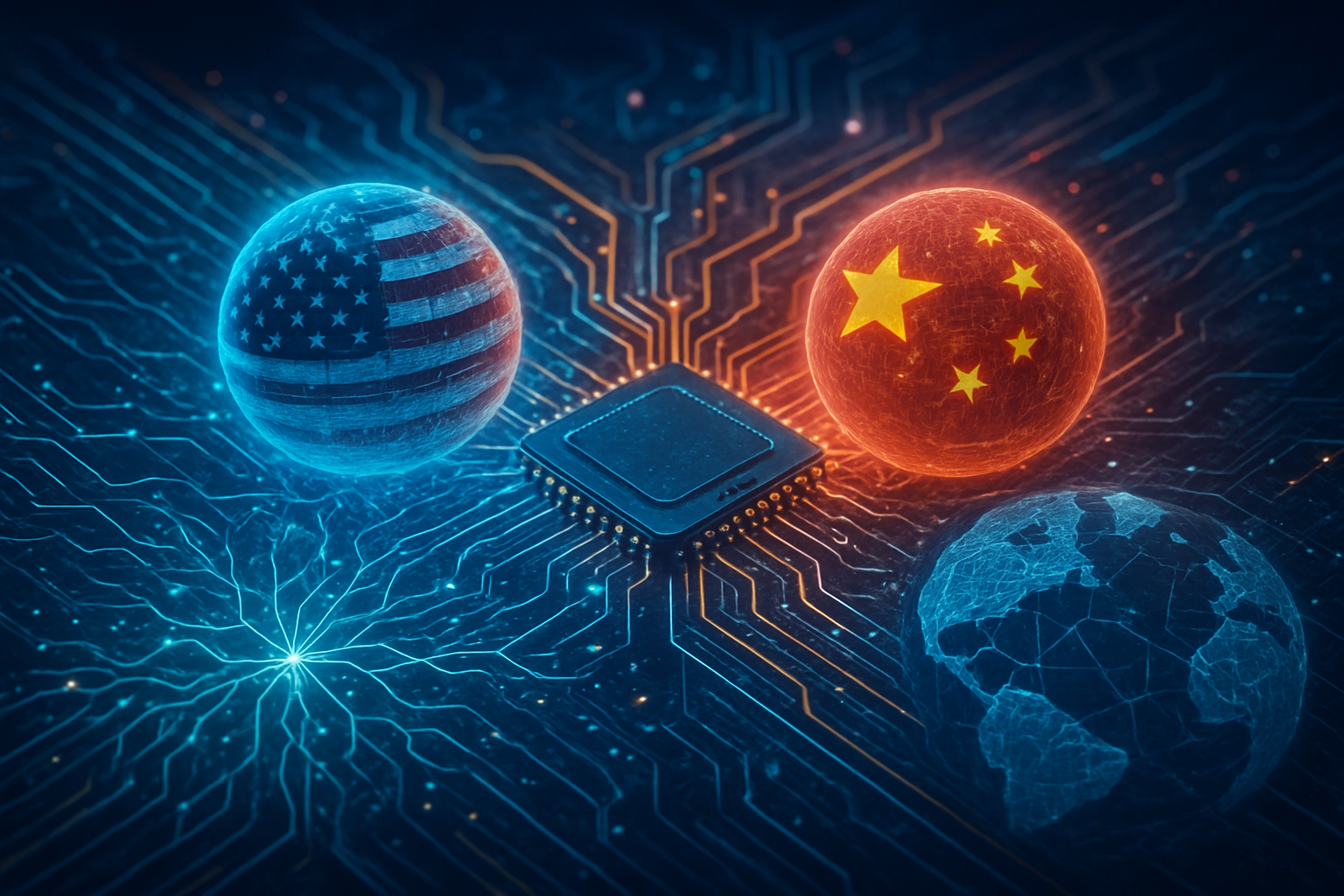
  • Silicon’s Golden Age: How AI’s Insatiable Hunger is Forging a Trillion-Dollar Chip Empire

    Silicon’s Golden Age: How AI’s Insatiable Hunger is Forging a Trillion-Dollar Chip Empire

    The world is currently in the midst of an unprecedented technological phenomenon: the 'AI Chip Supercycle.' This isn't merely a fleeting market trend, but a profound paradigm shift driven by the insatiable demand for artificial intelligence capabilities across virtually every sector. The relentless pursuit of more powerful and efficient AI has ignited an explosive boom in the semiconductor industry, propelling it towards a projected trillion-dollar valuation by 2028. This supercycle is fundamentally reshaping global economies, accelerating digital transformation, and elevating semiconductors to a critical strategic asset in an increasingly complex geopolitical landscape.

    The immediate significance of this supercycle is far-reaching. The AI chip market, valued at approximately $83.80 billion in 2025, is projected to skyrocket to an astounding $459.00 billion by 2032. This explosive growth is fueling an "infrastructure arms race," with hyperscale cloud providers alone committing hundreds of billions to build AI-ready data centers. It's a period marked by intense investment, rapid innovation, and fierce competition, as companies race to develop the specialized hardware essential for training and deploying sophisticated AI models, particularly generative AI and large language models (LLMs).

    The Technical Core: HBM, Chiplets, and a New Era of Acceleration

    The AI Chip Supercycle is characterized by critical technical innovations designed to overcome the "memory wall" and processing bottlenecks that have traditionally limited computing performance. Modern AI demands massive parallel processing for multiply-accumulate functions, a stark departure from the sequential tasks optimized by traditional CPUs. This has led to the proliferation of specialized AI accelerators like Graphics Processing Units (GPUs), Tensor Processing Units (TPUs), and Application-Specific Integrated Circuits (ASICs), engineered specifically for machine learning workloads.

    Two of the most pivotal advancements enabling this supercycle are High Bandwidth Memory (HBM) and chiplet technology. HBM is a next-generation DRAM technology that vertically stacks multiple memory chips, interconnected through dense Through-Silicon Vias (TSVs). This 3D stacking, combined with close integration with the processing unit, allows HBM to achieve significantly higher bandwidth and lower latency than conventional memory. AI models, especially during training, require ingesting vast amounts of data at high speeds, and HBM dramatically reduces memory bottlenecks, making training more efficient and less time-consuming. The evolution of HBM standards, with HBM3 now a JEDEC standard, offers even greater bandwidth and improved energy efficiency, crucial for products like Nvidia's (NASDAQ: NVDA) H100 and AMD's (NASDAQ: AMD) Instinct MI300 series.

    Chiplet technology, on the other hand, represents a modular approach to chip design. Instead of building a single, large monolithic chip, chiplets involve creating smaller, specialized integrated circuits that perform specific tasks. These chiplets are designed separately and then integrated into a single processor package, communicating via high-speed interconnects. This modularity offers unprecedented scalability, cost efficiency (as smaller dies reduce manufacturing defects and improve yield rates), and flexibility, allowing for easier customization and upgrades. Different parts of a chip can be optimized on different manufacturing nodes, further enhancing performance and cost-effectiveness. Companies like AMD and Intel (NASDAQ: INTC) are actively adopting chiplet technology for their AI processors, enabling the construction of AI supercomputers capable of handling the immense processing requirements of large generative language models.

    Initial reactions from the AI research community and industry experts have been overwhelmingly positive, viewing this period as a transformative era. There's a consensus that the "AI supercycle" is igniting unprecedented capital spending, with annual collective investment in AI by major hyperscalers projected to triple to $450 billion by 2027. However, alongside the excitement, there are concerns about the massive energy consumption of AI, the ongoing talent shortages, and the increasing complexity introduced by geopolitical tensions.

    Nvidia's Reign and the Shifting Sands of Competition

    Nvidia (NASDAQ: NVDA) stands at the epicenter of the AI Chip Supercycle, holding a profoundly central and dominant role. Initially known for gaming GPUs, Nvidia strategically pivoted its focus to the data center sector, which now accounts for over 83% of its total revenue. The company currently commands approximately 80% of the AI GPU market, with its GPUs proving indispensable for the massive-scale data processing and generative AI applications driving the supercycle. Technologies like OpenAI's ChatGPT are powered by thousands of Nvidia GPUs.

    Nvidia's market dominance is underpinned by its cutting-edge chip architectures and its comprehensive software ecosystem. The A100 (Ampere Architecture) and H100 (Hopper Architecture) Tensor Core GPUs have set industry benchmarks. The H100, in particular, represents an order-of-magnitude performance leap over the A100, featuring fourth-generation Tensor Cores, a specialized Transformer Engine for accelerating large language model training and inference, and HBM3 memory providing over 3 TB/sec of memory bandwidth. Nvidia continues to extend its lead with the Blackwell series, including the B200 and GB200 "superchip," which promise up to 30x the performance for AI inference and significantly reduced energy consumption compared to previous generations.

    Beyond hardware, Nvidia's extensive and sophisticated software ecosystem, including CUDA, cuDNN, and TensorRT, provides developers with powerful tools and libraries optimized for GPU computing. This ecosystem enables efficient programming, faster execution of AI models, and support for a wide range of AI and machine learning frameworks, solidifying Nvidia's position and creating a strong competitive moat. The "CUDA-first, x86-compatible architecture" is rapidly becoming a standard in data centers.

    However, Nvidia's dominance is not without challenges. There's a recognized proliferation of specialized hardware and open alternatives like AMD's ROCm. Hyperscalers such as Google (NASDAQ: GOOGL), Amazon (NASDAQ: AMZN), and Microsoft (NASDAQ: MSFT) are increasingly developing proprietary Application-Specific Integrated Circuits (ASICs) to reduce reliance on external suppliers and optimize hardware for specific AI workloads. This trend directly challenges general-purpose GPU providers and signifies a strategic shift towards in-house silicon development. Moreover, geopolitical tensions, particularly between the U.S. and China, are forcing Nvidia and other U.S. chipmakers to design specialized, "China-only" versions of their AI chips with intentionally reduced performance to comply with export controls, impacting potential revenue streams and market strategies.

    Geopolitical Fault Lines and the UAE Chip Deal Fallout

    The AI Chip Supercycle is unfolding within a highly politicized landscape where semiconductors are increasingly viewed as strategic national assets. This has given rise to "techno-nationalism," with governments actively intervening to secure technological sovereignty and national security. The most prominent example of these geopolitical challenges is the stalled agreement to supply the United Arab Emirates (UAE) with billions of dollars worth of advanced AI chips, primarily from U.S. manufacturer Nvidia.

    This landmark deal, initially aimed at bolstering the UAE's ambition to become a global AI hub, has been put on hold due to national security concerns raised by the United States. The primary impediment is the US government's fear that China could gain indirect access to these cutting-edge American technologies through Emirati entities. G42, an Abu Dhabi-based AI firm slated to receive a substantial portion of the chips, has been a key point of contention due to its historical ties with Chinese firms. Despite G42's efforts to align with US tech standards and divest from Chinese partners, the US Commerce Department remains cautious, demanding robust security guarantees and potentially restricting G42's direct chip access.

    This stalled deal is a stark illustration of the broader US-China technology rivalry. The US has implemented stringent export controls on advanced chip technologies, AI chips (like Nvidia's A100 and H100, and even their downgraded versions), and semiconductor manufacturing equipment to limit China's progress in AI and military applications. The US government's strategy is to prevent any "leakage" of critical technology to countries that could potentially re-export or allow access to adversaries.

    The implications for chip manufacturers and global supply chains are profound. Nvidia is directly affected, facing potential revenue losses and grappling with complex international regulatory landscapes. Critical suppliers like ASML (AMS: ASML), a Dutch company providing extreme ultraviolet (EUV) lithography machines essential for advanced chip manufacturing, are caught in the geopolitical crosshairs as the US pushes to restrict technology exports to China. TSMC (NYSE: TSM), the world's leading pure-play foundry, faces significant geopolitical risks due to its concentration in Taiwan. To mitigate these risks, TSMC is diversifying its manufacturing by building new fabrication facilities in the US, Japan, and planning for Germany. Innovation is also constrained when policy dictates chip specifications, potentially diverting resources from technological advancement to compliance. These tensions disrupt intricate global supply chains, leading to increased costs and forcing companies to recalibrate strategic partnerships. Furthermore, US export controls have inadvertently spurred China's drive for technological self-sufficiency, accelerating the emergence of rival technology ecosystems and further fragmenting the global landscape.

    The Broader AI Landscape: Power, Progress, and Peril

    The AI Chip Supercycle fits squarely into the broader AI landscape as the fundamental enabler of current and future AI trends. The exponential growth in demand for computational power is not just about faster processing; it's about making previously theoretical AI applications a practical reality. This infrastructure arms race is driving advancements that allow for the training of ever-larger and more complex models, pushing the boundaries of what AI can achieve in areas like natural language processing, computer vision, and autonomous systems.

    The impacts are transformative. Industries from healthcare (precision diagnostics, drug discovery) to automotive (autonomous driving, ADAS) to finance (fraud detection, algorithmic trading) are being fundamentally reshaped. Manufacturing is becoming more automated and efficient, and consumer electronics are gaining advanced AI-powered features like real-time language translation and generative image editing. The supercycle is accelerating the digital transformation across all sectors, promising new business models and capabilities.

    However, this rapid advancement comes with significant concerns. The massive energy consumption of AI is a looming crisis, with projections indicating a doubling from 260 terawatt-hours in 2024 to 500 terawatt-hours in 2027. Data centers powering AI are consuming electricity at an alarming rate, straining existing grids and raising environmental questions. The concentration of advanced chip manufacturing in specific regions also creates significant supply chain vulnerabilities and geopolitical risks, making the industry susceptible to disruptions from natural disasters or political conflicts. Comparisons to previous AI milestones, such as the rise of expert systems or deep learning, highlight that while the current surge in hardware capability is unprecedented, the long-term societal and ethical implications of widespread, powerful AI are still being grappled with.

    The Horizon: What Comes Next in the Chip Race

    Looking ahead, the AI Chip Supercycle is expected to continue its trajectory of intense innovation and growth. In the near term (2025-2030), we will see further refinement of existing architectures, with GPUs, ASICs, and even CPUs advancing their specialized capabilities. The industry will push towards smaller processing nodes (2nm and 1.4nm) and advanced packaging techniques like CoWoS and SoIC, crucial for integrating complex chip designs. The adoption of chiplets will become even more widespread, offering modularity, scalability, and cost efficiency. A critical focus will be on energy efficiency, with significant efforts to develop microchips that handle inference tasks more cost-efficiently, including reimagining chip design and integrating specialized memory solutions like HBM. Major tech giants will continue their investment in developing custom AI silicon, intensifying the competitive landscape. The growth of Edge AI, processing data locally on devices, will also drive demand for smaller, cheaper, and more energy-efficient chips, reducing latency and enhancing privacy.

    In the long term (2030 and beyond), the industry anticipates even more complex 3D-stacked architectures, potentially requiring microfluidic cooling solutions. New computing paradigms like neuromorphic computing (brain-inspired processing), quantum computing (solving problems beyond classical computers), and silicon photonics (using light for data transmission) are expected to redefine AI capabilities. AI algorithms themselves will increasingly be used to optimize chip design and manufacturing, accelerating innovation cycles.

    However, significant challenges remain. The manufacturing complexity and astronomical cost of producing advanced AI chips, along with the escalating power consumption and heat dissipation issues, demand continuous innovation. Supply chain vulnerabilities, talent shortages, and persistent geopolitical tensions will continue to shape the industry. Experts predict sustained growth, describing the current surge as a "profound recalibration" and an "infrastructure arms race." While Nvidia currently dominates, intense competition and innovation from other players and custom silicon developers will continue to challenge its position. Government investments, such as the U.S. CHIPS Act, will play a pivotal role in bolstering domestic manufacturing and R&D, while on-device AI is seen as a crucial solution to mitigate the energy crisis.

    A New Era of Computing: The AI Chip Supercycle's Enduring Legacy

    The AI Chip Supercycle is fundamentally reshaping the global technological and economic landscape, marking a new era of computing. The key takeaway is that AI chips are the indispensable foundation for the burgeoning field of artificial intelligence, enabling the complex computations required for everything from large language models to autonomous systems. This market is experiencing, and is predicted to sustain, exponential growth, driven by an ever-increasing demand for AI capabilities across virtually all industries. Innovation is paramount, with relentless advancements in chip design, manufacturing processes, and architectures.

    This development's significance in AI history cannot be overstated. It represents the physical infrastructure upon which the AI revolution is being built, a shift comparable in scale to the industrial revolution or the advent of the internet. The long-term impact will be profound: AI chips will be a pivotal driver of economic growth, technological progress, and national security for decades. This supercycle will accelerate digital transformation across all sectors, enabling previously impossible applications and driving new business models.

    However, it also brings significant challenges. The massive energy consumption of AI will place considerable strain on global energy grids and raise environmental concerns, necessitating huge investments in renewable energy and innovative energy-efficient hardware. The geopolitical importance of semiconductor manufacturing will intensify, leading nations to invest heavily in domestic production and supply chain resilience. What to watch for in the coming weeks and months includes continued announcements of new chip architectures, further developments in advanced packaging, and the evolving strategies of tech giants as they balance reliance on external suppliers with in-house silicon development. The interplay of technological innovation and geopolitical maneuvering will define the trajectory of this supercycle and, by extension, the future of artificial intelligence itself.

    This content is intended for informational purposes only and represents analysis of current AI developments.

    TokenRing AI delivers enterprise-grade solutions for multi-agent AI workflow orchestration, AI-powered development tools, and seamless remote collaboration platforms.
    For more information, visit https://www.tokenring.ai/.