
Tag: Geopolitics

  • Silicon Shield or Geopolitical Minefield? How Global Tensions Are Reshaping AI’s Future

    Silicon Shield or Geopolitical Minefield? How Global Tensions Are Reshaping AI’s Future

    As of October 2025, the global landscape of Artificial Intelligence (AI) is being profoundly reshaped not just by technological breakthroughs, but by an intensifying geopolitical struggle over the very building blocks of intelligence: semiconductors. What was once a purely commercial commodity has rapidly transformed into a strategic national asset, igniting an "AI Cold War" primarily between the United States and China. This escalating competition is leading to significant fragmentation of global supply chains, driving up production costs, and forcing nations to critically re-evaluate their technological dependencies. The immediate significance for the AI industry is a heightened vulnerability of its foundational hardware, risking slower innovation, increased costs, and the balkanization of AI development along national lines, even as demand for advanced AI chips continues to surge.

    The repercussions are far-reaching, impacting everything from the development of next-generation AI models to national security strategies. With Taiwan's TSMC (TPE: 2330, NYSE: TSM) holding a near-monopoly on advanced chip manufacturing, its geopolitical stability has become a "silicon shield" for the global AI industry, yet also a point of immense tension. Nations worldwide are now scrambling to onshore and diversify their semiconductor production, pouring billions into initiatives like the U.S. CHIPS Act and the EU Chips Act, fundamentally altering the trajectory of AI innovation and global technological leadership.

    The New Geopolitics of Silicon

    The geopolitical landscape surrounding semiconductor production for AI is a stark departure from historical trends, pivoting from a globalization model driven by efficiency to one dominated by technological sovereignty and strategic control. The central dynamic remains the escalating strategic competition between the United States and China for AI leadership, where advanced semiconductors are now unequivocally viewed as critical national security assets. This shift has reshaped global trade, diverging significantly from classical free trade principles. The highly concentrated nature of advanced chip manufacturing, especially in Taiwan, exacerbates these geopolitical vulnerabilities, creating critical "chokepoints" in the global supply chain.

    The United States has implemented a robust and evolving set of policies to secure its lead. Stringent export controls, initiated in October 2022 and expanded through 2023 and December 2024, restrict the export of advanced computing chips, particularly Graphics Processing Units (GPUs), and semiconductor manufacturing equipment to China. These measures, targeting specific technical thresholds, aim to curb China's AI and military capabilities. Domestically, the CHIPS and Science Act provides substantial subsidies and incentives for reshoring semiconductor manufacturing, exemplified by GlobalFoundries' $16 billion investment in June 2025 to expand facilities in New York and Vermont. The Trump administration's July 2025 AI Action Plan further emphasized domestic chip manufacturing, though it rescinded the broader "AI Diffusion Rule" in favor of more targeted export controls to prevent diversion to China via third countries like Malaysia and Thailand.

    China, in response, is aggressively pursuing self-sufficiency under its "Independent and Controllable" (自主可控) strategy. Initiatives like "Made in China 2025" and "Big Fund 3.0" channel massive state-backed investments into domestic chip design and manufacturing. Companies like Huawei's HiSilicon (Ascend series) and SMIC are central to this effort, increasingly viable for mid-tier AI applications, with SMIC having surprised the industry by producing 7nm chips. In a retaliatory move, China announced a ban on exporting key rare minerals like gallium and germanium, vital for semiconductors, to the U.S. in December 2024. Chinese tech giants like Tencent (HKG: 0700) are also actively supporting domestically designed AI chips, aligning with the national agenda.

    Taiwan, home to TSMC, remains the indispensable "Silicon Shield," producing over 90% of the world's most advanced chips. Its dominance is a crucial deterrent against aggression, as global economies rely heavily on its foundries. Despite U.S. pressure for TSMC to shift significant production to the U.S. (with TSMC investing $100 billion to $165 billion in Arizona fabs), Taiwan explicitly rejected a 50-50 split in global production in October 2025, reaffirming its strategic role. Other nations are also bolstering their capabilities: Japan is revitalizing its semiconductor industry with a ¥10 trillion investment plan by 2030, spearheaded by Rapidus, a public-private collaboration aiming for 2nm chips by 2027. South Korea, a memory chip powerhouse, has allocated $23.25 billion to expand into non-memory AI semiconductors, with companies like Samsung (KRX: 005930) and SK Hynix (KRX: 000660) dominating the High Bandwidth Memory (HBM) market crucial for AI. South Korea is also recalibrating its strategy towards "friend-shoring" with the U.S. and its allies.

    This era fundamentally differs from past globalization. The primary driver has shifted from economic efficiency to national security, leading to fragmented, regionalized, and "friend-shored" supply chains. Unprecedented government intervention through massive subsidies and export controls contrasts sharply with previous hands-off approaches. The emergence of advanced AI has elevated semiconductors to a critical dual-use technology, making them indispensable for military, economic, and geopolitical power, thus intensifying scrutiny and competition to an unprecedented degree.

    Impact on AI Companies, Tech Giants, and Startups

    The escalating geopolitical tensions in the semiconductor supply chain are creating a turbulent and fragmented environment that profoundly impacts AI companies, tech giants, and startups. The "weaponization of interdependence" in the industry is forcing a strategic shift from "just-in-time" to "just-in-case" approaches, prioritizing resilience over economic efficiency. This directly translates to increased costs for critical AI accelerators—GPUs, ASICs, and High Bandwidth Memory (HBM)—and prolonged supply chain disruptions, with potential price hikes of 20% on advanced GPUs if significant disruptions occur.

    Tech giants, particularly hyperscalers like Alphabet (NASDAQ: GOOGL), Amazon (NASDAQ: AMZN), and Microsoft (NASDAQ: MSFT), are heavily investing in in-house chip design to develop custom AI chips such as Google's TPUs, Amazon's Inferentia, and Microsoft's Azure Maia AI Accelerator. This strategy aims to reduce reliance on external vendors like NVIDIA (NASDAQ: NVDA) and AMD (NASDAQ: AMD), providing greater control and mitigating supply chain risks. However, even these giants face an intense battle for skilled semiconductor engineers and AI specialists. U.S. export controls on advanced AI chips to China have also compelled companies like NVIDIA and AMD to develop modified, less powerful chips for the Chinese market, sometimes with a revenue cut to the U.S. government, with NVIDIA facing an estimated $5.5 billion decline in revenue in 2025 due to these restrictions.

    AI startups are particularly vulnerable. Increased component costs and fragmented supply chains make it harder for them to procure advanced GPUs and specialized chips, forcing them to compete for limited resources against tech giants who can absorb higher costs or leverage economies of scale. This hardware disparity, coupled with difficulties in attracting and retaining top talent, stifles innovation for smaller players.

    Companies most vulnerable include Chinese tech giants like Baidu (NASDAQ: BIDU), Tencent (HKG: 0700), and Alibaba (NYSE: BABA), which are highly exposed to stringent U.S. export controls, limiting their access to crucial technologies and slowing their AI roadmaps. Firms overly reliant on a single region or manufacturer, especially Taiwan's TSMC, face immense risks from geopolitical shocks. Companies with significant dual U.S.-China operations also navigate a bifurcated market where geopolitical alignment dictates survival. The U.S. revoked TSMC's "Validated End-User" status for its Nanjing facility in 2025, further limiting China's access to U.S.-origin equipment.

    Conversely, those set to benefit include hyperscalers with in-house chip design, as they gain strategic advantages. Key semiconductor equipment manufacturers like NVIDIA (chip design), ASML (AMS: ASML, NASDAQ: ASML) (lithography equipment), and TSMC (manufacturing) form a critical triumvirate controlling over 90% of advanced AI chip production. SK Hynix (KRX: 000660) has emerged as a major winner in the high-growth HBM market. Companies diversifying geographically through "friend-shoring," such as TSMC's investments in Arizona and Japan, and Intel's (NASDAQ: INTC) domestic expansion, are also accelerating growth. Samsung Electronics (KRX: 005930) benefits from its integrated device manufacturing model and diversified global production. Emerging regional hubs like South Korea's $471 billion semiconductor "supercluster" and India's new manufacturing incentives are also gaining prominence.

    The competitive implications for AI innovation are significant, leading to a "Silicon Curtain" and an "AI Cold War." The global technology ecosystem is fragmenting into distinct blocs with competing standards, potentially slowing global innovation. While this techno-nationalism fuels accelerated domestic innovation, it also leads to higher costs, reduced efficiency, and an intensified global talent war for skilled engineers. Strategic alliances, such as the U.S.-Japan-South Korea-Taiwan alliance, are forming to secure supply chains, but the overall landscape is becoming more fragmented, expensive, and driven by national security priorities.

    Wider Significance: AI as the New Geopolitical Battleground

    The geopolitical reshaping of AI semiconductor supply chains carries profound wider significance, extending beyond corporate balance sheets to national security, economic stability, and technological sovereignty. This dynamic, frequently termed an "AI Cold War," presents challenges distinct from previous technological shifts due to the dual-use nature of AI chips and aggressive state intervention.

    From a national security perspective, advanced semiconductors are now critical strategic assets, underpinning modern military capabilities, intelligence gathering, and defense systems. Disruptions to their supply can have global impacts on a nation's ability to develop and deploy cutting-edge technologies like generative AI, quantum computing, and autonomous systems. The U.S. export controls on advanced chips to China, for instance, are explicitly aimed at hindering China's AI development for military applications. China, in turn, accelerates its domestic AI research and leverages its dominance in critical raw materials, viewing self-sufficiency as paramount. The concentration of advanced chip manufacturing in Taiwan, with TSMC producing over 90% of the world's most advanced logic chips, creates a single point of failure, linking Taiwan's geopolitical stability directly to global AI infrastructure and defense. Cybersecurity also becomes a critical dimension, as secure chips are vital for protecting sensitive data and infrastructure.

    Economically, the geopolitical impact directly threatens global stability. The industry, facing unprecedented demand for AI chips, operates with systemic vulnerabilities. Export controls and trade barriers disrupt global supply chains, forcing a divergence from traditional free trade models as nations prioritize security over market efficiency. This "Silicon Curtain" is driving up costs, fragmenting development pathways, and forcing a fundamental reassessment of operational strategies. While the semiconductor industry is projected to rebound with a 19% surge in 2024 driven by AI demand, geopolitical headwinds could erode long-term margins for companies like NVIDIA. The push for domestic production, though aimed at resilience, often comes at a higher cost; building a U.S. fab, for example, is approximately 30% more expensive than in Asia. This economic nationalism risks a more fragmented, regionalized, and ultimately more expensive semiconductor industry, with duplicated supply chains and a potentially slower pace of global innovation. Venture capital flows for Chinese AI startups have also slowed due to chip availability restrictions.

    Technological sovereignty, a nation's ability to control its digital destiny, has become a central objective. This encompasses control over the entire AI supply chain, from data to hardware and software. The U.S. CHIPS and Science Act and the European Chips Act are prime examples of strategic policies aimed at bolstering domestic semiconductor capabilities and reducing reliance on foreign manufacturing, with the EU aiming to double its semiconductor market share to 20% by 2030. China's "Made in China 2025" and Dual Circulation strategy similarly seek technological independence. However, complete self-sufficiency is challenging due to the highly globalized and specialized nature of the semiconductor value chain. No single country can dominate all segments, meaning interdependence, collaboration, and "friendshoring" remain crucial for maintaining technological leadership and resilience.

    Compared to previous technological shifts, the current situation is distinct. It features an explicit geopolitical weaponization of technology, tying AI leadership directly to national security and military advantage, a level of state intervention not seen in past tech races. The dual-use nature and foundational importance of AI chips make them subject to unprecedented scrutiny, unlike earlier technologies. This era involves a deliberate push for self-sufficiency and technological decoupling, moving beyond mere resilience strategies seen after past disruptions like the 1973 oil crisis or the COVID-19 pandemic. The scale of government subsidies and strategic stockpiling reflects the perceived existential importance of these technologies, making this a crisis of a different magnitude and intent.

    Future Developments: Navigating the AI Semiconductor Maze

    The future of AI semiconductor geopolitics promises continued transformation, characterized by intensified competition, strategic realignments, and an unwavering focus on technological sovereignty. The insatiable demand for advanced AI chips, powering everything from generative AI to national security, will remain the core driver.

    In the near-term (2025-2026), the US-China "Global Chip War" will intensify, with refined export controls from the U.S. and continued aggressive investments in domestic production from China. This rivalry will directly impact the pace and direction of AI innovation, with China demonstrating "innovation under pressure" by optimizing existing hardware and developing advanced AI models with lower computational costs. Regionalization and reshoring efforts through acts like the U.S. CHIPS Act and the EU Chips Act will continue, though they face hurdles such as high costs (new fabs exceeding $20 billion) and vendor concentration. TSMC's new fabs in Arizona will progress, but its most advanced production and R&D will remain in Taiwan, sustaining strategic vulnerability. Supply chain diversification will see Asian semiconductor suppliers relocating from China to countries like Malaysia, Thailand, and the Philippines, with India emerging as a strategic alternative. An intensifying global shortage of skilled semiconductor engineers and AI specialists will pose a critical threat, driving up wages and challenging progress.

    Long-term (beyond 2026), experts predict a deeply bifurcated global semiconductor market, with distinct technological ecosystems potentially slowing overall AI innovation and increasing costs. The ability of the U.S. and its partners to cooperate on controls around "chokepoint" technologies, such as advanced lithography equipment from ASML, will strengthen their relative positions. As transistors approach physical limits and costs rise, there may be a long-term shift towards algorithmic rather than purely hardware-driven AI innovation. The risk of technological balkanization, where regions develop incompatible standards, could hinder global AI collaboration, yet also foster greater resilience. Persistent geopolitical tensions, especially concerning Taiwan, will continue to influence international relations for decades.

    Potential applications and use cases on the horizon are vast, driven by the "AI supercycle." Data centers and cloud computing will remain primary engines for high-performance GPUs, HBM, and advanced memory. Edge AI will see explosive growth in autonomous vehicles, industrial automation, smart manufacturing, consumer electronics, and IoT sensors, demanding low-power, high-performance chips. Healthcare will be transformed by AI chips in medical imaging, wearables, and telemedicine. Aerospace and defense will increasingly leverage AI chips for dual-use applications. New chip architectures like neuromorphic computing (Intel's Loihi, IBM's TrueNorth), quantum computing, silicon photonics (TSMC investments), and specialized ASICs (Meta (NASDAQ: META) testing its MTIA chip) will revolutionize processing capabilities. FPGAs will offer flexible hybrid solutions.

    Challenges that need to be addressed include persistent supply chain vulnerabilities, geopolitical uncertainty, and the concentration of manufacturing. The high costs of new fabs, the physical limits to Moore's Law, and severe talent shortages across the semiconductor industry threaten to slow AI innovation. The soaring energy consumption of AI models necessitates a focus on energy-efficient chips and sustainable manufacturing. Experts predict a continued surge in government funding for regional semiconductor hubs, an acceleration in the development of ASICs and neuromorphic chips, and an intensified talent war. Despite restrictions, Chinese firms will continue "innovation under pressure," with NVIDIA CEO Jensen Huang noting China is "nanoseconds behind" the U.S. in advancements. AI will also be increasingly used to optimize semiconductor supply chains through dynamic demand forecasting and risk mitigation. Strategic partnerships and alliances, such as the U.S. working with Japan and South Korea, will be crucial, with the EU pushing for a "Chips Act 2.0" to strengthen its domestic supply chains.

    Comprehensive Wrap-up: The Enduring Geopolitical Imperative of AI

    The intricate relationship between geopolitics and AI semiconductors has irrevocably shifted from an efficiency-driven global model to a security-centric paradigm. The profound interdependence of AI and semiconductor technology means that control over advanced chips is now a critical determinant of national security, economic resilience, and global influence, marking a pivotal moment in AI history.

    Key takeaways underscore the rise of techno-nationalism, with semiconductors becoming strategic national assets and nations prioritizing technological sovereignty. The intensifying US-China rivalry remains the primary driver, characterized by stringent export controls and a concerted push for self-sufficiency by both powers. The inherent vulnerability and concentration of advanced chip manufacturing, particularly in Taiwan via TSMC, create a "Silicon Shield" that is simultaneously a significant geopolitical flashpoint. This has spurred a global push for diversification and resilience through massive investments in reshoring and friend-shoring initiatives. The dual-use nature of AI chips, with both commercial and strategic military applications, further intensifies scrutiny and controls.

    In the long term, this geopolitical realignment is expected to lead to technological bifurcation and fragmented AI ecosystems, potentially reducing global interoperability and hindering collaborative innovation. While diversification efforts enhance resilience, they often come at increased costs, potentially leading to higher chip prices and slower global AI progress. This reshapes global trade and alliances, moving from efficiency-focused policies to security-centric governance. Export controls, while intended to slow adversaries, can also inadvertently accelerate self-reliance and spur indigenous innovation, as seen in China. Exacerbated talent shortages will remain a critical challenge. Ultimately, key players like TSMC face a complex future, balancing global expansion with the strategic imperative of maintaining their core technological DNA in Taiwan.

    In the coming weeks and months, several critical areas demand close monitoring. The evolution of US-China policy, particularly new iterations of US export restrictions and China's counter-responses and domestic progress, will be crucial. The ongoing US-Taiwan strategic partnership negotiations and any developments in Taiwan Strait tensions will remain paramount due to TSMC's indispensable role. The implementation and new targets of the European Union's "Chips Act 2.0" and its impact on EU AI development will reveal Europe's path to strategic autonomy. We must also watch the concrete progress of global diversification efforts and the emergence of new semiconductor hubs in India and Southeast Asia. Finally, technological innovation in advanced packaging capacity and the debate around open-source architectures like RISC-V will shape future chip design. The balance between the surging AI-driven demand and the industry's ability to supply amidst geopolitical uncertainties, alongside efforts towards energy efficiency and talent development, will define the trajectory of AI for years to come.

    This content is intended for informational purposes only and represents analysis of current AI developments.

    TokenRing AI delivers enterprise-grade solutions for multi-agent AI workflow orchestration, AI-powered development tools, and seamless remote collaboration platforms.
    For more information, visit https://www.tokenring.ai/.

  • The Global Chip War: Nations Pour Billions into Domestic Semiconductor Manufacturing to Secure AI’s Future

    The Global Chip War: Nations Pour Billions into Domestic Semiconductor Manufacturing to Secure AI’s Future

    The world is witnessing an unprecedented surge in government intervention within the semiconductor industry, as nations across the globe commit colossal sums to bolster domestic chip manufacturing. This strategic pivot, driven by a complex interplay of geopolitical tensions, national security imperatives, and the escalating demands of artificial intelligence, marks a significant departure from decades of market-driven globalization. From Washington to Brussels, Beijing to Tokyo, governments are enacting landmark legislation and offering multi-billion-dollar subsidies, fundamentally reshaping the global technology landscape and laying the groundwork for the next era of AI innovation. The immediate significance of this global effort is a race for technological sovereignty, aiming to de-risk critical supply chains and secure a competitive edge in an increasingly digital and AI-powered world.

    This aggressive push is transforming the semiconductor ecosystem, fostering a more regionalized and resilient, albeit potentially fragmented, industry. The motivations are clear: the COVID-19 pandemic exposed the fragility of a highly concentrated supply chain, particularly for advanced chips, leading to crippling shortages across various industries. Simultaneously, the escalating U.S.-China tech rivalry has elevated semiconductors to strategic assets, crucial for everything from national defense systems to advanced AI infrastructure. The stakes are high, with nations vying not just for economic prosperity but for control over the very hardware that will define the future of technology and global power dynamics.

    The Global Chip War: Nations Vie for Silicon Supremacy

    The current landscape is defined by a series of ambitious national strategies, each backed by substantial financial commitments, designed to reverse the offshoring trend and cultivate robust domestic semiconductor ecosystems. These initiatives represent the most significant industrial policy interventions in decades, moving beyond previous R&D-focused efforts to directly subsidize and incentivize manufacturing.

    At the forefront is the U.S. CHIPS and Science Act, enacted in August 2022. This landmark legislation authorizes approximately $280 billion in new funding, with $52.7 billion directly allocated to domestic semiconductor research, development, and manufacturing. This includes $39 billion in manufacturing subsidies (grants, loans, loan guarantees) and a substantial 25% advanced manufacturing investment tax credit, estimated at $24 billion. An additional $11 billion is dedicated to R&D, including the establishment of a National Semiconductor Technology Center (NSTC) and advanced packaging capabilities. The primary goal is to revitalize U.S. manufacturing capacity, which had dwindled to 12% of global production, and to secure supply chains for leading-edge chips vital for AI and defense. The act includes "guardrails" preventing recipients from expanding advanced manufacturing in countries of concern, a clear nod to geopolitical rivalries. Initial reactions from industry leaders like Pat Gelsinger, CEO of Intel (NASDAQ: INTC), were overwhelmingly positive, hailing the act as "historic." However, some economists raised concerns about a potential "subsidy race" and market distortion.

    Across the Atlantic, the EU Chips Act, enacted in September 2023, mobilizes over €43 billion (approximately $46 billion) in public and private investment. Its ambitious goal is to double Europe's global market share in semiconductors to 20% by 2030, strengthening its technological leadership in design, manufacturing, and advanced packaging. The act supports "first-of-a-kind" facilities, particularly for leading-edge and energy-efficient chips, and establishes a "Chips for Europe Initiative" for R&D and pilot lines. This represents a significant strategic shift for the EU, actively pursuing industrial policy to reduce reliance on external suppliers. European industry has welcomed the act as essential for regional resilience, though some concerns linger about the scale of funding compared to the U.S. and Asia, and the challenge of attracting sufficient talent.

    Meanwhile, China continues its long-standing commitment to achieving semiconductor self-sufficiency through its National Integrated Circuit Industry Investment Fund, commonly known as the "Big Fund." Its third phase, announced in May 2024, is the largest yet, reportedly raising $48 billion (344 billion yuan). This fund primarily provides equity investments across the entire semiconductor value chain, from design to manufacturing and equipment. China's strategy, part of its "Made in China 2025" initiative, predates Western responses to supply chain crises and aims for long-term technological independence, particularly intensified by U.S. export controls on advanced chipmaking equipment.

    Other key players are also making significant moves. South Korea, a global leader in memory and foundry services, is intensifying its efforts with initiatives like the K-Chips Act, passed in February 2025, which offers increased tax credits (up to 25% for large companies) for facility investments. In May 2024, the government announced a $23 billion funding package, complementing the ongoing $471 billion private-sector-led "supercluster" initiative in Gyeonggi Province by 2047, aiming to build the world's largest semiconductor manufacturing base. Japan is offering substantial subsidies, attracting major players like Taiwan Semiconductor Manufacturing Company (TSMC) (NYSE: TSM), which opened its first plant in Kumamoto in February 2023, with a second planned. Japan is also investing in R&D through Rapidus, a consortium aiming to produce advanced 2nm chips by the late 2020s with reported government support of $3.5 billion. India, through its India Semiconductor Mission (ISM), approved a $10 billion incentive program in December 2021 to attract manufacturing and design investments, offering fiscal support of up to 50% of project costs.

    Reshaping the Tech Landscape: Winners, Losers, and New Battlegrounds

    These national chip strategies are profoundly reshaping the global AI and tech industry, influencing supply chain resilience, competitive dynamics, and the trajectory of innovation. Certain companies are poised to be significant beneficiaries, while others face new challenges and market disruptions.

    Intel (NASDAQ: INTC) stands out as a primary beneficiary of the U.S. CHIPS Act. As part of its "IDM 2.0" strategy to regain process leadership and become a major foundry player, Intel is making massive investments in new fabs in Arizona, Ohio, and other states. It has been awarded up to $8.5 billion in direct funding and is eligible for a 25% investment tax credit on over $100 billion in investments, along with up to $11 billion in federal loans. This also includes $3 billion for a Secure Enclave program to ensure protected supply for the U.S. government, bolstering its position in critical sectors.

    TSMC (NYSE: TSM), the world's largest contract chipmaker, is also a major beneficiary, committing over $100 billion to establish multiple fabs in Arizona, backed by U.S. government support of up to $6.6 billion in direct funding and $5 billion in loans. TSMC is similarly expanding its footprint in Japan with significant subsidies, diversifying its manufacturing base beyond Taiwan. Samsung (KRX: 005930), another foundry giant, is investing heavily in U.S. manufacturing, particularly in Taylor and expanding Austin, Texas. Samsung is set to receive up to $6.4 billion in CHIPS Act funding for these efforts, representing an expected investment of over $40 billion in the region, bringing its most advanced manufacturing technology, including 2nm processes and advanced packaging operations, to the U.S. Micron Technology (NASDAQ: MU) has been awarded up to $6.165 billion in direct funds under the CHIPS Act to construct new memory fabs in Idaho and New York, supporting plans for approximately $50 billion in investments through 2030 and a total of $125 billion over two decades.

    For major AI labs and tech giants that design their own custom AI chips, such as Alphabet (NASDAQ: GOOGL) (Google), Amazon (NASDAQ: AMZN), and Microsoft (NASDAQ: MSFT), these subsidies promise a more diversified and resilient supply chain, reducing their concentration risk on single regions for advanced chip manufacturing. The emergence of new or strengthened domestic foundries offers more options for manufacturing proprietary AI accelerators, potentially leading to better pricing and more tailored services. The competitive landscape for foundries is intensifying, with Intel's resurgence and new entrants like Japan's Rapidus fostering greater competition in leading-edge process technology, potentially disrupting the previous duopoly of TSMC and Samsung.

    However, the landscape is not without its challenges. U.S. export controls have significantly impacted companies like Nvidia (NASDAQ: NVDA) and Advanced Micro Devices (AMD) (NASDAQ: AMD), limiting their ability to sell their most advanced AI chips to China. This has forced them to offer modified, less powerful chips, creating an opening for competitive Chinese alternatives. China's aggressive chip strategy, fueled by these restrictions, prioritizes domestic alternatives for AI chips, leading to a surge in demand and preferential government procurement for Chinese AI companies like Huawei's HiSilicon, Cambricon, Tencent (HKG: 0700), Alibaba (NYSE: BABA), and Baidu (NASDAQ: BIDU). This push is fostering entirely Chinese AI technology stacks, including hardware and software frameworks, challenging the dominance of existing ecosystems.

    Smaller AI startups may find new market opportunities by leveraging government subsidies and localized ecosystems, especially those focused on specialized AI chip designs or advanced packaging technologies. However, they could also face challenges due to increased competition for fab capacity or high pricing, even with new investments. The global "subsidy race" could also lead to market distortion and eventual oversupply in certain semiconductor segments, creating an uneven playing field and potentially triggering trade disputes.

    Beyond the Fab: Geopolitics, National Security, and the AI Backbone

    The wider significance of global government subsidies and national chip strategies extends far beyond economic incentives, deeply intertwining with geopolitics, national security, and the very foundation of artificial intelligence. These initiatives are not merely about industrial policy; they are about defining global power in the 21st century.

    Semiconductors are now unequivocally recognized as strategic national assets, vital for economic prosperity, defense, and future technological leadership. The ability to domestically produce advanced chips is crucial for military systems, critical infrastructure, and maintaining a competitive edge in strategic technologies like AI and quantum computing. The U.S. CHIPS Act, for instance, directly links semiconductor manufacturing to national security imperatives, providing funding for the Department of Defense's "microelectronics commons" initiative and workforce training. Export controls, particularly by the U.S. against China, are a key component of these national security strategies, aiming to impede technological advancement in rival nations, especially in areas critical for AI.

    The massive investment signals a shift in the AI development paradigm. While previous AI milestones, such as deep learning and large language models, were primarily driven by algorithmic and software advancements, the current emphasis is on the underlying hardware infrastructure. Nations understand that sustained progress in AI requires robust, secure, and abundant access to the specialized silicon that powers these intelligent systems, making the semiconductor supply chain a critical battleground for AI supremacy. This marks a maturation of the AI field, recognizing that future progress hinges not just on brilliant software but on robust, secure, and geographically diversified hardware capabilities.

    However, this global push for self-sufficiency introduces several potential concerns. The intense "subsidy race" could lead to market distortion and eventual oversupply in certain semiconductor segments. Building and operating state-of-the-art fabs in the U.S. can be significantly more expensive (30% to 50%) than in Asia, with government incentives bridging this gap. This raises questions about the long-term economic viability of these domestic operations without sustained government support, potentially creating "zombie fabs" that are not self-sustaining. Moreover, China's rapid expansion in mature-node chip capacity is already creating fears of oversupply and price wars.

    Furthermore, when one country offers substantial financial incentives, others may view it as unfair, sparking trade disputes and even trade wars. The current environment, with widespread subsidies, could set the stage for anti-dumping or anti-subsidy actions. The U.S. has already imposed tariffs on Chinese semiconductors and restricted exports of advanced chips and chipmaking equipment, leading to economic costs for both sides and amplifying geopolitical tensions. If nations pursue entirely independent semiconductor ecosystems, it could also lead to fragmentation of standards and technologies, potentially hindering global innovation and interoperability in AI.

    The Road Ahead: A Fragmented Future and the AI Imperative

    The future of the semiconductor industry, shaped by these sweeping government interventions, promises both transformative advancements and persistent challenges. Near-term developments (2025-2027) will see a continued surge in government-backed investments, accelerating the construction and initial operational phases of new fabrication plants across the U.S., Europe, Japan, South Korea, and India. The U.S. aims to produce 20% of the world's leading-edge chips by 2030, while Europe targets doubling its global market share to 20% by the same year. India expects its first domestically produced semiconductor chips by December 2025. These efforts represent a direct governmental intervention to rebuild strategic industrial bases, focusing on localized production and technological self-sufficiency.

    Long-term developments (2028 and beyond) will likely solidify a deeply bifurcated global semiconductor market, characterized by distinct technological ecosystems and standards catering to different geopolitical blocs. The emphasis will shift from pure economic efficiency to strategic resilience and national security, potentially leading to two separate, less efficient supply chains. Nations will continue to prioritize technological sovereignty, aiming to control advanced manufacturing and design capabilities essential for national security and economic competitiveness.

    The demand for semiconductors will continue its rapid growth, fueled by emerging technologies. Artificial Intelligence (AI) will remain a primary driver, with AI accelerators and chips optimized for matrix operations and parallel processing in high demand for training and deployment. Generative AI is significantly challenging semiconductor companies to integrate this technology into their products and processes, while AI itself is increasingly used in chip design to optimize layouts and simulate performance. Beyond AI, advanced semiconductors will be critical enablers for 5G/6G technology, electric vehicles (EVs) and advanced driver-assistance systems (ADAS), renewable energy infrastructure, medical devices, quantum computing, and the Internet of Things (IoT). Innovations will include 3D integration, advanced packaging, and new materials beyond silicon.

    However, significant challenges loom. Skilled labor shortages are a critical and intensifying problem, with a projected need for over one million additional skilled workers worldwide by 2030. The U.S. alone could face a deficit of 59,000 to 146,000 workers by 2029. This shortage threatens innovation and production capacities, stemming from an aging workforce, insufficient specialized graduates, and intense global competition for talent. High R&D and manufacturing costs continue to rise, with leading-edge fabs costing over $30 billion. Supply chain disruptions remain a vulnerability, with reliance on a complex global network for raw materials and logistical support. Geopolitical tensions and trade restrictions, particularly between the U.S. and China, will continue to reshape supply chains, leading to a restructuring of global semiconductor networks. Finally, sustainability is a growing concern, as semiconductor manufacturing is energy-intensive, necessitating a drive for greener and more efficient production processes.

    Experts predict an intensification of the geopolitical impact on the semiconductor industry, leading to a more fragmented and regionalized global market. This fragmentation is likely to result in higher manufacturing costs and increased prices for electronic goods. The current wave of government-backed investments is seen as just the beginning of a sustained effort to reshape the global chip industry. Addressing the talent gap will require a fundamental paradigm shift in workforce development and increased collaboration between industry, governments, and educational institutions.

    Conclusion: A New Era for Silicon and AI

    The global landscape of semiconductor manufacturing is undergoing a profound and irreversible transformation. The era of hyper-globalized, cost-optimized supply chains is giving way to a new paradigm defined by national security, technological sovereignty, and strategic resilience. Governments worldwide are investing unprecedented billions into domestic chip production, fundamentally reshaping the industry and laying the groundwork for the next generation of artificial intelligence.

    The key takeaway is a global pivot towards techno-nationalism, where semiconductors are recognized as critical national assets. Initiatives like the U.S. CHIPS Act, the EU Chips Act, and China's Big Fund are not merely economic stimuli; they are strategic declarations in a global "chip war" for AI dominance. These efforts are driving massive private investment, fostering new technological clusters, and creating high-paying jobs, but also raising concerns about market distortion, potential oversupply, and the fragmentation of global technological standards.

    This development is profoundly significant for AI history. While not an AI breakthrough in itself, it represents a critical milestone in securing the foundational hardware upon which all future AI advancements will be built. The ability to access a stable, secure, and geographically diversified supply of cutting-edge chips is paramount for continued progress in machine learning, generative AI, and high-performance computing. The long-term impact points towards a more fragmented yet resilient global semiconductor ecosystem, with regional self-sufficiency becoming a key objective. This could lead to higher manufacturing costs and potentially two parallel AI systems, forcing global companies to adapt to divergent compliance regimes and technological ecosystems.

    In the coming weeks and months, several key developments bear watching. The European Commission is already looking towards a potential EU Chips Act 2.0, with feedback informing future strategies focusing on skills, greener manufacturing, and international partnerships. U.S.-China tensions and export controls will continue to evolve, impacting global companies and potentially leading to further adjustments in policies. Expect more announcements regarding new fab construction, R&D facilities, and workforce development programs as the competition intensifies. Finally, the relentless drive for technological advancements in AI chips, including next-generation node technologies and high-bandwidth memory, will continue unabated, fueled by both market demand and government backing. The future of silicon is inextricably linked to the future of AI, and the battle for both has only just begun.

    This content is intended for informational purposes only and represents analysis of current AI developments.

    TokenRing AI delivers enterprise-grade solutions for multi-agent AI workflow orchestration, AI-powered development tools, and seamless remote collaboration platforms.
    For more information, visit https://www.tokenring.ai/.

  • TSMC: The Unseen Architect of the AI Revolution and Global Tech Dominance

    TSMC: The Unseen Architect of the AI Revolution and Global Tech Dominance

    Taiwan Semiconductor Manufacturing Company (TSMC) (NYSE: TSM) stands as the undisputed titan of the global chip manufacturing industry, an indispensable force shaping the future of artificial intelligence and the broader technological landscape. As the world's leading pure-play semiconductor foundry, TSMC manufactures nearly 90% of the world's most advanced logic chips, holding a commanding 70.2% share of the global pure-play foundry market as of Q2 2025. Its advanced technological capabilities, dominant market share, and critical partnerships with major tech companies underscore its immediate and profound significance, making it the foundational bedrock for the AI revolution, 5G, autonomous vehicles, and high-performance computing.

    The company's pioneering "pure-play foundry" business model, which separates chip design from manufacturing, has enabled countless fabless semiconductor companies to thrive without the immense capital expenditure required for chip fabrication facilities. This model has fueled innovation and technological advancements across various sectors, making TSMC an unparalleled enabler of the digital age.

    The Unseen Hand: TSMC's Unrivaled Technological Leadership

    TSMC's market dominance is largely attributed to its relentless pursuit of technological advancement and its strategic alignment with the burgeoning AI sector. While TSMC doesn't design its own AI chips, it manufactures the cutting-edge silicon that powers AI systems for its customers, including industry giants like NVIDIA (NASDAQ: NVDA), Apple (NASDAQ: AAPL), Advanced Micro Devices (NASDAQ: AMD), and Qualcomm (NASDAQ: QCOM). The company has consistently pushed the boundaries of semiconductor technology, pioneering processes such as advanced packaging (like CoWoS, crucial for AI) and stacked-die technology.

    The company's advanced nodes are primarily referred to as "nanometer" numbers, though these are largely marketing terms representing new, improved generations of chips with increased transistor density, speed, and reduced power consumption.

    The 5nm Process Node (N5 family), which entered volume production in Q2 2020, delivered an 80% increase in logic density and 15% faster performance at the same power compared to its 7nm predecessor, largely due to extensive use of Extreme Ultraviolet (EUV) lithography. This node became the workhorse for early high-performance mobile and AI chips.

    Building on this, the 3nm Process Node (N3 family) began volume production in December 2022. It offers up to a 70% increase in logic density over N5 and a 10-15% performance boost or 25-35% lower power consumption. Notably, TSMC's 3nm node continues to utilize FinFET technology, unlike competitor Samsung (KRX: 005930), which transitioned to GAAFET at this stage. The N3 family includes variants like N3E (enhanced for better yield and efficiency), N3P, N3S, and N3X, each optimized for specific applications.

    The most significant architectural shift comes with the 2nm Process Node (N2), slated for risk production in 2024 and volume production in 2025. This node will debut TSMC's Gate-All-Around (GAAFET) transistors, specifically nanosheet technology, replacing FinFETs which have reached fundamental limits. This transition promises further leaps in performance and power efficiency, essential for the next generation of AI accelerators.

    Looking further ahead, TSMC's 1.4nm Process Node (A14), mass-produced by 2028, will utilize TSMC's second-generation GAAFET nanosheet technology. Renamed using angstroms (A14), it's expected to deliver 10-15% higher performance or 25-30% lower power consumption over N2, with approximately 20-23% higher logic density. An A14P version with backside power delivery is planned for 2029. OpenAI, a leading AI research company, reportedly chose TSMC's A16 (1.6nm) process node for its first-ever custom AI chips, demonstrating the industry's reliance on TSMC's bleeding-edge capabilities.

    The AI research community and industry experts widely acknowledge TSMC's technological prowess as indispensable. There's immense excitement over how TSMC's advancements enable next-generation AI accelerators, with AI itself becoming an "indispensable tool" for accelerating chip design. Analysts like Phelix Lee from Morningstar estimate TSMC to be about three generations ahead of domestic Chinese competitors (like SMIC) and one to half a generation ahead of other major global players like Samsung and Intel (NASDAQ: INTC), especially in mass production and yield control.

    TSMC's Gravitational Pull: Impact on the Tech Ecosystem

    TSMC's dominance creates a powerful gravitational pull in the tech ecosystem, profoundly influencing AI companies, tech giants, and even nascent startups. Its advanced manufacturing capabilities are the silent enabler of the current AI boom, providing the unprecedented computing power necessary for generative AI and large language models.

    The most significant beneficiaries are fabless semiconductor companies that design cutting-edge AI chips. NVIDIA, for instance, heavily relies on TSMC's advanced nodes and advanced packaging technologies like CoWoS for its industry-leading GPUs, which form the backbone of most AI training and inference operations. Apple, TSMC's biggest single customer in 2023, depends entirely on TSMC for its custom A-series and M-series chips, which increasingly incorporate AI capabilities. AMD also leverages TSMC's manufacturing for its Instinct accelerators and other AI server chips. Hyperscalers like Google (NASDAQ: GOOGL), Amazon (NASDAQ: AMZN), and Microsoft (NASDAQ: MSFT) are increasingly designing their own custom AI chips, many of which are manufactured by TSMC, to optimize for their specific AI workloads.

    For major AI labs and tech companies, TSMC's dominance presents both opportunities and challenges. While NVIDIA benefits immensely, it also faces competition from tech giants designing custom AI chips, often manufactured by TSMC. Intel, with its IDM 2.0 strategy, is aggressively investing in Intel Foundry Services (IFS) to challenge TSMC and Samsung, aiming to offer an alternative for supply chain diversification. However, Intel has struggled to match TSMC's yield rates and production scalability in advanced nodes. Samsung, as the second-largest foundry player, also competes, but similarly faces challenges in matching TSMC's advanced node execution. An alliance between Intel and NVIDIA, involving a $5 billion investment, suggests a potential diversification of NVIDIA's production, posing a strategic challenge to TSMC's near-monopoly.

    TSMC's "pure-play" foundry model, its technological leadership, and manufacturing excellence in terms of yield management and time-to-market give it immense strategic advantages. Its leadership in advanced packaging like CoWoS and SoIC is critical for integrating complex components of modern AI accelerators, enabling unprecedented performance. AI-related applications alone accounted for 60% of TSMC's Q2 2025 revenue, demonstrating its pivotal role in the AI era.

    The "Silicon Shield": Wider Significance and Geopolitical Implications

    TSMC's near-monopoly on advanced chip manufacturing has profound implications for global technology leadership and international relations. It is not merely a supplier but a critical piece of the global geopolitical puzzle.

    TSMC manufactures over half of all semiconductors globally and an astonishing 90% of the world's most sophisticated chips. This technological supremacy underpins the modern digital economy and has transformed Taiwan into a central point of geopolitical significance, often referred to as a "silicon shield." The world's reliance on Taiwan-made advanced chips creates a deterrent effect against potential Chinese aggression, as a disruption to TSMC's operations would trigger catastrophic ripple effects across global technology and economic stability. This concentration has fueled "technonationalism," with nations prioritizing domestic technological capabilities for economic growth and national security, evident in the U.S. CHIPS Act.

    However, this pivotal role comes with significant concerns. The extreme concentration of advanced manufacturing in Taiwan poses serious supply chain risks from natural disasters or geopolitical instability. The ongoing tensions between China and Taiwan, coupled with U.S.-China trade policies and export controls, present immense geopolitical risks. A conflict over Taiwan could halt semiconductor production, severely disrupting global technology and defense systems. Furthermore, diversifying manufacturing locations, while enhancing resilience, comes at a substantial cost, with TSMC founder Morris Chang famously warning that chip costs in Arizona could be 50% higher than in Taiwan, leading to higher prices for advanced technologies globally.

    Compared to previous AI milestones, where breakthroughs often focused on algorithmic advancements, the current era of AI is fundamentally defined by the critical role of specialized, high-performance hardware. TSMC's role in providing this underlying silicon infrastructure can be likened to building the railroads for the industrial revolution or laying the internet backbone for the digital age. It signifies a long-term commitment to securing the fundamental building blocks of future AI innovation.

    The Road Ahead: Future Developments and Challenges

    TSMC is poised to maintain its pivotal role, driven by aggressive technological advancements, strategic global expansion, and an insatiable demand for HPC and AI chips. In the near term, mass production of its 2nm (N2) chips, utilizing GAA nanosheet transistors, is scheduled for the second half of 2025, with enhanced versions (N2P, N2X) following in late 2026. The A16 (1.6nm) technology, featuring backside power delivery, is slated for late 2026, specifically targeting AI accelerators in data centers. The A14 (1.4nm) process is progressing ahead of schedule, with mass production anticipated by 2028.

    Advanced packaging remains a critical focus. TSMC is significantly expanding its CoWoS and SoIC capacity, crucial for integrating complex AI accelerator components. CoWoS capacity is expected to double to 70,000 wafers per month in 2025, with further growth in 2026. TSMC is also exploring co-packaged optics (CPO) to replace electrical signal transmission with optical communications, with samples for major customers like Broadcom (NASDAQ: AVGO) and NVIDIA planned for late 2025.

    Globally, TSMC has an ambitious expansion plan, aiming for ten new factories by 2025. This includes seven new factories in Taiwan, with Hsinchu and Kaohsiung as 2nm bases. In the United States, TSMC is accelerating its Arizona expansion, with a total investment of $165 billion across three fabs, two advanced packaging facilities, and an R&D center. The first Arizona fab began mass production of 4nm chips in late 2024, and groundwork for a third fab (2nm and A16) began in April 2025, targeting production by the end of the decade. In Japan, a second Kumamoto fab is planned for 6nm, 7nm, and 40nm chips, expected to start construction in early 2025. Europe will see the first fab in Dresden, Germany, begin construction in September 2024, focusing on specialty processes for the automotive industry.

    These advancements are critical for AI and HPC, enabling the next generation of neural networks and large language models. The A16 node is specifically designed for AI accelerators in data centers. Beyond generative AI, TSMC forecasts a proliferation of "Physical AI," including humanoid robots and autonomous vehicles, pushing AI from the cloud to the edge and requiring breakthroughs in chip performance, power efficiency, and miniaturization.

    Challenges remain significant. Geopolitical tensions, particularly the U.S.-China tech rivalry, continue to influence TSMC's operations, with the company aligning with U.S. policies by phasing out Chinese equipment from its 2nm production lines by 2025. The immense capital expenditures and higher operating costs at international sites (e.g., Arizona) will likely lead to higher chip prices, with TSMC planning 5-10% price increases for advanced nodes below 5nm starting in 2026, and 2nm wafers potentially seeing a 50% surge. Experts predict continued technological leadership for TSMC, coupled with increased regionalization of chip manufacturing, higher chip prices, and sustained AI-driven growth.

    A Cornerstone of Progress: The Enduring Legacy of TSMC

    In summary, TSMC's role in global chip manufacturing is nothing short of pivotal. Its dominant market position, unparalleled technological supremacy in advanced nodes, and pioneering pure-play foundry model have made it the indispensable architect of the modern digital economy and the driving force behind the current AI revolution. TSMC is not just manufacturing chips; it is manufacturing the future.

    The company's significance in AI history is paramount, as it provides the foundational hardware that empowers every major AI breakthrough. Without TSMC's consistent delivery of cutting-edge process technologies and advanced packaging, the development and deployment of powerful AI accelerators would not be possible at their current scale and efficiency.

    Looking long-term, TSMC's continued technological leadership will dictate the pace of innovation across virtually all advanced technology sectors. Its strategic global expansion, while costly, aims to build supply chain resilience and mitigate geopolitical risks, though Taiwan is expected to remain the core hub for the absolute bleeding edge of technology. This regionalization will lead to more fragmented supply chains and potentially higher chip prices, but it will also foster innovation in diverse geographical locations.

    In the coming weeks and months, watch for TSMC's Q3 2025 earnings report (October 16, 2025) for insights into revenue growth and updated guidance, particularly regarding AI demand. Closely monitor the progress of its 2nm process development and mass production, as well as the operational ramp-up of new fabs in Arizona, Japan, and Germany. Updates on advanced packaging capacity expansion, crucial for AI chips, and any new developments in geopolitical tensions or trade policies will also be critical indicators of TSMC's trajectory and the broader tech landscape. TSMC's journey is not just a corporate story; it's a testament to the power of relentless innovation and a key determinant of humanity's technological future.

    This content is intended for informational purposes only and represents analysis of current AI developments.
    TokenRing AI delivers enterprise-grade solutions for multi-agent AI workflow orchestration, AI-powered development tools, and seamless remote collaboration platforms.
    For more information, visit https://www.tokenring.ai/.

  • Silicon Curtain Descends: US-China Tech Rivalry Forges a Fragmented Future for Semiconductors

    Silicon Curtain Descends: US-China Tech Rivalry Forges a Fragmented Future for Semiconductors

    As of October 2025, the escalating US-China tech rivalry has reached a critical juncture in the semiconductor industry, fundamentally reshaping global supply chains and accelerating a "decoupling" into distinct technological blocs. Recent developments, marked by intensified US export controls and China's aggressive push for self-sufficiency, signify an immediate and profound shift toward a more localized, less efficient, yet strategically necessary, global chip landscape. The immediate significance lies in the pronounced fragmentation of the global semiconductor ecosystem, transforming these vital components into foundational strategic assets for national security and AI dominance, marking the defining characteristic of an emerging "AI Cold War."

    Detailed Technical Coverage

    The United States' strategy centers on meticulously targeted export controls designed to impede China's access to advanced computing capabilities and sophisticated semiconductor manufacturing equipment (SME). This approach has become increasingly granular and comprehensive since its initial implementation in October 2022. US export controls utilize a "Total Processing Performance (TPP)" and "Performance Density" framework to define restricted advanced AI chips, effectively blocking the export of high-performance chips such as Nvidia's (NASDAQ: NVDA) A100, H100, and AMD's (NASDAQ: AMD) MI250X and MI300X. Restrictions extend to sophisticated SME critical for producing chips at or below the 16/14nm node, including Extreme Ultraviolet (EUV) and advanced Deep Ultraviolet (DUV) lithography systems, as well as equipment for etching, Chemical Vapor Deposition (CVD), Physical Vapor Deposition (PVD), and advanced packaging.

    In a complex twist in August 2025, the US government reportedly allowed major US chip firms like Nvidia (NASDAQ: NVDA) and AMD (NASDAQ: AMD) to sell modified, less powerful AI chips to China, albeit with a reported 15% revenue cut to the US government for export licenses. Nvidia, for instance, customized its H20 chip for the Chinese market. However, this concession is complicated by reports of Chinese officials urging domestic firms to avoid procuring Nvidia's H20 chips due to security concerns, indicating continued resistance and strategic maneuvering by Beijing. The US has also continuously broadened its Entity List, with significant updates in December 2024 and March 2025, adding over 140 new entities and expanding the scope to target subsidiaries and affiliates of blacklisted companies.

    In response, China has dramatically accelerated its quest for "silicon sovereignty" through massive state-led investments and an aggressive drive for technological self-sufficiency. By October 2025, China has made substantial strides in mature and moderately advanced chip technologies. Huawei, through its HiSilicon division, has emerged as a formidable player in AI accelerators, planning to double the production of its Ascend 910C processors to 600,000 units in 2026 and reportedly trialing its newest Ascend 910D chip to rival Nvidia's (NASDAQ: NVDA) H100. Semiconductor Manufacturing International Corporation (SMIC) (HKG: 0981), China's largest foundry, is reportedly trialing 5nm-class chips using DUV lithography, demonstrating ingenuity in process optimization despite export controls.

    This represents a stark departure from past approaches, shifting from economic competition to geopolitical control, with governments actively intervening to control foundational technologies. The granularity of US controls is unprecedented, targeting precise performance metrics for AI chips and specific types of manufacturing equipment. China's reactive innovation, or "innovation under pressure," involves developing alternative methods (e.g., DUV multi-patterning for 7nm/5nm) and proprietary technologies to circumvent restrictions. The AI research community and industry experts acknowledge the seriousness and speed of China's progress, though some remain skeptical about the long-term competitiveness of DUV-based advanced nodes against EUV. A prevailing sentiment is that the rivalry will lead to a significant "decoupling" and "bifurcation" of the global semiconductor industry, increasing costs and potentially slowing overall innovation.

    Impact on Companies and Competitive Landscape

    The US-China tech rivalry has profoundly reshaped the landscape for AI companies, tech giants, and startups, creating a bifurcated global technology ecosystem. Chinese companies are clear beneficiaries within their domestic market. Huawei (and its HiSilicon division) is poised to dominate the domestic AI accelerator market with its Ascend series, aiming for 1.6 million dies across its Ascend line by 2026. SMIC (HKG: 0981) is a key beneficiary, making strides in 7nm chip production and pushing into 3nm development, directly supporting domestic fabless companies. Chinese tech giants like Tencent (HKG: 0700), Alibaba (NYSE: BABA), and Baidu (NASDAQ: BIDU) are actively integrating local chips, and Chinese AI startups like Cambricon Technology and DeepSeek are experiencing a surge in demand and preferential government procurement.

    US companies like Nvidia (NASDAQ: NVDA) and AMD (NASDAQ: AMD), despite initial bans, are allowed to sell modified, less powerful AI chips to China. Nvidia anticipates recouping $15 billion in revenue this year from H20 chip sales in China, yet faces challenges as Chinese officials discourage procurement of these modified chips. Nvidia recorded a $5.5 billion charge in Q1 2026 related to unsalable inventory and purchase commitments tied to restricted chips. Outside China, Nvidia remains dominant, driven by demand for its Hopper and Blackwell GPUs. AMD (NASDAQ: AMD) is gaining traction with $3.5 billion in AI accelerator orders for 2025.

    Other international companies like TSMC (NYSE: TSM) (Taiwan Semiconductor Manufacturing Company) remain critical, expanding production capacities globally to meet surging AI demand and mitigate geopolitical risks. Samsung (KRX: 005930) and SK Hynix (KRX: 000660) (South Korea) continue to be key suppliers of high-bandwidth memory (HBM2E). The rivalry is accelerating a "technical decoupling," leading to two distinct, potentially incompatible, global technology ecosystems and supply chains. This "Silicon Curtain" is driving up costs, fragmenting AI development pathways, and forcing companies to reassess operational strategies, leading to higher costs for tech products globally.

    Wider Significance and Geopolitical Implications

    The US-China tech rivalry signifies a pivotal shift toward a bifurcated global technology ecosystem, where geopolitical alignment increasingly dictates technological sourcing and development. Semiconductors are recognized as foundational strategic assets for national security, economic dominance, and military capabilities in the age of AI. The control over advanced chip design and production is deemed a national security priority by both nations, making this rivalry a defining characteristic of an emerging "AI Cold War."

    In the broader AI landscape, this rivalry directly impacts the pace and direction of AI innovation. High-performance chips are crucial for training, deploying, and scaling complex AI models. The US has implemented stringent export controls to curb China's access to cutting-edge AI, while China has responded with massive state-led investments to build an all-Chinese supply chain. Despite restrictions, Chinese firms have demonstrated ingenuity, optimizing existing hardware and developing advanced AI models with lower computational costs. DeepSeek's R1 AI model, released in January 2025, showcased cutting-edge capabilities with significantly lower development costs, relying on older hardware and pushing efficiency limits.

    The overall impacts are far-reaching. Economically, the fragmentation leads to increased costs, reduced efficiency, and a bifurcated market with "friend-shoring" strategies. Supply chain disruptions are significant, with China retaliating with export controls on critical minerals. Technologically, the fragmentation of ecosystems creates competing standards and duplicated efforts, potentially slowing global innovation. Geopolitically, semiconductors have become a central battleground, with both nations employing economic statecraft. The conflict forces other countries to balance ties with both the US and China, and national security concerns are increasingly driving economic policy.

    Potential concerns include the threat to global innovation, fragmentation and decoupling impacting interoperability, and the risk of escalating an "AI arms race." Some experts liken the current AI contest to the nuclear arms race, with AI being compared to "nuclear fission." While the US traditionally led in AI innovation, China has rapidly closed the gap, becoming a "full-spectrum peer competitor." This current phase is characterized by a strategic rivalry where semiconductors are the linchpin, determining who leads the next industrial revolution driven by AI.

    Future Developments and Expert Outlook

    In the near-term (2025-2027), a significant surge in government-backed investments aimed at boosting domestic manufacturing capabilities is anticipated globally. The US will likely continue its "techno-resource containment" strategy, potentially expanding export restrictions. Concurrently, China will accelerate its drive for self-reliance, pouring billions into indigenous research and development, with companies like SMIC (HKG: 0981) and Huawei pushing for breakthroughs in advanced nodes and AI chips. Supply chain diversification will intensify globally, with massive investments in new fabs outside Asia.

    Looking further ahead (beyond 2027), the global semiconductor market is likely to solidify into a deeply bifurcated system, characterized by distinct technological ecosystems and standards catering to different geopolitical blocs. This will result in two separate, less efficient supply chains, making the semiconductor supply chain a critical battleground for technological dominance. Experts widely predict the emergence of two parallel AI ecosystems: a US-led system dominating North America, Europe, and allied nations, and a China-led system gaining traction in regions tied to Beijing.

    Potential applications and use cases on the horizon include advanced AI (generative AI, machine learning), 5G/6G communication infrastructure, electric vehicles (EVs), advanced military and defense systems, quantum computing, autonomous systems, and data centers. Challenges include ongoing supply chain disruptions, escalating costs due to market fragmentation, intensifying talent shortages, and the difficulty of balancing competition with cooperation. Experts predict an intensification of the geopolitical impact, with both near-term disruptions and long-term structural changes. Many believe China's AI development is now too far advanced for the US to fully restrict its aspirations, noting China's talent, speed, and growing competitiveness.

    Comprehensive Wrap-up

    As of October 2025, the US-China tech rivalry has profoundly reshaped the global semiconductor industry, accelerating technological decoupling and cementing semiconductors as critical geopolitical assets. Key takeaways include the US's strategic recalibration of export controls, balancing national security with commercial interests, and China's aggressive, state-backed drive for self-sufficiency, yielding significant progress in indigenous chip development. This has led to a fragmented global supply chain, driven by "techno-nationalism" and a shift from economic optimization to strategic resilience.

    This rivalry is a defining characteristic of an emerging "AI Cold War," positioning hardware as the AI bottleneck and forcing "innovation under pressure" in China. The long-term impact will likely be a deeply bifurcated global semiconductor market with distinct technological ecosystems, potentially slowing global AI innovation and increasing costs. The pursuit of strategic resilience and national security now overrides pure economic efficiency, leading to duplicated efforts and less globally efficient, but strategically necessary, technological infrastructures.

    In the coming weeks and months, watch for SMIC's (HKG: 0981) advanced node progress, particularly yield improvements and capacity scaling for its 7nm and 5nm-class DUV production. Monitor Huawei's Ascend AI chip roadmap, especially the commercialization and performance of its Atlas 950 SuperCluster by Q4 2025 and the Atlas 960 SuperCluster by Q4 2027. Observe the acceleration of fully indigenous semiconductor equipment and materials development in China, and any new US policy shifts or tariffs, particularly regarding export licenses and revenue-sharing agreements. Finally, pay attention to the continued development of Chinese AI models and chips, focusing on their cost-performance advantages, which could increasingly challenge the US lead in market dominance despite technological superiority in quality.

    This content is intended for informational purposes only and represents analysis of current AI developments.

    TokenRing AI delivers enterprise-grade solutions for multi-agent AI workflow orchestration, AI-powered development tools, and seamless remote collaboration platforms.
    For more information, visit https://www.tokenring.ai/.

  • Geopolitics and Chips: Navigating the Turbulent Semiconductor Supply Chain

    Geopolitics and Chips: Navigating the Turbulent Semiconductor Supply Chain

    The global semiconductor industry, the bedrock of modern technology and the engine driving the artificial intelligence revolution, finds itself at the epicenter of an unprecedented geopolitical maelstrom. Far from a mere commercial enterprise, semiconductors have unequivocally become strategic assets, with nations worldwide scrambling for technological supremacy and self-sufficiency. This escalating tension, fueled by export controls, trade restrictions, and a fierce competition for advanced manufacturing capabilities, is creating widespread disruptions, escalating costs, and fundamentally reshaping the intricate global supply chain. The ripple effects are profound, threatening the stability of the entire tech sector and, most critically, the future trajectory of AI development and deployment.

    This turbulent environment signifies a paradigm shift where geopolitical alignment increasingly dictates market access and operational strategies, transforming a once globally integrated network into a battleground for technological dominance. For the burgeoning AI industry, which relies insatiably on cutting-edge, high-performance semiconductors, these disruptions are particularly critical. Delays, shortages, and increased costs for these essential components risk slowing the pace of innovation, exacerbating the digital divide, and potentially fragmenting AI development along national lines. The world watches as the delicate balance of chip production and distribution hangs in the balance, with immediate and long-term implications for global technological progress.

    The Technical Fault Lines: How Geopolitics Reshapes Chip Production and Distribution

    The intricate dance of semiconductor manufacturing, once governed primarily by economic efficiency and global collaboration, is now dictated by the sharp edges of geopolitical strategy. Specific trade policies, escalating international rivalries, and the looming specter of regional conflicts are not merely inconveniencing the industry; they are fundamentally altering its technical architecture, distribution pathways, and long-term stability in ways unprecedented in its history.

    At the forefront of these technical disruptions are export controls, wielded as precision instruments to impede technological advancement. The most potent example is the restriction on advanced lithography equipment, particularly Extreme Ultraviolet (EUV) and advanced Deep Ultraviolet (DUV) systems from companies like ASML (AMS:ASML) in the Netherlands. These highly specialized machines, crucial for etching transistor patterns smaller than 7 nanometers, are essential for producing the cutting-edge chips demanded by advanced AI. By limiting access to these tools for nations like China, geopolitical actors are effectively freezing their ability to produce leading-edge semiconductors, forcing them to focus on less advanced, "mature node" technologies. This creates a technical chasm, hindering the development of high-performance computing necessary for sophisticated AI models. Furthermore, controls extend to critical manufacturing equipment, metrology tools, and Electronic Design Automation (EDA) software, meaning even if a nation could construct a fabrication plant, it would lack the precision tools and design capabilities for advanced chip production, leading to lower yields and poorer performance. Companies like NVIDIA (NASDAQ:NVDA) have already been forced to technically downgrade their AI chip offerings for certain markets to comply with these regulations, directly impacting their product portfolios and market strategies.

    Tariffs, while seemingly a blunt economic instrument, also introduce significant technical and logistical complexities. Proposed tariffs, such as a 10% levy on Taiwan-made chips or a potential 25% on all semiconductors, directly inflate the cost of critical components for Original Equipment Manufacturers (OEMs) across sectors, from AI accelerators to consumer electronics. This cost increase is not simply absorbed; it can necessitate a disproportionate rise in end-product prices (e.g., a $1 chip price increase potentially leading to a $3 product price hike), impacting overall manufacturing costs and global competitiveness. The threat of substantial tariffs, like a hypothetical 100% on imported semiconductors, compels major Asian manufacturers such as Taiwan Semiconductor Manufacturing Company (TSMC) (NYSE:TSM), Samsung Electronics (KRX:005930), and SK Hynix (KRX:000660) to consider massive investments in establishing manufacturing facilities in regions like the United States. This "reshoring" or "friend-shoring" requires years of planning, tens of billions of dollars in capital expenditure, and the development of entirely new logistical frameworks and skilled workforces—a monumental technical undertaking that fundamentally alters global production footprints.

    The overarching US-China tech rivalry has transformed semiconductors into the central battleground for technological leadership, accelerating a "technical decoupling" or "bifurcation" of global technological ecosystems. This rivalry drives both nations to invest heavily in domestic semiconductor manufacturing and R&D, leading to duplicated efforts and less globally efficient, but strategically necessary, technological infrastructures. China's push for self-reliance, backed by massive state-led investments, aims to overcome restrictions on IP and design tools. Conversely, the US CHIPS Act incentivizes domestic production and "friend-shoring" to reduce reliance on foreign supply chains, especially for advanced nodes. Technically, this means building entirely new fabrication plants (fabs) from the ground up—a process that takes 3-5 years and requires intricate coordination across a vast ecosystem of suppliers and highly specialized talent. The long-term implication is a potential divergence in technical standards and product offerings between different geopolitical blocs, slowing universal advancements.

    These current geopolitical approaches represent a fundamental departure from previous challenges in the semiconductor industry. Historically, disruptions stemmed largely from unintended shocks like natural disasters (e.g., earthquakes, fires), economic downturns, or market fluctuations, leading to temporary shortages or oversupply. The industry responded by optimizing for "just-in-time" efficiency. Today, the disruptions are deliberate, state-led efforts to strategically control technology flows, driven by national security and technological supremacy. This "weaponization of interdependence" transforms semiconductors from commercial goods into critical strategic assets, necessitating a shift from "just-in-time" to "just-in-case" strategies. The extreme concentration of advanced manufacturing in a single geographic region (e.g., TSMC in Taiwan) makes the industry uniquely vulnerable to these targeted geopolitical shocks, leading to a more permanent fragmentation of global technological ecosystems and a costly re-prioritization of resilience over pure economic efficiency.

    The Shifting Sands of Innovation: Impact on AI Companies, Tech Giants, and Startups

    The escalating geopolitical tensions, manifesting as a turbulent semiconductor supply chain, are profoundly reshaping the competitive landscape for AI companies, tech giants, and nascent startups alike. The foundational hardware that powers artificial intelligence – advanced chips – is now a strategic asset, dictating who innovates, how quickly, and where. This "Silicon Curtain" is driving up costs, fragmenting development pathways, and forcing a fundamental reassessment of operational strategies across the industry.

    For tech giants like Alphabet (NASDAQ:GOOGL), Amazon (NASDAQ:AMZN), and Microsoft (NASDAQ:MSFT), the immediate impact includes increased costs for critical AI accelerators and prolonged supply chain disruptions. In response, these hyperscalers are increasingly investing in in-house chip design, developing custom AI chips such as Google's TPUs, Amazon's Inferentia, and Microsoft's Azure Maia AI Accelerator. This strategic move aims to reduce reliance on external vendors like NVIDIA (NASDAQ:NVDA) and AMD (NASDAQ:AMD), providing greater control over their AI infrastructure, optimizing performance for their specific workloads, and mitigating geopolitical risks. While this offers a strategic advantage, it also represents a massive capital outlay and a significant shift from their traditional software-centric business models. The competitive implication for established chipmakers is a push towards specialization and differentiation, as their largest customers become their competitors in certain segments.

    AI startups, often operating on tighter budgets and with less leverage, face significantly higher barriers to entry. Increased component costs, coupled with fragmented supply chains, make it harder to procure the necessary advanced GPUs and other specialized chips. This struggle for hardware parity can stifle innovation, as startups compete for limited resources against tech giants who can absorb higher costs or leverage economies of scale. Furthermore, the "talent war" for skilled semiconductor engineers and AI specialists intensifies, with giants offering vastly more computing power and resources, making it challenging for startups to attract and retain top talent. Policy volatility, such as export controls on advanced AI chips, can also directly disrupt a startup's product roadmap if their chosen hardware becomes restricted or unavailable in key markets.

    Conversely, certain players are strategically positioned to benefit from this new environment. Semiconductor manufacturers with diversified production capabilities, particularly those responding to government incentives, stand to gain. Intel (NASDAQ:INTC), for example, is a significant recipient of CHIPS Act funding for its expansion in the U.S., aiming to re-establish its foundry leadership. TSMC (NYSE:TSM) is similarly investing billions in new facilities in Arizona and Japan, strategically addressing the need for onshore and "friend-shored" production. These investments, though costly, secure future market access and strengthen their position as indispensable partners in a fractured supply chain. In China, domestic AI chip startups are receiving substantial government funding, benefiting from a protected market and a national drive for self-sufficiency, accelerating their development in a bid to replace foreign technology. Additionally, non-China-based semiconductor material and equipment firms, such as Japanese chemical companies and equipment giants like ASML (AMS:ASML), Applied Materials (NASDAQ:AMAT), and Lam Research (NASDAQ:LRCX), are seeing increased demand as global fab construction proliferates outside of politically sensitive regions, despite facing restrictions on advanced exports to China.

    The competitive implications for major AI labs are a fundamental reassessment of their global supply chain strategies, prioritizing resilience and redundancy over pure cost efficiency. This involves exploring multiple suppliers, investing in proprietary chip design, and even co-investing in new fabrication facilities. The need to comply with export controls has also forced companies like NVIDIA and AMD to develop downgraded versions of their AI chips for specific markets, potentially diverting R&D resources from pushing the absolute technological frontier to optimizing for legal limits. This paradoxical outcome could inadvertently boost rivals who are incentivized to innovate rapidly within their own ecosystems, such as Huawei in China. Ultimately, the geopolitical landscape is driving a profound and costly realignment, where market positioning is increasingly determined by strategic control over the semiconductor supply chain, rather than just technological prowess alone.

    The "AI Cold War": Wider Significance and Looming Concerns

    The geopolitical wrestling match over semiconductor supply chains transcends mere economic competition; it is the defining characteristic of an emerging "AI Cold War," fundamentally reshaping the global technological landscape. This strategic rivalry, primarily between the United States and China, views semiconductors not just as components, but as the foundational strategic assets upon which national security, economic dominance, and military capabilities in the age of artificial intelligence will be built.

    The impact on the broader AI landscape is profound and multifaceted. Export controls, such as those imposed by the U.S. on advanced AI chips (like NVIDIA's A100 and H100) and critical manufacturing equipment (like ASML's (AMS:ASML) EUV lithography machines), directly hinder the development of cutting-edge AI in targeted nations. While intended to slow down rivals, this strategy also forces companies like NVIDIA (NASDAQ:NVDA) to divert engineering resources into developing "China-compliant" versions of their accelerators with reduced capabilities, potentially slowing their overall pace of innovation. This deliberate fragmentation accelerates "techno-nationalism," pushing global tech ecosystems into distinct blocs with potentially divergent standards and limited interoperability – a "digital divorce" that affects global trade, investment, and collaborative AI research. The inherent drive for self-sufficiency, while boosting domestic industries, also leads to duplicated supply chains and higher production costs, which could translate into increased prices for AI chips and, consequently, for AI-powered products and services globally.

    Several critical concerns arise from this intensified geopolitical environment. First and foremost is a potential slowdown in global innovation. Reduced international collaboration, market fragmentation, and the diversion of R&D efforts into creating compliant or redundant technologies rather than pushing the absolute frontier of AI could stifle the collective pace of advancement that has characterized the field thus far. Secondly, economic disruption remains a significant threat, with supply chain vulnerabilities, soaring production costs, and the specter of trade wars risking instability, inflation, and reduced global growth. Furthermore, the explicit link between advanced AI and national security raises security risks, including the potential for diversion or unauthorized use of advanced chips, prompting proposals for intricate location verification systems for exported AI hardware. Finally, the emergence of distinct AI ecosystems risks creating severe technological divides, where certain regions lag significantly in access to advanced AI capabilities, impacting everything from healthcare and education to defense and economic competitiveness.

    Comparing this era to previous AI milestones or technological breakthroughs reveals a stark difference. While AI's current trajectory is often likened to transformative shifts like the Industrial Revolution or the Information Age due to its pervasive impact, the "AI Cold War" introduces a new, deliberate geopolitical dimension. Previous tech races were primarily driven by innovation and market forces, fostering a more interconnected global scientific community. Today, the race is explicitly tied to national security and strategic military advantage, with governments actively intervening to control the flow of foundational technologies. This weaponization of interdependence contrasts sharply with past eras where technological progress, while competitive, was less overtly politicized at the fundamental hardware level. The narrative of an "AI Cold War" underscores that the competition is not just about who builds the better algorithm, but who controls the very silicon that makes AI possible, setting the stage for a fragmented and potentially less collaborative future for artificial intelligence.

    The Road Ahead: Navigating a Fragmented Future

    The semiconductor industry, now undeniably a linchpin of geopolitical power, faces a future defined by strategic realignment, intensified competition, and a delicate balance between national security and global innovation. Both near-term and long-term developments point towards a fragmented yet resilient ecosystem, fundamentally altered by the ongoing geopolitical tensions.

    In the near term, expect to see a surge in government-backed investments aimed at boosting domestic manufacturing capabilities. Initiatives like the U.S. CHIPS Act, the European Chips Act, and similar programs in Japan and India are fueling the construction of new fabrication plants (fabs) and expanding existing ones. This aggressive push for "chip nationalism" aims to reduce reliance on concentrated manufacturing hubs in East Asia. China, in parallel, will continue to pour billions into indigenous research and development to achieve greater self-sufficiency in chip technologies and improve its domestic equipment manufacturing capabilities, attempting to circumvent foreign restrictions. Companies will increasingly adopt "split-shoring" strategies, balancing offshore production with domestic manufacturing to enhance flexibility and resilience, though these efforts will inevitably lead to increased production costs due to the substantial capital investments and potentially higher operating expenses in new regions. The intense global talent war for skilled semiconductor engineers and AI specialists will also escalate, driving up wages and posing immediate challenges for companies seeking qualified personnel.

    Looking further ahead, long-term developments will likely solidify a deeply bifurcated global semiconductor market, characterized by distinct technological ecosystems and standards catering to different geopolitical blocs. This could manifest as two separate, less efficient supply chains, impacting everything from consumer electronics to advanced AI infrastructure. The emphasis will shift from pure economic efficiency to strategic resilience and national security, making the semiconductor supply chain a critical battleground in the global race for AI supremacy and overall technological dominance. This re-evaluation of globalization prioritizes technological sovereignty over interconnectedness, leading to a more regionalized and, ultimately, more expensive semiconductor industry, though potentially more resilient against single points of failure.

    These geopolitical shifts are directly influencing potential applications and use cases on the horizon. AI chips will remain at the heart of this struggle, recognized as essential national security assets for military superiority and economic dominance. The insatiable demand for computational power for AI, including large language models and autonomous systems, will continue to drive the need for more advanced and efficient semiconductors. Beyond AI, semiconductors are vital for the development and deployment of 5G/6G communication infrastructure, the burgeoning electric vehicle (EV) industry (where China's domestic chip development is a key differentiator), and advanced military and defense systems. The nascent field of quantum computing also carries significant geopolitical implications, with control over quantum technology becoming a key factor in future national security and economic power.

    However, significant challenges must be addressed. The continued concentration of advanced chip manufacturing in geopolitically sensitive regions, particularly Taiwan, poses a catastrophic risk, with potential disruptions costing hundreds of billions annually. The industry also confronts a severe and escalating global talent shortage, projected to require over one million additional skilled workers by 2030, exacerbated by an aging workforce, declining STEM enrollments, and restrictive immigration policies. The enormous costs of reshoring and building new, cutting-edge fabs (around $20 billion each) will lead to higher consumer and business expenses. Furthermore, the trend towards "techno-nationalism" and decoupling from Chinese IT supply chains poses challenges for global interoperability and collaborative innovation.

    Experts predict an intensification of the geopolitical impact on the semiconductor industry. Continued aggressive investment in domestic chip manufacturing by the U.S. and its allies, alongside China's indigenous R&D push, will persist, though bringing new fabs online and achieving significant production volumes will take years. The global semiconductor market will become more fragmented and regionalized, likely leading to higher manufacturing costs and increased prices for electronic goods. Resilience will remain a paramount priority for nations and corporations, fostering an ecosystem where long-term innovation and cross-border collaboration for resilience may ultimately outweigh pure competition. Despite these uncertainties, demand for semiconductors is expected to grow rapidly, driven by the ongoing digitalization of the global economy, AI, EVs, and 5G/6G, with the sector potentially reaching $1 trillion in revenue by 2030. Companies like NVIDIA (NASDAQ:NVDA) will continue to strategically adapt, developing region-specific chips and leveraging their existing ecosystems to maintain relevance in this complex global market, as the industry moves towards a more decentralized and geopolitically influenced future where national security and technological sovereignty are paramount.

    A New Era of Silicon Sovereignty: The Enduring Impact and What Comes Next

    The global semiconductor supply chain, once a testament to interconnected efficiency, has been irrevocably transformed by the relentless forces of geopolitics. What began as a series of trade disputes has blossomed into a full-blown "AI Cold War," fundamentally redefining the industry's structure, driving up costs, and reshaping the trajectory of technological innovation, particularly within the burgeoning field of artificial intelligence.

    Key takeaways from this turbulent period underscore that semiconductors are no longer mere commercial goods but critical strategic assets, indispensable for national security and economic power. The intensifying US-China rivalry stands as the primary catalyst, manifesting in aggressive export controls by the United States to curb China's access to advanced chip technology, and a determined, state-backed push by China for technological self-sufficiency. This has led to a pronounced fragmentation of supply chains, with nations investing heavily in domestic manufacturing through initiatives like the U.S. CHIPS Act and the European Chips Act, aiming to reduce reliance on concentrated production hubs, especially Taiwan. Taiwan's (TWSE:2330) pivotal role, home to TSMC (NYSE:TSM) and its near-monopoly on advanced chip production, makes its security paramount to global technology and economic stability, rendering cross-strait tensions a major geopolitical risk. The vulnerabilities exposed by past disruptions, such as the COVID-19 pandemic, have reinforced the need for resilience, albeit at the cost of rising production expenses and a critical global shortage of skilled talent.

    In the annals of AI history, this geopolitical restructuring marks a truly critical juncture. The future of AI, from its raw computational power to its accessibility, is now intrinsically linked to the availability, resilience, and political control of its underlying hardware. The insatiable demand for advanced semiconductors (GPUs, ASICs, High Bandwidth Memory) to power large language models and autonomous systems collides with an increasingly scarce and politically controlled supply. This acute scarcity of specialized, cutting-edge components threatens to slow the pace of AI innovation and raise costs across the tech ecosystem. This dynamic risks concentrating AI power among a select few dominant players or nations, potentially widening economic and digital divides. The "techno-nationalism" currently on display underscores that control over advanced chips is now foundational for national AI strategies and maintaining a competitive edge, profoundly altering the landscape of AI development.

    The long-term impact will see a more fragmented, regionalized, and ultimately more expensive semiconductor industry. Major economic blocs will strive for greater self-sufficiency in critical chip production, leading to duplicated supply chains and a slower pace of global innovation. Diversification beyond East Asia will accelerate, with significant investments expanding leading-edge wafer fabrication capacity into the U.S., Europe, and Japan, and Assembly, Test, and Packaging (ATP) capacity spreading across Southeast Asia, Latin America, and Eastern Europe. Companies will permanently shift from lean "just-in-time" inventory models to more resilient "just-in-case" strategies, incorporating multi-sourcing and real-time market intelligence. Large technology companies and automotive OEMs will increasingly focus on in-house chip design to mitigate supply chain risks, ensuring that access to advanced chip technology remains a central pillar of national power and strategic competition for decades to come.

    In the coming weeks and months, observers should closely watch the continued implementation and adjustment of national chip strategies by major players like the U.S., China, the EU, and Japan, including the progress of new "fab" constructions and reshoring initiatives. The adaptation of semiconductor giants such as TSMC, Samsung (KRX:005930), and Intel (NASDAQ:INTC) to these changing geopolitical realities and government incentives will be crucial. Political developments, particularly election cycles and their potential impact on existing legislation (e.g., criticisms of the CHIPS Act), could introduce further uncertainty. Expect potential new rounds of export controls or retaliatory trade disputes as nations continue to vie for technological advantage. Monitoring the "multispeed recovery" of the semiconductor supply chain, where demand for AI, 5G, and electric vehicles surges while other sectors catch up, will be key. Finally, how the industry addresses persistent challenges like skilled labor shortages, high construction costs, and energy constraints will determine the ultimate success of diversification efforts, all against a backdrop of continued market volatility heavily influenced by regulatory changes and geopolitical announcements. The journey towards silicon sovereignty is long and fraught with challenges, but its outcome will define the next chapter of technological progress and global power.

    This content is intended for informational purposes only and represents analysis of current AI developments.

    TokenRing AI delivers enterprise-grade solutions for multi-agent AI workflow orchestration, AI-powered development tools, and seamless remote collaboration platforms.
    For more information, visit https://www.tokenring.ai/.

  • China’s Semiconductor Quest: A Race for Self-Sufficiency

    China’s Semiconductor Quest: A Race for Self-Sufficiency

    In a bold and ambitious push for technological autonomy, China is fundamentally reshaping the global semiconductor landscape. Driven by national security imperatives, aggressive industrial policies, and escalating geopolitical tensions, particularly with the United States, Beijing's pursuit of self-sufficiency in its domestic semiconductor industry is yielding significant, albeit uneven, progress. As of October 2025, these concerted efforts have seen China make substantial strides in mature and moderately advanced chip technologies, even as the ultimate goal of complete reliance in cutting-edge nodes remains a formidable challenge. The implications of this quest extend far beyond national borders, influencing global supply chains, intensifying technological competition, and fostering a new era of innovation under pressure.

    Ingenuity Under Pressure: China's Technical Strides in Chipmaking

    China's semiconductor industry has demonstrated remarkable ingenuity in circumventing international restrictions, particularly those imposed by the U.S. on advanced lithography equipment. At the forefront of this effort is Semiconductor Manufacturing International Corporation (SMIC) (SSE: 688981, HKG: 0981), China's largest foundry. SMIC has reportedly achieved 7-nanometer (N+2) process technology and is even trialing 5-nanometer-class chips, both accomplished using existing Deep Ultraviolet (DUV) lithography equipment. This is a critical breakthrough, as global leaders like Taiwan Semiconductor Manufacturing Company (TSMC) (NYSE: TSM) and Samsung Electronics (KRX: 005930) rely on advanced Extreme Ultraviolet (EUV) lithography for these nodes. SMIC's approach involves sophisticated multi-patterning techniques like Self-Aligned Quadruple Patterning (SAQP), and potentially even Self-Aligned Octuple Patterning (SAOP), to replicate ultra-fine patterns, a testament to innovation under constraint. While DUV-based chips may incur higher costs and potentially lower yields compared to EUV, they are proving "good enough" for many modern AI and 5G workloads.

    Beyond foundational manufacturing, Huawei Technologies, through its HiSilicon division, has emerged as a formidable player in AI accelerators. The company's Ascend series, notably the Ascend 910C, is a flagship chip, with Huawei planning to double its production to around 600,000 units in 2025 and aiming for 1.6 million dies across its Ascend line by 2026. Huawei has an ambitious roadmap, including the Ascend 950DT (late 2026), 960 (late 2027), and 970 (late 2028), with a goal of doubling computing power annually. Their strategy involves creating "supernode + cluster" computing solutions, such as the Atlas 900 A3 SuperPoD, to deliver world-class computing power even with chips manufactured on less advanced nodes. Huawei is also building its own AI computing framework, MindSpore, as an open-source alternative to Nvidia's (NASDAQ: NVDA) CUDA.

    In the crucial realm of memory, ChangXin Memory Technologies (CXMT) is making significant strides in LPDDR5 production and is actively developing High-Bandwidth Memory (HBM), essential for AI and high-performance computing. Reports from late 2024 indicated CXMT had begun mass production of HBM2, and the company is reportedly building HBM production lines in Beijing and Hefei, with aims to produce HBM3 in 2026 and HBM3E in 2027. While currently a few generations behind market leaders like SK Hynix (KRX: 000660) and Samsung, CXMT's rapid development is narrowing the gap, providing a much-needed domestic source for Chinese AI companies facing supply constraints.

    The push for self-sufficiency extends to the entire supply chain, with significant investment in semiconductor equipment and materials. Companies like Advanced Micro-Fabrication Equipment Inc. (AMEC) (SSE: 688012), NAURA Technology Group (SHE: 002371), and ACM Research (NASDAQ: ACMR) are experiencing strong growth. By 2024, China's semiconductor equipment self-sufficiency rate reached 13.6%, with notable progress in etching, Chemical Vapor Deposition (CVD), Physical Vapor Deposition (PVD), and packaging equipment. There are also reports of China testing a domestically developed DUV immersion lithography machine, with the goal of achieving 5nm or 7nm capabilities, though this technology is still in its nascent stages.

    A Shifting Landscape: Impact on AI Companies and Tech Giants

    China's semiconductor advancements are profoundly impacting both domestic and international AI companies, tech giants, and startups, creating a rapidly bifurcating technological environment. Chinese domestic AI companies are the primary beneficiaries, experiencing a surge in demand and preferential government procurement policies. Tech giants like Tencent Holdings Ltd. (HKG: 0700) and Alibaba Group Holding Ltd. (NYSE: BABA) are actively integrating local chips into their AI frameworks, with Tencent committing to domestic processors for its cloud computing services. Baidu Inc. (NASDAQ: BIDU) is also utilizing in-house developed chips to train some of its AI models.

    Huawei's HiSilicon is poised to dominate the domestic AI accelerator market, offering powerful alternatives to Nvidia's GPUs. Its CloudMatrix system is gaining traction as a high-performance alternative to Nvidia systems. Other beneficiaries include Cambricon Technology (SSE: 688256), which reported a record surge in profit in the first half of 2025, and a host of AI startups like DeepSeek, Moore Threads, MetaX, Biren Technology, Enflame, and Hygon, which are accelerating IPO plans to capitalize on domestic demand for alternatives. These firms are forming alliances to build a robust domestic AI supply chain.

    For international AI companies, particularly U.S. tech giants, the landscape is one of increased competition, market fragmentation, and geopolitical maneuvering. Nvidia (NASDAQ: NVDA), long the dominant player in AI accelerators, faces significant challenges. Huawei's rapid production of AI chips, coupled with government support and competitive pricing, poses a serious threat to Nvidia's market share in China. U.S. export controls have severely impacted Nvidia's ability to sell its most advanced AI chips to China, forcing it and Advanced Micro Devices (AMD) (NASDAQ: AMD) to offer modified, less powerful chips. In August 2025, reports indicated that Nvidia and AMD agreed to pay 15% of their China AI chip sales revenue to the U.S. government for export licenses for these modified chips (e.g., Nvidia's H20 and AMD's MI308), a move to retain a foothold in the market. However, Chinese officials have urged domestic firms not to procure Nvidia's H20 chips due to security concerns, further complicating market access.

    The shift towards domestic chips is also fostering the development of entirely Chinese AI technology stacks, from hardware to software frameworks like Huawei's MindSpore and Baidu's PaddlePaddle, potentially disrupting the dominance of existing ecosystems like Nvidia's CUDA. This bifurcation is creating a "two-track AI world," where Nvidia dominates one track with cutting-edge GPUs and a global ecosystem, while Huawei builds a parallel infrastructure emphasizing independence and resilience. The massive investment in China's chip sector is also creating an oversupply in mature nodes, leading to potential price wars that could challenge the profitability of foundries worldwide.

    A New Era: Wider Significance and Geopolitical Shifts

    The wider significance of China's semiconductor self-sufficiency drive is profound, marking a pivotal moment in AI history and fundamentally reshaping global technological and geopolitical landscapes. This push is deeply integrated with China's ambition for leadership in Artificial Intelligence, viewing indigenous chip capabilities as critical for national security, economic growth, and overall competitiveness. It aligns with a broader global trend of technological nationalism, where major powers prioritize self-sufficiency in critical technologies, leading to a "decoupling" of the global technology ecosystem into distinct, potentially incompatible, supply chains.

    The U.S. export controls, while intended to slow China's progress, have arguably acted as a catalyst, accelerating domestic innovation and strengthening Beijing's resolve for self-reliance. The emergence of Chinese AI models like DeepSeek-R1 in early 2025, performing comparably to leading Western models despite hardware limitations, underscores this "innovation under pressure." This is less about a single "AI Sputnik moment" and more about the validation of a state-led development model under duress, fostering a resilient, increasingly self-sufficient Chinese AI ecosystem.

    The implications for international relations are significant. China's growing sophistication in its domestic AI software and semiconductor supply chain enhances its leverage in global discussions. The increased domestic capacity, especially in mature-node chips, is projected to lead to global oversupply and significant price pressures, potentially damaging the competitiveness of firms in other countries and raising concerns about China gaining control over strategically important segments of the semiconductor market. Furthermore, China's semiconductor self-sufficiency could lessen its reliance on Taiwan's critical semiconductor industry, potentially altering geopolitical calculations. There are also concerns that China's domestic chip industry could augment the military ambitions of countries like Russia, Iran, and North Korea.

    A major concern is the potential for oversupply, particularly in mature-node chips, as China aggressively expands its manufacturing capacity. This could lead to global price wars and disrupt market dynamics. Another critical concern is dual-use technology – innovations that can serve both civilian and military purposes. The close alignment of China's semiconductor and AI development with national security goals raises questions about the potential for these advancements to enhance military capabilities and surveillance, a primary driver behind U.S. export controls.

    The Road Ahead: Future Developments and Challenges

    Looking ahead, China's semiconductor journey is expected to feature continued aggressive investment and targeted development, though significant challenges persist. In the near-term (2025-2027), China will continue to expand its mature-node chip capacity, further contributing to a global oversupply and downward price pressure. SMIC's progress in 7nm and 5nm-class DUV production will be closely watched for yield improvements and effective capacity scaling. The development of fully indigenous semiconductor equipment and materials will accelerate, with domestic companies aiming to increase the localization rate of photoresists from 20% in 2024 to 50% by 2027-2030. Huawei's aggressive roadmap for its Ascend AI chips, including the Atlas 950 SuperCluster by Q4 2025 and the Atlas 960 SuperCluster by Q4 2027, will be crucial in its bid to offset individual chip performance gaps through cluster computing and in-house HBM development. The Ministry of Industry and Information Technology (MIIT) is also pushing for automakers to achieve 100% self-developed chips by 2027, a significant target for the automotive sector.

    Long-term (beyond 2027), experts predict a permanently regionalized and fragmented global semiconductor supply chain, with "techno-nationalism" remaining a guiding principle. China will likely continue heavy investment in novel chip architectures, advanced packaging, and alternative computing paradigms to circumvent existing technological bottlenecks. While highly challenging, there will be ongoing efforts to develop indigenous EUV technology, with some experts predicting significant success in commercial production of more advanced systems with some form of EUV technology ecosystem between 2027 and 2030.

    Potential applications and use cases are vast, including widespread deployment of fully Chinese-made AI systems in critical infrastructure, autonomous vehicles, and advanced manufacturing. The increase in mid- to low-tech logic chip capacity will enable self-sufficiency for autonomous vehicles and smart devices. New materials like Wide-Bandgap Semiconductors (Gallium Nitride, Silicon Carbide) are also being explored for advancements in 5G, electric vehicles, and radio frequency applications.

    However, significant challenges remain. The most formidable is the persistent gap in cutting-edge lithography, particularly EUV access, which is crucial for manufacturing chips below 5nm. While DUV-based alternatives show promise, scaling them to compete with EUV-driven processes from global leaders will be extremely difficult and costly. Yield rates and quality control for advanced nodes using DUV lithography present monumental tasks. China also faces a chronic and intensifying talent gap in its semiconductor industry, with a predicted shortfall of 200,000 to 250,000 specialists by 2025-2027. Furthermore, despite progress, a dependence on foreign components persists, as even Huawei's Ascend 910C processors contain advanced components from foreign chipmakers, highlighting a reliance on stockpiled hardware and the dominance of foreign suppliers in HBM production.

    Experts predict a continued decoupling and bifurcation of the global semiconductor industry. China is anticipated to achieve significant self-sufficiency in mature and moderately advanced nodes, but the race for the absolute leading edge will remain fiercely competitive. The insatiable demand for specialized AI chips will continue to be the primary market driver, making access to these components a critical aspect of national power. China's ability to innovate under sanctions has surprised many, leading to a consensus that while a significant gap in cutting-edge lithography persists, China is rapidly closing the gap in critical areas and building a resilient, albeit parallel, semiconductor supply chain.

    Conclusion: A Defining Moment in AI's Future

    China's semiconductor self-sufficiency drive stands as a defining moment in the history of artificial intelligence and global technological competition. It underscores a fundamental shift in the global tech landscape, moving away from a single, interdependent supply chain towards a more fragmented, bifurcated future. While China has not yet achieved its most ambitious targets, its progress, fueled by massive state investment and national resolve, is undeniable and impactful.

    The key takeaway is the remarkable resilience and ingenuity demonstrated by China's semiconductor industry in the face of stringent international restrictions. SMIC's advancements in 7nm and 5nm DUV technology, Huawei's aggressive roadmap for its Ascend AI chips, and CXMT's progress in HBM development are all testaments to this. These developments are not merely incremental; they represent a strategic pivot that is reshaping market dynamics, challenging established tech giants, and fostering the emergence of entirely new, parallel AI ecosystems.

    The long-term impact will be characterized by sustained technological competition, a permanently fragmented global supply chain, and the rise of domestic alternatives that erode the market share of foreign incumbents. China's investments in next-generation technologies like photonic chips and novel architectures could also lead to breakthroughs that redefine the limits of computing, particularly in AI. The strategic deployment of economic statecraft, including import controls and antitrust enforcement, will likely become a more prominent feature of international tech relations.

    In the coming weeks and months, observers should closely watch SMIC's yield rates and effective capacity for its advanced node production, as well as any further updates on its 3nm development. Huawei's continued execution of its aggressive Ascend AI chip roadmap, particularly the rollout of the Ascend 950 family in Q1 2026, will be crucial. Further acceleration in the development of indigenous semiconductor equipment and materials, coupled with any new geopolitical developments or retaliatory actions, will significantly shape the market. The progress of Chinese automakers towards 100% self-developed chips by 2027 will also be a key indicator of broader industrial self-reliance. This evolving narrative of technological rivalry and innovation will undoubtedly continue to define the future of AI.


    This content is intended for informational purposes only and represents analysis of current AI developments.

    TokenRing AI delivers enterprise-grade solutions for multi-agent AI workflow orchestration, AI-powered development tools, and seamless remote collaboration platforms. For more information, visit https://www.tokenring.ai/.


  • US Export Controls Reshape Global Semiconductor Landscape: A Deep Dive into Market Dynamics and Supply Chain Shifts

    The global semiconductor industry finds itself in an unprecedented era of geopolitical influence, as stringent US export controls and trade policies continue to fundamentally reshape its landscape. As of October 2025, these measures, primarily aimed at curbing China's access to advanced chip technology and safeguarding US national security interests, have triggered a profound restructuring of global supply chains, redefined market dynamics, and ignited a fierce race for technological self-sufficiency. The immediate significance lies in the expanded scope of restrictions, the revocation of key operational statuses for international giants, and the mandated development of "China-compliant" products, signaling a long-term bifurcation of the industry.

    This strategic recalibration by the United States has sent ripples through every segment of the semiconductor ecosystem, from chip design and manufacturing to equipment suppliers and end-users. Companies are grappling with increased compliance burdens, revenue impacts, and the imperative to diversify production and R&D efforts. The policies have inadvertently spurred significant investment in domestic semiconductor capabilities in China, while simultaneously pushing allied nations and multinational corporations to reassess their global manufacturing footprints, creating a complex and evolving environment that balances national security with economic interdependence.

    Unpacking the Technicalities: The Evolution of US Semiconductor Restrictions

    The US government's approach to semiconductor export controls has evolved significantly, becoming increasingly granular and comprehensive since initial measures in October 2022. As of October 2025, the technical specifications and scope of these restrictions are designed to specifically target advanced computing capabilities, high-bandwidth memory (HBM), and sophisticated semiconductor manufacturing equipment (SME) critical for producing chips at or below the 16/14nm node.

    A key technical differentiator from previous approaches is the continuous broadening of the Entity List, with significant updates in October 2023 and December 2024, and further intensification by the Trump administration in March 2025, adding over 140 new entities. These lists effectively bar US companies from supplying listed Chinese firms with specific technologies without explicit licenses. Furthermore, the revocation of Validated End-User (VEU) status for major foreign semiconductor manufacturers operating in China, including Taiwan Semiconductor Manufacturing Company (NYSE: TSM), Samsung (KRX: 005930), and SK Hynix (KRX: 000660), has introduced significant operational hurdles. These companies, which previously enjoyed streamlined exports of US-origin goods to their Chinese facilities, now face a complex and often delayed licensing process, with South Korean firms reportedly needing yearly approvals for specific quantities of restricted gear, parts, and materials for their China operations, explicitly prohibiting upgrades or expansions.

    The implications extend to US chip designers like Nvidia (NASDAQ: NVDA) and Advanced Micro Devices (NASDAQ: AMD), which have been compelled to engineer "China-compliant" versions of their advanced AI accelerators. These products are intentionally designed with capped capabilities to fall below the export control thresholds, effectively turning a portion of their engineering efforts into compliance exercises. For example, Nvidia's efforts to develop modified AI processors for the Chinese market, while allowing sales, reportedly involve an agreement to provide the US government a 15% revenue cut from these sales in exchange for export licenses as of August 2025. This differs from previous policies that focused more broadly on military end-use, now extending to commercial applications deemed critical for AI development. Initial reactions from the AI research community and industry experts have been mixed, with some acknowledging the national security imperatives while others express concerns about potential stifling of innovation due to reduced revenue for R&D and the creation of separate, less advanced technology ecosystems.

    Corporate Chessboard: Navigating the New Semiconductor Order

    The ripple effects of US export controls have profoundly impacted AI companies, tech giants, and startups globally, creating both beneficiaries and significant challenges. US-based semiconductor equipment manufacturers like Applied Materials (NASDAQ: AMAT), Lam Research (NASDAQ: LRCX), and KLA Corporation (NASDAQ: KLAC) face a double-edged sword: while restrictions limit their sales to specific Chinese entities, they also reinforce the reliance of allied nations on US technology, potentially bolstering their long-term market position in non-Chinese markets. However, the immediate impact on US chip designers has been substantial. Nvidia, for instance, faced an estimated $5.5 billion decline in revenue, and AMD an $800 million decline in 2025, due to restricted access to the lucrative Chinese market for their high-end AI chips. This has forced these companies to innovate within compliance boundaries, developing specialized, less powerful chips for China.

    Conversely, Chinese domestic semiconductor firms, such as Semiconductor Manufacturing International Corp (SMIC) (HKG: 00981) and Yangtze Memory Technologies (YMTC), stand to indirectly benefit from the intensified push for self-sufficiency. Supported by substantial state funding and national mandates, these companies are rapidly advancing their capabilities, with SMIC reportedly making progress in 7nm chip production. While still lagging in high-end memory and advanced AI chip production, the controls have accelerated their R&D and manufacturing efforts to replace foreign equipment and technology. This competitive dynamic is creating a bifurcated market, where Chinese companies are gaining ground in certain segments within their domestic market, while global leaders focus on advanced nodes and diversified supply chains.

    The competitive implications for major AI labs and tech companies are significant. Companies that rely on cutting-edge AI accelerators, particularly those outside of China, are seeking to secure diversified supply chains for these critical components. The potential disruption to existing products or services is evident in sectors like advanced AI development and high-performance computing, where access to the most powerful chips is paramount. Market positioning is increasingly influenced by geopolitical alignment and the ability to navigate complex regulatory environments. Companies that can demonstrate robust, geographically diversified supply chains and compliance with varying trade policies will gain a strategic advantage, while those heavily reliant on restricted markets or technologies face increased vulnerability and pressure to adapt their strategies rapidly.

    Broader Implications: Geopolitics, Supply Chains, and the Future of Innovation

    The US export controls on semiconductors are not merely trade policies; they are a central component of a broader geopolitical strategy, fundamentally reshaping the global AI landscape and technological trends. These measures underscore a strategic competition between the US and China, with semiconductors at the core of national security and economic dominance. The controls fit into a trend of technological decoupling, where nations prioritize resilient domestic supply chains and control over critical technologies, moving away from an interconnected globalized model. This has accelerated the fragmentation of the global semiconductor market into US-aligned and China-aligned ecosystems, influencing everything from R&D investment to talent migration.

    The most significant impact on supply chains is the push for diversification and regionalization. Companies globally are adopting "China+many" strategies, shifting production and sourcing to countries like Vietnam, Malaysia, and India to mitigate risks associated with over-reliance on China. Approximately 20% of South Korean and Taiwanese semiconductor production has reportedly shifted to these regions in 2025. This diversification, however, comes with challenges, including higher operating costs in regions like the US (estimated 30-50% more expensive than Asia) and potential workforce shortages. The policies have also spurred massive global investments in semiconductor manufacturing, exceeding $500 billion, driven by incentives in the US (e.g., CHIPS Act) and the EU, aiming to onshore critical production capabilities.

    Potential concerns arising from these controls include the risk of stifling global innovation. While the US aims to maintain its technological lead, critics argue that restricting access to large markets like China could reduce revenues necessary for R&D, thereby slowing down the pace of innovation for US companies. Furthermore, these controls inadvertently incentivize targeted countries to redouble their efforts in independent innovation, potentially leading to a "two-speed" technology development. Comparisons to previous AI milestones and breakthroughs highlight a shift from purely technological races to geopolitical ones, where access to foundational hardware, not just algorithms, dictates national AI capabilities. The long-term impact could be a more fragmented and less efficient global innovation ecosystem, albeit one that is arguably more resilient to geopolitical shocks.

    The Road Ahead: Anticipated Developments and Emerging Challenges

    Looking ahead, the semiconductor industry is poised for continued transformation under the shadow of US export controls. In the near term, experts predict further refinements and potential expansions of existing restrictions, especially concerning AI chips and advanced manufacturing equipment. The ongoing debate within the US government about balancing national security with economic competitiveness suggests that while some controls might be relaxed for allied nations (as seen with the UAE and Saudi Arabia generating heightened demand), the core restrictions against China will likely persist. We can expect to see more "China-compliant" product iterations from US companies, pushing the boundaries of what is permissible under the regulations.

    Long-term developments will likely include a sustained push for domestic semiconductor manufacturing capabilities in multiple regions. The US, EU, Japan, and India are all investing heavily in building out their fabrication plants and R&D infrastructure, aiming for greater supply chain resilience. This will foster new regional hubs for semiconductor innovation and production, potentially reducing the industry's historical reliance on a few key locations in Asia. Potential applications and use cases on the horizon will be shaped by these geopolitical realities. For instance, the demand for "edge AI" solutions that require less powerful, but still capable, chips might see accelerated development in regions facing restrictions on high-end components.

    However, significant challenges need to be addressed. Workforce development remains a critical hurdle, as building and staffing advanced fabs requires a highly skilled labor force that is currently in short supply globally. The high cost of domestic manufacturing compared to established Asian hubs also poses an economic challenge. Moreover, the risk of technological divergence, where different regions develop incompatible standards or ecosystems, could hinder global collaboration and economies of scale. Experts predict that the industry will continue to navigate a delicate balance between national security imperatives and the economic realities of a globally interconnected market. The coming years will reveal whether these controls ultimately strengthen or fragment the global technological landscape.

    A New Era for Semiconductors: Navigating Geopolitical Headwinds

    The US export controls and trade policies have undeniably ushered in a new era for the global semiconductor industry, characterized by strategic realignments, supply chain diversification, and intensified geopolitical competition. As of October 2025, the immediate and profound impact is evident in the restrictive measures targeting advanced chips and manufacturing equipment, the operational complexities faced by multinational corporations, and the accelerated drive for technological self-sufficiency in China. These policies are not merely influencing market dynamics; they are fundamentally reshaping the very architecture of the global tech ecosystem.

    The significance of these developments in AI history cannot be overstated. Access to cutting-edge semiconductors is the bedrock of advanced AI development, and by restricting this access, the US is directly influencing the trajectory of AI innovation on a global scale. This marks a shift from a purely collaborative, globalized approach to technological advancement to one increasingly defined by national security interests and strategic competition. While concerns about stifled innovation and market fragmentation are valid, the policies also underscore a growing recognition of the strategic importance of semiconductors as critical national assets.

    In the coming weeks and months, industry watchers should closely monitor several key areas. These include further updates to export control lists, the progress of domestic manufacturing initiatives in various countries, the financial performance of companies heavily impacted by these restrictions, and any potential shifts in diplomatic relations that could influence trade policies. The long-term impact will likely be a more resilient but potentially less efficient and more fragmented global semiconductor supply chain, with significant implications for the future of AI and technological innovation worldwide. The industry is in a state of flux, and adaptability will be paramount for all stakeholders.

    This content is intended for informational purposes only and represents analysis of current AI developments.

    TokenRing AI delivers enterprise-grade solutions for multi-agent AI workflow orchestration, AI-powered development tools, and seamless remote collaboration platforms.
    For more information, visit https://www.tokenring.ai/.

  • China’s Silicon Ascent: A Geopolitical Earthquake in Global Chipmaking

    China’s Silicon Ascent: A Geopolitical Earthquake in Global Chipmaking

    China is aggressively accelerating its drive for domestic chip self-sufficiency, a strategic imperative that is profoundly reshaping the global semiconductor industry and intensifying geopolitical tensions. Bolstered by massive state investment and an unwavering national resolve, the nation has achieved significant milestones, particularly in advanced manufacturing processes and AI chip development, fundamentally challenging the established hierarchy of global chip production. This technological push, fueled by a desire for "silicon sovereignty" and a response to escalating international restrictions, marks a pivotal moment in the race for technological dominance.

    The immediate significance of China's progress cannot be overstated. By achieving breakthroughs in areas like 7-nanometer (N+2) process technology using Deep Ultraviolet (DUV) lithography and rapidly expanding its capacity in mature nodes, China is not only reducing its reliance on foreign suppliers but also positioning itself as a formidable competitor. This trajectory is creating a more fragmented global supply chain, prompting a re-evaluation of strategies by international tech giants and fostering a bifurcated technological landscape that will have lasting implications for innovation, trade, and national security.

    Unpacking China's Technical Strides and Industry Reactions

    China's semiconductor industry, spearheaded by entities like Semiconductor Manufacturing International Corporation (SMIC) (SSE: 688981, HKEX: 00981) and Huawei's HiSilicon division, has demonstrated remarkable technical progress, particularly in circumventing advanced lithography export controls. SMIC has successfully moved into 7-nanometer (N+2) process technology, reportedly achieving this feat using existing DUV equipment, a significant accomplishment given the restrictions on advanced Extreme Ultraviolet (EUV) technology. By early 2025, reports indicate SMIC is even trialing 5-nanometer-class chips with DUV and rapidly expanding its advanced node capacity. While still behind global leaders like Taiwan Semiconductor Manufacturing Company (TSMC) (NYSE: TSM) and Samsung (KRX: 005930), who are progressing towards 3nm and 2nm with EUV, China's ability to achieve 7nm with DUV represents a crucial leap, showcasing ingenuity in process optimization.

    Beyond manufacturing, China's chip design capabilities are also flourishing. Huawei (SHE: 002502) continues to innovate with its Kirin series, introducing the Kirin 9010 chip in 2024 with improved CPU performance, following the surprising debut of the 7nm Kirin 9000s in 2023. More critically for the AI era, Huawei is a frontrunner in AI accelerators with its Ascend series, announcing a three-year roadmap in September 2025 to double computing power annually and integrate its own high-bandwidth memory (HBM) chips. Other domestic players like Alibaba's (NYSE: BABA) T-Head and Baidu's (NASDAQ: BIDU) Kunlun Chip are also deploying and securing significant procurement deals for their AI accelerators in data centers.

    The advancements extend to memory chips, with ChangXin Memory Technologies (CXMT) making headway in LPDDR5 production and pioneering HBM development, a critical component for AI and high-performance computing. Concurrently, China is heavily investing in its semiconductor equipment and materials sector. Companies such as Advanced Micro-Fabrication Equipment Inc. (AMEC) (SSE: 688012), NAURA Technology Group (SHE: 002371), and ACM Research (NASDAQ: ACMR) are experiencing strong growth. By 2024, China's semiconductor equipment self-sufficiency rate reached 13.6%, with progress in etching, CVD, PVD, and packaging equipment. The country is even testing a domestically developed DUV immersion lithography machine, aiming for eventual 5nm or 7nm capabilities, though this remains an unproven technology from a nascent startup and requires significant maturation.

    Initial reactions from the global AI research community and industry experts are mixed but generally acknowledge the seriousness of China's progress. While some express skepticism about the long-term scalability and competitiveness of DUV-based advanced nodes against EUV, the sheer speed and investment behind these developments are undeniable. The ability of Chinese firms to iterate and improve under sanctions has surprised many, leading to a consensus that while a significant gap in cutting-edge lithography persists, China is rapidly closing the gap in critical areas and building a resilient, albeit parallel, semiconductor supply chain. This push is seen as a direct consequence of export controls, inadvertently accelerating China's indigenous capabilities and fostering a "de-Nvidiaization" trend within its AI chip market.

    Reshaping the AI and Tech Landscape

    China's rapid advancements in domestic chip technology are poised to significantly alter the competitive dynamics for AI companies, tech giants, and startups worldwide. Domestic Chinese companies are the primary beneficiaries, experiencing a surge in demand and preferential procurement policies. Huawei's HiSilicon, for instance, is regaining significant market share in smartphone chips and is set to dominate the domestic AI accelerator market with its Ascend series. Other local AI chip developers like Alibaba's T-Head and Baidu's Kunlun Chip are also seeing increased adoption within China's vast data center infrastructure, directly displacing foreign alternatives.

    For major international AI labs and tech companies, particularly those heavily reliant on the Chinese market, the implications are complex and challenging. Companies like Nvidia (NASDAQ: NVDA) and Advanced Micro Devices (AMD) (NASDAQ: AMD), historically dominant in AI accelerators, are facing growing uncertainty. They are being compelled to adapt their strategies by offering modified, less powerful chips for the Chinese market to comply with export controls. This not only limits their revenue potential but also creates a fragmented product strategy. The "de-Nvidiaization" trend is projected to see domestic AI chip brands capture 54% of China's AI chip market by 2025, a significant competitive shift.

    The potential disruption to existing products and services is substantial. As China pushes for "silicon sovereignty," directives from Beijing, such as replacing chips from AMD and Intel (NASDAQ: INTC) with local alternatives in telecoms by 2027 and prohibiting US-made CPUs in government PCs and servers, signal a systemic shift. This will force foreign hardware and software providers to either localize their offerings significantly or risk being shut out of a massive market. For startups, particularly those in the AI hardware space, China's domestic focus could mean reduced access to a crucial market, but also potential opportunities for collaboration with Chinese firms seeking advanced components for their localized ecosystems.

    Market positioning and strategic advantages are increasingly defined by geopolitical alignment and supply chain resilience. Companies with diversified manufacturing footprints and R&D capabilities outside of China may gain an advantage in non-Chinese markets. Conversely, Chinese companies, backed by substantial state investment and a protected domestic market, are rapidly building scale and expertise, potentially becoming formidable global competitors in the long run, particularly in areas like AI-specific hardware and mature node production. The surge in China's mature-node chip capacity is expected to create an oversupply, putting downward pressure on prices globally and challenging the competitiveness of other semiconductor industries.

    Broader Implications and Global AI Landscape Shifts

    China's relentless pursuit of domestic chip technology is more than just an industrial policy; it's a profound geopolitical maneuver that is reshaping the broader AI landscape and global technological trends. This drive fits squarely into a global trend of technological nationalism, where major powers are prioritizing self-sufficiency in critical technologies to secure national interests and economic competitiveness. It signifies a move towards a more bifurcated global technology ecosystem, where two distinct supply chains – one centered around China and another around the U.S. and its allies – could emerge, each with its own standards, suppliers, and technological trajectories.

    The impacts are far-reaching. Economically, the massive investment in China's chip sector, evidenced by a staggering $25 billion spent on chipmaking equipment in the first half of 2024, is creating an oversupply in mature nodes, potentially leading to price wars and challenging the profitability of foundries worldwide. Geopolitically, China's growing sophistication in its domestic AI software and semiconductor supply chain enhances Beijing's leverage in international discussions, potentially leading to more assertive actions in trade and technology policy. This creates a complex environment for international relations, where technological dependencies are being weaponized.

    Potential concerns include the risk of technological fragmentation hindering global innovation, as different ecosystems may develop incompatible standards or proprietary technologies. There are also concerns about the economic viability of parallel supply chains, which could lead to inefficiencies and higher costs for consumers in the long run. Comparisons to previous AI milestones reveal that while breakthroughs like the development of large language models were primarily driven by open collaboration and global research, the current era of semiconductor development is increasingly characterized by strategic competition and national security interests, marking a significant departure from previous norms.

    This shift also highlights the critical importance of foundational hardware for AI. The ability to design and manufacture advanced AI chips, including specialized accelerators and high-bandwidth memory, is now seen as a cornerstone of national power. China's focused investment in these areas underscores a recognition that software advancements in AI are ultimately constrained by underlying hardware capabilities. The struggle for "silicon sovereignty" is, therefore, a struggle for future AI leadership.

    The Road Ahead: Future Developments and Expert Predictions

    The coming years are expected to witness further intensification of China's domestic chip development efforts, alongside evolving global responses. In the near-term, expect continued expansion of mature node capacity within China, potentially leading to an even greater global oversupply and competitive pressures. The focus on developing fully indigenous semiconductor equipment, including advanced DUV lithography alternatives and materials, will also accelerate, although the maturation of these complex technologies will take time. Huawei's aggressive roadmap for its Ascend AI chips and HBM integration suggests a significant push towards dominating the domestic AI hardware market.

    Long-term developments will likely see China continue to invest heavily in next-generation technologies, potentially exploring novel chip architectures, advanced packaging, and alternative computing paradigms to circumvent current technological bottlenecks. The goal of 100% self-developed chips for automobiles by 2027, for instance, signals a deep commitment to localization across critical industries. Potential applications and use cases on the horizon include the widespread deployment of fully Chinese-made AI systems in critical infrastructure, autonomous vehicles, and advanced manufacturing, further solidifying the nation's technological independence.

    However, significant challenges remain. The most formidable is the persistent gap in cutting-edge lithography, particularly EUV technology, which is crucial for manufacturing the most advanced chips (below 5nm). While China is exploring DUV-based alternatives, scaling these to compete with EUV-driven processes from TSMC and Samsung will be extremely difficult. Quality control, yield rates, and the sheer complexity of integrating a fully indigenous supply chain from design to fabrication are also monumental tasks. Furthermore, the global talent war for semiconductor engineers will intensify, with China needing to attract and retain top talent to sustain its momentum.

    Experts predict a continued "decoupling" or "bifurcation" of the global semiconductor industry, with distinct supply chains emerging. This could lead to a more resilient, albeit less efficient, global system. Many anticipate that China will achieve significant self-sufficiency in mature and moderately advanced nodes, but the race for the absolute leading edge will remain fiercely competitive and largely dependent on access to advanced lithography. The next few years will be critical in determining the long-term shape of this new technological order, with continued tit-for-tat export controls and investment drives defining the landscape.

    A New Era in Semiconductor Geopolitics

    China's rapid progress in domestic chip technology marks a watershed moment in the history of the semiconductor industry and global AI development. The key takeaway is clear: China is committed to achieving "silicon sovereignty," and its substantial investments and strategic focus are yielding tangible results, particularly in advanced manufacturing processes like 7nm DUV and in the burgeoning field of AI accelerators. This shift is not merely an incremental improvement but a fundamental reordering of the global technology landscape, driven by geopolitical tensions and national security imperatives.

    The significance of this development in AI history is profound. It underscores the critical interdependency of hardware and software in the age of AI, demonstrating that leadership in AI is intrinsically linked to control over the underlying silicon. This era represents a departure from a globally integrated semiconductor supply chain towards a more fragmented, competitive, and strategically vital industry. The ability of Chinese companies to innovate under pressure, as exemplified by Huawei's Kirin and Ascend chips, highlights the resilience and determination within the nation's tech sector.

    Looking ahead, the long-term impact will likely include a more diversified global semiconductor manufacturing base, albeit one characterized by increased friction and potential inefficiencies. The economic and geopolitical ramifications will continue to unfold, affecting trade relationships, technological alliances, and the pace of global innovation. What to watch for in the coming weeks and months includes further announcements on domestic lithography advancements, the market penetration of Chinese AI accelerators, and the evolving strategies of international tech companies as they navigate this new, bifurcated reality. The race for technological supremacy in semiconductors is far from over, but China has undeniably asserted itself as a formidable and increasingly independent player.

    This content is intended for informational purposes only and represents analysis of current AI developments.

    TokenRing AI delivers enterprise-grade solutions for multi-agent AI workflow orchestration, AI-powered development tools, and seamless remote collaboration platforms.
    For more information, visit https://www.tokenring.ai/.

  • The Enduring Squeeze: AI’s Insatiable Demand Reshapes the Global Semiconductor Shortage in 2025

    The Enduring Squeeze: AI’s Insatiable Demand Reshapes the Global Semiconductor Shortage in 2025

    October 3, 2025 – While the specter of the widespread, pandemic-era semiconductor shortage has largely receded for many traditional chip types, the global supply chain remains in a delicate and intensely dynamic state. As of October 2025, the narrative has fundamentally shifted: the industry is grappling with a persistent and targeted scarcity of advanced chips, primarily driven by the "AI Supercycle." This unprecedented demand for high-performance silicon, coupled with a severe global talent shortage and escalating geopolitical tensions, is not merely a bottleneck; it is a profound redefinition of the semiconductor landscape, with significant implications for the future of artificial intelligence and the broader tech industry.

    The current situation is less about a general lack of chips and more about the acute scarcity of the specialized, cutting-edge components that power the AI revolution. From advanced GPUs to high-bandwidth memory, the AI industry's insatiable appetite for computational power is pushing manufacturing capabilities to their limits. This targeted shortage threatens to slow the pace of AI innovation, raise costs across the tech ecosystem, and reshape global supply chains, demanding innovative short-term fixes and ambitious long-term strategies for resilience.

    The AI Supercycle's Technical Crucible: Precision Shortages and Packaging Bottlenecks

    The semiconductor market is currently experiencing explosive growth, with AI chips alone projected to generate over $150 billion in sales in 2025. This surge is overwhelmingly fueled by generative AI, high-performance computing (HPC), and AI at the edge, pushing the boundaries of chip design and manufacturing into uncharted territory. However, this demand is met with significant technical hurdles, creating bottlenecks distinct from previous crises.

    At the forefront of these challenges are the complexities of manufacturing sub-11nm geometries (e.g., 7nm, 5nm, 3nm, and the impending 2nm nodes). The race to commercialize 2nm technology, utilizing Gate-All-Around (GAA) transistor architecture, sees giants like TSMC (NYSE: TSM), Samsung (KRX: 005930), and Intel (NASDAQ: INTC) in fierce competition for mass production by late 2025. Designing and fabricating these incredibly intricate chips demands sophisticated AI-driven Electronic Design Automation (EDA) tools, yet the sheer complexity inherently limits yield and capacity. Equally critical is advanced packaging, particularly Chip-on-Wafer-on-Substrate (CoWoS). Demand for CoWoS capacity has skyrocketed, with NVIDIA (NASDAQ: NVDA) reportedly securing over 70% of TSMC's CoWoS-L capacity for 2025 to power its Blackwell architecture GPUs. Despite TSMC's aggressive expansion efforts, targeting 70,000 CoWoS wafers per month by year-end 2025 and over 90,000 by 2026, supply remains insufficient, leading to product delays for major players like Apple (NASDAQ: AAPL) and limiting the sales rate of NVIDIA's new AI chips. The "substrate squeeze," especially for Ajinomoto Build-up Film (ABF), represents a persistent, hidden shortage deeper in the supply chain, impacting advanced packaging architectures. Furthermore, a severe and intensifying global shortage of skilled workers across all facets of the semiconductor industry — from chip design and manufacturing to operations and maintenance — acts as a pervasive technical impediment, threatening to slow innovation and the deployment of next-generation AI solutions.

    These current technical bottlenecks differ significantly from the widespread disruptions of the COVID-19 pandemic era (2020-2022). The previous shortage impacted a broad spectrum of chips, including mature nodes for automotive and consumer electronics, driven by demand surges for remote work technology and general supply chain disruptions. In stark contrast, the October 2025 constraints are highly concentrated on advanced AI chips, their cutting-edge manufacturing processes, and, most critically, their advanced packaging. The "AI Supercycle" is the overwhelming and singular demand driver today, dictating the need for specialized, high-performance silicon. Geopolitical tensions and export controls, particularly those imposed by the U.S. on China, also play a far more prominent role now, directly limiting access to advanced chip technologies and tools for certain regions. The industry has moved from "headline shortages" of basic silicon to "hidden shortages deeper in the supply chain," with the skilled worker shortage emerging as a more structural and long-term challenge. The AI research community and industry experts, while acknowledging these challenges, largely view AI as an "indispensable tool" for accelerating innovation and managing the increasing complexity of modern chip designs, with AI-driven EDA tools drastically reducing chip design timelines.

    Corporate Chessboard: Winners, Losers, and Strategic Shifts in the AI Era

    The "AI supercycle" has made AI the dominant growth driver for the semiconductor market in 2025, creating both unprecedented opportunities and significant headwinds for major AI companies, tech giants, and startups. The overarching challenge has evolved into a severe talent shortage, coupled with the immense demand for specialized, high-performance chips.

    Companies like NVIDIA (NASDAQ: NVDA) stand to benefit significantly, being at the forefront of AI-focused GPU development. However, even NVIDIA has been critical of U.S. export restrictions on AI-capable chips and has made substantial prepayments to memory chipmakers like SK Hynix (KRX: 000660) and Micron (NASDAQ: MU) to secure High Bandwidth Memory (HBM) supply, underscoring the ongoing tightness for these critical components. Intel (NASDAQ: INTC) is investing millions in local talent pipelines and workforce programs, collaborating with suppliers globally, yet faces delays in some of its ambitious factory plans due to financial pressures. AMD (NASDAQ: AMD), another major customer of TSMC for advanced nodes and packaging, also benefits from the AI supercycle. TSMC (NYSE: TSM) remains the dominant foundry for advanced chips and packaging solutions like CoWoS, with revenues and profits expected to reach new highs in 2025 driven by AI demand. However, it struggles to fully satisfy this demand, with AI chip shortages projected to persist until 2026. TSMC is diversifying its global footprint with new fabs in the U.S. (Arizona) and Japan, but its Arizona facility has faced delays, pushing its operational start to 2028. Samsung (KRX: 005930) is similarly investing heavily in advanced manufacturing, including a $17 billion plant in Texas, while racing to develop AI-optimized chips. Hyperscale cloud providers like Google (NASDAQ: GOOGL), Microsoft (NASDAQ: MSFT), and Amazon (NASDAQ: AMZN) are increasingly designing their own custom AI chips (e.g., Google's TPUs, Amazon's Inferentia) but remain reliant on TSMC for advanced manufacturing. The shortage of high-performance computing (HPC) chips could slow their expansion of cloud infrastructure and AI innovation. Generally, fabless semiconductor companies and hyperscale cloud providers with proprietary AI chip designs are positioned to benefit, while companies failing to address human capital challenges or heavily reliant on mature nodes are most affected.

    The competitive landscape is being reshaped by intensified talent wars, driving up operational costs and impacting profitability. Companies that successfully diversify and regionalize their supply chains will gain a significant competitive edge, employing multi-sourcing strategies and leveraging real-time market intelligence. The astronomical cost of developing and manufacturing advanced AI chips creates a massive barrier for startups, potentially centralizing AI power among a few tech giants. Potential disruptions include delayed product development and rollout for cloud computing, AI services, consumer electronics, and gaming. A looming shortage of mature node chips (40nm and above) is also anticipated for the automotive industry in late 2025 or 2026. In response, there's an increased focus on in-house chip design by large technology companies and automotive OEMs, a strong push for diversification and regionalization of supply chains, aggressive workforce development initiatives, and a shift from lean inventories to "just-in-case" strategies focusing on resilient sourcing.

    Wider Significance: Geopolitical Fault Lines and the AI Divide

    The global semiconductor landscape in October 2025 is an intricate interplay of surging demand from AI, persistent talent shortages, and escalating geopolitical tensions. This confluence of factors is fundamentally reshaping the AI industry, influencing global economies and societies, and driving a significant shift towards "technonationalism" and regionalized manufacturing.

    The "AI supercycle" has positioned AI as the primary engine for semiconductor market growth, but the severe and intensifying shortage of skilled workers across the industry poses a critical threat to this progress. This talent gap, exacerbated by booming demand, an aging workforce, and declining STEM enrollments, directly impedes the development and deployment of next-generation AI solutions. This could lead to AI accessibility issues, concentrating AI development and innovation among a few large corporations or nations, potentially limiting broader access and diverse participation. Such a scenario could worsen economic disparities and widen the digital divide, limiting participation in the AI-driven economy for certain regions or demographics. The scarcity and high cost of advanced AI chips also mean businesses face higher operational costs, delayed product development, and slower deployment of AI applications across critical industries like healthcare, autonomous vehicles, and financial services, with startups and smaller companies particularly vulnerable.

    Semiconductors are now unequivocally recognized as critical strategic assets, making reliance on foreign supply chains a significant national security risk. The U.S.-China rivalry, in particular, manifests through export controls, retaliatory measures, and nationalistic pushes for domestic chip production, fueling a "Global Chip War." A major concern is the potential disruption of operations in Taiwan, a dominant producer of advanced chips, which could cripple global AI infrastructure. The enormous computational demands of AI also contribute to significant power constraints, with data center electricity consumption projected to more than double by 2030. This current crisis differs from earlier AI milestones that were more software-centric, as the deep learning revolution is profoundly dependent on advanced hardware and a skilled semiconductor workforce. Unlike past cyclical downturns, this crisis is driven by an explosive and sustained demand from pervasive technologies such as AI, electric vehicles, and 5G.

    "Technonationalism" has emerged as a defining force, with nations prioritizing technological sovereignty and investing heavily in domestic semiconductor production, often through initiatives like the U.S. CHIPS Act and the pending EU Chips Act. This strategic pivot aims to reduce vulnerabilities associated with concentrated manufacturing and mitigate geopolitical friction. This drive for regionalization and nationalization is leading to a more dispersed and fragmented global supply chain. While this offers enhanced supply chain resilience, it may also introduce increased costs across the industry. China is aggressively pursuing self-sufficiency, investing in its domestic semiconductor industry and empowering local chipmakers to counteract U.S. export controls. This fundamental shift prioritizes security and resilience over pure cost optimization, likely leading to higher chip prices.

    Charting the Course: Future Developments and Solutions for Resilience

    Addressing the persistent semiconductor shortage and building supply chain resilience requires a multifaceted approach, encompassing both immediate tactical adjustments and ambitious long-term strategic transformations. As of October 2025, the industry and governments worldwide are actively pursuing these solutions.

    In the short term, companies are focusing on practical measures such as partnering with reliable distributors to access surplus inventory, exploring alternative components through product redesigns, prioritizing production for high-value products, and strengthening supplier relationships for better communication and aligned investment plans. Strategic stockpiling of critical components provides a buffer against sudden disruptions, while internal task forces are being established to manage risks proactively. In some cases, utilizing older, more available chip technologies helps maintain output.

    For long-term resilience, significant investments are being channeled into domestic manufacturing capacity, with new fabs being built and expanded in the U.S., Europe, India, and Japan to diversify the global footprint. Geographic diversification of supply chains is a concerted effort to de-risk historically concentrated production hubs. Enhanced industry collaboration between chipmakers and customers, such as automotive OEMs, is vital for aligning production with demand. The market is projected to reach over $1 trillion annually by 2030, with a "multispeed recovery" anticipated in the near term (2025-2026), alongside exponential growth in High Bandwidth Memory (HBM) for AI accelerators. Long-term, beyond 2026, the industry expects fundamental transformation with further miniaturization through innovations like FinFET and Gate-All-Around (GAA) transistors, alongside the evolution of advanced packaging and assembly processes.

    On the horizon, potential applications and use cases are revolutionizing the semiconductor supply chain itself. AI for supply chain optimization is enhancing transparency with predictive analytics, integrating data from various sources to identify disruptions, and improving operational efficiency through optimized energy consumption, forecasting, and predictive maintenance. Generative AI is transforming supply chain management through natural language processing, predictive analytics, and root cause analysis. New materials like Wide-Bandgap Semiconductors (Gallium Nitride, Silicon Carbide) are offering breakthroughs in speed and efficiency for 5G, EVs, and industrial automation. Advanced lithography materials and emerging 2D materials like graphene are pushing the boundaries of miniaturization. Advanced manufacturing techniques such as EUV lithography, 3D NAND flash, digital twin technology, automated material handling systems, and innovative advanced packaging (3D stacking, chiplets) are fundamentally changing how chips are designed and produced, driving performance and efficiency for AI and HPC. Additive manufacturing (3D printing) is also emerging for intricate components, reducing waste and improving thermal management.

    Despite these advancements, several challenges need to be addressed. Geopolitical tensions and techno-nationalism continue to drive strategic fragmentation and potential disruptions. The severe talent shortage, with projections indicating a need for over one million additional skilled professionals globally by 2030, threatens to undermine massive investments. High infrastructure costs for new fabs, complex and opaque supply chains, environmental impact, and the continued concentration of manufacturing in a few geographies remain significant hurdles. Experts predict a robust but complex future, with the global semiconductor market reaching $1 trillion by 2030, and the AI accelerator market alone reaching $500 billion by 2028. Geopolitical influences will continue to shape investment and trade, driving a shift from globalization to strategic fragmentation.

    Both industry and governmental initiatives are crucial. Governmental efforts include the U.S. CHIPS and Science Act ($52 billion+), the EU Chips Act (€43 billion+), India's Semiconductor Mission, and China's IC Industry Investment Fund, all aimed at boosting domestic production and R&D. Global coordination efforts, such as the U.S.-EU Trade and Technology Council, aim to avoid competition and strengthen security. Industry initiatives include increased R&D and capital spending, multi-sourcing strategies, widespread adoption of AI and IoT for supply chain transparency, sustainability pledges, and strategic collaborations like Samsung (KRX: 005930) and SK Hynix (KRX: 000660) joining OpenAI's Stargate initiative to secure memory chip supply for AI data centers.

    The AI Chip Imperative: A New Era of Strategic Resilience

    The global semiconductor shortage, as of October 2025, is no longer a broad, undifferentiated crisis but a highly targeted and persistent challenge driven by the "AI Supercycle." The key takeaway is that the insatiable demand for advanced AI chips, coupled with a severe global talent shortage and escalating geopolitical tensions, has fundamentally reshaped the industry. This has created a new era where strategic resilience, rather than just cost optimization, dictates success.

    This development signifies a pivotal moment in AI history, underscoring that the future of artificial intelligence is inextricably linked to the hardware that powers it. The scarcity of cutting-edge chips and the skilled professionals to design and manufacture them poses a real threat to the pace of innovation, potentially concentrating AI power among a few dominant players. However, it also catalyzes unprecedented investments in domestic manufacturing, supply chain diversification, and the very AI technologies that can optimize these complex global networks.

    Looking ahead, the long-term impact will be a more geographically diversified, albeit potentially more expensive, semiconductor supply chain. The emphasis on "technonationalism" will continue to drive regionalization, fostering local ecosystems while creating new complexities. What to watch for in the coming weeks and months are the tangible results of massive government and industry investments in new fabs and talent development. The success of these initiatives will determine whether the AI revolution can truly reach its full potential, or if its progress will be constrained by the very foundational technology it relies upon. The competition for AI supremacy will increasingly be a competition for chip supremacy.

    This content is intended for informational purposes only and represents analysis of current AI developments.

    TokenRing AI delivers enterprise-grade solutions for multi-agent AI workflow orchestration, AI-powered development tools, and seamless remote collaboration platforms. For more information, visit https://www.tokenring.ai/.
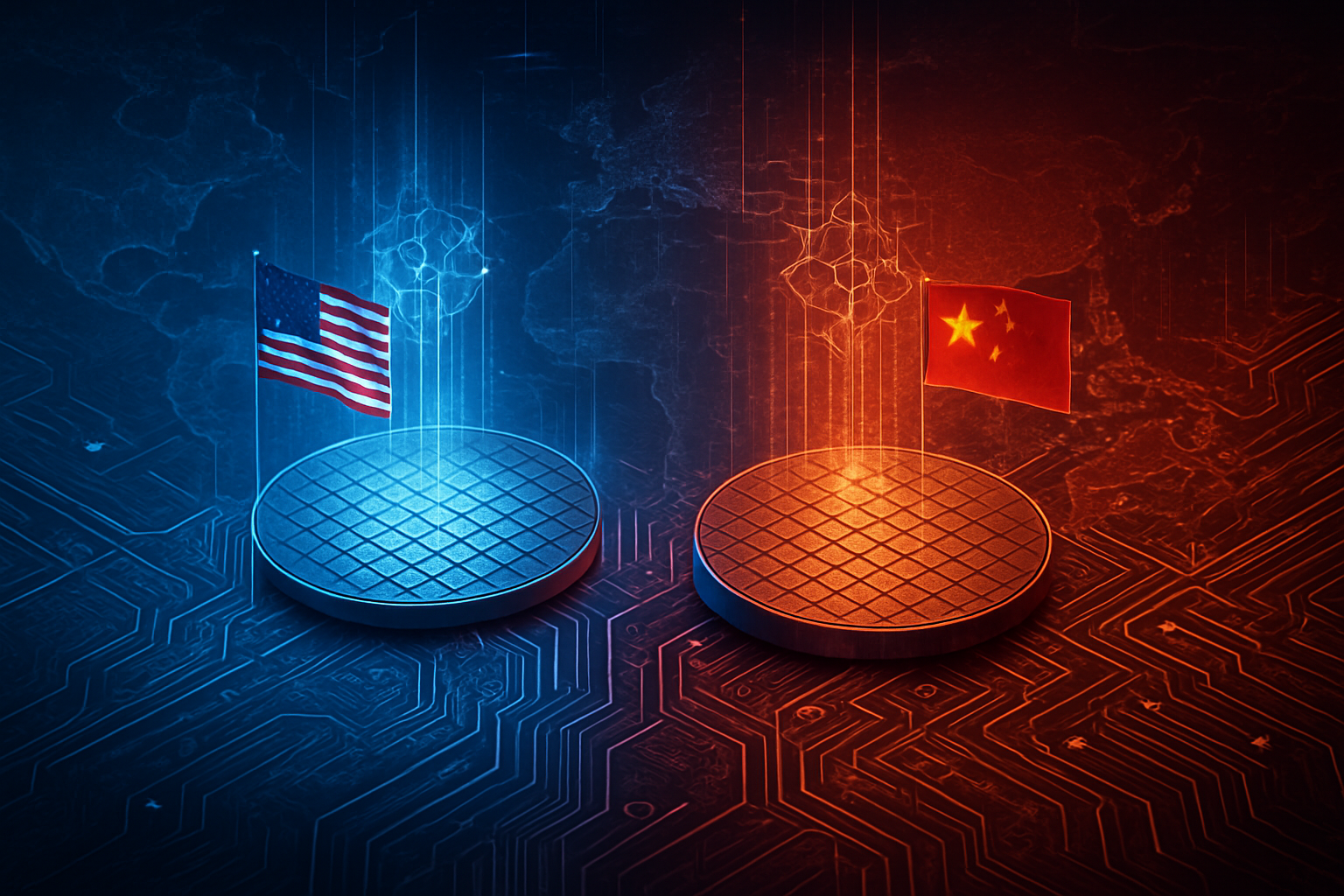
  • The Foundry Frontier: A Trillion-Dollar Battleground for AI Supremacy

    The Foundry Frontier: A Trillion-Dollar Battleground for AI Supremacy

    The global semiconductor foundry market is currently undergoing a seismic shift, fueled by the insatiable demand for advanced artificial intelligence (AI) chips and an intensifying geopolitical landscape. This critical sector, responsible for manufacturing the very silicon that powers our digital world, is witnessing an unprecedented race among titans like Taiwan Semiconductor Manufacturing Company (TSMC) (TPE: 2330), Samsung Foundry (KRX: 005930), and Intel Foundry Services (NASDAQ: INTC), alongside the quiet emergence of new players. As of October 3, 2025, the competitive stakes have never been higher, with each foundry vying for technological leadership and a dominant share in the burgeoning AI hardware ecosystem.

    This fierce competition is not merely about market share; it's about dictating the pace of AI innovation, enabling the next generation of intelligent systems, and securing national technological sovereignty. The advancements in process nodes, transistor architectures, and advanced packaging are directly translating into more powerful and efficient AI accelerators, which are indispensable for everything from large language models to autonomous vehicles. The immediate significance of these developments lies in their profound impact on the entire tech industry, from hyperscale cloud providers to nimble AI startups, as they scramble to secure access to the most advanced manufacturing capabilities.

    Engineering the Future: The Technical Arms Race in Silicon

    The core of the foundry battle lies in relentless technological innovation, pushing the boundaries of physics and engineering to create ever-smaller, faster, and more energy-efficient chips. TSMC, Samsung Foundry, and Intel Foundry Services are each employing distinct strategies to achieve leadership.

    TSMC, the undisputed market leader, has maintained its dominance through consistent execution and a pure-play foundry model. Its 3nm (N3) technology, still utilizing FinFET architecture, has been in volume production since late 2022, with an expanded portfolio including N3E, N3P, and N3X tailored for various applications, including high-performance computing (HPC). Critically, TSMC is on track for mass production of its 2nm (N2) node in late 2025, which will mark its transition to nanosheet transistors, a form of Gate-All-Around (GAA) FET. Beyond wafer fabrication, TSMC's CoWoS (Chip-on-Wafer-on-Substrate) 2.5D packaging technology and SoIC (System-on-Integrated-Chips) 3D stacking are crucial for AI accelerators, offering superior interconnectivity and bandwidth. TSMC is aggressively expanding its CoWoS capacity, which is fully booked until 2025, and plans to increase SoIC capacity eightfold by 2026.

    Samsung Foundry has positioned itself as an innovator, being the first to introduce GAAFET technology at the 3nm node with its MBCFET (Multi-Bridge Channel FET) in mid-2022. This early adoption of GAAFETs offers superior electrostatic control and scalability compared to FinFETs, promising significant improvements in power usage and performance. Samsung is aggressively developing its 2nm (SF2) and 1.4nm nodes, with SF2Z (2nm) featuring a backside power delivery network (BSPDN) slated for 2027. Samsung's advanced packaging solutions, I-Cube (2.5D) and X-Cube (3D), are designed to compete with TSMC's offerings, aiming to provide a "one-stop shop" for AI chip production by integrating memory, foundry, and packaging services, thereby reducing manufacturing times by 20%.

    Intel Foundry Services (IFS), a relatively newer entrant as a pure-play foundry, is making an aggressive push with its "five nodes in four years" plan. Its Intel 18A (1.8nm) process, currently in "risk production" as of April 2025, is a cornerstone of this strategy, featuring RibbonFET (Intel's GAAFET implementation) and PowerVia, an industry-first backside power delivery technology. PowerVia separates power and signal lines, improving cell utilization and reducing power delivery droop. Intel also boasts advanced packaging technologies like Foveros (3D stacking, enabling logic-on-logic integration) and EMIB (Embedded Multi-die Interconnect Bridge, a 2.5D solution). Intel has been an early adopter of High-NA EUV lithography, receiving and assembling the first commercial ASML TWINSCAN EXE:5000 system in its R&D facility, positioning itself to use it for its 14A process. This contrasts with TSMC, which is evaluating its High-NA EUV adoption more cautiously, planning integration for its A14 (1.4nm) process around 2027.

    The AI research community and industry experts have largely welcomed these technical breakthroughs, recognizing them as foundational enablers for the next wave of AI. The shift to GAA transistors and innovations in backside power delivery are seen as crucial for developing smaller, more powerful, and energy-efficient chips necessary for demanding AI workloads. The expansion of advanced packaging capacity, particularly CoWoS and 3D stacking, is viewed as a critical step to alleviate bottlenecks in the AI supply chain, with Intel's Foveros offering a potential alternative to TSMC's CoWoS crunch. However, concerns remain regarding the immense manufacturing complexity, high costs, and yield management challenges associated with these cutting-edge technologies.

    Reshaping the AI Ecosystem: Corporate Impact and Strategic Advantages

    The intense competition and rapid advancements in the semiconductor foundry market are fundamentally reshaping the landscape for AI companies, tech giants, and startups alike, creating both immense opportunities and significant challenges.

    Leading fabless AI chip designers like NVIDIA (NASDAQ: NVDA) and Advanced Micro Devices (AMD) (NASDAQ: AMD) are the primary beneficiaries of these cutting-edge foundry capabilities. NVIDIA, with its dominant position in AI GPUs and its CUDA software platform, relies heavily on TSMC's advanced nodes and CoWoS packaging to produce its high-performance AI accelerators. AMD is fiercely challenging NVIDIA with its MI300X chip, also leveraging advanced foundry technologies to position itself as a full-stack AI and data center rival. Access to TSMC's capacity, which accounts for approximately 90% of the world's most sophisticated AI chips, is a critical competitive advantage for these companies.

    Tech giants with their own custom AI chip designs, such as Alphabet (Google) (NASDAQ: GOOGL) with its TPUs, Microsoft (NASDAQ: MSFT), and Apple (NASDAQ: AAPL), are also profoundly impacted. These companies increasingly design their own application-specific integrated circuits (ASICs) to optimize performance for specific AI workloads, reduce reliance on third-party suppliers, and achieve better power efficiency. Google's partnership with TSMC for its in-house AI chips highlights the foundry's indispensable role. Microsoft's decision to utilize Intel's 18A process for a chip design signals a move towards diversifying its sourcing and leveraging Intel's re-emerging foundry capabilities. Apple consistently relies on TSMC for its advanced mobile and AI processors, ensuring its leadership in on-device AI. Qualcomm (NASDAQ: QCOM) is also a key player, focusing on edge AI solutions with its Snapdragon AI processors.

    The competitive implications are significant. NVIDIA faces intensified competition from AMD and the custom chip efforts of tech giants, prompting it to explore diversified manufacturing options, including a potential partnership with Intel. AMD's aggressive push with its MI300X and focus on a robust software ecosystem aims to chip away at NVIDIA's market share. For the foundries themselves, TSMC's continued dominance in advanced nodes and packaging ensures its central role in the AI supply chain, with its revenue expected to grow significantly due to "extremely robust" AI demand. Samsung Foundry's "one-stop shop" approach aims to attract customers seeking integrated solutions, while Intel Foundry Services is vying to become a credible alternative, bolstered by government support like the CHIPS Act.

    These developments are not disrupting existing products as much as they are accelerating and enhancing them. Faster and more efficient AI chips enable more powerful AI applications across industries, from autonomous vehicles and robotics to personalized medicine. There is a clear shift towards domain-specific architectures (ASICs, specialized GPUs) meticulously crafted for AI tasks. The push for diversified supply chains, driven by geopolitical concerns, could disrupt traditional dependencies and lead to more regionalized manufacturing, potentially increasing costs but enhancing resilience. Furthermore, the enormous computational demands of AI are forcing a focus on energy efficiency in chip design and manufacturing, which could disrupt current energy infrastructures and drive sustainable innovation. For AI startups, while the high cost of advanced chip design and manufacturing remains a barrier, the emergence of specialized accelerators and foundry programs (like Intel's "Emerging Business Initiative" with Arm) offers avenues for innovation in niche AI markets.

    A New Era of AI: Wider Significance and Global Stakes

    The future of the semiconductor foundry market is deeply intertwined with the broader AI landscape, acting as a foundational pillar for the ongoing AI revolution. This dynamic environment is not just shaping technological progress but also influencing global economic power, national security, and societal well-being.

    The escalating demand for specialized AI hardware is a defining trend. Generative AI, in particular, has driven an unprecedented surge in the need for high-performance, energy-efficient chips. By 2025, AI-related semiconductors are projected to account for nearly 20% of all semiconductor demand, with the global AI chip market expected to reach $372 billion by 2032. This shift from general-purpose CPUs to specialized GPUs, NPUs, TPUs, and ASICs is critical for handling complex AI workloads efficiently. NVIDIA's GPUs currently dominate approximately 80% of the AI GPU market, but the rise of custom ASICs from tech giants and the growth of edge AI accelerators for on-device processing are diversifying the market.

    Geopolitical considerations have elevated the semiconductor industry to the forefront of national security. The "chip war," primarily between the US and China, highlights the strategic importance of controlling advanced semiconductor technology. Export controls imposed by the US aim to limit China's access to cutting-edge AI chips and manufacturing equipment, prompting China to heavily invest in domestic production and R&D to achieve self-reliance. This rivalry is driving a global push for supply chain diversification and the establishment of new manufacturing hubs in North America and Europe, supported by significant government incentives like the US CHIPS Act. The ability to design and manufacture advanced chips domestically is now considered crucial for national security and technological sovereignty, making the semiconductor supply chain a critical battleground in the race for AI supremacy.

    The impacts on the tech industry are profound, driving unprecedented growth and innovation in semiconductor design and manufacturing. AI itself is being integrated into chip design and production processes to optimize yields and accelerate development. For society, the deep integration of AI enabled by these chips promises advancements across healthcare, smart cities, and climate modeling. However, this also brings significant concerns. The extreme concentration of advanced logic chip manufacturing in TSMC, particularly in Taiwan, creates a single point of failure that could paralyze global AI infrastructure in the event of geopolitical conflict or natural disaster. The fragmentation of supply chains due to geopolitical tensions is likely to increase costs for semiconductor production and, consequently, for AI hardware.

    Furthermore, the environmental impact of semiconductor manufacturing and AI's immense energy consumption is a growing concern. Chip fabrication facilities consume vast amounts of ultrapure water, with TSMC alone reporting 101 million cubic meters in 2023. The energy demands of AI, particularly from data centers running powerful accelerators, are projected to cause a 300% increase in CO2 emissions between 2025 and 2029. These environmental challenges necessitate urgent innovation in sustainable manufacturing practices and energy-efficient chip designs. Compared to previous AI milestones, which often focused on algorithmic breakthroughs, the current era is defined by the critical role of specialized hardware, intense geopolitical stakes, and an unprecedented scale of demand and investment, coupled with a heightened awareness of environmental responsibilities.

    The Road Ahead: Future Developments and Predictions

    The future of the semiconductor foundry market over the next decade will be characterized by continued technological leaps, intense competition, and a rebalancing of global supply chains, all driven by the relentless march of AI.

    In the near term (1-3 years, 2025-2027), we can expect TSMC to begin mass production of its 2nm (N2) chips in late 2025, with Intel also targeting 2nm production by 2026. Samsung will continue its aggressive pursuit of 2nm GAA technology. The 3nm segment is anticipated to see the highest compound annual growth rate (CAGR) due to its optimal balance of performance and power efficiency for AI, 5G, IoT, and automotive applications. Advanced packaging technologies, including 2.5D and 3D integration, chiplets, and CoWoS, will become even more critical, with the market for advanced packaging expected to double by 2030 and potentially surpass traditional packaging revenue by 2026. High-Bandwidth Memory (HBM) customization will be a significant trend, with HBM revenue projected to soar by up to 70% in 2025, driven by large language models and AI accelerators. The global semiconductor market is expected to grow by 15% in 2025, reaching approximately $697 billion, with AI remaining the primary catalyst.

    Looking further ahead (3-10 years, 2028-2035), the industry will push beyond 2nm to 1.6nm (TSMC's A16 in late 2026) and even 1.4nm (Intel's target by 2027, Samsung's by 2027). A holistic approach to chip architecture, integrating advanced packaging, memory, and specialized accelerators, will become paramount. Sustainability will transition from a concern to a core innovation driver, with efforts to reduce water usage, energy consumption, and carbon emissions in manufacturing processes. AI itself will play an increasing role in optimizing chip design, accelerating development cycles, and improving yield management. The global semiconductor market is projected to surpass $1 trillion by 2030, with the foundry market reaching $258.27 billion by 2032. Regional rebalancing of supply chains, with countries like China aiming to lead in foundry capacity by 2030, will become the new norm, driven by national security priorities.

    Potential applications and use cases on the horizon are vast, ranging from even more powerful AI accelerators for data centers and neuromorphic computing to advanced chips for 5G/6G communication infrastructure, electric and autonomous vehicles, sophisticated IoT devices, and immersive augmented/extended reality experiences. Challenges that need to be addressed include achieving high yield rates on increasingly complex advanced nodes, managing the immense capital expenditure for new fabs, and mitigating the significant environmental impact of manufacturing. Geopolitical stability remains a critical concern, with the potential for conflict in key manufacturing regions posing an existential threat to the global tech supply chain. The industry also faces a persistent talent shortage in design, manufacturing, and R&D.

    Experts predict an "AI supercycle" that will continue to drive robust growth and reshape the semiconductor industry. TSMC is expected to maintain its leadership in advanced chip manufacturing and packaging (especially 3nm, 2nm, and CoWoS) for the foreseeable future, making it the go-to foundry for AI and HPC. The real battle for second place in advanced foundry revenue will be between Samsung and Intel, with Intel aiming to become the second-largest foundry by 2030. Technological breakthroughs will focus on more specialized AI accelerators, further advancements in 2.5D and 3D packaging (with HBM4 expected in late 2025), and the widespread adoption of new transistor architectures and backside power delivery networks. AI will also be increasingly integrated into the semiconductor design and manufacturing workflow, optimizing every stage from conception to production.

    The Silicon Crucible: A Defining Moment for AI

    The semiconductor foundry market stands as the silicon crucible of the AI revolution, a battleground where technological prowess, economic might, and geopolitical strategies converge. The fierce competition among TSMC, Samsung Foundry, and Intel Foundry Services, combined with the strategic rise of other players, is not just about producing smaller transistors; it's about enabling the very infrastructure that will define the future of artificial intelligence.

    The key takeaways are clear: TSMC maintains its formidable lead in advanced nodes and packaging, essential for today's most demanding AI chips. Samsung is aggressively pursuing an integrated "one-stop shop" approach, leveraging its memory and packaging expertise. Intel is making a determined comeback, betting on its 18A process, RibbonFET, PowerVia, and early adoption of High-NA EUV to regain process leadership. The demand for specialized AI hardware is skyrocketing, driving unprecedented investments and innovation across the board. However, this progress is shadowed by significant concerns: the precarious concentration of advanced manufacturing, the escalating costs of cutting-edge technology, and the substantial environmental footprint of chip production. Geopolitical tensions, particularly the US-China tech rivalry, further complicate this landscape, pushing for a more diversified but potentially less efficient global supply chain.

    This development's significance in AI history cannot be overstated. Unlike earlier AI milestones driven primarily by algorithmic breakthroughs, the current era is defined by the foundational role of advanced hardware. The ability to manufacture these complex chips is now a critical determinant of national power and technological leadership. The challenges of cost, yield, and sustainability will require collaborative global efforts, even amidst intense competition.

    In the coming weeks and months, watch for further announcements regarding process node roadmaps, especially around TSMC's 2nm progress and Intel's 18A yields. Monitor the strategic partnerships and customer wins for Samsung and Intel as they strive to chip away at TSMC's dominance. Pay close attention to the development and deployment of High-NA EUV lithography, as it will be critical for future sub-2nm nodes. Finally, observe how governments continue to shape the global semiconductor landscape through subsidies and trade policies, as the "chip war" fundamentally reconfigures the AI supply chain.


    This content is intended for informational purposes only and represents analysis of current AI developments.

    TokenRing AI delivers enterprise-grade solutions for multi-agent AI workflow orchestration, AI-powered development tools, and seamless remote collaboration platforms. For more information, visit https://www.tokenring.ai/.