
Tag: Geopolitics

  • China’s Chip Export Thaw: A Fragile Truce in the Global Semiconductor War

    China’s Chip Export Thaw: A Fragile Truce in the Global Semiconductor War

    Beijing's conditional lifting of export restrictions on Nexperia products offers immediate relief to a beleaguered global automotive industry, yet the underlying currents of geopolitical rivalry and supply chain vulnerabilities persist, signaling a precarious peace in the escalating tech cold war.

    In a move that reverberated across global markets on November 1, 2025, China's Ministry of Commerce announced a conditional exemption for certain Nexperia semiconductor products from its recently imposed export ban. This "chip export thaw" immediately de-escalates a rapidly intensifying trade dispute, averting what threatened to be catastrophic production stoppages for car manufacturers worldwide. The decision, coming on the heels of high-level diplomatic engagements, including a summit between Chinese President Xi Jinping and U.S. President Donald Trump in South Korea, and concurrent discussions with European Union officials, underscores the intricate dance between economic interdependence and national security in the critical semiconductor sector. While the immediate crisis has been sidestepped, the episode serves as a stark reminder of the fragile nature of global supply chains and the increasing weaponization of trade policies.

    The Anatomy of a De-escalation: Nexperia's Pivotal Role

    The Nexperia crisis, a significant flashpoint in the broader tech rivalry, originated in late September 2025 when the Dutch government invoked a rarely used Cold War-era law, the Goods Availability Act, to effectively seize control of Nexperia, a Dutch-headquartered chipmaker. Citing "serious governance shortcomings" and national security concerns, the Netherlands aimed to safeguard critical technology and intellectual property. This dramatic intervention followed the United States' Bureau of Industry and Security (BIS) placing Nexperia's Chinese parent company, Wingtech Technology (SSE: 600745), on its entity list in December 2024, and subsequently extending export control restrictions to subsidiaries more than 50% owned by listed entities, thus bringing Nexperia under the same controls.

    In swift retaliation, on October 4, 2025, China's Ministry of Commerce imposed its own export controls, prohibiting Nexperia's Chinese unit and its subcontractors from exporting specific finished components and sub-assemblies manufactured in China to foreign countries. This ban was particularly impactful because Nexperia produces basic power control chips—such as diodes, transistors, and voltage regulators—in its European wafer fabrication plants (Germany and the UK), which are then sent to China for crucial finishing, assembly, and testing. Roughly 70% of Nexperia's chips produced in the Netherlands are packaged in China, with its Guangdong facility alone accounting for approximately 80% of its final product capacity.

    The recent exemption, while welcomed, is not a blanket lifting of the ban. Instead, China's Commerce Ministry stated it would "comprehensively consider the actual situation of enterprises and grant exemptions to exports that meet the criteria" on a case-by-case basis. This policy shift, a conditional easing rather than a full reversal, represents a pragmatic response from Beijing, driven by the immense economic pressure from global industries. Initial reactions from industry experts and governments, including Berlin, were cautiously optimistic, viewing it as a "positive sign" while awaiting full assessment of its implications. The crisis, however, highlighted the critical role of these "relatively simple technologies" which are foundational to a vast array of electronic designs, particularly in the automotive sector, where Nexperia supplies approximately 49% of the electronic components used in European cars.

    Ripple Effects Across the Tech Ecosystem: From Giants to Startups

    While Nexperia (owned by Wingtech Technology, SSE: 600745) does not produce specialized AI processors, its ubiquitous discrete and logic components are the indispensable "nervous system" supporting the broader tech ecosystem, including the foundational infrastructure for AI systems. These chips are vital for power management, signal conditioning, and interface functions in servers, edge AI devices, robotics, and the myriad sensors that feed AI algorithms. The easing of China's export ban thus carries significant implications for AI companies, tech giants, and startups alike.

    For AI companies, particularly those focused on edge AI solutions and specialized hardware, a stable supply of Nexperia's essential components ensures that hardware development and deployment can proceed without bottlenecks. This predictability is crucial for maintaining the pace of innovation and product rollout, allowing smaller AI innovators, who might otherwise struggle to secure components during scarcity, to compete on a more level playing field. Access to robust, high-volume components also contributes to the power efficiency and reliability of AI-enabled devices.

    Tech giants such as Apple (NASDAQ: AAPL), Samsung (KRX: 005930), Huawei (SHE: 002502), Google (NASDAQ: GOOGL), and Microsoft (NASDAQ: MSFT), with their vast and diverse product portfolios spanning smartphones, IoT devices, data centers, and burgeoning automotive ventures, are major consumers of Nexperia's products. The resumption of Nexperia exports alleviates a significant supply chain risk that could have led to widespread production halts. Uninterrupted supply is critical for mass production and meeting consumer demand, preventing an artificial competitive advantage for companies that might have stockpiled. The automotive divisions of these tech giants, deeply invested in self-driving car initiatives, particularly benefit from the stable flow of these foundational components. While the initial ban caused a scramble for alternatives, the return of Nexperia products stabilizes the overall market, though ongoing geopolitical tensions will continue to push tech giants to diversify sourcing strategies.

    Startups, often operating with leaner inventories and less purchasing power, are typically most vulnerable to supply chain shocks. The ability to access Nexperia's widely used and reliable components is a significant boon, reducing the risk of project delays, cost overruns, and even failure. This stability allows them to focus precious capital on innovation, market entry, and product differentiation, rather than mitigating supply chain risks. While some startups may have pivoted to alternative components during the ban, the long-term effect of increased availability and potentially better pricing is overwhelmingly positive, fostering a more competitive and innovation-driven environment.

    Geopolitical Chessboard: Trade Tensions and Supply Chain Resilience

    The Nexperia exemption must be viewed through the lens of intensifying global competition and geopolitical realignments in the semiconductor industry, fundamentally shaping broader China-Europe trade relations and global supply chain trends. This incident starkly highlighted Europe's reliance on Chinese-controlled segments of the semiconductor supply chain, even for "mature node" chips, demonstrating its vulnerability to disruptions stemming from geopolitical disputes.

    The crisis underscored the nuanced difference between the United States' more aggressive "decoupling" strategy and Europe's articulated "de-risking" approach, which aims to reduce critical dependencies without severing economic ties. China's conditional easing could be interpreted as an effort to exploit these differences and prevent a unified Western front. The resolution through high-level diplomatic engagement suggests a mutual recognition of the economic costs of prolonged trade disputes, with China demonstrating a desire to maintain trade stability with Europe even amidst tensions with the US. Beijing has actively sought to deepen semiconductor ties with Europe, advocating against unilateralism and for the stability of the global semiconductor supply chain.

    Globally, semiconductors remain at the core of modern technology and national security, making their supply chains a critical geopolitical arena. The US, since October 2022, has implemented expansive export controls targeting China's access to advanced computing chips and manufacturing equipment. In response, China has doubled down on its "Made in China 2025" initiative, investing massively to achieve technological self-reliance, particularly in mature-node chips. The Nexperia case, much like China's earlier restrictions on gallium and germanium exports (July 2023, full ban to US in December 2024), exemplifies the weaponization of supply chains as a retaliatory measure. These incidents, alongside the COVID-19 pandemic-induced shortages, have accelerated global efforts towards diversification, friend-shoring, and boosting domestic production (e.g., the EU's goal to increase its share of global semiconductor output to 20% by 2030) to build more resilient supply chains. While the exemption offers short-term relief, the underlying geopolitical tensions, unresolved technology transfer concerns, and fragmented global governance remain significant concerns, contributing to long-term supply chain uncertainty.

    The Road Ahead: Navigating a Volatile Semiconductor Future

    Following China's Nexperia export exemption, the semiconductor landscape is poised for both immediate adjustments and significant long-term shifts. In the near term, the case-by-case exemption policy from China's Ministry of Commerce (MOFCOM) is expected to bring crucial relief to industries, with the automotive sector being the primary beneficiary. The White House is also anticipated to announce the resumption of shipments from Nexperia's Chinese facilities. However, the administrative timelines and specific criteria for these exemptions will be closely watched.

    Long-term, this episode will undoubtedly accelerate existing trends in supply chain restructuring. Expect increased investment in regional semiconductor manufacturing hubs across North America and Europe, driven by a strategic imperative to reduce dependence on Asian supply chains. Companies will intensify efforts to diversify their supply chains through dual-sourcing agreements, vertical integration, and regional optimization, fundamentally re-evaluating the viability of highly globalized "just-in-time" manufacturing models in an era of geopolitical volatility. The temporary suspension of the US's "50% subsidiary rule" for one year also provides a window for Nexperia's Chinese parent, Wingtech Technology (SSE: 600745), to potentially mitigate the likelihood of a mandatory divestment.

    While Nexperia's products are foundational rather than cutting-edge AI chips, they serve as the "indispensable nervous system" for sophisticated AI-driven systems, particularly in autonomous driving and advanced driver-assistance features in vehicles. The ongoing supply chain disruptions are also spurring innovation in technologies aimed at enhancing resilience, including the further development of "digital twin" technologies to simulate disruptions and identify vulnerabilities, and the use of AI algorithms to predict potential supply chain issues.

    However, significant challenges persist. The underlying geopolitical tensions between the US, China, and Europe are far from resolved. The inherent fragility of globalized manufacturing and the risks associated with relying on single points of failure for critical components remain stark. Operational and governance issues within Nexperia, including reports of its China unit defying directives from the Dutch headquarters, highlight deep-seated complexities. Experts predict an accelerated "de-risking" and regionalization, with governments increasingly intervening through subsidies to support domestic production. The viability of globalized just-in-time manufacturing is being fundamentally questioned, potentially leading to a shift towards more robust, albeit costlier, inventory and production models.

    A Precarious Peace: Assessing the Long-Term Echoes of the Nexperia Truce

    China's Nexperia export exemption is a complex diplomatic maneuver that temporarily eases immediate trade tensions and averts significant economic disruption, particularly for Europe's automotive sector. It underscores a crucial takeaway: in a deeply interconnected global economy, severe economic pressure, coupled with high-level, coordinated international diplomacy, can yield results in de-escalating trade conflicts, even when rooted in fundamental geopolitical rivalries. This incident will be remembered as a moment where pragmatism, driven by the sheer economic cost of a prolonged dispute, momentarily trumped principle.

    Assessing its significance in trade history, the Nexperia saga highlights the increasing weaponization of export controls as geopolitical tools. It draws parallels with China's earlier restrictions on gallium and germanium exports, and the US sanctions on Huawei (SHE: 002502), demonstrating a tit-for-tat dynamic that shapes the global technology landscape. However, unlike some previous restrictions, the immediate and widespread economic impact on multiple major economies pushed for a quicker, albeit conditional, resolution.

    The long-term impact will undoubtedly center on an accelerated drive for supply chain diversification and resilience. Companies will prioritize reducing reliance on single suppliers or regions, even if it entails higher costs. Governments will continue to prioritize the security of their semiconductor supply chains, potentially leading to more interventions and efforts to localize production of critical components. The underlying tensions between economic interdependence and national security objectives will continue to define the semiconductor industry's trajectory.

    In the coming weeks and months, several key aspects warrant close observation: the speed and transparency of China's exemption process, the actual resumption of Nexperia chip shipments from China, and whether Nexperia's European headquarters will resume raw material shipments to its Chinese assembly plants. Furthermore, the broader scope and implementation of any US-China trade truce, the evolving dynamics of Dutch-China relations regarding Nexperia's governance, and announcements from automakers and chip manufacturers regarding investments in alternative capacities will provide crucial insights into the long-term stability of the global semiconductor supply chain. This "precarious peace" is a testament to the intricate and often volatile interplay of technology, trade, and geopolitics.


    This content is intended for informational purposes only and represents analysis of current AI developments.

    TokenRing AI delivers enterprise-grade solutions for multi-agent AI workflow orchestration, AI-powered development tools, and seamless remote collaboration platforms.
    For more information, visit https://www.tokenring.ai/.

  • Nvidia Navigates Geopolitical Minefield: Blackwell Chips and the China Conundrum

    Nvidia Navigates Geopolitical Minefield: Blackwell Chips and the China Conundrum

    Nvidia (NASDAQ: NVDA), a titan in the AI chip industry, finds itself at the epicenter of a fierce technological and geopolitical struggle, as it endeavors to sell its groundbreaking Blackwell AI chips to the lucrative Chinese market. This effort unfolds against a backdrop of stringent US export controls designed to curb China's access to advanced semiconductor technology, creating an intricate dance between commercial ambition and national security imperatives. As of November 2025, the global stage is set for a high-stakes drama where the future of AI dominance hangs in the balance, with Nvidia caught between two economic superpowers.

    The company's strategy involves developing specially tailored, less powerful versions of its flagship Blackwell chips to comply with Washington's restrictions, while simultaneously advocating for eased trade relations. However, this delicate balancing act is further complicated by Beijing's own push for indigenous alternatives and occasional discouragement of foreign purchases. The immediate significance of Nvidia's positioning is profound, impacting not only its own revenue streams but also the broader trajectory of AI development and the escalating tech rivalry between the United States and China.

    Blackwell's Dual Identity: Global Powerhouse Meets China's Custom Chip

    Nvidia's Blackwell architecture, unveiled to much fanfare, represents a monumental leap in AI computing, designed to tackle the most demanding workloads. The global flagship models, including the B200 GPU and the Grace Blackwell (GB200) Superchip, are engineering marvels. Built on TSMC's (NYSE: TSM) custom 4NP process, these GPUs pack an astonishing 208 billion transistors in a dual-die configuration, making them Nvidia's largest to date. A single B200 GPU can deliver up to 20 PetaFLOPS of sparse FP4 AI compute, while a rack-scale GB200 NVL72 system, integrating 72 Blackwell GPUs and 36 Grace CPUs, can achieve a staggering 1,440 PFLOPS for FP4 Tensor Core operations. This translates to up to 30 times faster real-time trillion-parameter Large Language Model (LLM) inference compared to the previous generation, thanks to fifth-generation Tensor Cores, up to 192 GB of HBM3e memory with 8 TB/s bandwidth, and fifth-generation NVLink providing 1.8 TB/s bidirectional GPU-to-GPU interconnect.

    However, the geopolitical realities of US export controls have necessitated a distinct, modified version for the Chinese market: the B30A. This chip, a Blackwell-based accelerator, is specifically engineered to comply with Washington's performance thresholds. Unlike the dual-die flagship, the B30A is expected to utilize a single-die design, deliberately reducing its raw computing power to roughly half that of the global B300 accelerator. Estimated performance figures for the B30A include approximately 7.5 PFLOPS FP4 and 1.875 PFLOPS FP16/BF16, alongside 144GB HBM3E memory and 4TB/s bandwidth, still featuring NVLink technology, albeit likely with adjusted speeds to remain within regulatory limits.

    The B30A represents a significant performance upgrade over its predecessor, the H20, Nvidia's previous China-specific chip based on the Hopper architecture. While the H20 offered 148 FP16/BF16 TFLOPS, the B30A's estimated 1.875 PFLOPS FP16/BF16 marks a substantial increase, underscoring the advancements brought by the Blackwell architecture even in a constrained form. This leap in capability, even with regulatory limitations, is a testament to Nvidia's engineering prowess and its determination to maintain a competitive edge in the critical Chinese market.

    Initial reactions from the AI research community and industry experts, as of November 2025, highlight a blend of pragmatism and concern. Nvidia CEO Jensen Huang has publicly expressed optimism about eventual Blackwell sales in China, arguing for the mutual benefits of technological exchange and challenging the efficacy of the export curbs given China's domestic AI chip capabilities. While Beijing encourages local alternatives like Huawei, private Chinese companies reportedly show strong interest in the B30A, viewing it as a "sweet spot" for mid-tier AI projects due to its balance of performance and compliance. Despite an expected price tag of $20,000-$24,000—roughly double that of the H20—Chinese firms appear willing to pay for Nvidia's superior performance and software ecosystem, indicating the enduring demand for its hardware despite geopolitical headwinds.

    Shifting Sands: Blackwell's Ripple Effect on the Global AI Ecosystem

    Nvidia's (NASDAQ: NVDA) Blackwell architecture has undeniably cemented its position as the undisputed leader in the global AI hardware market, sending ripple effects across AI companies, tech giants, and startups alike. The demand for Blackwell platforms has been nothing short of "insane," with the entire 2025 production reportedly sold out by November 2024. This overwhelming demand is projected to drive Nvidia's data center revenue to unprecedented levels, with some analysts forecasting approximately $500 billion in AI chip orders through 2026, propelling Nvidia to become the first company to surpass a $5 trillion market capitalization.

    The primary beneficiaries are, naturally, Nvidia itself, which has solidified its near-monopoly and is strategically expanding into "AI factories" and potentially "AI cloud" services. Hyperscale cloud providers such as Amazon (NASDAQ: AMZN) (AWS), Microsoft (NASDAQ: MSFT) (Azure), Google (NASDAQ: GOOGL) (Google Cloud), and Oracle (NYSE: ORCL) (OCI) are also major winners, integrating Blackwell into their offerings to provide cutting-edge AI infrastructure. AI model developers like OpenAI, Meta (NASDAQ: META), and Mistral directly benefit from Blackwell's computational prowess, enabling them to train larger, more complex models faster. Server and infrastructure providers like Dell Technologies (NYSE: DELL), HPE (NYSE: HPE), and Supermicro (NASDAQ: SMCI), along with supply chain partners like TSMC (NYSE: TSM), are also experiencing a significant boom.

    However, the competitive implications are substantial. Rivals like Advanced Micro Devices (NASDAQ: AMD) and Intel (NASDAQ: INTC) are intensifying their efforts in AI accelerators but face an uphill battle against Nvidia's entrenched market presence and technological lead. A significant long-term disruption could come from major cloud providers, who are actively developing their own custom AI silicon to reduce dependence on Nvidia and optimize for their specific services. Furthermore, the escalating cost of advanced AI compute, driven by Blackwell's premium pricing and demand, could become a barrier for smaller AI startups, potentially leading to a consolidation of AI development around Nvidia's ecosystem and stifling innovation from less funded players. The rapid release cycle of Blackwell is also likely to cannibalize sales of Nvidia's previous-generation Hopper H100 GPUs.

    In the Chinese market, the introduction of the China-specific B30A chip is a strategic maneuver by Nvidia to maintain its crucial market share, estimated at a $50 billion opportunity in 2025. This modified Blackwell variant, while scaled back from its global counterparts, is still a significant upgrade over the previous China-compliant H20. If approved for export, the B30A could significantly supercharge China's frontier AI development, allowing Chinese cloud providers and tech giants to build more capable AI models within regulatory constraints. However, this also intensifies competition for domestic Chinese chipmakers like Huawei, who are rapidly advancing their own AI chip development but still lag behind Nvidia's memory bandwidth and software ecosystem. The B30A's availability presents a powerful, albeit restricted, foreign alternative, potentially accelerating China's drive for technological independence even as it satisfies immediate demand for advanced compute.

    The Geopolitical Chessboard: Blackwell and the AI Cold War

    Nvidia's (NASDAQ: NVDA) Blackwell chips are not merely another product upgrade; they represent a fundamental shift poised to reshape the global AI landscape and intensify the already heated "AI Cold War" between the United States and China. As of November 2025, the situation surrounding Blackwell sales to China intricately weaves national security imperatives with economic ambitions, reflecting a new era of strategic competition.

    The broader AI landscape is poised for an unprecedented acceleration. Blackwell's unparalleled capabilities for generative AI and Large Language Models will undoubtedly drive innovation across every sector, from healthcare and scientific research to autonomous systems and financial services. Nvidia's deeply entrenched CUDA software ecosystem continues to provide a significant competitive advantage, further solidifying its role as the engine of this AI revolution. This era will see the "AI trade" broaden beyond hyperscalers to smaller companies and specialized software providers, all leveraging the immense computational power to transform data centers into "AI factories" capable of generating intelligence at scale.

    However, the geopolitical impacts are equally profound. The US has progressively tightened its export controls on advanced AI chips to China since October 2022, culminating in the "AI Diffusion rule" in January 2025, which places China in the most restricted tier for accessing US AI technology. This strategy, driven by national security concerns, aims to prevent China from leveraging cutting-edge AI for military applications and challenging American technological dominance. While the Trump administration, after taking office in April 2025, initially halted all "green zone" chip exports, a compromise in August reportedly allowed mid-range AI chips like Nvidia's H20 and Advanced Micro Devices' (NASDAQ: AMD) MI308 to be exported under a controversial 15% revenue-sharing agreement. Yet, the most advanced Blackwell chips remain subject to stringent restrictions, with President Trump confirming in late October 2025 that these were not discussed for export to China.

    This rivalry is accelerating technological decoupling, leading both nations to pursue self-sufficiency and creating a bifurcated global technology market. Critics argue that allowing even modified Blackwell chips like the B30A—which, despite being scaled back, would be significantly more powerful than the H20—could diminish America's AI compute advantage. Nvidia CEO Jensen Huang has publicly challenged the efficacy of these curbs, pointing to China's existing domestic AI chip capabilities and the potential for US economic and technological leadership to be stifled. China, for its part, is responding with massive state-led investments and an aggressive drive for indigenous innovation, with domestic AI chip output projected to triple by 2025. Companies like Huawei are emerging as significant competitors, and Chinese officials have even reportedly discouraged procurement of less advanced US chips, signaling a strong push for domestic alternatives. This "weaponization" of technology, targeting foundational AI hardware, represents a more direct and economically disruptive form of rivalry than previous tech milestones, leading to global supply chain fragmentation and heightened international tensions.

    The Road Ahead: Navigating Innovation and Division

    The trajectory of Nvidia's (NASDAQ: NVDA) Blackwell AI chips, intertwined with the evolving landscape of US export controls and China's strategic ambitions, paints a complex picture for the near and long term. As of November 2025, the future of AI innovation and global technological leadership hinges on these intricate dynamics.

    In the near term, Blackwell chips are poised to redefine AI computing across various applications. The consumer market has already seen the rollout of the GeForce RTX 50-series GPUs, powered by Blackwell, offering features like DLSS 4 and AI-driven autonomous game characters. More critically, the enterprise sector will leverage Blackwell's unprecedented speed—2.5 times faster in AI training and five times faster in inference than Hopper—to power next-generation data centers, robotics, cloud infrastructure, and autonomous vehicles. Nvidia's Blackwell Ultra GPUs, showcased at GTC 2025, promise further performance gains and efficiency. However, challenges persist, including initial overheating issues and ongoing supply chain constraints, particularly concerning TSMC's (NYSE: TSM) CoWoS packaging, which have stretched lead times.

    Looking further ahead, the long-term developments point towards an increasingly divided global tech landscape. Both the US and China are striving for greater technological self-reliance, fostering parallel supply chains. China continues to invest heavily in its domestic semiconductor industry, aiming to bolster homegrown capabilities. Nvidia CEO Jensen Huang remains optimistic about eventually selling Blackwell chips in China, viewing it as an "irreplaceable and dynamic market" with a potential opportunity of hundreds of billions by the end of the decade. He argues that China's domestic AI chip capabilities are already substantial, rendering US restrictions counterproductive.

    The future of the US-China tech rivalry is predicted to intensify, evolving into a new kind of "arms race" that could redefine global power. Experts warn that allowing the export of even downgraded Blackwell chips, such as the B30A, could "dramatically shrink" America's AI advantage and potentially allow China to surpass the US in AI computing power by 2026 under a worst-case scenario. To counter this, the US must strengthen partnerships with allies. Nvidia's strategic path involves continuous innovation, solidifying its CUDA ecosystem lock-in, and diversifying its market footprint. This includes a notable deal to supply over 260,000 Blackwell AI chips to South Korea and a massive $500 billion investment in US AI infrastructure over the next four years to boost domestic manufacturing and establish new AI Factory Research Centers. The crucial challenge for Nvidia will be balancing its commercial imperative to access the vast Chinese market with the escalating geopolitical pressures and the US government's national security concerns.

    Conclusion: A Bifurcated Future for AI

    Nvidia's (NASDAQ: NVDA) Blackwell AI chips, while representing a monumental leap in computational power, are inextricably caught in the geopolitical crosscurrents of US export controls and China's assertive drive for technological self-reliance. As of November 2025, this dynamic is not merely shaping Nvidia's market strategy but fundamentally altering the global trajectory of artificial intelligence development.

    Key takeaways reveal Blackwell's extraordinary capabilities, designed to process trillion-parameter models with up to a 30x performance increase for inference over its Hopper predecessor. Yet, stringent US export controls have severely limited its availability to China, crippling Nvidia's advanced AI chip market share in the region from an estimated 95% in 2022 to "nearly zero" by October 2025. This precipitous decline is a direct consequence of both US restrictions and China's proactive discouragement of foreign purchases, favoring homegrown alternatives like Huawei's Ascend 910B. The contentious debate surrounding a downgraded Blackwell variant for China, potentially the B30A, underscores the dilemma: while it could offer a performance upgrade over the H20, experts warn it might significantly diminish America's AI computing advantage.

    This situation marks a pivotal moment in AI history, accelerating a technological decoupling that is creating distinct US-centric and China-centric AI ecosystems. The measures highlight how national security concerns can directly influence the global diffusion of cutting-edge technology, pushing nations towards domestic innovation and potentially fragmenting the collaborative nature that has often characterized scientific progress. The long-term impact will likely see Nvidia innovating within regulatory confines, a more competitive landscape with bolstered Chinese chip champions, and divergent AI development trajectories shaped by distinct hardware capabilities. The era of a truly global, interconnected AI hardware supply chain may be giving way to regionalized, politically influenced technology blocs, with profound implications for standardization and the overall pace of AI progress.

    In the coming weeks and months, all eyes will be on the US government's decision regarding an export license for Nvidia's proposed B30A chip for China. Any approval or denial will send a strong signal about the future of US export control policy. We must also closely monitor the advancements and adoption rates of Chinese domestic AI chips, particularly Huawei's Ascend series, and their ability to compete with or surpass "nerfed" Nvidia offerings. Further policy adjustments from both Washington and Beijing, alongside broader US-China relations, will heavily influence the tech landscape. Nvidia's ongoing market adaptation and CEO Jensen Huang's advocacy for continued access to the Chinese market will be critical for the company's sustained leadership in this challenging, yet dynamic, global environment.


    This content is intended for informational purposes only and represents analysis of current AI developments.

    TokenRing AI delivers enterprise-grade solutions for multi-agent AI workflow orchestration, AI-powered development tools, and seamless remote collaboration platforms.
    For more information, visit https://www.tokenring.ai/.
  • Reshaping the Silicon Backbone: Navigating Challenges and Forging Resilience in the Global Semiconductor Supply Chain

    Reshaping the Silicon Backbone: Navigating Challenges and Forging Resilience in the Global Semiconductor Supply Chain

    October 31, 2025 – The global semiconductor supply chain stands at a critical juncture, navigating a complex landscape of geopolitical pressures, unprecedented AI-driven demand, and inherent manufacturing complexities. This confluence of factors is catalyzing a profound transformation, pushing the industry away from its traditional "just-in-time" model towards a more resilient, diversified, and strategically independent future. While fraught with challenges, this pivot presents significant opportunities for innovation and stability, fundamentally reshaping the technological and geopolitical landscape.

    For years, the semiconductor industry thrived on hyper-efficiency and global specialization, concentrating advanced manufacturing in a few key regions. However, recent disruptions—from the COVID-19 pandemic to escalating trade wars—have exposed the fragility of this model. As of late 2025, the imperative to build resilience is no longer a strategic aspiration but an immediate, mission-critical endeavor, with governments and industry leaders pouring billions into re-engineering the very backbone of the digital economy.

    The Technical Crucible: Crafting Resilience in an Era of Advanced Nodes

    The journey towards supply chain resilience is deeply intertwined with the technical intricacies of advanced semiconductor manufacturing. The production of cutting-edge chips, such as those at the 3nm, 2nm, and even 1.6nm nodes, is a marvel of modern engineering, yet also a source of immense vulnerability.

    These advanced nodes, critical for powering the burgeoning AI supercycle, rely heavily on Extreme Ultraviolet (EUV) lithography, a technology almost exclusively supplied by ASML Holding (AMS: ASML). The process itself is staggering in its complexity, involving over a thousand steps and requiring specialized materials and equipment from a limited number of global suppliers. Taiwan Semiconductor Manufacturing Company (NYSE: TSM) (TSMC) and Samsung Electronics (KRX: 005930) (Samsung) currently dominate advanced chip production, creating a geographical concentration that poses significant geopolitical and natural disaster risks. For instance, TSMC alone accounts for 92% of the world's most advanced semiconductors. The cost of fabricating a single 3nm wafer can range from $18,000 to $20,000, with 2nm wafers reaching an estimated $30,000 and 1.6nm wafers potentially soaring to $45,000. These escalating costs reflect the extraordinary investment in R&D and specialized equipment required for each generational leap.

    The current resilience strategies mark a stark departure from the past. The traditional "just-in-time" (JIT) model, which prioritized minimal inventory and cost-efficiency, proved brittle when faced with unforeseen disruptions. Now, the industry is embracing "regionalization" and "friend-shoring." Regionalization involves distributing manufacturing operations across multiple hubs, shortening supply chains, and reducing logistical risks. "Friend-shoring," on the other hand, entails relocating or establishing production in politically aligned nations to mitigate geopolitical risks and secure strategic independence. This shift is heavily influenced by government initiatives like the U.S. CHIPS and Science Act and the European Chips Act, which offer substantial incentives to localize manufacturing. Initial reactions from industry experts highlight a consensus: while these strategies increase operational costs, they are deemed essential for national security and long-term technological stability. The AI research community, in particular, views a secure hardware supply as paramount, emphasizing that the future of AI is intrinsically linked to the ability to produce sophisticated chips at scale.

    Corporate Ripples: Impact on Tech Giants, AI Innovators, and Startups

    The push for semiconductor supply chain resilience is fundamentally reshaping the competitive landscape for companies across the technology spectrum, from multinational giants to nimble AI startups.

    Tech giants like NVIDIA Corporation (NASDAQ: NVDA), Google (NASDAQ: GOOGL), Amazon.com Inc. (NASDAQ: AMZN), Microsoft Corporation (NASDAQ: MSFT), and Apple Inc. (NASDAQ: AAPL) are at the forefront of this transformation. While their immense purchasing power offers some insulation, they are not immune to the targeted shortages of advanced AI chips and specialized packaging technologies like CoWoS. NVIDIA, for instance, has reportedly secured over 70% of TSMC's CoWoS-L capacity for 2025, yet supply remains insufficient, leading to product delays and limiting sales of its new AI chips. These companies are increasingly pursuing vertical integration, designing their own custom AI accelerators, and investing in manufacturing capabilities to gain greater control over their supply chains. Intel Corporation (NASDAQ: INTC) is a prime example, positioning itself as both a foundry and a chip designer, directly competing with TSMC and Samsung in advanced node manufacturing, bolstered by significant government incentives for its new fabs in the U.S. and Europe. Their ability to guarantee supply will be a key differentiator in the intensely competitive AI cloud market.

    AI companies, particularly those developing advanced models and hardware, face a double-edged sword. The acute scarcity and high cost of specialized chips, such as advanced GPUs and High-Bandwidth Memory (HBM), pose significant challenges, potentially leading to higher operational costs and delayed product development. HBM memory prices are expected to increase by 5-10% in 2025 due to demand and constrained capacity. However, companies that can secure stable and diverse supplies of these critical components gain a paramount strategic advantage, influencing innovation cycles and market positioning. The rise of regional manufacturing hubs could also foster localized innovation ecosystems, potentially providing smaller AI firms with closer access to foundries and design services.

    Startups, particularly those developing AI hardware or embedded AI solutions, face mixed implications. While a more stable supply chain theoretically reduces the risk of chip shortages derailing innovations, rising chip prices due to higher manufacturing costs in diversified regions could inflate their operational expenses. They often possess less bargaining power than tech giants in securing chip allocations during shortages. However, government initiatives, such as India's "Chips-to-Startup" program, are fostering localized design and manufacturing, creating opportunities for startups to thrive within these emerging ecosystems. "Resilience-as-a-Service" consulting for supply chain shocks and supply chain finance for SME chip suppliers are also emerging opportunities that could benefit startups by providing continuity planning and dual-sourcing maps. Overall, market positioning is increasingly defined by access to advanced chip technology and the ability to rapidly innovate in AI-driven applications, making supply chain resilience a paramount strategic asset.

    Beyond the Fab: Wider Significance in a Connected World

    The drive for semiconductor supply chain resilience extends far beyond corporate balance sheets, touching upon national security, economic stability, and the very trajectory of AI development.

    This re-evaluation of the silicon backbone fits squarely into the broader AI landscape and trends. The "AI supercycle" is not merely a software phenomenon; it is fundamentally hardware-dependent. The insatiable demand for high-performance chips, projected to drive over $150 billion in AI-centric chip sales by 2025, underscores the criticality of a robust supply chain. Furthermore, AI is increasingly being leveraged within the semiconductor industry itself, optimizing fab efficiency through predictive maintenance, real-time process control, and advanced defect detection, creating a powerful feedback loop where AI advancements demand more sophisticated chips, and AI, in turn, helps produce them more efficiently.

    The economic impacts are profound. While the shift towards regionalization and diversification promises long-term stability, it also introduces increased production costs compared to the previous globally optimized model. Localizing production often entails higher capital expenditures and logistical complexities, potentially leading to higher prices for electronic products worldwide. However, the long-term economic benefit is a more diversified and stable industry, less susceptible to single points of failure. From a national security perspective, semiconductors are now recognized as foundational to modern defense systems, critical infrastructure, and secure communications. The concentration of advanced manufacturing in regions like Taiwan has been identified as a significant vulnerability, making secure chip supply a national security imperative. The ongoing US-China technological rivalry is a primary driver, with both nations striving for "tech sovereignty" and AI supremacy.

    Potential concerns include the aforementioned increased costs, which could be passed on to consumers, and the risk of market fragmentation due to duplicated efforts and reduced economies of scale. The chronic global talent shortage in the semiconductor industry is also exacerbated by the push for domestic production, creating a critical bottleneck. Compared to previous AI milestones, which were largely software-driven, the current focus on semiconductor supply chain resilience marks a distinct phase. It emphasizes building the physical infrastructure—the advanced fabs and manufacturing capabilities—that will underpin the future wave of AI innovation, moving beyond theoretical models to tangible, embedded intelligence. This reindustrialization is not just about producing more chips, but about establishing a resilient and secure foundation for the future trajectory of AI development.

    The Road Ahead: Future Developments and Expert Predictions

    The journey towards a fully resilient semiconductor supply chain is a long-term endeavor, but several near-term and long-term developments are already taking shape, with experts offering clear predictions for the future.

    In the near term (2025-2028), the focus will remain on the continued regionalization and diversification of manufacturing. The U.S. is projected to see a 203% increase in fab capacity by 2032, a significant boost to its share of global production. Multi-sourcing strategies will become standard practice, and the industry will solidify its shift from "just-in-time" to "just-in-case" models, building redundancy and strategic stockpiles. A critical development will be the widespread adoption of AI in logistics and supply chain management, utilizing advanced analytics for real-time monitoring, demand forecasting, inventory optimization, and predictive maintenance in manufacturing. This will enable companies to anticipate disruptions and respond with greater agility.

    Looking further ahead (beyond 2028), AI is expected to become even more deeply integrated into chip design and fabrication processes, optimizing every stage from ideation to production. The long-term vision also includes a strong emphasis on sustainable supply chains, with efforts to design chips for re-use, operate zero-waste manufacturing plants, and integrate environmental considerations like water availability and energy efficiency into fab design. The development of a more geographically diverse talent pool will also be crucial.

    Despite these advancements, significant challenges remain. Geopolitical tensions, trade wars, and export controls are expected to continue disrupting the global ecosystem. The persistent talent shortage remains a critical bottleneck, as does the high cost of diversification. Natural resource risks, exacerbated by climate change, also pose a mounting threat to the supply of essential materials like copper and quartz. Experts predict a sustained focus on resilience, with the market gradually normalizing but experiencing "rolling periods of constraint environments" for specific advanced nodes. The "AI supercycle" will continue to drive above-average growth, fueled by demand for edge computing, data centers, and IoT. Companies are advised to "spend smart," leveraging public incentives and tying capital deployment to demand signals. Crucially, generative AI is expected to play an increasing role in addressing the AI skills gap within procurement and supply chain functions, automating tasks and providing critical data insights.

    The Dawn of a New Silicon Era: A Comprehensive Wrap-up

    The challenges and opportunities in building resilience in the global semiconductor supply chain represent a defining moment for the technology industry and global geopolitics. As of October 2025, the key takeaway is a definitive shift away from a purely cost-driven, hyper-globalized model towards one that prioritizes strategic independence, security, and diversification.

    This transformation is of paramount significance in the context of AI. A stable and secure supply of advanced semiconductors is now recognized as the foundational enabler for the next wave of AI innovation, from cloud-based generative AI to autonomous systems. Without a resilient silicon backbone, the full potential of AI cannot be realized. This reindustrialization is not just about manufacturing; it's about establishing the physical infrastructure that will underpin the future trajectory of AI development, making it a national security and economic imperative for leading nations.

    The long-term impact will likely be a more robust and balanced global economy, less susceptible to geopolitical shocks and natural disasters, albeit potentially with higher production costs. We are witnessing a geographic redistribution of advanced manufacturing, with new facilities emerging in the U.S., Europe, and Japan, signaling a gradual retreat from hyper-globalization in critical sectors. This will foster a broader innovation landscape, not just in chip manufacturing but also in related fields like advanced materials science and manufacturing automation.

    In the coming weeks and months, watch closely for the progress of new fab constructions and their operational timelines, particularly those receiving substantial government subsidies. Keep a keen eye on evolving geopolitical developments, new export controls, and their ripple effects on global trade flows. The interplay between surging AI chip demand and the industry's capacity to meet it will be a critical indicator, as will the effectiveness of major policy initiatives like the CHIPS Acts. Finally, observe advancements in AI's role within chip design and manufacturing, as well as the industry's efforts to address the persistent talent shortage. The semiconductor supply chain is not merely adapting; it is being fundamentally rebuilt for a new era of technology and global dynamics.


    This content is intended for informational purposes only and represents analysis of current AI developments.

    TokenRing AI delivers enterprise-grade solutions for multi-agent AI workflow orchestration, AI-powered development tools, and seamless remote collaboration platforms. For more information, visit https://www.tokenring.ai/.
  • Geopolitical Fault Lines Rattle Global Tech: Nexperia’s China Chip Halt Threatens Automotive Industry

    Geopolitical Fault Lines Rattle Global Tech: Nexperia’s China Chip Halt Threatens Automotive Industry

    In a move sending shockwaves across the global technology landscape, Dutch chipmaker Nexperia has ceased supplying critical wafers to its assembly plant in Dongguan, China. Effective October 26, 2025, and communicated to customers just days later on October 29, this decision immediately ignited fears of exacerbated chip shortages and poses a direct threat to global car production. The company cited a "failure to comply with the agreed contractual payment terms" by its Chinese unit as the primary reason, but industry analysts and geopolitical experts point to a deeper, more complex narrative of escalating national security concerns and a strategic decoupling between Western and Chinese semiconductor supply chains.

    The immediate significance of Nexperia's halt cannot be overstated. Automakers worldwide, already grappling with persistent supply chain vulnerabilities, now face the grim prospect of further production cuts within weeks as their existing inventories of essential Nexperia chips dwindle. This development underscores the profound fragility of the modern technology ecosystem, where even seemingly basic components can bring entire global industries, like the multi-trillion-dollar automotive sector, to a grinding halt.

    Unpacking the Semiconductor Stalemate: A Deep Dive into Nexperia's Decision

    Nexperia's decision to suspend wafer supplies to its Dongguan facility is a critical juncture in the ongoing geopolitical realignments impacting the semiconductor industry. The wafers, manufactured in Europe, are crucial raw materials that were previously shipped to the Chinese factory for final packaging and distribution. While the stated reason for the halt by interim CEO Stefan Tilger was a breach of contractual payment terms—specifically, the Chinese unit's demand for payments in yuan instead of foreign currencies—the move is widely seen as a direct consequence of recent Dutch government intervention.

    This situation differs significantly from previous supply chain disruptions, which often stemmed from natural disasters or unexpected surges in demand. Here, the disruption is a direct result of state-level actions driven by national security imperatives. On September 30, the Dutch government took control of Nexperia from its former Chinese parent, Wingtech Technology, citing "serious governance shortcomings" and fears of intellectual property transfer and compromise to European chip capacity. This action, influenced by U.S. pressure following Wingtech's placement on the U.S. "entity list" in 2024, saw the removal of Nexperia's Chinese CEO, Zhang Xuezheng, on October 7. In retaliation, on October 4, the Chinese Ministry of Commerce imposed its own export controls, prohibiting Nexperia China from exporting certain finished components. The affected chips are not cutting-edge processors but rather ubiquitous, inexpensive microchips essential for a myriad of vehicle functions, from engine control units and airbags to power steering and infotainment systems. Without these fundamental components, even the most advanced car models cannot be completed.

    Initial reactions from the industry have been swift and concerning. Reports indicate that prices for some Nexperia chips in China have already surged by over tenfold. Major automakers like Honda (TYO: 7267) have already begun reducing production at facilities like their Ontario plant due to the Nexperia chip shortage, signaling the immediate and widespread impact on manufacturing lines globally. The confluence of corporate governance disputes, national security concerns, and retaliatory trade measures has created an unprecedented level of instability in a sector fundamental to all modern technology.

    Ripple Effects Across the Tech and Automotive Giants

    The ramifications of Nexperia's supply halt are profound, particularly for companies heavily integrated into global supply chains. Automakers are at the epicenter of this crisis. Giants such as Stellantis (NYSE: STLA), Nissan (TYO: 7201), Volkswagen (XTRA: VOW3), BMW (XTRA: BMW), Toyota (TYO: 7203), and Mercedes-Benz (XTRA: MBG) are all highly reliant on Nexperia's chips. Their immediate challenge is to find alternative suppliers for these specific, yet critical, components—a task made difficult by the specialized nature of semiconductor manufacturing and the existing global demand.

    This development creates a highly competitive environment where companies with more diversified and resilient supply chains will likely gain a strategic advantage. Automakers that have invested in regionalizing their component sourcing or those with long-standing relationships with a broader array of semiconductor manufacturers might be better positioned to weather the storm. Conversely, those with heavily centralized or China-dependent supply lines face significant disruption to their production schedules, potentially leading to lost sales and market share.

    For the broader semiconductor industry, this event accelerates the trend of "de-risking" supply chains away from single points of failure and politically sensitive regions. While Nexperia itself is not a tech giant, its role as a key supplier of foundational components means its actions have outsized impacts. This situation could spur increased investment in domestic or allied-nation chip manufacturing capabilities, particularly for mature node technologies that are crucial for automotive and industrial applications. Chinese domestic chipmakers might see an increased demand from local manufacturers seeking alternatives, but they too face the challenge of export restrictions on finished components, highlighting the complex web of trade controls.

    The Broader Geopolitical Canvas: A New Era of Tech Nationalism

    Nexperia's decision is not an isolated incident but a stark manifestation of a broader, accelerating trend of tech nationalism and geopolitical fragmentation. It fits squarely into the ongoing narrative of the U.S. and its allies seeking to limit China's access to advanced semiconductor technology and, increasingly, to control the supply of even foundational chips for national security reasons. This marks a significant escalation from previous trade disputes, transforming corporate supply decisions into instruments of state policy.

    The impacts are far-reaching. Beyond the immediate threat to car production, this event underscores the vulnerability of all technology-dependent industries to geopolitical tensions. It highlights how control over manufacturing, intellectual property, and even basic components can be leveraged as strategic tools in international relations. Concerns about economic security, technological sovereignty, and the potential for a bifurcated global tech ecosystem are now front and center. This situation draws parallels to historical periods of technological competition, but with the added complexity of deeply intertwined global supply chains that were once thought to be immune to such fragmentation.

    The Nexperia saga serves as a potent reminder that the era of purely economically driven globalized supply chains is giving way to one heavily influenced by strategic competition. It will likely prompt governments and corporations alike to re-evaluate their dependencies, pushing for greater self-sufficiency or "friend-shoring" in critical technology sectors. The long-term implications could include higher manufacturing costs, slower innovation due to reduced collaboration, and a more fragmented global market for technology products.

    The Road Ahead: Navigating a Fragmented Future

    Looking ahead, the immediate future will likely see automakers scrambling to secure alternative chip supplies and re-engineer their products where possible. Near-term developments will focus on the extent of production cuts and the ability of the industry to adapt to this sudden disruption. We can expect increased pressure on governments to facilitate new supply agreements and potentially even subsidize domestic production of these essential components. In the long term, this event will undoubtedly accelerate investments in regional semiconductor manufacturing hubs, particularly in North America and Europe, aimed at reducing reliance on Asian supply chains.

    Potential applications on the horizon include the further development of "digital twin" technologies for supply chain resilience, allowing companies to simulate disruptions and identify vulnerabilities before they occur. There will also be a greater push for standardization in chip designs where possible, to allow for easier substitution of components from different manufacturers. However, significant challenges remain, including the immense capital investment required for new fabrication plants, the scarcity of skilled labor, and the time it takes to bring new production online—often several years.

    Experts predict that this is just the beginning of a more fragmented global tech landscape. The push for technological sovereignty will continue, leading to a complex mosaic of regional supply chains and potentially different technological standards in various parts of the world. What happens next will depend heavily on the diplomatic efforts between nations, the ability of companies to innovate around these restrictions, and the willingness of governments to support the strategic re-alignment of their industrial bases.

    A Watershed Moment for Global Supply Chains

    Nexperia's decision to halt chip supplies to China is a pivotal moment in the ongoing redefinition of global technology supply chains. It underscores the profound impact of geopolitical tensions on corporate operations and the critical vulnerability of industries like automotive manufacturing to disruptions in even the most basic components. The immediate takeaway is the urgent need for companies to diversify their supply chains and for governments to recognize the strategic imperative of securing critical technological inputs.

    This development will be remembered as a significant marker in the history of AI and technology, not for a breakthrough in AI itself, but for illustrating the fragile geopolitical underpinnings upon which all advanced technology, including AI, relies. It highlights that the future of technological innovation is inextricably linked to the stability of international relations and the resilience of global manufacturing networks.

    In the coming weeks and months, all eyes will be on how quickly automakers can adapt, whether Nexperia can find alternative solutions for its customers, and how the broader geopolitical landscape reacts to this escalation. The unfolding situation will offer crucial insights into the future of globalization, technological sovereignty, and the enduring challenges of navigating a world where economic interdependence is increasingly at odds with national security concerns.


    This content is intended for informational purposes only and represents analysis of current AI developments.

    TokenRing AI delivers enterprise-grade solutions for multi-agent AI workflow orchestration, AI-powered development tools, and seamless remote collaboration platforms.
    For more information, visit https://www.tokenring.ai/.

  • The Silicon Lifeline: Geopolitical Fissures and the Future of Automotive Innovation

    The Silicon Lifeline: Geopolitical Fissures and the Future of Automotive Innovation

    As of late October 2025, the global automotive industry finds itself in a precarious yet transformative period, where its very pulse—from daily production lines to groundbreaking technological leaps—is dictated by the intricate world of semiconductor manufacturing. These minuscule yet mighty chips are no longer mere components; they are the digital sinews of modern vehicles, underpinning everything from basic operational controls to the most ambitious advancements in autonomous driving and electrification. However, a fresh wave of supply chain disruptions, intensified by escalating geopolitical tensions, is once again casting a long shadow over global vehicle production, threatening to derail an industry still recovering from past shortages.

    The immediate crisis, exemplified by a recent dispute involving the Dutch chipmaker Nexperia, underscores the fragility of this critical interdependence. With the Dutch government's seizure of Nexperia and subsequent retaliatory measures from Beijing, major automakers are facing imminent production stoppages. This ongoing volatility highlights that while lessons were ostensibly learned from the COVID-era chip shortages, the global supply chain for essential semiconductor components remains exceptionally vulnerable, demanding urgent strategic recalibrations from manufacturers and governments alike.

    The Digital Engine: How Chips Power Automotive's Technological Revolution

    Beyond the immediate supply chain anxieties, semiconductors are the undisputed architects of innovation within the automotive sector, responsible for over 90% of all advancements. They are transforming conventional cars into sophisticated, software-defined computing platforms, a paradigm shift that demands increasingly powerful and specialized silicon. The automotive semiconductor market, projected to exceed $67 billion by the end of 2025 and potentially $130 billion by 2029, is driven by several interconnected megatrends, each demanding unique chip architectures and capabilities.

    The electrification revolution, for instance, is profoundly chip-intensive. Electric Vehicles (EVs) typically contain two to three times more semiconductors than their internal combustion engine (ICE) counterparts, with some estimates placing the chip count at 1,300 for an EV compared to around 600 for a petrol car. Critical to EV efficiency are power semiconductors like Silicon Carbide (SiC) and Gallium Nitride (GaN). These advanced materials can handle higher operating voltages and faster switching frequencies than traditional silicon, leading to significantly smaller, lighter, and more efficient inverters—components crucial for converting battery power to drive the electric motors. This technological leap directly translates into extended range, faster charging, and improved vehicle performance.

    Furthermore, the relentless pursuit of Advanced Driver-Assistance Systems (ADAS) and fully autonomous driving capabilities hinges entirely on high-performance processing power. These systems require sophisticated System-on-Chips (SoCs), graphics processing units (GPUs), and specialized AI accelerators to perform real-time sensor fusion from cameras, radar, lidar, and ultrasonic sensors, execute complex AI algorithms for perception and decision-making, and manage in-vehicle inferencing. This necessitates chips capable of tera-operations per second (TOPS) of compute, far exceeding the requirements of traditional automotive microcontrollers (MCUs). The integration of next-generation CMOS image sensors with built-in high-speed interfaces, offering high dynamic range and lower power consumption, is also pivotal for enhancing the fidelity and reliability of automotive camera systems.

    The advent of Software-Defined Vehicles (SDVs) represents another fundamental shift, where software dictates vehicle functions and features, enabling over-the-air updates and personalized experiences. This necessitates a robust and adaptable semiconductor architecture that can support complex software stacks, hypervisors, and powerful central compute units. Unlike previous generations where ECUs (Electronic Control Units) were siloed for specific functions, SDVs demand a more centralized, domain-controller, or even zonal architecture, requiring high-bandwidth communication chips and processors capable of managing diverse workloads across the vehicle's network. Initial reactions from the automotive engineering community emphasize the need for tighter collaboration with chip designers to co-create these integrated hardware-software platforms, moving away from a purely supplier-customer relationship.

    Reshaping the Landscape: Corporate Strategies in the Silicon Age

    The escalating reliance on semiconductors has fundamentally reshaped corporate strategies across both the automotive and chip manufacturing sectors. As of late October 2025, automakers are increasingly viewing chips as core strategic assets, leading to a notable trend towards greater vertical integration and direct engagement with semiconductor producers. This shift is creating distinct beneficiaries and competitive challenges, redrawing the lines of influence and innovation.

    Among automakers, Tesla (NASDAQ: TSLA) remains a trailblazer in in-house chip design, exemplified by its AI4 and the newer AI5 chips. The AI5, designed for its self-driving vehicles, Optimus robots, and data centers, is touted to offer up to 40 times the performance of its predecessor and be 10 times more cost-efficient than off-the-shelf AI inference chips for Tesla-specific workloads. This aggressive vertical integration, with manufacturing partners like Samsung (KRX: 005930) and TSMC (NYSE: TSM), allows Tesla unparalleled optimization of hardware and software for its Full Self-Driving (FSD) capabilities, giving it a significant competitive edge in autonomous technology. Other major players are following suit: Volkswagen (FWB: VOW), for instance, has proactively overhauled its procurement, establishing direct channels with manufacturers like Intel (NASDAQ: INTC) and NXP Semiconductors (NASDAQ: NXPI), signing long-term agreements, and investing in R&D partnerships for customized chips. Similarly, General Motors (NYSE: GM) aims to develop its own "family of microchips" by 2025 to standardize components, reduce complexity, and enhance supply control. Even Toyota (NYSE: TM), a titan known for its lean manufacturing, has embarked on in-house chip development through a joint venture with Denso, recognizing the strategic imperative of silicon mastery.

    On the semiconductor manufacturing side, companies specializing in high-performance, automotive-grade chips are experiencing robust demand. Nvidia (NASDAQ: NVDA) stands as a dominant force in AI and autonomous driving, leveraging its comprehensive NVIDIA DRIVE platform (e.g., DRIVE AGX Thor) and securing major partnerships with companies like Uber, Stellantis, and Mercedes-Benz for Level 4 autonomous fleets. While Tesla designs its own inference chips, it still relies on Nvidia hardware for AI model training, underscoring Nvidia's foundational role in the AI ecosystem. NXP Semiconductors (NASDAQ: NXPI) continues to strengthen its leadership with solutions like S32K5 MCUs for Software-Defined Vehicles (SDVs) and S32R47 radar processors for L2+ autonomous driving, bolstered by recent acquisitions of Aviva Links and Kinara to enhance in-vehicle connectivity and AI capabilities. Infineon Technologies AG (FWB: IFX) remains a critical supplier, particularly for power semiconductors essential for EVs and hybrid vehicles, strengthening ties with automakers like Hyundai. Meanwhile, TSMC (NYSE: TSM), as the world's largest contract chipmaker, is a significant beneficiary of the surging demand for advanced processors, reporting record profits driven by AI and high-performance computing, making it an indispensable partner for cutting-edge chip design.

    The competitive landscape is marked by shifting power dynamics. Automakers bringing chip design in-house challenge the traditional Tier 1 and Tier 2 supplier models, fostering more direct relationships with foundries and specialized chipmakers. This increased vertical integration blurs the lines between traditional sectors, transforming automakers into technology companies. However, this also introduces new vulnerabilities, as demonstrated by the recent Nexperia dispute. Even for basic components, geopolitical tensions can create immediate and significant supply chain disruptions, impacting companies like Ford (NYSE: F) and Volkswagen, who, as members of industry alliances, have urged for swift resolutions. The ability to offer scalable, high-performance, and energy-efficient AI-centric architectures, coupled with robust software support, is now paramount for chipmakers seeking market leadership, while automakers are strategically positioning themselves through a hybrid approach: developing critical chips internally while forging direct, long-term partnerships for specialized components and foundry services.

    Beyond the Assembly Line: Societal Shifts and Ethical Frontiers

    The profound integration of semiconductors into the automotive industry transcends mere manufacturing efficiency; it represents a pivotal shift in the broader AI landscape and global technological trends, carrying immense societal implications and raising critical ethical and geopolitical concerns. This evolution marks a new, more complex phase in the journey of artificial intelligence.

    In the broader AI landscape, the automotive sector is a primary driver for the advancement of "edge AI," where sophisticated AI processing occurs directly within the vehicle, minimizing reliance on cloud connectivity. This necessitates the development of powerful yet energy-efficient Neural Processing Units (NPUs) and modular System-on-Chip (SoC) architectures, pushing the boundaries of chip design. Companies like Nvidia (NASDAQ: NVDA), Qualcomm (NASDAQ: QCOM), and Intel (NASDAQ: INTC) are at the forefront, creating integrated solutions that combine AI, GPUs, and CPUs for high-performance vehicle computing. The shift towards Software-Defined Vehicles (SDVs), where software's share of vehicle cost is projected to double by 2030, further amplifies the demand for advanced silicon, creating vast opportunities for AI software and algorithm developers specializing in sensor fusion, decision-making, and over-the-air (OTA) updates. The automotive semiconductor market itself is poised for exponential growth, projected to reach nearly $149 billion by 2030, with AI chips in this segment seeing a staggering compound annual growth rate (CAGR) of almost 43% through 2034. This convergence of AI, electrification, 5G connectivity for Vehicle-to-Everything (V2X) communication, and advanced driver-assistance systems (ADAS) positions the automotive industry as a crucible for cutting-edge technological development.

    Societally, the deep integration of semiconductors and AI promises transformative benefits. Enhanced safety is a primary outcome, with AI-powered semiconductors improving accident prevention through superior object detection, faster decision-making, and more accurate ADAS features, ultimately making roads safer. Autonomous vehicles, enabled by these advanced chips, hold the potential to optimize traffic flow, reduce congestion, and lead to significant cost savings in infrastructure by more efficiently utilizing existing road systems. Furthermore, this technological leap fosters new business models, including personalized insurance and subscription-based vehicle functions, and contributes to environmental sustainability through optimized fuel efficiency and improved battery management in EVs. However, this also implies significant shifts in employment, requiring new expertise in AI, robotics, and self-driving car professionals.

    Yet, this transformative role introduces substantial concerns. Supply chain resilience remains a critical vulnerability, vividly demonstrated by the Nexperia crisis in October 2025, where geopolitical tensions between the Netherlands, China, and the U.S. led to halted chip exports from China, causing production cuts at major automakers. Even "basic" chips, ubiquitous in systems like climate control and speedometers, can trigger widespread disruption due to their deep integration and the lengthy re-qualification processes for alternative components. Geopolitical factors are increasingly weaponizing technology policy, making the semiconductor landscape a critical battleground, driving calls for "de-globalization" or "friend-shoring" to prioritize supply chain resilience over pure economic efficiency. Moreover, the deployment of AI in autonomous vehicles raises complex ethical considerations regarding safety, responsibility, and liability. Concerns include potential biases in AI systems (e.g., in pedestrian detection), the challenge of determining responsibility in accidents, the need for transparency and explainability in opaque machine learning models, and the imperative for human-centric design that prioritizes human life, integrity, freedom of choice, and privacy.

    Compared to previous AI milestones, the current evolution in automotive AI represents a significant leap. Earlier applications, such as basic navigation and automated parking in the 1990s and 2000s, were largely based on rule-based systems. Today's automotive AI leverages sophisticated machine learning and deep learning algorithms to process vast amounts of real-time data from diverse sensors, enabling far more nuanced and dynamic decision-making in complex real-world environments. This marks a shift from isolated, task-specific AI (like chess-playing computers) to comprehensive environmental understanding and complex, safety-critical decision-making in pervasive, real-world commercial applications, moving AI beyond impressive demonstrations to widespread, daily operational impact.

    The Road Ahead: Innovations, Challenges, and a Connected Future

    The trajectory of automotive semiconductors points towards a future of unprecedented innovation, driven by the relentless pursuit of autonomous driving, widespread electrification, and hyper-connectivity. Experts anticipate a significant surge in both the complexity and value of chips integrated into vehicles, fundamentally reshaping mobility in the near and long term. The automotive chip market is projected to reach nearly $149 billion by 2030, with the average semiconductor content per vehicle increasing by 40% to over $1,400 within the same period.

    In the near term (2025-2030), several key technological advancements are set to accelerate. The widespread adoption of Wide-Bandgap (WBG) semiconductors like Silicon Carbide (SiC) and Gallium Nitride (GaN) will be a dominant trend, particularly for 800V and higher voltage Electric Vehicle (EV) systems. SiC is expected to lead in power electronics, enhancing efficiency, extending range, and enabling faster charging, while GaN gains traction for onboard chargers and power inverters, promising further miniaturization and efficiency. The industry is also rapidly moving towards centralized computing architectures, consolidating from distributed Electronic Control Units (ECUs) to more powerful domain controllers and zonal architectures. This requires high-performance Systems-on-Chip (SoCs), specialized AI accelerators (such as Neural Processing Units or NPUs), and high-speed memory chips designed for complex machine learning algorithms and real-time decision-making in autonomous systems. The modularity, scalability, and cost-effectiveness of chiplet designs will also become more prevalent, allowing for flexible and efficient solutions for future vehicle platforms.

    Looking further ahead (beyond 2030), the long-term impact will be transformative. While Level 3 autonomous driving is expected to become more common by 2030, Level 5 (full autonomy without human intervention) is anticipated well into the 2040s or beyond, demanding exponentially more sophisticated silicon to manage massive volumes of data. This will underpin a future of enhanced safety, reduced congestion, and highly personalized mobility experiences. Potential applications span advanced autonomous driving levels (from L2/3 becoming standard to L4/5 requiring massive sensor fusion and AI processing), widespread Vehicle-to-Everything (V2X) communication facilitated by 5G for enhanced safety and traffic management, and significant advancements in electrification, with SiC and GaN revolutionizing EV power management for extended range and quicker charging, especially for 800V platforms. The in-cabin experience will also see significant upgrades, with semiconductors powering AI-driven diagnostics, real-time navigation, and sophisticated infotainment systems.

    However, this promising outlook is tempered by several significant challenges. The high cost of cutting-edge materials like SiC and the overall increased semiconductor content will significantly raise vehicle production costs, with fully autonomous driving potentially leading to a tenfold increase in chip cost per vehicle. Managing power consumption and ensuring energy-efficient designs are critical, especially for battery-powered EVs with soaring computational demands. Cybersecurity risks will escalate with increasing vehicle connectivity, necessitating robust hardware and encryption. Regulatory frameworks for autonomous vehicles and stringent safety standards (like ISO 26262) still require extensive development and harmonization. Moreover, persistent semiconductor shortages, exacerbated by geopolitical tensions, continue to challenge supply chain resilience, driving some automakers towards in-house chip design. Experts predict that the automotive semiconductor market will grow five times faster than the overall automotive market, with EV production representing over 40% of total vehicle production by 2030. This will foster strategic partnerships and further vertical integration, with a few dominant players likely emerging in the consolidated automotive AI chip market, marking a fundamental architectural shift in vehicle design.

    The Silicon Future: A Concluding Perspective

    The symbiotic relationship between the semiconductor and automotive industries has never been more critical or complex. The current geopolitical turbulence, as exemplified by the Nexperia dispute, serves as a stark reminder of the fragility of global supply chains and the profound impact even "basic" chips can have on vehicle production. Yet, simultaneously, semiconductors are the indispensable engine driving the automotive sector's most ambitious innovations—from the widespread adoption of electric vehicles and sophisticated ADAS to the transformative vision of fully autonomous, software-defined vehicles.

    This era marks a significant inflection point in AI history, moving beyond isolated breakthroughs to the pervasive integration of intelligent systems into safety-critical, real-world applications. The shift towards in-house chip design by automakers like Tesla (NASDAQ: TSLA), Volkswagen (FWB: VOW), and General Motors (NYSE: GM), alongside the strategic positioning of chipmakers like Nvidia (NASDAQ: NVDA), NXP Semiconductors (NASDAQ: NXPI), and Infineon Technologies AG (FWB: IFX), underscores a fundamental re-evaluation of value chains and competitive strategies. The long-term impact promises safer roads, optimized mobility, and entirely new service models, but these benefits are contingent on addressing formidable challenges: ensuring supply chain resilience, navigating complex geopolitical landscapes, establishing robust ethical AI frameworks, and managing the escalating costs and power demands of advanced silicon.

    In the coming weeks and months, all eyes will remain on the resolution of ongoing geopolitical disputes affecting chip supply, the accelerated development of next-generation power semiconductors for EVs, and the continued evolution of AI-powered SoCs for autonomous driving. The journey towards a fully digitized and autonomous automotive future is undeniably paved with silicon, and its path will be defined by the industry's ability to innovate, collaborate, and adapt to an ever-changing technological and geopolitical environment.


    This content is intended for informational purposes only and represents analysis of current AI developments.

    TokenRing AI delivers enterprise-grade solutions for multi-agent AI workflow orchestration, AI-powered development tools, and seamless remote collaboration platforms.
    For more information, visit https://www.tokenring.ai/.

  • Geopolitical Chips: APEC Navigates Semiconductor Tariffs Amidst Escalating Trade Tensions

    Geopolitical Chips: APEC Navigates Semiconductor Tariffs Amidst Escalating Trade Tensions

    Gyeongju, South Korea – October 30, 2025 – As the global economic spotlight falls on Gyeongju, South Korea, for the 2025 APEC Economic Leaders' Meeting, the intricate web of semiconductor tariffs and trade deals has taken center stage. Discussions at APEC, culminating around the October 31st to November 1st summit, underscore a pivotal moment where technological dominance and economic security are increasingly intertwined with international relations. The immediate significance of these ongoing dialogues is profound, signaling a recalibration of global supply chains and a deepening strategic rivalry between major economic powers.

    The forum has become a critical arena for managing the intense US-China strategic competition, particularly concerning the indispensable semiconductor industry. While a 'trade truce' between US President Donald Trump and Chinese President Xi Jinping was anticipated to temper expectations, a comprehensive resolution to the deeper strategic rivalries over technology and supply chains remains elusive. Instead, APEC is witnessing a series of bilateral and multilateral efforts aimed at enhancing supply chain resilience and fostering digital cooperation, reflecting a global environment where traditional multilateral trade frameworks are under immense pressure.

    The Microchip's Macro Impact: Technicalities of Tariffs and Controls

    The current landscape of semiconductor trade is defined by a complex interplay of export controls, reciprocal tariffs, and strategic resource weaponization. The United States has consistently escalated its export controls on advanced semiconductors and AI-related hardware, explicitly aiming to impede China's technological advancement. These controls often target specific fabrication equipment, design software, and advanced chip architectures, effectively creating bottlenecks for Chinese companies seeking to produce or acquire cutting-edge AI chips. This approach marks a significant departure from previous trade disputes, where tariffs were often broad-based. Now, the focus is surgically precise, targeting the foundational technology of future innovation.

    In response, China has not shied away from leveraging its own critical resources. Beijing’s tightening of export restrictions on rare earth elements, particularly an escalation observed in October 2025, represents a potent countermeasure. These rare earths are vital for manufacturing a vast array of advanced technologies, including the very semiconductors, electric vehicles, and defense systems that global economies rely on. This tit-for-tat dynamic transforms trade policy into a direct instrument of geopolitical strategy, weaponizing essential components of the global tech supply chain. Initial reactions from the Semiconductor Industry Association (SIA) have lauded recent US trade deals with Southeast Asian nations for injecting "much-needed certainty and predictability" but acknowledge the persistent structural costs associated with diversifying production and suppliers amidst ongoing US-China tensions.

    Corporate Crossroads: Who Benefits, Who Bears the Brunt?

    The shifting sands of semiconductor trade are creating clear winners and losers, reshaping the competitive landscape for AI companies, tech giants, and startups alike. US chipmakers and equipment manufacturers, while navigating the complexities of export controls, stand to benefit from government incentives aimed at reshoring production and diversifying supply chains away from China. Companies like Nvidia (NASDAQ: NVDA), whose CEO Jensen Huang participated in the APEC CEO Summit, are deeply invested in AI and robotics, and their strategic positioning will be heavily influenced by these trade dynamics. Huang's presence underscores the industry's focus on APEC as a venue for strategic discussions, particularly concerning AI, robotics, and supply chain integrity.

    Conversely, Chinese tech giants and AI startups face significant headwinds, struggling to access the advanced chips and fabrication technologies essential for their growth. This pressure could accelerate indigenous innovation in China but also risks creating a bifurcated global technology ecosystem. South Korean automotive and semiconductor firms, such as Samsung Electronics (KRX: 005930) and SK Hynix (KRX: 000660), are navigating a delicate balance. A recent US-South Korea agreement on the sidelines of APEC, which includes a reduction of US tariffs on Korean automobiles and an understanding that tariffs on Korean semiconductors will be "no higher than those applied to Taiwan," provides a strategic advantage by aligning policies among allies. Meanwhile, Southeast Asian nations like Malaysia, Vietnam, Thailand, and Cambodia, through new "Agreements on Reciprocal Trade" with the US, are positioning themselves as attractive alternative manufacturing hubs, fostering new investment and diversifying global supply chains.

    The Broader Tapestry: Geopolitics, AI, and Supply Chain Resilience

    These semiconductor trade dynamics are not isolated incidents but integral threads in the broader AI landscape and geopolitical fabric. The emphasis on "deep-tech" industries, including AI and semiconductors, at APEC 2025, with South Korea showcasing its own capabilities and organizing events like the Global Super-Gap Tech Conference, highlights a global race for technological supremacy. The weaponization of trade and technology is accelerating a trend towards economic blocs, where alliances are forged not just on shared values but on shared technological supply chains.

    The primary concern emanating from these developments is the potential for severe supply chain disruptions. Over-reliance on a single region for critical components, now exacerbated by export controls and retaliatory measures, exposes global industries to significant risks. This situation echoes historical trade disputes but with a critical difference: the target is not just goods, but the very foundational technologies that underpin modern economies and future AI advancements. Comparisons to the US-Japan semiconductor trade disputes of the 1980s highlight a recurring theme of industrial policy and national security converging, but today's stakes, given the pervasive nature of AI, are arguably higher. The current environment fosters a drive for technological self-sufficiency and "friend-shoring," potentially leading to higher costs and slower innovation in the short term, but greater resilience in the long run.

    Charting the Future: Pathways and Pitfalls Ahead

    Looking ahead, the near-term will likely see continued efforts by nations to de-risk and diversify their semiconductor supply chains. The APEC ministers' calls for expanding the APEC Supply Chain Connectivity Framework to incorporate real-time data sharing and digital customs interoperability, potentially leading to an "APEC Supply Chain Data Corridor," signify a concrete step towards this goal. We can expect further bilateral trade agreements, particularly between the US and its allies, aimed at securing access to critical components and fostering a more predictable trade environment. The ongoing negotiations between Taiwan and the US for a tariff deal, even though semiconductors are currently exempt from certain tariffs, underscore the continuous diplomatic efforts to solidify economic ties in this crucial sector.

    Long-term developments will hinge on the ability of major powers to manage their strategic rivalries without completely fracturing the global technology ecosystem. Challenges include preventing further escalation of export controls and retaliatory measures, ensuring equitable access to advanced technologies for developing nations, and fostering genuine international collaboration on AI ethics and governance. Experts predict a continued push for domestic manufacturing capabilities in key regions, driven by national security imperatives, but also a parallel effort to build resilient, distributed global networks. The potential applications on the horizon, such as more secure and efficient global AI infrastructure, depend heavily on stable and predictable access to advanced semiconductors.

    The New Geoeconomic Order: APEC's Enduring Legacy

    The APEC 2025 discussions on semiconductor tariffs and trade deals represent a watershed moment in global economic history. The key takeaway is clear: semiconductors are no longer merely commodities but strategic assets at the heart of geopolitical competition and national security. The forum has highlighted a significant shift towards weaponizing technology and critical resources, necessitating a fundamental reassessment of global supply chain strategies.

    This development’s significance in AI history is profound. The ability to innovate and deploy advanced AI systems is directly tied to access to cutting-edge semiconductors. The current trade environment will undoubtedly shape the trajectory of AI development, influencing where research and manufacturing are concentrated and which nations lead in the AI race. As we move forward, the long-term impact will likely be a more diversified but potentially fragmented global technology landscape, characterized by regionalized supply chains and intensified technological competition. What to watch for in the coming weeks and months includes any further retaliatory measures from China, the specifics of new trade agreements, and the progress of initiatives like the APEC Supply Chain Data Corridor, all of which will offer clues to the evolving geoeconomic order.


    This content is intended for informational purposes only and represents analysis of current AI developments.

    TokenRing AI delivers enterprise-grade solutions for multi-agent AI workflow orchestration, AI-powered development tools, and seamless remote collaboration platforms.
    For more information, visit https://www.tokenring.ai/.
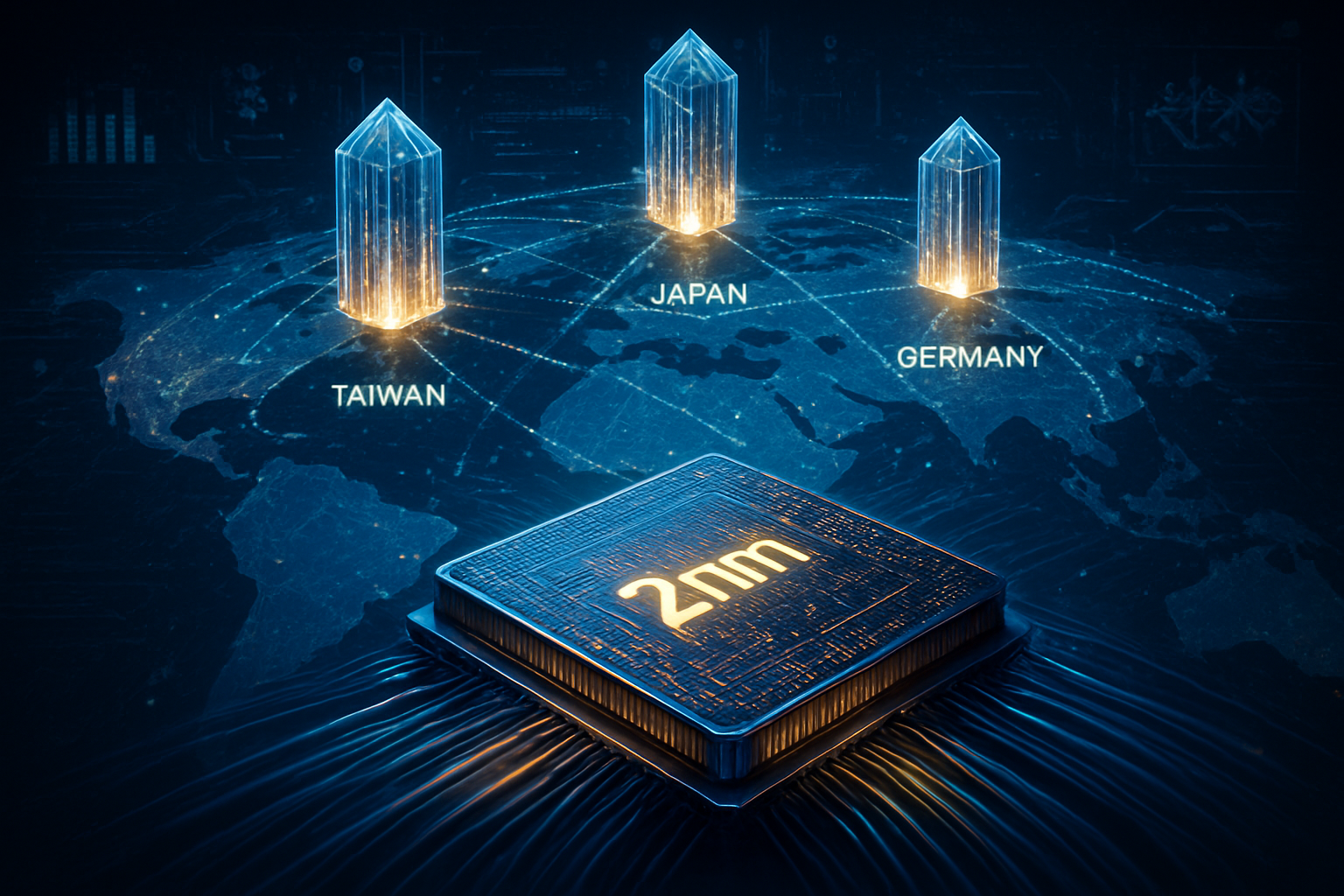
  • The Silicon Divide: Geopolitical Tensions Reshape the Global Semiconductor Landscape

    The Silicon Divide: Geopolitical Tensions Reshape the Global Semiconductor Landscape

    The intricate web of the global semiconductor industry, long a bastion of international collaboration and efficiency, is increasingly being torn apart by escalating geopolitical tensions, primarily between the United States and China. This struggle, often termed a "tech cold war" or "silicon schism," centers on the pursuit of "tech sovereignty"—each nation's ambition to control the design, manufacturing, and supply of the advanced chips that power everything from artificial intelligence (AI) to military systems. The immediate significance of this rivalry is profound, forcing a radical restructuring of global supply chains, redefining investment strategies, and potentially altering the pace and direction of technological innovation worldwide.

    At its core, this competition is a battle for technological dominance, with both Washington and Beijing viewing control over advanced semiconductors as a critical national security imperative. The ramifications extend far beyond the tech sector, touching upon global economic stability, national defense capabilities, and the very future of AI development.

    The Crucible of Control: US Export Curbs and China's Quest for Self-Reliance

    The current geopolitical climate has been shaped by a series of aggressive policy maneuvers from both the United States and China, each designed to assert technological control and secure strategic advantages.

    The United States has implemented increasingly stringent export controls aimed at curbing China's technological advancement, particularly in advanced computing and AI. These measures, spearheaded by the US Department of Commerce's Bureau of Industry and Security (BIS), target specific technical thresholds. Restrictions apply to logic chips below 16/14 nanometers (nm), DRAM memory chips below 18nm half-pitch, and NAND flash memory chips with 128 layers or more. Crucially, these controls also encompass advanced semiconductor manufacturing equipment (SME) necessary for producing chips smaller than 16nm, including critical Deep Ultraviolet (DUV) lithography machines and Electronic Design Automation (EDA) tools. The "US Persons" rule further restricts American citizens and green card holders from working at Chinese semiconductor facilities, while the "50 Percent Rule" expands the reach of these controls to subsidiaries of blacklisted foreign firms. Major Chinese entities like Huawei Technologies Co., Ltd. and Semiconductor Manufacturing International Corporation (SMIC), China's largest chipmaker, have been placed on the Entity List, severely limiting their access to US technology.

    In direct response, China has launched an ambitious, state-backed drive for semiconductor self-sufficiency. Central to this effort is the "Big Fund" (National Integrated Circuit Industry Investment Fund), which has seen three phases of massive capital injection. The latest, Phase III, launched in May 2024, is the largest to date, amassing 344 billion yuan (approximately US$47.5 billion to US$65.4 billion) to bolster high-end innovation and foster existing capabilities. This fund supports domestic champions like SMIC, Yangtze Memory Technologies Corporation (YMTC), and ChangXin Memory Technologies (CXMT). Despite US restrictions, SMIC reportedly achieved a "quasi-7-nanometer" (7nm) process using DUV lithography by October 2020, enabling the production of Huawei's Kirin 9000S processor for the Mate 60 Pro smartphone in late 2023. While this 7nm production is more costly and has lower yield rates than using Extreme Ultraviolet (EUV) lithography, it demonstrates China's resilience. Huawei, through its HiSilicon division, is also emerging as a significant player in AI accelerators, with its Ascend 910C chip rivaling some of NVIDIA Corp. (NASDAQ: NVDA)'s offerings. China has also retaliated by restricting the export of critical minerals like gallium and germanium, essential for semiconductor production.

    The US has also enacted the CHIPS and Science Act in 2022, allocating approximately US$280 billion to boost domestic research and manufacturing of semiconductors. This includes US$39 billion in subsidies for chip manufacturing on US soil and a 25% investment tax credit. Companies receiving these subsidies are prohibited from producing chips more advanced than 28nm in China for 10 years. Furthermore, the US has actively sought multilateral cooperation, aligning allies like the Netherlands (home to ASML Holding N.V. (NASDAQ: ASML)), Japan, South Korea, and Taiwan in implementing similar export controls, notably through the "Chip 4 Alliance." While a temporary one-year tariff truce was reportedly agreed upon in October 2025 between the US and China, which included a suspension of new Chinese measures on rare earth metals, the underlying tensions and strategic competition remain.

    Corporate Crossroads: Tech Giants Navigate a Fragmented Future

    The escalating US-China semiconductor tensions have sent shockwaves through the global tech industry, forcing major companies and startups alike to re-evaluate strategies, reconfigure supply chains, and brace for a bifurcated future.

    NVIDIA Corp. (NASDAQ: NVDA), a leader in AI chips, has been significantly impacted by US export controls that restrict the sale of its most powerful GPUs, such as the H100, to China. Although NVIDIA developed downgraded versions like the H20 to comply, these too have faced fluctuating restrictions. China historically represented a substantial portion of NVIDIA's revenue, and these bans have resulted in billions of dollars in lost sales and a decline in its share of China's AI chip market. CEO Jensen Huang has voiced concerns that these restrictions inadvertently strengthen Chinese competitors and weaken America's long-term technological edge.

    Intel Corp. (NASDAQ: INTC) has also faced considerable disadvantages, particularly due to China's retaliatory ban on its processors in government systems, citing national security concerns. With China accounting for approximately 27% of Intel's annual revenue, this ban is a major financial blow, compelling a shift towards domestic Chinese suppliers. Despite these setbacks, Intel is actively pursuing a resurgence, investing heavily in its foundry business and advanced manufacturing processes to narrow the gap with competitors and bolster national supply chains under the CHIPS Act.

    Conversely, Chinese tech giants like Huawei Technologies Co., Ltd. have shown remarkable resilience. Despite being a primary target of US sanctions, Huawei, in collaboration with SMIC, has achieved breakthroughs in producing advanced chips, such as the 7nm processor for its Mate 60 Pro smartphone. These pressures have galvanized Huawei's indigenous innovation efforts, positioning it to become China's top AI chipmaker by 2026, opening new plants and challenging US dominance in certain AI chip segments. SMIC, despite being on the US Entity List, has also made notable progress in producing 5nm-class and 7nm chips, benefiting from China's massive state-led investments aimed at self-sufficiency.

    Taiwan Semiconductor Manufacturing Company (TSMC) (NYSE: TSM), a critical global player producing over 60% of the world's semiconductors and a staggering 92% of advanced chips (7nm and below), finds itself at the epicenter of this geopolitical struggle. Taiwan's dominance in advanced manufacturing has earned it the moniker of a "silicon shield," deterring aggression due to the catastrophic global economic impact a disruption would cause. TSMC is navigating pressures from both the US and China, halting advanced AI chip shipments to some Chinese clients under US directives. To de-risk operations and benefit from incentives like the US CHIPS Act, TSMC is expanding globally, building new fabs in the US (e.g., Arizona) and Japan, while retaining its cutting-edge R&D in Taiwan. Its revenue surged in Q2 2025, benefiting from US manufacturing investments and protected domestic demand.

    ASML Holding N.V. (NASDAQ: ASML), the Dutch company that is the sole producer of Extreme Ultraviolet (EUV) lithography machines and a leading provider of Deep Ultraviolet (DUV) machines, is another pivotal player caught in the crossfire. Under significant US pressure, the Dutch government has restricted ASML's exports of both EUV and advanced DUV machines to China, impacting ASML's revenue from a significant market. However, ASML may also benefit from increased demand from non-Chinese manufacturers seeking to build out their own advanced chip capabilities. The overall market is seeing a push for "friend-shoring," where companies establish manufacturing in US-allied countries to maintain market access, further fragmenting global supply chains and increasing production costs.

    A New Cold War: The Broader Implications of the Silicon Divide

    The US-China semiconductor rivalry transcends mere trade disputes; it signifies a fundamental restructuring of the global technological order, embedding itself deeply within the broader AI landscape and global technology trends. This "AI Cold War" has profound implications for global supply chains, the pace of innovation, and long-term economic stability.

    At its heart, this struggle is a battle for AI supremacy. Advanced semiconductors, particularly high-performance GPUs, are the lifeblood of modern AI, essential for training and deploying complex models. By restricting China's access to these cutting-edge chips and manufacturing equipment, the US aims to impede its rival's ability to develop advanced AI systems with potential military applications. This has accelerated a trend towards technological decoupling, pushing both nations towards greater self-sufficiency and potentially creating two distinct, incompatible technological ecosystems. This fragmentation could reverse decades of globalization, leading to inefficiencies, increased costs, and a slower overall pace of technological progress due to reduced collaboration.

    The impacts on global supply chains are already evident. The traditional model of seamless cross-border collaboration in the semiconductor industry has been severely disrupted by export controls and retaliatory tariffs. Companies are now diversifying their manufacturing bases, adopting "China +1" strategies, and exploring reshoring initiatives in countries like Vietnam, India, and Mexico. While the US CHIPS Act aims to boost domestic production, reshoring faces challenges such as skilled labor shortages and significant infrastructure investments. Countries like Taiwan, South Korea, and Japan, critical hubs in the semiconductor value chain, are caught in the middle, balancing economic ties with both superpowers.

    The potential concerns arising from this rivalry are significant. The risk of a full-blown "tech cold war" is palpable, characterized by the weaponization of supply chains and intense pressure on allied nations to align with one tech bloc. National security implications are paramount, as semiconductors underpin advanced military systems, digital infrastructure, and AI capabilities. Taiwan's crucial role in advanced chip manufacturing makes it a strategic focal point and a potential flashpoint. A disruption to Taiwan's semiconductor sector, whether by conflict or economic coercion, could trigger the "mother of all supply chain shocks," with catastrophic global economic consequences.

    This situation draws parallels to historical technological rivalries, particularly the original Cold War. Like the US and Soviet Union, both nations are employing tactics to restrict each other's technological advancement for military and economic dominance. However, the current tech rivalry is deeply integrated into a globalized economy, making complete decoupling far more complex and costly than during the original Cold War. China's "Made in China 2025" initiative, aimed at technological supremacy, mirrors past national drives for industrial leadership, but in a far more interconnected world.

    The Road Ahead: Future Developments and Enduring Challenges

    The US-China semiconductor rivalry is set to intensify further, with both nations continuing to refine their strategies and push the boundaries of technological innovation amidst a backdrop of strategic competition.

    In the near term, the US is expected to further tighten and expand its export controls, closing loopholes and broadening the scope of restricted technologies and entities, potentially including new categories of chips or manufacturing equipment. The Biden administration's 2022 controls, further expanded in October 2023, December 2024, and March 2025, underscore this proactive stance. China, conversely, will double down on its domestic semiconductor industry through massive state investments, talent development, and incentivizing the adoption of indigenous hardware and software. Its "Big Fund" Phase III, launched in May 2024, is a testament to this unwavering commitment.

    Longer term, the trajectory points towards a sustained period of technological decoupling, leading to a bifurcated global technology market. Experts predict a "Silicon Curtain" descending, creating two separate technology ecosystems with distinct standards for telecommunications and AI development. While China aims for 50% semiconductor self-sufficiency by 2025 and 100% import substitution by 2030, complete technological autonomy remains a significant challenge due to the complexity and capital intensity of the industry. China has already launched its first commercial e-beam lithography machine and an AI-driven chip design platform named QiMeng, which autonomously generates complete processors, aiming to reduce reliance on imported chip design software.

    Advancements in chip technology will continue to be a key battleground. While global leaders like TSMC and Samsung are already in mass production of 3nm chips and planning for 2nm Gate-All-Around (GAAFET) nodes, China's SMIC has commenced producing chips at the 7nm node. However, it still lags global leaders by several years. The focus will increasingly shift to advanced packaging technologies, such as 2.5D and 3D stacking with hybrid bonding and glass interposers, which are critical for integrating chiplets and overcoming traditional scaling limits. Intel is a leader in advanced packaging with technologies like E-IB and Foveros, while TSMC is aggressively expanding its CoWoS (Chip-on-Wafer-on-Substrate) capacity, essential for high-performance AI accelerators. AI and machine learning are also transforming chip design itself, with AI-powered Electronic Design Automation (EDA) tools automating complex tasks and optimizing chip performance.

    However, significant challenges remain. The feasibility of complete decoupling is questionable; estimates suggest fully self-sufficient local supply chains would require over $1 trillion in upfront investment and incur substantial annual operational costs, leading to significantly higher chip prices. The sustainability of domestic manufacturing initiatives, even with massive subsidies like the CHIPS Act, faces hurdles such as worker shortages and higher operational costs compared to Asian locations. Geopolitical risks, particularly concerning Taiwan, continue to be a major concern, as any disruption could trigger a global economic crisis.

    A Defining Era: The Future of AI and Geopolitics

    The US-China semiconductor tensions mark a defining era in the history of technology and geopolitics. This "chip war" is fundamentally restructuring global industries, challenging established economic models, and forcing a re-evaluation of national security in an increasingly interconnected yet fragmented world.

    The key takeaway is a paradigm shift from a globally integrated, efficiency-driven semiconductor industry to one increasingly fragmented by national security imperatives. The US, through stringent export controls and domestic investment via the CHIPS Act, seeks to maintain its technological lead and prevent China from leveraging advanced chips for military and AI dominance. China, in turn, is pouring vast resources into achieving self-sufficiency across the entire semiconductor value chain, from design tools to manufacturing equipment and materials, exemplified by its "Big Fund" and indigenous innovation efforts. This strategic competition has transformed the semiconductor supply chain into a tool of economic statecraft.

    The long-term impact points towards a deeply bifurcated global technology ecosystem. While US controls have temporarily slowed China's access to bleeding-edge technology, they have also inadvertently accelerated Beijing's relentless pursuit of technological self-reliance. This will likely result in higher costs, duplicated R&D efforts, and potentially slower overall global technological progress due to reduced collaboration. However, it also acts as a powerful catalyst for indigenous innovation within China, pushing its domestic industry to develop its own solutions. The implications for global stability are significant, with the competition for AI sovereignty intensifying rivalries and reshaping alliances, particularly with Taiwan remaining a critical flashpoint.

    In the coming weeks and months, several critical indicators will bear watching:

    • New US Policy Directives: Any further refinements or expansions of US export controls, especially concerning advanced AI chips and new tariffs, will be closely scrutinized.
    • China's Domestic Progress: Observe China's advancements in scaling its domestic AI accelerator production and achieving breakthroughs in advanced chip manufacturing, particularly SMIC's progress beyond 7nm.
    • Rare Earth and Critical Mineral Controls: Monitor any new actions from China regarding its export restrictions on critical minerals, which could impact global supply chains.
    • NVIDIA's China Strategy: The evolving situation around NVIDIA's ability to sell certain AI chips to China, including potentially "nerfed" versions or a new Blackwell-based chip specifically for the Chinese market, will be a key development.
    • Diplomatic Engagements: The outcome of ongoing diplomatic dialogues between US and Chinese officials, including potential meetings between leaders, could signal shifts in the trajectory of these tensions, though a complete thaw is unlikely.
    • Allied Alignment: The extent to which US allies continue to align with US export controls will be crucial, as concerns persist about potential disadvantages for US firms if competitors in allied countries fill market voids.

    The US-China semiconductor tensions are not merely a transient trade spat but a fundamental reordering of the global technological landscape. Its unfolding narrative will continue to shape the future of AI, global economic models, and geopolitical stability for decades to come.


    This content is intended for informational purposes only and represents analysis of current AI developments.

    TokenRing AI delivers enterprise-grade solutions for multi-agent AI workflow orchestration, AI-powered development tools, and seamless remote collaboration platforms.
    For more information, visit https://www.tokenring.ai/.

  • Geopolitical Fault Lines Threaten Global Auto Production: Nissan’s Warning Signals Deepening Semiconductor Crisis

    Geopolitical Fault Lines Threaten Global Auto Production: Nissan’s Warning Signals Deepening Semiconductor Crisis

    The global semiconductor supply chain, a complex web of design, fabrication, and assembly, finds itself once again at the precipice of a major crisis, this time fueled less by pandemic-driven demand surges and more by escalating geopolitical tensions. As of late October 2025, a critical dispute involving Dutch chipmaker Nexperia has sent shockwaves through the automotive industry, prompting dire warnings from major players like Nissan (TYO: 7201). This unfolding situation underscores the fragile nature of modern manufacturing and the profound economic implications when technology becomes a battleground for international relations.

    The immediate significance of this development cannot be overstated. Automakers worldwide are staring down the barrel of potential production stoppages within weeks, as a crucial supply of foundational chips is jeopardized. Nissan's Chief Performance Officer, Guillaume Cartier, articulated the palpable anxiety on October 29, 2025, stating the company was "okay to the first week of November" but lacked "full visibility" thereafter. This warning, echoed by Mercedes-Benz (ETR: MBG), highlights a crisis that is not merely a shortage but a direct consequence of strategic decoupling and national security concerns, threatening to destabilize an already recovering global economy.

    The Nexperia Flashpoint: Geopolitics Meets Critical Components

    The current predicament centers around Nexperia, a Dutch-headquartered company owned by China's Wingtech Technology, which has become the epicenter of a severe geopolitical dispute. In September 2025, the Dutch government took decisive action, assuming control of Nexperia, citing "grave governance deficiencies" and concerns over technology transfer and European economic security. This move followed the United States' earlier designation of Wingtech as a national security risk in December 2024 and expanded export controls in September 2025 to include companies with significant ownership by entities on the US entity list. China's swift retaliation in early October 2025—a ban on the export of Nexperia's finished products from its Chinese manufacturing plants—ignited the current crisis.

    Nexperia is not a producer of cutting-edge AI processors, but rather a vital supplier of "mature node" chips, such as transistors and diodes. These seemingly unsophisticated components are the workhorses of the electronics world, ubiquitous in automotive systems from engine control units and infotainment to advanced driver-assistance systems (ADAS) and power management. Nexperia commands a staggering 40% market share in these critical automotive components, making its disruption particularly devastating. Unlike the earlier pandemic-induced shortages, which were largely demand-driven, this crisis is a direct, deliberate geopolitical blockage of supply. This distinction is crucial; while the industry has invested heavily in boosting capacity for advanced chips, the mature node segment, often overlooked, now proves to be a major vulnerability. Initial reactions from industry associations like the European Automobile Manufacturers' Association (ACEA) and the Alliance for Automotive Innovation (AAI) in the US have been urgent, warning that existing stocks could last only "several weeks" before widespread production halts. The Japan Automobile Manufacturer's Association (JAMA) has also confirmed severe potential impacts on Japanese automakers.

    Ripple Effects Across Industries: Automakers Brace for Impact

    The immediate and most profound impact of the Nexperia crisis is being felt by the global automotive industry. Major automakers including Volkswagen (ETR: VOW), Toyota (TYO: 7203), General Motors (NYSE: GM), Ford (NYSE: F), Hyundai (KRX: 005380), Mercedes-Benz (ETR: MBG), Honda (TYO: 7267), and Nissan (TYO: 7201) are directly in the crosshairs. The inability to secure these foundational chips means that even if all other components are available, vehicle production lines will grind to a halt. This disruption could easily surpass the estimated $210 billion in revenue losses incurred by the auto industry during the 2021 chip shortage.

    In the short term, no companies stand to directly benefit from this specific geopolitical crisis, as it creates a systemic bottleneck. However, the long-term competitive implications are significant. Companies that have proactively diversified their supply chains or invested in regionalized manufacturing, though few, may find themselves in a relatively stronger position. The crisis also highlights the vulnerability of a just-in-time manufacturing model that relies heavily on a globally distributed, yet highly concentrated, supply chain. For companies already struggling with the transition to electric vehicles (EVs) and integrating more advanced technologies, this additional supply shock could severely disrupt product roadmaps and market positioning, potentially leading to delays in new model launches and a further increase in vehicle prices for consumers.

    Wider Significance: A New Era of Geopolitical Industrial Policy

    This Nexperia crisis transcends a mere supply chain hiccup; it signals a new, more aggressive phase in the broader AI and technology landscape. While not an AI breakthrough, the availability of these foundational chips is critical for the deployment of AI-driven features in vehicles and other smart devices. The crisis underscores how deeply intertwined technological advancement, economic security, and national policy have become. It feeds into a growing trend of "de-globalization" or "friend-shoring," where nations prioritize supply chain resilience and national security over pure economic efficiency.

    The potential concerns are manifold: an escalation of trade wars, further fragmentation of global technology standards, and a slowdown in innovation as companies are forced to prioritize supply security over cutting-edge development. This situation stands in stark contrast to previous AI milestones, which often celebrated collaborative scientific progress. Instead, it serves as a stark reminder of the foundational vulnerabilities that can impede even the most advanced technological ambitions. Economically, prolonged production halts could contribute to inflationary pressures, impact GDP growth in major manufacturing economies, and potentially lead to job losses in affected sectors.

    The Road Ahead: Localization, Resilience, and Lingering Tensions

    Looking ahead, the immediate future will be dominated by efforts to mitigate the Nexperia fallout. Automakers and their Tier 1 suppliers are scrambling to identify alternative sources for mature node chips, a process that can take months due to stringent qualification processes and the specialized nature of semiconductor manufacturing. In the longer term, this crisis will undoubtedly accelerate the global push for localized semiconductor manufacturing. Significant investments are already underway in the United States (e.g., through the CHIPS Act), Europe (e.g., European Chips Act), and Japan, aiming to build new fabrication plants (fabs) and reduce reliance on concentrated supply hubs.

    However, these initiatives face immense challenges: the enormous capital expenditure required, the years it takes to bring new fabs online, and persistent shortages of skilled labor and critical resources like ultrapure water. Experts predict continued volatility in the semiconductor market, with geopolitical considerations increasingly shaping investment decisions and supply chain strategies. The concept of "strategic autonomy" in critical technologies will likely gain further traction, driving governments to intervene more directly in industrial policy. Potential applications on the horizon, such as fully autonomous vehicles and pervasive AI, will depend critically on the industry's ability to build truly resilient and diversified supply chains.

    A Defining Moment for Global Supply Chains

    The Nexperia crisis and Nissan's subsequent warning represent a defining moment for global supply chains and the tech industry. It underscores that while the acute, pandemic-driven chip shortages may have eased in some areas, new and perhaps more intractable challenges are emerging from the geopolitical arena. The vulnerability of highly concentrated supply chains, even for seemingly low-tech components, has been laid bare.

    The long-term impact will likely reshape global trade patterns, accelerate the trend towards regionalized manufacturing, and force companies to build greater redundancy and resilience into their operations, albeit at a higher cost. The coming weeks and months will be crucial. All eyes will be on how the Nexperia dispute is resolved, if at all, and whether governments and industries can forge new models of collaboration that prioritize stability without stifling innovation. This event serves as a stark reminder that in the interconnected world of technology, even the smallest component can trigger a global crisis when entangled with geopolitical power struggles.


    This content is intended for informational purposes only and represents analysis of current AI developments.

    TokenRing AI delivers enterprise-grade solutions for multi-agent AI workflow orchestration, AI-powered development tools, and seamless remote collaboration platforms.
    For more information, visit https://www.tokenring.ai/.

  • AI on the Front Lines: How China, Ukraine, and the US are Redefining Modern Warfare

    AI on the Front Lines: How China, Ukraine, and the US are Redefining Modern Warfare

    The landscape of global military power is undergoing a profound transformation, driven by the rapid integration of artificial intelligence into defense systems. As of late 2025, China, Ukraine, and the United States stand at the forefront of this revolution, each leveraging AI with distinct strategies and immediate strategic implications. From autonomous combat vehicles and drone swarms to advanced intelligence analysis and decision-support systems, AI is not merely enhancing existing military capabilities but fundamentally reshaping the tempo and tools of war. This burgeoning reliance on intelligent systems is accelerating decision-making, multiplying force effectiveness through automation, and intensifying an already fierce global competition for technological supremacy.

    The immediate significance of these deployments is multifaceted: AI enables faster processing of vast data streams, providing commanders with real-time insights and dramatically reducing the time from target identification to operational execution. Autonomous and unmanned systems are increasingly deployed to minimize human exposure in high-risk missions, boosting operational efficiency and preserving human lives. However, this rapid technological advancement is simultaneously fueling an intense AI arms race, reshaping global power dynamics and raising urgent ethical questions concerning autonomy, human control, and accountability in lethal decision-making.

    The Technical Edge: A Deep Dive into Military AI Capabilities

    The technical advancements in military AI across China, Ukraine, and the US reveal distinct priorities and cutting-edge capabilities that are setting new benchmarks for intelligent warfare. These developments represent a significant departure from traditional military approaches, emphasizing speed, data analysis, and autonomous action.

    China's People's Liberation Army (PLA) is aggressively pursuing "intelligentized warfare," aiming for global AI military leadership by 2030. Their advancements include the deployment of autonomous combat vehicles, such as those showcased by state-owned Norinco, which can perform combat-support operations using advanced AI models like DeepSeek. The PLA is also investing heavily in sophisticated drone swarms capable of autonomous target tracking and coordinated operations with minimal human intervention, particularly against challenging "low, slow, small" threats. Furthermore, China is developing AI-enabled Intelligence, Surveillance, and Reconnaissance (ISR) systems that fuse data from diverse sources—satellite imagery, signals intelligence, and human intelligence—to provide unprecedented battlefield situational awareness and rapid target detection. A key technical differentiator is China's development of "command brains" and visually immersive command centers, where AI-powered decision-support tools can assess thousands of battlefield scenarios in mere seconds, a task that would take human teams significantly longer. This focus on "algorithmic sovereignty" through domestic AI models aims to reduce reliance on Western technology and consolidate national control over critical digital infrastructure.

    Ukraine, thrust into a real-world testing ground for AI in conflict, has demonstrated remarkable agility in integrating AI-enabled technologies, primarily to augment human capabilities and reduce personnel exposure. The nation has rapidly evolved its unmanned aerial and ground-based drones from mere reconnaissance tools to potent strike platforms. Significant technical progress has been made in autonomous navigation, including GPS-denied navigation and advanced drone swarming techniques. Ukraine has procured and domestically produced millions of AI-enhanced drones in 2024, demonstrating a rapid integration cycle. AI integration has dramatically boosted the strike accuracy of First-Person View (FPV) drones from an estimated 30-50% to around 80%, a critical improvement in combat effectiveness. Beyond direct combat, AI assists in open-source intelligence analysis, helping to identify and counter disinformation campaigns, and strengthens cybersecurity and electronic warfare operations by enhancing data encryption and enabling swifter responses to cyber threats. Ukraine's approach prioritizes a "human-in-the-loop" for lethal decisions, yet the rapid pace of development suggests that the feasibility of full autonomy is growing.

    The United States is strategically investing in AI-powered military systems to maintain its technological edge and deter aggression. The Pentagon's Replicator program, aiming to deploy thousands of AI-driven drones by August 2025, underscores a commitment to autonomous systems across various platforms. Technically, the US is applying AI to optimize supply chains through predictive logistics, enhance intelligence analysis by recognizing patterns beyond human capacity, and develop advanced jamming and communications disruption capabilities in electronic warfare. In cybersecurity, AI is used for automated network penetration and defense. Collaborations with industry leaders are also yielding results: Northrop Grumman (NYSE: NOC) is leveraging physics-based AI with Luminary Cloud to drastically reduce the design time for complex space systems. IBM (NYSE: IBM) is launching a new large language model (LLM) specifically tailored for defense and national security, trained on domain-specific data, to improve decision-making in air-gapped, classified, and edge environments. The U.S. Army is further accelerating its data maturity strategy by rolling out an enterprise AI workspace and democratizing low-code/no-code platforms, empowering soldiers to develop their own AI systems and automate tasks, indicating a shift towards widespread AI integration at the operational level.

    AI's Shifting Sands: Impact on Tech Giants and Startups

    The escalating military AI race is creating significant ripple effects across the technology industry, influencing the strategies of established tech giants, defense contractors, and agile AI startups alike. The demand for advanced AI capabilities is forging new partnerships, intensifying competition, and potentially disrupting traditional market dynamics.

    Major defense contractors like Lockheed Martin (NYSE: LMT), Raytheon Technologies (NYSE: RTX), and Northrop Grumman (NYSE: NOC) stand to benefit immensely from these developments. Their long-standing relationships with government defense agencies, coupled with their expertise in integrating complex systems, position them as prime beneficiaries for developing and deploying AI-powered hardware and software. Northrop Grumman's collaboration with Luminary Cloud on physics-based AI for space system design exemplifies how traditional defense players are leveraging cutting-edge AI for strategic advantage. These companies are investing heavily in AI research and development, acquiring AI startups, and partnering with commercial AI leaders to maintain their competitive edge in this evolving landscape.

    Beyond traditional defense, commercial AI labs and tech giants like IBM (NYSE: IBM), Google (NASDAQ: GOOGL), Microsoft (NASDAQ: MSFT), and Amazon (NASDAQ: AMZN) are finding their advanced AI research increasingly relevant to national security. IBM's development of a specialized large language model for defense and national security highlights a growing trend of commercial AI technologies being adapted for military use. While many commercial tech giants maintain ethical guidelines against direct involvement in autonomous lethal weapons, their foundational AI research in areas like computer vision, natural language processing, and advanced robotics is indispensable for military applications such as intelligence analysis, logistics, and decision support. This creates a delicate balance between commercial interests and national security demands, often leading to partnerships where commercial firms provide underlying AI infrastructure or expertise.

    The landscape is also ripe for disruption by specialized AI startups. Companies focusing on niche areas like autonomous navigation, drone swarm intelligence, advanced sensor fusion, or secure AI for edge computing are finding significant opportunities. Ukraine's wartime innovations, often driven by agile tech companies and volunteer groups, demonstrate how rapid prototyping and deployment of AI solutions can emerge outside traditional procurement cycles. These startups, often backed by venture capital, can quickly develop and iterate on AI solutions, potentially outpacing larger, more bureaucratic organizations. However, they also face challenges in scaling, securing long-term government contracts, and navigating the stringent regulatory and ethical frameworks surrounding military AI. The competitive implications are clear: companies that can develop robust, secure, and ethically sound AI solutions will gain significant market positioning and strategic advantages in the burgeoning military AI sector.

    Wider Significance: Ethical Crossroads and Global Power Shifts

    The rapid integration of AI into military applications by China, Ukraine, and the US carries profound wider significance, pushing the boundaries of ethical considerations, reshaping global power dynamics, and setting new precedents for future conflicts. This development is not merely an incremental technological upgrade but a fundamental shift in the nature of warfare, echoing the transformative impacts of previous military innovations.

    The most pressing concern revolves around the ethical implications of autonomous lethal weapons systems (LAWS). While all three nations publicly maintain a "human-in-the-loop" or "human-on-the-loop" approach for lethal decision-making, the technical capabilities are rapidly advancing towards greater autonomy. The potential for AI systems to make life-or-death decisions without direct human intervention raises critical questions about accountability, bias in algorithms, and the potential for unintended escalation. The US has endorsed a "blueprint for action" on responsible AI use in military settings, advocating for human involvement, particularly concerning nuclear weapons and preventing AI use in weapons of mass destruction by non-state actors. However, the practical application of these principles in the heat of conflict remains a significant challenge, especially given Ukraine's rapid deployment of AI-enhanced drones. China's pursuit of "intelligentized warfare" and the systematic integration of AI suggest a drive for battlefield advantage that could push the boundaries of autonomy, even as Beijing publicly commits to human control.

    This AI arms race fits squarely into broader AI trends characterized by intense geopolitical competition for technological leadership. The computational demands of advanced AI create critical dependencies on semiconductor production, underscoring the strategic importance of key manufacturing hubs like Taiwan. The US has responded to China's advancements with restrictions on investments in China's AI and semiconductor sectors, aiming to limit its military AI development. However, China is accelerating domestic research to mitigate these effects, highlighting a global race for "algorithmic sovereignty" and self-sufficiency in critical AI components. The impact on international stability is significant, as the development of superior AI capabilities could fundamentally alter the balance of power, potentially leading to increased assertiveness from nations with perceived technological advantages.

    Comparisons to previous AI milestones are instructive. Just as the development of precision-guided munitions transformed warfare in the late 20th century, AI-driven systems are now poised to offer unprecedented levels of precision, speed, and analytical capability. However, unlike previous technologies, AI introduces a layer of cognitive autonomy that challenges traditional command and control structures and international humanitarian law. The current developments are seen as a critical inflection point, moving beyond AI as merely an analytical tool to AI as an active, decision-making agent in conflict. The potential for AI to be used in cyber warfare, disinformation campaigns, and electronic warfare further complicates the landscape, blurring the lines between kinetic and non-kinetic conflict and raising new challenges for international arms control and stability.

    The Horizon of Conflict: Future Developments in Military AI

    The trajectory of military AI suggests a future where intelligent systems will become even more deeply embedded in defense strategies, promising both revolutionary capabilities and unprecedented challenges. Experts predict a continuous escalation in the sophistication and autonomy of these systems, pushing the boundaries of what is technically feasible and ethically permissible.

    In the near term, we can expect continued advancements in autonomous drone swarms, with improved coordination, resilience, and the ability to operate in complex, contested environments. These swarms will likely incorporate more sophisticated AI for target recognition, threat assessment, and adaptive mission planning. The Pentagon's Replicator program is a clear indicator of this immediate focus. We will also see further integration of AI into command and control systems, evolving from decision-support tools to more proactive "AI co-pilots" that can suggest complex strategies and execute tasks with minimal human oversight, particularly in time-critical scenarios. The development of specialized large language models for defense, like IBM's initiative, will enhance intelligence analysis, operational planning, and communication in secure environments.

    Long-term developments are likely to involve the proliferation of fully autonomous weapons systems, even as ethical debates continue. The increasing feasibility demonstrated in real-world conflicts, coupled with the strategic imperative to reduce human casualties and gain battlefield advantage, will exert pressure towards greater autonomy. We could see the emergence of AI-powered "robot soldiers" or highly intelligent, networked autonomous platforms capable of complex maneuver, reconnaissance, and even engagement without direct human input. Beyond kinetic applications, AI will play an increasingly critical role in cyber defense and offense, electronic warfare, and sophisticated disinformation campaigns, creating a multi-domain AI arms race. Predictive logistics and maintenance will become standard, optimizing military supply chains and ensuring equipment readiness through advanced data analytics and machine learning.

    However, significant challenges need to be addressed. Ensuring the ethical deployment of AI, particularly concerning accountability and preventing unintended escalation, remains paramount. The development of robust explainable AI (XAI) is crucial for human operators to understand and trust AI decisions. Cybersecurity threats to AI systems themselves, including adversarial attacks that could manipulate or disable military AI, represent a growing vulnerability. Furthermore, the high computational and data requirements of advanced AI necessitate continuous investment in infrastructure and talent. Experts predict that the nation that masters the ethical and secure integration of AI into its military will gain a decisive strategic advantage, fundamentally altering the global balance of power for decades to come. The coming years will be critical in shaping the norms and rules governing this new era of intelligent warfare.

    The Dawn of Intelligent Warfare: A Concluding Assessment

    The current utilization of military AI by China, Ukraine, and the United States marks a pivotal moment in the history of warfare, ushering in an era of intelligent conflict where technological prowess increasingly dictates strategic advantage. The key takeaways from this analysis underscore a global race for AI supremacy, where each nation is carving out its own niche in the application of advanced algorithms and autonomous systems. China's ambitious pursuit of "intelligentized warfare" through domestic AI models and comprehensive integration, Ukraine's agile, battle-tested innovations in unmanned systems, and the US's strategic investments to maintain technological overmatch collectively highlight AI as the critical differentiator in modern military strength.

    This development's significance in AI history cannot be overstated. It represents a transition from AI as a mere analytical tool to an active participant in military operations, profoundly impacting decision-making cycles, force projection, and the protection of human lives. The ethical quandaries surrounding autonomous lethal weapons, the imperative for human control, and the potential for algorithmic bias are now at the forefront of international discourse, demanding urgent attention and the establishment of robust regulatory frameworks. The intensifying AI arms race, fueled by these advancements, is reshaping geopolitical landscapes and accelerating competition for critical resources like semiconductors and AI talent.

    Looking ahead, the long-term impact of military AI will likely be characterized by a continuous evolution of autonomous capabilities, a blurring of lines between human and machine decision-making, and an increasing reliance on networked intelligent systems for multi-domain operations. What to watch for in the coming weeks and months includes further announcements on drone swarm deployments, the development of new AI-powered decision-support tools, and ongoing international discussions on the governance and responsible use of military AI. The ethical framework, particularly regarding the "human-in-the-loop" principle, will be under constant scrutiny as technical capabilities push the boundaries of autonomy. The interplay between commercial AI innovation and military application will also be a critical area to monitor, as tech giants and startups continue to shape the foundational technologies that underpin this new era of intelligent warfare.


    This content is intended for informational purposes only and represents analysis of current AI developments.

    TokenRing AI delivers enterprise-grade solutions for multi-agent AI workflow orchestration, AI-powered development tools, and seamless remote collaboration platforms.
    For more information, visit https://www.tokenring.ai/.

  • AI Gold Rush: Semiconductor Giants NXP and Amkor Surge as Investment Pours into AI’s Hardware Foundation

    AI Gold Rush: Semiconductor Giants NXP and Amkor Surge as Investment Pours into AI’s Hardware Foundation

    The global technology landscape is undergoing a profound transformation, driven by the relentless advance of Artificial Intelligence, and at its very core, the semiconductor industry is experiencing an unprecedented boom. Companies like NXP Semiconductors (NASDAQ: NXPI) and Amkor Technology (NASDAQ: AMKR) are at the forefront of this revolution, witnessing significant stock surges as investors increasingly recognize their critical role in powering the AI future. This investment frenzy is not merely speculative; it is a direct reflection of the exponential growth of the AI market, which demands ever more sophisticated and specialized hardware to realize its full potential.

    These investment patterns signal a foundational shift, validating AI's economic impact and highlighting the indispensable nature of advanced semiconductors. As the AI market, projected to exceed $150 billion in 2025, continues its meteoric rise, the demand for high-performance computing, advanced packaging, and specialized edge processing solutions is driving capital towards key enablers in the semiconductor supply chain. The strategic positioning of companies like NXP in edge AI and automotive, and Amkor in advanced packaging, has placed them in prime position to capitalize on this AI-driven hardware imperative.

    The Technical Backbone of AI's Ascent: NXP's Edge Intelligence and Amkor's Packaging Prowess

    The surging investments in NXP Semiconductors and Amkor Technology are rooted in their distinct yet complementary technical advancements, which are proving instrumental in the widespread deployment of AI. NXP is spearheading the charge in edge AI, bringing sophisticated intelligence closer to the data source, while Amkor is mastering the art of advanced packaging, a critical enabler for the complex, high-performance AI chips that power everything from data centers to autonomous vehicles.

    NXP's technical contributions are particularly evident in its development of Discrete Neural Processing Units (DNPUs) and integrated NPUs within its i.MX 9 series applications processors. The Ara-1 Edge AI Discrete NPU, for instance, offers up to 6 equivalent TOPS (eTOPS) of performance, designed for real-time AI computing in embedded systems, supporting popular frameworks like TensorFlow and PyTorch. Its successor, the Ara-2, significantly ups the ante with up to 40 eTOPS, specifically engineered for real-time Generative AI, Large Language Models (LLMs), and Vision Language Models (VLMs) at the edge. What sets NXP's DNPUs apart is their efficient dataflow architecture, allowing for zero-latency context switching between multiple AI models—a significant leap from previous approaches that often incurred performance penalties when juggling different AI tasks. Furthermore, their i.MX 952 applications processor, with its integrated eIQ Neutron NPU, is tailored for AI-powered vision and human-machine interfaces in automotive and industrial sectors, combining low-power, real-time, and high-performance processing while meeting stringent functional safety standards like ISO 26262 ASIL B. The strategic acquisition of edge AI pioneer Kinara in February 2025 further solidified NXP's position, integrating high-performance, energy-efficient discrete NPUs into its portfolio.

    Amkor Technology, on the other hand, is the unsung hero of the AI hardware revolution, specializing in advanced packaging solutions that are indispensable for unlocking the full potential of modern AI chips. As traditional silicon scaling (Moore's Law) faces physical limits, heterogeneous integration—combining multiple dies into a single package—has become paramount. Amkor's expertise in 2.5D Through Silicon Via (TSV) interposers, Chip on Substrate (CoS), and Chip on Wafer (CoW) technologies allows for the high-bandwidth, low-latency interconnection of high-performance logic with high-bandwidth memory (HBM), which is crucial for AI and High-Performance Computing (HPC). Their innovative S-SWIFT (Silicon Wafer Integrated Fan-Out) technology offers a cost-effective alternative to 2.5D TSV, boosting I/O and circuit density while reducing package size and improving electrical performance, making it ideal for AI applications demanding significant memory and compute power. Amkor's impressive track record, including shipping over two million 2.5D TSV products and over 2 billion eWLB (embedded Wafer Level Ball Grid Array) components, underscores its maturity and capability in powering AI and HPC applications.

    Initial reactions from the AI research community and industry experts have been overwhelmingly positive for both companies. NXP's edge AI solutions are lauded for being "cost-effective, low-power solutions for vision processing and sensor fusion," empowering efficient and private machine learning at the edge. The Kinara acquisition is seen as a move that will "enhance and strengthen NXP's ability to provide complete and scalable AI platforms, from TinyML to generative AI." For Amkor, its advanced packaging capabilities are considered critical for the future of AI. NVIDIA (NASDAQ: NVDA) CEO Jensen Huang highlighted Amkor's $7 billion Arizona campus expansion as a "defining milestone" for U.S. leadership in the "AI century." Experts recognize Fan-Out Wafer Level Packaging (FOWLP) as a key enabler for heterogeneous integration, offering superior electrical performance and thermal dissipation, central to achieving performance gains beyond traditional transistor scaling. While NXP's Q3 2025 earnings saw some mixed market reaction due to revenue decline, analysts remain bullish on its long-term prospects in automotive and industrial AI. Investors are also closely monitoring Amkor's execution and ability to manage competition amidst its significant expansion.

    Reshaping the AI Ecosystem: From Hyperscalers to the Edge

    The robust investment in AI-driven semiconductor companies like NXP and Amkor is not merely a financial phenomenon; it is fundamentally reshaping the competitive landscape for AI companies, tech giants, and startups alike. As the global AI chip market barrels towards a projected $150 billion in 2025, access to advanced, specialized hardware is becoming the ultimate differentiator, driving both unprecedented opportunities and intense competitive pressures.

    Major tech giants, including Google (NASDAQ: GOOGL), Amazon (NASDAQ: AMZN), Microsoft (NASDAQ: MSFT), and Apple (NASDAQ: AAPL), are deeply entrenched in this race, often pursuing vertical integration by designing their own custom AI accelerators—such as Google's TPUs or Microsoft's Maia and Cobalt chips. This strategy aims to optimize performance for their unique AI workloads, reduce reliance on external suppliers like NVIDIA (NASDAQ: NVDA), and gain greater strategic control over their AI infrastructure. Their vast financial resources allow them to secure long-term contracts with leading foundries like TSMC (NYSE: TSM) and benefit from the explosive growth experienced by equipment suppliers like ASML (NASDAQ: ASML). This trend creates a dual dynamic: while it fuels demand for advanced manufacturing and packaging services from companies like Amkor, it also intensifies the competition for chip design talent and foundry capacity.

    For AI companies and startups, the proliferation of advanced AI semiconductors presents both a boon and a challenge. On one hand, the availability of more powerful, energy-efficient, and specialized chips—from NXP's edge NPUs to NVIDIA's data center GPUs—accelerates innovation and deployment across various sectors, enabling the training of larger models and the execution of more complex inference tasks. This democratizes access to AI capabilities to some extent, particularly with the rise of cloud-based design tools. However, the high costs associated with these cutting-edge chips and the intense demand from hyperscalers can create significant barriers for smaller players, potentially exacerbating an "AI divide" where only well-funded entities can fully leverage the latest hardware. Companies like NXP, with their focus on accessible edge AI solutions and comprehensive software stacks, offer a pathway for startups to embed sophisticated AI into their products without requiring massive data center investments.

    The market positioning and strategic advantages are increasingly defined by specialized expertise and ecosystem control. Companies like Amkor, with its leadership in advanced packaging technologies like 2.5D TSV and S-SWIFT, wield significant pricing power and importance as they solve the critical integration challenges for heterogeneous AI chips. NXP's strategic advantage lies in its deep penetration of the automotive and industrial IoT sectors, where its secure edge processing solutions and AI-optimized microcontrollers are becoming indispensable for real-time, low-power AI applications. The acquisition of Kinara, an edge AI chipmaker, further solidifies NXP's ability to provide complete and scalable AI platforms from TinyML to generative AI at the edge. This era also highlights the critical importance of robust software ecosystems, exemplified by NVIDIA's CUDA, which creates a powerful lock-in effect, tying developers and their applications to specific hardware platforms. The overall impact is a rapid evolution of products and services, with AI-enabled PCs projected to account for 43% of all PC shipments by the end of 2025, and new computing paradigms like neuromorphic and in-memory computing gaining traction, signaling a profound disruption to traditional computing architectures and an urgent imperative for continuous innovation.

    The Broader Canvas: AI Chips as the Bedrock of a New Era

    The escalating investment in AI-driven semiconductor companies transcends mere financial trends; it represents a foundational shift in the broader AI landscape, signaling a new era where hardware innovation is as critical as algorithmic breakthroughs. This intense focus on specialized chips, advanced packaging, and edge processing capabilities is not just enabling more powerful AI, but also reshaping global economies, igniting geopolitical competition, and presenting both immense opportunities and significant concerns.

    This current AI boom is distinguished by its sheer scale and speed of adoption, marking a departure from previous AI milestones that often centered more on software advancements. Today, AI's progress is deeply and symbiotically intertwined with hardware innovation, making the semiconductor industry the bedrock of this revolution. The demand for increasingly powerful, energy-efficient, and specialized chips—from NXP's DNPUs enabling generative AI at the edge to NVIDIA's cutting-edge Blackwell and Rubin architectures powering data centers—is driving relentless innovation in chip architecture, including the exploration of neuromorphic computing, quantum computing, and advanced 3D chip stacking. This technological leap is crucial for realizing the full potential of AI, enabling applications that were once confined to science fiction across healthcare, autonomous systems, finance, and manufacturing.

    However, this rapid expansion is not without its challenges and concerns. Economically, there are growing fears of an "AI bubble," with some analysts questioning whether the massive capital expenditure on AI infrastructure, such as Microsoft's planned $80 billion investment in AI data centers, is outpacing actual economic benefits. Reports of generative AI pilot programs failing to yield significant revenue returns in businesses add to this apprehension. The market also exhibits a high concentration of value among a few top players like NVIDIA (NASDAQ: NVDA) and TSMC (NYSE: TSM), raising questions about long-term market sustainability and potential vulnerabilities if the AI momentum falters. Environmentally, the resource-intensive nature of semiconductor manufacturing and the vast energy consumption of AI data centers pose significant challenges, necessitating a concerted effort towards energy-efficient designs and sustainable practices.

    Geopolitically, AI chips have become a central battleground, particularly between the United States and China. Considered dual-use technology with both commercial and strategic military applications, AI chips are now a focal point of competition, leading to the emergence of a "Silicon Curtain." The U.S. has imposed export controls on high-end chips and advanced manufacturing equipment to China, aiming to constrain its ability to develop cutting-edge AI. In response, China is pouring billions into domestic semiconductor development, including a recent $47 billion fund for AI-grade semiconductors, in a bid for self-sufficiency. This intense competition is characterized by "semiconductor rows" and massive national investment strategies, such as the U.S. CHIPS Act ($280 billion) and the EU Chips Act (€43 billion), aimed at localizing semiconductor production and diversifying supply chains. Control over advanced semiconductors has become a critical geopolitical issue, influencing alliances, trade policies, and national security, defining 21st-century power dynamics much like oil defined the 20th century. This global scramble, while fostering resilience, may also lead to a more fragmented and costly global supply chain.

    The Road Ahead: Specialized Silicon and Pervasive AI at the Edge

    The trajectory of AI-driven semiconductors points towards an era of increasing specialization, energy efficiency, and deep integration, fundamentally reshaping how AI is developed and deployed. Both in the near-term and over the coming decades, the evolution of hardware will be the defining factor in unlocking the next generation of AI capabilities, from massive cloud-based models to pervasive intelligence at the edge.

    In the near term (1-5 years), the industry will witness accelerated adoption of advanced process nodes like 3nm and 2nm, leveraging Gate-All-Around (GAA) transistors and High-Numerical Aperture Extreme Ultraviolet (High-NA EUV) lithography for enhanced performance and reduced power consumption. The proliferation of specialized AI accelerators—beyond traditional GPUs—will continue, with Neural Processing Units (NPUs) becoming standard in mobile and edge devices, and Application-Specific Integrated Circuits (ASICs) and Field-Programmable Gate Arrays (FPGAs) offering tailored designs for specific AI computations. Heterogeneous integration and advanced packaging, a domain where Amkor Technology (NASDAQ: AMKR) excels, will become even more critical, with 3D chip stacking and chiplet architectures enabling vertical stacking of memory (e.g., HBM) and processing units to minimize data movement and boost bandwidth. Furthermore, the urgent need for energy efficiency will drive innovations like compute-in-memory and neuromorphic computing, mimicking biological neural networks for ultra-low power, real-time processing, as seen in NXP's (NASDAQ: NXPI) edge AI focus.

    Looking further ahead (beyond 5 years), the vision includes even more advanced lithography, fully modular semiconductor designs with custom chiplets, and the integration of optical interconnects within packages for ultra-high bandwidth communication. The exploration of new materials beyond silicon, such as Gallium Nitride (GaN) and Silicon Carbide (SiC), will become more prominent. Crucially, the long-term future anticipates a convergence of quantum computing and AI, or "Quantum AI," where quantum systems will act as specialized accelerators in cloud environments for tasks like drug discovery and molecular simulation. Experts also predict the emergence of biohybrid systems, integrating living neuronal cultures with synthetic neural networks for biologically realistic AI models. These advancements will unlock a plethora of applications, from powering colossal LLMs and generative AI in hyperscale cloud data centers to enabling real-time, low-power processing directly on devices like autonomous vehicles, robotics, and smart IoT sensors, fundamentally transforming industries and enhancing data privacy by keeping AI processing local.

    However, this ambitious trajectory is fraught with significant challenges. Technically, the industry must overcome the immense power consumption and heat dissipation of AI workloads, the escalating manufacturing complexity at atomic scales, and the physical limits of traditional silicon scaling. Economically, the astronomical costs of building modern fabrication plants (fabs) and R&D, coupled with a current funding gap in AI infrastructure compared to foundation models, pose substantial hurdles. Geopolitical risks, stemming from concentrated global supply chains and trade tensions, threaten stability, while environmental and ethical concerns—including the vast energy consumption, carbon footprint, algorithmic bias, and potential misuse of AI—demand urgent attention. Experts predict that the next phase of AI will be defined by hardware's ability to bring intelligence into physical systems with precision and durability, making silicon almost as "codable" as software. This continuous wave of innovation in specialized, energy-efficient chips is expected to drive down costs and democratize access to powerful generative AI, leading to a ubiquitous presence of edge AI across all sectors and a more competitive landscape challenging the current dominance of a few key players.

    A New Industrial Revolution: The Enduring Significance of AI's Silicon Foundation

    The unprecedented surge in investment in AI-driven semiconductor companies marks a pivotal, transformative moment in AI history, akin to a new industrial revolution. This robust capital inflow, driven by the insatiable demand for advanced computing power, is not merely a fleeting trend but a foundational shift that is profoundly reshaping global technological landscapes and supply chains. The performance of companies like NXP Semiconductors (NASDAQ: NXPI) and Amkor Technology (NASDAQ: AMKR) serves as a potent barometer of this underlying re-architecture of the digital world.

    The key takeaway from this investment wave is the undeniable reality that semiconductors are no longer just components; they are the indispensable bedrock underpinning all advanced computing, especially AI. This era is defined by an "AI Supercycle," where the escalating demand for computational power fuels continuous chip innovation, which in turn unlocks even more sophisticated AI capabilities. This symbiotic relationship extends beyond merely utilizing chips, as AI is now actively involved in the very design and manufacturing of its own hardware, significantly shortening design cycles and enhancing efficiency. This deep integration signifies AI's evolution from a mere application to becoming an integral part of computing infrastructure itself. Moreover, the intense focus on chip resilience and control has elevated semiconductor manufacturing to a critical strategic domain, intrinsically linked to national security, economic growth, and geopolitical influence, as nations race to establish technological sovereignty.

    Looking ahead, the long-term impact of these investment trends points towards a future of continuous technological acceleration across virtually all sectors, powered by advanced edge AI, neuromorphic computing, and eventually, quantum computing. Breakthroughs in novel computing paradigms and the continued reshaping of global supply chains towards more regionalized and resilient models are anticipated. While this may entail higher costs in the short term, it aims to enhance long-term stability. Increased competition from both established rivals and emerging AI chip startups is expected to intensify, challenging the dominance of current market leaders. However, the immense energy consumption associated with AI and chip production necessitates sustained investment in sustainable solutions, and persistent talent shortages in the semiconductor industry will remain a critical hurdle. Despite some concerns about a potential "AI bubble," the prevailing sentiment is that current AI investments are backed by cash-rich companies with strong business models, laying a solid foundation for future growth.

    In the coming weeks and months, several key developments warrant close attention. The commencement of high-volume manufacturing for 2nm chips, expected in late 2025 with significant commercial adoption by 2026-2027, will be a critical indicator of technological advancement. The continued expansion of advanced packaging and heterogeneous integration techniques, such as 3D chip stacking, will be crucial for boosting chip density and reducing latency. For Amkor Technology, the progress on its $7 billion advanced packaging and test campus in Arizona, with production slated for early 2028, will be a major focal point, as it aims to establish a critical "end-to-end silicon supply chain in America." NXP Semiconductors' strategic collaborations, such as integrating NVIDIA's TAO Toolkit APIs into its eIQ machine learning development environment, and the successful integration of its Kinara acquisition, will demonstrate its continued leadership in secure edge processing and AI-optimized solutions for automotive and industrial sectors. Geopolitical developments, particularly changes in government policies and trade restrictions like the proposed "GAIN AI Act," will continue to influence semiconductor supply chains and investment flows. Investor confidence will also be gauged by upcoming earnings reports from major chipmakers and hyperscalers, looking for sustained AI-related spending and expanding profit margins. Finally, the tight supply conditions and rising prices for High-Bandwidth Memory (HBM) are expected to persist through 2027, making this a key area to watch in the memory chip market. The "AI Supercycle" is just beginning, and the silicon beneath it is more critical than ever.


    This content is intended for informational purposes only and represents analysis of current AI developments.

    TokenRing AI delivers enterprise-grade solutions for multi-agent AI workflow orchestration, AI-powered development tools, and seamless remote collaboration platforms.
    For more information, visit https://www.tokenring.ai/.