
Tag: Geopolitics

  • Vietnam’s High-Tech Ambitions Soar: A New Era of US Trade and Strategic Partnership

    Vietnam’s High-Tech Ambitions Soar: A New Era of US Trade and Strategic Partnership

    Hanoi, Vietnam – October 23, 2025 – Vietnam is rapidly accelerating its pursuit of high-tech American goods, particularly in the critical sectors of aircraft and semiconductors, signaling a profound shift in its economic and geopolitical strategy. This intensified interest is not merely about acquiring advanced technology; it represents a deliberate effort to deepen technological collaboration with the United States, diversify global supply chains, and elevate Vietnam's position in the international arena. The flurry of delegation exchanges, high-level meetings, and significant investment pledges underscores a burgeoning strategic partnership with far-reaching implications for global trade and regional stability.

    This strategic pivot is driven by Vietnam's ambitious goals to modernize its economy, enhance its defense capabilities, and mitigate trade imbalances with the U.S. By actively seeking to import more American high-tech products, Vietnam aims to rebalance its substantial trade surplus with the U.S., which reached $104.4 billion in 2024, thereby reducing the risk of trade disputes and strengthening its diplomatic ties. The move also positions Vietnam as a crucial player in the ongoing global restructuring of supply chains, offering an attractive alternative for companies looking to diversify their manufacturing and R&D operations away from traditional hubs.

    Unpacking the High-Tech Influx: Aircraft and Semiconductor Specifics

    Vietnam's embrace of American high-tech is manifesting through concrete agreements and significant investments across both its commercial and defense sectors. The specifics reveal a clear intent to upgrade capabilities and integrate more deeply into advanced global ecosystems.

    In the aviation sector, Vietnamese carriers are making substantial commitments to American manufacturers. Vietjet has a standing order for 200 Boeing (NYSE: BA) 737 MAX aircraft, with 14 scheduled for delivery in 2025, part of a deal potentially valued at $20 billion. Similarly, Vietnam Airlines finalized a $7.8 billion agreement with Boeing in September 2023 for 50 737 MAX aircraft, aiming to modernize its narrow-body fleet and expand routes. Beyond commercial aviation, Vietnam is also eyeing military hardware, with reports of an agreement to purchase at least 24 Lockheed Martin (NYSE: LMT) F-16 V fighter jets and consideration for C-130J military transport planes. The Textron Aviation (NYSE: TXT) T-6C trainer aircraft have already begun delivery, with the first five of 12 arriving in November 2024, crucial for modernizing pilot training. These procurements mark a significant diversification away from Vietnam's historical reliance on Russian arms and a strategic alignment with Western defense technology.

    The semiconductor industry is witnessing an even more profound transformation. Vietnam is actively positioning itself as a critical node in the global semiconductor supply chain, attracting major US investments. Intel (NASDAQ: INTC) has invested over $1.5 billion in its chip assembly and test manufacturing facility in Ho Chi Minh City, its largest global facility of its kind. Nvidia (NASDAQ: NVDA) has committed $250 million to partnerships with Vietnamese companies like Viettel, FPT, Vingroup, and VNG, focusing on AI and semiconductor design. Amkor Technology (NASDAQ: AMKR) unveiled its $1.6 billion assembly, testing, and packaging (ATP) plant in Bac Ninh province in October 2023. Other US giants like Qualcomm (NASDAQ: QCOM), Marvell (NASDAQ: MRVL), and Synopsys (NASDAQ: SNPS) are also expanding their footprints. Vietnam's imports of computers, electronics, and components from the US surged to over $4.34 billion in 2024, up from $3.8 billion in 2023. This marks a strategic shift from low-value assembly towards higher-value activities like chip design, research, and advanced manufacturing, aiming to establish foundational capabilities across the semiconductor value chain.

    Corporate Beneficiaries and Competitive Shifts

    The surge in Vietnam's high-tech imports from the US presents a mutually beneficial scenario, creating significant opportunities for both American and Vietnamese companies while reshaping competitive landscapes.

    On the American side, Boeing (NYSE: BA) stands as a primary beneficiary, securing massive commercial aircraft orders from Vietnam Airlines and VietJet, solidifying its presence in Southeast Asia's rapidly growing aviation market. The potential for Lockheed Martin (NYSE: LMT) to supply F-16 fighter jets and C-130J transport planes represents a landmark shift in Vietnam's defense procurement, opening a significant new market for the company and diversifying Vietnam's military suppliers. In semiconductors, Intel (NASDAQ: INTC) continues to leverage its substantial existing investment in Vietnam, with potential for further expansion in assembly and testing. Qualcomm (NASDAQ: QCOM) benefits from Vietnam becoming its second-largest global market, with expanding R&D centers in Hanoi focused on wireless technology, IoT, and AI. These companies gain not only from direct sales but also from the strategic advantage of diversified supply chains and strengthened partnerships in a geopolitically crucial region.

    Vietnamese companies, while still developing their advanced manufacturing capabilities, are also poised for significant growth. Vietnam Airlines and VietJet directly benefit from fleet modernization, enhancing their operational efficiency and expanding their route networks. In the semiconductor realm, FPT Corporation, a leading Vietnamese IT conglomerate, is making strides in chip design and outsourcing services, having already designed commercialized power management integrated circuits. Viettel, the state-owned military-telecoms conglomerate, is actively involved in researching and manufacturing microchips for various applications. Companies like Universal Alloy Corporation Vietnam (UACV) are integrating into global aerospace supply chains by manufacturing advanced aircraft parts for Boeing. This influx of US technology and investment facilitates technology transfer, workforce development, and the gradual ascent of Vietnamese industries up the global value chain, fostering a more skilled workforce and increased domestic capabilities in design and production.

    Wider Significance: Geopolitics, Supply Chains, and a New Era of Partnership

    Vietnam's deepening engagement with US high-tech industries carries profound wider significance, reshaping the international trade landscape, influencing geopolitical trends, and contributing to the ongoing restructuring of global supply chains.

    This strategic alignment is a cornerstone of the "Comprehensive Strategic Partnership" elevated between the U.S. and Vietnam in September 2023. This partnership is largely driven by shared strategic and economic interests, particularly a mutual concern over China's increasing assertiveness in the region. The U.S. actively encourages Vietnam to reduce its reliance on Chinese-made components, aligning with a broader "tech decoupling" strategy. Vietnam, in turn, employs a nimble "bamboo diplomacy," aiming to maintain good relations with all major powers while cautiously pivoting towards US technology and defense. This pivot, including potential F-16 fighter jet purchases, strengthens defense ties and diversifies Vietnam's arms sources away from Russia, aligning it more closely with US security interests in the Indo-Pacific.

    Vietnam has emerged as a critical "outpost" in the global supply chain restructuring, benefiting significantly from the "China+1" strategy, where companies diversify production away from China. Major tech corporations like Qualcomm (NASDAQ: QCOM), Google (NASDAQ: GOOGL), Meta (NASDAQ: META), NVIDIA (NASDAQ: NVDA), Intel (NASDAQ: INTC), and Samsung (KRX: 005930) are increasing investments and expanding operations in Vietnam, particularly in semiconductors. The country is strategically shifting from basic electronics assembly towards higher-value activities like chip design and fabrication, with Vietnam approving its first wafer fabrication plant in March 2025. This aligns with the US CHIPS Act, which encourages foreign investment in Vietnam's semiconductor and electronics sectors. By 2027, Vietnam's semiconductor market is projected to reach US$31.28 billion, underscoring its growing role.

    However, this deepening relationship comes with potential concerns. Vietnam's heavy reliance on the US market for its tech exports (30% of its GDP in 2024) creates vulnerability to shifts in US trade policy. The US pressure to reduce Chinese components puts Hanoi in a delicate position between its largest trading partner (China) and its largest export market (US). The July 2025 trade deal, imposing a 20% tariff on most Vietnamese exports to the US and a 40% tariff on transshipped goods, introduces uncertainty, potentially making Vietnamese semiconductors less competitive. This current high-tech trade signifies a dramatic evolution from previous milestones like the 1995 normalization of relations or the 2001 Bilateral Trade Agreement, which focused on basic trade liberalization. The current phase is characterized by a strategic, high-tech, and geopolitically charged partnership, including the first significant US arms sales to Vietnam since the war.

    Future Horizons: Growth, Challenges, and Expert Predictions

    The trajectory of US-Vietnam high-tech trade points towards continued robust growth, though not without significant challenges that both nations must address.

    In the near-term (2026-2028), Vietnam's semiconductor industry is projected to grow at an 11.6% CAGR, reaching US$31.28 billion by 2027. Foreign direct investment will continue to pour into OSAT facilities and R&D centers, with Amkor (NASDAQ: AMKR) and Hana Micron expanding significantly. Vietnam's first wafer fabrication plant, approved in March 2025, is a key step towards higher-value chip manufacturing. Nvidia (NASDAQ: NVDA) and the Vietnamese government's AI cooperation agreement in December 2024 will establish an AI R&D center, fueling domestic innovation. For aviation, the near-term will see aggressive airport expansion, with Long Thanh International Airport's first phase opening in 2026. Deliveries of Textron Aviation (NYSE: TXT) T-6C trainers will continue, and discussions for Lockheed Martin (NYSE: LMT) C-130J airlifters and F-16 fighter jets could materialize into agreements.

    Looking further ahead (2029-2035), Vietnam aims to become a global semiconductor hub by 2050, with experts predicting an annual growth rate of 20-25% for its semiconductor sector over the next decade. This long-term vision focuses on talent development, manufacturing capacity, and global integration, particularly in high-performance computing and AI technologies. In aviation, Vietnam plans for 33 airports by 2050, requiring vast investment and fostering a significant market for US aircraft. The development of Aircraft Maintenance, Repair & Overhaul (MRO) centers will also create new avenues for US suppliers.

    However, significant challenges persist. A critical issue is the severe shortage of a skilled workforce; Vietnam aims to train 50,000 semiconductor engineers by 2030, but the demand is far greater. Infrastructure constraints, particularly stable energy supply for advanced semiconductor fabrication and the massive investment required for airport expansion, remain hurdles. Geopolitical sensitivities, especially regarding military sales and Vietnam's delicate balancing act between the US and China, will continue to shape decisions. Experts predict that while Vietnam could become one of the fastest-growing emerging markets by 2035, new US tariffs could impede growth if Vietnamese firms do not diversify markets and upgrade to higher-value production to remain competitive. The US, through initiatives like the ITSI-CHIPS Workforce Accelerator Program, is actively supporting Vietnam in addressing these challenges.

    A New Chapter in AI and Global Trade

    Vietnam's escalating interest in importing high-tech American goods, particularly aircraft and semiconductors, marks a pivotal moment in its economic development and its relationship with the United States. This strategic pivot is a testament to Vietnam's ambition to transform its economy into a high-value manufacturing and innovation hub, while simultaneously navigating the complex geopolitical landscape of the Indo-Pacific.

    The immediate significance lies in the tangible economic benefits for both nations – expanded markets for US aerospace and semiconductor giants, and critical technology transfer and investment for Vietnam. More profoundly, it solidifies the "Comprehensive Strategic Partnership," positioning Vietnam as a crucial partner in the US strategy for resilient supply chains and a free and open Indo-Pacific. This shift represents a departure from previous trade dynamics, moving beyond basic goods to embrace advanced technology and strategic defense cooperation. The July 2025 trade deal, while introducing tariffs, also incentivizes Vietnam to increase domestic value content, driving further industrial upgrading.

    As we look to the coming weeks and months, key indicators to watch will include the progress of major infrastructure projects like Long Thanh International Airport, the rate of foreign direct investment into Vietnam's semiconductor sector, and the tangible outcomes of workforce development initiatives. The delicate balance Vietnam maintains with its major trading partners, particularly amidst US-China tensions, will also be a critical factor influencing the pace and direction of this high-tech trade evolution. This new chapter promises to be dynamic, challenging, and ultimately, transformative for both Vietnam and the broader international trade arena.


    This content is intended for informational purposes only and represents analysis of current AI developments.

    TokenRing AI delivers enterprise-grade solutions for multi-agent AI workflow orchestration, AI-powered development tools, and seamless remote collaboration platforms.
    For more information, visit https://www.tokenring.ai/.

  • Global Auto Industry Grapples with Renewed Semiconductor Crisis, Driving Up Car Prices and Deepening Shortages

    Global Auto Industry Grapples with Renewed Semiconductor Crisis, Driving Up Car Prices and Deepening Shortages

    The global automotive industry finds itself once again in the throes of a severe semiconductor shortage as of late 2025, a complex crisis that is driving up car prices for consumers and creating significant vehicle shortages worldwide. While the initial, pandemic-induced chip crunch appeared to have stabilized by 2023, a confluence of persistent structural deficits, escalating demand for automotive-specific chips, and acute geopolitical tensions has ignited a renewed and potentially more entrenched challenge. The immediate catalyst for this latest wave of disruption is a critical geopolitical dispute involving Dutch chipmaker Nexperia, threatening to halt production at major automotive manufacturers across Europe and the U.S. within weeks.

    This resurfacing crisis is not merely a rerun of previous supply chain woes; it represents a deepening vulnerability in the global manufacturing ecosystem. The ramifications extend beyond the factory floor, impacting consumer purchasing power, contributing to inflationary pressures, and forcing a fundamental re-evaluation of just-in-time manufacturing principles that have long underpinned the automotive sector. Car buyers are facing not only higher prices but also longer wait times and fewer options, a direct consequence of an industry struggling to secure essential electronic components.

    A Perfect Storm Reconfigured: Structural Deficits and Geopolitical Flashpoints

    The semiconductor shortage that gripped the automotive industry from 2020 to 2023 was a "perfect storm" of factors, including the initial COVID-19 pandemic-driven production halts, an unexpected rapid rebound in automotive demand, and a surge in consumer electronics purchases that diverted chip foundry capacity. Natural disasters and geopolitical tensions further exacerbated these issues. However, the current situation, as of late 2025, presents a more nuanced and potentially more enduring set of challenges.

    Technically, modern vehicles are increasingly sophisticated, requiring between 1,400 and 3,000 semiconductor chips per car for everything from engine control units and infotainment systems to advanced driver-assistance systems (ADAS) and electric vehicle (EV) powertrains. A significant portion of these automotive chips relies on "mature" process nodes (e.g., 40nm, 90nm, 180nm), which have seen comparatively less investment in new production capacity compared to cutting-edge nodes (e.g., 5nm, 3nm) favored by the booming Artificial Intelligence (AI) and high-performance computing sectors. This underinvestment in mature nodes creates a persistent structural deficit. The demand for automotive chips continues its relentless ascent, with the average number of analog chips per car projected to increase by 23% in 2026 compared to 2022, driven by the proliferation of new EV launches and ADAS features. This ongoing demand, coupled with a potential resurgence from other electronics sectors, means the automotive industry is consistently at risk of being outmaneuvered for limited chip supply.

    What differentiates this latest iteration of the crisis is the acute geopolitical dimension, epitomized by the Nexperia crisis unfolding in October 2025. China has imposed export restrictions on certain products from Nexperia, a Dutch chipmaker owned by China's Wingtech Technology Co. (SHA: 600745), manufactured at its Chinese plants. This move follows the Dutch government's seizure of Nexperia on national security grounds. Automakers and Tier 1 suppliers have been notified that Nexperia can no longer guarantee deliveries, prompting deep concern from industry associations and major manufacturers. Sourcing and qualifying replacement components is a process that typically takes many months, not weeks, leaving companies like Volkswagen (XTRA: VOW), General Motors (NYSE: GM), Toyota (NYSE: TM), Ford (NYSE: F), Hyundai (KRX: 005380), Mercedes-Benz (ETR: MBG), Stellantis (NYSE: STLA), and Renault (EPA: RNO) preparing for potential production stoppages as early as November.

    Competitive Battlegrounds and Shifting Alliances

    The ongoing semiconductor shortage profoundly impacts the competitive landscape of the automotive industry. Companies with robust, diversified supply chains, or those that have forged stronger direct relationships with semiconductor manufacturers, stand to benefit by maintaining higher production volumes. Conversely, automakers heavily reliant on single-source suppliers or those with less strategic foresight in chip procurement face significant production cuts and market share erosion.

    Major AI labs and tech companies, while not directly competing for automotive-specific mature node chips, indirectly contribute to the automotive industry's woes. Their insatiable demand for leading-edge chips for AI development and data centers drives massive investment into advanced fabrication facilities, further widening the gap in capacity for the older, less profitable nodes essential for cars. This dynamic creates a competitive disadvantage for the automotive sector in the broader semiconductor ecosystem. The disruption to existing products and services is evident in the form of delayed vehicle launches, reduced feature availability (as seen with heated seats being removed in previous shortages), and a general inability to meet market demand. Companies that can navigate these supply constraints effectively will gain a strategic advantage in market positioning, while others may see their sales forecasts significantly curtailed.

    Broader Economic Ripples and National Security Concerns

    The semiconductor crisis in the automotive sector is more than an industry-specific problem; it's a significant economic and geopolitical event. It fits into a broader trend of supply chain vulnerabilities exposed by globalization and increased geopolitical tensions. The initial shortage contributed to an estimated $240 billion loss for the U.S. economy in 2021 alone, with similar impacts globally. The elevated prices for both new and used cars have been a key driver of inflation, contributing to rising interest rates and impacting consumer spending power across various sectors.

    Potential concerns extend to national security, as the reliance on a concentrated semiconductor manufacturing base, particularly in East Asia, has become a strategic vulnerability. Governments worldwide, including the U.S. with its CHIPS for America Act, are pushing for domestic chip production and "friend-shoring" initiatives to diversify supply chains and reduce dependence on potentially unstable regions. This crisis underscores the fragility of "Just-in-Time" manufacturing, a model that, while efficient in stable times, proves highly susceptible to disruptions. Comparisons to previous economic shocks highlight how interconnected global industries are, and how a single point of failure can cascade through the entire system. While AI advancements are pushing the boundaries of technology, their demand for cutting-edge chips inadvertently exacerbates the neglect of mature node production, indirectly contributing to the auto industry's struggles.

    Charting the Path Forward: Diversification and Strategic Realignments

    In the near-term, experts predict continued volatility for the automotive semiconductor supply chain. The immediate focus will be on resolving the Nexperia crisis and mitigating its impact, which will likely involve intense diplomatic efforts and a scramble by automakers to find alternative suppliers, a process fraught with challenges given the long qualification periods for automotive components. Long-term developments are expected to center on radical shifts in supply chain strategy. Automakers are increasingly looking to establish direct relationships with chip manufacturers, moving away from reliance solely on Tier 1 suppliers. This could lead to greater transparency and more secure sourcing.

    Potential applications and use cases on the horizon include further integration of advanced semiconductors for autonomous driving systems, sophisticated in-car AI, and enhanced EV battery management, all of which will only increase the demand for chips. However, significant challenges need to be addressed, including the persistent underinvestment in mature process nodes, the high cost and complexity of building new foundries, and the ongoing geopolitical fragmentation of the global semiconductor industry. Experts predict a future where automotive supply chains are more regionalized and diversified, with greater government intervention to ensure strategic independence in critical technologies. The push for domestic manufacturing, while costly, is seen as a necessary step to enhance resilience.

    A Defining Moment for Global Manufacturing

    The renewed semiconductor crisis confronting the automotive industry in late 2025 marks a defining moment for global manufacturing and supply chain management. It underscores that the initial pandemic-induced shortage was not an anomaly but a harbinger of deeper structural and geopolitical vulnerabilities. The key takeaway is the transition from a transient supply shock to an entrenched challenge driven by a structural deficit in mature node capacity, relentless demand growth in automotive, and escalating geopolitical tensions.

    This development holds significant implications for AI history, albeit indirectly. The intense focus and investment in advanced semiconductor manufacturing, largely driven by the burgeoning AI sector, inadvertently diverts resources and attention away from the mature nodes critical for foundational industries like automotive. This highlights the complex interplay between different technological advancements and their ripple effects across the industrial landscape. The long-term impact will likely reshape global trade flows, accelerate reshoring and friend-shoring initiatives, and fundamentally alter how industries manage their critical component supply. What to watch for in the coming weeks and months includes the immediate fallout from the Nexperia crisis, any new government policies aimed at bolstering domestic chip production, and how quickly automakers can adapt their procurement strategies to this new, volatile reality. The resilience of the automotive sector, a cornerstone of global economies, will be tested once more.


    This content is intended for informational purposes only and represents analysis of current AI developments.

    TokenRing AI delivers enterprise-grade solutions for multi-agent AI workflow orchestration, AI-powered development tools, and seamless remote collaboration platforms.
    For more information, visit https://www.tokenring.ai/.

  • Escalating Tech Tensions: EU Considers DUV Export Ban as China Weaponizes Rare Earths

    Escalating Tech Tensions: EU Considers DUV Export Ban as China Weaponizes Rare Earths

    Brussels, Belgium – October 23, 2025 – The global technology landscape is bracing for significant upheaval as the European Union actively considers a ban on the export of Deep Ultraviolet (DUV) lithography machines to China. This potential retaliatory measure comes in direct response to Beijing's recently expanded and strategically critical export controls on rare earth elements, igniting fears of a deepening "tech cold war" and unprecedented disruptions to the global semiconductor supply chain and international relations. The move signals a dramatic escalation in the ongoing struggle for technological dominance and strategic autonomy, with profound implications for industries worldwide, from advanced electronics to electric vehicles and defense systems.

    The proposed DUV machine export ban is not merely a symbolic gesture but a calculated counter-move targeting China's industrial ambitions, particularly its drive for self-sufficiency in semiconductor manufacturing. While the EU's immediate focus remains on diplomatic de-escalation, the discussions underscore a growing determination among Western powers to protect critical technologies and reduce strategic dependencies. This tit-for-tat dynamic, where essential resources and foundational manufacturing equipment are weaponized, marks a critical juncture in international trade policy, moving beyond traditional tariffs to controls over the very building blocks of the digital economy.

    The Technical Chessboard: DUV Lithography Meets Rare Earth Dominance

    The core of this escalating trade dispute lies in two highly specialized and strategically vital technological domains: DUV lithography and rare earth elements. Deep Ultraviolet (DUV) lithography is the workhorse of the semiconductor industry, employing deep ultraviolet light (typically 193 nm) to print intricate circuit patterns onto silicon wafers. While Extreme Ultraviolet (EUV) lithography is used for the most cutting-edge chips (7nm and below), DUV technology remains indispensable for manufacturing over 95% of chip layers globally, powering everything from smartphone touchscreens and memory chips to automotive navigation systems. The Netherlands-based ASML Holding N.V. (AMS: ASML, NASDAQ: ASML) is the world's leading manufacturer of these sophisticated machines, and the Dutch government has already implemented national export restrictions on some advanced DUV technology to China since early 2023, largely in coordination with the United States. An EU-wide ban would solidify and expand such restrictions.

    China, on the other hand, holds an overwhelming dominance in the global rare earth market, controlling approximately 70% of global rare earth mining and a staggering 90% of global rare earth processing. These 17 elements are crucial for a vast array of high-tech applications, including permanent magnets for electric vehicles and wind turbines, advanced electronics, and critical defense systems. Beijing's strategic tightening of export controls began in April 2025 with seven heavy rare earth elements. However, the situation escalated dramatically on October 9, 2025, when China's Ministry of Commerce and the General Administration of Customs announced comprehensive new measures, effective November 8, 2025. These expanded controls added five more rare earth elements (including holmium, erbium, and europium) and, crucially, extended restrictions to include processing equipment and associated technologies. Furthermore, new "foreign direct product" rules, mirroring US regulations, are set to take effect on December 1, 2025, allowing China to restrict products made abroad using Chinese rare earth materials or technologies. This represents a strategic shift from volume-based restrictions to "capability-based controls," aimed at preserving China's technological lead in the rare earth value chain.

    The proposed EU DUV ban would be a direct, reciprocal response to China's "capability-based controls." While China targets the foundational materials and processing knowledge for high-tech manufacturing, the EU would target the foundational equipment necessary for China to produce a wide range of essential semiconductors. This differs significantly from previous trade disputes, as it directly attacks the technological underpinnings of industrial capacity, rather than just finished goods or raw materials. Initial reactions from policy circles suggest a strong sentiment within the EU that such a measure, though drastic, might be necessary to demonstrate resolve and counter China's economic coercion.

    Competitive Implications Across the Tech Spectrum

    The ripple effects of such a trade conflict would be felt across the entire technology ecosystem, impacting established tech giants, semiconductor manufacturers, and emerging startups alike. For ASML Holding N.V. (AMS: ASML, NASDAQ: ASML), the world's sole producer of EUV and a major producer of DUV lithography systems, an EU-wide ban would further solidify existing restrictions on its sales to China, potentially impacting its revenue streams from the Chinese market, though it would also align with broader Western efforts to control advanced technology exports. Chinese semiconductor foundries, such as Semiconductor Manufacturing International Corporation (HKG: 0981, SSE: 688046), would face significant challenges in expanding or even maintaining their mature node production capabilities without access to new DUV machines, hindering their ambition for self-sufficiency.

    On the other side, European industries heavily reliant on rare earths – including automotive manufacturers transitioning to electric vehicles, renewable energy companies building wind turbines, and defense contractors – would face severe supply chain disruptions, production delays, and increased costs. While the immediate beneficiaries of such a ban might be non-Chinese rare earth processing companies or alternative DUV equipment manufacturers (if any could scale up quickly), the broader impact is likely to be negative for global trade and economic efficiency. US tech giants, while not directly targeted by the EU's DUV ban, would experience indirect impacts through global supply chain instability, potential increases in chip prices, and a more fragmented global market.

    This situation forces companies to re-evaluate their global supply chain strategies, accelerating trends towards "de-risking" and diversification away from single-country dependencies. Market positioning will increasingly be defined by access to critical resources and foundational technologies, potentially leading to significant investment in domestic or allied production capabilities for both rare earths and semiconductors. Startups and smaller innovators, particularly those in hardware development, could face higher barriers to entry due to increased component costs and supply chain uncertainties.

    A Defining Moment in the Broader AI Landscape

    While not directly an AI advancement, this geopolitical struggle over DUV machines and rare earths has profound implications for the broader AI landscape. AI development, from cutting-edge research to deployment in various applications, is fundamentally dependent on hardware – the chips, sensors, and power systems that rely on both advanced and mature node semiconductors, and often incorporate rare earth elements. Restrictions on DUV machines could slow China's ability to produce essential chips for AI accelerators, edge AI devices, and the vast data centers that fuel AI development. Conversely, rare earth controls impact the magnets in advanced robotics, drones, and other AI-powered physical systems, as well as the manufacturing processes for many electronic components.

    This scenario fits into a broader trend of technological nationalism and the weaponization of economic dependencies. It highlights the growing recognition that control over foundational technologies and critical raw materials is paramount for national security and economic competitiveness in the age of AI. The potential concerns are widespread: economic decoupling could lead to less efficient global innovation, higher costs for consumers, and a slower pace of technological advancement in affected sectors. There's also the underlying concern that such controls could impact military applications, as both DUV machines and rare earths are vital for defense technologies.

    Comparing this to previous AI milestones, this event signifies a shift from celebrating breakthroughs in algorithms and models to grappling with the geopolitical realities of their underlying hardware infrastructure. It underscores that the "AI race" is not just about who has the best algorithms, but who controls the means of production for the chips and components that power them. This is a critical juncture where supply chain resilience and strategic autonomy become as important as computational power and data access for national AI strategies.

    The Path Ahead: Diplomacy, Diversification, and Disruption

    The coming weeks and months will be crucial in determining the trajectory of this escalating tech rivalry. Near-term developments will center on the outcomes of diplomatic engagements between the EU and China. EU Trade Commissioner Maroš Šefčovič has invited Chinese Commerce Minister Wang Wentao to Brussels for face-to-face negotiations following a "constructive" video call in October 2025. The effectiveness of China's new rare earth export controls, which become effective on November 8, 2025, and their extraterritorial "foreign direct product" rules on December 1, 2025, will also be closely watched. The EU's formal decision regarding the DUV export ban, and whether it materializes as a collective measure or remains a national prerogative like the Netherlands', will be a defining moment.

    In the long term, experts predict a sustained push towards diversification of rare earth supply chains, with significant investments in mining and processing outside China, particularly in North America, Australia, and Europe. Similarly, efforts to onshore or "friend-shore" semiconductor manufacturing will accelerate, with initiatives like the EU Chips Act and the US CHIPS Act gaining renewed urgency. However, these efforts face immense challenges, including the high cost and environmental impact of establishing new rare earth processing facilities, and the complexity and capital intensity of building advanced semiconductor fabs. What experts predict is a more fragmented global tech ecosystem, where supply chains are increasingly bifurcated along geopolitical lines, leading to higher production costs and potentially slower innovation in certain areas.

    Potential applications and use cases on the horizon might include new material science breakthroughs to reduce reliance on specific rare earths, or advanced manufacturing techniques that require less sophisticated lithography. However, the immediate future is more likely to be dominated by efforts to secure existing supply chains and mitigate risks.

    A Critical Juncture in AI's Global Fabric

    In summary, the EU's consideration of a DUV machine export ban in response to China's rare earth controls represents a profound and potentially irreversible shift in global trade and technology policy. This development underscores the escalating tech rivalry between major powers, where critical resources and foundational manufacturing capabilities are increasingly weaponized as instruments of geopolitical leverage. The implications are severe, threatening to fragment global supply chains, increase costs, and reshape international relations for decades to come.

    This moment will be remembered as a critical juncture in AI history, not for a breakthrough in AI itself, but for defining the geopolitical and industrial landscape upon which future AI advancements will depend. It highlights the vulnerability of a globally interconnected technological ecosystem to strategic competition and the urgent need for nations to balance interdependence with strategic autonomy. What to watch for in the coming weeks and months are the outcomes of the diplomatic negotiations, the practical enforcement and impact of China's rare earth controls, and the EU's ultimate decision regarding DUV export restrictions. These actions will set the stage for the future of global technology and the trajectory of AI development.


    This content is intended for informational purposes only and represents analysis of current AI developments.

    TokenRing AI delivers enterprise-grade solutions for multi-agent AI workflow orchestration, AI-powered development tools, and seamless remote collaboration platforms.
    For more information, visit https://www.tokenring.ai/.

  • “Silicon Curtain” Descends: Geopolitical Tensions Choke AI Ambitions as Global Chip Supply Fractures

    “Silicon Curtain” Descends: Geopolitical Tensions Choke AI Ambitions as Global Chip Supply Fractures

    As of October 2025, the global semiconductor industry, the foundational bedrock of artificial intelligence, is experiencing a profound and immediate transformation, driven by escalating geopolitical tensions that are rapidly fragmenting the once-interconnected supply chain. The era of globally optimized, efficiency-first semiconductor production is giving way to localized, regional manufacturing ecosystems, a seismic shift with direct and critical implications for the future of AI development and deployment worldwide. This "great decoupling," often termed the "Silicon Curtain," is forcing nations and corporations to prioritize technological sovereignty over market efficiency, creating a volatile and uncertain landscape for innovation in advanced AI systems.

    The immediate significance for AI development is stark: while an "AI Supercycle" fuels unprecedented demand for advanced chips, geopolitical machinations, primarily between the U.S. and China, are creating significant bottlenecks and driving up costs. Export controls on high-end AI chips and manufacturing equipment are fostering a "bifurcated AI development environment," where access to superior hardware is becoming increasingly restricted for some regions, potentially leading to a technological divide. Companies are already developing "China-compliant" versions of AI accelerators, fragmenting the market, and the heavy reliance on a few concentrated manufacturing hubs like Taiwan (which holds over 90% of the advanced AI chip market) presents critical vulnerabilities to geopolitical disruptions. The weaponization of supply chains, exemplified by China's expanded rare earth export controls in October 2025 and rising tariffs on AI infrastructure components, directly impacts the affordability and accessibility of the cutting-edge hardware essential for training and deploying advanced AI models.

    The Technical Choke Points: How Geopolitics Redefines Silicon Production

    Geopolitical tensions are fundamentally reshaping the global semiconductor landscape, transitioning it from a model primarily driven by economic efficiency and global integration to one heavily influenced by national security and technological sovereignty. This shift has profound technical impacts on manufacturing, supply chains, and the advancement of AI-relevant technologies. Key choke points in the semiconductor ecosystem, such as advanced lithography machines from ASML Holding N.V. (NASDAQ: ASML) in the Netherlands, are directly affected by export controls, limiting the sale of critical Extreme Ultraviolet (EUV) and Deep Ultraviolet (DUV) systems to certain regions like China. These machines are indispensable for producing chips at 7nm process nodes and below, which are essential for cutting-edge AI accelerators. Furthermore, Taiwan Semiconductor Manufacturing Company (TSMC) (NYSE: TSM), which accounts for over 50% of global chip production and 90% of advanced chips, including those vital for NVIDIA Corporation's (NASDAQ: NVDA) AI GPUs, represents a single point of failure in the global supply chain, exacerbating concerns about geopolitical stability in the Taiwan Strait. Beyond equipment, access to critical materials is also a growing vulnerability, with China having imposed bans on the export of rare minerals like gallium and germanium, which are crucial for semiconductor manufacturing.

    These geopolitical pressures are forcing a radical restructuring of semiconductor manufacturing processes and supply chain strategies. Nations are prioritizing strategic resilience through "friend-shoring" and onshoring, moving away from a purely cost-optimized, globally distributed model. Initiatives like the US CHIPS Act ($52.7 billion) and the European Chips Act (€43 billion) are driving substantial investments into domestic fabrication facilities (fabs) across the United States, Japan, and Europe, with major players like Intel Corporation (NASDAQ: INTC), TSMC, and Samsung Electronics Co., Ltd. (KRX: 005930) expanding their presence in these regions. This decentralized approach, while aiming for security, inflates production costs and creates redundant infrastructure, which differs significantly from the previous highly specialized and interconnected global manufacturing network. For AI, this directly impacts technological advancements as companies like NVIDIA and Advanced Micro Devices, Inc. (NASDAQ: AMD) are compelled to develop "China-compliant" versions of their advanced AI GPUs, such as the A800 and H20, with intentionally reduced interconnect bandwidths to adhere to export restrictions. This technical segmentation could lead to a bifurcated global AI development path, where hardware capabilities and, consequently, AI model performance, diverge based on geopolitical alignments.

    This current geopolitical landscape contrasts sharply with the pre-2020 era, which was characterized by an open, collaborative, and economically efficient global semiconductor supply chain. Previous disruptions, like the COVID-19 pandemic, were primarily driven by demand surges and logistical challenges. However, the present situation involves the explicit "weaponization of technology" for national security and economic dominance, leading to a "Silicon Curtain" and the potential for a fragmented AI world. As of October 2025, the AI research community and industry experts have expressed a mixed reaction. While there is optimism for continued innovation fueled by AI's immense demand for chips, there are significant concerns regarding the sustainability of growth due to the intense capital expenditure required for advanced fabrication, as well as talent shortages in specialized areas like AI and quantum computing. Geopolitical territorialism, including tariffs and trade restrictions, is identified as a primary challenge, compelling increased efforts in supply chain diversification and resilience. Additionally, escalating patent disputes within the AI chip sector are causing apprehension within the research community about potential stifling of innovation and a greater emphasis on cross-licensing agreements to mitigate legal risks.

    AI Companies Navigate a Fractured Global Market

    Geopolitical tensions and persistent semiconductor supply chain issues are profoundly reshaping the landscape for AI companies, tech giants, and startups as of October 2025. The escalating US-China tech war, characterized by export controls on advanced AI chips and a push for technological sovereignty, is creating a bifurcated global technology ecosystem. This "digital Cold War" sees critical technologies like AI chips weaponized as instruments of national power, fundamentally altering supply chains and accelerating the race for AI supremacy. The demand for AI-specific processors, such as high-performance GPUs and specialized chips, continues to surge, far outpacing the recovery in traditional semiconductor markets. This intense demand, combined with an already fragile supply chain dependent on a few key manufacturers (primarily TSMC in Taiwan), leaves the AI industry vulnerable to disruptions from geopolitical conflicts, raw material shortages, and delays in advanced packaging technologies like CoWoS and High-Bandwidth Memory (HBM). The recent situation with Volkswagen AG (FWB: VOW) facing potential production halts due to China's export restrictions on Nexperia chips illustrates how deeply intertwined and vulnerable global manufacturing, including AI-reliant sectors, has become to these tensions.

    In this environment, several companies and regions are strategically positioning themselves to benefit. Companies that control significant portions of the semiconductor value chain, from design and intellectual property to manufacturing and packaging, gain a strategic advantage. TSMC, as the dominant foundry for advanced chips, continues to see soaring demand for AI chips and is actively diversifying its production capacity by building new fabs in the US and potentially Europe to mitigate geopolitical risks. Similarly, Intel is making aggressive moves to re-establish its foundry business and secure long-term contracts. Tech giants like Alphabet (Google) (NASDAQ: GOOGL), Amazon.com, Inc. (NASDAQ: AMZN), Microsoft Corporation (NASDAQ: MSFT), and Meta Platforms, Inc. (NASDAQ: META) are leveraging their substantial resources to design their own custom AI chips (e.g., Google's TPUs, Amazon's Trainium/Inferentia), reducing their reliance on external suppliers like NVIDIA and TSMC. This vertical integration provides them with greater control over their AI hardware supply and reduces exposure to external supply chain volatility. Additionally, countries like India are emerging as potential semiconductor manufacturing hubs, attracting investments and offering a diversified supply chain option for companies seeking to implement a 'China +1' strategy.

    The competitive landscape for major AI labs and tech companies is shifting dramatically. US export controls on advanced AI chips have compelled China to accelerate its drive for self-reliance, leading to significant investments in domestic chip production and the rise of companies like Huawei Technologies Co., Ltd. and Semiconductor Manufacturing International Corporation (SMIC) (HKEX: 0981), which are pushing forward with their own AI chip designs despite technical restrictions. This fosters a "sovereign AI" movement, where nations invest heavily in controlling their own AI models, infrastructure, and data, thereby fragmenting the global AI ecosystem. For Western companies like NVIDIA and AMD, export restrictions to China have led to challenges, forcing them to navigate complex licensing frameworks and potentially accept thinner margins on specially designed, lower-tier chips for the Chinese market. Startups, particularly those without the deep pockets of tech giants, face increased costs and delays in securing advanced AI chips, potentially hindering their ability to innovate and scale, as the focus shifts to securing long-term contracts with foundries and exploring local chip fabrication units.

    The disruptions extend to existing AI products and services. Companies unable to secure sufficient supplies of the latest chip technologies risk their AI models and services falling behind competitors, creating a powerful incentive for continuous innovation but also a risk of obsolescence. The increased costs of related components due to tariffs and supply chain pressures could impact the overall affordability and accessibility of AI technologies, prompting companies to reassess supply chain strategies and seek alternative suppliers or domestic manufacturing options. Market positioning is increasingly defined by control over the semiconductor value chain and the ability to build resilient, diversified supply chains. Strategic advantages are gained by companies that invest in domestic production, nearshoring, friendshoring, and flexible logistics to mitigate geopolitical risks and ensure continuity of supply. The ability to leverage AI itself for supply chain intelligence, optimizing inventory, predicting disruptions, and identifying alternative suppliers is also becoming a crucial strategic advantage. The long-term trajectory points towards a more regionalized and fragmented semiconductor supply chain, with companies needing unprecedented strategic flexibility to navigate distinct regulatory and technological environments.

    The Wider Significance: AI as a Geopolitical Battleground

    The geopolitical landscape, as of October 2025, has profoundly reshaped the global semiconductor supply chain, with significant implications for the burgeoning Artificial Intelligence (AI) landscape. A "Silicon Curtain" is rapidly descending, transitioning the industry from efficiency-first models to regionalized, resilience-focused ecosystems driven by strategic trade policies and escalating rivalries, particularly between the United States and China. The US has intensified export controls on advanced semiconductor manufacturing equipment and high-end AI chips to China, aiming to curb its technological ambitions. In retaliation, Beijing has weaponized its dominance in critical raw materials, expanding export controls on rare earth elements in October 2025, which are vital for semiconductor production and foreign-made products containing Chinese-origin rare earths. This strategic maneuvering has also seen unprecedented actions, such as the Dutch government's seizure of the Chinese-owned chip manufacturer Nexperia in October 2025, citing national and economic security, which prompted China to block exports of critical Nexperia-made components. This environment forces major players like TSMC, a dominant manufacturer of advanced AI chips, to diversify its global footprint with new fabs in the US, Europe, and Japan to mitigate geopolitical risks. The result is a bifurcated global technology ecosystem, often termed a "digital Cold War," where a "Western ecosystem" and a "Chinese ecosystem" are developing in parallel, leading to inherent inefficiencies and reduced collective resilience.

    The broader AI landscape is inextricably linked to these semiconductor supply chain dynamics, as an "AI Supercycle" fuels explosive, unprecedented demand for advanced chips essential for generative AI, machine learning, and large language models. AI chips alone are projected to exceed $150 billion in sales in 2025, underscoring the foundational role of semiconductors in driving the next wave of innovation. Disruptions to this highly concentrated supply chain, particularly given the reliance on a few key manufacturers like TSMC for chips from companies such as NVIDIA and AMD, could paralyze global AI infrastructure and defense systems. From a national security perspective, nations increasingly view semiconductors as strategic assets, recognizing that access to advanced chips dictates future economic prowess and military dominance. China's restrictions on rare earth exports, for instance, are seen as a direct threat to the US AI boom and could trigger significant economic instability or even recession, deepening vulnerabilities for the defense industrial base and widening military capability gaps. Conversely, these geopolitical tensions are also spurring innovation, with AI itself playing a role in accelerating chip design and advanced packaging technologies, as countries strive for self-sufficiency and technological sovereignty.

    The wider significance of these tensions extends to substantial potential concerns for global progress and stability. The weaponization of the semiconductor supply chain creates systemic vulnerabilities akin to cyber or geopolitical threats, raising fears of technological stagnation if an uneasy "race" prevents either side from maintaining conditions for sustained innovation. The astronomical costs associated with developing and manufacturing advanced AI chips could centralize AI power among a few tech giants, exacerbating a growing divide between "AI haves" and "AI have-nots." Unlike previous supply shortages, such as those caused by the COVID-19 pandemic, current disruptions are often deliberate political acts, signaling a new era where national security overrides traditional commercial interests. This dynamic risks fracturing global collaboration, potentially hindering the safe and equitable integration of AI into the world and preventing collective efforts to solve global challenges. The situation bears similarities to historical technological races but is distinguished by the unprecedented "weaponization" of essential components, necessitating a careful balance between strategic competition and finding common ground to establish guardrails for AI development and deployment.

    Future Horizons: Decentralization and Strategic Autonomy

    The intersection of geopolitical tensions and the semiconductor supply chain is experiencing a profound transformation, driven by an escalating "tech war" between major global powers, primarily the United States and China, as of October 2025. This has led to a fundamental restructuring from a globally optimized, efficiency-first model to one characterized by fragmented, regional manufacturing ecosystems. In the near term, expect continued tightening of export controls, particularly from the U.S. on advanced semiconductors and manufacturing equipment to China, and retaliatory measures, such as China's export restrictions on critical chip metals like germanium and gallium. The recent Dutch government's seizure of Nexperia, a Dutch chipmaker with Chinese ownership, and China's subsequent export restrictions on Nexperia's China-manufactured components, exemplify the unpredictable and disruptive nature of this environment, leading to immediate operational challenges and increased costs for industries like automotive. Long-term developments will see an intensified push for technological sovereignty, with nations aggressively investing in domestic chip manufacturing through initiatives like the U.S. CHIPS Act and the European Chips Act, aiming for increased domestic production capacity by 2030-2032. This will result in a more distributed, yet potentially more expensive and less efficient, global production network where geopolitical considerations heavily influence technological advancements.

    The burgeoning demand for Artificial Intelligence (AI) is a primary driver and victim of these geopolitical shifts. AI's future hinges on a complex and often fragile chip supply chain, making control over it a national power instrument. Near-term applications and use cases on the horizon are heavily focused on AI-specific processors, advanced memory technologies (like HBM and GDDR7), and advanced packaging to meet the insatiable demand from generative AI and machine learning workloads. Tech giants like Google, Amazon, and Microsoft are heavily investing in custom AI chip development and vertical integration to reduce reliance on external suppliers and optimize hardware for their specific AI workloads, thereby potentially centralizing AI power. Longer-term, AI is predicted to become embedded into the entire fabric of human systems, with the rise of "agentic AI" and multimodal AI systems, requiring pervasive AI in edge devices, autonomous systems, and advanced scientific computing. However, this future faces significant challenges: immense capital costs for building advanced fabrication facilities, scarcity of skilled labor, and the environmental impact of energy-intensive chip manufacturing. Natural resource limitations, especially water and critical minerals, also pose concerns.

    Experts predict continued robust growth for the semiconductor industry, with sales potentially reaching US$697 billion in 2025 and surpassing US$1 trillion by 2030, largely fueled by AI. However, this optimism is tempered by concerns over geopolitical territorialism, tariffs, and trade restrictions, which are expected to lead to increased costs for critical AI accelerators and a more fragmented, costly global semiconductor supply chain. The global market is bifurcating, with companies potentially needing to design and manufacture chips differently depending on the selling region. While the U.S. aims for 30% of leading-edge chip production by 2032, and the EU targets 20% global production by 2030, both face challenges such as labor shortages and fragmented funding. China continues its drive for self-sufficiency, albeit hampered by U.S. export bans on sophisticated chip-making equipment. The "militarization of chip policy" will intensify, making semiconductors integral to national security and economic competitiveness, fundamentally reshaping the global technology landscape for decades to come.

    A New Era of AI: The Geopolitical Imperative

    The geopolitical landscape, as of October 2025, has profoundly reshaped the global semiconductor supply chain, transitioning it from an efficiency-driven, globally optimized model to fragmented, regional ecosystems characterized by "techno-nationalism." Key takeaways reveal an escalating US-China tech rivalry, which has weaponized advanced semiconductors and critical raw materials like rare earth elements as instruments of national power. The United States has progressively tightened export controls on advanced AI chips and manufacturing equipment to China, with significant expansions in March and October 2025, aiming to curtail China's access to cutting-edge AI capabilities. In response, China has implemented its own export restrictions on rare earths and placed some foreign companies on "unreliable entities" lists, creating a "Silicon Curtain" that divides global technological spheres. This period has also been marked by unprecedented demand for AI-specific chips, driving immense market opportunities but also contributing to extreme stock volatility across the semiconductor sector. Governments worldwide, exemplified by the US CHIPS and Science Act and the European Chips Act, are heavily investing in domestic production and diversification strategies to build more resilient supply chains and reduce reliance on concentrated manufacturing capacity, particularly in East Asia.

    This development marks a pivotal moment in AI history, fundamentally altering its trajectory. The explicit weaponization of AI chips and critical components has escalated the competition for AI supremacy into what is now termed an "AI Cold War," driven by state-level national security imperatives rather than purely commercial interests. This environment, while ensuring sustained investment in AI, is likely to result in a slower pace of global innovation due to restrictions, increased costs for advanced technologies, and a more uneven distribution of technological progress globally. Control over the entire semiconductor value chain, from intellectual property and design to manufacturing and packaging, is increasingly becoming the defining factor for strategic advantage in AI development and deployment. The fragmentation driven by geopolitical tensions creates a bifurcated future where innovation continues at a rapid pace, but trade policies and supply chain structures are dictated by national security concerns, pushing for technological self-reliance in leading nations.

    Looking ahead, the long-term impact points towards a continued push for technological decoupling and the emergence of increasingly localized manufacturing hubs in the US and Europe. While these efforts enhance resilience and national security, they are also likely to lead to higher production costs, potential inefficiencies, and ongoing challenges related to skilled labor shortages. In the coming weeks and months, through October 2025, several critical developments bear watching. These include further refinements and potential expansions of US export controls on AI-related software and services, as well as China's intensified efforts to develop fully indigenous semiconductor manufacturing capabilities, potentially leveraging novel materials and architectures to bypass current restrictions. The recently announced 100% tariffs by the Trump administration on all Chinese goods, effective November 1, 2025, and China's expanded export controls on rare earth elements in October 2025, will significantly reshape trade flows and potentially induce further supply chain disruptions. The automotive industry, as evidenced by Volkswagen's recent warning of potential production stoppages due to semiconductor supply issues, is particularly vulnerable, with prolonged disruptions possible as sourcing replacement components could take months. The industry will also observe advancements in AI chip architecture, advanced packaging technologies, and heterogeneous computing, which are crucial for driving the next generation of AI applications.


    This content is intended for informational purposes only and represents analysis of current AI developments.

    TokenRing AI delivers enterprise-grade solutions for multi-agent AI workflow orchestration, AI-powered development tools, and seamless remote collaboration platforms.
    For more information, visit https://www.tokenring.ai/.

  • The New Iron Curtain: US-China Tech War Escalates with Chip Controls and Rare Earth Weaponization, Reshaping Global AI and Supply Chains

    The New Iron Curtain: US-China Tech War Escalates with Chip Controls and Rare Earth Weaponization, Reshaping Global AI and Supply Chains

    As of October 2025, the geopolitical landscape of technology is undergoing a seismic shift, with the US-China tech war intensifying dramatically. This escalating conflict, primarily centered on advanced semiconductors and critical software, is rapidly forging a bifurcated global technology ecosystem, often dubbed a "digital Cold War." The immediate significance of these developments is profound, marking a pivotal moment where critical technologies like AI chips and rare earth elements are explicitly weaponized as instruments of national power, fundamentally altering global supply chains and accelerating a fierce race for AI supremacy.

    The deepening chasm forces nations and corporations alike to navigate an increasingly fragmented market, compelling alignment with either the US-led or China-led technological bloc. This strategic rivalry is not merely about trade imbalances; it's a battle for future economic and military dominance, with artificial intelligence (AI), machine learning (ML), and large language models (LLMs) at its core. The implications ripple across industries, driving both unprecedented innovation under duress and significant economic volatility, as both superpowers vie for technological self-reliance and global leadership.

    The Silicon Curtain Descends: Technical Restrictions and Indigenous Innovation

    The technical battleground of the US-China tech war is characterized by a complex web of restrictions, counter-restrictions, and an accelerated drive for indigenous innovation, particularly in the semiconductor and AI sectors. The United States, under its current administration, has significantly tightened its export controls, moving beyond nuanced policies to a more comprehensive blockade aimed at curtailing China's access to cutting-edge AI capabilities.

    In a pivotal shift, the previous "AI Diffusion Rule" that allowed for a "green zone" of lower-tier chip exports was abruptly ended in April 2025 by the Trump administration, citing national security. This initially barred US companies like NVIDIA (NASDAQ: NVDA) and Advanced Micro Devices (NASDAQ: AMD) from a major market. A subsequent compromise in August 2025 allowed for the export of mid-range AI chips, such as NVIDIA's H20 and AMD's MI308, but under stringent revenue-sharing conditions, requiring US firms to contribute 15% of their China sales revenue to the Department of Commerce for export licenses. Further broadening these restrictions in October 2025, export rules now encompass subsidiaries at least 50% owned by sanctioned Chinese firms, closing what the US termed a "significant loophole." Concurrently, the US Senate passed the Guaranteeing Access and Innovation for National Artificial Intelligence (GAIN AI) Act, mandating that advanced AI chipmakers prioritize American customers over overseas orders, especially those from China. President Trump has also publicly threatened new export controls on "any and all critical software" by November 1, 2025, alongside 100% tariffs on Chinese goods, in retaliation for China's rare earth export restrictions.

    In response, China has dramatically accelerated its "survival strategy" of technological self-reliance. Billions are being poured into domestic semiconductor production through initiatives like "Made in China 2025," bolstering state-backed giants such as Semiconductor Manufacturing International Corporation (SMIC) and Huawei Technologies Co., Ltd. Significant investments are also fueling research in AI and quantum computing. A notable technical countermeasure is China's focus on "AI sovereignty," developing its own AI foundation models trained exclusively on domestic data. This strategy has yielded impressive results, with Chinese firms releasing powerful large language models (LLMs) like DeepSeek-R1 in January 2025. Reports indicate DeepSeek-R1 is competitive with, and potentially more efficient than, top Western models such as OpenAI's ChatGPT-4 and xAI's Grok, achieving comparable performance with less computing power and at a fraction of the cost. By July 2025, Chinese state media claimed the country's firms had released over 1,500 LLMs, accounting for 40% of the global total. Furthermore, Huawei's Ascend 910C chip, mass-shipped in September 2025, is now reportedly rivaling NVIDIA's H20 in AI inference tasks, despite being produced with older 7nm technology, showcasing China's ability to optimize performance from less advanced hardware.

    The technical divergence is also evident in China's expansion of its export control regime on October 9, 2025, implementing comprehensive restrictions on rare earths and related technologies with extraterritorial reach, effective December 1, 2025. This move weaponizes China's dominance in critical minerals, applying to foreign-made items with Chinese rare earth content or processing technologies. Beijing also blacklisted Canadian semiconductor research firm TechInsights after it published a report on Huawei's AI chips. These actions underscore a fundamental shift where both nations are leveraging their unique technological strengths and vulnerabilities as strategic assets in an intensifying global competition.

    Corporate Crossroads: Navigating a Fragmented Global Tech Market

    The escalating US-China tech war is profoundly reshaping the competitive landscape for AI companies, tech giants, and startups worldwide, forcing strategic realignments and creating both immense challenges and unexpected opportunities. Companies with significant exposure to both markets are finding themselves at a critical crossroads, compelled to adapt to a rapidly bifurcating global technology ecosystem.

    US semiconductor giants like NVIDIA (NASDAQ: NVDA) and Advanced Micro Devices (NASDAQ: AMD) initially faced significant revenue losses due to outright export bans to China. While a partial easing of restrictions now allows for the export of mid-range AI chips, the mandated 15% revenue contribution to the US Department of Commerce for export licenses effectively turns these sales into a form of statecraft, impacting profitability and market strategy. Furthermore, the GAIN AI Act, prioritizing American customers, adds another layer of complexity, potentially limiting these companies' ability to fully capitalize on the massive Chinese market. Conversely, this pressure has spurred investments in alternative markets and R&D for more compliant, yet still powerful, chip designs. For US tech giants like Alphabet (NASDAQ: GOOGL), Microsoft (NASDAQ: MSFT), and Amazon (NASDAQ: AMZN), the restrictions on software and hardware could impact their global AI development efforts and cloud services, necessitating separate development tracks for different geopolitical regions.

    On the Chinese side, companies like Huawei Technologies Co., Ltd., Baidu (NASDAQ: BIDU), Alibaba Group Holding Limited (NYSE: BABA), and Tencent Holdings Ltd. (HKG: 0700) are experiencing a surge in domestic support and investment, driving an aggressive push towards self-sufficiency. Huawei's Ascend 910C chip, reportedly rivaling NVIDIA's H20, is a testament to this indigenous innovation, positioning it as a significant player in China's AI hardware ecosystem. Similarly, the rapid proliferation of Chinese-developed LLMs, such as DeepSeek-R1, signals a robust domestic AI software industry that is becoming increasingly competitive globally, despite hardware limitations. These developments allow Chinese tech giants to reduce their reliance on Western technology, securing their market position within China and potentially expanding into allied nations. However, they still face challenges in accessing the most advanced manufacturing processes and global talent pools.

    Startups on both sides are also navigating this complex environment. US AI startups might find it harder to access funding if their technologies are perceived as having dual-use potential that could fall under export controls. Conversely, Chinese AI startups are benefiting from massive state-backed funding and a protected domestic market, fostering a vibrant ecosystem for indigenous innovation. The competitive implications are stark: the global AI market is fragmenting, leading to distinct US-centric and China-centric product lines and services, potentially disrupting existing global standards and forcing multinational corporations to make difficult choices about their operational alignment. This strategic bifurcation could lead to a less efficient but more resilient global supply chain for each bloc, with significant long-term implications for market dominance and technological leadership.

    A New Era of AI Geopolitics: Broader Implications and Concerns

    The escalating US-China tech war represents a profound shift in the broader AI landscape, moving beyond mere technological competition to a full-blown geopolitical struggle that could redefine global power dynamics. This conflict is not just about who builds the fastest chip or the smartest AI; it's about who controls the foundational technologies that will shape the 21st century, impacting everything from economic prosperity to national security.

    One of the most significant impacts is the acceleration of a "technological balkanization," where two distinct and largely independent AI and semiconductor ecosystems are emerging. This creates a "Silicon Curtain," forcing countries and companies to choose sides, which could stifle global collaboration, slow down overall AI progress, and lead to less efficient, more expensive technological development. The weaponization of critical technologies, from US export controls on advanced chips to China's retaliatory restrictions on rare earth elements, highlights a dangerous precedent where economic interdependence is replaced by strategic leverage. This shift fundamentally alters global supply chains, pushing nations towards costly and often redundant efforts to onshore or "friendshore" production, increasing costs for consumers and businesses worldwide.

    The drive for "AI sovereignty" in China, exemplified by the rapid development of domestic LLMs and chips like the Ascend 910C, demonstrates that restrictions, while intended to curb progress, can inadvertently galvanize indigenous innovation. This creates a feedback loop where US restrictions spur Chinese self-reliance, which in turn fuels further US concerns and restrictions. This dynamic risks creating two parallel universes of AI development, each with its own ethical frameworks, data standards, and application methodologies, making interoperability and global governance of AI increasingly challenging. Potential concerns include the fragmentation of global research efforts, the duplication of resources, and the creation of digital divides between aligned and non-aligned nations.

    Comparing this to previous AI milestones, the current situation represents a more profound and systemic challenge. While the "AI Winter" of the past was characterized by funding cuts and disillusionment, the current "AI Cold War" is driven by state-level competition and national security imperatives, ensuring sustained investment but within a highly politicized and restricted environment. The impacts extend beyond the tech sector, influencing international relations, trade policies, and even the future of scientific collaboration. The long-term implications could include a slower pace of global innovation, higher costs for advanced technologies, and a world where technological progress is more unevenly distributed, exacerbating existing geopolitical tensions.

    The Horizon of Division: Future Developments and Expert Predictions

    Looking ahead, the trajectory of the US-China tech war suggests a future defined by continued strategic competition, accelerated indigenous development, and an evolving global technological order. Experts predict a sustained push for technological decoupling, even as both sides grapple with the economic realities of complete separation.

    In the near term, we can expect the US to continue refining its export control mechanisms, potentially expanding them to cover a broader range of software and AI-related services, as President Trump has threatened. The focus will likely remain on preventing China from acquiring "frontier-class" AI capabilities that could bolster its military and surveillance apparatus. Concurrently, the GAIN AI Act's implications will become clearer, as US chipmakers adjust their production and sales strategies to prioritize domestic demand. China, on its part, will intensify its efforts to develop fully indigenous semiconductor manufacturing capabilities, potentially through novel materials and architectures to bypass current restrictions. Further advancements in optimizing AI models for less advanced hardware are also expected, as demonstrated by the efficiency of recent Chinese LLMs.

    Long-term developments will likely see the solidification of two distinct technological ecosystems. This means continued investment in alternative supply chains and domestic R&D for both nations and their allies. We may witness the emergence of new international standards and alliances for AI and critical technologies, distinct from existing global frameworks. Potential applications on the horizon include the widespread deployment of AI in national defense, energy management (as China aims for global leadership by 2030), and critical infrastructure, all developed within these separate technological spheres. Challenges that need to be addressed include managing the economic costs of decoupling, preventing unintended escalations, and finding mechanisms for international cooperation on global challenges that transcend technological divides, such as climate change and pandemic preparedness.

    Experts predict that while a complete technological divorce is unlikely due to deep economic interdependencies, a "managed separation" or "selective dependence" will become the norm. This involves each side strategically controlling access to critical technologies while maintaining some level of commercial trade in non-sensitive areas. The focus will shift from preventing China's technological advancement entirely to slowing it down and ensuring the US maintains a significant lead in critical areas. What happens next will hinge on the political will of both administrations, the resilience of their respective tech industries, and the willingness of other nations to align with either bloc, shaping a future where technology is inextricably linked to geopolitical power.

    A Defining Moment in AI History: The Enduring Impact

    The US-China tech war, particularly its focus on software restrictions and semiconductor geopolitics, marks a defining moment in the history of artificial intelligence and global technology. This isn't merely a trade dispute; it's a fundamental reshaping of the technological world order, with profound and lasting implications for innovation, economic development, and international relations. The key takeaway is the accelerated bifurcation of global tech ecosystems, creating a "Silicon Curtain" that divides the world into distinct technological spheres.

    This development signifies the weaponization of critical technologies, transforming AI chips and rare earth elements from commodities into strategic assets of national power. While the immediate effect has been supply chain disruption and economic volatility, the long-term impact is a paradigm shift towards technological nationalism and self-reliance, particularly in China. The resilience and innovation demonstrated by Chinese firms in developing competitive AI models and chips under severe restrictions underscore the unintended consequence of galvanizing indigenous capabilities. Conversely, the US strategy aims to maintain its technological lead and control access to cutting-edge advancements, ensuring its national security and economic interests.

    In the annals of AI history, this period will be remembered not just for groundbreaking advancements in large language models or new chip architectures, but for the geopolitical crucible in which these innovations are being forged. It underscores that technological progress is no longer a purely scientific or commercial endeavor but is deeply intertwined with national strategy and power projection. The long-term impact will be a more fragmented, yet potentially more resilient, global tech landscape, with differing standards, supply chains, and ethical frameworks for AI development.

    What to watch for in the coming weeks and months includes further announcements of export controls or retaliatory measures from both sides, the performance of new indigenous chips and AI models from China, and the strategic adjustments of multinational corporations. The ongoing dance between technological competition and geopolitical tension will continue to define the pace and direction of AI development, making this an era of unprecedented challenge and transformative change for the tech industry and society at large.


    This content is intended for informational purposes only and represents analysis of current AI developments.

    TokenRing AI delivers enterprise-grade solutions for multi-agent AI workflow orchestration, AI-powered development tools, and seamless remote collaboration platforms.
    For more information, visit https://www.tokenring.ai/.
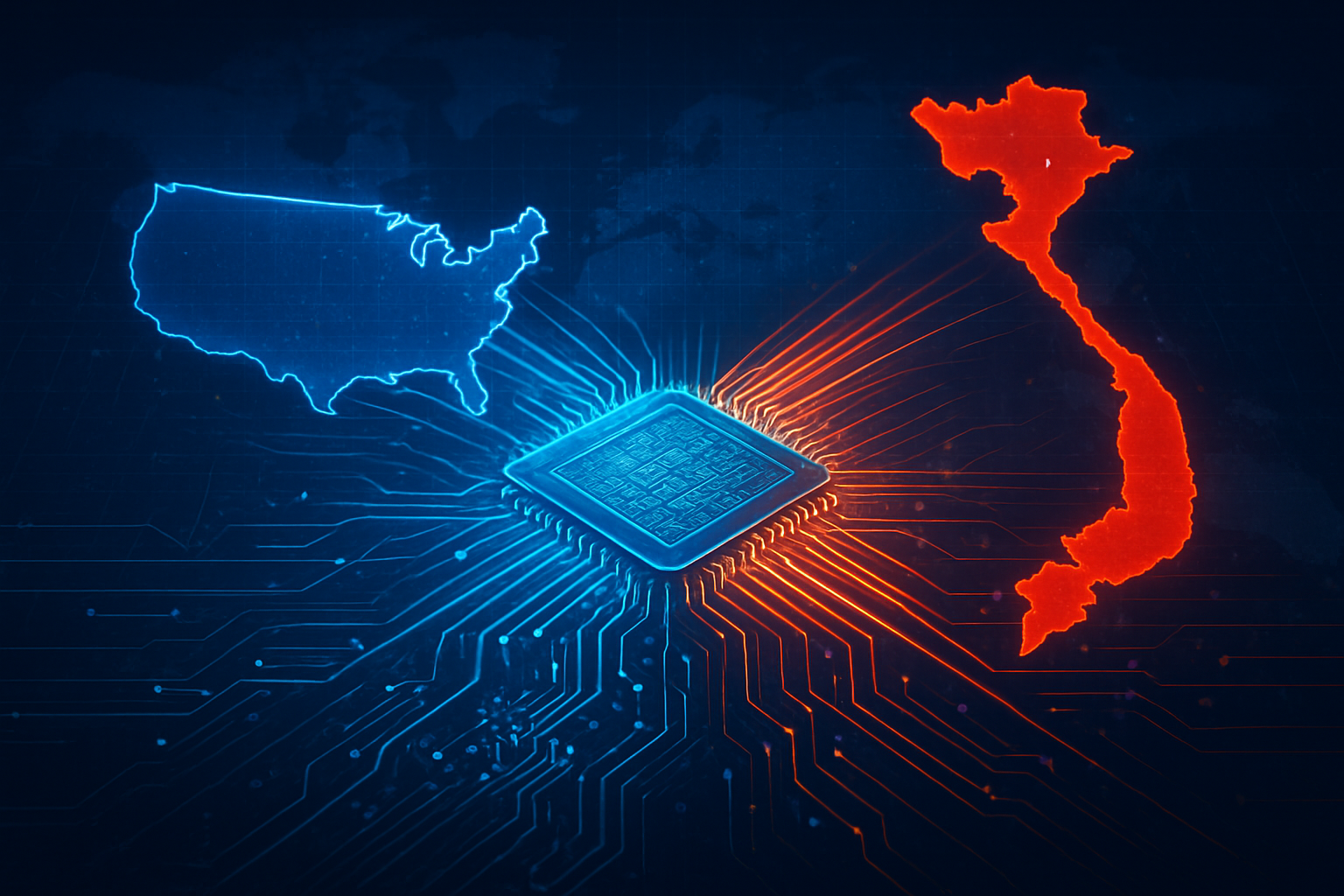
  • Nexperia Semiconductor Standoff Threatens to Cripple Europe’s Auto Industry, Exposing AI’s Fragile Foundation

    Nexperia Semiconductor Standoff Threatens to Cripple Europe’s Auto Industry, Exposing AI’s Fragile Foundation

    Amsterdam, The Netherlands – October 22, 2025 – A deepening geopolitical standoff over Nexperia, a critical Dutch-headquartered semiconductor manufacturer, is sending shockwaves through the global automotive industry, threatening imminent production halts across Europe and beyond. The dispute, stemming from the Dutch government's unprecedented intervention into the Chinese-owned chipmaker and Beijing's swift retaliation, has laid bare the extreme vulnerabilities embedded within global supply chains, particularly for the foundational components essential for modern, increasingly AI-driven vehicles. This crisis not only jeopardizes immediate car production but also casts a long shadow over Europe's ambitions for technological independence and the future trajectory of AI innovation in the automotive sector.

    The escalating conflict, unfolding rapidly in late 2025, sees the Netherlands seizing temporary control of Nexperia from its Chinese parent, Wingtech Technology (SSE: 600745), citing national security and governance concerns. In a tit-for-tat move, China has retaliated by blocking the export of critical Nexperia-made components from its shores. With automakers' existing inventories of these "unglamorous but vital" chips projected to last only weeks, the industry faces an acute threat that could see assembly lines grind to a halt, compounding the challenges of an already turbulent period for global manufacturing and further exposing the delicate infrastructure underpinning advanced automotive technologies, including autonomous driving and sophisticated in-car AI systems.

    The Geopolitical Chip War: A Deep Dive into the Nexperia Imbroglio

    The Nexperia dispute is a complex web of geopolitical maneuvering and economic security concerns. At its core, the conflict centers on the Dutch government's invocation of its Goods Availability Act, an emergency law, to intervene in Nexperia's operations. This drastic step, taken on September 30, 2025, was driven by "serious governance shortcomings" and fears of critical technological knowledge being transferred out of Europe to its Chinese owner, Wingtech Technology. The move followed a December 2024 decision by the U.S. Department of Commerce to place Wingtech on its "entity list," restricting its access to American technology due to national security concerns, which was expanded in September 2025 to include entities at least 50% owned by blacklisted companies, directly impacting Nexperia.

    Key allegations fueling the Dutch intervention included the "improper transfer" of production capacity, financial resources, and intellectual property to a foreign entity linked to Nexperia's then-CEO, Zhang Xuezheng, who was subsequently suspended by the Amsterdam Enterprise Chamber on October 7, 2025. China swiftly retaliated on October 4, 2025, with its Ministry of Commerce imposing export restrictions, barring Nexperia's China arm and its subcontractors from exporting specific components and sub-assemblies manufactured within China. This corporate standoff intensified on October 19, 2025, when Nexperia China reportedly issued an internal memo instructing its employees to disregard directives from the Dutch headquarters, asserting its independence.

    Nexperia is a high-volume supplier of discrete semiconductors, including diodes, transistors (particularly MOSFETs), and logic circuits. These "basic" chips, while not the high-end processors that power advanced AI algorithms, are absolutely foundational. They are ubiquitous in electronic control units (ECUs), power management systems, and functional controls for everything from fuel delivery and braking to electronic seating and steering wheel controls. Six out of ten chips Nexperia produces are for automotive use, and the company accounts for roughly 40% of the global market for crucial transistors and diodes. Their critical role, coupled with stringent automotive qualification (AEC Q100/Q101) and deep integration into Tier 1 supplier modules (e.g., Bosch, Denso), makes them incredibly difficult to replace quickly, differing significantly from previous supply chain disruptions that often focused on more advanced, specialized chips. Initial reactions from industry experts and automotive associations have been alarm, with warnings of severe, immediate production impacts.

    Ripple Effects: Automakers on the Brink, AI Innovation Stifled

    The Nexperia dispute has sent shockwaves across the automotive and broader tech landscapes, with significant competitive implications. Major automotive companies are most vulnerable, facing the immediate threat of production halts. General Motors (NYSE: GM) CEO Mary Barra and the German Association of the Automotive Industry (VDA) have already voiced grave concerns, with automakers like Volkswagen (XTRA: VOW), BMW (XTRA: BMW), Mercedes-Benz (XTRA: MBG), Stellantis (NYSE: STLA), Renault (EPA: RNO), Honda (NYSE: HMC), and Toyota (NYSE: TM) scrambling to assess their exposure. Many have established task forces, and Volkswagen has warned of potential temporary production outages. Tier 1 suppliers such as Bosch and Denso (TSE: 6902), which embed Nexperia chips into their preassembled modules, are also highly exposed.

    While the dispute poses an existential threat to many, a handful of semiconductor firms stand to benefit from the crisis. Competing manufacturers of discrete semiconductors, diodes, and MOSFETs, such as Texas Instruments (NASDAQ: TXN) and various Taiwanese automotive semiconductor makers, are already experiencing a surge in demand and rush orders. This sudden supply-demand imbalance is projected to lead to price increases of 5% to 15% for MOSFETs and diodes in the fourth quarter, with high-end automotive components potentially seeing hikes over 20%. This situation could shift market positioning, favoring suppliers with diversified manufacturing bases or those capable of quickly scaling production of these essential components.

    Crucially, the Nexperia dispute indirectly but profoundly impacts the burgeoning automotive AI and autonomous driving sectors. While Nexperia's products are not the sophisticated AI processors themselves, they are the indispensable "nervous system" of modern vehicles. Without these foundational chips, the most advanced AI-driven systems—from sophisticated driver-assistance features to fully autonomous platforms—simply cannot function. This crisis forces established automotive players and emerging tech companies focused on AI to divert critical engineering and financial resources from AI-specific R&D to addressing basic component shortages and lengthy re-qualification processes for alternative suppliers. This diversion risks slowing down the pace of AI innovation and deployment in vehicles, potentially delaying crucial advancements in areas like perception systems, decision-making algorithms, and vehicle-to-everything (V2X) communication, all of which rely on a robust and secure underlying hardware infrastructure. The competitive landscape will likely pivot towards companies that demonstrate superior end-to-end supply chain resilience, not just in cutting-edge AI chips, but across the entire bill of materials.

    A New Era of Tech Nationalism: Global Implications and Concerns

    The Nexperia dispute is more than a supply chain hiccup; it's a stark indicator of a new era of tech nationalism and escalating geopolitical competition. It fits squarely into the broader AI and tech landscape's trend towards "de-risking" and technological sovereignty. The intervention by the Dutch government, influenced by US pressure, and China's retaliatory export bans, set a concerning precedent where national security concerns are prioritized over established market norms and the sanctity of international commercial agreements. This trend creates immense uncertainty for any tech company with global operations or reliance on components from politically sensitive regions.

    This crisis is a potent reminder of the vulnerabilities inherent in highly optimized, geographically dispersed supply chains, a lesson previously hammered home by the COVID-19 pandemic's global chip shortage. However, unlike that crisis, which was primarily driven by unexpected demand surges and logistical issues, the Nexperia dispute is fundamentally political. It echoes the 2023 US pressure on the Netherlands to restrict ASML (AMS: ASML) from selling its advanced EUV lithography machines to China, highlighting the Netherlands' critical role as a "chokepoint" in the US-China tech rivalry. This time, the conflict extends to "legacy" chips, demonstrating that even the most basic components are now instruments of geopolitical leverage.

    Potential long-term impacts include a hastened global push for technological independence, with initiatives like the European Chips Act gaining renewed urgency to bolster domestic manufacturing. While this could foster localized innovation, it also risks supply chain fragmentation, increased costs, and potentially slower global R&D collaboration. The dispute also raises significant concerns about global trade and investment, as China argues the Dutch actions retroactively invalidate legitimate transactions. If such interventions become commonplace, they could erode investor trust and undermine the principles of legal security and property rights essential for international commerce.

    The Road Ahead: Diversification, Diplomacy, and AI's Foundational Security

    In the near term, the primary focus will be on resolving the immediate supply crisis. Diplomatic efforts are reportedly underway, with the Dutch Economy Minister expecting to meet with Chinese officials. Nexperia itself is engaging with both US and Chinese authorities to seek exemptions from export controls. However, the situation remains "very fluid," exacerbated by Nexperia China's declaration of operational independence. Experts predict that "quick and pragmatic solutions" are essential to avert widespread production halts.

    For the automotive industry, the immediate challenge is securing alternative chip sources. This will likely accelerate the drive for diversified sourcing strategies and potentially localized production hubs to enhance resilience against future geopolitical shocks. The long-term implications for AI in automotive are significant. While direct AI chip supply might not be immediately affected, the foundational reliance on components like Nexperia's means that national and corporate "AI sovereignty" will increasingly depend on securing the entire semiconductor supply chain, not just the advanced processors. Future applications and use cases for AI in vehicles, from advanced safety systems to fully autonomous logistics, hinge on the stable and secure availability of all necessary hardware.

    Challenges include the lengthy re-homologation processes required for automotive components, the added sovereign risk for global investments, and Europe's precarious position between the US and China. Experts predict a new supply chain reality where geopolitical maneuvering can disrupt entire product ecosystems overnight, necessitating agile and diversified supply chain architectures. This could also spur increased R&D into alternative materials and chip architectures to reduce reliance on specific geopolitical supply chains, indirectly influencing innovation across the tech sector.

    A Wake-Up Call for a Connected World

    The Nexperia semiconductor dispute serves as a profound wake-up call for the globalized tech industry. It underscores the critical interconnectedness of even the most seemingly mundane components to the most advanced technological aspirations, including the future of AI. The crisis highlights that geopolitical tensions, when combined with concentrated supply chains, can create vulnerabilities capable of derailing entire industries.

    Key takeaways include the urgent need for supply chain diversification, the escalating weaponization of technology in international relations, and the indirect but significant impact on AI innovation when foundational hardware is disrupted. This development marks a significant moment in AI history, not for a breakthrough in AI itself, but for revealing the fragile industrial underpinnings upon which advanced AI applications are built. The long-term impact will likely be a fundamental re-evaluation of global manufacturing strategies, pushing towards greater regionalization and a heightened focus on end-to-end supply chain security.

    In the coming weeks and months, the world will be watching for diplomatic breakthroughs, the resilience of automotive production lines, and how quickly the industry can adapt to this new, politically charged reality. The Nexperia dispute is a stark reminder that the future of AI, particularly in critical sectors like automotive, is inextricably linked to the stability and security of the global semiconductor ecosystem.


    This content is intended for informational purposes only and represents analysis of current AI developments.

    TokenRing AI delivers enterprise-grade solutions for multi-agent AI workflow orchestration, AI-powered development tools, and seamless remote collaboration platforms.
    For more information, visit https://www.tokenring.ai/.

  • Chipmakers Face Bifurcated Reality: AI Supercycle Soars While Traditional Markets Stumble

    Chipmakers Face Bifurcated Reality: AI Supercycle Soars While Traditional Markets Stumble

    October 22, 2025 – The global semiconductor industry is navigating a paradoxical landscape as of late 2025. While an unprecedented "AI Supercycle" is fueling explosive demand and record profits for companies at the forefront of artificial intelligence (AI) chip development, traditional market segments are experiencing a more subdued recovery, leading to significant stock slips for many chipmakers after their latest earnings reports. This bifurcated reality underscores a fundamental shift in the tech sector, with profound implications for innovation, competition, and global supply chains.

    The immediate significance of these chipmaker stock slips for the broader tech sector is substantial. The weakness in semiconductor stocks is consistently identified as a negative factor for the overall market, weighing particularly on tech-heavy indices like the Nasdaq 100 and the S&P 500. This sliding performance suggests a broader underperformance within the technology sector and could signal a shift in market sentiment. While strong demand for AI and high-performance computing (HPC) chips continues to be a growth driver for some, other segments of the semiconductor market are experiencing a more gradual recovery, creating a divergence in performance within the tech sector and increasing market selectivity among investors.

    The Dual Engines of the Semiconductor Market: AI's Ascent and Traditional Tech's Plateau

    The current market downturn is not uniform but concentrated in sectors relying on mature node chips and traditional end markets. After a period of high demand during the COVID-19 pandemic, many technology companies, particularly those involved in consumer electronics (smartphones, laptops, gaming consoles) and the automotive sector, accumulated excess inventory. This "chip glut" is especially pronounced in analog and mixed-signal microcontrollers, impacting companies like Microchip Technology (MCHP) and Texas Instruments (TXN), which have reported significant declines in net sales and revenue in these areas. While indicators suggest some normalization of inventory levels, concerns remain, particularly in the mature market semiconductor segment.

    Demand for semiconductors in smartphones, PCs, and the automotive sector has been stagnant or experiencing only modest growth in 2025. For instance, recent iPhone upgrades were described as minor, and the global smartphone market is not expected to be a primary driver of semiconductor growth. The automotive sector, despite a long-term trend towards higher semiconductor content, faces a modest overall market outlook and an inventory correction observed since the second half of 2024. Paradoxically, there's even an anticipated shortage of mature node chips (40nm and above) for the automotive industry in late 2025 or 2026, highlighting the complex dynamics at play.

    Capital expenditure (CapEx) adjustments further illustrate this divide. While some major players are significantly increasing CapEx to meet AI demand, others are cutting back in response to market uncertainties. Samsung (KRX:005930), for example, announced a 50% cut in its 2025 foundry capital expenditure to $3.5 billion, down from $7 billion in 2024, signaling a strategic pullback due to weaker-than-expected foundry orders and yield challenges. Intel (NASDAQ: INTC) also continues to cut capital expenditures, with its 2025 total investment expected to be around $20 billion, lower than initial estimates. Conversely, the AI and HPC segments are experiencing a robust boom, leading to sustained investments in advanced logic, High-Bandwidth Memory (HBM), and advanced packaging technologies. Taiwan Semiconductor Manufacturing Company (NYSE: TSM), for instance, projects 70% of its 2025 CapEx towards advanced process development and 10-20% towards advanced packaging.

    The financial performance of chipmakers in 2025 has been varied. The global semiconductor market is still projected to grow, with forecasts ranging from 9.5% to 15% in 2025, reaching new all-time highs, largely fueled by AI. However, major semiconductor companies generally expected an average revenue decline of approximately 9% in Q1 2025 compared to Q4 2024, significantly exceeding the historical average seasonal decline of 5%. TSMC reported record results in Q3 2025, with profit jumping 39% year-on-year to $14.77 billion and revenue rising 30.3% to $33.1 billion, driven by soaring AI chip demand. High-performance computing, including AI, 5G, and data center chips, constituted 57% of TSMC's total quarterly sales. In contrast, Intel is expected to report a 1% decline in Q3 2025 revenue to $13.14 billion, with an adjusted per-share profit of just one cent.

    This downturn exhibits several key differences from previous semiconductor market cycles or broader tech corrections. Unlike past boom-bust cycles driven by broad-based demand for PCs or smartphones, the current market is profoundly bifurcated. The "AI Supercycle" is driving immense demand for advanced, high-performance chips, while traditional segments grapple with oversupply and weaker demand. Geopolitical tensions, such as the U.S.-China trade war and tariffs, are playing a much more significant and direct role in shaping market dynamics and supply chain fragility than in many past cycles, as exemplified by the recent Nexperia crisis.

    Strategic Implications: Winners, Losers, and the AI Infrastructure Arms Race

    The bifurcated chip market is creating clear winners and losers across the tech ecosystem. AI companies are experiencing unprecedented benefits, with sales of generative AI chips forecasted to surpass $150 billion in 2025. This boom drives significant growth for companies focused on AI hardware and software, enabling the rapid development and deployment of advanced AI models. However, the astronomical cost of developing and manufacturing advanced AI chips poses a significant barrier, potentially centralizing AI power among a few tech giants.

    NVIDIA (NASDAQ: NVDA) remains a dominant force, nearly doubling its brand value in 2025, driven by explosive demand for its GPUs (like Blackwell) and its robust CUDA software ecosystem. TSMC is the undisputed leader in advanced node manufacturing, critical for AI accelerators, holding a commanding 92% market share in advanced AI chip manufacturing. Advanced Micro Devices (NASDAQ: AMD) is also making significant strides in AI chips and server processors, challenging NVIDIA in GPU and data center markets. Micron Technology (NASDAQ: MU) is benefiting from strong demand for high-bandwidth memory (HBM), crucial for AI-optimized data centers. Broadcom (NASDAQ: AVGO) is expected to benefit from AI-driven networking demand and its diversified revenue, including custom ASICs and silicon photonics for data centers and AI. OpenAI has reportedly struck a multi-billion dollar deal with Broadcom to develop custom AI chips.

    On the other hand, companies heavily exposed to traditional segments, such as certain segments of Texas Instruments and NXP Semiconductors (NASDAQ: NXPI), are navigating subdued recovery and oversupply, leading to conservative forecasts and potential stock declines. Intel, despite efforts in its foundry business and securing some AI chip contracts, has struggled to keep pace with rivals like NVIDIA and AMD in high-performance AI chips, with its brand value declining in 2025. ASML Holding (NASDAQ: ASML), the sole producer of Extreme Ultraviolet (EUV) lithography machines, experienced a significant plunge in October 2024 due to warnings about a more gradual recovery in traditional market segments and potential U.S. export restrictions affecting sales to China.

    The competitive implications are profound, sparking an "infrastructure arms race" among major AI labs and tech companies. Close partnerships between chipmakers and AI labs/tech companies are crucial, as seen with NVIDIA and TSMC. Tech giants like Alphabet (NASDAQ: GOOGL), Amazon (NASDAQ: AMZN), and Microsoft (NASDAQ: MSFT) are developing proprietary AI chips (e.g., Google's Axion, Microsoft's Azure Maia 100) to gain strategic advantages through custom silicon for their AI and cloud infrastructure, enabling greater control over performance, cost, and supply. This vertical integration is creating a competitive moat and potentially centralizing AI power. Geopolitical tensions and trade policies, such as U.S. export controls on AI chips to China, are also profoundly impacting global trade and corporate strategy, leading to a "technological decoupling" and increased focus on domestic manufacturing initiatives.

    A New Technological Order: Geopolitics, Concentration, and the Future of AI

    The bifurcated chip market signifies a new technological order, where semiconductors are no longer merely components but strategic national assets. This era marks a departure from open global collaboration towards strategic competition and technological decoupling. The "AI Supercycle" is driving aggressive national investments in domestic manufacturing and research and development to secure leadership in this critical technology. Eight major companies, including Microsoft, Amazon, Google, Meta, and OpenAI, are projected to invest over $300 billion in AI infrastructure in 2025 alone.

    However, this shift also brings significant concerns. The global semiconductor supply chain is undergoing a profound transformation towards fragmented, regional manufacturing ecosystems. The heavy concentration of advanced chip manufacturing in a few regions, notably Taiwan, makes the global AI supply chain highly vulnerable to geopolitical disruptions or natural disasters. TSMC, for instance, holds an estimated 90-92% market share in advanced AI chip manufacturing. Constraints in specialized components like HBM and packaging technologies further exacerbate potential bottlenecks.

    Escalating geopolitical tensions, particularly the U.S.-China trade war, are directly impacting the semiconductor industry. Export controls on advanced semiconductors and manufacturing equipment are leading to a "Silicon Curtain," forcing companies like NVIDIA and AMD to develop "China-compliant" versions of their AI accelerators, thereby fragmenting the global market. Nations are aggressively investing in domestic chip manufacturing through initiatives like the U.S. CHIPS and Science Act and the European Chips Act, aiming for technological sovereignty and reducing reliance on foreign supply chains. This "techno-nationalism" is leading to increased production costs and potentially deterring private investment. The recent Dutch government seizure of Nexperia (a Chinese-owned, Netherlands-based chipmaker) and China's subsequent export restrictions on Nexperia China components have created an immediate supply chain crisis for automotive manufacturers in Europe and North America, highlighting the fragility of globalized manufacturing.

    The dominance of a few companies in advanced AI chip manufacturing and design, such as TSMC in foundry services and NVIDIA in GPUs, raises significant concerns about market monopolization and high barriers to entry. The immense capital required to compete in this space could centralize AI development and power among a handful of tech giants, limiting innovation from smaller players and potentially leading to vendor lock-in with proprietary ecosystems.

    This "AI Supercycle" is frequently compared to past transformative periods in the tech industry, such as the dot-com boom or the internet revolution. However, unlike the dot-com bubble of 1999-2000, where many high-tech company valuations soared without corresponding profits, the current AI boom is largely supported by significant revenues, earnings, and robust growth prospects from companies deeply entrenched in the AI and data center space. This era is distinct due to its intense focus on the industrialization and scaling of AI, where specialized hardware is not just facilitating advancements but is often the primary bottleneck and key differentiator for progress. The elevation of semiconductors to a strategic national asset, a concept less prominent in earlier tech shifts, further differentiates this period from previous cycles.

    The Horizon of Innovation: Energy, Ethics, and the Talent Imperative

    Looking ahead, the chipmaking and AI landscapes will be defined by accelerated innovation, driven by an insatiable demand for AI-specific hardware and software. In the near term (2025-2026), advanced packaging and heterogeneous integration will be crucial, enabling multiple chips to be combined into a single, cohesive unit to improve performance and power efficiency. High-volume manufacturing of 2nm chips is expected to begin in Q4 2025, with commercial adoption increasing significantly by 2026-2027. The rapid evolution of AI, particularly large language models (LLMs), is also driving demand for HBM, with HBM4 expected in the latter half of 2025.

    Longer-term (2027-2030+), transformative technologies like neuromorphic computing, which mimics the human brain for energy-efficient, low-latency AI, are projected to see substantial growth. In-memory/near-memory computing (IMC/NMC) will address the "memory wall" bottleneck by integrating computing closer to memory units, leading to faster processing speeds and improved energy efficiency for data-intensive AI workloads. While still in its infancy, the convergence of quantum computing and AI is also expected to lead to transformative capabilities in fields like cryptography and drug discovery.

    AI integration will become more pervasive and sophisticated. Agentic AI, autonomous systems capable of performing complex tasks independently, and multimodal AI, which processes and integrates different data types, are becoming mainstream. Embedded AI (Edge AI) will increasingly be integrated into everyday devices for real-time decision-making, and generative AI will continue to redefine creative processes in content creation and product design. These advancements will drive transformative applications across healthcare (advanced diagnostics, personalized treatment), transportation (autonomous vehicles, intelligent traffic management), retail (recommendation engines, AI chatbots), and manufacturing (AI-powered robotics, hyperautomation).

    However, this rapid evolution presents significant challenges. Energy consumption is a critical concern; current AI models are "energy hogs," with the cost to power them potentially surpassing the GDP of the United States by 2027 if current trends continue. This necessitates a strong focus on developing more energy-efficient processors and sustainable data center practices. Ethical AI is paramount, addressing concerns over bias, data privacy, transparency, and accountability. The industry needs to establish strong ethical frameworks and implement AI governance tools. Furthermore, the semiconductor industry and AI landscape face an acute and widening shortage of skilled professionals, from fab labor to engineers specializing in AI, machine learning, and advanced packaging.

    Experts are cautiously optimistic about the market, with strong growth fueled by AI. The global semiconductor market is expected to reach approximately $697 billion in sales in 2025, an 11% increase over 2024, and surpass $1 trillion by 2030. While NVIDIA has been a dominant force in AI chips, a resurgent AMD and tech giants investing in their own AI chips are expected to diversify the market and increase competition.

    A Transformative Crossroads: Navigating the Future of AI and Chips

    The current chipmaker market downturn in traditional segments, juxtaposed with the AI boom, represents a dynamic and complex landscape, marking one of the most significant milestones in AI and technological history. The semiconductor industry's trajectory is now fundamentally tied to the evolution of AI, acting as its indispensable backbone. This era is defined by a new technological order, characterized by strategic competition and technological decoupling, driven by nations viewing semiconductors as strategic assets. The astronomical cost of advanced AI chip development and manufacturing is concentrating AI power among a few tech giants, profoundly impacting market centralization.

    In the coming weeks and months, observers should closely watch several key trends and events. Geopolitical escalations, including further tightening of export controls by major powers and potential retaliatory measures, especially concerning critical mineral exports and advanced chip technologies, will shape market access and supply chain configurations. The long-term impact of the Nexperia crisis on automotive production needs close monitoring. The success of TSMC's 2nm volume manufacturing in Q4 2025 and Intel's 18A technology will be critical indicators of competitive shifts in leading-edge production. The pace of recovery in consumer electronics, automotive, and industrial sectors, and whether the anticipated mature node chip shortage for automotive materializes, will also be crucial. Finally, the immense energy demands of AI data centers will attract increased scrutiny, with policy changes and innovations in energy-efficient chips and sustainable data center practices becoming key trends.

    The industry will continue to navigate the complexities of simultaneous exponential growth in AI and cautious recovery in other sectors, all while adapting to a rapidly fragmenting global trade environment. The ability of companies to balance innovation, resilience, and strategic geopolitical positioning will determine their long-term success in this transformative era.


    This content is intended for informational purposes only and represents analysis of current AI developments.

    TokenRing AI delivers enterprise-grade solutions for multi-agent AI workflow orchestration, AI-powered development tools, and seamless remote collaboration platforms.
    For more information, visit https://www.tokenring.ai/.
  • Micron’s Retreat from China Server Chip Market Signals Deepening US-China Tech Divide

    Micron’s Retreat from China Server Chip Market Signals Deepening US-China Tech Divide

    San Francisco, CA – October 22, 2025 – US chipmaker Micron Technology (NASDAQ: MU) is reportedly in the process of ceasing its supply of server chips to Chinese data centers, a strategic withdrawal directly stemming from a 2023 ban imposed by the Chinese government. This move marks a significant escalation in the ongoing technological tensions between the United States and China, further solidifying a "Silicon Curtain" that threatens to bifurcate the global semiconductor and Artificial Intelligence (AI) industries. The decision underscores the profound impact of geopolitical pressures on multinational corporations and the accelerating drive for technological sovereignty by both global powers.

    Micron's exit from this critical market segment follows a May 2023 directive from China's Cyberspace Administration, which barred major Chinese information infrastructure firms from purchasing Micron products. Beijing cited "severe cybersecurity risks" as the reason, a justification widely interpreted as a retaliatory measure against Washington's escalating restrictions on China's access to advanced chip technology. While Micron will continue to supply chips for the Chinese automotive and mobile phone sectors, as well as for Chinese customers with data center operations outside mainland China, its departure from the domestic server chip market represents a substantial loss, impacting a segment that previously contributed approximately 12% ($3.4 billion) of its total revenue.

    The Technical Fallout of China's 2023 Micron Ban

    The 2023 Chinese government ban specifically targeted Micron's Dynamic Random-Access Memory (DRAM) chips and other server-grade memory products. These components are foundational for modern data centers, cloud computing infrastructure, and the massive server farms essential for AI training and inference. Server DRAM, distinct from consumer-grade memory, is engineered for enhanced reliability and performance, making it indispensable for critical information infrastructure (CII). While China's official statement lacked specific technical details of the alleged "security risks," the ban effectively locked Micron out of China's rapidly expanding AI data center market.

    This ban differs significantly from previous US-China tech restrictions. Historically, US measures primarily involved export controls, preventing American companies from selling certain advanced technologies to Chinese entities like Huawei (SHE: 002502). In contrast, the Micron ban was a direct regulatory intervention by China, prohibiting its own critical infrastructure operators from purchasing Micron's products within China. This retaliatory action, framed as a cybersecurity review, marked the first time a major American chipmaker was directly targeted by Beijing in such a manner. The swift response from Chinese server manufacturers like Inspur Group (SHE: 000977) and Lenovo Group (HKG: 0992), who reportedly halted shipments containing Micron chips, highlighted the immediate and disruptive technical implications.

    Initial reactions from the AI research community and industry experts underscored the severity of the geopolitical pressure. Many viewed the ban as a catalyst for China's accelerated drive towards self-sufficiency in AI chips and related infrastructure. The void left by Micron has created opportunities for rivals, notably South Korean memory giants Samsung Electronics (KRX: 005930) and SK Hynix (KRX: 000660), as well as domestic Chinese players like Yangtze Memory Technologies Co. (YMTC) and ChangXin Memory Technologies (CXMT). This shift is not merely about market share but also about the fundamental re-architecting of supply chains and the increasing prioritization of technological sovereignty over global integration.

    Competitive Ripples Across the AI and Tech Landscape

    Micron's withdrawal from the China server chip market sends significant ripples across the global AI and tech landscape, reshaping competitive dynamics and forcing companies to adapt their market positioning strategies. The immediate beneficiaries are clear: South Korean memory chipmakers Samsung Electronics and SK Hynix are poised to capture a substantial portion of the market share Micron has vacated. Both companies possess the manufacturing scale and technological prowess to supply high-value-added memory for data centers, making them natural alternatives for Chinese operators.

    Domestically, Chinese memory chipmakers like YMTC (NAND flash) and CXMT (DRAM) are experiencing a surge in demand and government support. This situation significantly accelerates Beijing's long-standing ambition for self-sufficiency in its semiconductor industry, fostering a protected environment for indigenous innovation. Chinese fabless chipmakers, such as Cambricon Technologies (SHA: 688256), a local rival to NVIDIA (NASDAQ: NVDA), have also seen substantial revenue increases as Chinese AI startups increasingly seek local alternatives due to US sanctions and the overarching push for localization.

    For major global AI labs and tech companies, including NVIDIA, Amazon Web Services (NASDAQ: AMZN), Microsoft Azure (NASDAQ: MSFT), and Google Cloud (NASDAQ: GOOGL), Micron's exit reinforces the challenge of navigating a fragmented global supply chain. While these giants rely on a diverse supply of high-performance memory, the increasing geopolitical segmentation introduces complexities, potential bottlenecks, and the risk of higher costs. Chinese server manufacturers like Inspur and Lenovo, initially disrupted, have been compelled to rapidly re-qualify and integrate alternative memory solutions, demonstrating the need for agile supply chain management in this new era.

    The long-term competitive implications point towards a bifurcated market. Chinese AI labs and tech companies will increasingly favor domestic suppliers, even if it means short-term compromises on the absolute latest memory technologies. This drive for technological independence is a core tenet of China's "AI plus" strategy. Conversely, Micron is strategically pivoting its global focus towards other high-growth regions and segments, particularly those driven by global AI demand for High Bandwidth Memory (HBM). The company is also investing heavily in US manufacturing, such as its planned megafab in New York, to bolster its position as a global AI memory supplier outside of China. Other major tech companies will likely continue to diversify their memory chip sourcing across multiple geographies and suppliers to mitigate geopolitical risks and ensure supply chain resilience.

    The Wider Significance: A Deepening 'Silicon Curtain'

    Micron's reported withdrawal from the China server chip market is more than a corporate decision; it is a critical manifestation of the deepening technological decoupling between the United States and China. This event significantly reinforces the concept of a "Silicon Curtain," a term describing the division of the global tech landscape into two distinct spheres, each striving for technological sovereignty and reducing reliance on the other. This curtain is descending as nations increasingly prioritize national security imperatives over global integration, fundamentally reshaping the future of AI and the broader tech industry.

    The US strategy, exemplified by stringent export controls on advanced chip technologies, AI chips, and semiconductor manufacturing equipment, aims to limit China's ability to advance in critical areas. These measures, targeting high-performance AI chips and sophisticated manufacturing processes, are explicitly designed to impede China's military and technological modernization. In response, China's ban on Micron, along with its restrictions on critical mineral exports like gallium and germanium, highlights its retaliatory capacity and determination to accelerate domestic self-sufficiency. Beijing's massive investments in computing data centers and fostering indigenous chip champions underscore its commitment to building a robust, independent AI ecosystem.

    The implications for global supply chains are profound. The once globally optimized semiconductor supply chain, built on efficiency and interconnectedness, is rapidly transforming into fragmented, regional ecosystems. Companies are now implementing "friend-shoring" strategies, establishing manufacturing in allied countries to ensure market access and resilience. This shift from a "just-in-time" to a "just-in-case" philosophy prioritizes supply chain security over cost efficiency, inevitably leading to increased production costs and potential price hikes for consumers. The weaponization of technology, where access to advanced chips becomes a tool of national power, risks stifling innovation, as the beneficial feedback loops of global collaboration are curtailed.

    Comparing this to previous tech milestones, the current US-China rivalry is often likened to the Cold War space race, but with the added complexity of deeply intertwined global economies. The difference now is the direct geopolitical weaponization of foundational technologies. The "Silicon Curtain" is epitomized by actions like the US and Dutch governments' ban on ASML (AMS: ASML), the sole producer of Extreme Ultraviolet (EUV) lithography machines, from selling these critical tools to China. This effectively locks China out of the cutting-edge chip manufacturing process, drawing a clear line in the sand and ensuring that only allies have access to the most advanced semiconductor fabrication capabilities. This ongoing saga is not just about chips; it's about the fundamental architecture of future global power and technological leadership in the age of AI.

    Future Developments in a Bifurcated Tech World

    The immediate aftermath of Micron's exit and the ongoing US-China tech tensions points to a continued escalation of export controls and retaliatory measures. The US is expected to refine its restrictions, aiming to close loopholes and broaden the scope of technologies and entities targeted, particularly those related to advanced AI and military applications. In turn, China will likely continue its retaliatory actions, such as tightening export controls on critical minerals essential for chip manufacturing, and significantly intensify its efforts to bolster its domestic semiconductor industry. This includes substantial state investments in R&D, fostering local talent, and incentivizing local suppliers to accelerate the "AI plus" strategy.

    In the long term, experts predict an irreversible shift towards a bifurcated global technology market. Two distinct technological ecosystems are emerging: one led by the US and its allies, and another by China. This fragmentation will complicate global trade, limit market access, and intensify competition, forcing countries and companies to align with one side. China aims to achieve a semiconductor self-sufficiency rate of 50% by 2025, with an ambitious goal of 100% import substitution by 2030. This push could lead to Chinese companies entirely "designing out" US technology from their products, potentially destabilizing the US semiconductor ecosystem in the long run.

    Potential applications and use cases on the horizon will be shaped by this bifurcation. The "AI War" will drive intense domestic hardware development in both nations. While the US seeks to restrict China's access to high-end AI processors like NVIDIA's, China is launching national efforts to develop its own powerful AI chips, such as Huawei's Ascend series. Chinese firms are also focusing on efficient, less expensive AI technologies and building dominant positions in open-source AI, cloud infrastructure, and global data ecosystems to circumvent US barriers. This will extend to other high-tech sectors, including advanced computing, automotive electrification, autonomous driving, and quantum devices, as China seeks to reduce dependence on foreign technologies across the board.

    However, significant challenges remain. All parties face the daunting task of managing persistent supply chain risks, which are exacerbated by geopolitical pressures. The fragmentation of the global semiconductor ecosystem, which traditionally thrives on collaboration, risks stifling innovation and increasing economic costs. Talent retention and development are also critical, as the "Cold War over minds" could see elite AI talent migrating to more stable or opportunity-rich environments. The US and its allies must also address their reliance on China for critical rare earth elements. Experts predict that the US-China tech war will not abate but intensify, with the competition for AI supremacy and semiconductor control defining the next decade, leading to a more fragmented, yet highly competitive, global technology landscape.

    A New Era of Tech Geopolitics: The Long Shadow of Micron's Exit

    Micron Technology's reported decision to cease supplying server chips to Chinese data centers, following a 2023 government ban, serves as a stark and undeniable marker of a new era in global technology. This is not merely a commercial setback for Micron; it is a foundational shift in the relationship between the world's two largest economies, with profound and lasting implications for the Artificial Intelligence industry and the global tech landscape.

    The key takeaway is clear: the era of seamlessly integrated global tech supply chains, driven purely by efficiency and economic advantage, is rapidly receding. In its place, a landscape defined by national security, technological sovereignty, and geopolitical competition is emerging. Micron's exit highlights the "weaponization" of technology, where semiconductors, the foundational components of AI, have become central to statecraft. This event undeniably accelerates China's formidable drive for self-sufficiency in AI chips and related infrastructure, compelling massive investments in indigenous capabilities, even if it means short-term compromises on cutting-edge performance.

    The significance of this development in AI history cannot be overstated. It reinforces the notion that the future of AI is inextricably linked to geopolitical realities. The "Silicon Curtain" is not an abstract concept but a tangible division that will shape how AI models are trained, how data centers are built, and how technological innovation progresses in different parts of the world. While this fragmentation introduces complexities, potential bottlenecks, and increased costs, it simultaneously catalyzes domestic innovation in both the US and China, spurring efforts to build independent, resilient technological ecosystems.

    Looking ahead, the coming weeks and months will be crucial indicators of how this new tech geopolitics unfolds. We should watch for further iterations of US export restrictions and potential Chinese retaliatory measures, including restrictions on critical minerals. The strategies adopted by other major US chipmakers like NVIDIA and Intel to navigate this volatile environment will be telling, as will the acceleration of "friendshoring" initiatives by US allies to diversify supply chains. The ongoing dilemma for US companies—balancing compliance with government directives against the desire to maintain access to the strategically vital Chinese market—will continue to be a defining challenge. Ultimately, Micron's withdrawal from China's server chip market is not an end, but a powerful beginning to a new chapter of strategic competition that will redefine the future of technology and AI for decades to come.


    This content is intended for informational purposes only and represents analysis of current AI developments.

    TokenRing AI delivers enterprise-grade solutions for multi-agent AI workflow orchestration, AI-powered development tools, and seamless remote collaboration platforms.
    For more information, visit https://www.tokenring.ai/.

  • Geopolitical Tensions Spark New Chip Crisis for Volkswagen, Threatening Global Auto Production

    Geopolitical Tensions Spark New Chip Crisis for Volkswagen, Threatening Global Auto Production

    Volkswagen (XTRA: VOW) has once again sounded the alarm over potential production interruptions, citing renewed semiconductor supply chain challenges exacerbated by escalating geopolitical tensions. The German automotive giant's warning, issued in mid-to-late October 2025, underscores the enduring fragility of global manufacturing networks and the critical role semiconductors play in modern vehicles. This latest development, rooted in a specific dispute involving Dutch chipmaker Nexperia, threatens to send ripples across the entire automotive industry, potentially impacting tens of thousands of jobs and delaying vehicle deliveries worldwide.

    The immediate trigger for Volkswagen's concern is a contentious geopolitical maneuver: the Dutch government's recent seizure of Nexperia, a subsidiary of the Chinese technology group Wingtech, on national security grounds. This move prompted a swift retaliatory export ban from Beijing on certain Nexperia products manufactured in China, effectively cutting off a significant portion of the company's output—roughly 80%—from European markets. For Volkswagen and other major automakers, this dispute is not merely a political spat but a direct threat to their assembly lines, highlighting how deeply intertwined global politics are with the intricate web of modern supply chains.

    The Microchip Minefield: Geopolitics and the Auto Industry's Vulnerability

    Volkswagen's internal communications in October 2025 warned employees that "Given the dynamic situation, short-term impacts on production cannot be ruled out," with discussions underway for potential short-time work. While some temporary pauses for models like the Golf and Tiguan were partially attributed to inventory management, the core issue remains the Nexperia crisis. This isn't Volkswagen's first rodeo; the company faced severe disruptions during the 2020-2023 chip shortage, losing over 2.3 million units in production in 2021 alone. The current situation, however, introduces a new layer of complexity, directly linking chip availability to explicit geopolitical tit-for-tat rather than just pandemic-induced demand surges or natural disasters.

    The specific semiconductors at the heart of this latest crisis are often the most "inconspicuous" yet vital components: basic semiconductors like diodes, transistors, and MOSFETs (Metal Oxide Semiconductor Field-Effect Transistors). Nexperia is a market leader, supplying approximately 40% of the global market for these key transistors and diodes, which are essential for everything from vehicle lighting systems and electronic control units to sophisticated battery management. Unlike the earlier shortage that heavily impacted microcontroller units (MCUs) and analog chips, this dispute targets foundational components, making it particularly disruptive. The previous crisis saw manufacturing regions like Taiwan (TSMC (NYSE: TSM)), South Korea (Samsung (KRX: 005930)), and the U.S. (Texas plants of Infineon (XTRA: IFX) and NXP Semiconductors (NASDAQ: NXPI)) affected by diverse factors ranging from droughts to winter storms and factory fires. The Nexperia situation, however, zeroes in on a direct political intervention impacting a specific, critical supplier, primarily affecting components manufactured in the Netherlands and China.

    The broader context is the ongoing US-China trade war, which has been a persistent underlying factor in supply chain fragility since 2018. Export restrictions and blacklisting of Chinese chipmakers have fueled Beijing's drive for semiconductor independence, further fragmenting an already complex global production landscape where different countries control various stages of microchip manufacturing. This inherent global fragmentation makes the entire ecosystem exquisitely sensitive to political and trade disputes, transforming what might seem like a niche B2B transaction into a matter of national security and economic leverage.

    Ripple Effects: Competitive Landscape and Market Positioning

    The Nexperia dispute is not an isolated incident for Volkswagen (XTRA: VOW); its effects are "reverberating across the automotive industry." Major competitors such as Mercedes-Benz (XTRA: MBG), BMW (XTRA: BMW), Stellantis (NYSE: STLA), Toyota (NYSE: TM), and Renault (EPA: RNO) are all closely monitoring the situation. Mercedes-Benz has already warned that the Nexperia dispute could impact global auto production, despite having secured some short-term supplies. This widespread impact highlights the interconnectedness of the industry and the shared vulnerability to critical component shortages.

    Companies that have diversified their supply chains or invested in regional manufacturing capabilities might be better positioned to weather this storm. However, the specialized nature of semiconductor manufacturing, particularly for mature process nodes used in automotive components, makes rapid reshoring or diversification challenging and costly. For major AI labs and tech companies, this specific issue might not directly disrupt their advanced AI chip supply, which often relies on cutting-edge fabs. Still, it serves as a stark reminder of the broader risks within the global tech supply chain. The competitive implications are significant: prolonged disruptions could lead to market share shifts as some manufacturers struggle more than others to maintain production. Those with stronger supplier relationships, greater inventory buffers, or the financial muscle to secure alternative (and likely more expensive) components will gain a strategic advantage.

    The disruption could also accelerate the trend towards greater vertical integration or closer partnerships between automakers and chip manufacturers. While direct benefits are scarce in a shortage, companies that can innovate around existing chip designs or rapidly re-engineer components might mitigate some impact. The market positioning of companies like Nexperia (now under Dutch government control) and its parent Wingtech (a Chinese technology group) will also be critically altered, potentially leading to a re-evaluation of national control over critical technology suppliers.

    The Broader Significance: A Tectonic Shift in Global Supply Chains

    This latest semiconductor crisis, directly fueled by geopolitical tensions, marks a significant moment in the broader AI and tech landscape, underscoring a fundamental shift towards a more fragmented and politicized global supply chain. It's no longer just about optimizing for cost or efficiency; national security and technological sovereignty are now paramount considerations. This fits into a trend of "de-globalization" or "friend-shoring," where countries prioritize securing critical supplies from politically aligned nations, even if it means higher costs.

    The impacts are profound: potential economic slowdowns in the automotive sector, job losses due to production halts, and a further erosion of consumer confidence in predictable vehicle availability. Moreover, it heightens concerns about technological nationalism, where governments wield control over vital industries, potentially stifling innovation or creating artificial barriers to trade. This incident draws parallels to the initial COVID-19-induced chip shortage, but with a crucial distinction: the current bottleneck is a deliberate political act rather than an unforeseen consequence of a global health crisis. It highlights the weaponization of supply chains as a tool of foreign policy, a dangerous precedent for an increasingly interdependent world.

    For the AI industry, while the immediate impact might seem peripheral, the underlying message is clear: the foundational hardware necessary for AI development and deployment is susceptible to external shocks. From data centers to edge devices, AI relies on a robust and stable semiconductor supply. Any instability in the broader chip market can eventually trickle down, affecting component costs, availability, and lead times for AI-specific hardware, potentially slowing down innovation or increasing the cost of AI adoption. This geopolitical leverage over critical technology could also influence where AI research and manufacturing are concentrated, pushing for more localized or regionally secure ecosystems.

    The Road Ahead: Navigating a Politicized Future

    Looking ahead, the near-term developments are likely to involve prolonged negotiations and potential retaliatory measures between the Netherlands, China, and potentially other nations drawn into the Nexperia dispute. Industry executives already caution that sourcing replacement components could take months, implying that disruptions will persist well into 2026. Automakers will continue their urgent efforts to diversify suppliers, potentially accelerating investments in regional semiconductor manufacturing facilities, though such endeavors are capital-intensive and time-consuming.

    In the long term, this crisis will undoubtedly accelerate the trend towards greater supply chain resilience, which includes strategies like "dual sourcing" (having two suppliers for every component), increased inventory buffers, and strategic reshoring of critical manufacturing capabilities. We might see more collaborative efforts between governments and private industry to establish secure, domestic or allied-nation-based semiconductor ecosystems. Potential applications on the horizon include advanced AI-driven supply chain management systems designed to predict and mitigate such disruptions, leveraging machine learning to identify alternative suppliers or re-route logistics in real-time.

    However, significant challenges remain. The cost of reshoring and building new fabs is astronomical, and the talent pool for semiconductor manufacturing is specialized and limited. Geopolitical tensions are unlikely to abate, meaning companies will continually face the risk of supply chains being weaponized. Experts predict a future where supply chain security becomes as critical as cybersecurity, with nations and corporations investing heavily in mapping, monitoring, and de-risking their access to essential components. The push for greater transparency and traceability in the supply chain will also intensify.

    A New Era of Supply Chain Realism

    Volkswagen's latest warning serves as a sobering reminder that the era of lean, globally optimized supply chains, built primarily on cost efficiency, is rapidly giving way to a new paradigm defined by resilience, redundancy, and geopolitical alignment. The Nexperia dispute is not just another chip shortage; it's a potent illustration of how geopolitical maneuvers can directly impact industrial output and economic stability on a global scale.

    The key takeaway is the absolute criticality of semiconductors to modern industry and the inherent vulnerability of a highly concentrated, globally fragmented manufacturing process to political intervention. This development's significance in industrial history is profound, marking a definitive shift where national security concerns increasingly dictate trade and manufacturing strategies. What to watch for in the coming weeks and months includes how governments respond to calls from industry bodies like the European Automobile Manufacturers' Association (ACEA) and the German Association of the Automotive Industry (VDA) for intervention, the success (or failure) of automakers in securing alternative supplies, and whether this incident sparks further retaliatory measures or a more concerted effort towards de-escalation and supply chain stability. The long-term impact will be a more regionalized, albeit potentially less efficient, global manufacturing landscape, with profound implications for costs, innovation, and the very structure of the tech and automotive industries.


    This content is intended for informational purposes only and represents analysis of current AI developments.

    TokenRing AI delivers enterprise-grade solutions for multi-agent AI workflow orchestration, AI-powered development tools, and seamless remote collaboration platforms.
    For more information, visit https://www.tokenring.ai/.

  • Global Supply Chains Brace for Impact as Dutch-China Chip Standoff Escalates Over Nexperia

    Global Supply Chains Brace for Impact as Dutch-China Chip Standoff Escalates Over Nexperia

    Amsterdam, Netherlands – October 21, 2025 – A deepening geopolitical rift between the Netherlands and China over the critical chipmaker Nexperia has sent shockwaves through the global automotive supply chain and intensified international trade tensions. The Dutch government's unprecedented move to seize control of Nexperia, citing national economic security and severe governance shortcomings, has triggered swift and significant retaliation from Beijing, threatening to cripple an already fragile automotive industry dependent on Nexperia's vital components.

    The escalating dispute, which saw the Dutch government invoke a Cold War-era emergency law in late September and subsequently suspend Nexperia's Chinese CEO, Zhang Xuezheng, on October 7, has been met with China's imposition of export restrictions on Nexperia's products manufactured on Chinese soil. This tit-for-tat escalation underscores the growing intersection of economic policy and national security, with the Netherlands acting under intense pressure from the United States to safeguard access to crucial semiconductor technology and prevent its transfer to China. Automakers worldwide are now bracing for potential production halts within weeks, highlighting the precarious nature of highly globalized supply chains in an era of heightened geopolitical competition.

    Unpacking the Nexperia Nexus: Governance, Geopolitics, and Critical Components

    The current stand-off is rooted in a complex interplay of corporate governance issues, allegations of financial misconduct, and the broader U.S.-China technology rivalry. Nexperia, a Dutch-based company with deep historical ties to Philips Semiconductors, was acquired by China's Wingtech Technology (SSE: 600745) between 2017 and 2019, a move reflecting China's strategic push into the global semiconductor industry. Zhang Xuezheng, Wingtech's founder, assumed the role of Nexperia's CEO in 2020, setting the stage for the current conflict.

    The Dutch government's intervention was triggered by "recent and acute signals of serious governance shortcomings and actions within Nexperia." Court documents revealed allegations against Zhang Xuezheng, including "recklessness" and conflicts of interest. These claims suggest he dismissed Dutch managers, replaced them with inexperienced staff, and reportedly ordered Nexperia to purchase $200 million worth of silicon wafers from another of his companies, WingSkySemi, despite Nexperia's limited need. Critically, there were fears he intended to transfer Nexperia's European manufacturing operations and technological knowledge to China, raising alarms about intellectual property and strategic autonomy.

    A significant catalyst for the Dutch action was mounting pressure from the United States. In June 2025, U.S. officials warned the Netherlands that Nexperia risked losing access to the American market if Zhang Xuezheng remained CEO, following Wingtech Technology's placement on the U.S. "entity list" of sanctioned companies in 2024. In September 2025, the U.S. expanded its export control restrictions to include subsidiaries at least 50% owned by entities on its Entity List, directly impacting Nexperia due to its Chinese ownership. The Dutch government's seizure of control was thus a calculated move to preserve Nexperia's market access and prevent its technological capabilities from being fully absorbed into a sanctioned entity. This situation differs from previous tech disputes, such as the U.S. restrictions on Huawei, by directly involving a Western government's intervention into the ownership and management of a private company, rather than solely relying on export controls. Initial reactions from the AI research community and industry experts have focused on the precedent this sets for government intervention in critical technology sectors and the potential for further fragmentation of global tech supply chains.

    The Ripple Effect: Automotive Giants and the Semiconductor Scramble

    The implications of the Nexperia stand-off are particularly dire for the automotive sector, which is still recovering from the lingering effects of the 2020-2022 chip crisis. Nexperia is a high-volume supplier of discrete semiconductors, including diodes, transistors, and MOSFETs, which are indispensable components in a vast array of vehicle electronics, from engine control units to advanced driver-assistance systems (ADAS). The company commands approximately 40% of the global market for basic transistors and diodes, making its disruption a critical threat to automotive production worldwide.

    China's retaliatory export ban on Nexperia's Chinese-manufactured products has severed a vital supply line, placing major automakers such as BMW (BMWYY), Toyota (TM), Mercedes-Benz (MBG), Volkswagen (VWAGY), and Stellantis (STLA) in an immediate predicament. These companies are heavily reliant on Nexperia's chips and face the prospect of production halts within weeks, as existing inventories are rapidly depleting. The European Automobile Manufacturers' Association (ACEA) has voiced "deep concern" about "significant disruption to European vehicle manufacturing," underscoring the severity of the situation.

    This development creates competitive advantages for chipmakers outside of the direct conflict zone, particularly Taiwanese manufacturers, who have already reported a surge in transferred and rush orders. While some automakers diversified their supplier base after the previous chip crisis, many still depend on Nexperia, and the process of qualifying and integrating alternative sources is both time-consuming and costly. This disruption not only threatens existing product lines but also forces companies to re-evaluate their entire supply chain resilience strategies, potentially accelerating the trend towards regionalized manufacturing and increased domestic chip production, albeit at a higher cost.

    A New Era of Tech Nationalism and Supply Chain Fragmentation

    The Nexperia crisis is more than just a corporate dispute; it is a stark manifestation of a broader trend towards tech nationalism and the weaponization of economic interdependence. This incident fits into the evolving geopolitical landscape where critical technologies, particularly semiconductors, are increasingly viewed as matters of national security. The Dutch government's use of an emergency law to seize control of Nexperia highlights a growing willingness by Western nations to intervene directly in the ownership and management of strategically vital companies, especially when Chinese state-backed entities are involved.

    This situation builds upon previous milestones, such as the U.S. restrictions on Huawei and the UK's forced divestment of Nexperia's stake in Newport Wafer Fab in 2022, demonstrating a concerted effort by Western governments to limit China's access to advanced technology and prevent the transfer of intellectual property. The Nexperia case, however, represents a significant escalation, pushing the boundaries of state intervention into corporate governance. Potential concerns include the precedent this sets for international investment, the risk of further fracturing global supply chains, and the potential for a tit-for-tat cycle of retaliatory measures that could harm global trade and economic growth. China's accusation of "21st-century piracy" and its swift export restrictions underscore the high stakes involved and the breakdown of trust in established market principles.

    The Road Ahead: Diplomatic Deadlock and Supply Chain Reshaping

    The immediate future of the Nexperia stand-off remains uncertain, with a diplomatic stalemate currently in effect. As of October 21, 2025, Dutch Minister of Economic Affairs, Vincent Karremans, has confirmed ongoing direct talks with Chinese counterparts to resolve the dispute and lift the export ban, acknowledging the "mutually dependent relationship" and shared interest in finding a solution. However, no immediate progress has been reported. Adding to the complexity, Nexperia's Chinese division publicly declared its independence from Dutch headquarters, instructing its employees to disregard directives from the Netherlands, leading to accusations from the Dutch HQ of "falsehoods" and "unauthorised actions" by the ousted CEO.

    Expected near-term developments include continued diplomatic efforts, likely accompanied by increasing pressure from the automotive industry for a swift resolution. In the long term, this incident will likely accelerate the trend towards supply chain diversification and regionalization. Companies will prioritize resilience over cost efficiency, investing in domestic or allied-nation manufacturing capabilities to reduce reliance on potentially volatile geopolitical hotspots. Potential applications on the horizon include the development of more robust, localized semiconductor ecosystems and increased government funding for strategic industries. Challenges that need to be addressed include the high cost of reshoring manufacturing, the shortage of skilled labor, and the need for international cooperation to establish new, secure supply chain norms. Experts predict that this stand-off will serve as a critical turning point, pushing the global economy further away from unchecked globalization and towards a more fragmented, security-conscious model.

    A Defining Moment for Global Tech and Trade

    The geopolitical stand-off between the Netherlands and China over Nexperia represents a defining moment in the ongoing struggle for technological supremacy and economic security. The key takeaways are clear: critical technologies are now firmly intertwined with national security, governments are increasingly willing to intervene directly in corporate affairs to protect strategic assets, and global supply chains are highly vulnerable to geopolitical disruptions.

    This development's significance in AI history, while not directly an AI breakthrough, lies in its impact on the foundational hardware that underpins AI development. The availability and security of semiconductor supply chains are paramount for the continued advancement and deployment of AI technologies. A fractured and uncertain chip supply environment could slow innovation and increase costs for AI companies, tech giants, and startups alike. The Nexperia crisis underscores the fragility of the global tech ecosystem and the systemic risks posed by escalating geopolitical tensions.

    What to watch for in the coming weeks and months includes the outcome of diplomatic negotiations, any further retaliatory measures from China, and the strategies major automakers adopt to mitigate the impending chip shortages. The long-term impact will likely reshape global trade patterns, accelerate the decoupling of technology supply chains, and usher in an era where economic policy is increasingly dictated by national security imperatives.


    This content is intended for informational purposes only and represents analysis of current AI developments.

    TokenRing AI delivers enterprise-grade solutions for multi-agent AI workflow orchestration, AI-powered development tools, and seamless remote collaboration platforms.
    For more information, visit https://www.tokenring.ai/.