
Tag: Georgia Tech

  • The Graphene Revolution: Georgia Tech Unlocks the Post-Silicon Era for AI

    The Graphene Revolution: Georgia Tech Unlocks the Post-Silicon Era for AI

    The long-prophesied "post-silicon era" has officially arrived, signaling a paradigm shift in how the world builds and scales artificial intelligence. Researchers at the Georgia Institute of Technology, led by Professor Walter de Heer, have successfully created the world’s first functional semiconductor made from graphene—a single layer of carbon atoms known for its extraordinary strength and conductivity. By solving a two-decade-old physics puzzle known as the "bandgap problem," the team has paved the way for a new generation of electronics that could theoretically operate at speeds ten times faster than current silicon-based processors while consuming a fraction of the power.

    As of early 2026, this breakthrough is no longer a mere laboratory curiosity; it has become the foundation for a multi-billion dollar pivot in the semiconductor industry. With silicon reaching its physical limits—hampering the growth of massive AI models and data centers—the introduction of a graphene-based semiconductor provides the necessary "escape velocity" for the next decade of AI innovation. This development is being hailed as the most significant milestone in material science since the invention of the transistor in 1947, promising to revitalize Moore’s Law and solve the escalating thermal and energy crises facing the global AI infrastructure.

    Overcoming the "Off-Switch" Obstacle: The Science of Epitaxial Graphene

    The technical hurdle that previously rendered graphene useless for digital logic was its lack of a "bandgap"—the ability for a material to switch between conducting and non-conducting states. Without a bandgap, transistors cannot create the "0s" and "1s" required for binary computing. The Georgia Tech team overcame this by developing epitaxial graphene, grown on silicon carbide (SiC) wafers using a proprietary process called Confinement Controlled Sublimation (CCS). By carefully heating SiC wafers, the researchers induced carbon atoms to form a "buffer layer" that chemically bonds to the substrate, naturally creating a semiconducting bandgap of 0.6 electron volts (eV) without degrading the material's inherent properties.

    The performance specifications of this new material are staggering. The graphene semiconductor boasts an electron mobility of over 5,000 cm²/V·s—roughly ten times higher than silicon and twenty times higher than other emerging 2D materials like molybdenum disulfide. In practical terms, this high mobility means that electrons can travel through the material with much less resistance, allowing for switching speeds in the terahertz (THz) range. Furthermore, the team demonstrated a prototype field-effect transistor (FET) with an on/off ratio of 10,000:1, meeting the essential threshold for reliable digital logic gates.

    Initial reactions from the research community have been transformative. While earlier attempts to create a bandgap involved "breaking" graphene by adding impurities or physical strain, de Heer’s method preserves the material's crystalline integrity. Experts at the 2025 International Electron Devices Meeting (IEDM) noted that this approach effectively "saves" graphene from the scrap heap of failed semiconductor candidates. By leveraging the existing supply chain for silicon carbide—already mature due to its use in electric vehicles—the Georgia Tech breakthrough provides a more viable manufacturing path than competing carbon nanotube or quantum dot technologies.

    Industry Seismic Shifts: From Silicon Giants to Graphene Foundries

    The commercial implications of functional graphene are already reshaping the strategic roadmaps of major semiconductor players. GlobalFoundries (NASDAQ: GFS) has emerged as an early leader in the race to commercialize this technology, entering into a pilot-phase partnership with Georgia Tech and the Department of Defense. The goal is to integrate graphene logic gates into "feature-rich" manufacturing nodes, specifically targeting AI hardware that requires extreme throughput. Similarly, NVIDIA (NASDAQ: NVDA), the current titan of AI computing, is reportedly exploring hybrid architectures where graphene co-processors handle ultra-fast data serialization, leaving traditional silicon to manage less intensive tasks.

    The shift also creates a massive opportunity for material providers and equipment manufacturers. Companies like Wolfspeed (NYSE: WOLF) and onsemi (NASDAQ: ON), which specialize in silicon carbide substrates, are seeing a surge in demand as SiC becomes the "fertile soil" for graphene growth. Meanwhile, equipment makers such as Aixtron (XETRA: AIXA) and CVD Equipment Corp (NASDAQ: CVV) are developing specialized induction furnaces required for the CCS process. This move toward graphene-on-SiC is expected to disrupt the pure-play silicon dominance held by TSMC (NYSE: TSM), potentially allowing Western foundries to leapfrog current lithography limits by focusing on material-based performance gains rather than just shrinking transistor sizes.

    Startups are also entering the fray, focusing on "Graphene-Native" AI accelerators. These companies aim to bypass the limitations of Von Neumann architecture by utilizing graphene’s unique properties for in-memory computing and neuromorphic designs. Because graphene can be stacked in atomic layers, it facilitates 3D Heterogeneous Integration (3DHI), allowing for chips that are physically smaller but computationally denser. This has put traditional chip designers on notice: the competitive advantage is shifting from those who can print the smallest lines to those who can master the most advanced materials.

    A Sustainable Foundation for the AI Revolution

    The broader significance of the graphene semiconductor lies in its potential to solve the AI industry’s "power wall." Current large language models and generative AI systems require tens of thousands of power-hungry H100 or Blackwell GPUs, leading to massive energy consumption and heat dissipation challenges. Graphene’s high mobility translates directly to lower operational voltage and reduced thermal output. By transitioning to graphene-based hardware, the energy cost of training a multi-trillion parameter model could be reduced by as much as 90%, making AI both more environmentally sustainable and economically viable for smaller enterprises.

    However, the transition is not without concerns. The move toward a "post-silicon" landscape could exacerbate the digital divide, as the specialized equipment and intellectual property required for graphene manufacturing are currently concentrated in a few high-tech hubs. There are also geopolitical implications; as nations race to secure the supply chains for silicon carbide and high-purity graphite, we may see a new "Material Cold War" emerge. Critics also point out that while graphene is faster, the ecosystem for software and compilers designed for silicon’s characteristics will take years, if not a decade, to fully adapt to terahertz-scale computing.

    Despite these hurdles, the graphene milestone is being compared to the transition from vacuum tubes to solid-state transistors. Just as the silicon transistor enabled the personal computer and the internet, the graphene semiconductor is viewed as the "enabling technology" for the next era of AI: real-time, high-fidelity edge intelligence and autonomous systems that require instantaneous processing without the latency of the cloud. This breakthrough effectively removes the "thermal ceiling" that has limited AI hardware performance since 2020.

    The Road Ahead: 300mm Scaling and Terahertz Logic

    The near-term focus for the Georgia Tech team and its industrial partners is the "300mm challenge." While graphene has been successfully grown on 100mm and 200mm wafers, the global semiconductor industry operates on 300mm (12-inch) standards. Scaling the CCS process to ensure uniform graphene quality across a 300mm surface is the primary bottleneck to mass production. Researchers predict that pilot 300mm graphene-on-SiC wafers will be demonstrated by late 2026, with low-volume production for specialized defense and aerospace applications following shortly after.

    Long-term, we are looking at the birth of "Terahertz Computing." Current silicon chips struggle to exceed 5-6 GHz due to heat; graphene could push clock speeds into the hundreds of gigahertz or even low terahertz ranges. This would revolutionize fields beyond AI, including 6G and 7G telecommunications, real-time climate modeling, and molecular simulation for drug discovery. Experts predict that by 2030, we will see the first hybrid "Graphene-Inside" consumer devices, where high-speed communication and AI-processing modules are powered by graphene while the rest of the device remains silicon-based.

    Challenges remain in perfecting the "Schottky barrier"—the interface between graphene and metal contacts. High resistance at these points can currently "choke" graphene’s speed. Solving this requires atomic-level precision in manufacturing, a task that DARPA’s Next Generation Microelectronics Manufacturing (NGMM) program is currently funding. As these engineering hurdles are cleared, the trajectory toward a graphene-dominated hardware landscape appears inevitable.

    Conclusion: A Turning Point in Computing History

    The creation of the first functional graphene semiconductor by Georgia Tech is more than just a scientific achievement; it is a fundamental reset of the technological landscape. By providing a 10x performance boost over silicon, this development ensures that the AI revolution will not be stalled by the physical limitations of 20th-century materials. The move from silicon to graphene represents the most significant transition in the history of electronics, offering a path to faster, cooler, and more efficient intelligence.

    In the coming months, industry watchers should keep a close eye on progress in 300mm wafer uniformity and the first "tape-outs" of graphene-based logic gates from GlobalFoundries. While silicon will remain the workhorse of the electronics industry for years to come, its monopoly is officially over. We are witnessing the birth of a new epoch in computing—one where the limits are defined not by the size of the transistor, but by the extraordinary physics of the carbon atom.


    This content is intended for informational purposes only and represents analysis of current AI developments.

    TokenRing AI delivers enterprise-grade solutions for multi-agent AI workflow orchestration, AI-powered development tools, and seamless remote collaboration platforms.
    For more information, visit https://www.tokenring.ai/.

  • Beyond Silicon: Georgia Tech’s Graphene Breakthrough Ignites a New Era of Terahertz Computing

    Beyond Silicon: Georgia Tech’s Graphene Breakthrough Ignites a New Era of Terahertz Computing

    In a milestone that many physicists once deemed impossible, researchers at the Georgia Institute of Technology have successfully created the world’s first functional semiconductor made from graphene. Led by Walter de Heer, a Regents’ Professor of Physics, the team has overcome the "band gap" hurdle that has stalled graphene research for two decades. This development marks a pivotal shift in materials science, offering a viable successor to silicon as the industry reaches the physical limits of traditional microchip architecture.

    The significance of this breakthrough cannot be overstated. By achieving a functional graphene semiconductor, the researchers have unlocked a material that allows electrons to move with ten times the mobility of silicon. As of early 2026, this discovery has transitioned from a laboratory curiosity to the centerpiece of a multi-billion-dollar push to redefine high-performance computing, promising electronics that are not only orders of magnitude faster but also significantly cooler and more energy-efficient.

    Technical Mastery: The Birth of Semiconducting Epitaxial Graphene

    The technical foundation of this breakthrough lies in a process known as Confinement Controlled Sublimation (CCS). The Georgia Tech team utilized silicon carbide (SiC) wafers, heating them to extreme temperatures exceeding 1,000°C in specialized induction furnaces. During this process, silicon atoms evaporate from the surface, leaving behind a thin layer of carbon that crystallizes into graphene. The innovation was not just in growing the graphene, but in the "buffer layer"—the first layer of carbon that chemically bonds to the SiC substrate. By perfecting a quasi-equilibrium annealing method, the researchers produced "semiconducting epitaxial graphene" (SEG) that exhibits a band gap of 0.6 electron volts (eV).

    A band gap is the essential property that allows a semiconductor to switch "on" and "off," a fundamental requirement for the binary logic used in digital computers. Standard graphene is a semimetal, meaning it lacks this gap and behaves more like a conductor, making it historically useless for transistors. The Georgia Tech breakthrough effectively "taught" graphene how to behave like a semiconductor without destroying its extraordinary electrical properties. This resulted in a room-temperature electron mobility exceeding 5,000 cm²/Vs—roughly ten times the mobility of bulk silicon (approx. 1,400 cm²/Vs).

    Initial reactions from the global research community have been transformative. Experts previously viewed 2D semiconductors as a distant dream due to the difficulty of scaling them without introducing defects. However, the SEG method produces a material that is chemically, mechanically, and thermally robust. Unlike other exotic materials that require entirely new manufacturing ecosystems, this epitaxial graphene is compatible with standard microelectronics processing, meaning it can theoretically be integrated into existing fabrication facilities with manageable modifications.

    Industry Impact: A High-Stakes Shift for Semiconductor Giants

    The commercial implications of functional graphene have sent ripples through the semiconductor supply chain. Companies specializing in silicon carbide are at the forefront of this transition. Wolfspeed, Inc. (NYSE:WOLF), the global leader in SiC materials, has seen renewed interest in its high-quality wafer production as the primary substrate for graphene growth. Similarly, onsemi (NASDAQ:ON) and STMicroelectronics (NYSE:STM) are positioning themselves as key material providers, leveraging their existing SiC infrastructure to support the burgeoning demand for epitaxial graphene research and pilot production lines.

    Foundries are also beginning to pivot. GlobalFoundries (NASDAQ:GFS), which established a strategic partnership with Georgia Tech for semiconductor research, is currently a prime candidate for pilot-testing graphene-on-SiC logic gates. The ability to integrate graphene into "feature-rich" manufacturing nodes could allow GlobalFoundries to offer a unique performance tier for AI accelerators and high-frequency communication chips. Meanwhile, equipment manufacturers like CVD Equipment Corp (NASDAQ:CVV) and Aixtron SE (ETR:AIXA) are reporting increased orders for the specialized chemical vapor deposition and induction furnace systems required to maintain the precise quasi-equilibrium states needed for SEG production.

    For fabless giants like NVIDIA (NASDAQ:NVDA) and Advanced Micro Devices, Inc. (NASDAQ:AMD), the breakthrough offers a potential escape from the "thermal wall" of silicon. As AI models grow in complexity, the heat generated by silicon-based GPUs has become a primary bottleneck. Graphene’s high mobility means electrons move with less resistance, generating far less heat even at higher clock speeds. Analysts suggest that if graphene-based logic can be successfully scaled, it could lead to AI accelerators that operate in the Terahertz (THz) range—a thousand times faster than the Gigahertz (GHz) chips dominant today.

    Wider Significance: Sustaining Moore’s Law in the AI Era

    The transition to graphene represents more than just a faster chip; it is a fundamental survival strategy for Moore’s Law. For decades, the industry has relied on shrinking silicon transistors, but as we approach the atomic scale, quantum tunneling and heat dissipation have made further progress increasingly difficult. Graphene, being a truly two-dimensional material, allows for the ultimate miniaturization of electronics. This breakthrough fits into the broader AI landscape by providing a hardware roadmap that can actually keep pace with the exponential growth of neural network parameters.

    However, the shift also raises significant concerns regarding the global supply chain. The reliance on high-purity silicon carbide wafers could create new geopolitical dependencies, as the manufacturing of these substrates is concentrated among a few specialized players. Furthermore, while graphene is compatible with existing tools, the transition requires a massive retooling of the industry’s "recipe books." Comparing this to previous milestones, such as the introduction of FinFET transistors or High-K Metal Gates, the move to graphene is far more radical—it is the first time since the 1950s that the industry has seriously considered replacing the primary semiconductor material itself.

    From a societal perspective, the impact of "cooler" electronics is profound. Data centers currently consume a significant portion of the world’s electricity, much of which is used for cooling silicon chips. A shift to graphene-based hardware could drastically reduce the carbon footprint of the AI revolution. By enabling THz computing, this technology also paves the way for real-time, low-latency applications in autonomous vehicles, edge AI, and advanced telecommunications that were previously hampered by the processing limits of silicon.

    The Horizon: Scaling for a Terahertz Future

    Looking ahead, the primary challenge remains scaling. While the Georgia Tech team has proven the concept on 100mm and 200mm wafers, the industry standard for logic is 300mm. Near-term developments are expected to focus on the "Schottky barrier" problem—managing the interface between graphene and metal contacts to ensure that the high mobility of the material isn't lost at the connection points. DARPA’s Next Generation Microelectronics Manufacturing (NGMM) program, which Georgia Tech joined in 2025, is currently funding research into 3D Heterogeneous Integration (3DHI) to stack graphene layers with traditional CMOS circuits.

    In the long term, we can expect to see the first specialized graphene-based "co-processors" appearing in high-end scientific computing and defense applications by the late 2020s. These will likely be hybrid chips where silicon handles standard logic and graphene handles high-speed data processing or RF communications. Experts predict that once the manufacturing yields stabilize, graphene could become the standard for "beyond-CMOS" electronics, potentially leading to consumer devices that can run for weeks on a single charge while processing AI tasks locally at speeds that currently require a server farm.

    A New Chapter in Computing History

    The breakthrough in functional graphene semiconductors at Georgia Tech is a watershed moment that will likely be remembered as the beginning of the post-silicon era. By solving the band gap problem and demonstrating ten-fold mobility gains, Walter de Heer and his team have provided the industry with a clear path forward. This is not merely an incremental improvement; it is a fundamental reimagining of how we build the brains of our digital world.

    As we move through 2026, the industry is watching for the first results of pilot manufacturing runs and the successful integration of graphene into complex 3D architectures. The transition will be slow and capital-intensive, but the potential rewards—computing speeds in the terahertz range and a dramatic reduction in energy consumption—are too significant to ignore. For the first time in seventy years, the throne of silicon is truly under threat, and the future of AI hardware looks remarkably like carbon.


    This content is intended for informational purposes only and represents analysis of current AI developments.

    TokenRing AI delivers enterprise-grade solutions for multi-agent AI workflow orchestration, AI-powered development tools, and seamless remote collaboration platforms.
    For more information, visit https://www.tokenring.ai/.
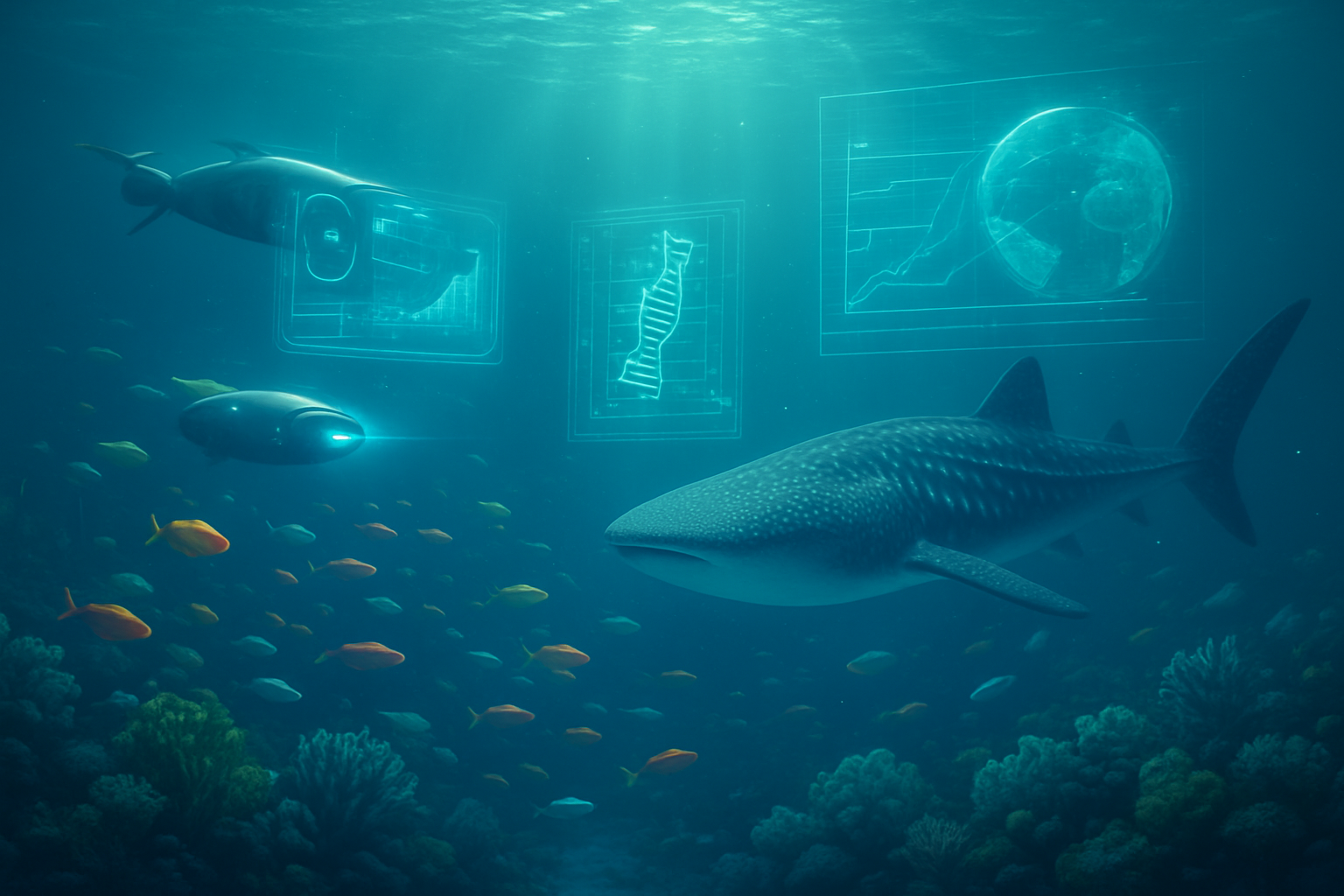
  • Two Decades of Innovation: Georgia Tech and Georgia Aquarium Forge a Technological Tide in Global Conservation

    Two Decades of Innovation: Georgia Tech and Georgia Aquarium Forge a Technological Tide in Global Conservation

    For nearly two decades, a remarkable partnership between the Georgia Institute of Technology (Georgia Tech) and the Georgia Aquarium has quietly yet profoundly been shaping the future of global marine conservation. Since its inception, even before the Aquarium officially opened its doors in 2005, this enduring alliance has leveraged cutting-edge technology and interdisciplinary expertise to tackle some of the most pressing challenges facing our oceans, from understanding the intricacies of marine life at a genomic level to deploying scalable solutions for climate change. This collaboration stands as a powerful testament to how technological innovation, when coupled with deep biological insight, can accelerate scientific discovery and deliver actionable conservation outcomes worldwide.

    The immediate significance of this long-standing partnership, spanning two decades as of 2025, lies in its capacity to bridge advanced academic research with practical, real-world conservation applications. By uniting Georgia Tech's prowess in engineering and scientific research with the Georgia Aquarium's extensive marine life expertise and conservation programs, the collaboration has cultivated a unique ecosystem for innovation. It's a model that not only deepens our scientific understanding of marine ecosystems but also actively develops and deploys tangible solutions, positioning both institutions at the forefront of addressing urgent global conservation needs.

    Technological Depths: Unveiling the Ocean's Secrets with Cutting-Edge Innovation

    The heart of the Georgia Tech-Georgia Aquarium collaboration beats with technological innovation, pushing the boundaries of what's possible in marine conservation. Among the most groundbreaking achievements is the creation of the first-ever complete shark genome, a monumental feat accomplished with contributions from Georgia Tech and Emory University. This genetic blueprint provides an unprecedented wealth of data, offering invaluable insights into shark biology, evolution, and population dynamics—critical information for informing targeted conservation strategies that move beyond traditional observation. Furthermore, Georgia Tech’s advanced analytical techniques have been instrumental in meticulously exploring the complex chemistry of whale shark blood, unlocking physiological secrets that aid in understanding their health and environmental responses.

    Beyond genetic breakthroughs, the partnership has applied sophisticated systems engineering to enhance the operational efficiency and visitor experience at the Georgia Aquarium itself. Georgia Tech engineers utilized advanced logistics and computational modeling to optimize visitor flow within exhibits, particularly the popular dolphin show. By modeling human behavior and accounting for various uncertainties, they improved guest satisfaction while indirectly supporting the Aquarium's mission through enhanced educational outreach. This application of data-driven optimization exemplifies a departure from previous, less analytical approaches to facility management, showcasing how technological thinking can permeate even the operational aspects of conservation institutions.

    A significant evolution in the collaboration's technological reach came with Georgia Tech becoming a founding member of the Ocean Visions initiative in 2019. This venture brings together leading ocean science and engineering institutions to foster a collaborative environment between researchers, conservationists, and entrepreneurs. The goal is ambitious: to develop commercially marketable solutions that positively impact ocean health by addressing human, climate, and ecological pressures. A major milestone under this umbrella is the establishment of the Ocean Visions – UN Decade Collaborative Center for Ocean-Climate Solutions (OV – UN DCC) in 2022. Headquartered at the Georgia Aquarium with Georgia Tech as a pivotal partner, this center is the only one of its kind in the United States, dedicated to co-designing, developing, and deploying scalable, equitable, ocean-based solutions to climate change, food security, and marine ecosystem resilience. Initial reactions from the scientific and international community have been overwhelmingly positive, recognizing the center's unique mandate and its potential to deliver globally significant impacts, further solidifying the partnership's leadership in this critical domain.

    Charting New Waters: Competitive Implications and Market Positioning

    The sustained collaboration between Georgia Tech and the Georgia Aquarium has significant implications for the broader landscape of AI companies, tech giants, and startups, particularly those operating in the environmental and marine technology sectors. Companies specializing in marine robotics, data analytics for environmental monitoring, AI-driven predictive modeling for ecosystem health, and sustainable aquaculture technologies stand to benefit immensely from the research and solutions emerging from this partnership. The Ocean Visions initiative, with its explicit goal of fostering commercially marketable solutions, acts as a direct conduit for startups and established tech firms to engage with cutting-edge conservation challenges, potentially leading to new product development and market opportunities in areas like ocean-based renewable energy and sustainable fisheries.

    For major AI labs and tech companies, the partnership serves as a powerful demonstration of AI's "for good" potential, driving interest and investment into environmental applications. While specific public companies (e.g., Google (NASDAQ: GOOGL), Microsoft (NASDAQ: MSFT)) aren't directly named as partners in the core collaboration, the data-intensive nature of genomic research, environmental monitoring, and climate modeling aligns perfectly with their core competencies in big data, machine learning, and cloud computing. This could spur increased corporate social responsibility initiatives, strategic partnerships, or even acquisitions of startups emerging from the Ocean Visions ecosystem. The unique positioning of the OV – UN DCC as the sole UN Decade Collaborative Center for Ocean-Climate Solutions in the US sets a high bar, potentially disrupting traditional, less technologically integrated approaches to conservation and compelling other institutions and companies to elevate their technological game.

    The collaboration positions Georgia Tech and the Georgia Aquarium as global leaders in the burgeoning field of conservation technology. Their strategic advantage lies in their proven ability to translate fundamental scientific and engineering research into tangible, scalable conservation solutions. This not only enhances their academic and institutional prestige but also creates a precedent for how interdisciplinary partnerships can foster innovation that addresses critical planetary challenges. The emphasis on equitable and scalable solutions through the OV – UN DCC also suggests a commitment to ensuring that technological advancements benefit a wide range of communities, potentially opening new markets for inclusive technology deployment in developing regions.

    A Lighthouse in the Broader AI Landscape: Wider Significance and Global Impact

    This two-decade collaboration between Georgia Tech and the Georgia Aquarium stands as a shining example within the broader AI landscape, embodying the growing trend of "AI for good" and the critical role of interdisciplinary research in addressing complex global challenges. It showcases how advanced computational power, data analytics, and engineering expertise can be directly applied to environmental stewardship, moving beyond theoretical discussions to impactful, real-world applications. The partnership's work, particularly through the UN Decade Collaborative Center, directly contributes to the United Nations' Sustainable Development Goals, specifically those related to climate action, life below water, and sustainable cities and communities.

    The impacts of this collaboration are far-reaching. It has led to a deeper scientific understanding of marine life, providing foundational knowledge for conservation strategies that are more precise and effective. By developing and deploying scalable ocean-based solutions to mitigate climate change, enhance food security, and build climate-resilient marine ecosystems, the partnership is directly influencing global efforts to protect our planet. Potential concerns, though not explicitly highlighted in the research, might include the ethical implications of deploying advanced monitoring technologies in sensitive ecosystems, ensuring data privacy and security, and addressing potential biases in AI models used for conservation. However, the partnership's focus on "equitable" solutions through the UN DCC suggests an awareness of these broader societal considerations.

    Comparing this to previous AI milestones, the Georgia Tech-Georgia Aquarium collaboration represents a significant step in the maturation of AI applications. While earlier milestones often focused on breakthroughs in areas like image recognition or natural language processing, this partnership demonstrates AI's capacity to drive scientific discovery and facilitate complex environmental management on a global scale. It parallels other significant "AI for science" initiatives, but with a unique focus on direct conservation action and the integration of diverse scientific disciplines, setting a precedent for how academic institutions and public aquariums can collectively lead in a technology-driven era of environmental protection.

    Surfing the Future: Expected Developments and Horizon Applications

    Looking ahead, the collaboration between Georgia Tech and the Georgia Aquarium is poised for even greater impact, with several exciting developments on the horizon. In the near term, the work of the Ocean Visions – UN Decade Collaborative Center for Ocean-Climate Solutions (OV – UN DCC) will intensify. We can expect to see further progress in the co-design, development, and testing of ocean-based climate solutions, including advancements in ocean-based renewable energy technologies and innovative approaches to sustainable fisheries and aquaculture. This will involve deploying and refining sensor technologies for environmental monitoring, potentially leading to more sophisticated early warning systems for coastal communities threatened by rising sea levels and other climate impacts.

    In the long term, the partnership is likely to expand its genomic research, potentially leading to the sequencing of more marine species and a deeper understanding of biodiversity at a molecular level. This could enable more precise conservation interventions, such as targeted breeding programs for endangered species or the identification of marine populations most resilient to environmental changes. Potential applications on the horizon include the development of AI-powered predictive models that can forecast marine ecosystem health, identify high-risk areas for human-wildlife conflict (like whale ship strikes, building on their 2024 study), and optimize resource allocation for conservation efforts globally.

    Challenges that need to be addressed include securing sustained funding for large-scale technological deployments, ensuring the scalability of solutions across diverse marine environments, and navigating the complex policy landscapes required for international conservation efforts. Experts predict that this collaboration will continue to serve as a leading model for how interdisciplinary science and technology can be harnessed for planetary good. The focus on developing commercially marketable solutions through Ocean Visions also suggests a future where conservation tech becomes a significant economic sector, attracting further investment and talent.

    A Legacy of Innovation: Comprehensive Wrap-up and Future Watch

    The two decades of collaboration between Georgia Tech and the Georgia Aquarium represent a monumental achievement in the realm of marine conservation, profoundly shaped by the strategic application of technology. Key takeaways include the power of sustained interdisciplinary partnerships, the transformative potential of advanced engineering and AI in biological research, and the commitment to translating scientific discovery into actionable, scalable solutions for global challenges. From unraveling the complete shark genome to optimizing aquarium operations and establishing a unique UN-endorsed center for ocean-climate solutions, this alliance has consistently pushed the boundaries of what is possible in protecting our aquatic ecosystems.

    This development holds significant historical importance in the context of AI and conservation. It showcases a mature application of artificial intelligence and related technologies not merely as tools for efficiency, but as catalysts for fundamental scientific breakthroughs and urgent environmental action. The partnership demonstrates how academic rigor combined with public engagement and a clear conservation mission can create a powerful synergy that inspires future generations and sets new standards for responsible technological innovation.

    The long-term impact of this collaboration is poised to be immense, influencing how marine conservation is approached globally for decades to come. By fostering a new generation of conservation technologists and entrepreneurs, and by providing a blueprint for effective academic-institutional partnerships, Georgia Tech and the Georgia Aquarium are actively shaping a more sustainable future for our oceans. In the coming weeks and months, all eyes will be on the progress of the Ocean Visions – UN Decade Collaborative Center for Ocean-Climate Solutions. Watch for announcements regarding new pilot projects, successful deployments of ocean-based solutions, and further scientific breakthroughs emerging from this pioneering alliance, as they continue to lead the charge in safeguarding our blue planet.


    This content is intended for informational purposes only and represents analysis of current AI developments.

    TokenRing AI delivers enterprise-grade solutions for multi-agent AI workflow orchestration, AI-powered development tools, and seamless remote collaboration platforms.
    For more information, visit https://www.tokenring.ai/.

  • Dolby Deepens Academic Ties to Propel AI and Immersive Tech Frontier

    Dolby Deepens Academic Ties to Propel AI and Immersive Tech Frontier

    In a strategic move signaling the growing imperative of industry-academic synergy, Dolby Laboratories (NYSE: DLB) has significantly expanded its collaborations with leading educational institutions, most notably extending its partnership with Georgia Tech's College of Computing. This renewed commitment, underscored by a substantial financial investment, aims to accelerate cutting-edge research in artificial intelligence and immersive technologies, promising to redefine future audio-visual experiences. Simultaneously, Dolby has broadened its long-standing alliance with the Beijing Film Academy, cementing its dedication to cultivating the next generation of immersive storytellers.

    These dual initiatives, announced on October 21, 2025, for Georgia Tech and June 6, 2025, for the Beijing Film Academy, highlight a clear industry trend: leveraging academic prowess for foundational research and talent development is crucial for maintaining a competitive edge in rapidly evolving tech landscapes. For Dolby, these partnerships are not merely philanthropic gestures but vital conduits for innovation, enabling the company to tap into diverse intellectual capital and explore ambitious, far-reaching projects that might otherwise be beyond the scope of in-house R&D. The collaborations are set to foster a new era of interactive and intelligent immersive content, pushing the boundaries of what's possible in sound and vision.

    Unpacking the Collaborative Innovations: AI at the Forefront

    The extended collaboration with Georgia Tech's College of Computing represents a deep dive into the technical underpinnings of next-generation immersive experiences, with a strong emphasis on AI. Building on an already successful initial year, Dolby has committed an additional $600,000 to support a second year of cutting-edge research. This partnership is designed to foster an interdisciplinary research environment, bringing together faculty and students from various schools and research areas within Georgia Tech to tackle complex challenges in AI and immersive technologies. The physical proximity of Dolby and Georgia Tech labs within the Coda building further facilitates this close-knit collaboration, enabling fluid knowledge exchange and shared resources.

    Technically, the collaboration is exploring advanced computing systems and sophisticated AI modeling techniques. In its inaugural year, the partnership supported seven research projects spanning these critical areas. A key focus is the development of interactive, immersive versions of stories, with a particular interest in understanding and enhancing user engagement within these novel environments. This goes beyond traditional linear media, aiming to create dynamic experiences that adapt to user input and preferences, powered by intelligent algorithms. The research also emphasizes open-source development, leading to published academic papers and the release of code that Dolby scientists can then adapt and integrate into their own product development cycles, ensuring a direct pathway from fundamental research to practical application. This approach differs from previous, more siloed R&D models by actively fostering a bidirectional flow of innovation between academia and industry.

    The Beijing Film Academy (BFA) partnership, while distinct, complements the Georgia Tech collaboration by focusing on the creative application of these advanced technologies. BFA has become the first and only Dolby Institute Academic Partner in China for both Dolby Vision and Dolby Atmos. This signifies a commitment to embedding Dolby's world-leading imaging and audio innovations directly into BFA's undergraduate curriculum, particularly within the Sound School and the Department of Film and Television Technology. The program includes tailored training modules that mirror real-world production practices, ensuring students are proficient in industry-standard Dolby Atmos and Dolby Vision workflows for movies, music, and gaming. Initial reactions from the academic community and industry experts have been overwhelmingly positive, viewing these collaborations as essential for bridging the gap between theoretical research and practical industry demands, and for preparing a workforce equipped for the future of entertainment technology.

    Reshaping the Competitive Landscape: Benefits and Disruptions

    These expanded industry-academic partnerships are poised to significantly benefit Dolby (NYSE: DLB) by securing its position at the vanguard of immersive audio and visual technology. By directly funding and engaging in foundational AI research with institutions like Georgia Tech, Dolby gains early access to groundbreaking discoveries and talent. This proactive approach allows the company to integrate nascent AI capabilities into its proprietary technologies, such as Dolby Atmos and Dolby Vision, long before they become mainstream. This strategic advantage could translate into more intelligent content creation tools, more personalized immersive experiences, and ultimately, a stronger ecosystem for Dolby-enabled content and devices.

    The competitive implications for major AI labs and tech companies are substantial. While many tech giants like Alphabet (NASDAQ: GOOGL), Meta Platforms (NASDAQ: META), and Apple (NASDAQ: AAPL) invest heavily in their own internal AI research, Dolby's focused academic collaborations allow it to specialize and accelerate progress in specific niches—namely, AI for immersive media. This could lead to a differentiation in the quality and intelligence of immersive content solutions, potentially disrupting existing products or services that rely on less sophisticated AI or content pipelines. For startups in the immersive tech space, these collaborations could present both opportunities and challenges; while Dolby's advancements could raise the bar for entry, the open-source nature of some research might also provide a foundation for new ventures to build upon.

    Moreover, these partnerships bolster Dolby's market positioning by demonstrating a commitment to long-term innovation and industry leadership. By directly influencing the curriculum at institutions like the Beijing Film Academy, Dolby is not only training future content creators in its technologies but also fostering an international mindset centered around high-quality, immersive storytelling. This strategic advantage ensures a steady supply of talent proficient in Dolby's ecosystem, further cementing its technologies as the industry standard. The potential disruption lies in how quickly these AI-powered immersive experiences can move from research labs to consumer products, potentially rendering current static media experiences less engaging and pushing competitors to rapidly innovate their own AI and immersive strategies.

    Broader Implications for the AI Landscape

    Dolby's intensified engagement with academia perfectly encapsulates a broader trend within the AI landscape: the recognition that complex, interdisciplinary challenges require collaborative solutions. This move signifies a maturation in how AI is approached—moving beyond purely data-driven models to encompass the nuanced demands of human perception and artistic expression in immersive environments. It underscores the understanding that the next leaps in AI, particularly for creative industries, will come from a synthesis of deep technical expertise and domain-specific knowledge, such as that found in film and audio engineering.

    The impacts of such partnerships are multifaceted. On one hand, they democratize access to cutting-edge research by fostering open-source development and academic publications, potentially accelerating the overall pace of innovation across the industry. On the other hand, they raise questions about intellectual property and the balance between academic freedom and corporate interests. Potential concerns might include the direction of research being overly influenced by commercial objectives, though the focus on ambitious, far-looking projects suggests a commitment to fundamental exploration. Compared to previous AI milestones, which often centered on breakthroughs in areas like computer vision or natural language processing, this development marks a significant step towards applying AI to enhance subjective human experiences—a more complex and perhaps more impactful frontier.

    This collaborative model fits into a growing trend where tech companies are increasingly investing in university research centers, joint labs, and talent pipelines. It reflects a strategic shift from simply recruiting top graduates to actively shaping the research agenda and curriculum that produces them. The focus on interactive immersive experiences and AI modeling for audio and video is particularly timely, given the burgeoning interest in the metaverse and spatial computing. These partnerships are not just about incremental improvements; they are about laying the groundwork for entirely new paradigms of digital interaction and content consumption, positioning AI as a core enabler of these future realities.

    The Horizon: Future Developments and Expert Predictions

    Looking ahead, the extended collaborations between Dolby and institutions like Georgia Tech and the Beijing Film Academy are expected to yield significant near-term and long-term developments. In the near term, we can anticipate a surge in published research papers and open-source contributions focusing on AI algorithms tailored for dynamic audio rendering, intelligent scene analysis in video, and adaptive immersive content generation. These outputs will likely form the basis for next-generation developer tools and SDKs, enabling content creators to more easily integrate AI-powered features into their immersive projects. We may also see early prototypes of interactive storytelling experiences that leverage these advancements, pushing the boundaries of user agency within narrative structures.

    Longer term, these partnerships are poised to drive the evolution of truly intelligent immersive environments. Potential applications and use cases on the horizon include AI systems that can procedurally generate realistic 3D audio based on environmental cues, real-time adaptive video experiences that respond to a viewer's emotional state or gaze, and even AI-powered virtual collaborators for content creators. Imagine a future where an AI assistant can dynamically adjust the soundscape of a game in response to player actions or an immersive film that subtly alters its narrative path based on audience engagement metrics.

    However, challenges remain. Addressing ethical considerations in AI-driven content, ensuring data privacy in highly personalized immersive experiences, and managing the computational demands of sophisticated AI models will be critical. Furthermore, bridging the gap between academic prototypes and robust, scalable commercial products will require continued engineering effort. Experts predict that these collaborations will accelerate the convergence of AI, spatial computing, and media production, leading to a new era of "perceptual AI" that understands and enhances human sensory experiences. The next wave of innovation is likely to focus on making immersive technologies not just visually and audibly rich, but truly intelligent and responsive to the human element.

    A New Era of Immersive Intelligence

    Dolby's extended collaborations with Georgia Tech's College of Computing and the Beijing Film Academy mark a pivotal moment in the convergence of AI and immersive technologies. The key takeaways from these partnerships are clear: industry-academic synergy is paramount for driving foundational research, cultivating specialized talent, and ensuring that technological advancements are both cutting-edge and practically applicable. For Dolby, this strategy reinforces its leadership in audio and visual innovation, providing a direct pipeline to the latest AI breakthroughs and a robust framework for training the next generation of creative professionals in its proprietary technologies.

    This development's significance in AI history lies in its focus on applying artificial intelligence to enhance subjective human experiences within rich, interactive media. It represents a shift towards AI that understands and manipulates complex sensory information, moving beyond mere data processing to truly intelligent content creation and delivery. The long-term impact is profound: these collaborations are laying the groundwork for a future where immersive experiences are not just passive consumption but dynamic, personalized, and deeply engaging interactions, powered by sophisticated AI.

    In the coming weeks and months, the tech world should watch for further announcements regarding specific research outcomes, open-source project releases, and perhaps even early demonstrations of the technologies being developed. These partnerships serve as a powerful exemplar of how concerted efforts between industry and academia can accelerate innovation, shape future industries, and ultimately redefine the boundaries of human-computer interaction. The era of truly intelligent immersion is not just on the horizon; it's actively being built through these collaborative endeavors.


    This content is intended for informational purposes only and represents analysis of current AI developments.

    TokenRing AI delivers enterprise-grade solutions for multi-agent AI workflow orchestration, AI-powered development tools, and seamless remote collaboration platforms.
    For more information, visit https://www.tokenring.ai/.