Tag: Google DeepMind

  • The Robot That Thinks: Google DeepMind and Boston Dynamics Unveil Gemini 3-Powered Atlas

    The Robot That Thinks: Google DeepMind and Boston Dynamics Unveil Gemini 3-Powered Atlas

    In a move that marks a definitive turning point for the field of embodied artificial intelligence, Google DeepMind and Boston Dynamics have officially announced the full-scale integration of the Gemini 3 foundation model into the all-electric Atlas humanoid robot. Unveiled this week at CES 2026, the collaboration represents a fusion of the world’s most advanced "brain"—a multimodal, trillion-parameter reasoning engine—with the world’s most capable "body." This integration effectively ends the era of pre-programmed robotic routines, replacing them with a system capable of understanding complex verbal instructions and navigating unpredictable human environments in real-time.

    The significance of this announcement cannot be overstated. For decades, humanoid robots were limited by their inability to reason about the physical world; they could perform backflips in controlled settings but struggled to identify a specific tool in a cluttered workshop. By embedding Gemini 3 directly into the Atlas hardware, Alphabet Inc. (NASDAQ: GOOGL) and Boston Dynamics, a subsidiary of Hyundai Motor Company (OTCMKTS: HYMTF), have created a machine that doesn't just move—it perceives, plans, and adapts. This "brain-body" synthesis allows the 2026 Atlas to function as an autonomous agent capable of high-level cognitive tasks, potentially disrupting industries ranging from automotive manufacturing to logistics and disaster response.

    Embodied Reasoning: The Technical Architecture of Gemini-Atlas

    At the heart of this breakthrough is the Gemini 3 architecture, released by Google DeepMind in late 2025. Unlike its predecessors, Gemini 3 utilizes a Sparse Mixture-of-Experts (MoE) design optimized for robotics, featuring a massive 1-million-token context window. This allows the robot to "remember" the entire layout of a factory floor or a multi-step assembly process without losing focus. The model’s "Deep Think Mode" provides a reasoning layer where the robot can pause for milliseconds to simulate various physical outcomes before committing to a movement. This is powered by the onboard NVIDIA Corporation (NASDAQ: NVDA) Jetson Thor module, which provides over 2,000 TFLOPS of AI performance, allowing the robot to process real-time video, audio, and tactile sensor data simultaneously.

    The physical hardware of the electric Atlas has been equally transformed. The 2026 production model features 56 active joints, many of which offer 360-degree rotation, exceeding the range of motion of any human. To bridge the gap between high-level AI reasoning and low-level motor control, DeepMind developed a proprietary "Action Decoder" running at 50Hz. This acts as a digital cerebellum, translating Gemini 3’s abstract goals—such as "pick up the fragile glass"—into precise torque commands for Atlas’s electric actuators. This architecture solves the latency issues that plagued previous humanoid attempts, ensuring that the robot can react to a falling object or a human walking into its path within 20 milliseconds.

    Initial reactions from the AI research community have been overwhelmingly positive. Dr. Aris Xanthos, a leading robotics researcher, noted that the ability of Atlas to understand open-ended verbal commands like "Clean up the spill and find a way to warn others" is a "GPT-3 moment for robotics." Unlike previous systems that required thousands of hours of reinforcement learning for a single task, the Gemini-Atlas system can learn new industrial workflows with as few as 50 human demonstrations. This "few-shot" learning capability is expected to drastically reduce the time and cost of deploying humanoid fleets in dynamic environments.

    A New Power Dynamic in the AI and Robotics Industry

    The collaboration places Alphabet Inc. and Hyundai Motor Company in a dominant position within the burgeoning humanoid market, creating a formidable challenge for competitors. Tesla, Inc. (NASDAQ: TSLA), which has been aggressively developing its Optimus robot, now faces a rival that possesses a significantly more mature software stack. While Optimus has made strides in mechanical design, the integration of Gemini 3 gives Atlas a superior "world model" and linguistic understanding that Tesla’s current FSD-based (Full Self-Driving) architecture may struggle to match in the near term.

    Furthermore, this partnership signals a shift in how AI companies approach the market. Rather than competing solely on chatbots or digital assistants, tech giants are now racing to give their AI a physical presence. Startups like Figure AI and Agility Robotics, while innovative, may find it difficult to compete with the combined R&D budgets and data moats of Google and Boston Dynamics. The strategic advantage here lies in the data loop: every hour Atlas spends on a factory floor provides multimodal data that further trains Gemini 3, creating a self-reinforcing cycle of improvement that is difficult for smaller players to replicate.

    The market positioning is clear: Hyundai intends to use the Gemini-powered Atlas to fully automate its "Metaplants," starting with the RMAC facility in early 2026. This move is expected to drive down manufacturing costs and set a new standard for industrial efficiency. For Alphabet, the integration serves as a premier showcase for Gemini 3’s versatility, proving that their foundation models are not just for search engines and coding, but are the essential operating systems for the physical world.

    The Societal Impact of the "Robotic Awakening"

    The broader significance of the Gemini-Atlas integration lies in its potential to redefine the human-robot relationship. We are moving away from "automation," where robots perform repetitive tasks in cages, toward "collaboration," where robots work alongside humans as intelligent peers. The ability of Atlas to navigate complex environments in real-time means it can be deployed in "fenceless" environments—hospitals, construction sites, and eventually, retail spaces. This transition marks the arrival of the "General Purpose Robot," a concept that has been the holy grail of science fiction for nearly a century.

    However, this breakthrough also brings significant concerns to the forefront. The prospect of robots capable of understanding and executing complex verbal commands raises questions about safety and job displacement. While the 2026 Atlas includes "Safety-First" protocols—hardcoded overrides that prevent the robot from exerting force near human vitals—the ethical implications of autonomous decision-making in high-stakes environments remain a topic of intense debate. Critics argue that the rapid deployment of such capable machines could outpace our ability to regulate them, particularly regarding data privacy and the security of the "brain-body" link.

    Comparatively, this milestone is being viewed as the physical manifestation of the LLM revolution. Just as ChatGPT transformed how we interact with information, the Gemini-Atlas integration is transforming how we interact with the physical world. It represents a shift from "Narrow AI" to "Embodied General AI," where the intelligence is no longer trapped behind a screen but is capable of manipulating the environment to achieve goals. This is the first time a foundation model has been successfully used to control a high-degree-of-freedom humanoid in a non-deterministic, real-world setting.

    The Road Ahead: From Factories to Front Doors

    Looking toward the near future, the next 18 to 24 months will likely see the first large-scale deployments of Gemini-powered Atlas units across Hyundai’s global manufacturing network. Experts predict that by late 2027, the technology will have matured enough to move beyond the factory floor into more specialized sectors such as hazardous waste removal and search-and-rescue. The "Deep Think" capabilities of Gemini 3 will be particularly useful in disaster zones where the robot must navigate rubble and make split-second decisions without constant human oversight.

    Long-term, the goal remains a consumer-grade humanoid robot. While the current 2026 Atlas is priced for industrial use—estimated at $150,000 per unit—advancements in mass production and the continued optimization of the Gemini architecture could see prices drop significantly by the end of the decade. Challenges remain, particularly regarding battery life; although the 2026 model features a 4-hour swappable battery, achieving a full day of autonomous operation without intervention is still a hurdle. Furthermore, the "Action Decoder" must be refined to handle even more delicate tasks, such as elder care or food preparation, which require a level of tactile sensitivity that is still in the early stages of development.

    A Landmark Moment in the History of AI

    The integration of Gemini 3 into the Boston Dynamics Atlas is more than just a technical achievement; it is a historical landmark. It represents the successful marriage of two previously distinct fields: large-scale language modeling and high-performance robotics. By giving Atlas a "brain" capable of reasoning, Google DeepMind and Boston Dynamics have fundamentally changed the trajectory of human technology. The key takeaway from this week’s announcement is that the barrier between digital intelligence and physical action has finally been breached.

    As we move through 2026, the tech industry will be watching closely to see how the Gemini-Atlas system performs in real-world industrial settings. The success of this collaboration will likely trigger a wave of similar partnerships, as other AI labs seek to find "bodies" for their models. For now, the world has its first true glimpse of a future where robots are not just tools, but intelligent partners capable of understanding our words and navigating our world.


    This content is intended for informational purposes only and represents analysis of current AI developments.

    TokenRing AI delivers enterprise-grade solutions for multi-agent AI workflow orchestration, AI-powered development tools, and seamless remote collaboration platforms.
    For more information, visit https://www.tokenring.ai/.
  • The 800-Year Leap: How AI is Rewriting the Periodic Table to Discover the Next Superconductor

    The 800-Year Leap: How AI is Rewriting the Periodic Table to Discover the Next Superconductor

    As of January 2026, the field of materials science has officially entered its "generative era." What was once a painstaking process of trial and error in physical laboratories—often taking decades to bring a single new material to market—has been compressed into a matter of weeks by artificial intelligence. By leveraging massive neural networks and autonomous robotic labs, researchers are now identifying and synthesizing stable new crystals at a scale that would have taken 800 years of human effort to achieve. This "Materials Genome" revolution is not just a theoretical exercise; it is the frontline of the hunt for a room-temperature superconductor, a discovery that would fundamentally rewrite the rules of global energy and computing.

    The immediate significance of this shift cannot be overstated. In the last 18 months, AI models have predicted the existence of over two million new crystal structures, hundreds of thousands of which are stable enough for real-world use. This explosion of data has provided a roadmap for the "Energy Transition," offering new pathways for high-density batteries, carbon-capture materials, and, most crucially, high-temperature superconductors. With the recent stabilization of nickelate superconductors at room pressure and the deployment of "Physical AI" in autonomous labs, the gap between a computer's prediction and a physical sample in a vial has nearly vanished.

    From Prediction to Generation: The Technical Shift

    The technical backbone of this revolution lies in two distinct but converging AI architectures: Graph Neural Networks (GNNs) and Generative Diffusion Models. Alphabet Inc. (NASDAQ: GOOGL) pioneered this space with GNoME (Graph Networks for Materials Exploration), which utilized GNNs to predict the stability of 2.2 million new crystals. Unlike previous approaches that relied on expensive Density Functional Theory (DFT) calculations—which could take hours or days per material—GNoME can screen candidates in seconds. This allowed researchers to bypass the "valley of death" where promising theoretical materials often fail due to thermodynamic instability.

    However, in 2025, the paradigm shifted from "screening" to "inverse design." Microsoft Corp. (NASDAQ: MSFT) introduced MatterGen, a generative model that functions similarly to image generators like DALL-E, but for atomic structures. Instead of looking through a list of known possibilities, scientists can now prompt the AI with desired properties—such as "high magnetic field tolerance and zero electrical resistance at 200K"—and the AI "dreams" a brand-new crystal structure that fits those parameters. This generative approach has proven remarkably accurate; recent collaborations between Microsoft and the Chinese Academy of Sciences successfully synthesized TaCr₂O₆, a material designed entirely by MatterGen, with its physical properties matching the AI's predictions with over 90% accuracy.

    This digital progress is being validated in the physical world by "Self-Driving Labs" like the A-Lab at Lawrence Berkeley National Laboratory. By early 2026, these facilities have reached a 71% success rate in autonomously synthesizing AI-predicted materials without human intervention. The introduction of "AutoBot" in late 2025 added autonomous characterization to the loop, meaning the lab not only makes the material but also tests its superconductivity and magnetic properties, feeding the results back into the AI to refine its next prediction. This closed-loop system is the primary reason the industry has seen more material breakthroughs in the last two years than in the previous two decades.

    The Industrial Race for the "Holy Grail"

    The race to dominate AI-driven material discovery has created a new competitive landscape among tech giants and specialized startups. Alphabet Inc. (NASDAQ: GOOGL) continues to lead in foundational research, recently announcing a partnership with the UK government to open a fully automated materials discovery lab in London. This facility is designed to be the first "Gemini-native" lab, where the AI acts as a co-scientist, using multi-modal reasoning to design experiments that robots execute at a rate of hundreds per day. This move positions Alphabet not just as a software provider, but as a key player in the physical supply chain of the future.

    Microsoft Corp. (NASDAQ: MSFT) has taken a different strategic path by integrating MatterGen into its Azure Quantum Elements platform. This allows industrial giants like Johnson Matthey (LSE: JMAT) and BASF (ETR: BAS) to lease "discovery-as-a-service," using Microsoft’s massive compute power to find new catalysts or battery chemistries. Meanwhile, NVIDIA Corp. (NASDAQ: NVDA) has become the essential infrastructure provider for this movement. In early 2026, Nvidia launched its Rubin platform, which provides the "Physical AI" and simulation environments needed to run the robotics in autonomous labs. Their ALCHEMI microservices have already helped companies like ENEOS (TYO: 5020) screen 100 million catalyst options in a fraction of the time previously required.

    The disruption is also spawning a new breed of "full-stack" materials startups. Periodic Labs, founded by former DeepMind and OpenAI researchers, recently raised $300 million to build proprietary autonomous labs specifically focused on a commercial-grade room-temperature superconductor. These startups are betting that the first entity to own the patent for a practical superconductor will become the most valuable company in the world, potentially displacing existing leaders in energy and transportation.

    Wider Significance: Solving the "Heat Death" of Technology

    The broader implications of these discoveries touch every aspect of modern civilization, most notably the global energy crisis. The hunt for a room-temperature superconductor (RTS) is the ultimate prize because such a material would allow for 100% efficient power grids, losing zero energy to heat during transmission. As of January 2026, while a universal, ambient-pressure RTS remains elusive, the "Zentropy" theory-based AI models from Penn State have successfully predicted superconducting behavior in copper-gold alloys that were previously thought impossible. These incremental steps are rapidly narrowing the search space for a material that could make fusion energy viable and revolutionize electric motors.

    Beyond energy, AI-driven material discovery is solving the "heat death" problem in the semiconductor industry. As AI chips like Nvidia’s Blackwell and Rubin series become more power-hungry, traditional cooling methods are reaching their limits. AI is now being used to discover new thermal interface materials that allow for 30% denser chip packaging. This ensures that the very AI models doing the discovery can continue to scale in performance. Furthermore, the ability to find alternatives to rare-earth metals is a geopolitical game-changer, reducing the tech industry's reliance on fragile and often monopolized global supply chains.

    However, this rapid pace of discovery brings concerns regarding the "sim-to-real" gap and the democratization of science. While AI can predict millions of materials, the ability to synthesize them still requires physical infrastructure. There is a growing risk of a "materials divide," where only the wealthiest nations and corporations have the robotic labs necessary to turn AI "dreams" into physical reality. Additionally, the potential for AI to design hazardous or dual-use materials remains a point of intense debate among ethics boards and international regulators.

    The Near Horizon: What Comes Next?

    In the near term, we expect to see the first commercial applications of "AI-first" materials in the battery and catalyst markets. Solid-state batteries designed by generative models are already entering pilot production, promising double the energy density of current lithium-ion cells. In the realm of superconductors, the focus is shifting toward "near-room-temperature" materials that function at the temperatures of dry ice rather than liquid nitrogen. These would still be revolutionary for medical imaging (MRI) and quantum computing, making these technologies significantly cheaper and more portable.

    Longer-term, the goal is the "Universal Material Model"—an AI that understands the properties of every possible combination of the periodic table. Experts predict that by 2030, the timeline from discovering a new material to its first industrial application will drop to under 18 months. The challenge remains the synthesis of complex, multi-element compounds that AI can imagine but current robotics struggle to assemble. Addressing this "synthesis bottleneck" will be the primary focus of the next generation of autonomous laboratories.

    A New Era for Scientific Discovery

    The integration of AI into materials science represents one of the most significant milestones in the history of the scientific method. We have moved beyond the era of the "lone genius" in a lab to an era of "Science 2.0," where human intuition is augmented by the brute-force processing and generative creativity of artificial intelligence. The discovery of 2.2 million new crystal structures is not just a data point; it is the foundation for a new industrial revolution that could solve the climate crisis and usher in an age of limitless energy.

    As we move further into 2026, the world should watch for the first replicated results from the UK’s Automated Science Lab and the potential announcement of a "stable" high-temperature superconductor that operates at ambient pressure. While the "Holy Grail" of room-temperature superconductivity may still be a few years away, the tools we are using to find it have already changed the world forever. The periodic table is no longer a static chart on a classroom wall; it is a dynamic, expanding frontier of human—and machine—ingenuity.


    This content is intended for informational purposes only and represents analysis of current AI developments.

    TokenRing AI delivers enterprise-grade solutions for multi-agent AI workflow orchestration, AI-powered development tools, and seamless remote collaboration platforms.
    For more information, visit https://www.tokenring.ai/.
  • Beyond Human Intuition: Google DeepMind’s ‘Grand Challenge’ Breakthrough Signals the Era of Autonomous Mathematical Discovery

    Beyond Human Intuition: Google DeepMind’s ‘Grand Challenge’ Breakthrough Signals the Era of Autonomous Mathematical Discovery

    In a landmark achievement for the field of artificial intelligence, Google DeepMind has officially conquered the "Grand Challenge" of mathematics, moving from competitive excellence to the threshold of autonomous scientific discovery. Following a series of high-profile successes throughout 2025, including a gold-medal-level performance at the International Mathematical Olympiad (IMO), DeepMind’s latest models have begun solving long-standing open problems that have eluded human mathematicians for decades. This transition from "specialist" solvers to "generalist" reasoning agents marks a pivotal moment in the history of STEM, suggesting that the next great mathematical breakthroughs may be authored by silicon rather than ink.

    The breakthrough, punctuated by the recent publication of the AlphaProof methodology in Nature, represents a fundamental shift in how AI handles formal logic. By combining large language models with reinforcement learning and formal verification languages, Alphabet Inc. (NASDAQ:GOOGL) has created a system capable of rigorous, hallucination-free reasoning. As of early 2026, these tools are no longer merely passing exams; they are discovering new algorithms for matrix multiplication and establishing new bounds for complex geometric problems, signaling a future where AI serves as a primary engine for theoretical research.

    The Architecture of Reason: From AlphaProof to Gemini Deep Think

    The technical foundation of this breakthrough rests on two distinct but converging paths: the formal rigor of AlphaProof and the intuitive generalism of the new Gemini Deep Think model. AlphaProof, which saw its core methodology published in Nature in late 2025, utilizes the Lean formal proof language to ground its reasoning. Unlike standard chatbots that predict the next likely word, AlphaProof uses reinforcement learning to "search" for a sequence of logical steps that are mathematically verifiable. This approach eliminates the "hallucination" problem that has long plagued AI, as every step of the proof must be validated by the Lean compiler before the model proceeds.

    In July 2025, the debut of Gemini Deep Think pushed these capabilities into the realm of generalist intelligence. While previous versions required human experts to translate natural language problems into formal code, Gemini Deep Think operates end-to-end. At the 66th IMO, it solved five out of six problems perfectly within the official 4.5-hour time limit, earning 35 out of 42 points—a score that secured a gold medal ranking. This was a massive leap over the 2024 hybrid system, which required days of computation to reach a silver-medal standard. The 2025 model's ability to reason across algebra, combinatorics, and geometry in a single, unified framework demonstrates a level of cognitive flexibility previously thought to be years away.

    Furthermore, the introduction of AlphaEvolve in May 2025 has taken these systems out of the classroom and into the research lab. AlphaEvolve is an evolutionary coding agent designed to "breed" and refine algorithms for unsolved problems. It recently broke a 56-year-old record in matrix multiplication, finding a more efficient way to multiply $4 \times 4$ complex-valued matrices than the legendary Strassen algorithm. By testing millions of variations and keeping only those that show mathematical promise, AlphaEvolve has demonstrated that AI can move beyond human-taught heuristics to find "alien" solutions that human intuition might never consider.

    Initial reactions from the global mathematics community have been a mix of awe and strategic adaptation. Fields Medalists and researchers at institutions like the Institute for Advanced Study (IAS) have noted that while the AI is not yet "inventing" new branches of mathematics, its ability to navigate the "search space" of proofs is now superhuman. The consensus among experts is that the "Grand Challenge"—the ability for AI to match the world's brightest young minds in formal competition—has been decisively met, shifting the focus to "The Millennium Prize Challenge."

    Market Dynamics: The Race for the 'Reasoning' Economy

    This breakthrough has intensified the competitive landscape among AI titans, placing Alphabet Inc. (NASDAQ:GOOGL) at the forefront of the "reasoning" era. While OpenAI and Microsoft (NASDAQ:MSFT) have made significant strides with their "o1" series of models—often referred to as Project Strawberry—DeepMind’s focus on formal verification gives it a unique strategic advantage in high-stakes industries. In sectors like aerospace, cryptography, and semiconductor design, "mostly right" is not enough; the formal proof capabilities of AlphaProof provide a level of certainty that competitors currently struggle to match.

    The implications for the broader tech industry are profound. Nvidia (NASDAQ:NVDA), which has dominated the hardware layer of the AI boom, is now seeing its own research teams, such as the NemoSkills group, compete for the $5 million AIMO Grand Prize. This competition is driving a surge in demand for specialized "reasoning chips" capable of handling the massive search-tree computations required for formal proofs. As DeepMind integrates these mathematical capabilities into its broader Gemini ecosystem, it creates a moat around its enterprise offerings, positioning Google as the go-to provider for "verifiable AI" in engineering and finance.

    Startups in the "AI for Science" space are also feeling the ripple effects. The success of AlphaEvolve suggests that existing software for automated theorem proving may soon be obsolete unless it integrates with large-scale neural reasoning. We are witnessing the birth of a new market segment: Automated Discovery as a Service (ADaaS). Companies that can harness DeepMind’s methodology to optimize supply chains, discover new materials, or verify complex smart contracts will likely hold the competitive edge in the late 2020s.

    Strategic partnerships are already forming to capitalize on this. In late 2025, Google DeepMind launched the "AI for Math Initiative," signing collaborative agreements with world-class institutions including Imperial College London and the Simons Institute at UC Berkeley. These partnerships aim to deploy DeepMind’s models on "ripe" problems in physics and chemistry, effectively turning the world's leading universities into beta-testers for the next generation of autonomous discovery tools.

    Scientific Significance: The End of the 'Black Box'

    The wider significance of the Grand Challenge breakthrough lies in its potential to solve the "black box" problem of artificial intelligence. For years, the primary criticism of AI was that its decisions were based on opaque statistical correlations. By mastering formal mathematics, DeepMind has proven that AI can be both creative and perfectly logical. This has massive implications for the broader AI landscape, as the techniques used to solve IMO geometry problems are directly applicable to the verification of software code and the safety of autonomous systems.

    Comparatively, this milestone is being likened to the "AlphaGo moment" for the world of ideas. While AlphaGo conquered a game with a finite (though vast) state space, mathematics is infinite and abstract. Moving from the discrete board of a game to the continuous and logical landscape of pure mathematics suggests that AI is evolving from a "pattern matcher" into a "reasoner." This shift is expected to accelerate the "Scientific AI" trend, where the bottleneck of human review is replaced by automated verification, potentially shortening the cycle of scientific discovery from decades to months.

    However, the breakthrough also raises significant concerns regarding the future of human expertise. If AI can solve the most difficult problems in the International Mathematical Olympiad, what does that mean for the training of future mathematicians? Some educators worry that the "struggle" of proof-finding—a core part of mathematical development—might be lost if students rely on AI "copilots." Furthermore, there is the existential question of "uninterpretable proofs": if an AI provides a 10,000-page proof for a conjecture that no human can fully verify, do we accept it as truth?

    Despite these concerns, the impact on STEM fields is overwhelmingly viewed as a net positive. The ability of AI to explore millions of mathematical permutations allows it to act as a "force multiplier" for human researchers. For example, the discovery of new lower bounds for the "Kissing Number Problem" in 11 dimensions using AlphaEvolve has already provided physicists with new insights into sphere packing and error-correcting codes, demonstrating that AI-driven math has immediate, real-world utility.

    The Horizon: Targeting the Millennium Prizes

    In the near term, all eyes are on the $1 million Millennium Prize problems. Reports from late 2025 suggest that a DeepMind team, working alongside prominent mathematicians like Javier Gómez Serrano, is using AlphaEvolve to search for "blow-up" singularities in the Navier-Stokes equations—a problem that has stood as one of the greatest challenges in fluid dynamics for over a century. While a full solution has not yet been announced, experts predict that the use of AI to find counterexamples or specific singularities could lead to a breakthrough as early as 2027.

    The long-term applications of this technology extend far beyond pure math. The same reasoning engines are being adapted for "AlphaChip" 2.0, which will use formal logic to design the next generation of AI hardware with zero-defect guarantees. In the pharmaceutical industry, the integration of mathematical reasoning with protein-folding models like AlphaFold is expected to lead to the design of "verifiable" drugs—molecules whose interactions can be mathematically proven to be safe and effective before they ever enter a clinical trial.

    The primary challenge remaining is the "Generalization Gap." While DeepMind's models are exceptional at geometry and algebra, they still struggle with the high-level "conceptual leaps" required for fields like topology or number theory. Experts predict that the next phase of development will involve "Multi-Modal Reasoning," where AI can combine visual intuition (geometry), symbolic logic (algebra), and linguistic context to tackle the most abstract reaches of human thought.

    Conclusion: A New Chapter in Human Knowledge

    Google DeepMind’s conquest of the mathematical Grand Challenge represents more than just a win for Alphabet Inc.; it is a fundamental expansion of the boundaries of human knowledge. By demonstrating that an AI can achieve gold-medal performance in the world’s most prestigious mathematics competition and go on to solve research-level problems, DeepMind has proven that the "reasoning gap" is closing. We are moving from an era of AI that mimics human speech to an era of AI that masters human logic.

    This development will likely be remembered as the point where AI became a true partner in scientific inquiry. As we look toward the rest of 2026, the focus will shift from what these models can solve to how we will use them to reshape our understanding of the universe. Whether it is solving the Navier-Stokes equations or designing perfectly efficient energy grids, the "Grand Challenge" has laid the groundwork for a new Renaissance in the STEM fields.

    In the coming weeks, the industry will be watching for the next set of results from the AIMO Prize and the potential integration of Gemini Deep Think into the standard Google Cloud (NASDAQ:GOOGL) developer suite. The era of autonomous discovery has arrived, and it is written in the language of mathematics.


    This content is intended for informational purposes only and represents analysis of current AI developments.

    TokenRing AI delivers enterprise-grade solutions for multi-agent AI workflow orchestration, AI-powered development tools, and seamless remote collaboration platforms.
    For more information, visit https://www.tokenring.ai/.
  • Beyond the Supercomputer: How Google DeepMind’s GenCast is Rewriting the Laws of Weather Prediction

    Beyond the Supercomputer: How Google DeepMind’s GenCast is Rewriting the Laws of Weather Prediction

    As the global climate enters an era of increasing volatility, the tools we use to predict the atmosphere are undergoing a radical transformation. Google DeepMind, the artificial intelligence subsidiary of Alphabet Inc. (NASDAQ: GOOGL), has officially moved its GenCast model from a research breakthrough to a cornerstone of global meteorological operations. By early 2026, GenCast has proven that AI-driven probabilistic forecasting is no longer just a theoretical exercise; it is now the gold standard for predicting high-stakes weather events like hurricanes and heatwaves with unprecedented lead times.

    The significance of GenCast lies in its departure from the "brute force" physics simulations that have dominated meteorology for half a century. While traditional models require massive supercomputers to solve complex fluid dynamics equations, GenCast utilizes a generative AI framework to produce 15-day ensemble forecasts in a fraction of the time. This shift is not merely about speed; it represents a fundamental change in how humanity anticipates disaster, providing emergency responders with a "probabilistic shield" that identifies extreme risks days before they materialize on traditional radar.

    The Diffusion Revolution: Probabilistic Forecasting at Scale

    At the heart of GenCast’s technical superiority is its use of a conditional diffusion model—the same underlying architecture that powers cutting-edge AI image generators. Unlike its predecessor, GraphCast, which focused on "deterministic" or single-outcome predictions, GenCast is designed for ensemble forecasting. It starts with a base of historical atmospheric data and then "diffuses" noise into 50 or more distinct scenarios. This allows the model to capture a range of possible futures, providing a percentage-based probability for events like a hurricane making landfall or a record-breaking heatwave.

    Technically, GenCast was trained on over 40 years of ERA5 historical reanalysis data, learning the intricate, non-linear relationships of more than 80 atmospheric variables across various altitudes. In head-to-head benchmarks against the European Centre for Medium-Range Weather Forecasts (ECMWF) Ensemble Prediction System (ENS)—long considered the world's best—GenCast outperformed the traditional system on 97.2% of evaluated targets. As the forecast window extends beyond 36 hours, its accuracy advantage climbs to a staggering 99.8%, effectively pushing the "horizon of predictability" further into the future than ever before.

    The most transformative technical specification, however, is its efficiency. A full 15-day ensemble forecast, which would typically take hours on a traditional supercomputer consuming megawatts of power, can be completed by GenCast in just eight minutes on a single Google Cloud TPU v5. This represents a reduction in energy consumption of approximately 1,000-fold. This efficiency allows agencies to update their forecasts hourly rather than twice a day, a critical capability when tracking rapidly intensifying storms that can change course in a matter of minutes.

    Disrupting the Meteorological Industrial Complex

    The rise of GenCast has sent ripples through the technology and aerospace sectors, forcing a re-evaluation of how weather data is monetized and utilized. For Alphabet Inc. (NASDAQ: GOOGL), GenCast is more than a research win; it is a strategic asset integrated into Google Search, Maps, and its public cloud offerings. By providing superior weather intelligence, Google is positioning itself as an essential partner for governments and insurance companies, potentially disrupting the traditional relationship between national weather services and private data providers.

    The hardware landscape is also shifting. While NVIDIA (NASDAQ: NVDA) remains the dominant force in AI training hardware, the success of GenCast on Google’s proprietary Tensor Processing Units (TPUs) highlights a growing trend of vertical integration. As AI models like GenCast become the primary way we process planetary data, the demand for specialized AI silicon is beginning to outpace the demand for traditional high-performance computing (HPC) clusters. This shift challenges legacy supercomputer manufacturers who have long relied on government contracts for massive, physics-based weather simulations.

    Furthermore, the democratization of high-tier forecasting is a major competitive implication. Previously, only wealthy nations could afford the supercomputing clusters required for accurate 10-day forecasts. With GenCast, a startup or a developing nation can run world-class weather models on standard cloud instances. This levels the playing field, allowing smaller tech firms to build localized "micro-forecasting" services for agriculture, shipping, and renewable energy management, sectors that were previously reliant on expensive, generalized data from major government agencies.

    A New Era for Disaster Preparedness and Climate Adaptation

    The wider significance of GenCast extends far beyond the tech industry; it is a vital tool for climate adaptation. As global warming increases the frequency of "black swan" weather events, the ability to predict low-probability, high-impact disasters is becoming a matter of survival. In 2025, international aid organizations began using GenCast-derived data for "Anticipatory Action" programs. These programs release disaster relief funds and mobilize evacuations based on high-probability AI forecasts before the storm hits, a move that experts estimate could save thousands of lives and billions of dollars in recovery costs annually.

    However, the transition to AI-based forecasting is not without concerns. Some meteorologists argue that because GenCast is trained on historical data, it may struggle to predict "unprecedented" events—weather patterns that have never occurred in recorded history but are becoming possible due to climate change. There is also the "black box" problem: while a physics-based model can show you the exact mathematical reason a storm turned left, an AI model’s "reasoning" is often opaque. This has led to a hybrid approach where traditional models provide the "ground truth" and initial conditions, while AI models like GenCast handle the complex, multi-scenario projections.

    Comparatively, the launch of GenCast is being viewed as the "AlphaGo moment" for Earth sciences. Just as AI mastered the game of Go by recognizing patterns humans couldn't see, GenCast is mastering the atmosphere by identifying subtle correlations between pressure, temperature, and moisture that physics equations often oversimplify. It marks the transition from a world where we simulate the atmosphere to one where we "calculate" its most likely outcomes.

    The Path Forward: From Global to Hyper-Local

    Looking ahead, the evolution of GenCast is expected to focus on "hyper-localization." While the current model operates at a 0.25-degree resolution, DeepMind has already begun testing "WeatherNext 2," an iteration designed to provide sub-hourly updates at the neighborhood level. This would allow for the prediction of micro-scale events like individual tornadoes or flash floods in specific urban canyons, a feat that currently remains the "holy grail" of meteorology.

    In the near term, expect to see GenCast integrated into autonomous vehicle systems and drone delivery networks. For a self-driving car or a delivery drone, knowing that there is a 90% chance of a severe micro-burst on a specific street corner five minutes from now is actionable data that can prevent accidents. Additionally, the integration of multi-modal data—such as real-time satellite imagery and IoT sensor data from millions of smartphones—will likely be used to "fine-tune" GenCast’s predictions in real-time, creating a living, breathing digital twin of the Earth's atmosphere.

    The primary challenge remaining is data assimilation. AI models are only as good as the data they are fed, and maintaining a global network of physical sensors (buoys, weather balloons, and satellites) remains an expensive, government-led endeavor. The next few years will likely see a push for "AI-native" sensing equipment designed specifically to feed the voracious data appetites of models like GenCast.

    A Paradigm Shift in Planetary Intelligence

    Google DeepMind’s GenCast represents a definitive shift in how humanity interacts with the natural world. By outperforming the best physics-based systems while using a fraction of the energy, it has proven that the future of environmental stewardship is inextricably linked to the progress of artificial intelligence. It is a landmark achievement that moves AI out of the realm of chatbots and image generators and into the critical infrastructure of global safety.

    The key takeaway for 2026 is that the era of the "weather supercomputer" is giving way to the era of the "weather inference engine." The significance of this development in AI history cannot be overstated; it is one of the first instances where AI has not just assisted but fundamentally superseded a legacy scientific method that had been refined over decades.

    In the coming months, watch for how national weather agencies like NOAA and the ECMWF officially integrate GenCast into their public-facing warnings. As the first major hurricane season of 2026 approaches, GenCast will face its ultimate test: proving that its "probabilistic shield" can hold firm in a world where the weather is becoming increasingly unpredictable.


    This content is intended for informational purposes only and represents analysis of current AI developments.

    TokenRing AI delivers enterprise-grade solutions for multi-agent AI workflow orchestration, AI-powered development tools, and seamless remote collaboration platforms.
    For more information, visit https://www.tokenring.ai/.

  • The Error Correction Breakthrough: How Google DeepMind’s AlphaQubit is Solving Quantum Computing’s Greatest Challenge

    The Error Correction Breakthrough: How Google DeepMind’s AlphaQubit is Solving Quantum Computing’s Greatest Challenge

    As of January 1, 2026, the landscape of quantum computing has been fundamentally reshaped by a singular breakthrough in artificial intelligence: the AlphaQubit decoder. Developed by Google DeepMind in collaboration with the Google Quantum AI team at Alphabet Inc. (NASDAQ:GOOGL), AlphaQubit has effectively bridged the gap between theoretical quantum potential and practical, fault-tolerant reality. By utilizing a sophisticated neural network to identify and correct the subatomic "noise" that plagues quantum processors, AlphaQubit has solved the "decoding problem"—a hurdle that many experts believed would take another decade to clear.

    The immediate significance of this development cannot be overstated. Throughout 2025, AlphaQubit moved from a research paper in Nature to a core component of Google’s latest quantum hardware, the 105-qubit "Willow" processor. For the first time, researchers have demonstrated that a quantum system can become more stable as it scales, rather than more fragile. This achievement marks the end of the "Noisy Intermediate-Scale Quantum" (NISQ) era and the beginning of the age of reliable, error-corrected quantum computation.

    The Architecture of Accuracy: How AlphaQubit Outperforms the Past

    At its core, AlphaQubit is a specialized recurrent transformer—a cousin to the architectures that power modern large language models—re-engineered for the hyper-fast, probabilistic world of quantum mechanics. Unlike traditional decoders such as Minimum-Weight Perfect Matching (MWPM), which rely on rigid, human-coded algorithms to guess where errors occur, AlphaQubit learns the "noise fingerprint" of the hardware itself. It processes a continuous stream of "syndromes" (error signals) and, crucially, utilizes "soft readouts." While previous decoders discarded analog data to work with binary 0s and 1s, AlphaQubit retains the nuanced probability values of each qubit, allowing it to spot subtle drifts before they become catastrophic errors.

    Technical specifications from 2025 benchmarks on the Willow processor reveal the extent of this advantage. AlphaQubit achieved a 30% reduction in errors compared to the best traditional algorithmic decoders. More importantly, it demonstrated a scaling factor of 2.14x—meaning that for every step up in the "distance" of the error-correcting code (from distance 3 to 5 to 7), the logical error rate dropped exponentially. This is a practical validation of the "Threshold Theorem," the holy grail of quantum physics which suggests that if error rates are kept below a certain level, quantum computers can be made arbitrarily large and reliable.

    Initial reactions from the research community have been transformative. While early critics in late 2024 pointed to the "latency bottleneck"—the idea that AI models were too slow to correct errors in real-time—Google’s 2025 integration of AlphaQubit into custom ASIC (Application-Specific Integrated Circuit) controllers has silenced these concerns. By moving the AI inference directly onto the hardware controllers, Google has achieved real-time decoding at the microsecond speeds required for superconducting qubits, a feat that was once considered computationally impossible.

    The Quantum Arms Race: Strategic Implications for Tech Giants

    The success of AlphaQubit has placed Alphabet Inc. (NASDAQ:GOOGL) in a commanding position within the quantum sector, creating a significant strategic advantage over rivals. While IBM (NYSE:IBM) has focused heavily on quantum Low-Density Parity-Check (qLDPC) codes and modular "Quantum System Two" architectures, the AI-first approach of DeepMind has allowed Google to extract more performance out of fewer physical qubits. This "efficiency advantage" means Google can potentially reach "Quantum Supremacy" for practical applications—such as drug discovery and material science—with smaller, less expensive machines than its competitors.

    The competitive implications extend to Microsoft (NASDAQ:MSFT), which has partnered with Quantinuum to develop "single-shot" error correction. While Microsoft’s approach is highly effective for ion-trap systems, AlphaQubit’s flexibility allows it to be fine-tuned for a variety of hardware architectures, including those being developed by startups and other tech giants. This positioning suggests that AlphaQubit could eventually become a "Universal Decoder" for the industry, potentially leading to a licensing model where other quantum hardware manufacturers use DeepMind’s AI to manage their error correction.

    Furthermore, the integration of high-speed AI inference into quantum controllers has opened a new market for semiconductor leaders like NVIDIA (NASDAQ:NVDA). As the industry shifts toward AI-driven hardware management, the demand for specialized "Quantum-AI" chips—capable of running AlphaQubit-style models at sub-microsecond latencies—is expected to skyrocket. This creates a new ecosystem where the boundaries between classical AI hardware and quantum processors are increasingly blurred.

    A Milestone in the Broader AI Landscape

    AlphaQubit represents a pivot point in the history of artificial intelligence, moving the technology from a tool for generating content to a tool for mastering the fundamental laws of physics. Much like AlphaGo demonstrated AI's ability to master complex strategy, and AlphaFold solved the 50-year-old protein-folding problem, AlphaQubit has proven that AI is the essential key to unlocking the quantum realm. It fits into a broader trend of "Scientific AI," where neural networks are used to manage systems that are too complex or "noisy" for human-designed mathematics.

    The wider significance of this milestone lies in its impact on the "Quantum Winter" narrative. For years, skeptics argued that the error rates of physical qubits would prevent the creation of a useful quantum computer for decades. AlphaQubit has effectively ended that debate. By providing a 13,000x speedup over the world’s fastest supercomputers in specific 2025 benchmarks (such as the "Quantum Echoes" molecular simulation), it has provided the first undeniable evidence of "Quantum Advantage" in a real-world, error-corrected setting.

    However, this breakthrough also raises concerns regarding the "Quantum Divide." As the hardware becomes more reliable, the gap between companies that possess these machines and those that do not will widen. The potential for quantum computers to break modern encryption—a threat known as "Q-Day"—is also closer than previously estimated, necessitating a rapid global transition to post-quantum cryptography.

    The Road Ahead: From Qubits to Applications

    Looking toward the late 2020s, the next phase of AlphaQubit’s evolution will involve scaling from hundreds to thousands of logical qubits. Experts predict that by 2027, AlphaQubit will be used to orchestrate "logical gates," where multiple error-corrected qubits interact to perform complex algorithms. This will move the field beyond simple "memory experiments" and into the realm of active computation. The challenge now shifts from identifying errors to managing the massive data throughput required as quantum processors reach the 1,000-qubit mark.

    Potential applications on the near horizon include the simulation of nitrogenase enzymes for more efficient fertilizer production and the discovery of room-temperature superconductors. These are problems that classical supercomputers, even those powered by the latest AI, cannot solve due to the exponential complexity of quantum interactions. With AlphaQubit providing the "neural brain" for these machines, the timeline for these discoveries has been moved up by years, if not decades.

    Summary and Final Thoughts

    Google DeepMind’s AlphaQubit has emerged as the definitive solution to the quantum error correction problem. By replacing rigid algorithms with a flexible, learning-based transformer architecture, it has demonstrated that AI can master the chaotic noise of the quantum world. From its initial 2024 debut on the Sycamore processor to its 2025 triumphs on the Willow chip, AlphaQubit has proven that exponential error suppression is possible, paving the clear path to fault-tolerant quantum computing.

    In the history of AI, AlphaQubit will likely be remembered alongside milestones like the invention of the transistor or the first successful flight. It is the bridge that allowed humanity to cross from the classical world into the quantum era. In the coming months, watch for announcements regarding the first commercial "Quantum-as-a-Service" (QaaS) platforms powered by AlphaQubit, as well as new partnerships between Alphabet and pharmaceutical giants to begin the first true quantum-driven drug discovery programs.


    This content is intended for informational purposes only and represents analysis of current AI developments.

    TokenRing AI delivers enterprise-grade solutions for multi-agent AI workflow orchestration, AI-powered development tools, and seamless remote collaboration platforms.
    For more information, visit https://www.tokenring.ai/.
  • The Great Unlocking: How AlphaFold 3’s Open-Source Pivot Sparked a New Era of Drug Discovery

    The Great Unlocking: How AlphaFold 3’s Open-Source Pivot Sparked a New Era of Drug Discovery

    The landscape of biological science underwent a seismic shift in November 2024, when Google DeepMind, a subsidiary of Alphabet Inc. (NASDAQ: GOOGL), officially released the source code and model weights for AlphaFold 3. This decision was more than a mere software update; it was a high-stakes pivot that ended months of intense scientific debate and fundamentally altered the trajectory of global drug discovery. By moving from a restricted, web-only "black box" to an open-source model for academic use, DeepMind effectively democratized the ability to predict the interactions of life’s most complex molecules, setting the stage for the pharmaceutical breakthroughs we are witnessing today in early 2026.

    The significance of this move cannot be overstated. Coming just one month after the 2024 Nobel Prize in Chemistry was awarded to Demis Hassabis and John Jumper for their work on protein structure prediction, the release of AlphaFold 3 (AF3) represented the transition of AI from a theoretical marvel to a practical, ubiquitous tool for the global research community. It transformed the "protein folding problem"—once a 50-year-old mystery—into a solved foundation upon which the next generation of genomic medicine, oncology, and antibiotic research is currently being built.

    From Controversy to Convergence: The Technical Evolution of AlphaFold 3

    When AlphaFold 3 was first unveiled in May 2024, it was met with equal parts awe and frustration. Technically, it was a masterpiece: unlike its predecessor, AlphaFold 2, which primarily focused on the shapes of individual proteins, AF3 introduced a "Diffusion Transformer" architecture. This allowed the model to predict the raw 3D atom coordinates of an entire molecular ecosystem—including DNA, RNA, ligands (small molecules), and ions—within a single framework. While AlphaFold 2 used an EvoFormer system to predict distances between residues, AF3’s generative approach allowed for unprecedented precision in modeling how a drug candidate "nests" into a protein’s binding pocket, outperforming traditional physics-based simulations by nearly 50%.

    However, the initial launch was marred by a restricted "AlphaFold Server" that limited researchers to a handful of daily predictions and, most controversially, blocked the modeling of protein-drug (ligand) interactions. This "gatekeeping" sparked a massive backlash, culminating in an open letter signed by over 1,000 scientists who argued that the lack of code transparency violated the core tenets of scientific reproducibility. The industry’s reaction was swift; by the time DeepMind fulfilled its promise to open-source the code in November 2024, the scientific community had already begun rallying around "open" alternatives like Chai-1 and Boltz-1. The eventual release of AF3’s weights for non-commercial use was seen as a necessary correction to maintain DeepMind’s leadership in the field and to honor the collaborative spirit of the Protein Data Bank (PDB) that made AlphaFold possible in the first place.

    The Pharmaceutical Arms Race: Market Impact and Strategic Shifts

    The open-sourcing of AlphaFold 3 in late 2024 triggered an immediate realignment within the biotechnology and pharmaceutical sectors. Major players like Eli Lilly (NYSE: LLY) and Novartis (NYSE: NVS) had already begun integrating AI-driven structural biology into their pipelines, but the availability of AF3’s architecture allowed for a "digital-first" approach to drug design that was previously impossible. Isomorphic Labs, DeepMind’s commercial spin-off, leveraged the proprietary versions of these models to ink multi-billion dollar deals, focusing on "undruggable" targets in oncology and immunology.

    This development also paved the way for a new tier of AI-native biotech startups. Throughout 2025, companies like Recursion Pharmaceuticals (NASDAQ: RXRX) and the NVIDIA-backed (NASDAQ: NVDA) Genesis Molecular AI utilized the AF3 framework to develop even more specialized models, such as Boltz-2 and Pearl. These newer iterations addressed AF3’s early limitations, such as its difficulty with dynamic protein movements, by adding "binding affinity" predictions—calculating not just how a drug binds, but how strongly it stays attached. As of 2026, the strategic advantage in the pharmaceutical industry has shifted from those who own the largest physical chemical libraries to those who possess the most sophisticated predictive models and the specialized hardware to run them.

    A Nobel Legacy: Redefining the Broader AI Landscape

    The decision to open-source AlphaFold 3 must be viewed through the lens of the 2024 Nobel Prize in Chemistry. The recognition of Hassabis and Jumper by the Nobel Committee cemented AlphaFold’s status as one of the most significant breakthroughs in the history of science, comparable to the sequencing of the human genome. By releasing the code shortly after receiving the world’s highest scientific honor, DeepMind effectively silenced critics who feared that corporate interests would stifle biological progress. This move set a powerful precedent for "Open Science" in the age of AI, suggesting that while commercial applications (like those handled by Isomorphic Labs) can remain proprietary, the underlying scientific "laws" discovered by AI should be shared with the world.

    This milestone also marked the moment AI moved beyond "generative text" and "image synthesis" into the realm of "generative biology." Unlike Large Language Models (LLMs) that occasionally hallucinate, AlphaFold 3 demonstrated that AI could be grounded in the rigid laws of physics and chemistry to produce verifiable, life-saving data. However, the release also sparked concerns regarding biosecurity. The ability to model complex molecular interactions with such ease led to renewed calls for international safeguards to ensure that the same technology used to design antibiotics isn't repurposed for the creation of novel toxins—a debate that continues to dominate AI safety forums in early 2026.

    The Final Frontier: Self-Driving Labs and the Road to 2030

    Looking ahead, the legacy of AlphaFold 3 is evolving into the era of the "Self-Driving Lab." We are already seeing the emergence of autonomous platforms where AI models design a molecule, robotic systems synthesize it, and high-throughput screening tools test it—all without human intervention. The "Hit-to-Lead" phase of drug discovery, which traditionally took two to three years, has been compressed in some cases to just four months. The next major challenge, which researchers are tackling as we enter 2026, is predicting "ADMET" (Absorption, Distribution, Metabolism, Excretion, and Toxicity). While AF3 can tell us how a molecule binds to a protein, predicting how that molecule will behave in the complex environment of a human body remains the "final frontier" of AI medicine.

    Experts predict that the next five years will see the first "fully AI-designed" drugs clearing Phase III clinical trials and reaching the market. We are also seeing the rise of "Digital Twin" simulations, which use AF3-derived structures to model how specific genetic variations in a patient might affect their response to a drug. This move toward truly personalized medicine was made possible by the decision in November 2024 to let the world’s scientists look under the hood of AlphaFold 3, allowing them to build, tweak, and expand upon a foundation that was once hidden behind a corporate firewall.

    Closing the Chapter on the Protein Folding Problem

    The journey of AlphaFold 3—from its controversial restricted launch to its Nobel-sanctioned open-source release—marks a definitive turning point in the history of artificial intelligence. It proved that AI could solve problems that had baffled humans for generations and that the most effective way to accelerate global progress is through a hybrid model of commercial incentive and academic openness. As of January 2026, the "structural silo" that once separated biology from computer science has completely collapsed, replaced by a unified field of computational medicine.

    As we look toward the coming months, the focus will shift from predicting structures to designing them from scratch. With tools like RFdiffusion 3 and OpenFold3 now in widespread use, the scientific community is no longer just mapping the world of biology—it is beginning to rewrite it. The open-sourcing of AlphaFold 3 wasn't just a release of code; it was the starting gun for a race to cure the previously incurable, and in early 2026, that race is only just beginning.


    This content is intended for informational purposes only and represents analysis of current AI developments.

    TokenRing AI delivers enterprise-grade solutions for multi-agent AI workflow orchestration, AI-powered development tools, and seamless remote collaboration platforms.
    For more information, visit https://www.tokenring.ai/.
  • Google’s Project Astra: The Dawn of the Universal AI Assistant

    Google’s Project Astra: The Dawn of the Universal AI Assistant

    As the calendar turns to the final days of 2025, the promise of a truly "universal AI assistant" has shifted from the realm of science fiction into the palm of our hands. At the center of this transformation is Project Astra, a sweeping research initiative from Google DeepMind that has fundamentally changed how we interact with technology. No longer confined to text boxes or static voice commands, Astra represents a new era of "agentic AI"—a system that can see, hear, remember, and reason about the physical world in real-time.

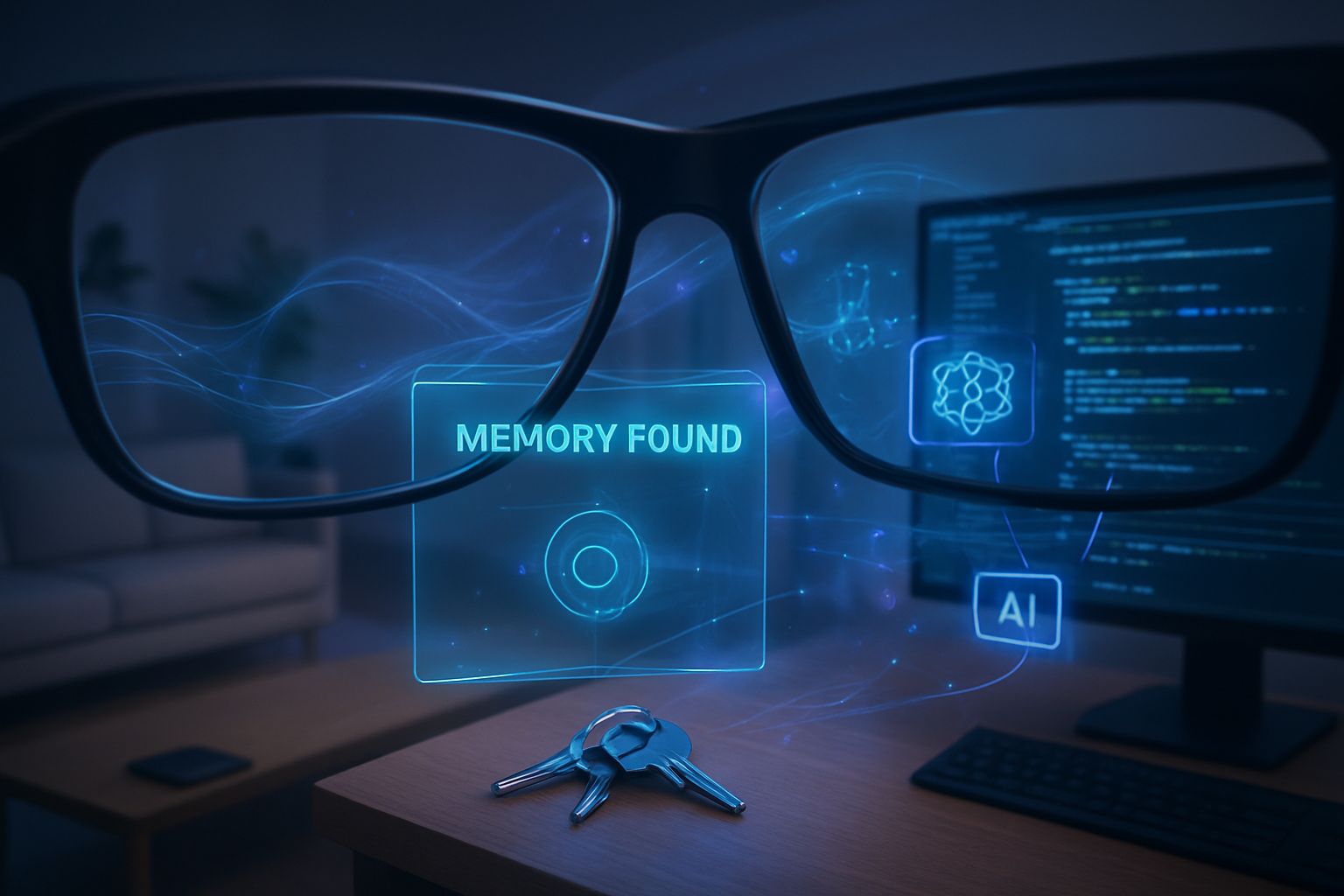
    What began as a viral demonstration at Google I/O 2024 has matured into a sophisticated suite of capabilities now integrated across the Google ecosystem. Whether it is helping a developer debug complex system code by simply looking at a monitor, or reminding a forgetful user that their car keys are tucked under a sofa cushion it "saw" twenty minutes ago, Astra is the realization of Alphabet Inc.'s (NASDAQ: GOOGL; NASDAQ: GOOG) vision for a proactive, multimodal companion. Its immediate significance lies in its ability to collapse the latency between human perception and machine intelligence, creating an interface that feels less like a tool and more like a collaborator.

    The Architecture of Perception: Gemini 2.5 Pro and Multimodal Memory

    At the heart of Project Astra’s 2025 capabilities is the Gemini 2.5 Pro model, a breakthrough in neural architecture that treats video, audio, and text as a single, continuous stream of information. Unlike previous generations of AI that processed data in discrete "chunks" or required separate models for vision and speech, Astra utilizes a native multimodal framework. This allows the assistant to maintain a latency of under 300 milliseconds—fast enough to engage in natural, fluid conversation without the awkward pauses that plagued earlier AI iterations.

    Astra’s technical standout is its Contextual Memory Graph. This feature allows the AI to build a persistent spatial and temporal map of its environment. During recent field tests, users demonstrated Astra’s ability to recall visual details from hours prior, such as identifying which shelf a specific book was placed on or recognizing a subtle change in a laboratory experiment. This differs from existing technologies like standard RAG (Retrieval-Augmented Generation) by prioritizing visual "anchors" and spatial reasoning, allowing the AI to understand the "where" and "when" of the physical world.

    The industry's reaction to Astra's full rollout has been one of cautious awe. AI researchers have praised Google’s "world model" approach, which enables the assistant to simulate outcomes before suggesting them. For instance, when viewing a complex coding environment, Astra doesn't just read the syntax; it understands the logic flow and can predict how a specific change might impact the broader system. This level of "proactive reasoning" has set a new benchmark for what is expected from large-scale AI models in late 2025.

    A New Front in the AI Arms Race: Market Implications

    The maturation of Project Astra has sent shockwaves through the tech industry, intensifying the competition between Google, OpenAI, and Microsoft (NASDAQ: MSFT). While OpenAI’s GPT-5 has made strides in complex reasoning, Google’s deep integration with the Android operating system gives Astra a strategic advantage in "ambient computing." By embedding these capabilities into the Samsung (KRX: 005930) Galaxy S25 and S26 series, Google has secured a massive hardware footprint that its rivals struggle to match.

    For startups, Astra represents both a platform and a threat. The launch of the Agent Development Kit (ADK) in mid-2025 allowed smaller developers to build specialized "Astra-like" agents for niche industries like healthcare and construction. However, the sheer "all-in-one" nature of Astra threatens to Sherlock many single-purpose AI apps. Why download a separate app for code explanation or object tracking when the system-level assistant can perform those tasks natively? This has forced a strategic pivot among AI startups toward highly specialized, proprietary data applications that Astra cannot easily replicate.

    Furthermore, the competitive pressure on Apple Inc. (NASDAQ: AAPL) has never been higher. While Apple Intelligence has focused on on-device privacy and personal context, Project Astra’s cloud-augmented "world knowledge" offers a level of real-time environmental utility that Siri has yet to fully achieve. The battle for the "Universal Assistant" title is now being fought not just on benchmarks, but on whose AI can most effectively navigate the physical realities of a user's daily life.

    Beyond the Screen: Privacy and the Broader AI Landscape

    Project Astra’s rise fits into a broader 2025 trend toward "embodied AI," where intelligence is no longer tethered to a chat interface. It represents a shift from reactive AI (waiting for a prompt) to proactive AI (anticipating a need). However, this leap forward brings significant societal concerns. An AI that "remembers where you left your keys" is an AI that is constantly recording and analyzing your private spaces. Google has addressed this with "Privacy Sandbox for Vision," which purports to process visual memory locally on-device, but skepticism remains among privacy advocates regarding the long-term storage of such intimate metadata.

    Comparatively, Astra is being viewed as the "GPT-3 moment" for vision-based agents. Just as GPT-3 proved that large language models could handle diverse text tasks, Astra has proven that a single model can handle diverse real-world visual and auditory tasks. This milestone marks the end of the "narrow AI" era, where different models were needed for translation, object detection, and speech-to-text. The consolidation of these functions into a single "world model" is perhaps the most significant architectural shift in the industry since the transformer was first introduced.

    The Future: Smart Glasses and Project Mariner

    Looking ahead to 2026, the next frontier for Project Astra is the move away from the smartphone entirely. Google’s ongoing collaboration with Samsung under the "Project Moohan" codename is expected to bear fruit in the form of Android XR smart glasses. These devices will serve as the native "body" for Astra, providing a heads-up, hands-free experience where the AI can label the world in real-time, translate street signs instantly, and provide step-by-step repair instructions overlaid on physical objects.

    Near-term developments also include the full release of Project Mariner, an agentic extension of Astra designed to handle complex web-based tasks. While Astra handles the physical world, Mariner is designed to navigate the digital one—booking multi-leg flights, managing corporate expenses, and conducting deep-dive market research autonomously. The challenge remains in "grounding" these agents to ensure they don't hallucinate actions in the physical world, a hurdle that experts predict will be the primary focus of AI safety research over the next eighteen months.

    A New Chapter in Human-Computer Interaction

    Project Astra is more than just a software update; it is a fundamental shift in the relationship between humans and machines. By successfully combining real-time multimodal understanding with long-term memory and proactive reasoning, Google has delivered a prototype for the future of computing. The ability to "look and talk" to an assistant as if it were a human companion marks the beginning of the end for the traditional graphical user interface.

    As we move into 2026, the significance of Astra in AI history will likely be measured by how quickly it becomes invisible. When an AI can seamlessly assist with code, chores, and memory without being asked, it ceases to be a "tool" and becomes part of the user's cognitive environment. The coming months will be critical as Google rolls out these features to more regions and hardware, testing whether the world is ready for an AI that never forgets and always watches.


    This content is intended for informational purposes only and represents analysis of current AI developments.

    TokenRing AI delivers enterprise-grade solutions for multi-agent AI workflow orchestration, AI-powered development tools, and seamless remote collaboration platforms.
    For more information, visit https://www.tokenring.ai/.
  • The “Operating System of Life”: How AlphaFold 3 Redefined Biology and the Drug Discovery Frontier

    The “Operating System of Life”: How AlphaFold 3 Redefined Biology and the Drug Discovery Frontier

    As of late 2025, the landscape of biological research has undergone a transformation comparable to the digital revolution of the late 20th century. At the center of this shift is AlphaFold 3, the latest iteration of the Nobel Prize-winning artificial intelligence system from Google DeepMind, a subsidiary of Alphabet Inc. (NASDAQ: GOOGL). While its predecessor, AlphaFold 2, solved the 50-year-old "protein folding problem," AlphaFold 3 has gone significantly further, acting as a universal molecular predictor capable of modeling the complex interactions between proteins, DNA, RNA, ligands, and ions.

    The immediate significance of AlphaFold 3 lies in its transition from a specialized scientific tool to a foundational "operating system" for drug discovery. By providing a high-fidelity 3D map of how life’s molecules interact, the model has effectively reduced the time required for initial drug target identification from years to mere minutes. This leap in capability has not only accelerated academic research but has also sparked a multi-billion dollar "arms race" among pharmaceutical giants and AI-native biotech startups, fundamentally altering the economics of the healthcare industry.

    From Evoformer to Diffusion: The Technical Leap

    Technically, AlphaFold 3 represents a radical departure from the architecture of its predecessors. While AlphaFold 2 relied on the "Evoformer" module to process Multiple Sequence Alignments (MSAs), AlphaFold 3 utilizes a generative Diffusion-based architecture—the same underlying technology found in AI image generators like Stable Diffusion. This shift allows the model to predict raw atomic coordinates directly, bypassing the need for rigid chemical bonding rules. The result is a system that can model over 99% of the molecular types documented in the Protein Data Bank, including complex heteromeric assemblies that were previously impossible to predict with accuracy.

    A key advancement is the introduction of the Pairformer, which replaced the MSA-heavy Evoformer. By focusing on pairwise representations—how every atom in a complex relates to every other—the model has become significantly more data-efficient. In benchmarks conducted throughout 2024 and 2025, AlphaFold 3 demonstrated a 50% improvement in accuracy for ligand-binding predictions compared to traditional physics-based docking tools. This capability is critical for drug discovery, as it allows researchers to see exactly how a potential drug molecule (a ligand) will nestle into the pocket of a target protein.

    The initial reaction from the AI research community was a mixture of awe and friction. In mid-2024, Google DeepMind faced intense criticism for publishing the research without releasing the model’s code, leading to an open letter signed by over 1,000 scientists. However, by November 2024, the company pivoted, releasing the full model code and weights for academic use. This move solidified AlphaFold 3 as the "Gold Standard" in structural biology, though it also paved the way for community-driven competitors like Boltz-1 and OpenFold 3 to emerge in late 2025, offering commercially unrestricted alternatives.

    The Commercial Arms Race: Isomorphic Labs and the "Big Pharma" Pivot

    The commercialization of AlphaFold 3 is spearheaded by Isomorphic Labs, another Alphabet subsidiary led by DeepMind co-founder Sir Demis Hassabis. By late 2025, Isomorphic has established itself as a "bellwether" for the TechBio sector. The company secured landmark partnerships with Eli Lilly (NYSE: LLY) and Novartis (NYSE: NVS), worth a combined potential value of nearly $3 billion in milestones. These collaborations have already moved beyond theoretical research, with Isomorphic confirming in early 2025 that several internal drug candidates in oncology and immunology are nearing Phase I clinical trials.

    The competitive landscape has reacted with unprecedented speed. NVIDIA (NASDAQ: NVDA) has positioned its BioNeMo platform as the central infrastructure for the industry, hosting a variety of models including AlphaFold 3 and its rivals. Meanwhile, startups like EvolutionaryScale, founded by former Meta Platforms (NASDAQ: META) researchers, have launched models like ESM3, which focus on generating entirely new proteins rather than just predicting existing ones. This has shifted the market moat: while structure prediction has become commoditized, the real competitive advantage now lies in proprietary datasets and the ability to conduct rapid "wet-lab" validation.

    The impact on market positioning is clear. Major pharmaceutical companies are no longer just "using" AI; they are rebuilding their entire R&D pipelines around it. Eli Lilly, for instance, is expected to launch a dedicated "AI Factory" in early 2026 in collaboration with NVIDIA, intended to automate the synthesis and testing of molecules designed by AlphaFold-like systems. This "Grand Convergence" of AI and robotics is expected to reduce the average cost of bringing a drug to market by 25% to 45% by the end of the decade.

    Broader Significance: From Blueprints to Biosecurity

    In the broader context of AI history, AlphaFold 3 is frequently compared to the Human Genome Project (HGP). If the HGP provided the "static blueprint" of life, AlphaFold 3 provides the "operational manual." It allows scientists to see how the biological machines coded by our DNA actually function and interact. Unlike Large Language Models (LLMs) like ChatGPT, which predict the next word in a sequence, AlphaFold 3 predicts physical reality, making it a primary engine for tangible economic and medical value.

    However, this power has raised significant ethical and security concerns. A landmark study in late 2025 highlighted the risk of "toxin paraphrasing," where AI models could be used to design synthetic variants of dangerous toxins—such as ricin—that remain functional but are invisible to current biosecurity screening software. This has led to a July 2025 U.S. government AI Action Plan focusing on dual-use risks in biology, prompting calls for a dedicated federal agency to oversee AI-facilitated biosecurity and more stringent screening for commercial DNA synthesis.

    Despite these concerns, the "Open Science" debate has largely resolved in favor of transparency. The 2024 Nobel Prize in Chemistry, awarded to Demis Hassabis and John Jumper for their work on AlphaFold, served as a "halo effect" for the industry, stabilizing venture capital confidence during a period of broader market volatility. The consensus in late 2025 is that AlphaFold 3 has successfully moved biology from a descriptive science to a predictive and programmable one.

    The Road Ahead: 4D Biology and Self-Driving Labs

    Looking toward 2026, the focus of the research community is shifting from "static snapshots" to "conformational dynamics." While AlphaFold 3 provides a 3D picture of a molecule, the next frontier is the "4D movie"—predicting how proteins move, vibrate, and change shape in response to their environment. This is crucial for targeting "undruggable" proteins that only reveal binding pockets during specific movements. Experts predict that the integration of AlphaFold 3 with physics-based molecular dynamics will be the dominant research trend of the coming year.

    Another major development on the horizon is the proliferation of Autonomous "Self-Driving" Labs (SDLs). Companies like Insilico Medicine and Recursion Pharmaceuticals are already utilizing closed-loop systems where AI designs a molecule, a robot builds and tests it, and the results are fed back into the AI to refine the next design. These labs operate 24/7, potentially increasing experimental R&D speeds by up to 100x. The industry is closely watching the first "AI-native" drug candidates, which are expected to yield critical Phase II and III trial data throughout 2026.

    The challenges remain significant, particularly regarding the "Ion Problem"—where AI occasionally misplaces ions in molecular models—and the ongoing need for experimental verification via methods like Cryo-Electron Microscopy. Nevertheless, the trajectory is clear: the first FDA approval for a drug designed from the ground up by AI is widely expected by late 2026 or 2027.

    A New Era for Human Health

    The emergence of AlphaFold 3 marks a definitive turning point in the history of science. By bridging the gap between genomic information and biological function, Google DeepMind has provided humanity with a tool of unprecedented precision. The key takeaways from the 2024–2025 period are the democratization of high-tier structural biology through open-source models and the rapid commercialization of AI-designed molecules by Isomorphic Labs and its partners.

    As we move into 2026, the industry's eyes will be on the J.P. Morgan Healthcare Conference in January, where major updates on AI-driven pipelines are expected. The transition from "discovery" to "design" is no longer a futuristic concept; it is the current reality of the pharmaceutical industry. While the risks of dual-use technology must be managed with extreme care, the potential for AlphaFold 3 to address previously incurable diseases and accelerate our understanding of life itself remains the most compelling story in modern technology.


    This content is intended for informational purposes only and represents analysis of current AI developments.

    TokenRing AI delivers enterprise-grade solutions for multi-agent AI workflow orchestration, AI-powered development tools, and seamless remote collaboration platforms.
    For more information, visit https://www.tokenring.ai/.
  • Google’s AlphaGenome: Decoding the ‘Dark Genome’ to Revolutionize Disease Prediction and Drug Discovery

    Google’s AlphaGenome: Decoding the ‘Dark Genome’ to Revolutionize Disease Prediction and Drug Discovery

    In a monumental shift for the field of computational biology, Google DeepMind, a subsidiary of Alphabet Inc. (NASDAQ: GOOGL), officially launched AlphaGenome earlier this year, a breakthrough AI model designed to decode the "dark genome." For decades, the 98% of human DNA that does not code for proteins was largely dismissed as "junk DNA." AlphaGenome changes this narrative by providing a comprehensive map of how these non-coding regions regulate gene expression, effectively acting as a master key to the complex logic that governs human health and disease.

    The launch, which took place in June 2025, represents the culmination of years of research into sequence-to-function modeling. By predicting how specific mutations in non-coding regions can trigger or prevent diseases, AlphaGenome provides clinicians and researchers with a predictive power that was previously unimaginable. This development is not just an incremental improvement; it is a foundational shift that moves genomics from descriptive observation to predictive engineering, offering a new lens through which to view cancer, cardiovascular disease, and rare genetic disorders.

    AlphaGenome is built on a sophisticated hybrid architecture that combines the local pattern-recognition strengths of Convolutional Neural Networks (CNNs) with the long-range relational capabilities of Transformers. This dual-natured approach allows the model to process up to one million base pairs of DNA in a single input—a staggering 100-fold increase over previous state-of-the-art models. While earlier tools were limited to looking at local mutations, AlphaGenome can observe how a "switch" flipped at one end of a DNA strand affects a gene located hundreds of thousands of base pairs away.

    The model’s precision is equally impressive, offering base-pair resolution that allows scientists to see the impact of a single-letter change in the genetic code. Beyond just predicting whether a mutation is "bad," AlphaGenome predicts over 11 distinct molecular modalities, including transcription start sites, histone modifications, and 3D chromatin folding. This multi-modal output provides a holistic view of the cellular environment, showing exactly how a genetic variant alters the machinery of the cell.

    This release completes what researchers are calling the "Alpha Trinity" of genomics. While AlphaFold revolutionized our understanding of protein structures and AlphaMissense identified harmful mutations in coding regions, AlphaGenome addresses the remaining 98% of the genome. By bridging the gap between DNA sequence and biological function, it provides the "regulatory logic" that the previous models lacked. Initial reactions from the research community have been overwhelmingly positive, with experts at institutions like Memorial Sloan Kettering describing it as a "paradigm shift" that finally unifies long-range genomic context with microscopic precision.

    The business implications of AlphaGenome are profound, particularly for the pharmaceutical and biotechnology sectors. Alphabet Inc. (NASDAQ: GOOGL) has positioned the model as a central pillar of its "AI for Science" strategy, offering access via the AlphaGenome API for non-commercial research. This move creates a strategic advantage by making Google’s infrastructure the default platform for the next generation of genomic discovery. Biotech startups and established giants alike are now racing to integrate these predictive capabilities into their drug discovery pipelines, potentially shaving years off the time it takes to identify viable drug targets.

    The competitive landscape is also shifting. Major tech rivals such as Microsoft (NASDAQ: MSFT) and Meta Platforms Inc. (NASDAQ: META), which have their own biological modeling initiatives like ESM-3, now face a high bar set by AlphaGenome’s multi-modal integration. For hardware providers like NVIDIA (NASDAQ: NVDA), the rise of such massive genomic models drives further demand for specialized AI chips capable of handling the intense computational requirements of "digital wet labs." The ability to simulate thousands of genetic scenarios in seconds—a process that previously required weeks of physical lab work—is expected to disrupt the traditional contract research organization (CRO) market.

    Furthermore, the model’s ability to assist in synthetic biology allows companies to "write" DNA with specific functions. This opens up new markets in personalized medicine, where therapies can be designed to activate only in specific cell types, such as a treatment that triggers only when it detects a specific regulatory signature in a cancer cell. By controlling the "operating system" of the genome, Google is not just providing a tool; it is establishing a foundational platform for the bio-economy of the late 2020s.

    Beyond the corporate and technical spheres, AlphaGenome represents a milestone in the broader AI landscape. It marks a transition from "Generative AI" focused on text and images to "Scientific AI" focused on the fundamental laws of nature. Much like AlphaGo demonstrated AI’s mastery of complex games, AlphaGenome demonstrates its ability to master the most complex code known to humanity: the human genome. This transition suggests that the next frontier of AI value lies in its application to physical and biological realities rather than purely digital ones.

    However, the power to decode and potentially "write" genomic logic brings significant ethical and societal concerns. The ability to predict disease risk with high accuracy from birth raises questions about genetic privacy and the potential for "genetic profiling" by insurance companies or employers. There are also concerns regarding the "black box" nature of deep learning; while AlphaGenome is highly accurate, understanding why it makes a specific prediction remains a challenge for researchers, which is a critical hurdle for clinical adoption where explainability is paramount.

    Comparisons to previous milestones, such as the Human Genome Project, are frequent. While the original project gave us the "map," AlphaGenome is providing the "manual" for how to read it. This leap forward accelerates the trend of "precision medicine," where treatments are tailored to an individual’s unique regulatory landscape. The impact on public health could be transformative, shifting the focus from treating symptoms to preemptively managing genetic risks identified decades before they manifest as disease.

    In the near term, we can expect a surge in "AI-first" clinical trials, where AlphaGenome is used to stratify patient populations based on their regulatory genetic profiles. This could significantly increase the success rates of clinical trials by ensuring that therapies are tested on individuals most likely to respond. Long-term, the model is expected to evolve to include epigenetic data—information on how environmental factors like diet, stress, and aging modify gene expression—which is currently a limitation of the static DNA-based model.

    The next major challenge for the DeepMind team will be integrating temporal data—how the genome changes its behavior over a human lifetime. Experts predict that within the next three to five years, we will see the emergence of "Universal Biological Models" that combine AlphaGenome’s regulatory insights with real-time health data from wearables and electronic health records. This would create a "digital twin" of a patient’s biology, allowing for continuous, real-time health monitoring and intervention.

    AlphaGenome stands as one of the most significant achievements in the history of artificial intelligence. By successfully decoding the non-coding regions of the human genome, Google DeepMind has unlocked a treasure trove of biological information that remained obscured for decades. The model’s ability to predict disease risk and regulatory function with base-pair precision marks the beginning of a new era in medicine—one where the "dark genome" is no longer a mystery but a roadmap for health.

    As we move into 2026, the tech and biotech industries will be closely watching the first wave of drug targets identified through the AlphaGenome API. The long-term impact of this development will likely be measured in the lives saved through earlier disease detection and the creation of highly targeted, more effective therapies. For now, AlphaGenome has solidified AI’s role not just as a tool for automation, but as a fundamental partner in scientific discovery, forever changing our understanding of the code of life.


    This content is intended for informational purposes only and represents analysis of current AI developments.

    TokenRing AI delivers enterprise-grade solutions for multi-agent AI workflow orchestration, AI-powered development tools, and seamless remote collaboration platforms.
    For more information, visit https://www.tokenring.ai/.
  • The Biological Turing Point: How AlphaFold 3 and the Nobel Prize Redefined the Future of Medicine

    The Biological Turing Point: How AlphaFold 3 and the Nobel Prize Redefined the Future of Medicine

    In the final weeks of 2025, the scientific community is reflecting on a year where the boundary between computer science and biology effectively vanished. The catalyst for this transformation was AlphaFold 3, the revolutionary AI model unveiled by Google DeepMind and its commercial sibling, Isomorphic Labs. While its predecessor, AlphaFold 2, solved the 50-year-old "protein folding problem," AlphaFold 3 has gone further, providing a universal "digital microscope" capable of predicting the interactions of nearly all of life’s molecules, including DNA, RNA, and complex drug ligands.

    The immediate significance of this breakthrough was cemented in October 2024, when the Royal Swedish Academy of Sciences awarded the Nobel Prize in Chemistry to Demis Hassabis and John Jumper of Google DeepMind (NASDAQ: GOOGL). By December 2025, this "Nobel-prize-winning breakthrough" is no longer just a headline; it is the operational backbone of a global pharmaceutical industry that has seen early-stage drug discovery timelines plummet by as much as 80%. We are witnessing the transition from descriptive biology—observing what exists—to predictive biology—simulating how life works at an atomic level.

    From Folding Proteins to Modeling Life: The Technical Leap

    AlphaFold 3 represents a fundamental architectural shift from its predecessor. While AlphaFold 2 relied on the "Evoformer" to process evolutionary data, AlphaFold 3 introduces the Pairformer and a sophisticated Diffusion Module. Unlike previous versions that predicted the angles of amino acid chains, the new diffusion-based architecture works similarly to generative AI models like Midjourney or DALL-E. It starts with a random "cloud" of atoms and iteratively refines their positions until they settle into a highly accurate 3D structure. This allows the model to predict raw (x, y, z) coordinates for every atom in a system, providing a more fluid and realistic representation of molecular movement.

    The most transformative capability of AlphaFold 3 is its ability to model "co-folding." Previous tools required researchers to have a pre-existing structure of a protein before they could "dock" a drug molecule into it. AlphaFold 3 predicts the protein, the DNA, the RNA, and the drug ligand simultaneously as they interact. On the PoseBusters benchmark, a standard for molecular docking, AlphaFold 3 demonstrated a 50% improvement in accuracy over traditional physics-based methods. For the first time, an AI model has consistently outperformed specialized software that relies on complex energy calculations, making it the most powerful tool ever created for understanding the chemical "handshake" between a drug and its target.

    Initial reactions from the research community were a mix of awe and scrutiny. When the model was first announced in May 2024, some scientists criticized the decision to keep the code closed-source. However, following the release of the model weights for academic use in late 2024, the "AlphaFold Server" has become a ubiquitous tool. Researchers are now using it to design everything from plastic-degrading enzymes to drought-resistant crops, proving that the model's reach extends far beyond human medicine into the very fabric of global sustainability.

    The AI Gold Rush in Big Pharma and Biotech

    The commercial implications of AlphaFold 3 have triggered a massive strategic realignment among tech giants and pharmaceutical leaders. Alphabet (NASDAQ: GOOGL), through Isomorphic Labs, has positioned itself as the primary gatekeeper of this technology for commercial use. By late 2025, Isomorphic Labs has secured multi-billion dollar partnerships with industry titans like Eli Lilly (NYSE: LLY) and Novartis (NYSE: NVS). These collaborations are focused on "undruggable" targets—proteins associated with cancer and neurodegenerative diseases that had previously defied traditional chemistry.

    The competitive landscape has also seen significant moves from other major players. NVIDIA (NASDAQ: NVDA) has capitalized on the demand for the massive compute power required to run these simulations, offering its BioNeMo platform as a specialized cloud for biomolecular AI. Meanwhile, Microsoft (NASDAQ: MSFT) and Meta (NASDAQ: META) have supported open-source efforts like OpenFold and ESMFold, attempting to provide alternatives to DeepMind’s ecosystem. The disruption to traditional Contract Research Organizations (CROs) is palpable; companies that once specialized in slow, manual lab-based structure determination are now racing to integrate AI-driven "dry labs" to stay relevant.

    Market positioning has shifted from who has the best lab equipment to who has the best data and the most efficient AI workflows. For startups, the barrier to entry has changed; a small team with access to AlphaFold 3 and high-performance computing can now perform the kind of target validation that previously required a hundred-million-dollar R&D budget. This democratization of discovery is leading to a surge in "AI-native" biotech firms that are expected to dominate the IPO market in the coming years.

    A New Era of Biosecurity and Ethical Challenges

    The wider significance of AlphaFold 3 is often compared to the Human Genome Project (HGP). If the HGP provided the "parts list" of the human body, AlphaFold 3 has provided the "functional blueprint." It has moved the AI landscape from "Large Language Models" (LLMs) to "Large Biological Models" (LBMs), shifting the focus of generative AI from generating text and images to generating the physical building blocks of life. This represents a "Turing Point" where AI is no longer just simulating human intelligence, but mastering the "intelligence" of nature itself.

    However, this power brings unprecedented concerns. In 2025, biosecurity experts have raised alarms about the potential for "dual-use" applications. Just as AlphaFold 3 can design a life-saving antibody, it could theoretically be used to design novel toxins or pathogens that are "invisible" to current screening software. This has led to a global debate over "biological guardrails," with organizations like the Agentic AI Foundation calling for mandatory screening of all AI-generated DNA sequences before they are synthesized in a lab.

    Despite these concerns, the impact on global health is overwhelmingly positive. AlphaFold 3 is being utilized to accelerate the development of vaccines for neglected tropical diseases and to understand the mechanisms of antibiotic resistance. It has become the flagship of the "Generative AI for Science" movement, proving that AI’s greatest contribution to humanity may not be in chatbots, but in the eradication of disease and the extension of the human healthspan.

    The Horizon: AlphaFold 4 and Self-Driving Labs

    Looking ahead, the next frontier is the "Self-Driving Lab" (SDL). In late 2025, we are seeing the first integrations of AlphaFold 3 with robotic laboratory automation. In these closed-loop systems, the AI generates a hypothesis for a new drug, commands a robotic arm to synthesize the molecule, tests its effectiveness, and feeds the results back into the model to refine the next design—all without human intervention. This "autonomous discovery" is expected to be the standard for drug development by the end of the decade.

    Rumors are already circulating about AlphaFold 4, which is expected to move beyond static structures to model the "dynamics" of entire cellular environments. While AlphaFold 3 can model a complex of a few molecules, the next generation aims to simulate the "molecular machinery" of an entire cell in real-time. This would allow researchers to see not just how a drug binds to a protein, but how it affects the entire metabolic pathway of a cell, potentially eliminating the need for many early-stage animal trials.

    The most anticipated milestone for 2026 is the result of the first human clinical trials for drugs designed entirely by AlphaFold-based systems. Isomorphic Labs and its partners are currently advancing candidates for TRBV9-positive T-cell autoimmune conditions and specific hard-to-treat cancers. If these trials succeed, it will mark the first time a Nobel-winning AI discovery has directly led to a life-saving treatment in the clinic, forever changing the pace of medical history.

    Conclusion: The Legacy of a Scientific Revolution

    AlphaFold 3 has secured its place as one of the most significant technological achievements of the 21st century. By bridging the gap between the digital and the biological, it has provided humanity with a tool of unprecedented precision. The 2024 Nobel Prize was not just an award for past achievement, but a recognition of a new era where the mysteries of life are solved at the speed of silicon.

    As we move into 2026, the focus will shift from the models themselves to the real-world outcomes they produce. The key takeaways from this development are clear: the timeline for drug discovery has been permanently shortened, the "undruggable" is becoming druggable, and the integration of AI into the physical sciences is now irreversible. In the coming months, the world will be watching the clinical trial pipelines and the emerging biosecurity regulations that will define how we handle the power to design life itself.


    This content is intended for informational purposes only and represents analysis of current AI developments.

    TokenRing AI delivers enterprise-grade solutions for multi-agent AI workflow orchestration, AI-powered development tools, and seamless remote collaboration platforms.
    For more information, visit https://www.tokenring.ai/.