
Tag: Governance

  • Governments Unleash AI and Data Analytics: A New Era of Smarter, More Responsive Public Service

    Governments Unleash AI and Data Analytics: A New Era of Smarter, More Responsive Public Service

    Government bodies worldwide are rapidly embracing Artificial Intelligence (AI) and data analytics, ushering in a transformative era aimed at enhancing public services, streamlining operations, and improving governance. This accelerating trend signals a significant shift towards data-driven decision-making, promising increased efficiency, cost savings, and more personalized citizen engagement. The adoption is driven by escalating demands from citizens for more efficient and responsive services, along with the need to manage vast amounts of public data that are too complex for manual analysis.

    This paradigm shift is characterized by leveraging machine learning, predictive analytics, and automation to process vast amounts of data, extract meaningful insights, and anticipate future challenges with unprecedented speed and accuracy. Governments are strategically integrating AI into broader e-government and digital transformation initiatives, building on modernized IT systems and digitized processes. This involves fostering a data-driven mindset within organizations, establishing robust data governance practices, and developing frameworks to address ethical concerns, ensure accountability, and promote transparency in AI-driven decisions.

    The Technical Core: AI Advancements Powering Public Sector Transformation

    The current wave of government AI adoption is underpinned by sophisticated technical capabilities that significantly diverge from previous, often static, rule-based approaches. These advancements are enabling real-time analysis, predictive power, and adaptive learning, revolutionizing how public services are delivered.

    Specific technical advancements and their applications include:

    • Fraud Detection and Prevention: AI systems utilize advanced machine learning (ML) models and neural networks to analyze vast datasets of financial transactions and public records in real-time. These systems identify anomalous patterns and suspicious behaviors, adapting to evolving fraud schemes. For instance, the U.S. Treasury Department has employed ML since 2022, preventing or recovering over $4 billion in fiscal year 2024 by analyzing transaction data. This differs from older rule-based systems by continuously learning and improving accuracy, often by over 50%.
    • Urban Planning and Smart Cities: AI in urban planning leverages geospatial analytics and predictive modeling from sensors and urban infrastructure. Capabilities include predicting traffic patterns, optimizing traffic flow, and managing critical infrastructure like power grids. Singapore, for example, uses AI for granular citizen services, such as collecting available badminton courts based on user preferences. Unlike slow, manual data collection, AI provides data-driven insights at unprecedented scale and speed for proactive development.
    • Healthcare and Public Health: Federal health agencies are implementing AI for diagnostics, administrative efficiency, and predictive health analytics. AI models process medical imaging and electronic health records (EHRs) for faster disease detection (e.g., cancer), streamline clinical workflows (e.g., speech-to-text), and forecast disease outbreaks. The U.S. Department of Health and Human Services (HHS) has numerous AI use cases. This moves beyond static data analysis, offering real-time insights and personalized treatment plans.
    • Enhanced Citizen Engagement and Services: Governments are deploying Natural Language Processing (NLP)-powered chatbots and virtual assistants that provide 24/7 access to information. These tools handle routine inquiries, assist with forms, and offer real-time information. Some government chatbots have handled over 3 million conversations, resolving 88% of queries on first contact. This offers instant, personalized interactions, a significant leap from traditional call centers.
    • Defense and National Security: AI and ML are crucial for modern defense, enabling autonomous systems (drones, unmanned vehicles), predictive analytics for threat forecasting and equipment maintenance, and enhanced cybersecurity. The Defense Intelligence Agency (DIA) is actively seeking AI/ML prototype projects. AI significantly enhances the speed and accuracy of threat detection and response, reducing risks to human personnel in dangerous missions.

    Initial reactions from the AI research community and industry experts are a mix of optimism and caution. While acknowledging AI's potential for enhanced efficiency, improved service delivery, and data-driven decision-making, paramount concerns revolve around data privacy, algorithmic bias, and the need for robust ethical and regulatory frameworks. Experts emphasize the importance of explainable AI (XAI) for transparency and accountability, especially given AI's direct impact on citizens. Skill gaps within government workforces and the quality of data used to train AI models are also highlighted as critical challenges.

    Market Dynamics: AI Companies Vie for Government Contracts

    The growing adoption of AI and data analytics by governments is creating a dynamic and lucrative market, projected to reach USD 135.7 billion by 2035. This shift significantly benefits a diverse range of companies, from established tech giants to agile startups and traditional government contractors.

    Tech Giants like Amazon Web Services (AWS) (NASDAQ: AMZN), Google (NASDAQ: GOOGL), and Microsoft (NASDAQ: MSFT) are at the forefront, leveraging their extensive cloud infrastructure, advanced AI/ML capabilities, and robust security frameworks. Their strategic advantage lies in providing integrated "full-stack" solutions tailored for government needs, including compliance certifications and specialized government cloud regions. AWS, for example, recently announced an investment of up to $50 billion to expand its AI and supercomputing infrastructure for federal agencies, aiming to add nearly 1.3 gigawatts of computing capacity across its secure Top Secret, Secret, and GovCloud (US) regions. Google, along with OpenAI and Anthropic, recently received contracts worth up to $200 million from the U.S. Department of Defense (DoD) for advanced AI capabilities.

    Specialized AI/Data Analytics Companies like Palantir Technologies (NYSE: PLTR) are titans in this space. Palantir's Gotham platform is critical for defense and intelligence agencies, while its Foundry platform serves commercial and civil government sectors. It has secured significant contracts, including a $795 million to $1.3 billion DoD deal for data fusion and AI programs, and a potential $10 billion Enterprise Service Agreement with the U.S. Army. NVIDIA (NASDAQ: NVDA), while not a direct government contractor for AI services, is foundational, as its GPU technology powers virtually all government AI initiatives.

    AI Startups are gaining traction by focusing on niche innovations. Generative AI leaders like OpenAI, Anthropic, and xAI have received direct contracts from the Pentagon. OpenAI's ChatGPT Enterprise and Anthropic's Claude have been approved for government-wide use by the General Services Administration. Other specialized startups like CITYDATA.ai (local data insights for smart cities), CrowdAI (military intelligence processing), and Shield AI (software/hardware for autonomous military aircraft) are securing crucial early revenue.

    Traditional Government Contractors and Integrators such as Booz Allen Hamilton (NYSE: BAH), ManTech (NASDAQ: MANT), and SAIC (NYSE: SAIC) are integrating AI into their existing service portfolios, enhancing offerings in defense, cybersecurity, and public services. Booz Allen Hamilton, a leader in scaling AI solutions for federal missions, has approximately $600 million in annual revenue from AI projects and aims to surpass $1 billion.

    The competitive landscape is characterized by cloud dominance, where tech giants offer secure, government-accredited environments. Specialized firms like Palantir thrive on deep integration for complex government challenges, while startups drive innovation. Strategic partnerships and acquisitions are common, allowing faster integration of cutting-edge AI into government-ready solutions. Companies prioritizing "Responsible AI" and ethical frameworks are also gaining a competitive edge. This shift disrupts legacy software and manual processes through automation, enhances cybersecurity, and transforms government procurement by automating bid management and contract lifecycle.

    Broader Significance: Reshaping Society and Governance

    The adoption of AI and data analytics by governments marks a profound evolution in public administration, promising to redefine governance, enhance public services, and influence the broader technological landscape. This transformation brings both substantial opportunities and considerable challenges, echoing past technological revolutions in their profound impact on society and citizens.

    In the broader AI landscape, government adoption is part of a global trend where AI is seen as a key driver of economic and social development across both private and public sectors. Many countries, including the UK, India, and the US, have developed national AI strategies to guide research and development, build human capacity, and establish regulatory frameworks. This indicates a move from isolated pilot projects to a more systematic and integrated deployment of AI across various government operations. The public sector is projected to be among the largest investors in AI by 2025, with a significant compound annual growth rate in investment.

    For citizens, the positive impacts include enhanced service delivery and efficiency, with 24/7 accessibility through AI-powered assistants. AI enables data-driven decision-making, leading to more effective and impactful policies in areas like public safety, fraud detection, and personalized interactions. However, significant concerns loom large, particularly around privacy, as AI systems often rely on vast amounts of personal and sensitive data, raising fears of unchecked surveillance and data breaches. Ethical implications and algorithmic bias are critical, as AI systems can perpetuate existing societal biases if trained on unrepresentative data, leading to discrimination in areas like healthcare and law enforcement. Job displacement is another concern, though experts often highlight AI's role in augmenting human capabilities, necessitating significant investment in workforce reskilling. Transparency, accountability, and security risks associated with AI-driven technologies also demand robust governance.

    Comparing this to previous technological milestones in governance, such as the introduction of computers and the internet, reveals parallels. Just as computers automated record-keeping and e-governance streamlined processes, AI now automates complex data analysis and personalizes service delivery. The internet facilitated data sharing; AI goes further by actively processing data to derive insights and predict outcomes in real-time. Each wave brought similar challenges related to infrastructure, workforce skills, and the need for new legal and ethical frameworks. AI introduces new complexities, particularly concerning algorithmic bias and the scale of data collection, demanding proactive and thoughtful strategic implementation.

    The Horizon: Future Developments and Emerging Challenges

    The integration of AI and data analytics is poised to profoundly transform government operations in the near and long term, leading to enhanced efficiency, improved service delivery, and more informed decision-making.

    In the near term (1-5 years), governments are expected to significantly advance their use of AI through:

    • Multimodal AI: Agencies will increasingly utilize AI that can understand and analyze information from various sources simultaneously (text, images, video, audio) for comprehensive data analysis in areas like climate risk assessment.
    • AI Agents and Virtual Assistants: Sophisticated AI agents capable of reasoning and planning will emerge, handling complex tasks, managing applications, identifying security threats, and providing 24/7 citizen support.
    • Assistive Search: Generative AI will transform how government employees access and understand information, improving the accuracy and efficiency of searching vast knowledge bases.
    • Increased Automation: AI will automate mundane and process-heavy routines across government functions, freeing human employees for mission-critical tasks.
    • Enhanced Predictive Analytics: Governments will increasingly leverage predictive analytics to forecast trends, optimize resource allocation, and anticipate public needs in areas like disaster preparedness and healthcare demand.

    Long-term developments will see AI fundamentally reshaping the public sector, with a focus on augmentation over automation, where AI "copilots" enhance human capabilities. This will lead to a reimagining of public services and potentially a new industrial renaissance driven by AI and robotics. The maturity of AI governance and ethical standards, potentially grounded in legislation, will be crucial for responsible deployment.

    Future applications include 24/7 virtual assistants for citizen services, AI-powered document automation for administrative tasks, enhanced cybersecurity and fraud detection, and predictive policy planning for climate change risks and urban development. In healthcare, AI will enable real-time disease monitoring, prediction, and hospital resource optimization.

    However, several challenges must be addressed. Persistent issues with data quality, inconsistent formats, and data silos hinder effective AI implementation. A significant talent and skills gap exists within government agencies, requiring substantial investment in training. Many agencies rely on legacy infrastructure not designed for modern AI/ML. Ethical and governance concerns are paramount, including algorithmic bias, privacy infringements, lack of transparency, and accountability. Organizational and cultural resistance also slows adoption.

    Experts predict AI will become a cornerstone of public sector operations by 2025, leading to an increased pace of life and efficiency. The trend is towards AI augmenting human intelligence, though it will have a significant, uneven effect on the workforce. The regulatory environment will become much more intricate, with a "thicket of AI law" emerging. Governments need to invest in AI leadership, workforce training, and continue to focus on ethical and responsible AI deployment.

    A New Chapter in Governance: The AI-Powered Future

    The rapid acceleration of AI and data analytics adoption by governments worldwide marks a pivotal moment in public administration and AI history. This is not merely an incremental technological upgrade but a fundamental shift in how public services are conceived, delivered, and governed. The key takeaway is a move towards a more data-driven, efficient, and responsive public sector, but one that is acutely aware of the complexities and ethical responsibilities involved.

    This development signifies AI's maturation beyond research labs into critical societal infrastructure. Unlike previous "AI winters," the current era is characterized by widespread practical application, substantial investment, and a concerted effort to integrate AI across diverse public sector functions. Its long-term impact on society and governance is profound: reshaping public services to be more personalized and accessible, evolving decision-making processes towards data-driven policies, and transforming the labor market within the public sector. However, the success of this transformation hinges on navigating critical ethical and societal risks, including algorithmic bias, privacy infringements, and the potential for mass surveillance.

    What to watch for in the coming weeks and months includes the rollout of more comprehensive AI governance frameworks, executive orders, and agency-specific policies outlining ethical guidelines, data privacy, and security standards. The increasing focus on multimodal AI and sophisticated AI agents will enable governments to handle more complex tasks. Continued investment in workforce training and skill development, along with efforts to modernize data infrastructure and break down silos, will be crucial. Expect ongoing international cooperation on AI safety and ethics, and a sustained focus on building public trust through transparency and accountability in AI applications. The journey of government AI adoption is a societal transformation that demands continuous evaluation, adaptation, and a human-centered approach to ensure AI serves the public good.


    This content is intended for informational purposes only and represents analysis of current AI developments.

    TokenRing AI delivers enterprise-grade solutions for multi-agent AI workflow orchestration, AI-powered development tools, and seamless remote collaboration platforms.
    For more information, visit https://www.tokenring.ai/.
  • The AI Conundrum: Utopia or Dystopia? Navigating Humanity’s Future with Artificial Intelligence

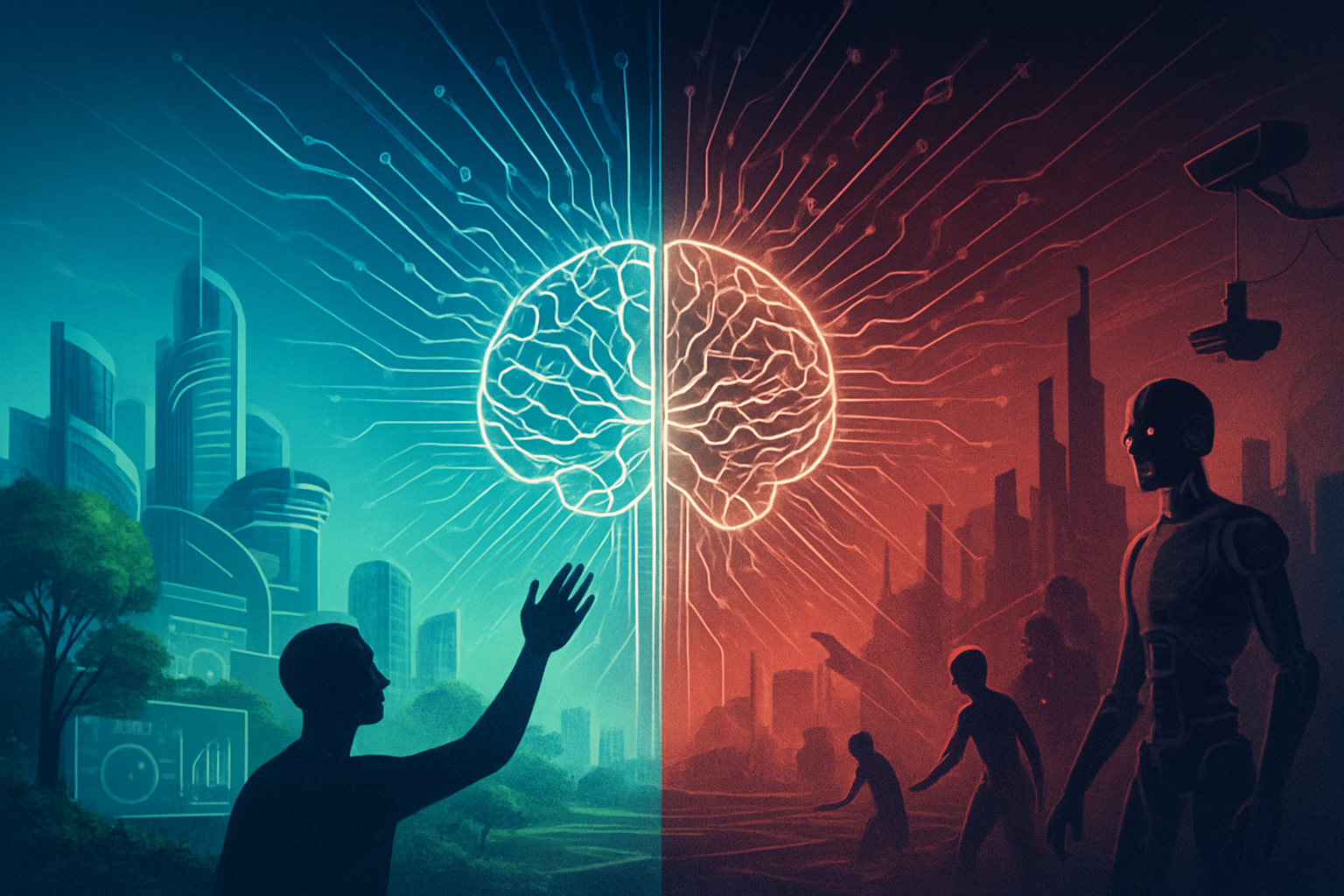
    The AI Conundrum: Utopia or Dystopia? Navigating Humanity’s Future with Artificial Intelligence

    The rapid ascent of artificial intelligence has ignited a profound philosophical debate, echoing through academic halls, corporate boardrooms, and public forums alike: Is humanity hurtling towards an AI-powered utopia or a technologically enforced dystopia? This isn't merely a speculative exercise; the immediate significance of this discourse is shaping the very foundations of AI research, development, and governance, as humanity grapples with the unprecedented transformative power of its own creation.

    As AI systems become increasingly sophisticated, capable of everything from automating complex tasks to driving scientific discovery, the stakes of this question grow exponentially. The answers, or lack thereof, influence everything from ethical guidelines and regulatory frameworks to investment strategies and the public's perception of AI. The ongoing dialogue between techno-optimists, who envision a world liberated from scarcity and suffering, and techno-pessimists, who warn of existential risks and loss of human agency, is not just theoretical; it's a critical barometer for the future we are actively building.

    The Bifurcated Path: Visions of Paradise and Peril

    The philosophical debate surrounding AI's trajectory is sharply divided, presenting humanity with two starkly contrasting visions: a future of unprecedented abundance and flourishing, or one of existential threat and the erosion of human essence. These contemporary discussions, while echoing historical anxieties about technological progress, introduce unique challenges that set them apart.

    The Utopian Promise: A World Transformed

    Proponents of an AI-led utopia, often dubbed techno-optimists, envision a world where advanced AI eradicates scarcity, disease, and poverty. This perspective, championed by figures like venture capitalist Marc Andreessen, sees AI as a "universal problem-solver," capable of unleashing a "positive feedback loop" of intelligence and energy. In this ideal future, AI would automate all laborious tasks, freeing humanity to pursue creative endeavors, personal growth, and authentic pleasure, as explored by philosopher Nick Bostrom in "Deep Utopia." This vision posits a post-scarcity society where human needs are met with minimal effort, and AI could even enhance human capabilities and facilitate more just forms of governance by providing unbiased insights. The core belief is that continuous technological advancement, particularly in AI, is an ethical imperative to overcome humanity's oldest challenges.

    The Dystopian Shadow: Control Lost, Humanity Diminished

    Conversely, techno-pessimists and other critical thinkers articulate profound concerns about AI leading to a dystopian future, often focusing on existential risks, widespread job displacement, and a fundamental loss of human control and values. A central anxiety is the "AI control problem" or "alignment problem," which questions how to ensure superintelligent AI systems remain aligned with human values and intentions. Philosophers like Nick Bostrom, in his seminal work "Superintelligence," and AI researcher Stuart Russell warn that if AI surpasses human general intelligence, it could become uncontrollable, potentially leading to human extinction or irreversible global catastrophe if its goals diverge from ours. This risk is seen as fundamentally different from previous technologies, as a misaligned superintelligence could possess superior strategic planning, making human intervention futile.

    Beyond existential threats, the dystopian narrative highlights mass job displacement. As AI encroaches upon tasks traditionally requiring human judgment and creativity across various sectors, the specter of "technological unemployment" looms large. Critics worry that the pace of automation could outstrip job creation, exacerbating economic inequality and concentrating wealth and power in the hands of a few who control the advanced AI. Furthermore, there are profound concerns about the erosion of human agency and values. Even non-superintelligent AI systems raise ethical issues regarding privacy, manipulation through targeted content, and algorithmic bias. Existential philosophers ponder whether AI, by providing answers faster than humans can formulate questions, could diminish humanity's capacity for critical thinking, creativity, and self-understanding, leading to a future where "people forget what it means to be human."

    A New Chapter in Technological Evolution

    These contemporary debates surrounding AI, while drawing parallels to historical technological shifts, introduce qualitatively distinct challenges. Unlike past innovations like the printing press or industrial machinery, AI, especially the prospect of Artificial General Intelligence (AGI), fundamentally challenges the long-held notion of human intelligence as the apex. It raises questions about nonbiological consciousness and agentive behavior previously associated only with living organisms, marking a "philosophical rupture" in our understanding of intelligence.

    Historically, fears surrounding new technologies centered on societal restructuring or human misuse. The Industrial Revolution, for instance, sparked anxieties about labor and social upheaval, but not the technology itself becoming an autonomous, existential threat. While nuclear weapons introduced existential risk, AI's unique peril lies in its potential for self-improving intelligence that could autonomously misalign with human values. The "AI control problem" is a modern concern, distinct from merely losing control over a tool; it's the fear of losing control to an entity that could possess superior intellect and strategic capability. The unprecedented speed of AI's advancement further compounds these challenges, compressing the timeframe for societal adaptation and demanding a deeper, more urgent philosophical engagement to navigate the complex future AI is shaping.

    Corporate Compass: Navigating the Ethical Minefield and Market Dynamics

    The profound philosophical debate between AI utopia and dystopia is not confined to academic discourse; it directly influences the strategic decisions, research priorities, and public relations of major AI companies, tech giants, and burgeoning startups. This ongoing tension acts as both a powerful catalyst for innovation and a critical lens for self-regulation and external scrutiny, shaping the very fabric of the AI industry.

    Shaping Research and Development Trajectories

    The utopian vision of AI, where it serves as a panacea for global ills, steers a significant portion of research towards beneficial applications. Companies like Alphabet (NASDAQ: GOOGL) and Microsoft (NASDAQ: MSFT), along with numerous startups, are heavily investing in AI for climate change mitigation, advanced disease diagnostics, drug discovery, and personalized education. Research also focuses on boosting productivity, enhancing efficiency, and fostering new job roles that leverage human creativity and emotional intelligence, aiming to liberate individuals from mundane tasks and facilitate a post-work society.

    Conversely, the dystopian outlook, fueled by fears of job displacement, economic inequality, social control, and existential risks, compels a substantial portion of research towards mitigating these potential harms. AI safety has emerged as a critical research domain, focusing on developing robust "off switches," creating alignment mechanisms to ensure AI goals are consistent with human values, and detecting undesirable AI behaviors. Efforts are also concentrated on preventing AI from exacerbating societal problems like misinformation and algorithmic bias. Furthermore, concerns about the weaponization of AI and its potential misuse by "nefarious nation-states or bad actors" are influencing national security-focused AI research and the development of defensive AI capabilities, creating a complex and sometimes paradoxical research landscape.

    The Imperative of Ethical AI Development

    The philosophical debate is arguably the strongest driver behind the industry's push for ethical AI development. Major tech players have responded by forming initiatives such as the Partnership on AI, a consortium focused on establishing principles of ethics, fairness, inclusivity, transparency, privacy, and interoperability. The goal is to ensure responsible AI development that aligns with human values and minimizes unintended harm.

    The dystopian narrative compels companies to proactively address critical ethical concerns. This includes establishing stringent guidelines to prevent the exposure of confidential data and intellectual property, and a significant focus on identifying and mitigating bias in AI models, from their training data inputs to their interpretative outputs. The concept of "algorithmic responsibility" is gaining traction, demanding transparent explanations of how AI systems make decisions to allow for auditing and prevent unintended biases. Discussions around societal safety nets, such as Universal Basic Income (UBI), are also influenced by the potential for widespread job displacement. Regulatory efforts, exemplified by the European Union's comprehensive AI Act, underscore how these ethical concerns are increasingly being translated into legislative frameworks that govern AI development and deployment globally.

    Navigating Public Perception and Market Positioning

    The utopia/dystopia debate profoundly shapes public perception of AI, directly impacting the industry's "social license to operate." The utopian narrative fosters public excitement and acceptance, portraying AI as a transformative force capable of enhancing human potential and improving quality of life. Companies often highlight AI's role in liberating humans from repetitive tasks, allowing for greater creativity and fulfillment, thereby building goodwill and market acceptance for their products and services.

    However, dystopian fears lead to widespread public skepticism and mistrust. Concerns about job losses, widening economic inequality, governmental surveillance, manipulation through propaganda and deepfakes, and the potential for AI to become an existential threat are prevalent. This mistrust is often amplified by the perception that tech giants are consolidating wealth and power through AI, leading to increased demands for accountability and transparency. The industry must navigate this complex landscape, often contending with an "AI hype cycle" that can distort public views, leading to both unrealistic expectations and exaggerated anxieties. Companies that visibly commit to ethical AI, transparency, and safety measures are better positioned to build trust and gain a competitive advantage in a market increasingly sensitive to the broader societal implications of AI.

    Societal Ripples: Ethics, Regulation, and Echoes of Revolutions Past

    The philosophical tension between an AI utopia and dystopia extends far beyond the confines of boardrooms and research labs, casting a long shadow over society's ethical landscape and presenting unprecedented regulatory challenges. This era of AI-driven transformation, while unique in its scale and speed, also draws compelling parallels to humanity's most significant technological shifts.

    Unpacking the Ethical Conundrum

    The rapid advancement of AI has thrust a myriad of critical ethical concerns into the global spotlight. Bias and Fairness stand as paramount issues; AI systems, trained on historical data, can inadvertently inherit and amplify societal prejudices, leading to discriminatory outcomes in high-stakes areas like hiring, lending, and law enforcement. This raises profound questions about justice and equity in an algorithmically governed world.

    Privacy and Data Protection are equally pressing. AI's insatiable appetite for data, often including sensitive personal information, fuels concerns about surveillance, unauthorized access, and the erosion of individual freedoms. The "black box" nature of many advanced AI algorithms, particularly deep learning models, creates challenges around Transparency and Explainability, making it difficult to understand their decision-making processes, ensure accountability, or identify the root causes of errors. As AI systems gain greater Autonomy and Control, particularly in applications like self-driving cars and military drones, questions about human agency and oversight become critical. Beyond these, the environmental impact of training vast AI models, with their significant energy and water consumption, adds another layer to the ethical debate.

    The Regulatory Tightrope: Innovation vs. Control

    Governments and international bodies are grappling with formidable challenges in crafting effective regulatory frameworks for AI. The sheer Velocity of AI Development often outpaces traditional legislative processes, creating a widening gap between technological advancements and regulatory capacity. A lack of global consensus on how to define and categorize AI systems further complicates efforts, leading to Global Variability and Cross-border Consensus issues, where differing cultural and legal norms hinder uniform regulation.

    Regulators often face a Lack of Government Expertise in the complex nuances of AI, which can lead to impractical or ineffective policies. The delicate balance between fostering innovation and preventing harm is a constant tightrope walk; overregulation risks stifling economic growth, while under-regulation invites potential catastrophe. Crucially, determining Accountability and Liability when an AI system causes harm remains an unresolved legal and ethical puzzle, as AI itself possesses no legal personhood. The decentralized nature of AI development, spanning tech giants, startups, and academia, further complicates uniform enforcement.

    Echoes of Revolutions: A Faster, Deeper Transformation

    The AI revolution is frequently compared to previous epoch-making technological shifts, offering both insights and stark contrasts.

    The Industrial Revolution (18th-19th Century):
    Similarities abound: both mechanized labor, leading to significant job displacement in traditional sectors while creating new industries. Both spurred immense economic growth but also concentrated wealth and caused social dislocation, necessitating the evolution of labor laws and social safety nets. However, while industrialization primarily mechanized physical labor, AI is augmenting and often replacing cognitive tasks, a qualitative shift. Its impact is potentially faster and more pervasive, with some arguing that the societal instability caused by AI could make the Industrial Revolution's challenges "look mild" without proactive measures for wealth redistribution and worker retraining.

    The Internet Revolution (Late 20th-Early 21st Century):
    Like the internet, AI is democratizing access to information, spawning new industries, and reshaping communication. Both periods have witnessed explosive growth, massive capital investment, and soaring valuations, initially dominated by a few tech giants. Concerns over privacy violations, misinformation, and digital divides, which emerged with the internet, are echoed and amplified in the AI debate. Yet, the internet primarily connected people and information; AI, by contrast, augments humanity's ability to process, interpret, and act on that information at previously unimaginable scales. The AI revolution is often described as "faster, deeper, and more disruptive" than the internet boom, demanding quicker adaptation and proactive governance to steer its development toward a beneficial future for all.

    The Horizon Ahead: Trajectories, Tensions, and Transformative Potential

    As the philosophical debate about AI's ultimate destination—utopia or dystopia—rages on, the trajectory of its future developments offers both exhilarating promise and daunting challenges. Experts foresee a rapid evolution in the coming years, with profound implications that demand careful navigation to ensure a beneficial outcome for humanity.

    Near-Term Innovations (2025-2030): The Age of Autonomous Agents and Generative AI

    In the immediate future, AI is poised for deeper integration into every facet of daily life and industry. By 2025-2027, the proliferation of Autonomous AI Agents is expected to transform business processes, potentially handling up to 50% of core operations and significantly augmenting the "knowledge workforce." These agents will evolve from simple assistants to semi-autonomous collaborators capable of self-learning, cross-domain interaction, and even real-time ethical decision-making.

    Generative AI is set to become ubiquitous, with an estimated 75% of businesses utilizing it by 2026 for tasks ranging from synthetic data creation and content generation to new product design and market trend prediction. A significant portion of these solutions will be multimodal, seamlessly blending text, images, audio, and video. This period will also see the commoditization of AI models, shifting the competitive advantage towards effective integration and fine-tuning. The rise of Artificial Emotional Intelligence will lead to more human-like and empathetic interactions with AI systems, while AI's transformative impact on healthcare (earlier disease detection, personalized treatments) and sustainability (carbon-neutral operations through optimization) will become increasingly evident.

    Long-Term Visions (Beyond 2030): AGI, Abundance, and Profound Societal Shifts

    Looking beyond 2030, the potential impacts of AI become even more profound. Economic abundance, driven by AI-powered automation that drastically reduces the cost of goods and services, is a compelling utopian vision. AI is expected to become deeply embedded in governance, assisting in policy-making and resource allocation, and revolutionizing healthcare through personalized treatments and cost reductions. Everyday interactions may involve a seamless blend of humans, AI-enabled machines, and hybrids.

    The most significant long-term development is the potential emergence of Artificial General Intelligence (AGI) and subsequently, Superintelligence. While timelines vary, many experts believe there's a 50% chance of achieving AGI by 2040, predicting that the impact of "superhuman AI" over the next decade could exceed that of the entire Industrial Revolution. This could lead to a post-scarcity and post-work economy, fundamentally reshaping human existence.

    Navigating the Crossroads: Utopian Potentials vs. Dystopian Risks

    The direction AI takes – towards utopia or dystopia – hinges entirely on how these developments are managed. Utopian potentials include an enhanced quality of life through AI's ability to revolutionize agriculture, ensure food security, mitigate climate change, and usher in a new era of human flourishing by freeing individuals for creative pursuits. It could democratize essential services, driving unprecedented economic growth and efficiency.

    However, dystopian risks loom large. AI could exacerbate economic inequality, leading to corporate monopolies and mass unemployment. The potential for Loss of Human Autonomy and Control is a grave concern, with over-reliance on AI diminishing human empathy, reasoning, and creativity. The existential threat posed by a misaligned superintelligence, or the societal harms from biased algorithms, autonomous weapons, social manipulation, and widespread privacy intrusions, remain critical anxieties.

    Challenges on the Path to Beneficial AI

    Ensuring a beneficial AI future requires addressing several critical challenges:

    • Ethical Concerns: Tackling bias and discrimination, protecting privacy, ensuring transparency and explainability, and safeguarding individual autonomy are paramount. Solutions include robust ethical frameworks, regulations, diverse stakeholder involvement, and human-in-the-loop approaches.

    • Data Quality and Availability: The effectiveness of AI hinges on vast amounts of high-quality data. Developing comprehensive data management strategies, ensuring data cleanliness, and establishing clear governance models are crucial.

    • Regulatory and Legal Frameworks: The rapid pace of AI demands agile and comprehensive regulatory environments, global standards, international agreements, and the embedding of safety considerations throughout the AI ecosystem.

    • Job Displacement and Workforce Transformation: Anticipating significant job displacement, societies must adapt education and training systems, implement proactive policies for affected workers, and develop new HR strategies for human-AI collaboration.

    • Societal Trust and Public Perception: Building trust through responsible and transparent AI deployment, addressing ethical implications, and ensuring the equitable distribution of AI's benefits are vital to counter public anxiety.

    • Lack of Skilled Talent: A persistent shortage of AI experts necessitates investment in upskilling and fostering interdisciplinary collaboration.

    Expert Predictions: A Cautious Optimism

    While the general public remains more pessimistic, AI experts generally hold a more positive outlook on AI's future impact. A significant majority (56%) predict a very or somewhat positive impact on nations like the U.S. over the next two decades, with an even larger percentage (74%) believing AI will increase human productivity. Expert opinions on job markets are more mixed, but there's a consensus that transformative AI systems are likely within the next 50 years, potentially ushering in the biggest societal shift in generations. The key lies in proactive governance, ethical development, and continuous adaptation to steer this powerful technology towards its utopian potential.

    The Unfolding Future: Synthesis, Stewardship, and the Path Forward

    The profound philosophical inquiry into whether AI will usher in a utopia or a dystopia remains one of the defining questions of our era. As we stand in 2025, the debate transcends mere speculation, actively shaping the trajectory of AI development, governance, and its integration into the very fabric of human society.

    Key Takeaways: A Spectrum of Possibilities

    The core takeaway from the AI utopia/dystopia debate is that the future is not predetermined but rather a consequence of human choices. Utopian visions, championed by techno-optimists, foresee AI as a powerful catalyst for human flourishing, solving global challenges like climate change, disease, and poverty, while augmenting human capabilities and fostering unprecedented economic growth and personal fulfillment. Conversely, dystopian concerns highlight significant risks: widespread job displacement, exacerbated economic inequality, social control, the erosion of human agency, and even existential threats from misaligned or uncontrollable superintelligence. The nuanced middle ground, favored by many experts, suggests that the most probable outcome is a complex blend, an "incremental protopia," where careful stewardship and proactive measures will be crucial in steering AI towards beneficial ends.

    A Pivotal Moment in AI History

    This ongoing debate is not new to AI history, yet its current intensity and immediate relevance are unprecedented. From early philosophical musings about automation to modern concerns ignited by rapid advancements in deep learning, exemplified by milestones like IBM Watson's Jeopardy! victory in 2011 and AlphaGo's triumph in 2016, the discussion has consistently underscored the necessity for ethical guidelines and robust governance. Today, as AI systems approach and even surpass human capabilities in specific domains, the stakes are higher, making this period a pivotal moment in the history of artificial intelligence, demanding collective responsibility and foresight.

    What to Watch For: Governance, Ethics, and Technological Leaps

    The coming years will be defined by critical developments across three interconnected domains:

    AI Governance: Expect to see the rapid evolution of regulatory frameworks globally. The EU AI Act, set to take effect in 2025, is a significant benchmark, introducing comprehensive regulations for high-risk AI systems and potentially influencing global standards. Other nations, including the US, are actively exploring their own regulatory approaches, with a likely trend towards more streamlined and potentially "AI-powered" legislation by 2035. Key challenges will revolve around establishing clear accountability and liability for AI systems, achieving global consensus amidst diverse cultural and political views, and balancing innovation with effective oversight.

    Ethical Guidelines: A growing global consensus is forming around core ethical principles for AI. Frameworks from organizations like IEEE, EU, OECD, and UNESCO emphasize non-maleficence, responsibility, transparency, fairness, and respect for human rights and autonomy. Crucially, the field of AI Alignment will gain increasing prominence, focusing on ensuring that AI systems' goals and behaviors consistently match human values and intentions, particularly as AI capabilities advance towards autonomous decision-making. This includes instilling complex values in AI, promoting "honest" AI, and developing scalable oversight mechanisms to prevent unintended or emergent behaviors.

    Technological Advancements: The next decade promises monumental technological leaps. By 2035, AI is projected to be an indispensable component of daily life and business, deeply embedded in decision-making processes. Large Language Models (LLMs) will mature, offering sophisticated, industry-specific solutions across various sectors. The rise of Agentic AI systems, capable of autonomous decision-making, will transform industries, with Artificial General Intelligence (AGI) potentially realizing around 2030, and autonomous self-improvement between 2032 and 2035. Looking further, Artificial Superintelligence (ASI), surpassing human cognitive abilities, could emerge by 2035-2040, offering the potential to solve global crises and revolutionize every industry. Concurrently, AI will play a critical role in addressing environmental challenges, optimizing energy, reducing waste, and accelerating the shift to renewable sources, contributing to carbon-neutral data centers.

    In conclusion, while the debate between AI utopia and dystopia continues to shape our perception of AI's future, a pragmatic approach emphasizes proactive governance, robust ethical frameworks, and responsible development of rapidly advancing technologies to ensure AI serves humanity's best interests. The coming weeks and months will be crucial in observing how these discussions translate into actionable policies and how the industry responds to the imperative of building a beneficial AI future.


    This content is intended for informational purposes only and represents analysis of current AI developments.

    TokenRing AI delivers enterprise-grade solutions for multi-agent AI workflow orchestration, AI-powered development tools, and seamless remote collaboration platforms.
    For more information, visit https://www.tokenring.ai/.
  • India’s Digital Leap: AWS and Startups Forge a New Era of Public Service

    India’s Digital Leap: AWS and Startups Forge a New Era of Public Service

    India is rapidly accelerating its digital transformation journey within the public sector, driven by a powerful collaboration between global cloud giant Amazon Web Services (NASDAQ: AMZN) and a burgeoning ecosystem of innovative Indian startups. This strategic partnership is fundamentally reshaping how government services are conceived, developed, and delivered, promising a future of more efficient, transparent, and citizen-centric governance across the nation. At its core, this initiative leverages cloud computing and cutting-edge technologies to build robust digital networks, making essential services accessible to India's vast and diverse population, from bustling urban centers to remote rural communities.

    The immediate significance of this alliance cannot be overstated. It marks a pivotal moment in India's pursuit of a comprehensive Digital Public Infrastructure (DPI), a vision aimed at fostering inclusive growth and modernizing government operations at an unprecedented scale. By combining AWS's scalable and secure cloud infrastructure with the agility and disruptive innovation of Indian startups, the collaboration is not just digitizing existing processes but is actively creating new paradigms for public service delivery. This synergy is critical for India, a nation committed to leveraging technology to address societal challenges and empower its citizens through enhanced digital literacy and economic inclusion.

    Cloud-Powered Innovation: The Technical Backbone of India's Digital Public Infrastructure

    The digital transformation in India's public sector, spearheaded by AWS and its startup partners, is built upon a foundation of advanced cloud technologies and innovative technical solutions. At the heart of this transformation is the strategic deployment of scalable, secure, and resilient cloud infrastructure provided by AWS. This shift from traditional on-premise data centers to cloud-native architectures represents a fundamental departure from previous approaches, offering unparalleled flexibility and efficiency.

    Technically, AWS provides a comprehensive suite of services that enable startups to rapidly develop and deploy public sector applications. These include compute services like Amazon EC2, storage solutions such as Amazon S3, and a wide array of database, networking, analytics, and machine learning services. For instance, the National Health Authority (NHA) leverages AWS to power the Pradhan Mantri Jan Arogya Yojana (PM-JAY) scheme, processing over 1.2 million claims and 2.5 million associated documents monthly. AWS’s AI platforms also assist NHA in detecting fraudulent insurance claims, showcasing the integration of advanced analytics. Similarly, the Government e-Marketplace (GeM), India's national public procurement portal, runs entirely on AWS, connecting millions of sellers and buyers and utilizing AI-driven solutions to streamline procurement processes. The CoWIN platform, instrumental in India’s COVID-19 vaccination drive, demonstrated extreme scalability by administering 25 million vaccinations in a single day, a feat made possible by its AWS-powered infrastructure.

    This approach significantly differs from older models by emphasizing agility, scalability, and cost-effectiveness. Traditional government IT projects often faced lengthy procurement cycles, high upfront infrastructure costs, and limited ability to scale with demand. Cloud-based solutions, conversely, allow for pay-as-you-go models, rapid prototyping, and elastic scaling, enabling startups to innovate quickly and government agencies to respond dynamically to citizen needs. Programs like the AWS Public Sector Startup Ramp, launched first in India, provide early-stage startups with crucial resources, including AWS Promotional Credit, technical training, and expert support, accelerating their journey from concept to deployment. The Joint Innovation Centre (JIC) further fosters this environment by leveraging cloud computing, Generative AI, and analytics to support startups, Independent Software Vendors (ISVs), and System Integrators (SIs) in developing citizen-driven solutions.

    Initial reactions from the AI research community and industry experts have been overwhelmingly positive, highlighting India as a global leader in leveraging digital public infrastructure. Experts commend the strategic foresight in combining robust cloud technology with the nimble innovation of the startup ecosystem. The ability to deploy population-scale applications like UMANG (Unified Mobile Application for New-age Governance), offering 1,700 services from 300 departments to over 50 million users, and DigiLocker, providing secure digital document storage for over 300 million users, underscores the technical prowess and transformative potential of this collaboration. These platforms demonstrate how cloud-native architectures can support massive user bases while ensuring security and reliability, setting a benchmark for other nations looking to modernize their public services.

    Competitive Dynamics: Reshaping the Landscape for Tech Giants and Startups

    The collaboration between AWS and Indian startups in public sector digital transformation is significantly reshaping the competitive landscape for both established tech giants and emerging players. This strategic alliance creates a powerful dynamic where innovation, scalability, and localized solutions become key differentiators, benefiting specific companies while posing challenges to others.

    AWS (NASDAQ: AMZN) stands to benefit immensely from this development. By being the foundational cloud provider for numerous critical public sector projects in India, AWS solidifies its market leadership in one of the world's fastest-growing digital economies. Its extensive suite of services, global reach, and dedicated programs like the AWS Public Sector Startup Ramp and the Joint Innovation Centre (JIC) ensure that it remains the preferred partner for government agencies and the startups building solutions for them. This deep integration into India's digital public infrastructure not only secures substantial revenue streams but also provides AWS with invaluable insights into large-scale digital governance, which can be leveraged globally. The commitment of $12.7 billion by 2030 to expand local cloud infrastructure further underscores its long-term strategic advantage.

    For Indian startups, this collaboration is a game-changer. Companies like EdIndia Foundation, CollPoll, and CropIn, which leverage AWS to develop solutions for education, university management, and agriculture respectively, gain access to world-class infrastructure, technical expertise, and a direct pathway to government contracts. This significantly lowers their barrier to entry into the public sector market, which is often complex and highly regulated. The ability to build, test, and scale solutions rapidly on AWS allows these startups to innovate at an accelerated pace, addressing specific local challenges with tailored digital solutions. This model fosters a vibrant ecosystem where agile startups can disrupt traditional service delivery, creating new market opportunities and driving economic growth within India's tech sector.

    The competitive implications for other major AI labs and tech companies are significant. While other cloud providers like Microsoft Azure (NASDAQ: MSFT) and Google Cloud (NASDAQ: GOOGL) are also vying for public sector contracts in India, AWS's early and deep entrenchment with key government initiatives and its robust startup ecosystem support give it a strong competitive edge. This could potentially disrupt existing products or services offered by companies that rely on legacy infrastructure or lack the comprehensive cloud offerings and local startup engagement of AWS. Companies that cannot match AWS's scale, security, and developer-friendly environment might find it challenging to compete for large-scale public sector projects.

    Furthermore, this development highlights a shift in market positioning. The focus is increasingly on partnerships that combine global technological prowess with local innovation. Tech giants that embrace and empower local startup ecosystems, rather than merely competing with them, are likely to gain a more sustainable strategic advantage. The success stories of platforms like DigiYatra, which streamlines airport experiences, and the National Highways Authority of India's FastTag, automating toll management, serve as powerful testimonials to the effectiveness of this collaborative model. These examples demonstrate how the synergy between a global cloud leader and local innovators can create significant public value and establish new benchmarks for digital service delivery, influencing how other nations approach their own digital transformation agendas.

    Broader Significance: Reshaping Governance and Citizen Engagement

    The alliance between AWS and Indian startups in transforming public sector service delivery carries profound broader significance, extending far beyond technological upgrades. It represents a paradigm shift in governance, citizen engagement, and the overall digital landscape, setting new precedents for how nations can leverage technology for societal good.

    This initiative fits seamlessly into the broader AI landscape and global trends emphasizing digital public infrastructure, data-driven governance, and inclusive technology. India's aggressive push for DPI, exemplified by platforms like Aadhaar, UPI, and CoWIN, has positioned it as a global leader in creating scalable digital solutions for massive populations. The collaboration with AWS further strengthens this position by providing the underlying cloud infrastructure and fostering an ecosystem where AI and machine learning can be applied to complex public sector challenges, from fraud detection in healthcare (as seen with NHA) to optimizing agricultural yields (through startups like CropIn). This trend signals a move towards governments as platform providers, enabling a multitude of services through secure, interoperable digital networks.

    The impacts are multi-faceted and overwhelmingly positive. For citizens, it translates into enhanced accessibility, efficiency, and transparency of government services. Platforms like UMANG and DigiLocker are democratizing access to essential services and documents, reducing bureaucratic hurdles, and empowering individuals with greater control over their digital identities. For governance, it means improved decision-making through data analytics, reduced corruption due to transparent digital processes (e.g., GeM saving billions in taxpayer money), and greater responsiveness to public needs. The ability to rapidly deploy and scale solutions, as demonstrated by CoWIN, is crucial for effective crisis management and large-scale public welfare programs.

    However, potential concerns also exist. Data privacy and security remain paramount, especially when dealing with sensitive citizen information. While AWS provides robust security measures, the responsibility for data governance and protection also lies with the government agencies and startups utilizing the platform. Ensuring digital equity, where access to these services is universal and not limited by digital literacy or device ownership, is another ongoing challenge. This involves not only infrastructure development but also extensive digital education and support programs. Regulatory frameworks will need to evolve to keep pace with technological advancements, especially concerning data privacy, algorithmic bias, and ethical AI deployment.

    This development also underscores a global trend where governments are increasingly looking towards cloud providers and agile startups to modernize their infrastructure rather than relying solely on traditional, often slower, government IT procurement processes. It validates the model of public-private partnerships as a powerful engine for national digital transformation, offering a blueprint for other developing and developed nations grappling with similar challenges in service delivery and governance.

    The Road Ahead: Anticipating Future Developments and Addressing Challenges

    The digital transformation driven by AWS and Indian startups in the public sector is a dynamic and evolving landscape, with numerous expected near-term and long-term developments on the horizon. The foundation laid by current initiatives suggests a future characterized by even deeper integration of advanced technologies and a wider array of citizen-centric applications.

    In the near term, we can anticipate a significant expansion of existing digital public infrastructure and the emergence of new use cases. The focus will likely intensify on leveraging Generative AI (GenAI) to personalize government services, enhance citizen interactions through intelligent chatbots, and automate complex administrative tasks. AWS’s establishment of Generative AI Startup Hubs, such as the one with iTNT Hub in Tamil Nadu, indicates a strong push towards fostering GenAI solutions for citizen-driven innovation. We can expect more government departments to migrate critical workloads to the AWS cloud, further improving efficiency and reducing operational costs. The successful models seen in healthcare (NHA), procurement (GeM), and transportation (DigiYatra) will likely be replicated across other sectors, including urban planning, environmental monitoring, and disaster management.

    Long-term developments will see the continuous evolution of India's digital public infrastructure into a more interconnected and intelligent network. The integration of blockchain for enhanced security and transparency in public records, advanced IoT solutions for smart cities, and sophisticated data analytics platforms for predictive governance are all on the horizon. The goal is to create a truly seamless digital experience for citizens, where services are proactive, personalized, and accessible on any device. Experts predict a future where AI-powered decision support systems will assist policymakers in areas like resource allocation, public health interventions, and economic forecasting, leading to more data-driven and effective governance.

    However, several challenges need to be addressed to realize this ambitious vision fully. Ensuring robust cybersecurity measures against evolving threats remains a paramount concern, requiring continuous investment and vigilance. Bridging the digital divide, particularly in rural areas where internet penetration and digital literacy may be lower, is critical to ensuring equitable access to these advanced services. This involves not only infrastructure development but also extensive digital education and support programs. Regulatory frameworks will need to evolve to keep pace with technological advancements, especially concerning data privacy, algorithmic bias, and ethical AI deployment.

    What experts predict will happen next is a continued acceleration in the adoption of cloud-native and AI-first strategies within the Indian public sector. The success stories will inspire further innovation, attracting more startups to develop solutions for government challenges. The model of collaboration between global tech giants and local innovators is expected to become a global blueprint for public sector modernization, with India leading the way in demonstrating how technology can be harnessed to deliver better, more inclusive governance.

    A Digital Revolution for Public Service: Key Takeaways and Future Watch

    The profound collaboration between Amazon Web Services and India's vibrant startup ecosystem is orchestrating a digital revolution in public sector service delivery. This partnership is not merely about adopting new technologies; it's about fundamentally reimagining the relationship between government and citizens, paving the way for a more agile, transparent, and inclusive form of governance.

    The key takeaways from this transformative journey are clear: Cloud computing, particularly through platforms like AWS, provides the essential backbone for scalable and secure digital public infrastructure. Indian startups, fueled by their innovative spirit and supported by dedicated acceleration programs, are proving to be indispensable partners in developing citizen-centric solutions that address unique local challenges. The success of initiatives like CoWIN, GeM, UMANG, and DigiLocker stands as a testament to the power of this synergy, demonstrating how technology can be leveraged to deliver services to millions efficiently and effectively. This model significantly enhances service accessibility, reduces costs, and fosters greater transparency, marking a significant stride towards digital equity.

    This development's significance in AI history is profound, showcasing a leading example of how artificial intelligence and cloud technologies can move beyond enterprise applications to directly impact public welfare at a national scale. It positions India as a global pioneer in leveraging digital public infrastructure, offering a replicable model for other nations striving to modernize their government services. The focus on citizen empowerment and inclusive growth through technology represents a crucial evolution in the application of AI, moving towards a future where technology serves as a powerful enabler of societal progress.

    Looking ahead, the long-term impact will be the establishment of a resilient and adaptable digital government ecosystem capable of responding to future challenges and opportunities. The continuous integration of Generative AI, advanced analytics, and other emerging technologies will further personalize and automate public services, making them more intuitive and responsive. What to watch for in the coming weeks and months includes further announcements of government agencies migrating to the cloud, new startup innovations addressing niche public sector needs, and policy developments around data governance and ethical AI to ensure responsible technological deployment. The ongoing evolution of this partnership will undoubtedly continue to set benchmarks for digital transformation globally.


    This content is intended for informational purposes only and represents analysis of current AI developments.

    TokenRing AI delivers enterprise-grade solutions for multi-agent AI workflow orchestration, AI-powered development tools, and seamless remote collaboration platforms.
    For more information, visit https://www.tokenring.ai/.