Tag: GPT-5.2

  • The Great Convergence: Artificial Analysis Index v4.0 Reveals a Three-Way Tie for AI Supremacy

    The Great Convergence: Artificial Analysis Index v4.0 Reveals a Three-Way Tie for AI Supremacy

    The landscape of artificial intelligence has reached a historic "frontier plateau" with the release of the Artificial Analysis Intelligence Index v4.0 on January 8, 2026. For the first time in the history of the index, the gap between the world’s leading AI models has narrowed to a statistical tie, signaling a shift from a winner-take-all race to a diversified era of specialized excellence. OpenAI’s GPT-5.2, Anthropic’s Claude Opus 4.5, and Google (Alphabet Inc., NASDAQ: GOOGL) Gemini 3 Pro have emerged as the dominant trio, each scoring within a two-point margin on the index’s rigorous new scoring system.

    This convergence marks the end of the "leaderboard leapfrogging" that defined 2024 and 2025. As the industry moves away from saturated benchmarks like MMLU-Pro, the v4.0 Index introduces a "headroom" strategy, resetting the top scores to provide a clearer view of the incremental gains in reasoning and autonomy. The immediate significance is clear: enterprises no longer have a single "best" model to choose from, but rather a trio of powerhouses that excel in distinct, high-value domains.

    The Power Trio: GPT-5.2, Claude 4.5, and Gemini 3 Pro

    The technical specifications of the v4.0 leaders reveal a fascinating divergence in architectural philosophy despite their similar scores. OpenAI’s GPT-5.2 took the nominal top spot with 50 points, largely driven by its new "xhigh" reasoning mode. This setting allows the model to engage in extended internal computation—essentially "thinking" for longer periods before responding—which has set a new gold standard for abstract reasoning and professional logic. While its inference speed at this setting is a measured 187 tokens per second, its ability to draft complex, multi-layered reports remains unmatched.

    Anthropic, backed significantly by Amazon (NASDAQ: AMZN), followed closely with Claude Opus 4.5 at 49 points. Claude has cemented its reputation as the "ultimate autonomous agent," leading the industry with a staggering 80.9% on the SWE-bench Verified benchmark. This model is specifically optimized for production-grade code generation and architectural refactoring, making it the preferred choice for software engineering teams. Its "Precision Effort Control" allows users to toggle between rapid response and deep-dive accuracy, providing a more granular user experience than its predecessors.

    Google, under the umbrella of Alphabet (NASDAQ: GOOGL), rounded out the top three with Gemini 3 Pro at 48 points. Gemini continues to dominate in "Deep Think" efficiency and multimodal versatility. With a massive 1-million-token context window and native processing for video, audio, and images, it remains the most capable model for large-scale data analysis. Initial reactions from the AI research community suggest that while GPT-5.2 may be the best "thinker," Gemini 3 Pro is the most versatile "worker," capable of digesting entire libraries of documentation in a single prompt.

    Market Fragmentation and the End of the Single-Model Strategy

    The "Three-Way Tie" is already causing ripples across the tech sector, forcing a strategic pivot for major cloud providers and AI startups. Microsoft (NASDAQ: MSFT), through its close partnership with OpenAI, continues to hold a strong position in the enterprise productivity space. However, the parity shown in the v4.0 Index has accelerated the trend of "fragmentation of excellence." Enterprises are increasingly moving away from single-vendor lock-in, instead opting for multi-model orchestrations that utilize GPT-5.2 for legal and strategic work, Claude 4.5 for technical infrastructure, and Gemini 3 Pro for multimedia and data-heavy operations.

    For Alphabet (NASDAQ: GOOGL), the v4.0 results are a major victory, proving that their native multimodal approach can match the reasoning capabilities of specialized LLMs. This has stabilized investor confidence after a turbulent 2025 where OpenAI appeared to have a wider lead. Similarly, Amazon (NASDAQ: AMZN) has seen a boost through its investment in Anthropic, as Claude Opus 4.5’s dominance in coding benchmarks makes AWS an even more attractive destination for developers.

    The market is also witnessing a "Smiling Curve" in AI costs. While the price of GPT-4-level intelligence has plummeted by nearly 1,000x over the last two years, the cost of "frontier" intelligence—represented by the v4.0 leaders—remains high. This is due to the massive compute resources required for the "thinking time" that models like GPT-5.2 now utilize. Startups that can successfully orchestrate these high-cost models to perform specific, high-ROI tasks are expected to be the biggest beneficiaries of this new era.

    Redefining Intelligence: AA-Omniscience and the CritPt. Reality Check

    One of the most discussed aspects of the Index v4.0 is the introduction of two new benchmarks: AA-Omniscience and CritPt (Complex Research Integrated Thinking – Physics Test). These were designed to move past simple memorization and test the actual limits of AI "knowledge" and "research" capabilities. AA-Omniscience evaluates models across 6,000 questions in niche professional domains like law, medicine, and engineering. Crucially, it heavily penalizes hallucinations and rewards models that admit they do not know an answer. Claude 4.5 and GPT-5.2 were the only models to achieve positive scores, highlighting that most AI still struggles with professional-grade accuracy.

    The CritPt benchmark has proven to be the most humbling test in AI history. Designed by over 60 physicists to simulate doctoral-level research challenges, no model has yet scored above 10%. Gemini 3 Pro currently leads with a modest 9.1%, while GPT-5.2 and Claude 4.5 follow in the low single digits. This "brutal reality check" serves as a reminder that while current AI can "chat" like a PhD, it cannot yet "research" like one. It effectively refutes the more aggressive AGI (Artificial General Intelligence) timelines, showing that there is still a significant gap between language processing and scientific discovery.

    These benchmarks reflect a broader trend in the AI landscape: a shift from quantity of data to quality of reasoning. The industry is no longer satisfied with a model that can summarize a Wikipedia page; it now demands models that can navigate the "Critical Point" where logic meets the unknown. This shift is also driving new safety concerns, as the ability to reason through complex physics or biological problems brings with it the potential for misuse in sensitive research fields.

    The Horizon: Agentic Workflows and the Path to v5.0

    Looking ahead, the focus of AI development is shifting from chatbots to "agentic workflows." Experts predict that the next six to twelve months will see these models transition from passive responders to active participants in the workforce. With Claude 4.5 leading the charge in coding autonomy and Gemini 3 Pro handling massive multimodal contexts, the foundation is laid for AI agents that can manage entire software projects or conduct complex market research with minimal human oversight.

    The next major challenge for the labs will be breaking the "10% barrier" on the CritPt benchmark. This will likely require new training paradigms that move beyond next-token prediction toward true symbolic reasoning or integrated simulation environments. There is also a growing push for on-device frontier models, as companies seek to bring GPT-5.2-level reasoning to local hardware to address privacy and latency concerns.

    As we move toward the eventual release of Index v5.0, the industry will be watching for the first model to successfully bridge the gap between "high-level reasoning" and "scientific innovation." Whether OpenAI, Anthropic, or Google will be the first to break the current tie remains the most anticipated question in Silicon Valley.

    A New Era of Competitive Parity

    The Artificial Analysis Intelligence Index v4.0 has fundamentally changed the narrative of the AI race. By revealing a three-way tie at the summit, it has underscored that the path to AGI is not a straight line but a complex, multi-dimensional climb. The convergence of GPT-5.2, Claude 4.5, and Gemini 3 Pro suggests that the low-hanging fruit of model scaling may have been harvested, and the next breakthroughs will come from architectural innovation and specialized training.

    The key takeaway for 2026 is that the "AI war" is no longer about who is first, but who is most reliable, efficient, and integrated. In the coming weeks, watch for a flurry of enterprise announcements as companies reveal which of these three giants they have chosen to power their next generation of services. The "Frontier Plateau" may be a temporary resting point, but it is one that defines a new, more mature chapter in the history of artificial intelligence.


    This content is intended for informational purposes only and represents analysis of current AI developments.

    TokenRing AI delivers enterprise-grade solutions for multi-agent AI workflow orchestration, AI-powered development tools, and seamless remote collaboration platforms.
    For more information, visit https://www.tokenring.ai/.

  • OpenAI Declares ‘Code Red’ as GPT-5.2 Launches to Reclaim AI Supremacy

    OpenAI Declares ‘Code Red’ as GPT-5.2 Launches to Reclaim AI Supremacy

    SAN FRANCISCO — In a decisive move to re-establish its dominance in an increasingly fractured artificial intelligence market, OpenAI has officially released GPT-5.2. The new model series, internally codenamed "Garlic," arrived on December 11, 2025, following a frantic internal "code red" effort to counter aggressive breakthroughs from rivals Google and Anthropic. Featuring a massive 256k token context window and a specialized "Thinking" engine for multi-step reasoning, GPT-5.2 marks a strategic shift for OpenAI as it moves away from general-purpose assistants toward highly specialized, agentic professional tools.

    The launch comes at a critical juncture for the AI pioneer. Throughout 2025, OpenAI faced unprecedented pressure as Google’s Gemini 3 and Anthropic’s Claude 4.5 began to eat into its enterprise market share. The "code red" directive, issued by CEO Sam Altman earlier this month, reportedly pivoted the entire company’s focus toward the core ChatGPT experience, pausing secondary projects in advertising and hardware to ensure GPT-5.2 could meet the rising bar for "expert-level" reasoning. The result is a tiered model system that aims to provide the most reliable long-form logic and agentic execution currently available in the industry.

    Technical Prowess: The Dawn of the 'Thinking' Engine

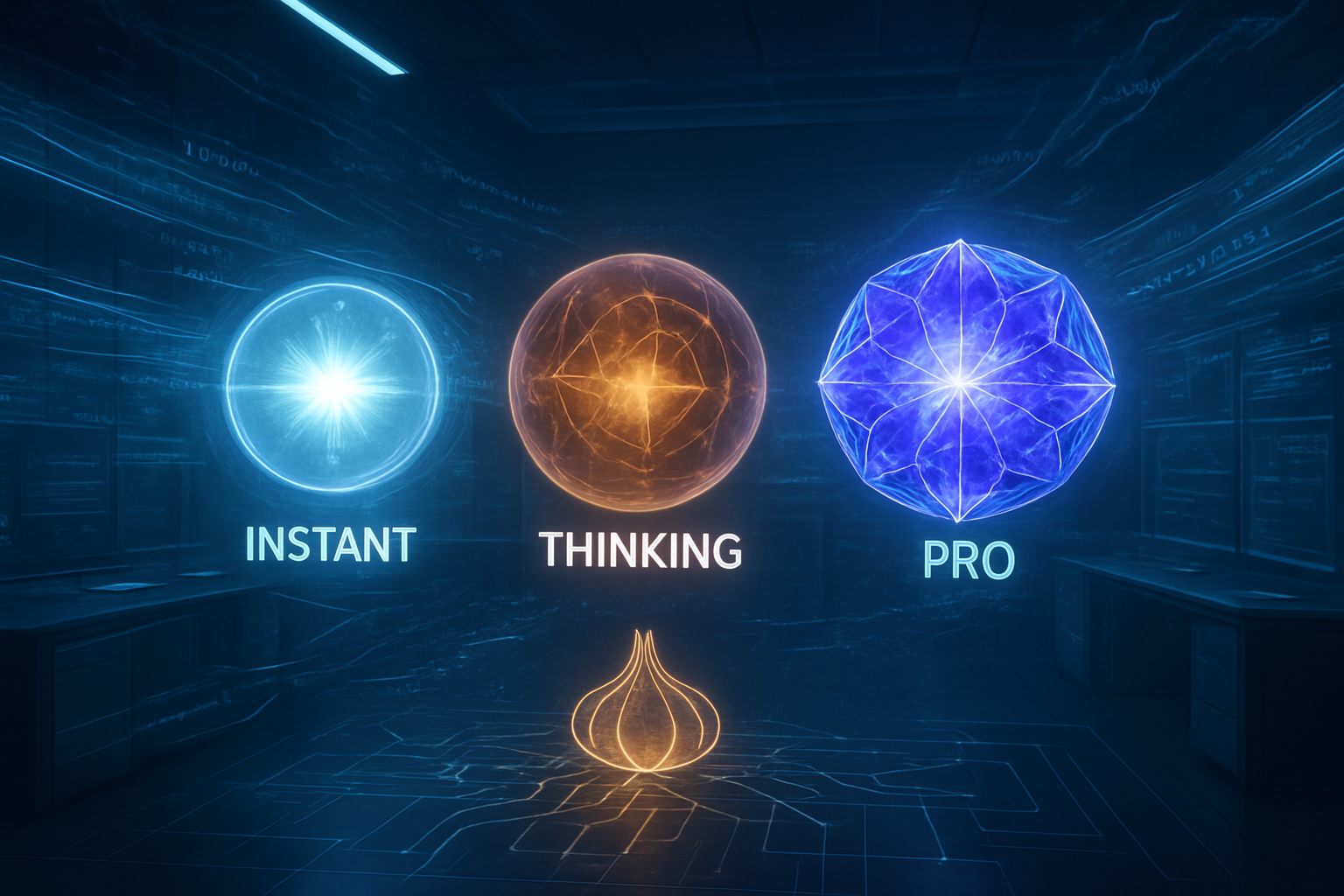
    The technical architecture of GPT-5.2 represents a departure from the "one-size-fits-all" approach of previous generations. OpenAI has introduced three distinct variants: GPT-5.2 Instant, optimized for low-latency tasks; GPT-5.2 Thinking, the flagship reasoning model; and GPT-5.2 Pro, an enterprise-grade powerhouse designed for scientific and financial modeling. The "Thinking" variant is particularly notable for its new "Reasoning Level" parameter, which allows users to dictate how much compute time the model should spend on a problem. At its highest settings, the model can engage in minutes of internal "System 2" deliberation to plan and execute complex, multi-stage workflows without human intervention.

    Key to this new capability is a reliable 256k token context window. While competitors like Meta (NASDAQ: META) have experimented with multi-million token windows, OpenAI has focused on "perfect recall," achieving near 100% accuracy across the full 256k span in internal "needle-in-a-haystack" testing. For massive enterprise datasets, a new /compact endpoint allows for context compaction, effectively extending the usable range to 400k tokens. In terms of benchmarks, GPT-5.2 has set a new high bar, achieving a 100% solve rate on the AIME 2025 math competition and a 70.9% score on the GDPval professional knowledge test, suggesting the model can now perform at or above the level of human experts in complex white-collar tasks.

    Initial reactions from the AI research community have been a mix of awe and caution. Dr. Sarah Chen of the Stanford Institute for Human-Centered AI noted that the "Reasoning Level" parameter is a "game-changer for agentic workflows," as it finally addresses the reliability issues that plagued earlier LLMs. However, some researchers have pointed out a "multimodal gap," observing that while GPT-5.2 excels in text and logic, it still trails Google’s Gemini 3 in native video and audio processing capabilities. Despite this, the consensus is clear: OpenAI has successfully transitioned from a chatbot to a "reasoning engine" capable of navigating the world with unprecedented autonomy.

    A Competitive Counter-Strike: The 'Code Red' Reality

    The launch of GPT-5.2 was born out of necessity rather than a pre-planned roadmap. The internal "code red" was triggered in early December 2025 after Alphabet Inc. (NASDAQ: GOOGL) released Gemini 3, which briefly overtook OpenAI in several key performance metrics and saw Google’s stock surge by over 60% year-to-date. Simultaneously, Anthropic’s Claude 4.5 had secured a 40% market share among corporate developers, who praised its "Skills" protocol for being more reliable in production environments than OpenAI's previous offerings.

    This competitive pressure has forced a realignment among the "Big Tech" players. Microsoft (NASDAQ: MSFT), OpenAI’s largest backer, has moved swiftly to integrate GPT-5.2 into its rebranded "Windows Copilot" ecosystem, hoping to justify the massive capital expenditures that have weighed on its stock performance in 2025. Meanwhile, Nvidia (NASDAQ: NVDA) continues to be the primary beneficiary of this arms race; the demand for its Blackwell architecture remains insatiable as labs rush to train the next generation of "reasoning-first" models. Nvidia's recent acquisition of inference-optimization talent suggests they are also preparing for a future where the cost of "thinking" is as important as the cost of training.

    For startups and smaller AI labs, the arrival of GPT-5.2 is a double-edged sword. While it provides a more powerful foundation to build upon, the "commoditization of intelligence" led by Meta’s open-weight Llama 4 and OpenAI’s tiered pricing is making it harder for mid-tier companies to compete on model performance alone. The strategic advantage has shifted toward those who can orchestrate these models into cohesive, multi-agent workflows—a domain where companies like TokenRing AI are increasingly focused.

    The Broader Landscape: Safety, Speed, and the 'Stargate'

    Beyond the corporate horse race, GPT-5.2’s release has reignited the intense debate over AI safety and the speed of development. Critics, including several former members of OpenAI’s now-dissolved Superalignment team, argue that the "code red" blitz prioritized market dominance over rigorous safety auditing. The concern is that as models gain the ability to "think" for longer periods and execute multi-step plans, the potential for unintended consequences or "agentic drift" increases exponentially. OpenAI has countered these claims by asserting that its new "Reasoning Level" parameter actually makes models safer by allowing for more transparent internal planning.

    In the broader AI landscape, GPT-5.2 fits into a 2025 trend toward "Agentic AI"—systems that don't just talk, but do. This milestone is being compared to the "GPT-3 moment" for autonomous agents. However, this progress is occurring against a backdrop of geopolitical tension. OpenAI recently proposed a "freedom-focused" policy to the U.S. government, arguing for reduced regulatory friction to maintain a lead over international competitors. This move has drawn criticism from AI safety advocates like Geoffrey Hinton, who continues to warn of a 20% chance of existential risk if the current "arms race" remains unchecked by global standards.

    The infrastructure required to support these models is also reaching staggering proportions. OpenAI’s $500 billion "Stargate" joint venture with SoftBank and Oracle (NASDAQ: ORCL) is reportedly ahead of schedule, with a massive compute campus in Abilene, Texas, expected to reach 1 gigawatt of power capacity by mid-2026. This scale of investment suggests that the industry is no longer just building software, but is engaged in the largest industrial project in human history.

    Looking Ahead: GPT-6 and the 'Great Reality Check'

    As the industry digests the capabilities of GPT-5.2, the horizon is already shifting toward 2026. Experts predict that the next major milestone, likely GPT-6, will introduce "Self-Updating Logic" and "Persistent Memory." These features would allow AI models to learn from user interactions in real-time and maintain a continuous "memory" of a user’s history across years, rather than just sessions. This would effectively turn AI assistants into lifelong digital colleagues that evolve alongside their human counterparts.

    However, 2026 is also being dubbed the "Great AI Reality Check." While the intelligence of models like GPT-5.2 is undeniable, many enterprises are finding that their legacy data infrastructures are unable to handle the real-time demands of autonomous agents. Analysts predict that nearly 40% of agentic AI projects may fail by 2027, not because the AI isn't smart enough, but because the "plumbing" of modern business is too fragmented for an agent to navigate effectively. Addressing these integration challenges will be the primary focus for the next wave of AI development tools.

    Conclusion: A New Chapter in the AI Era

    The launch of GPT-5.2 is more than just a model update; it is a declaration of intent. By delivering a system capable of multi-step reasoning and reliable long-context memory, OpenAI has successfully navigated its "code red" crisis and set a new standard for what an "intelligent" system can do. The transition from a chat-based assistant to a reasoning-first agent marks the beginning of a new chapter in AI history—one where the value is found not in the generation of text, but in the execution of complex, expert-level work.

    As we move into 2026, the long-term impact of GPT-5.2 will be measured by how effectively it is integrated into the fabric of the global economy. The "arms race" between OpenAI, Google, and Anthropic shows no signs of slowing down, and the societal questions regarding safety and job displacement remain as urgent as ever. For now, the world is watching to see how these new "thinking" machines will be used—and whether the infrastructure of the human world is ready to keep up with them.


    This content is intended for informational purposes only and represents analysis of current AI developments.

    TokenRing AI delivers enterprise-grade solutions for multi-agent AI workflow orchestration, AI-powered development tools, and seamless remote collaboration platforms.
    For more information, visit https://www.tokenring.ai/.
  • OpenAI’s ‘Code Red’: Inside the GPT-5.2 ‘Garlic’ Pivot to Reclaim the AI Throne

    OpenAI’s ‘Code Red’: Inside the GPT-5.2 ‘Garlic’ Pivot to Reclaim the AI Throne

    In the final weeks of 2025, the halls of OpenAI’s San Francisco headquarters were reportedly vibrating with a tension not felt since the company’s leadership crisis of 2023. Internal memos, leaked to major tech outlets, revealed that CEO Sam Altman had declared a "Code Red" strategy in response to a sudden and aggressive erosion of OpenAI’s market dominance. The catalyst? A one-two punch from Alphabet Inc. (NASDAQ: GOOGL) with its Gemini 3 release and Anthropic, heavily backed by Amazon.com, Inc. (NASDAQ: AMZN), with its Claude 4 series, which together began to outperform OpenAI’s flagship GPT-5 in critical enterprise benchmarks.

    The culmination of this "Code Red" was the surprise release of GPT-5.2, codenamed "Garlic," on December 11, 2025. This model was not just an incremental update; it represented a fundamental shift in OpenAI’s development philosophy. By pivoting away from experimental "side quests" like autonomous shopping agents and integrated advertising features, OpenAI refocused its entire engineering core on raw intelligence and reasoning. The immediate significance of GPT-5.2 "Garlic" lies in its ability to reclaim the lead in abstract reasoning and mathematical problem-solving, signaling that the "AI arms race" has entered a new, more volatile phase where leadership is measured in weeks, not years.

    The Technical "Garlic" Pivot: Reasoning over Scale

    GPT-5.2, or "Garlic," marks a departure from the "bigger is better" scaling laws that defined the early 2020s. While GPT-5 was a massive multimodal powerhouse, Garlic was optimized for what OpenAI calls "Active Context Synthesis." The model features a 400,000-token context window—a fivefold increase over the original GPT-4—but more importantly, it introduces a native "Thinking" variant. This architecture integrates reasoning-token support directly into the inference process, allowing the model to "pause and reflect" on complex queries before generating a final response. This approach has led to a 30% reduction in hallucinations compared to the GPT-5.1 interim model released earlier in the year.

    The technical specifications are staggering. In the AIME 2025 mathematical benchmarks, GPT-5.2 achieved a perfect 100% score without the need for external calculators or Python execution—a feat that leapfrogged Google’s Gemini 3 Pro (95%) and Claude Opus 4.5 (94%). For developers, the "Instant" variant of Garlic provides a 128,000-token maximum output, enabling the generation of entire multi-file applications in a single pass. Initial reactions from the research community have been a mix of awe and caution, with experts noting that OpenAI has successfully "weaponized" its internal "Strawberry" reasoning architecture to bridge the gap between simple prediction and true logical deduction.

    A Fractured Frontier: The Competitive Fallout

    The "Code Red" was a direct result of OpenAI’s shrinking moat. By mid-2025, Google’s Gemini 3 had become the industry leader in native multimodality, particularly in video understanding and scientific research. Simultaneously, Anthropic’s Claude 4 series had captured an estimated 40% of the enterprise AI spending market, with major firms like IBM (NYSE: IBM) and Accenture (NYSE: ACN) shifting their internal training programs toward Claude’s more "human-aligned" and reliable coding outputs. Perhaps the most stinging blow came from Microsoft Corp. (NASDAQ: MSFT), which in late 2025 began diversifying its AI stack by offering Claude models directly within Microsoft 365 Copilot, signaling that even OpenAI’s closest partner was no longer willing to rely on a single provider.

    This competitive pressure forced OpenAI to abandon its "annual flagship" release cycle in favor of what insiders call a "tactical nuke" approach—deploying high-impact, incremental updates like GPT-5.2 to disrupt the news cycles of its rivals. For startups and smaller AI labs, this environment is increasingly hostile. As the tech giants engage in a price war—with Google undercutting competitors by up to 83% for its Gemini 3 Flash model—the barrier to entry for training frontier models has shifted from mere compute power, provided largely by NVIDIA (NASDAQ: NVDA), to the ability to innovate on architecture and reasoning speed.

    Beyond the Benchmarks: The Wider Significance

    The release of "Garlic" and the declaration of a "Code Red" signify a broader shift in the AI landscape: the end of the "Scaling Era" and the beginning of the "Efficiency and Reasoning Era." For years, the industry assumed that simply adding more parameters and more data would lead to AGI. However, the late 2025 crisis proved that even the largest models can be outmaneuvered by those with better logic-processing and lower latency. GPT-5.2’s dominance in the ARC-AGI-2 reasoning benchmark (scoring between 52.9% and 54.2%) suggests that we are nearing a point where AI can handle novel tasks it has never seen in its training data—a key requirement for true artificial general intelligence.

    However, this rapid-fire deployment has raised significant concerns among AI safety advocates. The "Code Red" atmosphere reportedly led to a streamlining of internal safety reviews to ensure GPT-5.2 hit the market before the Christmas holiday. While OpenAI maintains that its safety protocols remain robust, the pressure to maintain market share against Google and Anthropic has created a "tit-for-tat" dynamic that mirrors the nuclear arms race of the 20th century. The energy consumption required to maintain these "always-on" reasoning models also continues to be a point of contention, as the industry’s demand for power begins to outpace local grid capacities in major data center hubs.

    The Horizon: Agents, GPT-6, and the 2026 Landscape

    Looking ahead, the success of the Garlic model is expected to pave the way for "Agentic Workflows" to become the standard in 2026. Experts predict that the next major milestone will not be a better chatbot, but the "Autonomous Employee"—AI systems capable of managing long-term projects, interacting with other AIs, and making independent decisions within a corporate framework. OpenAI is already rumored to be using the lessons learned from the GPT-5.2 deployment to accelerate the training of GPT-6, which is expected to feature "Continuous Learning" capabilities, allowing the model to update its knowledge base in real-time without needing a full re-train.

    The near-term challenge for OpenAI will be managing its relationship with Microsoft while fending off the "open-weights" movement, which has seen a resurgence in late 2025 as Meta and other players release models that rival GPT-4 class performance for free. As we move into 2026, the focus will likely shift from who has the "smartest" model to who has the most integrated ecosystem. The "Code Red" may have saved OpenAI's lead for now, but the margin of victory is thinner than it has ever been.

    A New Chapter in AI History

    The "Code Red" of late 2025 will likely be remembered as the moment the AI industry matured. The era of easy wins and undisputed leadership for OpenAI has ended, replaced by a brutal, multi-polar competition where Alphabet, Amazon-backed Anthropic, and Microsoft all hold significant leverage. GPT-5.2 "Garlic" is a testament to OpenAI’s ability to innovate under extreme pressure, reclaiming the reasoning throne just as its competitors were preparing to take the crown.

    As we look toward 2026, the key takeaway is that the "vibe" of AI has changed. It is no longer a world of wonder and experimentation, but one of strategic execution and enterprise dominance. Investors and users alike should watch for how Google responds to the "Garlic" release in the coming weeks, and whether Anthropic can maintain its hold on the professional coding market. For now, OpenAI has bought itself some breathing room, but in the fast-forward world of artificial intelligence, a few weeks is a lifetime.


    This content is intended for informational purposes only and represents analysis of current AI developments.

    TokenRing AI delivers enterprise-grade solutions for multi-agent AI workflow orchestration, AI-powered development tools, and seamless remote collaboration platforms.
    For more information, visit https://www.tokenring.ai/.
  • The ‘Garlic’ Offensive: OpenAI Launches GPT-5.2 Series to Reclaim AI Dominance

    The ‘Garlic’ Offensive: OpenAI Launches GPT-5.2 Series to Reclaim AI Dominance

    On December 11, 2025, OpenAI shattered the growing industry narrative of a "plateau" in large language models with the surprise release of the GPT-5.2 series, internally codenamed "Garlic." This launch represents the most significant architectural pivot in the company's history, moving away from a single monolithic model toward a tiered ecosystem designed specifically for the high-stakes world of professional knowledge work. The release comes at a critical juncture for the San Francisco-based lab, arriving just weeks after internal reports of a "Code Red" crisis triggered by surging competition from rival labs.

    The GPT-5.2 lineup is divided into three distinct iterations: Instant, Thinking, and Pro. While the Instant model focuses on the low-latency needs of daily interactions, it is the Thinking and Pro models that have sent shockwaves through the research community. By integrating advanced reasoning-effort settings that allow the model to "deliberate" before responding, OpenAI has achieved what many thought was years away: a perfect 100% score on the American Invitational Mathematics Examination (AIME) 2025 benchmark. This development signals a shift from AI as a conversational assistant to AI as a verifiable reasoning engine capable of tackling the world's most complex intellectual challenges.

    Technical Breakthroughs: The Architecture of Deliberation

    The GPT-5.2 series marks a departure from the traditional "next-token prediction" paradigm, leaning heavily into reinforcement learning and "Chain-of-Thought" processing. The Thinking model is specifically engineered to handle "Artifacts"—complex, multi-layered digital objects such as dynamic financial models, interactive software prototypes, and 100-page legal briefs. Unlike its predecessors, GPT-5.2 Thinking can pause its output for several minutes to verify its internal logic, effectively debugging its own reasoning before the user ever sees a result. This "system 2" thinking approach has allowed the model to achieve a 55.6% success rate on the SWE-bench Pro, a benchmark for real-world software engineering that had previously stymied even the most advanced coding assistants.

    For those requiring the absolute ceiling of machine intelligence, the GPT-5.2 Pro model offers a "research-grade" experience. Available via a new $200-per-month subscription tier, the Pro version can engage in reasoning tasks for over an hour, processing vast amounts of data to solve high-stakes problems where the margin for error is zero. In technical evaluations, the Pro model reached a historic 54.2% on the ARC-AGI-2 benchmark, crossing the 50% threshold for the first time in history and moving the industry significantly closer to the elusive goal of Artificial General Intelligence (AGI).

    This technical leap is further supported by a massive 400,000-token context window, allowing professional users to upload entire codebases or multi-year financial histories for analysis. Initial reactions from the AI research community have been a mix of awe and scrutiny. While many praise the unprecedented reasoning capabilities, some experts have noted that the model's tone has become significantly more formal and "colder" than the GPT-5.1 release, a deliberate choice by OpenAI to prioritize professional utility over social charm.

    The 'Code Red' Response: A Shifting Competitive Landscape

    The launch of "Garlic" was not merely a scheduled update but a strategic counter-strike. In late 2024 and early 2025, OpenAI faced an existential threat as Alphabet Inc. (NASDAQ: GOOGL) released Gemini 3 Pro and Anthropic (Private) debuted Claude Opus 4.5. Both models had begun to outperform GPT-5.1 in key areas of creative writing and coding, leading to a reported dip in ChatGPT's market share. In response, OpenAI CEO Sam Altman reportedly declared a "Code Red," pausing non-essential projects—including a personal assistant codenamed "Pulse"—to focus the company's entire engineering might on GPT-5.2.

    The strategic importance of this release was underscored by the simultaneous announcement of a $1 billion equity investment from The Walt Disney Company (NYSE: DIS). This landmark partnership positions Disney as a primary customer, utilizing GPT-5.2 to orchestrate complex creative workflows and becoming the first major content partner for Sora, OpenAI's video generation tool. This move provides OpenAI with a massive influx of capital and a prestigious enterprise sandbox, while giving Disney a significant technological lead in the entertainment industry.

    Other major tech players are already pivoting to integrate the new models. Shopify Inc. (NYSE: SHOP) and Zoom Video Communications, Inc. (NASDAQ: ZM) were announced as early enterprise testers, reporting that the agentic reasoning of GPT-5.2 allows for the automation of multi-step projects that previously required human oversight. For Microsoft Corp. (NASDAQ: MSFT), OpenAI’s primary partner, the success of GPT-5.2 reinforces the value of their multi-billion dollar investment, as these capabilities are expected to be integrated into the next generation of Copilot Pro tools.

    Redefining Knowledge Work and the Broader AI Landscape

    The most profound impact of GPT-5.2 may be its focus on the "professional knowledge worker." OpenAI introduced a new evaluation metric alongside the launch called GDPval, which measures AI performance across 44 occupations that contribute significantly to the global economy. GPT-5.2 achieved a staggering 70.9% win rate against human experts in these fields, compared to just 38.8% for the original GPT-5. This suggests that the era of AI as a simple "copilot" is evolving into an era of AI as an autonomous "agent" capable of executing end-to-end projects with minimal intervention.

    However, this leap in capability brings a new set of concerns. The cost of the Pro tier and the increased API pricing ($1.75 per 1 million input tokens) have raised questions about a growing "intelligence divide," where only the largest corporations and wealthiest individuals can afford the most capable reasoning engines. Furthermore, the model's ability to solve complex mathematical and engineering problems with 100% accuracy raises significant questions about the future of STEM education and the long-term value of human-led technical expertise.

    Compared to previous milestones like the launch of GPT-4 in 2023, the GPT-5.2 release feels less like a magic trick and more like a professional tool. It marks the transition of LLMs from being "good at everything" to being "expert at the difficult." The industry is now watching closely to see if the "Garlic" offensive will be enough to maintain OpenAI's lead as Google and Anthropic prepare their own responses for the 2026 cycle.

    The Road Ahead: Agentic Workflows and the AGI Horizon

    Looking forward, the success of the GPT-5.2 series sets the stage for a 2026 dominated by "agentic workflows." Experts predict that the next 12 months will see a surge in specialized AI agents that use the Thinking and Pro models as their "brains" to navigate the real world—managing supply chains, conducting scientific research, and perhaps even drafting legislation. The ability of GPT-5.2 to use tools independently and verify its own work is the foundational layer for these autonomous systems.

    Challenges remain, however, particularly in the realm of energy consumption and the "hallucination of logic." While GPT-5.2 has largely solved fact-based hallucinations, researchers warn that "reasoning hallucinations"—where a model follows a flawed but internally consistent logic path—could still occur in highly novel scenarios. Addressing these edge cases will be the primary focus of the rumored GPT-6 development, which is expected to begin in earnest now that the "Code Red" has subsided.

    Conclusion: A New Benchmark for Intelligence

    The launch of GPT-5.2 "Garlic" on December 11, 2025, will likely be remembered as the moment OpenAI successfully pivoted from a consumer-facing AI company to an enterprise-grade reasoning powerhouse. By delivering a model that can solve AIME-level math with perfect accuracy and provide deep, deliberative reasoning, they have raised the bar for what is expected of artificial intelligence. The introduction of the Instant, Thinking, and Pro tiers provides a clear roadmap for how AI will be consumed in the future: as a scalable resource tailored to the complexity of the task at hand.

    As we move into 2026, the tech industry will be defined by how well companies can integrate these "reasoning engines" into their daily operations. With the backing of giants like Disney and Microsoft, and a clear lead in the reasoning benchmarks, OpenAI has once again claimed the center of the AI stage. Whether this lead is sustainable in the face of rapid innovation from Google and Anthropic remains to be seen, but for now, the "Garlic" offensive has successfully changed the conversation from "Can AI think?" to "How much are you willing to pay for it to think for you?"


    This content is intended for informational purposes only and represents analysis of current AI developments.

    TokenRing AI delivers enterprise-grade solutions for multi-agent AI workflow orchestration, AI-powered development tools, and seamless remote collaboration platforms.
    For more information, visit https://www.tokenring.ai/.