Tag: GPT Image 1.5

  • OpenAI Unveils GPT Image 1.5: 4x Faster Generation and Professional Publishing Tools

    OpenAI Unveils GPT Image 1.5: 4x Faster Generation and Professional Publishing Tools

    In a move that has fundamentally reshaped the creative technology landscape of early 2026, OpenAI has officially launched GPT Image 1.5. Released on December 16, 2025, this foundational upgrade marks a departure from the "one-shot" generation style of previous models, transforming ChatGPT into a high-performance professional creative suite. By introducing a dedicated "Images Workspace," 4x faster generation speeds, and surgical multi-step editing, OpenAI is positioning itself not just as a provider of AI novelty, but as the primary engine for enterprise-grade asset production.

    The significance of this release cannot be overstated. For the first time, an AI image model has solved the persistent "text hallucination" problem, offering perfect rendering for high-density typography and complex brand assets. As the industry moves into 2026, the arrival of GPT Image 1.5 signals the end of the "AI art" hype cycle and the beginning of a "Production-Ready" era, where speed and consistency are the new benchmarks for success.

    Technical Mastery: 4x Speed and the End of 'Text Hallucinations'

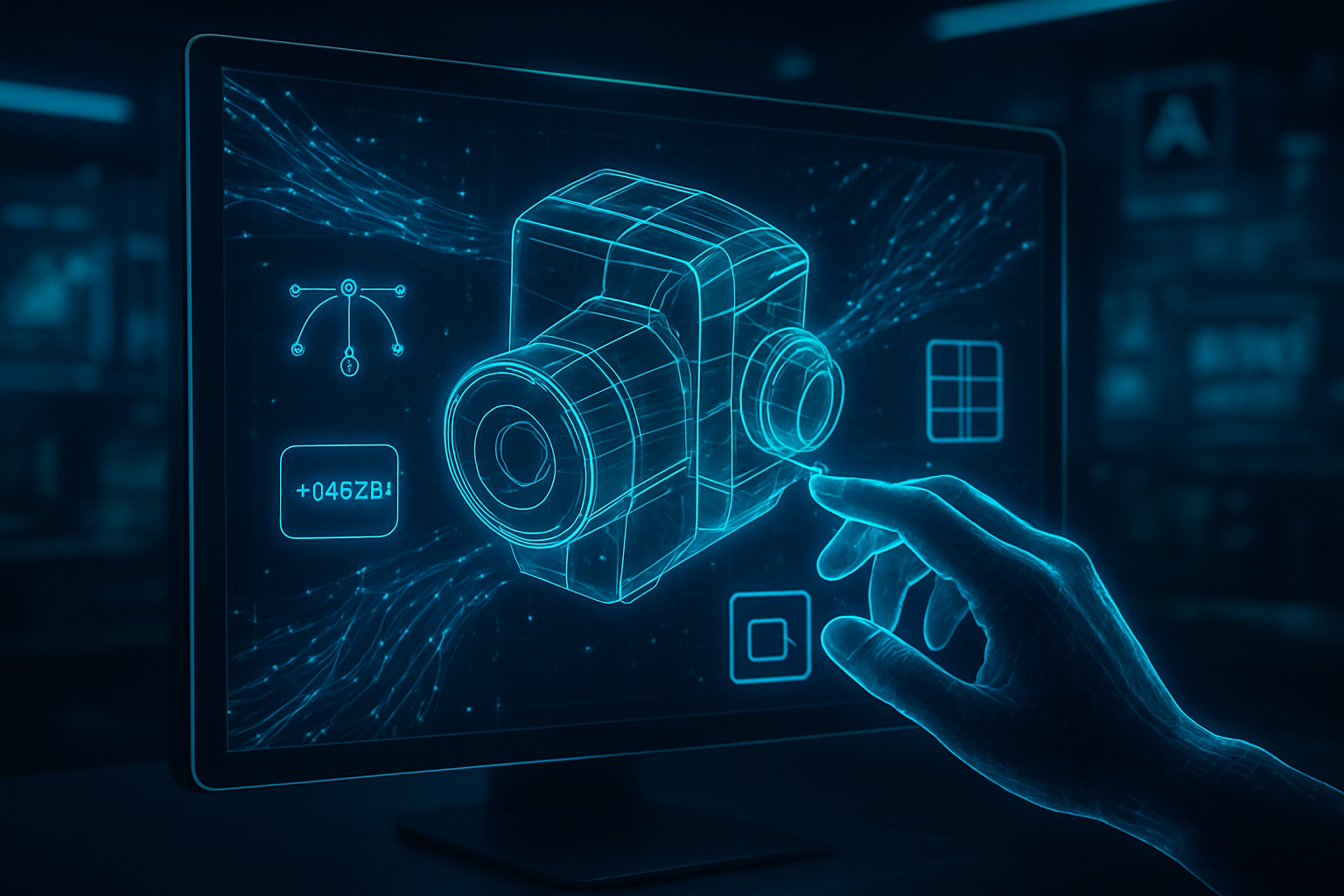
    At the core of GPT Image 1.5 is a radical architectural optimization that has slashed generation times from the typical 15–20 seconds down to a blistering 3–4 seconds. This 4x speed increase enables a near-instantaneous creative loop, allowing designers to iterate in real-time during live presentations or brainstorming sessions. Beyond raw speed, the model introduces a breakthrough in "Perfect Text Rendering." Unlike its predecessors, which often struggled with legible characters, GPT Image 1.5 can accurately render small fonts on product labels, complex infographic data, and brand-accurate typography that maintains perspective and lighting within a 3D space.

    The most transformative feature for professional workflows is the "Sticky Image" consistency model. This allows for sophisticated multi-step editing where users can select specific regions to add, remove, or swap objects—such as changing a character's clothing or modifying a background—without the AI re-generating or shifting the rest of the scene. This "Local Locking" capability preserves facial likeness and lighting across dozens of iterations, a feat that was previously the exclusive domain of manual editing in professional software. Furthermore, OpenAI (Private) has slashed API costs by 20%, making high-volume commercial production more economically viable for global enterprises.

    Initial reactions from the AI research community have been overwhelmingly positive, with many noting that GPT Image 1.5 represents a "Code Red" response to Google’s (GOOGL:NASDAQ) Gemini-integrated creative tools. Industry experts highlight that the model's 96.9% accuracy score in structural layout for diagrams and flowcharts sets a new standard for functional AI. By integrating "Brand Integrity Mode," which locks in logos and specific Hex color codes, OpenAI has addressed the primary concerns of corporate marketing departments that previously viewed AI-generated content as too unpredictable for official use.

    Market Seismic Shifts: Adobe and Google Face a New Reality

    The release has sent shockwaves through the stock market, particularly affecting legacy creative giants. Adobe (ADBE:NASDAQ), which has long dominated the professional space, saw its shares fluctuate wildly as investors weighed the threat of OpenAI’s new "Creative Studio" mode. While Adobe still maintains a significant lead in the high-end professional market, GPT Image 1.5 is aggressively capturing the "quick-turn" marketing and social media segments. Analysts at Jefferies recently downgraded Adobe to "Hold," citing the intense competition from these low-cost, high-efficiency AI-native workflows that bypass traditional software hurdles.

    Meanwhile, Alphabet (GOOGL:NASDAQ) remains a formidable competitor, having hit a $3 trillion market cap in late 2025 following the success of its Gemini 3 and Nano Banana Pro models. The battle for the "Creative Desktop" is now a three-way race between OpenAI’s conversational interface, Google’s multimodal ecosystem, and Adobe’s established distribution layer. Canva (Private), the Australian design unicorn currently valued at $42 billion, is also feeling the pressure, moving upstream to enterprise clients to defend its territory. The competitive landscape is no longer about who can generate the prettiest image, but who can offer the most reliable, integrated, and legally compliant production environment.

    The Wider Significance: Legal Precedents and Ethical Guardrails

    GPT Image 1.5 arrives during a pivotal year for AI law. In late 2025, a landmark ruling in the UK (Stability AI vs. Getty) established that model weights do not store copyrighted images, providing a significant legal shield for AI firms in Europe. However, in the United States, the "Fair Use Triangle" ruling expected in Summer 2026 remains a looming shadow. OpenAI’s decision to move toward a more professional, "Brand-Safe" model is a strategic play to align with enterprise requirements and navigate the strict transparency mandates of the EU AI Act.

    Ethical concerns regarding deepfakes continue to intensify. With the ease of "Sticky Image" editing, the potential for creating highly convincing, non-consensual imagery has increased. In response, regulators like the UK’s Ofcom have begun enforcing stricter "illegal content" assessments following the Take It Down Act of 2025. OpenAI has implemented a "looser" but more sophisticated safety paradigm, allowing for more creative freedom while using invisible watermarking and metadata tracking to ensure that AI-generated content can be identified by automated systems across the web.

    This development also fits into the broader trend of "Sovereign AI." As companies like Microsoft (MSFT:NASDAQ) and Google offer private cloud environments for AI training, GPT Image 1.5 is designed to operate within these secure silos. This ensures that sensitive corporate brand assets used for training or fine-tuning do not leak into the public domain, a critical requirement for the Fortune 500 companies that OpenAI is now courting with its professional publishing tools.

    The Horizon: From 2D Pixels to 3D Worlds

    Looking forward, GPT Image 1.5 is widely seen as a stepping stone toward "World Models"—AI that understands the physical and spatial laws of a scene. Near-term developments are expected to focus on the integration of Sora 2, OpenAI's video generation model, which will allow users to transform static 2D images into short, high-fidelity video clips or even functional 3D meshes (.obj and .glb files). This "Video-to-3D" capability will be a game-changer for the gaming and manufacturing industries, bridging the gap between digital art and spatial computing.

    Experts predict that by late 2026, we will see the rise of "Agentic 3D Creation." In this scenario, AI agents will not only design a product but also coordinate the entire additive manufacturing workflow, optimizing structures for material strength and weight automatically. The ultimate goal, often discussed in the context of the "Garlic" project (the rumored codename for GPT-5.5), is a model with near-human reasoning for visual tasks, capable of understanding complex design briefs and executing them with minimal human oversight.

    A New Chapter in Creative History

    The launch of GPT Image 1.5 marks a definitive turning point in the history of artificial intelligence. It represents the moment AI moved from being a "toy" for generating surrealist art to a "tool" capable of meeting the rigorous demands of professional designers and global brands. The key takeaways are clear: speed is now a commodity, text rendering is a solved problem, and consistency is the new frontier.

    In the coming weeks and months, the industry will be watching closely to see how Adobe and Google respond to this "Code Red" moment. We should expect a flurry of updates to Adobe Firefly and Google Imagen as they scramble to match OpenAI’s 4-second generation speeds. For creators, the message is simple: the barrier between imagination and high-fidelity reality has never been thinner. As we move toward the predicted AGI horizon of 2027, GPT Image 1.5 stands as the most robust evidence yet that the future of design is conversational, iterative, and incredibly fast.


    This content is intended for informational purposes only and represents analysis of current AI developments.

    TokenRing AI delivers enterprise-grade solutions for multi-agent AI workflow orchestration, AI-powered development tools, and seamless remote collaboration platforms.
    For more information, visit https://www.tokenring.ai/.
  • OpenAI Shatters Speed and Dimensional Barriers with GPT Image 1.5 and Video-to-3D

    OpenAI Shatters Speed and Dimensional Barriers with GPT Image 1.5 and Video-to-3D

    In a move that has sent shockwaves through the creative and tech industries, OpenAI has officially unveiled GPT Image 1.5, a transformative update to its visual generation ecosystem. Announced during the company’s "12 Days of Shipmas" event in December 2025, the new model marks a departure from traditional diffusion-based systems in favor of a native multimodal architecture. The results are nothing short of a paradigm shift: image generation speeds have been slashed by 400%, reducing wait times to a mere three to five seconds, effectively enabling near-real-time creative iteration for the first time.

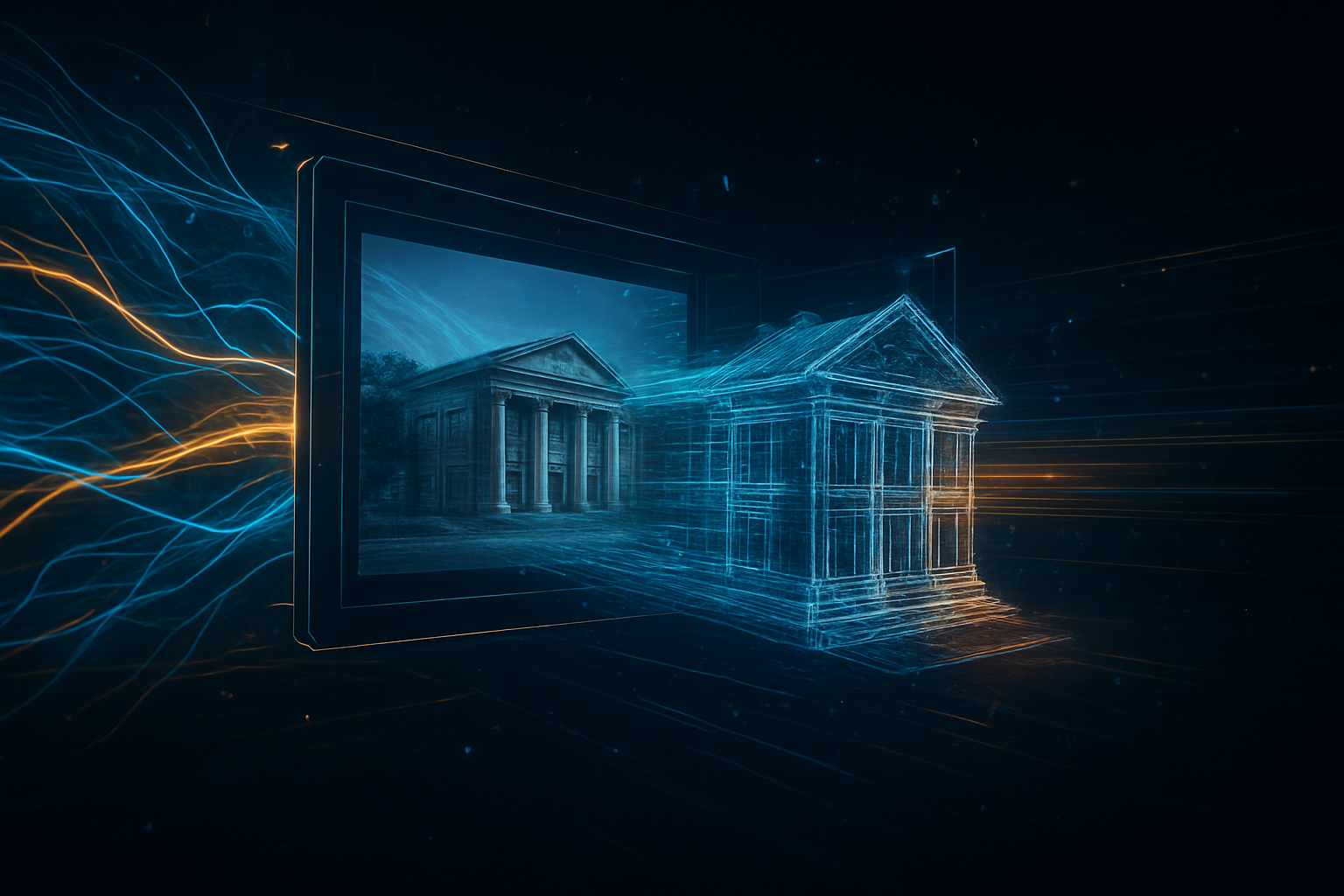
    Beyond raw speed, the most profound breakthrough comes in the form of integrated video-to-3D capabilities. Leveraging the advanced spatial reasoning of the newly released GPT-5.2 and Sora 2, OpenAI now allows creators to transform short video clips into functional, high-fidelity 3D models. This development bridges the gap between 2D content and 3D environments, allowing users to export assets in standard formats like .obj and .glb. By turning passive video data into interactive geometric meshes, OpenAI is positioning itself not just as a content generator, but as the foundational engine for the next generation of spatial computing and digital manufacturing.

    Native Multimodality and the End of the "Diffusion Wait"

    The technical backbone of GPT Image 1.5 represents a significant evolution in how AI processes visual data. Unlike its predecessors, which often relied on separate text-encoders and diffusion modules, GPT Image 1.5 is built on a native multimodal architecture. This allows the model to "think" in pixels and text simultaneously, leading to unprecedented instruction-following accuracy. The headline feature—a 4x increase in generation speed—is achieved through a technique known as "consistency distillation," which optimizes the neural network's ability to reach a final image in fewer steps without sacrificing detail or resolution.

    This architectural shift also introduces "Identity Lock," a feature that addresses one of the most persistent complaints in AI art: inconsistency. In GPT Image 1.5, users can perform localized, multi-step edits—such as changing a character's clothing or swapping a background object—while maintaining pixel-perfect consistency in lighting, facial features, and perspective. Initial reactions from the AI research community have been overwhelmingly positive, with many experts noting that the model has finally solved the "garbled text" problem, rendering complex typography on product packaging and UI mockups with flawless precision.

    A Competitive Seismic Shift for Industry Titans

    The arrival of GPT Image 1.5 and its 3D capabilities has immediate implications for the titans of the software world. Adobe (NASDAQ: ADBE) has responded with a "choice-based" strategy, integrating OpenAI’s latest models directly into its Creative Cloud suite alongside its own Firefly models. While Adobe remains the "safe haven" for commercially cleared content, OpenAI’s aggressive 20% price cut for API access has made GPT Image 1.5 a formidable competitor for high-volume enterprise workflows. Meanwhile, NVIDIA (NASDAQ: NVDA) stands as a primary beneficiary of this rollout; as the demand for real-time inference and 3D rendering explodes, the reliance on NVIDIA’s H200 and Blackwell architectures has reached record highs.

    In the specialized field of engineering, Autodesk (NASDAQ: ADSK) is facing a new kind of pressure. While OpenAI’s video-to-3D tools currently focus on visual meshes for gaming and social media, the underlying spatial reasoning suggests a future where AI could generate functionally plausible CAD geometry. Not to be outdone, Alphabet Inc. (NASDAQ: GOOGL) has accelerated the rollout of Gemini 3 and "Nano Banana Pro," which some benchmarks suggest still hold a slight edge in hyper-realistic photorealism. However, OpenAI’s "Reasoning Moat"—the ability of its models to understand complex, multi-step physics and depth—gives it a strategic advantage in creating "World Models" that competitors are still struggling to replicate.

    From Generating Pixels to Simulating Worlds

    The wider significance of GPT Image 1.5 lies in its contribution to the "World Model" theory of AI development. By moving from 2D image generation to 3D spatial reconstruction, OpenAI is moving closer to an AI that understands the physical laws of our reality. This has sparked a mix of excitement and concern across the industry. On one hand, the democratization of 3D content means a solo creator can now produce cinematic-quality assets that previously required a six-figure studio budget. On the other hand, the ease of creating dimensionally accurate 3D models from video has raised fresh alarms regarding deepfakes and the potential for "spatial misinformation" in virtual reality environments.

    Furthermore, the impact on the labor market is becoming increasingly tangible. Entry-level roles in 3D prop modeling and background asset creation are being rapidly automated, shifting the professional landscape toward "AI Curation." Industry analysts compare this milestone to the transition from hand-drawn animation to CGI; while it displaces certain manual tasks, it opens a vast new frontier for interactive storytelling. The ethical debate has also shifted toward "Data Sovereignty," as artists and 3D designers demand more transparent attribution for the spatial data used to train these increasingly capable world-simulators.

    The Horizon of Agentic 3D Creation

    Looking ahead, the integration of OpenAI’s "o-series" reasoning models with GPT Image 1.5 suggests a future of "Agentic 3D Creation." Experts predict that within the next 12 to 18 months, users will not just prompt for an object, but for an entire interactive environment. We are approaching a point where a user could say, "Build a 3D simulation of a rainy city street with working traffic lights," and the AI will generate the geometry, the physics engine, and the lighting code in a single stream.

    The primary challenge remaining is the "hallucination of physics"—ensuring that 3D models generated from video are not just visually correct, but structurally sound for applications like 3D printing or architectural prototyping. As OpenAI continues to refine its "Shipmas" releases, the focus is expected to shift toward real-time VR integration, where the AI can generate and modify 3D worlds on the fly as a user moves through them. The technical hurdles are significant, but the trajectory established by GPT Image 1.5 suggests these milestones are closer than many anticipated.

    A Landmark Moment in the AI Era

    The release of GPT Image 1.5 and the accompanying video-to-3D tools mark a definitive end to the era of "static" generative AI. By combining 4x faster generation speeds with the ability to bridge the gap between 2D and 3D, OpenAI has solidified its position at the forefront of the spatial computing revolution. This development is not merely an incremental update; it is a foundational shift that redefines the boundaries between digital creation and physical reality.

    As we move into 2026, the tech industry will be watching closely to see how these tools are integrated into consumer hardware and professional pipelines. The key takeaways are clear: speed is no longer a bottleneck, and the third dimension is the new playground for artificial intelligence. Whether through the lens of a VR headset or the interface of a professional design suite, the way we build and interact with the digital world has been permanently altered.


    This content is intended for informational purposes only and represents analysis of current AI developments.

    TokenRing AI delivers enterprise-grade solutions for multi-agent AI workflow orchestration, AI-powered development tools, and seamless remote collaboration platforms.
    For more information, visit https://www.tokenring.ai/.
  • OpenAI Unleashes GPT Image 1.5, Igniting a New Era in Visual AI

    OpenAI Unleashes GPT Image 1.5, Igniting a New Era in Visual AI

    San Francisco, CA – December 16, 2025 – OpenAI has officially launched GPT Image 1.5, its latest and most advanced image generation model, marking a significant leap forward in the capabilities of generative artificial intelligence. Released today, December 16, 2025, this new iteration is now integrated into ChatGPT and accessible via its API, promising unprecedented speed, precision, and control over visual content creation. The announcement intensifies the already fierce competition in the AI image generation landscape, particularly against rivals like Google (NASDAQ: GOOGL), and is poised to reshape how creative professionals and businesses approach visual design and content production.

    GPT Image 1.5 arrives as a direct response to the accelerating pace of innovation in multimodal AI, aiming to set a new benchmark for production-quality visuals and highly controllable creative workflows. Its immediate significance lies in its potential to democratize sophisticated image creation, making advanced AI-driven editing and generation tools available to a broader audience while simultaneously pushing the boundaries of what is achievable in terms of realism, accuracy, and efficiency in AI-generated imagery.

    Technical Prowess and Competitive Edge

    GPT Image 1.5 builds upon OpenAI's previous efforts, succeeding the GPT Image 1 model, with a focus on delivering major improvements across several critical areas. Technically, the model boasts up to four times faster image generation, drastically cutting down feedback cycles for users. Its core strength lies in its precise editing capabilities, allowing for granular control to add, subtract, combine, blend, and transpose elements within images. Crucially, it is engineered to maintain details such as lighting, composition, and facial appearance during edits, ensuring consistency that was often a challenge in earlier models where minor tweaks could lead to a complete reinterpretation of the image.

    A standout feature is GPT Image 1.5's enhanced instruction following, demonstrating superior adherence to user prompts and complex directives, which translates into more accurate and desired outputs. Furthermore, it exhibits significantly improved text rendering within generated images, handling denser and smaller text with greater reliability—a critical advancement for applications requiring legible text in visuals. For developers, OpenAI (NASDAQ: OPENAI) has made GPT Image 1.5 available through its API at a 20% reduced cost for image inputs and outputs compared to its predecessor, gpt-image-1, making high-quality image generation more accessible for a wider range of applications and businesses. The model also introduces a dedicated "Images" interface within ChatGPT, offering a more intuitive "creative studio" experience with preset filters and trending prompts.

    This release directly challenges Google's formidable Gemini image generation models, specifically Gemini 2.5 Flash Image (codenamed "Nano Banana"), launched in August 2025, and Gemini 3 Pro Image (codenamed "Nano Banana Pro"), released in November 2025. While Google's models were lauded for multi-image fusion, character consistency, and advanced visual design, GPT Image 1.5 emphasizes superior instruction adherence, precise detail preservation for logos and faces, and enhanced text rendering. Nano Banana Pro, in particular, offers higher resolution outputs (up to 4K) and multilingual text rendering with a variety of stylistic options, along with SynthID watermarking for provenance—a feature not explicitly detailed for GPT Image 1.5. However, GPT Image 1.5's speed and cost-effectiveness for API users present a strong counter-argument. Initial reactions from the AI research community and industry experts highlight GPT Image 1.5's potential as a "game-changer" for professionals due to its realism, text integration, and refined editing, intensifying the "AI arms race" in multimodal capabilities.

    Reshaping the AI Industry Landscape

    The introduction of GPT Image 1.5 is set to profoundly impact AI companies, tech giants, and startups alike. OpenAI (NASDAQ: OPENAI) itself stands to solidify its leading position in the generative AI space, enhancing its DALL-E product line and attracting more developers and enterprise clients to its API services. This move reinforces its ecosystem and demonstrates continuous innovation, strategically positioning it against competitors. Cloud computing providers like Amazon (AWS), Microsoft (Azure), and Google Cloud will see increased demand for computational resources, while hardware manufacturers, particularly those producing advanced GPUs such as NVIDIA (NASDAQ: NVDA), will experience a surge in demand for their specialized AI accelerators. Creative industries, including marketing, advertising, gaming, and entertainment, are poised to benefit immensely from accelerated content creation and reduced costs.

    For tech giants like Google (NASDAQ: GOOGL), the release intensifies the competitive pressure. Google will likely accelerate its internal research and development, potentially fast-tracking an equivalent or superior model, or focusing on differentiating factors like integration with its extensive cloud services and Android ecosystem. The competition could also spur Google to acquire promising AI image startups or invest heavily in specific application areas.

    Startups in the AI industry face both significant challenges and unprecedented opportunities. Those building foundational image generation models will find it difficult to compete with OpenAI's resources. However, application-layer startups focusing on specialized tools for content creation, e-commerce (e.g., AI-powered product visualization), design, architecture, education, and accessibility stand to benefit significantly. These companies can thrive by building unique user experiences and domain-specific workflows on top of GPT Image 1.5's core capabilities, much like software companies build on cloud infrastructure. This development could disrupt traditional stock photo agencies by reducing demand for generic imagery and force graphic design tools like Adobe Photoshop (NASDAQ: ADBE) and Canva to innovate on advanced editing, collaborative features, and professional workflows, rather than competing directly on raw image generation. Entry-level design services might also face increased competition from AI-powered tools enabling clients to generate their own assets.

    Wider Significance and Societal Implications

    GPT Image 1.5 fits seamlessly into the broader AI landscape defined by the dominance of multimodal AI, the rise of agentic AI, and continuous advancements in self-training and inference scaling. By December 2025, AI is increasingly integrated into everyday applications, and GPT Image 1.5 will accelerate this trend, becoming an indispensable tool across various sectors. Its enhanced capabilities will revolutionize content creation, marketing, research and development, and education, enabling faster, more efficient, and hyper-personalized visual content generation. It will also foster the emergence of new professional roles such as "prompt engineers" and "AI directors" who can effectively leverage these advanced tools.

    However, this powerful technology amplifies existing ethical and societal concerns. The ability to generate highly realistic images exacerbates the risk of misinformation and deepfakes, potentially impacting public trust and individual reputations. If trained on biased datasets, GPT Image 1.5 could perpetuate and amplify societal biases. Questions of copyright and intellectual property for AI-generated content will intensify, and concerns about data privacy, job displacement for visual content creators, and the environmental impact of training large models remain paramount. Over-reliance on AI might also diminish human creativity and critical thinking, highlighting the need for clear accountability.

    Comparing GPT Image 1.5 to previous AI milestones reveals its evolutionary significance. It surpasses early image generation efforts like GANs, DALL-E 1, Midjourney, and Stable Diffusion by offering more nuanced control, higher fidelity, and deeper contextual understanding, moving beyond simple text-to-image synthesis. While GPT-3 and GPT-4 brought breakthroughs in language understanding and multimodal input, GPT Image 1.5 is distinguished by its native and advanced image generation capabilities, producing sophisticated visuals with high precision. In the context of cutting-edge multimodal models like Google's Gemini and OpenAI's GPT-4o, GPT Image 1.5 signifies a specialized iteration that pushes the boundaries of visual generation and manipulation beyond general multimodal capabilities, offering unparalleled control over image details and creative elements.

    The Road Ahead: Future Developments and Challenges

    In the near term, following the release of GPT Image 1.5, expected developments will focus on further refining its core strengths. This includes even more precise instruction following and editing, perfecting text rendering within images for diverse applications, and advanced multi-turn and contextual understanding to maintain coherence across ongoing visual conversations. Seamless multimodal integration will deepen, enabling the generation of comprehensive content that combines various media types effortlessly.

    Longer term, experts predict a future where multimodal AI systems like GPT Image 1.5 evolve to possess emotional intelligence, capable of interpreting tone and mood for more human-like interactions. This will pave the way for sophisticated AI-powered companions, unified work assistants, and next-generation search engines that dynamically combine images, voice, and written queries. The vision extends to advanced generative AI for video and 3D content, pushing the boundaries of digital art and immersive experiences, with models like OpenAI's Sora already demonstrating early potential in video generation.

    Potential applications span creative industries (advertising, fashion, art, visual storytelling), healthcare (medical imaging analysis, drug discovery), e-commerce (product image generation, personalized recommendations), education (rich, illustrative content), accessibility (real-time visual descriptions), human-computer interaction, and security (image recognition and content moderation).

    However, significant challenges remain. Data alignment and synchronization across different modalities, computational costs, and model complexity for robust generalization are technical hurdles. Ensuring data quality and consistency, mitigating bias, and addressing ethical considerations are crucial for responsible deployment. Furthermore, bridging the gap between flexible generation and reliable, precise control, along with fostering transparency about model architectures and training data, are essential for the continued progress and societal acceptance of such powerful AI systems. Gartner predicts that 40% of generative AI solutions will be multimodal by 2027, underscoring the rapid shift towards integrated AI experiences. Experts also foresee the rise of "AI teammates" across business functions and accelerated enterprise adoption of generative AI in 2025.

    A New Chapter in AI History

    The release of OpenAI's GPT Image 1.5 on December 16, 2025, marks a pivotal moment in the history of artificial intelligence. It represents a significant step towards the maturation of generative AI, particularly in the visual domain, by consolidating multimodal capabilities, advancing agentic intelligence, and pushing the boundaries of creative automation. Its enhanced speed, precision editing, and improved text rendering capabilities promise to democratize high-quality image creation and empower professionals across countless industries.

    The immediate weeks and months will be crucial for observing the real-world adoption and impact of GPT Image 1.5. We will be watching for how quickly developers integrate its API, the innovative applications that emerge, and the competitive responses from other tech giants. The ongoing dialogue around ethical AI, copyright, and job displacement will intensify, necessitating thoughtful regulation and responsible development. Ultimately, GPT Image 1.5 is not just another model release; it's a testament to the relentless pace of AI innovation and a harbinger of a future where AI becomes an even more indispensable creative and analytical partner, reshaping our visual world in profound ways.


    This content is intended for informational purposes only and represents analysis of current AI developments.

    TokenRing AI delivers enterprise-grade solutions for multi-agent AI workflow orchestration, AI-powered development tools, and seamless remote collaboration platforms.
    For more information, visit https://www.tokenring.ai/.