Tag: GPT Store

  • The Agentic Revolution: How the AI ‘App Store’ Era is Rewriting the Rules of Software

    The Agentic Revolution: How the AI ‘App Store’ Era is Rewriting the Rules of Software

    The software world is currently undergoing its most radical transformation since the launch of the iPhone’s App Store in 2008. As of early 2026, the "AI App Store" era has moved beyond the hype of experimental chatbots into a sophisticated ecosystem of specialized, autonomous agents. Leading this charge is OpenAI’s GPT Store, which has evolved from a simple directory into a robust marketplace where over 250,000 verified AI agents—powered by the latest GPT-5.2 and o1 "Reasoning" models—are actively disrupting traditional software-as-a-service (SaaS) models.

    This shift represents more than just a new way to access tools; it is a fundamental change in how digital commerce and productivity are structured. With the introduction of the Agentic Commerce Protocol (ACP) in late 2025, AI agents are no longer just providing information—they are executing complex transactions, negotiating on behalf of users, and operating as independent micro-businesses. This development has effectively moved the internet’s "buy button" from traditional websites and search engines directly into the AI interface, signaling a new age of disintermediation.

    The Technical Backbone: Reasoning Models and Agentic Protocols

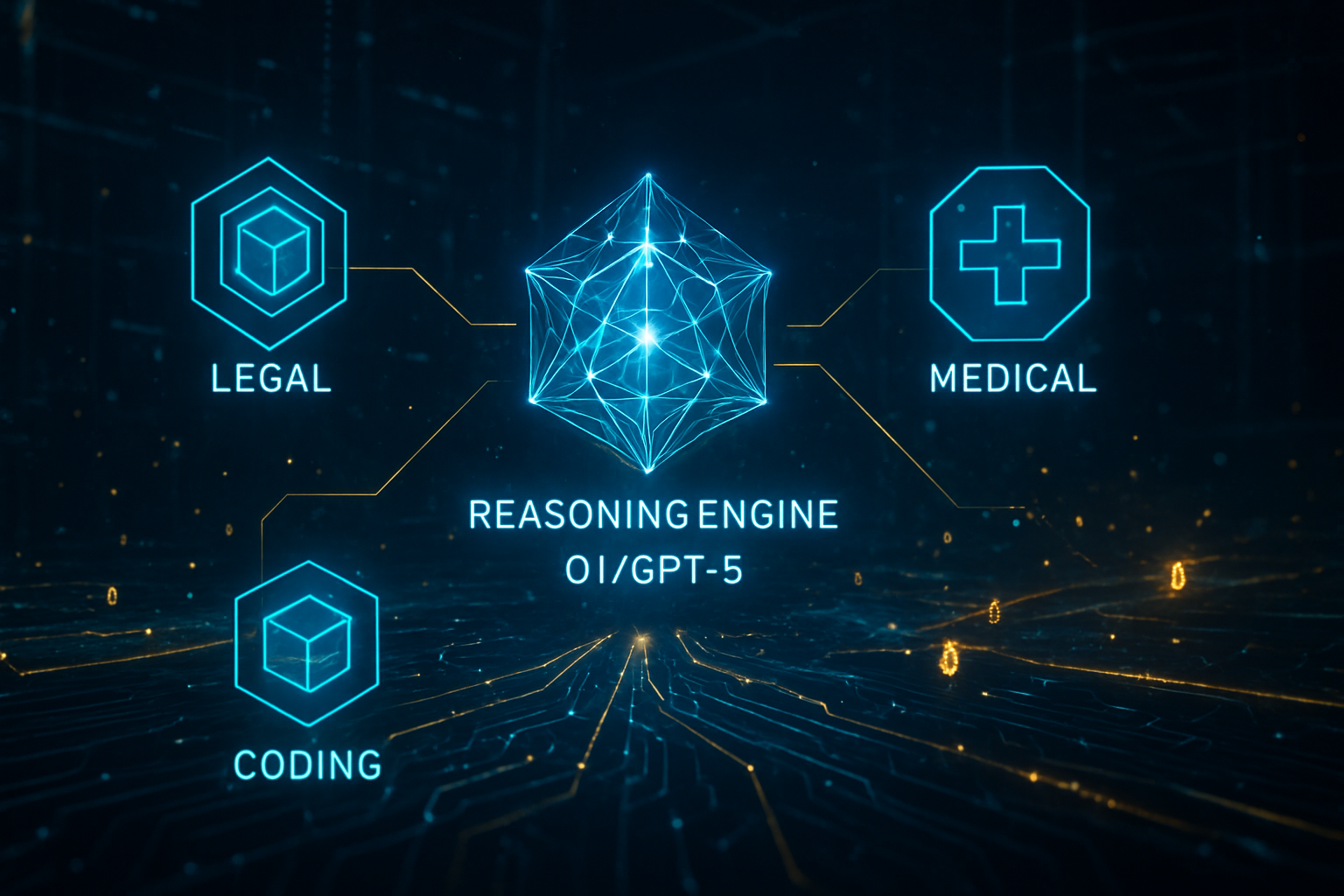
    The technical foundation of this new era rests on the leap from generative text to "agentic reasoning." OpenAI’s o1 "Reasoning" series has introduced a paradigm shift by allowing models to think through multi-step problems before responding. Unlike early versions of ChatGPT that predicted the next word in a sequence, these models use chain-of-thought processing to verify their own logic, making them capable of handling high-stakes tasks in law, engineering, and medicine. This has allowed developers to build "GPTs" that function less like chatbots and more like specialized employees.

    A critical technical breakthrough in late 2025 was the launch of the Agentic Commerce Protocol (ACP), a collaborative effort between OpenAI and Stripe. This open-source standard provides a secure framework for AI agents to handle financial transactions. It includes built-in identity verification and "budgetary guardrails," allowing a user to authorize a travel-planning GPT to not only find a flight but also book it, handle the payment, and manage the cancellation policy autonomously. This differs from previous "plugins" which required manual redirects to third-party sites; the entire transaction now occurs within the model's latent space.

    To combat the "AI slop" of low-quality, formulaic GPTs that flooded the store in 2024, OpenAI has implemented a new "Verified Creator" program. This system uses AI-driven code auditing to ensure that specialized tools—such as those for legal contract analysis or medical research—adhere to strict accuracy and privacy standards. Initial reactions from the research community have been largely positive, with experts noting that the move toward verified, reasoning-capable agents has significantly reduced the "hallucination" problems that once plagued the platform.

    A New Competitive Landscape: Big Tech and the SaaS Disruption

    The rise of specialized AI tools is creating a seismic shift for major tech players. Microsoft (NASDAQ: MSFT), a primary partner of OpenAI, has integrated these agentic capabilities deep into its Windows and Office ecosystems, effectively turning the operating system into an AI-first environment. However, the competition is intensifying. Google (NASDAQ: GOOGL) has responded with "Gemini Gems," leveraging its unique "ecosystem moat." Unlike OpenAI, Google’s Gems have native, permissioned access to a user’s Gmail, Drive, and real-time Search data, allowing for a level of personalization that third-party GPTs often struggle to match.

    Traditional SaaS companies are finding themselves at a crossroads. Specialized GPTs like Consensus, which synthesizes academic research, and Harvey, which automates legal workflows, are directly challenging established software incumbents. For many businesses, a $20-a-month ChatGPT Plus or $200-a-month ChatGPT Pro subscription is beginning to replace a dozen different specialized software licenses. This "consolidation of the stack" is forcing traditional software providers to either integrate deeply with AI marketplaces or risk becoming obsolete features in a larger agentic ecosystem.

    Meta Platforms (NASDAQ: META) has taken a different strategic route by focusing on "creator-led AI." Through its AI Studio, Meta has enabled influencers and small businesses on Instagram and WhatsApp to create digital twins that facilitate commerce and engagement. While OpenAI dominates the professional and productivity sectors, Meta is winning the "social commerce" battle, using its Llama 5 models to power millions of micro-interactions across its 3 billion-user network. This fragmentation of the "App Store" concept suggests that the future will not be a single winner-take-all platform, but a series of specialized AI hubs.

    The Broader Significance: From Search to Synthesis

    The transition to an AI App Store era marks the end of the "search-and-click" internet. For decades, the web has functioned as a library where users search for information and then navigate to a destination to act on it. In the new agentic landscape, the AI acts as a synthesizer and executor. This fits into the broader trend of "Vertical AI," where general-purpose models are fine-tuned for specific industries, moving away from the "one-size-fits-all" approach of early LLMs.

    However, this shift is not without its concerns. The potential for "platform lock-in" is greater than ever, as users entrust their financial data and personal workflows to a single AI provider. There are also significant questions regarding the "app store tax." Much like Apple (NASDAQ: AAPL) faced scrutiny over its 30% cut of app sales, OpenAI is now navigating the complexities of revenue sharing. While the current model offers usage-based rewards and direct digital sales, many developers are calling for more transparent and equitable payout structures as their specialized tools become the primary drivers of platform traffic.

    Comparisons to the 2008 mobile revolution are frequent, but the speed of the AI transition is significantly faster. While it took years for mobile apps to replace desktop software for most tasks, AI agents are disrupting multi-billion dollar industries in eighteen months. The primary difference is that AI does not just provide a new interface; it provides the labor itself. This has profound implications for the global workforce, as "software" moves from being a tool used by humans to a system that performs the work of humans.

    The Horizon: Autonomous Agents and Screenless Hardware

    Looking toward the remainder of 2026 and beyond, the industry is bracing for the arrival of "Autonomous Agents"—AI that can operate independently over long periods without constant human prompting. These agents will likely be able to manage entire projects, from coding a new website to managing a company’s payroll, only checking in with humans for high-level approvals. The challenge remains in ensuring "alignment," or making sure these autonomous systems do not take unintended shortcuts to achieve their goals.

    On the hardware front, the industry is watching "Project GUMDROP," OpenAI’s rumored move into physical devices. Analysts predict that to truly bypass the restrictions and fees of the Apple and Google app stores, OpenAI will launch a screenless, voice-and-vision-first device. Such hardware would represent the final step in the "AI-first OS" strategy, where the digital assistant is no longer an app on a phone but a dedicated companion that perceives the world alongside the user.

    Experts also predict a surge in "Edge AI" agents—specialized tools that run locally on a user’s device rather than in the cloud. This would address the persistent privacy concerns of enterprise clients, allowing law firms and medical providers to use the power of the GPT Store without ever sending sensitive data to a central server. As hardware manufacturers like Nvidia (NASDAQ: NVDA) continue to release more efficient AI chips, the capability of these local agents is expected to rival today’s cloud-based models by 2027.

    A New Chapter in Digital History

    The emergence of the AI App Store era is a defining moment in the history of technology. We have moved past the "parlor trick" phase of generative AI and into a period where specialized, reasoning-capable agents are the primary interface for the digital world. The success of the GPT Store, the rise of the Agentic Commerce Protocol, and the competitive responses from Google and Meta all point to a future where software is no longer something we use, but something that works for us.

    As we look ahead, the key metrics for success will shift from "monthly active users" to "tasks completed" and "economic value generated." The significance of this development cannot be overstated; it is the beginning of a fundamental reordering of the global economy around AI-driven labor. In the coming months, keep a close eye on the rollout of GPT-5.2 and the first wave of truly autonomous agents. The era of the "app" is ending; the era of the "agent" has begun.


    This content is intended for informational purposes only and represents analysis of current AI developments.

    TokenRing AI delivers enterprise-grade solutions for multi-agent AI workflow orchestration, AI-powered development tools, and seamless remote collaboration platforms.
    For more information, visit https://www.tokenring.ai/.
  • OpenAI DevDay 2025: ChatGPT Transforms into an AI Operating System with Apps SDK, AgentKit, and More

    OpenAI DevDay 2025: ChatGPT Transforms into an AI Operating System with Apps SDK, AgentKit, and More

    OpenAI's highly anticipated DevDay 2025, held on October 6th, has fundamentally reshaped the landscape of AI application development, signaling a strategic pivot for ChatGPT from a powerful conversational agent to an emergent AI operating system. The event unveiled a groundbreaking suite of tools – the Apps SDK, AgentKit, and ChatKit – alongside a significant evolution of the GPT Store concept, all designed to empower developers and dramatically expand ChatGPT's capabilities. These announcements promise to usher in an era where AI agents and interactive applications are seamlessly integrated into our daily digital interactions, making AI more accessible, versatile, and deeply embedded in our workflows.

    The immediate significance of these launches is profound. For end-users, ChatGPT is no longer just a chatbot; it's a dynamic platform capable of executing complex tasks by leveraging a rich ecosystem of integrated applications. For developers, OpenAI has rolled out the red carpet, offering unprecedented tools and distribution channels to build, deploy, and monetize sophisticated AI experiences. This move solidifies OpenAI's (Private) ambition to be at the forefront of the AI revolution, not just in model development, but in creating the foundational infrastructure for the next generation of intelligent applications.

    A Deep Dive into OpenAI's Transformative Toolkit

    The core of DevDay 2025's announcements lies in a meticulously crafted set of development tools: the Apps SDK, AgentKit, and ChatKit, alongside a re-envisioned approach to the GPT Store. Each component plays a crucial role in fostering a more integrated and powerful AI ecosystem.

    The Apps SDK (Software Development Kit) stands out as a game-changer, enabling developers to embed full-fledged, interactive applications directly within the ChatGPT interface. This moves beyond the previous paradigm of custom GPTs or external marketplaces, allowing users to invoke and interact with third-party services seamlessly within their conversations. These applications can surface contextually based on user prompts or be explicitly called, offering rich UIs and direct data exchange with the AI model via the new Model Context Protocol (MCP) standard. Initial launch partners include industry giants like Booking.com, Canva (Private), Coursera (NYSE: COUR), Expedia (NASDAQ: EXPE), Figma (Private), Spotify (NYSE: SPOT), and Zillow (NASDAQ: Z), showcasing the breadth of potential integrations from generating music playlists to designing graphics or searching for real estate, all without leaving ChatGPT. This direct embedding and contextual surfacing represents a significant departure from fragmented app experiences.

    AgentKit is a comprehensive toolkit designed to streamline the creation, deployment, and optimization of sophisticated AI agents. Described by OpenAI CEO Sam Altman as a "complete set of building blocks," AgentKit aims to bridge the gap between prototyping and production-ready agents. Its key components include an Agent Builder, a visual, drag-and-drop interface for orchestrating complex multi-agent workflows; a Connector Registry for managing data and tool integrations across OpenAI products; ChatKit (which is also a standalone component) for embedding customizable chat-based agent experiences; and enhanced Evals capabilities, offering datasets, trace grading, automated prompt optimization, and support for third-party models to ensure agent performance and reliability. AgentKit builds upon OpenAI's existing Responses API and Agents SDK, offering a more robust and integrated pathway for developers.

    ChatKit, while a component of AgentKit, was highlighted for its specific role in enabling developers to embed native-feeling, customizable chat interfaces for their agents directly into their own applications and websites. This allows for brand-aligned conversational experiences that leverage the intelligence of agents built with AgentKit.

    The GPT Store, initially conceptualized as a marketplace for custom GPTs, has evolved strategically. Instead of a separate storefront, the Apps SDK effectively transforms ChatGPT itself into the distribution channel, allowing third-party applications to be directly integrated and contextually offered within the main conversational interface. This integrated approach suggests a move towards a more fluid and less segmented app discovery experience within ChatGPT. Initial reactions from the AI research community and industry experts are overwhelmingly positive, highlighting the potential for unparalleled integration and a significant boost to developer productivity and innovation. Many see this as OpenAI's boldest move yet to establish ChatGPT as the central hub for AI-powered interactions.

    Competitive Implications and Market Shifts

    OpenAI's DevDay 2025 announcements carry substantial implications for the competitive landscape, poised to benefit specific companies while potentially disrupting others. The clear winner here is OpenAI (Private) itself, solidifying its position not just as a leading AI model developer but as a foundational platform provider. By offering an integrated ecosystem for app and agent development and distribution, OpenAI aims to capture a significant portion of the value chain in AI application creation and usage. The availability of GPT-5 Pro in the API, along with gpt-realtime-mini and Sora 2, further cements its technological leadership, providing developers with cutting-edge models to power their new applications.

    Companies that quickly adopt the Apps SDK and AgentKit, particularly the initial launch partners like Booking.com, Canva (Private), Coursera (NYSE: COUR), Expedia (NASDAQ: EXPE), Figma (Private), Spotify (NYSE: SPOT), and Zillow (NASDAQ: Z), stand to gain significant first-mover advantages. They will be able to reach ChatGPT's massive user base (over 800 million weekly active users) with deeply integrated, AI-powered experiences, potentially driving substantial user engagement and new revenue streams through features like the Instant Checkout. This creates a powerful new distribution channel that rivals traditional app stores or web search.

    The competitive implications for major AI labs and tech giants are considerable. Companies like Google (NASDAQ: GOOGL), Microsoft (NASDAQ: MSFT), and Meta (NASDAQ: META), which are also investing heavily in AI platforms and agentic systems, will need to accelerate their own integration strategies and developer offerings to keep pace. OpenAI's move to embed applications directly into the conversational flow challenges existing paradigms of app discovery and usage, potentially disrupting established app store models and even aspects of web search. Startups focused on building niche AI tools or agents may find a new, powerful platform for distribution and monetization, but they will also face increased competition within this integrated ecosystem. The market is shifting towards platforms that can offer comprehensive, end-to-end solutions for AI development and deployment, making strategic partnerships and platform integration crucial for survival and growth.

    The Broader AI Landscape and Future Trajectories

    These announcements from OpenAI DevDay 2025 fit squarely within the broader AI trend towards more agentic, integrated, and application-oriented artificial intelligence. The vision of AI as a capable assistant that not only understands but also acts upon user requests by leveraging a vast array of tools and services is rapidly materializing. This represents a significant leap from earlier conversational AI, which was primarily focused on generating text or answering questions. The introduction of the Apps SDK and AgentKit pushes the boundaries of what a single AI interface can achieve, transforming ChatGPT into a central hub for digital interaction.

    The impacts are wide-ranging. On the positive side, we can expect a surge in innovative AI applications that are more intuitive and powerful, lowering the barrier for users to interact with complex digital services. Productivity across various sectors, from creative industries to enterprise operations, is likely to see a boost as AI agents become more adept at orchestrating multi-step workflows. However, potential concerns also emerge. The increased reliance on a single platform like ChatGPT for a multitude of tasks raises questions about data privacy, security, and potential monopolistic tendencies in the AI application space. The ethical implications of highly autonomous AI agents, especially concerning decision-making and potential biases, will also require continuous scrutiny and robust governance frameworks. This development draws parallels to the advent of smartphone app stores, but with the added layer of an intelligent AI layer orchestrating the interactions, making it a potentially even more transformative milestone.

    The Road Ahead: What to Expect

    Looking ahead, the near-term and long-term developments stemming from DevDay 2025 are poised to be rapid and impactful. In the near term, we can expect a rapid expansion of the application ecosystem within ChatGPT as developers leverage the Apps SDK and AgentKit. More businesses and independent developers will likely integrate their services, leading to a richer and more diverse range of AI-powered functionalities directly accessible through conversational interfaces. The monetization features, including Instant Checkout, will incentivize this growth, potentially creating a thriving new economy around ChatGPT.

    Potential applications and use cases are virtually limitless. We could see sophisticated AI agents assisting with personalized education, managing complex financial portfolios, orchestrating entire project management workflows, or even facilitating advanced scientific research by interacting with specialized databases and simulation tools. The ability to embed customizable chat agents via ChatKit will also lead to more intelligent customer service bots, personalized virtual assistants, and interactive training modules across various industries. Challenges that need to be addressed include ensuring the security and reliability of third-party applications, managing the complexity of multi-agent interactions, and continually refining the AI's ability to seamlessly select and utilize the most appropriate tools for a given task. Experts predict that this move will accelerate the development of truly autonomous AI agents capable of performing a wide array of human-like tasks, fundamentally altering how we interact with technology and even each other. The focus will increasingly shift from simply generating content to enabling intelligent action and orchestration.

    Wrapping Up: A New Era for AI

    OpenAI DevDay 2025 represents a pivotal moment in the history of artificial intelligence, marking a clear trajectory towards an integrated, agentic, and highly interactive AI ecosystem. The launch of the Apps SDK, AgentKit, and ChatKit, coupled with the evolution of the GPT Store concept, signifies OpenAI's ambition to transform ChatGPT into a foundational platform – an AI operating system – that empowers developers to build and distribute sophisticated AI applications at an unprecedented scale.

    The key takeaway is that AI is moving beyond mere conversation to intelligent action. This development is not just an incremental improvement but a fundamental shift in how we conceive of and interact with AI. It promises a future where AI is not just a tool, but an orchestrator of digital services, making complex tasks simpler and more intuitive for everyone. The long-term impact could be as profound as the advent of the internet or mobile computing, fundamentally altering industries, job roles, and daily life. What to watch for in the coming weeks and months is the speed and creativity with which developers adopt these new tools, the emergence of killer applications within the ChatGPT ecosystem, and the competitive responses from other major tech players. The race to build the ultimate AI platform has just intensified, and OpenAI has certainly thrown down a formidable gauntlet.

    This content is intended for informational purposes only and represents analysis of current AI developments.

    TokenRing AI delivers enterprise-grade solutions for multi-agent AI workflow orchestration, AI-powered development tools, and seamless remote collaboration platforms.
    For more information, visit https://www.tokenring.ai/.