Tag: GPU

  • The Blackwell Era: Nvidia’s GB200 NVL72 Redefines the Trillion-Parameter Frontier

    The Blackwell Era: Nvidia’s GB200 NVL72 Redefines the Trillion-Parameter Frontier

    As of January 1, 2026, the artificial intelligence landscape has reached a pivotal inflection point, transitioning from the frantic "training race" of previous years to a sophisticated era of massive, real-time inference. At the heart of this shift is the full-scale deployment of Nvidia’s (NASDAQ:NVDA) Blackwell architecture, specifically the GB200 NVL72 liquid-cooled racks. These systems, now shipping at a rate of approximately 1,000 units per week, have effectively reset the benchmarks for what is possible in generative AI, enabling the seamless operation of trillion-parameter models that were once considered computationally prohibitive for widespread use.

    The arrival of the Blackwell era marks a fundamental change in the economics of intelligence. With a staggering 25x reduction in the total cost of ownership (TCO) for inference and a similar leap in energy efficiency, Nvidia has transformed the AI data center into a high-output "AI factory." However, this dominance is facing its most significant challenge yet as hyperscalers like Alphabet (NASDAQ:GOOGL) and Meta (NASDAQ:META) accelerate their own custom silicon programs. The battle for the future of AI compute is no longer just about raw power; it is about the efficiency of every token generated and the strategic autonomy of the world’s largest tech giants.

    The Technical Architecture of the Blackwell Superchip

    The GB200 NVL72 is not merely a collection of GPUs; it is a singular, massive compute engine. Each rack integrates 72 Blackwell GPUs and 36 Grace CPUs, interconnected via the fifth-generation NVLink, which provides a staggering 1.8 TB/s of bidirectional throughput per GPU. This allows the entire rack to act as a single GPU with 1.4 exaflops of AI performance and 30 TB of fast memory. The shift to the Blackwell Ultra (B300) variant in late 2025 further expanded this capability, introducing 288GB of HBM3E memory per chip to accommodate the massive context windows required by 2026’s "reasoning" models, such as OpenAI’s latest o-series and DeepSeek’s R-1 successors.

    Technically, the most significant advancement lies in the second-generation Transformer Engine, which utilizes micro-scaling formats including 4-bit floating point (FP4) precision. This allows Blackwell to deliver 30x the inference performance for 1.8-trillion parameter models compared to the previous H100 generation. Furthermore, the transition to liquid cooling has become a necessity rather than an option. With the TDP of individual B200 chips exceeding 1200W, the GB200 NVL72’s liquid-cooling manifold is the only way to maintain the thermal efficiency required for sustained high-load operations. This architectural shift has forced a massive global overhaul of data center infrastructure, as traditional air-cooled facilities are rapidly being retrofitted or replaced to support the high-density requirements of the Blackwell era.

    Industry experts have been quick to note that while the raw TFLOPS are impressive, the real breakthrough is the reduction in "communication tax." By utilizing the NVLink Switch System, Blackwell minimizes the latency typically associated with moving data between chips. Initial reactions from the research community emphasize that this allows for a "reasoning-at-scale" capability, where models can perform thousands of internal "thoughts" or steps before outputting a final answer to a user, all while maintaining a low-latency experience. This hardware breakthrough has effectively ended the era of "dumb" chatbots, ushering in an era of agentic AI that can solve complex multi-step problems in seconds.

    Competitive Pressure and the Rise of Custom Silicon

    While Nvidia (NASDAQ:NVDA) currently maintains an estimated 85-90% share of the merchant AI silicon market, the competitive landscape in 2026 is increasingly defined by "custom-built" alternatives. Alphabet (NASDAQ:GOOGL) has successfully deployed its seventh-generation TPU, codenamed "Ironwood" (TPU v7). These chips are designed specifically for the JAX and XLA software ecosystems, offering a compelling alternative for large-scale developers like Anthropic. Ironwood pods support up to 9,216 chips in a single synchronous configuration, matching Blackwell’s memory bandwidth and providing a more cost-effective solution for Google Cloud customers who don't require the broad compatibility of Nvidia’s CUDA platform.

    Meta (NASDAQ:META) has also made significant strides with its third-generation Meta Training and Inference Accelerator (MTIA 3). Unlike Nvidia’s general-purpose approach, MTIA 3 is surgically optimized for Meta’s internal recommendation and ranking algorithms. By January 2026, MTIA now handles over 50% of the internal workloads for Facebook and Instagram, significantly reducing Meta’s reliance on external silicon for its core business. This strategic move allows Meta to reserve its massive Blackwell clusters exclusively for the pre-training of its next-generation Llama frontier models, effectively creating a tiered hardware strategy that maximizes both performance and cost-efficiency.

    This surge in custom ASICs (Application-Specific Integrated Circuits) is creating a two-tier market. On one side, Nvidia remains the "gold standard" for frontier model training and general-purpose AI services used by startups and enterprises. On the other, hyperscalers like Amazon (NASDAQ:AMZN) and Microsoft (NASDAQ:MSFT) are aggressively pushing their own chips—Trainium/Inferentia and Maia, respectively—to lock in customers and lower their own operational overhead. The competitive implication is clear: Nvidia can no longer rely solely on being the fastest; it must now leverage its deep software moat, including the TensorRT-LLM libraries and the CUDA ecosystem, to prevent customers from migrating to these increasingly capable custom alternatives.

    The Global Impact of the 25x TCO Revolution

    The broader significance of the Blackwell deployment lies in the democratization of high-end inference. Nvidia’s claim of a 25x reduction in total cost of ownership has been largely validated by production data in early 2026. For a cloud provider, the cost of generating a million tokens has plummeted by nearly 20x compared to the Hopper (H100) generation. This economic shift has turned AI from an expensive experimental cost center into a high-margin utility. It has enabled the rise of "AI Factories"—massive data centers dedicated entirely to the production of intelligence—where the primary metric of success is no longer uptime, but "tokens per watt."

    However, this rapid advancement has also raised significant concerns regarding energy consumption and the "digital divide." While Blackwell is significantly more efficient per token, the sheer scale of deployment means that the total energy demand of the AI sector continues to climb. Companies like Oracle (NYSE:ORCL) have responded by co-locating Blackwell clusters with modular nuclear reactors (SMRs) to ensure a stable, carbon-neutral power supply. This trend highlights a new reality where AI hardware development is inextricably linked to national energy policy and global sustainability goals.

    Furthermore, the Blackwell era has redefined the "Memory Wall." As models grow to include trillions of parameters and context windows that span millions of tokens, the ability of hardware to keep that data "hot" in memory has become the primary bottleneck. Blackwell’s integration of high-bandwidth memory (HBM3E) and its massive NVLink fabric represent a successful, albeit expensive, solution to this problem. It sets a new standard for the industry, suggesting that future breakthroughs in AI will be as much about data movement and thermal management as they are about the underlying silicon logic.

    Looking Ahead: The Road to Rubin and AGI

    As we look toward the remainder of 2026, the industry is already anticipating Nvidia’s next move: the Rubin architecture (R100). Expected to enter mass production in the second half of the year, Rubin is rumored to feature HBM4 and an even more advanced 4×4 mesh interconnect. The near-term focus will be on further integrating AI hardware with "physical AI" applications, such as humanoid robotics and autonomous manufacturing, where the low-latency inference capabilities of Blackwell are already being put to the test.

    The primary challenge moving forward will be the transition from "static" models to "continuously learning" systems. Current hardware is optimized for fixed weights, but the next generation of AI will likely require chips that can update their knowledge in real-time without massive retraining costs. Experts predict that the hardware of 2027 and beyond will need to incorporate more neuromorphic or "brain-like" architectures to achieve the next order-of-magnitude leap in efficiency.

    In the long term, the success of Blackwell and its successors will be measured by their ability to support the pursuit of Artificial General Intelligence (AGI). As models move beyond simple text and image generation into complex reasoning and scientific discovery, the hardware must evolve to support non-linear thought processes. The GB200 NVL72 is the first step toward this "reasoning" infrastructure, providing the raw compute needed for models to simulate millions of potential outcomes before making a decision.

    Summary: A Landmark in AI History

    The deployment of Nvidia’s Blackwell GPUs and GB200 NVL72 racks stands as one of the most significant milestones in the history of computing. By delivering a 25x reduction in TCO and 30x gains in inference performance, Nvidia has effectively ended the era of "AI scarcity." Intelligence is now becoming a cheap, abundant commodity, fueling a new wave of innovation across every sector of the global economy. While custom silicon from Google and Meta provides a necessary competitive check, the Blackwell architecture remains the benchmark against which all other AI hardware is measured.

    As we move further into 2026, the key takeaways are clear: the "moat" in AI has shifted from training to inference efficiency, liquid cooling is the new standard for data center design, and the integration of hardware and software is more critical than ever. The industry has moved past the hype of the early 2020s and into a phase of industrial-scale execution. For investors and technologists alike, the coming months will be defined by how effectively these massive Blackwell clusters are utilized to solve real-world problems, from climate modeling to drug discovery.

    The "AI supercycle" is no longer a prediction—it is a reality, powered by the most complex and capable machines ever built. All eyes now remain on the production ramps of the late-2026 Rubin architecture and the continued evolution of custom silicon, as the race to build the foundation of the next intelligence age continues unabated.


    This content is intended for informational purposes only and represents analysis of current AI developments.

    TokenRing AI delivers enterprise-grade solutions for multi-agent AI workflow orchestration, AI-powered development tools, and seamless remote collaboration platforms.
    For more information, visit https://www.tokenring.ai/.
  • The Rubin Revolution: NVIDIA Accelerates the AI Era with 2026 Launch of HBM4-Powered Platform

    The Rubin Revolution: NVIDIA Accelerates the AI Era with 2026 Launch of HBM4-Powered Platform

    As the calendar turns to 2026, the artificial intelligence industry stands on the precipice of its most significant hardware leap to date. NVIDIA (NASDAQ:NVDA) has officially moved into the production phase of its "Rubin" platform, the highly anticipated successor to the record-breaking Blackwell architecture. Named after the pioneering astronomer Vera Rubin, the new platform represents more than just a performance boost; it signals the definitive shift in NVIDIA’s strategy toward a relentless yearly release cadence, a move designed to maintain its stranglehold on the generative AI market and leave competitors in a state of perpetual catch-up.

    The immediate significance of the Rubin launch cannot be overstated. By integrating the new Vera CPU, the R100 GPU, and next-generation HBM4 memory, NVIDIA is attempting to solve the "memory wall" and "power wall" that have begun to slow the scaling of trillion-parameter models. For hyperscalers and AI research labs, the arrival of Rubin means the ability to train next-generation "Agentic AI" systems that were previously computationally prohibitive. This release marks the transition from AI as a software feature to AI as a vertically integrated industrial process, often referred to by NVIDIA CEO Jensen Huang as the era of "AI Factories."

    Technical Mastery: Vera, Rubin, and the HBM4 Advantage

    The technical core of the Rubin platform is the R100 GPU, a marvel of semiconductor engineering that moves away from the monolithic designs of the past. Fabricated on the performance-enhanced 3nm (N3P) process from TSMC (NYSE:TSM), the R100 utilizes advanced CoWoS-L packaging to bridge multiple compute dies into a single, massive logical unit. Early benchmarks suggest that a single R100 GPU can deliver up to 50 Petaflops of FP4 compute—a staggering 2.5x increase over the Blackwell B200. This leap is made possible by NVIDIA’s adoption of System on Integrated Chips (SoIC) 3D-stacking, which allows for vertical integration of logic and memory, drastically reducing the physical distance data must travel and lowering power "leakage" that has plagued previous generations.

    A critical component of this architecture is the "Vera" CPU, which replaces the Grace CPU found in earlier superchips. Unlike its predecessor, which relied on standard Arm Neoverse designs, Vera is built on NVIDIA’s custom "Olympus" ARM cores. This transition to custom silicon allows for much tighter optimization between the CPU and GPU, specifically for the complex data-shuffling tasks required by multi-agent AI workflows. The resulting "Vera Rubin" superchip pairs the Vera CPU with two R100 GPUs via a 3.6 TB/s NVLink-6 interconnect, providing the bidirectional bandwidth necessary to treat the entire rack as a single, unified computer.

    Memory remains the most significant bottleneck in AI training, and Rubin addresses this by being the first architecture to fully adopt the HBM4 standard. These memory stacks, provided by lead partners like SK Hynix (KRX:000660) and Samsung (KRX:005930), offer a massive jump in both capacity and throughput. Standard R100 configurations now feature 288GB of HBM4, with "Ultra" versions expected to reach 512GB later this year. By utilizing a customized logic base die—co-developed with TSMC—the HBM4 modules are integrated directly onto the GPU package, allowing for bandwidth speeds exceeding 13 TB/s. This allows the Rubin platform to handle the massive KV caches required for the long-context windows that define 2026-era large language models.

    Initial reactions from the AI research community have been a mix of excitement and logistical concern. While the performance gains are undeniable, the power requirements for a full Rubin-based NVL144 rack are projected to exceed 500kW. Industry experts note that while NVIDIA has solved the compute problem, they have placed a massive burden on data center infrastructure. The shift to liquid cooling is no longer optional for Rubin adopters; it is a requirement. Researchers at major labs have praised the platform's deterministic processing capabilities, which aim to close the "inference gap" and allow for more reliable real-time reasoning in AI agents.

    Shifting the Industry Paradigm: The Impact on Hyperscalers and Competitors

    The launch of Rubin significantly alters the competitive landscape for the entire tech sector. For hyperscalers like Microsoft (NASDAQ:MSFT), Alphabet (NASDAQ:GOOGL), and Amazon (NASDAQ:AMZN), the Rubin platform is both a blessing and a strategic challenge. These companies are the primary purchasers of NVIDIA hardware, yet they are also developing their own custom AI silicon, such as Maia, TPU, and Trainium. NVIDIA’s shift to a yearly cadence puts immense pressure on these internal projects; if a cloud provider’s custom chip takes two years to develop, it may be two generations behind NVIDIA’s latest offering by the time it reaches the data center.

    Major AI labs, including OpenAI and Meta (NASDAQ:META), stand to benefit the most from the Rubin rollout. Meta, in particular, has been aggressive in its pursuit of massive compute clusters to power its Llama series of models. The increased memory bandwidth of HBM4 will allow these labs to move beyond static LLMs toward "World Models" that require high-speed video processing and multi-modal reasoning. However, the sheer cost of Rubin systems—estimated to be 20-30% higher than Blackwell—further widens the gap between the "compute-rich" elite and smaller AI startups, potentially centralizing AI power into fewer hands.

    For direct hardware competitors like AMD (NASDAQ:AMD) and Intel (NASDAQ:INTC), the Rubin announcement is a formidable hurdle. AMD’s MI300 and MI400 series have gained some ground by offering competitive memory capacities, but NVIDIA’s vertical integration of the Vera CPU and NVLink networking makes it difficult for "GPU-only" competitors to match system-level efficiency. To compete, AMD and Intel are increasingly looking toward open standards like the Ultra Accelerator Link (UALink), but NVIDIA’s proprietary ecosystem remains the gold standard for performance. Meanwhile, memory manufacturers like Micron (NASDAQ:MU) are racing to ramp up HBM4 production to meet the insatiable demand created by the Rubin production cycle.

    The market positioning of Rubin also suggests a strategic pivot toward "Sovereign AI." NVIDIA is increasingly selling entire "AI Factory" blueprints to national governments in the Middle East and Southeast Asia. These nations view the Rubin platform not just as hardware, but as a foundation for national security and economic independence. By providing a turnkey solution that includes compute, networking, and software (CUDA), NVIDIA has effectively commoditized the supercomputer, making it accessible to any entity with the capital to invest in the 2026 hardware cycle.

    Scaling the Future: Energy, Efficiency, and the AI Arms Race

    The broader significance of the Rubin platform lies in its role as the engine of the "AI scaling laws." For years, the industry has debated whether increasing compute and data would continue to yield intelligence gains. Rubin is NVIDIA’s bet that the ceiling is nowhere in sight. By delivering a 2.5x performance jump in a single generation, NVIDIA is effectively attempting to maintain a "Moore’s Law for AI," where compute power doubles every 12 to 18 months. This rapid advancement is essential for the transition from generative AI—which creates content—to agentic AI, which can plan, reason, and execute complex tasks autonomously.

    However, this progress comes with significant environmental and infrastructure concerns. The energy density of Rubin-based data centers is forcing a radical rethink of the power grid. We are seeing a trend where AI companies are partnering directly with energy providers to build "nuclear-powered" data centers, a concept that seemed like science fiction just a few years ago. The Rubin platform’s reliance on liquid cooling and specialized power delivery systems means that the "AI arms race" is no longer just about who has the best algorithms, but who has the most robust physical infrastructure.

    Comparisons to previous AI milestones, such as the 2012 AlexNet moment or the 2017 "Attention is All You Need" paper, suggest that we are currently in the "Industrialization Phase" of AI. If Blackwell was the proof of concept for trillion-parameter models, Rubin is the production engine for the trillion-agent economy. The integration of the Vera CPU is particularly telling; it suggests that the future of AI is not just about raw GPU throughput, but about the sophisticated orchestration of data between various compute elements. This holistic approach to system design is what separates the current era from the fragmented hardware landscapes of the past decade.

    There is also a growing concern regarding the "silicon ceiling." As NVIDIA moves to 3nm and looks toward 2nm for future architectures, the physical limits of transistor shrinking are becoming apparent. Rubin’s reliance on "brute-force" scaling—using massive packaging and multi-die configurations—indicates that the industry is moving away from traditional semiconductor scaling and toward "System-on-a-Chiplet" architectures. This shift ensures that NVIDIA remains at the center of the ecosystem, as they are one of the few companies with the scale and expertise to manage the immense complexity of these multi-die systems.

    The Road Ahead: Beyond Rubin and the 2027 Roadmap

    Looking forward, the Rubin platform is only the beginning of NVIDIA's 2026–2028 roadmap. Following the initial R100 rollout, NVIDIA is expected to launch the "Rubin Ultra" in 2027. This refresh will likely feature HBM4e (extended) memory and even higher interconnect speeds, targeting the training of models with 100 trillion parameters or more. Beyond that, early leaks have already begun to mention the "Feynman" architecture for 2028, named after the physicist Richard Feynman, which is rumored to explore even more exotic computing paradigms, possibly including early-stage photonic interconnects.

    The potential applications for Rubin-class compute are vast. In the near term, we expect to see a surge in "Real-time Digital Twins"—highly accurate, AI-powered simulations of entire cities or industrial supply chains. In healthcare, the Rubin platform’s ability to process massive genomic and proteomic datasets in real-time could lead to the first truly personalized, AI-designed medicines. However, the challenge remains in the software; as hardware capabilities explode, the burden shifts to developers to create software architectures that can actually utilize 50 Petaflops of compute without being throttled by data bottlenecks.

    Experts predict that the next two years will be defined by a "re-architecting" of the data center. As Rubin becomes the standard, we will see a move away from general-purpose cloud computing toward specialized "AI Clouds" that are physically optimized for the Vera Rubin superchips. The primary challenge will be the supply chain; while NVIDIA has booked significant capacity at TSMC, any geopolitical instability in the Taiwan Strait remains the single greatest risk to the Rubin rollout and the broader AI economy.

    A New Benchmark for the Intelligence Age

    The arrival of the NVIDIA Rubin platform marks a definitive turning point in the history of computing. By moving to a yearly release cadence and integrating custom CPU cores with HBM4 memory, NVIDIA has not only set a new performance benchmark but has fundamentally redefined what a "computer" is in the age of artificial intelligence. Rubin is no longer just a component; it is the central nervous system of the modern AI factory, providing the raw power and sophisticated orchestration required to move toward true machine intelligence.

    The key takeaway from the Rubin launch is that the pace of AI development is accelerating, not slowing down. For businesses and governments, the message is clear: the window for adopting and integrating these technologies is shrinking. Those who can harness the power of the Rubin platform will have a decisive advantage in the coming "Agentic Era," while those who hesitate risk being left behind by a hardware cycle that no longer waits for anyone.

    In the coming weeks and months, the industry will be watching for the first production benchmarks from "Rubin-powered" clusters and the subsequent response from the "Open AI" ecosystem. As the first Rubin units begin shipping to early-access customers this quarter, the world will finally see if this massive investment in silicon and power can deliver on the promise of the next great leap in human-machine collaboration.


    This content is intended for informational purposes only and represents analysis of current AI developments.

    TokenRing AI delivers enterprise-grade solutions for multi-agent AI workflow orchestration, AI-powered development tools, and seamless remote collaboration platforms.
    For more information, visit https://www.tokenring.ai/.

  • The Blackwell Era: How Nvidia’s 2025 Launch Reshaped the Trillion-Parameter AI Landscape

    The Blackwell Era: How Nvidia’s 2025 Launch Reshaped the Trillion-Parameter AI Landscape

    As 2025 draws to a close, the technology landscape looks fundamentally different than it did just twelve months ago. The catalyst for this transformation was the January 2025 launch of Nvidia’s (NASDAQ: NVDA) Blackwell architecture, a release that signaled the end of the "GPU as a component" era and the beginning of the "AI platform" age. By delivering the computational muscle required to run trillion-parameter models with unprecedented energy efficiency, Blackwell has effectively democratized the most advanced forms of generative AI, moving them from experimental labs into the heart of global enterprise and consumer hardware.

    The arrival of the Blackwell B200 and the consumer-grade GeForce RTX 50-series in early 2025 addressed the most significant bottleneck in the industry: the "inference wall." Before Blackwell, running models with over a trillion parameters—the scale required for true reasoning and multi-modal agency—was prohibitively expensive and power-hungry. Today, as we look back on a year of rapid deployment, Nvidia’s strategic pivot toward system-level scaling has solidified its position as the foundational architect of the intelligence economy.

    Engineering the Trillion-Parameter Powerhouse

    The technical cornerstone of the Blackwell architecture is the B200 GPU, a marvel of silicon engineering featuring 208 billion transistors. Unlike its predecessor, the H100, the B200 utilizes a multi-die design connected by a 10 TB/s chip-to-chip interconnect, allowing it to function as a single, massive unified processor. This is complemented by the second-generation Transformer Engine, which introduced support for FP4 and FP6 precision. These lower-bit formats have been revolutionary, allowing AI researchers to compress massive models to fit into memory with negligible loss in accuracy, effectively tripling the throughput for the latest Large Language Models (LLMs).

    For the consumer and "prosumer" markets, the January 30, 2025, launch of the GeForce RTX 5090 and RTX 5080 brought this architecture to the desktop. The RTX 5090, featuring 32GB of GDDR7 VRAM and a staggering 3,352 AI TOPS (Tera Operations Per Second), has become the gold standard for local AI development. Perhaps most significant for the average user was the introduction of DLSS 4. By replacing traditional convolutional neural networks with a Vision Transformer architecture, DLSS 4 can generate three AI frames for every one native frame, providing a 4x boost in performance that has redefined high-end gaming and real-time 3D rendering.

    The industry's reaction to these specs was immediate. Research labs noted that the GB200 NVL72—a liquid-cooled rack containing 72 Blackwell GPUs—delivers up to 30x faster real-time inference for 1.8-trillion parameter models compared to the previous Hopper-based systems. This leap allowed companies to move away from simple chatbots toward "agentic" AI systems capable of long-term planning and complex problem-solving, all while reducing the total cost of ownership by nearly 25x for inference tasks.

    A New Hierarchy in the AI Arms Race

    The launch of Blackwell has intensified the competitive dynamics among "hyperscalers" and AI startups alike. Major cloud providers, including Microsoft (NASDAQ: MSFT), Alphabet (NASDAQ: GOOGL), and Amazon (NASDAQ: AMZN), moved aggressively to integrate Blackwell into their data centers. By mid-2025, Oracle (NYSE: ORCL) and specialized AI cloud provider CoreWeave were among the first to offer "live" Blackwell instances, giving them a temporary but crucial edge in attracting high-growth AI startups that required the highest possible compute density for training next-generation models.

    Beyond the cloud giants, the Blackwell architecture has disrupted the automotive and robotics sectors. Companies like Tesla (NASDAQ: TSLA) and various humanoid robot developers have leveraged the Blackwell-based GR00T foundation models to accelerate real-time imitation learning. The ability to process massive amounts of sensor data locally with high energy efficiency has turned Blackwell into the "brain" of the 2025 robotics boom. Meanwhile, competitors like Advanced Micro Devices (NASDAQ: AMD) and Intel (NASDAQ: INTC) have been forced to accelerate their own roadmaps, focusing on open-source software stacks to counter Nvidia's proprietary NVLink and CUDA dominance.

    The market positioning of the RTX 50-series has also created a new tier of "local AI" power users. With the RTX 5090's massive VRAM, small-to-medium enterprises (SMEs) are now fine-tuning 70B and 100B parameter models in-house rather than relying on expensive, privacy-compromising cloud APIs. This shift toward "Hybrid AI"—where prototyping happens on a 50-series desktop and scaling happens on Blackwell cloud clusters—has become the standard workflow for the modern developer.

    The Green Revolution and Sovereign AI

    Perhaps the most significant long-term impact of the Blackwell launch is its contribution to "Green AI." In a year where energy consumption by data centers became a major political and environmental flashpoint, Nvidia’s focus on efficiency proved timely. Blackwell offers a 25x reduction in energy consumption for LLM inference compared to the Hopper architecture. This efficiency is largely driven by the transition to liquid cooling in the NVL72 racks, which has allowed data centers to triple their compute density without a corresponding spike in power usage or cooling costs.

    This efficiency has also fueled the rise of "Sovereign AI." Throughout 2025, nations such as South Korea, India, and various European states have invested heavily in national AI clouds powered by Blackwell hardware. These initiatives aim to host localized models that reflect domestic languages and cultural nuances, ensuring that the benefits of the trillion-parameter era are not concentrated solely in Silicon Valley. By providing a platform that is both powerful and energy-efficient enough to be hosted within national power grids, Nvidia has become an essential partner in global digital sovereignty.

    Comparing this to previous milestones, Blackwell is often cited as the "GPT-4 moment" of hardware. Just as GPT-4 proved that scaling models could lead to emergent reasoning, Blackwell has proved that scaling systems can make those emergent capabilities economically viable. However, this has also raised concerns regarding the "Compute Divide," where the gap between those who can afford Blackwell clusters and those who cannot continues to widen, potentially centralizing the most powerful AI capabilities in the hands of a few ultra-wealthy corporations and states.

    Looking Toward the Rubin Architecture and Beyond

    As we move into 2026, the focus is already shifting toward Nvidia's next leap: the Rubin architecture. While Blackwell focused on mastering the trillion-parameter model, early reports suggest that Rubin will target "World Models" and physical AI, integrating even more advanced HBM4 memory and a new generation of optical interconnects to handle the data-heavy requirements of autonomous systems.

    In the near term, we expect to see the full rollout of "Project Digits," a rumored personal AI supercomputer that utilizes Blackwell-derived chips to bring data-center-grade inference to a consumer form factor. The challenge for the coming year will be software optimization; as hardware capacity has exploded, the industry is now racing to develop software frameworks that can fully utilize the FP4 precision and multi-die architecture of the Blackwell era. Experts predict that the next twelve months will see a surge in "small-but-mighty" models that use Blackwell’s specialized engines to outperform much larger models from the previous year.

    Reflections on a Pivotal Year

    The January 2025 launch of Blackwell and the RTX 50-series will likely be remembered as the moment the AI revolution became sustainable. By solving the dual challenges of massive model complexity and runaway energy consumption, Nvidia has provided the infrastructure for the next decade of digital growth. The key takeaways from 2025 are clear: the future of AI is multi-die, it is energy-efficient, and it is increasingly local.

    As we enter 2026, the industry will be watching for the first "Blackwell-native" models—AI systems designed from the ground up to take advantage of FP4 precision and the NVLink 5 interconnect. While the hardware battle for 2025 has been won, the race to define what this unprecedented power can actually achieve is only just beginning.


    This content is intended for informational purposes only and represents analysis of current AI developments.

    TokenRing AI delivers enterprise-grade solutions for multi-agent AI workflow orchestration, AI-powered development tools, and seamless remote collaboration platforms.
    For more information, visit https://www.tokenring.ai/.
  • The Rubin Revolution: NVIDIA Unveils 2026 Roadmap to Cement AI Dominance Beyond Blackwell

    The Rubin Revolution: NVIDIA Unveils 2026 Roadmap to Cement AI Dominance Beyond Blackwell

    As the artificial intelligence industry continues its relentless expansion, NVIDIA (NASDAQ: NVDA) has officially pulled back the curtain on its next-generation architecture, codenamed "Rubin." Slated for a late 2026 release, the Rubin (R100) platform represents a pivotal shift in the company’s strategy, moving from a biennial release cycle to a blistering yearly cadence. This aggressive roadmap is designed to preemptively stifle competition and address the insatiable demand for the massive compute power required by next-generation frontier models.

    The announcement of Rubin comes at a time when the AI sector is transitioning from experimental pilot programs to industrial-scale "AI factories." By leapfrogging the current Blackwell architecture with a suite of radical technical innovations—including 3nm process technology and the first mass-market adoption of HBM4 memory—NVIDIA is signaling that it intends to remain the primary architect of the global AI infrastructure for the remainder of the decade.

    Technical Deep Dive: 3nm Precision and the HBM4 Breakthrough

    The Rubin R100 GPU is a masterclass in semiconductor engineering, pushing the physical limits of what is possible in silicon fabrication. At its core, the architecture leverages TSMC (NYSE: TSM) N3P (3nm) process technology, a significant jump from the 4nm node used in the Blackwell generation. This transition allows for a massive increase in transistor density and, more importantly, a substantial improvement in energy efficiency—a critical factor as data center power constraints become the primary bottleneck for AI scaling.

    Perhaps the most significant technical advancement in the Rubin architecture is the implementation of a "4x reticle" design. While the previous Blackwell chips pushed the limits of lithography with a 3.3x reticle size, Rubin utilizes TSMC’s CoWoS-L packaging to integrate two massive, reticle-sized compute dies alongside two dedicated I/O tiles. This modular, chiplet-based approach allows NVIDIA to bypass the physical size limits of a single silicon wafer, effectively creating a "super-chip" that offers up to 50 petaflops of FP4 dense compute per socket—nearly triple the performance of the Blackwell B200.

    Complementing this raw compute power is the integration of HBM4 (High Bandwidth Memory 4). The R100 is expected to feature eight HBM4 stacks, providing a staggering 288GB of capacity and a memory bandwidth of 13 TB/s. This move is specifically designed to shatter the "memory wall" that has plagued large language model (LLM) training. By using a customized logic base die for the HBM4 stacks, NVIDIA has achieved lower latency and tighter integration than ever before, ensuring that the GPU's processing cores are never "starved" for data during the training of multi-trillion parameter models.

    The Competitive Moat: Yearly Cadence and Market Share

    NVIDIA’s shift to a yearly release cadence—moving from Blackwell in 2024 to Blackwell Ultra in 2025 and Rubin in 2026—is a strategic masterstroke aimed at maintaining its 80-90% market share. By accelerating its roadmap, NVIDIA forces competitors like AMD (NASDAQ: AMD) and Intel (NASDAQ: INTC) into a "generational lag." Just as rivals begin to ship hardware that competes with NVIDIA’s current flagship, the Santa Clara giant is already moving to the next iteration, effectively rendering the competition's "latest and greatest" obsolete upon arrival.

    This rapid refresh cycle also presents a significant challenge to the custom silicon efforts of hyperscalers. While Google (NASDAQ: GOOGL) with its TPU v7 and Amazon (NASDAQ: AMZN) with Trainium 3 have made significant strides in internalizing their AI workloads, NVIDIA’s sheer pace of innovation makes it difficult for internal teams to keep up. For many enterprises and "neoclouds," the certainty of NVIDIA’s performance lead outweighs the potential cost savings of custom silicon, especially when time-to-market for new AI capabilities is the primary competitive advantage.

    Furthermore, the Rubin architecture is not just a chip; it is a full-system refresh. The introduction of the "Vera" CPU—NVIDIA's successor to the Grace CPU—features custom "Olympus" cores that move away from off-the-shelf Arm designs. When paired with the R100 GPU in a "Vera Rubin Superchip," the system delivers unprecedented levels of performance-per-watt. This vertical integration of CPU, GPU, and networking (via the new 1.6 Tb/s X1600 switches) creates a proprietary ecosystem that is incredibly difficult for competitors to replicate, further entrenching NVIDIA’s dominance across the entire AI stack.

    Broader Significance: Power, Scaling, and the Future of AI Factories

    The Rubin roadmap arrives amidst a global debate over the sustainability of AI scaling. As models grow larger, the energy required to train and run them has become a matter of national security and environmental concern. The efficiency gains provided by the 3nm Rubin architecture are not just a technical "nice-to-have"; they are an existential necessity for the industry. By delivering more compute per watt, NVIDIA is enabling the continued scaling of AI without necessitating a proportional increase in global energy consumption.

    This development also highlights the shift from "chips" to "racks" as the unit of compute. NVIDIA’s NVL144 and NVL576 systems, which will house the Rubin architecture, are essentially liquid-cooled supercomputers in a box. This transition signifies that the future of AI will be won not by those who make the best individual processors, but by those who can orchestrate thousands of interconnected dies into a single, cohesive "AI factory." This "system-on-a-rack" approach is what allows NVIDIA to maintain its premium pricing and high margins, even as the price of individual transistors continues to fall.

    However, the rapid pace of development also raises concerns about electronic waste and the capital expenditure (CapEx) burden on cloud providers. With hardware becoming "legacy" in just 12 to 18 months, the pressure on companies like Microsoft (NASDAQ: MSFT) and Meta to constantly refresh their infrastructure is immense. This "NVIDIA tax" is a double-edged sword: it drives the industry forward at breakneck speed, but it also creates a high barrier to entry that could centralize AI power in the hands of a few trillion-dollar entities.

    Future Horizons: Beyond Rubin to the Feynman Era

    Looking past 2026, NVIDIA has already teased its 2028 architecture, codenamed "Feynman." While details remain scarce, the industry expects Feynman to lean even more heavily into co-packaged optics (CPO) and photonics, replacing traditional copper interconnects with light-based data transfer to overcome the physical limits of electricity. The "Rubin Ultra" variant, expected in 2027, will serve as a bridge, introducing 12-Hi HBM4e memory and further refining the 3nm process.

    The challenges ahead are primarily physical and geopolitical. As NVIDIA approaches the 2nm and 1.4nm nodes with future architectures, the complexity of manufacturing will skyrocket, potentially leading to supply chain vulnerabilities. Additionally, as AI becomes a "sovereign" technology, export controls and trade tensions could impact NVIDIA’s ability to distribute its most advanced Rubin systems globally. Nevertheless, the roadmap suggests that NVIDIA is betting on a future where AI compute is as fundamental to the global economy as electricity or oil.

    Conclusion: A New Standard for the AI Era

    The Rubin architecture is more than just a hardware update; it is a declaration of intent. By committing to a yearly release cadence and pushing the boundaries of 3nm technology and HBM4 memory, NVIDIA is attempting to close the door on its competitors for the foreseeable future. The R100 GPU and Vera CPU represent the most sophisticated AI hardware ever conceived, designed specifically for the exascale requirements of the late 2020s.

    As we move toward 2026, the key metrics to watch will be the yield rates of TSMC’s 3nm process and the adoption of liquid-cooled rack systems by major data centers. If NVIDIA can successfully execute this transition, it will not only maintain its market dominance but also accelerate the arrival of "Artificial General Intelligence" (AGI) by providing the necessary compute substrate years ahead of schedule. For the tech industry, the message is clear: the Rubin era has begun, and the pace of innovation is only going to get faster.


    This content is intended for informational purposes only and represents analysis of current AI developments.

    TokenRing AI delivers enterprise-grade solutions for multi-agent AI workflow orchestration, AI-powered development tools, and seamless remote collaboration platforms.
    For more information, visit https://www.tokenring.ai/.
  • Nvidia Blackwell Enters Full Production: Unlocking 25x Efficiency for Trillion-Parameter AI Models

    Nvidia Blackwell Enters Full Production: Unlocking 25x Efficiency for Trillion-Parameter AI Models

    In a move that cements its dominance over the artificial intelligence landscape, Nvidia (NASDAQ:NVDA) has officially moved its Blackwell GPU architecture into full-scale volume production. This milestone marks the beginning of a new chapter in computational history, as the company scales its most powerful hardware to meet the insatiable demand of hyperscalers and sovereign nations alike. With CEO Jensen Huang confirming that the company is now shipping approximately 1,000 Blackwell GB200 NVL72 racks per week, the "AI Factory" has transitioned from a conceptual vision to a physical reality, promising to redefine the economics of large-scale model deployment.

    The production ramp-up is accompanied by two significant breakthroughs that are already rippling through the industry: a staggering 25x increase in efficiency for trillion-parameter models and the launch of the RTX PRO 5000 72GB variant. These developments address the two most critical bottlenecks in the current AI era—energy consumption at the data center level and memory constraints at the developer workstation level. As the industry shifts its focus from training massive models to the high-volume inference required for agentic AI, Nvidia's latest hardware rollout appears perfectly timed to capture the next wave of the AI revolution.

    Technical Mastery: FP4 Precision and the 72GB Workstation Powerhouse

    The technical cornerstone of the Blackwell architecture's success is its revolutionary 4-bit floating point (FP4) precision. By introducing this new numerical format, Nvidia has effectively doubled the throughput of its previous H100 "Hopper" architecture while maintaining the high levels of accuracy required for trillion-parameter Mixture-of-Experts (MoE) models. This advancement, powered by 5th Generation Tensor Cores, allows the GB200 NVL72 systems to deliver up to 30x the inference performance of equivalent H100 clusters. The result is a hardware ecosystem that can process the world’s most complex AI tasks with significantly lower latency and a fraction of the power footprint previously required.

    Beyond the data center, Nvidia has addressed the needs of local developers with the October 21, 2025, launch of the RTX PRO 5000 72GB. This workstation-class GPU, built on the Blackwell GB202 architecture, features a massive 72GB of GDDR7 memory with Error Correction Code (ECC) support. With 14,080 CUDA cores and a staggering 2,142 TOPS of AI performance, the card is designed specifically for "Agentic AI" development and the local fine-tuning of large models. By offering a 50% increase in VRAM over its predecessor, the RTX PRO 5000 72GB allows engineers to keep massive datasets in local memory, ensuring data privacy and reducing the high costs associated with constant cloud prototyping.

    Initial reactions from the AI research community have been overwhelmingly positive, particularly regarding the efficiency gains. Early benchmarks from major labs suggest that the 25x reduction in energy consumption for trillion-parameter inference is not just a theoretical marketing claim but a practical reality in production environments. Industry experts note that the Blackwell architecture’s ability to run these massive models on fewer nodes significantly reduces the "communication tax"—the energy and time lost when data travels between different chips—making the GB200 the most cost-effective platform for the next generation of generative AI.

    Market Domination and the Competitive Fallout

    The full-scale production of Blackwell has profound implications for the world's largest tech companies. Hyperscalers such as Microsoft (NASDAQ:MSFT), Alphabet (NASDAQ:GOOGL), and Amazon (NASDAQ:AMZN) have already integrated Blackwell into their cloud offerings. Microsoft Azure’s ND GB200 V6 series and Google Cloud’s A4 VMs are now generally available, providing the infrastructure necessary for enterprises to deploy agentic workflows at scale. This rapid adoption has translated into a massive financial windfall for Nvidia, with Blackwell-related revenue reaching an estimated $11 billion in the final quarter of 2025 alone.

    For competitors like Advanced Micro Devices (NASDAQ:AMD) and Intel (NASDAQ:INTC), the Blackwell production ramp presents a daunting challenge. While AMD’s MI300 and MI325X series have found success in specific niches, Nvidia’s ability to ship 1,000 full-rack systems per week creates a "moat of scale" that is difficult to breach. The integration of hardware, software (CUDA), and networking (InfiniBand/Spectrum-X) into a single "AI Factory" platform makes it increasingly difficult for rivals to offer a comparable total cost of ownership (TCO), especially as the market shifts its spending from training to high-efficiency inference.

    Furthermore, the launch of the RTX PRO 5000 72GB disrupts the professional workstation market. By providing 72GB of high-speed GDDR7 memory, Nvidia is effectively cannibalizing some of its own lower-end data center sales in favor of empowering local development. This strategic move ensures that the next generation of AI applications is built on Nvidia hardware from the very first line of code, creating a long-term ecosystem lock-in that benefits startups and enterprise labs who prefer to keep their proprietary data off the public cloud during the early stages of development.

    A Paradigm Shift in the Global AI Landscape

    The transition to Blackwell signifies a broader shift in the global AI landscape: the move from "AI as a tool" to "AI as an infrastructure." Nvidia’s success in shipping millions of GPUs has catalyzed the rise of Sovereign AI, where nations are now investing in their own domestic AI factories to ensure data sovereignty and economic competitiveness. This trend has pushed Nvidia’s market capitalization to historic heights, as the company is no longer seen as a mere chipmaker but as the primary architect of the world's new "computational grid."

    Comparatively, the Blackwell milestone is being viewed by historians as significant as the transition from vacuum tubes to transistors. The 25x efficiency gain for trillion-parameter models effectively lowers the "entry fee" for true artificial general intelligence (AGI) research. What was once only possible for the most well-funded tech giants is now becoming accessible to a wider array of institutions. However, this rapid scaling also brings concerns regarding the environmental impact of massive data centers, even with Blackwell’s efficiency gains. The sheer volume of deployment means that while each calculation is 25x greener, the total energy demand of the AI sector continues to climb.

    The Blackwell era also marks the definitive end of the "GPU shortage" that defined 2023 and 2024. While demand still outpaces supply, the optimization of the TSMC (NYSE:TSM) 4NP process and the resolution of earlier packaging bottlenecks mean that the industry can finally move at the speed of software. This stability allows AI labs to plan multi-year roadmaps with the confidence that the necessary hardware will be available to support the next generation of multi-modal and agentic systems.

    The Horizon: From Blackwell to Rubin and Beyond

    Looking ahead, the road for Nvidia is already paved with its next architecture, codenamed "Rubin." Expected to debut in 2026, the Rubin R100 platform will likely build on the successes of Blackwell, potentially moving toward even more advanced packaging techniques and HBM4 memory. In the near term, the industry is expected to focus heavily on "Agentic AI"—autonomous systems that can reason, plan, and execute complex tasks. The 72GB capacity of the new RTX PRO 5000 is a direct response to this trend, providing the local "brain space" required for these agents to operate efficiently.

    The next challenge for the industry will be the integration of these massive hardware gains into seamless software workflows. While Blackwell provides the raw power, the development of standardized frameworks for multi-agent orchestration remains a work in progress. Experts predict that 2026 will be the year of "AI ROI," where companies will be under pressure to prove that their massive investments in Blackwell-powered infrastructure can translate into tangible productivity gains and new revenue streams.

    Final Assessment: The Foundation of the Intelligence Age

    Nvidia’s successful ramp-up of Blackwell production is more than just a corporate achievement; it is the foundational event of the late 2020s tech economy. By delivering 25x efficiency gains for the world’s most complex models and providing developers with high-capacity local hardware like the RTX PRO 5000 72GB, Nvidia has eliminated the primary physical barriers to AI scaling. The company has successfully navigated the transition from being a component supplier to the world's most vital infrastructure provider.

    As we move into 2026, the industry will be watching closely to see how the deployment of these 3.6 million+ Blackwell GPUs transforms the global economy. With a backlog of orders extending well into the next year and the Rubin architecture already on the horizon, Nvidia’s momentum shows no signs of slowing. For now, the message to the world is clear: the trillion-parameter era is here, and it is powered by Blackwell.


    This content is intended for informational purposes only and represents analysis of current AI developments.

    TokenRing AI delivers enterprise-grade solutions for multi-agent AI workflow orchestration, AI-powered development tools, and seamless remote collaboration platforms.
    For more information, visit https://www.tokenring.ai/.
  • NVIDIA Blackwell Ships Amid the Rise of Custom Hyperscale Silicon

    NVIDIA Blackwell Ships Amid the Rise of Custom Hyperscale Silicon

    As of December 24, 2025, the artificial intelligence landscape has reached a pivotal juncture marked by the massive global rollout of NVIDIA’s (NASDAQ: NVDA) Blackwell B200 GPUs. While NVIDIA continues to post record-breaking quarterly revenues—recently hitting a staggering $57 billion—the architecture’s arrival coincides with a strategic rebellion from its largest customers. Cloud hyperscalers like Google (NASDAQ: GOOGL), Amazon (NASDAQ: AMZN), and Microsoft (NASDAQ: MSFT) are no longer content with being mere distributors of NVIDIA hardware; they are now aggressively deploying their own custom AI ASICs to reclaim control over their soaring operational costs.

    The shipment of Blackwell represents the culmination of a year-long effort to overcome initial design hurdles and supply chain bottlenecks. However, the market NVIDIA enters in late 2025 is far more fragmented than the one dominated by its predecessor, the H100. As inference demand begins to outpace training requirements, the industry is witnessing a "Great Decoupling," where the raw, unbridled power of NVIDIA’s silicon is being weighed against the specialized efficiency and lower total cost of ownership (TCO) offered by custom-built hyperscale silicon.

    The Technical Powerhouse: Blackwell’s Dual-Die Dominance

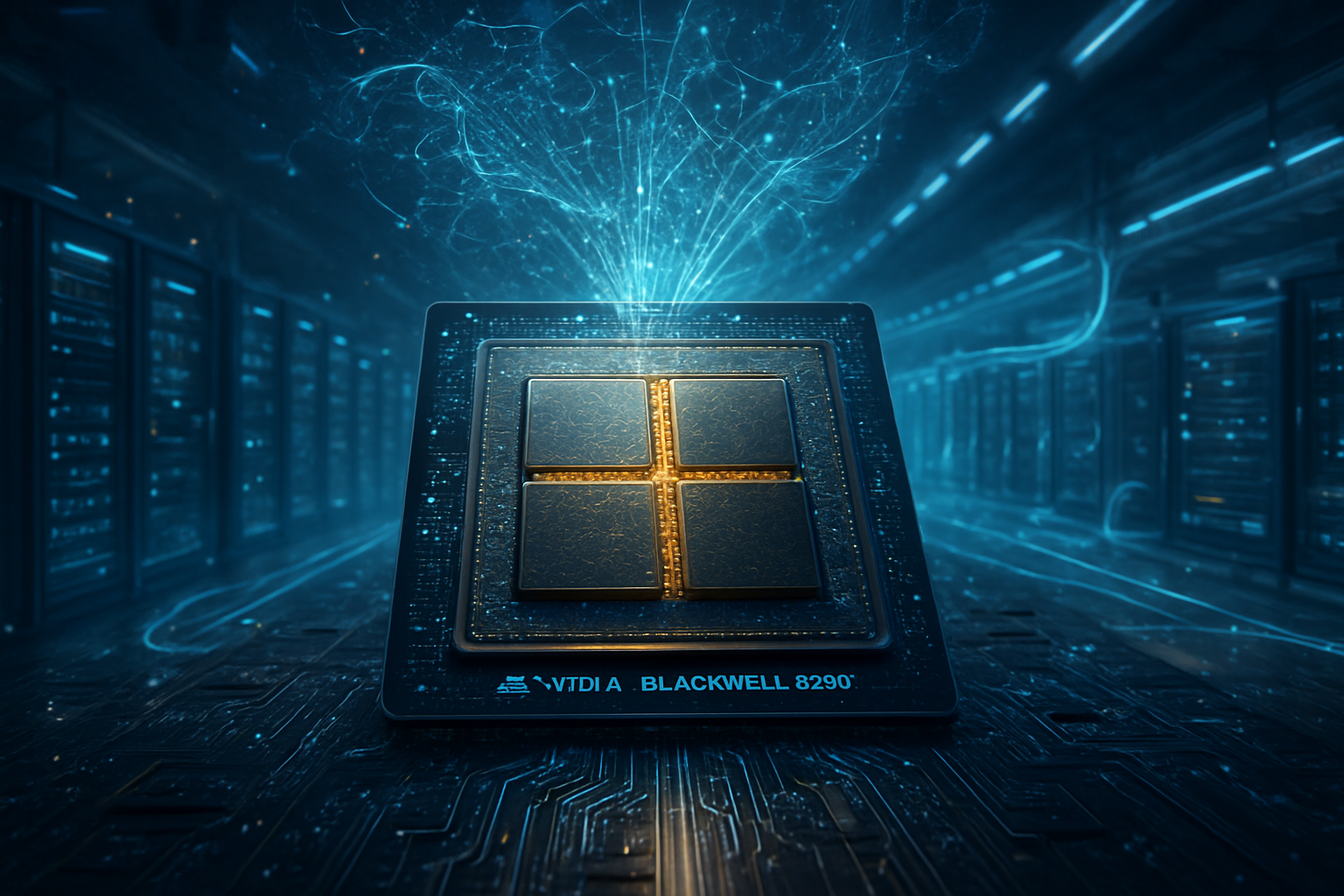
    The Blackwell B200 is a technical marvel that redefines the limits of semiconductor engineering. Moving away from the single-die approach of the Hopper architecture, Blackwell utilizes a dual-die chiplet design fused by a blistering 10 TB/s interconnect. This configuration packs 208 billion transistors and provides 192GB of HBM3e memory, manufactured on TSMC’s (NYSE: TSM) advanced 4NP process. The most significant technical leap, however, is the introduction of the Second-Gen Transformer Engine and FP4 precision. This allows the B200 to deliver up to 18 PetaFLOPS of inference performance—a nearly 30x increase in throughput for trillion-parameter models compared to the H100 when deployed in liquid-cooled NVL72 rack configurations.

    Initial reactions from the AI research community have been a mix of awe and logistical concern. While labs like OpenAI and Anthropic have praised the B200’s ability to handle the massive memory requirements of "reasoning" models (such as the o1 series), data center operators are grappling with the immense power demands. A single Blackwell rack can consume over 120kW, requiring a wholesale transition to liquid-cooling infrastructure. This thermal density has created a high barrier to entry, effectively favoring large-scale providers who can afford the specialized facilities needed to run Blackwell at peak performance. Despite these challenges, NVIDIA’s software ecosystem, centered around CUDA, remains a formidable moat that continues to make Blackwell the "gold standard" for frontier model training.

    The Hyperscale Counter-Offensive: Custom Silicon Ascendant

    While NVIDIA’s hardware is shipping in record volumes—estimated at 1,000 racks per week—the tech giants are increasingly pivoting to their own internal solutions. Google has recently unveiled its TPU v7 (Ironwood), built on a 3nm process, which aims to match Blackwell’s raw compute while offering superior energy efficiency for Google’s internal services like Search and Gemini. Similarly, Amazon Web Services (AWS) launched Trainium 3 at its recent re:Invent conference, claiming a 4.4x performance boost over its predecessor. These custom chips are not just for internal use; AWS and Google are offering deep discounts—up to 70%—to startups that choose their proprietary silicon over NVIDIA instances, a move designed to erode NVIDIA’s market share in the high-volume inference sector.

    This shift has profound implications for the competitive landscape. Microsoft, despite facing delays with its Maia 200 (Braga) chip, has pivoted toward a "system-level" optimization strategy, integrating its Azure Cobalt 200 CPUs to maximize the efficiency of its existing hardware clusters. For AI startups, this diversification is a boon. By becoming platform-agnostic, companies like Anthropic are now training and deploying models across a heterogeneous mix of NVIDIA GPUs, Google TPUs, and AWS Trainium. This strategy mitigates the "NVIDIA Tax" and shields these companies from the supply chain volatility that characterized the 2023-2024 AI boom.

    A Shifting Global Landscape: Sovereign AI and the Inference Pivot

    Beyond the battle between NVIDIA and the hyperscalers, a new demand engine has emerged: Sovereign AI. Nations such as Japan, Saudi Arabia, and the United Arab Emirates are investing billions to build domestic compute stacks. In Japan, the government-backed Rapidus is racing to produce 2nm logic chips, while Saudi Arabia’s Vision 2030 initiative is leveraging subsidized energy to undercut Western data center costs by 30%. These nations are increasingly looking for alternatives to the U.S.-centric supply chain, creating a permanent new class of buyers that are just as likely to invest in custom local silicon as they are in NVIDIA’s flagship products.

    This geopolitical shift is occurring alongside a fundamental change in the AI workload mix. In late 2025, the industry is moving from a "training-heavy" phase to an "inference-heavy" phase. While training a frontier model still requires the massive parallel processing power of a Blackwell cluster, running those models at scale for millions of users demands cost-efficiency above all else. This is where custom ASICs (Application-Specific Integrated Circuits) shine. By stripping away the general-purpose features of a GPU that aren't needed for inference, hyperscalers can deliver AI services at a fraction of the power and cost, challenging NVIDIA’s dominance in the most profitable segment of the market.

    The Road to Rubin: NVIDIA’s Next Leap

    NVIDIA is not standing still in the face of this rising competition. To maintain its lead, the company has accelerated its roadmap to a one-year cadence, recently teasing the "Rubin" architecture slated for 2026. Rubin is expected to leapfrog current custom silicon by moving to a 3nm process and incorporating HBM4 memory, which will double memory channels and address the primary bottleneck for next-generation reasoning models. The Rubin platform will also feature the new Vera CPU, creating a tightly integrated "Vera Rubin" ecosystem that will be difficult for competitors to unbundle.

    Experts predict that the next two years will see a bifurcated market. NVIDIA will likely retain a 90% share of the "Frontier Training" market, where the most advanced models are built. However, the "Commodity Inference" market—where models are actually put to work—will become a battlefield for custom silicon. The challenge for NVIDIA will be to prove that its system-level integration (including NVLink and InfiniBand networking) provides enough value to justify its premium price tag over the "good enough" performance of custom hyperscale chips.

    Summary of a New Era in AI Compute

    The shipping of NVIDIA Blackwell marks the end of the "GPU shortage" era and the beginning of the "Silicon Diversity" era. Key takeaways from this development include the successful deployment of chiplet-based AI hardware at scale, the rise of 3nm custom ASICs as legitimate competitors for inference workloads, and the emergence of Sovereign AI as a major market force. While NVIDIA remains the undisputed king of performance, the aggressive moves by Google, Amazon, and Microsoft suggest that the era of a single-vendor monoculture is coming to an end.

    In the coming months, the industry will be watching the real-world performance of Trainium 3 and the eventual launch of Microsoft’s Maia 200. As these custom chips reach parity with NVIDIA for specific tasks, the focus will shift from raw FLOPS to energy efficiency and software accessibility. For now, Blackwell is the most powerful tool ever built for AI, but for the first time, it is no longer the only game in town. The "Great Decoupling" has begun, and the winners will be those who can most effectively balance the peak performance of NVIDIA with the specialized efficiency of custom silicon.


    This content is intended for informational purposes only and represents analysis of current AI developments.

    TokenRing AI delivers enterprise-grade solutions for multi-agent AI workflow orchestration, AI-powered development tools, and seamless remote collaboration platforms.
    For more information, visit https://www.tokenring.ai/.
  • The Blackwell Era: Nvidia’s Trillion-Parameter Powerhouse Redefines the Frontiers of Artificial Intelligence

    The Blackwell Era: Nvidia’s Trillion-Parameter Powerhouse Redefines the Frontiers of Artificial Intelligence

    As of December 19, 2025, the landscape of artificial intelligence has been fundamentally reshaped by the full-scale deployment of Nvidia’s (Nasdaq: NVDA) Blackwell architecture. What began as a highly anticipated announcement in early 2024 has evolved into the dominant backbone of the world’s most advanced data centers. With the recent rollout of the Blackwell Ultra (B300-series) refresh, Nvidia has not only met the soaring demand for generative AI but has also established a new, formidable benchmark for large-scale training and inference that its competitors are still struggling to match.

    The immediate significance of the Blackwell rollout lies in its transition from a discrete component to a "rack-scale" system. By integrating the GB200 Grace Blackwell Superchip into massive, liquid-cooled NVL72 clusters, Nvidia has moved the industry beyond the limitations of individual GPU nodes. This development has effectively unlocked the ability for AI labs to train and deploy "reasoning-class" models—systems that can think, iterate, and solve complex problems in real-time—at a scale that was computationally impossible just 18 months ago.

    Technical Superiority: The 208-Billion Transistor Milestone

    At the heart of the Blackwell architecture is a dual-die design connected by a high-bandwidth link, packing a staggering 208 billion transistors into a single package. This is a massive leap from the 80 billion found in the previous Hopper H100 generation. The most significant technical advancement, however, is the introduction of the Second-Generation Transformer Engine, which supports FP4 (4-bit floating point) precision. This allows Blackwell to double the compute capacity for the same memory footprint, providing the throughput necessary for the trillion-parameter models that have become the industry standard in late 2025.

    The architecture is best exemplified by the GB200 NVL72, a liquid-cooled rack that functions as a single, unified GPU. By utilizing NVLink 5, the system provides 1.8 TB/s of bidirectional throughput per GPU, allowing 72 Blackwell GPUs to communicate with almost zero latency. This creates a massive pool of 13.5 TB of unified HBM3e memory. In practical terms, this means that a single rack can now handle inference for a 27-trillion parameter model, a feat that previously required dozens of separate server racks and massive networking overhead.

    Initial reactions from the AI research community have been overwhelmingly positive, particularly regarding Blackwell’s performance in "test-time scaling." Researchers have noted that for new reasoning models like Llama 4 and GPT-5.2, Blackwell offers up to a 30x increase in inference throughput compared to the H100. This efficiency is driven by the architecture's ability to handle the intensive "thinking" phases of these models without the catastrophic energy costs or latency bottlenecks that plagued earlier hardware generations.

    A New Hierarchy: How Blackwell Reshaped the Tech Giants

    The rollout of Blackwell has solidified a new hierarchy among tech giants, with Microsoft (Nasdaq: MSFT) and Meta Platforms (Nasdaq: META) emerging as the primary beneficiaries of early, massive-scale adoption. Microsoft Azure was the first to deploy the GB200 NVL72 at scale, using the infrastructure to power the latest iterations of OpenAI’s frontier models. This strategic move has allowed Microsoft to offer "Azure NDv6" instances, which have become the preferred platform for enterprise-grade agentic AI development, giving them a significant lead in the cloud services market.

    Meta, meanwhile, has utilized its massive Blackwell clusters to transition from general-purpose LLMs to specialized "world models" and reasoning agents. While Meta’s own MTIA silicon handles routine inference, the Blackwell B200 and B300 chips are reserved for the heavy lifting of frontier research. This dual-track strategy—using custom silicon for efficiency and Nvidia hardware for performance—has allowed Meta to remain competitive with closed-source labs while maintaining an open-source lead with its Llama 4 "Maverick" series.

    For Google (Nasdaq: GOOGL) and Amazon (Nasdaq: AMZN), the Blackwell rollout has forced a pivot toward "AI Hypercomputers." Google Cloud now offers Blackwell instances alongside its seventh-generation TPU v7 (Ironwood), creating a hybrid environment where customers can choose the best silicon for their specific workloads. However, the sheer versatility and software ecosystem of Nvidia’s CUDA platform, combined with Blackwell’s FP4 performance, has made it difficult for even the most advanced custom ASICs to displace Nvidia in the high-end training market.

    The Broader Significance: From Chatbots to Autonomous Reasoners

    The significance of Blackwell extends far beyond raw benchmarks; it represents a shift in the AI landscape from "stochastic parrots" to "autonomous reasoners." Before Blackwell, the bottleneck for AI was often the sheer volume of data and the time required to process it. Today, the bottleneck has shifted to global power availability. Blackwell’s 2x improvement in performance-per-dollar (TCO) has made it possible to continue scaling AI capabilities even as energy constraints become a primary concern for data center operators worldwide.

    Furthermore, Blackwell has enabled the "Real-time Multimodal" revolution. The architecture’s ability to process text, image, and high-resolution video simultaneously within a single GPU domain has reduced latency for multimodal AI by over 40%. This has paved the way for industrial "world models" used in robotics and autonomous systems, where split-second decision-making is a requirement rather than a luxury. In many ways, Blackwell is the milestone that has finally made the "AI Agent" a practical reality for the average consumer.

    However, this leap in capability has also heightened concerns regarding the concentration of power. With the cost of a single GB200 NVL72 rack reaching several million dollars, the barrier to entry for training frontier models has never been higher. Critics argue that Blackwell has effectively "moated" the AI industry, ensuring that only the most well-capitalized firms can compete at the cutting edge. This has led to a growing divide between the "compute-rich" elite and the rest of the tech ecosystem.

    The Horizon: Vera Rubin and the 12-Month Cadence

    Looking ahead, the Blackwell era is only the beginning of an accelerated roadmap. At the most recent GTC conference, Nvidia confirmed its shift to a 12-month product cadence, with the successor architecture, "Vera Rubin," already slated for a 2026 release. The near-term focus will likely be on the further refinement of the Blackwell Ultra line, pushing HBM3e capacities even higher to accommodate the ever-growing memory requirements of agentic workflows and long-context reasoning.

    In the coming months, we expect to see the first "sovereign AI" clouds built entirely on Blackwell architecture, as nations seek to build their own localized AI infrastructure. The challenge for Nvidia and its partners will be the physical deployment: liquid cooling is no longer optional for these high-density racks, and the retrofitting of older data centers to support 140 kW-per-rack power draws will be a significant logistical hurdle. Experts predict that the next phase of growth will be defined not just by the chips themselves, but by the innovation in data center engineering required to house them.

    Conclusion: A Definitive Chapter in AI History

    The rollout of the Blackwell architecture marks a definitive chapter in the history of computing. It is the moment when AI infrastructure moved from being a collection of accelerators to a holistic, rack-scale supercomputer. By delivering a 30x increase in inference performance and a 4x leap in training speed over the H100, Nvidia has provided the necessary "oxygen" for the next generation of AI breakthroughs.

    As we move into 2026, the industry will be watching closely to see how the competition responds and how the global energy grid adapts to the insatiable appetite of these silicon giants. For now, Nvidia remains the undisputed architect of the AI age, with Blackwell standing as a testament to the power of vertical integration and relentless innovation. The era of the trillion-parameter reasoner has arrived, and it is powered by Blackwell.


    This content is intended for informational purposes only and represents analysis of current AI developments.

    TokenRing AI delivers enterprise-grade solutions for multi-agent AI workflow orchestration, AI-powered development tools, and seamless remote collaboration platforms.
    For more information, visit https://www.tokenring.ai/.
  • The Great Decoupling: Why AMD is Poised to Challenge Nvidia’s AI Hegemony by 2030

    The Great Decoupling: Why AMD is Poised to Challenge Nvidia’s AI Hegemony by 2030

    As of late 2025, the artificial intelligence landscape has reached a critical inflection point. While Nvidia (NASDAQ: NVDA) remains the undisputed titan of the AI hardware world, a seismic shift is occurring in the data centers of the world’s largest tech companies. Advanced Micro Devices, Inc. (NASDAQ: AMD) has transitioned from a distant second to a formidable "wartime" competitor, leveraging a strategy centered on massive memory capacity and open-source software integration. This evolution marks the beginning of what many analysts are calling "The Great Decoupling," as hyperscalers move away from total dependence on proprietary stacks toward a more balanced, multi-vendor ecosystem.

    The immediate significance of this shift cannot be overstated. For the first time since the generative AI boom began, the hardware bottleneck is being addressed not just through raw compute power, but through architectural efficiency and cost-effectiveness. AMD’s aggressive annual roadmap—matching Nvidia’s own rapid-fire release cycle—has fundamentally changed the procurement strategies of major AI labs. By offering hardware that matches or exceeds Nvidia's memory specifications at a significantly lower total cost of ownership (TCO), AMD is positioning itself to capture a massive slice of the projected $1 trillion AI accelerator market by 2030.

    Breaking the Memory Wall: The Technical Ascent of the Instinct MI350

    The core of AMD’s challenge lies in its newly released Instinct MI350 series, specifically the flagship MI355X. Built on the 3nm CDNA 4 architecture, the MI355X represents a direct assault on Nvidia’s Blackwell B200 dominance. Technically, the MI355X is a marvel of chiplet engineering, boasting a staggering 288GB of HBM3E memory and 8.0 TB/s of memory bandwidth. In comparison, Nvidia’s Blackwell B200 typically offers between 180GB and 192GB of HBM3E. This 1.6x advantage in VRAM is not just a vanity metric; it allows for the inference of massive models, such as the upcoming Llama 4, on significantly fewer nodes, reducing the complexity and energy consumption of large-scale deployments.

    Performance-wise, the MI350 series has achieved what was once thought impossible: raw compute parity with Nvidia. The MI355X delivers roughly 10.1 PFLOPS of FP8 performance, rivaling the Blackwell architecture's sparse performance metrics. This parity is achieved through a hybrid manufacturing approach, utilizing Taiwan Semiconductor Manufacturing Company (NYSE: TSM)'s advanced CoWoS (Chip on Wafer on Substrate) packaging. Unlike Nvidia’s more monolithic designs, AMD’s chiplet-based approach allows for higher yields and greater flexibility in scaling, which has been a key factor in AMD's ability to keep prices 25-30% lower than its competitor.

    The reaction from the AI research community has been one of cautious optimism. Early benchmarks from labs like Meta (NASDAQ: META) and Microsoft (NASDAQ: MSFT) suggest that the MI350 series is remarkably easy to integrate into existing workflows. This is largely due to the maturation of ROCm 7.0, AMD’s open-source software stack. By late 2025, the "software moat" that once protected Nvidia’s CUDA has begun to evaporate, as industry-standard frameworks like PyTorch and OpenAI’s Triton now treat AMD hardware as a first-class citizen.

    The Hyperscaler Pivot: Strategic Advantages and Market Shifts

    The competitive implications of AMD’s rise are being felt most acutely in the boardrooms of the "Magnificent Seven." Companies like Oracle (NYSE: ORCL) and Alphabet (NASDAQ: GOOGL) are increasingly adopting AMD’s Instinct chips to avoid vendor lock-in. For these tech giants, the strategic advantage is twofold: pricing leverage and supply chain security. By qualifying AMD as a primary source for AI training and inference, hyperscalers can force Nvidia to be more competitive on pricing while ensuring that a single supply chain disruption at one fab doesn't derail their multi-billion dollar AI roadmaps.

    Furthermore, the market positioning for AMD has shifted from being a "budget alternative" to being the "inference workhorse." As the AI industry moves from the training phase of massive foundational models to the deployment phase of specialized, agentic AI, the demand for high-memory inference chips has skyrocketed. AMD’s superior memory capacity makes it the ideal choice for running long-context window models and multi-agent workflows, where memory throughput is often the primary bottleneck. This has led to a significant disruption in the mid-tier enterprise market, where companies are opting for AMD-powered private clouds over Nvidia-dominated public offerings.

    Startups are also benefiting from this shift. The increased availability of AMD hardware in the secondary market and through specialized cloud providers has lowered the barrier to entry for training niche models. As AMD continues to capture market share—projected to reach 20% of the data center GPU market by 2027—the competitive pressure will likely force Nvidia to accelerate its own roadmap, potentially leading to a "feature war" that benefits the entire AI ecosystem through faster innovation and lower costs.

    A New Paradigm: Open Standards vs. Proprietary Moats

    The broader significance of AMD’s potential outperformance lies in the philosophical battle between open and closed ecosystems. For years, Nvidia’s CUDA was the "Windows" of the AI world—ubiquitous, powerful, but proprietary. AMD’s success is intrinsically tied to the success of open-source initiatives like the Unified Accelerator Foundation (UXL). By championing a software-agnostic approach, AMD is betting that the future of AI will be built on portable code that can run on any silicon, whether it's an Instinct GPU, an Intel (NASDAQ: INTC) Gaudi accelerator, or a custom-designed TPU.

    This shift mirrors previous milestones in the tech industry, such as the rise of Linux in the server market or the adoption of x86 architecture over proprietary mainframes. The potential concern, however, remains the sheer scale of Nvidia’s R&D budget. While AMD has made massive strides, Nvidia’s "Rubin" architecture, expected in 2026, promises a complete redesign with HBM4 memory and integrated "Vera" CPUs. The risk for AMD is that Nvidia could use its massive cash reserves to simply "out-engineer" any advantage AMD gains in the short term.

    Despite these concerns, the momentum toward hardware diversification appears irreversible. The AI landscape is moving toward a "heterogeneous" future, where different chips are used for different parts of the AI lifecycle. In this new reality, AMD doesn't need to "kill" Nvidia to outperform it in growth; it simply needs to be the standard-bearer for the open-source, high-memory alternative that the industry is so desperately craving.

    The Road to MI400 and the HBM4 Era

    Looking ahead, the next 24 months will be defined by the transition to HBM4 memory and the launch of the AMD Instinct MI400 series. Predicted for early 2026, the MI400 is being hailed as AMD’s "Milan Moment"—a reference to the EPYC CPU generation that finally broke Intel’s stranglehold on the server market. Early specifications suggest the MI400 will offer over 400GB of HBM4 memory and nearly 20 TB/s of bandwidth, potentially leapfrogging Nvidia’s Rubin architecture in memory-intensive tasks.

    The future will also see a deeper integration of AI hardware into the fabric of edge computing. AMD’s acquisition of Xilinx and its strength in the PC market with Ryzen AI processors give it a unique "end-to-end" advantage that Nvidia lacks. We can expect to see seamless workflows where models are trained on Instinct clusters, optimized via ROCm, and deployed across millions of Ryzen-powered laptops and edge devices. The challenge will be maintaining this software consistency across such a vast array of hardware, but the rewards for success would be a dominant position in the "AI Everywhere" era.

    Experts predict that the next major hurdle will be power efficiency. As data centers hit the "power wall," the winner of the AI race may not be the company with the fastest chip, but the one with the most performance-per-watt. AMD’s focus on chiplet efficiency and advanced liquid cooling solutions for the MI350 and MI400 series suggests they are well-prepared for this shift.

    Conclusion: A New Era of Competition

    The rise of AMD in the AI sector is a testament to the power of persistent execution and the industry's innate desire for competition. By focusing on the "memory wall" and embracing an open-source software philosophy, AMD has successfully positioned itself as the only viable alternative to Nvidia’s dominance. The key takeaways are clear: hardware parity has been achieved, the software moat is narrowing, and the world’s largest tech companies are voting with their wallets for a multi-vendor future.

    In the grand history of AI, this period will likely be remembered as the moment the industry matured from a single-vendor monopoly into a robust, competitive market. While Nvidia will likely remain a leader in high-end, integrated rack-scale systems, AMD’s trajectory suggests it will become the foundational workhorse for the next generation of AI deployment. In the coming weeks and months, watch for more partnership announcements between AMD and major AI labs, as well as the first public benchmarks of the MI350 series, which will serve as the definitive proof of AMD’s new standing in the AI hierarchy.


    This content is intended for informational purposes only and represents analysis of current AI developments.

    TokenRing AI delivers enterprise-grade solutions for multi-agent AI workflow orchestration, AI-powered development tools, and seamless remote collaboration platforms.
    For more information, visit https://www.tokenring.ai/.
  • Beyond the Chip: Nvidia’s Rubin Architecture Ushers in the Era of the Gigascale AI Factory

    Beyond the Chip: Nvidia’s Rubin Architecture Ushers in the Era of the Gigascale AI Factory

    As 2025 draws to a close, the semiconductor landscape is bracing for its most significant transformation yet. NVIDIA (NASDAQ: NVDA) has officially moved into the sampling phase for its highly anticipated Rubin architecture, the successor to the record-breaking Blackwell generation. While Blackwell focused on scaling the GPU to its physical limits, Rubin represents a fundamental pivot in silicon engineering: the transition from individual accelerators to "AI Factories"—massive, multi-die systems designed to treat an entire data center as a single, unified computer.

    This shift comes at a critical juncture as the industry moves toward "Agentic AI" and million-token context windows. The Rubin platform is not merely a faster processor; it is a holistic re-architecting of compute, memory, and networking. By integrating next-generation HBM4 memory and the new Vera CPU, Nvidia is positioning itself to maintain its near-monopoly on high-end AI infrastructure, even as competitors and cloud providers attempt to internalize their chip designs.

    The Technical Blueprint: R100, Vera, and the HBM4 Revolution

    At the heart of the Rubin platform is the R100 GPU, a marvel of 3nm engineering manufactured by Taiwan Semiconductor Manufacturing Company (NYSE: TSM). Unlike previous generations that pushed the limits of a single reticle, the R100 utilizes a sophisticated multi-die design enabled by TSMC’s CoWoS-L packaging. Each R100 package consists of two primary compute dies and dedicated I/O tiles, effectively doubling the silicon area available for logic. This allows a single Rubin package to deliver an astounding 50 PFLOPS of FP4 precision compute, roughly 2.5 times the performance of a Blackwell GPU.

    Complementing the GPU is the Vera CPU, Nvidia’s successor to the Grace processor. Vera features 88 custom Arm-based cores designed specifically for AI orchestration and data pre-processing. The interconnect between the CPU and GPU has been upgraded to NVLink-C2C, providing a staggering 1.8 TB/s of bandwidth. Perhaps most significant is the debut of HBM4 (High Bandwidth Memory 4). Supplied by partners like SK Hynix (KRX: 000660) and Micron (NASDAQ: MU), the Rubin GPU features 288GB of HBM4 capacity with a bandwidth of 13.5 TB/s, a necessity for the trillion-parameter models expected to dominate 2026.

    Beyond raw power, Nvidia has introduced a specialized component called the Rubin CPX. This "Context Accelerator" is designed specifically for the prefill stage of large language model (LLM) inference. By using high-speed GDDR7 memory and specialized hardware for attention mechanisms, the CPX addresses the "memory wall" that often bottlenecks long-context window tasks, such as analyzing entire codebases or hour-long video files.

    Market Dominance and the Competitive Moat

    The move to the Rubin architecture solidifies Nvidia’s strategic advantage over rivals like AMD (NASDAQ: AMD) and Intel (NASDAQ: INTC). By moving to an annual release cadence and a "system-level" product, Nvidia is forcing competitors to compete not just with a chip, but with an entire rack-scale ecosystem. The Vera Rubin NVL144 system, which integrates 144 GPU dies and 36 Vera CPUs into a single liquid-cooled rack, is designed to be the "unit of compute" for the next generation of cloud infrastructure.

    Major cloud service providers (CSPs) including Amazon (NASDAQ: AMZN), Microsoft (NASDAQ: MSFT), and Alphabet (NASDAQ: GOOGL) are already lining up for early Rubin shipments. While these companies have developed their own internal AI chips (such as Trainium and TPU), the sheer software ecosystem of Nvidia’s CUDA, combined with the interconnect performance of NVLink 6, makes Rubin the indispensable choice for frontier model training. This puts pressure on secondary hardware players, as the barrier to entry is no longer just silicon performance, but the ability to provide a multi-terabit networking fabric that can scale to millions of interconnected units.

    Scaling the AI Factory: Implications for the Global Landscape

    The Rubin architecture marks the official arrival of the "AI Factory" era. Nvidia’s vision is to transform the data center from a collection of servers into a production line for intelligence. This has profound implications for global energy consumption and infrastructure. A single NVL576 Rubin Ultra rack is expected to draw upwards of 600kW of power, requiring advanced 800V DC power delivery and sophisticated liquid-to-liquid cooling systems. This shift is driving a secondary boom in the industrial cooling and power management sectors.

    Furthermore, the Rubin generation highlights the growing importance of silicon photonics. To bridge the gap between racks without the latency of traditional copper wiring, Nvidia is integrating optical interconnects directly into its X1600 switches. This "Giga-scale" networking allows a cluster of 100,000 GPUs to behave as if they were on a single circuit board. While this enables unprecedented AI breakthroughs, it also raises concerns about the centralization of AI power, as only a handful of nations and corporations can afford the multi-billion-dollar price tag of a Rubin-powered factory.

    The Horizon: Rubin Ultra and the Path to AGI

    Looking ahead to 2026 and 2027, Nvidia has already teased the Rubin Ultra variant. This iteration is expected to push memory capacities toward 1TB per GPU package using 16-high HBM4e stacks. The industry predicts that this level of memory density will be the catalyst for "World Models"—AI systems capable of simulating complex physical environments in real-time for robotics and autonomous vehicles.

    The primary challenge facing the Rubin rollout remains the supply chain. The reliance on TSMC’s advanced 3nm nodes and the high-precision assembly required for CoWoS-L packaging means that supply will likely remain constrained throughout 2026. Experts also point to the "software tax," where the complexity of managing a multi-die, rack-scale system requires a new generation of orchestration software that can handle hardware failures and data sharding at an unprecedented scale.

    A New Benchmark for Artificial Intelligence

    The Rubin architecture is more than a generational leap; it is a statement of intent. By moving to a multi-die, system-centric model, Nvidia has effectively redefined what it means to build AI hardware. The integration of the Vera CPU, HBM4, and NVLink 6 creates a vertically integrated powerhouse that will likely define the state-of-the-art for the next several years.

    As we move into 2026, the industry will be watching the first deployments of the Vera Rubin NVL144 systems. If these "AI Factories" deliver on their promise of 2.5x performance gains and seamless long-context processing, the path toward Artificial General Intelligence (AGI) may be paved with Nvidia silicon. For now, the tech world remains in a state of high anticipation, as the first Rubin samples begin to land in the labs of the world’s leading AI researchers.


    This content is intended for informational purposes only and represents analysis of current AI developments.

    TokenRing AI delivers enterprise-grade solutions for multi-agent AI workflow orchestration, AI-powered development tools, and seamless remote collaboration platforms.
    For more information, visit https://www.tokenring.ai/.
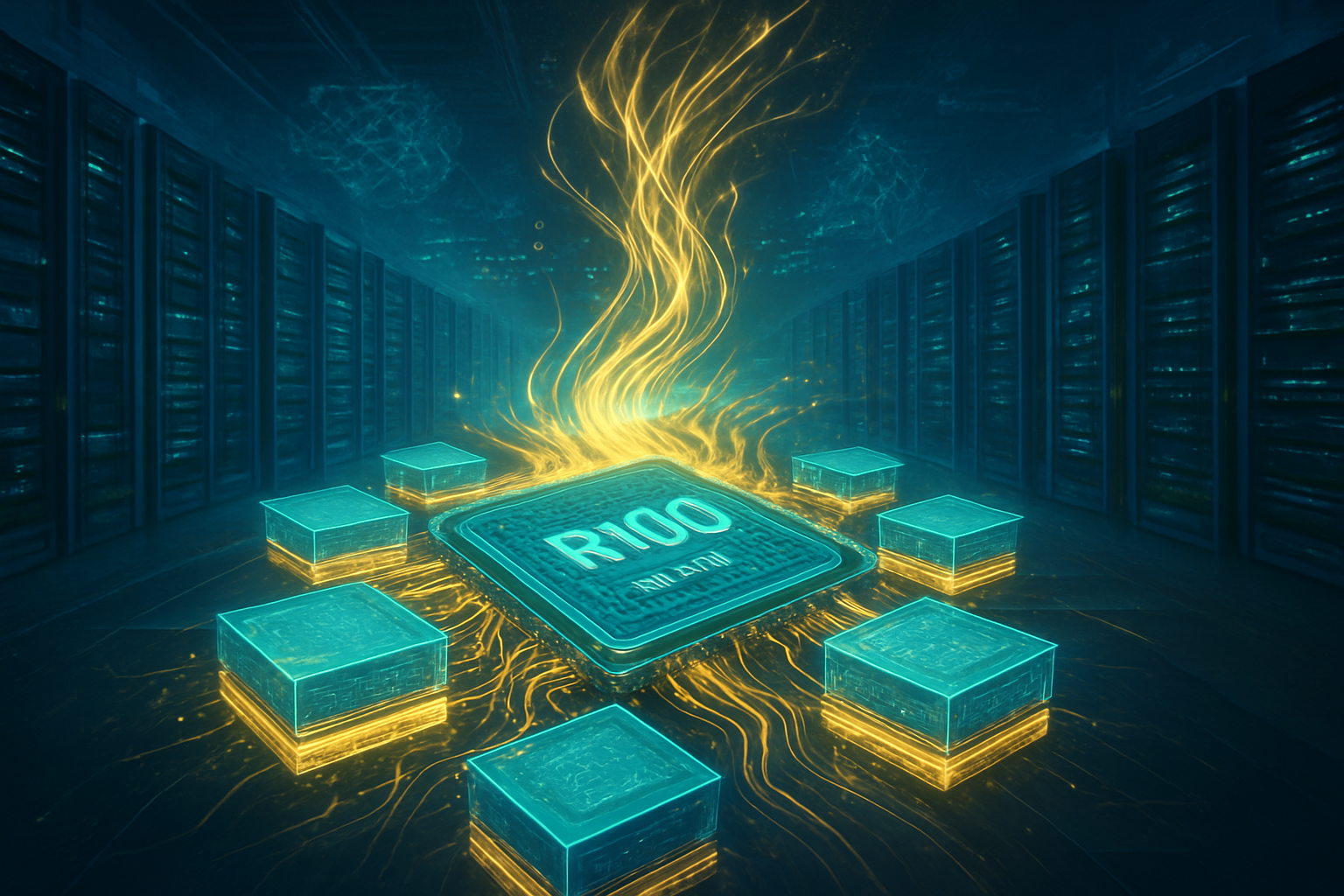
  • Nvidia H100: Fueling the AI Revolution with Unprecedented Power

    Nvidia H100: Fueling the AI Revolution with Unprecedented Power

    The landscape of artificial intelligence (AI) computing has been irrevocably reshaped by the introduction of Nvidia's (NASDAQ: NVDA) H100 Tensor Core GPU. Announced in March 2022 and becoming widely available in Q3 2022, the H100 has rapidly become the cornerstone for developing, training, and deploying the most advanced AI models, particularly large language models (LLMs) and generative AI. Its arrival has not only set new benchmarks for computational performance but has also ignited an intense "AI arms race" among tech giants and startups, fundamentally altering strategic priorities in the semiconductor and AI sectors.

    The H100, based on the revolutionary Hopper architecture, represents an order-of-magnitude leap over its predecessors, enabling AI researchers and developers to tackle problems previously deemed intractable. As of late 2025, the H100 continues to be a critical component in the global AI infrastructure, driving innovation at an unprecedented pace and solidifying Nvidia's dominant position in the high-performance computing market.

    A Technical Marvel: Unpacking the H100's Advancements

    The Nvidia H100 GPU is a triumph of engineering, built on the cutting-edge Hopper (GH100) architecture and fabricated using a custom TSMC 4N process. This intricate design packs an astonishing 80 billion transistors into a compact die, a significant increase over the A100's 54.2 billion. This transistor density underpins its unparalleled computational prowess.

    At its core, the H100 features new fourth-generation Tensor Cores, designed for faster matrix computations and supporting a broader array of AI and HPC tasks, crucially including FP8 precision. However, the most groundbreaking innovation is the Transformer Engine. This dedicated hardware unit dynamically adjusts computations between FP16 and FP8 precisions, dramatically accelerating the training and inference of transformer-based AI models—the architectural backbone of modern LLMs. This engine alone can speed up large language models by up to 30 times over the previous generation, the A100.

    Memory performance is another area where the H100 shines. It utilizes High-Bandwidth Memory 3 (HBM3), delivering an impressive 3.35 TB/s of memory bandwidth (for the 80GB SXM/PCIe variants), a significant increase from the A100's 2 TB/s HBM2e. This expanded bandwidth is critical for handling the massive datasets and trillions of parameters characteristic of today's advanced AI models. Connectivity is also enhanced with fourth-generation NVLink, providing 900 GB/s of GPU-to-GPU interconnect bandwidth (a 50% increase over the A100), and support for PCIe Gen5, which doubles system connection speeds to 128 GB/s bidirectional bandwidth. For large-scale deployments, the NVLink Switch System allows direct communication among up to 256 H100 GPUs, creating massive, unified clusters for exascale workloads.

    Beyond raw power, the H100 introduces Confidential Computing, making it the first GPU to feature hardware-based trusted execution environments (TEEs). This protects AI models and sensitive data during processing, a crucial feature for enterprises and cloud environments dealing with proprietary algorithms and confidential information. Initial reactions from the AI research community and industry experts were overwhelmingly positive, with many hailing the H100 as a pivotal tool that would accelerate breakthroughs across virtually every domain of AI, from scientific discovery to advanced conversational agents.

    Reshaping the AI Competitive Landscape

    The advent of the Nvidia H100 has profoundly influenced the competitive dynamics among AI companies, tech giants, and ambitious startups. Companies with substantial capital and a clear vision for AI leadership have aggressively invested in H100 infrastructure, creating a distinct advantage in the rapidly evolving AI arms race.

    Tech giants like Meta (NASDAQ: META), Microsoft (NASDAQ: MSFT), Google (NASDAQ: GOOGL), and Amazon (NASDAQ: AMZN) are among the largest beneficiaries and purchasers of H100 GPUs. Meta, for instance, has reportedly aimed to acquire hundreds of thousands of H100 GPUs to power its ambitious AI models, including its pursuit of artificial general intelligence (AGI). Microsoft has similarly invested heavily for its Azure supercomputer and its strategic partnership with OpenAI, while Google leverages H100s alongside its custom Tensor Processing Units (TPUs). These investments enable these companies to train and deploy larger, more sophisticated models faster, maintaining their lead in AI innovation.

    For AI labs and startups, the H100 is equally transformative. Entities like OpenAI, Stability AI, and numerous others rely on H100s to push the boundaries of generative AI, multimodal systems, and specialized AI applications. Cloud service providers (CSPs) such as Amazon Web Services (AWS), Microsoft Azure, Google Cloud, and Oracle Cloud Infrastructure (OCI), along with specialized GPU cloud providers like CoreWeave and Lambda, play a crucial role in democratizing access to H100s. By offering H100 instances, they enable smaller companies and researchers to access cutting-edge compute without the prohibitive upfront hardware investment, fostering a vibrant ecosystem of AI innovation.

    The competitive implications are significant. The H100's superior performance accelerates innovation cycles, allowing companies with access to develop and deploy AI models at an unmatched pace. This speed is critical for gaining a market edge. However, the high cost of the H100 (estimated between $25,000 and $40,000 per GPU) also risks concentrating AI power among the well-funded, potentially creating a chasm between those who can afford massive H100 deployments and those who cannot. This dynamic has also spurred major tech companies to invest in developing their own custom AI chips (e.g., Google's TPUs, Amazon's Trainium, Microsoft's Maia) to reduce reliance on Nvidia and control costs in the long term. Nvidia's strategic advantage lies not just in its hardware but also in its comprehensive CUDA software ecosystem, which has become the de facto standard for AI development, creating a strong moat against competitors.

    Wider Significance and Societal Implications

    The Nvidia H100's impact extends far beyond corporate balance sheets and data center racks, shaping the broader AI landscape and driving significant societal implications. It fits perfectly into the current trend of increasingly complex and data-intensive AI models, particularly the explosion of large language models and generative AI. The H100's specialized architecture, especially the Transformer Engine, is tailor-made for these models, enabling breakthroughs in natural language understanding, content generation, and multimodal AI that were previously unimaginable.

    Its wider impacts include accelerating scientific discovery, enabling more sophisticated autonomous systems, and revolutionizing various industries from healthcare to finance through enhanced AI capabilities. The H100 has solidified its position as the industry standard, powering over 90% of deployed LLMs and cementing Nvidia's market dominance in AI accelerators. This has fostered an environment where organizations can iterate on AI models more rapidly, leading to faster development and deployment of AI-powered products and services.

    However, the H100 also brings significant concerns. Its high cost and the intense demand have created accessibility challenges, leading to supply chain constraints even for major tech players. More critically, the H100's substantial power consumption, up to 700W per GPU, raises significant environmental and sustainability concerns. While the H100 offers improved performance-per-watt compared to the A100, the sheer scale of global deployment means that millions of H100 GPUs could consume energy equivalent to that of entire nations, necessitating robust cooling infrastructure and prompting calls for more sustainable energy solutions for data centers.

    Comparing the H100 to previous AI milestones, it represents a generational leap, delivering up to 9 times faster AI training and a staggering 30 times faster AI inference for LLMs compared to the A100. This dwarfs the performance gains seen in earlier transitions, such as the A100 over the V100. The H100's ability to handle previously intractable problems in deep learning and scientific computing marks a new era in computational capabilities, where tasks that once took months can now be completed in days, fundamentally altering the pace of AI progress.

    The Road Ahead: Future Developments and Predictions

    The rapid evolution of AI demands an equally rapid advancement in hardware, and Nvidia is already well into its accelerated annual update cycle for data center GPUs. The H100, while still dominant, is now paving the way for its successors.

    In the near term, Nvidia unveiled its Blackwell architecture in March 2025, featuring products like the B100, B200, and the GB200 Superchip (combining two B200 GPUs with a Grace CPU). Blackwell GPUs, with their dual-die design and up to 128 billion more transistors than the H100, promise five times the AI performance of the H100 and significantly higher memory bandwidth with HBM3e. The Blackwell Ultra is slated for release in the second half of 2025, pushing performance even further. These advancements will be critical for the continued scaling of LLMs, enabling more sophisticated multimodal AI and accelerating scientific simulations.

    Looking further ahead, Nvidia's roadmap includes the Rubin architecture (R100, Rubin Ultra) expected for mass production in late 2025 and system availability in 2026. The Rubin R100 will utilize TSMC's N3P (3nm) process, promising higher transistor density, lower power consumption, and improved performance. It will also introduce a chiplet design, 8 HBM4 stacks with 288GB capacity, and a faster NVLink 6 interconnect. A new CPU, Vera, will accompany the Rubin platform. Beyond Rubin, a GPU codenamed "Feynman" is anticipated for 2028.

    These future developments will unlock new applications, from increasingly lifelike generative AI and more robust autonomous systems to personalized medicine and real-time scientific discovery. Expert predictions point towards continued specialization in AI hardware, with a strong emphasis on energy efficiency and advanced packaging technologies to overcome the "memory wall" – the bottleneck created by the disparity between compute power and memory bandwidth. Optical interconnects are also on the horizon to ease cooling and packaging constraints. The rise of "agentic AI" and physical AI for robotics will further drive demand for hardware capable of handling heterogeneous workloads, integrating LLMs, perception models, and action models seamlessly.

    A Defining Moment in AI History

    The Nvidia H100 GPU stands as a monumental achievement, a defining moment in the history of artificial intelligence. It has not merely improved computational speed; it has fundamentally altered the trajectory of AI research and development, enabling the rapid ascent of large language models and generative AI that are now reshaping industries and daily life.

    The H100's key takeaways are its unprecedented performance gains through the Hopper architecture, the revolutionary Transformer Engine, advanced HBM3 memory, and superior interconnects. Its impact has been to accelerate the AI arms race, solidify Nvidia's market dominance through its full-stack ecosystem, and democratize access to cutting-edge AI compute via cloud providers, albeit with concerns around cost and energy consumption. The H100 has set new benchmarks, against which all future AI accelerators will be measured, and its influence will be felt for years to come.

    As we move into 2026 and beyond, the ongoing evolution with architectures like Blackwell and Rubin promises even greater capabilities, but also intensifies the challenges of power management and manufacturing complexity. What to watch for in the coming weeks and months will be the widespread deployment and performance benchmarks of Blackwell-based systems, the continued development of custom AI chips by tech giants, and the industry's collective efforts to address the escalating energy demands of AI. The H100 has laid the foundation for an AI-powered future, and its successors are poised to build an even more intelligent world.


    This content is intended for informational purposes only and represents analysis of current AI developments.

    TokenRing AI delivers enterprise-grade solutions for multi-agent AI workflow orchestration, AI-powered development tools, and seamless remote collaboration platforms.
    For more information, visit https://www.tokenring.ai/.