Tag: GPU

  • AMD and OpenAI Forge Landmark Alliance: A New Era for AI Hardware Begins

    AMD and OpenAI Forge Landmark Alliance: A New Era for AI Hardware Begins

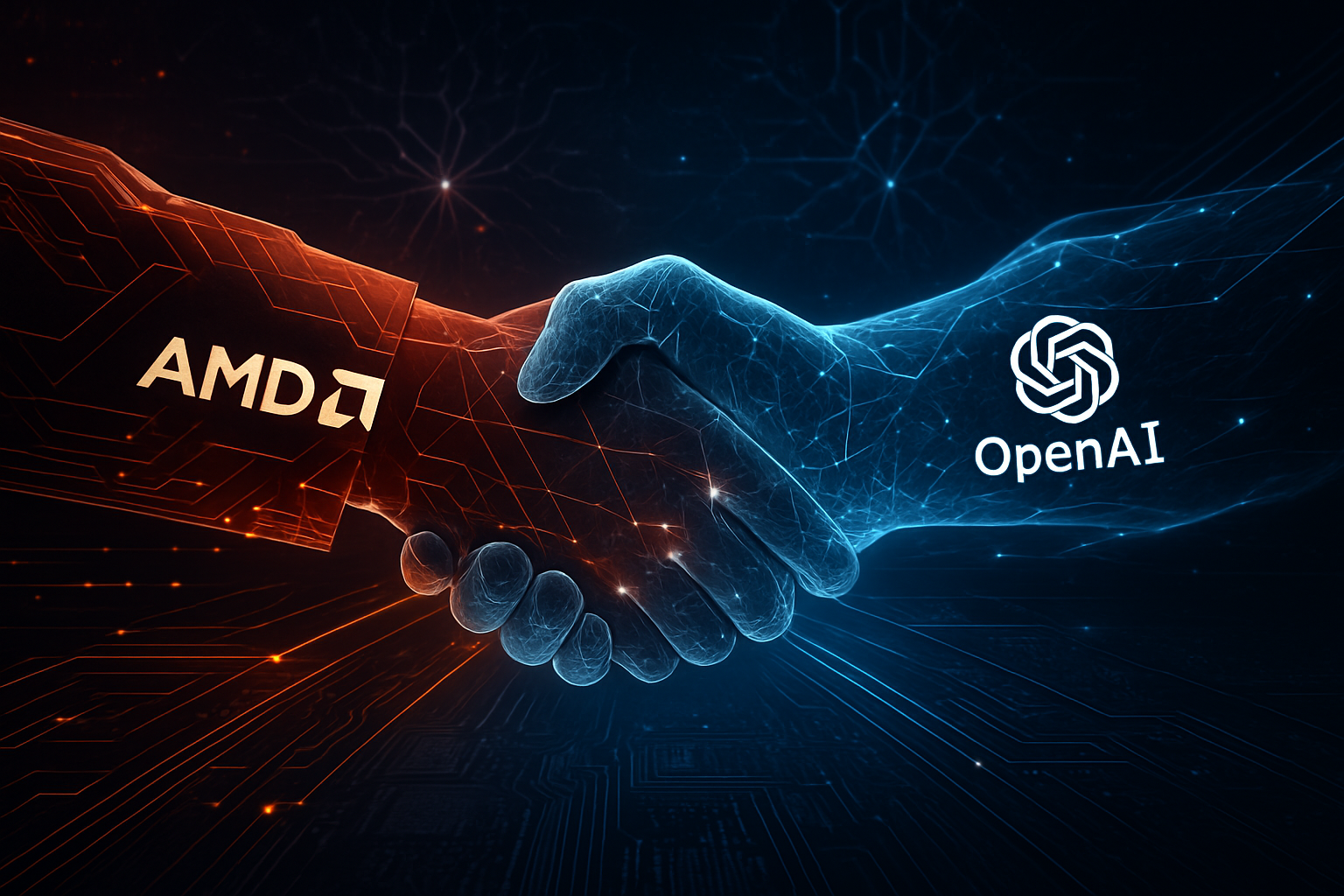
    SANTA CLARA, Calif. & SAN FRANCISCO, Calif. – October 6, 2025 – In a move set to redefine the competitive landscape of artificial intelligence, Advanced Micro Devices (NASDAQ: AMD) and OpenAI today announced a landmark multi-year strategic partnership. This monumental agreement will see OpenAI deploy up to six gigawatts (GW) of AMD's high-performance Instinct GPUs to power its next-generation AI infrastructure, marking a decisive shift in the industry's reliance on a diversified hardware supply chain. The collaboration, which builds upon existing technical work, extends to future generations of AMD's AI accelerators and rack-scale solutions, promising to accelerate the pace of AI development and deployment on an unprecedented scale.

    The partnership's immediate significance is profound for both entities and the broader AI ecosystem. For AMD, it represents a transformative validation of its Instinct GPU roadmap and its open-source ROCm software platform, firmly establishing the company as a formidable challenger to NVIDIA's long-held dominance in AI chips. The deal is expected to generate tens of billions of dollars in revenue for AMD, with some projections reaching over $100 billion in new revenue over four years. For OpenAI, this alliance secures a massive and diversified supply of cutting-edge AI compute, essential for its ambitious goals of building increasingly complex AI models and democratizing access to advanced AI. The agreement also includes a unique equity warrant structure, allowing OpenAI to acquire up to 160 million shares of AMD common stock, aligning the financial interests of both companies as OpenAI's infrastructure scales.

    Technical Prowess and Strategic Differentiation

    The core of this transformative partnership lies in AMD's commitment to delivering state-of-the-art AI accelerators, beginning with the Instinct MI450 series GPUs. The initial phase of deployment, slated for the second half of 2026, will involve a one-gigawatt cluster powered by these new chips. The MI450 series, built on AMD's "CDNA Next" architecture and leveraging advanced 3nm-class TSMC (NYSE: TSM) process technology, is engineered for extreme-scale AI applications, particularly large language models (LLMs) and distributed inference tasks.

    Preliminary specifications for the MI450 highlight its ambition: up to 432GB of HBM4 memory per GPU, projected to offer 50% more HBM capacity than NVIDIA's (NASDAQ: NVDA) next-generation Vera Rubin superchip, and an impressive 19.6 TB/s to 20 TB/s of HBM memory bandwidth. In terms of compute performance, the MI450 aims for upwards of 40 PetaFLOPS of FP4 capacity and 20 PetaFLOPS of FP8 performance per GPU, with AMD boldly claiming leadership in both AI training and inference. The rack-scale MI450X IF128 system, featuring 128 GPUs, is projected to deliver a combined 6,400 PetaFLOPS of FP4 compute. This represents a significant leap from previous AMD generations like the MI300X, which offered 192GB of HBM3. The MI450's focus on integrated rack-scale solutions, codenamed "Helios," incorporating future EPYC CPUs, Instinct MI400 GPUs, and next-generation Pensando networking, signifies a comprehensive approach to AI infrastructure design.

    This technical roadmap directly challenges NVIDIA's entrenched dominance. While NVIDIA's CUDA ecosystem has been a significant barrier to entry, AMD's rapidly maturing ROCm software stack, now bolstered by direct collaboration with OpenAI, is closing the gap. Industry experts view the MI450 as AMD's "no asterisk generation," a confident assertion of its ability to compete head-on with NVIDIA's H100, H200, and upcoming Blackwell and Vera Rubin architectures. Initial reactions from the AI research community have been overwhelmingly positive, hailing the partnership as a transformative move that will foster increased competition and accelerate AI development by providing a viable, scalable alternative to NVIDIA's hardware.

    Reshaping the AI Competitive Landscape

    The AMD-OpenAI partnership sends shockwaves across the entire AI industry, significantly altering the competitive dynamics for chip manufacturers, tech giants, and burgeoning AI startups.

    For AMD (NASDAQ: AMD), this deal is nothing short of a triumph. It secures a marquee customer in OpenAI, guarantees a substantial revenue stream, and validates its multi-year investment in the Instinct GPU line. The deep technical collaboration inherent in the partnership will accelerate the development and optimization of AMD's hardware and software, particularly its ROCm stack, making it a more attractive platform for AI developers. This strategic win positions AMD as a genuine contender against NVIDIA (NASDAQ: NVDA), moving the AI chip market from a near-monopoly to a more diversified and competitive ecosystem.

    OpenAI stands to gain immense strategic advantages. By diversifying its hardware supply beyond a single vendor, it enhances supply chain resilience and secures the vast compute capacity necessary to push the boundaries of AI research and deployment. The unique equity warrant structure transforms OpenAI from a mere customer into a co-investor, aligning its long-term success directly with AMD's, and providing a potential self-funding mechanism for future GPU purchases. This move also grants OpenAI direct influence over future AMD chip designs, ensuring they are optimized for its evolving AI needs.

    NVIDIA, while still holding a dominant position and having its own substantial deal with OpenAI, will face intensified competition. This partnership will necessitate a strategic recalibration, likely accelerating NVIDIA's own product roadmap and emphasizing its integrated CUDA software ecosystem as a key differentiator. However, the sheer scale of AI compute demand suggests that the market is large enough to support multiple major players, though NVIDIA's market share may see some adjustments. Other tech giants like Google (NASDAQ: GOOGL), Microsoft (NASDAQ: MSFT), and Meta (NASDAQ: META) will also feel the ripple effects. Microsoft, a major backer of OpenAI and user of AMD's MI300 series in Azure, implicitly benefits from OpenAI's enhanced compute options. Meta, already collaborating with AMD, sees its strategic choices validated. The deal also opens doors for other chip designers and AI hardware startups, as the industry seeks further diversification.

    Wider Significance and AI's Grand Trajectory

    This landmark deal between AMD and OpenAI transcends a mere commercial agreement; it is a pivotal moment in the broader narrative of artificial intelligence. It underscores several critical trends shaping the AI landscape and highlights both the immense promise and potential pitfalls of this technological revolution.

    Firstly, the partnership firmly establishes the trend of diversification in the AI hardware supply chain. For too long, the AI industry's reliance on a single dominant GPU vendor presented significant risks. OpenAI's move to embrace AMD as a core strategic partner signals a mature industry recognizing the need for resilience, competition, and innovation across its foundational infrastructure. This diversification is not just about mitigating risk; it's about fostering an environment where multiple hardware architectures and software ecosystems can thrive, ultimately accelerating the pace of AI development.

    Secondly, the scale of the commitment—up to six gigawatts of computing power—highlights the insatiable demand for AI compute. This colossal infrastructure buildout, equivalent to the energy needs of millions of households, underscores that the next era of AI will be defined not just by algorithmic breakthroughs but by the sheer industrial scale of its underlying compute. This voracious appetite for power, however, brings significant environmental concerns. The energy consumption of AI data centers is rapidly escalating, posing challenges for sustainable development and intensifying the search for more energy-efficient hardware and operational practices.

    The deal also marks a new phase in strategic partnerships and vertical integration. OpenAI's decision to take a potential equity stake in AMD transforms a traditional customer-supplier relationship into a deeply aligned strategic venture. This model, where AI developers actively shape and co-invest in their hardware providers, is becoming a hallmark of the capital-intensive AI infrastructure race. It mirrors similar efforts by Google with its TPUs and Meta's collaborations, signifying a shift towards custom-tailored hardware solutions for optimal AI performance.

    Comparing this to previous AI milestones, the AMD-OpenAI deal is akin to the early days of the personal computer or internet revolutions, where foundational infrastructure decisions profoundly shaped subsequent innovation. Just as the widespread availability of microprocessors and networking protocols democratized computing, this diversification of high-performance AI accelerators could unlock new avenues for AI research and application development that were previously constrained by compute availability or vendor lock-in. It's a testament to the industry's rapid maturation, moving beyond theoretical breakthroughs to focus on the industrial-scale engineering required to bring AI to its full potential.

    The Road Ahead: Future Developments and Challenges

    The strategic alliance between AMD and OpenAI sets the stage for a dynamic future, with expected near-term and long-term developments poised to reshape the AI industry.

    In the near term, AMD anticipates a substantial boost to its revenue, with initial deployments of the Instinct MI450 series and rack-scale AI solutions scheduled for the second half of 2026. This immediate validation will likely accelerate AMD's product roadmap and enhance its market position. OpenAI, meanwhile, gains crucial compute capacity, enabling it to scale its next-generation AI models more rapidly and efficiently. The direct collaboration on hardware and software optimization will lead to significant advancements in AMD's ROCm ecosystem, making it a more robust and attractive platform for AI developers.

    Looking further into the long term, the partnership is expected to drive deep, multi-generational hardware and software collaboration, ensuring that AMD's future AI chips are precisely tailored to OpenAI's evolving needs. This could lead to breakthroughs in specialized AI architectures and more efficient processing of increasingly complex models. The potential equity stake for OpenAI in AMD creates a symbiotic relationship, aligning their financial futures and fostering sustained innovation. For the broader AI industry, this deal heralds an era of intensified competition and diversification in the AI chip market, potentially leading to more competitive pricing and a wider array of hardware options for AI development and deployment.

    Potential applications and use cases on the horizon are vast. The enhanced computing power will enable OpenAI to develop and train even larger and more sophisticated AI models, pushing the boundaries of natural language understanding, generative AI, robotics, and scientific discovery. Efficient inference capabilities will allow these advanced models to be deployed at scale, powering a new generation of AI-driven products and services across industries, from personalized assistants to autonomous systems and advanced medical diagnostics.

    However, significant challenges need to be addressed. The sheer scale of deploying six gigawatts of compute capacity will strain global supply chains for advanced semiconductors, particularly for cutting-edge nodes, high-bandwidth memory (HBM), and advanced packaging. Infrastructure requirements, including massive investments in power, cooling, and data center real estate, will also be formidable. While ROCm is maturing, bridging the gap with NVIDIA's established CUDA ecosystem remains a software challenge requiring continuous investment and optimization. Furthermore, the immense financial outlay for such an infrastructure buildout raises questions about long-term financing and execution risks for all parties involved.

    Experts largely predict this deal will be a "game changer" for AMD, validating its technology as a competitive alternative. They emphasize that the AI market is large enough to support multiple major players and that OpenAI's strategy is fundamentally about diversifying its compute infrastructure for resilience and flexibility. Sam Altman, OpenAI CEO, has consistently highlighted that securing sufficient computing power is the primary constraint on AI's progress, underscoring the critical importance of partnerships like this.

    A New Chapter in AI's Compute Story

    The multi-year, multi-generational deal between AMD (NASDAQ: AMD) and OpenAI represents a pivotal moment in the history of artificial intelligence. It is a resounding affirmation of AMD's growing prowess in high-performance computing and a strategic masterstroke by OpenAI to secure and diversify its foundational AI infrastructure.

    The key takeaways are clear: OpenAI is committed to a multi-vendor approach for its colossal compute needs, AMD is now a central player in the AI chip arms race, and the industry is entering an era of unprecedented investment in AI hardware. The unique equity alignment between the two companies signifies a deeper, more collaborative model for financing and developing critical AI infrastructure. This partnership is not just about chips; it's about shaping the future trajectory of AI itself.

    This development's significance in AI history cannot be overstated. It marks a decisive challenge to the long-standing dominance of a single vendor in AI accelerators, fostering a more competitive and innovative environment. It underscores the transition of AI from a nascent research field to an industrial-scale endeavor requiring continent-level compute resources. The sheer scale of this infrastructure buildout, coupled with the strategic alignment of a leading AI developer and a major chip manufacturer, sets a new benchmark for how AI will be built and deployed.

    Looking at the long-term impact, this partnership is poised to accelerate innovation, enhance supply chain resilience, and potentially democratize access to advanced AI capabilities by fostering a more diverse hardware ecosystem. The continuous optimization of AMD's ROCm software stack, driven by OpenAI's demanding workloads, will be critical to its success and wider adoption.

    In the coming weeks and months, industry watchers will be keenly observing further details on the financial implications, specific deployment milestones, and how this alliance influences the broader competitive dynamics. NVIDIA's (NASDAQ: NVDA) strategic responses, the continued development of AMD's Instinct GPUs, and the practical implementation of OpenAI's AI infrastructure buildout will all be critical indicators of the long-term success and transformative power of this landmark deal. The future of AI compute just got a lot more interesting.


    This content is intended for informational purposes only and represents analysis of current AI developments.
    TokenRing AI delivers enterprise-grade solutions for multi-agent AI workflow orchestration, AI-powered development tools, and seamless remote collaboration platforms. For more information, visit https://www.tokenring.ai/.
  • The AI Supercycle: How ChatGPT Ignited a Gold Rush for Next-Gen Semiconductors

    The AI Supercycle: How ChatGPT Ignited a Gold Rush for Next-Gen Semiconductors

    The advent of ChatGPT and the subsequent explosion in generative artificial intelligence (AI) have fundamentally reshaped the technological landscape, triggering an unprecedented surge in demand for specialized semiconductors. This "post-ChatGPT boom" has not only accelerated the pace of AI innovation but has also initiated a profound transformation within the chip manufacturing industry, creating an "AI supercycle" that prioritizes high-performance computing and efficient data processing. The immediate significance of this trend is multifaceted, impacting everything from global supply chains and economic growth to geopolitical strategies and the very future of AI development.

    This dramatic shift underscores the critical role hardware plays in unlocking AI's full potential. As AI models grow exponentially in complexity and scale, the need for powerful, energy-efficient chips capable of handling immense computational loads has become paramount. This escalating demand is driving intense innovation in semiconductor design and manufacturing, creating both immense opportunities and significant challenges for chipmakers, AI companies, and national economies vying for technological supremacy.

    The Silicon Brains Behind the AI Revolution: A Technical Deep Dive

    The current AI boom is not merely increasing demand for chips; it's catalyzing a targeted demand for specific, highly advanced semiconductor types optimized for machine learning workloads. At the forefront are Graphics Processing Units (GPUs), which have emerged as the indispensable workhorses of AI. Companies like NVIDIA (NASDAQ: NVDA) have seen their market valuation and gross margins skyrocket due to their dominant position in this sector. GPUs, with their massively parallel architecture, are uniquely suited for the simultaneous processing of thousands of data points, a capability essential for the matrix operations and vector calculations that underpin deep learning model training and complex algorithm execution. This architectural advantage allows GPUs to accelerate tasks that would be prohibitively slow on traditional Central Processing Units (CPUs).

    Accompanying the GPU is High-Bandwidth Memory (HBM), a critical component designed to overcome the "memory wall" – the bottleneck created by traditional memory's inability to keep pace with GPU processing power. HBM provides significantly higher data transfer rates and lower latency by integrating memory stacks directly onto the same package as the processor. This close proximity enables faster communication, reduced power consumption, and massive throughput, which is crucial for AI model training, natural language processing, and real-time inference, where rapid data access is paramount.

    Beyond general-purpose GPUs, the industry is seeing a growing emphasis on Application-Specific Integrated Circuits (ASICs) and Neural Processing Units (NPUs). ASICs, exemplified by Google's (NASDAQ: GOOGL) Tensor Processing Units (TPUs), are custom-designed chips meticulously optimized for particular AI processing tasks, offering superior efficiency for specific workloads, especially for inference. NPUs, on the other hand, are specialized processors accelerating AI and machine learning tasks at the edge, in devices like smartphones and autonomous vehicles, where low power consumption and high performance are critical. This diversification reflects a maturing AI ecosystem, moving from generalized compute to specialized, highly efficient hardware tailored for distinct AI applications.

    The technical advancements in these chips represent a significant departure from previous computing paradigms. While traditional computing prioritized sequential processing, AI demands parallelization on an unprecedented scale. Modern AI chips feature smaller process nodes, advanced packaging techniques like 3D integrated circuit design, and innovative architectures that prioritize massive data throughput and energy efficiency. Initial reactions from the AI research community and industry experts have been overwhelmingly positive, with many acknowledging that these hardware breakthroughs are not just enabling current AI capabilities but are also paving the way for future, even more sophisticated, AI models and applications. The race is on to build ever more powerful and efficient silicon brains for the burgeoning AI mind.

    Reshaping the AI Landscape: Corporate Beneficiaries and Competitive Shifts

    The AI supercycle has profound implications for AI companies, tech giants, and startups, creating clear winners and intensifying competitive dynamics. Unsurprisingly, NVIDIA (NASDAQ: NVDA) stands as the primary beneficiary, having established a near-monopoly in high-end AI GPUs. Its CUDA platform and extensive software ecosystem further entrench its position, making it the go-to provider for training large language models and other complex AI systems. Other chip manufacturers like Advanced Micro Devices (NASDAQ: AMD) are aggressively pursuing the AI market, offering competitive GPU solutions and attempting to capture a larger share of this lucrative segment. Intel (NASDAQ: INTC), traditionally a CPU powerhouse, is also investing heavily in AI accelerators and custom silicon, aiming to reclaim relevance in this new computing era.

    Beyond the chipmakers, hyperscale cloud providers such as Microsoft (NASDAQ: MSFT), Amazon (NASDAQ: AMZN) (via AWS), and Google (NASDAQ: GOOGL) are heavily investing in AI-optimized infrastructure, often designing their own custom AI chips (like Google's TPUs) to gain a competitive edge in offering AI services and to reduce reliance on external suppliers. These tech giants are strategically positioning themselves as the foundational infrastructure providers for the AI economy, offering access to scarce GPU clusters and specialized AI hardware through their cloud platforms. This allows smaller AI startups and research labs to access the necessary computational power without the prohibitive upfront investment in hardware.

    The competitive landscape for major AI labs and startups is increasingly defined by access to these powerful semiconductors. Companies with strong partnerships with chip manufacturers or those with the resources to secure massive GPU clusters gain a significant advantage in model development and deployment. This can potentially disrupt existing product or services markets by enabling new AI-powered capabilities that were previously unfeasible. However, it also creates a divide, where smaller players might struggle to compete due to the high cost and scarcity of these essential resources, leading to concerns about "access inequality." The strategic advantage lies not just in innovative algorithms but also in the ability to secure and deploy the underlying silicon.

    The Broader Canvas: AI's Impact on Society and Technology

    The escalating demand for AI-specific semiconductors is more than just a market trend; it's a pivotal moment in the broader AI landscape, signaling a new era of computational intensity and technological competition. This fits into the overarching trend of AI moving from theoretical research to widespread application across virtually every industry, from healthcare and finance to autonomous vehicles and natural language processing. The sheer scale of computational resources now required for state-of-the-art AI models, particularly generative AI, marks a significant departure from previous AI milestones, where breakthroughs were often driven more by algorithmic innovations than by raw processing power.

    However, this accelerated demand also brings potential concerns. The most immediate is the exacerbation of semiconductor shortages and supply chain challenges. The global semiconductor industry, still recovering from previous disruptions, is now grappling with an unprecedented surge in demand for highly specialized components, with over half of industry leaders doubting their ability to meet future needs. This scarcity drives up prices for GPUs and HBM, creating significant cost barriers for AI development and deployment. Furthermore, the immense energy consumption of AI servers, packed with these powerful chips, raises environmental concerns and puts increasing strain on global power grids, necessitating urgent innovations in energy efficiency and data center architecture.

    Comparisons to previous technological milestones, such as the internet boom or the mobile revolution, are apt. Just as those eras reshaped industries and societies, the AI supercycle, fueled by advanced silicon, is poised to do the same. However, the geopolitical implications are arguably more pronounced. Semiconductors have transcended their role as mere components to become strategic national assets, akin to oil. Access to cutting-edge chips directly correlates with a nation's AI capabilities, making it a critical determinant of military, economic, and technological power. This has fueled "techno-nationalism," leading to export controls, supply chain restrictions, and massive investments in domestic semiconductor production, particularly evident in the ongoing technological rivalry between the United States and China, aiming for technological sovereignty.

    The Road Ahead: Future Developments and Uncharted Territories

    Looking ahead, the future of AI and semiconductor technology promises continued rapid evolution. In the near term, we can expect relentless innovation in chip architectures, with a focus on even smaller process nodes (e.g., 2nm and beyond), advanced 3D stacking techniques, and novel memory solutions that further reduce latency and increase bandwidth. The convergence of hardware and software co-design will become even more critical, with chipmakers working hand-in-hand with AI developers to optimize silicon for specific AI frameworks and models. We will also see a continued diversification of AI accelerators, moving beyond GPUs to more specialized ASICs and NPUs tailored for specific inference tasks at the edge and in data centers, driving greater efficiency and lower power consumption.

    Long-term developments include the exploration of entirely new computing paradigms, such as neuromorphic computing, which aims to mimic the structure and function of the human brain, offering potentially massive gains in energy efficiency and parallel processing for AI. Quantum computing, while still in its nascent stages, also holds the promise of revolutionizing AI by solving problems currently intractable for even the most powerful classical supercomputers. These advancements will unlock a new generation of AI applications, from hyper-personalized medicine and advanced materials discovery to fully autonomous systems and truly intelligent conversational agents.

    However, significant challenges remain. The escalating cost of chip design and fabrication, coupled with the increasing complexity of manufacturing, poses a barrier to entry for new players and concentrates power among a few dominant firms. The supply chain fragility, exacerbated by geopolitical tensions, necessitates greater resilience and diversification. Furthermore, the energy footprint of AI remains a critical concern, demanding continuous innovation in low-power chip design and sustainable data center operations. Experts predict a continued arms race in AI hardware, with nations and companies pouring resources into securing their technological future. The next few years will likely see intensified competition, strategic alliances, and breakthroughs that further blur the lines between hardware and intelligence.

    Concluding Thoughts: A Defining Moment in AI History

    The post-ChatGPT boom and the resulting surge in semiconductor demand represent a defining moment in the history of artificial intelligence. It underscores a fundamental truth: while algorithms and data are crucial, the physical infrastructure—the silicon—is the bedrock upon which advanced AI is built. The shift towards specialized, high-performance, and energy-efficient chips is not merely an incremental improvement; it's a foundational change that is accelerating the pace of AI development and pushing the boundaries of what machines can achieve.

    The key takeaways from this supercycle are clear: GPUs and HBM are the current kings of AI compute, driving unprecedented market growth for companies like NVIDIA; the competitive landscape is being reshaped by access to these scarce resources; and the broader implications touch upon national security, economic power, and environmental sustainability. This development highlights the intricate interdependence between hardware innovation and AI progress, demonstrating that neither can advance significantly without the other.

    In the coming weeks and months, we should watch for several key indicators: continued investment in advanced semiconductor manufacturing facilities (fabs), particularly in regions aiming for technological sovereignty; the emergence of new AI chip architectures and specialized accelerators from both established players and innovative startups; and how geopolitical dynamics continue to influence the global semiconductor supply chain. The AI supercycle is far from over; it is an ongoing revolution that promises to redefine the technological and societal landscape for decades to come.

    This content is intended for informational purposes only and represents analysis of current AI developments.

    TokenRing AI delivers enterprise-grade solutions for multi-agent AI workflow orchestration, AI-powered development tools, and seamless remote collaboration platforms.
    For more information, visit https://www.tokenring.ai/.

  • Microsoft Unleashes AI Ambitions with US$19.4 Billion Nebius Deal for 100,000 Nvidia GB300 GPUs

    Microsoft Unleashes AI Ambitions with US$19.4 Billion Nebius Deal for 100,000 Nvidia GB300 GPUs

    In a monumental move set to redefine the artificial intelligence landscape, Microsoft (NASDAQ: MSFT) has cemented a strategic partnership with Nebius Group N.V., an Amsterdam-headquartered "neocloud" provider specializing in AI infrastructure. The deal, valued at up to an staggering US$19.4 billion, secures Microsoft access to over 100,000 of Nvidia's (NASDAQ: NVDA) cutting-edge GB300 chips. This colossal investment, publicly reported in September and October 2025, is a clear signal of Microsoft's aggressive "land-grab" strategy in the AI race, aiming to supercharge its internal AI development, alleviate pressure on its own data centers, and solidify its competitive edge against rivals.

    The immediate significance of this agreement cannot be overstated. By securing a dedicated fleet of Nvidia's most powerful AI GPUs, Microsoft directly addresses the prevailing "AI crunch" and data center capacity shortage. This ensures its internal teams, particularly those focused on large language models (LLMs) and consumer AI assistants like its "Copilot" initiatives, can accelerate development without being bottlenecked by hardware availability. Furthermore, this partnership offers Microsoft strategic diversification and financial flexibility, allowing it to leverage specialized third-party providers for intensive AI workloads, thereby freeing up its own Azure data centers for lucrative AI services offered to paying enterprise customers. For Nebius, a company that rebranded in July 2024 to focus on AI infrastructure, this deal provides substantial long-term revenue and validates its "AI-native cloud infrastructure" business model, solidifying its role within the burgeoning "neocloud" ecosystem.

    The Blackwell Revolution: Powering Microsoft's AI Future

    The core of this transformative deal lies in the acquisition of Nvidia's Grace Blackwell (GB200) platform, which includes the B200 Tensor Core GPU and the GB200 Grace Blackwell Superchip. These chips represent a significant leap in AI and high-performance computing, built on the Blackwell architecture using TSMC’s 4NP process. Each GB200 Superchip boasts a groundbreaking dual-die design, merging two powerful processors into a single unit via a 10 terabytes per second (TB/s) chip-to-chip interconnect, resulting in an astonishing 208 billion transistors—more than 2.5 times that of its predecessor, the Hopper H100. The Blackwell GPU achieves 20 petaFLOPS at FP4 precision, delivering up to 30 times faster real-time trillion-parameter LLM inference and up to 4 times faster LLM training compared to the Nvidia H100, all while offering 25 times greater energy efficiency. Key features also include a second-generation Transformer Engine supporting new precisions like FP4, a fifth-generation NVLink interconnect providing 1.8 TB/s of bidirectional bandwidth per GPU, and up to 192 GB of HBM3e memory per GPU. The GB200 NVL72 system, a rack-scale liquid-cooled unit integrating 36 Grace CPUs and 72 Blackwell GPUs, functions as a single, massive GPU optimized for unprecedented AI scale.

    Microsoft's approach with Nebius differs significantly from traditional cloud infrastructure acquisition. Instead of solely building and operating its own extensive data centers, Microsoft is increasingly adopting a hybrid model. It is leasing dedicated AI compute capacity from "neocloud" providers like Nebius, CoreWeave, Nscale, and Lambda, having committed over US$33 billion to these firms in total. This strategy allows Microsoft to rapidly scale its AI compute capacity without the full capital expenditure and long lead times associated with building new data centers from scratch. This financial flexibility enables Microsoft to categorize these substantial costs as operational expenses, potentially benefiting cash flow and financial reporting. Moreover, partnering with specialized neoclouds like Nebius accelerates access to critical hardware, as these providers have already navigated the complex logistics of securing sufficient power and obtaining large quantities of advanced chips. The Nebius deal specifically grants Microsoft access to dedicated capacity from Nebius's new data center in Vineland, New Jersey, with deliveries commencing in late 2025.

    Initial reactions from the AI research community and industry experts have been overwhelmingly positive. Blackwell is widely hailed as a "game-changer" and a "necessary and timely innovation" to keep pace with the exponential growth of AI model sizes. Analysts anticipate that Blackwell's superior performance, energy efficiency, and scalability will solidify Nvidia's near-monopoly in the AI chip market. Major hyperscale cloud providers, including Amazon (NASDAQ: AMZN), Meta (NASDAQ: META), and Oracle (NYSE: ORCL), have publicly committed to integrating Blackwell, underscoring its perceived importance. Microsoft's deal with Nebius is regarded as a "smart" and "savvy" move to address the current shortage of AI data center capacity, allowing the tech giant to accelerate its AI infrastructure deployment and maintain its competitive edge.

    Reshaping the AI Competitive Landscape

    Microsoft's US$19.4 billion investment in Nebius for Nvidia GB300 GPUs is poised to dramatically reshape the competitive dynamics across the AI industry, impacting tech giants, specialized AI companies, and startups alike. This move is a crucial component of Microsoft's broader US$33 billion strategy to leverage "neocloud" providers to meet the insatiable demand for AI computing power.

    Microsoft itself stands as a primary beneficiary. By strategically outsourcing a significant portion of its internal AI training workloads to Nebius, Microsoft gains immediate and dedicated access to a massive cluster of cutting-edge GPUs. This frees up its own Azure data centers to focus on serving paying enterprise customers with lucrative AI services, thereby strengthening its competitive position in the cloud AI market. The deal also offers Microsoft valuable financial flexibility, potentially allowing it to classify these substantial costs as operational expenses rather than capital expenditures. This enhanced compute power will directly accelerate the development of Microsoft's internal AI initiatives, including its large language models and consumer AI assistants like Copilot, and other AI-infused services, further solidifying its AI leadership.

    For other tech giants, this deal intensifies the pressure in the global AI infrastructure race. Competitors such as Google (NASDAQ: GOOGL), Amazon, and Meta will likely need to pursue equally aggressive strategies to secure high volumes of advanced GPUs. This could involve escalating direct purchases from Nvidia, increasing investments in their own AI infrastructure build-outs, or forming similar partnerships with "neocloud" providers. The scarcity and high demand for GB300s, with mass shipments ramping up in Q3 2025, mean that securing such a massive deal is a significant competitive differentiator. Meta, for instance, has already committed substantial capital expenditures, up to US$72 billion for 2025, primarily for AI.

    The impact on AI startups is multifaceted. While the deal might indirectly benefit some by potentially making more Azure capacity available, the intensified demand for high-end GPUs could lead to higher prices or limited availability for smaller players relying on public cloud providers. This could widen the resource gap between well-funded tech giants and startups, potentially hindering their ability to train and deploy cutting-edge AI models. However, startups focused on highly specialized AI models or those that can leverage Nebius's AI-native cloud infrastructure and managed services might find new opportunities. Nvidia, as the dominant force in AI hardware, is an unequivocal beneficiary, with this deal guaranteeing a massive revenue stream and reinforcing its indispensable role in the AI ecosystem. Nebius Group N.V. also receives a monumental boost, with a long-term, high-value revenue anchor that validates its business model and positions it for significant expansion. Other "neocloud" providers like CoreWeave, Nscale, and Lambda also benefit from the validation of their specialized infrastructure model, potentially leading to similar lucrative partnerships.

    A New Era of AI Infrastructure: Wider Implications and Concerns

    Microsoft's colossal US$19.4 billion investment in Nebius for Nvidia GB300 GPUs is more than just a corporate transaction; it's a profound indicator of the broader shifts and trends defining the current AI landscape. This deal, part of Microsoft's over US$33 billion commitment to various "neocloud" providers, underscores the unprecedented demand for AI computing power and the strategic pivot towards specialized infrastructure.

    The deal highlights the intense "AI crunch" and the industry's reliance on cutting-edge hardware to train ever-larger and more complex AI models. By leveraging neoclouds, Microsoft is effectively outsourcing a critical component of its AI development, allowing it to accelerate innovation without the full capital expenditure and logistical complexities of building all the necessary infrastructure in-house. This approach also allows Microsoft to strategically free up its own Azure data centers to serve revenue-generating AI services to customers, thereby optimizing its existing resources. The agreement further solidifies Nvidia's pivotal role, demonstrating its near-monopoly in providing the foundational hardware essential for AI advancement.

    The overall impacts are significant. It will undoubtedly accelerate Microsoft's ability to develop, train, and deploy more advanced LLMs and AI applications, translating into more powerful and sophisticated AI offerings. This proactive stance aims to maintain or enhance Microsoft's leading position in the fierce AI race against competitors like Google and Amazon. The rise of neoclouds and major tech companies' reliance on them also signals a transformation of traditional cloud infrastructure strategies, moving towards a more hybrid and specialized approach.

    However, such massive investments also raise potential concerns. The concentration of immense AI computing power in the hands of a few tech giants and specialized neocloud providers could lead to market power imbalances, potentially limiting competition and innovation from smaller players. The environmental impact of AI data centers is another pressing issue; these facilities are notoriously energy-intensive, consuming vast amounts of electricity. While Microsoft is investing in renewable energy, the sheer scale of this GPU deployment by Nebius, funded by Microsoft, exacerbates concerns about increased carbon emissions and demand for cooling resources. Furthermore, the reliance on highly leveraged neocloud partners for critical infrastructure, particularly when their revenue may be significantly smaller than the deal value, introduces potential financial and supply chain risks. The near-monopoly of Nvidia in high-end AI GPUs also creates a dependence that could lead to pricing power issues and future bottlenecks.

    Comparing this moment to previous technological milestones, the current drive for AI infrastructure mirrors the early internet infrastructure boom of the late 1990s and early 2000s, where vast sums were invested in laying foundational fiber optic networks and data centers. It's an "industrial revolution" for intelligence, demanding unprecedented computational resources, akin to the shift where specialized machinery transformed production capabilities. This era also highlights a shift from software to hardware as the primary bottleneck in AI progress, with specialized hardware like GPUs becoming the critical enabler.

    The Horizon of AI: Future Developments and Challenges

    Microsoft's monumental investment in Nebius for Nvidia GB300 GPUs sets the stage for a wave of transformative developments in the near and long term, promising to reshape the capabilities of artificial intelligence and the infrastructure that supports it.

    In the near term, the most immediate impact will be a significant boost to Microsoft's AI computing capacity. Direct access to over 100,000 Nvidia GB300 chips will accelerate the training of large language models and the development of its consumer AI assistant, ensuring Microsoft remains at the forefront of AI innovation. This strategic outsourcing will also free up Microsoft's own Azure data centers to focus on serving lucrative AI services to customers, optimizing its existing infrastructure for revenue generation. For Nebius, the deal guarantees a substantial revenue stream and solidifies its position as a key player in the AI cloud service landscape, likely attracting further investment and partnerships. The sheer scale of this agreement is also expected to create a ripple effect, building momentum around the entire GPU cloud sector and potentially prompting other hyperscalers to pursue similar partnerships.

    Looking further ahead, the long-term implications are even more profound. The enormous computing power provided by the GB300 GPUs will enable Microsoft to develop more sophisticated and powerful AI models, pushing the boundaries of what AI can achieve across various applications. This partnership also underscores an evolving trend of strategic alliances between major cloud providers and specialized AI infrastructure companies, which is becoming essential for meeting the escalating demand for AI compute. Unconstrained by compute capacity, Microsoft can further diversify and enhance its AI-powered offerings, from GitHub Copilot to new OpenAI applications, delivering more advanced and integrated AI experiences to users. Nvidia's dominance in AI hardware will be further cemented by the substantial demand for its GB300 GPUs, reinforcing its market leadership.

    The influx of Nvidia GB300 GPUs will unlock a wide array of advanced AI applications and use cases. Primarily, it will enable the training of next-generation large language models with increasingly complex and nuanced understanding, generation, and reasoning capabilities. This will lead to the development of highly sophisticated AI assistants capable of performing complex tasks and interacting more naturally with users. The robust compute power will also facilitate complex AI inference tasks, enabling real-time processing and deployment of advanced AI models in various applications, and driving industry-specific AI solutions across sectors like healthcare, finance, and scientific research.

    Despite the immense potential, several challenges need to be addressed. The underlying shortage of AI data center capacity remains an industry-wide concern, even as Microsoft addresses its immediate needs. The high power consumption of generative AI places enormous strain on data center infrastructure, necessitating innovative cooling solutions and access to substantial, sustainable power sources. Logistical hurdles, such as securing sufficient power and land, remain ongoing concerns for the industry. Nebius's heavy reliance on Microsoft for revenue presents a potential risk, requiring strategic diversification of its client base. Furthermore, regulatory scrutiny, particularly concerning energy consumption, environmental impact, and market concentration, is likely to increase.

    Experts predict a transformative era for AI infrastructure. Scott Guthrie, who leads Microsoft's cloud efforts, describes the current environment as "very much land-grab mode in the AI space." Nvidia forecasts that AI infrastructure spending could reach a staggering US$4 trillion by 2030, with the AI infrastructure market projected to balloon from approximately US$244 billion in 2025 to US$1 trillion by 2031. This signals a fundamental shift in the global race for AI dominance, moving beyond just clever algorithms to a fierce competition for raw computing power. The rise of "neoclouds" is expected to continue, with Nvidia remaining the indispensable backbone of both Big Tech's AI ambitions and the rapidly expanding neocloud sector.

    A Defining Moment in AI History

    Microsoft's monumental US$19.4 billion investment in Nebius for over 100,000 Nvidia GB300 GPUs marks a defining moment in the history of artificial intelligence, encapsulating the intense competition, unprecedented scale of investment, and strategic shifts characterizing the current AI era. This deal, finalized in late 2025, is not merely a hardware procurement but a strategic maneuver to secure the foundational compute power essential for future AI dominance.

    The key takeaway is Microsoft's aggressive and innovative approach to addressing the insatiable demand for AI compute. By leveraging specialized "neocloud" providers like Nebius, Microsoft gains rapid access to cutting-edge infrastructure without the full capital expenditure and logistical complexities of building everything in-house. This strategy allows Microsoft to accelerate its internal AI development, particularly for its large language models and Copilot initiatives, while simultaneously freeing up its own Azure data centers to serve lucrative AI services to enterprise customers. For Nebius, this multi-billion dollar agreement provides a long-term revenue anchor, validating its AI-native cloud infrastructure model and elevating its position as a critical enabler in the AI ecosystem. Nvidia, as the supplier of the GB300 chips and an investor in Nebius, further solidifies its indispensable role as the backbone of global AI infrastructure.

    This development's significance in AI history lies in its clear illustration of the "AI infrastructure race." It underscores that the next frontier of AI innovation is not solely about algorithms or data, but critically about access to immense, specialized computing power. The emergence of "neoclouds" as strategic partners for tech giants represents a fundamental evolution in cloud computing, where highly specialized infrastructure providers are becoming crucial for specific, high-demand AI workloads. This deal sets a new precedent for the scale of investment and strategic partnerships required to compete at the highest levels of AI development.

    Looking at the long-term impact, this investment will undoubtedly accelerate Microsoft's AI development trajectory, leading to more sophisticated AI products and services across its ecosystem. It validates and propels the "neocloud" model, suggesting a future where hyperscalers increasingly rely on these specialists. Nvidia's dominance in AI hardware will continue to be reinforced, shaping the technological landscape for years to come. The deal also highlights the growing economic and environmental considerations associated with scaling AI, particularly regarding energy consumption and resource concentration.

    In the coming weeks and months, several key indicators will be crucial to watch. The actual deployment and integration of the Nvidia GB300 chips from Nebius's New Jersey data center into Microsoft's AI operations, commencing in late 2025, will be a critical milestone. Observers should also monitor Nebius's expansion plans and how it leverages this significant capital to grow its infrastructure and client base. Crucially, watch for announcements from Microsoft regarding new AI services or enhancements to existing ones (e.g., Copilot features, Azure AI offerings) that directly benefit from this expanded GPU capacity. Finally, the responses from other major cloud providers like Google and Amazon, as they strategize to secure their own AI compute resources in this fiercely competitive environment, will be telling. This deal is not just a transaction; it's a powerful statement about the future of AI, a future built on unprecedented computational scale and strategic collaboration.

    This content is intended for informational purposes only and represents analysis of current AI developments.

    TokenRing AI delivers enterprise-grade solutions for multi-agent AI workflow orchestration, AI-powered development tools, and seamless remote collaboration platforms.
    For more information, visit https://www.tokenring.ai/.