Tag: HBM4

  • Semiconductor Revenue Projected to Cross $1 Trillion Milestone in 2026

    Semiconductor Revenue Projected to Cross $1 Trillion Milestone in 2026

    The global semiconductor industry is on the verge of a historic transformation, with annual revenues projected to surpass the $1 trillion mark for the first time in 2026. According to the latest data from Omdia, the market is expected to grow by a staggering 30.7% year-over-year in 2026, reaching approximately $1.02 trillion. This milestone follows a robust 2025 that saw a 20.3% expansion, signaling a definitive departure from the industry’s traditional cyclical patterns in favor of a sustained "giga-cycle" fueled by the relentless build-out of artificial intelligence infrastructure.

    This unprecedented growth is being driven almost exclusively by the insatiable demand for high-bandwidth memory (HBM) and next-generation logic chips. As hyperscalers and sovereign nations race to secure the hardware necessary for generative AI, the computing and data storage segment alone is forecast to exceed $500 billion in revenue by 2026. For the first time in history, data processing will account for more than half of the entire semiconductor market, reflecting a fundamental restructuring of the global technology landscape.

    The Dawn of Tera-Scale Architecture: Rubin, MI400, and the HBM4 Revolution

    The technical engine behind this $1 trillion milestone is a new generation of "Tera-scale" hardware designed to support models with over 100 trillion parameters. At the forefront of this shift is NVIDIA (NASDAQ: NVDA), which recently unveiled benchmarks for its upcoming Rubin architecture. Slated for a 2026 rollout, the Rubin platform features the new Vera CPU and utilizes the highly anticipated HBM4 memory standard. Early tests suggest that the Vera-Rubin "Superchip" delivers a 10x improvement in token efficiency compared to the current Blackwell generation, pushing FP4 inference performance to an unheard-of 50 petaflops.

    Unlike previous generations, 2026 marks the point where memory and logic are becoming physically and architecturally inseparable. HBM4, the next evolution in memory technology, will begin mass production in early 2026. Developed by leaders like SK Hynix (KRX: 000660), Samsung Electronics (KRX: 005930), and Micron Technology (NASDAQ: MU), HBM4 moves the base die to advanced logic nodes (such as 7nm or 5nm), allowing for bandwidth speeds exceeding 2 TB/s per stack. This integration is essential for overcoming the "memory wall" that has previously bottlenecked AI training.

    Simultaneously, Taiwan Semiconductor Manufacturing Company (NYSE: TSM) is preparing for a "2nm capacity explosion." By the end of 2026, TSMC’s N2 and N2P nodes are expected to reach high-volume manufacturing, introducing Backside Power Delivery (BSPD). This technical leap moves power lines to the rear of the silicon wafer, significantly reducing current leakage and providing the energy efficiency required to run the massive AI factories of the late 2020s. Initial reports from early 2026 indicate that 2nm logic yields have already stabilized near 80%, a critical threshold for the industry's largest players.

    The Corporate Arms Race: Hyperscalers vs. Custom Silicon

    The scramble for $1 trillion in revenue is intensifying the competition between established chipmakers and the cloud giants who are now designing their own silicon. While Nvidia remains the dominant force, Advanced Micro Devices (NASDAQ: AMD) is positioning its Instinct MI400 series as a formidable challenger. Built on the CDNA 5 architecture, the MI400 is expected to offer a massive 432GB of HBM4 memory, specifically targeting the high-density requirements of large-scale inference where memory capacity is often more critical than raw compute speed.

    Furthermore, the rise of custom ASICs is creating a new lucrative market for companies like Broadcom (NASDAQ: AVGO) and Marvell Technology (NASDAQ: MRVL). Major hyperscalers, including Amazon (NASDAQ: AMZN), Google (NASDAQ: GOOGL), and Meta (NASDAQ: META), are increasingly turning to these firms to co-develop bespoke chips tailored to their specific AI workloads. By 2026, these custom solutions are expected to capture a significant share of the $500 billion computing segment, offering 40-70% better energy efficiency per token than general-purpose GPUs.

    This shift has profound strategic implications. As major tech companies move toward "vertical integration"—owning everything from the chip design to the LLM software—traditional chipmakers are being forced to evolve into system providers. Nvidia’s move to sell entire "AI factories" like the NVL144 rack-scale system is a direct response to this trend, ensuring they remain the indispensable backbone of the data center, even as competition in individual chip components heats up.

    The Rise of Sovereign AI and the Global Energy Wall

    The significance of the 2026 milestone extends far beyond corporate balance sheets; it is now a matter of national security and global infrastructure. The "Sovereign AI" movement has gained massive momentum, with nations like Saudi Arabia, the United Kingdom, and India investing tens of billions of dollars to build localized AI clouds. Saudi Arabia’s HUMAIN project, for instance, aims to build 6GW of data center capacity by 2026, utilizing custom-designed silicon to ensure "intelligence sovereignty" and reduce dependency on foreign-controlled GPU clusters.

    However, this explosive growth is hitting a physical limit: the energy wall. Projections for 2026 suggest that global data center energy demand will approach 1,050 TWh—roughly the annual electricity consumption of Japan. AI-specific servers are expected to account for 50% of this total. This has sparked a "power revolution" where the availability of stable, green energy is now the primary constraint on semiconductor growth. In response, 2026 will see the first gigawatt-scale AI factories coming online, often paired with dedicated modular nuclear reactors or massive renewable arrays.

    There are also growing concerns about the "secondary crisis" this AI boom is creating for consumer electronics. Because memory manufacturers are diverting the majority of their production capacity to high-margin HBM for AI servers, the prices for commodity DRAM and NAND used in smartphones and PCs have skyrocketed. Analysts at IDC warn that the smartphone market could contract by as much as 5% in 2026 as the cost of entry-level devices becomes unsustainable for many consumers, leading to a stark divide between the booming AI infrastructure sector and a struggling consumer hardware market.

    Future Horizons: From Training to the Era of Mass Inference

    Looking beyond the $1 trillion peak of 2026, the industry is already preparing for its next phase: the transition from AI training to ubiquitous mass inference. While the last three years were defined by the race to train massive models, 2026 and 2027 will be defined by the deployment of "Agentic AI"—autonomous systems that require constant, low-latency compute. This shift will likely drive a second wave of semiconductor demand, focused on "Edge AI" chips for cars, robotics, and professional workstations.

    Technical roadmaps are already pointing toward 1.4nm (A14) nodes and the adoption of Hybrid Bonding in memory by 2027. These advancements will be necessary to support the "World Models" that experts predict will succeed current Large Language Models. These future systems will require even tighter integration between optical interconnects and silicon, leading to the rise of Silicon Photonics as a standard feature in high-end AI networking.

    The primary challenge moving forward will be sustainability. As the industry approaches $1.5 trillion in the 2030s, the focus will shift from "more flops at any cost" to "performance per watt." We expect to see a surge in neuromorphic computing research and new materials, such as carbon nanotubes or gallium nitride, moving from the lab to pilot production lines to overcome the thermal limits of traditional silicon.

    A Watershed Moment in Industrial History

    The crossing of the $1 trillion threshold in 2026 marks a watershed moment in industrial history. It confirms that semiconductors are no longer just a component of the global economy; they are the fundamental utility upon which all modern progress is built. This "giga-cycle" has effectively decoupled the industry from the traditional booms and busts of the PC and smartphone eras, anchoring it instead to the infinite demand for digital intelligence.

    As we move through 2026, the key takeaways are clear: the integration of logic and memory is the new technical frontier, "Sovereign AI" is the new geopolitical reality, and energy efficiency is the new primary currency of the tech world. While the $1 trillion milestone is a cause for celebration among investors and innovators, it also brings a responsibility to address the mounting energy and supply chain challenges that come with such scale.

    In the coming months, the industry will be watching the final yield reports for HBM4 and the first real-world benchmarks of the Nvidia Rubin platform. These metrics will determine whether the 30.7% growth forecast is a conservative estimate or a ceiling. One thing is certain: by the end of 2026, the world will be running on a trillion dollars' worth of silicon, and the AI revolution will have only just begun.


    This content is intended for informational purposes only and represents analysis of current AI developments.

    TokenRing AI delivers enterprise-grade solutions for multi-agent AI workflow orchestration, AI-powered development tools, and seamless remote collaboration platforms. For more information, visit https://www.tokenring.ai/.
  • Micron’s $1.8 Billion Strategic Acquisition: Securing the Future of AI Memory with Taiwan’s P5 Fab

    Micron’s $1.8 Billion Strategic Acquisition: Securing the Future of AI Memory with Taiwan’s P5 Fab

    In a definitive move to cement its leadership in the artificial intelligence hardware race, Micron Technology (NASDAQ: MU) announced on January 17, 2026, a $1.8 billion agreement to acquire the P5 manufacturing facility in Taiwan from Powerchip Semiconductor Manufacturing Corp (PSMC) (TWSE: 6770). This strategic acquisition, an all-cash transaction, marks a pivotal expansion of Micron’s manufacturing footprint in the Tongluo Science Park, Miaoli County. By securing this ready-to-use infrastructure, Micron is positioning itself to meet the insatiable global demand for High Bandwidth Memory (HBM) and next-generation Dynamic Random-Access Memory (DRAM).

    The significance of this deal cannot be overstated as the tech industry navigates the "AI Supercycle." With the transaction expected to close by the second quarter of 2026, Micron is bypassing the lengthy five-to-seven-year lead times typically required for "greenfield" semiconductor plant construction. The move ensures that the company can rapidly scale its output of HBM4—the upcoming industry standard for AI accelerators—at a time when capacity constraints have become the primary bottleneck for the world’s leading AI chip designers.

    Technical Specifications and the Shift to HBM4

    The P5 facility is a state-of-the-art 300mm wafer fab that includes a massive 300,000-square-foot cleanroom, providing the physical "white space" necessary for advanced lithography and packaging equipment. Micron plans to utilize this space to deploy its cutting-edge 1-gamma (1γ) and 1-delta (1δ) DRAM process nodes. Unlike standard DDR5 memory used in consumer PCs, HBM4 requires a significantly more complex manufacturing process, involving 3D stacking of memory dies and Through-Silicon Via (TSV) technology. This complexity introduces a "wafer penalty," where producing one HBM4 stack requires roughly three times the wafer capacity of standard DRAM, making large-scale facilities like P5 essential for maintaining volume.

    Initial reactions from the semiconductor research community have highlighted the facility's proximity to Micron's existing "megafab" in Taichung. This geographic synergy allows for a streamlined logistics chain, where front-end wafer fabrication can transition seamlessly to back-end assembly and testing. Industry experts note that the acquisition price of $1.8 billion is a "bargain" compared to the estimated $9.5 billion PSMC originally invested in the site. By retooling an existing plant rather than building from scratch, Micron is effectively "speedrunning" its capacity expansion to keep pace with the rapid evolution of AI models that require ever-increasing memory bandwidth.

    Market Positioning and the Competitive Landscape

    This acquisition places Micron in a formidable position against its primary rivals, SK Hynix (KRX: 000660) and Samsung Electronics (KRX: 005930). While SK Hynix currently holds a significant lead in the HBM3E market, Micron’s aggressive expansion in Taiwan signals a bid to capture at least 25% of the global HBM market share by 2027. Major AI players like Nvidia (NASDAQ: NVDA) and Advanced Micro Devices (NASDAQ: AMD) stand to benefit directly from this deal, as it provides a more diversified and resilient supply chain for the high-speed memory required by their flagship H100, B200, and future-generation AI GPUs.

    For PSMC, the sale represents a strategic retreat from the mature-node logic market (28nm and 40nm), which has faced intense pricing pressure from state-subsidized foundries in mainland China. By offloading the P5 fab, PSMC is transitioning to an "asset-light" model, focusing on high-value specialty services such as Wafer-on-Wafer (WoW) stacking and silicon interposers. This realignment allows both companies to specialize: Micron focuses on the high-volume memory chips that power AI training, while PSMC provides the niche integration services required for advanced chiplet architectures.

    The Geopolitical and Industrial Significance

    The acquisition reinforces the critical importance of Taiwan as the epicenter of the global AI supply chain. By doubling down on its Taiwanese operations, Micron is strengthening the "US-Taiwan manufacturing axis," a move that carries significant geopolitical weight in an era of semiconductor sovereignty. This development fits into a broader trend of global capacity expansion, where memory manufacturers are racing to build "AI-ready" fabs to avoid the shortages that plagued the industry in late 2024.

    Comparatively, this milestone is being viewed by analysts as the "hardware equivalent" of the GPT-4 release. Just as software breakthroughs expanded the possibilities of AI, Micron’s acquisition of the P5 fab represents the physical infrastructure necessary to realize those possibilities. The "wafer penalty" associated with HBM has created a new reality where memory capacity, not just compute power, is the true currency of the AI era. Concerns regarding oversupply, which haunted the industry in previous cycles, have been largely overshadowed by the sheer scale of demand from hyperscale data center operators like Microsoft (NASDAQ: MSFT) and Google (NASDAQ: GOOGL).

    Future Developments and the HBM4 Roadmap

    Looking ahead, the P5 facility is expected to begin "meaningful DRAM wafer output" in the second half of 2027. This timeline aligns perfectly with the projected mass adoption of HBM4, which will feature 12-layer and 16-layer stacks to provide the massive throughput required for next-generation Large Language Models (LLMs) and autonomous systems. Experts predict that the next two years will see a flurry of equipment installations at the Miaoli site, including advanced Extreme Ultraviolet (EUV) lithography tools that are essential for the 1-gamma node.

    However, challenges remain. Integrating a logic-centric fab into a memory-centric production line requires significant retooling, and the global shortage of skilled semiconductor engineers could impact the ramp-up speed. Furthermore, the industry will be watching closely to see if Micron’s expansion in Taiwan is balanced by similar investments in the United States, potentially leveraging the CHIPS and Science Act to build domestic HBM capacity in states like Idaho or New York.

    Wrap-up: A New Chapter in the Memory Wars

    Micron’s $1.8 billion acquisition of the PSMC P5 facility is a clear signal that the company is playing for keeps in the AI era. By securing a massive, modern facility at a fraction of its replacement cost, Micron has effectively leapfrogged years of development time. This move not only stabilizes its long-term supply of HBM and DRAM but also provides the necessary room to innovate on HBM4 and beyond.

    In the history of AI, this acquisition may be remembered as the moment the memory industry shifted from being a cyclical commodity business to a strategic, high-tech cornerstone of global infrastructure. In the coming months, investors and industry watchers should keep a close eye on regulatory approvals and the first phase of equipment moving into the Miaoli site. As the AI memory boom continues, the P5 fab is set to become one of the most important nodes in the global technology ecosystem.


    This content is intended for informational purposes only and represents analysis of current AI developments.

    TokenRing AI delivers enterprise-grade solutions for multi-agent AI workflow orchestration, AI-powered development tools, and seamless remote collaboration platforms.
    For more information, visit https://www.tokenring.ai/.
  • AMD’s 2nm Powerhouse: The Instinct MI400 Series Redefines the AI Memory Wall

    AMD’s 2nm Powerhouse: The Instinct MI400 Series Redefines the AI Memory Wall

    The artificial intelligence hardware landscape has reached a new fever pitch as Advanced Micro Devices (NASDAQ: AMD) officially unveiled the Instinct MI400 series at CES 2026. Representing the most ambitious leap in the company’s history, the MI400 series is the first AI accelerator to successfully commercialize the 2nm process node, aiming to dethrone the long-standing dominance of high-end compute rivals. By integrating cutting-edge lithography with a massive memory subsystem, AMD is signaling that the next era of AI will be won not just by raw compute, but by the ability to store and move trillions of parameters with unprecedented efficiency.

    The immediate significance of the MI400 launch lies in its architectural defiance of the "memory wall"—the bottleneck where processor speed outpaces the ability of memory to supply data. Through a strategic partnership with Samsung Electronics (KRX: 005930), AMD has equipped the MI400 with 12-stack HBM4 memory, offering a staggering 432GB of capacity per GPU. This move positions AMD as the clear leader in memory density, providing a critical advantage for hyperscalers and research labs currently struggling to manage the ballooning size of generative AI models.

    The technical specifications of the Instinct MI400 series, specifically the flagship MI455X, reveal a masterpiece of disaggregated chiplet engineering. At its core is the new CDNA 5 architecture, which transitions the primary compute chiplets (XCDs) to the TSMC (NYSE: TSM) 2nm (N2) process node. This transition allows for a massive transistor count of approximately 320 billion, providing a 15% density improvement over the previous 3nm-based designs. To balance cost and yield, AMD utilizes a "functional disaggregation" strategy where the compute dies use 2nm, while the I/O and active interposer tiles are manufactured on the more mature 3nm (N3P) node.

    The memory subsystem is where the MI400 truly distances itself from its predecessors and competitors. Utilizing Samsung’s 12-high HBM4 stacks, the MI400 delivers a peak memory bandwidth of nearly 20 TB/s. This is achieved through a per-pin data rate of 8 Gbps, coupled with the industry’s first implementation of a 432GB HBM4 configuration on a single accelerator. Compared to the MI300X, this represents a near-doubling of capacity, allowing even the largest Large Language Models (LLMs) to reside within fewer nodes, dramatically reducing the latency associated with inter-node communication.

    To hold this complex assembly together, AMD has moved to CoWoS-L (Chip-on-Wafer-on-Substrate with Local Silicon Interconnect) advanced packaging. Unlike the previous CoWoS-S method, CoWoS-L utilizes an organic substrate embedded with local silicon bridges. This allows for significantly larger interposer sizes that can bypass standard reticle limits, accommodating the massive footprint of the 2nm compute dies and the surrounding HBM4 stacks. This packaging is also essential for managing the thermal demands of the MI400, which features a Thermal Design Power (TDP) ranging from 1500W to 1800W for its highest-performance configurations.

    The release of the MI400 series is a direct challenge to NVIDIA (NASDAQ: NVDA) and its recently launched Rubin architecture. While NVIDIA’s Rubin (VR200) retains a slight edge in raw FP4 compute throughput, AMD’s strategy focuses on the "Memory-First" advantage. This positioning is particularly attractive to major AI labs like OpenAI and Meta Platforms (NASDAQ: META), who have reportedly signed multi-year supply agreements for the MI400 to power their next-generation training clusters. By offering 1.5 times the memory capacity of the Rubin GPUs, AMD allows these companies to scale their models with fewer GPUs, potentially lowering the Total Cost of Ownership (TCO).

    The competitive landscape is further shifted by AMD’s aggressive push for open standards. The MI400 series is the first to fully support UALink (Ultra Accelerator Link), an open-standard interconnect designed to compete with NVIDIA’s proprietary NVLink. By championing an open ecosystem, AMD is positioning itself as the preferred partner for tech giants who wish to avoid vendor lock-in. This move could disrupt the market for integrated AI racks, as AMD’s Helios AI Rack system offers 31 TB of HBM4 memory per rack, presenting a formidable alternative to NVIDIA’s GB200 NVL72 solutions.

    Furthermore, the maturation of AMD’s ROCm 7.0 software stack has removed one of the primary barriers to adoption. Industry experts note that ROCm has now achieved near-parity with CUDA for major frameworks like PyTorch and TensorFlow. This software readiness, combined with the superior hardware specs of the MI400, makes it a viable drop-in replacement for NVIDIA hardware in many enterprise and research environments, threatening NVIDIA’s near-monopoly on high-end AI training.

    The broader significance of the MI400 series lies in its role as a catalyst for the "Race to 2nm." By being the first to market with a 2nm AI chip, AMD has set a new benchmark for the semiconductor industry, forcing competitors to accelerate their own migration to advanced nodes. This shift underscores the growing complexity of semiconductor manufacturing, where the integration of advanced packaging like CoWoS-L and next-generation memory like HBM4 is no longer optional but a requirement for remaining relevant in the AI era.

    However, this leap in performance comes with growing concerns regarding power consumption and supply chain stability. The 1800W power draw of a single MI400 module highlights the escalating energy demands of AI data centers, raising questions about the sustainability of current AI growth trajectories. Additionally, the heavy reliance on Samsung for HBM4 and TSMC for 2nm logic creates a highly concentrated supply chain. Any disruption in either of these partnerships or manufacturing processes could have global repercussions for the AI industry.

    Historically, the MI400 launch can be compared to the introduction of the first multi-core CPUs or the first GPUs used for general-purpose computing. It represents a paradigm shift where the "compute unit" is no longer just a processor, but a massive, integrated system of compute, high-speed interconnects, and high-density memory. This holistic approach to hardware design is likely to become the standard for all future AI silicon.

    Looking ahead, the next 12 to 24 months will be a period of intensive testing and deployment for the MI400. In the near term, we can expect the first "Sovereign AI" clouds—nationalized data centers in Europe and the Middle East—to adopt the MI430X variant of the series, which is optimized for high-precision scientific workloads and data privacy. Longer-term, the innovations found in the MI400, such as the 2nm compute chiplets and HBM4, will likely trickle down into AMD’s consumer Ryzen and Radeon products, bringing unprecedented AI acceleration to the edge.

    The biggest challenge remains the "software tail." While ROCm has improved, the vast library of proprietary CUDA-optimized code in the enterprise sector will take years to fully migrate. Experts predict that the next frontier will be "Autonomous Software Optimization," where AI agents are used to automatically port and optimize code across different hardware architectures, further neutralizing NVIDIA's software advantage. We may also see the introduction of "Liquid Cooling as a Standard," as the heat densities of 2nm/1800W chips become too great for traditional air-cooled data centers to handle efficiently.

    The AMD Instinct MI400 series is a landmark achievement that cements AMD’s position as a co-leader in the AI hardware revolution. By winning the race to 2nm and securing a dominant memory advantage through its Samsung HBM4 partnership, AMD has successfully moved beyond being an "alternative" to NVIDIA, becoming a primary driver of AI innovation. The inclusion of CoWoS-L packaging and UALink support further demonstrates a commitment to the high-performance, open-standard infrastructure that the industry is increasingly demanding.

    As we move deeper into 2026, the key takeaways are clear: memory capacity is the new compute, and open ecosystems are the new standard. The significance of the MI400 will be measured not just in FLOPS, but in its ability to democratize the training of multi-trillion parameter models. Investors and tech leaders should watch closely for the first benchmarks from Meta and OpenAI, as these real-world performance metrics will determine if AMD can truly flip the script on NVIDIA's market dominance.


    This content is intended for informational purposes only and represents analysis of current AI developments.

    TokenRing AI delivers enterprise-grade solutions for multi-agent AI workflow orchestration, AI-powered development tools, and seamless remote collaboration platforms.
    For more information, visit https://www.tokenring.ai/.

  • The HBM4 Arms Race: SK Hynix, Samsung, and Micron Deliver 16-Hi Samples to NVIDIA to Power the 100-Trillion Parameter Era

    The HBM4 Arms Race: SK Hynix, Samsung, and Micron Deliver 16-Hi Samples to NVIDIA to Power the 100-Trillion Parameter Era

    The global race for artificial intelligence supremacy has officially moved beyond the GPU and into the very architecture of memory. As of January 22, 2026, the "Big Three" memory manufacturers—SK Hynix (KOSPI: 000660), Samsung Electronics (KOSPI: 005930), and Micron Technology (NASDAQ: MU)—have all confirmed the delivery of 16-layer (16-Hi) High Bandwidth Memory 4 (HBM4) samples to NVIDIA (NASDAQ: NVDA). This milestone marks a critical shift in the AI infrastructure landscape, transitioning from the incremental improvements of the HBM3e era to a fundamental architectural redesign required to support the next generation of "Rubin" architecture GPUs and the trillion-parameter models they are destined to run.

    The immediate significance of this development cannot be overstated. By moving to a 16-layer stack, memory providers are effectively doubling the data "bandwidth pipe" while drastically increasing the memory density available to a single processor. This transition is widely viewed as the primary solution to the "Memory Wall"—the performance bottleneck where the processing power of modern AI chips far outstrips the ability of memory to feed them data. With these 16-Hi samples now undergoing rigorous qualification by NVIDIA, the industry is bracing for a massive surge in AI training efficiency and the feasibility of 100-trillion parameter models, which were previously considered computationally "memory-bound."

    Breaking the 1024-Bit Barrier: The Technical Leap to HBM4

    HBM4 represents the most significant architectural overhaul in the history of high-bandwidth memory. Unlike previous generations that relied on a 1024-bit interface, HBM4 doubles the interface width to 2048-bit. This "wider pipe" allows for aggregate bandwidths exceeding 2.0 TB/s per stack. To meet NVIDIA’s revised "Rubin-class" specifications, these 16-Hi samples have been engineered to achieve per-pin data rates of 11 Gbps or higher. This technical feat is achieved by stacking 16 individual DRAM layers—each thinned to roughly 30 micrometers, or one-third the thickness of a human hair—within a JEDEC-mandated height of 775 micrometers.

    The most transformative technical change, however, is the integration of the "logic die." For the first time, the base die of the memory stack is being manufactured on high-performance foundry nodes rather than standard DRAM processes. SK Hynix has partnered with Taiwan Semiconductor Manufacturing Co. (NYSE: TSM) to produce these base dies using 12nm and 5nm nodes. This allows for "active memory" capabilities, where the memory stack itself can perform basic data pre-processing, reducing the round-trip latency to the GPU. Initial reactions from the AI research community suggest that this integration could improve energy efficiency by 30% and significantly reduce the heat generation that plagued early 12-layer HBM3e prototypes.

    The shift to 16-Hi stacks also enables unprecedented VRAM capacities. A single NVIDIA Rubin GPU equipped with eight 16-Hi HBM4 stacks can now boast between 384GB and 512GB of total VRAM. This capacity is essential for the inference of massive Large Language Models (LLMs) that previously required entire clusters of GPUs just to hold the model weights in memory. Industry experts have noted that the 16-layer transition was "the hardest in HBM history," requiring advanced packaging techniques like Mass Reflow Molded Underfill (MR-MUF) and, in Samsung’s case, the pioneering of copper-to-copper "hybrid bonding" to eliminate the need for micro-bumps between layers.

    The Tri-Polar Power Struggle: Market Positioning and Strategic Advantages

    The delivery of these samples has ignited a fierce competitive struggle for dominance in NVIDIA's lucrative supply chain. SK Hynix, currently the market leader, utilized CES 2026 to showcase a functional 48GB 16-Hi HBM4 package, positioning itself as the "frontrunner" through its "One Team" alliance with TSMC. By outsourcing the logic die to TSMC, SK Hynix has ensured its memory is perfectly "tuned" for the CoWoS (Chip-on-Wafer-on-Substrate) packaging that NVIDIA uses for its flagship accelerators, creating a formidable barrier to entry for its competitors.

    Samsung Electronics, meanwhile, is pursuing an "all-under-one-roof" turnkey strategy. By using its own 4nm foundry process for the logic die and its proprietary hybrid bonding technology, Samsung aims to offer NVIDIA a more streamlined supply chain and potentially lower costs. Despite falling behind in the HBM3e race, Samsung's aggressive acceleration to 16-Hi HBM4 is a clear bid to reclaim its crown. However, reports indicate that Samsung is also hedging its bets by collaborating with TSMC to ensure its 16-Hi stacks remain compatible with NVIDIA’s standard manufacturing flows.

    Micron Technology has carved out a unique position by focusing on extreme energy efficiency. At CES 2026, Micron confirmed that its HBM4 capacity for the entirety of 2026 is already "sold out" through advance contracts, despite its mass production slated for slightly later than SK Hynix. Micron’s strategy targets the high-volume inference market where power costs are the primary concern for hyperscalers. This three-way battle ensures that while NVIDIA remains the primary gatekeeper, the diversity of technical approaches—SK Hynix’s partnership model, Samsung’s vertical integration, and Micron’s efficiency focus—will prevent a single-supplier monopoly from forming.

    Beyond the Hardware: Implications for the Global AI Landscape

    The arrival of 16-Hi HBM4 marks a pivotal moment in the broader AI landscape, moving the industry toward "Scale-Up" architectures where a single node can handle massive workloads. This fits into the trend of "Trillion-Parameter Scaling," where the size of AI models is no longer limited by the physical space on a motherboard but by the density of the memory stacks. The ability to fit a 100-trillion parameter model into a single rack of Rubin-powered servers will drastically reduce the networking overhead that currently consumes up to 30% of training time in modern data centers.

    However, the wider significance of this development also brings concerns regarding the "Silicon Divide." The extreme cost and complexity of HBM4—which is reportedly five to seven times more expensive than standard DDR5 memory—threaten to widen the gap between tech giants like Microsoft (NASDAQ: MSFT) or Google (NASDAQ: GOOGL) and smaller AI startups. Furthermore, the reliance on advanced packaging and logic die integration makes the AI supply chain even more dependent on a handful of facilities in Taiwan and South Korea, raising geopolitical stakes. Much like the previous breakthroughs in Transformer architectures, the HBM4 milestone is as much about economic and strategic positioning as it is about raw gigabytes per second.

    The Road to HBM5 and Hybrid Bonding: What Lies Ahead

    Looking toward the near-term, the focus will shift from sampling to yield optimization. While SK Hynix and Samsung have delivered 16-Hi samples, the challenge of maintaining high yields across 16 layers of thinned silicon is immense. Experts predict that 2026 will be a year of "Yield Warfare," where the company that can most reliably produce these stacks at scale will capture the majority of NVIDIA's orders for the Rubin Ultra refresh expected in 2027.

    Beyond HBM4, the horizon is already showing signs of HBM5, which is rumored to explore 20-layer and 24-layer stacks. To achieve this without exceeding the physical height limits of GPU packages, the industry must fully transition to hybrid bonding—a process that fuses copper pads directly together without any intervening solder. This transition will likely turn memory makers into "semi-foundries," further blurring the line between storage and processing. We may soon see "Custom HBM," where AI labs like OpenAI or Anthropic design their own logic dies to be placed at the bottom of the memory stack, specifically optimized for their unique neural network architectures.

    Wrapping Up the HBM4 Revolution

    The delivery of 16-Hi HBM4 samples to NVIDIA by SK Hynix, Samsung, and Micron marks the end of memory as a simple commodity and the beginning of its era as a custom logic component. This development is arguably the most significant hardware milestone of early 2026, providing the necessary bandwidth and capacity to push AI models past the 100-trillion parameter threshold. As these samples move into the qualification phase, the success of each manufacturer will be defined not just by speed, but by their ability to master the complex integration of logic and memory.

    In the coming weeks and months, the industry should watch for NVIDIA’s official qualification results, which will determine the initial allocation of "slots" on the Rubin platform. The battle for HBM4 dominance is far from over, but the opening salvos have been fired, and the stakes—control over the fundamental building blocks of the AI era—could not be higher. For the technology industry, the HBM4 era represents the definitive breaking of the "Memory Wall," paving the way for AI capabilities that were, until now, strictly theoretical.


    This content is intended for informational purposes only and represents analysis of current AI developments.

    TokenRing AI delivers enterprise-grade solutions for multi-agent AI workflow orchestration, AI-powered development tools, and seamless remote collaboration platforms.
    For more information, visit https://www.tokenring.ai/.

  • The $1 Trillion Milestone: AI Demand Drives Semiconductor Industry to Historic 2026 Giga-Cycle

    The $1 Trillion Milestone: AI Demand Drives Semiconductor Industry to Historic 2026 Giga-Cycle

    The global semiconductor industry has reached a historic milestone, officially crossing the $1 trillion annual revenue threshold in 2026—a monumental feat achieved four years earlier than the most optimistic industry projections from just a few years ago. This "Giga-cycle," as analysts have dubbed it, marks the most explosive growth period in the history of silicon, driven by an insatiable global appetite for the hardware required to power the era of Generative AI. While the industry was previously expected to reach this mark by 2030 through steady growth in automotive and 5G, the rapid scaling of trillion-parameter AI models has compressed a decade of technological and financial evolution into a fraction of that time.

    The significance of this milestone cannot be overstated: the semiconductor sector is now the foundational engine of the global economy, rivaling the scale of major energy and financial sectors. Data center capital expenditure (CapEx) from the world’s largest tech giants has surged to approximately $500 billion annually, with a disproportionate share of that spending flowing directly into the coffers of chip designers and foundries. The result is a bifurcated market where high-end Logic and Memory Integrated Circuits (ICs) are seeing year-over-year (YoY) growth rates of 30% to 40%, effectively pulling the rest of the industry across the trillion-dollar finish line years ahead of schedule.

    The Silicon Architecture of 2026: 2nm and HBM4

    The technical foundation of this $1 trillion year is built upon two critical breakthroughs: the transition to the 2-nanometer (2nm) process node and the commercialization of High Bandwidth Memory 4 (HBM4). For the first time, we are seeing the "memory wall"—the bottleneck where data cannot move fast enough between storage and processors—begin to crumble. HBM4 has doubled the interface width to 2,048-bit, providing bandwidth speeds exceeding 2 terabytes per second. More importantly, the industry has shifted to "Logic-in-Memory" architectures, where the base die of the memory stack is manufactured on advanced logic nodes, allowing for basic AI data operations to be performed directly within the memory itself.

    In the logic segment, the move to 2nm process technology by Taiwan Semiconductor Manufacturing Company (NYSE:TSM) and Samsung Electronics (KRX:005930) has enabled a new generation of "Agentic AI" chips. These chips, featuring Gate-All-Around (GAA) transistors and Backside Power Delivery (BSPD), offer a 30% reduction in power consumption compared to the 3nm chips of 2024. This efficiency is critical, as data center power constraints have become the primary limiting factor for AI expansion. The 2026 architectures are designed not just for raw throughput, but for "reasoning-per-watt," a metric that has become the gold standard for the newest AI accelerators like NVIDIA’s Rubin and AMD’s Instinct MI400.

    Industry experts and the AI research community have reacted with a mix of awe and concern. While the leap in compute density allows for the training of models with tens of trillions of parameters, researchers note that the complexity of these new 2nm designs has pushed manufacturing costs to record highs. A single state-of-the-art 2nm wafer now costs nearly $30,000, creating a "barrier to entry" that only the largest corporations and sovereign nations can afford. This has sparked a debate within the community about the "democratization of compute" versus the centralization of power in the hands of a few "trillion-dollar-ready" silicon giants.

    The New Hierarchy: NVIDIA, AMD, and the Foundry Wars

    The financial windfall of the $1 trillion milestone is heavily concentrated among a handful of key players. NVIDIA (NASDAQ:NVDA) remains the dominant force, with its Rubin (R100) architecture serving as the backbone for nearly 80% of global AI data centers. By moving to an annual product release cycle, NVIDIA has effectively outpaced the traditional semiconductor design cadence, forcing its competitors into a permanent state of catch-up. Analysts project NVIDIA’s revenue alone could exceed $215 billion this fiscal year, driven by the massive deployment of its NVL144 rack-scale systems.

    However, the 2026 landscape is more competitive than in previous years. Advanced Micro Devices (NASDAQ:AMD) has successfully captured nearly 20% of the AI accelerator market by being the first to market with 2nm-based Instinct MI400 chips. By positioning itself as the primary alternative to NVIDIA for hyperscalers like Meta and Microsoft, AMD has secured its most profitable year in history. Simultaneously, Intel (NASDAQ:INTC) has reinvented itself through its Foundry services. While its discrete GPUs have seen modest success, its 18A (1.8nm) process node has attracted major external customers, including Amazon and Microsoft, who are now designing their own custom AI silicon to be manufactured in Intel’s domestic fabs.

    The "Memory Supercycle" has also minted new fortunes for SK Hynix (KRX:000660) and Micron Technology (NASDAQ:MU). With HBM4 production being three times more wafer-intensive than standard DDR5 memory, these companies have gained unprecedented pricing power. SK Hynix, in particular, has reported that its entire 2026 HBM4 capacity was sold out before the year even began. This structural shortage of memory has caused a ripple effect, driving up the costs of traditional servers and consumer PCs, as manufacturers divert resources to the high-margin AI segment.

    A Giga-Cycle of Geopolitics and Sovereign AI

    The wider significance of reaching $1 trillion in revenue is tied to the emergence of "Sovereign AI." Nations such as the UAE, Saudi Arabia, and Japan are no longer content with renting cloud space from US-based providers; they are investing billions into domestic "AI Factories." This has created a massive secondary market for high-end silicon that exists independently of the traditional Big Tech demand. This sovereign demand has helped sustain the industry's 30% growth rates even as some Western enterprises began to rationalize their AI experimentation budgets.

    However, this milestone is not without its controversies. The environmental impact of a trillion-dollar semiconductor industry is a growing concern, as the energy required to manufacture and then run these 2nm chips continues to climb. Furthermore, the industry's dependence on specialized lithography and high-purity chemicals has exacerbated geopolitical tensions. Export controls on 2nm-capable equipment and high-end HBM memory remain a central point of friction between major world powers, leading to a fragmented supply chain where "technological sovereignty" is prioritized over global efficiency.

    Comparatively, this achievement dwarfs previous milestones like the mobile boom of the 2010s or the PC revolution of the 1990s. While those cycles were driven by consumer device sales, the current "Giga-cycle" is driven by infrastructure. The semiconductor industry has transitioned from being a supplier of components to the master architect of the digital world. Reaching $1 trillion four years early suggests that the "AI effect" is deeper and more pervasive than even the most bullish analysts predicted in 2022.

    The Road Ahead: Inference at the Edge and Beyond $1 Trillion

    Looking toward the late 2020s, the focus of the semiconductor industry is expected to shift from "Training" to "Inference." As massive models like GPT-6 and its contemporaries complete their initial training phases, the demand will move toward lower-power, highly efficient chips that can run these models on local devices—a trend known as "Edge AI." Experts predict that while data center revenue will remain high, the next $500 billion in growth will come from AI-integrated smartphones, automobiles, and industrial robotics that require real-time reasoning without cloud latency.

    The challenges remaining are primarily physical and economic. As we approach the "1nm" wall, the cost of research and development is ballooning. The industry is already looking toward "3D-stacked logic" and optical interconnects to sustain growth after the 2nm cycle peaks. Many analysts expect a short "digestion period" in 2027 or 2028, where the industry may see a temporary cooling as the initial global build-out of AI infrastructure reaches saturation, but the long-term trajectory remains aggressively upward.

    Summary of a Historic Era

    The semiconductor industry’s $1 trillion milestone in 2026 is a definitive marker of the AI era. Driven by a 30-40% YoY surge in Logic and Memory demand, the industry has fundamentally rewired itself to meet the needs of a world that runs on synthetic intelligence. The key takeaways from this year are clear: the technical dominance of 2nm and HBM4 architectures, the financial concentration among leaders like NVIDIA and TSMC, and the rise of Sovereign AI as a global economic force.

    This development will be remembered as the moment silicon officially became the most valuable commodity on earth. As we move into the second half of 2026, the industry’s focus will remain on managing the structural shortages in memory and navigating the geopolitical complexities of a bifurcated supply chain. For now, the "Giga-cycle" shows no signs of slowing, as the world continues to trade its traditional capital for the processing power of the future.


    This content is intended for informational purposes only and represents analysis of current AI developments.

    TokenRing AI delivers enterprise-grade solutions for multi-agent AI workflow orchestration, AI-powered development tools, and seamless remote collaboration platforms.
    For more information, visit https://www.tokenring.ai/.

  • The Scarcest Resource in AI: HBM4 Memory Sold Out Through 2026 as Hyperscalers Lock in 2048-Bit Future

    The Scarcest Resource in AI: HBM4 Memory Sold Out Through 2026 as Hyperscalers Lock in 2048-Bit Future

    In the relentless pursuit of artificial intelligence supremacy, the focus has shifted from the raw processing power of GPUs to the critical bottleneck of data movement: High Bandwidth Memory (HBM). As of January 21, 2026, the industry has reached a stunning milestone: the world’s three leading memory manufacturers—SK Hynix (KRX: 000660), Samsung Electronics (KRX: 005930), and Micron Technology (NASDAQ: MU)—have officially pre-sold their entire HBM4 production capacity for the 2026 calendar year. This unprecedented "sold out" status highlights a desperate scramble among hyperscalers and chip designers to secure the specialized hardware necessary to run the next generation of generative AI models.

    The immediate significance of this supply crunch cannot be overstated. With NVIDIA (NASDAQ: NVDA) preparing to launch its groundbreaking "Rubin" architecture, the transition to HBM4 represents the most significant architectural overhaul in the history of memory technology. For the AI industry, HBM4 is no longer just a component; it is the scarcest resource on the planet, dictating which tech giants will be able to scale their AI clusters in 2026 and which will be left waiting for 2027 allocations.

    Breaking the Memory Wall: 2048-Bits and 16-Layer Stacks

    The move to HBM4 marks a radical departure from previous generations. The most transformative technical specification is the doubling of the memory interface width from 1024-bit to a massive 2048-bit bus. This "wider pipe" allows HBM4 to achieve aggregate bandwidths exceeding 2 TB/s per stack. By widening the interface, manufacturers can deliver higher data throughput at lower clock speeds, a crucial trade-off that helps manage the extreme power density and heat generation of modern AI data centers.

    Beyond the interface, the industry has successfully transitioned to 16-layer (16-Hi) vertical stacks. At CES 2026, SK Hynix showcased the world’s first working 16-layer HBM4 module, offering capacities between 48GB and 64GB per "cube." To fit 16 layers of DRAM within the standard height limits defined by JEDEC, engineers have pushed the boundaries of material science. SK Hynix continues to refine its Advanced MR-MUF (Mass Reflow Molded Underfill) technology, while Samsung is differentiating itself by being the first to mass-produce HBM4 using a "turnkey" 4nm logic base die produced in its own foundries. This differs from previous generations where the logic die was often a more mature, less efficient node.

    The reaction from the AI research community has been one of cautious optimism tempered by the reality of hardware limits. Experts note that while HBM4 provides the bandwidth necessary to support trillion-parameter models, the complexity of manufacturing these 16-layer stacks is leading to lower initial yields compared to HBM3e. This complexity is exactly why capacity is so tightly constrained; there is simply no margin for error in the manufacturing process when layers are thinned to just 30 micrometers.

    The Hyperscaler Land Grab: Who Wins the HBM War?

    The primary beneficiaries of this memory lock-up are the "Magnificent Seven" and specialized AI chipmakers. NVIDIA remains the dominant force, having reportedly secured the lion’s share of HBM4 capacity for its Rubin R100 GPUs. However, the competitive landscape is shifting as hyperscalers like Alphabet (NASDAQ: GOOGL), Microsoft (NASDAQ: MSFT), Meta Platforms (NASDAQ: META), and Amazon (NASDAQ: AMZN) move to reduce their dependence on external silicon. These companies are using their pre-booked HBM4 allocations for their own custom AI accelerators, such as Google’s TPUv7 and Amazon’s Trainium3, creating a strategic advantage over smaller startups that cannot afford to pre-pay for 2026 capacity years in advance.

    This development creates a significant barrier to entry for second-tier AI labs. While established giants can leverage their balance sheets to "skip the line," smaller companies may find themselves forced to rely on older HBM3e hardware, putting them at a disadvantage in both training speed and inference cost-efficiency. Furthermore, the partnership between SK Hynix and TSMC (NYSE: TSM) has created a formidable "Foundry-Memory Alliance" that complicates Samsung’s efforts to regain its crown. Samsung’s ability to offer a one-stop-shop for logic, memory, and packaging is its main strategic weapon as it attempts to win back market share from SK Hynix.

    Market positioning in 2026 will be defined by "memory-rich" versus "memory-poor" infrastructure. Companies that successfully integrated HBM4 will be able to run larger models on fewer GPUs, drastically reducing the Total Cost of Ownership (TCO) for their AI services. This shift threatens to disrupt existing cloud providers who did not move fast enough to upgrade their hardware stacks, potentially leading to a reshuffling of the cloud market hierarchy.

    The Wider Significance: Moving Past the Compute Bottleneck

    The HBM4 era signifies a fundamental shift in the broader AI landscape. For years, the industry was "compute-limited," meaning the speed of the processor’s logic was the main constraint. Today, we have entered the "bandwidth-limited" era. As Large Language Models (LLMs) grow in size, the time spent moving data from memory to the processor becomes the dominant factor in performance. HBM4 is the industry's collective answer to this "Memory Wall," ensuring that the massive compute capabilities of 2026-era GPUs are not wasted.

    However, this progress comes with significant environmental and economic concerns. The power consumption of HBM4 stacks, while more efficient per gigabyte than HBM3e, still contributes to the spiraling energy demands of AI data centers. The industry is reaching a point where the physical limits of silicon stacking are being tested. The transition to 2048-bit interfaces and 16-layer stacks represents a "Moore’s Law" moment for memory, where the engineering hurdles are becoming as steep as the costs.

    Comparisons to previous AI milestones, such as the initial launch of the H100, suggest that HBM4 will be the defining hardware feature of the 2026-2027 AI cycle. Just as the world realized in 2023 that GPUs were the new oil, the realization in 2026 is that HBM4 is the refined fuel that makes those engines run. Without it, the most advanced AI architectures simply cannot function at scale.

    The Horizon: 20 Layers and the Hybrid Bonding Revolution

    Looking toward 2027 and 2028, the roadmap for HBM4 is already being written. The industry is currently preparing for the transition to 20-layer stacks, which will be required for the "Rubin Ultra" GPUs and the next generation of AI superclusters. This transition will necessitate a move away from traditional "micro-bump" soldering to Hybrid Bonding. Hybrid Bonding eliminates the need for solder balls between DRAM layers, allowing for a 33% increase in stacking density and significantly improved thermal resistance.

    Samsung is currently leading the charge in Hybrid Bonding research, aiming to use its "Hybrid Cube Bonding" (HCB) technology to leapfrog its competitors in the 20-layer race. Meanwhile, SK Hynix and Micron are collaborating with TSMC to perfect wafer-to-wafer bonding processes. The primary challenge remains yield; as the number of layers increases, the probability of a single defect ruining an entire 20-layer stack grows exponentially.

    Experts predict that if Hybrid Bonding is successfully commercialized at scale by late 2026, we could see memory capacities reach 1TB per GPU package by 2028. This would enable "Edge AI" servers to run massive models that currently require entire data center racks, potentially democratizing access to high-tier AI capabilities in the long run.

    Final Assessment: The Foundation of the AI Future

    The pre-sale of 2026 HBM4 capacity marks a turning point in the AI industrial revolution. It confirms that the bottleneck for AI progress has moved deep into the physical architecture of the silicon itself. The collaboration between memory makers like SK Hynix, foundries like TSMC, and designers like NVIDIA has created a new, highly integrated supply chain that is both incredibly powerful and dangerously brittle.

    As we move through 2026, the key indicators to watch will be the production yields of 16-layer stacks and the successful integration of 2048-bit interfaces into the first wave of Rubin-based servers. If manufacturers can hit their production targets, the AI boom will continue unabated. If yields falter, the "Memory War" could turn into a full-scale hardware famine.

    For now, the message to the tech industry is clear: the future of AI is being built on HBM4, and for the next two years, that future has already been bought and paid for.


    This content is intended for informational purposes only and represents analysis of current AI developments.

    TokenRing AI delivers enterprise-grade solutions for multi-agent AI workflow orchestration, AI-powered development tools, and seamless remote collaboration platforms.
    For more information, visit https://www.tokenring.ai/.
  • The Great AI Packaging Squeeze: NVIDIA Secures 50% of TSMC Capacity as SK Hynix Breaks Ground on P&T7

    The Great AI Packaging Squeeze: NVIDIA Secures 50% of TSMC Capacity as SK Hynix Breaks Ground on P&T7

    As of January 20, 2026, the artificial intelligence industry has reached a critical inflection point where the availability of cutting-edge silicon is no longer limited by the ability to print transistors, but by the physical capacity to assemble them. In a move that has sent shockwaves through the global supply chain, NVIDIA (NASDAQ: NVDA) has reportedly secured over 50% of the total advanced packaging capacity from Taiwan Semiconductor Manufacturing Co. (NYSE: TSM), effectively creating a "hard ceiling" for competitors and sovereign AI projects alike. This unprecedented booking of CoWoS (Chip-on-Wafer-on-Substrate) resources highlights a shift in the semiconductor power dynamic, where back-end integration has become the most valuable real estate in technology.

    To combat this bottleneck and secure its own dominance in the memory sector, SK Hynix (KRX: 000660) has officially greenlit a 19 trillion won ($12.9 billion) investment in its P&T7 (Package & Test 7) back-end integration plant. This facility, located in Cheongju, South Korea, is designed to create a direct physical link between high-bandwidth memory (HBM) fabrication and advanced packaging. The crisis of 2026 is defined by this frantic race for "vertical integration," as the industry realizes that designing a world-class AI chip is meaningless if there is no facility equipped to package it.

    The Technical Frontier: CoWoS-L and the HBM4 Integration Challenge

    The current capacity crisis is driven by the extreme physical complexity of NVIDIA’s new Rubin (R100) architecture and the transition to HBM4 memory. Unlike previous generations, the 2026 class of AI accelerators utilizes CoWoS-L (Local Interconnect), a technology that uses silicon bridges to "stitch" together multiple dies into a single massive unit. This allows chips to exceed the traditional "reticle limit," effectively creating processors that are four to nine times the size of a standard semiconductor. These physically massive chips require specialized interposers and precision assembly that only a handful of facilities globally can provide.

    Technical specifications for the 2026 standard have moved toward 12-layer and 16-layer HBM4 stacks, which feature a 2048-bit interface—double the bandwidth of the HBM3E standard used just eighteen months ago. To manage the thermal density and height of these 16-high stacks, the industry is transitioning to "hybrid bonding," a bumpless interconnection method that allows for much tighter vertical integration. Initial reactions from the AI research community suggest that while these advancements offer a 3x leap in training efficiency, the manufacturing yield for such complex "chiplet" designs remains volatile, further tightening the available supply.

    The Competitive Landscape: A Zero-Sum Game for Advanced Silicon

    NVIDIA’s aggressive "anchor tenant" strategy at TSMC has left its rivals, including Advanced Micro Devices (NASDAQ: AMD) and Broadcom (NASDAQ: AVGO), scrambling for the remaining 40-50% of advanced packaging capacity. Reports indicate that NVIDIA has reserved between 800,000 and 850,000 wafers for 2026 to support its Blackwell Ultra and Rubin R100 ramps. This dominance has extended lead times for non-NVIDIA AI accelerators to over nine months, forcing many enterprise customers and cloud providers to double down on NVIDIA’s ecosystem simply because it is the only hardware with a predictable delivery window.

    The strategic advantage for SK Hynix lies in its P&T7 initiative, which aims to bypass external bottlenecks by integrating the entire back-end process. By placing the P&T7 plant adjacent to its M15X DRAM fab, SK Hynix can move HBM4 wafers directly into packaging without the logistical risks of international shipping. This move is a direct challenge to the traditional Outsourced Semiconductor Assembly and Test (OSAT) model, represented by leaders like ASE Technology Holding (NYSE: ASX), which has already raised its 2026 pricing by up to 20% due to the supply-demand imbalance.

    Beyond the Wafer: The Geopolitical and Economic Weight of Advanced Packaging

    The 2026 packaging crisis marks a broader shift in the AI landscape, where "Packaging as the Product" has become the new industry mantra. In previous decades, back-end processing was viewed as a low-margin, commodity phase of production. Today, it is the primary determinant of a company's market cap. The ability to successfully yield a 3D-stacked AI module is now seen as a greater barrier to entry than the design of the chip itself. This has led to a "Sovereign AI" panic, as nations realized that owning a domestic fab is insufficient if the final assembly still relies on a handful of specialized plants in Taiwan or Korea.

    The economic implications are immense. The cost of AI server deployments has surged, driven not by the price of raw silicon, but by the "AI premium" commanded by TSMC and SK Hynix for their packaging expertise. This has created a bifurcated market: tech giants like Google (NASDAQ: GOOGL) and Meta (NASDAQ: META) are accelerating their custom silicon (ASIC) projects to optimize for specific workloads, yet even these internal designs must compete for the same limited CoWoS capacity that NVIDIA has so masterfully cornered.

    The Road to 2027: Glass Substrates and the Next Frontier

    Looking ahead, experts predict that the 2026 crisis will force a radical shift in materials science. The industry is already eyeing 2027 for the mass adoption of glass substrates, which offer better structural integrity and thermal performance than the organic substrates currently causing yield issues. Companies are also exploring "liquid-to-the-chip" cooling as a mandatory requirement, as the power density of 16-layer 3D stacks begins to exceed the limits of traditional air and liquid-cooled data centers.

    The near-term challenge remains the construction timeline for new facilities. While SK Hynix’s P&T7 plant is scheduled to break ground in April 2026, it will not reach full-scale operations until late 2027 or early 2028. This suggests that the "Great Squeeze" will persist for at least another 18 to 24 months, keeping AI hardware prices at record highs and favoring the established players who had the foresight to book capacity years in advance.

    Conclusion: The Year Packaging Defined the AI Era

    The advanced packaging crisis of 2026 has fundamentally rewritten the rules of the semiconductor industry. NVIDIA’s preemptive strike in securing half of the world’s CoWoS capacity has solidified its position at the top of the AI food chain, while SK Hynix’s $12.9 billion bet on the P&T7 plant signals the end of the era where memory and packaging were treated as separate entities.

    The key takeaway for 2026 is that the bottleneck has moved from "how many chips can we design?" to "how many chips can we physically put together?" For investors and tech leaders, the metrics to watch in the coming months are no longer just node migrations (like 3nm to 2nm), but packaging yield rates and the square footage of cleanroom space dedicated to back-end integration. In the history of AI, 2026 will be remembered as the year the industry hit a physical wall—and the year the winners were those who built the biggest doors through it.


    This content is intended for informational purposes only and represents analysis of current AI developments.

    TokenRing AI delivers enterprise-grade solutions for multi-agent AI workflow orchestration, AI-powered development tools, and seamless remote collaboration platforms.
    For more information, visit https://www.tokenring.ai/.
  • The Great Memory Wall Falls: SK Hynix Shatters Records with 16-Layer HBM4 at CES 2026

    The Great Memory Wall Falls: SK Hynix Shatters Records with 16-Layer HBM4 at CES 2026

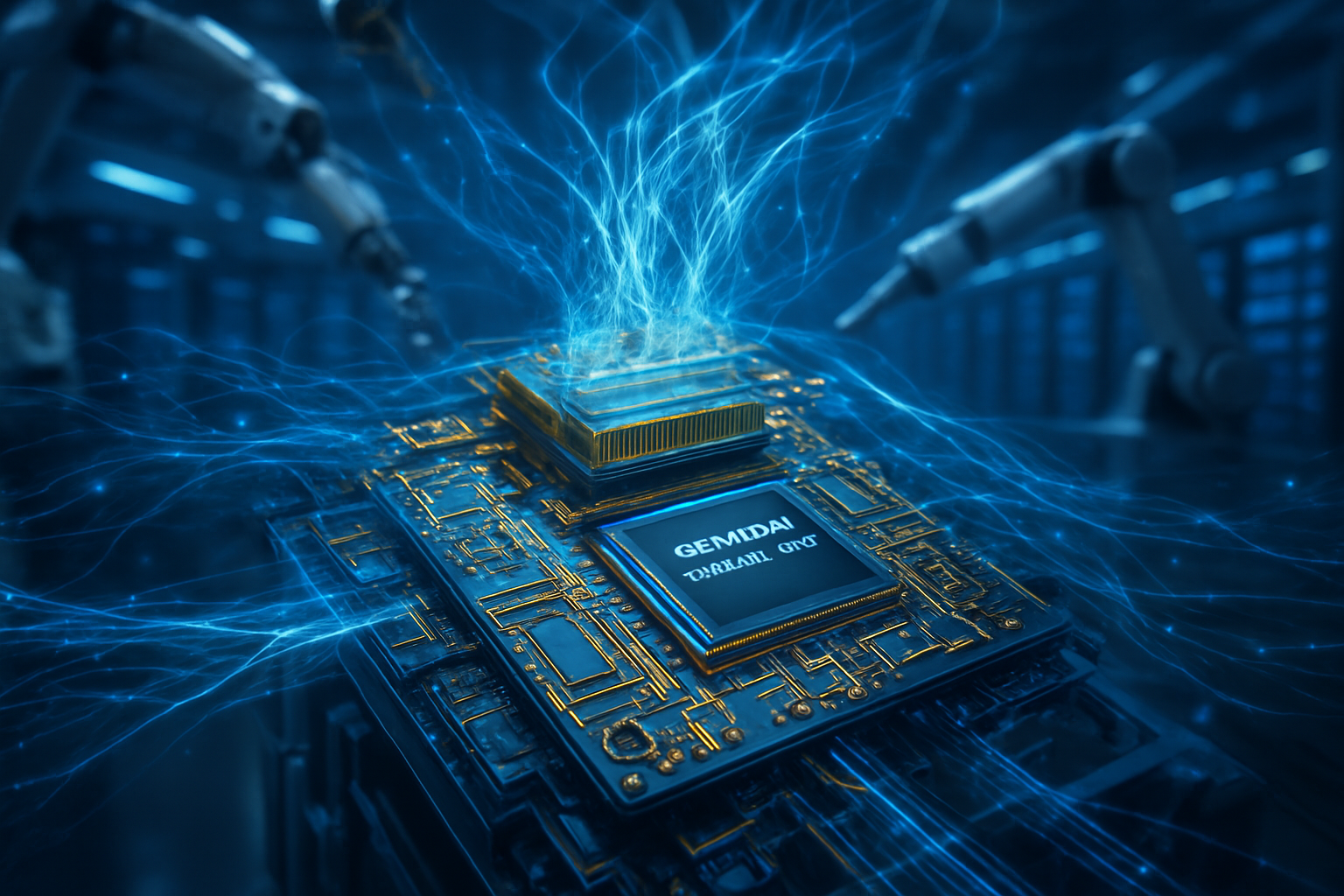
    The artificial intelligence arms race has entered a transformative new phase following the conclusion of CES 2026, where the "memory wall"—the long-standing bottleneck in AI processing—was decisively breached. SK Hynix (KRX: 000660) took center stage to demonstrate its 16-layer High Bandwidth Memory 4 (HBM4) package, a technological marvel designed specifically to power NVIDIA’s (NASDAQ: NVDA) upcoming Rubin GPU architecture. This announcement marks the official start of the "HBM4 Supercycle," a structural shift in the semiconductor industry where memory is no longer a peripheral component but the primary driver of AI scaling.

    The immediate significance of this development cannot be overstated. As large language models (LLMs) and multi-modal AI systems grow in complexity, the speed at which data moves between the processor and memory has become more critical than the raw compute power of the chip itself. By delivering an unprecedented 2TB/s of bandwidth, SK Hynix has provided the necessary "fuel" for the next generation of generative AI, effectively enabling the training of models ten times larger than GPT-5 with significantly lower energy overhead.

    Doubling the Pipe: The Technical Architecture of HBM4

    The demonstration at CES 2026 showcased a fundamental departure from the HBM standards of the last decade. The most jarring technical specification is the transition to a 2048-bit interface, doubling the 1024-bit width that has been the industry standard since the original HBM. This "wider pipe" allows for massive data throughput without the need for extreme clock speeds, which helps keep the thermal profile of AI data centers manageable. Each 16-layer stack now achieves a bandwidth of 2TB/s, nearly 2.5 times the performance of the current HBM3e standard used in Blackwell-class systems.

    To achieve this 16-layer density, SK Hynix utilized its proprietary Advanced MR-MUF (Mass Reflow Molded Underfill) technology. The process involves thinning DRAM wafers to approximately 30μm—about a third the thickness of a human hair—to fit 16 layers within the JEDEC-standard 775μm height limit. This provides a staggering 48GB of capacity per stack. When integrated into NVIDIA’s Rubin platform, which utilizes eight such stacks, a single GPU will have access to 384GB of high-speed memory and an aggregate bandwidth exceeding 22TB/s.

    Initial reactions from the AI research community have been electric. Dr. Aris Xanthos, a senior hardware analyst, noted that "the shift to a 2048-bit interface is the single most important hardware milestone of 2026." Unlike previous generations, where memory was a "passive" storage bin, HBM4 introduces a "logic die" manufactured on advanced nodes. Through a strategic partnership with TSMC (NYSE: TSM), SK Hynix is using TSMC’s 12nm and 5nm logic processes for the base die. This allows for the integration of custom control logic directly into the memory stack, essentially turning the HBM into an active co-processor that can pre-process data before it even reaches the GPU.

    Strategic Alliances and the Death of Commodity Memory

    This development has profound implications for the competitive landscape of Silicon Valley. The "Foundry-Memory Alliance" between SK Hynix and TSMC has created a formidable moat that challenges the traditional business models of integrated giants like Samsung Electronics (KRX: 005930). By outsourcing the logic die to TSMC, SK Hynix has ensured that its memory is perfectly tuned for NVIDIA’s CoWoS-L (Chip on Wafer on Substrate) packaging, which is the backbone of the Vera Rubin systems. This "triad" of NVIDIA, TSMC, and SK Hynix currently dominates the high-end AI hardware market, leaving competitors scrambling to catch up.

    The economic reality of 2026 is defined by a "Sold Out" sign. Both SK Hynix and Micron Technology (NASDAQ: MU) have confirmed that their entire HBM4 production capacity for the 2026 calendar year is already pre-sold to major hyperscalers like Microsoft, Google, and Meta. This has effectively ended the traditional "boom-and-bust" cycle of the memory industry. HBM is no longer a commodity; it is a custom-designed infrastructure component with high margins and multi-year supply contracts.

    However, this supercycle has a sting in its tail for the broader tech industry. As the big three memory makers pivot their production lines to high-margin HBM4, the supply of standard DDR5 for PCs and smartphones has begun to dry up. Market analysts expect a 15-20% increase in consumer electronics prices by mid-2026 as manufacturers prioritize the insatiable demand from AI data centers. Companies like Dell and HP are already reportedly lobbying for guaranteed DRAM allocations to prevent a repeat of the 2021 chip shortage.

    Scaling Laws and the Memory Wall

    The wider significance of HBM4 lies in its role in sustaining "AI Scaling Laws." For years, skeptics argued that AI progress would plateau because of the energy costs associated with moving data. HBM4’s 2048-bit interface directly addresses this by significantly reducing the energy-per-bit transferred. This breakthrough suggests that the path to Artificial General Intelligence (AGI) may not be blocked by hardware limits as soon as previously feared. We are moving away from general-purpose computing and into an era of "heterogeneous integration," where the lines between memory and logic are permanently blurred.

    Comparisons are already being drawn to the 2017 introduction of the Tensor Core, which catalyzed the first modern AI boom. If the Tensor Core was the engine, HBM4 is the high-octane fuel and the widened fuel line combined. However, the reliance on such specialized and expensive hardware raises concerns about the "AI Divide." Only the wealthiest tech giants can afford the multibillion-dollar clusters required to house Rubin GPUs and HBM4 memory, potentially consolidating AI power into fewer hands than ever before.

    Furthermore, the environmental impact remains a pressing concern. While HBM4 is more efficient per bit, the sheer scale of the 2026 data center build-outs—driven by the Rubin platform—is expected to increase global data center power consumption by another 25% by 2027. The industry is effectively using efficiency gains to fuel even larger, more power-hungry deployments.

    The Horizon: 20-Layer Stacks and Hybrid Bonding

    Looking ahead, the HBM4 roadmap is already stretching into 2027 and 2028. While 16-layer stacks are the current gold standard, Samsung is already signaling a move toward 20-layer HBM4 using "hybrid bonding" (copper-to-copper) technology. This would bypass the need for traditional solder bumps, allowing for even tighter vertical integration and potentially 64GB per stack. Experts predict that by 2027, we will see the first "HBM4E" (Extended) specifications, which could push bandwidth toward 3TB/s per stack.

    The next major challenge for the industry is "Processing-in-Memory" (PIM). While HBM4 introduces a logic die for control, the long-term goal is to move actual AI calculation units into the memory itself. This would eliminate data movement entirely for certain operations. SK Hynix and NVIDIA are rumored to be testing "PIM-enabled Rubin" prototypes in secret labs, which could represent the next leap in 2028.

    In the near term, the industry will be watching the "Rubin Ultra" launch scheduled for late 2026. This variant is expected to fully utilize the 48GB capacity of the 16-layer stacks, providing a massive 448GB of HBM4 per GPU. The bottleneck will then shift from memory bandwidth to the physical power delivery systems required to keep these 1000W+ GPUs running.

    A New Chapter in Silicon History

    The demonstration of 16-layer HBM4 at CES 2026 is more than just a spec bump; it is a declaration that the hardware industry has solved the most pressing constraint of the AI era. SK Hynix has successfully transitioned from a memory vendor to a specialized logic partner, cementing its role in the foundation of the global AI infrastructure. The 2TB/s bandwidth and 2048-bit interface will be remembered as the specifications that allowed AI to transition from digital assistants to autonomous agents capable of complex reasoning.

    As we move through 2026, the key takeaways are clear: the HBM4 supercycle is real, it is structural, and it is expensive. The alliance between SK Hynix, TSMC, and NVIDIA has set a high bar for the rest of the industry, and the "sold out" status of these components suggests that the AI boom is nowhere near its peak.

    In the coming months, keep a close eye on the yield rates of Samsung’s hybrid bonding and the official benchmarking of the Rubin platform. If the real-world performance matches the CES 2026 demonstrations, the world’s compute capacity is about to undergo a vertical shift unlike anything seen in the history of the semiconductor.


    This content is intended for informational purposes only and represents analysis of current AI developments.

    TokenRing AI delivers enterprise-grade solutions for multi-agent AI workflow orchestration, AI-powered development tools, and seamless remote collaboration platforms.
    For more information, visit https://www.tokenring.ai/.

  • The Rubin Revolution: NVIDIA Resets the Ceiling for Agentic AI and Extreme Inference in 2026

    The Rubin Revolution: NVIDIA Resets the Ceiling for Agentic AI and Extreme Inference in 2026

    As the world rings in early 2026, the artificial intelligence landscape has reached a definitive turning point. NVIDIA (NASDAQ: NVDA) has officially signaled the end of the "Generative Era" and the beginning of the "Agentic Era" with the full-scale transition to its Rubin platform. Unveiled in detail at CES 2026, the Rubin architecture is not merely an incremental update to the record-breaking Blackwell chips of 2025; it is a fundamental redesign of the AI supercomputer. By moving to a six-chip extreme-codesigned architecture, NVIDIA is attempting to solve the most pressing bottleneck of 2026: the cost and complexity of deploying autonomous AI agents at global scale.

    The immediate significance of the Rubin launch lies in its promise to reduce the cost of AI inference by nearly tenfold. While the industry spent 2023 through 2025 focused on the raw horsepower needed to train massive Large Language Models (LLMs), the priority has shifted toward "Agentic AI"—systems capable of multi-step reasoning, tool use, and autonomous execution. These workloads require a different kind of compute density and memory bandwidth, which the Rubin platform aims to provide. With the first Rubin-powered racks slated for deployment by major hyperscalers in the second half of 2026, the platform is already resetting expectations for what enterprise AI can achieve.

    The Six-Chip Symphony: Inside the Rubin Architecture

    The technical cornerstone of Rubin is its transition to an "extreme-codesigned" architecture. Rather than treating the GPU, CPU, and networking components as separate entities, NVIDIA (NASDAQ: NVDA) has engineered six core silicon elements to function as a single logical unit. This "system-on-rack" approach includes the Rubin GPU, the new Vera CPU, NVLink 6, the ConnectX-9 SuperNIC, the BlueField-4 DPU, and the Spectrum-6 Ethernet Switch. The flagship Rubin GPU features the groundbreaking HBM4 memory standard, doubling the interface width and delivering a staggering 22 TB/s of bandwidth—nearly triple that of the Blackwell generation.

    At the heart of the platform sits the Vera CPU, NVIDIA's most ambitious foray into custom silicon. Replacing the Grace architecture, Vera is built on a custom Arm-based "Olympus" core design specifically optimized for the data-orchestration needs of agentic AI. Featuring 88 cores and 176 concurrent threads, Vera is designed to eliminate the "jitter" and latency spikes that can derail real-time autonomous reasoning. When paired with the Rubin GPU via the 1.8 TB/s NVLink-C2C interconnect, the system achieves a level of hardware-software synergy that previously required massive software overhead to manage.

    Initial reactions from the AI research community have been centered on Rubin’s "Test-Time Scaling" capabilities. Modern agents often need to "think" longer before answering, generating thousands of internal reasoning tokens to verify a plan. The Rubin platform supports this through the BlueField-4 DPU, which manages up to 150 TB of "Context Memory" per rack. By offloading the Key-Value (KV) cache from the GPU to a dedicated storage layer, Rubin allows agents to maintain multi-million token contexts without starving the compute engine. Industry experts suggest this architecture is the first to truly treat AI memory as a tiered, scalable resource rather than a static buffer.

    A New Arms Race: Competitive Fallout and the Hyperscale Response

    The launch of Rubin has forced competitors to refine their strategies. Advanced Micro Devices (NASDAQ: AMD) is countering with its Instinct MI400 series, which focuses on a "high-capacity" play. AMD’s MI455X boasts up to 432GB of HBM4 memory—significantly more than the base Rubin GPU—making it a preferred choice for researchers working on massive, non-compressed models. However, AMD is fighting an uphill battle against NVIDIA’s vertically integrated stack. To compensate, AMD is championing the "UALink" and "Ultra Ethernet" open standards, positioning itself as the flexible alternative to NVIDIA’s proprietary ecosystem.

    Meanwhile, Intel (NASDAQ: INTC) has pivoted its data center strategy toward "Jaguar Shores," a rack-scale system that mirrors NVIDIA’s integrated approach but focuses on a "unified memory" architecture using Intel’s 18A manufacturing process. While Intel remains behind in the raw performance race as of January 2026, its focus on "Edge AI" and sovereign compute clusters has allowed it to secure a foothold in the European and Asian markets, where data residency and manufacturing independence are paramount.

    The major hyperscalers—Microsoft (NASDAQ: MSFT), Alphabet (NASDAQ: GOOGL), Amazon (NASDAQ: AMZN), and Meta Platforms (NASDAQ: META)—are navigating a complex relationship with NVIDIA. Microsoft remains the largest adopter, building its "Fairwater" superfactories specifically to house Rubin NVL72 racks. However, the "NVIDIA Tax" continues to drive these giants to develop their own silicon. Amazon’s Trainium3 and Google’s TPU v7 are now handling a significant portion of their internal, well-defined inference workloads. The Rubin platform’s strategic advantage is its versatility; while custom ASICs are excellent for specific tasks, Rubin is the "Swiss Army Knife" for the unpredictable, reasoning-heavy workloads that define the new agentic frontier.

    Beyond the Chips: Sovereignty, Energy, and the Physical AI Shift

    The Rubin transition is unfolding against a broader backdrop of "Physical AI" and a global energy crisis. By early 2026, the focus of the AI world has moved from digital chat into the physical environment. Humanoid robots and autonomous industrial systems now rely on the same high-performance inference that Rubin provides. The ability to process "world models"—AI that understands physics and 3D space—requires the extreme memory bandwidth that HBM4 and Rubin provide. This shift has turned the "compute-to-population" ratio into a new metric of national power, leading to the rise of "Sovereign AI" clusters in regions like France, the UAE, and India.

    However, the power demands of these systems have reached a fever pitch. A single Rubin-powered data center can consume as much electricity as a small city. This has led to a pivot toward modular nuclear reactors (SMRs) and advanced liquid cooling technologies. NVIDIA’s NVL72 and NVL144 systems are now designed for "warm-water cooling," allowing data centers to operate without the energy-intensive chillers used in previous decades. The broader significance of Rubin is thus as much about thermal efficiency as it is about FLOPS; it is an architecture designed for a world where power is the ultimate constraint.

    Concerns remain regarding vendor lock-in and the potential for a "demand air pocket" if the ROI on agentic AI does not materialize as quickly as the infrastructure is built. Critics argue that by controlling the CPU, GPU, and networking, NVIDIA is creating a "walled garden" that could stifle innovation in alternative architectures. Nonetheless, the sheer performance leap—delivering 50 PetaFLOPS of FP4 inference—has, for now, silenced most skeptics who were predicting an end to the AI boom.

    Looking Ahead: The Road to Rubin Ultra and Feynman

    NVIDIA’s roadmap suggests that the Rubin era is just the beginning. The company has already teased "Rubin Ultra" for 2027, which will transition to HBM4e memory and an even denser NVL576 rack configuration. Beyond that, the "Feynman" architecture planned for 2028 is rumored to target a 30x performance increase over the Blackwell generation, specifically aiming for the thresholds required for Artificial Superintelligence (ASI).

    In the near term, the industry will be watching the second-half 2026 rollout of Rubin systems very closely. The primary challenge will be the supply chain; securing enough HBM4 capacity and advanced packaging space at TSMC remains a bottleneck. Furthermore, as AI agents become more autonomous, the industry will face new regulatory and safety hurdles. The ability of Rubin’s hardware-level security features, built into the BlueField-4 DPU, to manage "agentic drift" will be a key area of study for researchers.

    A Legacy of Integration: Final Thoughts on the Rubin Transition

    The transition to the Rubin platform marks a historical moment in computing history. It is the moment when the GPU transitioned from being a "coprocessor" to becoming the core of a unified, heterogeneous supercomputing system. By codesigning every aspect of the stack, NVIDIA (NASDAQ: NVDA) has effectively reset the ceiling for what is possible in AI inference and autonomous reasoning.

    As we move deeper into 2026, the key takeaways are clear: the cost of intelligence is falling, the complexity of AI tasks is rising, and the infrastructure is becoming more integrated. Whether this leads to a sustainable new era of productivity or further consolidates power in the hands of a few tech giants remains the central question of the year. For now, the "Rubin Revolution" is in full swing, and the rest of the industry is once again racing to catch up.


    This content is intended for informational purposes only and represents analysis of current AI developments.

    TokenRing AI delivers enterprise-grade solutions for multi-agent AI workflow orchestration, AI-powered development tools, and seamless remote collaboration platforms.
    For more information, visit https://www.tokenring.ai/.

  • The Silicon Glue: 2026 HBM4 Sampling and the Global Alliance Ending the AI Memory Bottleneck

    The Silicon Glue: 2026 HBM4 Sampling and the Global Alliance Ending the AI Memory Bottleneck

    As of January 19, 2026, the artificial intelligence industry is witnessing an unprecedented capital expenditure surge centered on a single, critical component: High-Bandwidth Memory (HBM). With the transition from HBM3e to the revolutionary HBM4 standard reaching a fever pitch, the "memory wall"—the performance gap between ultra-fast logic processors and slower data storage—is finally being dismantled. This shift is not merely an incremental upgrade but a structural realignment of the semiconductor supply chain, led by a powerhouse alliance between SK Hynix (KRX: 000660), TSMC (NYSE: TSM), and NVIDIA (NASDAQ: NVDA).

    The immediate significance of this development cannot be overstated. As large-scale AI models move toward the 100-trillion parameter threshold, the ability to feed data to GPUs has become the primary constraint on performance. The massive investments announced this month by the world’s leading memory makers indicate that the industry has entered a "supercycle" phase, where HBM is no longer treated as a commodity but as a customized, high-value logic component essential for the survival of the AI era.

    The HBM4 Revolution: 2048-bit Interfaces and Active Memory

    The HBM4 transition, currently entering its critical sampling phase in early 2026, represents the most significant architectural change in memory technology in over a decade. Unlike HBM3e, which utilized a 1024-bit interface, HBM4 doubles the bus width to a staggering 2048-bit interface. This "wider pipe" allows for massive data throughput—targeted at up to 3.25 TB/s per stack—without requiring the extreme clock speeds that have plagued previous generations with thermal and power efficiency issues. By doubling the interface width, manufacturers can achieve higher performance at lower power consumption, a critical factor for the massive AI "factories" being built by hyperscalers.

    Furthermore, the introduction of "active" memory marks a radical departure from traditional DRAM manufacturing. For the first time, the base die (or logic die) at the bottom of the HBM stack is being manufactured using advanced logic nodes rather than standard memory processes. SK Hynix has formally partnered with TSMC to produce these base dies on 5nm and 12nm processes. This allows the memory stack to gain "active" processing capabilities, effectively embedding basic logic functions directly into the memory. This "processing-near-memory" approach enables the HBM stack to handle data manipulation and sorting before it even reaches the GPU, significantly reducing latency.

    Initial reactions from the AI research community have been overwhelmingly positive. Experts suggest that the move to a 2048-bit interface and TSMC-manufactured logic dies will provide the 3x to 5x performance leap required for the next generation of multimodal AI agents. By integrating the memory and logic more closely through hybrid bonding techniques, the industry is effectively moving toward "3D Integrated Circuits," where the distinction between where data is stored and where it is processed begins to blur.

    A Three-Way Race: Market Share and Strategic Alliances

    The strategic landscape of 2026 is defined by a fierce three-way race for HBM dominance among SK Hynix, Samsung (KRX: 005930), and Micron (NASDAQ: MU). SK Hynix currently leads the market with a dominant share estimated between 53% and 62%. The company recently announced that its entire 2026 HBM capacity is already fully booked, primarily by NVIDIA for its upcoming Rubin architecture and Blackwell Ultra series. SK Hynix’s "One Team" alliance with TSMC has given it a first-mover advantage in the HBM4 generation, allowing it to provide a highly optimized "active" memory solution that competitors are now scrambling to match.

    However, Samsung is mounting a massive recovery effort. After a delayed start in the HBM3e cycle, Samsung successfully qualified its 12-layer HBM3e for NVIDIA in late 2025 and is now targeting a February 2026 mass production start for its own HBM4 stacks. Samsung’s primary strategic advantage is its "turnkey" capability; as the only company that owns both world-class DRAM production and an advanced semiconductor foundry, Samsung can produce the HBM stacks and the logic dies entirely in-house. This vertical integration could theoretically offer lower costs and tighter design cycles once their 4nm logic die yields stabilize.

    Meanwhile, Micron has solidified its position as a critical third pillar in the supply chain, controlling approximately 15% to 21% of the market. Micron’s aggressive move to establish a "Megafab" in New York and its early qualification of 12-layer HBM3e have made it a preferred partner for companies seeking to diversify their supply away from the SK Hynix/TSMC duopoly. For NVIDIA and AMD (NASDAQ: AMD), this fierce competition is a massive benefit, ensuring a steady supply of high-performance silicon even as demand continues to outstrip supply. However, smaller AI startups may face a "memory drought," as the "Big Three" have largely prioritized long-term contracts with trillion-dollar tech giants.

    Beyond the Memory Wall: Economic and Geopolitical Shifts

    The massive investment in HBM fits into a broader trend of "hardware-software co-design" that is reshaping the global tech landscape. As AI models transition from static LLMs into proactive agents capable of real-world reasoning, the "Memory Wall" has replaced raw compute power as the most significant hurdle for AI scaling. The 2026 HBM surge reflects a realization across the industry that the bottleneck for artificial intelligence is no longer just FLOPS (floating-point operations per second), but the "communication cost" of moving data between memory and logic.

    The economic implications are profound, with the total HBM market revenue projected to reach nearly $60 billion in 2026. This is driving a significant relocation of the semiconductor supply chain. SK Hynix’s $4 billion investment in an advanced packaging plant in Indiana, USA, and Micron’s domestic expansion represent a strategic shift toward "onshoring" critical AI components. This move is partly driven by the need to be closer to US-based design houses like NVIDIA and partly by geopolitical pressures to secure the AI supply chain against regional instabilities.

    However, the concentration of this technology in the hands of just three memory makers and one leading foundry (TSMC) raises concerns about market fragility. The high cost of entry—requiring billions in specialized "Advanced Packaging" equipment and cleanrooms—means that the barrier to entry for new competitors is nearly insurmountable. This reinforces a global "AI arms race" where nations and companies without direct access to the HBM4 supply chain may find themselves technologically sidelined as the gap between state-of-the-art AI and "commodity" AI continues to widen.

    The Road to Half-Terabyte GPUs and HBM5

    Looking ahead through the remainder of 2026 and into 2027, the industry expects the first volume shipments of 16-layer (16-Hi) HBM4 stacks. These stacks are expected to provide up to 64GB of memory per "cube." In an 8-stack configuration—which is rumored for NVIDIA’s upcoming Rubin platform—a single GPU could house a staggering 512GB of high-speed memory. This would allow researchers to train and run massive models on significantly smaller hardware footprints, potentially enabling "Sovereign AI" clusters that occupy a fraction of the space of today's data centers.

    The primary technical challenge remaining is heat dissipation. As memory stacks grow taller and logic dies become more powerful, managing the thermal profile of a 16-layer stack will require breakthroughs in liquid-to-chip cooling and hybrid bonding techniques that eliminate the need for traditional "bumps" between layers. Experts predict that if these thermal hurdles are cleared, the industry will begin looking toward HBM4E (Extended) by late 2027, which will likely integrate even more complex AI accelerators directly into the memory base.

    Beyond 2027, the roadmap for HBM5 is already being discussed in research circles. Early predictions suggest HBM5 may transition from electrical interconnects to optical interconnects, using light to move data between the memory and the processor. This would essentially eliminate the bandwidth bottleneck forever, but it requires a fundamental rethink of how silicon chips are designed and manufactured.

    A Landmark Shift in Semiconductor History

    The HBM explosion of 2026 is a watershed moment for the semiconductor industry. By breaking the memory wall, the triad of SK Hynix, TSMC, and NVIDIA has paved the way for a new era of AI capability. The transition to HBM4 marks the point where memory stopped being a passive storage bin and became an active participant in computation. The shift from commodity DRAM to customized, logic-integrated HBM is the most significant change in memory architecture since the invention of the integrated circuit.

    In the coming weeks and months, the industry will be watching Samsung’s production yields at its Pyeongtaek campus and the initial performance benchmarks of the first HBM4 engineering samples. As 2026 progresses, the success of these HBM4 rollouts will determine which tech giants lead the next decade of AI innovation. The memory bottleneck is finally yielding, and with it, the limits of what artificial intelligence can achieve are being redefined.


    This content is intended for informational purposes only and represents analysis of current AI developments.

    TokenRing AI delivers enterprise-grade solutions for multi-agent AI workflow orchestration, AI-powered development tools, and seamless remote collaboration platforms.
    For more information, visit https://www.tokenring.ai/.