
Tag: HBM4

  • AI Memory Sovereignty: Micron Breaks Ground on $100 Billion Mega-Fab in New York

    AI Memory Sovereignty: Micron Breaks Ground on $100 Billion Mega-Fab in New York

    As the artificial intelligence revolution enters a new era of localized hardware production, Micron Technology (NASDAQ: MU) is set to officially break ground this week on its massive $100 billion semiconductor manufacturing complex in Clay, New York. Scheduled for January 16, 2026, the ceremony marks a definitive turning point in the United States' decades-long effort to reshore critical technology manufacturing. The mega-fab, the largest private investment in New York State’s history, is positioned as the primary engine for domestic high-performance memory production, specifically designed to feed the insatiable demand of the AI era.

    The groundbreaking follows a rigorous multi-year environmental and regulatory review process that delayed the initial construction timeline but solidified the project’s scope. With over 20,000 pages of environmental impact studies behind them, Micron and federal officials are moving forward with a project that promises to create nearly 50,000 jobs and secure the "brains" of the AI hardware stack—High Bandwidth Memory (HBM)—on American soil. This development comes at a critical juncture as cloud providers and AI labs increasingly prioritize supply chain resilience over the sheer speed of global logistics.

    The Vanguard of Memory: HBM4 and the 1-Gamma Frontier

    The New York mega-fab is not merely a production site; it is a technical fortress designed to manufacture the world’s most advanced memory nodes. At the heart of the Clay facility’s roadmap is the production of HBM4 and its successors. High Bandwidth Memory is the essential "gasoline" for AI accelerators, allowing data to move between the memory and the processor at speeds that conventional DRAM cannot achieve. By stacking DRAM layers vertically using advanced packaging techniques, Micron’s upcoming HBM4 stacks are expected to deliver massive throughput while consuming up to 30% less power than current market alternatives.

    Technically, the site will utilize Micron’s proprietary 1-gamma (1γ) process node. This node is a significant leap from current technologies, as it fully integrates extreme ultraviolet (EUV) lithography into the mass-production flow. Unlike previous generations that relied on multi-patterning with deep ultraviolet (DUV) light, the 1-gamma process allows for finer circuitry and higher density, which is paramount for the massive parameter counts of 2026-era Large Language Models (LLMs). Analysts from KeyBanc (NYSE: KEY) have noted that Micron’s technical leadership in power efficiency is already making it a preferred partner for the next generation of power-constrained AI data centers.

    Initial industry reactions have been overwhelmingly positive, though pragmatic regarding the timeline. While wafer production in New York is not expected to reach full volume until 2030, the facility's design—featuring four separate fab modules each with 600,000 square feet of cleanroom space—has been hailed by the AI research community as a "generational asset." Experts argue that the integration of research and development from the nearby Albany NanoTech Complex with the mass production in Clay creates a "Silicon Corridor" that could rival the manufacturing clusters of East Asia.

    Reshaping the Competitive Landscape: NVIDIA and the HBM Rivalry

    The strategic implications for AI hardware giants are profound. NVIDIA (NASDAQ: NVDA), which currently dominates the AI GPU market, stands as the most significant indirect beneficiary of the New York mega-fab. CEO Jensen Huang has publicly endorsed the project, noting that domestic HBM production is a vital safeguard against geopolitical bottlenecks. As NVIDIA shifts toward its "Rubin" GPU architecture and beyond, the availability of a stable, U.S.-based memory supply reduces the risk of the supply-chain "whiplash" that plagued the industry during the early 2020s.

    Competitive pressure is also mounting on Micron’s primary rivals, SK Hynix and Samsung (KRX: 005930). While SK Hynix currently holds the largest share of the HBM market, Micron’s aggressive move into New York—supported by billions in federal subsidies—is seen as a direct challenge to South Korean dominance. By early 2026, Micron has already clawed back a 21% share of the HBM market through its facilities in Idaho and Taiwan; the New York site is the long-term play to push that share toward 40%. Advanced Micro Devices (NASDAQ: AMD) is also expected to leverage Micron’s domestic capacity for its future Instinct MI-series accelerators, ensuring that no single GPU manufacturer has a monopoly on U.S.-made memory.

    For startups and smaller AI labs, the long-term impact will be felt in the stabilization of hardware costs. The persistent "AI chip shortage" of previous years was often a memory shortage in disguise. By increasing global HBM capacity by such a significant margin, Micron effectively lowers the barrier to entry for firms requiring high-density compute power. Market positioning is shifting; "Made in USA" is no longer just a political slogan but a premium technical requirement for Western government and enterprise AI contracts.

    The Geopolitical Anchor: CHIPS Act and Economic Sovereignty

    The groundbreaking is a crowning achievement for the CHIPS and Science Act, which provided the financial bedrock for the project. Micron has finalized a direct funding agreement with the U.S. Department of Commerce for $6.14 billion in federal grants, with approximately $4.6 billion earmarked specifically for the first two phases in Clay. This is bolstered by an additional $5.5 billion in "GREEN CHIPS" tax credits from New York State, contingent on the facility operating on 100% renewable energy and achieving LEED Gold certification.

    This project represents more than just a corporate expansion; it is a move toward "AI Sovereignty." In the current geopolitical climate of 2026, the ability to manufacture the fundamental components of artificial intelligence within domestic borders is seen as a national security imperative. The CHIPS Act funding comes with stringent "clawback" provisions that prevent Micron from expanding high-end manufacturing in "countries of concern," effectively tethering the company’s future to the Western economic bloc.

    However, the path has not been without concerns. Some economists point to the "windfall profit-sharing" requirements and the mandate for affordable childcare as potential burdens on the project’s profitability. Furthermore, the delay in the production start date to 2030 has led some to question if the U.S. can move fast enough to keep pace with the hyper-accelerated AI development cycle. Nevertheless, the consensus among policy experts is that a 20-year investment in New York is the only way to break the current reliance on highly concentrated manufacturing hubs in sensitive regions of the Pacific.

    The Road to 2030: Future Developments and Challenges

    Looking ahead, the next several years will be a period of intense infrastructure development. While the New York site prepares for its first wafer in 2030, Micron is accelerating its Boise, Idaho facility to bridge the capacity gap, with that site expected to come online in 2027. This two-pronged approach ensures that Micron remains competitive in the HBM4 and HBM5 cycles while the New York mega-fab prepares for the era of HBM6 and beyond.

    The primary challenges remaining are labor and logistics. The construction of a project of this scale requires a specialized workforce that currently exceeds the capacity of the regional labor market. To address this, Micron has partnered with local universities and trade unions to create the "Northwest-Northeast Memory Corridor," a talent pipeline designed to train thousands of semiconductor technicians and engineers.

    Experts predict that by the time the first New York fab is fully operational in 2030, the AI landscape will have shifted from Large Language Models to "Agentic AI" systems that require even more persistent and high-speed memory. The Clay facility is being built with "future-proofing" in mind, including flexible cleanroom layouts that can accommodate the next generation of lithography beyond EUV, potentially including High-NA (Numerical Aperture) EUV systems.

    A New Era for American Silicon

    The groundbreaking of the Micron New York mega-fab is a historic milestone that marks the beginning of the end for the United States' total reliance on offshore memory manufacturing. By committing $100 billion over the next two decades, Micron is betting on a future where AI is the primary driver of global GDP and where the physical location of hardware production is a strategic asset of the highest order.

    As we move toward the 2030s, the significance of this project will likely be compared to the founding of Silicon Valley or the industrial mobilization of the mid-20th century. It represents a rare alignment of corporate ambition, state-level incentive, and federal national security policy. While the 2030 production date feels distant, the infrastructure being laid this week in Clay, New York, is the foundation upon which the next generation of artificial intelligence will be built.

    Investors and industry watchers should keep a close eye on Micron’s quarterly progress reports throughout 2026, as the company navigates the complexities of the largest construction project in the industry’s history. For now, the message from Clay is clear: the AI memory race has a new home in the United States.


    This content is intended for informational purposes only and represents analysis of current AI developments.

    TokenRing AI delivers enterprise-grade solutions for multi-agent AI workflow orchestration, AI-powered development tools, and seamless remote collaboration platforms.
    For more information, visit https://www.tokenring.ai/.

  • The Rubin Revolution: NVIDIA Unveils Next-Gen Vera Rubin Platform as Blackwell Scales to Universal AI Standard

    The Rubin Revolution: NVIDIA Unveils Next-Gen Vera Rubin Platform as Blackwell Scales to Universal AI Standard

    SANTA CLARA, CA — January 13, 2026 — In a move that has effectively reset the roadmap for global computing, NVIDIA (NASDAQ:NVDA) has officially launched its Vera Rubin platform, signaling the dawn of the "Agentic AI" era. The announcement, which took center stage at CES 2026 earlier this month, comes as the company’s previous-generation Blackwell architecture reaches peak global deployment, cementing NVIDIA's role not just as a chipmaker, but as the primary architect of the world's AI infrastructure.

    The dual-pronged strategy—launching the high-performance Rubin platform while simultaneously scaling the Blackwell B200 and the new B300 Ultra series—has created a near-total lock on the high-end data center market. As organizations transition from simple generative AI to complex, multi-step autonomous agents, the Vera Rubin platform’s specialized architecture is designed to provide the massive throughput and memory bandwidth required to sustain trillion-parameter models.

    Engineering the Future: Inside the Vera Rubin Architecture

    The Vera Rubin platform, anchored by the R100 GPU, represents a significant technological leap over the Blackwell series. Built on an advanced 3nm (N3P) process from Taiwan Semiconductor Manufacturing Company (NYSE:TSM), the R100 features a dual-die, reticle-limited design that delivers an unprecedented 50 Petaflops of FP4 compute. This marks a nearly 3x increase in raw performance compared to the original Blackwell B100. Perhaps more importantly, Rubin is the first platform to fully integrate the HBM4 memory standard, sporting 288GB of memory per GPU with a staggering bandwidth of up to 22 TB/s.

    Beyond raw GPU power, NVIDIA has introduced the "Vera" CPU, succeeding the Grace architecture. The Vera CPU utilizes 88 custom "Olympus" Armv9.2 cores, optimized for high-velocity data orchestration. When coupled via the new NVLink 6 interconnect, which provides 3.6 TB/s of bidirectional bandwidth, the resulting NVL72 racks function as a single, unified supercomputer. This "extreme co-design" approach allows for an aggregate rack bandwidth of 260 TB/s, specifically designed to eliminate the "memory wall" that has plagued large-scale AI training for years.

    The initial reaction from the AI research community has been one of awe and logistical concern. While the performance metrics suggest a path toward Artificial General Intelligence (AGI), the power requirements remain formidable. NVIDIA has mitigated some of these concerns with the ConnectX-9 SuperNIC and the BlueField-4 DPU, which introduce a new "Inference Context Memory Storage" (ICMS) tier. This allows for more efficient reuse of KV-caches, significantly lowering the energy cost per token for complex, long-context inference tasks.

    Market Dominance and the Blackwell Bridge

    While the Vera Rubin platform is the star of the 2026 roadmap, the Blackwell architecture remains the industry's workhorse. As of mid-January, NVIDIA’s Blackwell B100 and B200 units are essentially sold out through the second half of 2026. Tech giants like Microsoft (NASDAQ:MSFT), Meta (NASDAQ:META), Amazon (NASDAQ:AMZN), and Alphabet (NASDAQ:GOOGL) have reportedly booked the lion's share of production capacity to power their respective "AI Factories." To bridge the gap until Rubin reaches mass shipments in late 2026, NVIDIA is currently rolling out the B300 "Blackwell Ultra," featuring upgraded HBM3E memory and refined networking.

    This relentless release cycle has placed intense pressure on competitors. Advanced Micro Devices (NASDAQ:AMD) is currently finding success with its Instinct MI350 series, which has gained traction among customers seeking an alternative to the NVIDIA ecosystem. AMD is expected to counter Rubin with its MI450 platform in late 2026, though analysts suggest NVIDIA currently maintains a 90% market share in the AI accelerator space. Meanwhile, Intel (NASDAQ:INTC) has pivoted toward a "hybridization" strategy, offering its Gaudi 3 and Falcon Shores chips as cost-effective alternatives for sovereign AI clouds and enterprise-specific applications.

    The strategic advantage of the NVIDIA ecosystem is no longer just the silicon, but the CUDA software stack and the new MGX modular rack designs. By contributing these designs to the Open Compute Project (OCP), NVIDIA is effectively turning its proprietary hardware configurations into the global standard for data center construction. This move forces hardware competitors to either build within NVIDIA’s ecosystem or risk being left out of the rapidly standardizing AI data center blueprint.

    Redefining the Data Center: The "No Chillers" Era

    The implications of the Vera Rubin launch extend far beyond the server rack and into the physical infrastructure of the global data center. At the recent launch event, NVIDIA CEO Jensen Huang declared a shift toward "Green AI" by announcing that the Rubin platform is designed to operate with warm-water Direct Liquid Cooling (DLC) at temperatures as high as 45°C (113°F). This capability could eliminate the need for traditional water chillers in many climates, potentially reducing data center energy overhead by up to 30%.

    This announcement sent shockwaves through the industrial cooling sector, with stock prices for traditional HVAC leaders like Johnson Controls (NYSE:JCI) and Trane Technologies (NYSE:TT) seeing increased volatility as investors recalibrate the future of data center cooling. The shift toward 800V DC power delivery and the move away from traditional air-cooling are now becoming the "standard" rather than the exception. This transition is critical, as typical Rubin racks are expected to consume between 120kW and 150kW of power, with future roadmaps already pointing toward 600kW "Kyber" racks by 2027.

    However, this rapid advancement raises concerns regarding the digital divide and energy equity. The cost of building a "Rubin-ready" data center is orders of magnitude higher than previous generations, potentially centralizing AI power within a handful of ultra-wealthy corporations and nation-states. Furthermore, the sheer speed of the Blackwell-to-Rubin transition has led to questions about hardware longevity and the environmental impact of rapid hardware cycles.

    The Horizon: From Generative to Agentic AI

    Looking ahead, the Vera Rubin platform is expected to be the primary engine for the shift from chatbots to "Agentic AI"—autonomous systems that can plan, reason, and execute multi-step workflows across different software environments. Near-term applications include sophisticated autonomous scientific research, real-time global supply chain orchestration, and highly personalized digital twins for industrial manufacturing.

    The next major milestone for NVIDIA will be the mass shipment of R100 GPUs in the third and fourth quarters of 2026. Experts predict that the first models trained entirely on Rubin architecture will begin to emerge in early 2027, likely exceeding the current scale of Large Language Models (LLMs) by a factor of ten. The challenge will remain the supply chain; despite TSMC’s expansion, the demand for HBM4 and 3nm wafers continues to outstrip global capacity.

    A New Benchmark in Computing History

    The launch of the Vera Rubin platform and the continued rollout of Blackwell mark a definitive moment in the history of computing. NVIDIA has transitioned from a company that sells chips to the architect of the global AI operating system. By vertically integrating everything from the transistor to the rack cooling system, they have set a pace that few, if any, can match.

    Key takeaways for the coming months include the performance of the Blackwell Ultra B300 as a transitional product and the pace at which data center operators can upgrade their power and cooling infrastructure to meet Rubin’s specifications. As we move further into 2026, the industry will be watching closely to see if the "Rubin Revolution" can deliver on its promise of making Agentic AI a ubiquitous reality, or if the sheer physics of power and thermal management will finally slow the breakneck speed of the AI era.


    This content is intended for informational purposes only and represents analysis of current AI developments.

    TokenRing AI delivers enterprise-grade solutions for multi-agent AI workflow orchestration, AI-powered development tools, and seamless remote collaboration platforms.
    For more information, visit https://www.tokenring.ai/.

  • The HBM4 Memory War: SK Hynix, Samsung, and Micron Battle for AI Supremacy at CES 2026

    The HBM4 Memory War: SK Hynix, Samsung, and Micron Battle for AI Supremacy at CES 2026

    The floor of CES 2026 has transformed into a high-stakes battlefield for the semiconductor industry, as the "HBM4 Memory War" officially ignited among the world’s three largest memory manufacturers. With the artificial intelligence revolution entering a new phase of massive-scale model training, the demand for High Bandwidth Memory (HBM) has shifted from a supply-chain bottleneck to the primary architectural hurdle for next-generation silicon. The announcements made this week by SK Hynix, Samsung, and Micron represent more than just incremental speed bumps; they signal a fundamental shift in how memory and logic are integrated to power the most advanced AI clusters on the planet.

    This surge in memory innovation is being driven by the arrival of NVIDIA’s (NASDAQ:NVDA) new "Vera Rubin" architecture, the much-anticipated successor to the Blackwell platform. As AI models grow to tens of trillions of parameters, the industry has hit the "memory wall"—a physical limit where processors are fast enough to compute data, but the memory cannot feed it to them quickly enough. HBM4 is the industry's collective answer to this crisis, offering the massive bandwidth and energy efficiency required to prevent the world’s most expensive GPUs from sitting idle while waiting for data.

    The 16-Layer Breakthrough and the 1c Efficiency Edge

    At the center of the CES hardware showcase, SK Hynix (KRX:000660) stunned the industry by debuting the world’s first 16-layer (16-Hi) 48GB HBM4 stack. This engineering marvel doubles the density of previous generations while maintaining a strict 775µm height limit required by standard packaging. To achieve this, SK Hynix thinned individual DRAM wafers to just 30 micrometers—roughly one-third the thickness of a human hair—using its proprietary Advanced Mass Reflow Molded Underfill (MR-MUF) technology. The result is a single memory cube capable of an industry-leading 11.7 Gbps per pin, providing the sheer density needed for the ultra-large language models expected in late 2026.

    Samsung Electronics (KRX:005930) took a different strategic path, emphasizing its "one-stop shop" capability and manufacturing efficiency. Samsung’s HBM4 is built on its cutting-edge 1c (6th generation 10nm-class) DRAM process, which the company claims offers a 40% improvement in energy efficiency over current 1b-based modules. Unlike its competitors, Samsung is leveraging its internal foundry to produce both the memory and the logic base die, aiming to provide a more integrated and cost-effective solution. This vertical integration is a direct challenge to the partnership-driven models of its rivals, positioning Samsung as a turnkey provider for the HBM4 era.

    Not to be outdone, Micron Technology (NASDAQ:MU) announced an aggressive $20 billion capital expenditure plan for the coming fiscal year to fuel its capacity expansion. Micron’s HBM4 entry focuses on a 12-layer 36GB stack that utilizes a 2,048-bit interface—double the width of the HBM3E standard. By widening the data "pipe," Micron is achieving speeds exceeding 2.0 TB/s per stack. The company is rapidly scaling its "megaplants" in Taiwan and Japan, aiming to capture a significantly larger slice of the HBM market share, which SK Hynix has dominated for the past two years.

    Fueling the Rubin Revolution and Redefining Market Power

    The immediate beneficiary of this memory arms race is NVIDIA, whose Vera Rubin GPUs are designed to utilize eight stacks of HBM4 memory. With SK Hynix’s 48GB stacks, a single Rubin GPU could boast a staggering 384GB of high-speed memory, delivering an aggregate bandwidth of 22 TB/s. This is a nearly 3x increase over the Blackwell architecture, allowing for real-time inference of models that previously required entire server racks. The competitive implications are clear: the memory maker that can provide the highest yield of 16-layer stacks will likely secure the lion's share of NVIDIA's multi-billion dollar orders.

    For the broader tech landscape, this development creates a new hierarchy. Companies like Advanced Micro Devices (NASDAQ:AMD) are also pivoting their Instinct accelerator roadmaps to support HBM4, ensuring that the "memory war" isn't just an NVIDIA-exclusive event. However, the shift to HBM4 also elevates the importance of Taiwan Semiconductor Manufacturing Company (NYSE:TSM), which is collaborating with SK Hynix and Micron to manufacture the logic base dies that sit at the bottom of the HBM stack. This "foundry-memory" alliance is a direct competitive response to Samsung's internal vertical integration, creating two distinct camps in the semiconductor world: the specialists versus the integrated giants.

    Breaking the Memory Wall and the Shift to Logic-Integrated Memory

    The wider significance of HBM4 lies in its departure from traditional memory design. For the first time, the base die of the memory stack—the foundation upon which the DRAM layers sit—is being manufactured using advanced logic nodes (such as 5nm or 4nm). This effectively turns the memory stack into a "co-processor." By moving some of the data pre-processing and memory management directly into the HBM4 stack, engineers can reduce the energy-intensive data movement between the GPU and the memory, which currently accounts for a significant portion of a data center’s power consumption.

    This evolution is the most significant step yet in overcoming the "Memory Wall." In previous generations, the gap between compute speed and memory bandwidth was widening at an exponential rate. HBM4’s 2,048-bit interface and logic-integrated base die finally provide a roadmap to close that gap. This is not just a hardware upgrade; it is a fundamental rethinking of computer architecture that moves us closer to "near-memory computing," where the lines between where data is stored and where it is processed begin to blur.

    The Horizon: Custom HBM and the Path to HBM5

    Looking ahead, the next phase of this war will be fought on the ground of "Custom HBM" (cHBM). Experts at CES 2026 predict that by 2027, major AI players like Google or Amazon may begin commissioning HBM stacks with logic dies specifically designed for their own proprietary AI chips. This level of customization would allow for even greater efficiency gains, potentially tailoring the memory's internal logic to the specific mathematical operations required by a company's unique neural network architecture.

    The challenges remaining are largely thermal and yield-related. Stacking 16 layers of DRAM creates immense heat density, and the precision required to align thousands of Through-Silicon Vias (TSVs) across 16 layers is unprecedented. If yields on these 16-layer stacks remain low, the industry may see a prolonged period of supply shortages, keeping the price of AI compute high despite the massive capacity expansions currently underway at Micron and Samsung.

    A New Chapter in AI History

    The HBM4 announcements at CES 2026 mark a definitive turning point in the AI era. We have moved past the phase where raw FLOPs (Floating Point Operations per Second) were the only metric that mattered. Today, the ability to store, move, and access data at the speed of thought is the true measure of AI performance. The "Memory War" between SK Hynix, Samsung, and Micron is a testament to the critical role that specialized hardware plays in the advancement of artificial intelligence.

    In the coming weeks, the industry will be watching for the first third-party benchmarks of the Rubin architecture and the initial yield reports from the new HBM4 production lines. As these components begin to ship to data centers later this year, the impact will be felt in everything from the speed of scientific research to the capabilities of consumer-facing AI agents. The HBM4 era has arrived, and it is the high-octane fuel that will power the next decade of AI innovation.


    This content is intended for informational purposes only and represents analysis of current AI developments.

    TokenRing AI delivers enterprise-grade solutions for multi-agent AI workflow orchestration, AI-powered development tools, and seamless remote collaboration platforms.
    For more information, visit https://www.tokenring.ai/.
  • Breaking the Memory Wall: HBM4 and the $20 Billion AI Memory Revolution

    Breaking the Memory Wall: HBM4 and the $20 Billion AI Memory Revolution

    As the artificial intelligence "supercycle" enters its most intensive phase, the semiconductor industry has reached a historic milestone. High Bandwidth Memory (HBM), once a niche technology for high-end graphics, has officially exploded to represent 23% of the total DRAM market revenue as of early 2026. This meteoric rise, confirmed by recent industry reports from Gartner and TrendForce, underscores a fundamental shift in computing: the bottleneck is no longer just the speed of the processor, but the speed at which data can be fed to it.

    The significance of this development cannot be overstated. While HBM accounts for less than 8% of total DRAM wafer volume, its high value and technical complexity have turned it into the primary profit engine for memory manufacturers. At the Consumer Electronics Show (CES) 2026, held just last week, the world caught its first glimpse of the next frontier—HBM4. This new generation of memory is designed specifically to dismantle the "memory wall," the performance gap that threatens to stall the progress of Large Language Models (LLMs) and generative AI.

    The Leap to HBM4: Doubling Down on Bandwidth

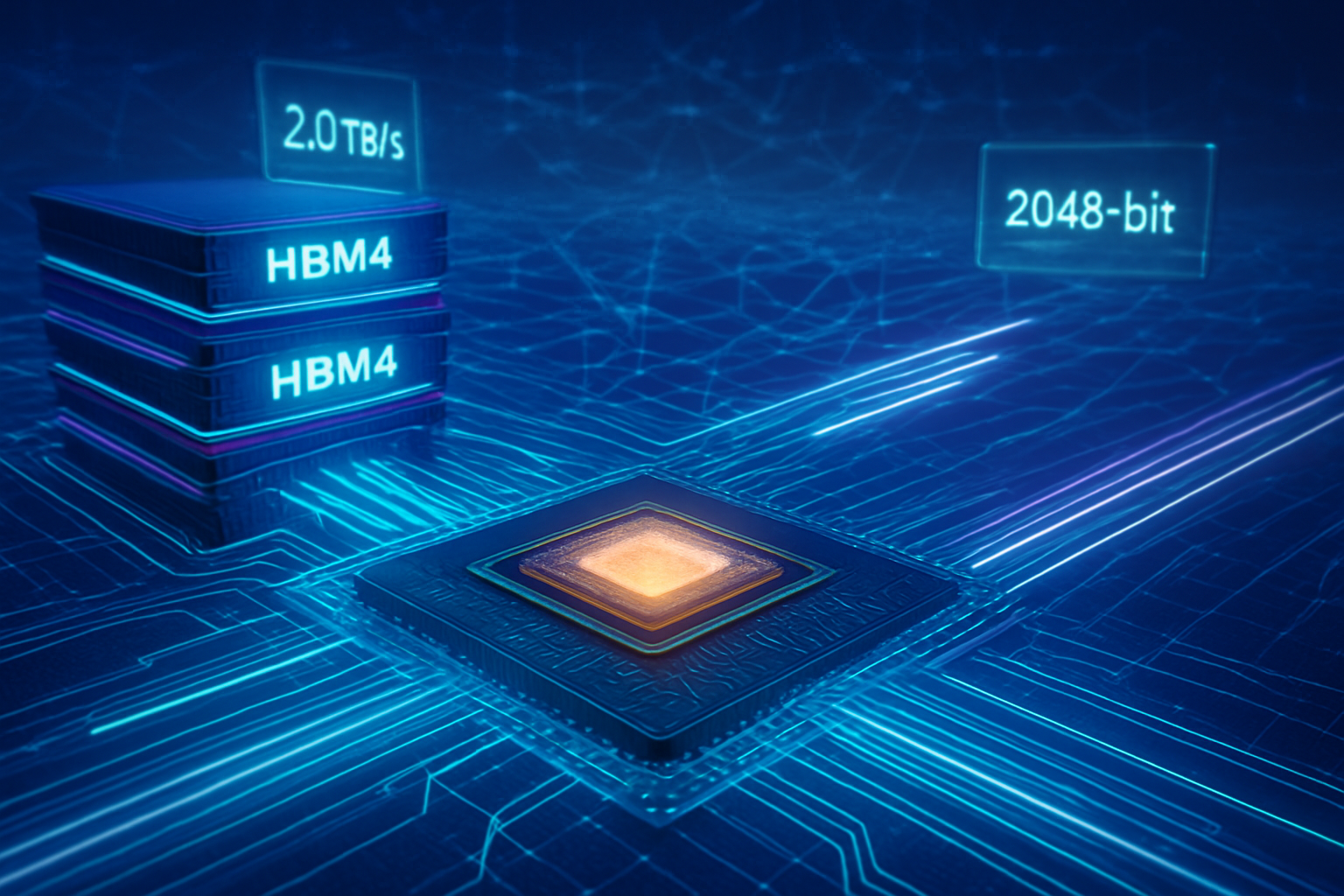
    The transition to HBM4 represents the most significant architectural overhaul in the history of stacked memory. Unlike its predecessors, HBM4 doubles the interface width from a 1,024-bit bus to a massive 2,048-bit bus. This allows a single HBM4 stack to deliver bandwidth exceeding 2.6 TB/s, nearly triple the throughput of early HBM3e systems. At CES 2026, industry leaders showcased 16-layer (16-Hi) HBM4 stacks, providing up to 48GB of capacity per cube. This density is critical for the next generation of AI accelerators, which are expected to house over 400GB of memory on a single package.

    Perhaps the most revolutionary technical change in HBM4 is the integration of a "logic base die." Historically, the bottom layer of a memory stack was manufactured using standard DRAM processes. However, HBM4 utilizes advanced 5nm and 3nm logic processes for this base layer. This allows for "Custom HBM," where memory controllers and even specific AI acceleration logic can be moved directly into the memory stack. By reducing the physical distance data must travel and utilizing Through-Silicon Vias (TSVs), HBM4 is projected to offer a 40% improvement in power efficiency—a vital metric for data centers where a single GPU can now consume over 1,000 watts.

    The New Triumvirate: SK Hynix, Samsung, and Micron

    The explosion of HBM has ignited a fierce three-way battle among the world’s top memory makers. SK Hynix (KRX: 000660) currently maintains a dominant 55-60% market share, bolstered by its "One-Team" alliance with Taiwan Semiconductor Manufacturing Company (NYSE: TSM). This partnership allows SK Hynix to leverage TSMC’s leading-edge foundry nodes for HBM4 base dies, ensuring seamless integration with the upcoming NVIDIA (NASDAQ: NVDA) Rubin platform.

    Samsung Electronics (KRX: 005930), however, is positioning itself as the only "one-stop shop" in the industry. By combining its memory expertise with its internal foundry and advanced packaging capabilities, Samsung aims to capture the burgeoning "Custom HBM" market. Meanwhile, Micron Technology (NASDAQ: MU) has rapidly expanded its capacity in Taiwan and Japan, showcasing its own 12-layer HBM4 solutions at CES 2026. Micron is targeting a production capacity of 15,000 wafers per month by the end of the year, specifically aiming to challenge SK Hynix’s stronghold on the NVIDIA supply chain.

    Beyond the Silicon: Why 23% is Just the Beginning

    The fact that HBM now commands nearly a quarter of the DRAM market revenue signals a permanent change in the data center landscape. The "memory wall" has long been the Achilles' heel of high-performance computing, where processors sit idle while waiting for data to arrive from relatively slow memory modules. As AI models grow to trillions of parameters, the demand for bandwidth has become insatiable. Data center operators are no longer just buying "servers"; they are building "AI factories" where memory performance is the primary determinant of return on investment.

    This shift has profound implications for the wider tech industry. The high average selling price (ASP) of HBM—often 5 to 10 times that of standard DDR5—is driving a reallocation of capital within the semiconductor world. Standard PC and smartphone memory production is being sidelined as manufacturers prioritize HBM lines. While this has led to supply crunches and price hikes in the consumer market, it has provided the necessary capital for the semiconductor industry to fund the multi-billion dollar research required for sub-3nm manufacturing.

    The Road to 2027: Custom Memory and the Rubin Ultra

    Looking ahead, the roadmap for HBM4 extends far into 2027 and beyond. NVIDIA’s CEO Jensen Huang recently confirmed that the Rubin R100/R200 architecture, which will utilize between 8 and 12 stacks of HBM4 per chip, is moving toward mass production. The "Rubin Ultra" variant, expected in late 2026 or early 2027, will push pin speeds to a staggering 13 Gbps. This will require even more advanced cooling solutions, as the thermal density of these stacked chips begins to approach the limits of traditional air cooling.

    The next major hurdle will be the full realization of "Custom HBM." Experts predict that within the next two years, major hyperscalers like Amazon (NASDAQ: AMZN) and Google (NASDAQ: GOOGL) will begin designing their own custom logic dies for HBM4. This would allow them to optimize memory specifically for their proprietary AI chips, such as Trainium or TPU, further decoupling themselves from off-the-shelf hardware and creating a more vertically integrated AI stack.

    A New Era of Computing

    The rise of HBM from a specialized component to a dominant market force is a defining moment in the AI era. It represents the transition from a compute-centric world to a data-centric one, where the ability to move information is just as valuable as the ability to process it. With HBM4 on the horizon, the "memory wall" is being pushed back, enabling the next generation of AI models to be larger, faster, and more efficient than ever before.

    In the coming weeks and months, the industry will be watching closely as HBM4 enters its final qualification phases. The success of these first mass-produced units will determine the pace of AI development for the remainder of the decade. As 23% of the market today, HBM is no longer just an "extra"—it is the very backbone of the intelligence age.


    This content is intended for informational purposes only and represents analysis of current AI developments.

    TokenRing AI delivers enterprise-grade solutions for multi-agent AI workflow orchestration, AI-powered development tools, and seamless remote collaboration platforms.
    For more information, visit https://www.tokenring.ai/.

  • Silicon Empire: Micron Prepares for Historic Groundbreaking on $100 Billion New York Megafab

    Silicon Empire: Micron Prepares for Historic Groundbreaking on $100 Billion New York Megafab

    As the global race for artificial intelligence supremacy intensifies, Micron Technology (NASDAQ: MU) is set to reach a monumental milestone. On January 16, 2026, the company will officially break ground on its $100 billion "Megafab" in Clay, New York. This project represents the largest private investment in New York State history and the most ambitious semiconductor manufacturing endeavor ever attempted on American soil. Positioned as a direct response to the "Memory Wall" that currently bottlenecks large language models and generative AI, this facility is designed to secure a domestic supply of the high-speed memory essential for the next decade of computing.

    The groundbreaking ceremony, scheduled for next week, follows years of rigorous environmental reviews and federal negotiations. Once completed, the site will house four massive cleanroom modules, totaling 2.4 million square feet—roughly the size of 40 football fields. This "Megafab" is more than just a factory; it is the cornerstone of a new American "Silicon Heartland," intended to shift the center of gravity for memory production away from East Asia and back to the United States. With the AI industry’s demand for High-Bandwidth Memory (HBM) reaching unprecedented levels, the New York facility is being hailed by industry leaders and government officials as a critical safeguard for national security and economic competitiveness.

    The Technical Frontier: 1-Gamma Nodes and High-NA EUV

    The New York Megafab is not merely about scale; it is about pushing the physical limits of semiconductor physics. Micron has confirmed that the facility will be the primary production hub for its most advanced Dynamic Random Access Memory (DRAM) architectures, specifically the 1-gamma process node. This node utilizes Extreme Ultraviolet (EUV) lithography to etch features smaller than ten nanometers, a level of precision required to pack more data into smaller, more power-efficient chips. Unlike previous generations of DRAM, the 1-gamma node is optimized for the massive parallel processing required by AI accelerators.

    A key differentiator for the New York site is the planned integration of High-NA (Numerical Aperture) EUV tools from ASML (NASDAQ: ASML). These machines, which cost approximately $400 million each, allow for even finer resolution in the lithography process. By being among the first to deploy this technology at scale for memory production, Micron aims to leapfrog competitors in the production of HBM4—the next-generation standard for AI memory. HBM4 stacks DRAM vertically to provide the massive bandwidth that processors from NVIDIA (NASDAQ: NVDA) and AMD (NASDAQ: AMD) require to feed their hungry AI cores.

    Initial reactions from the semiconductor research community have been overwhelmingly positive. Dr. Sarah Jenkins, a senior analyst at the Global Chip Institute, noted that "the New York Megafab solves the latency and throughput issues that have plagued AI development. By producing 12-high and 16-high HBM stacks domestically, Micron is effectively removing the single biggest physical constraint on AI scaling." This technical shift represents a departure from traditional planar memory, focusing instead on 3D stacking and vertical interconnects that drastically reduce power consumption—a critical factor for the world's energy-hungry data centers.

    Strategic Advantage for the AI Ecosystem

    The implications of this $100 billion investment ripple across the entire tech sector. For AI giants like NVIDIA and cloud providers like Microsoft (NASDAQ: MSFT) and Alphabet (NASDAQ: GOOGL), the New York Megafab offers a stabilized, domestic source of the most expensive component in an AI server: the memory. Currently, the supply chain for HBM is heavily concentrated in South Korea and Taiwan, leaving U.S. tech firms vulnerable to geopolitical tensions and logistics disruptions. A domestic "Megafab" provides a reliable buffer, ensuring that the next generation of AI clusters can be built and maintained without foreign dependency.

    Competitive pressure is also mounting on Micron’s primary rivals, Samsung and SK Hynix. While these firms have dominated the HBM market for years, Micron’s aggressive move into the 1-gamma node and its strategic partnership with the U.S. government through the CHIPS and Science Act give it a unique advantage. The facility is expected to help Micron capture 30% of the global HBM4 market by the end of the decade. This shift could disrupt the existing market hierarchy, positioning Micron as the preferred partner for U.S.-based AI hardware developers who prioritize supply chain resilience and proximity to R&D.

    Furthermore, the New York project is expected to catalyze a broader ecosystem of suppliers and startups. Companies specializing in advanced packaging, thermal management, and chiplet interconnects are already scouting locations near the Syracuse site. This cluster effect will likely lower the barriers to entry for smaller AI hardware startups, who can benefit from a localized supply of high-grade memory and the specialized workforce that the Megafab will attract.

    The CHIPS Act and the Broader Geopolitical Landscape

    The New York Megafab is the "crown jewel" of the CHIPS and Science Act, a federal initiative designed to restore American leadership in semiconductor manufacturing. Micron’s project is supported by a massive financial package, including $6.165 billion in direct federal grants and $7.5 billion in federal loans. New York State has also contributed $5.5 billion in "Green CHIPS" tax credits, which are contingent on Micron meeting strict milestones for job creation and environmental sustainability. This public-private partnership is unprecedented in its scope and reflects a strategic pivot toward "industrial policy" in the United States.

    In the broader AI landscape, this development signifies a move toward "sovereign AI" capabilities. By controlling the production of the most advanced memory chips, the U.S. secures its position at the top of the AI value chain. This is particularly relevant as AI becomes central to national defense, cybersecurity, and economic productivity. The Megafab serves as a physical manifestation of the shift from a globalized, "just-in-time" supply chain to a "just-in-case" model that prioritizes security and reliability over the lowest possible cost.

    However, the project is not without its challenges. Critics have raised concerns about the environmental impact of such a massive industrial footprint, specifically regarding water usage and energy consumption. Micron has countered these concerns by committing to 100% renewable energy and advanced water recycling systems. Additionally, the sheer scale of the 20-year build-out means that the project will have to navigate multiple economic cycles and shifts in political leadership, making its long-term success dependent on sustained bipartisan support for the semiconductor industry.

    The Road to 2030 and Beyond

    While the groundbreaking is a historic moment, the road ahead is long. Construction of the first fabrication module (Fab 1) will continue through 2028, with the first production wafers expected to roll off the line in early 2030. In the near term, the focus will be on massive site preparation, including the leveling of land and the construction of specialized power substations. As the facility scales, it is expected to create 9,000 direct Micron jobs and over 40,000 indirect jobs in the surrounding region, fundamentally transforming the economy of Upstate New York.

    Experts predict that by the mid-2030s, the New York Megafab will be the epicenter of a "Memory Corridor" that links research at the Albany NanoTech Complex with high-volume manufacturing in Clay. This integration of R&D and production is seen as the key to maintaining a competitive edge over international rivals. Future applications for the chips produced here extend beyond today's LLMs; they will power autonomous vehicles, advanced medical diagnostics, and the next generation of edge computing devices that require high-performance memory in a small, efficient package.

    The primary challenge moving forward will be the "talent war." To staff a facility of this magnitude, Micron and the State of New York are investing heavily in workforce development programs at local universities and community colleges. The success of the Megafab will ultimately depend on the ability to train thousands of specialized technicians and engineers capable of operating some of the most complex machinery on the planet.

    A New Chapter in American Innovation

    The groundbreaking of Micron’s New York Megafab marks a definitive turning point in the history of American technology. It is a $100 billion bet that the future of artificial intelligence will be built on American soil, using American-made components. By addressing the critical need for advanced memory, Micron is not just building a factory; it is building the foundation for the next era of human intelligence and economic growth.

    As we look toward the ceremony on January 16, the significance of this moment cannot be overstated. It represents the successful execution of a national strategy to reclaim technological sovereignty and the beginning of a multi-decade project that will define the industrial landscape of the 21st century. In the coming months, all eyes will be on the Town of Clay as the first steel beams rise, signaling the start of a new chapter in the AI revolution.


    This content is intended for informational purposes only and represents analysis of current AI developments.

    TokenRing AI delivers enterprise-grade solutions for multi-agent AI workflow orchestration, AI-powered development tools, and seamless remote collaboration platforms.
    For more information, visit https://www.tokenring.ai/.

  • The HBM4 Memory Supercycle: The Trillion-Dollar War Powering the Next Frontier of AI

    The HBM4 Memory Supercycle: The Trillion-Dollar War Powering the Next Frontier of AI

    The artificial intelligence revolution has reached a critical hardware inflection point as 2026 begins. While the last two years were defined by the scramble for high-end GPUs, the industry has now shifted its gaze toward the "memory wall"—the bottleneck where data processing speeds outpace the ability of memory to feed that data to the processor. Enter the HBM4 (High Bandwidth Memory 4) supercycle, a generational leap in semiconductor technology that is fundamentally rewriting the rules of AI infrastructure. This week, the competition reached a fever pitch as the world’s three dominant memory makers—SK Hynix, Samsung, and Micron—unveiled their final production roadmaps for the chips that will power the next decade of silicon.

    The significance of this transition cannot be overstated. As large language models (LLMs) scale toward 100 trillion parameters, the demand for massive, ultra-fast memory has transitioned HBM from a specialized component into a strategic, custom asset. With NVIDIA (NASDAQ: NVDA) recently detailing its HBM4-exclusive "Rubin" architecture at CES 2026, the race to supply these chips has become the most expensive and technologically complex battle in the history of the semiconductor industry.

    The Technical Leap: 2 TB/s and the 2048-Bit Frontier

    HBM4 represents the most significant architectural overhaul in the history of high-bandwidth memory, moving beyond incremental speed bumps to a complete redesign of the memory interface. The most striking advancement is the doubling of the memory interface width from the 1024-bit bus used in HBM3e to a massive 2048-bit bus. This allows individual HBM4 stacks to achieve staggering bandwidths of 2.0 TB/s to 2.8 TB/s per stack—nearly triple the performance of the early HBM3 modules that powered the first wave of the generative AI boom.

    Beyond raw speed, the industry is witnessing a shift toward extreme 3D stacking. While 12-layer stacks (36GB) are the baseline for initial mass production in early 2026, the "holy grail" is the 16-layer stack, providing up to 64GB of capacity per module. To achieve this within the strict 775µm height limit set by JEDEC, manufacturers are thinning DRAM wafers to roughly 30 micrometers—about one-third the thickness of a human hair. This has necessitated a move toward "Hybrid Bonding," a process where copper pads are fused directly to copper without the use of traditional micro-bumps, significantly reducing stack height and improving thermal dissipation.

    Furthermore, the "base die" at the bottom of the HBM stack has evolved. No longer a simple interface, it is now a high-performance logic die manufactured on advanced foundry nodes like 5nm or 4nm. This transition marks the first time memory and logic have been so deeply integrated, effectively turning the memory stack into a co-processor that can handle basic data operations before they even reach the main GPU.

    The Three-Way War: SK Hynix, Samsung, and Micron

    The competitive landscape for HBM4 is a high-stakes triangle between three giants. SK Hynix (KRX: 000660), the current market leader with over 50% market share, has solidified its position through a "One-Team" alliance with TSMC (NYSE: TSM). By leveraging TSMC’s advanced logic dies and its own Mass Reflow Molded Underfill (MR-MUF) bonding technology, SK Hynix aims to begin volume shipments of 12-layer HBM4 by the end of Q1 2026. Their 16-layer prototype, showcased earlier this month, is widely considered the frontrunner for NVIDIA's high-end Rubin R100 GPUs.

    Samsung Electronics (KRX: 005930), after trailing in the HBM3e generation, is mounting a massive counter-offensive. Samsung’s unique advantage is its "turnkey" capability; it is the only company capable of designing the DRAM, manufacturing the logic die in its internal 4nm foundry, and handling the advanced 3D packaging under one roof. This vertical integration has allowed Samsung to claim industry-leading yields for its 16-layer HBM4, which is currently undergoing final qualification for the 2026 Rubin launch.

    Meanwhile, Micron Technology (NASDAQ: MU) has positioned itself as the performance leader, claiming its HBM4 stacks can hit 2.8 TB/s using its proprietary 1-beta DRAM process. Micron’s strategy has been focused on energy efficiency, a critical factor for massive data centers facing power constraints. The company recently announced that its entire HBM4 capacity for 2026 is already sold out, highlighting the desperate demand from hyperscalers like Google, Meta, and Microsoft who are building their own custom AI accelerators.

    Breaking the Memory Wall and Market Disruption

    The HBM4 supercycle is more than a hardware upgrade; it is the solution to the "Memory Wall" that has threatened to stall AI progress. By providing the massive bandwidth required to feed data to thousands of parallel cores, HBM4 enables the training of models with 10 to 100 times the complexity of GPT-4. This shift is expected to accelerate the development of "World Models" and sophisticated agentic AI systems that require real-time processing of multimodal data.

    However, this focus on high-margin HBM4 is causing significant ripples across the broader tech economy. To meet the demand for HBM4, manufacturers are diverting massive amounts of wafer capacity away from traditional DDR5 and mobile memory. As of January 2026, standard PC and server RAM prices have spiked by nearly 300% year-over-year, as the industry prioritizes the lucrative AI market. This "wafer cannibalization" is making high-end gaming PCs and enterprise servers significantly more expensive, even as AI capabilities skyrocket.

    Furthermore, the move toward "Custom HBM" (cHBM) is disrupting the traditional relationship between memory makers and chip designers. For the first time, major AI labs are requesting bespoke memory configurations with specific logic embedded in the base die. This shift is turning memory into a semi-custom product, favoring companies like Samsung and the SK Hynix-TSMC alliance that can offer deep integration between logic and storage.

    The Horizon: Custom Logic and the Road to HBM5

    Looking ahead, the HBM4 era is expected to last until late 2027, with "HBM4E" (Extended) already in the research phase. The next major milestone will be the full adoption of "Logic-on-Memory," where specific AI kernels are executed directly within the memory stack to minimize data movement—the most energy-intensive part of AI computing. Experts predict this will lead to a 50% reduction in total system power consumption for inference tasks.

    The long-term roadmap also points toward HBM5, which is rumored to explore even more exotic materials and optical interconnects to break the 5 TB/s barrier. However, the immediate challenge remains manufacturing yield. The complexity of thinning wafers and hybrid bonding is so high that even a minor defect can ruin an entire 16-layer stack worth thousands of dollars. Perfecting these manufacturing processes will be the primary focus for engineers throughout the remainder of 2026.

    A New Era of Silicon Synergy

    The HBM4 supercycle represents a fundamental shift in how we build computers. For decades, the processor was the undisputed king of the system, with memory serving as a secondary, commodity component. In the age of generative AI, that hierarchy has dissolved. Memory is now the heartbeat of the AI cluster, and the ability to produce HBM4 at scale has become a matter of national and corporate security.

    As we move into the second half of 2026, the industry will be watching the rollout of NVIDIA’s Rubin systems and the first wave of 16-layer HBM4 deployments. The winner of this "Memory War" will not only reap tens of billions in revenue but will also dictate the pace of AI evolution for the next decade. For now, SK Hynix holds the lead, Samsung has the scale, and Micron has the efficiency—but in the volatile world of semiconductors, the crown is always up for grabs.


    This content is intended for informational purposes only and represents analysis of current AI developments.

    TokenRing AI delivers enterprise-grade solutions for multi-agent AI workflow orchestration, AI-powered development tools, and seamless remote collaboration platforms.
    For more information, visit https://www.tokenring.ai/.

  • Beyond Blackwell: Inside Nvidia’s ‘Vera Rubin’ Revolution and the War on ‘Computation Inflation’

    Beyond Blackwell: Inside Nvidia’s ‘Vera Rubin’ Revolution and the War on ‘Computation Inflation’

    As the artificial intelligence landscape shifts from simple chatbots to complex agentic reasoning and physical robotics, Nvidia (NASDAQ: NVDA) has officially moved into full production of its next-generation "Vera Rubin" platform. Named after the pioneering astronomer who provided the first evidence of dark matter, the Rubin architecture is more than just a faster chip; it represents a fundamental pivot in the company’s roadmap. By shifting to a relentless one-year product cycle, Nvidia is attempting to outpace a phenomenon CEO Jensen Huang calls "computation inflation," where the exponential growth of AI model complexity threatens to outstrip the physical and economic limits of current hardware.

    The arrival of the Vera Rubin platform in early 2026 marks the end of the two-year "Moore’s Law" cadence that defined the semiconductor industry for decades. With the R100 GPU and the custom "Vera" CPU at its core, Nvidia is positioning itself not just as a chipmaker, but as the architect of the "AI Factory." This transition is underpinned by a strategic technical shift toward High-Bandwidth Memory (HBM4) integration, involving a high-stakes partnership with Samsung Electronics (KRX: 005930) to secure the massive volumes of silicon required to power the next trillion-parameter frontier.

    The Silicon of 2026: R100, Vera CPUs, and the HBM4 Breakthrough

    At the heart of the Vera Rubin platform is the R100 GPU, a marvel of engineering fabricated on Taiwan Semiconductor Manufacturing Company's (NYSE: TSM) enhanced 3nm (N3P) process. Moving away from the monolithic designs of the past, the R100 utilizes a modular chiplet architecture on a massive 100x100mm substrate. This design allows for approximately 336 billion transistors—a 1.6x increase over the previous Blackwell generation—delivering a staggering 50 PFLOPS of FP4 inference performance per GPU. To put this in perspective, a single rack of Rubin-powered servers (the NVL144) can now reach 3.6 ExaFLOPS of compute, effectively turning a single data center row into a supercomputer that would have been unimaginable just three years ago.

    The most critical technical leap, however, is the integration of HBM4 memory. As AI models grow, they hit a "memory wall" where the speed of data transfer between the processor and memory becomes the primary bottleneck. Rubin addresses this by featuring 288GB of HBM4 memory per GPU, providing a bandwidth of up to 22 TB/s. This is achieved through an eighth-stack configuration and a widened 2,048-bit memory interface, nearly doubling the throughput of the Blackwell Ultra refresh. To ensure a steady supply of these advanced modules, Nvidia has deepened its collaboration with Samsung, which is utilizing its 6th-generation 10nm-class (1c) DRAM process to produce HBM4 chips that are 40% more energy-efficient than their predecessors.

    Beyond the GPU, Nvidia is introducing the Vera CPU, the successor to the Grace processor. Unlike Grace, which relied on standard Arm Neoverse cores, Vera features 88 custom "Olympus" Arm cores designed specifically for agentic AI workflows. These cores are optimized for the complex "thinking" chains required by autonomous agents that must plan and reason before acting. Coupled with the new BlueField-4 DPU for high-speed networking and the sixth-generation NVLink 6 interconnect—which offers 3.6 TB/s of bidirectional bandwidth—the Rubin platform functions as a unified, vertically integrated system rather than a collection of disparate parts.

    Reshaping the Competitive Landscape: The AI Factory Arms Race

    The shift to an annual update cycle is a strategic masterstroke designed to keep competitors like Advanced Micro Devices (NASDAQ: AMD) and Intel (NASDAQ: INTC) in a perpetual state of catch-up. While AMD’s Instinct MI400 series, expected later in 2026, boasts higher raw memory capacity (up to 432GB), Nvidia’s Rubin counters with superior compute density and a more mature software ecosystem. The "CUDA moat" remains Nvidia’s strongest defense, as the Rubin platform is designed to be a "turnkey" solution for hyperscalers like Microsoft (NASDAQ: MSFT), Meta (NASDAQ: META), and Alphabet (NASDAQ: GOOGL). These tech giants are no longer just buying chips; they are deploying entire "AI Factories" that can reduce the cost of inference tokens by 10x compared to previous years.

    For these hyperscalers, the Rubin platform represents a path to sustainable scaling. By reducing the number of GPUs required to train Mixture-of-Experts (MoE) models by a factor of four, Nvidia allows these companies to scale their models to 100 trillion parameters without a linear increase in their physical data center footprint. This is particularly vital for Meta and Google, which are racing to integrate "Agentic AI" into every consumer product. The specialized Rubin CPX variant, which uses more affordable GDDR7 memory for the "context phase" of inference, further allows these companies to process millions of tokens of context more economically, making "long-context" AI a standard feature rather than a luxury.

    However, the aggressive one-year rhythm also places immense pressure on the global supply chain. By qualifying Samsung as a primary HBM4 supplier alongside SK Hynix (KRX: 000660) and Micron Technology (NASDAQ: MU), Nvidia is attempting to avoid the shortages that plagued the H100 and Blackwell launches. This diversification is a clear signal that Nvidia views memory availability—not just compute power—as the defining constraint of the 2026 AI economy. Samsung’s ability to hit its target of 250,000 wafers per month will be the linchpin of the Rubin rollout.

    Deflating ‘Computation Inflation’ and the Rise of Physical AI

    Jensen Huang’s concept of "computation inflation" addresses a looming crisis: the volume of data and the complexity of AI models are growing at roughly 10x per year, while traditional CPU performance has plateaued. Without the massive architectural leaps provided by Rubin, the energy and financial costs of AI would become unsustainable. Nvidia’s strategy is to "deflate" the cost of intelligence by delivering 1000x more compute every few years through a combination of GPU/CPU co-design and new data types like NVFP4. This focus on efficiency is evident in the Rubin NVL72 rack, which is designed to be 100% liquid-cooled, eliminating the need for energy-intensive water chillers and saving up to 6% in total data center power consumption.

    The Rubin platform also serves as the hardware foundation for "Physical AI"—AI that interacts with the physical world. Through its Cosmos foundation models, Nvidia is using Rubin-powered clusters to generate synthetic 3D data grounded in physics, which is then used to train humanoid robots and autonomous vehicles. This marks a transition from AI that merely predicts the next word to AI that understands the laws of physics. For companies like Tesla (NASDAQ: TSLA) or the robotics startups of 2026, the R100’s ability to handle "test-time scaling"—where the model spends more compute cycles "thinking" before executing a physical movement—is a prerequisite for safe and reliable automation.

    This wider significance cannot be overstated. By providing the compute necessary for models to "reason" in real-time, Nvidia is moving the industry toward the era of autonomous agents. This mirrors previous milestones like the introduction of the Transformer model in 2017 or the launch of ChatGPT in 2022, but with a focus on agency and physical interaction. The concern, however, remains the centralization of this power. As Nvidia becomes the "operating system" for AI infrastructure, the industry’s dependence on a single vendor’s roadmap has never been higher.

    The Road Ahead: From Rubin Ultra to Feynman

    Looking toward the near-term future, Nvidia has already teased the "Rubin Ultra" for 2027, which will feature 16-high HBM4 stacks and even greater memory capacity. Beyond that lies the "Feynman" architecture, scheduled for 2028, which is rumored to explore even more exotic packaging technologies and perhaps the first steps toward optical interconnects at the chip level. The immediate challenge for 2026, however, will be the massive transition to liquid cooling. Most existing data centers were designed for air cooling, and the shift to the fully liquid-cooled Rubin racks will require a multi-billion dollar overhaul of global infrastructure.

    Experts predict that the next two years will see a "disaggregation" of AI workloads. We will likely see specialized clusters where Rubin R100s handle the heavy lifting of training and complex reasoning, while Rubin CPX units handle massive context processing, and smaller edge-AI chips manage simple tasks. The challenge for Nvidia will be maintaining this frantic annual pace without sacrificing reliability or software stability. If they succeed, the "cost per token" could drop so low that sophisticated AI agents become as ubiquitous and inexpensive as a Google search.

    A New Era of Accelerated Computing

    The launch of the Vera Rubin platform is a watershed moment in the history of computing. It represents the successful execution of a strategy to compress decades of technological progress into a single-year cycle. By integrating custom CPUs, advanced HBM4 memory from Samsung, and next-generation interconnects, Nvidia has built a fortress that will be difficult for any competitor to storm in the near future. The key takeaway is that the "AI chip" is dead; we are now in the era of the "AI System," where the rack is the unit of compute.

    As we move through 2026, the industry will be watching two things: the speed of liquid-cooling adoption in enterprise data centers and the real-world performance of Agentic AI powered by the Vera CPU. If Rubin delivers on its promise of a 10x reduction in token costs, it will not just deflate "computation inflation"—it will ignite a new wave of economic productivity driven by autonomous, reasoning machines. For now, Nvidia remains the undisputed architect of this new world, with the Vera Rubin platform serving as its most ambitious blueprint yet.


    This content is intended for informational purposes only and represents analysis of current AI developments.

    TokenRing AI delivers enterprise-grade solutions for multi-agent AI workflow orchestration, AI-powered development tools, and seamless remote collaboration platforms.
    For more information, visit https://www.tokenring.ai/.

  • American Silicon: Micron’s Groundbreaking New York Megafab Secures the Future of AI Memory

    American Silicon: Micron’s Groundbreaking New York Megafab Secures the Future of AI Memory

    The global race for artificial intelligence supremacy has officially shifted its center of gravity to the American heartland. As of January 8, 2026, the domestic semiconductor landscape has reached a historic milestone with Micron Technology, Inc. (NASDAQ: MU) preparing to break ground on its massive New York "megafab" in Clay, New York. This project, alongside the rapidly advancing construction of its leading-edge facility in Boise, Idaho, represents a seismic shift in the production of High Bandwidth Memory (HBM)—the specialized silicon essential for powering the world’s most advanced AI data centers.

    This "Made in USA" memory push is more than just a construction project; it is a strategic realignment of the global supply chain. For years, the HBM market was dominated by South Korean giants, leaving American AI leaders vulnerable to geopolitical shifts and logistical bottlenecks. Backed by billions in federal support from the CHIPS and Science Act, Micron’s expansion is designed to ensure that the "brains" of the AI revolution are not only designed in the U.S. but manufactured and packaged on American soil, providing a stable foundation for the next decade of computing.

    Scaling the Heights: From HBM3E to the HBM4 Revolution

    The technical specifications of these new facilities are staggering. The New York site, which will see its official groundbreaking on January 16, 2026, is a $100 billion multi-decade investment designed to eventually house four massive fabrication plants. Meanwhile, the Boise, Idaho, fab—which broke ground in late 2022—is already nearing completion of its exterior structure. By fiscal year 2027, the Boise site is expected to begin volume production of DRAM using Micron’s proprietary 1-beta and upcoming 1-gamma nodes. These facilities are specifically optimized for HBM, which stacks multiple layers of DRAM vertically to achieve the massive data throughput required by modern GPUs.

    As the industry transitions from HBM3E to the next-generation HBM4 standard in early 2026, Micron has positioned itself as a leader in power efficiency. While competitors like SK Hynix Inc. (KRX: 000660) and Samsung Electronics Co., Ltd. (KRX: 005930) have historically held larger market shares, Micron’s 12-high (12-Hi) HBM3E stacks have gained significant traction by offering 30% lower power consumption than the industry average. This efficiency is critical for data center operators who are increasingly constrained by thermal limits and energy costs. The upcoming HBM4 transition will double the interface width to 2048-bit, pushing bandwidth beyond 2.0 TB/s, a requirement for the next generation of AI architectures.

    Reshaping the Competitive Landscape for AI Giants

    The implications for the broader tech industry are profound. For AI heavyweights like NVIDIA Corporation (NASDAQ: NVDA) and Advanced Micro Devices, Inc. (NASDAQ: AMD), a domestic source of HBM reduces the "single-source" risk associated with relying almost exclusively on overseas suppliers. NVIDIA, which qualified Micron’s HBM3E for its Blackwell Ultra GPUs in late 2024, stands to benefit from a more resilient supply chain that can better withstand regional conflicts or trade disruptions. By having high-volume memory production co-located in the same hemisphere as the primary chip designers, the industry can expect faster iteration cycles and more integrated co-design of memory and logic.

    However, this shift also intensifies the rivalry between the "Big Three" memory makers. SK Hynix currently maintains a dominant 55-60% share of the HBM market, leveraging its Mass Reflow Molded Underfill (MR-MUF) bonding technology. Samsung has also made a massive push, recently announcing mass production of HBM4 using its "1c" process. Micron’s strategic advantage lies in its aggressive adoption of the CHIPS Act incentives to build the most modern, automated fabs in the world. Micron aims to capture 30% of the HBM4 market by the end of 2026, a goal that would significantly erode the current duopoly held by its Korean rivals.

    The CHIPS Act as a Catalyst for AI Sovereignty

    The rapid progress of these facilities would likely have been impossible without the $6.165 billion in direct funding and $7.5 billion in loans finalized under the CHIPS and Science Act in late 2024. This federal intervention represents a pivot toward "AI Sovereignty"—the idea that a nation’s economic and national security depends on its ability to produce the fundamental building blocks of artificial intelligence domestically. By subsidizing the high capital expenditures of these fabs, the U.S. government is effectively de-risking the transition to a more localized manufacturing model.

    Beyond the immediate economic impact, the Micron expansion addresses a critical vulnerability in the AI landscape: advanced packaging. Historically, even if chips were designed in the U.S., they often had to be sent to Asia for the complex stacking and bonding required for HBM. Micron’s new facilities will include advanced packaging capabilities, closing the "missing link" in the domestic ecosystem. This fits into a broader global trend of "techno-nationalism," where regions like the EU and Japan are also racing to subsidize their own semiconductor hubs to prevent being left behind in the AI-driven industrial revolution.

    The Horizon: HBM4 and the Path to 2030

    Looking ahead, the next 18 to 24 months will be defined by the mass production of HBM4. While the New York megafab is a long-term play—with initial production now projected for late 2030 due to the immense scale of the project—the Boise facility will serve as the immediate vanguard for U.S.-made memory. Industry experts predict that by 2027, the synergy between Micron’s R&D headquarters and its new Boise fab will allow for "lab-to-fab" transitions that are months faster than the current industry standard.

    The primary challenges remaining are labor and infrastructure. Building and operating these facilities requires tens of thousands of highly skilled engineers and technicians. Micron has already launched massive workforce development initiatives in New York and Idaho, but the talent gap remains a significant concern for the 2030 timeline. Furthermore, the transition to sub-10nm DRAM nodes will require the successful integration of High-NA EUV lithography, a technical hurdle that will test the limits of Micron’s engineering prowess as it seeks to maintain its power-efficiency lead.

    A New Chapter in Semiconductor History

    Micron’s groundbreaking in New York and the progress in Idaho mark the beginning of a new chapter in American industrial history. By successfully leveraging public-private partnerships, the U.S. is on a path to reclaim its position as a manufacturing powerhouse for the most critical components of the digital age. The goal of producing 40% of the company’s global DRAM in the U.S. by the mid-2030s is an ambitious target that, if achieved, will fundamentally alter the economics of the AI industry.

    In the coming weeks, all eyes will be on the official New York groundbreaking on January 16. This event will serve as a symbolic "go" signal for one of the largest construction projects in human history. As these fabs rise, they will not only produce silicon but also provide the essential infrastructure needed to sustain the current AI boom. For investors, policymakers, and tech leaders, the message is clear: the future of AI memory is being forged in America.


    This content is intended for informational purposes only and represents analysis of current AI developments.

    TokenRing AI delivers enterprise-grade solutions for multi-agent AI workflow orchestration, AI-powered development tools, and seamless remote collaboration platforms.
    For more information, visit https://www.tokenring.ai/.

  • The HBM4 Memory War: SK Hynix, Samsung, and Micron Clash at CES 2026 to Power NVIDIA’s Rubin Revolution

    The HBM4 Memory War: SK Hynix, Samsung, and Micron Clash at CES 2026 to Power NVIDIA’s Rubin Revolution

    The 2026 Consumer Electronics Show (CES) in Las Vegas has transformed from a showcase of consumer gadgets into the primary battlefield for the most critical component in the artificial intelligence era: High Bandwidth Memory (HBM). As of January 8, 2026, the industry is witnessing the eruption of the "HBM4 Memory War," a high-stakes conflict between the world’s three largest memory manufacturers—SK Hynix (KRX: 000660), Samsung Electronics (KRX: 005930), and Micron Technology (NASDAQ: MU). This technological arms race is not merely about storage; it is a desperate sprint to provide the massive data throughput required by NVIDIA’s (NASDAQ: NVDA) newly detailed "Rubin" platform, the successor to the record-breaking Blackwell architecture.

    The significance of this development cannot be overstated. As AI models grow to trillions of parameters, the bottleneck has shifted from raw compute power to memory bandwidth and energy efficiency. The announcements made this week at CES 2026 signal a fundamental shift in semiconductor architecture, where memory is no longer a passive storage bin but an active, logic-integrated component of the AI processor itself. With billions of dollars in capital expenditure on the line, the winners of this HBM4 cycle will likely dictate the pace of AI advancement for the remainder of the decade.

    Technical Frontiers: 16-Layer Stacks and the 1c Process

    The technical specifications unveiled at CES 2026 represent a monumental leap over the previous HBM3E standard. SK Hynix stole the early headlines by debuting the world’s first 16-layer 48GB HBM4 module. To achieve this, the company utilized its proprietary Advanced Mass Reflow Molded Underfill (MR-MUF) technology, thinning individual DRAM wafers to a staggering 30 micrometers to fit within the strict 775µm height limit set by JEDEC. This 16-layer stack delivers an industry-leading data rate of 11.7 Gbps per pin, which, when integrated into an 8-stack system like NVIDIA’s Rubin, provides a system-level bandwidth of 22 TB/s—nearly triple that of early HBM3E systems.

    Samsung Electronics countered with a focus on manufacturing sophistication and efficiency. Samsung’s HBM4 is built on its "1c" nanometer process (the 6th generation of 10nm-class DRAM). By moving to this advanced node, Samsung claims a 40% improvement in energy efficiency over its competitors. This is a critical advantage for data center operators struggling with the thermal demands of GPUs that now exceed 1,000 watts. Unlike its rivals, Samsung is leveraging its internal foundry to produce the HBM4 logic base die using a 10nm logic process, positioning itself as a "one-stop shop" that controls the entire stack from the silicon to the final packaging.

    Micron Technology, meanwhile, showcased its aggressive capacity expansion and its role as a lead partner for the initial Rubin launch. Micron’s HBM4 entry focuses on a 12-high (12-Hi) 36GB stack that emphasizes a 2048-bit interface—double the width of HBM3E. This allows for speeds exceeding 2.0 TB/s per stack while maintaining a 20% power efficiency gain over previous generations. The industry reaction has been one of collective awe; experts from the AI research community note that the shift from memory-based nodes to logic nodes (like TSMC’s 5nm for the base die) effectively turns HBM4 into a "custom" memory solution that can be tailored for specific AI workloads.

    The Kingmaker: NVIDIA’s Rubin Platform and the Supply Chain Scramble

    The primary driver of this memory frenzy is NVIDIA’s Rubin platform, which was the centerpiece of the CES 2026 keynote. The Rubin R100 and R200 GPUs, built on TSMC’s (NYSE: TSM) 3nm process, are designed to consume HBM4 at an unprecedented scale. Each Rubin GPU is expected to utilize eight stacks of HBM4, totaling 288GB of memory per chip. To ensure it does not repeat the supply shortages that plagued the Blackwell launch, NVIDIA has reportedly secured massive capacity commitments from all three major vendors, effectively acting as the kingmaker in the semiconductor market.

    Micron has responded with the most aggressive capacity expansion in its history, targeting a dedicated HBM4 production capacity of 15,000 wafers per month by the end of 2026. This is part of a broader $20 billion capital expenditure plan that includes new facilities in Taiwan and a "megaplant" in Hiroshima, Japan. By securing such a large slice of the Rubin supply chain, Micron is moving from its traditional "third-place" position to a primary supplier status, directly challenging the dominance of SK Hynix.

    The competitive implications extend beyond the memory makers. For AI labs and tech giants like Google (NASDAQ: GOOGL), Meta (NASDAQ: META), and Microsoft (NASDAQ: MSFT), the availability of HBM4-equipped Rubin GPUs will determine their ability to train next-generation "Agentic AI" models. Companies that can secure early allocations of these high-bandwidth systems will have a strategic advantage in inference speed and cost-per-query, potentially disrupting existing SaaS products that are currently limited by the latency of older hardware.

    A Paradigm Shift: From Compute-Centric to Memory-Centric AI

    The "HBM4 War" marks a broader shift in the AI landscape. For years, the industry focused on "Teraflops"—the number of floating-point operations a processor could perform. However, as models have grown, the energy cost of moving data between the processor and memory has become the primary constraint. The integration of logic dies into HBM4, particularly through the SK Hynix and TSMC "One-Team" alliance, signifies the end of the compute-only era. By embedding memory controllers and physical layer interfaces directly into the memory stack, manufacturers are reducing the physical distance data must travel, thereby slashing latency and power consumption.

    This development also brings potential concerns regarding market consolidation. The technical complexity and capital requirements of HBM4 are so high that smaller players are being priced out of the market entirely. We are seeing a "triopoly" where SK Hynix, Samsung, and Micron hold all the cards. Furthermore, the reliance on advanced packaging techniques like Hybrid Bonding and MR-MUF creates a new set of manufacturing risks; any yield issues at these nanometer scales could lead to global shortages of AI hardware, stalling progress in fields from drug discovery to climate modeling.

    Comparisons are already being drawn to the 2023 "GPU shortage," but with a twist. While 2023 was about the chips themselves, 2026 is about the interconnects and the stacking. The HBM4 breakthrough is arguably more significant than the jump from H100 to B100, as it addresses the fundamental "memory wall" that has threatened to plateau AI scaling laws.

    The Horizon: Rubin Ultra and the Road to 1TB Per GPU

    Looking ahead, the roadmap for HBM4 is already extending into 2027 and beyond. During the CES presentations, hints were dropped regarding the "Rubin Ultra" refresh, which is expected to move to 16-high HBM4e (Extended) stacks. This would effectively double the memory capacity again, potentially allowing for 1 terabyte of HBM memory on a single GPU package. Micron and SK Hynix are already sampling these 16-Hi stacks, with mass production targets set for early 2027.

    The next major challenge will be the move to "Custom HBM" (cHBM), where AI companies like OpenAI or Tesla (NASDAQ: TSLA) may design their own proprietary logic dies to be manufactured by TSMC and then stacked with DRAM by SK Hynix or Micron. This level of vertical integration would allow for AI-specific optimizations that are currently impossible with off-the-shelf components. Experts predict that by 2028, the distinction between "processor" and "memory" will have blurred so much that we may begin referring to them as unified "AI Compute Cubes."

    Final Reflections on the Memory-First Era

    The events at CES 2026 have made one thing clear: the future of artificial intelligence is being written in the cleanrooms of memory fabs. SK Hynix’s 16-layer breakthrough, Samsung’s 1c process efficiency, and Micron’s massive capacity ramp-up for NVIDIA’s Rubin platform collectively represent a new chapter in semiconductor history. We have moved past the era of general-purpose computing into a period of extreme specialization, where the ability to move data is as important as the ability to process it.

    As we move into the first quarter of 2026, the industry will be watching for the first production yields of these HBM4 modules. The success of the Rubin platform—and by extension, the next leap in AI capability—depends entirely on whether these three memory giants can deliver on their ambitious promises. For now, the "Memory War" is in full swing, and the spoils of victory are nothing less than the foundation of the global AI economy.


    This content is intended for informational purposes only and represents analysis of current AI developments.

    TokenRing AI delivers enterprise-grade solutions for multi-agent AI workflow orchestration, AI-powered development tools, and seamless remote collaboration platforms.
    For more information, visit https://www.tokenring.ai/.

  • The Rubin Era Begins: NVIDIA’s R100 “Vera Rubin” Architecture Enters Production with a 3x Leap in AI Density

    The Rubin Era Begins: NVIDIA’s R100 “Vera Rubin” Architecture Enters Production with a 3x Leap in AI Density

    As of early 2026, the artificial intelligence industry is bracing for its most significant hardware transition to date. NVIDIA (NASDAQ:NVDA) has officially confirmed that its next-generation "Vera Rubin" (R100) architecture has entered full-scale production, setting the stage for a massive commercial rollout in the second half of 2026. This announcement, detailed during the recent CES 2026 keynote, marks a pivotal shift in NVIDIA's roadmap as the company moves to an aggressive annual release cadence, effectively shortening the lifecycle of the previous Blackwell architecture to maintain its stranglehold on the generative AI market.

    The R100 platform is not merely an incremental update; it represents a fundamental re-architecting of the data center. By integrating the new Vera CPU—the successor to the Grace CPU—and pioneering the use of HBM4 memory, NVIDIA is promising a staggering 3x leap in compute density over the current Blackwell systems. This advancement is specifically designed to power the next frontier of "Agentic AI," where autonomous systems require massive reasoning and planning capabilities that exceed the throughput of today’s most advanced clusters.

    Breaking the Memory Wall: Technical Specs of the R100 and Vera CPU

    The heart of the Vera Rubin platform is a sophisticated chiplet-based design fabricated on TSMC’s (NYSE:TSM) enhanced 3nm (N3P) process node. This shift from the 4nm process used in Blackwell allows for a 20% increase in transistor density and significantly improved power efficiency. A single Rubin GPU is estimated to house approximately 333 billion transistors—a nearly 60% increase over its predecessor. However, the most critical breakthrough lies in the memory subsystem. Rubin is the first architecture to fully integrate HBM4 memory, utilizing 8 to 12 stacks to deliver a breathtaking 22 TB/s of memory bandwidth per socket. This 2.8x increase in bandwidth over Blackwell Ultra is intended to solve the "memory wall" that has long throttled the performance of trillion-parameter Large Language Models (LLMs).

    Complementing the GPU is the Vera CPU, which moves away from off-the-shelf designs to feature 88 custom "Olympus" cores built on the ARM (NASDAQ:ARM) v9.2-A architecture. Unlike traditional processors, Vera introduces "Spatial Multi-Threading," a technique that physically partitions core resources to support 176 simultaneous threads, doubling the data processing and compression performance of the previous Grace CPU. When combined into the Rubin NVL72 rack-scale system, the architecture delivers 3.6 Exaflops of FP4 performance. This represents a 3.3x leap in compute density compared to the Blackwell NVL72, allowing enterprises to pack the power of a modern supercomputer into a single data center row.

    The Competitive Gauntlet: AMD, Intel, and the Hyperscaler Pivot

    NVIDIA's aggressive production timeline for R100 arrives as competitors attempt to close the gap. AMD (NASDAQ:AMD) has positioned its Instinct MI400 series, specifically the MI455X, as a formidable challenger. Boasting a massive 432GB of HBM4—significantly higher than the Rubin R100’s 288GB—AMD is targeting memory-constrained "Mixture-of-Experts" (MoE) models. Meanwhile, Intel (NASDAQ:INTC) has undergone a strategic pivot, reportedly shelving the commercial release of Falcon Shores to focus on its "Jaguar Shores" architecture, slated for late 2026 on the Intel 18A node. This leaves NVIDIA and AMD in a two-horse race for the high-end training market for the remainder of the year.

    Despite NVIDIA’s dominance, major hyperscalers are increasingly diversifying their silicon portfolios to mitigate the high costs associated with NVIDIA hardware. Google (NASDAQ:GOOGL) has begun internal deployments of its TPU v7 "Ironwood," while Amazon (NASDAQ:AMZN) is scaling its Trainium3 chips across AWS regions. Microsoft (NASDAQ:MSFT) and Meta (NASDAQ:META) are also expanding their respective Maia and MTIA programs. However, industry analysts note that NVIDIA’s CUDA software moat and the sheer density of the Vera Rubin platform make it nearly impossible for these internal chips to replace NVIDIA for frontier model training. Most hyperscalers are adopting a hybrid approach: utilizing Rubin for the most demanding training tasks while offloading inference and internal workloads to their own custom ASICs.

    Beyond the Chip: The Macro Impact on AI Economics and Infrastructure

    The shift to the Rubin architecture carries profound implications for the economics of artificial intelligence. By delivering a 10x reduction in the cost per token, NVIDIA is making the deployment of "Agentic AI"—systems that can reason, plan, and execute multi-step tasks autonomously—commercially viable for the first time. Analysts predict that the R100's density leap will allow researchers to train a trillion-parameter model with four times fewer GPUs than were required during the Blackwell era. This efficiency is expected to accelerate the timeline for achieving Artificial General Intelligence (AGI) by lowering the hardware barriers that currently limit the scale of recursive self-improvement in AI models.

    However, this unprecedented density comes with a significant infrastructure challenge: cooling. The Vera Rubin NVL72 rack is so power-intensive that liquid cooling is no longer an option—it is a mandatory requirement. The platform utilizes a "warm-water" Direct Liquid Cooling (DLC) design capable of managing the heat generated by a 600kW rack. This necessitates a massive overhaul of global data center infrastructure, as legacy air-cooled facilities are physically unable to support the R100's thermal demands. This transition is expected to spark a multi-billion dollar boom in the data center cooling and power management sectors as providers race to retrofit their sites for the Rubin era.

    The Road to 2H 2026: Future Developments and the Annual Cadence

    Looking ahead, NVIDIA’s move to an annual release cycle suggests that the "Rubin Ultra" and the subsequent "Vera Rubin Next" architectures are already deep in the design phase. In the near term, the industry will be watching for the first "early access" benchmarks from Tier-1 cloud providers who are expected to receive initial Rubin samples in mid-2026. The integration of HBM4 is also expected to drive a supply chain squeeze, with SK Hynix (KRX:000660) and Samsung (KRX:005930) reportedly operating at maximum capacity to meet NVIDIA’s stringent performance requirements.

    The primary challenge facing NVIDIA in the coming months will be execution. Transitioning to 3nm chiplets and HBM4 simultaneously is a high-risk technical feat. Any delays in TSMC’s packaging yields or HBM4 validation could ripple through the entire AI sector, potentially stalling the progress of major labs like OpenAI and Anthropic. Furthermore, as the hardware becomes more powerful, the focus will likely shift toward "sovereign AI," with nations increasingly viewing Rubin-class clusters as essential national infrastructure, potentially leading to further geopolitical tensions over export controls.

    A New Benchmark for the Intelligence Age

    The production of the Vera Rubin architecture marks a watershed moment in the history of computing. By delivering a 3x leap in density and nearly 4 Exaflops of performance in a single rack, NVIDIA has effectively redefined the ceiling of what is possible in AI research. The integration of the custom Vera CPU and HBM4 memory signals NVIDIA’s transformation from a GPU manufacturer into a full-stack data center company, capable of orchestrating every aspect of the AI workflow from the silicon to the interconnect.

    As we move toward the 2H 2026 launch, the industry's focus will remain on the real-world performance of these systems. If NVIDIA can deliver on its promises of a 10x reduction in token costs and a 5x boost in inference throughput, the "Rubin Era" will likely be remembered as the period when AI moved from a novelty into a ubiquitous, autonomous layer of the global economy. For now, the tech world waits for the fall of 2026, when the first Vera Rubin clusters will finally go online and begin the work of training the world's most advanced intelligence.


    This content is intended for informational purposes only and represents analysis of current AI developments.

    TokenRing AI delivers enterprise-grade solutions for multi-agent AI workflow orchestration, AI-powered development tools, and seamless remote collaboration platforms.
    For more information, visit https://www.tokenring.ai/.