Tag: health technology

  • OpenAI Bridges the Gap Between AI and Medicine with the Launch of “ChatGPT Health”

    OpenAI Bridges the Gap Between AI and Medicine with the Launch of “ChatGPT Health”

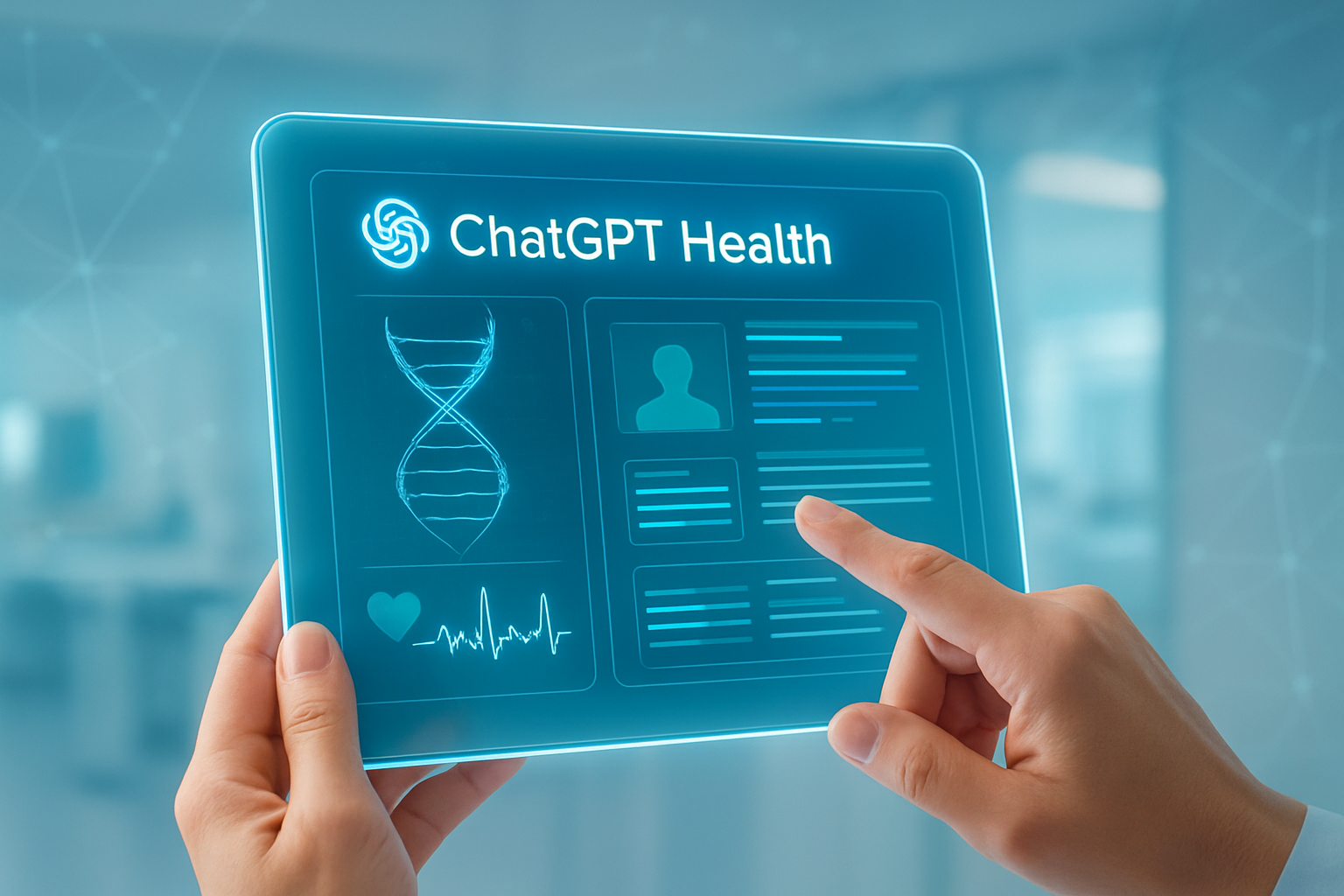
    In a move that signals the end of the "Dr. Google" era and the beginning of the AI-driven wellness revolution, OpenAI has officially launched ChatGPT Health. Announced on January 7, 2026, the new platform is a specialized, privacy-hardened environment designed to transform ChatGPT from a general-purpose chatbot into a sophisticated personal health navigator. By integrating directly with electronic health records (EHRs) and wearable data, OpenAI aims to provide users with a longitudinal view of their wellness that was previously buried in fragmented medical portals.

    The immediate significance of this launch cannot be overstated. With over 230 million weekly users already turning to AI for health-related queries, OpenAI is formalizing a massive consumer habit. By providing a "sandboxed" space where users can ground AI responses in their actual medical history—ranging from blood work to sleep patterns—the company is attempting to solve the "hallucination" problem that has long plagued AI in clinical contexts. This launch marks OpenAI’s most aggressive push into a regulated industry to date, positioning the AI giant as a central hub for personal health data management.

    Technical Foundations: GPT-5.2 and the Medical Reasoning Layer

    At the core of ChatGPT Health is GPT-5.2, the latest iteration of OpenAI’s frontier model. Unlike its predecessors, GPT-5.2 includes a dedicated "medical reasoning" layer that has been refined through more than 600,000 evaluations by a global panel of over 260 licensed physicians. This specialized tuning allows the model to interpret complex clinical data—such as lipid panels or echocardiogram results—with a level of nuance that matches or exceeds human general practitioners in standardized testing. The model is evaluated using HealthBench, a new open-source framework designed to measure clinical accuracy, empathy, and "escalation safety," ensuring the AI knows exactly when to stop providing information and tell a user to visit an emergency room.

    To facilitate this, OpenAI has partnered with b.well Connected Health to allow users in the United States to sync their electronic health records from approximately 2.2 million providers. This integration is supported by a "separate-but-equal" data architecture. Health data is stored in a sandboxed silo, isolated from the user’s primary chat history. Crucially, OpenAI has stated that conversations and records within the Health tab are never used to train its foundation models. The system utilizes purpose-built encryption at rest and in transit, specifically designed to meet the rigorous standards for Protected Health Information (PHI).

    Beyond EHRs, the platform features a robust "Wellness Sync" capability. Users can connect data from Apple Inc. (NASDAQ: AAPL) Health, Peloton Interactive, Inc. (NASDAQ: PTON), WW International, Inc. (NASDAQ: WW), and Maplebear Inc. (NASDAQ: CART), better known as Instacart. This allows the AI to perform "Pattern Recognition," such as correlating a user’s fluctuating glucose levels with their recent grocery purchases or identifying how specific exercise routines impact their resting heart rate. This holistic approach differs from previous health apps by providing a unified, conversational interface that can synthesize disparate data points into actionable insights.

    Initial reactions from the AI research community have been cautiously optimistic. While researchers praise the "medical reasoning" layer for its reduced hallucination rate, many emphasize that the system is still a "probabilistic engine" rather than a diagnostic one. Industry experts have noted that the "Guided Visit Prep" feature—which synthesizes a user’s recent health data into a concise list of questions for their doctor—is perhaps the most practical application of the technology, potentially making patient-provider interactions more efficient and data-driven.

    Market Disruption and the Battle for the Health Stack

    The launch of ChatGPT Health sends a clear message to tech giants like Alphabet Inc. (NASDAQ: GOOGL) and Microsoft Corp. (NASDAQ: MSFT): the battle for the "Health Stack" has begun. While Microsoft remains OpenAI’s primary partner and infrastructure provider, the two are increasingly finding themselves in a complex "co-opetition" as Microsoft expands its own healthcare AI offerings through Nuance. Meanwhile, Google, which has long dominated the health search market, faces a direct threat to its core business as users migrate from keyword-based searches to personalized AI consultations.

    Consumer-facing health startups are also feeling the pressure. By offering a free-to-use tier that includes lab interpretation and insurance navigation, OpenAI is disrupting the business models of dozens of specialized wellness apps. Companies that previously charged subscriptions for "AI health coaching" now find themselves competing with a platform that has a significantly larger user base and deeper integration with the broader AI ecosystem. However, companies like NVIDIA Corporation (NASDAQ: NVDA) stand to benefit immensely, as the massive compute requirements for GPT-5.2’s medical reasoning layer drive further demand for high-end AI chips.

    Strategically, OpenAI is positioning itself as the "operating system" for personal health. By controlling the interface where users manage their medical records, insurance claims, and wellness data, OpenAI creates a high-moat ecosystem that is difficult for users to leave. The inclusion of insurance navigation—where the AI can analyze plan documents to help users compare coverage or draft appeal letters for denials—is a particularly savvy move that addresses a major pain point in the U.S. healthcare system, further entrenching the tool in the daily lives of consumers.

    Wider Significance: The Rise of the AI-Patient Relationship

    The broader significance of ChatGPT Health lies in its potential to democratize medical literacy. For decades, medical records have been "read-only" for many patients—opaque documents filled with jargon. By providing "plain-language" summaries of lab results and historical trends, OpenAI is shifting the power dynamic between patients and the healthcare system. This fits into the wider trend of "proactive health," where the focus shifts from treating illness to maintaining wellness through continuous monitoring and data analysis.

    However, the launch is not without significant concerns. The American Medical Association (AMA) has warned of "automation bias," where patients might over-trust the AI and bypass professional medical care. There are also deep-seated fears regarding privacy. Despite OpenAI’s assurances that data is not used for training, the centralization of millions of medical records into a single AI platform creates a high-value target for cyberattacks. Furthermore, the exclusion of the European Economic Area (EEA) and the UK from the initial launch highlights the growing regulatory "digital divide," as strict data protection laws make it difficult for advanced AI health tools to deploy in those regions.

    Comparisons are already being drawn to the launch of the original iPhone or the first web browser. Just as those technologies changed how we interact with information and each other, ChatGPT Health could fundamentally change how we interact with our own bodies. It represents a milestone where AI moves from being a creative or productivity tool to a high-stakes life-management assistant. The ethical implications of an AI "knowing" a user's genetic predispositions or chronic conditions are profound, raising questions about how this data might be used by third parties in the future, regardless of current privacy policies.

    Future Horizons: Real-Time Diagnostics and Global Expansion

    Looking ahead, the near-term roadmap for ChatGPT Health includes expanding its EHR integration beyond the United States. OpenAI is reportedly in talks with several national health services in Asia and the Middle East to navigate local regulatory frameworks. On the technical side, experts predict that the next major update will include "Multimodal Diagnostics," allowing users to share photos of skin rashes or recordings of a persistent cough for real-time analysis—a feature that is currently in limited beta for select medical researchers.

    The long-term vision for ChatGPT Health likely involves integration with "AI-first" medical devices. Imagine a future where a wearable sensor doesn't just ping your phone when your heart rate is high, but instead triggers a ChatGPT Health session that has already reviewed your recent caffeine intake, stress levels, and medication history to provide a contextualized recommendation. The challenge will be moving from "wellness information" to "regulated diagnostic software," a transition that will require even more rigorous clinical trials and closer cooperation with the FDA.

    Experts predict that the next two years will see a "clinical integration" phase, where doctors don't just receive questions from patients using ChatGPT, but actually use the tool themselves to summarize patient histories before they walk into the exam room. The ultimate goal is a "closed-loop" system where the AI acts as a 24/7 health concierge, bridging the gap between the 15-minute doctor's visit and the 525,600 minutes of life that happen in between.

    A New Chapter in AI History

    The launch of ChatGPT Health is a watershed moment for both the technology industry and the healthcare sector. By successfully navigating the technical, regulatory, and privacy hurdles required to handle personal medical data, OpenAI has set a new standard for what a consumer AI can be. The key takeaway is clear: AI is no longer just for writing emails or generating art; it is becoming a critical infrastructure for human health and longevity.

    As we look back at this development in the years to come, it will likely be seen as the point where AI became truly personal. The significance lies not just in the technology itself, but in the shift in human behavior it facilitates. While the risks of data privacy and medical misinformation remain, the potential benefits of a more informed and proactive patient population are immense.

    In the coming weeks, the industry will be watching closely for the first "real-world" reports of the system's accuracy. We will also see how competitors respond—whether through similar "health silos" or by doubling down on specialized clinical tools. For now, OpenAI has taken a commanding lead in the race to become the world’s most important health interface, forever changing the way we understand the data of our lives.


    This content is intended for informational purposes only and represents analysis of current AI developments.

    TokenRing AI delivers enterprise-grade solutions for multi-agent AI workflow orchestration, AI-powered development tools, and seamless remote collaboration platforms.
    For more information, visit https://www.tokenring.ai/.

  • Semiconductors Usher in a New Era of Air Purity: Revolutionizing Health and Safety

    Semiconductors Usher in a New Era of Air Purity: Revolutionizing Health and Safety

    In a significant leap forward for public health and environmental control, semiconductor technology is rapidly transforming the landscape of air sterilization, moving beyond conventional filtration to offer active, intelligent, and highly effective solutions against airborne threats. This innovation marks a pivotal moment, promising to fundamentally enhance health and safety across homes, workplaces, healthcare facilities, and public spaces by proactively neutralizing a wide spectrum of contaminants, from virulent pathogens to harmful chemical pollutants. The immediate significance lies in the development of sophisticated systems that don't just trap but actively destroy microscopic dangers, setting a new standard for clean air and infection control.

    This paradigm shift is driven by the integration of advanced semiconductor-based components into air purification systems, enabling unprecedented levels of efficiency and precision. By leveraging the unique properties of these materials, modern air sterilizers are now capable of delivering comprehensive air treatment that was once the realm of speculative science. This technological evolution is poised to redefine our approach to indoor air quality, offering robust defenses against both present and future airborne challenges.

    The Microscopic War: How Semiconductors Are Redefining Air Purification

    The core of this revolution lies in several innovative applications of semiconductor technology, each bringing distinct advantages to the fight for cleaner air. One of the most prominent is Photocatalytic Oxidation (PCO), which utilizes semiconductor materials, predominantly titanium dioxide (TiO₂), as catalysts. When exposed to ultraviolet (UV) light, these semiconductors generate highly reactive oxygen species (ROS), such as hydroxyl radicals, which effectively break down organic pollutants. This includes volatile organic compounds (VOCs), bacteria, viruses, mold, and odors, converting them into harmless substances like carbon dioxide and water. This approach significantly differs from traditional filters that merely trap pollutants; PCO actively destroys them at a molecular level, preventing accumulation and potential re-release. Innovations like nanomaterial enhancement provide larger surface areas and improved catalytic properties, while some PCO filters, like those developed by Samsung (KRX: 005930), are even regenerable, offering extended lifespans and reduced waste.

    Another critical advancement is UV-C LED Sterilization. Unlike older, bulky mercury-vapor UV lamps, UV-C Light Emitting Diodes (LEDs) are compact semiconductor devices that emit germicidal ultraviolet light in the 200-280 nm range. This high-energy UV-C light directly damages the DNA and RNA of microorganisms, effectively inhibiting their reproduction and spread. The innovation here lies in the LEDs' compact size, energy efficiency, and extended operational life, making them versatile for integration into various devices, from portable sterilizers to HVAC systems. Furthermore, precise wavelength control allows for optimized germicidal effectiveness, and the development of "Far-UVC" light shows promise for safely disinfecting occupied indoor spaces, as it effectively kills microbes while being safe for human exposure, a significant departure from the safety concerns of traditional UV-C lamps.

    Beyond direct sterilization, semiconductor technology also powers Integrated Semiconductor-based Systems and Smart Monitoring. This involves sophisticated sensors, microcontrollers, and IoT capabilities that create responsive and adaptive air purification systems. These systems continuously monitor air quality in real-time, detecting particulate matter, airborne pollutants, and molecular contamination, even at trace levels. This enables proactive risk mitigation by identifying changes or malfunctions early, optimizing purification settings dynamically, and ensuring compliance with stringent health and safety regulations. The integration of data-driven decision-making, autonomous operation (such as UV-C LED-equipped sterilization robots), and hybrid solutions combining HEPA/ULPA filters with semiconductor-based gas-phase filtration represents a multi-layered, intelligent approach to contamination control that far surpasses previous generations of air purifiers.

    Corporate Clean Air Race: Shifting Fortunes in the Tech and Health Sectors

    The burgeoning field of semiconductor-driven air sterilization is creating new opportunities and competitive pressures across the tech and health industries. Companies specializing in semiconductor manufacturing are at the forefront, as demand for high-performance UV-C LEDs, advanced photocatalytic materials, and sophisticated sensor arrays surges. Giants like Samsung (KRX: 005930), with its reported innovations in regenerable PCO filters, and other global semiconductor players like LG Innotek (KRX: 011070), a key developer of UV-C LED technology, stand to benefit significantly. Their expertise in material science and mass production positions them as crucial enablers of this new wave of air purification.

    For air purification and HVAC companies, this presents both an opportunity for growth and a challenge to adapt. Traditional filter manufacturers must now integrate advanced semiconductor components and intelligent systems to remain competitive. Companies that embrace these technologies, such as those developing smart HVAC systems with integrated UV-C LEDs and PCO units, will gain a strategic advantage. Startups focusing on IoT-enabled health tech and environmental monitoring are also poised for disruption, offering specialized sensors and software platforms that connect these advanced sterilizers into comprehensive smart building ecosystems. This could lead to partnerships between established HVAC players and agile tech startups, fostering a new ecosystem of integrated air quality management.

    The competitive implications are significant. Companies that fail to innovate and incorporate semiconductor-based solutions risk losing market share to those offering more effective, energy-efficient, and intelligent air sterilizers. This development could disrupt existing product lines, making older, purely mechanical or less efficient purification systems obsolete. Market positioning will increasingly depend on the ability to deliver not just clean air, but proven clean air through real-time monitoring and active pathogen destruction, pushing companies towards more sophisticated, data-driven solutions.

    A Breath of Fresh Air: Broader Implications and Societal Impact

    The widespread adoption of semiconductor-based air sterilizers carries profound wider significance, fitting seamlessly into broader AI and health technology trends. This advancement contributes directly to the growing emphasis on proactive public health measures and smart infrastructure. In the wake of global health crises, the ability to actively neutralize airborne pathogens in shared spaces moves from a luxury to a necessity, aligning with trends in infectious disease control and personalized health management. It also intersects with the push for sustainable technology, as UV-C LEDs offer energy efficiency and a mercury-free alternative to traditional lamps, while regenerable filters reduce waste.

    The impacts are far-reaching. In healthcare settings, these technologies promise a significant reduction in healthcare-associated infections (HAIs), improving patient outcomes and reducing the burden on medical systems. In commercial and educational environments, they can enhance productivity by creating healthier indoor climates, reducing sick days, and fostering a sense of safety for occupants. For consumers, integrated smart home systems with semiconductor air sterilizers will offer unprecedented control and assurance over their indoor air quality. Potential concerns, however, include the initial cost of deployment for these advanced systems and ensuring proper maintenance to guarantee their effectiveness over time. There's also a need for clear regulatory standards and public education to differentiate effective semiconductor-based solutions from less effective or potentially harmful imitations.

    Comparisons to previous AI milestones reveal a similar trajectory: initial skepticism giving way to widespread adoption as the technology matures and proves its value. Just as AI has transformed data analysis and automation, semiconductor air sterilization is poised to transform environmental health, offering a tangible, immediate benefit to human well-being. This represents a significant step towards creating truly resilient and health-conscious living and working environments.

    The Horizon of Hyper-Clean Air: Future Developments and Challenges

    Looking ahead, the trajectory of semiconductor-driven air sterilization points towards increasingly intelligent, integrated, and personalized solutions. Expected near-term developments include the miniaturization of UV-C LED modules and PCO reactors, enabling their integration into an even wider array of devices, from personal wearables to automotive air systems. We can also anticipate advancements in AI-powered predictive analytics for air quality, where systems will not only monitor but also anticipate pollutant spikes based on environmental factors, occupancy, and even local weather patterns, adjusting sterilization protocols proactively.

    Long-term developments are likely to see the emergence of self-cleaning surfaces and ambient air purification systems that are seamlessly woven into building materials, creating invisible, pervasive layers of defense against airborne threats. Research into novel semiconductor materials with enhanced photocatalytic efficiency under visible light, or even in the absence of external light sources, will continue to push the boundaries of what's possible. Potential applications on the horizon include highly localized "clean air zones" in public spaces, autonomous drone-based sterilization for large venues, and advanced air quality control in controlled environments like space habitats.

    Challenges that need to be addressed include reducing manufacturing costs to enable wider accessibility, ensuring the long-term stability and efficiency of advanced semiconductor catalysts, and developing robust standards for testing and certifying the effectiveness of these complex systems. Experts predict a future where air purification is no longer a reactive measure but an integral, intelligent, and invisible component of our built environment, constantly working to safeguard our health. The focus will shift from "clean air" as a commodity to "hyper-clean air" as a fundamental expectation.

    Breathing Easier: A Landmark in Environmental Health Technology

    The emergence of semiconductor technology in advanced air sterilizers represents a landmark achievement in environmental health technology. The key takeaways are clear: we are moving beyond passive filtration to active, molecular-level destruction of airborne contaminants, powered by the precision and efficiency of semiconductor components like PCO catalysts and UV-C LEDs. This development is not merely an incremental improvement but a fundamental redefinition of air purification, offering robust protection against pathogens and pollutants previously difficult to mitigate.

    This innovation's significance in the history of AI and related technologies lies in its tangible, immediate impact on human health and quality of life. It underscores a broader trend where advanced materials science and intelligent systems converge to solve critical societal challenges.

    In the coming weeks and months, watch for increased adoption of these technologies in healthcare, commercial, and residential sectors. Keep an eye on announcements from major semiconductor manufacturers and air purification companies, as they unveil new products and strategic partnerships. Regulatory bodies will also play a crucial role in establishing standards that will shape the market and ensure consumer confidence. This is just the beginning of a cleaner, safer future, where the air we breathe is actively managed and protected by the silent, powerful work of semiconductor innovation.


    This content is intended for informational purposes only and represents analysis of current AI developments.

    TokenRing AI delivers enterprise-grade solutions for multi-agent AI workflow orchestration, AI-powered development tools, and seamless remote collaboration platforms.
    For more information, visit https://www.tokenring.ai/.