
Tag: High-NA EUV

  • High-NA EUV: Intel and ASML Push the Limits of Physics with Sub-2nm Lithography

    High-NA EUV: Intel and ASML Push the Limits of Physics with Sub-2nm Lithography

    Intel has officially claimed a decisive first-mover advantage in the burgeoning "Angstrom Era" by announcing the successful completion of acceptance testing for ASML’s Twinscan EXE:5200B High-NA EUV machines. This milestone, achieved at Intel’s D1X facility in Oregon, marks the transition of High-Numerical Aperture (High-NA) lithography from a research-and-development curiosity into a high-volume manufacturing (HVM) reality. As the semiconductor industry enters 2026, this development positions Intel as the vanguard in the race to produce sub-2nm chips, which are expected to power the next generation of generative AI and high-performance computing.

    The significance of this achievement cannot be overstated. By validating the EXE:5200B, Intel (Nasdaq: INTC) has secured the hardware foundation necessary for its "14A" (1.4nm) process node. These $380 million systems represent the most complex machines ever built for commercial use, utilizing a higher numerical aperture of 0.55 to print features as small as 8nm. This is nearly twice the resolution of standard Extreme Ultraviolet (EUV) lithography, providing Intel with a critical window of opportunity to regain the process leadership it lost over the previous decade.

    The Physics of the Angstrom Era: 0.55 NA and Anamorphic Optics

    The jump from standard EUV (0.33 NA) to High-NA (0.55 NA) is a fundamental shift in optical physics rather than a simple incremental upgrade. In lithography, the Rayleigh criterion dictates that the minimum feature size is inversely proportional to the numerical aperture. By increasing the NA to 0.55, ASML (Nasdaq: ASML) has enabled a 1.7x improvement in resolution and a nearly 2.9x increase in transistor density. This allows for the printing of features that were previously impossible to resolve in a single pass, effectively extending the roadmap for Moore’s Law into the 2030s.

    Technically, the EXE:5200B achieves this through the use of anamorphic optics—mirrors that magnify the X and Y axes differently (4x and 8x magnification). While this design allows for higher resolution without requiring massive increases in mask size, it introduces a "half-field" exposure limitation. Large chips, such as the massive AI accelerators produced by companies like Nvidia (Nasdaq: NVDA), must now be printed in two halves and "stitched" together with sub-nanometer precision. Intel’s successful acceptance testing confirms that it has mastered this "field stitching" process, achieving an overlay accuracy of 0.7nm.

    The primary manufacturing advantage of High-NA is the return to "single-patterning." In recent years, chipmakers have been forced to use "multi-patterning"—multiple exposures for a single layer—to push standard EUV tools beyond their native resolution. Multi-patterning is notoriously complex, requiring more masks and significantly longer manufacturing cycles. By using High-NA for critical layers, Intel can print the densest features in a single exposure, drastically reducing manufacturing complexity, shortening cycle times, and potentially improving yields for its most advanced 1.4nm designs.

    A High-Stakes Gamble: Intel vs. TSMC and Samsung

    Intel’s aggressive adoption of High-NA EUV is a calculated gamble that sets it apart from its primary rivals. While Intel is moving full steam ahead with the EXE:5200B for its 14A node, Taiwan Semiconductor Manufacturing Company (NYSE: TSM) has taken a more conservative "wait-and-see" approach. TSMC has publicly stated that it will likely skip High-NA for its initial A14 (1.4nm) node, opting instead to push standard EUV tools to their absolute limits through advanced multi-patterning. TSMC’s strategy prioritizes cost-efficiency and the use of mature tools, betting that the high capital expenditure of High-NA ($380M+ per machine) is not yet economically justified.

    Samsung, meanwhile, is occupying the middle ground. The South Korean giant has secured its own EXE:5200B systems for early 2026, intending to use the technology for its 2nm (SF2) and sub-2nm logic processes, as well as for advanced DRAM and HBM4 (High Bandwidth Memory). By integrating High-NA into its memory production, Samsung hopes to gain an edge in the AI hardware market, where memory bandwidth is often the primary bottleneck for large language models.

    The competitive implications are stark. If Intel can successfully scale its 14A node with High-NA, it could offer a transistor density and power-efficiency advantage that TSMC cannot match with standard EUV. However, the "economic crossover" point is narrow; analysts suggest that High-NA only becomes cheaper than standard EUV when it replaces three or more Low-NA exposures. Intel’s success depends on whether the performance gains of 14A can command a high enough premium from customers like Microsoft (Nasdaq: MSFT) and Amazon (Nasdaq: AMZN) to offset the staggering cost of the ASML hardware.

    Beyond Moore’s Law: The Broader Impact on AI and Geopolitics

    The transition to High-NA EUV is not just a corporate milestone; it is a pivotal moment for the entire AI landscape. The most advanced AI models today are limited by the physical constraints of the hardware they run on. Sub-2nm chips will allow for significantly more transistors on a single die, enabling the creation of AI accelerators with higher throughput, lower power consumption, and more integrated memory. This is essential for the "Scale-Out" phase of AI, where the goal is to move from training massive models in data centers to running sophisticated, agentic AI on edge devices and smartphones.

    From a geopolitical perspective, the successful deployment of High-NA EUV in the United States represents a major win for the CHIPS Act and domestic semiconductor manufacturing. By hosting the world’s first production-ready High-NA fleet at its Oregon facility, Intel is positioning the U.S. as a hub for the most advanced lithography on the planet. This has profound implications for national security and supply chain resilience, as the world’s most advanced AI silicon will no longer be solely dependent on fabrication facilities in East Asia.

    However, the shift also raises concerns about the widening "compute divide." The extreme cost of High-NA lithography means that only the largest, most well-funded companies will be able to afford the chips produced on these nodes. This could further centralize the power of AI development in the hands of a few tech giants, as startups and smaller research labs find themselves priced out of the most advanced silicon.

    The Roadmap Ahead: Risk Production and Hyper-NA

    Looking forward, the immediate focus for Intel will be the release of its 14A Process Design Kit (PDK) 1.0 to foundry customers. Risk production for the 14A node is expected to begin in late 2026 or early 2027, with high-volume manufacturing targeted for 2028. During this period, the industry will be watching closely to see if Intel can maintain high yields while managing the complexities of anamorphic optics and half-field stitching.

    Beyond 1.4nm, the industry is already looking toward the 1nm (10A) node and the potential for "Hyper-NA" lithography. ASML is reportedly exploring systems with an NA higher than 0.7, which would require even more radical changes to lens design and photoresist chemistry. While Hyper-NA is likely a decade away, the successful implementation of High-NA today proves that the industry is still capable of overcoming the "impossible" barriers of physics to keep the digital revolution moving forward.

    Conclusion: A New Chapter in Silicon History

    The completion of acceptance testing for the ASML Twinscan EXE:5200B is a watershed moment that officially kicks off the Angstrom Era. Intel’s willingness to embrace the risks and costs of High-NA EUV has allowed it to leapfrog its competitors in hardware readiness, setting the stage for a dramatic showdown in the sub-2nm market. Whether this technical lead translates into market dominance remains to be seen, but the achievement itself is a testament to the incredible engineering prowess of both Intel and ASML.

    In the coming months, the industry will be looking for the first test chips to emerge from the 14A process. These early results will provide the first real-world data on whether High-NA can deliver on its promise of superior density and efficiency. For now, the limits of physics have once again been pushed back, ensuring that the exponential growth of AI and computing power will continue into the next decade.


    This content is intended for informational purposes only and represents analysis of current AI developments.

    TokenRing AI delivers enterprise-grade solutions for multi-agent AI workflow orchestration, AI-powered development tools, and seamless remote collaboration platforms.
    For more information, visit https://www.tokenring.ai/.

  • The Dawn of the Angstrom Era: Intel Claims First-Mover Advantage as ASML’s High-NA EUV Enters High-Volume Manufacturing

    The Dawn of the Angstrom Era: Intel Claims First-Mover Advantage as ASML’s High-NA EUV Enters High-Volume Manufacturing

    As of January 1, 2026, the semiconductor industry has officially crossed the threshold into the "Angstrom Era," marking a pivotal shift in the global race for silicon supremacy. The primary catalyst for this transition is the full-scale rollout of High-Numerical Aperture (High-NA) Extreme Ultraviolet (EUV) lithography. Leading the charge, Intel Corporation (NASDAQ: INTC) recently announced the successful completion of acceptance testing for its first fleet of ASML (NASDAQ: ASML) Twinscan EXE:5200B machines. This milestone signals that the world’s most advanced manufacturing equipment is no longer just an R&D experiment but is now ready for high-volume manufacturing (HVM).

    The immediate significance of this development cannot be overstated. By successfully integrating High-NA EUV, Intel has positioned itself to regain the process leadership it lost over a decade ago. The ability to print features at the sub-2nm level—specifically targeting the Intel 14A (1.4nm) node—provides a direct path to creating the ultra-dense, energy-efficient chips required to power the next generation of generative AI models and hyperscale data centers. While competitors have been more cautious, Intel’s "all-in" strategy on High-NA has created a temporary but significant technological moat in the high-stakes foundry market.

    The Technical Leap: 0.55 NA and Anamorphic Optics

    The technical leap from standard EUV to High-NA EUV is defined by a move from a numerical aperture of 0.33 to 0.55. This increase in NA allows for a much higher resolution, moving from the 13nm limit of previous machines down to a staggering 8nm. In practical terms, this allows chipmakers to print features that are nearly twice as small without the need for complex "multi-patterning" techniques. Where standard EUV required two or three separate exposures to define a single layer at the sub-2nm level, High-NA EUV enables "single-patterning," which drastically reduces process complexity, shortens production cycles, and theoretically improves yields for the most advanced transistors.

    To achieve this 0.55 NA without making the internal mirrors impossibly large, ASML and its partner ZEISS developed a revolutionary "anamorphic" optical system. These optics provide different magnifications in the X and Y directions (4x and 8x respectively), resulting in a "half-field" exposure size. Because the machine only scans half the area of a standard exposure at once, ASML had to significantly increase the speed of the wafer and reticle stages to maintain high productivity. The current EXE:5200B models are now hitting throughput benchmarks of 175 to 220 wafers per hour, matching the productivity of older systems while delivering vastly superior precision.

    This differs from previous approaches primarily in its handling of the "resolution limit." As chips approached the 2nm mark, the industry was hitting a physical wall where the wavelength of light used in standard EUV was becoming too coarse for the features being printed. The industry's initial reaction was skepticism regarding the cost and the half-field challenge, but as the first production wafers from Intel’s D1X facility in Oregon show, the transition to 0.55 NA has proven to be the only viable path to sustaining the density improvements required for 1.4nm and beyond.

    Industry Impact: A Divergence in Strategy

    The rollout of High-NA EUV has created a stark divergence in the strategies of the world’s "Big Three" chipmakers. Intel has leveraged its first-mover advantage to attract high-profile customers for its Intel Foundry services, releasing the 1.4nm Process Design Kit (PDK) to major players like Nvidia (NASDAQ: NVDA) and Microsoft (NASDAQ: MSFT). By being the first to master the EXE:5200 platform, Intel is betting that it can offer a more streamlined and cost-effective production route for AI hardware than its rivals, who must rely on expensive multi-patterning with older machines to reach similar densities.

    Conversely, Taiwan Semiconductor Manufacturing Company (NYSE: TSM), the world's largest foundry, has maintained a more conservative "wait-and-see" approach. TSMC’s leadership has argued that the €380 million ($400 million USD) price tag per High-NA machine is currently too high to justify for its A16 (1.6nm) node. Instead, TSMC is maximizing its existing 0.33 NA fleet, betting that its superior manufacturing maturity will outweigh Intel’s early adoption of new hardware. However, with Intel now demonstrating operational HVM capability, the pressure on TSMC to accelerate its own High-NA timeline for its upcoming A14 and A10 nodes has intensified significantly.

    Samsung Electronics (KRX: 005930) occupies the middle ground, having taken delivery of its first production-grade EXE:5200B in late 2025. Samsung is targeting the technology for its 2nm Gate-All-Around (GAA) process and its next-generation DRAM. This strategic positioning allows Samsung to stay within striking distance of Intel while avoiding some of the "bleeding edge" risks associated with being the very first to deploy the technology. The market positioning is clear: Intel is selling "speed to market" for the most advanced nodes, while TSMC and Samsung are focusing on "cost-efficiency" and "proven reliability."

    Wider Significance: Sustaining Moore's Law in the AI Era

    The broader significance of the High-NA rollout lies in its role as the life support system for Moore’s Law. For years, critics have predicted the end of exponential scaling, citing the physical limits of silicon. High-NA EUV provides a clear roadmap for the next decade, enabling the industry to look past 2nm toward 1.4nm, 1nm, and even sub-1nm (angstrom) architectures. This is particularly critical in the current AI-driven landscape, where the demand for compute power is doubling every few months. Without the density gains provided by High-NA, the power consumption and physical footprint of future AI data centers would become unsustainable.

    However, this transition also raises concerns regarding the further centralization of the semiconductor supply chain. With each machine costing nearly half a billion dollars and requiring specialized facilities, the barrier to entry for advanced chip manufacturing has never been higher. This creates a "winner-take-most" dynamic where only a handful of companies—and by extension, a handful of nations—can participate in the production of the world’s most advanced technology. The geopolitical implications are profound, as the possession of High-NA capability becomes a matter of national economic security.

    Compared to previous milestones, such as the initial introduction of EUV in 2019, the High-NA rollout has been more technically challenging but arguably more critical. While standard EUV was about making existing processes easier, High-NA is about making the "impossible" possible. It represents a fundamental shift in how we think about the limits of lithography, moving from simple scaling to a complex dance of anamorphic optics and high-speed mechanical precision.

    Future Outlook: The Path to 1nm and Beyond

    Looking ahead, the next 24 months will be focused on the transition from "risk production" to "high-volume manufacturing" for the 1.4nm node. Intel expects its 14A process to be the primary driver of its foundry revenue by 2027, while the industry as a whole begins to look toward the next evolution of the technology: "Hyper-NA." ASML is already in the early stages of researching machines with an NA higher than 0.75, which would be required to reach the 0.5nm level by the 2030s.

    In the near term, the most significant application of High-NA EUV will be in the production of next-generation AI accelerators and mobile processors. We can expect the first consumer devices featuring 1.4nm chips—likely high-end smartphones and AI-integrated laptops—to hit the shelves by late 2027 or early 2028. The challenge remains the steep learning curve; mastering the half-field stitching and the new photoresist chemistries required for such small features will likely lead to some initial yield volatility as the technology matures.

    Conclusion: A Milestone in Silicon History

    In summary, the successful deployment and acceptance of the ASML Twinscan EXE:5200B at Intel marks the beginning of a new chapter in semiconductor history. Intel’s early lead in High-NA EUV has disrupted the established hierarchy of the foundry market, forcing competitors to re-evaluate their roadmaps. While the costs are astronomical, the reward is the ability to print the most complex structures ever devised by humanity, enabling a future of AI and high-performance computing that was previously unimaginable.

    As we move further into 2026, the key metrics to watch will be the yield rates of Intel’s 14A node and the speed at which TSMC and Samsung move to integrate their own High-NA fleets. The "Angstrom Era" is no longer a distant vision; it is a physical reality currently being etched into silicon in the cleanrooms of Oregon, South Korea, and Taiwan. The race to 1nm has officially begun.


    This content is intended for informational purposes only and represents analysis of current AI and semiconductor developments.

    TokenRing AI delivers enterprise-grade solutions for multi-agent AI workflow orchestration, AI-powered development tools, and seamless remote collaboration platforms.
    For more information, visit https://www.tokenring.ai/.
  • Intel Seizes Manufacturing Crown: World’s First High-NA EUV Production Line Hits 30,000 Wafers per Quarter for 18A Node

    Intel Seizes Manufacturing Crown: World’s First High-NA EUV Production Line Hits 30,000 Wafers per Quarter for 18A Node

    In a move that signals a seismic shift in the global semiconductor landscape, Intel (NASDAQ: INTC) has officially transitioned its most advanced manufacturing process into high-volume production. By successfully processing 30,000 wafers per quarter using the world’s first High-NA (Numerical Aperture) Extreme Ultraviolet (EUV) lithography machines, the company has reached a critical milestone for its 18A (1.8nm) process node. This achievement represents the first time these $380 million machines, manufactured by ASML (NASDAQ: ASML), have been utilized at such a scale, positioning Intel as the current technological frontrunner in the race to sub-2nm chip manufacturing.

    The significance of this development cannot be overstated. For nearly a decade, Intel struggled to maintain its lead against rivals like TSMC (NYSE: TSM) and Samsung (KRX: 005930), but the aggressive adoption of High-NA EUV technology appears to be the "silver bullet" the company needed. By hitting the 30,000-wafer mark as of late 2025, Intel is not just testing prototypes; it is proving that the most complex manufacturing equipment ever devised by humanity is ready for the demands of the AI-driven global economy.

    Technical Breakthrough: The Power of 0.55 NA

    The technical backbone of this milestone is the ASML Twinscan EXE:5200, a machine that stands as a marvel of modern physics. Unlike standard EUV machines that utilize a 0.33 Numerical Aperture, High-NA EUV increases this to 0.55. This allows for a significantly finer focus of the EUV light, enabling the printing of features as small as 8nm in a single exposure. In previous generations, achieving such tiny dimensions required "multi-patterning," a process where a single layer of a chip is passed through the machine multiple times. Multi-patterning is notoriously expensive, time-consuming, and prone to alignment errors that can ruin an entire wafer of chips.

    By moving to single-exposure 8nm printing, Intel has effectively slashed the complexity of its manufacturing flow. Industry experts note that High-NA EUV can reduce the number of processing steps for critical layers by nearly 50%, which theoretically leads to higher yields and faster production cycles. Furthermore, the 18A node introduces two other foundational technologies: RibbonFET (Intel’s implementation of Gate-All-Around transistors) and PowerVia (a revolutionary backside power delivery system). While RibbonFET improves transistor performance, PowerVia solves the "wiring bottleneck" by moving power lines to the back of the silicon, leaving more room for data signals on the front.

    Initial reactions from the AI research community and semiconductor analysts have been cautiously optimistic. While TSMC has historically been more conservative, opting to stick with older Low-NA machines for its 2nm (N2) node to save costs, Intel’s "all-in" gamble on High-NA is being viewed as a high-risk, high-reward strategy. If Intel can maintain stable yields at 30,000 wafers per quarter, it will have a clear path to reclaiming the "process leadership" title it lost in the mid-2010s.

    Industry Disruption: A New Challenger for AI Silicon

    The implications for the broader tech industry are profound. For years, the world’s leading AI labs and hardware designers—including NVIDIA (NASDAQ: NVDA), Apple (NASDAQ: AAPL), and AMD (NASDAQ: AMD)—have been almost entirely dependent on TSMC for their most advanced silicon. Intel’s successful ramp-up of the 18A node provides a viable second source for high-performance AI chips, which could lead to more competitive pricing and a more resilient global supply chain.

    For Intel Foundry, this is a "make or break" moment. The company is positioning itself to become the world’s second-largest foundry by 2030, and the 18A node is its primary lure for external customers. Microsoft (NASDAQ: MSFT) has already signed on as a major customer for the 18A process, and other tech giants are reportedly monitoring Intel’s yield rates closely. If Intel can prove that High-NA EUV provides a cost-per-transistor advantage over TSMC’s multi-patterning approach, we could see a significant migration of chip designs toward Intel’s domestic Fabs in Arizona and Ohio.

    However, the competitive landscape remains fierce. While Intel leads in the adoption of High-NA, TSMC’s N2 node is expected to be extremely mature and high-yielding by 2026. The market positioning now comes down to a battle between Intel’s architectural innovation (High-NA + PowerVia) and TSMC’s legendary manufacturing consistency. For startups and smaller AI companies, Intel's emergence as a top-tier foundry could provide easier access to cutting-edge silicon that was previously reserved for the industry's largest players.

    Geopolitical and Scientific Significance

    Looking at the wider significance, the success of the 18A node is a testament to the continued survival of Moore’s Law. Many critics argued that as we approached the 1nm limit, the physical and financial hurdles would become insurmountable. Intel’s 30,000-wafer milestone proves that through massive capital investment and international collaboration—specifically between the US-based Intel and the Netherlands-based ASML—the industry can continue to scale.

    This development also carries heavy geopolitical weight. As the US government continues to push for domestic semiconductor self-sufficiency through the CHIPS Act, Intel’s Fab 52 in Arizona has become a symbol of American industrial resurgence. The ability to produce the world’s most advanced AI processors on US soil reduces reliance on East Asian supply chains, which are increasingly seen as a point of strategic vulnerability.

    Comparatively, this milestone mirrors the transition to EUV lithography nearly a decade ago. At that time, those who adopted EUV early (like TSMC) gained a massive advantage, while those who delayed (like Intel) fell behind. By being the first to cross the High-NA finish line, Intel is attempting to flip the script, forcing its competitors to play catch-up with a technology that costs nearly $400 million per machine and requires a complete overhaul of fab logistics.

    The Road to 1nm: What Lies Ahead

    Looking ahead, the near-term focus for Intel will be the full-scale launch of "Panther Lake" and "Clearwater Forest"—the first internal products to utilize the 18A node. These chips are expected to hit the market in early 2026, serving as the ultimate test of the 18A process in real-world AI PC and server environments. If these products perform as expected, the next step will be the 14A node, which is designed to be "High-NA native" from the ground up.

    The long-term roadmap involves scaling toward the 10A (1nm) node by the end of the decade. Challenges remain, particularly regarding the power consumption of these massive High-NA machines and the extreme precision required to maintain 0.7nm overlay accuracy. Experts predict that the next two years will be defined by a "yield war," where the winner is not just the company with the best machine, but the one that can most efficiently manage the data and chemistry required to keep those machines running 24/7.

    Conclusion: A New Era of Computing

    Intel’s achievement of processing 30,000 wafers per quarter on the 18A node marks a historic turning point. It validates the use of High-NA EUV as a viable production technology and sets the stage for a new era of AI hardware. By integrating 8nm single-exposure printing with RibbonFET and PowerVia, Intel has built a formidable technological stack that challenges the status quo of the semiconductor industry.

    As we move into 2026, the industry will be watching for two things: the real-world performance of Intel’s first 18A chips and the response from TSMC. If Intel can maintain its momentum, it will have successfully executed one of the most difficult corporate turnarounds in tech history. For now, the "blue team" has reclaimed the technical high ground, and the future of AI silicon looks more competitive than ever.


    This content is intended for informational purposes only and represents analysis of current AI developments.

    TokenRing AI delivers enterprise-grade solutions for multi-agent AI workflow orchestration, AI-powered development tools, and seamless remote collaboration platforms.
    For more information, visit https://www.tokenring.ai/.
  • The High-NA EUV Era Begins: Intel Reclaims the Lead with ASML’s $350M Twinscan EXE:5200B

    The High-NA EUV Era Begins: Intel Reclaims the Lead with ASML’s $350M Twinscan EXE:5200B

    In a move that signals a tectonic shift in the global semiconductor landscape, Intel (NASDAQ: INTC) has officially entered the "High-NA" era. As of late December 2025, the company has successfully completed the installation and acceptance testing of the industry’s first commercial-grade High-NA (Numerical Aperture) Extreme Ultraviolet (EUV) lithography system, the ASML (NASDAQ: ASML) Twinscan EXE:5200B. This $350 million marvel of engineering, now operational at Intel’s D1X research facility in Oregon, represents the cornerstone of Intel's ambitious strategy to leapfrog its competitors and regain undisputed leadership in chip manufacturing by the end of the decade.

    The successful operationalization of the EXE:5200B is more than just a logistical milestone; it is the starting gun for the 1.4nm (14A) process node. By becoming the first chipmaker to integrate High-NA EUV into its production pipeline, Intel is betting that this massive capital expenditure will simplify manufacturing for the most complex AI and high-performance computing (HPC) chips. This development places Intel at the vanguard of the next generation of Moore’s Law, providing a clear path to the 14A node and beyond, while its primary rivals remain more cautious in their adoption of the technology.

    Breaking the 8nm Barrier: The Technical Mastery of the EXE:5200B

    The ASML Twinscan EXE:5200B is a radical departure from the "Low-NA" (0.33 NA) EUV systems that have been the industry standard for the last several years. By increasing the Numerical Aperture from 0.33 to 0.55, the EXE:5200B allows for a significantly finer focus of the EUV light. This enables the machine to print features as small as 8nm, a massive improvement over the 13.5nm limit of previous systems. For Intel, this means the ability to "single-pattern" critical layers of a chip that previously required multiple, complex exposures on older machines. This reduction in process steps not only improves yields but also drastically shortens the manufacturing cycle time for advanced logic.

    Beyond resolution, the EXE:5200B introduces unprecedented precision. The system achieves an overlay accuracy of just 0.7 nanometers—essential for aligning the dozens of microscopic layers that constitute a modern processor. Intel has also been working closely with ASML to tune the machine’s throughput. While the standard output is rated at 175 wafers per hour (WPH), recent reports from the Oregon facility suggest Intel is pushing the system toward 200 WPH. This productivity boost is critical for making the $350 million-plus investment cost-effective for high-volume manufacturing (HVM).

    Industry experts and the semiconductor research community have reacted with a mix of awe and scrutiny. The successful "first light" and subsequent acceptance testing confirm that High-NA EUV is no longer an experimental curiosity but a viable production tool. However, the technical challenges remain immense; the machine requires a vastly more powerful light source and specialized resists to maintain speed at such high resolutions. Intel’s ability to stabilize these variables ahead of its peers is being viewed as a significant engineering win for the company’s "five nodes in four years" roadmap.

    A Strategic Leapfrog: Impact on the Foundry Landscape

    The immediate beneficiaries of this development are the customers of Intel Foundry. By securing the first batch of High-NA machines, Intel is positioning its 14A node as the premier destination for next-generation AI accelerators. Major players like NVIDIA (NASDAQ: NVDA) and Microsoft (NASDAQ: MSFT) are reportedly already evaluating the 14A Process Design Kit (PDK) 0.5, which Intel released earlier this quarter. The promise of higher transistor density and the integration of "PowerDirect"—Intel’s second-generation backside power delivery system—offers a compelling performance-per-watt advantage that is crucial for the power-hungry data centers of 2026 and 2027.

    The competitive implications for TSMC (NYSE: TSM) and Samsung (KRX: 005930) are profound. While TSMC remains the market share leader, it has taken a more conservative "wait-and-see" approach to High-NA, opting instead to extend the life of Low-NA tools through advanced multi-patterning for its upcoming A14 node. TSMC does not expect to move to High-NA for volume production until 2028 or later. Samsung, meanwhile, has faced yield hurdles with its 2nm Gate-All-Around (GAA) process, leading it to delay its own 1.4nm plans until 2029. Intel’s early adoption gives it a potential two-year window where it could offer the most advanced lithography in the world.

    This "leapfrog" strategy is designed to disrupt the existing foundry hierarchy. If Intel can prove that High-NA EUV leads to more reliable, higher-performing chips at the 1.4nm level, it may lure away high-margin business that has traditionally been the exclusive domain of TSMC. For AI startups and tech giants alike, the availability of 1.4nm capacity by 2027 could be the deciding factor in who wins the next phase of the AI hardware race.

    Moore’s Law and the Geopolitical Stakes of Lithography

    The broader significance of the High-NA era extends into the very survival of Moore’s Law. For years, skeptics have predicted the end of transistor scaling due to the physical limits of light and the astronomical costs of fab equipment. The arrival of the EXE:5200B at Intel provides a tangible rebuttal to those claims, demonstrating that while scaling is becoming more expensive, it is not yet impossible. This milestone ensures that the roadmap for AI performance—which is tethered to the density of transistors on a die—remains on an upward trajectory.

    However, this advancement also highlights the growing divide in the semiconductor industry. The $350 million price tag per machine, combined with the billions required to build a compatible "Mega-Fab," means that only a handful of companies—and nations—can afford to compete at the leading edge. This creates a concentration of technological power that has significant geopolitical implications. As the United States seeks to bolster its domestic chip manufacturing through the CHIPS Act, Intel’s High-NA success is being touted as a vital win for national economic security.

    There are also potential concerns regarding the environmental impact of these massive machines. High-NA EUV systems are notoriously power-hungry, requiring specialized cooling and massive amounts of electricity to generate the plasma needed for EUV light. As Intel scales this technology, it will face increasing pressure to balance its manufacturing goals with its corporate sustainability targets. The industry will be watching closely to see if the efficiency gains at the chip level can offset the massive energy footprint of the manufacturing process itself.

    The Road to 14A and 10A: What Lies Ahead

    Looking forward, the roadmap for Intel is clear but fraught with execution risk. The company plans to begin "risk production" on the 14A node in late 2026, with high-volume manufacturing targeted for 2027. Between now and then, Intel must transition the learnings from its Oregon R&D site to its massive production sites in Ohio and Ireland. The success of the 14A node will depend on how quickly Intel can move from "first light" on a single machine to a fleet of EXE:5200B systems running 24/7.

    Beyond 14A, Intel is already eyeing the 10A (1nm) node, which is expected to debut toward the end of the decade. Experts predict that 10A will require even further refinements to High-NA technology, possibly involving "Hyper-NA" systems that ASML is currently conceptualizing. In the near term, the industry is watching for the first "tape-outs" from lead customers on the 14A node, which will provide the first real-world data on whether High-NA delivers the promised performance gains.

    The primary challenge remaining is cost. While Intel has the technical lead, it must prove to its shareholders and customers that the 14A node can be profitable. If the yield rates do not materialize as expected, the massive depreciation costs of the High-NA machines could weigh heavily on the company’s margins. The next 18 months will be the most critical period in Intel’s history as it attempts to turn this technological triumph into a commercial reality.

    A New Chapter in Silicon History

    The installation of the ASML Twinscan EXE:5200B marks the definitive start of the High-NA EUV era. For Intel, it is a bold declaration of intent—a $350 million bet that the path to reclaiming the semiconductor crown runs directly through the most advanced lithography on the planet. By securing the first-mover advantage, Intel has not only validated its internal roadmap but has also forced its competitors to rethink their long-term scaling strategies.

    As we move into 2026, the key takeaways are clear: Intel has the tools, the roadmap, and the early customer interest to challenge the status quo. The significance of this development in AI history cannot be overstated; the chips produced on these machines will power the next generation of large language models, autonomous systems, and scientific simulations. While the road to 1.4nm is paved with technical and financial hurdles, Intel has successfully cleared the first and most difficult gate. The industry now waits to see if the silicon produced in Oregon will indeed change the world.


    This content is intended for informational purposes only and represents analysis of current AI developments.

    TokenRing AI delivers enterprise-grade solutions for multi-agent AI workflow orchestration, AI-powered development tools, and seamless remote collaboration platforms.
    For more information, visit https://www.tokenring.ai/.
  • The Angstrom Era Arrives: How ASML’s $400 Million High-NA Tools Are Forging the Future of AI

    The Angstrom Era Arrives: How ASML’s $400 Million High-NA Tools Are Forging the Future of AI

    As of late 2025, the semiconductor industry has officially crossed the threshold into the "Angstrom Era," a pivotal transition that marks the end of the nanometer-scale naming convention and the beginning of atomic-scale precision. This shift is being driven by the deployment of High-Numerical Aperture (High-NA) Extreme Ultraviolet (EUV) lithography, a technological feat centered around ASML (NASDAQ: ASML) and its massive TWINSCAN EXE:5200B scanners. These machines, which now command a staggering price tag of nearly $400 million each, are the essential "printing presses" for the next generation of 1.8nm and 1.4nm chips that will power the increasingly demanding AI models of the late 2020s.

    The immediate significance of this development cannot be overstated. While the previous generation of EUV tools allowed the industry to reach the 3nm threshold, the move to 1.8nm (Intel 18A) and beyond requires a level of resolution that standard EUV simply cannot provide without extreme complexity. By increasing the numerical aperture from 0.33 to 0.55, ASML has enabled chipmakers to print features as small as 8nm in a single pass. This breakthrough is the cornerstone of Intel’s (NASDAQ: INTC) aggressive strategy to reclaim the process leadership crown, signaling a massive shift in the competitive landscape between the United States, Taiwan, and South Korea.

    The Technical Leap: From 0.33 to 0.55 NA

    The transition to High-NA EUV represents the most significant change in lithography since the introduction of EUV itself. At the heart of the ASML TWINSCAN EXE:5200B is a completely redesigned optical system. Standard EUV tools use a 0.33 NA lens, which, while revolutionary, hit a physical limit when trying to print features for nodes below 2nm. To achieve the necessary density, manufacturers were forced to use "multi-patterning"—essentially printing a single layer multiple times to create finer lines—which increased production time, lowered yields, and spiked costs. High-NA EUV solves this by using a 0.55 NA system, allowing for a nearly threefold increase in transistor density and reducing the number of critical mask steps from over 40 to single digits.

    However, this leap comes with immense technical challenges. High-NA scanners utilize an "anamorphic" lens design, which means they magnify the image differently in the horizontal and vertical directions. This results in a "half-field" exposure, where the scanner only prints half the area of a standard mask at once. To overcome this, the industry has had to master "mask stitching," a process where two exposures are perfectly aligned to create a single large chip. This required a massive overhaul of Electronic Design Automation (EDA) tools from companies like Synopsys (NASDAQ: SNPS) and Cadence (NASDAQ: CDNS), which now use AI-driven algorithms to ensure layouts are "stitching-aware."

    The technical specifications of the EXE:5200B are equally daunting. The machine weighs over 150 tons and requires two Boeing 747s to transport. Despite its size, it maintains a throughput of 175 to 200 wafers per hour, a critical metric for high-volume manufacturing (HVM). Furthermore, because the 8nm resolution requires incredibly thin photoresists, the industry has shifted toward Metal Oxide Resists (MOR) and dry-resist technology, pioneered by companies like Applied Materials (NASDAQ: AMAT), to prevent the collapse of the tiny transistor structures during the etching process.

    A Divided Industry: Strategic Bets on the Angstrom Era

    The adoption of High-NA EUV has created a fascinating strategic divide among the world's top chipmakers. Intel has taken the most aggressive stance, positioning itself as the "first-mover" in the High-NA space. By late 2025, Intel has successfully integrated High-NA tools into its 18A (1.8nm) production line to optimize critical layers and is using the technology as the foundation for its upcoming 14A (1.4nm) node. This "all-in" bet is designed to leapfrog TSMC (NYSE: TSM) and prove that Intel's RibbonFET (Gate-All-Around) and PowerVia (backside power delivery) architectures are superior when paired with the world's most advanced lithography.

    In contrast, TSMC has adopted a more cautious, "prudent" path. The Taiwanese giant has opted to skip High-NA for its A16 (1.6nm) and A14 (1.4nm) nodes, instead relying on "hyper-multi-patterning" with standard 0.33 NA EUV tools. TSMC’s leadership argues that the cost and complexity of High-NA do not yet justify the benefits for their current customer base, which includes Apple and Nvidia. TSMC expects to wait until the A10 (1nm) node, likely around 2028, to fully embrace High-NA. This creates a high-stakes experiment: can Intel’s technological edge overcome TSMC’s massive scale and proven manufacturing efficiency?

    Samsung Electronics (KRX: 005930) has taken a middle-ground approach. While it took delivery of an R&D High-NA tool (the EXE:5000) in early 2025, it is focusing its commercial High-NA efforts on its SF1.4 (1.4nm) node, slated for 2027. This phased adoption allows Samsung to learn from the early challenges faced by Intel while ensuring it doesn't fall as far behind as TSMC might if Intel’s bet pays off. For AI startups and fabless giants, this split means choosing between the "bleeding edge" performance of Intel’s High-NA nodes or the "mature reliability" of TSMC’s standard EUV nodes.

    The Broader AI Landscape: Why Density Matters

    The transition to the Angstrom Era is fundamentally an AI story. As large language models (LLMs) and generative AI applications become more complex, the demand for compute power and energy efficiency is growing exponentially. High-NA EUV is the only path toward creating the ultra-dense GPUs and specialized AI accelerators (NPUs) required to train the next generation of models. By packing more transistors into a smaller area, chipmakers can reduce the physical distance data must travel, which significantly lowers power consumption—a critical factor for the massive data centers powering AI.

    Furthermore, the introduction of "Backside Power Delivery" (like Intel’s PowerVia), which is being refined alongside High-NA lithography, is a game-changer for AI chips. By moving the power delivery wires to the back of the wafer, engineers can dedicate the front side entirely to data signals, reducing "voltage droop" and allowing chips to run at higher frequencies without overheating. This synergy between lithography and architecture is what will enable the 10x performance gains expected in AI hardware over the next three years.

    However, the "Angstrom Era" also brings concerns regarding the concentration of power and wealth. With High-NA mask sets now costing upwards of $20 million per design, only the largest tech giants—the "Magnificent Seven"—will be able to afford custom silicon at these nodes. This could potentially stifle innovation among smaller AI startups who cannot afford the entry price of 1.8nm or 1.4nm manufacturing. Additionally, the geopolitical significance of these tools has never been higher; High-NA EUV is now treated as a national strategic asset, with strict export controls ensuring that the technology remains concentrated in the hands of a few allied nations.

    The Horizon: 1nm and Beyond

    Looking ahead, the road beyond 1.4nm is already being paved. ASML is already discussing the roadmap for "Hyper-NA" lithography, which would push the numerical aperture even higher than 0.55. In the near term, the focus will be on perfecting the 1.4nm process and beginning risk production for 1nm (A10) nodes by 2027-2028. Experts predict that the next major challenge will not be the lithography itself, but the materials science required to prevent "quantum tunneling" as transistor gates become only a few atoms wide.

    We also expect to see a surge in "chiplet" architectures that mix and match nodes. A company might use a High-NA 1.4nm chiplet for the core AI logic while using a more cost-effective 5nm or 3nm chiplet for I/O and memory controllers. This "heterogeneous integration" will be essential for managing the skyrocketing costs of Angstrom-era manufacturing. Challenges such as thermal management and the environmental impact of these massive fabrication plants will also take center stage as the industry scales up.

    Final Thoughts: A New Chapter in Silicon History

    The successful deployment of High-NA EUV in late 2025 marks a definitive new chapter in the history of computing. It represents the triumph of engineering over the physical limits of light and the start of a decade where "Angstrom" replaces "Nanometer" as the metric of progress. For Intel, this is a "do-or-die" moment that could restore its status as the world’s premier chipmaker. For the AI industry, it is the fuel that will allow the current AI boom to continue its trajectory toward artificial general intelligence.

    The key takeaways are clear: the cost of staying at the cutting edge has doubled, the technical complexity has tripled, and the geopolitical stakes have never been higher. In the coming months, the industry will be watching Intel’s 18A yield rates and TSMC’s response very closely. If Intel can maintain its lead and deliver stable yields on its High-NA lines, we may be witnessing the most significant reshuffling of the semiconductor hierarchy in thirty years.


    This content is intended for informational purposes only and represents analysis of current AI developments.

    TokenRing AI delivers enterprise-grade solutions for multi-agent AI workflow orchestration, AI-powered development tools, and seamless remote collaboration platforms.
    For more information, visit https://www.tokenring.ai/.

  • The Angstrom Era Arrives: Intel and ASML Solidify Lead in High-NA EUV Commercialization

    The Angstrom Era Arrives: Intel and ASML Solidify Lead in High-NA EUV Commercialization

    As of December 18, 2025, the semiconductor industry has reached a historic inflection point. Intel Corporation (NASDAQ: INTC) has officially confirmed the successful acceptance testing and validation of the ASML Holding N.V. (NASDAQ: ASML) Twinscan EXE:5200B, the world’s first high-volume production High-NA Extreme Ultraviolet (EUV) lithography system. This milestone signals the formal beginning of the "Angstrom Era" for commercial silicon, as Intel moves its 14A (1.4nm-class) process node into the final stages of pre-production readiness.

    The partnership between Intel and ASML represents a multi-billion dollar gamble that is now beginning to pay dividends. By becoming the first mover in High-NA technology, Intel aims to reclaim its "process leadership" crown, which it lost to rivals over the last decade. The immediate significance of this development cannot be overstated: it provides the physical foundation for the next generation of AI accelerators and high-performance computing (HPC) chips that will power the increasingly complex Large Language Models (LLMs) of the late 2020s.

    Technical Mastery: 0.55 NA and the End of Multi-Patterning

    The transition from standard (Low-NA) EUV to High-NA EUV is the most significant leap in lithography in over twenty years. At the heart of this shift is the increase in the Numerical Aperture (NA) from 0.33 to 0.55. This change allows for a 1.7x increase in resolution, enabling the printing of features so small they are measured in Angstroms rather than nanometers. While standard EUV tools had begun to hit a physical limit, requiring "double-patterning" or even "quad-patterning" to achieve 2nm-class densities, the EXE:5200B allows Intel to print these critical layers in a single pass.

    Technically, the EXE:5200B is a marvel of engineering, capable of a throughput of 175 to 200 wafers per hour. It features an overlay accuracy of 0.7nm, a precision level necessary to align the dozens of microscopic layers that comprise a modern 1.4nm transistor. This reduction in patterning complexity is not just a matter of elegance; it drastically reduces manufacturing cycle times and eliminates the "stochastic" defects that often plague multi-patterning processes. Initial data from Intel’s D1X facility in Oregon suggests that the 14A node is already showing superior yield curves compared to the previous 18A node at a similar point in its development cycle.

    The industry’s reaction has been one of cautious awe. While skeptics initially pointed to the $400 million price tag per machine as a potential financial burden, the technical community has praised Intel’s "stitching" techniques. Because High-NA tools have a smaller exposure field—effectively half the size of standard EUV—Intel had to develop proprietary software and hardware solutions to "stitch" two halves of a chip design together seamlessly. By late 2025, these techniques have been proven stable, clearing the path for the mass production of massive AI "super-chips" that exceed traditional reticle limits.

    Shifting the Competitive Chessboard

    The commercialization of High-NA EUV has created a stark divergence in the strategies of the world’s leading foundries. While Intel has gone "all-in" on the new tools, Taiwan Semiconductor Manufacturing Company (NYSE: TSM), or TSMC, has taken a more conservative path. TSMC’s A14 node, scheduled for a similar timeframe, continues to rely on Low-NA EUV with advanced multi-patterning. TSMC’s leadership has argued that the cost-per-transistor remains lower with mature tools, but Intel’s early adoption of High-NA has effectively built a two-year "operational moat" in managing the complex optics and photoresist chemistries required for the 1.4nm era.

    This strategic lead is already attracting "AI-first" fabless companies. With the release of the Intel 14A PDK 0.5 (Process Design Kit) in late 2025, several major cloud service providers and AI chip startups have reportedly begun exploring Intel Foundry as a secondary or even primary source for their 2027 silicon. The ability to achieve 15% better performance-per-watt and a 20% increase in transistor density over 18A-P makes the 14A node an attractive target for those building the hardware for "Agentic AI" and trillion-parameter models.

    Samsung Electronics (KRX: 005930) finds itself in the middle ground, having recently received its first EXE:5200B modules to support its SF1.4 process. However, Intel’s head start in the Hillsboro R&D center means that Intel engineers have already spent two years "learning" the quirks of the High-NA light source and anamorphic lenses. This experience is critical; in the semiconductor world, knowing how to fix a tool when it goes down is as important as owning the tool itself. Intel’s deep integration with ASML has essentially turned the Oregon D1X fab into a co-development site for the future of lithography.

    The Broader Significance for the AI Revolution

    The move to High-NA EUV is not merely a corporate milestone; it is a vital necessity for the continued survival of Moore’s Law. As AI models grow in complexity, the demand for "compute density"—the amount of processing power packed into a square millimeter of silicon—has become the primary bottleneck for the industry. The 14A node represents the first time the industry has moved beyond the "nanometer" nomenclature into the "Angstrom" era, providing the physical density required to keep pace with the exponential growth of AI training requirements.

    This development also has significant geopolitical implications. The successful commercialization of High-NA tools within the United States (at Intel’s Oregon and upcoming Ohio sites) strengthens the domestic semiconductor supply chain. As AI becomes a core component of national security and economic infrastructure, the ability to manufacture the world’s most advanced chips on home soil using the latest lithography techniques is a major strategic advantage for the Western tech ecosystem.

    However, the transition is not without its concerns. The extreme cost of High-NA tools could lead to a further consolidation of the semiconductor industry, as only a handful of companies can afford the $400 million-per-machine entry fee. This "billionaire’s club" of chipmaking risks creating a monopoly on the most advanced AI hardware, potentially slowing down innovation in smaller labs that cannot afford the premium for 1.4nm wafers. Comparisons are already being drawn to the early days of EUV, where the high barrier to entry eventually forced several players out of the leading-edge race.

    The Road to 10A and Beyond

    Looking ahead, the roadmap for High-NA EUV is already extending into the next decade. Intel has already hinted at its "10A" node (1.0nm), which will likely utilize even more advanced versions of the High-NA platform. Experts predict that by 2028, the use of High-NA will expand beyond just the most critical metal layers to include a majority of the chip’s structure, further simplifying the manufacturing flow. We are also seeing the horizon for "Hyper-NA" lithography, which ASML is currently researching to push beyond the 0.75 NA mark in the 2030s.

    In the near term, the challenge for Intel and ASML will be scaling this technology from a few machines in Oregon to dozens of machines across Intel’s global "Smart Capital" network, including Fabs 52 and 62 in Arizona. Maintaining high yields while operating these incredibly sensitive machines in a high-volume environment will be the ultimate test of the partnership. Furthermore, the industry must develop new "High-NA ready" photoresists and masks that can withstand the higher energy density of the focused EUV light without degrading.

    A New Chapter in Computing History

    The successful acceptance of the ASML Twinscan EXE:5200B by Intel marks the end of the experimental phase for High-NA EUV and the beginning of its commercial life. It is a moment that will likely be remembered as the point when Intel reclaimed its technical momentum and redefined the limits of what is possible in silicon. The 14A node is more than just a process update; it is a statement of intent that the Angstrom era is here, and it is powered by the closest collaboration between a toolmaker and a manufacturer in the history of the industry.

    As we look toward 2026 and 2027, the focus will shift from tool installation to "wafer starts." The industry will be watching closely to see if Intel can translate its technical lead into market share gains against TSMC. For now, the message is clear: the path to the future of AI and high-performance computing runs through the High-NA lenses of ASML and the cleanrooms of Intel. The next eighteen months will be critical as the first 14A test chips begin to emerge, offering a glimpse into the hardware that will define the next decade of artificial intelligence.


    This content is intended for informational purposes only and represents analysis of current AI developments.

    TokenRing AI delivers enterprise-grade solutions for multi-agent AI workflow orchestration, AI-powered development tools, and seamless remote collaboration platforms.
    For more information, visit https://www.tokenring.ai/.
  • Beyond Moore’s Law: Advanced Packaging and Lithography Unleash the Next Wave of AI Performance

    Beyond Moore’s Law: Advanced Packaging and Lithography Unleash the Next Wave of AI Performance

    The relentless pursuit of greater computational power for artificial intelligence is driving a fundamental transformation in semiconductor manufacturing, with advanced packaging and lithography emerging as the twin pillars supporting the next era of AI innovation. As traditional silicon scaling, often referred to as Moore's Law, faces physical and economic limitations, these sophisticated technologies are not merely extending chip capabilities but are indispensable for powering the increasingly complex demands of modern AI, from colossal large language models to pervasive edge computing. Their immediate significance lies in enabling unprecedented levels of performance, efficiency, and integration, fundamentally reshaping the design and production of AI-specific hardware and intensifying the strategic competition within the global tech industry.

    Innovations and Limitations: The Core of AI Semiconductor Evolution

    The AI semiconductor landscape is currently defined by a furious pace of innovation in both advanced packaging and lithography, each addressing critical bottlenecks while simultaneously presenting new challenges. In advanced packaging, the shift towards heterogeneous integration is paramount. Technologies such as 2.5D and 3D stacking, exemplified by Taiwan Semiconductor Manufacturing Company (TSMC) (TPE: 2330)'s CoWoS (Chip-on-Wafer-on-Substrate) variants, allow for the precise placement of multiple dies—including high-bandwidth memory (HBM) and specialized AI accelerators—on a single interposer or stacked vertically. This architecture dramatically reduces data transfer distances, alleviating the "memory wall" bottleneck that has traditionally hampered AI performance by ensuring ultra-fast communication between processing units and memory. Chiplet designs further enhance this modularity, enabling optimized cost and performance by allowing different components to be fabricated on their most suitable process nodes and improving manufacturing yields. Innovations like Intel Corporation (NASDAQ: INTC)'s EMIB (Embedded Multi-die Interconnect Bridge) and emerging Co-Packaged Optics (CPO) for AI networking are pushing the boundaries of integration, promising significant gains in efficiency and bandwidth by the late 2020s.

    However, these advancements come with inherent limitations. The complexity of integrating diverse materials and components in 2.5D and 3D packages introduces significant thermal management challenges, as denser integration generates more heat. The precise alignment required for vertical stacking demands incredibly tight tolerances, increasing manufacturing complexity and potential for defects. Yield management for these multi-die assemblies is also more intricate than for monolithic chips. Initial reactions from the AI research community and industry experts highlight these trade-offs, recognizing the immense performance gains but also emphasizing the need for robust thermal solutions, advanced testing methodologies, and more sophisticated design automation tools to fully realize the potential of these packaging innovations.

    Concurrently, lithography continues its relentless march towards finer features, with Extreme Ultraviolet (EUV) lithography at the forefront. EUV, utilizing 13.5nm wavelength light, enables the fabrication of transistors at 7nm, 5nm, 3nm, and even smaller nodes, which are absolutely critical for the density and efficiency required by modern AI processors. ASML Holding N.V. (NASDAQ: ASML) remains the undisputed leader, holding a near-monopoly on these highly complex and expensive machines. The next frontier is High-NA EUV, with a larger numerical aperture lens (0.55), promising to push feature sizes below 10nm, crucial for future 2nm and 1.4nm nodes like TSMC's A14 process, expected around 2027. While Deep Ultraviolet (DUV) lithography still plays a vital role for less critical layers and memory, the push for leading-edge AI chips is entirely dependent on EUV and its subsequent generations.

    The limitations in lithography primarily revolve around cost, complexity, and the fundamental physics of light. High-NA EUV systems, for instance, are projected to cost around $384 million each, making them an enormous capital expenditure for chip manufacturers. The extreme precision required, the specialized mask infrastructure, and the challenges of defect control at such minuscule scales contribute to significant manufacturing hurdles and impact overall yields. Emerging technologies like X-ray lithography (XRL) and nanoimprint lithography are being explored as potential long-term solutions to overcome some of these inherent limitations and to avoid the need for costly multi-patterning techniques at future nodes. Furthermore, AI itself is increasingly being leveraged within lithography processes, optimizing mask designs, predicting defects, and refining process parameters to improve efficiency and yield, demonstrating a symbiotic relationship between AI development and the tools that enable it.

    The Shifting Sands of AI Supremacy: Who Benefits from the Packaging and Lithography Revolution

    The advancements in advanced packaging and lithography are not merely technical feats; they are profound strategic enablers, fundamentally reshaping the competitive landscape for AI companies, tech giants, and burgeoning startups alike. At the forefront of benefiting are the major semiconductor foundries and Integrated Device Manufacturers (IDMs) like Taiwan Semiconductor Manufacturing Company (TSMC) (TPE: 2330), Intel Corporation (NASDAQ: INTC), and Samsung Electronics Co., Ltd. (KRX: 005930). TSMC's dominance in advanced packaging technologies such as CoWoS and InFO makes it an indispensable partner for virtually all leading AI chip designers. Similarly, Intel's EMIB and Foveros, and Samsung's I-Cube, are critical offerings that allow these giants to integrate diverse components into high-performance packages, solidifying their positions as foundational players in the AI supply chain. Their massive investments in expanding advanced packaging capacity underscore its strategic importance.

    AI chip designers and accelerator developers are also significant beneficiaries. NVIDIA Corporation (NASDAQ: NVDA), the undisputed leader in AI GPUs, heavily leverages 2.5D and 3D stacking with High Bandwidth Memory (HBM) for its cutting-edge accelerators like the H100, maintaining its competitive edge. Advanced Micro Devices, Inc. (NASDAQ: AMD) is a strong challenger, utilizing similar packaging strategies for its MI300 series. Hyperscalers and tech giants like Alphabet Inc. (Google) (NASDAQ: GOOGL) with its TPUs and Amazon.com, Inc. (NASDAQ: AMZN) with its Graviton and Trainium chips are increasingly relying on custom silicon, optimized through advanced packaging, to achieve superior performance-per-watt and cost efficiency for their vast AI workloads. This trend signals a broader move towards vertical integration where software, silicon, and packaging are co-designed for maximum impact.

    The competitive implications are stark. Advanced packaging has transcended its traditional role as a back-end process to become a core architectural enabler and a strategic differentiator. Companies with robust R&D and manufacturing capabilities in these areas gain substantial advantages, while those lagging risk being outmaneuvered. The shift towards modular, chiplet-based architectures, facilitated by advanced packaging, is a significant disruption. It allows for greater flexibility and could, to some extent, democratize chip design by enabling smaller startups to innovate by integrating specialized chiplets without the prohibitively high cost of designing an entire System-on-a-Chip (SoC) from scratch. However, this also introduces new challenges around chiplet interoperability and standardization. The "memory wall" – the bottleneck in data transfer between processing units and memory – is directly addressed by advanced packaging, which is crucial for the performance of large language models and generative AI.

    Market positioning is increasingly defined by access to and expertise in these advanced technologies. ASML Holding N.V. (NASDAQ: ASML), as the sole provider of leading-edge EUV lithography systems, holds an unparalleled strategic advantage, making it one of the most critical companies in the entire semiconductor ecosystem. Memory manufacturers like SK Hynix Inc. (KRX: 000660), Micron Technology, Inc. (NASDAQ: MU), and Samsung are experiencing surging demand for HBM, essential for high-performance AI accelerators. Outsourced Semiconductor Assembly and Test (OSAT) providers such as ASE Technology Holding Co., Ltd. (NYSE: ASX) and Amkor Technology, Inc. (NASDAQ: AMKR) are also becoming indispensable partners in the complex assembly of these advanced packages. Ultimately, the ability to rapidly innovate and scale production of AI chips through advanced packaging and lithography is now a direct determinant of strategic advantage and market leadership in the fiercely competitive AI race.

    A New Foundation for AI: Broader Implications and Looming Concerns

    The current revolution in advanced packaging and lithography is far more than an incremental improvement; it represents a foundational shift that is profoundly impacting the broader AI landscape and shaping its future trajectory. These hardware innovations are the essential bedrock upon which the next generation of AI systems, particularly the resource-intensive large language models (LLMs) and generative AI, are being built. By enabling unprecedented levels of performance, efficiency, and integration, they allow for the realization of increasingly complex neural network architectures and greater computational density, pushing the boundaries of what AI can achieve. This scaling is critical for everything from hyperscale data centers powering global AI services to compact, energy-efficient AI at the edge in devices and autonomous systems.

    This era of hardware innovation fits into the broader AI trend of moving beyond purely algorithmic breakthroughs to a symbiotic relationship between software and silicon. While previous AI milestones, such as the advent of deep learning algorithms or the widespread adoption of GPUs for parallel processing, were primarily driven by software and architectural insights, advanced packaging and lithography provide the physical infrastructure necessary to scale and deploy these innovations efficiently. They are directly addressing the "memory wall" bottleneck, a long-standing limitation in AI accelerator performance, by placing memory closer to processing units, leading to faster data access, higher bandwidth, and lower latency—all critical for the data-hungry demands of modern AI. This marks a departure from reliance solely on Moore's Law, as packaging has transitioned from a supportive back-end process to a core architectural enabler, integrating diverse chiplets and components into sophisticated "mini-systems."

    However, this transformative period is not without its concerns. The primary challenges revolve around the escalating cost and complexity of these advanced manufacturing processes. Designing, manufacturing, and testing 2.5D/3D stacked chips and chiplet systems are significantly more complex and expensive than traditional monolithic designs, leading to increased development costs and longer design cycles. The exorbitant price of High-NA EUV tools, for instance, translates into higher wafer costs. Thermal management is another critical issue; denser integration in advanced packages generates more localized heat, demanding innovative and robust cooling solutions to prevent performance degradation and ensure reliability.

    Perhaps the most pressing concern is the bottleneck in advanced packaging capacity. Technologies like TSMC's CoWoS are in such high demand that hyperscalers are pre-booking capacity up to eighteen months in advance, leaving smaller startups struggling to secure scarce slots and often facing idle wafers awaiting packaging. This capacity crunch can stifle innovation and slow the deployment of new AI technologies. Furthermore, geopolitical implications are significant, with export restrictions on advanced lithography machines to certain countries (e.g., China) creating substantial tensions and impacting their ability to produce cutting-edge AI chips. The environmental impact also looms large, as these advanced manufacturing processes become more energy-intensive and resource-demanding. Some experts even predict that the escalating demand for AI training could, in a decade or so, lead to power consumption exceeding globally available power, underscoring the urgent need for even more efficient models and hardware.

    The Horizon of AI Hardware: Future Developments and Expert Predictions

    The trajectory of advanced packaging and lithography points towards an even more integrated and specialized future for AI semiconductors. In the near-term, we can expect a continued rapid expansion of 2.5D and 3D integration, with a focus on improving hybrid bonding techniques to achieve even finer interconnect pitches and higher stack densities. The widespread adoption of chiplet architectures will accelerate, driven by the need for modularity, cost-effectiveness, and the ability to mix-and-match specialized components from different process nodes. This will necessitate greater standardization in chiplet interfaces and communication protocols to foster a more open and interoperable ecosystem. The commercialization and broader deployment of High-NA EUV lithography, particularly for sub-2nm process nodes, will be a critical near-term development, enabling the next generation of ultra-dense transistors.

    Looking further ahead, long-term developments include the exploration of novel materials and entirely new integration paradigms. Co-Packaged Optics (CPO) will likely become more prevalent, integrating optical interconnects directly into advanced packages to overcome electrical bandwidth limitations for inter-chip and inter-system communication, crucial for exascale AI systems. Experts predict the emergence of "system-on-wafer" or "system-in-package" solutions that blur the lines between chip and system, creating highly integrated, application-specific AI engines. Research into alternative lithography methods like X-ray lithography and nanoimprint lithography could offer pathways beyond the physical limits of current EUV technology, potentially enabling even finer features without the complexities of multi-patterning.

    The potential applications and use cases on the horizon are vast. More powerful and efficient AI chips will enable truly ubiquitous AI, powering highly autonomous vehicles with real-time decision-making capabilities, advanced personalized medicine through rapid genomic analysis, and sophisticated real-time simulation and digital twin technologies. Generative AI models will become even larger and more capable, moving beyond text and images to create entire virtual worlds and complex interactive experiences. Edge AI devices, from smart sensors to robotics, will gain unprecedented processing power, enabling complex AI tasks locally without constant cloud connectivity, enhancing privacy and reducing latency.

    However, several challenges need to be addressed to fully realize this future. Beyond the aforementioned cost and thermal management issues, the industry must tackle the growing complexity of design and verification for these highly integrated systems. New Electronic Design Automation (EDA) tools and methodologies will be essential. Supply chain resilience and diversification will remain critical, especially given geopolitical tensions. Furthermore, the energy consumption of AI training and inference, already a concern, will demand continued innovation in energy-efficient hardware architectures and algorithms to ensure sustainability. Experts predict a future where hardware and software co-design becomes even more intertwined, with AI itself playing a crucial role in optimizing chip design, manufacturing processes, and even material discovery. The industry is moving towards a holistic approach where every layer of the technology stack, from atoms to algorithms, is optimized for AI.

    The Indispensable Foundation: A Wrap-up on AI's Hardware Revolution

    The advancements in advanced packaging and lithography are not merely technical footnotes in the story of AI; they are the bedrock upon which the future of artificial intelligence is being constructed. The key takeaway is clear: as traditional methods of scaling transistor density reach their physical and economic limits, these sophisticated hardware innovations have become indispensable for continuing the exponential growth in computational power required by modern AI. They are enabling heterogeneous integration, alleviating the "memory wall" with High Bandwidth Memory, and pushing the boundaries of miniaturization with Extreme Ultraviolet lithography, thereby unlocking unprecedented performance and efficiency for everything from generative AI to edge computing.

    This development marks a pivotal moment in AI history, akin to the introduction of the GPU for parallel processing or the breakthroughs in deep learning algorithms. Unlike those milestones, which were largely software or architectural, advanced packaging and lithography provide the fundamental physical infrastructure that allows these algorithmic and architectural innovations to be realized at scale. They represent a strategic shift where the "back-end" of chip manufacturing has become a "front-end" differentiator, profoundly impacting competitive dynamics among tech giants, fostering new opportunities for innovation, and presenting significant challenges related to cost, complexity, and supply chain bottlenecks.

    The long-term impact will be a world increasingly permeated by intelligent systems, powered by chips that are more integrated, specialized, and efficient than ever before. This hardware revolution will enable AI to tackle problems of greater complexity, operate with higher autonomy, and integrate seamlessly into every facet of our lives. In the coming weeks and months, we should watch for continued announcements regarding expanded advanced packaging capacity from leading foundries, further refinements in High-NA EUV deployment, and the emergence of new chiplet standards. The race for AI supremacy will increasingly be fought not just in algorithms and data, but in the very atoms and architectures that form the foundation of intelligent machines.


    This content is intended for informational purposes only and represents analysis of current AI developments.

    TokenRing AI delivers enterprise-grade solutions for multi-agent AI workflow orchestration, AI-powered development tools, and seamless remote collaboration platforms.
    For more information, visit https://www.tokenring.ai/.

  • ASML: The Unseen Architect Powering the AI Revolution and Beyond

    ASML: The Unseen Architect Powering the AI Revolution and Beyond

    Lithography, the intricate process of etching microscopic patterns onto silicon wafers, stands as the foundational cornerstone of modern semiconductor manufacturing. Without this highly specialized technology, the advanced microchips that power everything from our smartphones to sophisticated artificial intelligence systems would simply not exist. At the very heart of this critical industry lies ASML Holding N.V. (NASDAQ: ASML), a Dutch multinational company that has emerged as the undisputed leader and sole provider of the most advanced lithography equipment, making it an indispensable enabler for the entire global semiconductor sector.

    ASML's technological prowess, particularly its pioneering work in Extreme Ultraviolet (EUV) lithography, has positioned it as a gatekeeper to the future of computing. Its machines are not merely tools; they are the engines driving Moore's Law, allowing chipmakers to continuously shrink transistors and pack billions of them onto a single chip. This relentless miniaturization fuels the exponential growth in processing power and efficiency, directly underpinning breakthroughs in artificial intelligence, high-performance computing, and a myriad of emerging technologies. As of November 2025, ASML's innovations are more critical than ever, dictating the pace of technological advancement and shaping the competitive landscape for chip manufacturers worldwide.

    Precision Engineering: The Technical Marvels of Modern Lithography

    The journey of creating a microchip begins with lithography, a process akin to projecting incredibly detailed blueprints onto a silicon wafer. This involves coating the wafer with a light-sensitive material (photoresist), exposing it to a pattern of light through a mask, and then etching the pattern into the wafer. This complex sequence is repeated dozens of times to build the multi-layered structures of an integrated circuit. ASML's dominance stems from its mastery of Deep Ultraviolet (DUV) and, more crucially, Extreme Ultraviolet (EUV) lithography.

    EUV lithography represents a monumental leap forward, utilizing light with an incredibly short wavelength of 13.5 nanometers – approximately 14 times shorter than the DUV light used in previous generations. This ultra-short wavelength allows for the creation of features on chips that are mere nanometers in size, pushing the boundaries of what was previously thought possible. ASML is the sole global manufacturer of these highly sophisticated EUV machines, which employ a complex system of mirrors in a vacuum environment to focus and project the EUV light. This differs significantly from older DUV systems that use lenses and longer wavelengths, limiting their ability to resolve the extremely fine features required for today's most advanced chips (7nm, 5nm, 3nm, and upcoming sub-2nm nodes). Initial reactions from the semiconductor research community and industry experts heralded EUV as a necessary, albeit incredibly challenging, breakthrough to continue Moore's Law, overcoming the physical limitations of DUV and multi-patterning techniques.

    Further solidifying its leadership, ASML is already pushing the boundaries with its next-generation High Numerical Aperture (High-NA) EUV systems, known as EXE platforms. These machines boast an NA of 0.55, a significant increase from the 0.33 NA of current EUV systems. This higher numerical aperture will enable even smaller transistor features and improved resolution, effectively doubling the density of transistors that can be printed on a chip. While current EUV systems are enabling high-volume manufacturing of 3nm and 2nm chips, High-NA EUV is critical for the development and eventual high-volume production of future sub-2nm nodes, expected to ramp up in 2025-2026. This continuous innovation ensures ASML remains at the forefront, providing the tools necessary for the next wave of chip advancements.

    ASML's Indispensable Role: Shaping the Semiconductor Competitive Landscape

    ASML's technological supremacy has profound implications for the entire semiconductor ecosystem, directly influencing the competitive dynamics among the world's leading chip manufacturers. Companies that rely on cutting-edge process nodes to produce their chips are, by necessity, ASML's primary customers.

    The most significant beneficiaries of ASML's advanced lithography, particularly EUV, are the major foundry operators and integrated device manufacturers (IDMs) such as Taiwan Semiconductor Manufacturing Company (TSMC) (NYSE: TSM), Samsung Electronics Co., Ltd. (KRX: 005930), and Intel Corporation (NASDAQ: INTC). These tech giants are locked in a fierce race to produce the fastest, most power-efficient chips, and access to ASML's EUV machines is a non-negotiable requirement for staying competitive at the leading edge. Without ASML's technology, these companies would be unable to fabricate the advanced processors, memory, and specialized AI accelerators that define modern computing.

    This creates a unique market positioning for ASML, effectively making it a strategic partner rather than just a supplier. Its technology enables its customers to differentiate their products, gain market share, and drive innovation. For example, TSMC's ability to produce chips for Apple, Qualcomm, and Nvidia at the most advanced nodes is directly tied to its investment in ASML's EUV fleet. Similarly, Samsung's foundry business and its own memory production heavily rely on ASML. Intel, having lagged in process technology for some years, is now aggressively investing in ASML's latest EUV and High-NA EUV systems to regain its competitive edge and execute its "IDM 2.0" strategy.

    The competitive implications are stark: companies with limited or no access to ASML's most advanced equipment risk falling behind in the race for performance and efficiency. This could lead to a significant disruption to existing product roadmaps for those unable to keep pace, potentially impacting their ability to serve high-growth markets like AI, 5G, and autonomous vehicles. ASML's strategic advantage is not just in its hardware but also in its deep relationships with these industry titans, collaboratively pushing the boundaries of what's possible in semiconductor manufacturing.

    The Broader Significance: Fueling the Digital Future

    ASML's role in lithography transcends mere equipment supply; it is a linchpin in the broader technological landscape, directly influencing global trends and the pace of digital transformation. Its advancements are critical for the continued validity of Moore's Law, which, despite numerous predictions of its demise, continues to be extended thanks to innovations like EUV and High-NA EUV. This sustained ability to miniaturize transistors is the bedrock upon which the entire digital economy is built.

    The impacts are far-reaching. The exponential growth in data and the demand for increasingly sophisticated AI models require unprecedented computational power. ASML's technology enables the fabrication of the high-density, low-power chips essential for training large language models, powering advanced machine learning algorithms, and supporting the infrastructure for edge AI. Without these advanced chips, the AI revolution would face significant bottlenecks, slowing progress across industries from healthcare and finance to automotive and entertainment.

    However, ASML's critical position also raises potential concerns. Its near-monopoly on advanced EUV technology grants it significant geopolitical leverage. The ability to control access to these machines can become a tool in international trade and technology disputes, as evidenced by export control restrictions on sales to certain regions. This concentration of power in one company, albeit a highly innovative one, underscores the fragility of the global supply chain for critical technologies. Comparisons to previous AI milestones, such as the development of neural networks or the rise of deep learning, often focus on algorithmic breakthroughs. However, ASML's contribution is more fundamental, providing the physical infrastructure that makes these algorithmic advancements computationally feasible and economically viable.

    The Horizon of Innovation: What's Next for Lithography

    Looking ahead, the trajectory of lithography technology, largely dictated by ASML, promises even more remarkable advancements and will continue to shape the future of computing. The immediate focus is on the widespread adoption and optimization of High-NA EUV technology.

    Expected near-term developments include the deployment of ASML's High-NA EUV (EXE:5000 and EXE:5200) systems into research and development facilities, with initial high-volume manufacturing expected around 2025-2026. These systems will enable chipmakers to move beyond 2nm nodes, paving the way for 1.5nm and even 1nm process technologies. Potential applications and use cases on the horizon are vast, ranging from even more powerful and energy-efficient AI accelerators, enabling real-time AI processing at the edge, to advanced quantum computing chips and next-generation memory solutions. These advancements will further shrink device sizes, leading to more compact and powerful electronics across all sectors.

    However, significant challenges remain. The cost of developing and operating these cutting-edge lithography systems is astronomical, pushing up the overall cost of chip manufacturing. The complexity of the EUV ecosystem, from the light source to the intricate mirror systems and precise alignment, demands continuous innovation and collaboration across the supply chain. Furthermore, the industry faces the physical limits of silicon and light-based lithography, prompting research into alternative patterning techniques like directed self-assembly or novel materials. Experts predict that while High-NA EUV will extend Moore's Law for another decade, the industry will increasingly explore hybrid approaches combining advanced lithography with 3D stacking and new transistor architectures to continue improving performance and efficiency.

    A Pillar of Progress: ASML's Enduring Legacy

    In summary, lithography technology, with ASML at its vanguard, is not merely a component of semiconductor manufacturing; it is the very engine driving the digital age. ASML's unparalleled leadership in both DUV and, critically, EUV lithography has made it an indispensable partner for the world's leading chipmakers, enabling the continuous miniaturization of transistors that underpin Moore's Law and fuels the relentless pace of technological progress.

    This development's significance in AI history cannot be overstated. While AI research focuses on algorithms and models, ASML provides the fundamental hardware infrastructure that makes advanced AI feasible. Its technology directly enables the high-performance, energy-efficient chips required for training and deploying complex AI systems, from large language models to autonomous driving. Without ASML's innovations, the current AI revolution would be severely constrained, highlighting its profound and often unsung impact.

    Looking ahead, the ongoing rollout of High-NA EUV technology and ASML's continued research into future patterning solutions will be crucial to watch in the coming weeks and months. The semiconductor industry's ability to meet the ever-growing demand for more powerful and efficient chips—a demand largely driven by AI—rests squarely on the shoulders of companies like ASML. Its innovations will continue to shape not just the tech industry, but the very fabric of our digitally connected world for decades to come.


    This content is intended for informational purposes only and represents analysis of current AI developments.

    TokenRing AI delivers enterprise-grade solutions for multi-agent AI workflow orchestration, AI-powered development tools, and seamless remote collaboration platforms.
    For more information, visit https://www.tokenring.ai/.
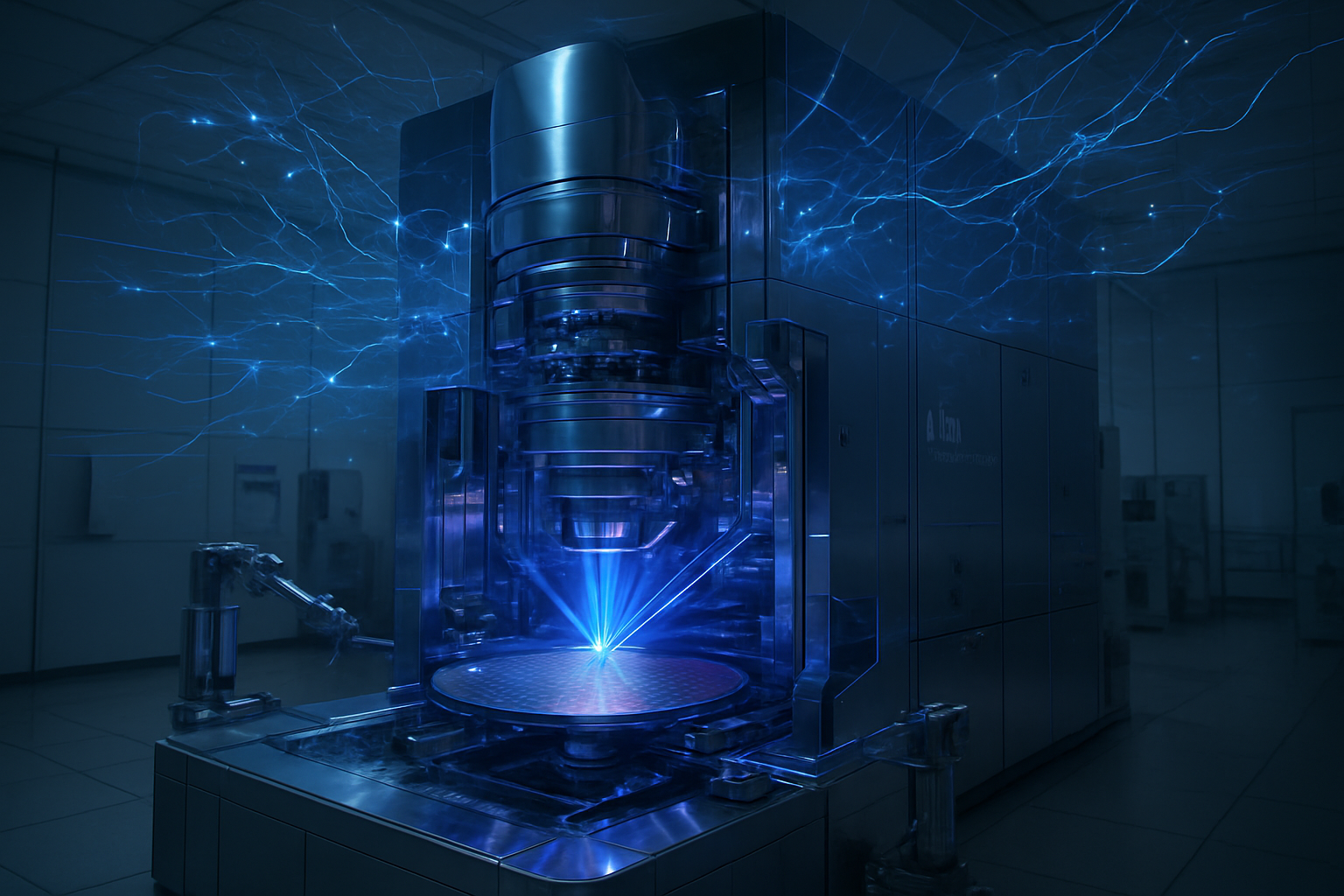
  • ASML Supercharges South Korea: New Headquarters and EUV R&D Cement Global Lithography Leadership

    ASML Supercharges South Korea: New Headquarters and EUV R&D Cement Global Lithography Leadership

    In a monumental strategic maneuver, ASML Holding N.V. (NASDAQ: ASML), the Dutch technology giant and the world's sole manufacturer of extreme ultraviolet (EUV) lithography machines, has significantly expanded its footprint in South Korea. This pivotal move, centered around the establishment of a comprehensive new headquarters campus in Hwaseong and a massive joint R&D initiative with Samsung Electronics (KRX: 005930), is set to profoundly bolster global lithography capabilities and solidify South Korea's indispensable role in the advanced semiconductor ecosystem. As of November 2025, the Hwaseong campus is fully operational, providing crucial localized support, while the groundbreaking R&D collaboration with Samsung is actively progressing, albeit with a re-evaluated location strategy for optimal acceleration.

    This expansion is far more than a simple investment; it represents a deep commitment to the future of advanced chip manufacturing, which is the bedrock of artificial intelligence, high-performance computing, and next-generation technologies. By bringing critical repair, training, and cutting-edge research facilities closer to its major customers, ASML is not only enhancing the resilience of the global semiconductor supply chain but also accelerating the development of the ultra-fine processes essential for the sub-2 nanometer era, directly impacting the capabilities of AI hardware worldwide.

    Unpacking the Technical Core: Localized Support Meets Next-Gen EUV Innovation

    ASML's strategic build-out in South Korea is multifaceted, addressing both immediate operational needs and long-term technological frontiers. The new Hwaseong campus, a 240 billion won (approximately $182 million) investment, became fully operational by the end of 2024. This expansive facility houses a Local Repair Center (LRC), also known as a Remanufacturing Center, designed to service ASML's highly complex equipment using an increasing proportion of domestically produced parts—aiming to boost local sourcing from 10% to 50%. This localized repair capability drastically reduces downtime for crucial lithography machines, a critical factor for chipmakers like Samsung and SK Hynix (KRX: 000660).

    Complementing this is a state-of-the-art Global Training Center, which, along with a second EUV training center inaugurated in Yongin City, is set to increase ASML's global EUV lithography technician training capacity by 30%. These centers are vital for cultivating a skilled workforce capable of operating and maintaining the highly sophisticated EUV and DUV (Deep Ultraviolet) systems. An Experience Center also forms part of the Hwaseong campus, engaging the local community and showcasing semiconductor technology.

    The spearhead of ASML's innovation push in South Korea is the joint R&D initiative with Samsung Electronics, a monumental 1 trillion won ($760 million) investment focused on developing "ultra-microscopic" level semiconductor production technology using next-generation EUV equipment. While initial plans for a specific Hwaseong site were re-evaluated in April 2025, ASML and Samsung are actively exploring alternative locations, potentially within an existing Samsung campus, to expedite the establishment of this critical R&D hub. This center is specifically geared towards High-NA EUV (EXE systems), which boast a numerical aperture (NA) of 0.55, a significant leap from the 0.33 NA of previous NXE systems. This enables the etching of circuits 1.7 times finer, achieving an 8 nm resolution—a dramatic improvement over the 13 nm resolution of older EUV tools. This technological leap is indispensable for manufacturing chips at the 2 nm node and beyond, pushing the boundaries of what's possible in chip density and performance. Samsung has already deployed its first High-NA EUV equipment (EXE:5000) at its Hwaseong campus in March 2025, with plans for two more by mid-2026, while SK Hynix has also installed High-NA EUV systems at its M16 fabrication plant.

    These advancements represent a significant departure from previous industry reliance on centralized support from ASML's headquarters in the Netherlands. The localized repair and training capabilities minimize logistical hurdles and foster indigenous expertise. More profoundly, the joint R&D center signifies a deeper co-development partnership, moving beyond a mere customer-supplier dynamic to accelerate innovation cycles for advanced nodes, ensuring the rapid deployment of technologies like High-NA EUV that are critical for future high-performance computing. Initial reactions from the AI research community and industry experts have been overwhelmingly positive, recognizing these developments as fundamental enablers for the next generation of AI chips and a crucial step towards the sub-2nm manufacturing era.

    Reshaping the AI and Tech Landscape: Beneficiaries and Competitive Shifts

    ASML's deepened presence in South Korea is poised to create a ripple effect across the global technology industry, directly benefiting key players and reshaping competitive dynamics. Unsurprisingly, the most immediate and substantial beneficiaries are ASML's primary South Korean customers, Samsung Electronics (KRX: 005930) and SK Hynix (KRX: 000660). These companies, which collectively account for a significant portion of ASML's worldwide sales, gain priority access to the latest EUV and High-NA EUV technologies, direct collaboration with ASML engineers, and enhanced local support and training. This accelerated access is paramount for their ability to produce advanced logic chips and high-bandwidth memory (HBM), both of which are critical components for cutting-edge AI applications. Samsung, in particular, anticipates a significant edge in the race for next-generation chip production through this partnership, aiming for 2nm commercialization by 2025. Furthermore, SK Hynix's collaboration with ASML on hydrogen recycling technology for EUV systems underscores a growing industry focus on energy efficiency, a crucial factor for power-intensive AI data centers.

    Beyond the foundries, global AI chip designers such as Nvidia, Intel (NASDAQ: INTC), and Qualcomm (NASDAQ: QCOM) will indirectly benefit immensely. As these companies rely on advanced foundries like Samsung (and TSMC) to fabricate their sophisticated AI chips, ASML's enhanced capabilities in South Korea contribute to a more robust and advanced manufacturing ecosystem, enabling faster development and production of their cutting-edge AI silicon. Similarly, major cloud providers and hyperscalers like Google (NASDAQ: GOOGL), Amazon Web Services (NASDAQ: AMZN), and Microsoft (NASDAQ: MSFT), which are increasingly developing custom AI chips (e.g., Google's TPUs, AWS's Trainium/Inferentia, Microsoft's Azure Maia/Cobalt), will find their efforts bolstered. ASML's technology, facilitated through its foundry partners, empowers the production of these specialized AI solutions, leading to more powerful, efficient, and cost-effective computing resources for AI development and deployment. The invigorated South Korean semiconductor ecosystem, driven by ASML's investments, also creates a fertile ground for local AI and deep tech startups, fostering a vibrant innovation environment.

    Competitively, ASML's expansion further entrenches its near-monopoly on EUV lithography, solidifying its position as an "indispensable enabler" and "arbiter of progress" in advanced chip manufacturing. By investing in next-generation High-NA EUV development and strengthening ties with key customers in South Korea—now ASML's largest market, accounting for 40% of its Q1 2025 revenue—ASML raises the entry barriers for any potential competitor, securing its central role in the AI revolution. This move also intensifies foundry competition, particularly in the ongoing rivalry between Samsung, TSMC, and Intel for leadership in producing sub-2nm chips. The localized availability of ASML's most advanced lithography tools will accelerate the design and production cycles of specialized AI chips, fueling an "AI-driven ecosystem" and an "unprecedented semiconductor supercycle." Potential disruptions include the accelerated obsolescence of current hardware as High-NA EUV enables sub-2nm chips, and a potential shift towards custom AI silicon by tech giants, which could impact the market share of general-purpose GPUs for specific AI workloads.

    Wider Significance: Fueling the AI Revolution and Global Tech Sovereignty

    ASML's strategic expansion in South Korea transcends mere corporate investment; it is a critical development that profoundly shapes the broader AI landscape and global technological trends. Advanced chips are the literal building blocks of the AI revolution, enabling the massive computational power required for large language models, complex neural networks, and myriad AI applications from autonomous vehicles to personalized medicine. By accelerating the availability and refinement of cutting-edge lithography, ASML is directly fueling the progress of AI, making smaller, faster, and more energy-efficient AI processors a reality. This fits perfectly into the current trajectory of AI, which demands ever-increasing computational density and power efficiency to achieve new breakthroughs.

    The impacts are far-reaching. Firstly, it significantly enhances global semiconductor supply chain resilience. The establishment of local repair and remanufacturing centers in South Korea reduces reliance on a single point of failure (the Netherlands) for critical maintenance, a lesson learned from recent geopolitical and logistical disruptions. Secondly, it fosters vital talent development. The new training centers are cultivating a highly skilled workforce within South Korea, ensuring a continuous supply of expertise for the highly specialized semiconductor and AI industries. This localized talent pool is crucial for sustaining leadership in advanced manufacturing. Thirdly, ASML's investment carries significant geopolitical weight. It strengthens the "semiconductor alliance" between South Korea and the Netherlands, reinforcing technological sovereignty efforts among allied nations and serving as a strategic move for geographical diversification amidst ongoing global trade tensions and export restrictions.

    Compared to previous AI milestones, such as the development of early neural networks or the rise of deep learning, ASML's contribution is foundational. While AI algorithms and software drive intelligence, it is the underlying hardware, enabled by ASML's lithography, that provides the raw processing power. This expansion is a milestone in hardware enablement, arguably as critical as any software breakthrough, as it dictates the physical limits of what AI can achieve. Concerns, however, remain around the concentration of such critical technology in a single company, and the potential for geopolitical tensions to impact supply chains despite diversification efforts. The sheer cost and complexity of EUV technology also present high barriers to entry, further solidifying ASML's near-monopoly and the competitive advantage it bestows upon its primary customers.

    The Road Ahead: Future Developments and AI's Next Frontier

    Looking ahead, ASML's strategic investments in South Korea lay the groundwork for several key developments in the near and long term. In the near term, the full operationalization of the Hwaseong campus's repair and training facilities will lead to immediate improvements in chip production efficiency for Samsung and SK Hynix, reducing downtime and accelerating throughput. The ongoing joint R&D initiative with Samsung, despite the relocation considerations, is expected to make significant strides in developing and deploying next-generation High-NA EUV for sub-2nm processes. This means we can anticipate the commercialization of even more powerful and efficient chips in the very near future, potentially driving new generations of AI accelerators and specialized processors.

    Longer term, ASML plans to open an additional office in Yongin by 2027, focusing on technical support, maintenance, and repair near the SK Semiconductor Industrial Complex. This further decentralization of support will enhance responsiveness for another major customer. The continuous advancements in EUV technology, particularly the push towards High-NA EUV and beyond, will unlock new frontiers in chip design, enabling even denser and more complex integrated circuits. These advancements will directly translate into more powerful AI models, more efficient edge AI deployments, and entirely new applications in fields like quantum computing, advanced robotics, and personalized healthcare.

    However, challenges remain. The intense demand for skilled talent in the semiconductor industry will necessitate continued investment in education and training programs, both by ASML and its partners. Maintaining the technological lead in lithography requires constant innovation and significant R&D expenditure. Experts predict that the semiconductor market will continue its rapid expansion, projected to double within a decade, driven by AI, automotive innovation, and energy transition. ASML's proactive investments are designed to meet this escalating global demand, ensuring it remains the "foundational enabler" of the digital economy. The next few years will likely see a fierce race to master the 2nm and sub-2nm nodes, with ASML's South Korean expansion playing a pivotal role in this technological arms race.

    A New Era for Global Chipmaking and AI Advancement

    ASML's strategic expansion in South Korea marks a pivotal moment in the history of advanced semiconductor manufacturing and, by extension, the trajectory of artificial intelligence. The completion of the Hwaseong campus and the ongoing, high-stakes joint R&D with Samsung represent a deep, localized commitment that moves beyond traditional customer-supplier relationships. Key takeaways include the significant enhancement of localized support for critical lithography equipment, a dramatic acceleration in the development of next-generation High-NA EUV technology, and the strengthening of South Korea's position as a global semiconductor and AI powerhouse.

    This development's significance in AI history cannot be overstated. It directly underpins the physical capabilities required for the exponential growth of AI, enabling the creation of the faster, smaller, and more energy-efficient chips that power everything from advanced neural networks to sophisticated data centers. Without these foundational lithography advancements, the theoretical breakthroughs in AI would lack the necessary hardware to become practical realities. The long-term impact will be seen in the continued miniaturization and increased performance of all electronic devices, pushing the boundaries of what AI can achieve and integrating it more deeply into every facet of society.

    In the coming weeks and months, industry observers will be closely watching the progress of the joint R&D center with Samsung, particularly regarding its finalized location and the initial fruits of its ultra-fine process development. Further deployments of High-NA EUV systems by Samsung and SK Hynix will also be key indicators of the pace of advancement into the sub-2nm era. ASML's continued investment in global capacity and R&D, epitomized by this South Korean expansion, underscores its indispensable role in shaping the future of technology and solidifying its position as the arbiter of progress in the AI-driven world.


    This content is intended for informational purposes only and represents analysis of current AI developments.

    TokenRing AI delivers enterprise-grade solutions for multi-agent AI workflow orchestration, AI-powered development tools, and seamless remote collaboration platforms.
    For more information, visit https://www.tokenring.ai/.
  • ASML Holding NV: Navigating the AI Frontier Amidst Analyst Battles and Geopolitical Currents

    ASML Holding NV: Navigating the AI Frontier Amidst Analyst Battles and Geopolitical Currents

    ASML Holding NV (NASDAQ: ASML), the Dutch technology giant and undisputed monarch of advanced lithography, finds itself at the epicenter of the artificial intelligence (AI) revolution as November 2025 unfolds. As the sole provider of Extreme Ultraviolet (EUV) lithography systems—the indispensable tools for crafting the world's most sophisticated microchips—ASML is charting a course through an investment landscape marked by both overwhelming optimism from analyst titans and cautious undercurrents driven by geopolitical complexities and valuation concerns. The contrasting expert opinions highlight the intricate balance between ASML's unparalleled technological moat and the volatile external forces shaping the semiconductor industry's future.

    The immediate significance of these diverse views is profound. For investors, it underscores the strategic importance of ASML as a foundational enabler of AI, offering robust long-term growth prospects. However, it also signals potential short-term volatility, urging a nuanced approach to an asset widely considered a linchpin of global technology. The company's recent strong performance, particularly in Q3 2025 bookings, and a series of analyst upgrades reaffirm confidence, yet the shadow of export controls and market cyclicality keeps a segment of the analytical community on a more tempered "Hold" stance.

    The Battle of Titans: Unpacking ASML's Diverse Analyst Landscape

    The analytical community largely converges on a "Moderate Buy" consensus for ASML Holding NV, a testament to its critical and near-monopolistic position in the semiconductor equipment market. Out of 27 Wall Street analysts, 21 recommend "Buy" or "Strong Buy," with only 6 suggesting a "Hold" rating, and no "Sell" recommendations. However, a closer look reveals a fascinating divergence in price targets and underlying rationales, showcasing a true "battle of titans" among financial experts.

    Bullish Stances: The Indispensable Enabler of AI

    The most prominent bullish arguments center on ASML's unparalleled technological leadership and its pivotal role in the AI-driven future. Firms like Rothschild Redburn, a notable "analyst titan," upgraded ASML from "Neutral" to "Buy" on November 7, 2025, dramatically raising its price target to €1200 from €900. This bullish shift is explicitly tied to a highly positive outlook on High Numerical Aperture (High-NA) EUV lithography, citing significant improvements in field stitching and the accelerating adoption of chiplets for AI compute applications. Rothschild Redburn's analyst, Timm Schulze-Melander, forecasts lithography intensity to climb to 23% of wafer fabrication equipment (WFE) capital expenditure by 2030, driven by advanced transistor architectures like gate-all-around (GAA), directly benefiting ASML.

    Other major players echoing this sentiment include JPMorgan (NYSE: JPM), which lifted its price target to $1,175 from $957 in October 2025, maintaining an "overweight" rating. Citi (NYSE: C) also holds a "Buy" rating, anticipating ASML's 2025 revenue to land between €35-40 billion, bolstered by the late ramp-up of Taiwan Semiconductor Manufacturing Company's (NYSE: TSM) N2 technology and heightened demand for High Bandwidth Memory (HBM). These analysts emphasize ASML's near-monopoly in EUV, its strong order book (with Q3 2025 bookings exceeding expectations at €5.4 billion), robust financial performance, and the insatiable, long-term demand for advanced chips across AI, 5G, and other high-tech sectors. ASML's own forecast for approximately 15% net sales growth in 2025 further fuels this optimism.

    Bearish/Neutral Stances: Valuation, Geopolitics, and Cyclical Headwinds

    While fewer in number, the more cautious voices highlight valid concerns. Bernstein SocGen Group, for instance, reiterated a "Market Perform" (equivalent to Hold) rating with a $935 price target in November 2025. This stance often reflects a belief that the stock is fairly valued at current levels, or that immediate catalysts for significant outperformance are lacking.

    A primary concern for neutral analysts revolves around ASML's valuation. With a P/E ratio often above 30x (and reaching 37x in November 2025), some argue the stock is expensive, especially after recent rallies. Millennial Dividends, through Seeking Alpha, downgraded ASML to "Hold" in November 2025, citing this elevated valuation and geopolitical risks, arguing that the risk/reward profile is no longer attractive despite strong fundamentals.

    Another significant point of contention is the semiconductor industry's inherent cyclicality and geopolitical headwinds. ASML itself lowered its 2025 revenue forecast in late 2024 from €30-40 billion to €30-35 billion, attributing it to a slower-than-expected recovery in non-AI chip markets and delayed investments. Geopolitical tensions, particularly US-China trade restrictions, are a tangible headwind. ASML expects its China revenue to normalize to 20-25% by 2026, down from nearly 50% in early 2024, due to tightened U.S. export controls. These factors, alongside potential customer overcapacity and delayed orders, temper the enthusiasm for some analysts, who prioritize the near-term operational challenges over the long-term technological dominance.

    The contrasting views thus hinge on whether analysts emphasize ASML's undeniable technological moat and the structural growth of AI demand versus the short-term impact of market cyclicality, geopolitical uncertainties, and a premium valuation.

    ASML's Ripple Effect: Shaping the AI Ecosystem

    ASML's (NASDAQ: ASML) market position is not merely strong; it is foundational, making it an an indispensable arbiter of progress for the entire AI ecosystem. Its near-monopoly on EUV lithography means that virtually every cutting-edge AI chip, from the most powerful GPUs to custom ASICs, relies on ASML's technology for its very existence. This unique leverage profoundly impacts AI companies, tech giants, and nascent startups.

    Beneficiaries: The Titans of AI and Cloud

    The primary beneficiaries of ASML's advancements are the tech giants and major AI companies at the forefront of AI development. Chip manufacturers such as Taiwan Semiconductor Manufacturing Company (TSMC) (NYSE: TSM), Samsung (KRX: 005930), and Intel (NASDAQ: INTC) are critically dependent on ASML's EUV and High-NA EUV machines to fabricate their most advanced logic and memory chips. Without access to these systems, they simply cannot produce the sub-5nm and future sub-2nm nodes essential for modern AI.

    Consequently, AI chip designers like NVIDIA (NASDAQ: NVDA), Advanced Micro Devices (NASDAQ: AMD), and the hyperscale cloud providers—Amazon (NASDAQ: AMZN) (AWS), Google (NASDAQ: GOOGL), and Microsoft (NASDAQ: MSFT)—which design and deploy custom AI accelerators, directly benefit. ASML's technology enables these companies to continuously push the boundaries of AI performance, efficiency, and scale, allowing them to train larger models, process more data, and deliver more sophisticated AI services. This competitive edge translates into market leadership and strategic advantages in the global AI race.

    Challenges: Startups and Geopolitically Constrained Players

    While indirectly benefiting from the overall advancement of AI hardware, smaller AI startups face higher barriers to entry. The immense costs and complexities associated with accessing leading-edge semiconductor fabrication, intrinsically linked to ASML's technology, mean that only well-funded entities can operate at the forefront.

    The most significant challenges are reserved for chipmakers and AI companies in regions targeted by export controls, particularly China. U.S. restrictions, enforced through the Dutch government, prohibit the sale of ASML's most advanced EUV (and increasingly some DUV) systems to Mainland China. This severely curtails the ability of Chinese firms, such as Huawei (SHE: 002502), to produce leading-edge AI chips domestically. This forces them to invest heavily in developing nascent, less advanced domestic alternatives (e.g., 28nm process technology from SiCarrier) or to rely on older nodes, creating a significant technological gap. This geopolitical fragmentation risks bifurcating the global AI ecosystem, with differing levels of hardware capability.

    Competitive Implications and Potential Disruptions

    ASML's near-monopoly creates a unique competitive dynamic. Major foundries must aggressively secure access to ASML's latest machines to maintain their technological edge. The limited supply and exorbitant cost of EUV systems mean that access itself becomes a competitive differentiator. This dynamic reinforces the strategic advantage of nations and companies with strong ties to ASML.

    While ASML's EUV technology is virtually irreplaceable for advanced logic chips, nascent alternatives are emerging. Canon's (NYSE: CAJ) Nanoimprint Lithography (NIL) is reportedly capable of 5nm and potentially 2nm patterning, using significantly less power than EUV. However, its slower speed and suitability for memory rather than complex processors limit its immediate threat. Chinese domestic efforts, such as those by SiCarrier and Prinano, are also underway, but experts widely agree they are years away from matching ASML's EUV capabilities for advanced logic. These alternatives, if successful in the long term, could offer cheaper options and reduce reliance on ASML in specific segments, but they are not expected to disrupt ASML's dominance in leading-edge AI chip manufacturing in the near to medium term.

    As of November 2025, ASML's market positioning remains exceptionally strong, buttressed by its next-generation High-NA EUV systems (EXE:5000 and EXE:5200) shipping to customers like Intel, poised to enable sub-2nm nodes. This technological lead, combined with a robust order backlog (€38 billion as of Q1 2025) and strategic investments (such as a $1.5 billion investment in AI startup Mistral AI in September 2025), cements ASML's indispensable role in the ongoing AI hardware race.

    The Wider Significance: ASML as the AI Era's Keystone

    ASML Holding NV's (NASDAQ: ASML) role transcends mere equipment supply; it is the keystone of the modern semiconductor industry and, by extension, the entire AI landscape. As of November 2025, its unique technological dominance not only drives innovation but also shapes geopolitical strategies, highlights critical supply chain vulnerabilities, and sets the pace for future technological breakthroughs.

    Fitting into the Broader AI Landscape and Trends

    ASML's EUV lithography is the fundamental enabler of "more compute for less energy"—the mantra of the AI era. Without its ability to etch increasingly smaller and more complex patterns onto silicon wafers, the relentless pursuit of AI advancements, from generative models to autonomous systems, would grind to a halt. ASML's technology allows for higher transistor densities, greater processing power, and improved energy efficiency, all critical for training and deploying sophisticated AI algorithms. The company itself integrates AI and machine learning into its EUV systems for process optimization, demonstrating a symbiotic relationship with the very technology it enables. Its strategic investment in Mistral AI further underscores its commitment to exploring the full potential of AI across its operations and products.

    The demand for ASML's EUV systems is projected to grow by 30% in 2025, directly fueled by the insatiable appetite for AI chips, which are expected to contribute over $150 billion to semiconductor revenue in 2025 alone. This positions ASML not just as a supplier but as the foundational infrastructure provider for the global AI build-out.

    Geopolitical Echoes and Potential Concerns

    ASML's strategic importance has unfortunately thrust it into the heart of geopolitical tensions, particularly the escalating US-China tech rivalry. The Dutch government, under immense pressure from the United States, has imposed stringent export restrictions, banning ASML's most advanced EUV machines and, since January 2025, certain DUV systems from being sold to Mainland China. These controls aim to curb China's access to leading-edge chip technology, thereby limiting its AI and military capabilities.

    This has led to several critical concerns:

    • Supply Chain Concentration: ASML's near-monopoly creates a single point of failure for the global semiconductor industry. Any disruption to ASML, whether from natural disasters or geopolitical events, would have catastrophic ripple effects across the global economy.
    • Export Control Impact: While these controls align with US strategic interests, they cause significant revenue volatility for ASML (projecting a "significant decline" in China sales for 2026) and strain international relations. There's a risk of further tightening, potentially impacting ASML's DUV business, which could accelerate China's push for technological self-sufficiency, ironically undermining long-term US leadership. ASML is actively diversifying its supply chain to reduce reliance on US components.
    • Tariffs: The looming threat of US tariffs on EU goods, potentially including semiconductor manufacturing tools, could increase costs for chipmakers, potentially slowing down critical fab expansion needed for AI.

    Comparisons to AI Milestones

    ASML's role is akin to historical breakthroughs that fundamentally reshaped computing:

    • The Transistor (1947): Enabled miniaturization. ASML's EUV pushes this to atomic scales, making modern AI chips possible.
    • The Integrated Circuit (late 1950s): Allowed multiple components on a single chip, driving Moore's Law. ASML's EUV is the technology sustaining Moore's Law into the sub-nanometer era, directly enabling the dense circuits vital for AI.
    • The GPU (late 1990s): Revolutionized parallel processing for AI. ASML's machines are essential for manufacturing these very GPUs, allowing them to achieve the performance required for today's large language models and complex AI workloads.

    In essence, ASML is not just contributing to AI; it is providing the indispensable manufacturing infrastructure that makes the current AI revolution physically possible. Without its continuous innovation, the rapid advancements in AI we witness today would be severely constrained.

    The Horizon: ASML's Future in a Hyper-Connected AI World

    Looking ahead, ASML Holding NV (NASDAQ: ASML) is poised to continue its pivotal role in shaping the future of technology, driven by an ambitious roadmap for lithography innovation and an ever-expanding array of AI-powered applications. However, this trajectory is also fraught with technological and geopolitical challenges that will define its path.

    Expected Near-Term and Long-Term Developments

    ASML's technological leadership is set to be further cemented by its next-generation High-NA EUV systems. The EXE platform, with its 0.55 numerical aperture, is on track to enable high-volume manufacturing of sub-2nm logic nodes and leading-edge DRAM in 2025-2026. Early feedback from customers like Intel (NASDAQ: INTC) and Samsung (KRX: 005930) has been promising, with significant progress in wafer processing and cycle time reduction. Taiwan Semiconductor Manufacturing Company (TSMC) (NYSE: TSM) is also expected to formalize its High-NA roadmap by April 2026, signaling broader industry adoption. Beyond High-NA, ASML is already researching "Hyper-NA" EUV technology for the early 2030s, aiming for a 0.75 numerical aperture to push transistor densities even further.

    Beyond traditional chip scaling, ASML is diversifying into advanced packaging solutions, shipping its first Advanced Packaging product, the TWINSCAN XT:260 i-line scanner, in Q3 2025. This move acknowledges that future performance gains will increasingly come from innovative chip integration as much as from raw transistor density.

    Potential Applications and Use Cases

    The demand for ASML's advanced lithography equipment will continue to be fueled by a wide array of emerging technologies:

    • Artificial Intelligence: This remains the primary catalyst, driving the need for increasingly powerful and efficient chips in AI accelerators, data centers, and edge AI devices. ASML anticipates 2025 and 2026 to be strong growth years propelled by AI investments.
    • Automotive: The shift to electric vehicles (EVs), advanced driver-assistance systems (ADAS), and autonomous driving will require vast quantities of sophisticated semiconductors.
    • Internet of Things (IoT) and Industrial Automation: The proliferation of connected devices and smart factories will create continuous demand for specialized chips.
    • Healthcare: Advanced chips will enable innovations like "lab-on-a-chip" solutions for rapid diagnostics.
    • 5G/6G Communications and Renewable Energy: These sectors demand high-performance components for faster connectivity and efficient energy management.
    • Quantum Computing and Robotics: While still in nascent stages, these fields represent long-term drivers for ASML's cutting-edge technology, including humanoid robotics.

    Challenges That Need to Be Addressed

    Despite its strong position, ASML faces significant headwinds:

    • Geopolitical Tensions: US-China trade disputes and export controls remain a major concern. ASML anticipates a "significant decline" in its China sales for 2026 due to these restrictions, which now extend to certain DUV systems and critical maintenance services. ASML is actively working to diversify its supply chain away from US-centric components to mitigate these risks. The prospect of new US tariffs on EU goods could also raise costs.
    • Technological Hurdles: Pushing the limits of lithography comes with inherent challenges. The immense power consumption and cost of AI computing necessitate solutions for "more compute for less energy." The commercialization of Hyper-NA EUV faces obstacles like light polarization effects and the need for new resist materials. Furthermore, continued miniaturization may require transitioning to novel channel materials with superior electron mobility, demanding new deposition and etch capabilities.
    • "AI Nationalism": Export controls could lead to a bifurcation of the global semiconductor ecosystem, with different regions developing independent, potentially incompatible, technological paths.

    Expert Predictions

    Experts and ASML's own forecasts paint a picture of sustained, albeit sometimes volatile, growth. ASML projects approximately 15% net sales growth for 2025, with strong gross margins. While the outlook for 2026 is tempered by "increasing uncertainty" due to macroeconomic and geopolitical developments, ASML does not expect total net sales to fall below 2025 levels. Long-term, ASML maintains a robust outlook, projecting annual sales between €44 billion and €60 billion by 2030, driven by global wafer demand and increasing EUV adoption outside China. AI is consistently identified as the primary growth engine for the semiconductor industry, expected to exceed $1 trillion by 2030. However, analysts also anticipate a continued reshaping of the global semiconductor landscape, with China's push for self-sufficiency posing a long-term challenge to ASML's market dominance if rapid innovation is not maintained by other nations.

    The Unstoppable Engine: ASML's Enduring Impact on AI

    As November 2025 draws to a close, ASML Holding NV (NASDAQ: ASML) stands as an irrefutable testament to technological ingenuity and strategic indispensability in the global economy. Its near-monopoly on advanced lithography equipment, particularly EUV, solidifies its role not just as a participant but as the fundamental enabler of the artificial intelligence revolution. The contrasting opinions of financial analysts—ranging from fervent bullishness driven by AI's insatiable demand to cautious "Holds" due to valuation and geopolitical headwinds—underscore the complex yet compelling narrative surrounding this Dutch powerhouse.

    Summary of Key Takeaways:

    • Technological Dominance: ASML's EUV and forthcoming High-NA EUV systems are irreplaceable for producing the most advanced chips, directly sustaining Moore's Law and enabling next-generation AI.
    • AI as a Growth Catalyst: The burgeoning demand for AI chips is the primary driver for ASML's robust order book and projected revenue growth, with EUV sales expected to surge by 30% in 2025.
    • Geopolitical Crossroads: ASML is caught in the crosshairs of US-China tech rivalry, facing export controls that will significantly impact its China sales from 2026 onwards, leading to supply chain diversification efforts.
    • Strong Financials, Premium Valuation: The company exhibits strong financial performance and a healthy outlook, but its premium valuation remains a point of contention for some analysts.
    • Long-Term Resilience: Despite short-term volatilities, ASML's foundational role and continuous innovation pipeline ensure its long-term strategic importance.

    Assessment of Significance in AI History:
    ASML's significance in AI history cannot be overstated. It is the manufacturing linchpin that transforms abstract AI algorithms into tangible, high-performance computing power. Without ASML's ability to etch billions of transistors onto a silicon wafer at sub-nanometer scales, the current era of generative AI, large language models, and advanced machine learning would simply not exist. It represents the physical infrastructure upon which the entire digital AI economy is being built, making it as critical to AI's advancement as the invention of the transistor or the integrated circuit.

    Final Thoughts on Long-Term Impact:
    The long-term impact of ASML will be defined by its continued ability to push the boundaries of lithography, enabling the semiconductor industry to meet the ever-increasing demands of AI, quantum computing, and other emerging technologies. Its strategic investments in AI startups like Mistral AI indicate a proactive approach to integrating AI into its own operations and expanding its influence across the tech ecosystem. While geopolitical pressures and the cyclical nature of the semiconductor market will introduce periodic challenges, ASML's unchallenged technological moat, coupled with the structural demand for advanced computing, positions it as an essential, long-term investment for those betting on the relentless march of technological progress.

    What to Watch For in the Coming Weeks and Months:

    • Q4 2025 Earnings and Full-Year Guidance: Investors will keenly await ASML's Q4 results and its confirmed full-year 2025 performance against its strong guidance.
    • 2026 Outlook: The detailed 2026 outlook, expected in January 2026, will be crucial for understanding the anticipated impact of reduced China sales and broader market conditions.
    • High-NA EUV Adoption: Updates on the qualification and adoption timelines for High-NA EUV by key customers, especially TSMC's formal roadmap in April 2026, will signal future growth.
    • Geopolitical Developments: Any new shifts in US-China trade policy, export controls, or potential tariffs will significantly influence ASML's operational environment.
    • Share Buyback Program: The announcement of a new share buyback program in January 2026 will indicate ASML's capital allocation strategy.
    • Customer Capex Plans: Monitoring the capital expenditure plans of major chip manufacturers will provide insights into future order volumes for ASML's equipment.

    This content is intended for informational purposes only and represents analysis of current AI developments.

    TokenRing AI delivers enterprise-grade solutions for multi-agent AI workflow orchestration, AI-powered development tools, and seamless remote collaboration platforms.
    For more information, visit https://www.tokenring.ai/.