Tag: Honda

  • The Silicon Standoff: How the Honda-Nexperia Feud Exposed the Fragility of AI-Driven Automotive Supply Chains

    The Silicon Standoff: How the Honda-Nexperia Feud Exposed the Fragility of AI-Driven Automotive Supply Chains

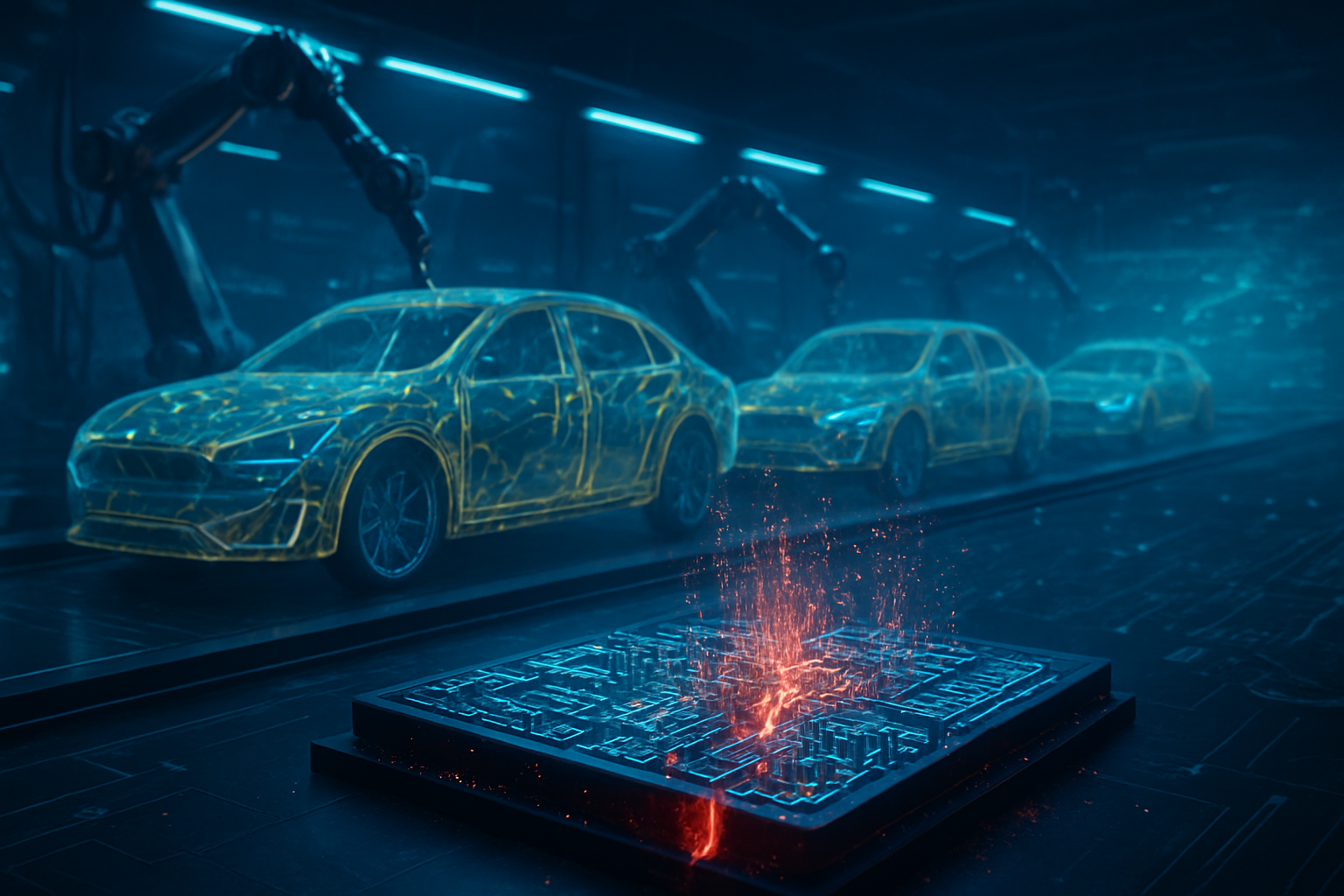
    The global automotive industry has been plunged into a fresh crisis as a bitter geopolitical and contractual feud between Honda Motor Co. (NYSE: HMC) and semiconductor giant Nexperia triggered a wave of factory shutdowns across three continents. What began as a localized dispute over pricing and ownership has escalated into a systemic failure, highlighting the extreme vulnerability of modern vehicles—increasingly reliant on sophisticated AI and electronic architectures—to the supply of foundational "legacy" chips. As of December 19, 2025, Honda has been forced to slash its global sales forecast by 110,000 units, a move that underscores the high stakes of the current semiconductor landscape.

    The immediate significance of this development lies in its timing and origin. Unlike the broad shortages of the post-pandemic era, this disruption is a targeted consequence of the "chip wars" reaching a boiling point. With production lines at a standstill from Celaya, Mexico, to Suzuka, Japan, the incident serves as a stark warning: even the most advanced AI-integrated vehicle systems are rendered useless without the basic power semiconductors that manage their energy flow. The shutdown of Honda’s high-volume plants, including those producing the HR-V and Accord, marks a critical failure in the "just-in-time" manufacturing philosophy that has governed the industry for decades.

    The Anatomy of a Supply Chain Fracture

    The crisis was precipitated by a dramatic geopolitical intervention on September 30, 2025, when the Dutch government invoked emergency laws to seize control of Nexperia from its Chinese parent company, Wingtech Technology (SSE: 600745). This move, aimed at curbing technology transfers to China, sparked an immediate internal war within the company. By late October, Nexperia’s global headquarters suspended wafer shipments to its assembly plant in Dongguan, China, citing contractual payment failures. In a swift retaliatory strike, Beijing blocked the export of Nexperia-made components from China, causing the price of essential chips to surge tenfold—from mere cents to as high as 3 yuan per unit.

    Technically, the dispute centers on "legacy" semiconductors—specifically power MOSFETs, diodes, and logic chips. While these are not the high-end 3nm processors used in cutting-edge data centers, they are the indispensable foundation of automotive electronics. These components are responsible for power management in everything from electric windows to high-voltage battery systems in EVs. Crucially, they serve as the electrical backbone for Honda’s "Sensing" suite, the AI-driven driver-assistance system that requires stable power distribution to function. Without these "unsexy" chips, the sensors and actuators that feed the vehicle's AI "brain" cannot operate, effectively lobotomizing the car’s advanced safety features.

    Industry experts have reacted with alarm, noting that this differs from previous shortages because it is driven by deliberate state intervention and corporate infighting rather than raw material scarcity. The "automotive-grade" certification process further complicates the issue; automakers cannot simply swap one supplier’s MOSFET for another’s without months of rigorous safety testing. This technical rigidity has left Honda with few immediate alternatives, forcing the suspension of operations at its GAC Honda joint venture in China and its primary North American assembly hubs.

    Market Turmoil and the Competitive Shift

    The fallout from the Honda-Nexperia feud is reshaping the competitive landscape for automotive and tech giants alike. Honda (NYSE: HMC) is the most visible casualty, facing a significant hit to its 2025 revenue and a potential loss of market share in the critical compact SUV and sedan segments. However, the ripple effects extend to Wingtech Technology (SSE: 600745), which faces a massive valuation hit as its control over Nexperia evaporates. Meanwhile, competitors like Toyota Motor Corp (NYSE: TM) and Tesla (NASDAQ: TSLA) are watching closely, accelerating their own "de-risking" strategies to avoid similar bottlenecks.

    Major AI labs and tech companies that provide the software stacks for autonomous driving are also feeling the pressure. If the physical hardware—the chips and wires—cannot be guaranteed, the rollout of next-generation Software-Defined Vehicles (SDVs) is inevitably delayed. This disruption creates a strategic advantage for companies that have moved toward vertical integration. Tesla, for instance, has long designed its own power electronics, potentially insulating it from some of the legacy chip volatility that is currently crippling more traditional manufacturers like Honda.

    Furthermore, this crisis has opened a door for semiconductor manufacturers in Taiwan and India to position themselves as "safe-haven" alternatives. Companies like TSMC (NYSE: TSM) are seeing increased demand for legacy node production as automakers seek to diversify away from Chinese-linked supply chains. The strategic advantage has shifted from those who can design the best AI to those who can guarantee the delivery of the most basic electronic components.

    Geopolitical Realities and the AI Landscape

    The Honda-Nexperia standoff is a microcosm of the broader fragmentation of the global AI and technology landscape. It highlights a critical irony: while the world is obsessed with the "AI revolution" and the race for trillion-parameter models, the physical manifestation of that AI in the real world is tethered to a fragile, decades-old supply chain. This event marks a shift where "chip sovereignty" is no longer just about high-end computing power, but about the survival of traditional industrial sectors like automotive manufacturing.

    The impact of this dispute is particularly felt in the development of autonomous systems. Modern AI pilots require a massive array of sensors—Lidar, Radar, and cameras—all of which rely on the very power switches and logic chips currently caught in the Nexperia crossfire. If the supply of these components remains volatile, the "AI milestone" of widespread level 3 and level 4 autonomy will likely be pushed back by several years. The industry is realizing that an AI-driven future cannot be built on a foundation of geopolitical instability.

    Potential concerns are also mounting regarding the "weaponization" of the supply chain. The use of emergency laws to seize corporate assets and the subsequent retaliatory export bans set a dangerous precedent for the tech industry. It suggests that any company with a global footprint could become a pawn in larger trade wars, leading to a "Balkanization" of technology where different regions operate on entirely separate hardware and software ecosystems.

    The Road Ahead: AI-Driven Supply Chains and De-risking

    Looking forward, the Honda-Nexperia crisis is expected to catalyze a massive investment in AI-driven supply chain management tools. Experts predict that automakers will increasingly turn to predictive AI to map out multi-tier supplier risks in real-time, identifying potential bottlenecks months before they result in a factory shutdown. The goal is to move from a reactive "just-in-time" model to a "just-in-case" strategy, where AI assists in maintaining strategic stockpiles of critical components.

    In the near term, we can expect a frantic effort by Honda and its peers to qualify new suppliers in non-contentious regions. This will likely involve a push for "standardized" automotive chips that can be more easily multi-sourced, reducing the technical lock-in that made the Nexperia dispute so damaging. However, the challenge remains the "automotive-grade" barrier; the high standards for heat, vibration, and longevity mean that new supply lines cannot be established overnight.

    Long-term, the industry may see a move toward "chiplet" architectures in cars, where high-end AI processors and basic power management are integrated into more resilient, modular packages. This would allow for easier updates and swaps of components, potentially shielding the vehicle's core functionality from localized supply disruptions.

    A New Era of Industrial Fragility

    The Honda-Nexperia feud of late 2025 will likely be remembered as the moment the automotive industry's "silicon ceiling" became visible. It has demonstrated that the most sophisticated AI systems are only as reliable as the cheapest components in their assembly. The key takeaway for the tech world is clear: technological advancement is inseparable from geopolitical stability. As Honda prepares for a second wave of shutdowns in early 2026, the industry remains on high alert.

    In the coming weeks, the focus will be on whether the Dutch and Chinese governments can reach a "technological truce" or if this dispute will spark a wider contagion across other manufacturers. Investors and industry analysts should watch for shifts in "de-risking" policies and the potential for new domestic chip-making initiatives in North America and Japan. For now, the silent assembly lines at Honda serve as a powerful reminder that in the age of AI, the old rules of supply and demand have been replaced by the unpredictable logic of the silicon standoff.


    This content is intended for informational purposes only and represents analysis of current AI developments.

    TokenRing AI delivers enterprise-grade solutions for multi-agent AI workflow orchestration, AI-powered development tools, and seamless remote collaboration platforms.
    For more information, visit https://www.tokenring.ai/.
  • Honda’s E-Clutch Revolutionizes Cruiser Riding, Debuting on the Accessible Rebel 300

    Honda’s E-Clutch Revolutionizes Cruiser Riding, Debuting on the Accessible Rebel 300

    In a significant stride towards enhancing rider accessibility and convenience, American Honda Motor Co., Inc. (NYSE: HMC) has unveiled its groundbreaking E-Clutch technology, set to debut on the popular Honda Rebel 300 as part of its 2026 lineup. Announced on October 15, 2025, with models expected to arrive in U.S. dealerships by December 2025, this innovation promises to redefine the entry-level cruiser experience, making motorcycling more approachable for novices while offering unprecedented ease for seasoned riders. By automating the clutch operation without sacrificing the tactile engagement of a manual gearbox, Honda aims to broaden the appeal of its cruiser motorcycles and address one of the most significant barriers to entry for new riders.

    The introduction of E-Clutch technology on the Rebel 300 marks a pivotal moment for the cruiser segment. This advancement not only solidifies the Rebel 300's position as an exceptionally beginner-friendly motorcycle but also signals a broader industry trend towards integrating sophisticated rider aids that prioritize comfort and confidence. For new riders, the elimination of manual clutch management during starts and stops drastically reduces the learning curve and the anxiety associated with stalling. For experienced motorcyclists, the system offers a welcome respite from clutch fatigue in stop-and-go traffic, allowing for a more relaxed and enjoyable ride across all conditions.

    Technical Prowess: Unpacking Honda's E-Clutch Innovation

    At its core, Honda's E-Clutch is an electronically controlled system that intelligently automates clutch engagement and disengagement. Unlike a fully automatic transmission such as Honda's own Dual Clutch Transmission (DCT), the E-Clutch ingeniously retains a conventional manual gearbox and gear shift pedal. This means riders still physically select gears with their foot, but the often-tricky operation of the clutch lever is handled seamlessly by an actuator unit and a dedicated Motor Control Unit (MCU), working in concert with the engine's ECU. This sophisticated system continuously monitors vital riding parameters, including engine RPM, throttle angle, gear position, and wheel speed, to execute precise and butter-smooth clutch transitions.

    This innovative approach significantly diverges from traditional manual clutches, which demand constant rider input for engagement and disengagement, and also from fully automatic systems that remove the rider's ability to select gears manually. The E-Clutch offers the best of both worlds: the intuitive gear selection of a manual transmission combined with the effortless starts and stops of an automatic. The system virtually eliminates the possibility of stalling, a common apprehension for new riders, and provides consistently smooth, shock-free gear changes, both up and down, enhancing overall ride comfort and control.

    A key differentiator and a testament to its rider-centric design is the E-Clutch's inherent flexibility. Riders retain the option to manually operate the clutch lever at any time, overriding the electronic system should they desire a more traditional experience or specific control in certain situations. Furthermore, the system can be entirely deactivated via the motorcycle's TFT screen, offering complete autonomy to the rider. This adaptability caters to a wide spectrum of rider preferences, ensuring that the E-Clutch serves as an enhancement rather than a replacement for rider skill. The system also allows for customizable responsiveness, with "Hard," "Medium," and "Soft" settings for shift characteristics, enabling riders to fine-tune their experience to their personal liking.

    Market Implications: Reshaping the Cruiser Landscape

    The debut of Honda's E-Clutch on the Rebel 300 is poised to send ripples across the motorcycle industry, particularly within the cruiser market. As a pioneer in offering advanced transmission technologies, following the success of its Dual Clutch Transmission (DCT), Honda (TYO: 7267) is strategically positioning itself as an innovator focused on rider accessibility and convenience. This move is likely to benefit Honda significantly, drawing in a new demographic of riders who might have previously been deterred by the complexities of manual clutch operation. By lowering the barrier to entry with a popular and approachable model like the Rebel 300, Honda stands to capture a larger share of the burgeoning new rider market.

    The competitive implications for other major motorcycle manufacturers are substantial. Brands like Harley-Davidson (NYSE: HOG), Indian Motorcycle (a subsidiary of Polaris Inc. (NYSE: PII)), and Kawasaki (TYO: 7012) in the cruiser segment may face pressure to respond with similar innovations or enhance their own rider-assist technologies. While these companies have robust lineups, the E-Clutch offers a distinct advantage in terms of ease of use and rider confidence, particularly for entry-level models. This could potentially disrupt the sales of existing beginner-friendly cruisers that rely solely on traditional manual transmissions, pushing competitors to accelerate their R&D into automated or semi-automated clutch systems.

    Beyond direct competitors, the E-Clutch could also influence the broader market for rider training and motorcycle accessories. With a reduced need for intense clutch practice, training programs might shift their focus, and aftermarket product developers could explore new opportunities related to automated riding aids. Honda's strategic advantage lies in its proactive approach to integrating advanced technology that directly addresses common rider pain points. This market positioning not only enhances the appeal of its current models but also sets a precedent for future technological advancements, potentially leading to a new standard of rider-friendly features across the industry. The Rebel 300, already a bestseller for new riders, now gains an even more compelling unique selling proposition, reinforcing Honda's leadership in motorcycle innovation.

    Wider Significance: A New Era for Rider Accessibility

    The integration of E-Clutch technology into a mainstream, accessible model like the Honda Rebel 300 signifies a profound shift in the broader motorcycle landscape, aligning with a growing trend towards enhanced automation and rider aids. This development is not merely an incremental improvement; it represents a philosophical embrace of making motorcycling more inclusive and less intimidating. By automating clutch operation, Honda is directly addressing a key hurdle for many prospective riders, particularly those accustomed to automatic transmissions in cars or those seeking a more relaxed riding experience without sacrificing the engagement of gear changes. This move positions motorcycling as a more viable and enjoyable form of transportation and recreation for a wider demographic.

    The impacts of the E-Clutch are multi-faceted. Primarily, it significantly boosts rider confidence and safety by eliminating the risk of stalling, especially in critical situations like starting on an incline or navigating congested urban environments. This enhanced ease of use can lead to more relaxed riders, who can then focus more intently on road hazards, traffic, and overall vehicle control. While some purists might argue against the automation of a core riding skill, the E-Clutch's manual override capability ensures that the traditional riding experience remains available, offering a harmonious blend of convenience and control. This flexibility is crucial for wider acceptance and integration into the diverse motorcycling culture.

    Comparing this to previous motorcycle milestones, the E-Clutch can be seen as a significant step akin to the introduction of Anti-lock Braking Systems (ABS) or traction control in terms of rider assistance. While those technologies focused on safety during braking and acceleration, the E-Clutch addresses the fundamental act of shifting and starting, making the entire riding process smoother and more forgiving. This technological leap reflects an industry-wide commitment to leveraging electronics to improve the rider experience, much like advanced driver-assistance systems (ADAS) have transformed the automotive sector. The potential concerns, though minor given the manual override, might revolve around the added complexity or cost, but the benefits in terms of accessibility and reduced fatigue are likely to outweigh these for many riders.

    Future Horizons: The Evolution of Rider-Centric Technology

    Looking ahead, the successful integration of E-Clutch technology on the Honda Rebel 300 is merely the beginning of its potential widespread adoption. In the near term, experts predict that Honda will likely expand this technology to other models within its lineup, particularly those targeting new riders or commuters where ease of use is paramount. Expect to see E-Clutch appearing on other smaller displacement bikes, urban commuters, and potentially even some touring models where reducing rider fatigue on long journeys would be a significant advantage. The modular nature of the system suggests it can be adapted to various engine configurations with relative ease.

    In the long term, the E-Clutch could inspire a new wave of semi-automated rider aids across the industry. Potential applications and use cases on the horizon include more sophisticated integration with navigation systems for predictive gear changes, or even adaptive clutch engagement based on real-time traffic conditions. Challenges that need to be addressed include further refinement of the system's feel to satisfy a broader range of rider preferences, ensuring long-term reliability and serviceability, and managing production costs to keep the technology accessible. As with any new technology, widespread adoption will depend on a balance of perceived value, performance, and price point.

    Motorcycle industry experts predict that the E-Clutch represents a crucial step in making motorcycling more appealing to a younger, tech-savvy generation who may not have grown up learning to drive manual cars. This technology could also significantly boost the number of female riders and urban commuters seeking a more effortless ride. The next evolution might see even more advanced integration with other electronic rider aids, potentially leading to fully adaptive semi-automatic systems that learn rider preferences over time. What's clear is that Honda's E-Clutch has opened a new frontier for rider-centric innovation, promising a future where the joy of motorcycling is more accessible and less physically demanding than ever before.

    A New Chapter in Motorcycle Accessibility and Innovation

    The introduction of Honda's E-Clutch technology on the 2026 Rebel 300 marks a monumental stride in motorcycle innovation, fundamentally reshaping the landscape of rider accessibility and convenience. The key takeaway is the brilliant engineering that allows for automated clutch operation while preserving the engaging experience of a manual gearbox, offering the best of both worlds. This development is particularly significant for the cruiser market, making entry-level models like the Rebel 300 even more inviting to new riders and offering a fatigue-reducing solution for experienced motorcyclists navigating congested environments.

    This advancement will undoubtedly be assessed as one of the more significant technological breakthroughs in recent motorcycle history, akin to the widespread adoption of ABS or fuel injection. It directly addresses a core barrier to entry for many potential riders, promising to expand the motorcycling community. The long-term impact will likely see a proliferation of similar semi-automated systems across various brands and segments, pushing the industry towards a more rider-friendly future. Honda's proactive step not only cements its position as a leader in motorcycle technology but also sets a new standard for what riders can expect from their machines.

    In the coming weeks and months, the industry will be watching closely for initial rider reviews and the market's reception to the E-Clutch-equipped Rebel 300. We can anticipate other manufacturers to begin exploring similar technologies, and the conversation around rider aids and automation in motorcycling is sure to intensify. Honda's E-Clutch is more than just a new feature; it's a statement about the future of riding – a future that is more inclusive, more comfortable, and ultimately, more enjoyable for everyone.


    This content is intended for informational purposes only and represents analysis of current AI developments.

    TokenRing AI delivers enterprise-grade solutions for multi-agent AI workflow orchestration, AI-powered development tools, and seamless remote collaboration platforms.
    For more information, visit https://www.tokenring.ai/.