Tag: Hospitality

  • Amano Hotels Pioneers Green AI: Flexkeeping’s Automated Cleaning Revolutionizes European Hospitality

    Amano Hotels Pioneers Green AI: Flexkeeping’s Automated Cleaning Revolutionizes European Hospitality

    London, UK – December 4, 2025 – In a landmark move poised to reshape the European hospitality landscape, Amano Hotels, a leading boutique urban lifestyle brand, has successfully scaled Flexkeeping's advanced automated cleaning technology across its entire portfolio of properties in Europe and the UK. This strategic deployment, announced around today's date, underscores Amano's unwavering commitment to modernizing its operations, enhancing guest experiences, and championing sustainable practices through cutting-edge artificial intelligence.

    The immediate significance of this announcement lies in Amano Hotels' embrace of a fully digital, self-service guest experience and streamlined back-of-house operations. By integrating Flexkeeping's innovative Automated Services and Automated Cleanings tools, Amano aims to exert unparalleled quality control, optimize workflows, and rigorously uphold its sustainability commitments across its expanding urban footprint. This initiative is particularly pertinent given Amano's model of outsourcing its cleaning services, as Flexkeeping provides the essential framework for remote monitoring and stringent quality assurance, signaling a profound step towards tech-driven and eco-conscious hospitality.

    The Algorithmic Choreography of Cleanliness: Flexkeeping's Technical Prowess

    Flexkeeping's automated cleaning technology is a sophisticated, cloud-based software solution designed to revolutionize hotel operations from the ground up. At its core, the system leverages real-time data from Property Management Systems (PMS) – including its now-parent company, Mews (MEWS:AMS), along with Cloudbeds, RMS Cloud, Apaleo, Shiji (600628:SHA), and Oracle (ORCL:NYSE) OPERA – to intelligently orchestrate housekeeping, maintenance, and staff collaboration.

    The platform's technical capabilities are extensive. It begins with deep data integration and analysis, pulling crucial reservation data such as length of stay, room rate, guest count, and real-time room status. Based on this, Flexkeeping's Automated Scheduling and Room Allocation engine automatically generates complex cleaning schedules and assigns rooms to housekeeping staff. This includes managing daily recurring tasks, preventive maintenance, and even flexible cleaning cycles based on specific hotel rules or local regulations. The system ensures tasks are instantly updated with any changes in reservation data, maintaining dynamic and accurate schedules.

    A standout feature is Flexie AI, an AI-powered voice assistant that dramatically enhances staff communication. Hotel employees can simply speak into their mobile devices (iPhone and Android) to create and update tasks, which Flexie AI then auto-translates into over 240 languages. This capability is a game-changer for diverse, multilingual hotel workforces, eliminating language barriers and ensuring seamless communication across departments. Furthermore, Automated Services identifies personalized guest needs directly from PMS data (e.g., a baby cot for an infant reservation) and automatically schedules and assigns necessary tasks. A "no-code Workflow Builder" is also in beta, promising even greater customization for automated workflows.

    Unlike traditional hotel cleaning management, which often relies on inefficient manual processes like paper checklists, phone calls, and instant messages, Flexkeeping provides a unified, real-time platform. This eliminates delays, ensures seamless coordination, and offers data-driven decision-making through in-depth analytics. Managers gain 24/7 digital oversight, enabling them to spot trends, identify bottlenecks, and optimize resource allocation. Hotels utilizing Flexkeeping have reported remarkable efficiency gains, including optimizing operations by up to 70-90% and increasing staff productivity by 40%, a stark contrast to the inefficiencies inherent in conventional, fragmented systems.

    Industry Ripples: Competitive Implications and Strategic Advantages

    Amano Hotels' comprehensive scaling of Flexkeeping's technology, particularly following Flexkeeping's acquisition by Mews in September 2025, sends significant ripples through the AI and hospitality technology sectors. This move solidifies Mews's market position and presents both opportunities and challenges for various players.

    Specialized AI companies focusing on niche solutions within hospitality, such as those in predictive analytics for operational efficiency or advanced natural language processing (NLP) for multilingual staff communication, stand to benefit. The success of Flexkeeping's AI-driven approach validates the demand for intelligent automation, potentially increasing investment and adoption across the board for innovative AI solutions that integrate seamlessly into larger platforms. Conversely, AI companies offering standalone, less integrated solutions for housekeeping or staff collaboration will face heightened competitive pressure. Mews's comprehensive, AI-enhanced operating system, which connects front-desk, housekeeping, and maintenance, sets a new benchmark that challenges fragmented tools lacking deep operational integration.

    For tech giants, the implications are two-fold. Those providing foundational AI infrastructure, such as cloud computing services (like Microsoft's (MSFT:NASDAQ) Azure OpenAI Service) and machine learning platforms, will see increased demand as hospitality tech providers expand their AI functionalities. However, established tech giants with their own hospitality product suites, such as Oracle Hospitality (ORCL:NYSE) with its OPERA PMS, will need to accelerate their integration of sophisticated AI and automation features to remain competitive. Mews's strategy of creating an "all-in-one" AI-enhanced operating system could disrupt the market share of larger, more traditional players who might offer less cohesive or API-driven solutions.

    Hospitality startups also face a shifting landscape. Those developing innovative, specialized AI tools that can integrate easily into larger platforms through APIs are well-positioned for partnerships or acquisitions by major players like Mews. Mews Ventures, the investment arm of Mews, has a track record of strategic acquisitions, indicating an appetite for complementary technologies. However, startups directly competing with Flexkeeping's core offerings—automated housekeeping, maintenance, and staff collaboration—will face a formidable challenge. Mews's enhanced market reach and comprehensive solution, combined with Flexkeeping's proven track record of boosting productivity and reducing guest complaints, will make it difficult for new entrants to compete effectively in these specific areas. This development accelerates the obsolescence of manual operations and fragmented software, pushing the industry towards unified, data-driven platforms.

    Beyond the Broom: Wider Significance and the Future of Work

    The widespread deployment of Flexkeeping's automated cleaning technology by Amano Hotels represents more than just a localized operational upgrade; it signifies a profound shift in how the hospitality industry perceives and integrates AI. This development fits squarely within a broader AI landscape trend where operational efficiency and sustainability are key drivers for technological adoption in service industries.

    AI's role in hospitality is rapidly expanding, with a projected market size exceeding $150 billion by 2030 and a 60% annual increase in AI adoption. Much of this impact is "silent," operating behind the scenes to optimize processes without direct guest interaction, precisely what Flexkeeping achieves. This move from surface-level automation to essential infrastructure highlights AI becoming a core component of a hotel's operational backbone. For efficiency, Flexkeeping's real-time, data-driven scheduling reduces manual input, streamlines room turnovers, and optimizes staff allocation, reportedly leading to 30-40% reductions in operational costs. In terms of sustainability, automated cleaning schedules can facilitate eco-friendly options like guests skipping daily housekeeping, reducing water, energy, and chemical consumption, aligning perfectly with Amano's Green Key certification and broader environmental commitments.

    The future of work in hospitality is also profoundly affected. While concerns about job displacement persist—with 52% of hospitality professionals believing AI is more likely to replace jobs than create them—this deployment showcases AI as a tool to augment the workforce rather than entirely replace it. By automating repetitive tasks, staff can focus on higher-value activities, such as direct guest engagement and personalized service, thereby enhancing the human touch that is critical to hospitality. New roles focused on managing AI systems, analyzing data, and customizing experiences are expected to emerge, necessitating upskilling and reskilling initiatives. Potential concerns around data privacy also loom large, as extensive data collection for personalization requires robust data governance and transparent privacy policies to maintain guest trust and ensure compliance with regulations like GDPR.

    Compared to foundational AI breakthroughs like IBM's (IBM:NYSE) Deep Blue defeating Garry Kasparov or the advent of autonomous vehicles, Amano's adoption of Flexkeeping is not a groundbreaking leap in core AI research. Instead, it represents the maturing and widespread application of existing AI and automation technologies to a specific, critical operational function within a traditional service industry. It signals a move towards intelligent automation becoming standard infrastructure, demonstrating how AI can drive efficiency, support sustainability goals, and redefine job roles in a sector historically reliant on manual processes.

    The Horizon: Predictive Maintenance, Robotics, and Hyper-Personalization

    Building on the success of Amano Hotels' Flexkeeping deployment, the future of AI-powered cleaning and operations in hospitality is poised for even more transformative developments in both the near and long term.

    In the near term (1-3 years), expect to see the proliferation of smarter cleaning technologies such as autonomous cleaning robots capable of navigating complex hotel environments and smart sensors in rooms indicating precise cleaning needs. Enhanced disinfection protocols, including UV-C sterilization robots and advanced air filtration, will become standard. The focus will be on data-driven housekeeping, leveraging AI to optimize schedules, predict amenity restocking, and manage inventory in real-time, moving away from manual processes. Personalized cleaning services, tailored to individual guest preferences, will also become more common.

    Looking further ahead (3+ years), the industry anticipates deeper integration and more sophisticated capabilities. Advanced robotics will evolve beyond basic floor cleaning to include complex navigation, real-time obstacle response, and even assistance with tasks like amenity delivery or bed-making. Hyper-personalization at scale will leverage vast amounts of guest data to anticipate needs before arrival, customizing room environments (lighting, temperature, aroma) and pre-stocking favorite items. Predictive maintenance, powered by AI and IoT sensors embedded in hotel infrastructure, will anticipate equipment failures days or weeks in advance, enabling proactive repairs and minimizing downtime. Smart room features, including voice-activated controls for room settings and real-time issue detection via IoT sensors, will become commonplace.

    However, several challenges must be addressed for broader adoption. High costs and implementation complexities can deter smaller properties. Integration challenges with existing legacy systems remain a hurdle. Staff training and adaptation are crucial to equip employees with the skills to work alongside AI, and resistance to change due to job displacement fears must be managed. Guest privacy concerns regarding extensive data collection will necessitate transparent policies and robust governance. Experts predict a future of hybrid staffing models, where AI and robots handle routine tasks, freeing human staff for more complex, personalized, and emotionally intelligent service. AI is seen as an enabler, enhancing human capabilities and leading to a surge in market growth for AI-driven hospitality solutions, ultimately creating a new breed of "creative hoteliers."

    A New Era for Hospitality: Intelligent Automation Takes Center Stage

    The scaling of Flexkeeping's automated cleaning technology by Amano Hotels is a pivotal moment, signaling the hospitality industry's accelerating embrace of intelligent automation. This development underscores several key takeaways: the critical role of automation in enhancing efficiency and consistency, the empowerment of staff through AI-driven communication tools like Flexie AI, and the undeniable shift towards data-driven decision-making in hotel management. It also demonstrates how modern hotel concepts, such as Amano's self-service model, can thrive by integrating advanced digital solutions.

    In the broader context of AI history, this initiative marks an important step in the application of "agentic AI" within operational workflows. It moves AI beyond analytical tools or guest-facing chatbots to become an active, decision-making participant in back-of-house processes, improving productivity and communication for staff. For the hospitality industry, its significance lies in driving operational optimization, enhancing the guest experience through personalized services, addressing persistent labor shortages, and supporting crucial sustainability initiatives.

    The long-term impact is poised to be transformative, leading to increased "human + machine" collaboration, hyper-personalized guest journeys, and truly predictive operations. The industry will evolve towards integrated digital ecosystems, breaking down data silos and enabling intelligent actions across all departments. This will necessitate a focus on ethical AI use, robust data privacy frameworks, and continuous workforce reskilling to manage the evolving demands of a technology-infused environment.

    In the coming weeks and months, the industry should watch for further developments in agentic AI, deeper system integrations within comprehensive hotel technology stacks, and the emergence of more specialized AI applications beyond cleaning, such as advanced forecasting and guest-facing robots. The transformation of the workforce, with a greater emphasis on personalized service and AI management, will also be a critical area to monitor, along with guest adoption and feedback on these new AI-driven experiences. The revolution in hospitality, powered by AI, has truly begun.


    This content is intended for informational purposes only and represents analysis of current AI developments.

    TokenRing AI delivers enterprise-grade solutions for multi-agent AI workflow orchestration, AI-powered development tools, and seamless remote collaboration platforms.
    For more information, visit https://www.tokenring.ai/.
  • AI Revolutionizes Hospitality and Food Service: Beyond the Kitchen, Into Every Guest Interaction and Supply Chain Link

    AI Revolutionizes Hospitality and Food Service: Beyond the Kitchen, Into Every Guest Interaction and Supply Chain Link

    Artificial intelligence (AI) is rapidly expanding its footprint across the food service and hospitality industries, transcending its initial applications in kitchen management to fundamentally reshape customer service, personalize guest experiences, and optimize complex supply chains. This transformative shift signifies a new era where AI is not merely a tool for efficiency but a strategic imperative, driving unprecedented levels of operational excellence and hyper-personalization. As businesses grapple with evolving customer expectations and operational complexities, AI is emerging as the cornerstone for delivering seamless, intelligent, and sustainable service, moving beyond the back-of-house to influence nearly every customer touchpoint and strategic decision.

    The Technical Deep Dive: AI's Precision in Service and Supply

    The current wave of AI advancements in food service and hospitality is characterized by sophisticated algorithms and real-time data processing, marking a significant evolution from traditional, often manual or rule-based, approaches. These technical innovations are enabling a level of precision and responsiveness previously unattainable.

    In customer service, advanced AI chatbots and virtual assistants are powered by cutting-edge Natural Language Processing (NLP) and Machine Learning (ML) algorithms. Unlike their rule-based predecessors, which were limited to predefined scripts, modern NLP models (often leveraging deep learning architectures like transformers) can understand and interpret conversational language, context, and even guest intent. They continuously learn from vast amounts of interaction data, improving their ability to provide accurate, personalized, and multilingual responses. Seamless integration with Property Management Systems (PMS), Customer Relationship Management (CRM), and Point-of-Sale (POS) systems allows these AI agents to access real-time data for tasks like reservations, inquiries, and tailored recommendations. Similarly, sentiment analysis utilizes NLP, ML, and text analytics to gauge the emotional tone of customer feedback from reviews, surveys, and social media. By processing raw text data and applying trained models or deep learning methodologies, these systems categorize sentiment (positive, negative, neutral) and identify specific emotions, moving beyond simple star ratings to provide nuanced insights into service quality or specific dish preferences. This automation allows businesses to process feedback at scale, extracting actionable themes that manual review often misses.

    For supply chain optimization, AI systems employ sophisticated machine learning algorithms (e.g., regression, time series models like ARIMA or Prophet, and deep learning networks like LSTMs) for predictive demand forecasting. These models analyze extensive datasets including historical sales, seasonal trends, promotions, local events, weather patterns, and even social media cues, to identify complex, non-linear patterns. This enables highly accurate predictions of future demand, often at granular levels (e.g., specific menu items, hourly demand), significantly reducing the inaccuracies inherent in traditional forecasting methods based on historical averages or guesswork. Automated inventory management systems integrate with POS and PMS, using IoT sensors and RFID tags for real-time stock tracking. Leveraging demand forecasts, AI algorithms anticipate future needs and automatically generate purchase orders when supplies fall below thresholds, moving from reactive stock management to proactive, data-driven control. Furthermore, logistics optimization employs machine learning and complex optimization algorithms to streamline the movement of goods. By considering real-time traffic, weather, vehicle capacity, and delivery windows, AI dynamically calculates the most efficient routes, reducing fuel consumption, delivery times, and operational bottlenecks, a stark contrast to static route planning software. Initial reactions from the AI research community and industry experts emphasize the transformative potential of these technologies in driving efficiency, personalization, and sustainability, while also acknowledging the ongoing challenge of balancing AI-driven automation with the essential human element of hospitality.

    Reshaping the Competitive Landscape: Winners and Disruptors

    The rapid integration of AI into customer service and supply chain management is profoundly reshaping the competitive dynamics for AI companies, tech giants, and startups within the food service and hospitality sectors. This technological arms race is creating new market leaders and disrupting traditional business models.

    AI Companies (Specialized Vendors) are emerging as significant beneficiaries, offering niche, vertical-specific AI solutions that address unique industry challenges. Companies like HiJiffy and Asksuite provide specialized AI voice assistants and chatbots for hotels, handling multiple languages and integrating with property management systems. Lineup.ai focuses on AI forecasting for restaurants, while Afresh (for fresh food supply chains) and Winnow (for food waste management) demonstrate the power of targeted AI applications. These specialized vendors leverage deep industry expertise and agility, gaining market share by delivering clear ROI through efficiency gains and enhanced customer experiences. Their strategic advantage lies in their ability to integrate seamlessly with existing industry software and provide tailored, high-accuracy solutions.

    Tech Giants such as Google (NASDAQ: GOOGL), Microsoft (NASDAQ: MSFT), Amazon (NASDAQ: AMZN), and IBM (NYSE: IBM) are leveraging their extensive cloud infrastructure (Google Cloud, AWS, Microsoft Azure), vast R&D resources, and established enterprise relationships. They typically offer broader AI platforms and tools (e.g., IBM Watson) that food service and hospitality companies can adapt, or they form strategic partnerships with specialized AI companies. Google Cloud's collaboration with Wendy's (NASDAQ: WEN) on AI voice assistants exemplifies this approach. Their strategic advantage lies in scalability, robust data processing capabilities, and the ability to offer comprehensive, integrated solutions across various business functions. They also have the capital to acquire successful startups, further expanding their market reach and solution portfolios.

    Startups are the engines of innovation, introducing disruptive technologies like AI-powered robots (e.g., Miso Robotics' Flippy, Bear Robotics' Servi) and highly specialized AI applications for unmet needs. Owner, a startup providing AI-powered marketing and website optimization for restaurants, achieved a $1 billion valuation, highlighting the potential for rapid growth and significant impact. These agile companies thrive by identifying specific pain points, experimenting quickly, and developing user-friendly interfaces. However, they face challenges in scaling, securing funding, and competing with the vast resources and market presence of tech giants.

    The competitive implications are significant: early adopters gain a substantial edge through reduced labor costs, minimized waste (AI-powered demand forecasting can cut food waste by up to 30%), and optimized operations. Data-driven decision-making, enabled by AI, empowers businesses to make smarter choices in pricing, staffing, and marketing. Furthermore, AI facilitates hyper-personalized customer experiences, fostering greater loyalty and differentiation. This development disrupts legacy systems and traditional operational roles, making non-AI-integrated processes obsolete and shifting human staff towards more complex, high-touch interactions. Companies are strategically positioning themselves as either specialized AI solution providers or comprehensive platform providers, while hospitality businesses leverage AI for enhanced guest experiences, operational excellence, sustainability, and dynamic pricing strategies, all aimed at securing a competitive advantage in a rapidly evolving market.

    Wider Significance: A New Era of Intelligent Service

    The pervasive expansion of AI into customer service and supply chain optimization within food service and hospitality represents a pivotal moment, aligning with broader AI trends and signaling a significant shift in how industries operate and interact with consumers. This integration transcends mere automation, embodying a fundamental redefinition of service delivery and operational intelligence.

    This development fits squarely within the broader AI landscape's emphasis on AI-Powered Customer Experience (CX), where machine learning and natural language processing are central to delivering hyper-personalized recommendations, real-time support, and seamless digital interactions across industries. It also highlights the growing trend of Predictive Analytics for Smarter Decision-Making, as AI moves beyond simple data reporting to forecasting sales, demand, and potential operational issues with unprecedented accuracy. Furthermore, it underscores the increasing focus on Human-AI Collaboration, where AI handles routine, data-intensive tasks, freeing human staff to concentrate on roles requiring empathy, creativity, and complex problem-solving. The application of AI in reducing food waste and optimizing energy consumption also aligns with the global trend of AI for Sustainability, demonstrating technology's role in addressing environmental concerns.

    The societal and economic impacts are profound. Economically, AI drives increased efficiency, significant cost savings (reducing labor, procurement, and waste-related expenses), and higher revenue through personalized offerings and dynamic pricing. This fosters a competitive advantage for early adopters and enhances decision-making across all business functions. Societally, consumers benefit from faster, more personalized service, improved food safety through AI monitoring, and increased sustainability efforts (e.g., reduced food waste). However, these advancements come with potential concerns. Job displacement is a primary worry, as AI automates tasks historically performed by humans, such as order-taking, reservation management, and some kitchen duties. While new roles in AI management and data analysis may emerge, significant investment in reskilling and upskilling the existing workforce will be crucial to mitigate this impact. Another critical concern is data privacy. AI systems in hospitality collect vast amounts of sensitive guest data, raising questions about security risks and compliance with stringent regulations like GDPR and CCPA. Ensuring robust data protection and transparent data usage policies is paramount to maintaining consumer trust and avoiding legal repercussions. The industry must also navigate the ethical balance between AI efficiency and preserving the human touch, ensuring that technology enhances, rather than diminishes, the empathetic core of hospitality.

    Compared to previous AI milestones, such as early rule-based expert systems of the 1980s or even the initial applications of machine learning in the early 2000s, the current expansion of AI in food service and hospitality is characterized by its deep integration into real-time, customer-facing interactions and complex, dynamic supply chains. Unlike earlier AI that was often theoretical or confined to specialized industrial applications, today's AI directly influences guest experiences, from personalized recommendations to automated check-ins. This marks a significant leap, positioning AI not as a futuristic concept but as an indispensable business tool, proving its capability to deliver tangible benefits in real-world, high-stakes environments.

    The Horizon: Future Developments and Lingering Challenges

    The trajectory of AI in food service and hospitality points towards an increasingly intelligent and interconnected future, promising even more transformative advancements in the coming years. Experts predict a continuous acceleration of AI adoption, with a strong emphasis on integration, ethical deployment, and measurable outcomes.

    In the near-term (1-5 years), we can expect to see enhanced AI-powered chatbots and virtual assistants becoming more sophisticated, capable of handling complex bookings, providing real-time multilingual support, and offering highly personalized recommendations that anticipate guest needs. Operational efficiency will surge with AI-driven inventory and waste management systems achieving near-perfect predictive accuracy, minimizing spoilage and optimizing stock levels. Dynamic pricing models will become commonplace, adjusting menu items and room rates in real-time based on granular demand signals. Automated staff scheduling, leveraging predictive sales and demand forecasting, will optimize labor costs and ensure appropriate staffing levels.

    Long-term developments (beyond 5 years) envision more pervasive and immersive AI applications. Advanced robotics will move beyond basic automation to assist with complex food assembly, handle hazardous tasks, and conduct autonomous deliveries from kitchens to tables or rooms, boosting speed, consistency, and food safety. Hyper-personalization will evolve into predictive guest experiences, where AI acts as a "personal dining concierge," anticipating individual preferences to dynamically adjust environments—imagine a restaurant where lighting, music, and even pre-ordered dishes are tailored to your past visits and real-time mood. The fusion of AI with the Internet of Things (IoT) and Augmented Reality (AR) will create interactive digital menus, smart rooms that adapt instantly to guest preferences, and comprehensive, real-time data streams for operational insights. AI will also play an increasingly crucial role in driving sustainable practices, further optimizing resource management, reducing waste, and enhancing energy efficiency across facilities.

    Potential applications and use cases on the horizon include AI-driven systems for proactive maintenance of kitchen equipment, AI-enabled security and surveillance for enhanced guest safety, and advanced business intelligence platforms that forecast emerging culinary and hospitality trends. AI will also empower more effective customer feedback analysis, translating raw reviews into actionable insights for continuous improvement.

    However, several challenges need to be addressed. Integration complexities remain a significant hurdle, as many legacy systems in the industry are not designed for seamless interoperability with new AI technologies, requiring substantial investment in infrastructure upgrades. Ethical considerations are paramount: while AI augments human roles, the potential for job displacement necessitates proactive strategies for reskilling and upskilling the workforce. Maintaining the "human touch" in a service-oriented industry is critical; over-automation risks diminishing the empathetic connection guests value. Addressing bias and discrimination in AI algorithms and ensuring equitable implementation is also essential. Furthermore, the extensive collection of sensitive customer data by AI systems raises significant privacy and data security concerns, demanding robust protection measures and strict adherence to evolving regulations. The high upfront cost and ensuring technical reliability of AI solutions also present challenges, particularly for smaller businesses.

    Experts widely predict that AI will augment human roles rather than entirely replace them, handling repetitive tasks while humans focus on high-value interactions, creativity, and strategic decision-making. There's an expected shift towards more back-of-house AI usage for compliance, supply chain tracking, and food production optimization. The industry will need to strike a delicate balance between efficiency and empathy, with successful implementations using AI to enhance, not diminish, human connection. A strategic, phased adoption approach, coupled with increased AI literacy across the workforce, will be crucial for navigating this transformative period and realizing the full potential of AI in food service and hospitality.

    Comprehensive Wrap-up: A Transformative Era Unfolding

    The integration of AI into the food service and hospitality industries marks a profound and irreversible transformation, extending far beyond the kitchen to every facet of customer interaction and supply chain management. The key takeaways from this evolution are clear: AI is driving unprecedented levels of operational efficiency, enabling hyper-personalized guest experiences, and fostering a new era of data-driven decision-making. From sophisticated chatbots powered by advanced NLP to predictive demand forecasting and automated inventory management, AI is reshaping how businesses operate, reduce waste, and connect with their clientele.

    This development holds immense significance in AI history, representing a mature application of machine learning and deep learning that directly impacts consumer-facing services and complex logistical networks. Unlike earlier AI milestones that were often theoretical or confined to specialized industrial applications, the current wave demonstrates AI's practical, widespread utility in enhancing human-centric industries. It underscores AI's transition from a futuristic concept to an indispensable business tool, proving its capability to deliver tangible benefits in real-world, high-stakes environments.

    The long-term impact will be a fundamentally more intelligent, responsive, and sustainable industry. Businesses that embrace AI strategically will gain significant competitive advantages, characterized by lower operational costs, reduced waste, enhanced customer loyalty, and agile adaptation to market changes. However, the journey is not without its challenges. The industry must proactively address concerns surrounding job evolution, data privacy, and the delicate balance between technological efficiency and preserving the human element that defines hospitality. Investing in workforce reskilling and ensuring ethical AI deployment will be paramount to a successful transition.

    In the coming weeks and months, watch for continued acceleration in AI adoption rates, particularly in areas like voice AI for ordering and reservations, and advanced analytics for supply chain resilience. Expect to see more partnerships between tech giants and specialized AI startups, as well as a growing focus on integrating AI solutions seamlessly into existing legacy systems. The discourse around AI's ethical implications, especially regarding job displacement and data security, will intensify, pushing for robust regulatory frameworks and industry best practices. Ultimately, the food service and hospitality sectors are at the cusp of a truly intelligent revolution, promising a future where technology and human ingenuity combine to deliver unparalleled service and operational excellence.


    This content is intended for informational purposes only and represents analysis of current AI developments.

    TokenRing AI delivers enterprise-grade solutions for multi-agent AI workflow orchestration, AI-powered development tools, and seamless remote collaboration platforms.
    For more information, visit https://www.tokenring.ai/.
  • Conversational AI: Reshaping the Hotel Guest Experience and Defining the Future of Hospitality

    Conversational AI: Reshaping the Hotel Guest Experience and Defining the Future of Hospitality

    Conversational Artificial Intelligence is rapidly transforming the hotel guest experience, offering immediate, personalized, and efficient service that significantly enhances both guest interaction and operational efficiency. This technology is no longer a mere buzzword but a practical application with profound implications for the hospitality industry, moving hotels into an era of hyper-personalization and seamless digital interaction. By providing instant, round-the-clock support and alleviating staff workload, conversational AI is carving out a notable competitive edge for early adopters. This shift is not just about automation; it's about augmenting human service, allowing hotel staff to focus on delivering truly exceptional, empathetic service while AI handles the repetitive and transactional elements, creating a more seamless, personalized, and efficient experience for guests from pre-arrival to post-checkout.

    Detailed Technical Coverage: The AI-Powered Guest Journey

    Conversational AI is transforming the hospitality sector by introducing advanced automation and personalization across various guest touchpoints. This technology, encompassing chatbots, voice assistants, and integrated platforms, significantly enhances guest experience, streamlines operations, and offers capabilities far beyond traditional methods.

    Chatbots: The Digital Concierge

    Chatbots in hotels serve as virtual concierges and customer service agents, handling a wide array of guest interactions. Key applications include booking and reservation management, providing instant answers to frequently asked questions (FAQs), streamlining pre-arrival and check-in/check-out processes, offering in-stay support for requests like room service or housekeeping, and delivering personalized recommendations for local attractions or hotel services.

    Modern hotel chatbots are powered by sophisticated AI technologies such as Natural Language Processing (NLP) and Machine Learning (ML), which are core to understanding and interpreting guest inquiries in human-like language, often leveraging Large Language Models (LLMs) for more advanced conversational abilities. They offer multilingual support, often in over 100 languages, and seamlessly integrate with vital hotel systems like Property Management Systems (PMS) and Customer Relationship Management (CRM) for real-time data access. Unlike static FAQs or rigid Interactive Voice Response (IVR) systems, AI-powered chatbots engage in natural, conversational dialogues, providing context-aware information. This drastically reduces the workload on human staff, automating up to 80% of routine queries and eliminating guest wait times.

    Voice Assistants: Hands-Free Convenience

    Voice assistants bring hands-free convenience to the hotel room and beyond. Guests can control various room amenities such as lighting, temperature, curtains, and television using simple voice commands. They can also make service requests like ordering room service, requesting extra towels, or reporting maintenance issues verbally. Acting as in-room digital concierges, they provide information on hotel services, local attractions, weather forecasts, and can even assist with reservations for hotel restaurants or spa treatments.

    These systems rely on sophisticated technologies including Voice Recognition (Speech-to-Text), NLP, ML, and Text-to-Speech. They integrate with Internet of Things (IoT) devices for smart room controls and connect with PMS, CRM, and Point of Sale (POS) systems to fulfill service requests. Unlike traditional physical controls or in-room phones, voice assistants offer unparalleled hands-free convenience, centralizing control over multiple devices and services. Privacy and security are paramount, with many hotel-specific voice assistants (e.g., Alexa for Hospitality from Amazon (NASDAQ: AMZN), Google for Hospitality from Google (NASDAQ: GOOGL)) designed not to store voice recordings or link activity to personal guest accounts.

    Integrated Platforms: A Holistic Approach

    Integrated conversational AI platforms combine chatbots and voice assistants with back-end systems to provide a holistic and consistent guest experience across all communication channels. These platforms manage the entire guest journey, from pre-arrival inquiries to post-stay feedback, ensuring seamless and consistent service. They centralize all guest communications (web chat, SMS, WhatsApp, voice calls, in-room interactions) and automate routine tasks while intelligently routing complex queries to the appropriate human staff.

    Technically, these platforms feature omnichannel integration, connecting with all major communication channels and internal hotel systems. They utilize advanced AI engines (NLP, ML, LLMs) to understand diverse inputs, maintain context, and continuously learn. By creating unified guest profiles from aggregated data, they enable hyper-personalized offers and dynamic pricing strategies. This approach differs significantly from fragmented legacy systems, which often operated in silos, leading to disconnected guest experiences. Integrated platforms break down these silos, offering comprehensive automation and personalization that was previously unattainable with disparate systems or purely human-driven processes.

    Company Impact: Shifting Sands in the AI and Hospitality Landscape

    The integration of conversational AI is profoundly reshaping the hospitality industry, creating new opportunities and challenges for AI companies, tech giants, and startups alike. This technology, encompassing chatbots, virtual assistants, and voice AI, leverages natural language processing (NLP), machine learning (ML), and large language models (LLMs) to enhance guest experiences and streamline operations.

    Beneficiaries Across the Spectrum

    AI Infrastructure Providers: Tech giants and major AI labs stand to benefit immensely as they provide the foundational AI models, platforms, and cloud infrastructure essential for developing and deploying conversational AI solutions. Companies like Google (NASDAQ: GOOGL) with its Google Assistant and Vertex AI, OpenAI (private) with ChatGPT and GPT-4o, Microsoft (NASDAQ: MSFT) with Azure AI, and Amazon (NASDAQ: AMZN) with AWS AI Services and Alexa, are crucial for powering sophisticated, human-like conversational AI in hospitality. IBM (NYSE: IBM) Watson has also demonstrated its capabilities in this sector.

    Specialized Conversational AI Solution Providers: A burgeoning ecosystem of startups and niche AI companies focuses specifically on developing and implementing AI solutions tailored for the hospitality sector. These include Quicktext (private) with its multilingual Velma AI chatbot, Teneo.Ai (private), which leverages advanced AI including GPT-4o for comprehensive solutions, Callin.io (private) specializing in AI phone agents, and Visito AI (private) using LLMs like OpenAI's GPT-4o. Other notable players include Aiello (private), Chatlyn (private), and Inntelo AI (private), all offering specialized tools and platforms for hotels.

    Competitive Dynamics and Disruptions

    The rise of conversational AI presents a dual competitive dynamic. Tech giants benefit from increased demand for their core AI services and cloud infrastructure, reinforcing their position as fundamental AI enablers. Their existing smart home ecosystems (Google Assistant, Alexa) provide a strategic advantage in embedding AI directly into hotel infrastructure. However, they also face competition from nimble startups that can rapidly develop highly specialized, industry-specific applications and integrations. This allows tech giants to gather vast amounts of industry-specific conversational data, refining their general AI models.

    Conversational AI is poised to disrupt several traditional aspects of hospitality. It significantly reduces the reliance on large human call centers and front-desk staff for routine inquiries, leading to cost reduction and staff optimization. AI-driven booking agents can streamline the reservation process, potentially reducing reliance on traditional Online Travel Agencies (OTAs) and shifting towards direct bookings. In-room voice-activated controls and virtual concierges are replacing physical room service menus and information binders. Furthermore, AI's ability to analyze guest data enables hyper-personalized offers and dynamic pricing, potentially disrupting generic marketing campaigns.

    Strategic Market Positioning

    Companies can establish strong market positions through specialization and deep industry integration, offering highly tailored solutions that seamlessly integrate with existing Property Management Systems (PMS) and Customer Relationship Management (CRM) platforms. Providing a seamless omnichannel experience across all guest touchpoints, robust multilingual capabilities, and a clear demonstration of ROI through cost reduction and revenue enhancement are crucial differentiators. A human-in-the-loop design, ensuring seamless escalation to human agents for complex issues, is also vital. Emphasis on data privacy, security, ethical AI, and customizable platforms will further solidify a competitive advantage, enabling predictive and proactive guest services.

    Wider Significance: AI's Broad Impact on Hospitality and Society

    The integration of conversational Artificial Intelligence (AI) is profoundly reshaping the hospitality industry, marking a significant evolution within the broader AI landscape and bringing forth a range of impacts, concerns, and parallels to past technological milestones.

    Fitting into the Broader AI Landscape

    Conversational AI in hospitality is a key component of the rapidly expanding global conversational AI market, driven by advancements in Natural Language Processing (NLP), Machine Learning (ML), and speech recognition technologies. This technology extends beyond simple chatbots to sophisticated virtual assistants capable of understanding nuanced human intent. Major tech companies like Microsoft (NASDAQ: MSFT), Google (NASDAQ: GOOGL), and Amazon (NASDAQ: AMZN) are integrating AI into their broader ecosystems, offering scalable, cloud-based solutions. The rise of generative AI further enhances conversational AI's capabilities, allowing for more dynamic content creation and personalized interactions, aligning with a broader trend of hyper-personalization. Investment in AI in hospitality is expected to grow by 60% annually from 2023 to 2033, underscoring its centrality to future industry operations.

    Impacts on Industry and Society

    The impact on the hospitality industry is multi-faceted:

    • Enhanced Guest Experience: AI enables hyper-personalization, instant service, 24/7 availability, automated bookings and check-ins, multilingual support, and in-room assistance, all contributing to higher guest satisfaction.
    • Improved Operational Efficiency: AI automates routine tasks, leading to significant cost savings and freeing up human staff for more complex, human-centric services. It also provides data-driven insights for strategic planning, supports the workforce, and contributes to sustainability efforts.

    Societally, conversational AI is shifting customer expectations towards personalized, instant, and digital interactions. It is also redefining human roles, allowing employees to focus on delivering "human magic" through empathy and genuine connection, necessitating a shift in required skill sets.

    Potential Concerns

    Despite the benefits, significant concerns exist:

    • Job Displacement: There is a fear that AI will displace jobs, particularly roles traditionally built on human interaction like front desk receptionists. A recent poll indicated that 52% of hospitality workers believe AI is more likely to eliminate roles than create new ones.
    • Data Privacy and Security: Handling sensitive guest information raises significant data privacy concerns. Robust security protocols and compliance with regulations like GDPR and CCPA are crucial.
    • Loss of Human Touch: Over-reliance on AI risks diminishing the personalized welcome and empathetic responses that define an enjoyable guest experience. AI struggles with complex emotional interactions that require human empathy and creative solutions.
    • Ethical Implications: These include machine autonomy, responsibility in case of AI failures, and the challenge of integrating social cues into AI systems.
    • Implementation Challenges: Barriers include a lack of understanding, difficulty aligning AI with marketing goals, inadequate training, and budget constraints.

    Comparisons to Previous AI Milestones

    The current evolution of AI in hospitality builds upon earlier milestones:

    • Early Automation: Decades ago, Property Management Systems (PMS) and centralized reservation platforms digitized operations but lacked dynamic interaction.
    • First-Generation AI: Early chatbots and recommendation engines provided initial steps towards automating information retrieval.
    • Modern Conversational AI: Today's AI, powered by advanced NLP, ML, and generative AI, offers natural language comprehension, contextual understanding, and human-like responses, far surpassing earlier systems. The impact of technologies like ChatGPT is considered an "iPhone moment" for AI.
    • Integration with IoT: A current trend is the integration of conversational AI with the Internet of Things (IoT) in "smart rooms," creating highly personalized guest environments.

    In essence, conversational AI is a powerful manifestation of broader AI trends, offering unprecedented opportunities for efficiency and personalization while simultaneously necessitating careful consideration of ethical concerns, particularly regarding human employment and data privacy.

    Future Developments: The Horizon of AI in Hospitality

    Conversational AI is rapidly transforming the hospitality industry, moving beyond basic chatbots to intelligent systems that provide personalized guest experiences, streamline operations, and drive revenue. This evolution is driven by advancements in natural language processing (NLP), machine learning, and generative AI, enabling more natural and contextual interactions.

    Near-Term Developments (1-3 years)

    In the near term, conversational AI in hospitality will focus on enhancing current capabilities and broader adoption. We can expect:

    • Hyper-Personalization at Scale: AI systems will leverage extensive guest data to offer highly tailored recommendations and services, from customized room settings to personalized dining suggestions, moving beyond basic personalization to understanding nuanced preferences.
    • Seamless Omnichannel Support: Consistent and continuous support across all platforms—hotel websites, mobile apps, messaging channels, and in-room devices—will become standard, ensuring instant assistance regardless of the communication method.
    • Advanced Booking and Reservation Management: AI will further streamline complex requests, modifications, special requirements, and provide real-time availability and dynamic pricing with high accuracy.
    • Automated Check-in/Check-out: Quicker, self-service check-in and check-out via mobile apps, kiosks, or voice commands will become more prevalent, significantly reducing front desk wait times.
    • Multilingual Capabilities: AI-powered systems will offer real-time translation and support in over 100 languages, further breaking down international communication barriers.
    • Enhanced In-Room Assistance: Voice-activated controls for room amenities and service requests will become more common, offering hands-free convenience.

    Long-Term Developments (5+ years)

    Looking further ahead, conversational AI is predicted to become deeply integrated into the entire hospitality ecosystem, leading to more autonomous and predictive systems:

    • Predictive AI for Guest Needs: AI will move from reactive responses to proactive anticipation, using behavioral analytics to predict guest needs before they ask (e.g., suggesting dinner reservations or offering a crib).
    • AI-Powered Workforce Support: AI will increasingly assist hotel staff with internal operations, handling routine tasks, routing requests, and aiding in training, freeing human employees for higher-value interactions.
    • Contactless Service Orchestration: Entire guest journeys could be managed by AI without physical interaction, addressing evolving preferences for contactless convenience.
    • Integrated Smart Environments: AI will seamlessly connect with various hotel systems (PMS, revenue management, building management) to create truly intelligent and adaptive environments.
    • Generative AI for Creative Tasks: Generative AI could assist in crafting personalized marketing content, dynamic menus, and unique guest experiences based on individual profiles.

    Potential Applications and Use Cases on the Horizon

    The applications are vast:

    • Pre-Stay & Booking: Personalized trip planning, automated Q&A, and intelligent upselling/cross-selling.
    • During Stay: Advanced virtual concierge services, comprehensive in-room controls, and real-time problem resolution routed to appropriate departments.
    • Post-Stay: Sophisticated feedback collection and analysis, and enhanced loyalty program management with personalized deals.
    • Operational Efficiency: AI for staffing optimization, dynamic revenue management, sustainability efforts (tracking energy/water), and automated housekeeping prioritization.

    Challenges That Need to Be Addressed

    Successful and ethical implementation requires overcoming challenges:

    • Data Privacy and Security: Robust security and compliance with regulations like GDPR and CCPA are essential.
    • Maintaining a Human Touch: AI must complement human staff, especially in luxury segments, to ensure service remains empathetic.
    • Accuracy and Relevance: Consistent accuracy and relevance of AI-generated responses are vital for trust.
    • Integration with Existing Systems: Seamless integration with diverse legacy hotel systems is complex but necessary.
    • Overcoming Implementation Hurdles: Clear use cases, data flow mapping, phased rollouts, and staff training are critical.
    • Ethical Considerations: Addressing job displacement and ensuring fairness and transparency in AI development.

    Expert Predictions

    Experts predict a rapid and transformative future:

    • Widespread Adoption: The AI market in hospitality is projected to grow significantly, exceeding $1.2 billion by 2026 and potentially reaching $8.12 billion by 2034, indicating widespread adoption.
    • AI as an Integral Part of Operations: AI will move from experimentation to an essential tool for competitiveness.
    • Human-AI Collaboration: The future workforce will involve humans working alongside AI, with AI handling routine queries and humans focusing on strategic roles.
    • Shift in Traveler Behavior: A significant portion of travelers will increasingly use conversational agents for trip planning and booking.
    • Deep Personalization and Voice-Enabled Experiences: The future is seen as deeply personalized and voice-enabled.
    • Data as a Growth Engine: Data collected by AI will be crucial for personalization and performance.

    Wrap-up: The Dawn of Intelligent Hospitality

    Conversational AI is rapidly reshaping the hospitality landscape, moving beyond mere novelty to become an indispensable tool for enhancing guest experiences, streamlining operations, and driving efficiency. This transformative force is redefining guest interactions and operational processes, pushing the industry into a new era of intelligent service.

    Summary of Key Takeaways

    The integration of conversational AI, encompassing chatbots, virtual assistants, and voice assistants, brings enhanced personalization, 24/7 instant service, and multilingual support to guests. For hotels, it translates to improved operational efficiency, significant cost savings through automation of routine tasks, streamlined booking processes, and invaluable data-driven insights for strategic decision-making. While the benefits are clear, challenges such as data privacy, the need to maintain a human touch, seamless integration with existing systems, and ethical considerations regarding job displacement remain critical areas of focus.

    Significance in AI History and the Hospitality Industry

    In AI history, the advancements in Natural Language Processing (NLP), Machine Learning (ML), and Large Language Models (LLMs) have enabled conversational AI to evolve from rule-based systems to sophisticated, context-aware, and human-like interactions. The integration of generative AI is further accelerating this evolution. For the hospitality industry, conversational AI is a paradigm shift, directly addressing persistent challenges like staffing shortages and the growing demand for personalized, instant service. It allows businesses to scale service quality and reach a broader customer base without proportional increases in human resources, driving the industry towards more data-driven, customer-centric service models. The projected annual growth of AI adoption in hospitality by 60% from 2023 to 2033 underscores its pivotal role.

    Final Thoughts on Long-Term Impact

    The long-term impact will be profound: redefined guest expectations, an evolution of human roles towards higher-value activities and "human magic," and the realization of hyper-personalization at scale. Conversational AI will integrate seamlessly into smart ecosystems, becoming a crucial competitive differentiator for hotels. However, navigating ethical considerations around data privacy, bias, and job displacement will be paramount. The future workforce will increasingly involve human employees working collaboratively with AI, with training programs essential for this new paradigm.

    What to Watch for in the Coming Weeks and Months

    In the immediate future, we should watch for advancements in emotionally intelligent chatbots, further integration of generative AI for more natural conversations, and the expansion of seamless omnichannel support across all platforms. Greater focus on robust data privacy and security solutions will be critical. Expect the emergence of more specialized AI agents handling niche tasks and the increased use of AI for internal workforce support. Finally, the development of real-time predictive capabilities, allowing AI to anticipate guest needs proactively, will mark a significant leap forward. The journey of conversational AI in hospitality is dynamic and evolving, poised to become a fundamental pillar, pushing the boundaries of guest satisfaction and operational excellence.


    This content is intended for informational purposes only and represents analysis of current AI developments.

    TokenRing AI delivers enterprise-grade solutions for multi-agent AI workflow orchestration, AI-powered development tools, and seamless remote collaboration platforms.
    For more information, visit https://www.tokenring.ai/.
  • Boom Secures $12.7 Million to Revolutionize Hospitality with Deep AI Integration

    Boom Secures $12.7 Million to Revolutionize Hospitality with Deep AI Integration

    San Francisco, CA – October 28, 2025 – Boom, an emerging leader in artificial intelligence solutions for the hospitality sector, today announced it has successfully closed a $12.7 million funding round. This significant investment is earmarked to accelerate the company's mission of embedding AI deeper into the operational fabric of hotels and other hospitality businesses, promising a new era of efficiency, personalization, and enhanced guest experiences. The funding underscores a growing industry recognition of AI's transformative potential in an industry traditionally reliant on manual processes and human interaction.

    The injection of capital comes at a pivotal moment, as the hospitality industry grapples with evolving guest expectations, persistent staffing challenges, and the continuous need for operational optimization. Boom's strategy focuses on leveraging advanced AI to address these critical pain points, moving beyond superficial applications to integrate intelligent systems that can learn, adapt, and autonomously manage complex tasks. This strategic investment positions Boom to become a key player in shaping the future of guest services and hotel management, promising to redefine how hospitality businesses operate and interact with their clientele.

    The Dawn of AI-First Hospitality: Technical Deep Dive into Boom's Vision

    Boom's ambitious plan centers on an "AI-first" approach, aiming to weave artificial intelligence into the very core of hospitality operations rather than simply layering it on top of existing systems. While specific proprietary technologies were not fully disclosed, the company's direction aligns with cutting-edge AI advancements seen across the industry, focusing on areas that deliver tangible improvements in both guest satisfaction and operational overhead.

    Key areas of development and implementation for Boom's AI solutions are expected to include enhanced customer service through sophisticated conversational AI, hyper-personalization of guest experiences, and significant strides in operational efficiency. Imagine AI-powered chatbots and virtual assistants offering 24/7 multilingual support, capable of handling complex reservation requests, facilitating seamless online check-ins and check-outs, and proactively addressing guest queries. These systems are designed to reduce response times, minimize human error, and free up human staff to focus on more nuanced, high-touch interactions.

    Furthermore, Boom is poised to leverage AI for data-driven personalization. By analyzing vast datasets of guest preferences, past stays, and real-time behavior, AI can tailor everything from room settings and amenity recommendations to personalized communications and local activity suggestions. This level of individualized service, previously only attainable through extensive human effort, can now be scaled across thousands of guests, fostering deeper loyalty and satisfaction. On the operational front, AI will streamline back-of-house processes through predictive maintenance, optimized staffing schedules based on real-time occupancy and demand, and intelligent inventory and revenue management systems that dynamically adjust pricing to maximize occupancy and profitability. This differs significantly from previous approaches, which often involved rule-based systems or simpler automation. Boom's AI aims for adaptive, learning systems that continuously improve performance and decision-making, offering a more robust and intelligent solution than ever before. Initial reactions from the broader AI and hospitality communities suggest excitement about the potential for such deep integration, though also a cautious optimism regarding the ethical deployment and rigorous testing required for real-world scenarios.

    Competitive Landscape and Market Implications for AI Innovators

    Boom's substantial funding round is poised to send ripples across the AI and hospitality tech sectors, signaling a heightened competitive environment and potential for significant disruption. Companies that stand to benefit most directly from this development are those providing foundational AI technologies, such as natural language processing (NLP) frameworks, machine learning platforms, and data analytics tools, which Boom will likely leverage in its solutions. Cloud computing giants like Amazon (NASDAQ: AMZN), Microsoft (NASDAQ: MSFT), and Google (NASDAQ: GOOGL), which offer extensive AI infrastructure and services, could see increased demand as more hospitality companies, spurred by Boom's success, seek to integrate similar advanced AI capabilities.

    The competitive implications for major AI labs and tech companies are significant. While many tech giants have their own AI divisions, Boom's specialized focus on hospitality allows it to develop highly tailored solutions that might outperform generic AI offerings in this niche. This could prompt larger players to either acquire specialized AI hospitality startups or double down on their own vertical-specific AI initiatives. For existing hospitality technology providers – particularly Property Management Systems (PMS) and Customer Relationship Management (CRM) vendors – Boom's deep AI integration could represent both a threat and an opportunity. Those who can quickly integrate or partner with advanced AI solutions will thrive, while those clinging to legacy systems risk market erosion.

    Startups in the hospitality AI space, especially those focusing on niche applications like voice AI for hotel rooms or predictive analytics for guest churn, will face increased pressure. Boom's funding allows it to scale rapidly, potentially consolidating market share and setting a new benchmark for AI sophistication in the industry. However, it also validates the market, potentially attracting more venture capital into the sector, which could benefit other innovative startups. The potential disruption to existing products and services is substantial; traditional concierge services, manual reservation systems, and static pricing models could become obsolete as AI-driven alternatives offer superior efficiency and personalization. Boom's market positioning as a deep AI integrator gives it a strategic advantage, moving beyond simple automation to intelligent, adaptive systems that could redefine industry standards.

    The Broader AI Landscape: Trends, Impacts, and Concerns

    Boom's $12.7 million funding round and its commitment to deep AI integration in hospitality are indicative of a broader, accelerating trend in the AI landscape: the specialization and verticalization of AI solutions. While general-purpose AI models continue to advance, the real-world impact is increasingly being driven by companies applying AI to specific industry challenges, tailoring models and interfaces to meet unique sectoral needs. This move aligns with the broader shift towards AI becoming an indispensable utility across all service industries, from healthcare to retail.

    The impacts of such developments are multifaceted. On one hand, they promise unprecedented levels of efficiency, cost reduction, and hyper-personalized customer experiences, driving significant economic benefits for businesses and enhanced satisfaction for consumers. For the hospitality sector, this means hotels can operate more leanly, respond more quickly to guest needs, and offer tailored services that foster loyalty. On the other hand, the increasing reliance on AI raises pertinent concerns, particularly regarding job displacement for roles involving repetitive or data-driven tasks. While proponents argue that AI frees up human staff for higher-value, empathetic interactions, the transition will require significant workforce retraining and adaptation. Data privacy and security are also paramount concerns, as AI systems in hospitality will process vast amounts of sensitive guest information, necessitating robust ethical guidelines and regulatory oversight.

    Comparing this to previous AI milestones, Boom's investment signals a maturity in AI application. Unlike earlier breakthroughs focused on fundamental research or narrow task automation, this represents a significant step towards comprehensive, intelligent automation within a complex service industry. It echoes the impact of AI in areas like financial trading or manufacturing optimization, where intelligent systems have fundamentally reshaped operations. This development underscores the trend that AI is no longer a futuristic concept but a present-day imperative for competitive advantage, pushing the boundaries of what's possible in customer service and operational excellence.

    Charting the Future: Expected Developments and Emerging Horizons

    Looking ahead, the hospitality industry is poised for a wave of transformative developments fueled by AI investments like Boom's. In the near term, we can expect to see a rapid expansion of AI-powered virtual concierges and sophisticated guest communication platforms. These systems will become increasingly adept at understanding natural language, anticipating guest needs, and proactively offering solutions, moving beyond basic chatbots to truly intelligent digital assistants. We will also likely witness the widespread adoption of AI for predictive maintenance, allowing hotels to identify and address potential equipment failures before they impact guest experience, and for dynamic staffing models that optimize labor allocation in real-time.

    Longer-term, the potential applications are even more expansive. Imagine AI-driven personalized wellness programs that adapt to a guest's biometric data and preferences, or fully autonomous hotel rooms that adjust lighting, temperature, and entertainment based on learned individual habits. AI could also facilitate seamless, invisible service, where guest needs are met before they even articulate them, creating an almost magical experience. Furthermore, AI will play a crucial role in sustainable hospitality, optimizing energy consumption, waste management, and resource allocation to minimize environmental impact.

    However, several challenges need to be addressed for these future developments to materialize fully. Ensuring data privacy and building trust with guests regarding AI's use of their personal information will be paramount. The integration of disparate legacy systems within hotels remains a significant hurdle, requiring robust and flexible AI architectures. Moreover, the industry will need to navigate the ethical implications of AI, particularly concerning potential biases in algorithms and the impact on human employment. Experts predict that the next phase of AI in hospitality will focus on seamless integration, ethical deployment, and the creation of truly intelligent environments that enhance, rather than replace, the human element of service.

    A New Era of Hospitality: Wrapping Up the AI Revolution

    Boom's successful $12.7 million funding round represents more than just a financial milestone; it marks a significant inflection point in the integration of artificial intelligence into the hospitality industry. The key takeaway is a clear commitment to leveraging AI not merely for automation, but for deep, intelligent integration that addresses fundamental pain points and elevates the entire guest experience. This investment validates the transformative power of AI in a sector ripe for innovation, signaling a move towards an "AI-first" operational paradigm.

    This development holds considerable significance in the broader history of AI, illustrating the continued maturation and specialization of AI applications across diverse industries. It underscores the shift from theoretical AI research to practical, scalable solutions that deliver tangible business value. The focus on personalized guest experiences, operational efficiencies, and intelligent decision-making positions Boom, and by extension the entire hospitality tech sector, at the forefront of this AI-driven revolution.

    In the coming weeks and months, industry observers should watch for concrete announcements from Boom regarding specific product rollouts and partnerships. Pay attention to how quickly these AI solutions are adopted by major hotel chains and independent properties, and how they impact key performance indicators such as guest satisfaction scores, operational costs, and revenue growth. Furthermore, the industry will be keen to see how competitors respond, potentially accelerating their own AI initiatives or seeking strategic alliances. The future of hospitality is undeniably intelligent, and Boom's latest funding round has just accelerated its arrival.


    This content is intended for informational purposes only and represents analysis of current AI developments.

    TokenRing AI delivers enterprise-grade solutions for multi-agent AI workflow orchestration, AI-powered development tools, and seamless remote collaboration platforms.
    For more information, visit https://www.tokenring.ai/.
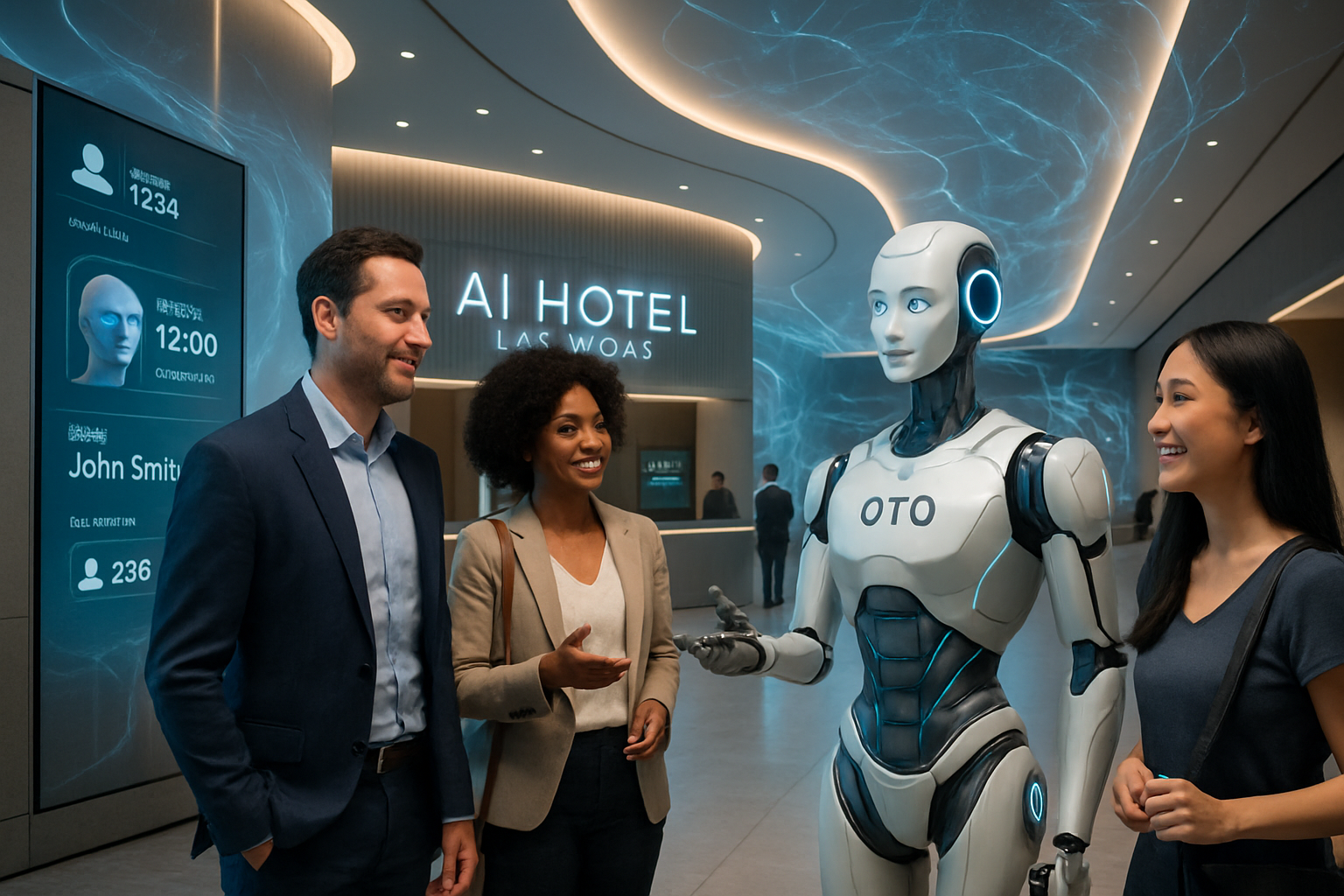
  • Las Vegas Unveils Otonomus: The World’s First AI Hotel Redefines Global Hospitality with Multilingual Robot Concierge

    Las Vegas Unveils Otonomus: The World’s First AI Hotel Redefines Global Hospitality with Multilingual Robot Concierge

    Las Vegas, the global epicenter of entertainment and innovation, has once again shattered conventional boundaries with the grand unveiling of Otonomus, the world's first fully AI-powered hotel. Opening its doors on July 1, 2025, and recently showcasing its groundbreaking multilingual robot concierge, Oto, in September and October 2025, Otonomus is poised to revolutionize the hospitality industry. This ambitious venture promises an unprecedented level of personalized guest experience, operational efficiency, and technological integration, marking a significant milestone in the application of artificial intelligence in service sectors.

    At its core, Otonomus represents a radical reimagining of hotel operations, moving beyond mere automation to a holistic AI-driven ecosystem. The hotel’s commitment to hyper-personalization, powered by sophisticated machine learning algorithms and a seamless digital interface, aims to anticipate and cater to every guest's need, often before they even realize it. This development not only highlights the rapid advancements in AI but also sets a new benchmark for luxury and convenience in the global travel landscape.

    A Deep Dive into Otonomus's AI-Powered Hospitality

    Otonomus's technological prowess is built upon a dual-core AI system: FIRO, an advanced AI-based booking and occupancy management system, and Kee, the proprietary mobile application that serves as the guest's digital concierge. FIRO intelligently optimizes room allocations, even allowing for the dynamic merging of adjoining rooms into larger suites based on demand. Kee, on the other hand, is the primary interface for guests, managing everything from contactless check-in and room preferences to dining reservations and service requests.

    The hotel's most captivating feature is undoubtedly Oto, the multilingual humanoid robot concierge, developed by Silicon Valley startup InBot (NASDAQ: INBT). Dubbed the property's "Chief Vibes Officer," Oto is fluent in over fifty global languages, including Spanish, French, Mandarin, Tagalog, and Russian, effectively dissolving language barriers for international travelers. Beyond basic information, Oto leverages advanced natural language processing (NLP), contextual memory, and real-time learning algorithms to engage in light conversation, remember guest preferences like favorite cocktails or room temperatures, and offer personalized recommendations for dining, entertainment, and local attractions. This level of sophisticated interaction goes far beyond previous robotic applications in hospitality, which often focused on rudimentary tasks like luggage delivery or basic information dissemination. Oto's ability to adapt dynamically to diverse guest needs and provide a human-like touch, infused with warmth and humor, truly sets it apart.

    The hyper-personalization extends to every aspect of the stay. Upon arrival, or even before, guests create a unique digital avatar through a gamified onboarding questionnaire via the Kee app. This avatar continuously learns from their behavior and preferences – preferred lighting, temperature, coffee choices, spa visits – allowing the AI to tailor the room environment and service offerings. The entire operation is designed to be contactless, enhancing both convenience and hygiene. Initial reactions from early visitors and industry experts have been overwhelmingly positive, praising the seamless integration of technology and the unprecedented level of personalized service. Many have highlighted Oto's natural interaction capabilities as a significant leap forward for human-robot collaboration in service roles.

    Competitive Implications and Market Disruption

    The emergence of Otonomus and its comprehensive AI integration carries significant implications for AI companies, tech giants, and the broader hospitality sector. Companies like InBot (NASDAQ: INBT), the developer of the Oto robot, stand to benefit immensely from this high-profile deployment, showcasing their advanced robotics and AI capabilities to a global audience. Other AI solution providers specializing in predictive analytics, natural language processing, and personalized recommendation engines will also see increased demand as the industry attempts to emulate Otonomus's success.

    For traditional hotel chains, Otonomus presents a formidable competitive challenge. The level of personalization and efficiency offered by Otonomus could disrupt existing business models, forcing incumbents to rapidly accelerate their own AI adoption strategies. Tech giants with strong AI research divisions, such as Google (NASDAQ: GOOGL), Amazon (NASDAQ: AMZN), and Microsoft (NASDAQ: MSFT), could find new avenues for partnership or acquisition in developing similar comprehensive AI hospitality platforms. Startups focusing on niche AI applications for guest services, operational automation, or data analytics within hospitality are also likely to see a surge in interest and investment.

    The potential for disruption extends to the labor market within hospitality, particularly for roles traditionally focused on routine tasks or basic concierge services. While Otonomus aims to redeploy human staff to roles focused on enhancing emotional customer experience, the long-term impact on employment structures will be a critical area to monitor. Otonomus's pioneering market positioning establishes a new tier of luxury and technological sophistication, creating strategic advantages for early adopters and pressuring competitors to innovate or risk falling behind in an increasingly AI-driven world.

    Wider Significance in the AI Landscape

    Otonomus's debut fits squarely into the broader trend of AI moving from back-office automation to front-facing, direct-to-consumer service roles. This development signifies a critical step in the maturation of AI, demonstrating its capability to handle complex, nuanced human interactions and deliver highly personalized experiences at scale. It underscores the growing importance of conversational AI, embodied AI, and hyper-personalization in shaping future consumer services.

    The impacts are multi-faceted. On one hand, it promises an elevated and seamless guest experience, reducing friction points and enhancing satisfaction through predictive service. On the other, it raises important considerations regarding data privacy and security, given the extensive data collection required to build personalized guest profiles. Otonomus has stated that guests can opt-out of data usage, but the ethical implications of such pervasive data gathering will remain a topic of discussion. The potential for job displacement, particularly in entry-level service roles, is another concern that will require careful management and policy responses.

    Compared to previous AI milestones, Otonomus represents a significant leap from specialized AI applications (like recommendation engines in e-commerce or chatbots for customer support) to a fully integrated, intelligent environment that adapts to individual human needs in real-time. It moves beyond AI as a tool to AI as an omnipresent, proactive orchestrator of an entire service ecosystem, setting a precedent for how AI might permeate other service industries like retail, healthcare, and education.

    The Horizon: Future Developments and Challenges

    The unveiling of Otonomus is merely the beginning. In the near term, we can expect to see continuous enhancements to Oto's capabilities, including more sophisticated emotional intelligence, even more nuanced conversational abilities, and potentially expanded physical functionalities within the hotel environment. Further integration of AI with IoT devices throughout the property will likely lead to even more seamless and predictive service. Long-term, the Otonomus model could be replicated globally, spawning a new generation of AI-powered hotels and service establishments.

    Beyond hospitality, the technologies pioneered by Otonomus – particularly the comprehensive AI operating system, personalized digital avatars, and advanced robot concierges – hold immense potential for other sectors. Imagine AI-powered retail spaces that anticipate your shopping needs, smart homes that learn and adapt to your daily routines, or even AI-driven healthcare facilities that provide personalized care coordination. However, significant challenges remain. Ensuring the ethical deployment of AI, maintaining robust data security and privacy, and addressing the societal impact of automation on employment will be paramount. The seamless integration of AI with human staff, fostering collaboration rather than replacement, will also be crucial for widespread acceptance. Experts predict that the next phase will involve refining the human-AI interface, making interactions even more natural and intuitive, and addressing the "uncanny valley" effect often associated with humanoid robots.

    A New Era of Intelligent Service

    The opening of Otonomus in Las Vegas marks a pivotal moment in the history of artificial intelligence and its application in the real world. It stands as a testament to the power of machine learning, large language models, and advanced robotics to fundamentally transform traditional industries. The hotel's comprehensive AI integration, from its booking systems to its multilingual robot concierge, sets a new standard for personalized service and operational efficiency.

    The key takeaway is that AI is no longer just a background technology; it is increasingly becoming the face of customer interaction and service delivery. Otonomus's significance lies not just in its individual features but in its holistic approach to an AI-powered environment, pushing the boundaries of what is possible in human-AI collaboration. As we move forward, the success of Otonomus will be closely watched, offering invaluable insights into the opportunities and challenges of a world increasingly shaped by intelligent machines. The coming weeks and months will reveal how guests truly embrace this new paradigm of hospitality and how competitors respond to this bold step into the future.


    This content is intended for informational purposes only and represents analysis of current AI developments.

    TokenRing AI delivers enterprise-grade solutions for multi-agent AI workflow orchestration, AI-powered development tools, and seamless remote collaboration platforms.
    For more information, visit https://www.tokenring.ai/.