Tag: HPE

  • HPE and AMD Forge Future of AI with Open Rack Architecture for 2026 Systems

    HPE and AMD Forge Future of AI with Open Rack Architecture for 2026 Systems

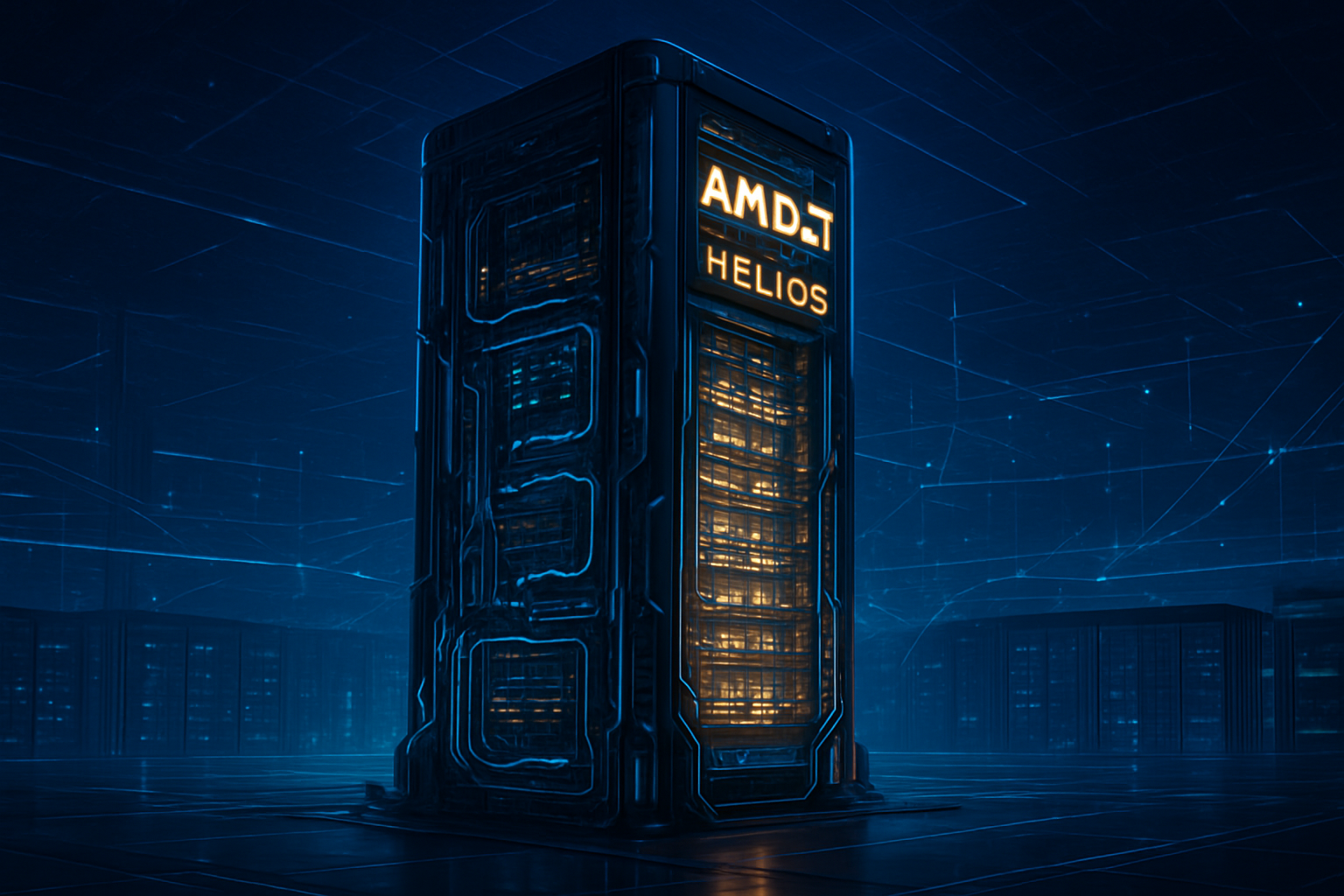
    In a significant move poised to reshape the landscape of artificial intelligence infrastructure, Hewlett Packard Enterprise (NYSE: HPE) has announced an expanded partnership with Advanced Micro Devices (NASDAQ: AMD), committing to adopt AMD’s innovative "Helios" rack architecture for its AI systems beginning in 2026. This strategic collaboration is set to accelerate the development and deployment of open, scalable AI solutions, building on a decade of joint innovation in high-performance computing (HPC). The integration of the AMD "Helios" platform into HPE's portfolio signals a strong push towards standardized, high-performance AI infrastructure designed to meet the escalating demands of next-generation AI workloads.

    This partnership is not merely an incremental upgrade but a foundational shift, promising to deliver turnkey, rack-scale AI systems capable of handling the most intensive training and inference tasks. By embracing the "Helios" architecture, HPE positions itself at the forefront of providing solutions that simplify the complexity of large-scale AI cluster deployments, offering a compelling alternative to proprietary systems and fostering an environment of greater flexibility and reduced vendor lock-in within the rapidly evolving AI market.

    A Deep Dive into the Helios Architecture: Powering Tomorrow's AI

    The AMD "Helios" rack-scale AI architecture represents a comprehensive, full-stack platform engineered from the ground up for demanding AI and HPC workloads. At its core, "Helios" is built on the Open Compute Project (OCP) Open Rack Wide (ORW) design, a double-wide standard championed by Meta, which optimizes power delivery, enhances liquid cooling capabilities, and improves serviceability—all critical factors for the immense power and thermal requirements of advanced AI systems. HPE's implementation will further differentiate this offering by integrating its own purpose-built HPE Juniper Networking scale-up Ethernet switch, developed in collaboration with Broadcom (NASDAQ: AVGO). This switch leverages Broadcom's Tomahawk 6 network silicon and supports the Ultra Accelerator Link over Ethernet (UALoE) standard, promising high-bandwidth, low-latency connectivity across vast AI clusters.

    Technologically, the "Helios" platform is a powerhouse, featuring AMD Instinct MI455X GPUs (and generally MI450 Series GPUs) which utilize the cutting-edge AMD CDNA™ architecture. Each MI450 Series GPU boasts up to 432 GB of HBM4 memory and an astonishing 19.6 TB/s of memory bandwidth, providing unparalleled capacity for data-intensive AI models. Complementing these GPUs are next-generation AMD EPYC™ "Venice" CPUs, designed to sustain maximum performance across the entire rack. For networking, AMD Pensando™ advanced networking, specifically Pensando Vulcano NICs, facilitates robust scale-out capabilities. The HPE Juniper Networking switch, being the first to optimize AI workloads over standard Ethernet using the UALoE, marks a significant departure from proprietary interconnects like Nvidia's NVLink or InfiniBand, offering greater openness and faster feature updates. The entire system is unified and made accessible through the open ROCm™ software ecosystem, promoting flexibility and innovation. A single "Helios" rack, equipped with 72 MI455X GPUs, is projected to deliver up to 2.9 exaFLOPS of FP4 performance, 260 TB/s of aggregated scale-up bandwidth, 31 TB of total HBM4 memory, and 1.4 PB/s of aggregate memory bandwidth, making it capable of trillion-parameter training and large-scale AI inference.

    Initial reactions from the AI research community and industry experts highlight the importance of AMD's commitment to open standards. This approach is seen as a crucial step in democratizing AI infrastructure, reducing the barriers to entry for smaller players, and fostering greater innovation by moving away from single-vendor ecosystems. The sheer computational density and memory bandwidth of the "Helios" architecture are also drawing significant attention, as they directly address some of the most pressing bottlenecks in training increasingly complex AI models.

    Reshaping the AI Competitive Landscape

    This expanded partnership between HPE and AMD carries profound implications for AI companies, tech giants, and startups alike. Companies seeking to deploy large-scale AI infrastructure, particularly cloud service providers (including emerging "neoclouds") and large enterprises, stand to benefit immensely. The "Helios" architecture, offered as a turnkey solution by HPE, simplifies the procurement, deployment, and management of massive AI clusters, potentially accelerating their time to market for new AI services and products.

    Competitively, this collaboration positions HPE and AMD as a formidable challenger to market leaders, most notably Nvidia (NASDAQ: NVDA), whose proprietary solutions like the DGX GB200 NVL72 and Vera Rubin platforms currently dominate the high-end AI infrastructure space. The "Helios" platform, with its focus on open standards and competitive performance metrics, offers a compelling alternative that could disrupt Nvidia's established market share, particularly among customers wary of vendor lock-in. By providing a robust, open-standard solution, AMD aims to carve out a significant portion of the rapidly growing AI hardware market. This could lead to increased competition, potentially driving down costs and accelerating innovation across the industry. Startups and smaller AI labs, which might struggle with the cost and complexity of proprietary systems, could find the open and scalable nature of the "Helios" platform more accessible, fostering a more diverse and competitive AI ecosystem.

    Broader Significance in the AI Evolution

    The HPE and AMD partnership, centered around the "Helios" architecture, fits squarely into the broader AI landscape's trend towards more open, scalable, and efficient infrastructure. It addresses the critical need for systems that can handle the exponential growth in AI model size and complexity. The emphasis on OCP Open Rack Wide and UALoE standards is a testament to the industry's growing recognition that proprietary interconnects, while powerful, can stifle innovation and create bottlenecks in a rapidly evolving field. This move aligns with a wider push for interoperability and choice, allowing organizations to integrate components from various vendors without being locked into a single ecosystem.

    The impacts extend beyond just hardware and software. By simplifying the deployment of large-scale AI clusters, "Helios" could democratize access to advanced AI capabilities, making it easier for a wider range of organizations to develop and deploy sophisticated AI applications. Potential concerns, however, might include the adoption rate of new open standards and the initial integration challenges for early adopters. Nevertheless, the strategic importance of this collaboration is underscored by its role in advancing sovereign AI and HPC initiatives. For instance, the AMD "Helios" platform will power "Herder," a new supercomputer for the High-Performance Computing Center Stuttgart (HLRS) in Germany, built on the HPE Cray Supercomputing GX5000 platform. This initiative, utilizing AMD Instinct MI430X GPUs and next-generation AMD EPYC "Venice" CPUs, will significantly advance HPC and sovereign AI research across Europe, demonstrating the platform's capability to support hybrid HPC/AI workflows and its comparison to previous AI milestones that often relied on more closed architectures.

    The Horizon: Future Developments and Predictions

    Looking ahead, the adoption of AMD's "Helios" rack architecture by HPE for its 2026 AI systems heralds a new era of open, scalable AI infrastructure. Near-term developments will likely focus on the meticulous integration and optimization of the "Helios" platform within HPE's diverse offerings, ensuring seamless deployment for early customers. We can expect to see further enhancements to the ROCm software ecosystem to fully leverage the capabilities of the "Helios" hardware, along with continued development of the UALoE standard to ensure robust, high-performance networking across even larger AI clusters.

    In the long term, this collaboration is expected to drive the proliferation of standards-based AI supercomputing, making it more accessible for a wider range of applications, from advanced scientific research and drug discovery to complex financial modeling and hyper-personalized consumer services. Experts predict that the move towards open rack architectures and standardized interconnects will foster greater competition and innovation, potentially accelerating the pace of AI development across the board. Challenges will include ensuring broad industry adoption of the UALoE standard and continuously scaling the platform to meet the ever-increasing demands of future AI models, which are predicted to grow in size and complexity exponentially. The success of "Helios" could set a precedent for future AI infrastructure designs, emphasizing modularity, interoperability, and open access.

    A New Chapter for AI Infrastructure

    The expanded partnership between Hewlett Packard Enterprise and Advanced Micro Devices, with HPE's commitment to adopting the AMD "Helios" rack architecture for its 2026 AI systems, marks a pivotal moment in the evolution of AI infrastructure. This collaboration champions an open, scalable, and high-performance approach, offering a compelling alternative to existing proprietary solutions. Key takeaways include the strategic importance of open standards (OCP Open Rack Wide, UALoE), the formidable technical specifications of the "Helios" platform (MI450 Series GPUs, EPYC "Venice" CPUs, ROCm software), and its potential to democratize access to advanced AI capabilities.

    This development is significant in AI history as it represents a concerted effort to break down barriers to innovation and reduce vendor lock-in, fostering a more competitive and flexible ecosystem for AI development and deployment. The long-term impact could be a paradigm shift in how large-scale AI systems are designed, built, and operated globally. In the coming weeks and months, industry watchers will be keen to observe further technical details, early customer engagements, and the broader market's reaction to this powerful new contender in the AI infrastructure race, particularly as 2026 approaches and the first "Helios"-powered HPE systems begin to roll out.


    This content is intended for informational purposes only and represents analysis of current AI developments.

    TokenRing AI delivers enterprise-grade solutions for multi-agent AI workflow orchestration, AI-powered development tools, and seamless remote collaboration platforms.
    For more information, visit https://www.tokenring.ai/.
  • The Sleeping Giant Awakens: How a Sentiment Reversal Could Propel HPE to AI Stardom

    The Sleeping Giant Awakens: How a Sentiment Reversal Could Propel HPE to AI Stardom

    In the rapidly evolving landscape of artificial intelligence, where new titans emerge and established players vie for dominance, a subtle yet significant shift in perception could be brewing for an enterprise tech veteran: Hewlett Packard Enterprise (NYSE: HPE). While often seen as a stalwart in traditional IT infrastructure, HPE is quietly — and increasingly not so quietly — repositioning itself as a formidable force in the AI sector. This potential "sentiment reversal," driven by strategic partnerships, innovative solutions, and a growing order backlog, could awaken HPE as a significant, even leading, player in the global AI boom, challenging preconceived notions and reshaping the competitive dynamics of the industry.

    The current market sentiment towards HPE in the AI space is a blend of cautious optimism and growing recognition of its underlying strengths. Historically known for its robust enterprise hardware, HPE is now actively transforming into a crucial provider of AI infrastructure and solutions. Recent financial reports underscore this momentum, with AI systems revenue more than doubling sequentially in Q2 FY2024 and a substantial backlog of AI systems orders accumulating to $4.6 billion as of Q2 FY2024, with enterprise AI orders contributing over 15%. This burgeoning demand suggests that a pivotal moment is at hand for HPE, where a broader market acknowledgement of its AI capabilities could ignite a powerful surge in its industry standing and investor confidence.

    HPE's Strategic Playbook: Private Cloud AI, NVIDIA Integration, and GreenLake's Edge

    HPE's strategy to become an AI powerhouse is multifaceted, centering on its hybrid cloud platform, deep strategic partnerships, and a comprehensive suite of AI-optimized infrastructure and software. At the heart of this strategy is HPE GreenLake for AI, an edge-to-cloud platform that offers a hybrid cloud operating model with built-in intelligence and agentic AIOps (Artificial Intelligence for IT Operations). GreenLake provides on-demand, multi-tenant cloud services for privately training, tuning, and deploying large-scale AI models. Specifically, HPE GreenLake for Large Language Models offers a managed private cloud service for generative AI creation, allowing customers to scale hardware while maintaining on-premises control over their invaluable data – a critical differentiator for enterprises prioritizing data sovereignty and security. This "as-a-service" model, blending hardware sales with subscription-like revenue, offers unparalleled flexibility and scalability.

    A cornerstone of HPE's AI offensive is its profound and expanding partnership with NVIDIA (NASDAQ: NVDA). This collaboration is co-developing "AI factory" solutions, integrating NVIDIA's cutting-edge accelerated computing technologies – including Blackwell, Spectrum-X Ethernet, and BlueField-3 networking – and NVIDIA AI Enterprise software with HPE's robust infrastructure. The flagship offering from this alliance is HPE Private Cloud AI, a turnkey private cloud solution meticulously designed for generative AI workloads, including inference, fine-tuning, and Retrieval Augmented Generation (RAG). This partnership extends beyond hardware, encompassing pre-validated AI use cases and an "Unleash AI" partner program with Independent Software Vendors (ISVs). Furthermore, HPE and NVIDIA are collaborating on building supercomputers for advanced AI research and national security, signaling HPE's commitment to the highest echelons of AI capability.

    HPE is evolving into a complete AI solutions provider, extending beyond mere hardware to offer a comprehensive suite of software tools, security solutions, Machine Learning as a Service, and expert consulting. Its portfolio boasts high-performance computing (HPC) systems, AI software, and data storage solutions specifically engineered for complex AI workloads. HPE's specialized servers, optimized for AI, natively support NVIDIA's leading-edge GPUs, such as Blackwell, H200, A100, and A30. This holistic "AI Factory" concept emphasizes private cloud deployment, tight NVIDIA integration, and pre-integrated software to significantly accelerate time-to-value for customers. This approach fundamentally differs from previous, more siloed hardware offerings by providing an end-to-end, integrated solution that addresses the entire AI lifecycle, from data ingestion and model training to deployment and management, all while catering to the growing demand for private and hybrid AI environments. Initial reactions from the AI research community and industry experts have been largely positive, noting HPE's strategic pivot and its potential to democratize sophisticated AI infrastructure for a broader enterprise audience.

    Reshaping the AI Competitive Landscape: Implications for Tech Giants and Startups

    HPE's re-emergence as a significant AI player carries substantial implications for the broader AI ecosystem, affecting tech giants, established AI labs, and burgeoning startups alike. Companies like NVIDIA, already a crucial partner, stand to benefit immensely from HPE's expanded reach and integrated solutions, as HPE becomes a primary conduit for deploying NVIDIA's advanced AI hardware and software into enterprise environments. Other major cloud providers and infrastructure players, such as Microsoft (NASDAQ: MSFT) with Azure, Amazon (NASDAQ: AMZN) with AWS, and Google (NASDAQ: GOOGL) with Google Cloud, will face increased competition in the hybrid and private AI cloud segments, particularly for clients prioritizing on-premises data control and security.

    HPE's strong emphasis on private and hybrid cloud AI solutions, coupled with its "as-a-service" GreenLake model, could disrupt existing market dynamics. Enterprises that have been hesitant to fully migrate sensitive AI workloads to public clouds due to data governance, compliance, or security concerns will find HPE's offerings particularly appealing. This could potentially divert a segment of the market that major public cloud providers were aiming for, forcing them to refine their own hybrid and on-premises strategies. For AI labs and startups, HPE's integrated "AI Factory" approach, offering pre-validated and optimized infrastructure, could significantly lower the barrier to entry for deploying complex AI models, accelerating their development cycles and time to market.

    Furthermore, HPE's leadership in liquid cooling technology positions it with a strategic advantage. As AI models grow exponentially in size and complexity, the power consumption and heat generation of AI accelerators become critical challenges. HPE's expertise in dense, energy-efficient liquid cooling solutions allows for the deployment of more powerful AI infrastructure within existing data center footprints, potentially reducing operational costs and environmental impact. This capability could become a key differentiator, attracting enterprises focused on sustainability and cost-efficiency. The proposed acquisition of Juniper Networks (NYSE: JNPR) is also poised to further strengthen HPE's hybrid cloud and edge computing capabilities by integrating Juniper's networking and cybersecurity expertise, creating an even more comprehensive and secure AI solution for customers and enhancing its competitive posture against end-to-end solution providers.

    A Broader AI Perspective: Data Sovereignty, Sustainability, and the Hybrid Future

    HPE's strategic pivot into the AI domain aligns perfectly with several overarching trends and shifts in the broader AI landscape. One of the most significant is the increasing demand for data sovereignty and control. As AI becomes more deeply embedded in critical business operations, enterprises are becoming more wary of placing all their sensitive data and models in public cloud environments. HPE's focus on private and hybrid AI deployments, particularly through GreenLake, directly addresses this concern, offering a compelling alternative that allows organizations to harness the power of AI while retaining full control over their intellectual property and complying with stringent regulatory requirements. This emphasis on on-premises data control differentiates HPE from purely public-cloud-centric AI offerings and resonates strongly with industries such as finance, healthcare, and government.

    The environmental impact of AI is another growing concern, and here too, HPE is positioned to make a significant contribution. The training of large AI models is notoriously energy-intensive, leading to substantial carbon footprints. HPE's recognized leadership in liquid cooling technologies and energy-efficient infrastructure is not just a technical advantage but also a sustainability imperative. By enabling denser, more efficient AI deployments, HPE can help organizations reduce their energy consumption and operational costs, aligning with global efforts towards greener computing. This focus on sustainability could become a crucial selling point, particularly for environmentally conscious enterprises and those facing increasing pressure to report on their ESG (Environmental, Social, and Governance) metrics.

    Comparing this to previous AI milestones, HPE's approach represents a maturation of the AI infrastructure market. Earlier phases focused on fundamental research and the initial development of AI algorithms, often relying on public cloud resources. The current phase, however, demands robust, scalable, and secure enterprise-grade infrastructure that can handle the massive computational requirements of generative AI and large language models (LLMs) in a production environment. HPE's "AI Factory" concept and its turnkey private cloud AI solutions represent a significant step in democratizing access to this high-end infrastructure, moving AI beyond the realm of specialized research labs and into the core of enterprise operations. This development addresses the operationalization challenges that many businesses face when attempting to integrate cutting-edge AI into their existing IT ecosystems.

    The Road Ahead: Unleashing AI's Full Potential with HPE

    Looking ahead, the trajectory for Hewlett Packard Enterprise in the AI space is marked by several expected near-term and long-term developments. In the near term, experts predict continued strong execution in converting HPE's substantial AI systems order backlog into revenue will be paramount for solidifying positive market sentiment. The widespread adoption and proven success of its co-developed "AI Factory" solutions, particularly HPE Private Cloud AI integrated with NVIDIA's Blackwell GPUs, will serve as a major catalyst. As enterprises increasingly seek managed, on-demand AI infrastructure, the unique value proposition of GreenLake's "as-a-service" model for private and hybrid AI, emphasizing data control and security, is expected to attract a growing clientele hesitant about full public cloud adoption.

    In the long term, HPE is poised to expand its higher-margin AI software and services. The growth in adoption of HPE's AI software stack, including Ezmeral Unified Analytics Software, GreenLake Intelligence, and OpsRamp for observability and automation, will be crucial in addressing concerns about the potentially lower profitability of AI server hardware alone. The successful integration of the Juniper Networks acquisition, if approved, is anticipated to further enhance HPE's overall hybrid cloud and edge AI portfolio, creating a more comprehensive solution for customers by adding robust networking and cybersecurity capabilities. This will allow HPE to offer an even more integrated and secure end-to-end AI infrastructure.

    Challenges that need to be addressed include navigating the intense competitive landscape, ensuring consistent profitability in the AI server market, and continuously innovating to keep pace with rapid advancements in AI hardware and software. What experts predict will happen next is a continued focus on expanding the AI ecosystem through HPE's "Unleash AI" partner program and delivering more industry-specific AI solutions for sectors like defense, healthcare, and finance. This targeted approach will drive deeper market penetration and solidify HPE's position as a go-to provider for enterprise-grade, secure, and sustainable AI infrastructure. The emphasis on sustainability, driven by HPE's leadership in liquid cooling, is also expected to become an increasingly important competitive differentiator as AI deployments become more energy-intensive.

    A New Chapter for an Enterprise Leader

    In summary, Hewlett Packard Enterprise is not merely adapting to the AI revolution; it is actively shaping its trajectory with a well-defined and potent strategy. The confluence of its robust GreenLake hybrid cloud platform, deep strategic partnership with NVIDIA, and comprehensive suite of AI-optimized infrastructure and software marks a pivotal moment. The "sentiment reversal" for HPE is not just wishful thinking; it is a tangible shift driven by consistent execution, a growing order book, and a clear differentiation in the market, particularly for enterprises demanding data sovereignty, security, and sustainable AI operations.

    This development holds significant historical weight in the AI landscape, signaling that established enterprise technology providers, with their deep understanding of IT infrastructure and client needs, are crucial to the widespread, responsible adoption of AI. HPE's focus on operationalizing AI for the enterprise, moving beyond theoretical models to practical, scalable deployments, is a testament to its long-term vision. The long-term impact of HPE's resurgence in AI could redefine how enterprises consume and manage their AI workloads, fostering a more secure, controlled, and efficient AI future.

    In the coming weeks and months, all eyes will be on HPE's continued financial performance in its AI segments, the successful deployment and customer adoption of its Private Cloud AI solutions, and any further expansions of its strategic partnerships. The integration of Juniper Networks, if finalized, will also be a key development to watch, as it could significantly bolster HPE's end-to-end AI offerings. HPE is no longer just an infrastructure provider; it is rapidly becoming an architect of the enterprise AI future, and its journey from a sleeping giant to an awakened AI powerhouse is a story worth following closely.


    This content is intended for informational purposes only and represents analysis of current AI developments.

    TokenRing AI delivers enterprise-grade solutions for multi-agent AI workflow orchestration, AI-powered development tools, and seamless remote collaboration platforms.
    For more information, visit https://www.tokenring.ai/.
  • HPE Forges Quantum Scaling Alliance: A New Era for Hybrid Quantum-Classical Computing Dawns

    HPE Forges Quantum Scaling Alliance: A New Era for Hybrid Quantum-Classical Computing Dawns

    PALO ALTO, CA – November 12, 2025 – Hewlett Packard Enterprise (NYSE: HPE) has officially launched the Quantum Scaling Alliance (QSA), a groundbreaking global initiative aimed at propelling quantum computing from theoretical promise to practical, industry-scale reality. Announced on November 10, 2025, the QSA brings together a formidable consortium of technology leaders, signaling a unified push to overcome the significant hurdles in quantum scalability and integration. This alliance is poised to redefine the trajectory of quantum technology, emphasizing a hybrid approach that seamlessly blends quantum capabilities with classical high-performance computing (HPC) and advanced networking.

    The formation of the QSA marks a pivotal moment in the race for quantum supremacy, shifting the focus from isolated quantum experiments to the development of robust, scalable, and cost-effective quantum supercomputers. By leveraging the collective expertise of its founding members, HPE and its partners aim to unlock new frontiers in scientific discovery and industrial innovation, promising transformative impacts across sectors ranging from drug discovery and materials science to complex optimization problems and secure data processing.

    Unpacking the Technical Blueprint for Scalable Quantum Computing

    The HPE Quantum Scaling Alliance is not merely a collaborative agreement; it represents a concerted effort to architect a new generation of computing infrastructure. At its core, the QSA's technical vision revolves around the development of a practically useful and cost-effective quantum supercomputer, built upon scalable, hybrid solutions. This approach differentiates itself significantly from previous quantum endeavors that often focused on standalone quantum processors, by emphasizing deep integration with existing classical HPC systems and advanced networking protocols. Dr. Masoud Mohseni from HPE Labs, who oversees the initiative as the quantum system architect, underscored that long-term quantum success necessitates this symbiotic relationship with classical supercomputing.

    The alliance's seven founding partners each bring critical, specialized expertise to this ambitious endeavor. HPE (NYSE: HPE) itself is spearheading full-stack quantum-HPC integration and software development. 1QBit contributes its prowess in fault-tolerant quantum error correction design and simulation, algorithm compilation, and automated resource estimations—crucial elements for building reliable quantum systems. Applied Materials, Inc. (NASDAQ: AMAT), a giant in materials engineering, is vital for semiconductor fabrication, highlighting the indispensable role of advanced manufacturing in quantum hardware. Qolab, co-led by 2025 Nobel Laureate John Martinis, focuses on qubit and circuit design, the foundational elements of quantum processors. Quantum Machines specializes in hybrid quantum-classical control, essential for orchestrating complex quantum operations. Riverlane is dedicated to quantum error correction, a key challenge in mitigating quantum decoherence. Lastly, Synopsys (NASDAQ: SNPS) provides critical simulation and analysis technology, electronic design automation (EDA) tools, and semiconductor intellectual property, underpinning the design and verification processes for quantum hardware. The University of Wisconsin rounds out the alliance with expertise in algorithms and benchmarks, ensuring the practical utility and performance measurement of the developed systems. This multi-faceted technical collaboration aims to address the entire quantum computing stack, from fundamental qubit design to complex algorithmic execution and seamless integration with classical supercomputing environments.

    Competitive Implications and Market Dynamics

    The launch of the HPE Quantum Scaling Alliance has significant implications for the competitive landscape of the AI and quantum technology sectors. Companies like HPE (NYSE: HPE), already a leader in high-performance computing, stand to significantly benefit by solidifying their position at the forefront of the emerging hybrid quantum-classical computing paradigm. By integrating quantum capabilities into their robust HPC infrastructure, HPE can offer a more comprehensive and powerful computing solution, potentially attracting a broader range of enterprise and research clients. The involvement of semiconductor giants like Applied Materials, Inc. (NASDAQ: AMAT) and Synopsys (NASDAQ: SNPS) underscores the critical role of chip manufacturing and design in the quantum era. These companies are not merely suppliers but strategic partners whose advanced materials and EDA tools are indispensable for fabricating and optimizing the next generation of quantum processors.

    This alliance could disrupt existing products and services by accelerating the development of practically useful quantum applications. For major AI labs and tech companies, the QSA's focus on scalable, hybrid solutions means that quantum advantages might become accessible sooner and more reliably, potentially leading to breakthroughs in AI model training, optimization, and data analysis that are currently intractable. Startups specializing in quantum software, algorithms, and middleware, particularly those with expertise in error correction (like 1QBit and Riverlane) and control systems (like Quantum Machines), could see increased demand for their specialized services as the alliance progresses. The QSA's strategic advantage lies in its holistic approach, covering hardware, software, and integration, which could create a formidable ecosystem that challenges other quantum initiatives focused on narrower aspects of the technology. Market positioning will increasingly favor entities that can bridge the gap between quantum theory and practical, scalable deployment, a gap the QSA explicitly aims to close.

    Broader Significance in the AI and Quantum Landscape

    The HPE Quantum Scaling Alliance represents a crucial evolution in the broader AI and quantum computing landscape. For years, quantum computing has been viewed as a futuristic technology, often disconnected from the immediate needs and infrastructure of classical computing. The QSA's emphasis on "hybrid quantum-classical control" and "full-stack quantum-HPC integration" signals a maturing understanding that quantum computing will likely augment, rather than entirely replace, classical supercomputing for the foreseeable future. This integration strategy aligns with a growing trend in the tech industry towards heterogeneous computing architectures, where specialized processors (like GPUs, TPUs, and now potentially QPUs) work in concert to solve complex problems.

    The impacts of this alliance could be profound. By accelerating the development of scalable quantum systems, the QSA has the potential to unlock breakthroughs in fields critical to AI development, such as materials science for advanced AI hardware, drug discovery for pharmaceutical AI applications, and complex optimization for logistics and financial modeling. Potential concerns, however, include the significant investment required and the inherent technical challenges of quantum error correction and decoherence, which remain formidable. Nevertheless, the QSA's collaborative model, bringing together diverse expertise from academia and industry, mitigates some of these risks by pooling resources and knowledge. This initiative can be compared to early milestones in classical supercomputing or the initial phases of large-scale AI research consortia, where foundational infrastructure and collaborative efforts were key to subsequent exponential growth. It underscores the industry's recognition that grand challenges often require grand alliances.

    Charting the Course for Future Quantum Developments

    The launch of the HPE Quantum Scaling Alliance sets the stage for a wave of anticipated near-term and long-term developments in quantum computing. In the near term, we can expect to see rapid advancements in the integration layer between quantum processors and classical HPC systems. The alliance's focus on scalable control systems and error correction will likely lead to more stable and robust quantum operations, moving beyond noisy intermediate-scale quantum (NISQ) devices. Experts predict that within the next 1-3 years, the QSA will demonstrate initial proof-of-concept hybrid quantum-classical applications that showcase tangible speedups or capabilities unattainable by classical means alone, particularly in optimization and simulation tasks.

    Looking further ahead, the long-term vision includes the development of fault-tolerant quantum supercomputers capable of tackling problems of unprecedented complexity. Potential applications on the horizon are vast, ranging from discovering new catalysts for sustainable energy, designing novel drugs with atomic precision, to developing unbreakable encryption methods and revolutionizing financial modeling. However, significant challenges remain. The quest for truly fault-tolerant qubits, the development of sophisticated quantum software stacks, and the training of a specialized quantum workforce are all critical hurdles that need to be addressed. Experts predict that the QSA's collaborative model, particularly its emphasis on semiconductor manufacturing and design (through partners like Applied Materials, Inc. and Synopsys), will be crucial in overcoming the hardware fabrication challenges that have historically plagued quantum development. What happens next will largely depend on the alliance's ability to translate its ambitious technical roadmap into concrete, reproducible results and to attract further investment and talent into the burgeoning quantum ecosystem.

    A New Chapter in Computing History

    The HPE Quantum Scaling Alliance represents more than just a new partnership; it signifies a strategic pivot in the global pursuit of quantum computing. By uniting industry leaders and academic pioneers, HPE (NYSE: HPE) has initiated a concerted effort to bridge the chasm between theoretical quantum potential and practical, scalable application. The key takeaway from this announcement is the recognition that the future of quantum computing is intrinsically tied to its seamless integration with classical supercomputing and the robust infrastructure provided by the semiconductor industry. This hybrid approach is poised to accelerate the development of quantum technologies, making them accessible and impactful across a multitude of industries.

    This development holds significant historical weight in the timeline of AI and computing. It marks a shift from isolated quantum research efforts to a collaborative, ecosystem-driven strategy, reminiscent of the foundational collaborations that propelled the internet and modern AI. The long-term impact could be transformative, enabling solutions to some of humanity's most complex challenges, from climate change modeling to personalized medicine. In the coming weeks and months, the tech world will be watching closely for updates on the alliance's technical roadmap, initial research outcomes, and any new partners that might join this ambitious endeavor. The QSA's progress will undoubtedly serve as a critical barometer for the overall advancement of scalable quantum computing, shaping the future of high-performance and intelligent systems.


    This content is intended for informational purposes only and represents analysis of current AI developments.

    TokenRing AI delivers enterprise-grade solutions for multi-agent AI workflow orchestration, AI-powered development tools, and seamless remote collaboration platforms.
    For more information, visit https://www.tokenring.ai/.