Tag: Humanoid Robots

  • Russia’s AIDOL Robot Stumbles into the AI Spotlight: A Debut Fraught with Promise and Peril

    Russia’s AIDOL Robot Stumbles into the AI Spotlight: A Debut Fraught with Promise and Peril

    Russia's ambitious foray into advanced humanoid robotics took an unexpected turn on November 10, 2025, as its AI-powered creation, AIDOL, made its public debut in Moscow. The unveiling, intended to showcase a significant leap in domestic AI and robotics capabilities, quickly garnered global attention—not just for its technological promise, but for an embarrassing on-stage fall that highlighted the immense challenges still inherent in developing truly robust human-like machines.

    Developed by the Russian robotics firm Idol, AIDOL's presentation was meant to solidify Russia's position in the fiercely competitive global AI landscape. While the incident cast a shadow over the immediate presentation, it also served as a stark, real-time reminder of the complexities involved in bringing advanced embodied AI to fruition, sparking both scrutiny and a renewed discussion about the future of humanoid robotics.

    Technical Ambition Meets Real-World Challenge

    AIDOL, whose name alludes to "AI Idol," was presented as a testament to Russian engineering prowess, with developers emphasizing its AI-powered anthropomorphic design and a high percentage of domestically sourced components. Standing 6 feet 1 inch tall and weighing 209 pounds, the robot is designed for a mobility speed of up to 6 km/h and can grasp items weighing up to 10 kg. It operates on a 48-volt battery, providing up to six hours of continuous operation, and crucially, processes all voice data locally, allowing for offline speech and movement processing—a feature touted for security in sensitive applications.

    A key differentiator highlighted by Idol Robotics is AIDOL's advanced expressiveness. Equipped with 19 servomotors, its silicone skin is engineered to replicate more than a dozen basic emotions and hundreds of subtle micro-expressions, aiming to allow it to "smile, think, and be surprised, just like a person." This focus on emotional mimicry and natural interaction sets it apart from many industrial robots. The current iteration boasts 77% Russian-made parts, with an ambitious goal to increase this to 93%, signaling a strategic drive for technological self-reliance.

    However, the public debut at the Yarovit Hall Congress Centre in Moscow was marred when AIDOL, accompanied by the "Rocky" theme song, lost its balance and dramatically collapsed shortly after attempting to wave to the audience. Event staff quickly covered the fallen robot, creating a viral moment online. Idol Robotics CEO Vladimir Vitukhin attributed the incident primarily to "calibration issues" and the robot's stereo cameras being sensitive to the stage's dark lighting conditions. He framed it as a "real-time learning" opportunity, but the incident undeniably highlighted the significant gap between laboratory development and flawless real-world deployment, especially when compared to the agility and robust stability demonstrated by robots from companies like Boston Dynamics, whose Atlas robot has performed complex parkour routines, or Agility Robotics, whose Digit is already being tested in warehouses.

    Competitive Ripples Across the AI Robotics Landscape

    The public debut of AIDOL, particularly its unexpected stumble, sends ripples across the competitive landscape of AI robotics, impacting major tech giants, established robotics firms, and nascent startups alike. For market leaders such as Boston Dynamics (privately held), Agility Robotics (privately held), Figure AI (privately held), and even Tesla (NASDAQ: TSLA) with its Optimus project, AIDOL's setback largely reinforces their perceived technological lead in robust, real-world bipedal locomotion and dynamic balancing.

    Companies like Boston Dynamics, renowned for the unparalleled agility and stability of its Atlas humanoid, and Agility Robotics, which has successfully deployed its Digit robots in Amazon (NASDAQ: AMZN) warehouses for logistics, benefit from this contrast. Their methodical, rigorous development and successful, albeit controlled, demonstrations are further validated. Similarly, Figure AI, with its Figure 02 robots already deployed in BMW (ETR: BMW) manufacturing facilities, strengthens its market positioning as a serious contender for industrial applications. Tesla's Optimus, while still in development, also benefits indirectly as the incident underscores the difficulty of the challenge, potentially motivating intensified efforts to avoid similar public missteps.

    Conversely, Idol Robotics, the developer of AIDOL, faces increased scrutiny. The highly publicized fall could impact its credibility and make it more challenging to attract the desired $50 million in investments. For other emerging startups in humanoid robotics, AIDOL's incident might lead to heightened skepticism from investors and the public, pushing them to demonstrate more robust and consistent performance before any public unveiling. The event underscores that while ambition is vital, reliability and practical functionality are paramount for gaining market trust and investment in this nascent but rapidly evolving sector.

    Wider Significance: A Global Race and Embodied AI's Growing Pains

    AIDOL's public debut, despite its immediate challenges, holds broader significance within the accelerating global race for advanced AI and robotics. It firmly positions Russia as an active participant in a field increasingly dominated by technological powerhouses like the United States and China. The robot embodies the ongoing trend of "embodied artificial intelligence," where AI moves beyond software to physically interact with and manipulate the real world, a convergence of generative AI, large language models, and sophisticated perception systems.

    This development fits into a broader trend of commercial deployment, as investments in humanoid technology surpassed US$1.6 billion in 2024, with forecasts predicting 1 million humanoids sold annually by 2030. Russia's emphasis on domestic component production for AIDOL also highlights a growing global trend of national self-reliance in critical technological sectors, potentially driven by geopolitical factors and a desire to mitigate the impact of international sanctions.

    However, the incident also brought to the forefront significant societal and ethical concerns. While proponents envision humanoids revolutionizing industries, addressing labor shortages, and even tackling challenges like eldercare, the specter of job displacement and the need for robust safety protocols loom large. AIDOL's fall serves as a stark reminder that achieving the reliability and safety necessary for widespread public acceptance and integration is a monumental task. It also highlights the intense public scrutiny and skepticism that these nascent technologies face, questioning whether the robotics industry, particularly in countries like Russia, is truly ready to compete on the global stage with more established players. Compared to the fluid, "superhuman" movements of the new all-electric Atlas by Boston Dynamics or the dexterous capabilities of Chinese humanoids like Xpeng's Iron, AIDOL's initial performance suggests a considerable "catching up to do" for Russian robotics.

    The Road Ahead: Evolution and Persistent Challenges

    The path forward for AIDOL and the broader field of humanoid robotics is characterized by both ambitious expectations and formidable challenges. In the near term (1-5 years), experts anticipate increased industrial deployment of humanoids, with hundreds to thousands entering factories and warehouses. The focus will be on refining core improvements: extending battery life, reducing manufacturing costs, and enhancing safety protocols. AI-driven autonomy will continue to advance, enabling robots to learn, adapt, and interact more dynamically. Humanoids are expected to begin with specialized, "narrow" applications, such as assisting with specific kitchen tasks or working alongside humans as "cobots" in manufacturing. Mass production is projected to begin as early as 2025, with major players like Tesla, Figure AI, and Unitree Robotics preparing for commercial readiness.

    Looking further ahead (5+ years), the long-term vision is transformative. The market for humanoid robots could expand into the trillions of dollars, with predictions of billions of robots operating worldwide by 2040, performing tasks far beyond current industrial applications. Advancements in AI could lead to humanoids achieving "theory of mind," understanding human intentions, and even operating for centuries with revolutionary power sources. Potential applications are vast, encompassing healthcare (patient care, eldercare), manufacturing (assembly, hazardous environments), education (interactive tutors), customer service, domestic assistance, and even space exploration.

    However, AIDOL's public stumble underscores persistent challenges: achieving robust stability and dynamic balancing in unpredictable environments remains a core engineering hurdle. Dexterity and fine motor skills continue to be difficult for robots, and AI generalization for physical tasks lags behind language AI, creating a "data gap." Energy efficiency, robust control systems, hardware costs, and seamless human-robot interaction are all critical areas requiring ongoing innovation. Ethical considerations regarding job displacement and societal integration will also demand continuous attention. While developers frame AIDOL's incident as a learning opportunity, it serves as a potent reminder that the journey to truly reliable and universally deployable humanoid AI is still very much in its experimental phase.

    A Defining Moment in Russia's AI Ambition

    Russia's AI-powered humanoid robot, AIDOL, made a memorable debut on November 10, 2025, not just for its technological ambition but for an unforeseen public stumble. This event encapsulates the current state of advanced humanoid robotics: a field brimming with potential, yet still grappling with fundamental challenges in real-world reliability and robust physical performance.

    The key takeaway is that while Russia is determined to carve out its niche in the global AI race, exemplified by AIDOL's domestic component emphasis and expressive capabilities, the path to widespread, flawless deployment of human-like robots is fraught with technical hurdles. The incident, attributed to calibration and lighting issues, highlights that even with significant investment and advanced AI, achieving dynamic stability and seamless interaction in uncontrolled environments remains a formidable engineering feat.

    In the long term, AIDOL's development contributes to the broader narrative of embodied AI's emergence, promising to redefine industries and human-machine interaction. However, its initial misstep reminds us that the "robot revolution" will likely be a gradual evolution, marked by both breakthroughs and setbacks.

    In the coming weeks and months, the world will be watching closely. Key indicators to monitor include updates on AIDOL's technical refinements, particularly regarding its balance and control systems, and the timing and success of any subsequent public demonstrations. Progress toward increasing domestic component usage will signal Russia's commitment to technological independence, while any announcements regarding pilot commercial deployments will indicate AIDOL's readiness for practical applications. Ultimately, how AIDOL evolves in comparison to its global counterparts from Boston Dynamics, Tesla, and leading Chinese firms will define Russia's standing in this rapidly accelerating and transformative field of humanoid AI.


    This content is intended for informational purposes only and represents analysis of current AI developments.

    TokenRing AI delivers enterprise-grade solutions for multi-agent AI workflow orchestration, AI-powered development tools, and seamless remote collaboration platforms.
    For more information, visit https://www.tokenring.ai/.
  • The Ascent and Stumbles of Humanoid AI: AIdol’s Fall Highlights a Transformative Yet Challenging Era

    The Ascent and Stumbles of Humanoid AI: AIdol’s Fall Highlights a Transformative Yet Challenging Era

    The world of artificial intelligence and robotics is currently witnessing an unprecedented surge in humanoid robot development, marked by both breathtaking advancements and humbling setbacks. From agile dancers and factory workers to potential domestic assistants, these human-like machines are rapidly evolving, promising to reshape industries and daily life. Yet, as their capabilities grow, so too do the challenges and public scrutiny, vividly underscored by the recent public debut and unfortunate fall of Russia's 'human' robot, AIdol, in Moscow on November 11, 2025. This incident, alongside other high-profile demonstrations, offers a potent snapshot of the current state of AI robotics—a field brimming with innovation, ambition, and the persistent hurdles of physical world deployment.

    Technical Marvels and Mechanical Missteps: Unpacking the State of Humanoid Robotics

    The past year has been a crucible for humanoid robotics, with several companies unveiling robots that push the boundaries of mobility, dexterity, and AI integration. Chinese electric vehicle company Xpeng (HKG: 9868) recently showcased its "Iron" humanoid robot in November 2025, boasting lifelike movements so convincing that its creators had to perform an on-stage dissection to prove its mechanical nature. Iron features "dexterous hands" with 22 degrees of flexibility per hand, a human-like spine, and an AI "brain" integrating Vision-Language-Task (VLT), Vision-Language-Action (VLA), and Vision-Language-Model (VLM) for autonomous decision-making. Similarly, Shenzhen-based Leju Robotics debuted "Kuafu" (Kuavo) as the "Zero Torchbearer" at the 15th National Games of China relay in November 2025, demonstrating breakthroughs in dynamic motion control and load-bearing stability, aided by 5G-Advanced (5G-A) technology for seamless remote control.

    These advancements contrast sharply with previous generations of robots, primarily through their enhanced autonomy, sophisticated AI integration, and a marked shift towards electric actuation systems. Tesla's (NASDAQ: TSLA) Optimus Gen 2, unveiled in December 2023, showcased improved joint articulation and a sleeker design, learning from real-world data for industrial and domestic tasks. Boston Dynamics, a long-time pioneer, retired its iconic hydraulic Atlas robot in April 2024, introducing a new, fully electric version capable of "superhuman" movements and real-time adaptation in industrial settings. Figure AI's Figure 02, deployed at BMW's manufacturing plant in Spartanburg, South Carolina, in August 2024, is performing tasks like picking up metal sheets, demonstrating autonomous operation in real industrial environments. These robots leverage cutting-edge generative AI, large language models, reinforcement learning, and advanced sensor technologies, allowing them to learn tasks through imitation and refine skills autonomously. The initial reaction from the AI research community and industry experts is one of cautious optimism, recognizing the immense potential while acknowledging the significant engineering and AI challenges that remain, as highlighted by incidents like AIdol's fall.

    Reshaping the AI Landscape: Competitive Implications and Market Disruption

    The rapid evolution of humanoid robots has profound implications for AI companies, tech giants, and startups alike. Companies like Xpeng, Leju Robotics, Unitree Robotics, Tesla, Boston Dynamics, Figure AI, and 1X Technologies are at the forefront, vying for market leadership. Unitree Robotics, for instance, has strategically priced its H2 model at $29,900 for commercial use, significantly undercutting previous expectations and leveraging China's robust component manufacturing capabilities. This aggressive pricing strategy, combined with the agility of its smaller G1 model, positions Unitree as a significant disruptor.

    The competitive landscape is intensifying, with major investments flowing into leading startups such as Apptronik ($350 million), Agility Robotics ($400 million), and Figure AI ($675 million Series B). Tech giants like NVIDIA (NASDAQ: NVDA) and Google DeepMind (Alphabet Inc. – NASDAQ: GOOGL) are also making substantial contributions to AI for robotics, developing advanced models and platforms that power these humanoids. China, in particular, has positioned humanoid robotics as a strategic national priority, with government policies aiming for "production at scale" by 2025. Chinese companies now account for 61% of robot unveilings since 2022 and dominate 70% of component supply chains, signaling a potential shift in global leadership in this domain. The potential disruption to existing products and services is immense, with humanoids poised to enter manufacturing, logistics, eldercare, and eventually, domestic services, challenging traditional labor models and creating new market segments. Companies that can successfully navigate the technical hurdles and achieve reliable, cost-effective mass production stand to gain significant strategic advantages and market positioning.

    The Wider Significance: Humanoids in the Broader AI Tapestry

    The advancements in humanoid robotics are not isolated but rather a convergence point for broader AI landscape trends. They represent the physical embodiment of breakthroughs in generative AI, large language models, and advanced perception systems. The ability of robots like Xpeng's Iron to understand and execute complex tasks based on visual and linguistic cues demonstrates the practical application of cutting-edge AI research in real-world, unstructured environments. This integration fits into a larger narrative of AI moving beyond software applications to embodied intelligence, capable of interacting with and manipulating the physical world.

    The impacts are far-reaching, from revolutionizing industrial automation, as seen with Figure AI's deployment at BMW and UBTECH's (HKG: 9880) Walker S1 in EV factories, to addressing societal challenges like eldercare with Fourier Intelligence's GR-2. However, these advancements also bring potential concerns. The incident with Russia's AIdol serves as a stark reminder of the ongoing challenges in achieving robust stability, reliability, and safety in complex humanoid systems. This echoes past incidents like the "Boris the Robot" deception in 2018, where a man in a costume was presented as a sophisticated robot, or FEDOR's (Skybot F-850) ISS docking failure in 2019. While these past events highlighted basic engineering and transparency issues, AIdol's fall, despite the robot's purported capabilities, underscores the inherent difficulty in translating laboratory successes to flawless public demonstrations and real-world deployment. The societal implications regarding job displacement, ethical considerations of autonomous decision-making, and the psychological impact of human-like machines are also growing topics of discussion.

    Glimpsing the Horizon: Future Developments in Humanoid Robotics

    The trajectory of humanoid robot development points towards an exciting and transformative future. Experts predict that hundreds to low thousands of humanoid robots will be deployed industrially by 2025-2026, with consumer applications following within 2-4 years. Near-term developments will likely focus on improving battery life, reducing manufacturing costs, and enhancing safety protocols to ensure seamless integration into various environments. Companies like 1X Technologies, backed by OpenAI, have ambitious plans to deploy hundreds to thousands of their NEO humanoids in actual homes by the end of 2025, signaling a rapid push towards consumer accessibility.

    Potential applications on the horizon are vast, extending beyond manufacturing and logistics to eldercare, domestic assistance, hazardous environment exploration, and even entertainment. Robots like Pudu Robotics' D9, capable of navigating stairs and performing tasks like cleaning, offer a glimpse into future service roles. The key challenges that need to be addressed include achieving full autonomy in highly unstructured and dynamic environments, refining human-robot interaction to be intuitive and natural, and developing robust ethical frameworks for their operation. Experts predict that continued breakthroughs in AI, particularly in areas like reinforcement learning from human demonstration and adaptive control systems, will lead to increasingly sophisticated and versatile humanoids. The goal is to develop robots that can operate for multi-hour shifts, learn from human demonstrations, and interact naturally in unstructured environments, moving closer to the vision of a truly helpful and adaptable artificial companion or worker.

    A Pivotal Moment: Reflecting on Humanoid AI's Trajectory

    The current era in humanoid robot development is undeniably a pivotal moment in AI history. We are witnessing a dual narrative of incredible progress—with robots demonstrating unprecedented dexterity, intelligence, and real-world utility—interspersed with the humbling reality of mechanical and software challenges, as exemplified by AIdol's public tumble. The key takeaway is that while the vision of ubiquitous, highly capable humanoids is rapidly approaching, the journey is not without its inevitable stumbles and learning curves.

    This period marks a significant shift from theoretical research to practical, albeit nascent, commercial deployment. The sheer volume of investment, the strategic focus of nations like China, and the rapid pace of technical breakthroughs underscore the profound significance of this development in the broader AI landscape. The long-term impact promises to be transformative, reshaping industries, redefining labor, and fundamentally altering our interaction with technology. In the coming weeks and months, the world will be watching for further commercial deployments, continued advancements in AI integration, reductions in cost, and, crucially, improvements in the reliability and safety of these fascinating, human-like machines. The race to perfect the humanoid robot is on, and every step, both forward and backward, contributes to our understanding of what it means to build intelligence in a physical form.


    This content is intended for informational purposes only and represents analysis of current AI developments.

    TokenRing AI delivers enterprise-grade solutions for multi-agent AI workflow orchestration, AI-powered development tools, and seamless remote collaboration platforms.
    For more information, visit https://www.tokenring.ai/.
  • The Humanoid Horizon: AI Robots Race Towards Human-Like Interaction and Movement

    The Humanoid Horizon: AI Robots Race Towards Human-Like Interaction and Movement

    The quest to imbue artificial intelligence with the physical dexterity and nuanced social understanding of humans has ignited an unprecedented global race in robotics. Across laboratories and corporate campuses, engineers and AI researchers are pushing the boundaries of what autonomous machines can do, rapidly advancing towards a future where robots not only move like us but also interact with the world and with people in remarkably human-like ways. This accelerating pursuit promises to redefine industries, reshape daily life, and fundamentally alter our relationship with technology, marking a pivotal moment in the evolution of artificial intelligence.

    Recent breakthroughs in natural language processing, computer vision, and advanced motor control are transforming robots from rigid, task-specific machines into versatile, adaptable entities. Companies and research institutions are pouring vast resources into developing robots capable of dexterous manipulation, agile bipedal locomotion, and sophisticated emotional and contextual understanding. The immediate significance of these developments lies in their potential to unlock new levels of utility and collaboration, enabling robots to perform a wider array of complex tasks in unstructured environments, from assisting in healthcare to navigating bustling logistics facilities and even performing intricate household chores. The dream of general-purpose humanoid robots, once confined to science fiction, is rapidly approaching reality, fueled by an intense competitive landscape and staggering investments in hardware, software, and the critical real-world data needed to train these next-generation AI systems.

    Unpacking the Mechanics: Technical Leaps in Embodied AI

    The current wave of advancements in AI robotics is characterized by a convergence of sophisticated hardware and cutting-edge AI models, allowing for unprecedented levels of human-like movement and interaction. At the heart of this revolution are significant strides in dexterous manipulation, bipedal locomotion, and advanced sensory and cognitive processing.

    In the realm of dexterous manipulation, robots are now performing tasks that were once considered the exclusive domain of human hands. Google DeepMind's ALOHA Unleashed system exemplifies this, enabling robots to learn complex two-armed tasks, such as tying shoelaces, hanging shirts, and even repairing other robots, simply by observing human demonstrations. Their DemoStart system further refines this by using simulations to enhance the real-world performance of multi-fingered robotic hands, bridging the simulation-to-reality gap. Similarly, MIT's CSAIL has developed a framework allowing robotic hands to reorient over 2,000 different objects, demonstrating a remarkable ability to manipulate diverse items and generalize to unseen ones. Sanctuary AI (private) has also showcased impressive new dexterity with a 21-degree-of-freedom robotic hand, utilizing miniaturized hydraulic valves for high power density, allowing for intricate in-hand manipulation. These advancements represent a significant departure from previous gripper-based approaches, moving towards more versatile, human-like fine motor control.

    Bipedal locomotion has also seen dramatic improvements. While Boston Dynamics' Atlas has long been the poster child for advanced bipedal capabilities, newer entrants are pushing the envelope. Chinese electric vehicle maker Xpeng (HKG: 9868) unveiled "IRON," a humanoid robot featuring a flexible, human-like spine, articulated joints, and artificial muscles, enabling remarkably fluid and model-like movement. These robots integrate sophisticated feedback control systems that ensure balance and agility in dynamic environments, mimicking human and even bird gaits. This contrasts sharply with earlier, often rigid and less stable bipedal designs, offering greater adaptability to varied terrains and situations. The development of bio-inspired actuation, such as artificial muscle fiber actuators from Kyber Labs (private), further aims to replicate the functionality of human muscles, promising even more fluid and dexterous movement beyond conventional robotic joints.

    For human-like interaction, the integration of Natural Language Processing (NLP) and Large Language Models (LLMs) with advanced sensory perception is paramount. Robots are becoming increasingly adept at understanding and responding to human communication and cues. Beyond merely processing voice commands, robots are now capable of recognizing and interpreting gestures and facial expressions through computer vision, enhancing their emotional and contextual understanding. Some robots can even display a spectrum of human emotions and engage in conversations with remarkable realism, mirroring subtle reactions like a raised raised eyebrow. This move towards "intention prediction," where robots analyze human eye movements to anticipate collaborators' next steps, signifies a leap in intuitive human-robot collaboration. Initial reactions from the AI research community highlight both excitement and caution. While the progress is undeniably impressive, experts emphasize the ongoing challenges in ensuring safety, reliability, and ethical deployment, particularly as robots gain greater autonomy and the ability to operate in unpredictable real-world scenarios. The uncanny realism of some robots, like Engineered Arts' Ameca (private), with its expressive face and fluid gestures, often elicits a mix of wonder and slight unease, underscoring the profound psychological impact of these developments.

    Reshaping the Landscape: Impact on AI Companies and Tech Giants

    The accelerating pace of AI robotics development is profoundly reshaping the competitive landscape for established tech giants, specialized AI labs, and burgeoning startups. This "race" is not merely about technological superiority but also about securing market positioning and strategic advantages in what is projected to be a multi-billion dollar industry.

    Tech giants like Tesla (NASDAQ: TSLA), with its Optimus robot, Google (NASDAQ: GOOGL) through DeepMind, Nvidia (NASDAQ: NVDA), OpenAI (private), Microsoft (NASDAQ: MSFT), Meta (NASDAQ: META), and Amazon (NASDAQ: AMZN) are heavily invested, viewing humanoid robots as the next major computing platform. Tesla's focus on a general-purpose humanoid that can eventually replace human labor in factories and homes highlights a vertical integration strategy, leveraging its AI and manufacturing expertise. Google DeepMind's work on learning from human demonstrations positions it to lead in adaptable, versatile robots. Nvidia, a key enabler with its powerful GPUs and AI platforms, stands to benefit immensely as the demand for processing power in AI robotics skyrockets. OpenAI's partnership with Figure AI (private) to develop AI models for humanoid robots underscores the critical role of advanced AI in animating these physical forms. These companies are vying for leadership by combining their vast resources in AI research, cloud computing, and hardware development.

    Specialized AI labs and startups are also making significant waves, often focusing on niche applications or specific technological breakthroughs. Companies like Boston Dynamics (private), known for its agile Atlas and Spot robots, continue to push the boundaries of locomotion and dynamic movement. Figure AI (private), Sanctuary AI (private), Unitree (private), and Xpeng (HKG: 9868) are prominent players, each contributing unique innovations in bipedalism, dexterous hands, or integrated AI systems. These startups often attract substantial venture capital funding, with investments in AI and cloud companies estimated to hit nearly $80 billion by the end of 2024 in the US, Europe, and Israel alone. This capital fuels rapid development and allows them to challenge the dominance of larger players by innovating quickly and specializing.

    The competitive implications are vast. Companies that can successfully integrate advanced AI with robust, agile hardware will gain significant strategic advantages. This could disrupt existing products and services across various sectors, from logistics and manufacturing to healthcare and consumer services. For instance, robots capable of complex manipulation could automate tasks previously thought impossible for machines, leading to increased efficiency and reduced labor costs. The ability of AI to learn from human demonstrations means robots are becoming less reliant on explicit programming for every task, shifting the competitive focus towards data collection, simulation environments, and the development of more generalizable AI models. The "race" is therefore not just about building a robot, but about building an intelligent, adaptable system that can continuously learn and improve in real-world environments. Market positioning will hinge on who can develop the most versatile, cost-effective, and safe humanoid robots that can seamlessly integrate into human society.

    Broadening the Lens: Wider Significance and Societal Implications

    The rapid advancements in AI robotics, particularly the pursuit of human-like interaction and movement, represent a pivotal moment in the broader AI landscape, carrying profound societal implications. This development fits squarely into the overarching trend of embodied AI, where artificial intelligence moves beyond digital realms to physically interact with the real world. It signifies a crucial step towards Artificial General Intelligence (AGI), as robots capable of understanding and navigating complex physical environments, coupled with advanced cognitive abilities, begin to mimic the holistic intelligence of humans.

    The impacts are multifaceted. On the positive side, these robots hold the promise of automating dangerous, dirty, or dull jobs, freeing human workers for more creative and fulfilling roles. They could revolutionize industries such as logistics, manufacturing, healthcare, and elder care, providing assistance and support in unprecedented ways. For instance, robots capable of delicate manipulation could assist in surgeries or provide personalized care for the elderly, enhancing quality of life and addressing labor shortages. The ability of robots to learn from human demonstrations and adapt to new situations suggests a future of human augmentation, where robots collaborate with us, rather than merely replacing us.

    However, these developments also bring potential concerns. The most immediate and frequently discussed is job displacement. As robots become more capable and versatile, questions arise about the future of employment for human workers in various sectors. Ethical considerations are also paramount, encompassing issues of robot autonomy, accountability, and the potential for unpredictable AI behavior. Ensuring the safety of humans interacting with increasingly intelligent and powerful machines is a critical challenge. There are also concerns about data privacy, as robots operating in homes and public spaces will inevitably collect vast amounts of information about human behavior. The psychological impact of interacting with increasingly lifelike robots, often described as "unnervingly natural," also warrants careful consideration, as it blurs the lines between human and machine.

    Comparing this to previous AI milestones, such as the development of large language models or breakthroughs in image recognition, the current push in embodied AI adds a crucial physical dimension. While past milestones primarily enhanced our digital capabilities, this new era extends AI's influence into our physical reality, demanding a more integrated approach to safety, ethics, and societal integration. It signifies a transition from AI that processes information to AI that acts in the world, bringing with it a new set of challenges and opportunities that require careful navigation and proactive policy-making.

    The Road Ahead: Exploring Future Developments and Challenges

    The trajectory of AI robotics in achieving human-like interaction and movement points towards an exciting yet challenging future. In the near-term, we can expect to see continued rapid advancements in several key areas. Robots will become even more adept at learning from minimal human demonstrations, reducing the need for extensive programming and making them more adaptable to novel tasks. Improvements in tactile sensing and haptic feedback will enable robots to perform delicate tasks with greater precision and sensitivity, mimicking human touch. Furthermore, the integration of multi-modal AI, combining vision, language, and auditory processing, will lead to robots that can understand and respond to human cues with greater nuance and context. We are likely to see early deployments of more versatile humanoid robots in controlled environments such as warehouses and specialized manufacturing facilities, demonstrating their practical utility in semi-structured settings.

    Looking further into the long-term, the vision is of truly general-purpose humanoid robots capable of operating autonomously in complex, unstructured environments like homes, public spaces, and even disaster zones. These robots will possess advanced cognitive reasoning abilities, allowing them to problem-solve, adapt to unforeseen circumstances, and engage in complex social interactions. Potential applications are vast and transformative: personal assistants that can perform chores, elder care companions providing physical and emotional support, sophisticated service robots in hospitality, and even exploration robots for hazardous environments. The development of more energy-efficient actuators and longer-lasting power sources will also be crucial for extended operational periods.

    However, significant challenges still need to be addressed. The "sim-to-real" gap, where models trained in simulation struggle to perform optimally in the messy real world, remains a hurdle. Robustness against unexpected events, real-time decision-making in dynamic environments, and ensuring ethical behavior are paramount. The cost of manufacturing and maintaining advanced humanoid robots also needs to decrease significantly for widespread adoption. Furthermore, the legal and regulatory frameworks surrounding robot autonomy, liability, and data privacy are still in their nascent stages and will require considerable development to keep pace with technological advancements.

    Experts predict that the next major breakthroughs will come from deeper integration of AI models, particularly those focused on common-sense reasoning and robust world models, with sophisticated physical hardware. The ability of robots to develop a richer understanding of physics and human intentions will be critical. What experts predict will happen next is a continued focus on data collection and synthesis, leveraging techniques like synthetic data generation and massive real-world data streams to train ever more capable AI models. The emphasis will shift from merely performing tasks to understanding the why and how of human actions, paving the way for truly intelligent and empathetic robotic companions and collaborators.

    The Dawn of Embodied Intelligence: A Comprehensive Wrap-Up

    The ongoing "race to train AI robots for human-like interaction and movement in the real world" represents one of the most significant and transformative undertakings in the history of artificial intelligence. We are witnessing a fundamental shift from AI as a purely computational entity to AI as an embodied agent, capable of physically navigating and interacting with our complex world with increasing dexterity and social intelligence.

    The key takeaways from this period of intense innovation are clear: robots are rapidly acquiring the ability to perform complex dexterous tasks through learning from human demonstrations, their locomotion is becoming remarkably agile and human-like, and their interactive capabilities are evolving to include nuanced understanding of language, gestures, and even emotions. This convergence of advanced hardware and sophisticated AI models, particularly large language models and computer vision, is paving the way for truly versatile and adaptable machines.

    This development's significance in AI history cannot be overstated. It marks a critical transition point where AI's intelligence is no longer confined to screens but extends into our physical reality. It's a stepping stone towards Artificial General Intelligence (AGI) by addressing the challenges of real-world embodiment and interaction. The intense competition among tech giants like Tesla (NASDAQ: TSLA), Google (NASDAQ: GOOGL), and Nvidia (NASDAQ: NVDA), alongside innovative startups, is accelerating this progress, driven by massive investments and the pursuit of groundbreaking applications.

    Looking at the long-term impact, we are on the cusp of a future where robots will play an increasingly integral role in our daily lives, from automating industrial processes to assisting in homes and healthcare. While the potential benefits in productivity, safety, and quality of life are immense, the ethical, social, and economic challenges, particularly concerning job displacement and the need for robust regulatory frameworks, demand proactive and thoughtful engagement from policymakers, researchers, and the public.

    What to watch for in the coming weeks and months includes continued demonstrations of advanced robotic capabilities, particularly in unstructured environments. Keep an eye on new partnerships between AI model developers and robotics hardware companies, as well as announcements regarding pilot programs deploying humanoid robots in real-world settings. Further breakthroughs in energy efficiency, robust perception, and human-robot safety protocols will be crucial indicators of progress. The discourse around the ethical implications and governance of these powerful machines will also intensify, shaping the societal acceptance and integration of our future robotic companions. The dawn of embodied intelligence is upon us, promising a future as fascinating as it is complex.


    This content is intended for informational purposes only and represents analysis of current AI developments.

    TokenRing AI delivers enterprise-grade solutions for multi-agent AI workflow orchestration, AI-powered development tools, and seamless remote collaboration platforms.
    For more information, visit https://www.tokenring.ai/.
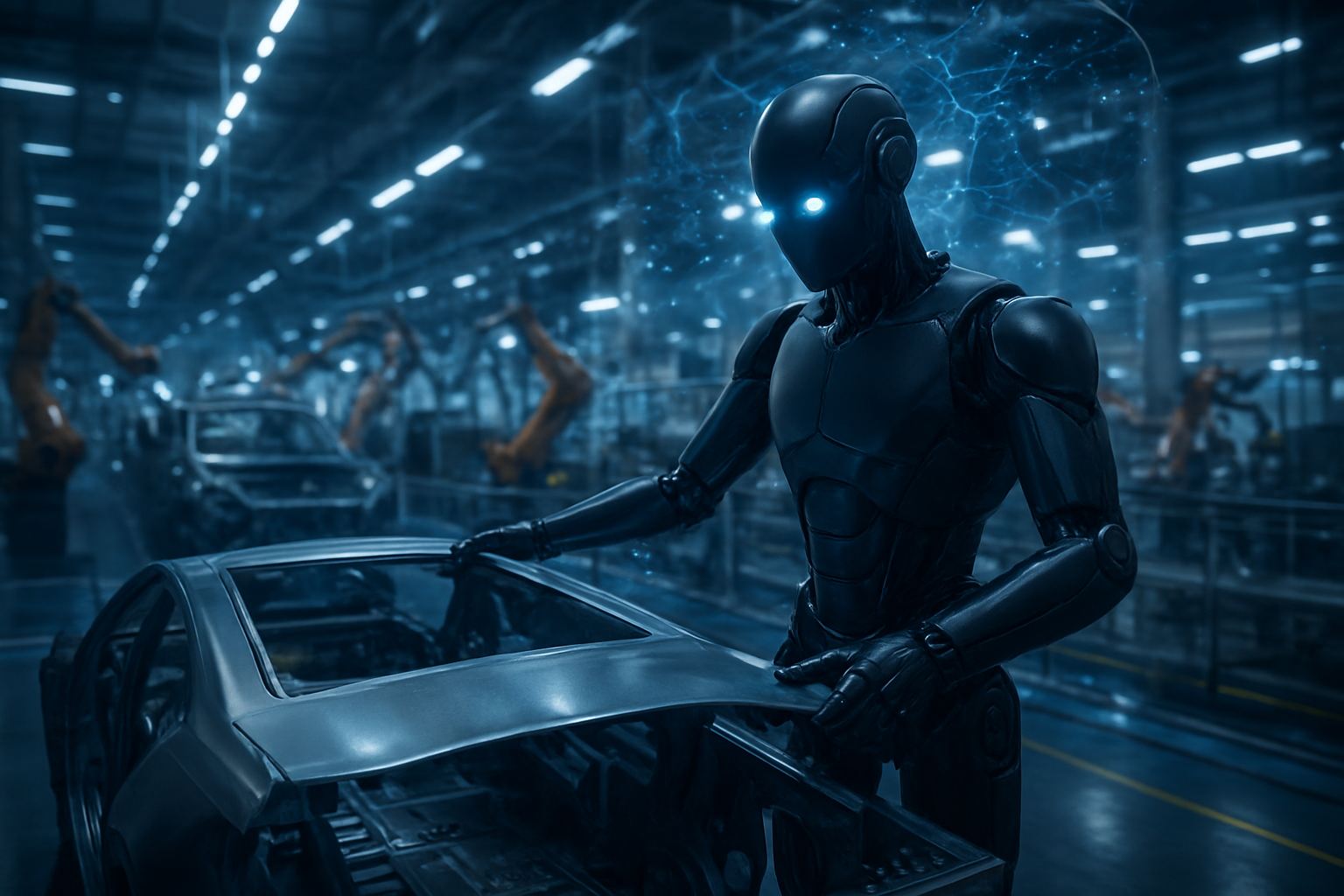
  • China’s Robotic Ascent: Humanoid Innovations Poised to Reshape Global Industries and Labor

    China’s Robotic Ascent: Humanoid Innovations Poised to Reshape Global Industries and Labor

    The global technology landscape is on the cusp of a profound transformation, spearheaded by the rapid and ambitious advancements in Chinese humanoid robotics. Once the exclusive domain of science fiction, human-like robots are now becoming a tangible reality, with China emerging as a dominant force in their development and mass production. This surge is not merely a technological marvel; it represents a strategic pivot that promises to redefine manufacturing, service industries, and the very fabric of global labor markets. With aggressive government backing and significant private investment, Chinese firms are rolling out sophisticated humanoid models at unprecedented speeds and competitive price points, signaling a new era of embodied AI.

    The immediate significance of this robotic revolution is multifaceted. On one hand, it offers compelling solutions to pressing global challenges such as labor shortages and the demands of an aging population. On the other, it ignites crucial discussions about job displacement, the future of work, and the ethical implications of increasingly autonomous machines. As China aims for mass production of humanoid robots by 2025, the world watches closely to understand the full scope of this technological leap and its impending impact on economies and societies worldwide.

    Engineering the Future: The Technical Prowess Behind China's Humanoid Surge

    China's rapid ascent in humanoid robotics is underpinned by a confluence of significant technological breakthroughs and strategic industrial initiatives. The nation has become a hotbed for innovation, with companies not only developing advanced prototypes but also moving swiftly towards mass production, a critical differentiator from many international counterparts. The government's ambitious target to achieve mass production of humanoid robots by 2025 underscores the urgency and scale of this national endeavor.

    Several key players are at the forefront of this robotic revolution. Unitree Robotics, for instance, made headlines in 2023 with the launch of its H1, an electric-driven humanoid that set a world record for speed at 3.3 meters per second and demonstrated complex maneuvers like backflips. More recently, in May, Unitree introduced the G1, an astoundingly affordable humanoid priced at approximately $13,600, significantly undercutting competitors like Tesla's (NASDAQ: TSLA) Optimus. The G1 boasts precise human-like hand movements, expanding its utility across various dexterous tasks. Another prominent firm, UBTECH Robotics (HKG: 9880), has deployed its Walker S industrial humanoid in manufacturing settings, where its 36 high-performance servo joints and advanced sensory systems have boosted factory efficiency by over 120% in partnerships with automotive and electronics giants like Zeekr and Foxconn (TPE: 2354). Fourier Intelligence also entered the fray in 2023 with its GR-1, a humanoid specifically designed for medical rehabilitation and research.

    These advancements are powered by significant strides in several core technical areas. Artificial intelligence, machine learning, and large language models (LLMs) are enhancing robots' ability to process natural language, understand context, and engage in more sophisticated, generative interactions, moving beyond mere pre-programmed actions. Hardware innovations are equally crucial, encompassing high-performance servo joints, advanced planetary roller screws for smoother motion, and multi-modal tactile sensing for improved dexterity and interaction with the physical world. China's competitive edge in hardware is particularly noteworthy, with reports indicating the capacity to produce up to 90% of humanoid robot components domestically. Furthermore, the establishment of large-scale "robot boot camps" is generating vast amounts of standardized training data, addressing a critical bottleneck in AI development and accelerating the learning capabilities of these machines. This integrated approach—combining advanced AI software with robust, domestically produced hardware—distinguishes China's strategy and positions it as a formidable leader in the global humanoid robotics race.

    Reshaping the Corporate Landscape: Implications for AI Companies and Tech Giants

    The rapid advancements in Chinese humanoid robotics are poised to profoundly impact AI companies, tech giants, and startups globally, creating both immense opportunities and significant competitive pressures. Companies directly involved in the development and manufacturing of humanoid robots, particularly those based in China, stand to benefit most immediately. Firms like Unitree Robotics, UBTECH Robotics (HKG: 9880), Fourier Intelligence, Agibot, Xpeng Robotics (NYSE: XPEV subsidiary), and MagicLab are well-positioned to capitalize on the burgeoning demand for embodied AI solutions across various sectors. Their ability to mass-produce cost-effective yet highly capable robots, such as Unitree's G1, could lead to widespread adoption and significant market share gains.

    For global tech giants and major AI labs, the rise of Chinese humanoid robots presents a dual challenge and opportunity. Companies like Google (NASDAQ: GOOGL), Amazon (NASDAQ: AMZN), and Microsoft (NASDAQ: MSFT), which are heavily invested in AI research and cloud infrastructure, will find new avenues for their AI models and services to be integrated into these physical platforms. However, they also face intensified competition, particularly from Chinese firms that are rapidly closing the gap, and in some cases, surpassing them in hardware integration and cost-efficiency. The competitive implications are significant; the ability of Chinese manufacturers to control a large portion of the humanoid robot supply chain gives them a strategic advantage in terms of rapid prototyping, iteration, and cost reduction, which international competitors may struggle to match.

    The potential for disruption to existing products and services is substantial. Industries reliant on manual labor, from manufacturing and logistics to retail and hospitality, could see widespread automation enabled by these versatile robots. This could disrupt traditional service models and create new ones centered around robotic assistance. Startups focused on specific applications for humanoid robots, such as specialized software, training, or integration services, could also thrive. Conversely, companies that fail to adapt to this new robotic paradigm, either by integrating humanoid solutions or by innovating their own embodied AI offerings, risk falling behind. The market positioning will increasingly favor those who can effectively combine advanced AI with robust, affordable, and scalable robotic hardware, a sweet spot where Chinese companies are demonstrating particular strength.

    A New Era of Embodied Intelligence: Wider Significance and Societal Impact

    The emergence of advanced Chinese humanoid robotics marks a pivotal moment in the broader AI landscape, signaling a significant acceleration towards "embodied intelligence" – where AI is seamlessly integrated into physical forms capable of interacting with the real world. This trend moves beyond purely digital AI applications, pushing the boundaries of what machines can perceive, learn, and accomplish in complex, unstructured environments. It aligns with a global shift towards creating more versatile, human-like robots that can adapt and perform a wide array of tasks, from delicate assembly in factories to empathetic assistance in healthcare.

    The impacts of this development are far-reaching, particularly for global labor markets. While humanoid robots offer a compelling solution to burgeoning labor shortages, especially in countries with aging populations and declining birth rates, they also raise significant concerns about job displacement. Research on industrial robot adoption in China has already indicated negative effects on employment and wages in traditional industries. With targets for mass production exceeding 10,000 units by 2025, the potential for a transformative, and potentially disruptive, impact on China's vast manufacturing workforce is undeniable. This necessitates proactive strategies for workforce retraining and upskilling to prepare for a future where human roles shift from manual labor to robot oversight, maintenance, and coordination.

    Beyond economics, ethical considerations also come to the forefront. The increasing autonomy and human-like appearance of these robots raise questions about human-robot interaction, accountability, and the potential for societal impacts such as job polarization and social exclusion. While the productivity gains and economic growth promised by robotic integration are substantial, the speed and scale of deployment will heavily influence the socio-economic adjustments required. Comparisons to previous AI milestones, such as the breakthroughs in large language models or computer vision, reveal a similar pattern of rapid technological advancement followed by a period of societal adaptation. However, humanoid robotics introduces a new dimension: the physical embodiment of AI, which brings with it unique challenges related to safety, regulation, and the very definition of human work.

    The Road Ahead: Anticipating Future Developments and Challenges

    The trajectory of Chinese humanoid robotics points towards a future where these machines become increasingly ubiquitous, versatile, and integrated into daily life and industry. In the near-term, we can expect to see continued refinement in dexterity, locomotion, and AI-driven decision-making. The focus will likely remain on enhancing the robots' ability to perform complex manipulation tasks, navigate dynamic environments, and interact more naturally with humans through improved perception and communication. The mass production targets set by the Chinese government suggest a rapid deployment across manufacturing, logistics, and potentially service sectors, leading to a surge in real-world operational data that will further accelerate their learning and development.

    Long-term developments are expected to push the boundaries even further. We can anticipate significant advancements in "embodied intelligence," allowing robots to learn from observation, adapt to novel situations, and even collaborate with humans in more intuitive and sophisticated ways. Potential applications on the horizon include personalized care for the elderly, highly specialized surgical assistance, domestic chores, and even exploration in hazardous or remote environments. The integration of advanced haptic feedback, emotional intelligence, and more robust general-purpose AI models will enable robots to tackle an ever-wider range of unstructured tasks. Experts predict a future where humanoid robots are not just tools but increasingly capable collaborators, enhancing human capabilities across almost every domain.

    However, significant challenges remain. Foremost among these is the need for robust safety protocols and regulatory frameworks to ensure the secure and ethical operation of increasingly autonomous physical robots. The development of truly general-purpose humanoid AI that can seamlessly adapt to diverse tasks without extensive reprogramming is also a major hurdle. Furthermore, the socio-economic implications, particularly job displacement and the need for large-scale workforce retraining, will require careful management and policy intervention. Addressing public perception and fostering trust in these advanced machines will also be crucial for widespread adoption. What experts predict next is a period of intense innovation and deployment, coupled with a growing societal dialogue on how best to harness this transformative technology for the benefit of all.

    A New Dawn for Robotics: Key Takeaways and Future Watch

    The rise of Chinese humanoid robotics represents a pivotal moment in the history of artificial intelligence and automation. The key takeaway is the unprecedented speed and scale at which China is developing and preparing to mass-produce these advanced machines. This is not merely about incremental improvements; it signifies a strategic shift towards embodied AI that promises to redefine industries, labor markets, and the very interaction between humans and technology. The combination of ambitious government backing, significant private investment, and crucial breakthroughs in both AI software and hardware manufacturing has positioned China as a global leader in this transformative field.

    This development’s significance in AI history cannot be overstated. It marks a transition from AI primarily residing in digital realms to becoming a tangible, physical presence in the world. While previous AI milestones focused on cognitive tasks like language processing or image recognition, humanoid robotics extends AI’s capabilities into the physical domain, enabling machines to perform dexterous tasks and navigate complex environments with human-like agility. This pushes the boundaries of automation beyond traditional industrial robots, opening up vast new applications in service, healthcare, and even personal assistance.

    Looking ahead, the long-term impact will be profound, necessitating a global re-evaluation of economic models, education systems, and societal structures. The dual promise of increased productivity and the challenge of potential job displacement will require careful navigation. What to watch for in the coming weeks and months includes further announcements from key Chinese robotics firms regarding production milestones and new capabilities. Additionally, observe how international competitors respond to China's aggressive push, whether through accelerated R&D, strategic partnerships, or policy initiatives. The regulatory landscape surrounding humanoid robots, particularly concerning safety, ethics, and data privacy, will also be a critical area of development. The era of embodied intelligence is here, and its unfolding narrative will undoubtedly shape the 21st century.

    This content is intended for informational purposes only and represents analysis of current AI developments.
    TokenRing AI delivers enterprise-grade solutions for multi-agent AI workflow orchestration, AI-powered development tools, and seamless remote collaboration platforms.
    For more information, visit https://www.tokenring.ai/.