Tag: Hyundai

  • Industrial Evolution: Boston Dynamics’ Electric Atlas Reports for Duty at Hyundai’s Georgia Metaplant

    Industrial Evolution: Boston Dynamics’ Electric Atlas Reports for Duty at Hyundai’s Georgia Metaplant

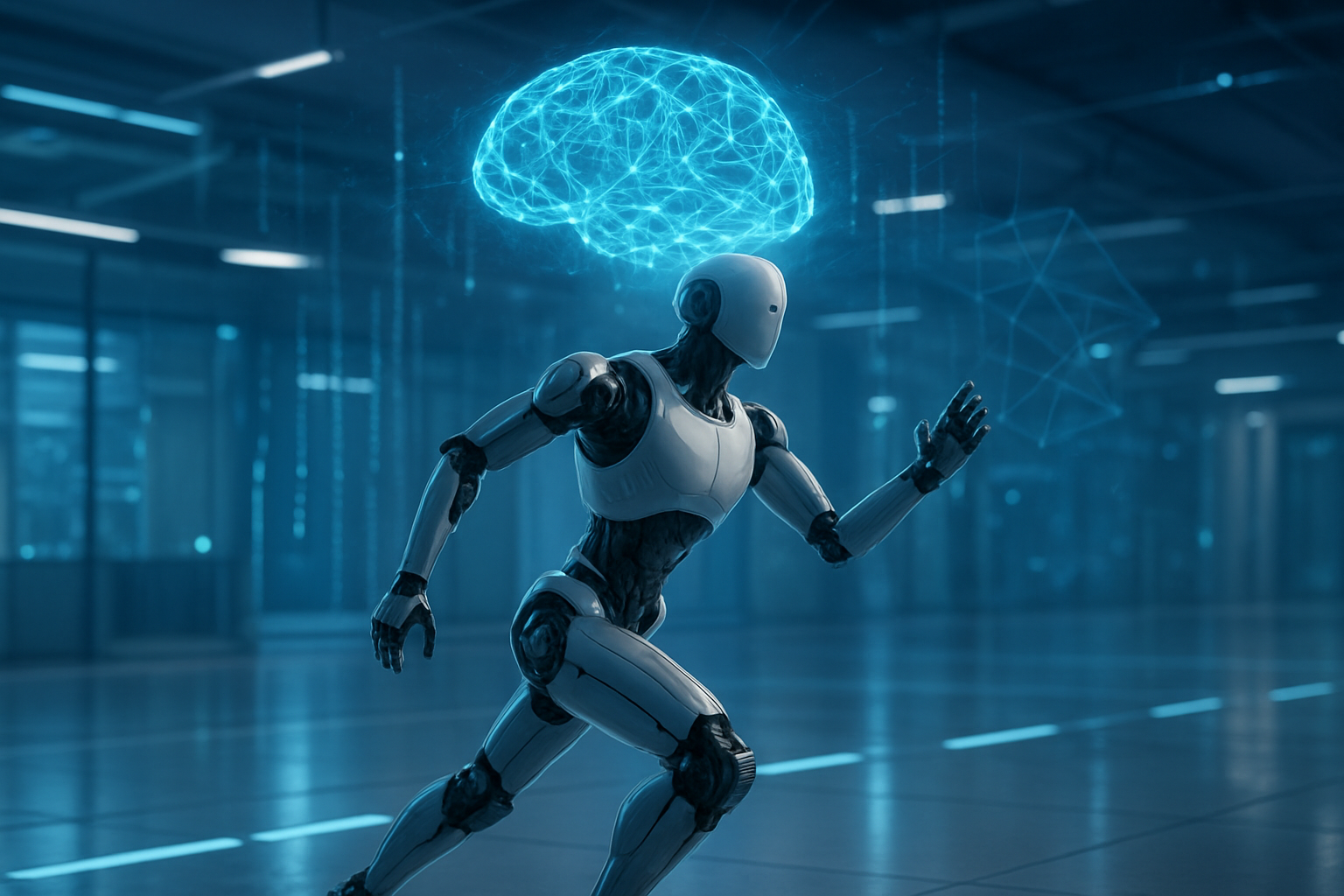
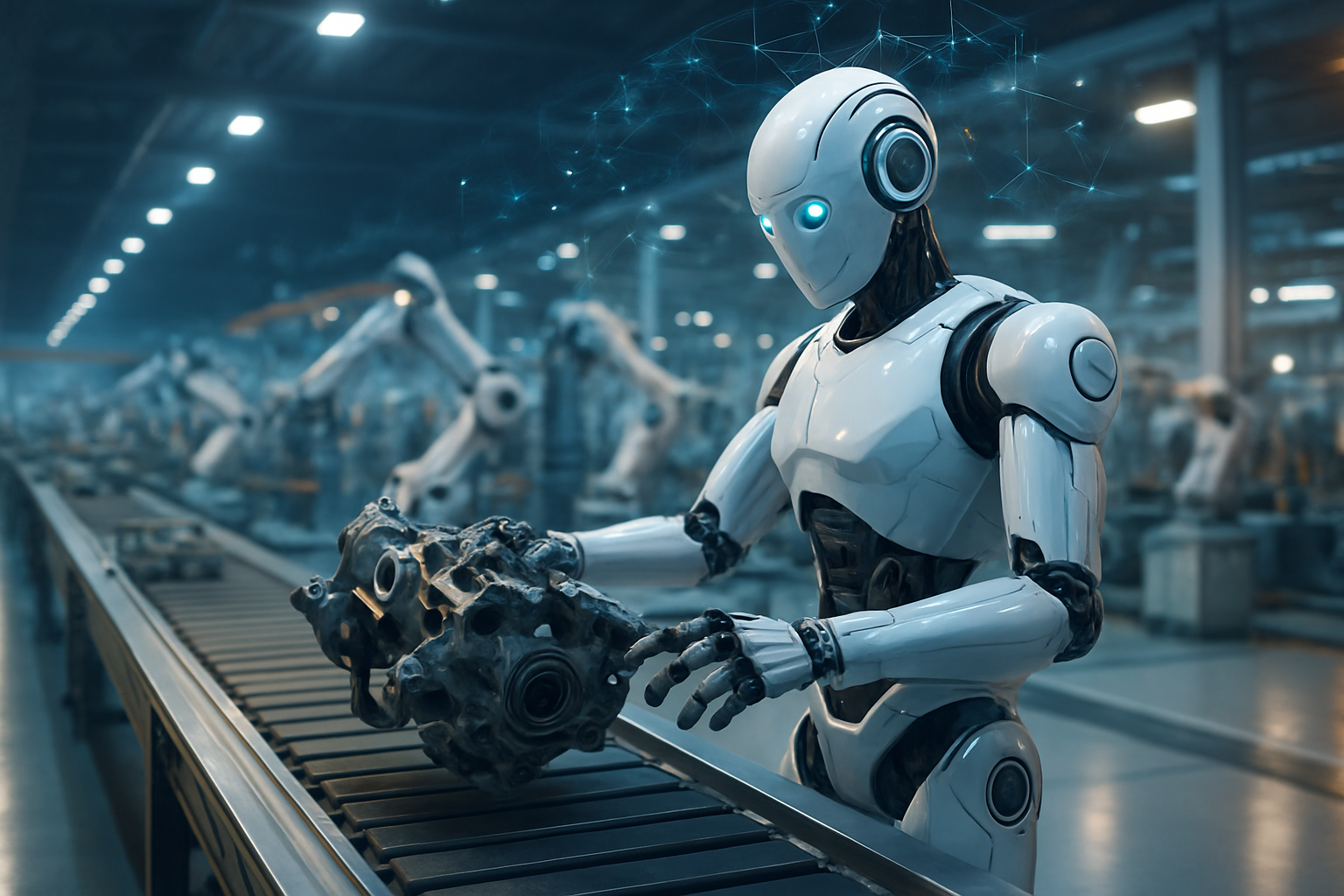
    In a landmark moment for the commercialization of humanoid robotics, Boston Dynamics has officially moved its all-electric Atlas robot from the laboratory to the factory floor. As of January 2026, the company—wholly owned by the Hyundai Motor Company (KRX: 005380)—has begun the industrial deployment of its next-generation humanoid at the Hyundai Motor Group Metaplant America (HMGMA) in Savannah, Georgia. This shift marks the transition of Atlas from a viral research sensation to a functional industrial asset, specialized for heavy lifting and autonomous parts sequencing within one of the world's most advanced automotive manufacturing hubs.

    The deployment centers on the "Software-Defined Factory" (SDF) philosophy, where hardware and software are seamlessly integrated to allow for rapid iteration and real-time optimization. At the HMGMA, Atlas is no longer performing the backflips that made its hydraulic predecessor famous; instead, it is tackling the "dull, dirty, and dangerous" tasks of a live production environment. By automating the movement of heavy components and organizing parts for human assembly lines, Hyundai aims to set a new global standard for the "Metaplant" of the future, leveraging what experts are calling "Physical AI."

    Precision Power: The Technical Architecture of the Electric Atlas

    The all-electric Atlas represents a radical departure from the hydraulic architecture that defined the platform for over a decade. While the previous model was a marvel of power density, its reliance on high-pressure pumps and hoses made it noisy, prone to leaks, and difficult to maintain in a sterile factory environment. The new 2026 production model utilizes custom-designed electric direct-drive actuators with a staggering torque density of 220 Nm/kg. This allows the robot to maintain a sustained payload capacity of 66 lbs (30 kg) and a burst-lift capability of up to 110 lbs (50 kg), comfortably handling the heavy engine components and battery modules typical of electric vehicle (EV) production.

    Technical specifications for the electric Atlas include 56 degrees of freedom—nearly triple that of the hydraulic version—and many of its joints are capable of full 360-degree rotation. This "superhuman" range of motion allows the robot to navigate cramped warehouse aisles by spinning its torso or limbs rather than turning its entire base, minimizing its footprint and increasing efficiency. Its perception system has been upgraded to a 360-degree sensor suite utilizing LiDAR and high-resolution cameras, processed locally by an onboard NVIDIA Corporation (NASDAQ: NVDA) Jetson Thor platform. This provides the robot with total spatial awareness, allowing it to operate safely alongside human workers without the need for safety cages.

    Initial reactions from the robotics community have been overwhelmingly positive, with researchers noting that the move to electric actuators simplifies the control stack significantly. Unlike previous approaches that required complex fluid dynamics modeling, the electric Atlas uses high-fidelity force control and tactile-sensing hands. This allows it to perform "blind" manipulations—sensing the weight and friction of an object through its fingertips—much like a human worker, which is critical for tasks like threading bolts or securing delicate wiring harnesses.

    The Humanoid Arms Race: Competitive and Strategic Implications

    The deployment at the Georgia Metaplant places Hyundai at the forefront of a burgeoning "Humanoid Arms Race," directly challenging the progress of Tesla (NASDAQ: TSLA) and its Optimus program. While Tesla has emphasized high-volume production and vertical integration, Hyundai’s strategy leverages the decades of R&D expertise from Boston Dynamics combined with one of the largest manufacturing footprints in the world. By treating the Georgia facility as a "live laboratory," Hyundai is effectively bypassing the simulation-to-reality gap that has slowed other competitors.

    This development is also a major win for the broader AI ecosystem. The electric Atlas’s "brain" is the result of collaboration between Boston Dynamics and Alphabet Inc. (NASDAQ: GOOGL) via its DeepMind unit, focusing on Large Behavior Models (LBM). These models enable the robot to handle "unstructured" environments—meaning it can figure out what to do if a parts bin is slightly out of place or if a component is dropped. This level of autonomy disrupts the traditional industrial robotics market, which has historically relied on fixed-path programming. Startups focusing on specialized robotic components, such as high-torque motors and haptic sensors, are likely to see increased investment as the demand for humanoid-scale parts scales toward mass production.

    Strategically, the HMGMA deployment serves as a blueprint for the "Robot Metaplant Application Center" (RMAC). This facility acts as a validation hub where manufacturing data is fed into Atlas’s AI models to ensure 99.9% reliability. By proving the technology in their own plants first, Hyundai and Boston Dynamics are positioning themselves to sell not just robots, but entire autonomous labor solutions to other industries, from aerospace to logistics.

    Physical AI and the Broader Landscape of Automation

    The integration of Atlas into the Georgia Metaplant is a milestone in the rise of "Physical AI"—the application of advanced machine learning to the physical world. For years, AI breakthroughs were largely confined to the digital realm, such as Large Language Models and image generation. However, the deployment of Atlas signifies that AI has matured enough to manage the complexities of gravity, friction, and multi-object interaction in real time. This move mirrors the "GPT-3 moment" for robotics, where the technology moves from an impressive curiosity to an essential tool for global industry.

    However, the shift is not without its concerns. The prospect of 30,000 humanoid units per year, as projected by Hyundai for the end of the decade, raises significant questions regarding the future of the manufacturing workforce. While Hyundai maintains that Atlas is designed to augment human labor by taking over the most strenuous tasks, labor economists warn of potential displacement in traditional assembly roles. The broader significance lies in how society will adapt to a world where "general-purpose" robots can be retrained for new tasks overnight simply by downloading a new software update, much like a smartphone app.

    Compared to previous milestones, such as the first deployment of UNIMATE in the 1960s, the Atlas rollout is uniquely collaborative. The use of "Digital Twins" allows engineers in South Korea to simulate tasks in a virtual environment before "pushing" the code to robots in Georgia. This global, cloud-based approach to labor is a fundamental shift in how manufacturing is conceptualized, turning a physical factory into a programmable asset.

    The Road Ahead: From Parts Sequencing to Full Assembly

    In the near term, we can expect the fleet of Atlas robots at the HMGMA to expand from a handful of pilot units to a full-scale workforce. The immediate focus remains on parts sequencing and material handling, but the roadmap for 2027 and 2028 includes more complex assembly tasks. These will include the installation of interior trim and the routing of EV cooling systems—tasks that require the high dexterity and fine motor skills that Boston Dynamics is currently refining in the RMAC.

    Looking further ahead, the goal is for Atlas to reach a state of "unsupervised autonomy," where it can self-diagnose mechanical issues and navigate to autonomous battery-swapping stations without human intervention. The challenges remaining are significant, particularly in the realm of long-term durability and the energy density of batteries required for a full 8-hour shift of heavy lifting. However, experts predict that as the "Software-Defined Factory" matures, the hardware will become increasingly modular, allowing for "hot-swapping" of limbs or sensors in minutes rather than hours.

    A New Chapter in Robotics History

    The deployment of the all-electric Atlas at Hyundai’s Georgia Metaplant is more than just a corporate milestone; it is a signal that the era of the general-purpose humanoid has arrived. By moving beyond the hydraulic prototypes of the past and embracing a software-first, all-electric architecture, Boston Dynamics and Hyundai have successfully bridged the gap between a high-tech demo and an industrial workhorse.

    The coming months will be critical as the HMGMA scales its production of EVs and its integration of robotic labor. Observers should watch for the reliability metrics coming out of the Savannah facility and the potential for Boston Dynamics to announce third-party pilot programs with other industrial giants. While the backflips may be over, the real work for Atlas—and the future of the global manufacturing sector—has only just begun.


    This content is intended for informational purposes only and represents analysis of current AI developments.

    TokenRing AI delivers enterprise-grade solutions for multi-agent AI workflow orchestration, AI-powered development tools, and seamless remote collaboration platforms.
    For more information, visit https://www.tokenring.ai/.
  • The Factory Floor Finds Its Feet: Hyundai Deploys Boston Dynamics’ Humanoid Atlas for Real-World Logistics

    The Factory Floor Finds Its Feet: Hyundai Deploys Boston Dynamics’ Humanoid Atlas for Real-World Logistics

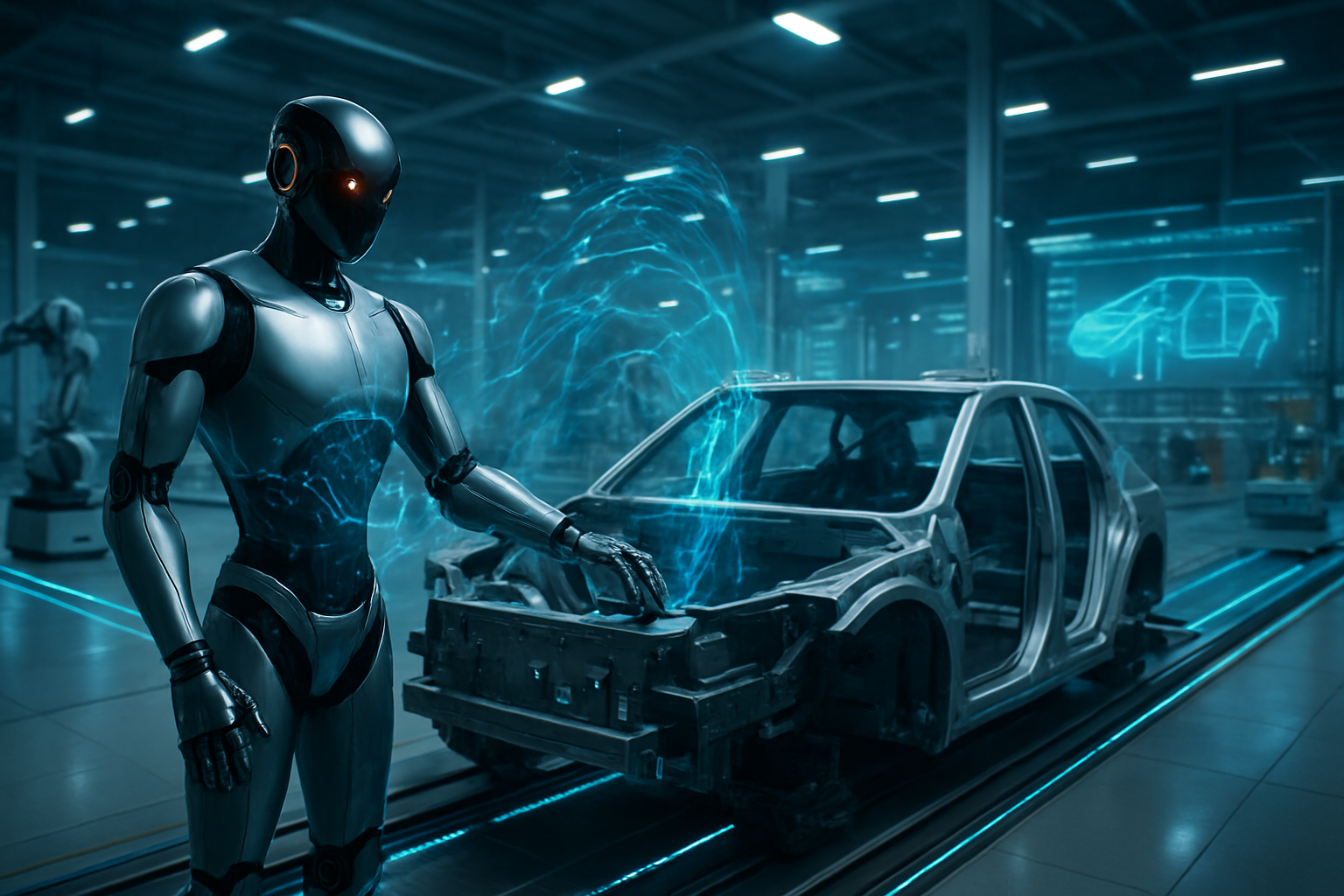
    The era of the "unbound" factory has officially arrived. In a landmark shift for the automotive industry, Hyundai Motor Company (KRX: 005380) has successfully transitioned Boston Dynamics’ all-electric Atlas humanoid robot from the laboratory to the production floor. As of January 19, 2026, fleets of these sophisticated machines have begun active field operations at the Hyundai Motor Group Metaplant America (HMGMA) in Georgia, marking the first time general-purpose humanoid robots have been integrated into a high-volume manufacturing environment for complex logistics and material handling.

    This development represents a critical pivot point in industrial automation. Unlike the stationary robotic arms that have defined car manufacturing for decades, the electric Atlas units are operating autonomously in "fenceless" environments alongside human workers. By handling the "dull, dirty, and dangerous" tasks—specifically the intricate sequencing of parts for electric vehicle (EV) assembly—Hyundai is betting that humanoid agility will be the key to unlocking the next level of factory efficiency and flexibility in an increasingly competitive global market.

    The Technical Evolution: From Backflips to Battery Swaps

    The version of Atlas currently walking the halls of the Georgia Metaplant is a far cry from the hydraulic prototypes that became internet sensations for their parkour abilities. Debuted in its "production-ready" form at CES 2026 earlier this month, the all-electric Atlas is built specifically for the 24/7 rigors of industrial work. The most striking technical advancement is the robot’s "superhuman" range of motion. Eschewing the limitations of human anatomy, Atlas features 360-degree rotating joints in its waist, torso, and limbs. This allows the robot to pick up a component from behind its "back" and place it in front of itself without ever moving its feet, a capability that significantly reduces cycle times in the cramped quarters of an assembly cell.

    Equipped with human-scale hands featuring advanced tactile sensing, Atlas can manipulate everything from delicate sun visors to heavy roof-rack components weighing up to 110 pounds (50 kg). The integration of Alphabet Inc. (NASDAQ: GOOGL) subsidiary Google DeepMind's Gemini Robotics models provides the robot with "semantic reasoning." This allows the machine to interpret its environment dynamically; for instance, if a part is slightly out of place or dropped, the robot can autonomously determine a recovery strategy without requiring a human operator to reset its code. Furthermore, the robot’s operational uptime is managed via a proprietary three-minute autonomous battery swap system, ensuring that the fleet remains active across multiple shifts without the long charging pauses that plague traditional mobile robots.

    A Competitive Shockwave Across the Tech Landscape

    The successful deployment of Atlas has immediate implications for the broader technology and robotics sectors. While Tesla, Inc. (NASDAQ: TSLA) has been vocal about its Optimus program, Hyundai’s move to place Atlas in a functional, revenue-generating role gives it a significant "first-mover" advantage in the embodied AI race. By utilizing its own manufacturing plants as a "living laboratory," Hyundai is creating a vertically integrated feedback loop that few other companies can match. This strategic positioning allows them to refine the hardware and software simultaneously, potentially turning Boston Dynamics into a major provider of "Robotics-as-a-Service" (RaaS) for other industries by 2028.

    For major AI labs, this integration underscores the shift from digital-only models to "Embodied AI." The partnership with Google DeepMind signals a new competitive front where the value of an AI model is measured by its ability to interact with the physical world. Startups in the humanoid space, such as Figure and Apptronik, now find themselves chasing a production-grade benchmark. The pressure is mounting for these players to move beyond pilot programs and demonstrate similar reliability in harsh, real-world industrial environments where dust, varying temperatures (Atlas is IP67-rated), and human safety are paramount.

    The "ChatGPT Moment" for Physical Labor

    Industry analysts are calling this the "watershed moment" for robotics—the physical equivalent of the 2022 explosion of Large Language Models. This integration fits into a broader trend toward the "Software-Defined Factory" (SDF), where the physical layout of a plant is no longer fixed but can be reconfigured via code and versatile robotic labor. By utilizing "Digital Twin" technology, Hyundai engineers in South Korea can simulate new tasks for an Atlas unit in a virtual environment before pushing the update to a robot in Georgia, effectively treating physical labor as a programmable asset.

    However, the transition is not without its complexities. The broader significance of this milestone brings renewed focus to the socioeconomic impacts of automation. While Hyundai emphasizes that Atlas is filling labor shortages and taking over high-risk roles, the displacement of entry-level logistics workers remains a point of intense debate. This milestone serves as a proof of concept that humanoid robots are no longer high-tech curiosities but are becoming essential infrastructure, sparking a global conversation about the future of the human workforce in an automated world.

    The Road Toward 30,000 Humanoids

    In the near term, Hyundai and Boston Dynamics plan to scale the Atlas fleet to nearly 30,000 units by 2028. The immediate next steps involve expanding the robot's repertoire from simple part sequencing to more complex component assembly, such as installing interior trim and wiring harnesses—tasks that have historically required the unique dexterity of human fingers. Experts predict that as the "Robot Metaplant Application Center" (RMAC) continues to refine the AI training process, the cost of these units will drop, making them viable for smaller-scale manufacturing and third-party logistics (3PL) providers.

    The long-term vision extends far beyond the factory floor. The data gathered from the Metaplants will likely inform the development of robots for elder care, disaster response, and last-mile delivery. The primary challenge remaining is the perfection of "edge cases"—unpredictable human behavior or rare environmental anomalies—that still require human intervention. As the AI models powering these robots move from "reasoning" to "intuition," the boundary between what a human can do and what a robot can do on a logistics floor will continue to blur.

    Conclusion: A New Blueprint for Industrialization

    The integration of Boston Dynamics' Atlas into Hyundai's manufacturing ecosystem is more than just a corporate milestone; it is a preview of the 21st-century economy. By successfully merging advanced bipedal hardware with cutting-edge foundation models, Hyundai has set a new standard for what is possible in industrial automation. The key takeaway from this January 2026 deployment is that the "humanoid" form factor is proving its worth not because it looks like us, but because it can navigate the world designed for us.

    In the coming weeks and months, the industry will be watching for performance metrics regarding "Mean Time Between Failures" (MTBF) and the actual productivity gains realized at the Georgia Metaplant. As other automotive giants scramble to respond, the "Global Innovation Triangle" of Singapore, Seoul, and Savannah has established itself as the new epicenter of the robotic revolution. For now, the sound of motorized joints and the soft whir of LIDAR sensors are becoming as common as the hum of the assembly line, signaling a future where the machines aren't just building the cars—they're running the show.


    This content is intended for informational purposes only and represents analysis of current AI developments.

    TokenRing AI delivers enterprise-grade solutions for multi-agent AI workflow orchestration, AI-powered development tools, and seamless remote collaboration platforms.
    For more information, visit https://www.tokenring.ai/.
  • Beyond the Lab: Boston Dynamics’ Electric Atlas Begins Autonomous Shift at Hyundai’s Georgia Metaplant

    Beyond the Lab: Boston Dynamics’ Electric Atlas Begins Autonomous Shift at Hyundai’s Georgia Metaplant

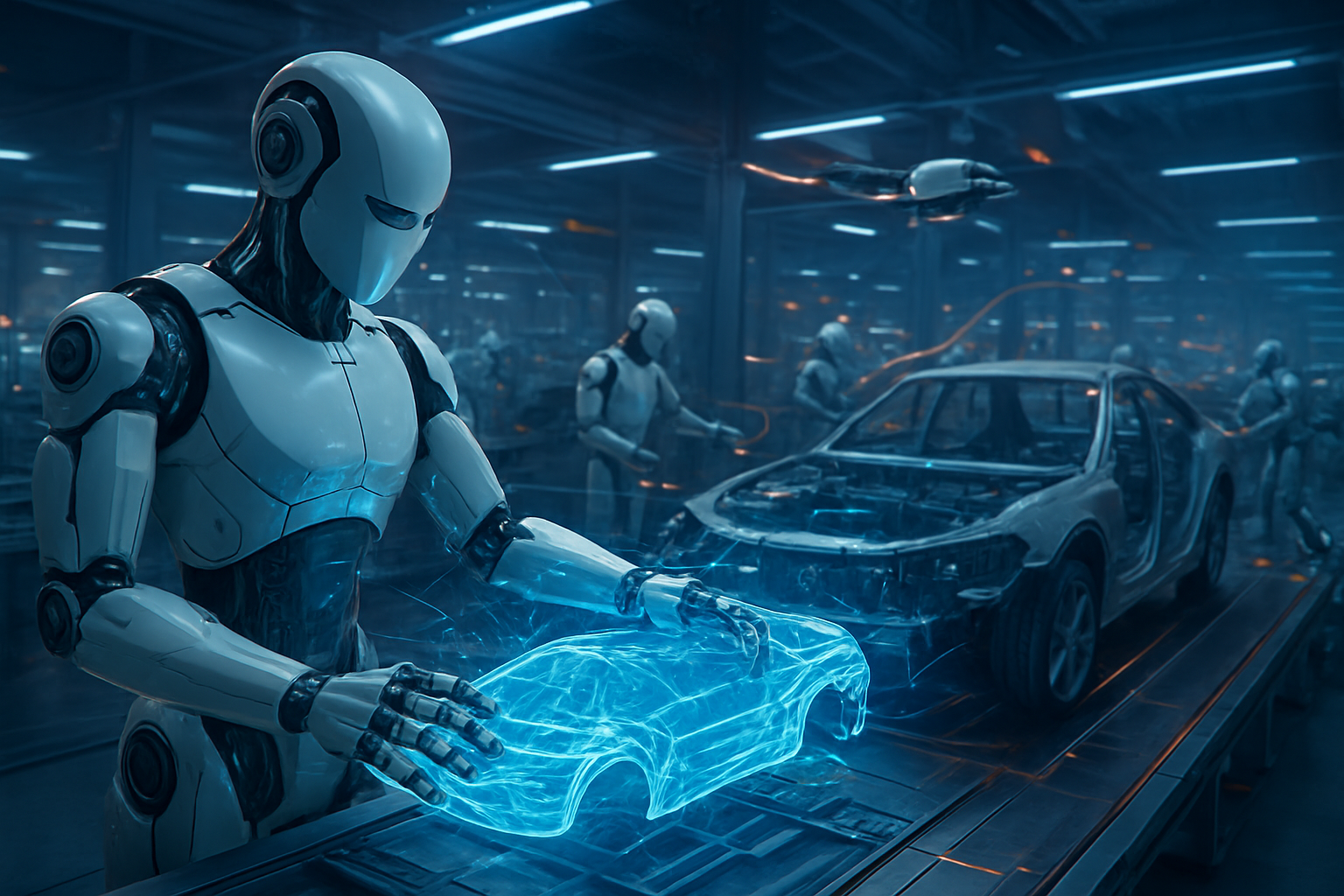
    In a move that signals the definitive end of the "viral video" era and the beginning of the industrial humanoid age, Boston Dynamics has officially transitioned its all-electric Atlas robot from the laboratory to the factory floor. As of January 2026, a fleet of the newly unveiled "product-ready" Atlas units has commenced rigorous field tests at the Hyundai Motor Group Metaplant America (HMGMA) (KRX: 005380) in Ellabell, Georgia. This deployment represents one of the first instances of a humanoid robot performing fully autonomous parts sequencing and heavy-lifting tasks in a live automotive manufacturing environment.

    The transition to the Georgia Metaplant is not merely a pilot program; it is the cornerstone of Hyundai’s vision for a "software-defined factory." By integrating Atlas into the $7.6 billion EV and battery facility, Hyundai and Boston Dynamics are attempting to prove that humanoid robots can move beyond scripted acrobatics to handle the unpredictable, high-stakes labor of modern manufacturing. The immediate significance lies in the robot's ability to operate in "fenceless" environments, working alongside human technicians and traditional automation to bridge the gap between fixed-station robotics and manual labor.

    The Technical Evolution: From Hydraulics to High-Torque Electric Precision

    The 2026 iteration of the electric Atlas, colloquially known within the industry as the "Product Version," is a radical departure from its hydraulic predecessor. Standing at 1.9 meters and weighing 90 kilograms, the robot features a distinctive "baby blue" protective chassis and a ring-lit sensor head designed for 360-degree perception. Unlike human-constrained designs, this Atlas utilizes specialized high-torque actuators and 56 degrees of freedom, including limbs and a torso capable of rotating a full 360 degrees. This "superhuman" range of motion allows the robot to orient its body toward a task without moving its feet, significantly reducing its floor footprint and increasing efficiency in the tight corridors of the Metaplant’s warehouse.

    Technical specifications of the deployed units include the integration of the NVIDIA (NASDAQ: NVDA) Jetson Thor compute platform, based on the Blackwell architecture, which provides the massive localized processing power required for real-time spatial AI. For energy management, the electric Atlas has solved the "runtime hurdle" that plagued earlier prototypes. It now features an autonomous dual-battery swapping system, allowing the robot to navigate to a charging station, swap its own depleted battery for a fresh one in under three minutes, and return to work—achieving a near-continuous operational cycle. Initial reactions from the AI research community have been overwhelmingly positive, with experts noting that the robot’s "fenceless" safety rating (IP67 water and dust resistance) and its use of Google DeepMind’s Gemini Robotics models for semantic reasoning represent a massive leap in multi-modal AI integration.

    Market Implications: The Humanoid Arms Race

    The deployment at HMGMA places Hyundai and Boston Dynamics in a direct technological arms race with other tech titans. Tesla (NASDAQ: TSLA) has been aggressively testing its Optimus Gen 3 robots within its own Gigafactories, focusing on high-volume production and fine-motor tasks like battery cell manipulation. Meanwhile, startups like Figure AI—backed by Microsoft (NASDAQ: MSFT) and OpenAI—have demonstrated significant staying power with their recent long-term deployment at BMW (OTC: BMWYY) facilities. While Tesla’s Optimus aims for a lower price point and mass consumer availability, the Boston Dynamics-Hyundai partnership is positioning Atlas as the "premium" industrial workhorse, capable of handling heavier payloads and more rugged environmental conditions.

    For the broader robotics industry, this milestone validates the "Data Factory" business model. To support the Georgia deployment, Hyundai has opened the Robot Metaplant Application Center (RMAC), a facility dedicated to "digital twin" simulations where Atlas robots are trained on virtual versions of the Metaplant floor before ever taking a physical step. This strategic advantage allows for rapid software updates and edge-case troubleshooting without interrupting actual vehicle production. This move essentially disrupts the traditional industrial robotics market, which has historically relied on stationary, single-purpose arms, by offering a versatile asset that can be repurposed across different plant sections as manufacturing needs evolve.

    Societal and Global Significance: The End of Labor as We Know It?

    The wider significance of the Atlas field tests extends into the global labor landscape and the future of human-robot collaboration. As industrialized nations face worsening labor shortages in manufacturing and logistics, the successful integration of humanoid labor at HMGMA serves as a proof-of-concept for the entire industrial sector. This isn't just about replacing human workers; it's about shifting the human role from "manual mover" to "robot fleet manager." However, this shift does not come without concerns. Labor unions and economic analysts are closely watching the Georgia tests, raising questions about the long-term displacement of entry-level manufacturing roles and the necessity of new regulatory frameworks for autonomous heavy machinery.

    In terms of the broader AI landscape, this deployment mirrors the "ChatGPT moment" for physical AI. Just as large language models moved from research papers to everyday tools, the electric Atlas represents the moment humanoid robotics moved from controlled laboratory demos to the messy, unpredictable reality of a 24/7 production line. Compared to previous breakthroughs like the first backflip of the hydraulic Atlas in 2017, the current field tests are less "spectacular" to the casual observer but far more consequential for the global economy, as they demonstrate reliability, durability, and ROI—the three pillars of industrial technology.

    The Future Roadmap: Scaling to 30,000 Units

    Looking ahead, the road for Atlas at the Georgia Metaplant is structured in multi-year phases. Near-term developments in 2026 will focus on "robot-only" shifts in high-hazard areas, such as areas with high temperatures or volatile chemical exposure, where human presence is currently limited. By 2028, Hyundai plans to transition from "sequencing" (moving parts) to "assembly," where Atlas units will use more advanced end-effectors to install components like trim pieces or weather stripping. Experts predict that the next major challenge will be "fleet-wide emergent behavior"—the ability for dozens of Atlas units to coordinate their movements and share environmental data in real-time without centralized control.

    Furthermore, the long-term applications of the Atlas platform are expected to leak into other sectors. Once the "ruggedized" industrial version is perfected, a "service" variant of Atlas could likely emerge for disaster response, nuclear decommissioning, or even large-scale construction. The primary hurdle remains the cost-benefit ratio; while the technical capabilities are proven, the industry is now waiting to see if the cost of maintaining a humanoid fleet can fall below the cost of traditional automation or human labor. Predicative maintenance AI will be the next major software update, allowing Atlas to self-diagnose mechanical wear before a failure occurs on the production line.

    A New Chapter in Industrial Robotics

    In summary, the arrival of the electric Atlas at the Hyundai Metaplant in Georgia marks a watershed moment for the 21st century. It represents the culmination of decades of research into balance, perception, and power density, finally manifesting as a viable tool for global commerce. The key takeaways from this deployment are clear: the hardware is finally robust enough for the "real world," the AI is finally smart enough to handle "fenceless" environments, and the economic incentive for humanoid labor is no longer a futuristic theory.

    As we move through 2026, the industry will be watching the HMGMA's throughput metrics and safety logs with intense scrutiny. The success of these field tests will likely determine the speed at which other automotive giants and logistics firms adopt humanoid solutions. For now, the sight of a faceless, 360-degree rotating robot autonomously sorting car parts in the Georgia heat is no longer science fiction—it is the new standard of the American factory floor.


    This content is intended for informational purposes only and represents analysis of current AI developments.

    TokenRing AI delivers enterprise-grade solutions for multi-agent AI workflow orchestration, AI-powered development tools, and seamless remote collaboration platforms.
    For more information, visit https://www.tokenring.ai/.
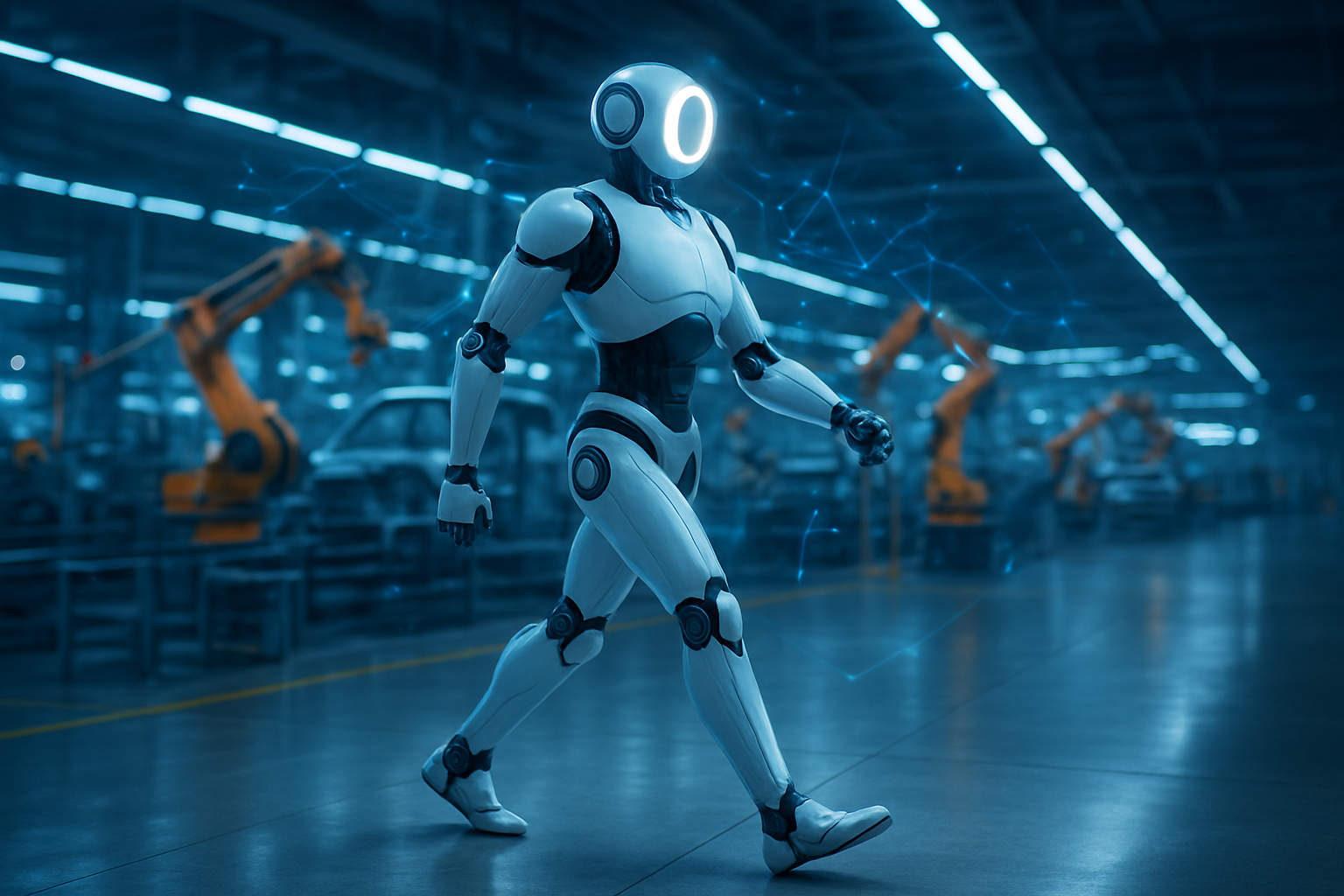
  • The Robot That Thinks: Google DeepMind and Boston Dynamics Unveil Gemini 3-Powered Atlas

    The Robot That Thinks: Google DeepMind and Boston Dynamics Unveil Gemini 3-Powered Atlas

    In a move that marks a definitive turning point for the field of embodied artificial intelligence, Google DeepMind and Boston Dynamics have officially announced the full-scale integration of the Gemini 3 foundation model into the all-electric Atlas humanoid robot. Unveiled this week at CES 2026, the collaboration represents a fusion of the world’s most advanced "brain"—a multimodal, trillion-parameter reasoning engine—with the world’s most capable "body." This integration effectively ends the era of pre-programmed robotic routines, replacing them with a system capable of understanding complex verbal instructions and navigating unpredictable human environments in real-time.

    The significance of this announcement cannot be overstated. For decades, humanoid robots were limited by their inability to reason about the physical world; they could perform backflips in controlled settings but struggled to identify a specific tool in a cluttered workshop. By embedding Gemini 3 directly into the Atlas hardware, Alphabet Inc. (NASDAQ: GOOGL) and Boston Dynamics, a subsidiary of Hyundai Motor Company (OTCMKTS: HYMTF), have created a machine that doesn't just move—it perceives, plans, and adapts. This "brain-body" synthesis allows the 2026 Atlas to function as an autonomous agent capable of high-level cognitive tasks, potentially disrupting industries ranging from automotive manufacturing to logistics and disaster response.

    Embodied Reasoning: The Technical Architecture of Gemini-Atlas

    At the heart of this breakthrough is the Gemini 3 architecture, released by Google DeepMind in late 2025. Unlike its predecessors, Gemini 3 utilizes a Sparse Mixture-of-Experts (MoE) design optimized for robotics, featuring a massive 1-million-token context window. This allows the robot to "remember" the entire layout of a factory floor or a multi-step assembly process without losing focus. The model’s "Deep Think Mode" provides a reasoning layer where the robot can pause for milliseconds to simulate various physical outcomes before committing to a movement. This is powered by the onboard NVIDIA Corporation (NASDAQ: NVDA) Jetson Thor module, which provides over 2,000 TFLOPS of AI performance, allowing the robot to process real-time video, audio, and tactile sensor data simultaneously.

    The physical hardware of the electric Atlas has been equally transformed. The 2026 production model features 56 active joints, many of which offer 360-degree rotation, exceeding the range of motion of any human. To bridge the gap between high-level AI reasoning and low-level motor control, DeepMind developed a proprietary "Action Decoder" running at 50Hz. This acts as a digital cerebellum, translating Gemini 3’s abstract goals—such as "pick up the fragile glass"—into precise torque commands for Atlas’s electric actuators. This architecture solves the latency issues that plagued previous humanoid attempts, ensuring that the robot can react to a falling object or a human walking into its path within 20 milliseconds.

    Initial reactions from the AI research community have been overwhelmingly positive. Dr. Aris Xanthos, a leading robotics researcher, noted that the ability of Atlas to understand open-ended verbal commands like "Clean up the spill and find a way to warn others" is a "GPT-3 moment for robotics." Unlike previous systems that required thousands of hours of reinforcement learning for a single task, the Gemini-Atlas system can learn new industrial workflows with as few as 50 human demonstrations. This "few-shot" learning capability is expected to drastically reduce the time and cost of deploying humanoid fleets in dynamic environments.

    A New Power Dynamic in the AI and Robotics Industry

    The collaboration places Alphabet Inc. and Hyundai Motor Company in a dominant position within the burgeoning humanoid market, creating a formidable challenge for competitors. Tesla, Inc. (NASDAQ: TSLA), which has been aggressively developing its Optimus robot, now faces a rival that possesses a significantly more mature software stack. While Optimus has made strides in mechanical design, the integration of Gemini 3 gives Atlas a superior "world model" and linguistic understanding that Tesla’s current FSD-based (Full Self-Driving) architecture may struggle to match in the near term.

    Furthermore, this partnership signals a shift in how AI companies approach the market. Rather than competing solely on chatbots or digital assistants, tech giants are now racing to give their AI a physical presence. Startups like Figure AI and Agility Robotics, while innovative, may find it difficult to compete with the combined R&D budgets and data moats of Google and Boston Dynamics. The strategic advantage here lies in the data loop: every hour Atlas spends on a factory floor provides multimodal data that further trains Gemini 3, creating a self-reinforcing cycle of improvement that is difficult for smaller players to replicate.

    The market positioning is clear: Hyundai intends to use the Gemini-powered Atlas to fully automate its "Metaplants," starting with the RMAC facility in early 2026. This move is expected to drive down manufacturing costs and set a new standard for industrial efficiency. For Alphabet, the integration serves as a premier showcase for Gemini 3’s versatility, proving that their foundation models are not just for search engines and coding, but are the essential operating systems for the physical world.

    The Societal Impact of the "Robotic Awakening"

    The broader significance of the Gemini-Atlas integration lies in its potential to redefine the human-robot relationship. We are moving away from "automation," where robots perform repetitive tasks in cages, toward "collaboration," where robots work alongside humans as intelligent peers. The ability of Atlas to navigate complex environments in real-time means it can be deployed in "fenceless" environments—hospitals, construction sites, and eventually, retail spaces. This transition marks the arrival of the "General Purpose Robot," a concept that has been the holy grail of science fiction for nearly a century.

    However, this breakthrough also brings significant concerns to the forefront. The prospect of robots capable of understanding and executing complex verbal commands raises questions about safety and job displacement. While the 2026 Atlas includes "Safety-First" protocols—hardcoded overrides that prevent the robot from exerting force near human vitals—the ethical implications of autonomous decision-making in high-stakes environments remain a topic of intense debate. Critics argue that the rapid deployment of such capable machines could outpace our ability to regulate them, particularly regarding data privacy and the security of the "brain-body" link.

    Comparatively, this milestone is being viewed as the physical manifestation of the LLM revolution. Just as ChatGPT transformed how we interact with information, the Gemini-Atlas integration is transforming how we interact with the physical world. It represents a shift from "Narrow AI" to "Embodied General AI," where the intelligence is no longer trapped behind a screen but is capable of manipulating the environment to achieve goals. This is the first time a foundation model has been successfully used to control a high-degree-of-freedom humanoid in a non-deterministic, real-world setting.

    The Road Ahead: From Factories to Front Doors

    Looking toward the near future, the next 18 to 24 months will likely see the first large-scale deployments of Gemini-powered Atlas units across Hyundai’s global manufacturing network. Experts predict that by late 2027, the technology will have matured enough to move beyond the factory floor into more specialized sectors such as hazardous waste removal and search-and-rescue. The "Deep Think" capabilities of Gemini 3 will be particularly useful in disaster zones where the robot must navigate rubble and make split-second decisions without constant human oversight.

    Long-term, the goal remains a consumer-grade humanoid robot. While the current 2026 Atlas is priced for industrial use—estimated at $150,000 per unit—advancements in mass production and the continued optimization of the Gemini architecture could see prices drop significantly by the end of the decade. Challenges remain, particularly regarding battery life; although the 2026 model features a 4-hour swappable battery, achieving a full day of autonomous operation without intervention is still a hurdle. Furthermore, the "Action Decoder" must be refined to handle even more delicate tasks, such as elder care or food preparation, which require a level of tactile sensitivity that is still in the early stages of development.

    A Landmark Moment in the History of AI

    The integration of Gemini 3 into the Boston Dynamics Atlas is more than just a technical achievement; it is a historical landmark. It represents the successful marriage of two previously distinct fields: large-scale language modeling and high-performance robotics. By giving Atlas a "brain" capable of reasoning, Google DeepMind and Boston Dynamics have fundamentally changed the trajectory of human technology. The key takeaway from this week’s announcement is that the barrier between digital intelligence and physical action has finally been breached.

    As we move through 2026, the tech industry will be watching closely to see how the Gemini-Atlas system performs in real-world industrial settings. The success of this collaboration will likely trigger a wave of similar partnerships, as other AI labs seek to find "bodies" for their models. For now, the world has its first true glimpse of a future where robots are not just tools, but intelligent partners capable of understanding our words and navigating our world.


    This content is intended for informational purposes only and represents analysis of current AI developments.

    TokenRing AI delivers enterprise-grade solutions for multi-agent AI workflow orchestration, AI-powered development tools, and seamless remote collaboration platforms.
    For more information, visit https://www.tokenring.ai/.