Tag: Hyundai Motor Group

  • From Backflips to the Assembly Line: Boston Dynamics’ Electric Atlas Begins Industrial Deployment at Hyundai’s Georgia Mega-Plant

    From Backflips to the Assembly Line: Boston Dynamics’ Electric Atlas Begins Industrial Deployment at Hyundai’s Georgia Mega-Plant

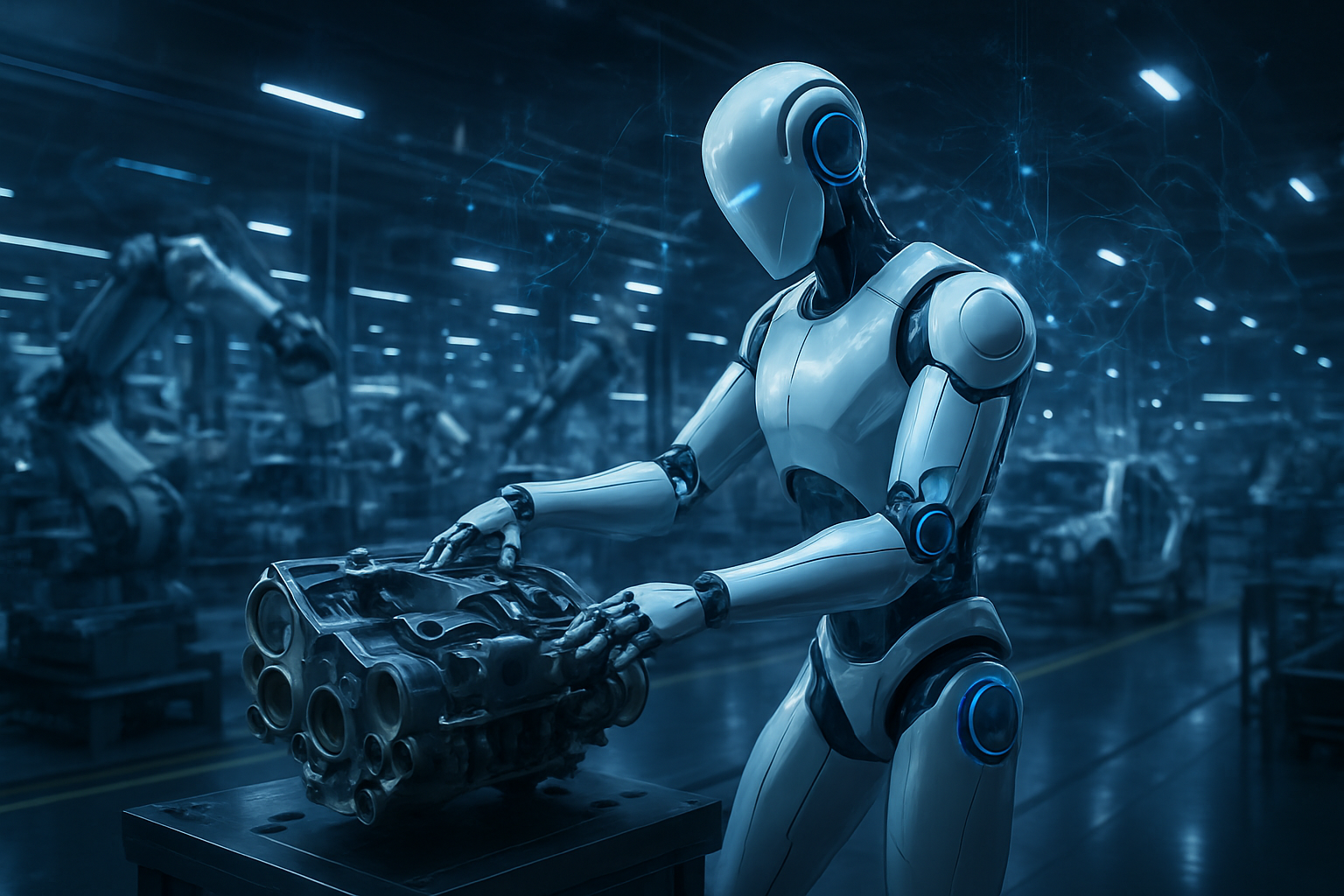
    In a milestone that signals the long-awaited transition of humanoid robotics from laboratory curiosities to industrial assets, Boston Dynamics and its parent company, Hyundai Motor Group (KRX: 005380), have officially launched field tests for the all-electric Atlas robot. This month, the robot began autonomous operations at the Hyundai Motor Group Metaplant America (HMGMA) in Ellabell, Georgia. Moving beyond the viral parkour videos of its predecessor, this new generation of Atlas is performing the "dull, dirty, and dangerous" work of a modern automotive factory, specifically tasked with sorting and sequencing heavy components in the plant’s warehouse.

    The deployment marks a pivotal moment for the robotics industry. While humanoid robots have long been promised as the future of labor, the integration of Atlas into a live manufacturing environment—operating without tethers or human remote control—demonstrates a new level of maturity in both hardware and AI orchestration. By leveraging advanced machine learning and a radically redesigned electric chassis, Atlas is now proving it can handle the physical variability of a factory floor, a feat that traditional stationary industrial robots have struggled to master.

    Engineering the Industrial Humanoid

    The technical evolution from the hydraulic Atlas to the 2026 electric production model represents a complete architectural overhaul. While the previous version relied on high-pressure hydraulics that were prone to leaks and required immense power, the new Atlas utilizes custom-designed, high-torque electric actuators. These allow for a staggering 56 degrees of freedom, including unique 360-degree rotating joints in the waist, head, and limbs. This "superhuman" range of motion enables the robot to turn in place and reach for components in cramped quarters without needing to reorient its entire body, a massive efficiency gain over human-constrained skeletal designs.

    During the ongoing Georgia field tests, Atlas has been observed autonomously sequencing automotive roof racks—a task that requires identifying specific parts, navigating a shifting warehouse floor, and placing heavy items into precise slots for the assembly line. The robot boasts a sustained payload capacity of 66 lbs (30 kg), with the ability to burst-lift up to 110 lbs (50 kg). Unlike the scripted demonstrations of the past, the current Atlas utilizes an AI "brain" powered by Nvidia (NASDAQ: NVDA) hardware and vision models developed in collaboration with Google DeepMind, a subsidiary of Alphabet Inc. (NASDAQ: GOOGL). This allows the robot to adapt to environmental changes in real-time, such as a bin being moved or a human worker crossing its path.

    Industry experts have been quick to note that this is not just a hardware test, but a trial of "embodied AI." Initial reactions from the robotics research community suggest that the most impressive feat is Atlas’s "end-to-end" learning capability. Rather than being programmed with every specific movement, the robot has been trained in simulation to understand the physics of the objects it handles. This allows it to manipulate irregular shapes and respond to slips or weight shifts with a fluidity that mirrors human reflexes, far surpassing the rigid movements seen in earlier humanoid iterations.

    Strategic Implications for the Robotics Market

    For Hyundai Motor Group, this deployment is a strategic masterstroke in its quest to build "Software-Defined Factories." By integrating Boston Dynamics’ technology directly into its $7.6 billion Georgia facility, Hyundai is positioning itself as a leader in the next generation of manufacturing. This move places immense pressure on competitors like Tesla (NASDAQ: TSLA), whose Optimus robot is also in early testing phases, and startups like Figure and Agility Robotics. Hyundai’s advantage lies in its "closed-loop" ecosystem: it owns the robot designer (Boston Dynamics), the AI infrastructure, and the massive manufacturing plants where the technology can be refined at scale.

    The competitive implications extend beyond the automotive sector. Logistics giants and electronic manufacturers are watching the Georgia tests as a bellwether for the viability of general-purpose humanoids. If Atlas can reliably sort parts at HMGMA, it threatens to disrupt the market for specialized, single-task warehouse robots. Companies that can provide a "worker" that fits into human-centric infrastructure without needing expensive facility retrofits will hold a significant strategic advantage. Market analysts suggest that Hyundai’s goal of producing 30,000 humanoid units annually by 2028 is no longer a "moonshot" but a tangible production target.

    A New Chapter in the Global AI Landscape

    The shift of Atlas to the factory floor fits into a broader global trend of "embodied AI," where the intelligence of large language models is being wedded to physical machines. We are moving away from the era of "narrow AI"—which can only do one thing well—to "general-purpose robotics." This milestone is comparable to the introduction of the first industrial robotic arm in the 1960s, but with a crucial difference: the new generation of robots can see, learn, and adapt to the world around them.

    However, the transition is not without concerns. While Hyundai emphasizes "human-centered automation"—using robots to take over ergonomically straining tasks like lifting heavy roof moldings—the long-term impact on the workforce remains a subject of intense debate. Labor advocates are monitoring the deployment closely, questioning how the "30,000 units by 2028" goal will affect the demand for entry-level industrial labor. Furthermore, as these robots become increasingly autonomous and integrated into cloud networks, cybersecurity and the potential for systemic failures in automated supply chains have become primary topics of discussion among tech policy experts.

    The Roadmap to Full Autonomy

    Looking ahead, the next 24 months will likely see Atlas expand its repertoire from simple sorting to complex component assembly. This will require even finer motor skills and more sophisticated tactile feedback in the robot's grippers. Near-term developments are expected to focus on multi-robot orchestration, where fleets of Atlas units communicate with each other and the plant's central management system to optimize the flow of materials in real-time.

    Experts predict that by the end of 2026, we will see the first "robot-only" shifts in specific high-hazard areas of the Metaplant. The ultimate challenge remains the "99.9% reliability" threshold required for full-scale production. While Atlas has shown it can perform tasks in a field test, maintaining that performance over thousands of hours without technical intervention is the final hurdle. As the hardware becomes a commodity, the real battleground will move to the software—specifically, the ability to rapidly "teach" robots new tasks using generative AI and synthetic data.

    Conclusion: From Laboratory to Industrial Reality

    The deployment of the electric Atlas at Hyundai’s Georgia plant marks a definitive end to the era of robotics-as-entertainment. We have entered the era of robotics-as-infrastructure. By taking a humanoid out of the lab and putting it into the high-stakes environment of a billion-dollar automotive factory, Boston Dynamics and Hyundai have set a new benchmark for what is possible in the field of automation.

    The key takeaway from this development is that the "brain" and the "body" of AI have finally caught up with each other. In the coming months, keep a close eye on the performance metrics coming out of HMGMA—specifically the "mean time between failures" and the speed of autonomous task acquisition. If these field tests continue to succeed, the sight of a humanoid robot walking the factory floor will soon move from a futuristic novelty to a standard feature of the global industrial landscape.


    This content is intended for informational purposes only and represents analysis of current AI developments.

    TokenRing AI delivers enterprise-grade solutions for multi-agent AI workflow orchestration, AI-powered development tools, and seamless remote collaboration platforms.
    For more information, visit https://www.tokenring.ai/.

  • Korea’s AI Ambition Ignites: NVIDIA Delivers 260,000 GPUs in Landmark Deal

    Korea’s AI Ambition Ignites: NVIDIA Delivers 260,000 GPUs in Landmark Deal

    SEOUL, South Korea – November 1, 2025 – South Korea is poised to dramatically accelerate its artificial intelligence capabilities as NVIDIA (NASDAQ: NVDA) embarks on a monumental initiative to supply over 260,000 high-performance GPUs to the nation. This landmark agreement, announced on October 31, 2025, during the Asia-Pacific Economic Cooperation (APEC) summit in Gyeongju, signifies an unprecedented investment in AI infrastructure that promises to cement Korea's position as a global AI powerhouse. The deal, estimated to be worth between $7.8 billion and $10.5 billion by 2030, is set to fundamentally reshape the technological landscape of the entire region.

    The immediate significance of this massive influx of computing power cannot be overstated. With an projected increase in AI GPU capacity from approximately 65,000 to over 300,000 units, South Korea is rapidly establishing itself as one of the world's premier AI computing hubs. This strategic move is not merely about raw processing power; it's a foundational step towards achieving "Sovereign AI," fostering national technological self-reliance, and driving an AI transformation across the nation's most vital industries.

    Unprecedented AI Infrastructure Boost: The Blackwell Era Arrives in Korea

    The core of this monumental supply chain initiative centers on NVIDIA's latest Blackwell series GPUs, representing the cutting edge of AI acceleration technology. These GPUs are designed to handle the most demanding AI workloads, from training colossal large language models (LLMs) to powering complex simulations and advanced robotics. The technical specifications of the Blackwell architecture boast significant leaps in processing power, memory bandwidth, and energy efficiency compared to previous generations, enabling faster model training, more intricate AI deployments, and a substantial reduction in operational costs for compute-intensive tasks.

    A significant portion of this allocation, 50,000 GPUs, is earmarked for the South Korean government's Ministry of Science and ICT, specifically to bolster the National AI Computing Center and other public cloud service providers. This strategic deployment aims to accelerate the development of proprietary AI foundation models tailored to Korean linguistic and cultural nuances, fostering a robust domestic AI ecosystem. This approach differs from simply relying on global AI models by enabling localized innovation and ensuring data sovereignty, a critical aspect of national technological security.

    Initial reactions from the AI research community and industry experts have been overwhelmingly positive, bordering on euphoric. Dr. Kim Min-Joon, a leading AI researcher at KAIST, remarked, "This isn't just an upgrade; it's a paradigm shift. The sheer scale of this deployment will allow our researchers and engineers to tackle problems previously deemed computationally infeasible, pushing the boundaries of what's possible in AI." The focus on establishing "AI factories" within major conglomerates also signifies a pragmatic, industry-driven approach to AI integration, moving beyond theoretical research to practical, large-scale application.

    Reshaping the AI Competitive Landscape: A Boost for Korean Titans

    This massive GPU infusion is set to profoundly impact South Korea's leading AI companies, tech giants, and burgeoning startups. The primary beneficiaries are the nation's industrial behemoths: Samsung Electronics (KRX: 005930), SK Group (KRX: 034730), Hyundai Motor Group (KRX: 005380), and Naver Cloud (KRX: 035420). Each of these conglomerates will receive substantial allocations, enabling them to establish dedicated "AI factories" and embed advanced AI capabilities deep within their operational frameworks.

    Samsung Electronics, for instance, will deploy 50,000 GPUs to integrate AI across its semiconductor manufacturing processes, leveraging digital twin technology for real-time optimization and predictive maintenance. This will not only enhance efficiency but also accelerate the development of next-generation intelligent devices, including advanced home robots. Similarly, SK Group's allocation of 50,000 GPUs will fuel the creation of Asia's first industrial AI cloud, focusing on semiconductor research, digital twin applications, and AI agent development, providing critical AI computing resources to a wider ecosystem of startups and small manufacturers.

    Hyundai Motor Group's 50,000 GPUs will accelerate AI model training and validation for advancements in manufacturing, autonomous driving, and robotics, potentially disrupting existing automotive R&D cycles and accelerating time-to-market for AI-powered vehicles. Naver Cloud's acquisition of 60,000 GPUs will significantly expand its AI infrastructure, allowing it to develop a highly specialized Korean-language large language model (LLM) and a next-generation "physical AI" platform bridging digital and physical spaces. These moves will solidify their market positioning against global competitors and provide strategic advantages in localized AI services and industrial applications.

    Broader Significance: Korea's Ascent in the Global AI Arena

    This landmark NVIDIA-Korea collaboration fits squarely into the broader global AI landscape as nations increasingly vie for technological supremacy and "AI sovereignty." The sheer scale of this investment signals South Korea's unwavering commitment to becoming a top-tier AI nation, challenging the dominance of established players like the United States and China. It represents a strategic pivot towards building robust, self-sufficient AI capabilities rather than merely being a consumer of foreign AI technologies.

    The impacts extend beyond national prestige. This initiative is expected to drive significant economic growth, foster innovation across various sectors, and create a highly skilled workforce in AI and related fields. Potential concerns, however, include the immense power consumption associated with such a large-scale AI infrastructure, necessitating significant investments in renewable energy and efficient cooling solutions. There are also ethical considerations surrounding the widespread deployment of advanced AI, which the Korean government will need to address through robust regulatory frameworks.

    Comparisons to previous AI milestones underscore the transformative nature of this deal. While breakthroughs like AlphaGo's victory over Go champions captured public imagination, this NVIDIA deal represents a foundational, infrastructural investment akin to building the highways and power grids of the AI era. It's less about a single AI achievement and more about enabling an entire nation to achieve a multitude of AI breakthroughs, positioning Korea as a critical hub in the global AI supply chain, particularly for high-bandwidth memory (HBM) which is crucial for NVIDIA's GPUs.

    The Road Ahead: AI Factories and Sovereign Innovation

    The near-term developments will focus on the rapid deployment and operationalization of these 260,000 GPUs across the various recipient organizations. We can expect to see an accelerated pace of AI model development, particularly in areas like advanced manufacturing, autonomous systems, and specialized LLMs. In the long term, these "AI factories" are anticipated to become central innovation hubs, fostering new AI-driven products, services, and entirely new industries.

    Potential applications and use cases on the horizon are vast, ranging from highly personalized healthcare solutions powered by AI diagnostics to fully autonomous smart cities managed by sophisticated AI systems. The focus on "physical AI" and digital twins suggests a future where AI seamlessly integrates with the physical world, revolutionizing everything from industrial robotics to urban planning. However, challenges remain, including the continuous need for highly skilled AI talent, ensuring data privacy and security in a hyper-connected AI ecosystem, and developing robust ethical guidelines for AI deployment.

    Experts predict that this investment will not only boost Korea's domestic AI capabilities but also attract further international collaboration and investment, solidifying its role as a key player in global AI R&D. The competitive landscape for AI hardware and software will intensify, with NVIDIA reinforcing its dominant position while simultaneously boosting its HBM suppliers in Korea. The coming years will reveal the full extent of this transformative initiative.

    A New Chapter for Korean AI: Unlocking Unprecedented Potential

    In summary, NVIDIA's delivery of 260,000 GPUs to South Korea marks a pivotal moment in the nation's technological history and a significant development in the global AI race. This massive investment in AI infrastructure, particularly the cutting-edge Blackwell series, is set to dramatically enhance Korea's computing power, accelerate the development of sovereign AI capabilities, and catalyze AI transformation across its leading industries. The establishment of "AI factories" within conglomerates like Samsung, SK, Hyundai, and Naver will drive innovation and create new economic opportunities.

    This development's significance in AI history is profound, representing a national-level commitment to building the foundational compute power necessary for the next generation of AI. It underscores the strategic importance of hardware in the AI era and positions South Korea as a critical hub for both AI development and the semiconductor supply chain.

    In the coming weeks and months, industry watchers will be closely observing the deployment progress, the initial performance benchmarks of the new AI factories, and the first wave of AI innovations emerging from this unprecedented computational boost. This initiative is not merely an upgrade; it is a declaration of intent, signaling Korea's ambition to lead the world into the future of artificial intelligence.


    This content is intended for informational purposes only and represents analysis of current AI developments.

    TokenRing AI delivers enterprise-grade solutions for multi-agent AI workflow orchestration, AI-powered development tools, and seamless remote collaboration platforms.
    For more information, visit https://www.tokenring.ai/.