Tag: India Semiconductor Mission

  • India’s Silicon Dawn: Micron and Tata Lead the Charge as India Enters the Global Semiconductor Elite

    India’s Silicon Dawn: Micron and Tata Lead the Charge as India Enters the Global Semiconductor Elite

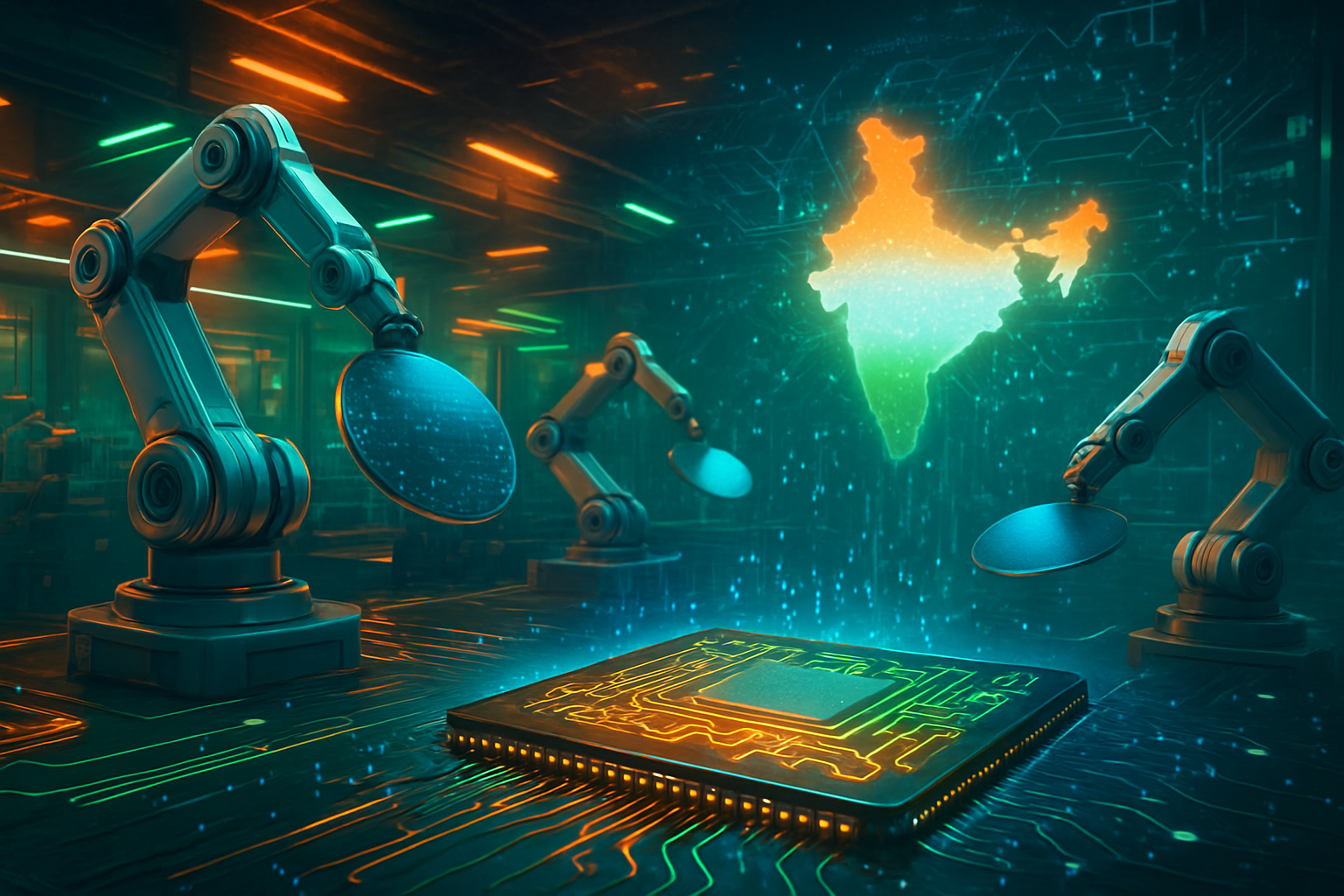
    The global semiconductor map is undergoing a seismic shift as India officially transitions from a design powerhouse to a high-volume manufacturing hub. In a landmark moment for the India Semiconductor Mission (ISM), Micron Technology, Inc. (NASDAQ: MU) is set to begin full-scale commercial production at its Sanand, Gujarat facility in the third week of February 2026. This $2.75 billion investment marks the first major global success of the Indian government’s $10 billion incentive package, signaling that the "Make in India" initiative has successfully breached the high-entry barriers of the silicon industry.

    Simultaneously, the ambitious mega-fab project by Tata Electronics, part of the multi-billion dollar Tata conglomerate (NSE: TATASTEEL), has reached a critical inflection point. As of late January 2026, the Dholera facility has commenced high-volume trial runs and process validation for 300mm wafers. These twin developments represent the first tangible outputs of a multi-year strategy to de-risk global supply chains and establish a "third pole" for semiconductor manufacturing, sitting alongside East Asia and the United States.

    Technical Milestones: From ATMP to Front-End Fabrication

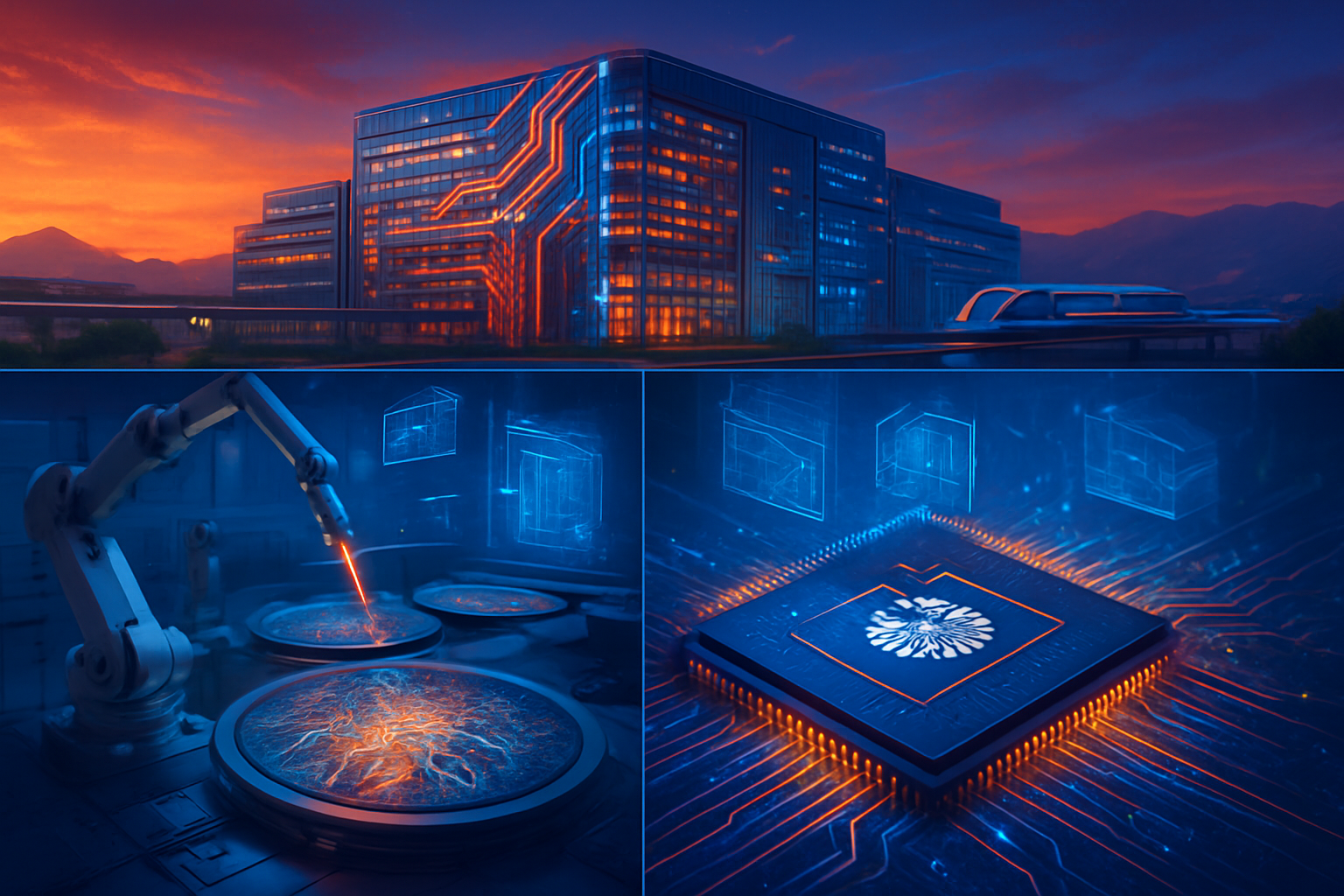
    The Micron Sanand facility is an Assembly, Test, Marking, and Packaging (ATMP) unit, a sophisticated "back-end" manufacturing site that transforms raw silicon wafers into finished memory components. Spanning over 93 acres, the facility features a massive 500,000-square-foot cleanroom. Technically, the plant is optimized for high-density DRAM and NAND flash memory chips, employing advanced modular construction techniques that allowed Micron to move from ground-breaking to commercial readiness in under 30 months. This facility is not merely a packaging plant; it is equipped with high-speed electrical testing and thermal reliability zones capable of meeting the stringent requirements of AI data centers and 5G infrastructure.

    In contrast, the Tata Electronics "Mega-Fab" in Dholera is a front-end fabrication plant, representing a deeper level of technical complexity. In partnership with Powerchip Semiconductor Manufacturing Corporation (TPE: 6770), also known as PSMC, Tata is currently running trials on technology nodes ranging from 28nm to 110nm. Utilizing state-of-the-art lithography equipment from ASML (NASDAQ: ASML), the fab is designed for a total capacity of 50,000 wafer starts per month (WSPM). This facility focuses on high-demand mature nodes, which are the backbone of the automotive, power management, and consumer electronics industries, providing a domestic alternative to the legacy chips currently imported in massive quantities.

    Industry experts have noted that the speed of execution at both Sanand and Dholera has defied historical skepticism regarding India's infrastructure. The successful deployment of 28nm pilot runs at Tata’s fab is particularly significant, as it demonstrates the ability to manage the precise environmental controls and ultra-pure water systems required for semiconductor fabrication. Initial reactions from the AI research community have been overwhelmingly positive, with many seeing these facilities as the hardware foundation for India’s "Sovereign AI" ambitions, ensuring that the country’s compute needs can be met with locally manufactured silicon.

    Reshaping the Global Supply Chain

    The operationalization of these facilities has immediate strategic implications for tech giants and startups alike. Micron (NASDAQ: MU) stands to benefit from a significantly lower cost of production and closer proximity to the burgeoning Indian electronics market, which is projected to reach $300 billion by late 2026. For major AI labs and tech companies, the Sanand plant offers a crucial diversification point for memory supply, reducing the reliance on facilities in regions prone to geopolitical tension.

    The Tata-PSMC partnership is already disrupting traditional procurement models in India. In January 2026, the Indian government announced that the Dholera fab would begin offering "domestic tape-out support" for Indian chip startups. This allows local designers to send their intellectual property (IP) to Dholera for prototyping rather than waiting months for slots at overseas foundries. This strategic advantage is expected to catalyze a wave of domestic hardware innovation, particularly in the EV and IoT sectors, where companies like Analog Devices, Inc. (NASDAQ: ADI) and Renesas Electronics Corporation (TSE: 6723) are already forming alliances with Indian entities to secure future capacity.

    Geopolitics and the Sovereign AI Landscape

    The emergence of India as a semiconductor hub fits into the broader "China Plus One" trend, where global corporations are seeking to diversify their manufacturing footprints away from China. Unlike previous failed attempts to build fabs in India during the early 2000s, the current push is backed by a robust "pari-passu" funding model, where the central government provides 50% of the project cost upfront. This fiscal commitment has turned India from a speculative market into a primary destination for semiconductor capital.

    However, the significance extends beyond economics into the realm of national security. By controlling the manufacturing of its own chips, India is building a "Sovereign AI" stack that includes both software and hardware. This mirrors the trajectory of other semiconductor milestones, such as the growth of TSMC in Taiwan, but at a speed that reflects the urgency of the current AI era. Potential concerns remain regarding the long-term sustainability of water and power resources for these massive plants, but the government’s focus on the Dholera Special Investment Region (SIR) indicates a planned, ecosystem-wide approach rather than isolated projects.

    The Future: ISM 2.0 and Advanced Nodes

    Looking ahead, the India Semiconductor Mission is already pivoting toward its next phase, dubbed ISM 2.0. This new framework, active as of early 2026, shifts focus toward "Advanced Nodes" below 28nm and the development of compound semiconductors like Silicon Carbide (SiC) and Gallium Nitride (GaN). These materials are critical for the next generation of electric vehicles and 6G telecommunications. Projects such as the joint venture between CG Power and Industrial Solutions Ltd (NSE: CGPOWER) and Renesas (TSE: 6723) are expected to scale to 15 million chips per day by the end of 2026.

    Future developments will likely include the expansion of Micron’s Sanand facility into a second phase, potentially doubling its capacity. Furthermore, the government is exploring equity-linked incentives, where the state takes a strategic stake in the IP created by domestic startups. Challenges still remain, particularly in building a deep sub-supplier network for specialty chemicals and gases, but experts predict that by 2030, India will account for nearly 10% of global semiconductor production capacity.

    A New Chapter in Industrial History

    The commencement of commercial production at Micron and the trial runs at Tata Electronics represent a "coming of age" for the Indian technology sector. What was once a nation of software service providers has evolved into a high-tech manufacturing power. The success of the ISM in such a short window will likely be remembered as a pivotal moment in 21st-century industrial history, marking the end of the era where semiconductor manufacturing was concentrated in just a handful of geographic locations.

    In the coming weeks and months, the focus will shift to the first export shipments from Micron’s Sanand plant and the results of the 28nm wafer yields at Tata’s fab. As these chips begin to find their way into smartphones, cars, and data centers around the world, the reality of India as a semiconductor hub will be firmly established. For the global tech industry, 2026 is the year the "Silicon Dream" became a physical reality on the shores of the Arabian Sea.


    This content is intended for informational purposes only and represents analysis of current AI developments.

    TokenRing AI delivers enterprise-grade solutions for multi-agent AI workflow orchestration, AI-powered development tools, and seamless remote collaboration platforms.
    For more information, visit https://www.tokenring.ai/.

  • The Silicon Sovereignty: India Pivots to ‘Product-Led’ Growth at VLSI 2026

    The Silicon Sovereignty: India Pivots to ‘Product-Led’ Growth at VLSI 2026

    As of January 27, 2026, the global technology landscape is witnessing a seismic shift in the semiconductor supply chain, anchored by India’s aggressive transition from a design-heavy "back office" to a self-sustaining manufacturing and product-owning powerhouse. At the 39th International Conference on VLSI Design and Embedded Systems (VLSI 2026) held earlier this month in Pune, industry leaders and government officials officially signaled the end of the "service-only" era. The new mandate is "product-led growth," a strategic pivot designed to ensure that the intellectual property (IP) and the final hardware—ranging from AI-optimized server chips to automotive microcontrollers—are owned and branded within India.

    This development marks a definitive milestone in the India Semiconductor Mission (ISM), moving beyond the initial "groundbreaking" ceremonies of 2023 and 2024 into a phase of high-volume commercial output. With major facilities from Micron Technology (NASDAQ: MU) and the Tata Group nearing operational status, India is no longer just a participant in the global chip race; it has emerged as a "Secondary Global Anchor" for the industry. This achievement corresponds directly to Item 22 on our "Top 25 AI and Tech Milestones of 2026," highlighting the successful integration of domestic silicon production with the global AI infrastructure.

    The Technical Pivot: From Digital Twins to First Silicon

    The VLSI 2026 conference provided a deep dive into the technical roadmap that will define India’s semiconductor output over the next three years. A primary focus of the event was the "1-TOPS Program," an indigenous talent and design initiative aimed at creating ultra-low-power Edge AI chips. Unlike previous years where the focus was on general-purpose processing, the 2026 agenda is dominated by specialized silicon. These chips utilize 28nm and 40nm nodes—technologies that, while not at the "leading edge" of 3nm, are critical for the burgeoning electric vehicle (EV) and industrial IoT markets.

    Technically, India is leapfrogging traditional manufacturing hurdles through the commercialization of "Virtual Twin" technology. In a landmark partnership with Lam Research (NASDAQ: LRCX), the ISM has deployed SEMulator3D software across its training hubs. This allows engineers to simulate complex nanofabrication processes in a virtual environment with 99% accuracy before a single wafer is processed. This "AI-first" approach to manufacturing has reportedly reduced the "talent-to-fab" timeline—the time it takes for a new engineer to become productive in a cleanroom—by 40%, a feat that was central to the discussions in Pune.

    Initial reactions from the global research community have been overwhelmingly positive. Dr. Chen-Wei Liu, a senior researcher at the International Semiconductor Consortium, noted that "India's focus on mature nodes for Edge AI is a masterstroke of pragmatism. While the world fights over 2nm for data centers, India is securing the foundation of the physical AI world—cars, drones, and smart cities." This strategy differentiates India from China’s "at-all-costs" pursuit of the leading edge, focusing instead on market-ready reliability and sovereign IP.

    Corporate Chess: Micron, Tata, and the Global Supply Chain

    The strategic implications for global tech giants are profound. Micron Technology (NASDAQ: MU) is currently in the final "silicon bring-up" phase at its $2.75 billion ATMP (Assembly, Test, Marking, and Packaging) facility in Sanand, Gujarat. With commercial production slated to begin in late February 2026, Micron is positioned to use India as a primary hub for high-volume memory packaging, reducing its reliance on East Asian supply chains that have been increasingly fraught with geopolitical tension.

    Meanwhile, Tata Electronics, a subsidiary of the venerable Tata Group, is making strides that have put legacy semiconductor firms on notice. The Dholera "Mega-Fab," built in partnership with Taiwan’s PSMC, is currently installing advanced lithography equipment from ASML (NASDAQ: ASML) and is on track for "First Silicon" by December 2026. Simultaneously, Tata’s $3.2 billion OSAT plant in Jagiroad, Assam, is expected to commission its first phase by April 2026. Once fully operational, this facility is projected to churn out 48 million chips per day. This massive capacity directly benefits companies like Tata Motors (NYSE: TTM), which are increasingly moving toward vertically integrated EV production.

    The competitive landscape is shifting as a result. Design software leaders like Synopsys (NASDAQ: SNPS) and Cadence (NASDAQ: CDNS) are expanding their Indian footprints, no longer just for engineering support but for co-developing Indian-branded "System-on-Chip" (SoC) products. This shift potentially disrupts the traditional relationship between Western chip designers and Asian foundries, as India begins to offer a vertically integrated alternative that combines low-cost design with high-capacity assembly and testing.

    Item 22: India as a Secondary Global Anchor

    The emergence of India as a global semiconductor hub is not merely a regional success story; it is a critical stabilization factor for the global economy. In recent reports by the World Economic Forum and KPMG, this development was categorized as "Item 22" on the list of most significant tech shifts of 2026. The classification identifies India as a "Secondary Global Anchor," a status granted to nations capable of sustaining global supply chains during periods of disruption in primary hubs like Taiwan or South Korea.

    This shift fits into a broader trend of "de-risking" that has dominated the AI and hardware sectors since 2024. By establishing a robust manufacturing base that is deeply integrated with its massive AI software ecosystem—such as the Bhashini language platform—India is creating a blueprint for "democratized technology access." This was recently cited by UNESCO as a global template for how developing nations can achieve digital sovereignty without falling into the "trap" of being perpetual importers of high-end silicon.

    The potential concerns, however, remain centered on resource management. The sheer scale of the Dholera and Sanand projects requires unprecedented levels of water and stable electricity. While the Indian government has promised "green corridors" for these fabs, the environmental impact of such industrial expansion remains a point of contention among climate policy experts. Nevertheless, compared to the semiconductor breakthroughs of the early 2010s, India’s 2026 milestone is distinct because it is being built on a foundation of sustainability and AI-driven efficiency.

    The Road to Semicon 2.0

    Looking ahead, the next 12 to 24 months will be a "proving ground" for the India Semiconductor Mission. The government is already drafting "Semicon 2.0," a policy successor expected to be announced in late 2026. This new iteration is rumored to offer even more aggressive subsidies for advanced 7nm and 5nm nodes, as well as an "R&D-led equity fund" to support the very product-led startups that were the stars of VLSI 2026.

    One of the most anticipated applications on the horizon is the development of an Indian-designed AI server chip, specifically tailored for the "India Stack." If successful, this would allow the country to run its massive public digital infrastructure on entirely indigenous silicon by 2028. Experts predict that as Micron and Tata hit their stride in the coming months, we will see a flurry of joint ventures between Indian firms and European automotive giants looking for a "China Plus One" manufacturing strategy.

    The challenge remains the "last mile" of logistics. While the fabs are being built, the surrounding infrastructure—high-speed rail, dedicated power grids, and specialized logistics—must keep pace. The "product-led" growth mantra will only succeed if these chips can reach the global market as efficiently as they are designed.

    A New Chapter in Silicon History

    The developments of January 2026 represent a "coming of age" for the India Semiconductor Mission. From the successful conclusion of the VLSI 2026 conference to the imminent production start at Micron’s Sanand plant, the momentum is undeniable. India has moved past the stage of aspirational policy and into the era of commercial execution. The shift to a "product-led" strategy ensures that the value created by Indian engineers stays within the country, fostering a new generation of "Silicon Sovereigns."

    In the history of artificial intelligence and hardware, 2026 will likely be remembered as the year the semiconductor map was permanently redrawn. India’s rise as a "Secondary Global Anchor" provides a much-needed buffer for a world that has become dangerously dependent on a handful of geographic points of failure. As we watch the first Indian-packaged chips roll off the assembly lines in the coming weeks, the significance of Item 22 becomes clear: the "Silicon Century" has officially found its second home.

    Investors and tech analysts should keep a close eye on the "First Silicon" announcements from Dholera later this year, as well as the upcoming "Semicon 2.0" policy drafts, which will dictate the pace of India’s move into the ultra-advanced node market.


    This content is intended for informational purposes only and represents analysis of current AI and semiconductor developments.

    TokenRing AI delivers enterprise-grade solutions for multi-agent AI workflow orchestration, AI-powered development tools, and seamless remote collaboration platforms.
    For more information, visit https://www.tokenring.ai/.
  • Silicon Sovereignty: India’s Semiconductor Mission Hits Commercial Milestone as 2032 Global Ambition Comes into Focus

    Silicon Sovereignty: India’s Semiconductor Mission Hits Commercial Milestone as 2032 Global Ambition Comes into Focus

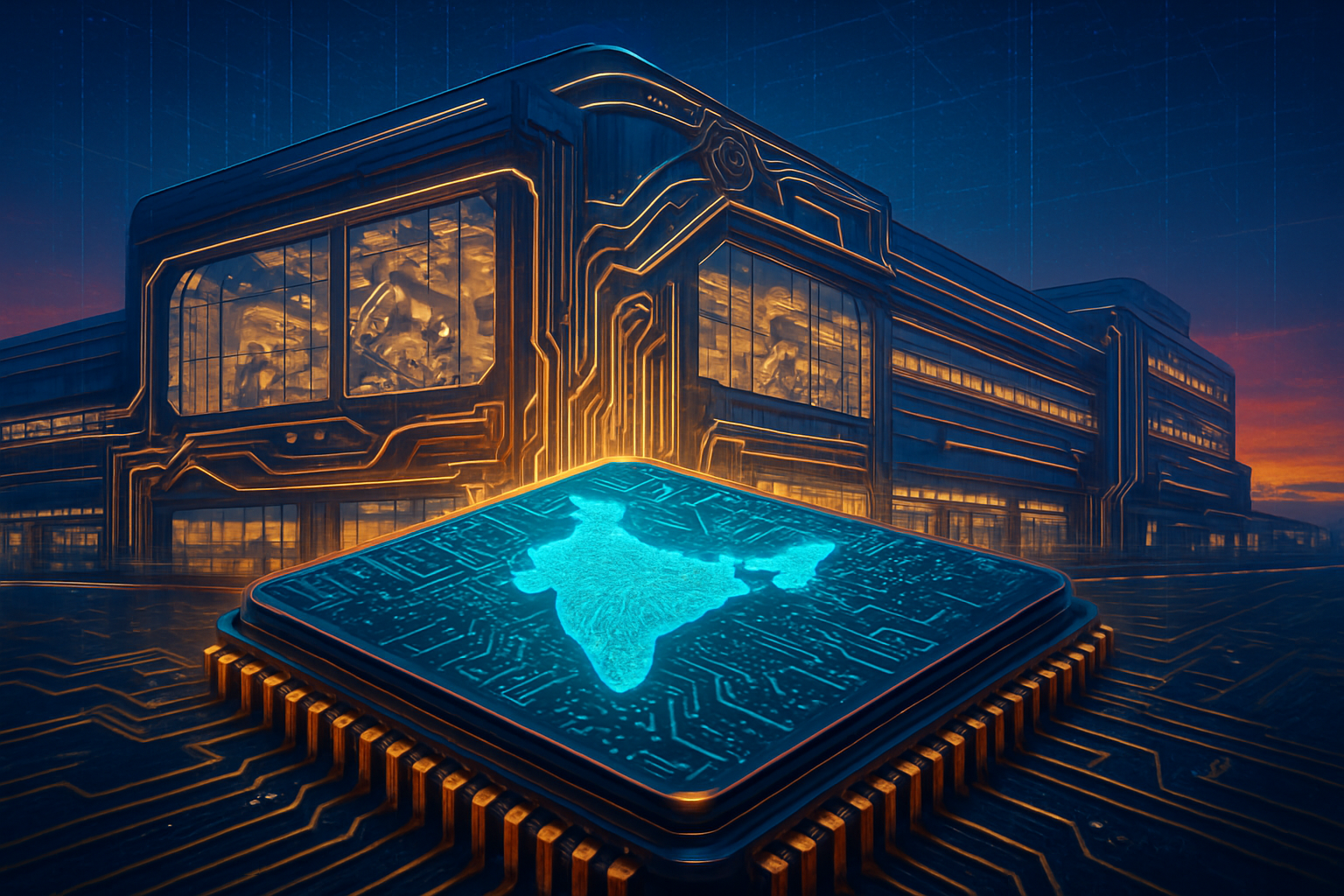
    As of January 22, 2026, the India Semiconductor Mission (ISM) has officially transitioned from a series of ambitious policy blueprints and groundbreaking ceremonies into a functional, revenue-generating engine of national industry. With the nation’s first commercial-grade chips beginning to roll out from state-of-the-art facilities in Gujarat, India is no longer just a global hub for chip design and software; it has established its first physical footprints in the high-stakes world of semiconductor fabrication and advanced packaging. This momentum is a critical step toward the government’s stated goal of becoming one of the top four semiconductor manufacturing nations globally by 2032.

    The significance of this development cannot be overstated. By moving into pilot and full-scale production, India is actively challenging the established order of the global electronics supply chain. In a world increasingly defined by "Silicon Sovereignty," the ability to manufacture hardware domestically is seen as a prerequisite for national security and economic independence. The successful activation of facilities by Micron Technology and Kaynes Technology marks the beginning of a decade-long journey to capture a significant portion of the projected $1 trillion global semiconductor market.

    From Groundbreaking to Silicon: The Technical Evolution of India’s Fabs

    The flagship of this mission, Micron Technology’s (NASDAQ: MU) Assembly, Test, Marking, and Packaging (ATMP) facility in Sanand, Gujarat, has officially moved beyond its pilot phase. As of January 2026, the 500,000-square-foot cleanroom is scaling up for commercial-grade output of DRAM and NAND flash memory chips. Unlike traditional labor-intensive assembly, this facility utilizes high-end AI-driven automation for defect analytics and thermal testing, ensuring that the "Made in India" memory modules meet the rigorous standards of global data centers and consumer electronics. This is the first time a major American memory manufacturer has operationalized a primary backend facility of this scale within the subcontinent.

    Simultaneously, the Dholera Special Investment Region has become a hive of high-tech activity as Tata Electronics, in partnership with Powerchip Semiconductor Manufacturing Corp (TPE: 6770), begins high-volume trial runs for 300mm wafers. The Tata-PSMC fab is initially focusing on "mature nodes" ranging from 28nm to 110nm. While these nodes are not the sub-5nm processes used in the latest smartphones, they represent the "workhorse" of the global economy, powering everything from automotive engine control units (ECUs) to power management integrated circuits (PMICs) and industrial IoT devices. The technical strategy here is clear: target high-volume, high-demand sectors where global supply has historically been volatile.

    The industrial landscape is further bolstered by Kaynes Technology (NSE: KAYNES), which has inaugurated full-scale commercial operations at its OSAT (Outsourced Semiconductor Assembly and Test) facility. Kaynes is leading the way in producing Multi-Chip Modules (MCM), which are essential for edge AI applications. Furthermore, the joint venture between CG Power and Industrial Solutions (NSE: CGPOWER) and Renesas Electronics (TSE: 6723) has launched its pilot production line for specialty power semiconductors. These technical milestones signify that India is building a diversified ecosystem, covering both the logic and power components necessary for a modern digital economy.

    Market Disruptors and Strategic Beneficiaries

    The progress of the ISM is creating a new hierarchy among technology giants and domestic startups. For Micron, the Sanand plant serves as a strategic hedge against geographic concentration in East Asia, providing a resilient supply chain node that benefits from India’s massive domestic consumption. For the Tata Group, whose parent company Tata Motors (NYSE: TTM) is a major automotive player, the Dholera fab provides a captive supply of semiconductors, reducing the risk of the crippling shortages that slowed vehicle production earlier this decade.

    The competitive landscape for major AI labs and tech companies is also shifting. With 24 Indian startups now designing chips under the Design Linked Incentive (DLI) scheme—many focused on Edge AI—there is a growing domestic market for the very chips the Tata and Kaynes facilities are designed to produce. This vertical integration—from design to fabrication to assembly—gives Indian tech companies a strategic advantage in pricing and speed-to-market. Established giants like Intel (NASDAQ: INTC) and Taiwan Semiconductor Manufacturing Company (NYSE: TSM) are watching closely as India positions itself as a "third pillar" for "friend-shoring," attracting companies looking to diversify away from traditional manufacturing hubs.

    The Global "Silicon Shield" and Geopolitical Sovereignty

    India’s semiconductor surge is part of a broader global trend: the $100 billion plus fab build-out. As nations like the United States, through the CHIPS Act, and the European Union pour hundreds of billions into domestic manufacturing, India has carved out a niche as the democratic alternative to China. This "Silicon Sovereignty" movement is driven by the realization that chips are the new oil; they are the foundation of artificial intelligence, telecommunications, and military hardware. By securing its own supply chain, India is insulating itself from the geopolitical tremors that often disrupt global trade.

    However, the path is not without its challenges. The investment required to reach the "Top Four" goal by 2032 is staggering, estimated at well over $100 billion in total capital expenditure over the next several years. While the initial ₹1.6 lakh crore ($19.2 billion) commitment has been a successful catalyst, the next phase of the mission (ISM 2.0) will need to address the high costs of electricity, water, and specialized material supply chains (such as photoresists and high-purity gases). Compared to previous AI and hardware milestones, the ISM represents a shift from "software-first" to "hardware-essential" development, mirroring the foundational shifts seen during the industrialization of South Korea and Taiwan.

    The Horizon: ISM 2.0 and the Road to 2032

    Looking ahead to the remainder of 2026 and beyond, the Indian government is expected to pivot toward "ISM 2.0." This next phase will likely focus on attracting "bleeding-edge" logic fabs (sub-7nm) and expanding the ecosystem to include compound semiconductors and advanced sensors. The upcoming Union Budget is anticipated to include incentives for the local manufacturing of semiconductor chemicals and gases, reducing the mission's reliance on imports for its day-to-day operations.

    The potential applications on the horizon are vast. With the IndiaAI Mission deploying 38,000 GPUs to boost domestic computing power, the synergy between Indian-made AI hardware and Indian-designed AI software is expected to accelerate. Experts predict that by 2028, India will not only be assembling chips but will also be home to at least one facility capable of manufacturing high-end server processors. The primary challenge remains the talent pipeline; while India has a surplus of design engineers, the "fab-floor" expertise required to manage multi-billion dollar cleanrooms is a skill set that is still being cultivated through intensive international partnerships and specialized university programs.

    Conclusion: A New Era for Indian Technology

    The status of the India Semiconductor Mission in January 2026 is one of tangible, industrial-scale progress. From Micron’s first commercial memory modules to the high-volume trial runs at the Tata-PSMC fab, the "dream" of an Indian semiconductor ecosystem has become a physical reality. This development is a landmark in AI history, as it provides the physical infrastructure necessary for India to move from being a consumer of AI to a primary producer of the hardware that makes AI possible.

    As we look toward the coming months, the focus will shift to yield optimization and the expansion of these facilities into their second and third phases. The significance of this moment lies in its long-term impact: India has successfully entered the most exclusive club in the global economy. For the tech industry, the message is clear: the global semiconductor map has been permanently redrawn, and New Delhi is now a central coordinate in the future of silicon.


    This content is intended for informational purposes only and represents analysis of current AI and semiconductor developments as of January 2026.

    TokenRing AI delivers enterprise-grade solutions for multi-agent AI workflow orchestration, AI-powered development tools, and seamless remote collaboration platforms.
    For more information, visit https://www.tokenring.ai/.

  • India’s Silicon Dream Becomes Reality: ISM 2.0 and the 2026 Commercial Chip Surge

    India’s Silicon Dream Becomes Reality: ISM 2.0 and the 2026 Commercial Chip Surge

    As of January 15, 2026, the global semiconductor landscape has officially shifted. This month marks a historic milestone for the India Semiconductor Mission (ISM) 2.0, as the first commercial shipments of "Made in India" memory modules and logic chips begin to leave factory floors in Gujarat and Rajasthan. What was once a series of policy blueprints and groundbreaking ceremonies has transformed into a high-functioning industrial reality, positioning India as a critical "trusted geography" in the global electronics and artificial intelligence supply chain.

    The activation of massive manufacturing hubs by Micron Technology (NASDAQ:MU) and the Tata Group signifies the end of India's long-standing dependence on imported silicon. With the government doubling its financial commitment to $20 billion under ISM 2.0, the nation is not merely aiming for self-sufficiency; it is positioning itself as a strategic relief valve for a global economy that has remained precariously over-reliant on East Asian manufacturing clusters.

    The Technical Foundations: From Mature Nodes to Advanced Packaging

    The technical scope of India's semiconductor emergence is multi-layered, covering both high-volume logic production and advanced memory assembly. Tata Electronics, in partnership with Taiwan’s Powerchip Semiconductor Manufacturing Corporation (PSMC), has successfully initiated high-volume trial runs at its Dholera mega-fab. This facility is currently processing 300mm wafers at nodes ranging from 28nm to 110nm. While these are considered "mature" nodes, they are the essential workhorses for the automotive, 5G infrastructure, and power management sectors. By targeting the 28nm sweet spot, India is addressing the global shortage of the very chips that power modern transportation and telecommunications.

    Simultaneously, Micron’s $2.75 billion facility in Sanand has moved into full-scale commercial production. The facility specializes in Assembly, Testing, Marking, and Packaging (ATMP), producing high-density DRAM and NAND flash products. These are not basic components; they are high-specification memory modules optimized for the enterprise-grade AI servers that are currently driving the global generative AI boom. In Rajasthan, Sahasra Semiconductors has already begun exporting indigenous Micro SD cards and RFID chips to European markets, demonstrating that India’s ecosystem spans from massive industrial fabs to nimble, export-oriented units.

    Unlike the initial phase of the mission, ISM 2.0 introduces a sharp focus on specialized chemistry and leading-edge nodes. The government has inaugurated new design centers in Bengaluru and Noida dedicated to 3nm chip development, signaling a leapfrog strategy to compete in the sub-10nm space by the end of the decade. Furthermore, the mission now includes significant incentives for Compound Semiconductors, specifically Silicon Carbide (SiC) and Gallium Nitride (GaN), which are critical for the thermal efficiency required in electric vehicle (EV) drivetrains and high-speed rail.

    Industry Disruption and the Corporate Land Grab

    The commercialization of Indian silicon is sending ripples through the boardrooms of major tech giants and hardware manufacturers. Micron Technology (NASDAQ:MU) has gained a significant first-mover advantage, securing a localized supply chain that bypasses the geopolitical volatility of the Taiwan Strait. This move has pressured other memory giants to accelerate their own Indian investments to maintain price competitiveness in the South Asian market.

    In the automotive and industrial sectors, the joint venture between CG Power and Industrial Solutions (NSE:CGPOWER) and Renesas Electronics (TYO:6723) has begun delivering specialized power modules. This is a direct benefit to companies like Tata Motors (NSE:TATAMOTORS) and Mahindra & Mahindra (NSE:M&M), who can now source mission-critical semiconductors domestically, drastically reducing lead times and hedging against global logistics disruptions. The competitive implications are clear: companies with "India-inside" supply chains are finding themselves better positioned to navigate the "China Plus One" procurement strategies favored by Western nations.

    The tech startup ecosystem is also seeing a surge in activity due to the revamped Design-Linked Incentive (DLI) 2.0 scheme. With a ₹5,000 crore allocation, fabless startups are now able to afford the prohibitive costs of electronic design automation (EDA) tools and IP licensing. This is fostering a new generation of Indian "chiplets" designed specifically for edge AI applications, potentially disrupting the dominance of established global firms in the low-power sensor and IoT markets.

    Geopolitical Resilience and the "Pax Silica" Era

    Beyond the balance sheets, India’s semiconductor surge holds profound geopolitical significance. In early 2026, India’s formal integration into the US-led "Pax Silica" framework—a strategic initiative to secure the global silicon supply chain—has cemented the country's status as a democratic alternative to traditional manufacturing hubs. As global tensions fluctuate, India’s role as a "trusted geography" ensures that the physical infrastructure of the digital age is not concentrated in a single, vulnerable region.

    This development is inextricably linked to the broader AI landscape. The global AI race is no longer just about who has the best algorithms; it is about who has the hardware to run them. Through the IndiaAI Mission, the government is integrating domestic chip production with sovereign compute goals. By manufacturing the physical memory and logic chips that power large language models (LLMs), India is insulating its digital sovereignty from external export controls and technological blockades.

    However, this rapid expansion has not been without its concerns. Environmental advocates have raised questions regarding the high water and energy intensity of semiconductor fabrication, particularly in the arid regions of Gujarat. In response, the ISM 2.0 framework has mandated "Green Fab" certifications, requiring facilities to implement advanced water recycling systems and source a minimum percentage of power from renewable energy—a challenge that will be closely watched by the international community.

    The Road to Sub-10nm and 3D Packaging

    Looking ahead, the near-term focus of ISM 2.0 is the transition from "pilot" to "permanent" for the next wave of facilities. Tata Electronics’ Morigaon plant in Assam is expected to begin pilot production of advanced packaging solutions, including Flip Chip and Integrated Systems Packaging (ISP), by mid-2026. This will allow India to handle the increasingly complex 2.5D and 3D packaging requirements of modern AI accelerators, which are currently dominated by a handful of facilities in Taiwan and Malaysia.

    The long-term ambition remains the establishment of a sub-10nm logic fab. While current production is concentrated in mature nodes, the R&D investments under ISM 2.0 are designed to build the specialized workforce necessary for leading-edge manufacturing. Experts predict that by 2028, India could host its first 7nm or 5nm facility, likely through a joint venture involving a major global foundry seeking to diversify its geographic footprint. The challenge will be the continued development of a "silicon-ready" workforce; the government has already partnered with over 100 universities to create a pipeline of 85,000 semiconductor engineers.

    A New Chapter in Industrial History

    The commercial production milestones of January 2026 represent a definitive "before and after" moment for the Indian economy. The transition from being a consumer of technology to a manufacturer of its most fundamental building block—the transistor—is a feat that few nations have achieved. The India Semiconductor Mission 2.0 has successfully moved beyond the rhetoric of "Atmanirbhar Bharat" (Self-Reliant India) to deliver tangible, high-tech exports.

    The key takeaway for the global industry is that India is no longer a future prospect; it is a current player. As the Dholera fab scales toward full commercial capacity later this year and Micron ramps up its Sanand output, the "Silicon Map" of the world will continue to tilt toward the subcontinent. For the tech industry, the coming months will be defined by how quickly global supply chains can integrate this new Indian capacity, and whether the nation can sustain the infrastructure and talent development required to move from the 28nm workhorses to the leading-edge frontiers of 3nm and beyond.


    This content is intended for informational purposes only and represents analysis of current AI and semiconductor developments.

    TokenRing AI delivers enterprise-grade solutions for multi-agent AI workflow orchestration, AI-powered development tools, and seamless remote collaboration platforms.
    For more information, visit https://www.tokenring.ai/.

  • India’s Silicon Ambition: Tata and ROHM Forge Strategic Alliance as Semiconductor Mission Hits High Gear

    India’s Silicon Ambition: Tata and ROHM Forge Strategic Alliance as Semiconductor Mission Hits High Gear

    As of January 12, 2026, India’s quest to become a global semiconductor powerhouse has reached a critical inflection point. The partnership between Tata Electronics and ROHM Co., Ltd. (TYO: 6963) marks a definitive shift from theoretical policy to high-stakes industrial execution. By focusing on automotive power MOSFETs—the literal workhorses of the electric vehicle (EV) revolution—this collaboration is positioning India not just as a consumer of chips, but as a vital node in the global silicon supply chain.

    This development is the centerpiece of the India Semiconductor Mission (ISM) 2.0, a $20 billion federal initiative designed to insulate the nation from global supply shocks while capturing a significant share of the burgeoning green energy and automotive markets. With the automotive industry rapidly electrifying, the localized production of power semiconductors is no longer a luxury; it is a strategic necessity for India’s economic sovereignty and its goal of becoming a $100 billion semiconductor market by 2030.

    Technical Precision: The Power Behind the EV Revolution

    The initial phase of the Tata-ROHM partnership centers on the production of an automotive-grade N-channel 100V, 300A Silicon (Si) MOSFET. These components are housed in a specialized TO-Leadless (TOLL) package, which offers superior thermal management and a significantly smaller footprint compared to traditional packaging. This technical specification is critical for modern EV architectures, where space is at a premium and heat dissipation is the primary barrier to battery efficiency. By utilizing ROHM’s advanced design and process expertise, Tata Electronics is bypassing the initial "learning curve" that often plagues new entrants in the semiconductor space.

    Beyond standard silicon, the roadmap for this partnership is paved with Wide-Bandgap (WBG) materials, specifically Silicon Carbide (SiC) and Gallium Nitride (GaN). These materials represent the cutting edge of power electronics, allowing for higher voltage operation and up to 50% less energy loss compared to traditional silicon-based chips. The technical transfer from ROHM—a global leader in SiC technology—ensures that India’s manufacturing capabilities will be future-proofed against the next generation of power-hungry applications, from high-speed rail to advanced renewable energy grids.

    The infrastructure supporting this technical leap is equally impressive. Tata Electronics is currently finalizing its $3 billion Outsourced Semiconductor Assembly and Test (OSAT) facility in Jagiroad, Assam. This site is slated for pilot production by mid-2026, serving as the primary hub for the ROHM-designed MOSFETs. Meanwhile, the $11 billion Dholera Fab in Gujarat, a joint venture between Tata and Taiwan’s PSMC, is moving toward its goal of producing 28nm to 110nm nodes, providing the "front-end" fabrication capacity that will eventually complement the backend packaging efforts.

    Disrupting the Global Supply Chain: Market Impacts

    The implications for the global semiconductor market are profound. For years, the industry has looked for a "China+1" alternative, and India is now presenting a credible, large-scale solution. The Tata-ROHM alliance directly benefits Tata Motors Ltd. (NSE: TATAMOTORS), which can now look forward to a vertically integrated supply chain for its EV lineup. This reduces lead times and protects the company from the volatility of the international chip market, providing a significant competitive advantage over global rivals who remain dependent on East Asian foundries.

    Furthermore, the emergence of India as a packaging hub is attracting other major players. Micron Technology, Inc. (NASDAQ: MU) is already nearing commercial production at its Sanand facility, and CG Power & Industrial Solutions (NSE: CGPOWER), in partnership with Renesas, is transitioning from pilot to commercial-scale operations. This cluster effect is creating a competitive ecosystem where startups and established giants alike can find the infrastructure needed to scale. For global chipmakers, the message is clear: India is no longer just a design center for the likes of Intel (NASDAQ: INTC) or NVIDIA (NASDAQ: NVDA); it is becoming a manufacturing destination.

    However, this disruption comes with challenges for existing leaders in the power semiconductor space. Companies like Infineon and STMicroelectronics, which have long dominated the automotive sector, now face a well-funded, state-backed competitor in the Indian market. As Tata scales its OSAT and fab capabilities, the cost-competitiveness of Indian-made chips could pressure global margins, particularly in the mid-range automotive and industrial segments.

    A Geopolitical Milestone in the AI and Silicon Landscape

    The broader significance of the India Semiconductor Mission extends far beyond the factory floor. It is a masterstroke in economic diplomacy and geopolitical de-risking. By securing partnerships with Japanese firms like ROHM and Taiwanese giants like PSMC, India is weaving itself into the security architecture of the democratic tech alliance. This fits into a global trend where nations are treating semiconductor capacity as a pillar of national defense, akin to oil reserves or food security.

    Comparatively, India’s progress mirrors the early stages of China’s semiconductor push, but with a distinct focus on the "back-end" first. By mastering OSAT (packaging and testing) before moving into full-scale leading-edge logic fabrication, India is building a sustainable talent pool and infrastructure. This "packaging-first" strategy, supported by companies like Kaynes Technology India (NSE: KAYNES) and Bharat Electronics Ltd. (NSE: BEL), ensures immediate revenue and job creation while the more complex fab projects mature.

    There are, of course, concerns. The capital-intensive nature of semiconductor manufacturing requires consistent policy support across multiple government terms. Additionally, the environmental impact of large-scale fabs—particularly regarding water usage and chemical waste—remains a point of scrutiny. However, the integration of AI-driven manufacturing processes within these new plants is expected to optimize resource usage, making India’s new fabs some of the most efficient in the world.

    The Horizon: What’s Next for India’s Silicon Valley?

    Looking ahead to the remainder of 2026 and 2027, the focus will shift from construction to yield. The industry will be watching the Jagiroad and Sanand facilities closely to see if they can achieve the high-volume, high-quality yields required by the global automotive industry. Success here will likely trigger a second wave of investment, potentially bringing 14nm or even 7nm logic fabrication to Indian soil as the ecosystem matures.

    We also expect to see a surge in "Fabless" startups within India, incentivized by the government’s Design Linked Incentive (DLI) scheme. With local manufacturing facilities available, these startups can design chips specifically for the Indian market—such as low-cost sensors for agriculture or specialized processors for local telecommunications—and have them manufactured and packaged domestically. This will complete the "design-to-delivery" loop that has been the holy grail of Indian industrial policy for decades.

    A New Era of Industrial Sovereignty

    The partnership between Tata and ROHM is more than a business deal; it is a proof of concept for a nation’s ambition. By the end of 2026, the "Made in India" label on a power MOSFET will signify a major victory for the India Semiconductor Mission. It marks the moment when India successfully bridged the gap between its world-class software capabilities and the physical hardware that powers the modern world.

    As we move forward, the key metrics to watch will be the speed of technology transfer in the SiC space and the ability of the Dholera fab to meet its production milestones. The long-term impact of these developments will likely be felt for decades, as India cements its role as the third pillar of the global semiconductor industry, alongside East Asia and the West. For now, the silicon surge is well and truly underway.


    This content is intended for informational purposes only and represents analysis of current AI and semiconductor developments.

    TokenRing AI delivers enterprise-grade solutions for multi-agent AI workflow orchestration, AI-powered development tools, and seamless remote collaboration platforms.
    For more information, visit https://www.tokenring.ai/.

  • India’s Silicon Ambition: The Tata-ROHM Alliance and the Dawn of a New Semiconductor Powerhouse

    India’s Silicon Ambition: The Tata-ROHM Alliance and the Dawn of a New Semiconductor Powerhouse

    In a move that signals a seismic shift in the global technology landscape, India has officially transitioned from a chip design hub to a manufacturing contender. On December 22, 2025, just days before the dawn of 2026, Tata Electronics and ROHM Co., Ltd. (TYO:6963) announced a landmark strategic partnership to establish a domestic manufacturing framework for power semiconductors. This alliance is not merely a corporate agreement; it is a cornerstone of the 'India Semiconductor Mission' (ISM), aimed at securing a vital position in the global supply chain for electric vehicles (EVs), industrial automation, and the burgeoning AI data center market.

    The partnership focuses on the production of high-efficiency power semiconductors, specifically Silicon MOSFETs and Wide-Bandgap (WBG) materials like Silicon Carbide (SiC) and Gallium Nitride (GaN). By combining ROHM’s world-class device expertise with the industrial might of the Tata Group, the collaboration aims to address the critical shortage of "mature node" chips that have plagued global industries for years. As of January 1, 2026, the first production lines are already being prepared, marking the beginning of a new era where "Made in India" silicon will power the next generation of global infrastructure.

    Technical Mastery: From Silicon MOSFETs to Wide-Bandgap Frontiers

    The collaboration between Tata and ROHM is structured as a phased technological offensive. The immediate priority is the mass production of automotive-grade N-channel 100V, 300A Silicon MOSFETs. These components, housed in advanced Transistor Outline Leadless (TOLL) packages, are engineered for high-current applications where thermal efficiency and power density are paramount. Unlike traditional packaging, the TOLL format significantly reduces board space while enhancing heat dissipation—a critical requirement for the power management systems in modern electric drivetrains.

    Beyond standard silicon, the alliance is a major bet on Wide-Bandgap (WBG) semiconductors. As AI data centers and EVs move toward 800V architectures to handle massive power loads, traditional silicon reaches its physical limits. ROHM, a global pioneer in SiC technology, is transferring critical process knowledge to Tata to enable the localized production of SiC and GaN modules. These materials allow for higher switching frequencies and can operate at significantly higher temperatures than silicon, effectively reducing the energy footprint of AI "factories" and extending the range of EVs. This technical leap differentiates the Tata-ROHM venture from previous attempts at domestic manufacturing, which often focused on lower-value, legacy components.

    The manufacturing will be distributed across two massive hubs: the $11 billion Dholera Fab in Gujarat and the $3.2 billion Jagiroad Outsourced Semiconductor Assembly and Test (OSAT) facility in Assam. While the Dholera plant handles the complex front-end wafer fabrication, the Assam facility—slated to be fully operational by April 2026—will manage the backend assembly and testing of up to 48 million chips per day. This end-to-end integration ensures that India is not just a participant in the assembly process but a master of the entire value chain.

    Disruption in the Power Semiconductor Hierarchy

    The Tata-ROHM alliance is a direct challenge to the established dominance of European and American power semiconductor giants. Companies like Infineon Technologies AG (ETR:IFX), STMicroelectronics N.V. (NYSE:STM), and onsemi (NASDAQ:ON) now face a formidable competitor that possesses a unique "captive customer" advantage. The Tata Group’s vertical integration is its greatest weapon; Tata Motors Limited (NSE:TATAMOTORS), which controls nearly 40% of India’s EV market, provides a guaranteed high-volume demand for these chips, allowing the partnership to scale with a speed that independent manufacturers cannot match.

    Market analysts suggest that this partnership could disrupt the global pricing of SiC and GaN components. By leveraging India’s lower manufacturing costs and the massive 50% fiscal support provided by the Indian government under the ISM, Tata-ROHM can produce high-end power modules at a fraction of the cost of their Western counterparts. This "democratization" of WBG semiconductors is expected to accelerate the adoption of high-efficiency power management in mid-range industrial applications and non-luxury EVs, forcing global leaders to rethink their margin structures and supply chain strategies.

    Furthermore, the alliance serves as a pivotal implementation of the "China Plus One" strategy. Global OEMs are increasingly desperate to diversify their semiconductor sourcing away from East Asian flashpoints. By establishing a robust, high-tech manufacturing hub in India, ROHM is positioning itself as the "local" strategic architect for the Global South, using India as a launchpad to serve markets in Africa, the Middle East, and Southeast Asia.

    The Geopolitical and AI Significance of India's Rise

    The broader significance of this development cannot be overstated. We are currently witnessing the "Green AI" revolution, where the bottleneck for AI advancement is no longer just compute power, but the energy infrastructure required to sustain it. Power semiconductors are the "muscles" of the AI era, managing the electricity flow into the massive GPU clusters that drive large language models. The Tata-ROHM partnership ensures that India is not just a consumer of AI technology but a provider of the essential hardware that makes AI sustainable.

    Geopolitically, this marks India’s entry into the elite club of semiconductor-producing nations. For decades, India’s contribution to the sector was limited to high-end design services. With the Dholera and Jagiroad facilities coming online in 2026, India is effectively insulating itself from global supply shocks. This move mirrors the strategic intent of the US CHIPS Act and China’s "Made in China 2025" initiative, but with a specific focus on the high-growth power and analog sectors rather than the hyper-competitive sub-5nm logic space.

    However, the path is not without its hurdles. The industry community remains cautiously optimistic, noting that while the capital and technology are now in place, India faces a looming talent gap. Estimates suggest the country will need upwards of 300,000 specialized semiconductor professionals by 2027. The success of the Tata-ROHM venture will depend heavily on the rapid upskilling of India’s engineering workforce to handle "clean-room" manufacturing environments, a starkly different challenge from the software-centric expertise the nation is known for.

    The Road Ahead: 2026 and Beyond

    As we look toward the remainder of 2026, the first "Made in India" chips from the Tata-ROHM collaboration are expected to hit the market. In the near term, the focus will remain on stabilizing the production of Silicon MOSFETs for the domestic automotive sector. By 2027, the roadmap shifts toward trial production of SiC wafers at the Dholera fab, a move that will place India at the forefront of the global energy transition.

    Experts predict that by 2030, the Indian semiconductor market will reach a valuation of $110 billion. The Tata-ROHM partnership is the vanguard of this growth, with plans to eventually move into advanced 28nm and 40nm nodes for logic and mixed-signal chips. The ultimate challenge will be maintaining infrastructure stability—specifically the "zero-fluctuation" power and ultra-pure water supplies required for high-yield fabrication—in the face of India’s rapid industrialization.

    A New Chapter in Semiconductor History

    The Tata-ROHM alliance represents more than just a business deal; it is a declaration of industrial independence. By successfully bridging the gap between design and fabrication, India has rewritten its role in the global tech ecosystem. The key takeaways are clear: vertical integration, strategic international partnerships, and aggressive government backing have created a new powerhouse that can compete on both cost and technology.

    In the history of semiconductors, 2026 will likely be remembered as the year the "Silicon Shield" began to extend toward the Indian subcontinent. For the tech industry, the coming months will be defined by how quickly Tata can scale its Assam and Gujarat facilities. If they succeed, the global power semiconductor market will never be the same again. Investors and industry leaders should watch for the first yield reports from the Jagiroad facility in Q2 2026, as they will serve as the litmus test for India’s manufacturing future.


    This content is intended for informational purposes only and represents analysis of current AI and semiconductor developments.

    TokenRing AI delivers enterprise-grade solutions for multi-agent AI workflow orchestration, AI-powered development tools, and seamless remote collaboration platforms.
    For more information, visit https://www.tokenring.ai/.
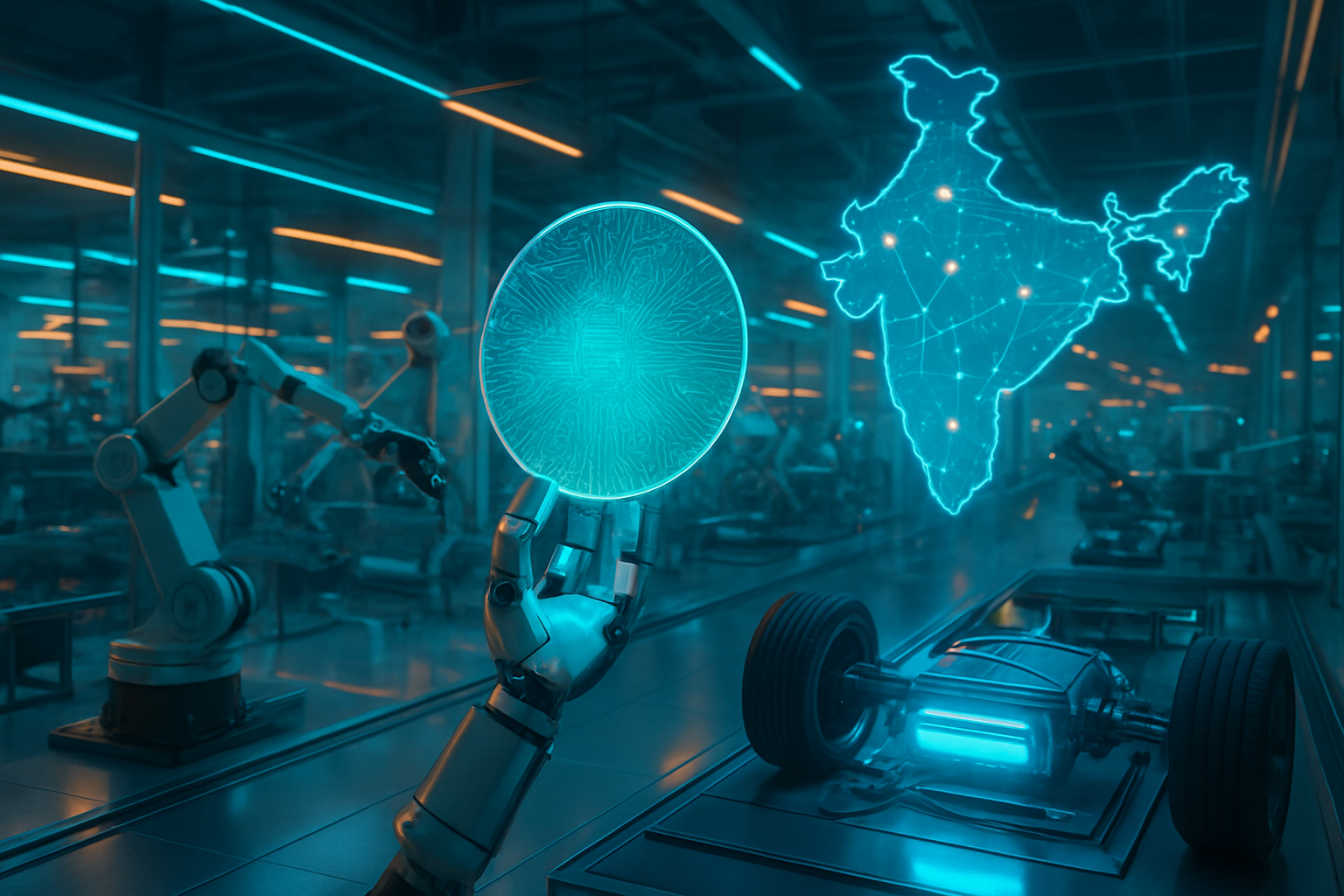
  • Silicon Sovereignty: How the India Semiconductor Mission is Redrawing the Global Tech Map

    Silicon Sovereignty: How the India Semiconductor Mission is Redrawing the Global Tech Map

    As of January 1, 2026, the global semiconductor landscape has undergone a tectonic shift, with India emerging from the shadows of its service-sector legacy to become a formidable manufacturing powerhouse. The India Semiconductor Mission (ISM), once viewed with skepticism by global analysts, has successfully transitioned from a series of policy incentives into a tangible network of operational fabrication units and assembly plants. With over $18.2 billion in cumulative investments now anchored in Indian soil, the nation has effectively positioned itself as the primary "China Plus One" destination for the world’s most critical technology.

    The immediate significance of this transformation cannot be overstated. As commercial shipments of "Made in India" memory modules begin their journey to global markets this quarter, the mission has moved beyond proof-of-concept. By securing commitments from industry titans and establishing a robust domestic ecosystem for mature-node chips, India is not just building factories; it is constructing a "trusted geography" that provides a vital fail-safe for a global supply chain long haunted by geopolitical volatility in the Taiwan Strait and trade friction with China.

    The Technical Backbone: From ATMP to 28nm Fabrication

    The technical realization of the ISM is headlined by Micron Technology (NASDAQ: MU), which has successfully completed Phase 1 of its $2.75 billion facility in Sanand, Gujarat. As of today, the facility has validated its high-spec cleanrooms and is ramping up for high-volume commercial production of DRAM and NAND memory products. This Assembly, Test, Marking, and Packaging (ATMP) unit represents India’s first high-volume entry into the semiconductor value chain, with the first major commercial exports scheduled for Q1 2026. This facility utilizes advanced packaging techniques that were previously the exclusive domain of East Asian hubs, marking a significant step up in India’s technical complexity.

    Parallel to Micron’s progress, Tata Electronics—a subsidiary of the diversified Tata Group, which includes the publicly traded Tata Motors (NYSE: TTM)—is making rapid strides at the Dholera Special Investment Region. In partnership with Powerchip Semiconductor Manufacturing Corporation (Taiwan: 6770), the Dholera fab is currently in the equipment installation phase. Designed to produce 300mm wafers at mature nodes ranging from 28nm to 110nm, this facility targets the "workhorse" chips essential for automotive electronics, 5G infrastructure, and power management. Unlike the cutting-edge sub-5nm nodes used in high-end smartphones, these mature nodes are the backbone of the global industrial and automotive sectors, where India aims to achieve dominant market share.

    Furthermore, the Tata-led mega OSAT (Outsourced Semiconductor Assembly and Test) facility in Morigaon, Assam, is scheduled for commissioning in April 2026. With an investment of ₹27,000 crore, the plant is engineered to produce a staggering 48 million chips per day at full capacity. Technical specifications for this site include advanced Flip Chip and Integrated Systems Packaging (ISP) technologies. Meanwhile, the joint venture between CG Power, Renesas Electronics (TSE: 6723), and Stars Microelectronics has already inaugurated its first end-to-end OSAT pilot line, moving toward full commercial production of specialized chips for power electronics and the automotive sector by mid-2026.

    A New Competitive Order for Global Tech Giants

    The emergence of India as a chip hub has forced a strategic recalibration among "Big Tech" firms. Intel (NASDAQ: INTC) recently signaled a major shift by partnering with Tata Electronics to explore local manufacturing and assembly, aligning with its "Foundry 2.0" strategy to diversify production away from traditional hubs. Similarly, NVIDIA (NASDAQ: NVDA) has transitioned from treating India as a design center to a strategic manufacturing partner. Following its massive strategic investments in global foundry capacity, NVIDIA is now leveraging Indian facilities for the assembly and testing of custom AI silicon tailored for the Global South, a move that provides a competitive edge in emerging markets.

    The impact is perhaps most visible in the operations of Apple (NASDAQ: AAPL). By the start of 2026, Apple has successfully moved nearly 25% of its iPhone production to India. The domestic growth of semiconductor packaging (ATMP) has allowed the tech giant to significantly reduce its Bill of Materials (BoM) costs by sourcing components locally. This vertical integration within India shields Apple from the volatile trade tariffs and supply chain disruptions associated with its traditional China-based manufacturing.

    For major AI labs and hardware companies like Advanced Micro Devices (NASDAQ: AMD), India’s semiconductor push offers a "fail-safe" for global supply chains. AMD, which now employs over 8,000 engineers in its Bengaluru R&D center, has begun integrating its adaptive computing and AI accelerators into the "Make in India" initiative. This shift provides these companies with a market positioning advantage: the ability to claim a "trusted" and "resilient" supply chain, which is increasingly a requirement for government contracts and enterprise security in the West.

    Geopolitics and the "Trusted Geography" Framework

    The wider significance of the India Semiconductor Mission lies in its role as a geopolitical stabilizer. The mission is the centerpiece of the US-India Initiative on Critical and Emerging Technology (iCET), which was recently upgraded to the "TRUST" framework (Transforming the Relationship Utilizing Strategic Technology). This collaboration has led to the development of a "National Security Fab" in India, focused on Silicon Carbide (SiC) and Gallium Nitride (GaN) chips for defense and space applications, ensuring that the two nations share a secure, interoperable technological foundation.

    In the broader AI landscape, India’s focus on mature nodes (28nm+) addresses a critical gap. While the world chases sub-2nm nodes for LLM training, the physical infrastructure of AI—sensors, power regulators, and connectivity modules—runs on the very chips India is now producing. By dominating this "legacy" market, India is positioning itself as the indispensable provider of the hardware that allows AI to interact with the physical world. This strategy directly challenges China’s dominance in the mature-process market, offering global carmakers like Tesla (NASDAQ: TSLA) and Toyota (NYSE: TM) a Western-aligned alternative.

    However, this rapid expansion is not without concerns. The massive water and power requirements of semiconductor fabs remain a challenge for Indian infrastructure. Environmentalists have raised questions about the long-term impact on local resources in Gujarat and Assam. Furthermore, while India has successfully attracted "the big fish," the next phase of the mission will require the development of a deeper ecosystem, including domestic suppliers of specialized chemicals, gases, and semiconductor-grade equipment, to truly achieve "Atmanirbharta" (self-reliance).

    The Road to 2030: ISM 2.0 and the Talent Pipeline

    Looking ahead, the Indian government has already initiated the rollout of ISM 2.0 with an expanded outlay of $20 billion. The focus of this next phase is twofold: incentivizing sub-10nm leading-edge fabrication and deepening the domestic supply chain. Experts predict that by 2028, India will host at least one "Giga-Fab" capable of producing advanced logic chips, further closing the gap with Taiwan and South Korea. The near-term applications will likely focus on 6G telecommunications and indigenous AI hardware, where India’s "Chips to Startup" (C2S) program is already yielding results.

    The most potent weapon in India’s arsenal is its talent pool. As of early 2026, the nation has already trained over 60,000 of its targeted 85,000 semiconductor engineers. This influx of high-skill labor has mitigated the global talent shortage that slowed fab expansions in the United States and Europe. Predictably, the next few years will see a shift from India being a provider of "design talent" to a provider of "operational expertise," with Indian engineers managing some of the most advanced cleanrooms in the world.

    A Milestone in the History of Technology

    The success of the India Semiconductor Mission as of January 2026 marks a pivotal moment in the history of global technology. It represents the first time a major democratic economy has successfully built a semiconductor ecosystem from the ground up in the 21st century. The key takeaways are clear: India is no longer just a consumer of technology or a back-office service provider; it is a critical node in the hardware architecture of the future.

    The significance of this development will be felt for decades. By providing a "trusted" alternative to East Asian manufacturing, India has added a layer of resilience to the global economy that was sorely missing during the supply chain crises of the early 2020s. In the coming weeks and months, the industry should watch for the first commercial shipments from Micron and the progress of equipment installation at the Tata-PSMC fab. These milestones will serve as the definitive heartbeat of a new era in silicon sovereignty.


    This content is intended for informational purposes only and represents analysis of current AI and semiconductor developments.

    TokenRing AI delivers enterprise-grade solutions for multi-agent AI workflow orchestration, AI-powered development tools, and seamless remote collaboration platforms.
    For more information, visit https://www.tokenring.ai/.

  • India Unveils Indigenous 7nm Processor Roadmap: A Pivotal Leap Towards Semiconductor Sovereignty and AI Acceleration

    India Unveils Indigenous 7nm Processor Roadmap: A Pivotal Leap Towards Semiconductor Sovereignty and AI Acceleration

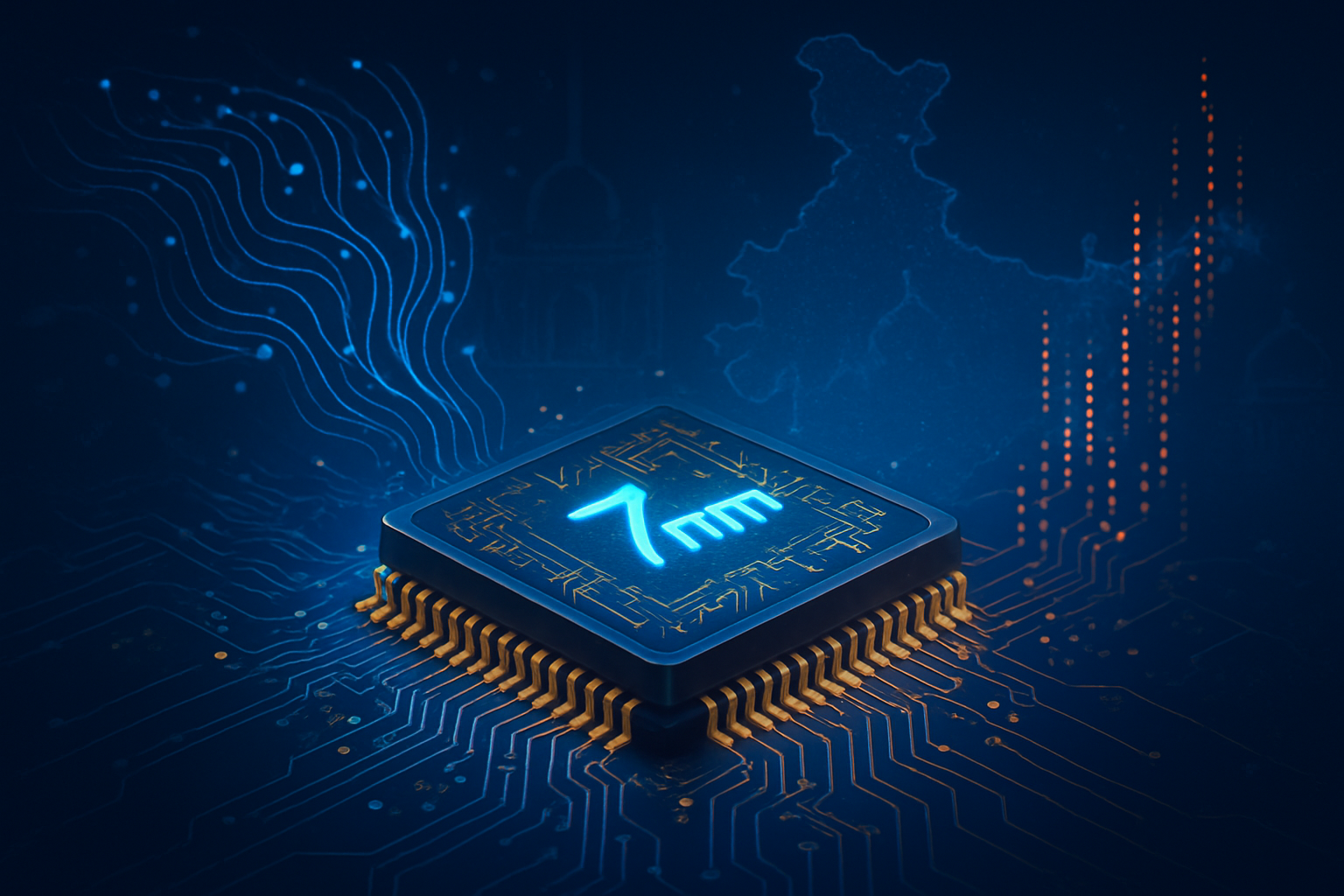
    In a landmark announcement on October 18, 2025, Union Minister Ashwini Vaishnaw unveiled India's ambitious roadmap for the development of its indigenous 7-nanometer (nm) processor. This pivotal initiative marks a significant stride in the nation's quest for semiconductor self-reliance and positions India as an emerging force in the global chip design and manufacturing landscape. The move is set to profoundly impact the artificial intelligence (AI) sector, promising to accelerate indigenous AI/ML platforms and reduce reliance on imported advanced silicon for critical applications.

    The cornerstone of this endeavor is the 'Shakti' processor, a project spearheaded by the Indian Institute of Technology Madras (IIT Madras). While the official announcement confirmed the roadmap and ongoing progress, the first indigenously designed 7nm 'Shakti' computer processor is anticipated to be ready by 2028. This strategic development is poised to bolster India's digital sovereignty, enhance its technological capabilities in high-performance computing, and provide a crucial foundation for the next generation of AI innovation within the country.

    Technical Prowess: Unpacking India's 7nm 'Shakti' Processor

    The 'Shakti' processor, currently under development at IIT Madras's SHAKTI initiative, represents a significant technical leap for India. It is being designed based on the open-source RISC-V instruction set architecture (ISA). This choice is strategic, offering unparalleled flexibility, customization capabilities, and freedom from proprietary licensing fees, which can be substantial for established ISAs like x86 or ARM. The open-source nature of RISC-V fosters a collaborative ecosystem, enabling broader participation from research institutions and startups, and accelerating innovation.

    The primary technical specifications target high performance and energy efficiency, crucial attributes for modern computing. While specific clock speeds and core counts are still under wraps, the 7nm process node itself signifies a substantial advancement. This node allows for a much higher transistor density compared to older, larger nodes (e.g., 28nm or 14nm), leading to greater computational power within a smaller physical footprint and reduced power consumption. This directly translates to more efficient processing for complex AI models, faster data handling in servers, and extended battery life in potential future edge devices.

    This indigenous 7nm development markedly differs from previous Indian efforts that largely focused on design using imported intellectual property or manufacturing on older process nodes. By embracing RISC-V and aiming for a leading-edge 7nm node, India is moving towards true architectural and manufacturing independence. Initial reactions from the domestic AI research community have been overwhelmingly positive, with experts highlighting the potential for optimized hardware-software co-design specifically tailored for Indian AI workloads and data sets. International industry experts, while cautious about the timelines, acknowledge the strategic importance of such an initiative for a nation of India's scale and technological ambition.

    The 'Shakti' processor is specifically designed for server applications across critical sectors such as financial services, telecommunications, defense, and other strategic domains. Its high-performance capabilities also make it suitable for high-performance computing (HPC) systems and, crucially, for powering indigenous AI/ML platforms. This targeted application focus ensures that the processor will address immediate national strategic needs while simultaneously laying the groundwork for broader commercial adoption.

    Reshaping the AI Landscape: Implications for Companies and Market Dynamics

    India's indigenous 7nm processor development carries profound implications for AI companies, global tech giants, and burgeoning startups. Domestically, companies like Tata Group (NSE: TATACHEM) (which is already investing in a wafer fabrication facility) and other Indian AI solution providers stand to benefit immensely. The availability of locally designed and eventually manufactured advanced processors could reduce hardware costs, improve supply chain predictability, and enable greater customization for AI applications tailored to the Indian market. This fosters an environment ripe for innovation among Indian AI startups, allowing them to build solutions on foundational hardware designed for their specific needs, potentially leading to breakthroughs in areas like natural language processing for Indian languages, computer vision for diverse local environments, and AI-driven services for vast rural populations.

    For major global AI labs and tech companies such as Google (NASDAQ: GOOGL), Microsoft (NASDAQ: MSFT), and Amazon (NASDAQ: AMZN) (AWS), this development presents both opportunities and competitive shifts. While these giants currently rely on global semiconductor leaders like TSMC (NYSE: TSM) and Samsung (KRX: 005930) for their advanced AI accelerators, an independent Indian supply chain could eventually offer an alternative or complementary source, especially for services targeting the Indian government and strategic sectors. However, it also signifies India's growing ambition to compete in advanced silicon, potentially disrupting the long-term dominance of established players in certain market segments, particularly within India.

    The potential disruption extends to existing products and services that currently depend entirely on imported chips. An indigenous 7nm processor could lead to the development of 'Made in India' AI servers, supercomputers, and edge AI devices, potentially creating a new market segment with unique security and customization features. This could shift market positioning, giving Indian companies a strategic advantage in government contracts and sensitive data processing where national security and data sovereignty are paramount. Furthermore, as India aims to become a global player in advanced chip design, it could eventually influence global supply chains and foster new international collaborations, as evidenced by ongoing discussions with entities like IBM (NYSE: IBM) and Belgium-based IMEC.

    The long-term vision is to attract significant investments and create a robust semiconductor ecosystem within India, which will inevitably fuel the growth of the AI sector. By reducing reliance on external sources for critical hardware, India aims to mitigate geopolitical risks and ensure the uninterrupted advancement of its AI initiatives, from academic research to large-scale industrial deployment. This strategic move could fundamentally alter the competitive landscape, fostering a more diversified and resilient global AI hardware ecosystem.

    Wider Significance: India's Role in the Global AI Tapestry

    India's foray into indigenous 7nm processor development fits squarely into the broader global AI landscape, which is increasingly characterized by a race for hardware superiority and national technological sovereignty. With AI models growing exponentially in complexity and demand for computational power, advanced semiconductors are the bedrock of future AI breakthroughs. This initiative positions India not merely as a consumer of AI technology but as a significant contributor to its foundational infrastructure, aligning with global trends where nations are investing heavily in domestic chip capabilities to secure their digital futures.

    The impacts of this development are multi-faceted. Economically, it promises to create a high-skill manufacturing and design ecosystem, generating employment and attracting foreign investment. Strategically, it significantly reduces India's dependence on imported chips for critical applications, thereby strengthening its digital sovereignty and supply chain resilience. This is particularly crucial in an era of heightened geopolitical tensions and supply chain vulnerabilities. The ability to design and eventually manufacture advanced chips domestically provides a strategic advantage in defense, telecommunications, and other sensitive sectors, ensuring that India's technological backbone is secure and self-sufficient.

    Potential concerns, however, include the immense capital expenditure required for advanced semiconductor fabrication, the challenges of scaling production, and the intense global competition for talent and resources. Building a complete end-to-end semiconductor ecosystem from design to fabrication and packaging is a monumental task that typically takes decades and billions of dollars. While India has a strong talent pool in chip design, establishing advanced manufacturing capabilities remains a significant hurdle.

    Comparing this to previous AI milestones, India's 7nm processor ambition is akin to other nations' early investments in supercomputing or specialized AI accelerators. It represents a foundational step that, if successful, could unlock a new era of AI innovation within the country, much like the development of powerful GPUs revolutionized deep learning globally. This move also resonates with the global push for diversification in semiconductor manufacturing, moving away from a highly concentrated supply chain to a more distributed and resilient one. It signifies India's commitment to not just participate in the AI revolution but to lead in critical aspects of its underlying technology.

    Future Horizons: What Lies Ahead for India's Semiconductor Ambitions

    The announcement of India's indigenous 7nm processor roadmap sets the stage for a dynamic period of technological advancement. In the near term, the focus will undoubtedly be on the successful design and prototyping of the 'Shakti' processor, with its expected readiness by 2028. This phase will involve rigorous testing, optimization, and collaboration with potential fabrication partners. Concurrently, efforts will intensify to build out the necessary infrastructure and talent pool for advanced semiconductor manufacturing, including the operationalization of new wafer fabrication facilities like the one being established by the Tata Group in partnership with Powerchip Semiconductor Manufacturing Corp. (PSMC).

    Looking further ahead, the long-term developments are poised to be transformative. The successful deployment of 7nm processors will likely pave the way for even more advanced nodes (e.g., 5nm and beyond), pushing the boundaries of India's semiconductor capabilities. Potential applications and use cases on the horizon are vast and impactful. Beyond server applications and high-performance computing, these indigenous chips could power advanced AI inference at the edge for smart cities, autonomous vehicles, and IoT devices. They could also be integrated into next-generation telecommunications infrastructure (5G and 6G), defense systems, and specialized AI accelerators for cutting-edge research.

    However, significant challenges need to be addressed. Securing access to advanced fabrication technology, which often involves highly specialized equipment and intellectual property, remains a critical hurdle. Attracting and retaining top-tier talent in a globally competitive market is another ongoing challenge. Furthermore, the sheer financial investment required for each successive node reduction is astronomical, necessitating sustained government support and private sector commitment. Ensuring a robust design verification and testing ecosystem will also be paramount to guarantee the reliability and performance of these advanced chips.

    Experts predict that India's strategic push will gradually reduce its import dependency for critical chips, fostering greater technological self-reliance. The development of a strong domestic semiconductor ecosystem is expected to attract more global players to set up design and R&D centers in India, further bolstering its position. The ultimate goal, as outlined by the India Semiconductor Mission (ISM), is to position India among the top five chipmakers globally by 2032. This ambitious target, while challenging, reflects a clear national resolve to become a powerhouse in advanced semiconductor technology, with profound implications for its AI future.

    A New Era of Indian AI: Concluding Thoughts

    India's indigenous 7-nanometer processor development represents a monumental stride in its technological journey and a definitive declaration of its intent to become a self-reliant powerhouse in the global AI and semiconductor arenas. The announcement of the 'Shakti' processor roadmap, with its open-source RISC-V architecture and ambitious performance targets, marks a critical juncture, promising to reshape the nation's digital future. The key takeaway is clear: India is moving beyond merely consuming technology to actively creating foundational hardware that will drive its next wave of AI innovation.

    The significance of this development in AI history cannot be overstated. It is not just about building a chip; it is about establishing the bedrock for an entire ecosystem of advanced computing, from high-performance servers to intelligent edge devices, all powered by indigenous silicon. This strategic independence will empower Indian researchers and companies to develop AI solutions with enhanced security, customization, and efficiency, tailored to the unique needs and opportunities within the country. It signals a maturation of India's technological capabilities and a commitment to securing its digital sovereignty in an increasingly interconnected and competitive world.

    Looking ahead, the long-term impact will be measured by the successful execution of this ambitious roadmap, the ability to scale manufacturing, and the subsequent proliferation of 'Shakti'-powered AI solutions across various sectors. The coming weeks and months will be crucial for observing the progress in design finalization, securing fabrication partnerships, and the initial reactions from both domestic and international industry players as more technical details emerge. India's journey towards becoming a global semiconductor and AI leader has truly begun, and the world will be watching closely as this vision unfolds.


    This content is intended for informational purposes only and represents analysis of current AI developments.

    TokenRing AI delivers enterprise-grade solutions for multi-agent AI workflow orchestration, AI-powered development tools, and seamless remote collaboration platforms.
    For more information, visit https://www.tokenring.ai/.