
Tag: India

  • India’s Silicon Surge: Driving Towards Chip Independence and Global Semiconductor Leadership

    India’s Silicon Surge: Driving Towards Chip Independence and Global Semiconductor Leadership

    India is aggressively pushing to establish itself as a formidable global player in semiconductor manufacturing, moving strategically from being a major consumer to a significant producer of chips. This national drive, underscored by substantial investments and strategic initiatives, aims to achieve digital sovereignty, enhance economic resilience, and secure India's position in critical global technology supply chains. With a projected market growth to $161 billion by 2033, the nation is laying the groundwork for a technology-driven future where it is not merely a consumer but a key innovator and supplier in the global digital economy.

    The ambition to become a semiconductor powerhouse is not just an economic aspiration but a strategic imperative. The COVID-19 pandemic starkly exposed the vulnerabilities of global supply chains, heavily concentrated in a few regions, making self-reliance in this critical sector a top priority. India's coordinated efforts, from policy formulation to attracting massive investments and fostering talent, signal a profound shift in its industrial strategy, positioning it as a crucial node in the future of global high-tech manufacturing.

    Unpacking India's Semiconductor Blueprint: From Design to Fabrication

    At the core of India's ambitious semiconductor journey is the India Semiconductor Mission (ISM), launched in December 2021 with an outlay of ₹76,000 crore (approximately $10 billion). This transformative initiative is designed to build a robust and self-reliant electronics manufacturing ecosystem. Key objectives include establishing semiconductor fabrication plants (fabs), fostering innovation through significant investments in semiconductor-related Research and Development (R&D), enhancing design capabilities, and forging strategic global partnerships to integrate India into critical supply chains. This approach marks a significant departure from India's historical role primarily as a design hub, aiming for a full-spectrum presence from chip design to advanced manufacturing and packaging.

    Recent progress has been tangible and rapid. A major milestone was achieved on August 28, 2025, with the inauguration of one of India's first end-to-end Outsourced Semiconductor Assembly and Test (OSAT) pilot line facilities by CG-Semi in Sanand, Gujarat. This facility has already rolled out the first "Made in India" chip, with commercial production slated for 2026. Complementing this, Tata Electronics, in collaboration with Taiwan's Powerchip Semiconductor Manufacturing Corporation (PSMC), is establishing India's first commercial semiconductor fabrication facility in Dholera, Gujarat. With an investment exceeding $10.9 billion (₹91,000 crore), this plant is slated to begin operations by 2027, capable of producing 50,000 wafers per month using advanced 28 nm technology. It will manufacture critical components such as logic chips, power management ICs, display drivers, micro-controllers, and high-performance computing chips essential for AI, automotive, and wireless communication.

    Further solidifying its manufacturing base, Micron Technology (NASDAQ: MU) is investing over $2.75 billion in an Assembly, Testing, Marking, and Packaging (ATMP) plant in Sanand, Gujarat, with pilot production already underway. Another significant investment of $3.3 billion (₹27,000 crore) is being made by Tata Semiconductor Assembly and Test (TSAT) for an ATMP unit in Morigaon, Assam. Beyond these mega-projects, specialized manufacturing units are emerging, such as Kaynes Semicon's approved ATMP facility in Sanand, Gujarat; a joint venture between HCL and Foxconn (TWSE: 2354) setting up a semiconductor manufacturing plant in Uttar Pradesh targeting 36 million display driver chips monthly by 2027; and SiCSem Private Limited, in partnership with Clas-SiC Wafer Fab Ltd. (UK), establishing India's first commercial Silicon Carbide (SiC) compound semiconductor fabrication facility in Bhubaneswar, Odisha. These diverse projects highlight a comprehensive strategy to build capabilities across various segments of the semiconductor value chain, moving beyond mere assembly to complex fabrication and advanced materials.

    Reshaping the Landscape: Impact on AI Companies, Tech Giants, and Startups

    India's aggressive push into semiconductor manufacturing is poised to significantly impact a wide array of companies, from established tech giants to burgeoning AI startups. Companies directly involved in the approved projects, such as Tata Electronics, Micron Technology (NASDAQ: MU), Powerchip Semiconductor Manufacturing Corporation (PSMC), CG-Semi, and the HCL-Foxconn (TWSE: 2354) joint venture, stand to be immediate beneficiaries. These entities are not only securing early-mover advantages in a rapidly growing domestic market but are also strategically positioning themselves within a new, resilient global supply chain. The presence of a domestic fabrication ecosystem will reduce reliance on imports, mitigate geopolitical risks, and potentially lower costs for companies operating within India, making the country a more attractive destination for electronics manufacturing and design.

    For AI companies and startups, the development of indigenous chip manufacturing capabilities is a game-changer. The availability of locally produced advanced logic chips, power management ICs, and high-performance computing chips will accelerate innovation in AI, machine learning, and IoT. Startups like Mindgrove, Signalchip, and Saankhya Labs, already innovating in AI-driven and automotive chips, will find a more supportive ecosystem, potentially leading to faster prototyping, reduced time-to-market, and greater access to specialized components. This could foster a new wave of AI hardware innovation, moving beyond software-centric solutions to integrated hardware-software products tailored for the Indian and global markets.

    The competitive implications for major AI labs and tech companies are substantial. While global giants like Nvidia (NASDAQ: NVDA) and Qualcomm (NASDAQ: QCOM) will continue to dominate high-end chip design, the emergence of Indian manufacturing capabilities could encourage them to deepen their engagement with India, potentially leading to more localized R&D and manufacturing partnerships. This could disrupt existing product and service supply chains, offering alternatives to currently concentrated production hubs. Furthermore, India's focus on specialized areas like Silicon Carbide (SiC) semiconductors, critical for electric vehicles and renewable energy, opens new market positioning opportunities for companies focused on these high-growth sectors. The overall effect is expected to be a more diversified and resilient global semiconductor landscape, with India emerging as a significant player.

    Wider Significance: Digital Sovereignty and Global Supply Chain Resilience

    India's strategic initiatives in semiconductor manufacturing are not merely an industrial policy; they represent a profound commitment to digital sovereignty and economic resilience. Currently importing approximately 85% of its semiconductor requirements, India faces significant security risks and a hindrance to technological autonomy. The mission to drastically reduce this reliance is seen as a "security imperative" and a cornerstone of the nation's path to true digital independence. Semiconductors are the foundational components of modern technology, powering everything from defense systems and critical infrastructure to AI, IoT devices, and consumer electronics. Achieving self-reliance in this sector ensures that India has control over its technological destiny, safeguarding national interests and fostering innovation without external dependencies.

    This push also fits into the broader global landscape of de-risking supply chains and regionalizing manufacturing. The vulnerabilities exposed during the COVID-19 pandemic, which led to widespread chip shortages, have prompted nations worldwide to re-evaluate their reliance on single-point manufacturing hubs. India's efforts to build a robust domestic ecosystem contribute significantly to global supply chain resilience, offering an alternative and reliable source for crucial components. This move is comparable to similar initiatives in the United States (CHIPS Act) and the European Union (European Chips Act), all aimed at strengthening domestic capabilities and diversifying the global semiconductor footprint. India's advantage lies in its vast talent pool, particularly in semiconductor design, where it already contributes 20% of the global workforce. This strong foundation provides a unique opportunity to develop a complete ecosystem that extends beyond design to manufacturing, testing, and packaging.

    Beyond security, the economic impact is immense. The Indian semiconductor market is projected to grow substantially, reaching $63 billion by 2026 and an estimated $161 billion by 2033. This growth is expected to create 1 million jobs by 2026, encompassing highly skilled engineering roles, manufacturing positions, and ancillary services. The inflow of investments, attraction of local taxes, and boosting of export potential will significantly contribute to India's economic growth, aligning with broader national goals like "Make in India" and "Digital India." While challenges such as technology transfer, capital intensity, and the need for a highly skilled workforce remain, the sheer scale of investment and coordinated policy support signal a long-term commitment to overcoming these hurdles, positioning India as a critical player in the global technology arena.

    The Road Ahead: Future Developments and Emerging Horizons

    The near-term future of India's semiconductor journey promises continued rapid development and the operationalization of several key facilities. With projects like the Tata Electronics-PSMC fab in Dholera and Micron's ATMP plant in Sanand slated to begin operations or scale up production by 2027, the coming years will see India transition from planning to substantial output. The focus will likely be on scaling up production volumes, refining manufacturing processes, and attracting more ancillary industries to create a self-sustaining ecosystem. Experts predict a steady increase in domestic chip production, initially targeting mature nodes (like 28nm) for automotive, power management, and consumer electronics, before gradually moving towards more advanced technologies.

    Longer-term developments include a strong emphasis on advanced R&D and design capabilities. The inauguration of India's first centers for advanced 3-nanometer chip design in Noida and Bengaluru in 2025 signifies a commitment to staying at the cutting edge of semiconductor technology. Future applications and use cases on the horizon are vast, ranging from powering India's burgeoning AI sector and enabling advanced 5G/6G communication infrastructure to supporting the rapidly expanding electric vehicle market and enhancing defense capabilities. The "Chips to Startup" (C2S) initiative, aiming to train over 85,000 engineers, will be crucial in addressing the ongoing demand for skilled talent, which remains a significant challenge.

    Experts predict that India's strategic push will not only fulfill domestic demand but also establish the country as an export hub for certain types of semiconductors, particularly in niche areas like power electronics and specialized IoT chips. Challenges that need to be addressed include sustained capital investment, ensuring access to cutting-edge equipment and intellectual property, and continuously upgrading the workforce's skills to match evolving technological demands. However, the strong government backing, coupled with the participation of global semiconductor giants like ASML, Lam Research, and Applied Materials at events like Semicon India 2025, indicates growing international confidence and collaboration, paving the way for India to become a significant and reliable player in the global semiconductor supply chain.

    Comprehensive Wrap-up: India's Moment in Semiconductor History

    India's concerted effort to establish a robust domestic semiconductor manufacturing ecosystem marks a pivotal moment in its technological and economic history. The key takeaways from this ambitious drive include a clear strategic vision, significant financial commitments through initiatives like the India Semiconductor Mission, and tangible progress with major fabrication and ATMP plants underway in states like Gujarat and Assam. This multi-pronged approach, encompassing policy support, investment attraction, and talent development, underscores a national resolve to achieve chip independence and secure digital sovereignty.

    This development's significance in AI history cannot be overstated. By localizing chip production, India is not just building factories; it is creating the foundational hardware necessary to power its burgeoning AI industry, fostering innovation from design to deployment. The availability of indigenous chips will accelerate the development of AI applications, reduce costs, and provide a secure supply chain for critical components, thereby empowering Indian AI startups and enterprises to compete more effectively on a global scale. The long-term impact is expected to transform India from a major consumer of technology into a significant producer and innovator, particularly in areas like AI, IoT, and advanced electronics.

    What to watch for in the coming weeks and months includes further announcements of partnerships, the acceleration of construction and equipment installation at the announced facilities, and the continuous development of the skilled workforce. The initial commercial rollout of "Made in India" chips and the operationalization of the first large-scale fabrication plants will be crucial milestones. As India continues to integrate its semiconductor ambitions with broader national goals of "Digital India" and "Atmanirbhar Bharat," its journey will be a compelling narrative of national determination reshaping the global technology landscape.


    This content is intended for informational purposes only and represents analysis of current AI developments.

    TokenRing AI delivers enterprise-grade solutions for multi-agent AI workflow orchestration, AI-powered development tools, and seamless remote collaboration platforms.
    For more information, visit https://www.tokenring.ai/.
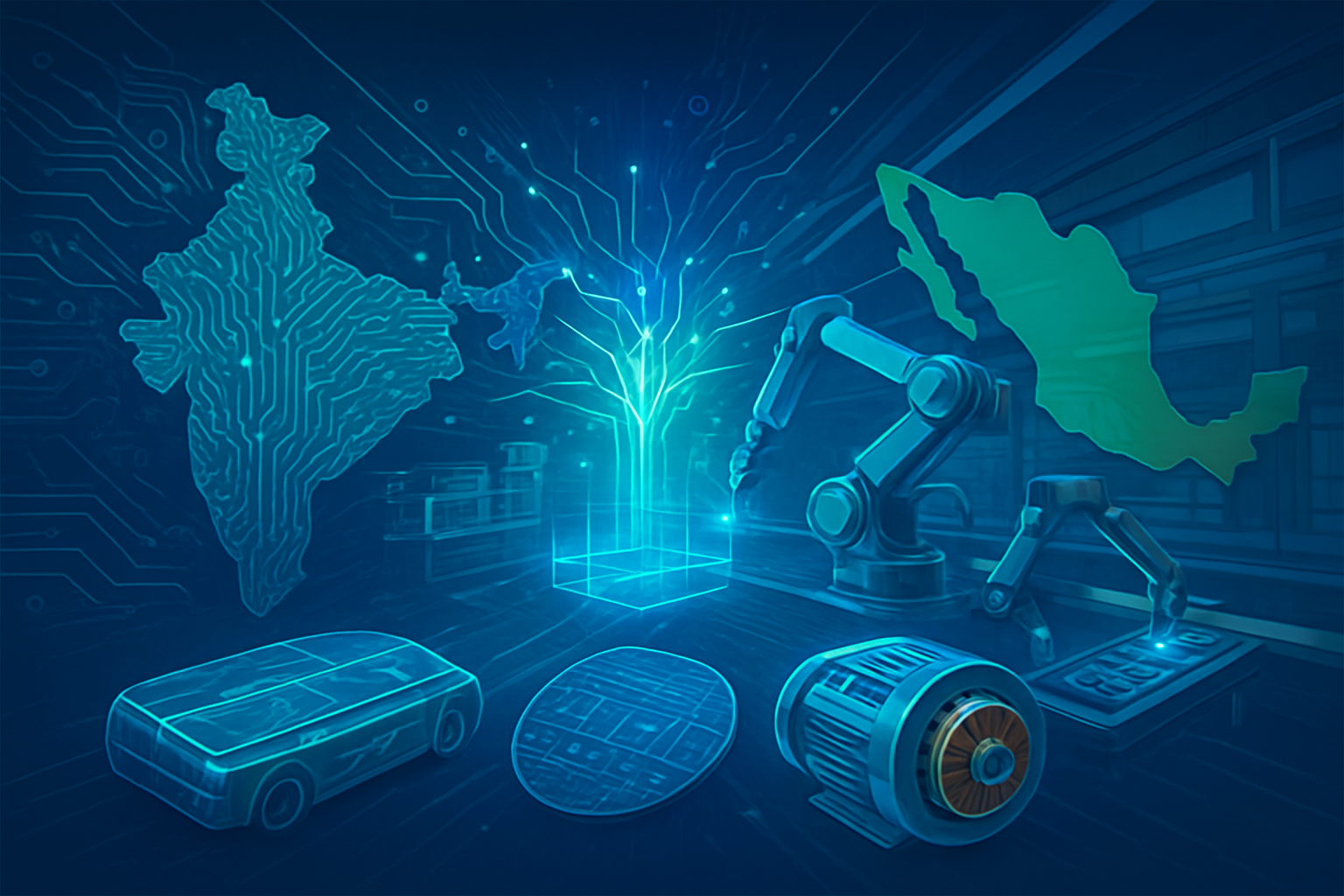
  • India’s Bold Bet: A New Era of Semiconductor Self-Reliance and Global Ambition

    India’s Bold Bet: A New Era of Semiconductor Self-Reliance and Global Ambition

    India is embarking on an ambitious journey to transform itself into a global powerhouse in semiconductor manufacturing, driven by a suite of aggressive government policies, substantial financial incentives, and strategic initiatives. This comprehensive national endeavor is not merely about establishing domestic production capabilities; it is a profound strategic move aimed at bolstering the nation's economic sovereignty, reducing critical import dependencies, and securing its technological future in an increasingly digital and geopolitically complex world. The immediate significance of this push cannot be overstated, as it promises to reshape India's industrial landscape, create high-skilled employment, and position the country as a pivotal player in the global technology supply chain.

    At its core, India's semiconductor strategy seeks to mitigate the vulnerabilities exposed by recent global supply chain disruptions, which highlighted the precariousness of relying heavily on a few concentrated manufacturing hubs. By fostering a robust domestic semiconductor ecosystem, India aims to build resilience against future shocks and ensure a secure supply of the foundational technology for everything from smartphones and electric vehicles to critical defense systems. This strategic imperative is also a significant economic driver, with projections indicating the Indian semiconductor market, valued at approximately $38 billion in 2023, could surge to $100-$110 billion by 2030, creating hundreds of thousands of jobs and fueling high-tech exports.

    The Blueprint for a Semiconductor Superpower: Policies, Incentives, and Strategic Initiatives

    India's journey towards semiconductor self-reliance is meticulously charted through several flagship government policies and programs designed to attract investment and cultivate a thriving domestic ecosystem. The National Policy on Electronics (NPE) 2019 laid the groundwork, aiming to position India as a global hub for Electronics System Design and Manufacturing (ESDM) by promoting domestic production and supporting high-tech projects, including semiconductor facilities. Building on this, the India Semiconductor Mission (ISM), launched in December 2021 with a substantial outlay of ₹76,000 crore (approximately US$10 billion), acts as the nodal agency for orchestrating the long-term development of a sustainable semiconductor and display ecosystem.

    Under the umbrella of the Semicon India Program, implemented through the ISM, the government offers attractive incentive support across the entire semiconductor value chain. A cornerstone of this strategy is the Production Linked Incentive (PLI) Scheme for Semiconductor Manufacturing, also launched in December 2021 with the same ₹76,000 crore outlay. This scheme provides direct financial support, including grants and tax rebates, covering up to 50% of the project cost for eligible companies establishing semiconductor fabrication units, display fabs, and Assembly, Testing, Marking, and Packaging (ATMP)/Outsourced Semiconductor Assembly and Test (OSAT) facilities. This direct financial backing is a significant departure from previous, less aggressive approaches, aiming to de-risk investments for global players.

    Further bolstering the ecosystem, the Design-Linked Incentive (DLI) Scheme, with a budget of INR 1,000 crore (US$114 million), specifically targets local startups and MSMEs, providing financial incentives and design infrastructure support for indigenous chip development. The Scheme for Promotion of Manufacturing of Electronic Components and Semiconductors (SPECS), notified in April 2020, offers a 25% capital expenditure incentive for electronic components and specialized sub-assemblies. Beyond federal initiatives, states like Gujarat, Uttar Pradesh, and Karnataka have introduced their own complementary policies, offering additional capital assistance, land cost reimbursements, and subsidized power tariffs, creating a competitive landscape for attracting investments. The government also allows 100% Foreign Direct Investment (FDI) in the ESDM sector via the automatic route, signaling an open door for international collaboration and technology transfer. These multi-pronged efforts, combined with a focus on talent development and the broader "Make in India" and "Design-led Manufacturing" initiatives, aim to foster not just manufacturing, but also indigenous design and intellectual property generation, ensuring higher economic value and strategic autonomy for India.

    Reshaping the Landscape: Impact on Companies and Competitive Dynamics

    India's aggressive push into semiconductor manufacturing is poised to significantly impact both domestic and international companies, reshaping competitive dynamics within the global tech industry. Major global chipmakers and display manufacturers are keenly eyeing India's incentives, with several already making commitments. Companies like Micron Technology (NASDAQ: MU), a leading U.S. memory chip manufacturer, has announced a significant investment of $2.75 billion to set up an ATMP facility in Gujarat, signaling a major vote of confidence in India's ecosystem. This move is expected to attract other players in the semiconductor supply chain to establish their presence in the region.

    The competitive implications are substantial. For existing global semiconductor giants, India presents an attractive new manufacturing hub, offering diversification away from traditional centers and access to a rapidly growing domestic market. However, it also introduces a new layer of competition, particularly for those who do not engage with India's incentive schemes. Domestically, Indian conglomerates and startups are set to benefit immensely. Companies like Tata Group and Vedanta Limited (NSE: VEDL) have expressed strong interest and are actively pursuing partnerships to establish fabrication units. The government's focus on design-linked incentives (DLI) is specifically designed to nurture local semiconductor design startups, potentially fostering a new generation of Indian "fabless" companies that design chips but outsource manufacturing. This could disrupt the existing product landscape by introducing more cost-effective and customized chip solutions for the Indian market, and potentially for global exports.

    The potential disruption extends to the broader electronics manufacturing services (EMS) sector, where companies like Foxconn (TWSE: 2317) and Pegatron (TWSE: 4938), already present in India for smartphone assembly, could integrate more deeply into the semiconductor supply chain by partnering with local entities or expanding their own component manufacturing. This strategic advantage for companies investing in India lies in their ability to leverage significant government subsidies, access a large and growing talent pool, and cater directly to India's burgeoning demand for electronics, from consumer devices to automotive and defense applications. The entry of major players and the fostering of a domestic ecosystem will inevitably lead to increased competition, but also to greater innovation and a more resilient global semiconductor supply chain, with India emerging as a crucial new node.

    Broader Significance: Geopolitics, Innovation, and Global Trends

    India's semiconductor manufacturing drive transcends mere industrial policy; it is a significant geopolitical move that aligns with broader global trends of supply chain de-risking and technological nationalism. In an era marked by increasing US-China tensions and the weaponization of technology, nations are prioritizing strategic autonomy in critical sectors like semiconductors. India's initiative positions it as a crucial alternative manufacturing destination, offering a democratic and stable environment compared to some existing hubs. This move fits squarely into the global landscape's shift towards diversifying manufacturing bases and building more resilient supply chains, a trend accelerated by the COVID-19 pandemic and ongoing geopolitical realignments.

    The impacts are multi-faceted. Economically, it promises to significantly reduce India's import bill for electronics, foster a high-tech manufacturing base, and create a ripple effect across ancillary industries. Technologically, it encourages indigenous research and development, potentially leading to breakthroughs tailored to India's unique market needs. However, the endeavor is not without potential concerns. The immense capital expenditure required for semiconductor fabs, the highly complex technological know-how, and the intense global competition pose significant challenges. Ensuring a steady supply of ultra-pure water, uninterrupted power, and a highly skilled workforce are critical operational hurdles that need to be consistently addressed. Comparisons to previous AI milestones, such as the rise of Silicon Valley or the emergence of East Asian manufacturing powerhouses, highlight the long-term vision required and the potential for transformative economic growth if successful.

    Moreover, India's push is a crucial step towards achieving technological sovereignty, enabling the nation to control the foundational components of its digital future. This is particularly vital for national security and defense applications, where reliance on foreign-made chips can pose significant risks. By fostering a domestic ecosystem, India aims to mitigate these vulnerabilities and ensure that its strategic technologies are built on secure foundations. The success of this initiative could fundamentally alter the global semiconductor map, reducing over-reliance on a few regions and contributing to a more distributed and resilient global technology infrastructure, thereby impacting global power dynamics and technological innovation for decades to come.

    The Road Ahead: Future Developments and Expert Predictions

    The coming years are expected to witness significant acceleration in India's semiconductor journey, marked by both near-term milestones and long-term strategic developments. In the near term, the focus will be on the operationalization of approved projects, particularly the ATMP facilities and the first fabrication units. Experts predict that India's first domestically produced semiconductor chip, likely from a facility like the one being set up by CG Power, could roll out by the end of 2025, marking a tangible achievement. This initial success will be crucial for building confidence and attracting further investment. The government is also expected to continue refining its incentive schemes, potentially introducing new support mechanisms to address specific gaps in the ecosystem, such as advanced packaging or specialized materials.

    Long-term developments will likely include the establishment of multiple high-volume fabrication units across different technology nodes, moving beyond assembly and testing to full-fledged chip manufacturing. This will be complemented by a burgeoning design ecosystem, with Indian startups increasingly developing intellectual property for a range of applications, from AI accelerators to IoT devices. Potential applications and use cases on the horizon are vast, spanning across consumer electronics, automotive (especially electric vehicles), telecommunications (5G/6G infrastructure), defense, and even space technology. The "Semicon City" concept, exemplified by Gujarat's initiative, is expected to proliferate, creating integrated clusters that combine manufacturing, research, and talent development.

    However, significant challenges need to be addressed. Securing access to advanced technology licenses from global leaders, attracting and retaining top-tier talent in a highly competitive global market, and ensuring sustainable infrastructure (power, water) will remain critical. Geopolitical shifts and global market fluctuations could also impact investment flows and the pace of development. Experts predict that while India's ambition is grand, the success will hinge on consistent policy implementation, seamless collaboration between industry and academia, and continued government commitment. The next decade will be pivotal in determining whether India can truly transform into a self-reliant semiconductor giant, with its impact reverberating across the global tech landscape.

    A New Dawn for Indian Tech: A Comprehensive Wrap-up

    India's determined push for self-reliance in semiconductor manufacturing marks a watershed moment in the nation's technological and economic history. The confluence of robust government policies, substantial financial incentives like the PLI and DLI schemes, and strategic initiatives under the India Semiconductor Mission underscores a clear national resolve to establish a comprehensive domestic semiconductor ecosystem. The key takeaways are clear: India is committed to de-risking global supply chains, fostering indigenous innovation, creating high-skilled employment, and achieving technological sovereignty. The immediate significance lies in enhancing national security and positioning India as a resilient player in the global technology arena.

    This development holds immense significance in AI history, not directly as an AI breakthrough, but as a foundational enabler for future AI advancements within India. Semiconductors are the bedrock upon which AI hardware is built, from powerful GPUs for training large language models to energy-efficient chips for edge AI applications. A strong domestic semiconductor industry will empower Indian AI companies and researchers to innovate more freely, develop specialized AI hardware, and reduce reliance on imported components, thereby accelerating India's progress in the global AI race. It represents a strategic investment in the underlying infrastructure that will fuel the next generation of AI innovation.

    Looking ahead, the long-term impact is poised to be transformative, positioning India as a significant contributor to the global technology supply chain and fostering a vibrant domestic innovation landscape. What to watch for in the coming weeks and months includes further announcements of investment from global chipmakers, progress on the ground at existing and newly approved fabrication sites, and the government's continued efforts to streamline regulatory processes and develop a robust talent pipeline. The success of this endeavor will not only redefine India's economic trajectory but also solidify its standing as a major force in the evolving global technological order.


    This content is intended for informational purposes only and represents analysis of current AI developments.

    TokenRing AI delivers enterprise-grade solutions for multi-agent AI workflow orchestration, AI-powered development tools, and seamless remote collaboration platforms.
    For more information, visit https://www.tokenring.ai/.

  • Dholera Emerges as India’s Semiconductor Superhub: A New Dawn for High-Tech Manufacturing

    Dholera Emerges as India’s Semiconductor Superhub: A New Dawn for High-Tech Manufacturing

    Dholera Special Investment Region (SIR) in Gujarat is rapidly transforming into India's most ambitious high-tech manufacturing and innovation hub. With an unwavering focus on the burgeoning semiconductor industry and other advanced technology sectors, this strategically located smart city is poised to attract unprecedented levels of domestic and international investment. The extensive governmental support, coupled with world-class infrastructure, signals a significant leap forward in India's aspiration to become a global leader in advanced manufacturing, moving beyond its traditional strengths in IT services to hardware and deep technology.

    This monumental development is not merely an urban planning project but a cornerstone of India's broader economic and technological sovereignty agenda. By creating a conducive environment for cutting-edge industries, Dholera aims to reduce the nation's reliance on global supply chains, particularly in critical sectors like semiconductors, and foster an ecosystem ripe for innovation in AI, IoT, electric vehicles, and renewable energy. The sheer scale and speed of its development underscore a national commitment to establishing a resilient and technologically advanced manufacturing base, set to redefine India's position on the global economic stage.

    Engineering a Silicon Future: The Technical Blueprint of Dholera

    Dholera SIR, spanning an impressive 920 square kilometers – twice the size of Mumbai – is being meticulously engineered as India's largest Greenfield smart city and a "plug-and-play" ecosystem for high-tech industries. Its strategic location along the Delhi-Mumbai Industrial Corridor (DMIC) provides unparalleled logistical advantages. The technical infrastructure is designed for seamless operations, featuring 72 km of fully developed internal roads and robust underground utility corridors that ensure uninterrupted access to electricity, data, water, gas, and effluent solutions. This comprehensive approach aims to drastically minimize setup time and capital expenditure for incoming investors, differentiating it from conventional industrial parks.

    The region boasts advanced Information and Communication Technology (ICT) infrastructure, including high-speed fiber optic networks, IoT capabilities, big data analytics, and AI solutions for real-time monitoring and smart governance, with the ABCD (Administrative Cum Business Centre for Dholera) building serving as the city's command-and-control hub. Power supply is secured through dual sources, complemented by a massive 4,400 MW solar park, with 300 MW already operational by Tata Power (NSE: TATAPOWER). Potable water is ensured by a 50 MLD water treatment plant and desalination infrastructure. This integrated smart city design, supported by the Gujarat Semiconductor Policy (2022) which offers significant capital expenditure assistance (40% in addition to central support) and land subsidies (75% for the first 200 acres), sets Dholera apart. The single-window clearance system and fixed timelines for approvals further streamline the "ease of doing business," a stark contrast to traditional bureaucratic hurdles. Initial reactions from the industry have been overwhelmingly positive, evidenced by significant investment commitments from major players like Tata Electronics (NSE: TATAELXSI) and Nextgen Semiconductors, validating Dholera's potential as a premier manufacturing destination.

    Catalyzing Growth: Impact on Tech Giants and Emerging Innovators

    Dholera's emergence as a high-tech manufacturing hub is set to profoundly impact a diverse range of companies, from established tech giants to agile startups. Tata Electronics (NSE: TATAELXSI), in partnership with Taiwan's Powerchip Semiconductor Manufacturing Corporation (PSMC), is constructing India's first AI-enabled semiconductor fabrication plant (fab) in Dholera with a staggering investment of ₹91,000 crore (approximately $11 billion). This facility, expected to be operational by 2026, will produce 50,000 wafers per month for critical sectors like automotive, AI, data storage, and wireless communication. This move positions Tata Electronics as a pivotal player in India's semiconductor ambitions and signals a strategic diversification for the conglomerate.

    Beyond Tata, Nextgen Semiconductors has announced an ₹8,800 crore investment for a Silicon Carbide (SiC) chip fabrication plant, with construction anticipated by April 2026. While not directly in Dholera, Micron Technology (NASDAQ: MU), the American chip giant, is investing $2.75 billion in an Outsourced Semiconductor Assembly and Testing (OSAT) facility in nearby Sanand, expected to be fully operational by the end of 2025. Similarly, CG Power (NSE: CGPOWER), part of the Murugappa Group, is establishing an OSAT plant in Sanand with a ₹7,600 crore investment. These developments collectively create a robust semiconductor ecosystem in Gujarat, benefiting from Dholera's advanced infrastructure and policy support. The competitive implications are significant, as India aims to disrupt existing global supply chains, offering a new, reliable manufacturing base. This shift could lead to new product development opportunities for domestic startups leveraging locally produced chips and components, fostering a vibrant innovation landscape.

    A New Chapter in India's Tech Odyssey: Wider Significance

    Dholera's strategic development fits seamlessly into India's broader "Make in India" and "Atmanirbhar Bharat" (self-reliant India) initiatives, aiming to elevate the nation's role in the global technology landscape. This ambitious undertaking signifies a pivot from primarily software and services to advanced hardware manufacturing, a critical step for a truly self-reliant digital economy. The impacts are multi-faceted: it promises to generate hundreds of thousands of high-skilled jobs, stimulate economic growth in Gujarat, and bolster India's technological sovereignty by securing crucial components like semiconductors. This is particularly vital in an era marked by global chip shortages and geopolitical tensions, making reliable domestic production a national imperative.

    The project represents a significant milestone compared to previous industrial development efforts, leveraging smart city principles and an integrated approach to infrastructure, policy, and industry attraction. While the opportunities are immense, potential concerns include the sustained attraction of a highly skilled workforce, managing the environmental impact of large-scale industrialization, and navigating the complexities of global competition in the semiconductor sector. However, the comprehensive planning and robust governmental backing suggest a strong commitment to addressing these challenges. Dholera's success could serve as a blueprint for future industrial smart cities in India, positioning the nation as a formidable player in the global high-tech manufacturing arena, much like how Silicon Valley shaped the digital revolution or Shenzhen transformed into a manufacturing powerhouse.

    The Road Ahead: Anticipating Future Developments and Challenges

    The near-term future for Dholera promises a flurry of activity and significant milestones. The Ahmedabad-Dholera Expressway, a vital artery, is expected to be fully operational by late 2025, drastically cutting travel times and enhancing connectivity. Concurrently, the Dholera International Airport is slated for cargo operations in Q2 FY25-26 and passenger flights by early 2026, further cementing Dholera's logistical advantages. Crucially, the Tata Electronics (NSE: TATAELXSI) semiconductor fab is on track to be operational by 2026, marking a pivotal moment for India's indigenous chip manufacturing capabilities. Similarly, Micron Technology's (NASDAQ: MU) Sanand facility is expected to be fully operational by the end of 2025.

    Looking further ahead, Dholera is envisioned to be a fully functional, self-sustained industrial-residential smart city by 2047, aligning with India's 100th year of independence. This long-term vision includes continuous expansion of its industrial base, further integration of AI and IoT into urban management, and the development of a vibrant social infrastructure to support a growing population. Challenges remain, including the need to continuously attract and retain top-tier talent, adapt to rapidly evolving technological landscapes, and maintain the momentum of investment amidst global economic shifts. Experts predict that Dholera's success will be a critical determinant of India's ability to become a significant player in the global semiconductor value chain, potentially transforming it into a major hub for advanced electronics and AI-driven manufacturing.

    Dholera's Defining Moment: A Comprehensive Wrap-Up

    Dholera's strategic development represents a defining moment in India's industrial and technological history. The confluence of ambitious government policies, substantial infrastructure investments, and significant commitments from global and domestic technology leaders is propelling Dholera into the forefront of high-tech manufacturing, particularly in the critical semiconductor sector. Key takeaways include India's proactive stance in creating a resilient supply chain, the innovative "plug-and-play" smart city model, and the magnetic pull of incentives attracting major players like Tata Electronics (NSE: TATAELXSI) and Micron Technology (NASDAQ: MU).

    This development's significance in AI history is profound, as it lays the groundwork for indigenous AI hardware development and advanced electronics manufacturing, crucial for realizing the full potential of AI applications across various industries. The long-term impact is expected to reshape India's economic trajectory, foster technological self-reliance, and establish a new benchmark for integrated industrial city development globally. In the coming weeks and months, all eyes will be on the progress of the Tata Electronics fab, the operationalization of the Dholera International Airport and Expressway, and further announcements of investments, which will undoubtedly solidify Dholera's position as a beacon of India's high-tech future.


    This content is intended for informational purposes only and represents analysis of current AI developments.

    TokenRing AI delivers enterprise-grade solutions for multi-agent AI workflow orchestration, AI-powered development tools, and seamless remote collaboration platforms.
    For more information, visit https://www.tokenring.ai/.

  • India’s Silicon Surge: Gujarat Emerges as a Global Semiconductor Powerhouse

    India’s Silicon Surge: Gujarat Emerges as a Global Semiconductor Powerhouse

    Gandhinagar, Gujarat – November 3, 2025 – India is making an aggressive and strategic push to etch its name into the global semiconductor manufacturing landscape, with the state of Gujarat rapidly emerging as the epicenter of this ambitious endeavor. Union Minister for Electronics and Information Technology, Ashwini Vaishnaw, today concluded a pivotal review meeting in Gandhinagar, underscoring the significant progress of four critical semiconductor projects in the state. His optimistic pronouncements signal a new era for India, moving beyond a mere consumer of chips to a formidable producer, a transformation vital for the nation's technological sovereignty, economic resilience, and its burgeoning artificial intelligence ecosystem.

    This concerted effort, backed by substantial government incentives under the India Semiconductor Mission (ISM), aims to mitigate global supply chain vulnerabilities and position India as a reliable partner in high-tech manufacturing. With pilot production already underway at several sites, the vision of "Made in India" chips powering the next generation of electronics, including advanced AI hardware, is rapidly materializing. The strategic importance of these facilities in Gujarat cannot be overstated, as they lay the foundational silicon for a future where India's digital economy is not just robust but also self-reliant.

    Laying the Silicon Foundation: Technical Deep Dive into Gujarat's Chip Plants

    The progress reviewed by Minister Vaishnaw highlights a multi-pronged approach to semiconductor manufacturing, encompassing various crucial stages of chip production. Central to this initiative are four key projects, each bringing distinct capabilities to India's nascent chip ecosystem.

    Leading the charge is Micron Technology (NASDAQ: MU), which is establishing a state-of-the-art assembly and test (ATMP) facility in Sanand. This plant will focus on packaging and testing DRAM and NAND products, essential memory components for everything from smartphones to data centers, and critically, AI accelerators. As of today, November 3, 2025, pilot production at Micron’s mini-plant has commenced and is scaling up, with Phase 1 of the larger facility expected to be fully operational in early 2025. This move is significant as it brings advanced memory packaging capabilities directly to Indian soil, reducing reliance on overseas facilities and enhancing supply chain security for high-demand components.

    In a landmark development, Tata Electronics, in collaboration with Taiwan's Powerchip Semiconductor Manufacturing Corporation (PSMC) (TWSE: 6770), is constructing India's first commercial semiconductor fabrication facility (fab) in Dholera. This ambitious project, with an investment exceeding ₹91,000 crore (approximately $11 billion), is slated to begin operations by 2027. This fab will be capable of producing advanced logic chips, which are the brains of modern electronics and critical for complex AI computations. Unlike previous Indian attempts at semiconductor manufacturing, which often stalled, this venture represents a robust, government-backed, and internationally partnered effort to establish a full-fledged foundry.

    Further bolstering the ecosystem is the collaboration between CG Power and Industrial Solutions (NSE: CGPOWER), Japan's Renesas Electronics Corporation (TYO: 6723), and Thailand's Stars Microelectronics (SET: SMT). This consortium is setting up an Outsourced Semiconductor Assembly and Test (OSAT) facility in Sanand. OSAT facilities are crucial for the final stages of chip manufacturing, including packaging, testing, and preparing chips for integration into electronic devices. Pilot production has already begun at this site, with a significant milestone achieved on August 28, 2025, when one of India's first end-to-end OSAT pilot lines was inaugurated, rolling out the first 'Made in India' chip from CG-Semi. Additionally, Kaynes Semicon, an Indian electronics firm, is establishing its own chip manufacturing facility in Sanand, also with pilot production underway, aiming to produce around 6 million chips daily.

    These projects collectively mark a departure from India's previous focus primarily on chip design, shifting towards an integrated approach that includes fabrication, assembly, and testing. This holistic strategy is vital for building a resilient domestic supply chain, attracting further investments, and cultivating a skilled workforce. The initial reactions from within the Indian government and industry have been overwhelmingly positive, viewing these developments as a monumental step towards technological self-sufficiency and a testament to India's commitment to becoming a global manufacturing hub.

    Catalyzing India's Tech Landscape: Impact on Companies and Competition

    The establishment of these semiconductor manufacturing plants in Gujarat is poised to profoundly impact India's technology landscape, creating a ripple effect across various sectors and reshaping competitive dynamics. Several companies, both domestic and international, stand to gain significantly from this development.

    Micron Technology (NASDAQ: MU) is a direct beneficiary, leveraging India's incentives and burgeoning market to expand its global manufacturing footprint. This move strengthens its position in the memory chip market and provides a strategic base for serving the rapidly growing Indian and regional electronics markets. For the Tata Group, through Tata Electronics, this venture marks a monumental entry into high-tech manufacturing, diversifying its industrial portfolio and positioning it as a key player in India's strategic technology ambitions. Their partnership with PSMC (TWSE: 6770) brings invaluable expertise and technology to India, fostering a robust knowledge transfer. Similarly, Renesas Electronics Corporation (TYO: 6723) and Stars Microelectronics (SET: SMT) benefit from expanding into a new, high-growth market, while CG Power and Industrial Solutions (NSE: CGPOWER) and Kaynes Technology India (NSE: KAYNES), through its subsidiary Kaynes Semicon, are at the forefront of establishing indigenous OSAT capabilities, elevating their market positioning within India's electronics manufacturing services (EMS) sector.

    The competitive implications for major AI labs and tech companies are substantial. A domestic semiconductor supply chain promises greater security, reduced lead times, and potentially lower costs for Indian tech giants and startups that rely heavily on specialized chips for AI development, cloud computing, and advanced electronics. This can foster innovation by making it easier for smaller firms to access critical hardware, potentially disrupting existing product lines that are heavily dependent on imported components. Indian companies developing AI hardware, edge AI devices, and specialized processors will find a more robust local ecosystem to support their R&D and manufacturing needs. This also positions India as an attractive destination for global tech giants looking to diversify their supply chains and tap into a growing local market for AI-driven solutions.

    Furthermore, this initiative creates strategic advantages for India by reducing its vulnerability to geopolitical tensions and global supply chain disruptions, as witnessed during the recent chip shortages. It enhances India's bargaining power in the global technology arena and supports the "Make in India" and "Digital India" initiatives. The development of a local semiconductor ecosystem will not only attract further foreign direct investment but also cultivate a highly skilled workforce, creating a virtuous cycle of growth and innovation.

    Reshaping the Global Tech Landscape: Wider Significance and Implications

    India's aggressive foray into semiconductor manufacturing transcends mere industrial development; it represents a pivotal shift in the broader global technology landscape and holds profound implications for the future of AI. Semiconductors are the foundational bedrock upon which all modern technology, especially AI, is built. By establishing these fabrication and assembly plants, India is not just manufacturing chips; it is building the very infrastructure that will power its AI aspirations, from advanced research to widespread deployment.

    This initiative directly addresses critical trends in the global AI landscape, particularly the increasing demand for specialized AI hardware, edge computing, and robust data center infrastructure. A domestic supply of chips ensures that India's burgeoning AI sector has reliable access to the necessary components, fostering greater innovation and reducing dependence on external geopolitical factors. The move aligns with a global trend of nations seeking greater technological sovereignty and supply chain resilience in critical sectors.

    The impacts are multifaceted. Economically, these projects are expected to generate thousands of high-skilled jobs, stimulate ancillary industries, and significantly contribute to India's GDP growth. Geopolitically, India's emergence as a semiconductor manufacturer adds another dimension to global supply chain diversification, potentially offering an alternative to existing hubs and strengthening its strategic partnerships. It reinforces India's position as a rising technological power, capable of contributing to complex global manufacturing.

    However, this ambitious undertaking is not without potential concerns. The environmental impact of semiconductor fabrication, particularly regarding water and energy consumption, is significant and will require sustainable practices and robust regulatory oversight. Ensuring a consistent supply of ultra-pure water and uninterrupted power will be crucial. Furthermore, the immense capital expenditure and the highly competitive nature of the global semiconductor industry pose continuous challenges in terms of technological upgrades and attracting top-tier talent. Comparisons can be drawn to the early days of semiconductor development in Taiwan and South Korea, where sustained government support, strategic investments, and a relentless focus on R&D were key to their success. India's journey, while starting later, benefits from observing these precedents and leveraging global partnerships.

    The Road Ahead: Future Developments and Expert Predictions

    The current progress in Gujarat marks merely the beginning of India's long-term vision for semiconductor self-reliance. In the near term, the focus will be on the successful ramp-up of pilot productions to full commercial operations at the Micron, CG Power, and Kaynes facilities, with Minister Vaishnaw predicting significant production levels within the next two to three months for three of the Gujarat plants. The successful commissioning of Tata Electronics' fab by 2027 will be a monumental milestone, ushering in India's capability to produce advanced logic chips.

    Looking further ahead, expected developments include the expansion of existing plants, attracting more global semiconductor giants to set up manufacturing or design units in India, and the growth of a robust domestic ecosystem for semiconductor design, materials, and equipment. The government is likely to continue offering attractive incentives and fostering a conducive policy environment to sustain this momentum. Potential applications and use cases on the horizon are vast, ranging from powering next-generation smartphones and consumer electronics to advanced automotive systems, defense applications, and a new wave of AI-powered industrial IoT devices. India's burgeoning startup ecosystem, particularly in AI and hardware, stands to benefit immensely from localized chip manufacturing.

    However, several challenges need to be addressed to ensure sustained success. The most critical is the talent gap; a continuous supply of highly skilled engineers and technicians specializing in semiconductor manufacturing, process technology, and materials science will be essential. India will need to invest heavily in specialized education and training programs. Furthermore, staying abreast of rapidly evolving semiconductor technology, which requires massive R&D investment, will be crucial. Experts predict that India's strategic focus on both ATMP/OSAT and full-scale fabrication is a wise approach, allowing for quicker wins in assembly and testing while building foundational fab capabilities. The long-term success will hinge on consistent policy support, continuous innovation, and the ability to integrate seamlessly into the global semiconductor value chain, not just as a manufacturing hub but also as a significant contributor to design and intellectual property.

    A New Dawn for India's Tech Ambitions: A Comprehensive Wrap-up

    India's determined march towards establishing a robust semiconductor manufacturing ecosystem in Gujarat represents a watershed moment in its technological journey. The swift progress, highlighted by Union Minister Ashwini Vaishnaw's recent review, underscores a strategic shift from being primarily a consumer and designer of chips to a significant global producer. Key takeaways include the rapid advancement of projects by Micron, Tata Electronics with PSMC, CG Power with Renesas and Stars Microelectronics, and Kaynes Semicon, all contributing diverse capabilities from advanced packaging and testing to full-scale chip fabrication.

    This development holds immense significance for the future of AI in India. While not an AI breakthrough in itself, it is the fundamental enabler for all AI advancements. A secure, domestic supply of semiconductors will empower India's AI researchers, developers, and hardware companies, fostering innovation, reducing costs, and ensuring a resilient infrastructure for the nation's digital economy. It is a testament to India's commitment to technological sovereignty and its ambition to play a leading role in the global tech order.

    The long-term impact of these initiatives will be transformative, cementing India's position as a global manufacturing hub, creating substantial economic opportunities, and enhancing its strategic independence in critical technologies. What to watch for in the coming weeks and months are further announcements on production milestones, the onboarding of more international partners, and the continued development of a skilled workforce. The successful execution of these projects will not only fulfill India's vision of "Made in India" chips but also lay a powerful foundation for its aspirations as a leader in the age of artificial intelligence.


    This content is intended for informational purposes only and represents analysis of current AI developments.

    TokenRing AI delivers enterprise-grade solutions for multi-agent AI workflow orchestration, AI-powered development tools, and seamless remote collaboration platforms.
    For more information, visit https://www.tokenring.ai/.

  • India Breaks Ground on First Integrated Device Manufacturing Facility, Paving Way for Semiconductor Self-Reliance

    India Breaks Ground on First Integrated Device Manufacturing Facility, Paving Way for Semiconductor Self-Reliance

    Bhubaneswar, Odisha – November 1, 2025 – In a landmark moment for India's burgeoning technology sector, SiCSem Pvt. Ltd. today officially broke ground on the nation's first integrated device manufacturing (IDM) facility in Bhubaneswar, Odisha. This pivotal event, which saw the physical laying of the foundation stone following a virtual ceremony earlier in the year, signifies a monumental leap towards achieving self-reliance in the critical domain of electronics and semiconductor production. The facility is poised to revolutionize India's power electronics landscape, significantly reducing the country's dependence on foreign imports and bolstering its strategic autonomy in advanced technological manufacturing.

    The establishment of this cutting-edge plant by SiCSem Pvt. Ltd., a subsidiary of Archean Chemical Industries Ltd. (NSE: ARCHEAN, BSE: 543428), represents a tangible realization of India's "Make in India" and "Atmanirbhar Bharat" (Self-Reliant India) initiatives. With an estimated investment of ₹2,067 crore (and some reports suggesting up to ₹2,500 crore), the facility will be dedicated to the end-to-end production of silicon carbide (SiC) semiconductors, crucial components for a wide array of high-growth industries. This development is not merely an industrial expansion; it is a strategic national asset that will underpin India's ambitions in electric vehicles, renewable energy, and advanced communication systems, creating an estimated 1,000 direct jobs and numerous indirect opportunities.

    Technical Prowess and Strategic Differentiation

    The SiCSem IDM facility, situated on 14.32 acres (some reports suggest 23 acres) in Infovalley-II, Bhubaneswar, is designed to integrate the entire silicon carbide semiconductor manufacturing process under one roof. This comprehensive approach, from raw material processing to final device fabrication, sets it apart as India's first true IDM for SiC. Specifically, the plant will handle silicon carbide crystal ingot growth, wafer slicing and polishing, and ultimately, the fabrication of SiC diodes, MOSFETs, and power modules. This end-to-end capability is a significant departure from previous approaches in India, which largely focused on assembly, testing, marking, and packaging (ATMP) or relied on imported wafers and components for further processing.

    The technical specifications and capabilities of the facility are geared towards producing high-performance electronic power devices essential for modern technological advancements. Silicon carbide, known for its superior thermal conductivity, high-voltage breakdown strength, and faster switching speeds compared to traditional silicon, is critical for next-generation power electronics. Devices produced here will cater to the demanding requirements of electric vehicles (EVs) – including inverters and charging infrastructure – energy storage systems, fast chargers, green energy solutions (solar inverters, wind power converters), industrial tools, data centers, consumer appliances, and even advanced sectors like 5G & 6G communication, aerospace, and satellite industries. The integration of the entire value chain ensures stringent quality control, accelerates research and development cycles, and fosters indigenous innovation.

    Initial reactions from the AI research community and industry experts have been overwhelmingly positive, highlighting the strategic importance of this venture. Experts laud SiCSem's forward-thinking approach to establish an IDM, which is a more complex and capital-intensive undertaking than simpler fabrication units but offers greater control over the supply chain and intellectual property. The establishment of a dedicated Silicon Carbide Research and Innovation Center (SICRIC) at IIT-Bhubaneswar, backed by SiCSem's ₹64 crore investment, further underscores the commitment to indigenous R&D. This collaboration is seen as a vital step to bridge the gap between academic research and industrial application, ensuring a continuous pipeline of talent and technological advancements in SiC technology within India.

    Reshaping the AI and Tech Landscape

    The groundbreaking of SiCSem's IDM facility carries profound implications for AI companies, tech giants, and startups operating within India and globally. The most immediate beneficiaries will be Indian companies engaged in manufacturing electric vehicles, renewable energy solutions, and advanced industrial electronics. Companies like Tata Motors (NSE: TATAMOTORS, BSE: 500570), Mahindra & Mahindra (NSE: M&M, BSE: 500520), and various EV charging infrastructure providers will gain a reliable, domestic source of critical power semiconductor components, reducing their exposure to global supply chain vulnerabilities and potentially lowering costs. This domestic supply will also foster greater innovation in product design, allowing for more tailored solutions optimized for the Indian market.

    For global tech giants with a presence in India, such as those involved in data center operations or consumer electronics manufacturing, the availability of domestically produced SiC semiconductors could streamline their supply chains and enhance their "Make in India" commitments. While SiCSem's initial focus is on power electronics, the establishment of a sophisticated IDM ecosystem could attract further investments in related semiconductor technologies, creating a more robust and diverse manufacturing base. This development could spur other domestic and international players to invest in India's semiconductor sector, intensifying competition but also fostering a more vibrant and innovative environment.

    The potential disruption to existing products or services, particularly those heavily reliant on imported power semiconductors, is significant. While not an immediate overhaul, the long-term trend will favor products incorporating indigenously manufactured components, potentially leading to cost efficiencies and improved performance. From a market positioning perspective, SiCSem is strategically placing India as a key player in the global SiC semiconductor market, which is projected for substantial growth driven by EV adoption and green energy transitions. This strategic advantage will not only benefit SiCSem but also elevate India's standing in the high-tech manufacturing landscape, attracting further foreign direct investment and fostering a skilled workforce.

    Wider Significance for India's Technological Sovereignty

    SiCSem's IDM facility is a cornerstone of India's broader strategic push for technological sovereignty and self-reliance. It fits squarely within the "Atmanirbhar Bharat" vision, aiming to reduce India's heavy reliance on semiconductor imports, which currently makes the nation vulnerable to global supply chain disruptions and geopolitical tensions. By establishing an end-to-end manufacturing capability for critical SiC components, India is securing its supply for essential sectors like defense, telecommunications, and energy, thereby enhancing national security and economic resilience. This move is comparable to previous AI milestones where nations or regions invested heavily in foundational technologies, recognizing their strategic importance.

    The impacts extend beyond mere manufacturing capacity. This facility will serve as a catalyst for developing a comprehensive electronics system design and manufacturing (ESDM) ecosystem in Odisha and across India. It will foster a local talent pool specializing in advanced semiconductor technologies, from materials science to device physics and fabrication processes. The collaboration with IIT-Bhubaneswar through SICRIC is a crucial element in this, ensuring that the facility is not just a production unit but also a hub for cutting-edge research and innovation, fostering indigenous intellectual property.

    Potential concerns, while overshadowed by the positive implications, include the significant capital expenditure and the highly competitive global semiconductor market. Maintaining technological parity with established global players and ensuring a continuous pipeline of skilled labor will be ongoing challenges. However, the government's strong policy support through schemes like the India Semiconductor Mission and production-linked incentive (PLI) schemes significantly mitigates these risks, making such ventures viable. This development marks a critical step, reminiscent of the early days of software services or IT outsourcing in India, where foundational investments led to exponential growth and global leadership in specific domains.

    Future Developments and Expert Outlook

    The groundbreaking of SiCSem's facility heralds a new era for India's semiconductor ambitions, with significant near-term and long-term developments expected. In the near term, the focus will be on the rapid construction and operationalization of the facility, which is anticipated to begin initial production within the next few years. As the plant scales up, it will progressively reduce India's import dependency for SiC power devices, leading to more stable supply chains for domestic manufacturers. The SICRIC at IIT-Bhubaneswar is expected to churn out crucial research and development, potentially leading to proprietary SiC technologies and improved manufacturing processes.

    Long-term, experts predict that SiCSem's success could act as a magnet, attracting further investments in different types of semiconductor manufacturing, including more advanced logic or memory fabs, or other specialty materials. This could lead to a diversified semiconductor ecosystem in India, making the country a significant player on the global stage. Potential applications and use cases on the horizon include highly efficient power management units for next-generation AI data centers, advanced power modules for high-speed rail, and even specialized components for space exploration.

    However, challenges remain. India will need to continuously invest in R&D, talent development, and robust infrastructure to sustain this growth. Ensuring competitive costs and maintaining global quality standards will be paramount. Experts predict that while the initial focus will be on domestic demand, SiCSem could eventually eye export markets, positioning India as a global supplier of SiC power semiconductors. The next steps will involve rigorous project execution, talent acquisition, and continued policy support to ensure the successful realization of this ambitious vision.

    A New Dawn for India's Tech Sovereignty

    The groundbreaking of SiCSem Pvt. Ltd.'s integrated device manufacturing facility in Bhubaneswar on November 1, 2025, is more than just a corporate announcement; it is a declaration of India's unwavering commitment to technological sovereignty and economic self-reliance. The key takeaway is the establishment of India's first end-to-end SiC semiconductor manufacturing plant, a critical step towards building an indigenous semiconductor ecosystem. This development's significance in India's technology history cannot be overstated, marking a pivotal shift from an import-dependent nation to a self-sufficient, high-tech manufacturing hub in a crucial sector.

    This venture is poised to have a profound long-term impact, not only by providing essential components for India's burgeoning EV and green energy sectors but also by fostering a culture of advanced manufacturing, research, and innovation. It lays the groundwork for future technological advancements and positions India as a strategic player in the global semiconductor supply chain. What to watch for in the coming weeks and months includes progress on the facility's construction, further announcements regarding strategic partnerships, and the continued development of the talent pipeline through collaborations with academic institutions. This is a journey that promises to reshape India's technological landscape for decades to come.


    This content is intended for informational purposes only and represents analysis of current AI developments.

    TokenRing AI delivers enterprise-grade solutions for multi-agent AI workflow orchestration, AI-powered development tools, and seamless remote collaboration platforms.
    For more information, visit https://www.tokenring.ai/.

  • India Unveils Its First Commercial Compound Semiconductor Fab: A New Era for Domestic Tech Manufacturing

    India Unveils Its First Commercial Compound Semiconductor Fab: A New Era for Domestic Tech Manufacturing

    Bhubaneswar, Odisha – November 1, 2025 – Today marks a pivotal moment in India’s technological journey as the groundbreaking ceremony for SiCSem Private Limited’s compound semiconductor unit takes place in Infovalley, Jatni, Bhubaneswar. Hailed as India's first commercial compound semiconductor fabrication facility and an end-to-end silicon carbide (SiC) semiconductor production plant, this development is set to significantly bolster the nation's capabilities in advanced electronics manufacturing and reduce its reliance on foreign imports. This facility, a subsidiary of Archean Chemical Industries Ltd. (NSE: ACI, BSE: 543665) in collaboration with Clas-SiC Wafer Fab Ltd., UK, positions India at the forefront of the burgeoning global SiC market, critical for the next generation of electric vehicles, renewable energy systems, and high-efficiency power electronics.

    The establishment of this cutting-edge unit signifies a monumental leap for India’s "Make in India" and "Atmanirbhar Bharat" (self-reliant India) initiatives. With an initial investment of approximately ₹2,067 crore, the plant is designed to process 60,000 SiC wafers annually and achieve a packaging capacity of around 96 million units of MOSFETs and diodes. This strategic move is not just about manufacturing; it's about building a foundational technology that underpins numerous high-growth sectors, ensuring India's technological sovereignty and fostering a robust domestic supply chain.

    Technical Prowess and Strategic Differentiation

    The SiCSem facility will specialize in producing Silicon Carbide (SiC) devices, including advanced MOSFETs (Metal-Oxide-Semiconductor Field-Effect Transistors) and diodes. These components are paramount for high-power, high-frequency, and high-temperature applications where traditional silicon-based semiconductors fall short. The technical specifications of SiC devices offer superior efficiency, lower energy losses, and enhanced thermal performance compared to their silicon counterparts, making them indispensable for modern technological demands.

    Specifically, these SiC MOSFETs and diodes will be crucial for the rapidly expanding electric vehicle (EV) sector, enabling more efficient power conversion in inverters and charging systems. Beyond EVs, their applications extend to renewable energy systems (solar inverters, wind turbine converters), smart grid infrastructure, defense equipment, railway systems, fast chargers for consumer electronics, data center racks requiring efficient power management, and a wide array of consumer appliances. The "end-to-end" nature of this plant, covering the entire production process from wafer fabrication to packaging, distinguishes it significantly from previous Indian ventures that often focused on assembly or design. This integrated approach ensures greater control over quality, intellectual property, and supply chain resilience.

    Initial reactions from the Indian tech community and industry experts have been overwhelmingly positive, hailing it as a game-changer. The ability to domestically produce such critical components will not only reduce import costs but also accelerate innovation within Indian industries that rely on these advanced semiconductors. The collaboration with Clas-SiC Wafer Fab Ltd., UK, brings invaluable expertise and technology transfer, further solidifying the technical foundation of the project. It is also important to note that this is part of a broader push in Odisha, with RIR Power Electronics Ltd. also having broken ground on a silicon carbide semiconductor manufacturing facility in September 2024, focusing on high-voltage SiC wafers and devices with an investment of ₹618 crore, further cementing the region's emerging role in advanced semiconductor manufacturing.

    Reshaping the Competitive Landscape

    The establishment of SiCSem’s unit carries profound implications for various companies, from established tech giants to burgeoning startups, both within India and globally. Archean Chemical Industries Ltd. (NSE: ACI, BSE: 543665), through its subsidiary SiCSem, stands to benefit immensely, diversifying its portfolio into a high-growth, high-tech sector. Clas-SiC Wafer Fab Ltd., UK, strengthens its global footprint and partnership strategy.

    Domestically, Indian EV manufacturers, renewable energy solution providers, defense contractors, and electronics companies will find a reliable, local source for critical SiC components, potentially leading to cost reductions, faster product development cycles, and enhanced supply chain security. This development could significantly reduce India's reliance on semiconductor imports from countries like Taiwan, South Korea, and China, fostering greater economic self-sufficiency.

    Competitively, this move positions India as an emerging player in the global compound semiconductor market, which has historically been dominated by a few international giants. While it may not immediately disrupt the market share of established players like Infineon, Wolfspeed, or STMicroelectronics, it signals India's intent to become a significant producer rather than solely a consumer. For major AI labs and tech companies, particularly those developing advanced hardware for data centers and edge computing, the availability of domestically produced, efficient power management components could accelerate the development and deployment of energy-intensive AI solutions within India. This strategic advantage could lead to new partnerships and collaborations, further solidifying India's market positioning in the global tech ecosystem.

    Wider Significance and Global Aspirations

    This groundbreaking ceremony transcends mere industrial expansion; it represents a strategic pivot for India in the global technology arena. Silicon Carbide semiconductors are foundational to the ongoing energy transition and the burgeoning AI revolution. As AI models grow more complex and data centers expand, the demand for highly efficient power electronics to manage energy consumption becomes paramount. SiCSem’s unit directly addresses this need, fitting seamlessly into the broader trends of electrification, digitalization, and sustainable technology.

    The impacts are multi-faceted: economically, it promises to create approximately 5,000 direct and indirect employment opportunities for SiCSem alone, fostering a skilled workforce and boosting regional development in Odisha. Technologically, it enhances India’s self-reliance, a critical aspect of national security in an era of geopolitical uncertainties and supply chain vulnerabilities. Environmentally, the high efficiency of SiC devices contributes to reduced energy consumption and a lower carbon footprint in numerous applications.

    While the immediate focus is on SiC, this development can be seen as a stepping stone, comparable to India's early efforts in establishing silicon wafer fabrication plants. It signals the nation's commitment to mastering advanced semiconductor manufacturing, potentially paving the way for future investments in other compound semiconductors like Gallium Nitride (GaN), which are vital for 5G, radar, and satellite communications. Potential concerns, however, include the significant capital expenditure required, the challenge of attracting and retaining highly specialized talent, and navigating intense global competition from well-established players. Nevertheless, this milestone marks a significant stride towards India's ambition of becoming a global manufacturing and innovation hub.

    The Road Ahead: Future Developments and Predictions

    The near-term future will focus on the rapid construction and operationalization of SiCSem’s facility, with a keen eye on the ramp-up of production of SiC MOSFETs and diodes. We can expect to see initial products entering the market within the next few years, catering to domestic demand and potentially exploring export opportunities. Concurrently, RIR Power Electronics’ facility will progress, with Phase 2 targeting completion by December 2027 to establish a full SiC wafer fabrication plant.

    Longer-term developments could include the expansion of SiCSem's capacity, the diversification into other compound semiconductor materials, and the attraction of more ancillary industries and research institutions to the Odisha region, creating a vibrant semiconductor ecosystem. Potential applications on the horizon include advanced power modules for high-speed rail, further integration into aerospace and defense systems, and highly specialized power management solutions for quantum computing and advanced AI hardware.

    Challenges that need to be addressed include continuous investment in research and development to stay competitive, fostering a robust talent pipeline through specialized educational programs, and navigating the complexities of global trade and intellectual property. Experts predict that this initiative will cement India's position as a significant regional hub for compound semiconductor manufacturing, attracting further foreign direct investment and fostering indigenous innovation. The success of these initial ventures will be crucial in demonstrating India's capability to execute complex, high-tech manufacturing projects on a global scale.

    A New Dawn for Indian Electronics

    The groundbreaking ceremony for SiCSem Private Limited’s compound semiconductor unit in Odisha today is more than just a ceremonial event; it represents a strategic inflection point in India's technological narrative. It signifies India's determined entry into the high-stakes world of advanced semiconductor manufacturing, moving beyond mere assembly to foundational production. The key takeaways are clear: India is committed to self-reliance in critical technologies, fostering economic growth, and securing its position in the global digital economy.

    This development holds immense significance in the broader history of technology in India. While not directly an AI chip fabrication plant, the efficient power electronics enabled by SiC are indispensable for the sustainable and scalable deployment of advanced AI infrastructure, from energy-hungry data centers to edge AI devices. It lays a crucial foundation for India's ambitions in AI, EVs, renewable energy, and defense.

    The long-term impact of this venture will be felt across generations, transforming India from a technology consumer to a technology producer and innovator. It will inspire further investments, cultivate a highly skilled workforce, and bolster national security. In the coming weeks and months, all eyes will be on the progress of construction, the initiation of production, and further policy announcements supporting India's burgeoning semiconductor ambitions. This is a journey that promises to reshape India's technological destiny.


    This content is intended for informational purposes only and represents analysis of current AI developments.

    TokenRing AI delivers enterprise-grade solutions for multi-agent AI workflow orchestration, AI-powered development tools, and seamless remote collaboration platforms.
    For more information, visit https://www.tokenring.ai/.

  • Cultivating the Future: Van der Hoeven’s €40 Million Bet on High-Tech Strawberry Greenhouses in India Signals a New Era for Sustainable Agriculture

    Cultivating the Future: Van der Hoeven’s €40 Million Bet on High-Tech Strawberry Greenhouses in India Signals a New Era for Sustainable Agriculture

    New Delhi, India – October 30, 2025 – In a landmark move poised to revolutionize sustainable agriculture in India, Dutch horticultural giant Van der Hoeven Horticultural Projects has secured three contracts totaling €40 million to establish advanced strawberry greenhouses across the subcontinent. This significant investment, announced today, represents a pivotal step in bridging cutting-edge Dutch innovation with India's burgeoning agricultural ambitions, promising to usher in an era of enhanced food security, climate-smart farming, and resource efficiency.

    The projects, which will see the development of high-tech strawberry cultivation facilities across 8 hectares in Punjab, Tamil Nadu, and Karnataka, are part of the broader HortiRoad2India initiative – a multi-year public-private partnership by the Netherlands aimed at promoting Dutch horticultural technologies in the Indian market. As bank financing is awaited to commence implementation, with construction phases expected to span at least a year, the initiative highlights a global commitment to leveraging controlled environment agriculture (CEA) and Artificial Intelligence (AI) to address critical challenges in food production, particularly in developing economies.

    Precision Farming Unleashed: The Technical Blueprint of India's New Greenhouses

    Van der Hoeven's high-tech greenhouses are a far cry from traditional farming or even conventional polyhouses found in India. These state-of-the-art facilities integrate a sophisticated suite of technologies designed to create optimal growing conditions for strawberries, ensuring year-round production and significantly higher yields.

    At the core of these systems lies advanced climate control. Automated systems meticulously monitor and regulate temperature, humidity, and CO₂ levels through movable ventilation, extra artificial ventilation, and automatic screening for light management. Crucially, advanced fogging systems precisely manage relative humidity, a critical factor for delicate crops like strawberries. All these elements are orchestrated by centralized climate computer systems that integrate data from various sensors to make real-time adjustments. Furthermore, CO₂ enrichment is often incorporated to boost photosynthesis and accelerate plant growth, a standard practice in advanced horticulture.

    Resource-efficient irrigation is another hallmark. Computerized systems precisely steer irrigation and fertilization, delivering water and nutrients based on the plants' specific needs. A key feature is the recycling of drain and irrigation water, drastically reducing water consumption—a vital consideration in India, where over 80% of freshwater reserves are used for agriculture. Crops are grown in a substrate (e.g., rockwool or coco coir) instead of traditional soil, allowing for unparalleled control over nutrient delivery and water retention.

    Automation is central to boosting efficiency and reducing manual labor. Beyond climate control, nutrient delivery is automated, with precise quantities of fertilizers mixed and supplied. While not explicitly detailed for these specific Indian projects, advanced greenhouses frequently incorporate robotic systems for tasks such as pesticide application, harvesting, and monitoring, leading to improved productivity.

    AI integration plays a crucial role in optimizing operations. AI-driven analytics process vast amounts of sensor data to optimize irrigation schedules, monitor plant health through image recognition, and predict potential issues. AI algorithms learn optimal temperature, humidity, and ventilation settings, essentially putting climate control on autopilot. Predictive maintenance, resource optimization, and early pest/disease diagnosis are all enhanced by AI, minimizing crop losses and reducing chemical use. An extensive network of sensors—environmental, substrate, and potentially plant-level—forms the foundation for this data collection, feeding real-time information to the central AI systems.

    These technologies represent a stark contrast to traditional Indian agricultural practices, which are heavily reliant on monsoons and open-field cultivation, making them vulnerable to climate change and inefficient water use. Even existing, less sophisticated greenhouses in India often lack the precise climate control, automation, AI integration, and circularity principles that Van der Hoeven's systems embody. Initial reactions from the agricultural industry are largely positive, recognizing the transformative potential for enhancing food safety and promoting climate-smart agriculture. However, the AI research community and agricultural experts also acknowledge challenges such as high upfront investment costs, the need for skilled labor, and ensuring technological accessibility in a developing economy.

    The AI Ecosystem: Beneficiaries and Disruptors in Agri-Tech

    The increasing adoption of high-tech greenhouses, with their deep integration of AI, presents a fertile ground for growth and disruption across the AI and tech landscape. Specialized agricultural AI and IoT solution providers are at the forefront, poised to benefit immensely. Companies like Blue Radix with its 'Crop Controller' autonomous growing system, Saiwa leveraging its Sairone platform for plant cultivation, and Pycno specializing in real-time monitoring with AI-driven analytics, exemplify the dedicated players driving this transformation. Firms like Hoogendoorn, a leader in horticultural automation, are also integrating AI into their IIVO systems for predictive climate control and proactive pest detection.

    Tech giants are also positioning themselves as critical infrastructure providers. Amazon (NASDAQ: AMZN) with AWS and Microsoft (NASDAQ: MSFT) with Azure offer the essential cloud computing and AI/ML platforms that power many agritech solutions. These companies are not just providing backend services but are also increasingly focused on the environmental impact of AI data centers, aligning with the sustainability goals of high-tech greenhouses. Even traditional agricultural equipment manufacturers like John Deere (NYSE: DE) are evolving, integrating AI, IoT, and automation into their machinery and services, transforming into comprehensive agritech solution platforms. Their investments in precision agriculture and autonomous technologies underscore a strategic shift.

    The competitive landscape is set to intensify. Major AI labs and tech companies are likely to establish dedicated agricultural AI divisions or acquire specialized agritech startups to integrate innovative solutions. Data and analytics will become key differentiators, with companies capable of effectively collecting, processing, and deriving actionable insights from vast greenhouse data gaining significant competitive advantages. This shift also disrupts traditional agricultural input companies, as precision agriculture reduces the need for blanket applications of pesticides and fertilizers, favoring companies offering biological solutions and data-driven insights.

    For companies specializing in agricultural AI or IoT solutions, strategic advantages include niche expertise, first-mover advantage, and the ability to offer integrated solutions that combine hardware, software, data analytics, and sustainable energy components. Emphasizing sustainability and fostering strategic partnerships with traditional agri-businesses will be crucial for market leadership and accelerating digital transformation. Van der Hoeven's projects in India, while focused on horticulture, will undoubtedly stimulate the broader Indian agritech sector, which already sees initiatives supporting startups in digital farming, IoT, and predictive analytics, with companies like Cropin already implementing AI in the Asia-Pacific region.

    A Wider Lens: AI in Greenhouses and the Global Agricultural Revolution

    The integration of AI into high-tech greenhouses, as seen with Van der Hoeven's foray into India, represents a profound development that resonates across the broader AI landscape and global agricultural trends. This is a quintessential example of "AI for good," where advanced technology is deployed to tackle pressing global challenges such as food scarcity, climate change, and sustainable resource management. It epitomizes the ongoing revolution in precision agriculture and smart farming, transforming traditional, intuition-based practices into data-driven, optimized production systems.

    The impacts on global food security are immense. By enabling year-round, high-yield crop production independent of external climate conditions, high-tech greenhouses offer a robust solution to feed a burgeoning global population. AI-powered systems can predict yields, detect diseases, and manage pests with unprecedented accuracy, minimizing crop losses and building a more resilient food system. Forecasts suggest AI-mediated improvements could increase global farm productivity by as much as 67% by 2050.

    Environmental sustainability stands to gain significantly. AI-powered irrigation systems can reduce water usage by 50-90% compared to soil-based agriculture. By optimizing energy consumption for climate control and lighting, and by facilitating local production, AI can reduce agriculture's carbon footprint, though the energy consumption of AI data centers remains a concern. Furthermore, these systems require significantly less land, making intensive cultivation possible even in urban areas, and drastically reduce the need for chemical pesticides and fertilizers.

    For economic development, particularly in regions like India, AI in agriculture offers immense potential. India's agricultural sector, a cornerstone of its economy, is embracing AI to combat deteriorating soil quality, diminishing water supplies, and climate change. AI tools can analyze weather patterns, soil conditions, and crop yields, empowering farmers with informed decisions that increase income and reduce input costs. The 'AI for India 2030' initiative underscores the nation's commitment to responsible and scalable AI solutions in this sector.

    However, this transformative potential comes with potential concerns. The initial investment costs for high-tech greenhouses and AI integration are substantial, posing a barrier for small-scale farmers. Job displacement due to automation is a legitimate concern, necessitating robust training and upskilling programs for the agricultural workforce. Data privacy and technological accessibility also need careful navigation, ensuring that the benefits of AI are equitably distributed and that farmers retain control over their data.

    Comparing this to previous AI milestones, the impact on agriculture mirrors AI's transformative role in sectors like healthcare (early disease diagnosis), manufacturing (automation and quality control), and finance (market trend analysis). The shift from reactive to proactive management, driven by predictive analytics, is a common thread. However, agriculture, being a historically less digitized sector, faces unique challenges in data standardization and resistance to change, making the success of initiatives like Van der Hoeven's even more significant.

    The Horizon: Future Developments in Intelligent Agriculture

    The trajectory of high-tech greenhouses and AI in sustainable agriculture points towards an increasingly intelligent, autonomous, and integrated future. In the near-term (2025-2027), expect further refinement of intelligent climate and irrigation control, with AI systems becoming even more adept at real-time optimization. Real-time crop health monitoring and advisory systems, leveraging advanced image recognition and sensor networks, will provide hyper-local, tailored recommendations to farmers, further reducing chemical use and crop losses. Advanced robotics will increasingly handle repetitive tasks like planting, precision spraying, and harvesting delicate produce, addressing labor shortages. Precision phenotyping, combining smart sensors and machine learning, will accelerate the breeding of more resilient crop varieties.

    Looking long-term (beyond 2027), the vision of fully autonomous growing systems is rapidly approaching reality. These closed-loop agricultural systems will optimize every input to an unprecedented degree, potentially achieving near-zero waste with minimal human intervention. AI-driven gene-editing tools, potentially leveraging CRISPR technology, will accelerate the development of crops with enhanced resilience to pests, diseases, and extreme weather. Multimodal AI, integrating diverse data sources like text, vision, and sensor data, will provide highly comprehensive insights, revolutionizing decision-making. The concept of "digital twins" of greenhouses will allow for virtual experimentation and optimization.

    Potential new applications and use cases are vast, ranging from personalized farming solutions tailored to individual farm conditions to AI-driven climate models providing early warnings for extreme weather. AI-powered drones for automated livestock mustering and satellite-verified monitoring for crop insurance and loan verification are already being trialed.

    However, several challenges need to be addressed. The energy consumption of high-tech greenhouses and AI data centers remains a significant concern, necessitating greater integration of renewable energy sources and the development of energy-efficient systems. Scalability for smallholders in developing economies is crucial; high investment costs and lack of access to technology are major barriers. Data standardization and interoperability are vital for AI's effectiveness, requiring efforts to ensure data from various devices can be effectively utilized. Data privacy, ethical considerations, and the need for a skilled workforce are also paramount.

    Experts predict a significant democratization of these technologies in the next decade, driven by decreasing costs and open-source initiatives. The future will see intelligent farming systems that learn and adapt like expert farmers, with advanced analytics providing hyper-local insights. The ultimate goal is unmanned farming, with ground-level and aerial robotic systems working autonomously. For developing agricultural economies, AI in agriculture offers transformative potential for increased productivity, enhanced food security, and cost savings, provided challenges around infrastructure, digital literacy, and equitable access are overcome through collaborative efforts.

    A New Dawn for Agriculture: The Road Ahead

    The €40 million contracts awarded to Van der Hoeven for high-tech strawberry greenhouses in India represent more than just an investment in a crop; they symbolize a profound shift towards a future where agriculture is intelligent, sustainable, and resilient. This development underscores the immediate and long-term impact of AI and advanced greenhouse technology on global food production, food security, and economic development.

    In the history of AI and agricultural technology, this moment marks a transition from mechanization to intelligent, data-driven farming. It's a testament to AI's capacity to move beyond theoretical applications into tangible solutions for some of humanity's most pressing challenges. The long-term impact on society will be a more food-secure world, with localized production reducing supply chain vulnerabilities and potentially empowering rural economies. Environmentally, these technologies offer a pathway to drastically reduce water, land, and chemical use, though the energy footprint of AI itself requires continuous innovation. Economically, it promises new industries, increased productivity, and resilient food systems, provided policies ensure equitable access and benefits.

    What to watch for in the coming weeks and months: The immediate focus will be on the successful implementation of Van der Hoeven's India projects, particularly the securing of bank financing and the commencement of construction in Punjab, Tamil Nadu, and Karnataka. Their progress will serve as a critical case study for high-tech agricultural adoption in developing nations. Beyond these specific projects, keep an eye on broader agri-tech and AI trends in India, including further collaborations, government initiatives to bridge the digital divide, and increased farmer adoption of smart farming tools. Also, watch for advancements in AI for sustainable practices, particularly those targeting further reductions in resource consumption and the energy efficiency of AI infrastructure. Finally, observe how policy and regulatory frameworks evolve to support the ethical and sustainable deployment of AI in agriculture, ensuring data privacy, equitable access, and addressing workforce transitions. This ongoing agricultural revolution, powered by AI and advanced greenhouses, holds immense promise for a more food-secure, sustainable, and prosperous future.


    This content is intended for informational purposes only and represents analysis of current AI developments.

    TokenRing AI delivers enterprise-grade solutions for multi-agent AI workflow orchestration, AI-powered development tools, and seamless remote collaboration platforms.
    For more information, visit https://www.tokenring.ai/.

  • India Soars: IIT Madras Achieves Breakthrough in VTOL Hybrid Rocket Technology

    India Soars: IIT Madras Achieves Breakthrough in VTOL Hybrid Rocket Technology

    The Indian Institute of Technology (IIT) Madras has announced a significant leap forward in Vertical Take-Off and Landing (VTOL) technology, successfully demonstrating a hybrid rocket thruster capable of achieving the crucial velocity required for a "soft landing." This groundbreaking achievement, detailed in the International Journal of Aeronautical and Space Sciences, promises to redefine next-generation aviation by offering a safer, simpler, and more controllable propulsion system for VTOL aircraft and Unmanned Aerial Vehicles (UAVs). This development positions India as a key player in advanced air mobility, with profound implications for decentralized air transport, logistics, defense, and potentially, space exploration.

    Unpacking the Engineering Marvel: Hybrid Rockets for Soft Landings

    The core of IIT Madras's breakthrough lies in its innovative hybrid rocket thruster system. Unlike conventional liquid or solid rocket engines, hybrid rockets combine the advantages of both, offering inherent safety due to the separate storage of fuel and oxidizer, simplicity in design, and excellent throttling capabilities for precise thrust modulation. A standout feature of this research is the development of a unique hybrid rocket fuel that utilizes readily available compressed air as the oxidizer. This eliminates the need for complex, exotic chemicals or cryogenic liquids, significantly enhancing the system's safety and simplifying its integration into aerospace vehicles.

    In a sophisticated experiment, the IIT Madras team employed a unique Hardware-in-the-Loop Simulation (HILS) framework. This framework is not merely a simulation; it directly integrated a live-firing hybrid rocket motor with a virtual simulation. This approach ensures an incredibly accurate and realistic testing environment, bridging the gap between theoretical development and a functional prototype. Through this HILS setup, the researchers successfully demonstrated the ability to achieve a safe touchdown velocity of just 0.66 meters per second, a critical metric for "soft landing" capabilities essential for various applications, from planetary exploration modules to terrestrial VTOL aircraft. A landing algorithm based on velocity tracking and a Proportional-Integral-Derivative (PID) controller was instrumental in monitoring and correcting the velocity profile for a seamless landing process.

    This approach significantly differs from previous VTOL technologies. While electric VTOLs (eVTOLs) are gaining traction, the hybrid rocket thruster offers distinct advantages in terms of range, payload capacity, and potentially, faster refueling times compared to battery-dependent systems. Compared to traditional helicopters, which currently serve in remote terrains, the IIT Madras VTOL system promises superior speed, range, and efficiency, addressing long-standing limitations. The simplified oxidizer and the robust HILS framework represent a departure from more complex, high-maintenance liquid-engine VTOL systems, offering a more practical pathway to widespread adoption. Initial reactions from the broader aerospace community, while not explicitly detailed for this specific announcement, indicate a strong interest in IIT Madras's contributions to advanced air mobility, with experts noting the "game-changer" potential for both civil and military aviation.

    Reshaping the Landscape: Impact on AI and Tech Companies

    The IIT Madras VTOL hybrid rocket thruster breakthrough carries significant implications for AI companies, tech giants, and startups across various sectors, from aerospace and logistics to defense and urban air mobility.

    Companies poised to benefit include traditional aerospace manufacturers such as Airbus (Euronext: AIR), Bell Textron Inc. (NYSE: TXT), Boeing (NYSE: BA), Lockheed Martin (NYSE: LMT), and Israel Aerospace Industries, who could integrate this technology into their next-generation VTOL designs. The simplified propulsion system and enhanced safety could accelerate their development cycles and expand their market reach. Logistics giants like Amazon (NASDAQ: AMZN) and UPS (NYSE: UPS), along with specialized cargo VTOL developers such as Elroy Air, could leverage this technology for more efficient, reliable, and cost-effective drone delivery and air cargo services, especially for reaching remote or underserved areas. The inherent safety and simpler maintenance of the hybrid thruster could make widespread autonomous cargo VTOL operations more feasible.

    For tech giants with interests in cloud computing and AI research, such as Google (NASDAQ: GOOGL), Microsoft (NASDAQ: MSFT), and Amazon Web Services (AWS), the management of large fleets of autonomous VTOLs will generate vast amounts of flight data and require robust cloud infrastructure and advanced AI capabilities. This will likely lead to increased demand for their cloud services and AI development platforms. Startups in the Urban Air Mobility (UAM) space, including Joby Aviation (NYSE: JOBY), Archer Aviation (NYSE: ACHR), EHang Holdings (NASDAQ: EH), Vertical Aerospace (NYSE: EVTL), and Lilium (NASDAQ: LILM), currently focused on eVTOLs, might explore integrating this hybrid rocket technology for enhanced performance, range, and safety, potentially accelerating the widespread adoption of air taxis.

    The competitive landscape will also shift. While current eVTOL development heavily focuses on electric propulsion, this breakthrough shifts emphasis to AI capable of managing the unique dynamics and thrust modulation of rocket-powered VTOLs. This will drive specialized AI research for rocket propulsion control, potentially creating new competitive niches for AI labs. Major tech and aerospace companies may strategically partner with or acquire startups and research entities that successfully integrate AI with this new thruster technology, securing an early advantage. The "holy grail" for defense AI—the ability to operate VTOL aircraft without runways—is a significant strategic advantage that will intensify competition among defense AI labs to develop highly autonomous, survivable, and adaptable VTOL systems. The technology could disrupt the traditional helicopter market by offering superior speed, range, and efficiency, and reduce reliance on expensive runway infrastructure for certain military and logistics applications.

    Broader Horizons: Significance in the AI Landscape and Beyond

    While primarily an aerospace engineering feat, the IIT Madras VTOL hybrid rocket thruster breakthrough holds crucial, albeit indirect, significance within the broader AI landscape and ongoing technological trends. It serves as a foundational hardware innovation that will accelerate the development and deployment of advanced AI-driven autonomous aerial systems.

    The integration of sophisticated control algorithms, like the PID controller used for soft landing, is inherently linked to AI. Future iterations of this technology will undoubtedly leverage more advanced AI for greater precision, adaptability, and full autonomy in flight control, navigation, obstacle avoidance, and real-time decision-making. Furthermore, the aerospace industry is increasingly adopting AI for the design and optimization of propulsion systems, suggesting that future enhancements to this hybrid thruster could themselves be products of AI-driven engineering. This makes the breakthrough an enabler for future AI milestones in aerospace and robotics.

    The broader impacts are transformative. The potential for decentralized air mobility is immense, allowing access to remote and rugged terrains previously inaccessible to conventional aircraft. This could revolutionize logistics, emergency services, and regional connectivity. For defense, the strategic advantages are staggering, enabling aircraft to operate from diverse, unprepared locations without vulnerable airbases. The "soft landing" capability also has direct applications in space exploration for planetary landers. The inherent safety, simplicity, and lower maintenance of hybrid rockets promise more cost-effective and sustainable aerial mobility solutions.

    However, potential concerns exist. As a dual-use technology, its application in both civil and military contexts raises questions about proliferation and misuse, particularly concerning autonomous weapon systems. Regulatory frameworks will need to evolve rapidly to accommodate these novel VTOLs, especially for autonomous operations, covering certification, air traffic management, and safety protocols. Public acceptance and potential noise pollution in urban air mobility scenarios also remain challenges. Moreover, highly autonomous VTOLs relying on AI could be vulnerable to cyberattacks, necessitating robust security measures.

    Compared to direct AI milestones like the Deep Learning Revolution or breakthroughs in autonomous driving, the IIT Madras achievement is a critical enabling technology. It provides the robust, controllable propulsion system that the next generation of AI-powered aerial vehicles will depend on, much like advanced microprocessors enabled the AI revolution. It's a testament to how hardware innovation can catalyze and accelerate progress in AI applications, pushing the boundaries of what autonomous systems can achieve.

    The Flight Path Ahead: Future Developments and Expert Predictions

    The journey for IIT Madras's VTOL hybrid rocket thruster technology is far from over, with clear near-term and long-term developments on the horizon.

    In the near term, researchers are intensely focused on achieving attitude stabilization for experimental VTOL platforms equipped with multiple thrusters. This is a critical step, as maintaining the aircraft's orientation during all phases of flight is paramount for practical application. Following this, the team plans to conduct more advanced hardware-in-the-loop simulations that account for landing without the assumption of an already attitude-stabilized system, further validating their control strategies. The initial implementation of this VTOL technology is expected to be extended to fixed-wing Unmanned Aerial Vehicles (UAVs), serving as a vital proof-of-concept for broader aerospace applications.

    The long-term vision, as articulated by Professor P. A. Ramakrishna of IIT Madras, is for this VTOL system to reach a Technology Readiness Level (TRL) suitable for widespread commercial and military deployment. He predicts it will be a "game-changer" by fundamentally decentralizing air transport, freeing aircraft from the constraints of traditional runway infrastructure. This opens up unprecedented possibilities for accessing remote locations, transforming logistics, emergency services, and regional connectivity. The "soft landing" capability also positions it for future planetary landing missions, extending its reach beyond Earth's atmosphere.

    However, several challenges need to be addressed. While the hybrid rocket design aims for simplicity, achieving robust attitude stabilization with multiple thrusters in unpredictable real-world conditions is complex. Refining precise thrust control for various mission requirements, including emergency shutdowns and restarts, is crucial. Historically, hybrid rocket engines faced challenges with poor fuel regression rates, though IIT Madras has made strides in addressing this with innovative methods. Experts like Dr. Joel George Manathara emphasize the uniqueness of using hybrid rocket thrusters for VTOL and the precision offered by their HILS framework. The consensus is that this work paves the way for moving beyond conventional approaches, balancing safety, simplicity, and control, and placing India among the elite nations developing advanced aerospace propulsion systems.

    A New Era of Flight: Wrapping Up the Revolution

    The IIT Madras breakthrough in VTOL hybrid rocket technology marks a pivotal moment in aviation history, signaling a new era of decentralized and highly adaptable air transport. The key takeaways are the successful demonstration of a hybrid rocket thruster capable of soft landings, its innovative use of compressed air as an oxidizer for enhanced safety and simplicity, and the development of a unique live-firing Hardware-in-the-Loop Simulation framework that accelerates practical development. This advancement promises to address the complexities and maintenance demands of existing VTOL systems, paving the way for more robust and efficient aerial platforms.

    While not an AI breakthrough in itself, this development holds profound significance in AI history as a crucial enabler for next-generation autonomous aerial systems. The reliable and controllable propulsion it offers is a prerequisite for the sophisticated AI necessary to pilot fully autonomous VTOL aircraft, from complex urban air mobility scenarios to critical defense operations and ambitious space missions. The interplay between advanced propulsion and AI autonomy, as seen in projects like Shield AI's X-BAT, underscores the deep synergy between these fields.

    The long-term impact is truly transformative. This technology has the potential to fundamentally alter civil and military aviation by eliminating reliance on runways, opening up vast new operational possibilities. It can foster new paradigms in urban air mobility, emergency response, and logistics, while offering unparalleled strategic flexibility in defense. The inherent safety and potential for lower maintenance costs of hybrid thrusters could also lead to more sustainable and economically viable aerial solutions.

    In the coming weeks and months, the world will be watching for several key developments from IIT Madras. Progress on attitude stabilization for multi-thruster platforms, advanced experimental studies of landing platforms with multiple degrees of freedom, and the advancement of the technology through higher Technology Readiness Levels will be critical indicators. Furthermore, any announcements regarding initial implementation in fixed-wing UAVs or potential industry partnerships will signal the accelerating trajectory of this groundbreaking Indian innovation.


    This content is intended for informational purposes only and represents analysis of current AI developments.

    TokenRing AI delivers enterprise-grade solutions for multi-agent AI workflow orchestration, AI-powered development tools, and seamless remote collaboration platforms.
    For more information, visit https://www.tokenring.ai/.

  • India’s Semiconductor Surge: A $100 Billion Horizon Reshaping Global AI and Tech

    India’s Semiconductor Surge: A $100 Billion Horizon Reshaping Global AI and Tech

    India's semiconductor market is on a trajectory of unprecedented growth, poised to become a pivotal force in the global technology landscape. Fueled by an ambitious government vision, strategic investments, and a burgeoning domestic demand for electronics, the market is projected to skyrocket from approximately $27 billion in 2023 to an estimated $100-$110 billion by 2030. This monumental expansion signifies a strategic pivot for India, moving beyond its traditional prowess in software services to establish an end-to-end semiconductor ecosystem that promises to redefine technological self-reliance and accelerate innovation, particularly in the realm of artificial intelligence.

    This rapid ascent is not merely an economic phenomenon but a strategic imperative. The immediate significance lies in India's quest to reduce its heavy reliance on semiconductor imports, enhance national security, and integrate more deeply into global supply chains, especially amidst increasing geopolitical complexities. The nation is actively transitioning from being a primary consumer of advanced technologies to a credible producer, laying the foundational hardware for its digital future and a sovereign AI infrastructure.

    Engineering a New Era: India's Technical Leap in Semiconductor Manufacturing

    India's journey into advanced semiconductor manufacturing marks a significant departure from its historically fragmented, design-centric approach. The current push, spearheaded by the India Semiconductor Mission (ISM), aims to build a comprehensive, end-to-end ecosystem encompassing design, fabrication, and advanced packaging and testing.

    A cornerstone of this advancement is the indigenous 7-nanometer (nm) processor roadmap, with the 'Shakti' processor from the Indian Institute of Technology Madras (IIT Madras) leading the charge. This RISC-V based processor is designed for high-performance server applications in critical sectors like finance, telecommunications, defense, and AI workloads, with future potential in edge AI for smart cities and autonomous vehicles. India has also inaugurated its first centers for advanced 3-nanometer chip design in Noida and Bengaluru in 2025, placing it at the forefront of advanced chip innovation.

    Key projects underway include the Tata-PSMC Semiconductor Fab in Dholera, Gujarat, a joint venture with Taiwan's Powerchip Semiconductor Manufacturing Corporation (PSMC), aiming for a monthly capacity of up to 50,000 wafers using 28nm to 110nm technologies for automotive, AI, and IoT applications, with production slated for 2026. Tata Electronics' Assembly and Test Plant in Jagiroad, Assam, India's first indigenous greenfield semiconductor ATMP facility, is set to produce 48 million chips daily by late 2025 or early 2026. Furthermore, Micron Technology's (NASDAQ: MU) $2.75 billion assembly and test plant in Sanand, Gujarat, is expected to be operational by the end of 2024, focusing on DRAM and NAND products, marking a crucial step towards "Made in India" memory chips. Other approved projects include an HCL-Foxconn joint venture for display driver chips, a CG Power and Industrial Solutions partnership with Renesas for an OSAT facility, and four new specialized chip plants approved in August 2025, covering Silicon Carbide (SiC) in Odisha, 3D Glass Packaging, and MOSFET manufacturing.

    This strategic pivot is characterized by unprecedented government commitment, with the ISM providing substantial financial incentives (over $10 billion), unlike past "false starts." The focus is on strategic self-reliance (AtmaNirbhar Bharat), global partnerships for technological acceleration, a demand generation strategy through domestic sourcing requirements, and large-scale talent development, with programs to train 85,000 professionals by 2027.

    Initial reactions from the AI research community and industry experts have been largely positive, viewing India's semiconductor push as laying the "crucial physical infrastructure" for the next wave of AI breakthroughs. Domestic AI experts emphasize the potential for optimized hardware-software co-design tailored for Indian AI workloads, while international experts acknowledge the strategic importance for global supply chain diversification. However, cautious optimism prevails, with concerns raised about immense capital expenditure, global competition, supply chain gaps for raw materials, and the need for specialized manufacturing talent.

    Reshaping the Tech Landscape: Implications for AI Companies, Tech Giants, and Startups

    India's burgeoning semiconductor market is poised to profoundly impact AI companies, global tech giants, and startups, creating a dynamic environment for innovation and strategic realignment.

    AI companies stand to benefit immensely from a robust domestic semiconductor ecosystem. Stable and potentially lower-cost access to crucial hardware, including specialized AI chips, custom silicon, and high-bandwidth memory, will be a game-changer. With 96% of Indian downstream organizations anticipating increased demand for AI-specific chips, local production will reduce hardware costs, improve supply chain predictability, and enable greater customization for AI applications tailored to the Indian market. This fosters an environment conducive to innovation, especially for Indian AI startups developing solutions for natural language processing in Indian languages, computer vision for local environments, and AI-driven services for vast populations. The "IndiaAI Mission" aims to create a "sovereign AI compute infrastructure" to domestically "manufacture its own AI."

    Global tech giants such as Alphabet (NASDAQ: GOOGL), Microsoft (NASDAQ: MSFT), and Amazon (NASDAQ: AMZN), heavily invested in AI infrastructure and cloud computing, will gain from more reliable and localized chip supplies, reducing their dependence on a concentrated few global foundries. This offers critical supply chain diversification, mitigating geopolitical risks. These companies are already making significant commitments, with Google planning its largest AI data hub outside the US in Visakhapatnam, and Microsoft investing $3 billion in cloud and AI infrastructure in India. NVIDIA (NASDAQ: NVDA) is also partnering with Indian firms like Reliance Industries (NSE: RELIANCE), Tata Consultancy Services (NSE: TCS), and Infosys (NSE: INFY) to build AI computing infrastructure and deploy its advanced Blackwell AI chips.

    Startups, particularly those focused on hardware design and embedded AI solutions, will find unprecedented opportunities. The domestic availability of advanced chips and packaging services will accelerate innovation across AI, IoT, automotive electronics, and telecommunications. Indian startups will find it easier to prototype, manufacture, and scale their products within the country, fostering a new wave of deep tech innovation. Government initiatives like the Design Linked Incentive (DLI) scheme offer financial and infrastructure support, further bolstering local startups in developing indigenous chips.

    Companies like Micron Technology (NASDAQ: MU), Tata Electronics, Kaynes Semicon, and SiCSem Private Limited are direct beneficiaries. Indian conglomerates like the Tata Group are strategically positioning themselves across the semiconductor value chain. IT services and design companies such as HCL Technologies (NSE: HCLTECH) and Tata Elxsi (NSE: TATAELXSI) are poised to capitalize on the growing demand for semiconductor design, engineering, and R&D services. The automotive, consumer electronics, telecommunications, and defense sectors will also benefit from local chip availability. Over 50 Indian semiconductor startups, including Mindgrove, Signalchip, and Saankhya Labs, are driving innovation in AI-driven and automotive chips.

    India's growing ambition in advanced silicon could potentially disrupt the long-term dominance of established global players in certain market segments, especially within India. The emergence of a localized ecosystem could lead to supply chain realignment, localized product development for "Made in India" AI products, and new product categories in EVs, 5G, IoT, and defense. India is positioning itself as a global semiconductor manufacturing and design hub, leveraging its talent pool, robust government support, and strategic role in diversifying global supply chains.

    A New Global Player: India's Broader Impact on Technology and AI

    India's burgeoning semiconductor market represents a profound shift with far-reaching implications for its own economy, technological sovereignty, and the global technology and AI landscape. Its growth is intrinsically linked to the broader AI revolution, promising to reshape global technology supply chains and foster unprecedented innovation.

    The significance extends to economic prowess and job creation, with projections of generating 1 million jobs by 2026. This push is central to Technological Self-Reliance (Atmanirbhar Bharat), aiming to reduce India's historical dependence on semiconductor imports and bolster national security. India is striving to become a global hub for innovation, transitioning from primarily a software services hub to a hardware and AI powerhouse, leveraging its existing 20% share of global semiconductor design talent. This will accelerate India's digital transformation, enhancing its global competitiveness.

    The integration with the broader AI landscape is critical, as semiconductors form the foundation for AI hardware. The AI revolution, projected to reach a $1.81 trillion market by 2030, critically depends on robust computing, memory, and networking infrastructure, all powered by semiconductors. Advanced technologies like GPUs and NPUs are driving AI breakthroughs, and India's efforts are aimed at building an indigenous AI infrastructure, including potentially its own GPUs within 3-5 years. AI itself is also being leveraged for chip design and optimization, with Indian startups developing AI copilots for designers.

    Globally, India's semiconductor growth will lead to supply chain diversification and resilience, mitigating geopolitical risks and reducing reliance on concentrated production hubs. This also enhances India's global talent contribution and fosters international collaborations with technology leaders from the US, Japan, and Europe.

    However, significant concerns remain. The industry demands high capital investment and has long gestation periods. India faces infrastructure and supply chain gaps for raw materials and equipment, still relying heavily on imports for these components. Global competition from established players like Taiwan and South Korea is intense, and a skill gap in specialized manufacturing talent persists despite strong design capabilities. Consistent policy execution and a stable regulatory environment are crucial to sustain investor confidence.

    India's current semiconductor and AI push can be viewed as a "transformative era," akin to its highly successful software and IT revolution. Just as that period established India as a global leader in software services, the current focus on indigenous manufacturing and AI hardware aims to leverage its human capital to become a global player in foundational technology. This is a strategic imperative for self-reliance in an era where "chips are the new oil," laying the groundwork for subsequent waves of innovation and ensuring national security in critical technological domains.

    The Road Ahead: Future Developments and Expert Outlook

    India's semiconductor market is on a robust growth trajectory, driven by strong domestic demand and a concerted government effort to build a self-reliant ecosystem. The coming years promise significant developments across the value chain.

    In the near-term (2025-2026), India expects to roll out its first indigenous semiconductor chip. The Tata Electronics-PSMC fabrication plant in Dholera, Gujarat, and Micron Technology's ATMP facility in Sanand, Gujarat, are anticipated to commence commercial production. Initial manufacturing efforts will likely focus on mature technology nodes (28nm and higher), crucial for automotive, appliance, and industrial electronics sectors. The market is projected to reach $64 billion by 2026.

    Long-term (beyond 2026), the market is projected to reach $100-$110 billion by 2030. The vision includes expanding the ecosystem to encompass upstream (materials, equipment) and downstream (design, software integration) segments, advancing to more cutting-edge nodes (e.g., 5nm and beyond, following the 7nm roadmap), and establishing India as one of the top five chipmakers globally by 2032.

    These advancements will fuel a wide array of applications: smarter automotive systems, electric vehicles (EVs) leveraging SiC chips, advanced 5G/6G telecommunications infrastructure, sophisticated AI hardware accelerators for smart cities and hyperscale data centers, a new generation of IoT devices, and robust defense electronics.

    However, significant challenges must be addressed. An underdeveloped supply chain for raw materials and equipment, a critical skill gap in specialized manufacturing talent (India needs 250,000-300,000 semiconductor specialists by 2027), and the high capital investment required for fabrication facilities remain major hurdles. India also needs to bridge technological gaps in sub-10nm chip fabrication and navigate intense global competition. Building a comprehensive ecosystem, not just isolated manufacturing projects, is paramount.

    Experts are largely optimistic, predicting India will emerge as an important and trusted partner in the global realignment of semiconductor supply chains. India's existing design leadership and strong government support through ISM and incentive schemes are expected to continue attracting investments, gradually reducing import dependency, and creating substantial job opportunities, particularly in R&D. Increased collaborations between domestic and international companies, along with public-private partnerships, are vital for sustained growth.

    A Transformative Chapter: India's Enduring Impact on AI's Future

    India's rapid growth in the semiconductor market marks a transformative chapter, not just for its national economy and technological sovereignty, but for the global trajectory of Artificial Intelligence. This strategic endeavor, underpinned by ambitious government initiatives and significant investments, is creating a self-reliant and robust high-tech ecosystem.

    Key takeaways highlight the success of the India Semiconductor Mission (ISM) in attracting over $18 billion in investment commitments for fabrication and ATMP facilities, driven by a substantial $10 billion outlay and supportive policies like PLI and DLI. India's strong engineering talent, contributing 20% of global chip design workforce, provides a solid foundation, while booming domestic demand for electronics, 5G, EVs, and AI fuels the market's expansion. The initial focus on mature nodes and ATMP, alongside efforts in compound semiconductors, demonstrates a pragmatic yet ambitious strategy.

    In the history of AI, this development holds profound significance. By building foundational hardware capabilities, India is directly addressing its dependency on foreign suppliers for critical AI chips, thereby enhancing its strategic autonomy in AI development. The ability to design and potentially fabricate chips tailored for specific AI applications will foster indigenous AI innovation, enabling the creation of unique models and solutions for India's diverse needs. Furthermore, in an era where "chips are the new oil," India's emergence as a significant semiconductor producer is a strategic realignment in global AI geopolitics, contributing to a more diversified and resilient global supply chain for AI hardware.

    The long-term impact is expected to be transformative. It will drive immense economic empowerment and create over 1 million direct and indirect jobs, fostering high-skilled employment. India will move closer to true technological self-reliance, drastically reducing its import dependency. By diversifying manufacturing beyond traditional hubs, India will contribute to a more robust and secure global semiconductor supply chain. Ultimately, India aims to become a global hub for semiconductor design, manufacturing, and innovation, elevating its position in the global electronics and manufacturing landscape and advancing to cutting-edge fabrication technologies.

    In the coming weeks and months, several critical indicators will shape India's semiconductor journey. Watch for the successful rollout and market adoption of the first "Made in India" chips by late 2025. The operational launch and progress of approved fabrication and ATMP units from companies like Tata Electronics, Micron Technology (NASDAQ: MU), CG Power & Industrial Solutions (NSE: CGPOWER), and HCL-Foxconn will be crucial. Details regarding the next phase of the India Semiconductor Mission ("Semicon India Mission 2.0"), potentially expanding focus to the entire supply chain, are eagerly anticipated. Progress in skill development programs, particularly in advanced manufacturing, and the impact of domestic sourcing mandates on local chip uptake will also be key. Major industry events, such as Semicon India 2025 (September 2-4, 2025), are likely to feature new announcements and investment commitments. Finally, any concrete progress on indigenous GPU and AI model development will underscore India's long-term AI strategy.

    India's journey to becoming a global semiconductor powerhouse is not without its challenges, including high capital requirements, technological gaps, and the need for a robust supply chain. However, the nation's consistent efforts, strategic partnerships, and clear vision are positioning it for a pivotal role in shaping the future of technology and AI for decades to come.


    This content is intended for informational purposes only and represents analysis of current AI developments.

    TokenRing AI delivers enterprise-grade solutions for multi-agent AI workflow orchestration, AI-powered development tools, and seamless remote collaboration platforms.
    For more information, visit https://www.tokenring.ai/.

  • India’s Digital Leap: AWS and Startups Forge a New Era of Public Service

    India’s Digital Leap: AWS and Startups Forge a New Era of Public Service

    India is rapidly accelerating its digital transformation journey within the public sector, driven by a powerful collaboration between global cloud giant Amazon Web Services (NASDAQ: AMZN) and a burgeoning ecosystem of innovative Indian startups. This strategic partnership is fundamentally reshaping how government services are conceived, developed, and delivered, promising a future of more efficient, transparent, and citizen-centric governance across the nation. At its core, this initiative leverages cloud computing and cutting-edge technologies to build robust digital networks, making essential services accessible to India's vast and diverse population, from bustling urban centers to remote rural communities.

    The immediate significance of this alliance cannot be overstated. It marks a pivotal moment in India's pursuit of a comprehensive Digital Public Infrastructure (DPI), a vision aimed at fostering inclusive growth and modernizing government operations at an unprecedented scale. By combining AWS's scalable and secure cloud infrastructure with the agility and disruptive innovation of Indian startups, the collaboration is not just digitizing existing processes but is actively creating new paradigms for public service delivery. This synergy is critical for India, a nation committed to leveraging technology to address societal challenges and empower its citizens through enhanced digital literacy and economic inclusion.

    Cloud-Powered Innovation: The Technical Backbone of India's Digital Public Infrastructure

    The digital transformation in India's public sector, spearheaded by AWS and its startup partners, is built upon a foundation of advanced cloud technologies and innovative technical solutions. At the heart of this transformation is the strategic deployment of scalable, secure, and resilient cloud infrastructure provided by AWS. This shift from traditional on-premise data centers to cloud-native architectures represents a fundamental departure from previous approaches, offering unparalleled flexibility and efficiency.

    Technically, AWS provides a comprehensive suite of services that enable startups to rapidly develop and deploy public sector applications. These include compute services like Amazon EC2, storage solutions such as Amazon S3, and a wide array of database, networking, analytics, and machine learning services. For instance, the National Health Authority (NHA) leverages AWS to power the Pradhan Mantri Jan Arogya Yojana (PM-JAY) scheme, processing over 1.2 million claims and 2.5 million associated documents monthly. AWS’s AI platforms also assist NHA in detecting fraudulent insurance claims, showcasing the integration of advanced analytics. Similarly, the Government e-Marketplace (GeM), India's national public procurement portal, runs entirely on AWS, connecting millions of sellers and buyers and utilizing AI-driven solutions to streamline procurement processes. The CoWIN platform, instrumental in India’s COVID-19 vaccination drive, demonstrated extreme scalability by administering 25 million vaccinations in a single day, a feat made possible by its AWS-powered infrastructure.

    This approach significantly differs from older models by emphasizing agility, scalability, and cost-effectiveness. Traditional government IT projects often faced lengthy procurement cycles, high upfront infrastructure costs, and limited ability to scale with demand. Cloud-based solutions, conversely, allow for pay-as-you-go models, rapid prototyping, and elastic scaling, enabling startups to innovate quickly and government agencies to respond dynamically to citizen needs. Programs like the AWS Public Sector Startup Ramp, launched first in India, provide early-stage startups with crucial resources, including AWS Promotional Credit, technical training, and expert support, accelerating their journey from concept to deployment. The Joint Innovation Centre (JIC) further fosters this environment by leveraging cloud computing, Generative AI, and analytics to support startups, Independent Software Vendors (ISVs), and System Integrators (SIs) in developing citizen-driven solutions.

    Initial reactions from the AI research community and industry experts have been overwhelmingly positive, highlighting India as a global leader in leveraging digital public infrastructure. Experts commend the strategic foresight in combining robust cloud technology with the nimble innovation of the startup ecosystem. The ability to deploy population-scale applications like UMANG (Unified Mobile Application for New-age Governance), offering 1,700 services from 300 departments to over 50 million users, and DigiLocker, providing secure digital document storage for over 300 million users, underscores the technical prowess and transformative potential of this collaboration. These platforms demonstrate how cloud-native architectures can support massive user bases while ensuring security and reliability, setting a benchmark for other nations looking to modernize their public services.

    Competitive Dynamics: Reshaping the Landscape for Tech Giants and Startups

    The collaboration between AWS and Indian startups in public sector digital transformation is significantly reshaping the competitive landscape for both established tech giants and emerging players. This strategic alliance creates a powerful dynamic where innovation, scalability, and localized solutions become key differentiators, benefiting specific companies while posing challenges to others.

    AWS (NASDAQ: AMZN) stands to benefit immensely from this development. By being the foundational cloud provider for numerous critical public sector projects in India, AWS solidifies its market leadership in one of the world's fastest-growing digital economies. Its extensive suite of services, global reach, and dedicated programs like the AWS Public Sector Startup Ramp and the Joint Innovation Centre (JIC) ensure that it remains the preferred partner for government agencies and the startups building solutions for them. This deep integration into India's digital public infrastructure not only secures substantial revenue streams but also provides AWS with invaluable insights into large-scale digital governance, which can be leveraged globally. The commitment of $12.7 billion by 2030 to expand local cloud infrastructure further underscores its long-term strategic advantage.

    For Indian startups, this collaboration is a game-changer. Companies like EdIndia Foundation, CollPoll, and CropIn, which leverage AWS to develop solutions for education, university management, and agriculture respectively, gain access to world-class infrastructure, technical expertise, and a direct pathway to government contracts. This significantly lowers their barrier to entry into the public sector market, which is often complex and highly regulated. The ability to build, test, and scale solutions rapidly on AWS allows these startups to innovate at an accelerated pace, addressing specific local challenges with tailored digital solutions. This model fosters a vibrant ecosystem where agile startups can disrupt traditional service delivery, creating new market opportunities and driving economic growth within India's tech sector.

    The competitive implications for other major AI labs and tech companies are significant. While other cloud providers like Microsoft Azure (NASDAQ: MSFT) and Google Cloud (NASDAQ: GOOGL) are also vying for public sector contracts in India, AWS's early and deep entrenchment with key government initiatives and its robust startup ecosystem support give it a strong competitive edge. This could potentially disrupt existing products or services offered by companies that rely on legacy infrastructure or lack the comprehensive cloud offerings and local startup engagement of AWS. Companies that cannot match AWS's scale, security, and developer-friendly environment might find it challenging to compete for large-scale public sector projects.

    Furthermore, this development highlights a shift in market positioning. The focus is increasingly on partnerships that combine global technological prowess with local innovation. Tech giants that embrace and empower local startup ecosystems, rather than merely competing with them, are likely to gain a more sustainable strategic advantage. The success stories of platforms like DigiYatra, which streamlines airport experiences, and the National Highways Authority of India's FastTag, automating toll management, serve as powerful testimonials to the effectiveness of this collaborative model. These examples demonstrate how the synergy between a global cloud leader and local innovators can create significant public value and establish new benchmarks for digital service delivery, influencing how other nations approach their own digital transformation agendas.

    Broader Significance: Reshaping Governance and Citizen Engagement

    The alliance between AWS and Indian startups in transforming public sector service delivery carries profound broader significance, extending far beyond technological upgrades. It represents a paradigm shift in governance, citizen engagement, and the overall digital landscape, setting new precedents for how nations can leverage technology for societal good.

    This initiative fits seamlessly into the broader AI landscape and global trends emphasizing digital public infrastructure, data-driven governance, and inclusive technology. India's aggressive push for DPI, exemplified by platforms like Aadhaar, UPI, and CoWIN, has positioned it as a global leader in creating scalable digital solutions for massive populations. The collaboration with AWS further strengthens this position by providing the underlying cloud infrastructure and fostering an ecosystem where AI and machine learning can be applied to complex public sector challenges, from fraud detection in healthcare (as seen with NHA) to optimizing agricultural yields (through startups like CropIn). This trend signals a move towards governments as platform providers, enabling a multitude of services through secure, interoperable digital networks.

    The impacts are multi-faceted and overwhelmingly positive. For citizens, it translates into enhanced accessibility, efficiency, and transparency of government services. Platforms like UMANG and DigiLocker are democratizing access to essential services and documents, reducing bureaucratic hurdles, and empowering individuals with greater control over their digital identities. For governance, it means improved decision-making through data analytics, reduced corruption due to transparent digital processes (e.g., GeM saving billions in taxpayer money), and greater responsiveness to public needs. The ability to rapidly deploy and scale solutions, as demonstrated by CoWIN, is crucial for effective crisis management and large-scale public welfare programs.

    However, potential concerns also exist. Data privacy and security remain paramount, especially when dealing with sensitive citizen information. While AWS provides robust security measures, the responsibility for data governance and protection also lies with the government agencies and startups utilizing the platform. Ensuring digital equity, where access to these services is universal and not limited by digital literacy or device ownership, is another ongoing challenge. This involves not only infrastructure development but also extensive digital education and support programs. Regulatory frameworks will need to evolve to keep pace with technological advancements, especially concerning data privacy, algorithmic bias, and ethical AI deployment.

    This development also underscores a global trend where governments are increasingly looking towards cloud providers and agile startups to modernize their infrastructure rather than relying solely on traditional, often slower, government IT procurement processes. It validates the model of public-private partnerships as a powerful engine for national digital transformation, offering a blueprint for other developing and developed nations grappling with similar challenges in service delivery and governance.

    The Road Ahead: Anticipating Future Developments and Addressing Challenges

    The digital transformation driven by AWS and Indian startups in the public sector is a dynamic and evolving landscape, with numerous expected near-term and long-term developments on the horizon. The foundation laid by current initiatives suggests a future characterized by even deeper integration of advanced technologies and a wider array of citizen-centric applications.

    In the near term, we can anticipate a significant expansion of existing digital public infrastructure and the emergence of new use cases. The focus will likely intensify on leveraging Generative AI (GenAI) to personalize government services, enhance citizen interactions through intelligent chatbots, and automate complex administrative tasks. AWS’s establishment of Generative AI Startup Hubs, such as the one with iTNT Hub in Tamil Nadu, indicates a strong push towards fostering GenAI solutions for citizen-driven innovation. We can expect more government departments to migrate critical workloads to the AWS cloud, further improving efficiency and reducing operational costs. The successful models seen in healthcare (NHA), procurement (GeM), and transportation (DigiYatra) will likely be replicated across other sectors, including urban planning, environmental monitoring, and disaster management.

    Long-term developments will see the continuous evolution of India's digital public infrastructure into a more interconnected and intelligent network. The integration of blockchain for enhanced security and transparency in public records, advanced IoT solutions for smart cities, and sophisticated data analytics platforms for predictive governance are all on the horizon. The goal is to create a truly seamless digital experience for citizens, where services are proactive, personalized, and accessible on any device. Experts predict a future where AI-powered decision support systems will assist policymakers in areas like resource allocation, public health interventions, and economic forecasting, leading to more data-driven and effective governance.

    However, several challenges need to be addressed to realize this ambitious vision fully. Ensuring robust cybersecurity measures against evolving threats remains a paramount concern, requiring continuous investment and vigilance. Bridging the digital divide, particularly in rural areas where internet penetration and digital literacy may be lower, is critical to ensuring equitable access to these advanced services. This involves not only infrastructure development but also extensive digital education and support programs. Regulatory frameworks will need to evolve to keep pace with technological advancements, especially concerning data privacy, algorithmic bias, and ethical AI deployment.

    What experts predict will happen next is a continued acceleration in the adoption of cloud-native and AI-first strategies within the Indian public sector. The success stories will inspire further innovation, attracting more startups to develop solutions for government challenges. The model of collaboration between global tech giants and local innovators is expected to become a global blueprint for public sector modernization, with India leading the way in demonstrating how technology can be harnessed to deliver better, more inclusive governance.

    A Digital Revolution for Public Service: Key Takeaways and Future Watch

    The profound collaboration between Amazon Web Services and India's vibrant startup ecosystem is orchestrating a digital revolution in public sector service delivery. This partnership is not merely about adopting new technologies; it's about fundamentally reimagining the relationship between government and citizens, paving the way for a more agile, transparent, and inclusive form of governance.

    The key takeaways from this transformative journey are clear: Cloud computing, particularly through platforms like AWS, provides the essential backbone for scalable and secure digital public infrastructure. Indian startups, fueled by their innovative spirit and supported by dedicated acceleration programs, are proving to be indispensable partners in developing citizen-centric solutions that address unique local challenges. The success of initiatives like CoWIN, GeM, UMANG, and DigiLocker stands as a testament to the power of this synergy, demonstrating how technology can be leveraged to deliver services to millions efficiently and effectively. This model significantly enhances service accessibility, reduces costs, and fosters greater transparency, marking a significant stride towards digital equity.

    This development's significance in AI history is profound, showcasing a leading example of how artificial intelligence and cloud technologies can move beyond enterprise applications to directly impact public welfare at a national scale. It positions India as a global pioneer in leveraging digital public infrastructure, offering a replicable model for other nations striving to modernize their government services. The focus on citizen empowerment and inclusive growth through technology represents a crucial evolution in the application of AI, moving towards a future where technology serves as a powerful enabler of societal progress.

    Looking ahead, the long-term impact will be the establishment of a resilient and adaptable digital government ecosystem capable of responding to future challenges and opportunities. The continuous integration of Generative AI, advanced analytics, and other emerging technologies will further personalize and automate public services, making them more intuitive and responsive. What to watch for in the coming weeks and months includes further announcements of government agencies migrating to the cloud, new startup innovations addressing niche public sector needs, and policy developments around data governance and ethical AI to ensure responsible technological deployment. The ongoing evolution of this partnership will undoubtedly continue to set benchmarks for digital transformation globally.


    This content is intended for informational purposes only and represents analysis of current AI developments.

    TokenRing AI delivers enterprise-grade solutions for multi-agent AI workflow orchestration, AI-powered development tools, and seamless remote collaboration platforms.
    For more information, visit https://www.tokenring.ai/.