Tag: Industry Transformation

  • The Real-Time Revolution: How AI and IoT are Forging a New Era of Data-Driven Decisions

    The Real-Time Revolution: How AI and IoT are Forging a New Era of Data-Driven Decisions

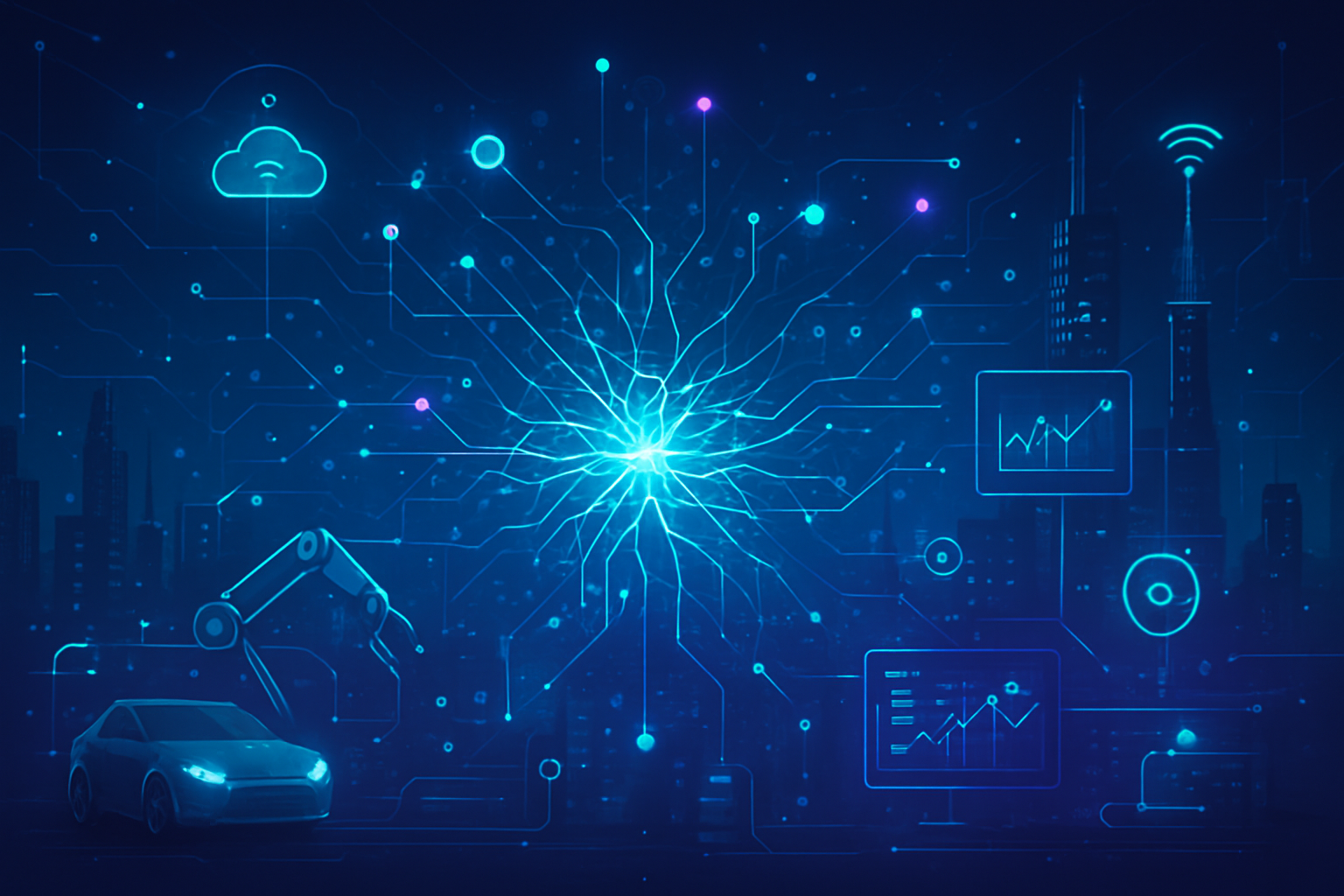
    The convergence of Artificial Intelligence (AI) and the Internet of Things (IoT) is ushering in an unprecedented era of data-driven decision-making, fundamentally reshaping operational strategies across virtually every industry. This powerful synergy allows organizations to move beyond traditional reactive approaches, leveraging vast streams of real-time data from interconnected devices to generate actionable insights and sophisticated predictive analytics. The immediate significance lies in the ability to gather, process, and analyze information at speeds and scales previously unimaginable, transforming complex raw data into strategic intelligence.

    This transformative shift empowers businesses to make agile, precise, and proactive decisions, leading to substantial improvements in efficiency, cost savings, and competitive advantage. From optimizing manufacturing processes with predictive maintenance to streamlining global supply chains and enhancing personalized customer experiences, AI and IoT are not just improving existing operations; they are redefining what's possible, driving a paradigm shift towards intelligent, adaptive, and highly responsive enterprise ecosystems.

    The Technical Alchemy: How AI Unlocks IoT's Potential

    The symbiotic relationship between AI and IoT positions IoT as the sensory layer of the digital world, continuously collecting vast and diverse datasets, while AI acts as the intelligent brain, transforming this raw data into actionable insights. IoT devices are equipped with an extensive array of sensors, including temperature, humidity, motion, pressure, vibration, GPS, optical, and RFID, which generate an unprecedented volume of data in various formats—text, images, audio, and time-series signals. Handling such massive, continuous data streams necessitates robust, scalable infrastructure, often leveraging cloud-based solutions and distributed processing.

    AI algorithms process this deluge of IoT data through various advanced machine learning models to detect patterns, predict outcomes, and generate actionable insights. Machine Learning (ML) serves as the foundation, learning from historical and real-time sensor data for critical applications like predictive maintenance, anomaly detection, and resource optimization. For instance, ML models analyze vibration and temperature data from industrial equipment to predict failures, enabling proactive interventions that drastically reduce downtime and costs. Deep Learning (DL), a subset of ML, utilizes artificial neural networks to excel at complex pattern recognition, particularly effective for processing unstructured sensor data such as images from quality control cameras or video feeds, leading to higher accuracy in predictions and reduced human intervention.

    A crucial advancement is Edge AI, which moves AI computation and inference closer to the data source—directly on IoT devices or edge computing nodes. This significantly reduces latency and bandwidth usage, critical for applications requiring immediate responses like autonomous vehicles or industrial automation. Edge AI facilitates real-time processing and predictive modeling, allowing AI systems to rapidly process data as it's generated, identify patterns instantly, and forecast future trends. This capability fundamentally shifts operations from reactive to proactive, enabling businesses to anticipate issues, optimize resource allocation, and plan strategically. Unlike traditional Business Intelligence (BI) which focuses on "what happened" through batch processing of historical data, AI-driven IoT emphasizes "what will happen" and "what should be done" through real-time streaming data, automated analysis, and continuous learning.

    The AI research community and industry experts have met this integration with immense enthusiasm, hailing it as a "monumental leap forward" and a path to "pervasive environmental intelligence." While acknowledging the immense potential, experts also highlight challenges such as the AI skill gap, the critical need for high-quality data, and pressing concerns around cybersecurity, data privacy, and algorithmic bias. Despite these hurdles, the prevailing sentiment is that the benefits of improved performance, reduced costs, enhanced efficiency, and predictive capabilities far outweigh the risks when addressed strategically and ethically.

    Corporate Chessboard: Impact on Tech Giants, AI Companies, and Startups

    The proliferation of AI and IoT in data-driven decision-making is fundamentally reshaping the competitive landscape, creating both immense opportunities and significant strategic shifts across the technology sector. This AIoT convergence is driving innovation, efficiency, and new business models.

    AI Companies are at the forefront, leveraging AI and IoT data to enhance their core offerings. They benefit from developing more sophisticated algorithms, accurate predictions, and intelligent automation for specialized solutions like predictive maintenance or smart city analytics. Companies like Samsara (NYSE: IOT), which provides IoT and AI solutions for operational efficiency, and UiPath Inc. (NYSE: PATH), a leader in robotic process automation increasingly integrating generative AI, are prime examples. The competitive implications for major AI labs include a "data moat" for those who can effectively utilize large volumes of IoT data, and the ongoing challenge of the AI skill gap. Disruption comes from the obsolescence of static AI models, a shift towards Edge AI, and the rise of integrated AIoT platforms, pushing companies towards full-stack expertise and industry-specific customization. Innodata Inc. (NASDAQ: INOD) is also well-positioned to benefit from this AI adoption trend.

    Tech Giants possess the vast resources, infrastructure, and existing customer bases to rapidly scale AIoT initiatives. Companies like Amazon (NASDAQ: AMZN), through AWS IoT Analytics, and Microsoft (NASDAQ: MSFT), with its Azure IoT suite, leverage their cloud computing platforms to offer comprehensive solutions for predictive analytics and anomaly detection. Google (NASDAQ: GOOGL) utilizes AI and IoT in its data centers for efficiency and has initiatives like Project Brillo for IoT OS. Their strategic advantages include ecosystem dominance, real-time data processing at scale, and cross-industry application. However, they face intense platform wars, heightened scrutiny over data privacy and regulation, and fierce competition for AI and IoT talent. Arm Holdings plc (NASDAQ: ARM) benefits significantly by providing the architectural backbone for AI hardware across various devices, while BlackBerry (TSX: BB, NASDAQ: BB) integrates AI into secure IoT and automotive solutions.

    Startups can be highly agile and disruptive, quickly identifying niche markets and offering innovative solutions. Companies like H2Ok Innovations, which uses AI to analyze factory-level data, and Yalantis, an IoT analytics company delivering real-time, actionable insights, exemplify this. AIoT allows them to streamline operations, reduce costs, and offer hyper-personalized customer experiences from inception. However, startups face challenges in securing capital, accessing large datasets, talent scarcity, and ensuring scalability and security. Their competitive advantage lies in a data-driven culture, agile development, and specialization in vertical markets where traditional solutions are lacking. Fastly Inc. (NYSE: FSLY), as a mid-sized tech company, also stands to benefit from market traction in AI, data centers, and IoT. Ultimately, the integration of AI and IoT is creating a highly dynamic environment where companies that embrace AIoT effectively gain significant strategic advantages, while those that fail to adapt risk being outpaced.

    A New Frontier: Wider Significance and Societal Implications

    The convergence of AI and IoT is not merely an incremental technological advancement; it represents a profound shift in the broader AI landscape, driving a new era of pervasive intelligence and autonomous systems. This synergy creates a robust framework where IoT devices continuously collect data, AI algorithms analyze it to identify intricate patterns, and systems move beyond descriptive analytics to offer predictive and prescriptive insights, often automating complex decision-making processes.

    This integration is a cornerstone of several critical AI trends. Edge AI is crucial, deploying AI algorithms directly on local IoT devices to reduce latency, enhance data security, and enable real-time decision-making for time-sensitive applications like autonomous vehicles. Digital Twins, dynamic virtual replicas of physical assets continuously updated by IoT sensors and made intelligent by AI, facilitate predictive maintenance, operational optimization, and scenario planning, with Edge AI further enhancing their autonomy. The combination is also central to the development of fully Autonomous Systems in transportation, manufacturing, and robotics, allowing devices to operate effectively without constant human oversight. Furthermore, the proliferation of 5G connectivity is supercharging AIoT, providing the necessary speed, ultra-low latency, and reliable connections to support vast numbers of connected devices and real-time, AI-driven applications.

    The impacts across industries are transformative. In Manufacturing, AIoT enables real-time machine monitoring and predictive maintenance. Retail and E-commerce benefit from personalized recommendations and optimized inventory. Logistics and Supply Chain gain real-time tracking and route optimization. Smart Cities leverage it for efficient traffic management, waste collection, and public safety. In Healthcare, IoT wearables combined with AI allow for continuous patient monitoring and early detection of issues. Agriculture sees precision farming with AI-guided irrigation and pest control, while Banking utilizes advanced AI-driven fraud detection.

    However, this transformative power comes with significant societal implications and concerns. Job displacement is a major worry as AI and automation take over routine and complex tasks, necessitating ethical frameworks, reskilling programs, and strategies to create new job opportunities. Ethical AI is paramount, addressing algorithmic bias that can perpetuate societal prejudices and ensuring transparency and accountability in AI's decision-making processes. Data privacy is another critical concern, with the extensive data collection by IoT devices raising risks of breaches, unauthorized use, and surveillance. Robust data governance practices and adherence to regulations like GDPR and CCPA are essential. Other concerns include security risks (expanded attack surfaces, adversarial AI), interoperability challenges between diverse systems, potential over-reliance and loss of control in autonomous systems, and the slow pace of regulatory frameworks catching up with rapid technological advancements.

    Compared to previous AI milestones—from early symbolic reasoning (Deep Blue) to the machine learning era (IBM Watson) and the deep learning/generative AI explosion (GPT models, Google Gemini)—the AIoT convergence represents a distinct leap. It moves beyond isolated intelligent tasks or cloud-centric processing to imbue the physical world with pervasive, real-time intelligence and the capacity for autonomous action. This fusion is not just an evolution; it is a revolution, fundamentally reshaping how we interact with our environment and solve complex problems in our daily lives.

    The Horizon of Intelligence: Future Developments and Predictions

    The convergence of AI and IoT is poised to drive an even more profound transformation in data-driven decision-making, promising a future where connected devices not only collect vast amounts of data but also intelligently analyze it in real-time to enable proactive, informed, and often autonomous decisions.

    In the near-term (1-3 years), we can expect a widespread proliferation of AI-driven decision support systems across businesses, offering real-time, context-aware insights for quicker and more informed decisions. Edge computing and distributed AI will surge, allowing advanced analytics to be performed closer to the data source, drastically reducing latency for applications like autonomous vehicles and industrial automation. Enhanced real-time data integration and automation will become standard, coupled with broader adoption of Digital Twin technologies for optimizing complex systems. The ongoing global rollout of 5G networks will significantly boost AIoT capabilities, providing the necessary speed and low latency for real-time processing and analysis.

    Looking further into the long-term (beyond 3 years), the evolution of AI ethics and governance frameworks will be pivotal in shaping responsible AI practices, ensuring transparency, accountability, and addressing bias. The advent of 6G will further empower IoT devices for mission-critical applications like autonomous driving and precision healthcare. Federated Learning will enable decentralized AI, allowing devices to collaboratively train models without exchanging raw data, preserving privacy. This will contribute to the democratization of intelligence, shifting AI from centralized clouds to distributed devices. Generative AI, powered by large language models, will be embedded into IoT devices for conversational interfaces and predictive agents, leading to the emergence of autonomous AI Agents that interact, make decisions, and complete tasks. Experts even predict the rise of entirely AI-native firms that could displace today's tech giants.

    Potential applications and use cases on the horizon are vast. In Manufacturing and Industrial IoT (IIoT), expect more sophisticated predictive maintenance, automated quality control, and enhanced worker safety through AI and wearables. Smart Cities will see more intelligent traffic management and environmental monitoring. Healthcare will benefit from real-time patient monitoring via AI-equipped wearables and predictive analytics for facility planning. Retail and E-commerce will offer hyper-personalized customer experiences and highly optimized inventory and supply chain management. Precision Farming will leverage AIoT for targeted irrigation, fertilization, and livestock monitoring, while Energy and Utility Management will see smarter grids and greater energy efficiency.

    However, significant challenges must be addressed. Interoperability remains a hurdle, requiring clear standards for integrating diverse IoT devices and legacy systems. Ethics and bias in AI algorithms, along with the need for transparency and public acceptance, are paramount. The rapidly increasing energy consumption of AI-driven data centers demands innovative solutions. Data privacy and security will intensify, requiring robust protocols against cyberattacks and data poisoning, especially with the rise of Shadow AI (unsanctioned generative AI use by employees). Skill gaps in cross-disciplinary professionals, demands for advanced infrastructure (5G, 6G), and the complexity of data quality also pose challenges.

    Experts predict the AIoT market will expand significantly, projected to reach $79.13 billion by 2030 from $18.37 billion in 2024. This growth will be fueled by accelerated adoption of digital twins, multimodal AI for context-aware applications, and the integration of AI with 5G and edge computing. While short-term job market disruptions are expected, AI is also anticipated to spark many new roles, driving economic growth. The increasing popularity of synthetic data will address privacy concerns in IoT applications. Ultimately, autonomous IoT systems, leveraging AI, will self-manage, diagnose, and optimize with minimal human intervention, leading the forefront of industrial automation and solidifying the "democratization of intelligence."

    The Intelligent Nexus: A Comprehensive Wrap-Up

    The convergence of Artificial Intelligence (AI) and the Internet of Things (IoT) represents a monumental leap in data-driven decision-making, fundamentally transforming how organizations operate and strategize. This synergy, often termed AIoT, ushers in an era where interconnected devices not only gather vast amounts of data but also intelligently analyze, learn, and often act autonomously, leading to unprecedented levels of efficiency, intelligence, and innovation across diverse sectors.

    Key takeaways from this transformative power include the ability to derive real-time insights with enhanced accuracy, enabling businesses to shift from reactive to proactive strategies. AIoT drives smarter automation and operational efficiency through applications like predictive maintenance and optimized supply chains. Its predictive and prescriptive capabilities allow for precise forecasting and strategic resource allocation. Furthermore, it facilitates hyper-personalization for enhanced customer experiences and provides a significant competitive advantage through innovation. The ability of AI to empower IoT devices with autonomous decision-making capabilities, often at the edge, marks a critical evolution in distributed intelligence.

    In the grand tapestry of AI history, the AIoT convergence marks a pivotal moment. It moves beyond the early symbolic reasoning and machine learning eras, and even beyond the initial deep learning breakthroughs, by deeply integrating intelligence into the physical world. This is not just about processing data; it's about imbuing the "nervous system" of the digital world (IoT) with the "brain" of smart technology (AI), creating self-learning, adaptive ecosystems. This profound integration is a defining characteristic of the Fourth Industrial Revolution, allowing devices to perceive, act, and learn, pushing the boundaries of automation and intelligence to unprecedented levels.

    The long-term impact will be profound and pervasive, creating a smarter, self-learning world. Industries will undergo continuous intelligent transformation, optimizing operations and resource utilization across the board. However, this evolution necessitates a careful navigation of ethical and societal shifts, particularly concerning privacy protection, data security, and algorithmic bias. Robust governance frameworks will be crucial to ensure transparency and responsible AI deployment. The workforce will also evolve, requiring continuous upskilling to bridge the AI skill gap. Ultimately, the future points towards a world where intelligent, data-driven systems are the backbone of most human activities, enabling more adaptive, efficient, and personalized interactions with the physical world.

    In the coming weeks and months, several key trends will continue to shape this trajectory. Watch for the increasing proliferation of Edge AI and distributed AI models, bringing real-time decision-making closer to the data source. Expect continued advancements in AI algorithms, with greater integration of generative AI into IoT applications, leading to more sophisticated and context-aware decision support systems. The ongoing rollout of 5G networks will further amplify AIoT capabilities, while the focus on cybersecurity and data governance will intensify to protect against evolving threats and ensure compliance. Crucially, the development of effective human-AI collaboration models will be vital, ensuring that AI augments, rather than replaces, human judgment. Finally, addressing the AI skill gap through targeted training and the growing popularity of synthetic data for privacy-preserving AI model training will be critical indicators of progress. The immediate future promises a continued push towards more intelligent, autonomous, and integrated systems, solidifying AIoT as the foundational backbone of modern data-driven strategies.


    This content is intended for informational purposes only and represents analysis of current AI developments.

    TokenRing AI delivers enterprise-grade solutions for multi-agent AI workflow orchestration, AI-powered development tools, and seamless remote collaboration platforms.
    For more information, visit https://www.tokenring.ai/.
  • AI’s Ubiquitous Rise: Transforming Industries Far Beyond Tech

    AI’s Ubiquitous Rise: Transforming Industries Far Beyond Tech

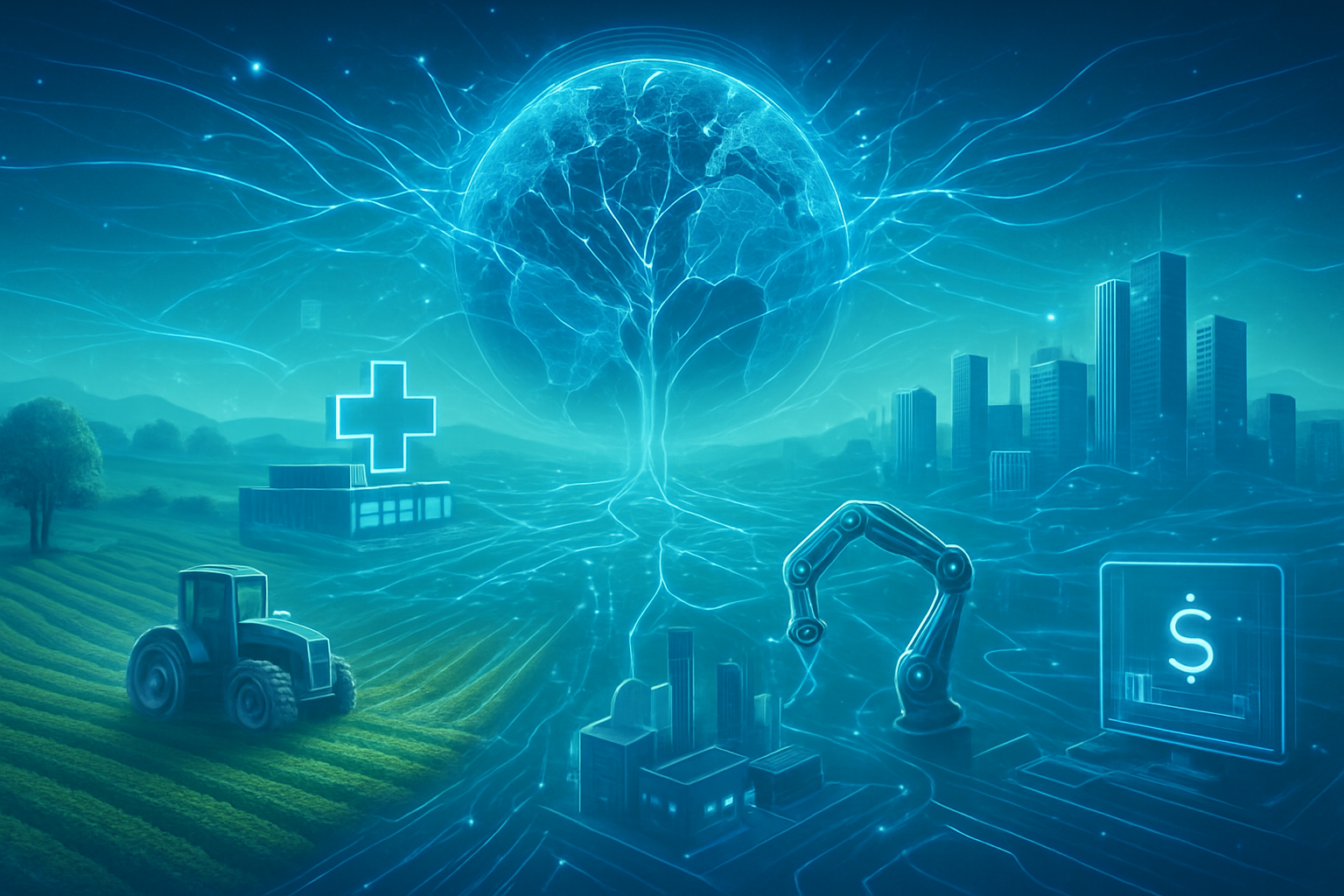
    Artificial intelligence (AI) is rapidly transcending its origins within the technology sector, becoming an indispensable force that is fundamentally reshaping traditional industries. From the intricacies of healthcare to the precision of manufacturing, the sustainability of agriculture, the dynamism of finance, and the complexity of logistics, AI is driving unprecedented levels of efficiency, innovation, and strategic advantage. This widespread integration signifies a pivotal moment in the evolution of AI, marking its transition from a specialized tool to a foundational technology that promises to redefine global economies and societies. The immediate significance lies in AI's capacity for advanced data analysis, predictive modeling, automation, and real-time decision-making, offering transformative benefits that were once unimaginable.

    The Technical Core: How AI is Redefining Industry Capabilities

    The current wave of AI applications in non-tech sectors is underpinned by sophisticated advancements in deep learning, machine learning, computer vision, natural language processing, and reinforcement learning. These technical capabilities allow AI systems to process vast, complex datasets, identify intricate patterns, and make highly accurate predictions or autonomous decisions, far surpassing previous rule-based or manual approaches.

    In healthcare, AI leverages deep learning networks (e.g., ResNet101) to achieve remarkable accuracy in medical image analysis, detecting diseases like cancer and Alzheimer's years in advance. Generative AI and Large Language Models (LLMs), built on transformer architectures, are streamlining clinical note-taking and aiding in drug discovery by simulating molecular interactions. This differs from older systems that relied on simpler algorithms and extensive human feature engineering, as modern AI directly processes unstructured data, extracting complex features automatically at exceptional speeds.

    Manufacturing is deploying AI-powered machine vision systems, combining high-resolution cameras and sensors with deep learning algorithms for anomaly detection. These systems provide predictive maintenance, anticipating equipment failures with unprecedented accuracy, and automating quality control with precision that far exceeds human capabilities. Collaborative robots (cobots) are becoming more sophisticated, guided by vision-language-action models. Historically, manufacturing relied on reactive maintenance and manual inspections; AI introduces proactive, predictive, and adaptable systems that learn from data, minimizing downtime and human error.

    For agriculture, AI-driven drones equipped with multispectral and hyperspectral sensors, alongside machine learning algorithms, collect real-time data on soil moisture, nutrient levels, and plant health with centimeter-level accuracy. This enables precision spraying, targeted irrigation, and early disease detection, optimizing resource use by 20-40% and increasing productivity by up to 20%. Traditional farming involved extensive manual labor and broad application of resources, whereas AI provides granular, real-time analytics and automated decision-making, leading to optimized resource management and sustainability.

    In finance, sophisticated machine learning (e.g., logistic regression, autoencoders) and deep learning models (e.g., CNNs, RNNs) are used for real-time fraud detection and algorithmic trading. Natural Language Processing (NLP) models analyze news sentiment and regulatory filings, while reinforcement learning agents adapt trading strategies. This moves beyond static, rule-based fraud detection and human analysis by offering adaptive models that process massive, diverse datasets, including unstructured data, enabling faster and more accurate decision-making in dynamic markets.

    Finally, logistics benefits from machine learning algorithms and AI optimization techniques that analyze real-time data from GPS, traffic cameras, and weather feeds. This facilitates dynamic route optimization, continuously adjusting delivery paths to reduce fuel consumption and delivery times. Warehouse automation uses AI-powered robots for picking, packing, and sorting. This is a significant leap from traditional static route planning and reactive problem-solving, providing highly adaptive, predictive, and autonomous capabilities that enhance efficiency and cost-effectiveness.

    Initial reactions from the AI research community and industry experts are largely optimistic, acknowledging AI's "transformative force" in enhancing efficiency and unlocking new opportunities. However, caution is also emphasized regarding ethical AI development, bias, transparency, data quality, high implementation costs, and the need for new skill sets. The urgent need for responsible AI governance and explainable AI (XAI) is a recurring theme to build trust and ensure compliance.

    Reshaping the Corporate Landscape: Who Benefits and Who Faces Disruption

    The pervasive integration of AI into non-tech sectors is profoundly impacting the competitive dynamics among AI companies, tech giants, and startups, creating both immense opportunities and significant disruptions.

    In healthcare, specialized AI firms like Aidoc and GNS are thriving by offering intelligent diagnostics and drug discovery platforms. Tech giants such as Microsoft (NASDAQ: MSFT), Google (NASDAQ: GOOGL), IBM (NYSE: IBM), NVIDIA (NASDAQ: NVDA), Philips (NYSE: PHG), and Siemens Healthineers (ETR: SHL) are leveraging their cloud infrastructure and broad AI capabilities to partner with healthcare providers, driving advancements in medical imaging and personalized medicine. Startups like Abridge and Viz.ai are disrupting with niche solutions, automating clinical notes or enhancing CT scan analysis, often becoming attractive acquisition targets. This market, projected to grow at a CAGR of 38.5% (2024-2030), emphasizes strategic partnerships and the need for explainable AI to overcome high initial costs and data privacy concerns.

    Manufacturing sees AI companies specializing in industrial automation and computer vision, such as those offering automated optical inspection (AOI) with up to 97% accuracy, experiencing high demand. Tech giants like IBM are providing "smart factory" solutions, integrating AI with IoT for real-time process optimization. Startups such as Vicarious and SparkCognition are innovating in predictive maintenance and production optimization. While high upfront investment is a barrier, AI offers manufacturers a significant competitive edge through improved operational efficiency and reduced waste, leading to a dynamic landscape where agile startups can disrupt and larger players consolidate.

    For agriculture, AI solution providers focusing on crop management software and predictive analytics are key beneficiaries. Microsoft's FarmVibes.AI tool offers advanced mapping and "what-if" analyses for growers. Startups like Blue River Technology (acquired by John Deere (NYSE: DE)) have pioneered AI for targeted weed and pest identification, reducing chemical use. The global AI in agriculture market is expected to reach USD 12.95 billion by 2033, driven by the need for precision farming and sustainability. AI is transforming farmers' roles, shifting them from manual laborers to overseers of smart agricultural systems.

    In finance, companies specializing in AI for fraud detection, credit risk management, and personalized advice are thriving. Tech giants like Google Cloud provide foundational AI technologies and cloud infrastructure for data analytics and customer servicing. Disruptive startups such as Betterment and Wealthfront offer AI-driven robo-advisors, while Darktrace and ZestFinance enhance fraud prevention and credit scoring. AI is shifting the market towards insights-driven lending, but also introduces risks like biased models and data breaches, necessitating regulatory adjustments and strong consumer protection.

    Finally, logistics sees growth for AI companies in route optimization, warehouse automation, and predictive supply chain analytics. Amazon (NASDAQ: AMZN), FedEx (NYSE: FDX), and UPS (NYSE: UPS) are integrating AI into their operations, influencing third-party logistics (3PLs). IBM, Intel (NASDAQ: INTC), Microsoft, and Oracle (NYSE: ORCL) are key players providing scalable infrastructure. Startups like OptimoRoute and Nuro are innovating in efficient delivery routes and autonomous last-mile delivery. With the AI in logistics market projected to reach USD 549 billion by 2033, AI offers a significant competitive edge through streamlined operations, reducing costs, and improving service, while autonomous technologies disrupt traditional manual labor.

    Overall, AI companies are the core innovators, benefiting from deep expertise but often needing partnerships to scale. Tech giants leverage their vast resources and cloud infrastructure to offer comprehensive platforms, positioning themselves as full-stack providers. Startups are crucial for disruption, addressing niche problems with agility and often becoming acquisition targets. The competitive landscape is dynamic, marked by collaborations, acquisitions, and a continuous race to deliver more efficient, intelligent, and personalized solutions.

    A Broader Lens: AI's Societal Canvas and Historical Parallels

    The widespread integration of AI into non-tech sectors represents a profound evolution in the broader AI landscape, signaling its maturation into a foundational, general-purpose technology. This current era is characterized by AI acting as an "amplifier" for other innovations, accelerating progress and unlocking new possibilities across diverse domains. The proliferation of "agentic AI," capable of autonomous multi-step workflows, and generative AI, which creates human-like content, are key trends driving this expansion.

    The economic impact is staggering, with AI projected to contribute an additional $15.7 trillion to the global economy by 2030. This growth stems from increased labor productivity, the creation of new products and services, and optimized operational efficiencies across industries. However, concerns persist regarding AI's potential to widen economic disparities and concentrate wealth within "super firms."

    Societally, AI is reshaping the job market. While it automates routine tasks, potentially leading to job displacement in some areas, it simultaneously creates new roles in data science, AI engineering, and design. More importantly, AI augments existing roles, enabling workers to focus on more creative and complex tasks. The "AI + human" model, where human oversight and critical thinking complement AI's analytical power, is proving to be the most valuable approach. AI's ability to solve complex problems, particularly in healthcare and personalized services, holds the potential to improve the overall quality of life.

    However, this transformative power comes with significant ethical and regulatory concerns. Algorithmic bias, embedded from training data, can lead to discriminatory outcomes in critical areas like hiring or medical diagnoses. The "black box" nature of many AI systems raises questions about transparency and accountability, especially in high-stakes domains. Data privacy and security remain paramount, with the reliance on vast datasets necessitating robust safeguards against breaches and unauthorized access. Job displacement, misinformation spread by AI, and intellectual property issues also demand careful consideration. Governments and regulatory bodies, exemplified by the EU AI Act and GDPR, are actively developing frameworks to promote transparency, fairness, human oversight, and accountability.

    Comparing this era to previous AI milestones highlights the monumental shift. Early AI, rooted in the 1950s with Alan Turing and the coining of "artificial intelligence," involved rule-based expert systems. The "AI boom" of the 1980s saw advancements but was limited by explicit programming. The current "Deep Learning era," commencing around the 2010s, represents a significant leap. Boosted by advancements in deep learning algorithms and "big data," AI systems have achieved breakthroughs in tasks previously considered intractable, such as outperforming humans in image recognition (by 2015), defeating world champions in complex games like Go (AlphaGo in 2016), and generating human-quality text and images (GPT-3, DALL-E, ChatGPT since 2020). Unlike earlier iterations, modern AI learns from data patterns without explicit instructions, making it far more versatile and adaptable across diverse non-tech sectors at an unprecedented pace.

    The Horizon: Charting AI's Future Trajectory

    The future of AI applications across non-tech sectors promises continued rapid evolution, driven by increasing sophistication, accessibility, and strategic integration. Experts predict a future where AI will not only augment human capabilities but also enable entirely new paradigms of operation and service delivery.

    In the near term, AI and generative AI (GenAI) will significantly enhance patient care in healthcare by automating administrative tasks, personalizing treatment plans, and accelerating drug discovery. In manufacturing, the focus will be on "smart factories" with AI-powered predictive maintenance, quality control, and supply chain optimization. Agriculture will see further advancements in precision farming, with AI-driven robotics and drones becoming more commonplace. Finance will expand GenAI applications for customer service, risk management, and hyper-personalized financial advice, while logistics will leverage AI for dynamic route optimization, warehouse automation, and real-time supply chain visibility.

    Long-term developments will see healthcare shift towards a "5P" model (Predictive, Proactive, Personalized, Participatory, and Precise), with AI enabling routine genomic sequencing and near-perfect diagnostic accuracy. Manufacturing will achieve mass customization and sustainable production through ubiquitous industrial AI. Agriculture will move towards "Agriculture 4.0," with autonomous livestock farming and AI-driven insights addressing global food security. Finance will embrace AI for comprehensive financial stability risk management and highly adaptive investment strategies. Logistics will feature widespread autonomous transportation networks and AI-powered supply chain resilience against global disruptions.

    However, several challenges need to be addressed. Across all sectors, data quality, security, and privacy remain paramount. Ethical concerns, particularly algorithmic bias and the need for transparency (explainable AI), are critical. The high initial costs of AI implementation and the integration with legacy systems pose significant hurdles, especially for smaller entities. A substantial skills gap in the workforce requires continuous reskilling and upskilling initiatives. Regulatory frameworks are still evolving, particularly for adaptive AI algorithms and generative AI, demanding a careful balance between innovation and consumer protection. Furthermore, resistance to adoption due to fear of job displacement or lack of understanding must be managed through clear communication and demonstrated benefits.

    Experts predict that AI will increasingly augment, rather than replace, human workers, allowing them to focus on more complex and creative tasks. The future will involve "platform thinking" in AI innovation, creating collaborative ecosystems across industries. The convergence of AI with other emerging technologies like 5G, edge computing, and quantum computing will unlock new possibilities. Addressing data fragmentation, ensuring ethical deployment, and fostering digital literacy will be crucial for equitable resource distribution and securing long-term viability across these transformed sectors.

    The AI Epoch: A Concluding Assessment

    The journey of AI into non-tech sectors represents a defining epoch in its history, marking a profound shift from a specialized technological domain to a ubiquitous, general-purpose utility. The key takeaway is AI's unparalleled ability to drive operational efficiency, generate substantial cost reductions, enable superior data-driven decision-making, and facilitate hyper-personalization across industries. From enhancing diagnostic accuracy in healthcare to optimizing supply chains in logistics, AI is not just improving existing processes but fundamentally redefining industry capabilities.

    This development's significance in AI history cannot be overstated. It signifies the maturation and democratization of AI, moving beyond the confines of "tech companies" to become an accessible amplifier for innovation across the global economy. The economic projections, estimating a $15.7 trillion contribution to global GDP by 2030, underscore its pivotal role. More importantly, it solidifies the "AI + human" model as the most valuable approach, where AI augments human intelligence and creativity, rather than solely automating it.

    The long-term impact will be a sustained boost in productivity, economic growth, and the creation of new, AI-augmented job roles. AI holds the potential to address some of humanity's most pressing challenges, from climate change to global health disparities. However, this future hinges on a vigilant focus on ethical AI development, robust regulatory frameworks, and proactive governance to ensure fairness, transparency, and equitable distribution of benefits. The increasing dependence on core AI infrastructure providers also signals a potential centralization of power in the digital economy.

    In the coming weeks and months, watch for intensifying discussions around ethical AI deployment and governance, particularly in sensitive areas like non-clinical healthcare. Evolving regulatory frameworks will be crucial, especially in heavily regulated sectors like finance. Efforts to bridge the "AI divide," ensuring access for small businesses and farmers, will gain prominence. The rapid advancement of "agentic AI" tools, acting as a new workforce, will be a key development to monitor, as will the continuous focus on data quality and standardization as the bedrock for effective AI. Finally, observe how AI continues to integrate with other emerging technologies like IoT, creating synergistic effects that drive further innovation and reshape our world.


    This content is intended for informational purposes only and represents analysis of current AI developments.

    TokenRing AI delivers enterprise-grade solutions for multi-agent AI workflow orchestration, AI-powered development tools, and seamless remote collaboration platforms.
    For more information, visit https://www.tokenring.ai/.
  • AI Accelerates Automotive Remarketing: A Revolution in Efficiency, Pricing, and Personalization

    AI Accelerates Automotive Remarketing: A Revolution in Efficiency, Pricing, and Personalization

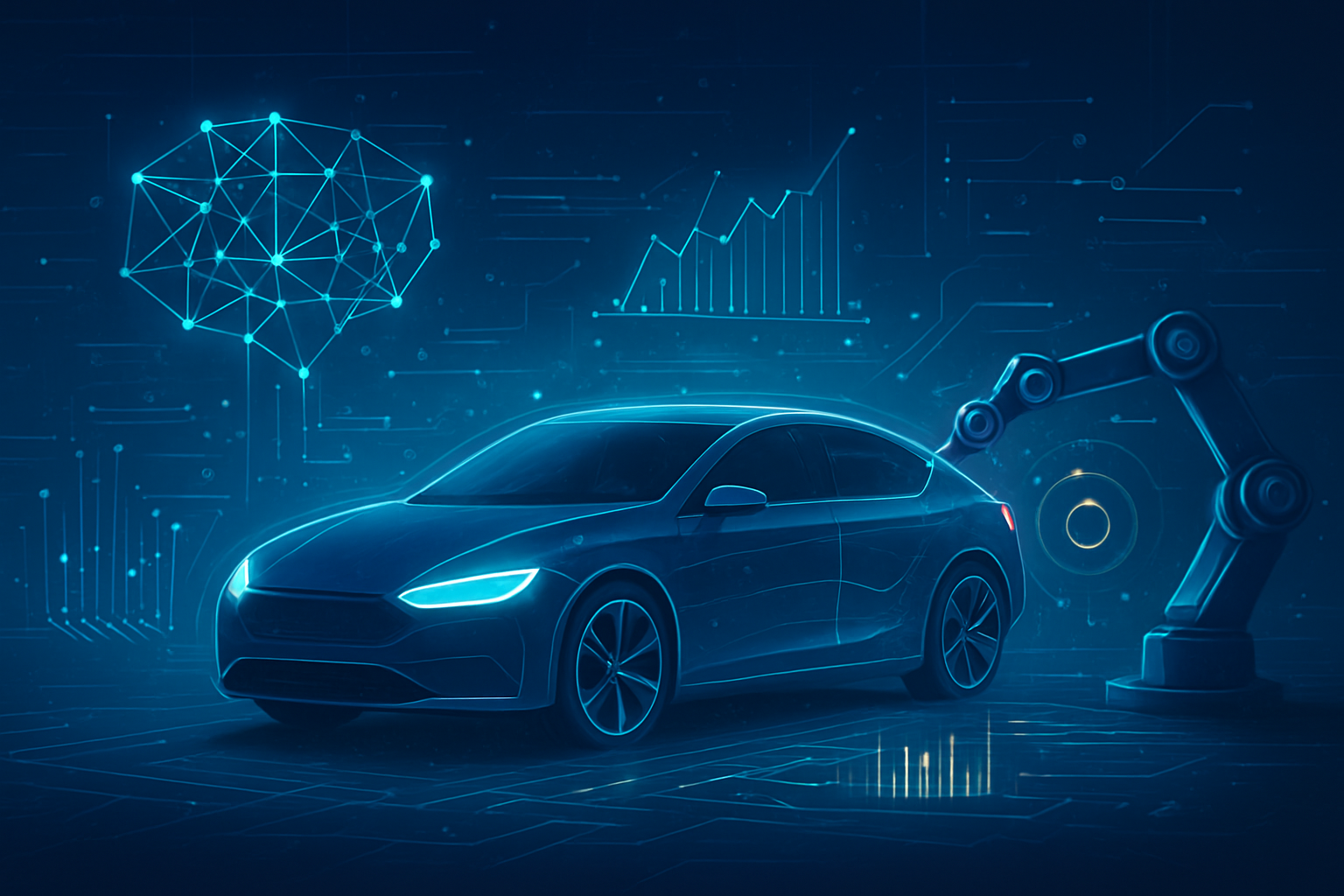
    The automotive remarketing sector is undergoing a profound transformation, driven by the relentless march of Artificial Intelligence (AI) and automation. This paradigm shift is not merely an incremental improvement but a fundamental reimagining of how used vehicles are valued, managed, and sold. From dynamic pricing algorithms to automated vehicle inspections and hyper-personalized customer engagement, AI is injecting unprecedented levels of efficiency, accuracy, and transparency into a traditionally complex and often opaque market. As of 10/27/2025, the industry is witnessing AI evolve from a theoretical concept to a critical operational tool, promising to unlock significant profitability and elevate the customer experience.

    The Technical Engine Driving Remarketing's Evolution

    The integration of AI into automotive remarketing marks a significant leap from subjective, manual processes to data-driven, highly accurate operations. This technical evolution is characterized by several key advancements:

    AI-Powered Vehicle Valuation: Traditionally, vehicle valuations relied on broad factors like year, make, model, and mileage. Modern AI systems, however, leverage deep learning algorithms to process granular datasets, incorporating VIN-specific configurations, real-time micro-market trends, and localized demand variations. Companies like NovaFori (OTCMKTS: NOVAF) with their Autoprice API, use machine learning to continuously monitor and update retail pricing, allowing for predictive pricing and optimal pricing floors. This dynamic approach ensures greater confidence and precision, drastically reducing human error and accelerating sales.

    Automated Vehicle Condition Assessment (Computer Vision & Deep Learning): This area has seen some of the most impactful advancements. Automated inspection systems utilize advanced computer vision and deep learning models to assess vehicle condition with remarkable precision. Imaging tunnels from companies like Proovstation and UVeye use multiple cameras to capture thousands of high-resolution images (2D and 3D) within seconds, even scanning underbodies and tires. AI algorithms, trained on vast datasets, detect and categorize damage (chips, dents, scratches, rust, tire wear) and select optimal "hero" images. This differs significantly from the subjective, time-consuming manual inspections of the past, offering standardized, objective, and reproducible assessments that build buyer trust and reduce disputes. Smartphone-based solutions from firms like Ravin AI and Click-Ins further democratize this capability.

    AI in Logistics and Transport Pricing: AI algorithms now analyze a multitude of dynamic factors—climate, fuel prices, geographic nuances, and carrier-specific variables—to predict fair and dynamic shipping rates. This moves beyond static, historical averages, introducing real-time transparency for both shippers and carriers. Future developments are expected to include AI dynamically matching vehicle shipments based on destination, timing, and availability, optimizing load sharing and further reducing idle vehicle time.

    Predictive Analytics for Customer Engagement and Inventory Management: Machine learning algorithms ingest vast quantities of data from Dealer Management Systems (DMS), online behavior, and service histories to create "buyer propensity models." These models predict a customer's likelihood to buy, their preferences, and even future maintenance needs. This allows for highly targeted, personalized marketing campaigns and proactive customer retention strategies, a stark contrast to the broad, reactive approaches of yesteryear.

    Natural Language Processing (NLP) in Customer Communication and Content Generation: NLP enables AI to understand, analyze, and generate human language. This powers intelligent chatbots and virtual assistants for customer service, automates lead management, and generates accurate, attractive, and personalized vehicle descriptions and ad content. AI can even automatically edit and optimize photos, recognizing vehicle characteristics and generating coherent visuals.

    The AI research community and industry experts largely view these advancements with optimism. Leaders like Christopher Schnese and Scott Levy of Cox Automotive (NASDAQ: COXA) describe AI as a "toolbox" fundamentally transforming remarketing with "speed and precision," delivering "real value." There's a strong consensus that AI acts as a powerful complement to human expertise, giving inspectors "superpowers" to focus on higher-value work. However, experts also emphasize the critical need for high-quality data and careful validation during large-scale implementation to ensure accuracy and mitigate potential disruptions.

    Corporate Chessboard: Beneficiaries and Disruptors

    The rapid integration of AI and automation is reshaping the competitive landscape of automotive remarketing, creating significant opportunities and challenges for a diverse range of companies.

    AI Companies are direct beneficiaries, developing specialized software and platforms that address specific pain points. Firms like NovaFori are creating advanced pricing APIs, while others focus on automated condition assessment (e.g., Fyusion, in collaboration with Manheim (NYSE: MAN)), optimized marketing tools, and logistics solutions. Their competitive edge lies in the accuracy, scalability, and ease of integration of their proprietary algorithms and data. These companies are disrupting traditional manual processes by offering more efficient, data-driven alternatives, and their strategic advantage comes from niche expertise and strong partnerships within the automotive ecosystem.

    Tech Giants such as Amazon Web Services (NASDAQ: AMZN), Google (NASDAQ: GOOGL), and Microsoft (NASDAQ: MSFT) play a foundational role. They provide the scalable cloud infrastructure and general AI research necessary for developing and deploying complex AI models. Their advancements in large language models (LLMs), like those integrated by Mercedes-Benz (OTC: MBGYY) and Stellantis (NYSE: STLA) with Mistral AI, can be adapted for customer service, content generation, and advanced analytics. These giants benefit from increased cloud service consumption and strategically position themselves by offering comprehensive, integrated ecosystems and setting industry standards for AI deployment, leveraging their deep pockets for R&D and existing enterprise relationships.

    Startups are agile innovators, often identifying and filling specific market gaps. Companies like Blink AI and Auto Agentic are developing niche, service-focused AI platforms and agentic AI solutions for dealership operations. Their agility allows for rapid adaptation and the introduction of disruptive innovations. The availability of open-weight AI models "levels the playing field," enabling smaller firms to build competitive AI systems without massive upfront investment in training. Startups disrupt by demonstrating the efficacy of focused AI applications and gain strategic advantages by identifying underserved niches, developing proprietary algorithms, and building early partnerships with dealerships or remarketing platforms. Their ability to integrate seamlessly and offer demonstrable ROI is crucial.

    Overall, the competitive landscape is shifting towards technological prowess and data insights. Companies failing to adopt AI risk falling behind in efficiency, pricing accuracy, and customer engagement. Traditional valuation and inspection methods are being disrupted, marketing is becoming hyper-personalized, and operational efficiencies are being drastically improved. Strategic advantages lie in data superiority, offering integrated platforms, prioritizing customer experience through AI, fostering trust and transparency with AI-generated reports, and ensuring ethical AI deployment. The ability to continuously adapt AI strategies will be paramount for long-term success.

    A New Benchmark in the AI Landscape

    The integration of AI and automation into automotive remarketing is more than just an industry-specific upgrade; it represents a significant milestone in the broader AI landscape, reflecting and contributing to overarching trends in intelligent automation and data-driven decision-making.

    This development aligns perfectly with the broader trend of AI moving from research labs to real-world commercial applications. It leverages mature AI technologies like machine learning, deep learning, natural language processing (NLP), and computer vision to solve tangible business problems. The ability of AI to process "massive volumes of sensor data" for valuations and condition assessments echoes the computational power breakthroughs seen with milestones like IBM's Deep Blue. The use of deep learning for accurate damage detection from thousands of images directly builds upon advancements in convolutional neural networks, like AlexNet. More recently, the application of generative AI for personalized content creation for listings mirrors the capabilities demonstrated by large language models (LLMs) like ChatGPT, signifying AI's growing ability to produce human-like content at scale.

    The impacts are far-reaching: increased efficiency, significant cost reductions through automation, enhanced decision-making based on predictive analytics, and improved customer satisfaction through personalization. AI-generated condition reports and dynamic pricing also foster greater transparency and trust in the used vehicle market. This sector's AI adoption showcases how AI can empower businesses to make strategic, informed decisions that were previously impossible.

    However, this transformation also brings potential concerns. Job displacement in routine tasks like inspections and data entry necessitates workforce reskilling. The reliance on extensive data raises critical questions about data privacy and security, demanding robust protection measures. Algorithmic bias is another significant challenge; if trained on skewed data, AI could perpetuate unfair pricing or discriminatory practices, requiring careful auditing and ethical considerations. The "black box" nature of some advanced AI models can also lead to a lack of transparency and explainability, potentially eroding trust. Furthermore, the high initial investment for comprehensive AI solutions can be a barrier for smaller businesses.

    Compared to previous AI milestones, AI in automotive remarketing demonstrates the technology's evolution from rule-based expert systems to highly adaptive, data-driven learning machines. It moves beyond simply performing complex calculations to understanding visual information, predicting behavior, and even generating content, making it a powerful testament to the practical, commercial utility of modern AI. It underscores that AI is no longer a futuristic concept but a present-day imperative for competitive advantage across industries.

    The Horizon: Future Developments and Predictions

    The trajectory of AI and automation in automotive remarketing points towards an even more integrated, intelligent, and autonomous future, promising continued evolution in efficiency and customer experience.

    In the near-term (next 1-3 years), we can expect continued refinement of existing AI applications. Vehicle valuation models will become even more granular, incorporating hyper-local market dynamics and real-time competitor analysis. Automated condition assessment will improve in precision, with AI vision models capable of detecting minute flaws and precisely estimating repair costs. Logistics will see further optimization through dynamic load-sharing systems and predictive routing, significantly reducing transportation costs and turnaround times. Personalized marketing will become more sophisticated, with AI not just recommending but actively generating tailored ad content, including personalized videos that dynamically showcase features based on individual buyer preferences. AI-powered lead management and customer support will become standard, handling routine inquiries and streamlining workflows to free up human staff.

    Long-term (3+ years and beyond), the industry anticipates truly transformative shifts. AI agents are predicted to fundamentally reinvent dealership operations, taking over routine tasks like managing leads, coordinating test drives, and personalizing financing, allowing human staff to focus on high-impact customer interactions. Advanced damage detection will minimize subjective evaluations, leading to more robust assurance products. The integration of AI with smart city ecosystems could optimize traffic flow for vehicle transport. Furthermore, AI-powered virtual reality (VR) showrooms and blockchain-secured transactions are on the horizon, offering immersive experiences and unparalleled transparency. AI is also expected to play a crucial role in modernizing legacy data systems within the automotive sector, interpreting and converting old code to unlock digital advancements.

    Potential new applications and use cases include dynamic inventory management that forecasts demand based on vast data sets, proactive maintenance scheduling through predictive vehicle health monitoring, and seamless, AI-integrated "touchless delivery" services. AI will also enhance trackability and load sharing in logistics and enable highly sophisticated ad fraud detection to protect marketing budgets.

    However, several challenges must be addressed. Data quality and integration remain paramount; siloed data, poor image quality, and inconsistent labeling can hinder AI effectiveness. The industry must foster human-AI collaboration, ensuring that AI augments, rather than completely replaces, human judgment in complex evaluations. Bridging the gap between new software-defined vehicle data and existing legacy systems is a significant hurdle. Furthermore, addressing ethical considerations and potential biases in AI models will be crucial for maintaining trust and ensuring fair practices.

    Experts like Neil Cawse, CEO of Geotab (NYSE: GEOT), highlight the "democratizing potential" of open-weight AI models, leveling the playing field for smaller firms. Christopher Schnese and Scott Levy of Cox Automotive foresee AI as a "toolbox" delivering "real, lasting ways of transforming their operations." The consensus is that AI will not just cut costs but will scale trust, insight, and customer experience, fundamentally changing the basis of automotive businesses within the next 18 months to five years. The future belongs to those who effectively leverage AI to create more personalized, efficient, and trustworthy processes.

    The Dawn of an Intelligent Remarketing Era

    The current wave of AI and automation in automotive remarketing signifies a pivotal moment, fundamentally re-architecting how used vehicles are valued, processed, and sold. It is a powerful testament to AI's capability to move beyond generalized applications into highly specialized, impactful industry transformations.

    The key takeaways are clear: AI is driving unprecedented accuracy in vehicle valuation and condition assessment, optimizing complex logistics, and revolutionizing customer engagement through hyper-personalization. This shift is enabled by advanced machine learning, computer vision, and NLP, all supported by increasingly accessible computing power and vast datasets. The immediate and long-term impacts include enhanced efficiency, significant cost reductions, improved decision-making, and a substantial boost in transparency and trust for both buyers and sellers.

    In the broader AI history, this development underscores the maturity and commercial viability of AI. It demonstrates AI's evolution from theoretical constructs to practical, high-value solutions that integrate seamlessly into complex business operations. This marks a significant step towards a future where AI is not just a tool, but an intrinsic part of industry infrastructure.

    The long-term impact will see automotive remarketing become a highly automated, data-driven ecosystem where human roles shift towards strategic oversight and complex problem-solving. Dealerships may transform into comprehensive mobility platforms, offering seamless, personalized customer journeys powered by AI. This continuous cycle of innovation promises an ever-evolving, more efficient, and sustainable industry.

    What to watch for in the coming weeks and months includes an accelerated adoption rate of AI across the remarketing sector, further refinements in specific AI functionalities like granular valuation and advanced damage detection, and the emergence of clear ethical and compliance frameworks for AI-assisted environments. Pay close attention to the development of AI-first cultures within companies, the modernization of legacy systems, and the rise of AI-powered EV battery health diagnostics. The industry will also see a surge in sophisticated AI-driven solutions for ad fraud detection and real-time AI coaching for sales and service calls. These advancements will collectively define the next chapter of automotive remarketing, solidifying AI's role as an indispensable force.


    This content is intended for informational purposes only and represents analysis of current AI developments.

    TokenRing AI delivers enterprise-grade solutions for multi-agent AI workflow orchestration, AI-powered development tools, and seamless remote collaboration platforms.
    For more information, visit https://www.tokenring.ai/.