Tag: Infineon

  • The 800V Revolution: Silicon Carbide Demand Skyrockets as 2026 Becomes the ‘Year of the High-Voltage EV’

    The 800V Revolution: Silicon Carbide Demand Skyrockets as 2026 Becomes the ‘Year of the High-Voltage EV’

    As of January 2026, the automotive industry has reached a decisive turning point in the electrification race. The shift toward 800-volt (800V) architectures is no longer a luxury hallmark of high-end sports cars but has become the benchmark for the next generation of mass-market electric vehicles (EVs). At the center of this tectonic shift is a surge in demand for Silicon Carbide (SiC) power semiconductors—chips that are more efficient, smaller, and more heat-tolerant than the traditional silicon that powered the first decade of EVs.

    This demand surge has triggered a massive capacity race among global semiconductor leaders. Giants like STMicroelectronics (NYSE: STM) and Infineon Technologies (OTC: IFNNY) are ramping up 200mm (8-inch) wafer production at a record pace to meet the requirements of automotive leaders. These chips are not merely hardware components; they are the critical enabler for the "software-defined vehicle" (SDV), allowing carmakers to offset the massive power consumption of modern AI-driven autonomous driving systems with unprecedented powertrain efficiency.

    The Technical Edge: Efficiency, 200mm Wafers, and AI-Enhanced Yields

    The move to 800V systems is fundamentally a physics solution to the problems of charging speed and range. By doubling the voltage from the traditional 400V standard, automakers can reduce current for the same power delivery, which in turn allows for thinner, lighter copper wiring and significantly faster DC charging. However, traditional silicon IGBTs (Insulated-Gate Bipolar Transistors) struggle at these higher voltages due to energy loss and heat. SiC MOSFETs, with their wider bandgap, achieve inverter efficiencies exceeding 99% and generate up to 50% less heat, permitting 10% smaller and lighter cooling systems.

    The breakthrough for 2026, however, is not just the material but the manufacturing process. The industry is currently in the middle of a high-stakes transition from 150mm to 200mm (8-inch) wafers. This transition increases chip output per substrate by nearly 85%, which is vital for bringing SiC costs down to a level where mid-range EVs can compete with internal combustion engines. Furthermore, manufacturers have integrated advanced AI vision models and deep learning into their fabrication plants. By using Transformer-based vision systems to detect crystal defects during growth, companies like Wolfspeed (NYSE: WOLF) have increased yields to levels once thought impossible for this notoriously difficult material.

    Initial reactions from the semiconductor research community suggest that the 2026 ramp-up of 200mm SiC marks the end of the "supply constraint era" for wide-bandgap materials. Experts note that the ability to grow high-quality SiC crystals at scale—once a bottleneck that held back the entire EV industry—has finally caught up with the aggressive production schedules of the world’s largest automakers.

    Scaling for the Titans: STMicro and Infineon Lead the Capacity Charge

    The competitive landscape for power semiconductors has reshaped itself around massive "mega-fabs." STMicroelectronics is currently leading the charge with its fully integrated Silicon Carbide Campus in Catania, Italy. This €5 billion facility, supported by the EU Chips Act, has officially reached high-volume 200mm production this month. ST’s vertical integration—controlling the process from raw SiC powder to finished power modules—gives it a strategic advantage in supply security for its anchor partners, including Tesla and Geely Auto.

    Infineon Technologies is countering with its "Kulim 3" facility in Malaysia, which has been inaugurated as the world’s largest 200mm SiC power fab. Infineon’s "CoolSiC" technology is currently being deployed in the high-stakes launch of the Rivian (NASDAQ: RIVN) R2 platform and the continued expansion of Xiaomi’s EV lineup. By leveraging a "one virtual fab" strategy across its Malaysia and Villach, Austria locations, Infineon is positioning itself to capture a projected 30% of the global SiC market by the end of the decade.

    Other major players, such as Onsemi (NASDAQ: ON), have focused on the 800V ecosystem through their EliteSiC platform. Onsemi has secured massive multi-year deals with Tier-1 suppliers like Magna, positioning itself as the "energy bridge" between the powertrain and the digital cockpit. Meanwhile, Wolfspeed remains a wildcard; after a 2025 financial restructuring, it has emerged as a leaner, substrate-focused powerhouse, recently announcing a 300mm wafer breakthrough that could leapfrog current 200mm standards by 2028.

    The AI Synergy: Offsetting the 'Energy Tax' of Autonomy

    Perhaps the most significant development in 2026 is the realization that SiC is the "secret weapon" for AI-driven autonomous driving. As vehicles move toward Level 3 and Level 4 autonomy, the power consumption of on-board AI processors—like NVIDIA (NASDAQ: NVDA) DRIVE Thor—and their associated sensors has reached critical levels, often consuming between 1kW and 2.5kW of continuous power. This "energy tax" could historically reduce an EV's range by as much as 20%.

    The efficiency gains of SiC-based 800V powertrains provide a direct solution to this problem. By reclaiming energy typically lost as heat in the inverter, SiC can boost a vehicle's range by roughly 7% to 10% without increasing battery size. In effect, the energy saved by the SiC hardware is what "powers" the AI brains of the car. This synergy has made SiC a non-negotiable component for Software-Defined Vehicles (SDVs), where the cooling budget is increasingly allocated to the high-heat AI computers rather than the motor.

    This trend mirrors the broader evolution of the technology landscape, where hardware efficiency is becoming the primary bottleneck for AI deployment. Just as data centers are turning to liquid cooling and specialized power delivery, the automotive world is using SiC to ensure that "smart" cars do not become "short-range" cars.

    Future Horizons: 300mm Wafers and the Rise of GaN

    Looking toward 2027 and beyond, the industry is already eyeing the next frontier. While 200mm SiC is the standard for 2026, the first pilot lines for 300mm (12-inch) SiC wafers are expected to be announced by year-end. This shift would provide even more dramatic cost reductions, potentially bringing SiC to the $25,000 EV segment. Additionally, researchers are exploring "hybrid" systems that combine SiC for the main traction inverter with Gallium Nitride (GaN) for on-board chargers and DC-DC converters, maximizing efficiency across the entire electrical architecture.

    Experts predict that by 2030, the traditional silicon-based inverter will be entirely phased out of the passenger car market. The primary challenge remains the geopolitical concentration of the SiC supply chain, as both Europe and North America race to reduce reliance on Chinese raw material processing. The coming months will likely see more announcements regarding domestic substrate manufacturing as governments view SiC as a matter of national economic security.

    A New Foundation for Mobility

    The surge in Silicon Carbide demand in 2026 represents more than a simple supply chain update; it is the foundation for the next fifty years of transportation. By solving the dual challenges of charging speed and the energy demands of AI, SiC has cemented its status as the "silicon of the 21st century." The successful scale-up by STMicroelectronics, Infineon, and their peers has effectively decoupled EV performance from its previous limitations.

    As we look toward the remainder of 2026, the focus will shift from capacity to integration. Watch for how carmakers utilize the "weight credit" provided by 800V systems to add more advanced AI features, larger interior displays, and more robust safety systems. The high-voltage era has officially arrived, and it is paved with Silicon Carbide.


    This content is intended for informational purposes only and represents analysis of current AI and semiconductor developments.

    TokenRing AI delivers enterprise-grade solutions for multi-agent AI workflow orchestration, AI-powered development tools, and seamless remote collaboration platforms.
    For more information, visit https://www.tokenring.ai/.
  • The Silicon Pulse: How AI-Optimized Silicon Carbide is Reshaping the Global EV Landscape

    The Silicon Pulse: How AI-Optimized Silicon Carbide is Reshaping the Global EV Landscape

    As of January 2026, the global transition to electric vehicles (EVs) has reached a pivotal milestone, driven not just by battery chemistry, but by a revolution in power electronics. The widespread adoption of Silicon Carbide (SiC) has officially ended the era of traditional silicon-based power systems in high-performance and mid-market vehicles. This shift, underpinned by a massive scaling of production from industry leaders and the integration of AI-driven power management, has fundamentally altered the economics of the automotive industry. By enabling 800V architectures to become the standard for vehicles under $40,000, SiC technology has effectively eliminated "range anxiety" and "charging dread," paving the way for the next phase of global electrification.

    The immediate significance of this development lies in the unprecedented convergence of hardware efficiency and software intelligence. While SiC provides the physical ability to handle higher voltages and temperatures with minimal energy loss, new AI-optimized thermal management systems are now capable of predicting load demands in real-time, adjusting switching frequencies to squeeze every possible mile out of a battery pack. For the consumer, this translates to 10-minute charging sessions and an average range increase of 10% compared to previous generations, marking 2026 as the year EVs finally achieved total operational parity with internal combustion engines.

    The technical superiority of Silicon Carbide over traditional Silicon (Si) stems from its wider bandgap, which allows it to operate at significantly higher voltages, temperatures, and switching frequencies. In January 2026, the industry has successfully transitioned to 200mm (8-inch) wafer production as the baseline standard. This move from 150mm wafers has been the "holy grail" of the mid-2020s, providing a 1.8x increase in working chips per wafer and driving down per-unit costs by nearly 40%. Leading the charge, STMicroelectronics (NYSE:STM) has reached full mass-production capacity at its Catania Silicon Carbide Campus in Italy. This facility represents the world’s first fully vertically integrated SiC site, managing the entire lifecycle from raw powder to finished power modules, ensuring a level of quality control and supply chain resilience that was previously impossible.

    Technical specifications for 2026 models highlight the impact of this hardware. New 4th Generation STPOWER SiC MOSFETs feature drastically reduced on-resistance ($R_{DS(on)}$), which minimizes heat generation during the high-speed energy transfers required for 800V charging. This differs from previous Silicon IGBT technology, which suffered from significant "switching losses" and required massive, heavy cooling systems. By contrast, SiC-based inverters are 50% smaller and 30% lighter, allowing engineers to reclaim space for larger cabins or more aerodynamic designs. Industry experts and the power electronics research community have hailed the recent stability of 200mm yields as the "industrialization of a miracle material," noting that the defect rates in SiC crystals—long a hurdle for the industry—have finally reached automotive-grade reliability levels across all major suppliers.

    The shift to SiC has created a new hierarchy among semiconductor giants and automotive OEMs. STMicroelectronics currently holds a dominant market share of approximately 35-40%, largely due to its long-standing partnership with Tesla (NASDAQ:TSLA) and a strategic joint venture with Sanan Optoelectronics in China. This JV has successfully ramped up to 480,000 wafers annually, securing ST’s position in the world’s largest EV market. Meanwhile, Infineon Technologies (ETR:IFX) has asserted its dominance in the manufacturing space with its Kulim Mega-Fab in Malaysia, now the world’s largest 200mm SiC power semiconductor facility. Infineon’s recent demonstration of a 300mm (12-inch) pilot line in Villach, Austria, has sent shockwaves through the market, signaling that even greater cost reductions are on the horizon.

    Other major players like onsemi (NASDAQ:ON) have solidified their standing through multi-year supply agreements with the Volkswagen Group (XETRA:VOW3) and Hyundai-Kia. The strategic advantage now lies with companies that can provide "vertical integration"—owning the substrate production as well as the chip design. This has led to a competitive squeeze for smaller startups and traditional silicon suppliers who failed to pivot early enough. Wolfspeed (NYSE:WOLF), despite a difficult financial restructuring in late 2025, remains a critical lynchpin as a primary supplier of high-quality SiC substrates to the rest of the industry. The disruption is also felt in the charging infrastructure sector, where companies are being forced to upgrade to SiC-based ultra-fast 500kW chargers to support the new 800V vehicle fleets.

    Beyond the technical and corporate maneuvering, the SiC revolution is a cornerstone of the broader "Intelligent Edge" trend in AI and energy. In 2026, we are seeing the emergence of "AI-Power Fusion," where machine learning models are embedded directly into the motor control units. These AI agents use the high-frequency switching capabilities of SiC to perform "micro-optimizations" thousands of times per second, adjusting the power flow based on road conditions, battery health, and driver behavior. This level of granular control was physically impossible with older silicon hardware, which couldn't switch fast enough without overheating.

    This advancement fits into a larger global narrative of sustainable AI. As data centers and EVs both demand more power, the efficiency of SiC becomes an environmental necessity. By reducing the energy wasted as heat, SiC-equipped EVs are effectively reducing the total load on the power grid. However, concerns remain regarding the concentration of the supply chain. With a handful of companies and regions (notably Italy, Malaysia, and China) controlling the bulk of SiC production, geopolitical tensions continue to pose a risk to the "green transition." Comparisons are already being made to the early days of the microprocessor boom; just as silicon defined the 20th century, Silicon Carbide is defining the 21st-century energy landscape.

    Looking forward, the roadmap for Silicon Carbide is focused on the "300mm Frontier." While 200mm is the current standard, the transition to 300mm wafers—led by Infineon—is expected to reach high-volume commercialization by 2028, potentially cutting EV drivetrain costs by another 20-30%. On the horizon, we are also seeing the first pilot programs for 1500V systems, pioneered by BYD Company (HKEX:1211). These ultra-high-voltage systems could enable heavy-duty trucking and even short-haul electric aviation to become commercially viable by the end of the decade.

    The integration of AI into the manufacturing process itself is another key development. Companies are now using generative AI to design the next generation of SiC crystal growth furnaces, aiming to eliminate the remaining lattice defects that can lead to chip failure. The primary challenge remains the raw material supply; as demand for SiC expands into renewable energy grids and industrial automation, the race to secure high-quality carbon and silicon sources will intensify. Experts predict that by 2030, SiC will not just be an "EV chip," but the universal backbone of the global electrical infrastructure.

    The Silicon Carbide revolution represents one of the most significant shifts in the history of power electronics. By successfully scaling production and moving to the 200mm wafer standard, companies like STMicroelectronics and Infineon have removed the final barriers to mass-market EV adoption. The combination of faster charging, longer range, and lower costs has solidified the electric vehicle’s position as the primary mode of transportation for the future.

    As we move through 2026, keep a close watch on the progress of Infineon’s 300mm pilot lines and the expansion of STMicroelectronics' Chinese joint ventures. These developments will dictate the pace of the next wave of price cuts in the EV market. The "Silicon Pulse" is beating faster than ever, and it is powered by a material that was once considered too difficult to manufacture, but is now the very engine of the electric revolution.


    This content is intended for informational purposes only and represents analysis of current AI and technology developments.

    TokenRing AI delivers enterprise-grade solutions for multi-agent AI workflow orchestration, AI-powered development tools, and seamless remote collaboration platforms.
    For more information, visit https://www.tokenring.ai/.
  • The Silicon Carbide Surge: How STMicroelectronics and Infineon Are Powering the 2026 EV Revolution

    The Silicon Carbide Surge: How STMicroelectronics and Infineon Are Powering the 2026 EV Revolution

    The electric vehicle (EV) industry has reached a historic turning point this January 2026, as the "Silicon Carbide (SiC) Revolution" finally moves from luxury experimentation to mass-market reality. While traditional silicon has long been the workhorse of the electronics world, its physical limitations in high-voltage environments have created a bottleneck for EV range and charging speeds. Today, the massive scaling of SiC production by industry titans has effectively shattered those limits, enabling a new generation of vehicles that charge faster than a smartphone and travel further than their internal combustion predecessors.

    The immediate significance of this shift cannot be overstated. By transitioning to 200mm (8-inch) wafer production, leading semiconductor firms have slashed costs and boosted yields, allowing SiC-based power modules to be integrated into mid-market EVs priced under $40,000. This breakthrough is the "invisible engine" behind the 2026 model year's most impressive specs, including the first widespread rollout of 800-volt architectures that allow drivers to add 400 kilometers of range in less than five minutes.

    Technically, Silicon Carbide is a "wide-bandgap" (WBG) semiconductor, meaning it can operate at much higher voltages, temperatures, and frequencies than standard silicon. In the context of an EV, this allows for the creation of power inverters—the components that convert battery DC power to motor AC power—that are significantly more efficient. As of early 2026, the latest Generation-3 SiC MOSFETs from STMicroelectronics (NYSE: STM) and the CoolSiC Gen 2 line from Infineon Technologies (FWB: IFX) have achieved powertrain efficiencies exceeding 99%.

    This efficiency is not just a laboratory metric; it translates directly to thermal management. Because SiC generates up to 50% less heat during power switching than traditional silicon, the cooling systems in 2026 EVs are roughly 10% lighter and smaller. This creates a vicious cycle of weight reduction: a lighter cooling system allows for a lighter chassis, which in turn increases the vehicle's range. Current data shows that SiC-equipped vehicles are achieving an average 7% range increase over 2023 models without any increase in battery size.

    Furthermore, the transition to 200mm wafers has been the industry's "Holy Grail." Previously, most SiC was manufactured on 150mm (6-inch) wafers, which were prone to higher defect rates and lower output. The successful scaling to 200mm in late 2025 has increased usable chips per wafer by nearly 85%. This manufacturing milestone, supported by AI-driven defect detection and predictive fab management, has finally brought the price of SiC modules close to parity with high-end silicon components.

    The competitive landscape of 2026 is dominated by a few key players who moved early to secure their supply chains. STMicroelectronics has solidified its lead through a "Silicon Carbide Campus" in Catania, Italy, which handles the entire production cycle from raw powder to finished modules. Their joint venture with Sanan Optoelectronics in China has also reached full capacity, churning out 480,000 wafers annually to meet the insatiable demand of the Chinese EV market. ST’s early partnership with Tesla and recent major deals with Geely and Hyundai have positioned them as the primary backbone of the global EV fleet.

    Infineon Technologies has countered with its "One Virtual Fab" strategy, leveraging massive expansions in Villach, Austria, and Kulim, Malaysia. Their recent multi-billion dollar agreement with Stellantis (NYSE: STLA) to standardize power modules across 14 brands has effectively locked out smaller competitors from a significant portion of the European market. Infineon's focus on "CoolSiC" technology has also made them the preferred partner for high-performance entrants like Xiaomi (HKG: 1810), whose latest SU7 models utilize Infineon modules to achieve record-breaking acceleration and charging metrics.

    This production surge is causing significant disruption for traditional power semiconductor makers who were late to the SiC transition. Companies that relied on aging silicon-based Insulated-Gate Bipolar Transistors (IGBTs) are finding themselves relegated to the low-end, budget vehicle market. Meanwhile, the strategic advantage has shifted toward vertically integrated companies—those that own everything from the SiC crystal growth to the final module packaging—as they are better insulated from the supply shocks that plagued the industry earlier this decade.

    The broader significance of the SiC surge extends far beyond the driveway. This technology is a critical component of the global push for decarbonization and energy independence. As EV adoption accelerates thanks to SiC-enabled charging convenience, the demand for fossil fuels is seeing its most significant decline in history. Moreover, the high-frequency switching capabilities of SiC are being applied to the "Smart Grid," allowing for more efficient integration of renewable energy sources like solar and wind into the national electricity supply.

    However, the rapid shift has raised concerns regarding material sourcing. Silicon carbide requires high-purity carbon and silicon, and the manufacturing process is incredibly energy-intensive. There are also geopolitical implications, as the race for SiC dominance has led to "semiconductor nationalism," with the US, EU, and China all vying to subsidize local production hubs. This has mirrored previous milestones in the AI chip race, where control over manufacturing capacity has become a matter of national security.

    In terms of market impact, the democratization of 800-volt charging is the most visible breakthrough for the general public. It effectively addresses "range anxiety" and "wait-time anxiety," which were the two largest hurdles for EV adoption in the early 2020s. By early 2026, the infrastructure and the vehicle technology have finally synchronized, creating a user experience that is finally comparable—if not superior—to the traditional gas station model.

    Looking ahead, the next frontier for SiC is the potential transition to 300mm (12-inch) wafers, which would represent another massive leap in production efficiency. While currently in the pilot phase at firms like Infineon, full-scale 300mm production is expected by the late 2020s. We are also beginning to see the integration of SiC with Gallium Nitride (GaN) in "hybrid" power systems, which could lead to even smaller onboard chargers and DC-DC converters for the next generation of software-defined vehicles.

    Experts predict that the lessons learned from scaling SiC will be applied to other advanced materials, potentially accelerating the development of solid-state batteries. The primary challenge remaining is the recycling of these advanced power modules. As the first generation of SiC-heavy vehicles reaches the end of its life toward the end of this decade, the industry will need to develop robust methods for recovering and reusing these specialized materials.

    The Silicon Carbide revolution of 2026 is more than just an incremental upgrade; it is the fundamental technological shift that has made the electric vehicle a viable reality for the global majority. Through the aggressive scaling efforts of STMicroelectronics and Infineon, the industry has successfully moved past the "prototyping" phase of high-performance electrification and into a high-volume, high-efficiency era.

    The key takeaway for 2026 is that the powertrain is no longer a commodity—it is a sophisticated platform for innovation. As we watch the market evolve in the coming months, the focus will likely shift toward software-defined power management, where AI algorithms optimize SiC switching in real-time to squeeze every possible kilometer out of the battery. For now, the "SiC Surge" stands as one of the most significant engineering triumphs of the mid-2020s, forever changing how the world moves.


    This content is intended for informational purposes only and represents analysis of current AI and semiconductor developments.

    TokenRing AI delivers enterprise-grade solutions for multi-agent AI workflow orchestration, AI-powered development tools, and seamless remote collaboration platforms.
    For more information, visit https://www.tokenring.ai/.
  • The Power Paradox: How GaN and SiC Semiconductors are Fueling the 2026 AI and EV Revolution

    The Power Paradox: How GaN and SiC Semiconductors are Fueling the 2026 AI and EV Revolution

    As of January 12, 2026, the global technology landscape has reached a critical "tipping point" where traditional silicon is no longer sufficient to meet the voracious energy demands of generative AI and the performance expectations of the mass-market electric vehicle (EV) industry. The transition to Wide-Bandgap (WBG) semiconductors—specifically Gallium Nitride (GaN) and Silicon Carbide (SiC)—has moved from a niche engineering preference to the primary engine of industrial growth. This shift, often described as the "Power Revolution," is fundamentally rewriting the economics of data centers and the utility of electric transportation, enabling a level of efficiency that was physically impossible just three years ago.

    The immediate significance of this revolution is most visible in the cooling aisles of hyperscale data centers and the charging stalls of highway rest stops. With the commercialization of Vertical GaN transistors and the stabilization of 200mm (8-inch) SiC wafer yields, the industry has finally solved the "cost-parity" problem. For the first time, WBG materials are being integrated into mid-market EVs priced under $40,000 and standard AI server racks, effectively ending the era of silicon-only power inverters. This transition is not merely an incremental upgrade; it is a structural necessity for an era where AI compute power is the world's most valuable commodity.

    The Technical Frontier: Vertical GaN and the 300mm Milestone

    The technical cornerstone of this 2026 breakthrough is the widespread adoption of Vertical GaN architecture. Unlike traditional lateral GaN, which conducts electricity across the surface of the chip, vertical GaN allows current to flow through the bulk of the material. This shift has unlocked a 30% increase in efficiency and a staggering 50% reduction in the physical footprint of power supply units (PSUs). For AI data centers, where rack density is the ultimate metric of success, this allows for more GPUs—such as the latest "Vera Rubin" architecture from NVIDIA (NASDAQ: NVDA)—to be packed into the same physical space without exceeding thermal limits. These new GaN-based PSUs are now achieving peak efficiencies of 97.5%, a critical threshold for managing the 100kW+ power requirements of modern AI clusters.

    Simultaneously, the industry has mastered the manufacturing of 200mm Silicon Carbide wafers, significantly driving down the cost per chip. Leading the charge is Infineon Technologies (OTCMKTS: IFNNY), which recently sent shockwaves through the industry by announcing the world’s first 300mm (12-inch) power GaN production capability. By moving to 300mm wafers, Infineon is achieving a 2.3x higher chip yield compared to 200mm competitors. This scaling is essential for the 800V EV architectures that have become the standard in 2026. These high-voltage systems, powered by SiC inverters, allow for thinner wiring, lighter vehicles, and range improvements of approximately 7% without the need for larger, heavier battery packs.

    Market Dynamics: A New Hierarchy in Power Semiconductors

    The competitive landscape of 2026 has seen a dramatic reshuffling of power. STMicroelectronics (NYSE: STM) has solidified its position as a vertically integrated powerhouse, with its Catania Silicon Carbide Campus in Italy reaching full mass-production capacity for 200mm wafers. Furthermore, their joint venture with Sanan Optoelectronics (SHA: 600703) in China has reached a capacity of 480,000 wafers annually, specifically targeting the dominant Chinese EV market led by BYD (OTCMKTS: BYDDY). This strategic positioning has allowed STMicro to capture a massive share of the mid-market EV transition, where cost-efficiency is paramount.

    Meanwhile, Wolfspeed (NYSE: WOLF) has emerged from its late-2025 financial restructuring as a leaner, more focused entity. Operating the world’s largest fully automated 200mm SiC facility at the Mohawk Valley Fab, Wolfspeed has successfully pivoted from being a generalist supplier to a specialized provider for AI, aerospace, and defense. On Semiconductor (NASDAQ: ON), also known as ON Semi, has found its niche with the EliteSiC M3e platform. By securing major design wins in the AI sector, ON Semi’s 1200V die is now the standard for heavy industrial traction inverters and high-power AI server power stages, offering 20% more output power than previous generations.

    The AI Energy Crisis and the Sustainability Mandate

    The wider significance of the GaN and SiC revolution cannot be overstated in the context of the global AI landscape. As hyperscalers like Microsoft (NASDAQ: MSFT) and Google (NASDAQ: GOOGL) race to build out massive AI infrastructure, they have encountered a "power wall." The sheer amount of electricity required to train and run large language models has threatened to outpace grid capacity. WBG semiconductors are the only viable solution to this crisis. By standardizing on 800V High-Voltage DC (HVDC) power distribution within data centers—made possible by SiC and GaN—operators are reducing electrical losses by up to 12%, saving millions of dollars in energy costs and significantly lowering the carbon footprint of AI operations.

    This shift mirrors previous technological milestones like the transition from vacuum tubes to transistors, or the move from incandescent bulbs to LEDs. It represents a fundamental decoupling of performance from energy consumption. However, this revolution also brings concerns, particularly regarding the supply chain for raw materials and the geopolitical concentration of wafer manufacturing. The ongoing price war in the substrate market, triggered by Chinese competitors like TanKeBlue, has accelerated adoption but also pressured the margins of Western manufacturers, leading to a complex web of subsidies and trade protections that define the 2026 semiconductor trade environment.

    The Road Ahead: 300mm Scaling and Heavy Electrification

    Looking toward the late 2020s, the next frontier for power semiconductors lies in the electrification of heavy transport and the further scaling of GaN. Near-term developments will focus on the "300mm race," as competitors scramble to match Infineon’s manufacturing efficiency. We also expect to see the emergence of "Multi-Level" SiC inverters, which will enable the electrification of long-haul trucking and maritime shipping—sectors previously thought to be unreachable for battery-electric technology due to weight and charging constraints.

    Experts predict that by 2027, "Smart Power" modules will integrate GaN transistors directly onto the same substrate as AI processors, allowing for real-time, AI-driven power management at the chip level. The primary challenge remains the scarcity of specialized engineering talent capable of designing for these high-frequency, high-temperature environments. As the industry moves toward "Vertical GaN on Silicon" to further reduce costs, the integration of power and logic will likely become the defining technical challenge of the next decade.

    Conclusion: The New Foundation of the Digital Age

    The GaN and SiC revolution of 2026 marks a definitive end to the "Silicon Age" of power electronics. By solving the dual challenges of EV range anxiety and AI energy consumption, these wide-bandgap materials have become the invisible backbone of modern civilization. The key takeaways are clear: 800V is the new standard for mobility, 200mm is the baseline for production, and AI efficiency is the primary driver of semiconductor innovation.

    In the history of technology, this period will likely be remembered as the moment when the "Power Paradox"—the need for more compute with less energy—was finally addressed through material science. As we move into the second half of 2026, the industry will be watching for the first 300mm GaN products to hit the market and for the potential consolidation of smaller WBG startups into the portfolios of the "Big Five" power semiconductor firms. The revolution is no longer coming; it is already here, and it is powered by GaN and SiC.


    This content is intended for informational purposes only and represents analysis of current AI developments.

    TokenRing AI delivers enterprise-grade solutions for multi-agent AI workflow orchestration, AI-powered development tools, and seamless remote collaboration platforms.
    For more information, visit https://www.tokenring.ai/.
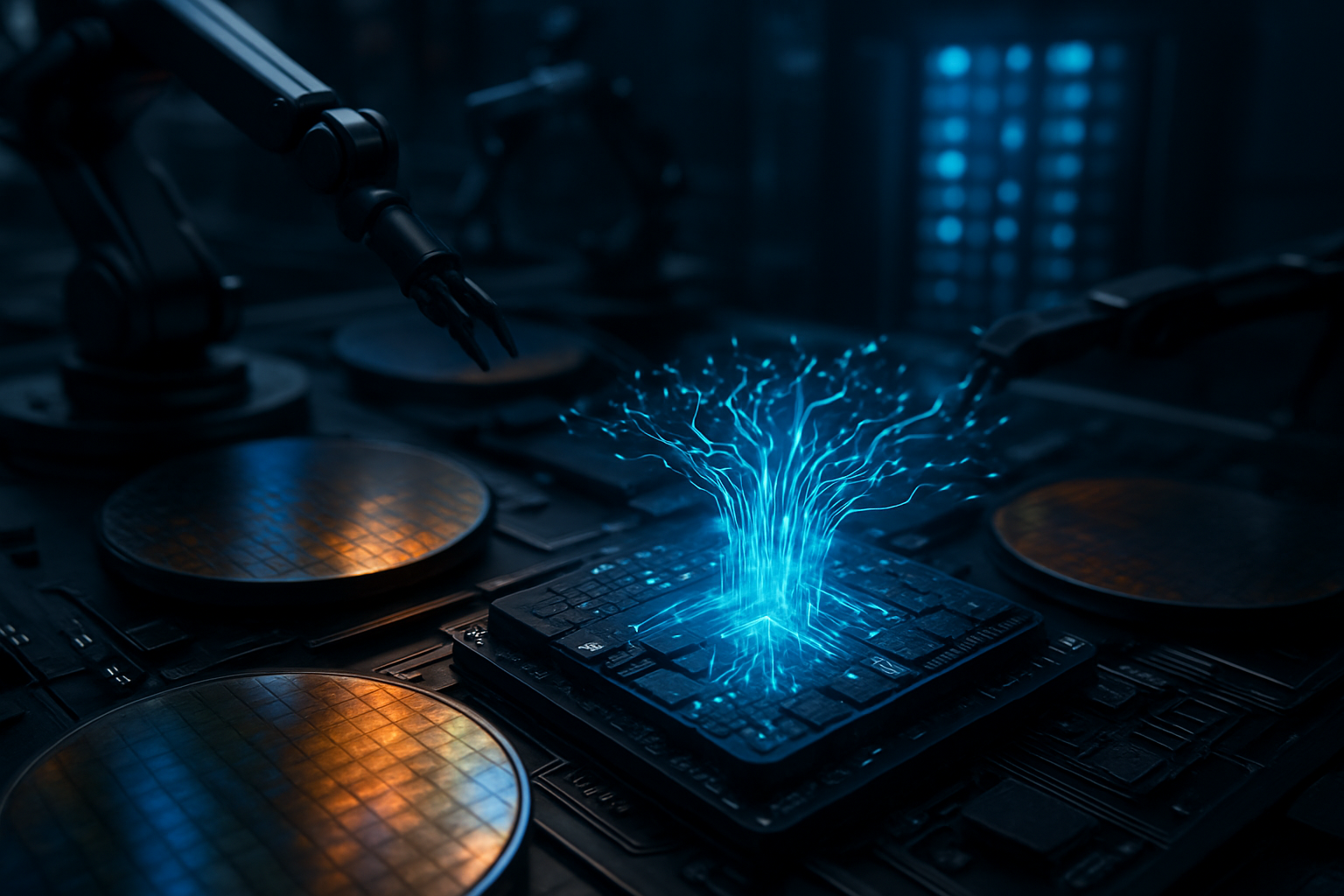
  • The Power Behind the Pulse: How SiC and GaN Are Breaking AI’s ‘Energy Wall’ in 2025

    The Power Behind the Pulse: How SiC and GaN Are Breaking AI’s ‘Energy Wall’ in 2025

    As we close out 2025, the semiconductor industry has reached a critical inflection point where the limitations of traditional silicon are no longer just a technical hurdle—they are a threat to the scaling of artificial intelligence. To keep pace with the massive energy demands of next-generation AI clusters and 800V electric vehicle (EV) architectures, the market has decisively shifted toward Wide Bandgap (WBG) materials. Silicon Carbide (SiC) and Gallium Nitride (GaN) have transitioned from niche "specialty" components to the foundational infrastructure of the modern digital economy, enabling power densities that were thought impossible just three years ago.

    The significance of this development cannot be overstated: by late 2025, the "energy wall"—the point at which power delivery and heat dissipation limit AI performance—has been breached. This breakthrough is driven by the massive industrial pivot toward 200mm (8-inch) SiC manufacturing and the emergence of 300mm (12-inch) GaN-on-Silicon technologies. These advancements have slashed costs and boosted yields, allowing hyperscalers and automotive giants to integrate high-efficiency power stages directly into their most advanced hardware.

    The Technical Frontier: 200mm Wafers and Vertical GaN

    The technical narrative of 2025 is dominated by the industry-wide transition to 200mm SiC wafers. This shift has provided a roughly 20% reduction in die cost while increasing the number of chips per wafer by 80%. Leading the charge in technical specifications, the industry has moved beyond 150mm legacy lines to support 12kW Power Supply Units (PSUs) for AI data centers. These units, which leverage a combination of SiC for high-voltage AC-DC conversion and GaN for high-frequency DC-DC switching, now achieve the "80 PLUS Titanium" efficiency standard, reaching 96-98% efficiency. This reduces heat waste by nearly 50% compared to the silicon-based units of 2022.

    Perhaps the most significant technical advancement of the year is the commercial launch of Vertical GaN (vGaN). Pioneered by companies like onsemi (NASDAQ:ON), vGaN differs from traditional lateral GaN by conducting current through the substrate. This allows it to compete directly with SiC in the 800V to 1200V range, offering the high switching speeds of GaN with the ruggedness of SiC. Meanwhile, Infineon Technologies (OTC:IFNNY) has stunned the research community by successfully shipping the first 300mm GaN-on-Silicon wafers, which yield 2.3 times more chips than the 200mm standard, effectively bringing GaN closer to cost parity with traditional silicon.

    Market Dynamics: Restructuring and Global Expansion

    The business landscape for WBG semiconductors has undergone a dramatic transformation in 2025. Wolfspeed (NYSE:WOLF), once struggling with debt and manufacturing delays, emerged from Chapter 11 bankruptcy in September 2025 as a leaner, restructured entity. Its Mohawk Valley Fab has finally reached 30% utilization, supplying critical SiC components to major automotive partners like Toyota (NYSE:TM) and Lucid (NASDAQ:LCID). This turnaround has stabilized the SiC supply chain, providing a reliable alternative to the diversifying European giants.

    In Europe, STMicroelectronics (NYSE:STM) has solidified its dominance in the automotive sector with the full-scale operation of its Catania Silicon Carbide Campus in Italy. This facility is the first of its kind to integrate the entire supply chain—from substrate growth to back-end module assembly—on a single site. Simultaneously, onsemi is expanding its footprint with a €1.6 billion facility in the Czech Republic, supported by EU grants. These strategic moves are designed to counter the rising tide of China-based substrate manufacturers, such as SICC and Tankeblue, which now command a 35% market share in SiC substrates, triggering the first real price wars in the WBG sector.

    AI Data Centers: The New Growth Engine

    While EVs were the initial catalyst for SiC, the explosion of AI infrastructure has become the primary driver for GaN and SiC growth in late 2025. Systems like the NVIDIA (NASDAQ:NVDA) Blackwell and its successors require unprecedented levels of power density. The transition to 800V DC power distribution at the rack level mirrors the 800V transition in EVs, creating a massive cross-sector synergy. WBG materials allow for smaller, more efficient DC-DC converters that sit closer to the GPU, minimizing "line loss" and allowing data centers to reduce cooling costs by an estimated 40%.

    This shift has broader implications for global sustainability. As AI energy consumption becomes a political and environmental flashpoint, the adoption of SiC and GaN is being framed as a "green" imperative. Regulatory bodies in the EU and North America have begun mandating higher efficiency standards for data centers, effectively making WBG semiconductors a legal requirement for new builds. This has created a "moat" for companies like Infineon and STM, whose advanced modules are the only ones capable of meeting these stringent new 2025 benchmarks.

    The Horizon: 300mm Scaling and Chip-Level Integration

    Looking ahead to 2026 and beyond, the industry is preparing for the "commoditization of SiC." As 200mm capacity becomes the global standard, experts predict a significant drop in prices, which will accelerate the adoption of SiC in mid-range and budget EVs. The next frontier is the full scaling of 300mm GaN-on-Silicon, which will likely push GaN into consumer electronics beyond just chargers, potentially entering the power stages of laptops and home appliances to further reduce global energy footprints.

    Furthermore, we are seeing the early stages of "integrated power-on-chip" designs. Research labs are experimenting with growing GaN layers directly onto silicon logic wafers. If successful, this would allow power management to be integrated directly into the AI processor itself, further reducing latency and energy loss. Challenges remain, particularly regarding the lattice mismatch between different materials, but the progress made in 2025 suggests these hurdles are surmountable within the next three to five years.

    Closing the Loop on the 2025 Power Revolution

    The state of the semiconductor market in late 2025 confirms that the era of "Silicon Only" is over. Silicon Carbide has claimed its crown in the high-voltage automotive and industrial sectors, while Gallium Nitride is rapidly conquering the high-frequency world of AI data centers and consumer tech. The successful transition to 200mm manufacturing and the emergence of 300mm GaN have provided the economies of scale necessary to fuel the next decade of technological growth.

    As we move into 2026, the key metrics to watch will be the pace of China’s substrate expansion and the speed at which vGaN can challenge SiC’s 1200V dominance. For now, the integration of these advanced materials has successfully averted an energy crisis in the AI sector, proving once again that the most profound revolutions in computing often happen in the quiet, high-voltage world of power electronics.


    This content is intended for informational purposes only and represents analysis of current AI developments.

    TokenRing AI delivers enterprise-grade solutions for multi-agent AI workflow orchestration, AI-powered development tools, and seamless remote collaboration platforms.
    For more information, visit https://www.tokenring.ai/.

  • Infineon Powers Up AI Future with Strategic Partnerships and Resilient Fiscal Performance

    Infineon Powers Up AI Future with Strategic Partnerships and Resilient Fiscal Performance

    Neubiberg, Germany – November 13, 2025 – Infineon Technologies AG (ETR: IFX), a global leader in semiconductor solutions, is strategically positioning itself at the heart of the artificial intelligence revolution. The company recently unveiled its full fiscal year 2025 earnings, reporting a resilient performance amidst a mixed market, while simultaneously announcing pivotal partnerships designed to supercharge the efficiency and scalability of AI data centers. These developments underscore Infineon’s commitment to "powering AI" by providing the foundational energy management and power delivery solutions essential for the next generation of AI infrastructure.

    Despite a slight dip in overall annual revenue for fiscal year 2025, Infineon's latest financial report, released on November 12, 2025, highlights a robust outlook driven by the insatiable demand for chips in AI data centers. The company’s proactive investments and strategic collaborations with industry giants like SolarEdge Technologies (NASDAQ: SEDG) and Delta Electronics (TPE: 2308) are set to solidify its indispensable role in enabling the high-density, energy-efficient computing environments critical for advanced AI.

    Technical Prowess: Powering the AI Gigafactories of Compute

    Infineon's fiscal year 2025, which concluded on September 30, 2025, saw annual revenue of €14.662 billion, a 2% decrease year-over-year, with net income at €1.015 billion. However, the fourth quarter showed sequential growth, with revenue rising 6% to €3.943 billion. While the Automotive (ATV) and Green Industrial Power (GIP) segments experienced some year-over-year declines, the Power & Sensor Systems (PSS) segment demonstrated a significant 14% revenue increase, surpassing estimates, driven by demand for power management solutions.

    The company's guidance for fiscal year 2026 anticipates moderate revenue growth, with particular emphasis on the booming demand for chips powering AI data centers. Infineon's CEO, Jochen Hanebeck, highlighted that the company has significantly increased its AI power revenue target and plans investments of approximately €2.2 billion, largely dedicated to expanding manufacturing capabilities to meet this demand. This strategic pivot is a testament to Infineon's "grid to core" approach, optimizing power delivery from the electrical grid to the AI processor itself, a crucial differentiator in an energy-intensive AI landscape.

    In a significant move to enhance its AI data center offerings, Infineon has forged two key partnerships. The collaboration with SolarEdge Technologies (NASDAQ: SEDG) focuses on advancing SolarEdge’s Solid-State Transformer (SST) platform for next-generation AI and hyperscale data centers. This involves the joint design and validation of modular 2-5 megawatt (MW) SST building blocks, leveraging Infineon's advanced Silicon Carbide (SiC) switching technology with SolarEdge's DC architecture. This SST technology aims for over 99% efficiency in converting medium-voltage AC to high-voltage DC, significantly reducing conversion losses, size, and weight compared to traditional systems, directly addressing the soaring energy consumption of AI.

    Simultaneously, Infineon has reinforced its alliance with Delta Electronics (TPE: 2308) to pioneer innovations in Vertical Power Delivery (VPD) for AI processors. This partnership combines Infineon's silicon MOSFET chip technology and embedded packaging expertise with Delta's power module design to create compact, highly efficient VPD modules. These modules are designed to provide unparalleled power efficiency, reliability, and scalability by enabling a direct and streamlined power path, boosting power density, and reducing heat generation. The goal is to support next-generation power delivery systems capable of supporting 1 megawatt per rack, with projections of up to 150 tons of CO2 savings over a typical rack’s three-year lifespan, showcasing a commitment to greener data center operations.

    Competitive Implications: A Foundational Enabler in the AI Race

    These developments position Infineon (ETR: IFX) as a critical enabler rather than a direct competitor to AI chipmakers like NVIDIA (NASDAQ: NVDA), Advanced Micro Devices (NASDAQ: AMD), or Intel (NASDAQ: INTC). By focusing on power management, microcontrollers, and sensor solutions, Infineon addresses a fundamental need in the AI ecosystem: efficient and reliable power delivery. The company's leadership in power semiconductors, particularly with advanced SiC and Gallium Nitride (GaN) technologies, provides a significant competitive edge, as these materials offer superior power efficiency and density crucial for the demanding AI workloads.

    Companies like NVIDIA, which are developing increasingly powerful AI accelerators, stand to benefit immensely from Infineon's advancements. As AI processors consume more power, the efficiency of the underlying power infrastructure becomes paramount. Infineon's partnerships and product roadmap directly support the ability of tech giants to deploy higher compute densities within their data centers without prohibitive energy costs or cooling challenges. The collaboration with NVIDIA on an 800V High-Voltage Direct Current (HVDC) power delivery architecture further solidifies this symbiotic relationship.

    The competitive landscape for power solutions in AI data centers includes rivals such as STMicroelectronics (EPA: STM), Texas Instruments (NASDAQ: TXN), Analog Devices (NASDAQ: ADI), and ON Semiconductor (NASDAQ: ON). However, Infineon's comprehensive "grid to core" strategy, coupled with its pioneering work in new power architectures like the SST and VPD modules, differentiates its offerings. These innovations promise to disrupt existing power delivery approaches by offering more compact, efficient, and scalable solutions, potentially setting new industry standards and securing Infineon a foundational role in future AI infrastructure builds. This strategic advantage helps Infineon maintain its market positioning as a leader in power semiconductors for high-growth applications.

    Wider Significance: Decarbonizing and Scaling the AI Revolution

    Infineon's latest moves fit squarely into the broader AI landscape and address two critical trends: the escalating energy demands of AI and the urgent need for sustainable computing. As AI models grow in complexity and data centers expand to become "AI gigafactories of compute," their energy footprint becomes a significant concern. Infineon's focus on high-efficiency power conversion, exemplified by its SiC technology and new SST and VPD partnerships, directly tackles this challenge. By enabling more efficient power delivery, Infineon helps reduce operational costs for hyperscalers and significantly lowers the carbon footprint of AI infrastructure.

    The impact of these developments extends beyond mere efficiency gains. They facilitate the scaling of AI, allowing for the deployment of more powerful AI systems in denser configurations. This is crucial for advancements in areas like large language models, autonomous systems, and scientific simulations, which require unprecedented computational resources. Potential concerns, however, revolve around the speed of adoption of these new power architectures and the capital expenditure required for data centers to transition from traditional systems.

    Compared to previous AI milestones, where the focus was primarily on algorithmic breakthroughs or chip performance, Infineon's contribution highlights the often-overlooked but equally critical role of infrastructure. Just as advanced process nodes enable faster chips, advanced power management enables the efficient operation of those chips at scale. These developments underscore a maturation of the AI industry, where the focus is shifting not just to what AI can do, but how it can be deployed sustainably and efficiently at a global scale.

    Future Developments: Towards a Sustainable and Pervasive AI

    Looking ahead, the near-term will likely see the accelerated deployment of Infineon's (ETR: IFX) SiC-based power solutions and the initial integration of the SST and VPD technologies in pilot AI data center projects. Experts predict a rapid adoption curve for these high-efficiency solutions as AI workloads continue to intensify, making power efficiency a non-negotiable requirement for data center operators. The collaboration with NVIDIA on 800V HVDC power architectures suggests a future where higher voltage direct current distribution becomes standard, further enhancing efficiency and reducing infrastructure complexity.

    Potential applications and use cases on the horizon include not only hyperscale AI training and inference data centers but also sophisticated edge AI deployments. Infineon's expertise in microcontrollers and sensors, combined with efficient power solutions, will be crucial for enabling AI at the edge in autonomous vehicles, smart factories, and IoT devices, where low power consumption and real-time processing are paramount.

    Challenges that need to be addressed include the continued optimization of manufacturing processes for SiC and GaN to meet surging demand, the standardization of new power delivery architectures across the industry, and the ongoing need for skilled engineers to design and implement these complex systems. Experts predict a continued arms race in power efficiency, with materials science, packaging innovations, and advanced control algorithms driving the next wave of breakthroughs. The emphasis will remain on maximizing computational output per watt, pushing the boundaries of what's possible in sustainable AI.

    Comprehensive Wrap-up: Infineon's Indispensable Role in the AI Era

    In summary, Infineon Technologies' (ETR: IFX) latest earnings report, coupled with its strategic partnerships and significant investments in AI data center solutions, firmly establishes its indispensable role in the artificial intelligence era. The company's resilient financial performance and optimistic guidance for fiscal year 2026, driven by AI demand, underscore its successful pivot towards high-growth segments. Key takeaways include Infineon's leadership in power semiconductors, its innovative "grid to core" strategy, and the groundbreaking collaborations with SolarEdge Technologies (NASDAQ: SEDG) on Solid-State Transformers and Delta Electronics (TPE: 2308) on Vertical Power Delivery.

    These developments represent a significant milestone in AI history, highlighting that the future of artificial intelligence is not solely dependent on processing power but equally on the efficiency and sustainability of its underlying infrastructure. Infineon's solutions are critical for scaling AI while mitigating its environmental impact, positioning the company as a foundational pillar for the burgeoning "AI gigafactories of compute."

    The long-term impact of Infineon's strategy is likely to be profound, setting new benchmarks for energy efficiency and power density in data centers and accelerating the global adoption of AI across various sectors. What to watch for in the coming weeks and months includes further details on the implementation of these new power architectures, the expansion of Infineon's manufacturing capabilities, and the broader industry's response to these advanced power delivery solutions as the race to build more powerful and sustainable AI continues.


    This content is intended for informational purposes only and represents analysis of current AI developments.

    TokenRing AI delivers enterprise-grade solutions for multi-agent AI workflow orchestration, AI-powered development tools, and seamless remote collaboration platforms.
    For more information, visit https://www.tokenring.ai/.