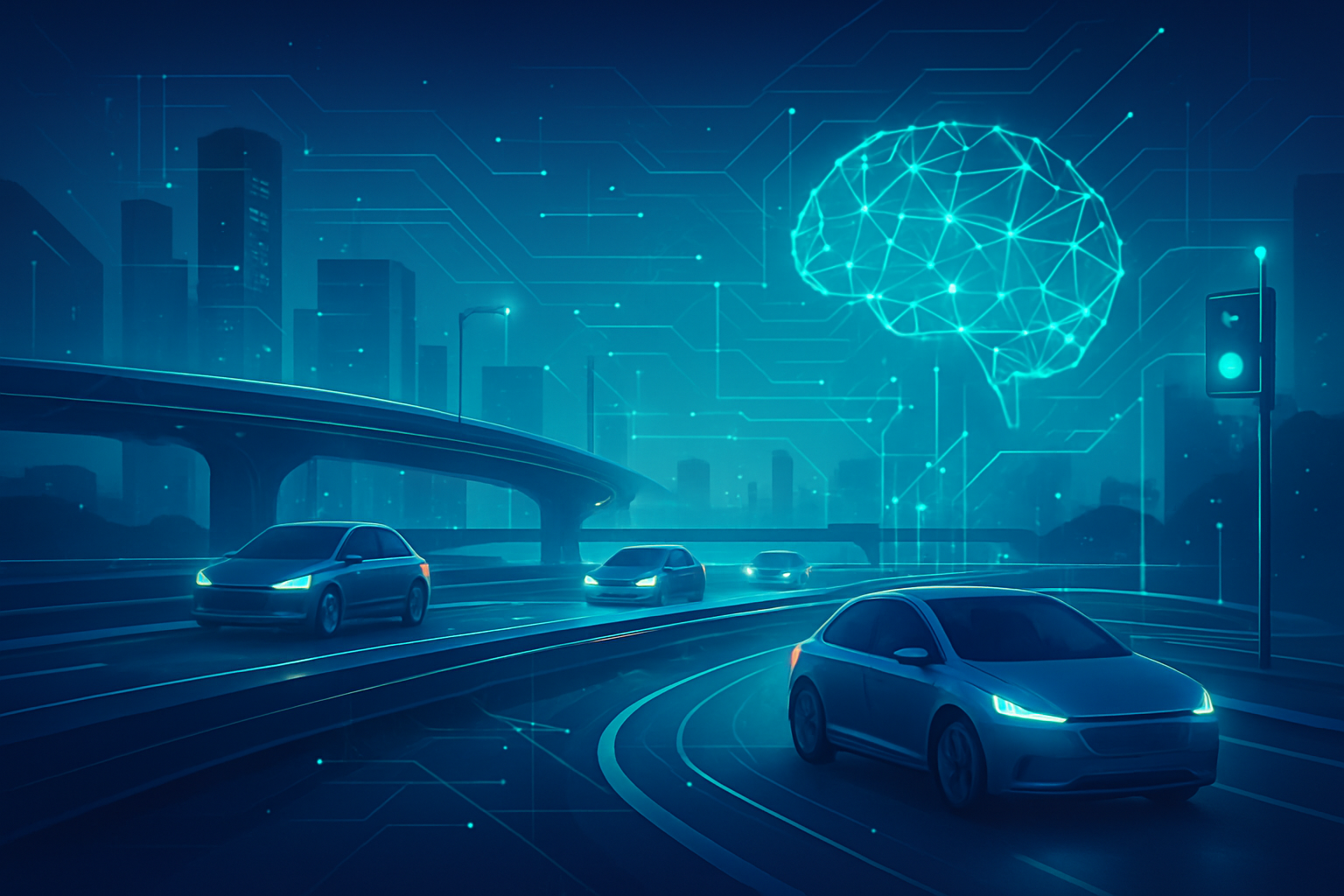
Cities and states across the United States are rapidly deploying artificial intelligence (AI) to revolutionize road safety, moving beyond reactive repairs to proactive hazard identification and strategic infrastructure enhancement. Faced with aging infrastructure and alarmingly high traffic fatalities, governments are embracing AI to act as "new eyes" on America's roadways, optimizing traffic flow, mitigating environmental impacts, and ultimately safeguarding public lives. Recent developments highlight a significant shift towards data-driven, intelligent transportation systems with immediate and tangible impacts, laying the groundwork for a future where roads are not just managed, but truly intelligent.
The immediate significance of these AI adoptions is evident in their rapid deployment and collaborative efforts. Programs like Hawaii's AI-equipped dashcam initiative, San Jose's expanding pothole detection, and Texas's vast roadway scanning project are all recent initiatives demonstrating governments' urgent response to road safety challenges. Furthermore, the launch of the GovAI Coalition in March 2024, established by San Jose officials, is a crucial collaborative platform for governments to share best practices and data, aiming to create a shared national road safety library. This initiative enables AI systems to learn from problems encountered across different localities, accelerating the impact of AI-driven solutions and preparing infrastructure for the eventual widespread adoption of autonomous vehicles.
The Technical Core: AI's Multi-faceted Approach to Road Safety
The integration of Artificial Intelligence (AI) is transforming road safety by offering innovative solutions that move beyond traditional reactive approaches to proactive and predictive strategies. These advancements leverage AI's ability to process vast amounts of data in real-time, leading to significant improvements in accident prevention, traffic management, and infrastructure maintenance. AI in road safety primarily aims to minimize human error, which accounts for over 90% of traffic accidents, and to optimize the overall transportation ecosystem.
A cornerstone of AI in road safety is Computer Vision. This subfield of AI enables machines to "see" and interpret their surroundings using sensors and cameras. Advanced Driver-Assistance Systems (ADAS) utilize deep learning models, particularly Convolutional Neural Networks (CNNs), to perform real-time object detection and classification, identifying pedestrians, cyclists, other vehicles, and road signs with high accuracy. Features like Lane Departure Warning (LDW), Automatic Emergency Braking (AEB), and Adaptive Cruise Control (ACC) are now common. Unlike older, rule-based ADAS, AI-driven systems handle complex scenarios and adapt to varying conditions like adverse weather. Similarly, Driver Monitoring Systems (DMS) use in-cabin cameras and deep neural networks to track driver attentiveness, detecting drowsiness or distraction more accurately than previous timer-based systems. For road hazard detection, AI-powered computer vision systems deployed in vehicles and infrastructure utilize architectures like YOLOv8 and Faster R-CNN on image and video streams to identify potholes, cracks, and debris in real-time, automating and improving upon labor-intensive manual inspections.
Machine Learning for Predictive Maintenance is revolutionizing road infrastructure management. AI algorithms, including regression, classification, and time series analysis, analyze data from embedded sensors, traffic patterns, weather reports, and historical maintenance records to predict when and where repairs will be necessary. This allows for proactive interventions, reducing costs, minimizing road downtime, and preventing accidents caused by deteriorating conditions. This approach offers significant advantages over traditional scheduled inspections or reactive repairs, optimizing resource allocation and extending infrastructure lifespan.
Intelligent Traffic Systems (ITS) powered by AI optimize traffic flow and enhance safety across entire networks. Adaptive Traffic Signal Control uses AI, often leveraging Reinforcement Learning (RL), to dynamically adjust traffic light timings based on real-time data from cameras, sensors, and GPS. This contrasts sharply with older, fixed-schedule traffic lights, leading to significantly smoother traffic flow, reduced travel times, and minimized congestion. Pittsburgh's SURTRAC network, for example, has demonstrated a 25% reduction in travel times and a 20% reduction in vehicle emissions. AI also enables Dynamic Routing, Congestion Management, and rapid Incident Detection, sending real-time alerts to drivers about hazards and optimizing routes for emergency vehicles. The integration of Vehicle-to-Everything (V2X) communication, supported by Edge AI, further enhances safety by allowing vehicles to communicate with infrastructure and each other, providing early warnings for hazards.
Initial reactions from the AI research community and industry experts are largely optimistic, recognizing AI's potential to drastically reduce human error and transform road safety from reactive to proactive. However, challenges such as ensuring data quality and privacy, maintaining system reliability and robustness across diverse real-world conditions, addressing ethical implications (e.g., algorithmic bias, accountability), and the complexities of deploying AI into existing infrastructure remain key areas of ongoing research and discussion.
Reshaping the Tech Landscape: Opportunities and Disruptions
The increasing adoption of AI in road safety is fundamentally reshaping the tech industry, creating new opportunities, intensifying competition, and driving significant innovation across various sectors. The global road safety market is experiencing rapid growth, projected to reach USD 8.84 billion by 2030, with AI and machine learning being key drivers.
A diverse range of companies stands to benefit. AI companies specializing in perception and computer vision are seeing increased demand, including firms like StradVision and Recogni, which provide AI-based camera perception software for ADAS and autonomous vehicles, and Phantom AI, offering comprehensive autonomous driving platforms. ADAS and Autonomous Driving developers, such as Tesla (NASDAQ: TSLA) with its Autopilot system and Google's (NASDAQ: GOOGL) Waymo, are at the forefront, leveraging AI for improved sensor accuracy and real-time decision-making. NVIDIA (NASDAQ: NVDA), through its DRIVE platform, is also a key beneficiary, providing the underlying AI infrastructure.
Intelligent Traffic Management Solution Providers are also gaining traction. Yunex Traffic (a Siemens business) is known for smart mobility solutions, while startups like Microtraffic (microscopic traffic data analysis), Greenroads (AI-driven traffic analytics), Valerann (real-time road condition insights), and ITC (AI-powered traffic management systems) are expanding their reach. Fleet Safety and Management Companies like Geotab, Azuga, Netradyne, GreenRoad, Samsara (NYSE: IOT), and Motive are revolutionizing fleet operations by monitoring driver behavior, optimizing routes, and predicting maintenance needs using AI. The Insurtech sector is also being transformed, with companies like NVIDIA (NASDAQ: NVDA) and Palantir (NYSE: PLTR) building AI systems that impact insurers such as Progressive (NYSE: PGR) and Allstate (NYSE: ALL), pioneers in usage-based insurance (UBI). Third-party risk analytics firms like LexisNexis Risk Solutions and Cambridge Mobile Telematics are poised for growth.
AI's impact is poised to disrupt traditional industries. Traditional traffic management systems are being replaced or significantly enhanced by AI-powered intelligent traffic management systems (ITMS) that dynamically adjust signal timings and detect incidents more effectively. Vehicle inspection processes are being disrupted by AI-powered automated inspection systems. The insurance industry is shifting from reactive accident claims to proactive prevention, transforming underwriting models. Road infrastructure maintenance is moving from reactive repairs to predictive analytics. Even emergency response systems are being revolutionized by AI, enabling faster dispatch and optimized routes for first responders.
Companies are adopting various strategies to gain a strategic advantage. Specialization in niche problems, offering integrated hardware and software platforms, and developing advanced predictive analytics capabilities are key. Accuracy, reliability, and explainable AI are paramount for safety-critical applications. Strategic partnerships between tech firms, automakers, and governments are crucial, as are transparent ethical frameworks and data privacy measures. Companies with global scalability, like Acusensus with its nationwide contract in New Zealand for detecting distracted driving and seatbelt non-compliance, also hold a significant market advantage.
A Broader Lens: AI's Societal Canvas and Ethical Crossroads
AI's role in road safety extends far beyond mere technological upgrades; it represents a profound integration into the fabric of society, aligning with broader AI trends and promising significant societal and economic impacts. This application is a prime example of AI's capability to address complex, real-world challenges, particularly the reduction of human error, which accounts for the vast majority of road accidents globally.
This development fits seamlessly into the broader AI landscape as a testament to digital integration in transportation, facilitating V2V, V2I, and V2P communication through V2X technology. It exemplifies the power of leveraging Big Data and IoT, where AI algorithms detect patterns in vast datasets from sensors, cameras, and GPS to improve decision-making. Crucially, it signifies a major shift from reactive to proactive safety, moving from merely analyzing accidents to predicting and preventing them. The burgeoning market for ADAS and autonomous driving, projected to reach $300-400 billion in revenue by 2035, underscores the substantial economic impact and sustained investment in this area. Furthermore, AI in road safety is a significant component of human-centric AI initiatives aimed at addressing global societal challenges, such as the UN's "AI for Road Safety" goal to halve road deaths by 2030.
The societal and economic impacts are profound. The most significant societal benefit is the potential to drastically reduce fatalities and injuries, saving millions of lives and alleviating immense suffering. This leads to improved quality of life, less stress for commuters, and potentially greater accessibility in public transportation. Environmental benefits accrue from reduced congestion and emissions, while enhanced emergency response through faster incident identification and optimized routing can save lives. Economically, AI-driven road safety promises cost savings from proactive maintenance, reduced traffic disruptions, and lower fuel consumption. It boosts economic productivity by reducing travel delays and fosters market growth and new industries, creating job opportunities in related fields.
However, this progress is not without its concerns. Ethical considerations are paramount, particularly in programming autonomous vehicles to make decisions in unavoidable accident scenarios (e.g., trolley problem dilemmas). Algorithmic bias is a risk if training data is unrepresentative, potentially leading to unfair outcomes. The "black box" nature of some AI systems raises questions about transparency and accountability when errors occur. Privacy concerns stem from the extensive data collection via cameras and sensors, necessitating robust data protection policies and cybersecurity measures to prevent misuse or breaches. Finally, job displacement is a significant worry, with roles like taxi drivers and road inspectors potentially impacted by automation. The World Economic Forum estimates AI could lead to 75 million job displacements globally by 2025, emphasizing the need for workforce retraining and human-centric AI project design.
Compared to previous AI milestones, this application moves beyond mere pattern recognition (like in games or speech) to complex system modeling involving dynamic environments, multiple agents, and human behavior. It represents a shift from reactive to proactive control and intervention in real-time, directly impacting human lives. The seamless integration with physical systems (infrastructure and vehicles) signifies a deeper interaction with the physical world than many prior software-based AI breakthroughs. This high-stakes, real-world application of AI underscores its maturity and its potential to solve some of humanity's most persistent challenges.
The Road Ahead: Future Developments in AI for Safer Journeys
The trajectory of AI in road safety points towards a future where intelligent systems play an increasingly central role in preventing accidents, optimizing traffic flow, and enhancing overall transportation efficiency. Both near-term refinements and long-term transformative developments are on the horizon.
In the near term, we can expect further evolution of AI-powered Advanced Driver Assistance Systems (ADAS), making features like collision avoidance and adaptive cruise control more ubiquitous, refined, and reliable. Real-time traffic management will become more sophisticated, with AI algorithms dynamically adjusting traffic signals and predicting congestion with greater accuracy, leading to smoother urban mobility. Infrastructure monitoring and maintenance will see wider deployment of AI-powered systems, using cameras on various vehicles to detect hazards like potholes and damaged guardrails, enabling proactive repairs. Driver behavior monitoring systems within vehicles will become more common, leveraging AI to detect distraction and fatigue and issuing real-time alerts. Crucially, predictive crash analysis tools, some using large language models (LLMs), will analyze vast datasets to identify risk factors and forecast incident probabilities, allowing for targeted, proactive interventions.
Looking further into the long term, the vision of autonomous vehicles (AVs) as the norm is paramount, aiming to drastically reduce human error-related accidents. This will be underpinned by pervasive Vehicle-to-Everything (V2X) communication, where AI-enabled systems allow seamless data exchange between vehicles, infrastructure, and pedestrians, enabling advanced safety warnings and coordinated traffic flow. The creation of AI-enabled "digital twins" of traffic and infrastructure will integrate diverse data sources for comprehensive monitoring and preventive optimization. Ultimately, AI will underpin the development of smart cities with intelligent road designs, smart parking, and advanced systems to protect vulnerable road users, potentially even leading to "self-healing roads" with embedded sensors that automatically schedule repairs.
Potential applications on the horizon include highly proactive crash prevention models that move beyond reacting to accidents to forecasting and mitigating them by identifying specific risk factor combinations. AI will revolutionize optimized emergency response by enabling faster dispatch and providing crucial real-time accident information to first responders. Enhanced vulnerable road user protection will emerge through AI-driven insights informing infrastructure redesigns and real-time alerts for pedestrians and cyclists. Furthermore, adaptive road infrastructure will dynamically change speed limits and traffic management in response to real-time conditions.
However, several challenges need to be addressed for these developments to materialize. Data quality, acquisition, and integration remain critical hurdles due to fragmented sources and inconsistent formats. Technical reliability and complexity are ongoing concerns, especially for autonomous vehicles operating in diverse environmental conditions. Cybersecurity and system vulnerabilities pose risks, as adversarial attacks could manipulate AI systems. Robust ethical and legal frameworks are needed to address accountability in AI-driven accidents and prevent algorithmic biases. Data privacy and public trust are paramount, requiring strong protection policies. The cost-benefit and scalability of AI solutions need careful evaluation, and a high demand for expertise and interdisciplinary collaboration is essential.
Experts predict a significant transformation. Mark Pittman, CEO of Blyncsy, forecasts that almost every new vehicle will come equipped with a camera within eight years, enhancing data collection for safety. The International Transport Forum at the OECD emphasizes a shift towards proactive and preventive safety strategies, with AI learning from every road user. Researchers envision AI tools acting as a "copilot" for human decision-makers, providing interpretable insights. The UN's Vision Zero goal, aiming to halve road deaths by 2030, is expected to be heavily supported by AI. Ultimately, experts widely agree that autonomous vehicles are the "next step" in AI-based road safety, promising to be a major force multiplier in reducing incidents caused by human error.
Comprehensive Wrap-up: A New Era for Road Safety
The rapid integration of AI into road safety solutions marks a transformative era, promising a future with significantly fewer accidents and fatalities. This technological shift is a pivotal moment in both transportation and the broader history of artificial intelligence, showcasing AI's capability to tackle complex, real-world problems with high stakes.
The key takeaways highlight AI's multi-faceted impact: a fundamental shift towards proactive accident prevention through predictive analytics, the continuous enhancement of Advanced Driver Assistance Systems (ADAS) in vehicles, intelligent traffic management optimizing flow and reducing congestion, and the long-term promise of autonomous vehicles to virtually eliminate human error. Furthermore, AI is revolutionizing road infrastructure maintenance and improving post-crash response. Despite these advancements, significant challenges persist, including data privacy and cybersecurity, the need for robust ethical and legal frameworks, substantial infrastructure investment, and the critical task of fostering public trust.
In the history of AI, this development represents more than just incremental progress. It signifies AI's advanced capabilities in perception and cognition, enabling systems to interpret complex road environments with unprecedented detail and speed. The shift towards predictive analytics and automated decision-making in real-time, directly impacting human lives, pushes the boundaries of AI's integration into critical societal infrastructure. This application underscores AI's evolution from pattern recognition to complex system modeling and proactive control, making it a high-stakes, real-world application that contrasts with earlier, more experimental AI milestones. The UN's "AI for Road Safety" initiative further solidifies its global significance.
The long-term impact of AI on road safety is poised to be transformative, leading to a profound redefinition of our transportation systems. The ultimate vision is "Vision Zero"—the complete elimination of road fatalities and serious injuries. We can anticipate a radical reduction in accidents, transformed urban mobility with less congestion and a more pleasant commuting experience, and evolving "smarter" infrastructure. Societal shifts, including changes in urban planning and vehicle ownership, are also likely. However, continuous effort will be required to establish robust regulatory frameworks, address ethical dilemmas, and ensure data privacy and security to maintain public trust. While fully driverless autonomy seems increasingly probable, driver training is expected to become even more crucial in the short to medium term, as AI highlights the inherent risks of human driving.
In the coming weeks and months, it will be crucial to watch for new pilot programs and real-world deployments by state transportation departments and cities, particularly those focusing on infrastructure monitoring and predictive maintenance. Advancements in sensor technology and data fusion, alongside further refinements of ADAS features, will enhance real-time capabilities. Regulatory developments and policy frameworks from governmental bodies will be key in shaping the integration of AI into transportation. We should also observe the increased deployment of AI in traffic surveillance and enforcement, as well as the expansion of semi-autonomous and autonomous fleets in specific sectors, which will provide invaluable real-world data and insights. These continuous, incremental steps will collectively move us closer to a safer and more efficient road network, driven by the relentless innovation in artificial intelligence.
This content is intended for informational purposes only and represents analysis of current AI developments.
TokenRing AI delivers enterprise-grade solutions for multi-agent AI workflow orchestration, AI-powered development tools, and seamless remote collaboration platforms.
For more information, visit https://www.tokenring.ai/.