Tag: Intel PowerVia

  • The Backside Revolution: How BS-PDN is Unlocking the Next Era of AI Supercomputing

    The Backside Revolution: How BS-PDN is Unlocking the Next Era of AI Supercomputing

    As of late January 2026, the semiconductor industry has reached a pivotal inflection point in the race for artificial intelligence supremacy. The transition to Backside Power Delivery Network (BS-PDN) technology—once a theoretical dream—has become the defining battlefield for chipmakers. With the recent high-volume rollout of Intel Corporation (NASDAQ: INTC) 18A process and the impending arrival of Taiwan Semiconductor Manufacturing Company (NYSE: TSM) A16 node, the "front-side" of the silicon wafer, long the congested highway for both data and electricity, is finally being decluttered to make way for the massive data throughput required by trillion-parameter AI models.

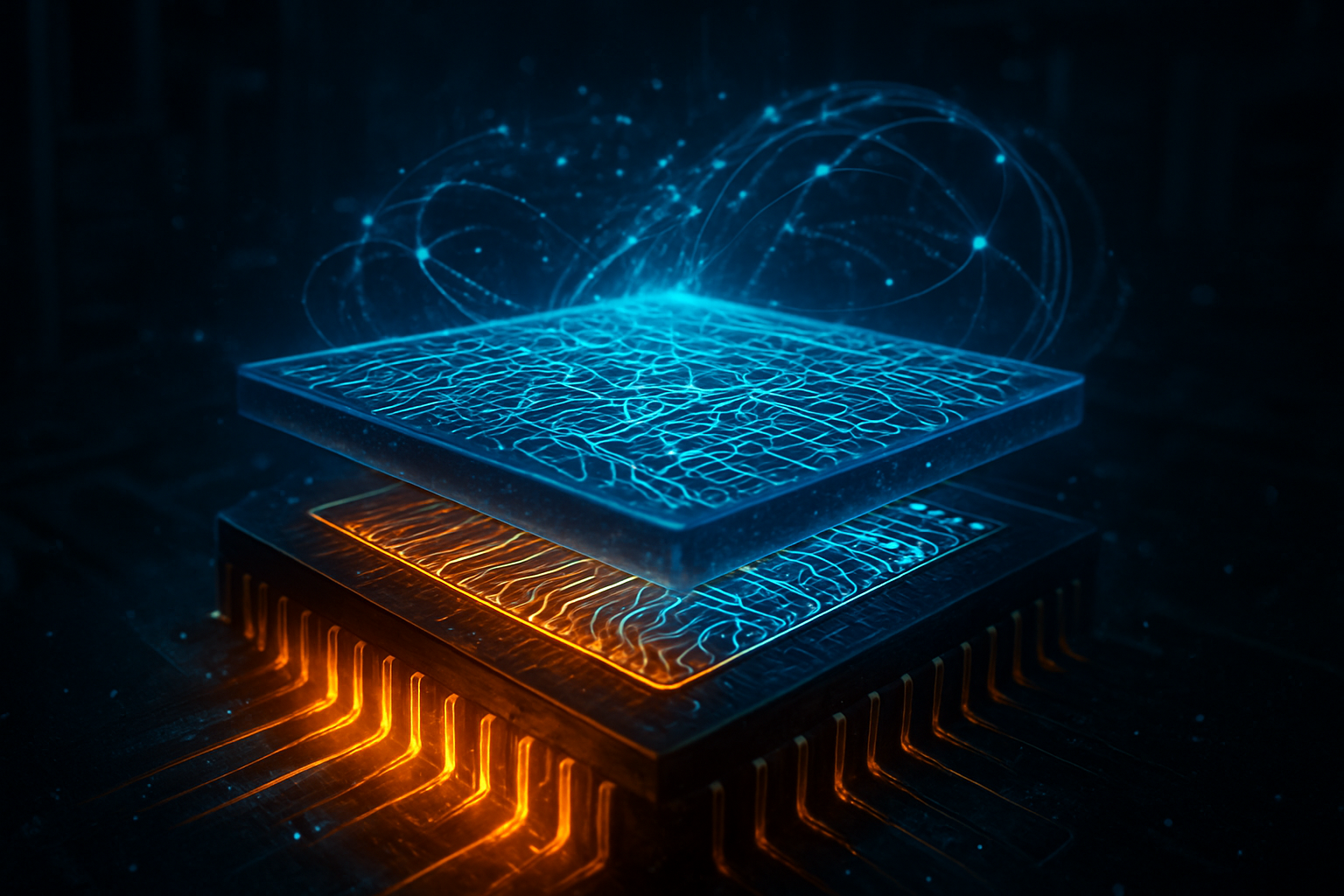
    This architectural shift is more than a mere incremental update; it is a fundamental reimagining of chip design. By moving the power delivery wires to the literal "back" of the silicon wafer, manufacturers are solving the "voltage droop" (IR drop) problem that has plagued the industry as transistors shrunk toward the 1nm scale. For the first time, power and signal have their own dedicated real estate, allowing for a 10% frequency boost and a substantial reduction in power loss—gains that are critical as the energy consumption of data centers remains the primary bottleneck for AI expansion in 2026.

    The Technical Duel: Intel’s PowerVia vs. TSMC’s Super Power Rail

    The technical challenge behind BS-PDN involves flipping the traditional manufacturing process on its head. Historically, transistors were built first, followed by layers of metal interconnects for both power and signals. As these layers became increasingly dense, they acted like a bottleneck, causing electrical resistance that lowered the voltage reaching the transistors. Intel’s PowerVia, which debuted on the Intel 20A node and is now being mass-produced on 18A, utilizes Nano-Through Silicon Vias (nTSVs) to shuttle power from the backside directly to the transistor layer. These nTSVs are roughly 500 times smaller than traditional TSVs, minimizing the footprint and allowing for a reported 30% reduction in voltage droop.

    In contrast, TSMC is preparing its A16 node (1.6nm), which features the "Super Power Rail." While Intel uses vias to bridge the gap, TSMC’s approach involves connecting the power network directly to the transistor’s source and drain. This "direct contact" method is technically more complex to manufacture but promises a 15% to 20% power reduction at the same speed compared to their 2nm (N2) offerings. By eliminating the need for power to weave through the "front-end-of-line" metal stacks, both companies have effectively decoupled the power and signal paths, reducing crosstalk and allowing for much wider, less resistive power wires on the back.

    A New Arms Race for AI Giants and Foundry Customers

    The implications for the competitive landscape of 2026 are profound. Intel’s first-mover advantage with PowerVia on the 18A node has allowed it to secure early foundry wins with major players like Microsoft Corporation (NASDAQ: MSFT) and Amazon.com, Inc. (NASDAQ: AMZN), who are eager to optimize their custom AI silicon. For Intel, 18A is a "make or break" moment to prove it can out-innovate TSMC in the foundry space. The 65% to 75% yields reported this month suggest that Intel is finally stabilizing its manufacturing, potentially reclaiming the process leadership it lost a decade ago.

    However, TSMC remains the preferred partner for NVIDIA Corporation (NASDAQ: NVDA). Earlier this month at CES 2026, NVIDIA teased its future "Feynman" GPU architecture, which is expected to be the "alpha" customer for TSMC’s A16 Super Power Rail. While NVIDIA's current "Rubin" platform relies on existing 2nm tech, the leap to A16 is predicted to deliver a 3x performance-per-watt improvement. This competition isn't just about speed; it's about the "Joule-per-Token" metric. As AI companies face mounting pressure over energy costs and environmental impact, the chipmaker that can deliver the most tokens for the least amount of electricity will win the lion's share of the enterprise market.

    Beyond the Transistor: Scaling the Broader AI Landscape

    BS-PDN is not just a solution for congestion; it is the enabler for the next generation of 1,000-watt "Superchips." As AI accelerators push toward and beyond the 1kW power envelope, traditional cooling and power delivery methods have reached their physical limits. The introduction of backside power allows for "double-sided cooling," where heat can be efficiently extracted from both the front and back of the silicon. This is a game-changer for the high-density liquid-cooled racks being deployed by specialized AI clouds.

    When compared to previous milestones like the introduction of FinFET in 2011, BS-PDN is arguably more disruptive because it changes the entire physical flow of chip manufacturing. The industry is moving away from a 2D "printing" mindset toward a truly 3D integrated circuit (3DIC) paradigm. This transition does raise concerns, however; the complexity of thinning wafers and bonding them back-to-back increases the risk of mechanical failure and reduces initial yields. Yet, for the AI research community, these hardware breakthroughs are the only way to sustain the scaling laws that have fueled the explosion of generative AI.

    The Horizon: 1nm and the Era of Liquid-Metal Delivery

    Looking ahead to late 2026 and 2027, the focus will shift from simply implementing BS-PDN to optimizing it for 1nm nodes. Experts predict that the next evolution will involve integrating capacitors and voltage regulators directly onto the backside of the wafer, further reducing the distance power must travel. We are also seeing early research into liquid-metal power delivery systems that could theoretically allow for even higher current densities without the resistive heat of copper.

    The main challenge remains the cost. High-NA EUV lithography from ASML Holding N.V. (NASDAQ: ASML) is required for these advanced nodes, and the machines currently cost upwards of $350 million each. Only a handful of companies can afford to design chips at this level. This suggests a future where the gap between "the haves" (those with access to BS-PDN silicon) and "the have-nots" continues to widen, potentially centralizing AI power even further among the largest tech conglomerates.

    Closing the Loop on the Backside Revolution

    The move to Backside Power Delivery marks the end of the "Planar Power" era. As Intel ramps up 18A and TSMC prepares the A16 Super Power Rail, the semiconductor industry has successfully bypassed one of its most daunting physical barriers. The key takeaways for 2026 are clear: power delivery is now as important as logic density, and the ability to manage thermal and electrical resistance at the atomic scale is the new currency of the AI age.

    This development will go down in AI history as the moment hardware finally caught up with the ambitions of software. In the coming months, the industry will be watching the first benchmarks of Intel's Panther Lake and the final tape-outs of NVIDIA’s A16-based designs. If these chips deliver on their promises, the "Backside Revolution" will have provided the necessary oxygen for the AI fire to continue burning through the end of the decade.


    This content is intended for informational purposes only and represents analysis of current AI developments.

    TokenRing AI delivers enterprise-grade solutions for multi-agent AI workflow orchestration, AI-powered development tools, and seamless remote collaboration platforms.
    For more information, visit https://www.tokenring.ai/.
  • Backside Power Delivery: A Radical Shift in Chip Architecture

    Backside Power Delivery: A Radical Shift in Chip Architecture

    The world of semiconductor manufacturing has reached a historic inflection point. As of January 2026, the industry has officially moved beyond the constraints of traditional transistor scaling and entered the "Angstrom Era," defined by a radical architectural shift known as Backside Power Delivery (BSPDN). This breakthrough, led by Intel’s "PowerVia" and TSMC’s "Super Power Rail," represents the most significant change to microchip design in over a decade, fundamentally rewriting how power and data move through silicon to fuel the next generation of generative AI.

    The immediate significance of BSPDN cannot be overstated. By moving power delivery lines from the front of the wafer to the back, chipmakers have finally broken the "interconnect bottleneck" that threatened to stall Moore’s Law. This transition is the primary engine behind the new 2nm and 1.8nm nodes, providing the massive efficiency gains required for the power-hungry AI accelerators that now dominate global data centers.

    Decoupling Power from Logic

    For decades, microchips were built like a house where the plumbing and the electrical wiring were forced to run through the same narrow hallways as the residents. In traditional Front-End-Of-Line (FEOL) manufacturing, both power lines and signal interconnects are built on the front side of the silicon wafer. As transistors shrank to the 3nm level, these wires became so densely packed that they began to interfere with one another, causing significant electrical resistance and "crosstalk" interference.

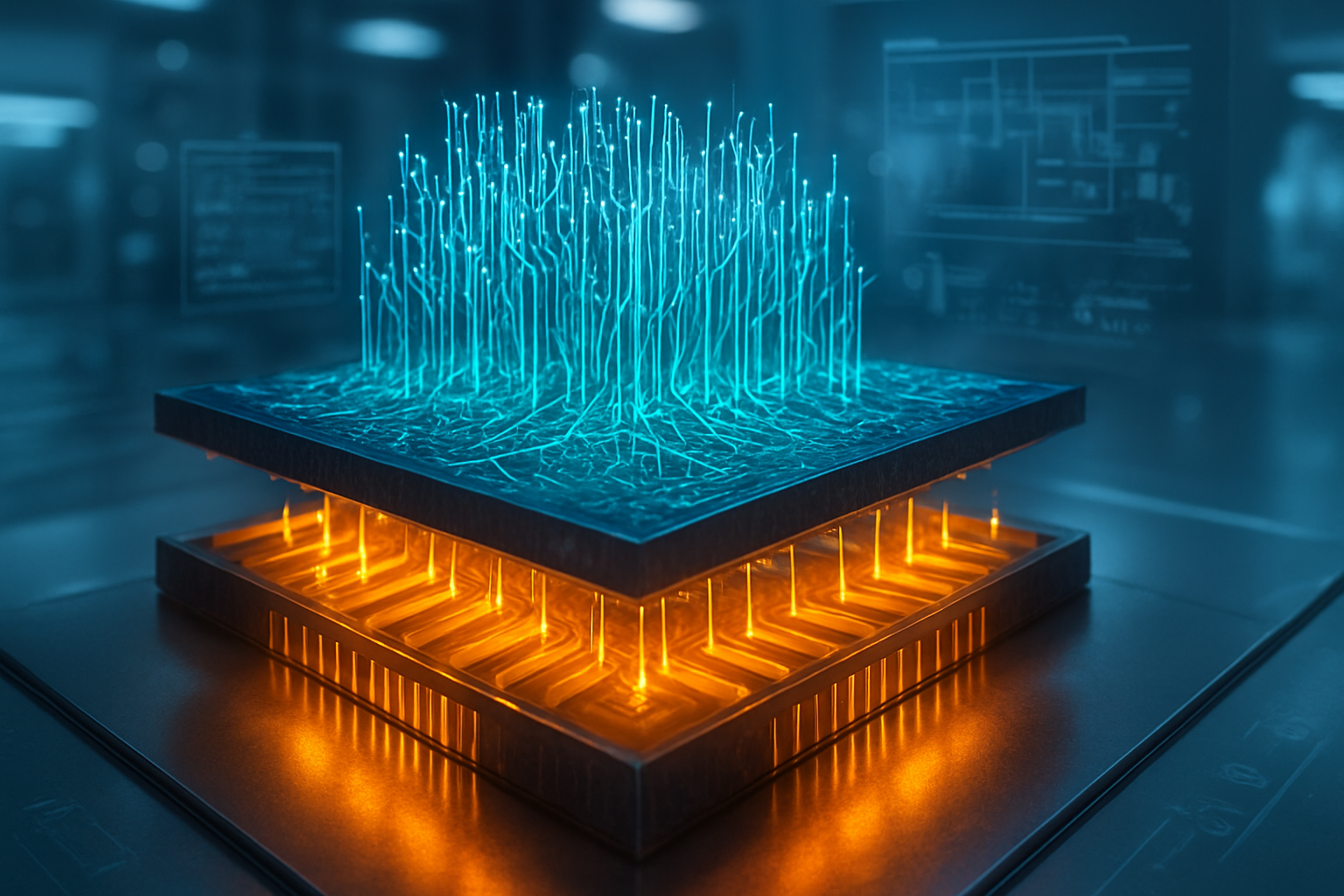
    BSPDN solves this by essentially flipping the house. In this new architecture, the silicon wafer is thinned down to a fraction of its original thickness, and an entirely separate network of power delivery lines is fabricated on the back. Intel Corporation (NASDAQ: INTC) was the first to commercialize this with its PowerVia technology, which utilizes "nano-Through Silicon Vias" (nTSVs) to carry power directly to the transistor layer. This separation allows for much thicker, less resistive power wires on the back and clearer, more efficient signal routing on the front.

    The technical specifications are staggering. Early reports from the 1.8nm (18A) production lines indicate that BSPDN reduces "IR drop"—a phenomenon where voltage decreases as it travels through a circuit—by nearly 30%. This allows transistors to switch faster while consuming less energy. Initial reactions from the research community have highlighted that this shift provides a 6% to 10% frequency boost and up to a 15% reduction in total power loss, a critical requirement for AI chips that are now pushing toward 1,000-watt power envelopes.

    The New Foundry War: Intel, TSMC, and the 2nm Gold Rush

    The successful rollout of BSPDN has reshaped the competitive landscape among the world’s leading foundries. Intel (NASDAQ: INTC) has used its first-mover advantage with PowerVia to reclaim a seat at the table of leading-edge manufacturing. Its 18A node is now in high-volume production, powering the new Panther Lake processors and securing major foundry customers like Microsoft Corporation (NASDAQ: MSFT) and Amazon (NASDAQ: AMZN), both of which are designing custom AI silicon to reduce their reliance on merchant hardware.

    However, Taiwan Semiconductor Manufacturing Company (NYSE: TSM) remains the titan to beat. While TSMC’s initial 2nm (N2) node did not include backside power, its upcoming A16 node—scheduled for mass production later this year—introduces the "Super Power Rail." This implementation is even more advanced than Intel's, connecting power directly to the transistor’s source and drain. This precision has led NVIDIA Corporation (NASDAQ: NVDA) to select TSMC’s A16 for its next-generation "Rubin" AI platform, which aims to deliver a 3x performance-per-watt improvement over the previous Blackwell architecture.

    Meanwhile, Samsung Electronics (OTC: SSNLF) is positioning itself as the "turnkey" alternative. Samsung is skipping the intermediate steps and moving directly to a highly optimized BSPDN on its 2nm (SF2Z) node. By offering a bundled package of 2nm logic, HBM4 memory, and advanced 2.5D packaging, Samsung has managed to peel away high-profile AI startups and even secure contracts from Advanced Micro Devices (NASDAQ: AMD) for specialized AI chiplets.

    AI Scaling and the "Joule-per-Token" Metric

    The broader significance of Backside Power Delivery lies in its impact on the economics of artificial intelligence. In 2026, the focus of the AI industry has shifted from raw FLOPS (Floating Point Operations Per Second) to "Joules-per-Token"—a measure of how much energy it takes to generate a single word of AI output. With the cost of 2nm wafers reportedly reaching $30,000 each, the energy efficiency provided by BSPDN is the only way for hyperscalers to keep the operational costs of LLMs (Large Language Models) sustainable.

    Furthermore, BSPDN is a prerequisite for the continued density of AI accelerators. By freeing up space on the front of the die, designers have been able to increase logic density by 10% to 20%, allowing for more Tensor cores and larger on-chip caches. This is vital for the 2026 crop of "Superchips" that integrate CPUs and GPUs on a single package. Without backside power, these chips would have simply melted under the thermal and electrical stress of modern AI workloads.

    However, this transition has not been without its challenges. One major concern is thermal management. Because the power delivery network is now on the back of the chip, it can trap heat between the silicon and the cooling solution. This has made liquid cooling a mandatory requirement for almost all high-performance AI hardware using these new nodes, leading to a massive infrastructure upgrade cycle in data centers across the globe.

    Looking Ahead: 1nm and the 3D Future

    The shift to BSPDN is not just a one-time upgrade; it is the foundation for the next decade of semiconductor evolution. Looking forward to 2027 and 2028, experts predict the arrival of the 1.4nm and 1nm nodes, where BSPDN will be combined with "Complementary FET" (CFET) architectures. In a CFET design, n-type and p-type transistors are stacked directly on top of each other, a move that would be physically impossible without the backside plumbing provided by BSPDN.

    We are also seeing the early stages of "Function-Side Power Delivery," where specific parts of the chip can be powered independently from the back to allow for ultra-fine-grained power gating. This would allow AI chips to "turn off" 90% of their circuits during idle periods, further driving down the carbon footprint of AI. The primary challenge remaining is yield; as of early 2026, Intel and TSMC are still working to push 2nm/1.8nm yields past the 70% mark, a task complicated by the extreme precision required to align the front and back of the wafer.

    A Fundamental Transformation of Silicon

    The arrival of Backside Power Delivery marks the end of the "Planar Era" and the beginning of a truly three-dimensional approach to computing. By separating the flow of energy from the flow of information, the semiconductor industry has successfully navigated the most dangerous bottleneck in its history.

    The key takeaways for the coming year are clear: Intel has proven its technical relevance with PowerVia, but TSMC’s A16 remains the preferred choice for the highest-end AI hardware. For the tech industry, the 2nm and 1.8nm nodes represent more than just a shrink; they are an architectural rebirth that will define the performance limits of artificial intelligence for years to come. In the coming months, watch for the first third-party benchmarks of Intel’s 18A and the official tape-outs of NVIDIA’s Rubin GPUs—these will be the ultimate tests of whether the "backside revolution" lives up to its immense promise.


    This content is intended for informational purposes only and represents analysis of current AI developments.

    TokenRing AI delivers enterprise-grade solutions for multi-agent AI workflow orchestration, AI-powered development tools, and seamless remote collaboration platforms.
    For more information, visit https://www.tokenring.ai/.
  • The Power Flip: How Backside Delivery Is Saving the AI Revolution in the Angstrom Era

    The Power Flip: How Backside Delivery Is Saving the AI Revolution in the Angstrom Era

    As the artificial intelligence boom continues to strain the physical limits of silicon, a radical architectural shift has moved from the laboratory to the factory floor. As of January 2026, the semiconductor industry has officially entered the "Angstrom Era," marked by the high-volume manufacturing of Backside Power Delivery Network (BSPDN) technology. This breakthrough—decoupling power routing from signal routing—is proving to be the "secret sauce" required to sustain the multi-kilowatt power demands of next-generation AI accelerators.

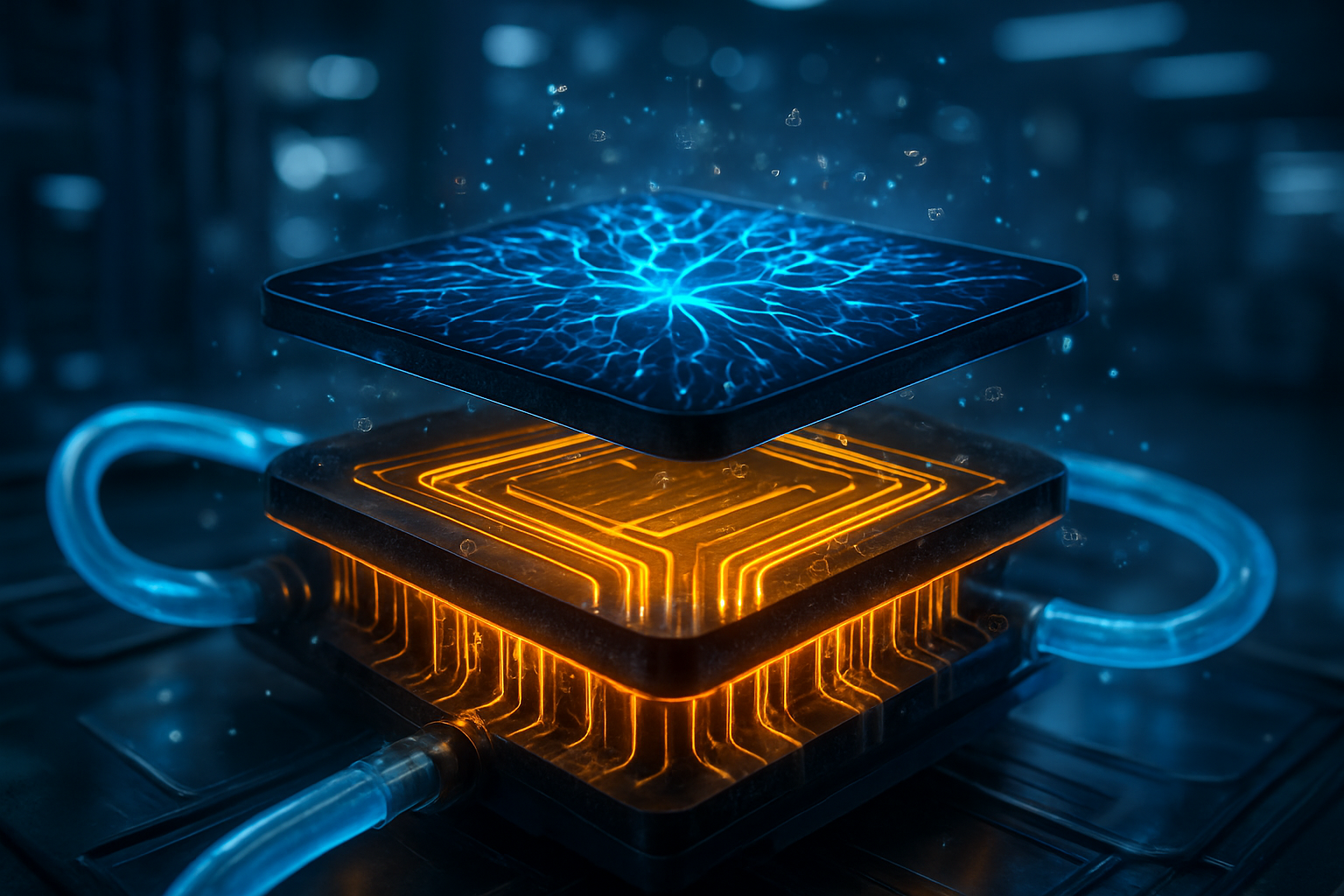
    The significance of this transition cannot be overstated. For decades, chips were built like houses where the plumbing and electrical wiring were crammed into the ceiling, competing with the living space. By moving the "electrical grid" to the basement—the back of the wafer—chipmakers are drastically reducing interference, lowering heat, and allowing for unprecedented transistor density. Leading the charge are Intel Corporation (NASDAQ: INTC) and Taiwan Semiconductor Manufacturing Company Limited (NYSE: TSM), whose competing implementations are currently reshaping the competitive landscape for AI giants like Nvidia (NASDAQ: NVDA) and Advanced Micro Devices (NASDAQ: AMD).

    The Technical Duel: PowerVia vs. Super Power Rail

    At the heart of this revolution are two distinct engineering philosophies. Intel, having successfully navigated its "five nodes in four years" roadmap, is currently shipping its Intel 18A node in high volume. The cornerstone of 18A is PowerVia, which uses "nano-through-silicon vias" (nTSVs) to bridge the power network from the backside to the transistor layer. By being the first to bring BSPDN to market, Intel has achieved a "first-mover" advantage that its CEO, Pat Gelsinger, claims provides a 6% frequency gain and a staggering 30% reduction in voltage droop (IR drop) for its new "Panther Lake" processors.

    In contrast, TSMC (NYSE: TSM) has taken a more aggressive, albeit slower-to-market, approach with its Super Power Rail (SPR) technology. While TSMC’s current 2nm (N2) node focuses on the transition to Gate-All-Around (GAA) transistors, its upcoming A16 (1.6nm) node will debut SPR in the second half of 2026. Unlike Intel’s nTSVs, TSMC’s Super Power Rail connects directly to the transistor’s source and drain. This direct-contact method is technically more complex to manufacture—requiring extreme wafer thinning—but it promises an additional 10% speed boost and higher transistor density than Intel's current 18A implementation.

    The primary benefit for both approaches is the elimination of routing congestion. In traditional front-side delivery, power wires and signal wires "fight" for the same metal layers, leading to a "logistical nightmare" of interference. By moving power to the back, the front side is de-cluttered, allowing for a 5-10% improvement in cell utilization. For AI researchers, this means more compute logic can be packed into the same square millimeter, effectively extending the life of Moore’s Law even as we approach atomic-scale limits.

    Shifting Alliances in the AI Foundry Wars

    This technological divergence is causing a strategic reshuffle among the world's most powerful AI companies. Nvidia (NASDAQ: NVDA), the reigning king of AI hardware, is preparing its Rubin (R100) architecture for a late 2026 launch. The Rubin platform is expected to be the first major GPU to utilize TSMC’s A16 node and Super Power Rail, specifically to handle the 1.8kW+ power envelopes required by frontier models. However, the high cost of TSMC’s A16 wafers—estimated at $30,000 each—has led Nvidia to evaluate Intel’s 18A as a potential secondary source, a move that would have been unthinkable just three years ago.

    Meanwhile, Microsoft (NASDAQ: MSFT) and Amazon (NASDAQ: AMZN) have already placed significant bets on Intel’s 18A node for their internal AI silicon projects, such as the Maia 2 and Trainium 3 chips. By leveraging Intel's PowerVia, these hyperscalers are seeking better performance-per-watt to lower the astronomical total cost of ownership (TCO) associated with running massive data centers. Alphabet Inc. (NASDAQ: GOOGL), through its Google Cloud division, is also pushing the limits with its TPU v7 "Ironwood", focusing on a "Rack-as-a-Unit" design that complements backside power with 400V DC distribution systems.

    The competitive implication is clear: the foundry business is no longer just about who can make the smallest transistor, but who can deliver the most efficient power. Intel’s early lead in BSPDN has allowed it to secure design wins that are critical for its "Systems Foundry" pivot, while TSMC’s density advantage remains the preferred choice for those willing to pay a premium for the absolute peak of performance.

    Beyond the Transistor: The Thermal and Energy Crisis

    While backside power delivery solves the "wiring" problem, it has inadvertently triggered a new crisis: thermal management. In early 2026, industry data suggests that chip "hot spots" are nearly 45% hotter in BSPDN designs than in previous generations. Because the transistor layer is now sandwiched between two dense networks of wiring, heat is effectively trapped within the silicon. This has forced a mandatory shift toward liquid cooling for all high-end AI deployments.

    This development fits into a broader trend of "forced evolution" in the AI landscape. As models grow, the energy required to train them has become a geopolitical concern. BSPDN is a vital tool for efficiency, but it is being deployed against a backdrop of diminishing returns. The $500 billion annual investment in AI infrastructure is increasingly scrutinized, with analysts at firms like Broadcom (NASDAQ: AVGO) warning that the industry must pivot from raw "TFLOPS" (Teraflops) to "Inference Efficiency" to avoid an investment bubble.

    The move to the backside is reminiscent of the transition from 2D Planar transistors to 3D FinFETs a decade ago. It is a fundamental architectural shift that will define the next ten years of computing. However, unlike the FinFET transition, the BSPDN era is defined by the needs of a single vertical: High-Performance Computing (HPC) and AI. Consumer devices like the Apple (NASDAQ: AAPL) iPhone 18 are expected to adopt these technologies eventually, but for now, the bleeding edge is reserved for the data center.

    Future Horizons: The 1,000-Watt Barrier and Beyond

    Looking ahead to 2027 and 2028, the industry is already eyeing the next frontier: "Inside-the-Silicon" cooling. To manage the heat generated by BSPDN-equipped chips, researchers are piloting microfluidic channels etched directly into the interposers. This will be essential as AI accelerators move toward 2kW and 3kW power envelopes. Intel has already announced its 14A node, which will further refine PowerVia, while TSMC is working on an even more advanced version of Super Power Rail for its A10 (1nm) process.

    The challenges remain daunting. The manufacturing complexity of BSPDN has pushed wafer prices to record highs, and the yields for these advanced nodes are still stabilizing. Experts predict that the cost of developing a single cutting-edge AI chip could exceed $1 billion by 2027, potentially consolidating the market even further into the hands of a few "megacaps" like Meta (NASDAQ: META) and Nvidia.

    A New Foundation for Intelligence

    The transition to Backside Power Delivery marks the end of the "top-down" era of semiconductor design. By flipping the chip, Intel and TSMC have provided the electrical foundation necessary for the next leap in artificial intelligence. Intel currently holds the first-mover advantage with 18A PowerVia, proving that its turnaround strategy has teeth. Yet, TSMC’s looming A16 node suggests that the battle for technical supremacy is far from over.

    In the coming months, the industry will be watching the performance of Intel’s "Panther Lake" and the first tape-outs of TSMC's A16 silicon. These developments will determine which foundry will serve as the primary architect for the "ASI" (Artificial Super Intelligence) era. One thing is certain: in 2026, the back of the wafer has become the most valuable real estate in the world.


    This content is intended for informational purposes only and represents analysis of current AI developments.

    TokenRing AI delivers enterprise-grade solutions for multi-agent AI workflow orchestration, AI-powered development tools, and seamless remote collaboration platforms.
    For more information, visit https://www.tokenring.ai/.
  • The Silent Revolution: How Backside Power Delivery is Shattering the AI Performance Wall

    The Silent Revolution: How Backside Power Delivery is Shattering the AI Performance Wall

    The semiconductor industry has officially entered the era of Backside Power Delivery (BSPDN), a fundamental architectural shift that marks the most significant change to transistor design in over a decade. As of January 2026, the long-promised "power wall" that threatened to stall AI progress is being dismantled, not by making transistors smaller, but by fundamentally re-engineering how they are powered. This breakthrough, which involves moving the intricate web of power circuitry from the top of the silicon wafer to its underside, is proving to be the secret weapon for the next generation of AI-ready processors.

    The immediate significance of this development cannot be overstated. For years, chip designers have struggled with a "logistical nightmare" on the silicon surface, where power delivery wires and signal routing wires competed for the same limited space. This congestion led to significant electrical efficiency losses and restricted the density of logic gates. With the debut of Intel’s PowerVia and the upcoming arrival of TSMC’s Super Power Rail, the industry is seeing a leap in performance-per-watt that is essential for sustaining the massive computational demands of generative AI and large-scale inference models.

    A Technical Deep Dive: PowerVia vs. Super Power Rail

    At the heart of this revolution are two competing implementations of BSPDN: PowerVia from Intel Corporation (NASDAQ: INTC) and the Super Power Rail (SPR) from Taiwan Semiconductor Manufacturing Company (NYSE: TSM). Intel has successfully taken the first-mover advantage, with its 18A node and Panther Lake processors hitting high-volume manufacturing in late 2025 and appearing in retail systems this month. Intel’s PowerVia utilizes Nano-Through Silicon Vias (nTSVs) to connect the power network on the back of the wafer to the transistors. This implementation has reduced IR drop—the voltage droop that occurs as electricity travels through a chip—from a standard 7% to less than 1%. By clearing the power lines from the frontside, Intel has achieved a staggering 30% increase in transistor density, allowing for more complex AI engines (NPUs) to be packed into smaller footprints.

    TSMC is taking a more aggressive technical path with its Super Power Rail on the A16 node, scheduled for high-volume production in the second half of 2026. Unlike Intel’s nTSV approach, TSMC’s SPR connects the power network directly to the source and drain of the transistors. While significantly harder to manufacture, this "direct contact" method is expected to offer even higher electrical efficiency. TSMC projects that A16 will deliver a 15-20% power reduction at the same clock frequency compared to its 2nm (N2P) process. This approach is specifically engineered to handle the 1,000-watt power envelopes of future data center GPUs, effectively "shattering the performance wall" by allowing chips to sustain peak boost clocks without the electrical instability that plagued previous architectures.

    Strategic Impacts on AI Giants and Startups

    This shift in manufacturing technology is creating a new competitive landscape for AI companies. Intel’s early lead with PowerVia has allowed it to position its Panther Lake chips as the premier platform for "AI PCs," capable of running 70-billion-parameter LLMs locally on thin-and-light laptops. This poses a direct challenge to competitors who are still reliant on traditional frontside power delivery. For startups and independent AI labs, the increased density means that custom silicon—previously too expensive or complex to design—is becoming more viable, as BSPDN simplifies the physical design rules for high-performance logic.

    Meanwhile, the anticipation for TSMC’s A16 node has already sparked a gold rush among the industry’s heavyweights. Nvidia (NASDAQ: NVDA) is reportedly the anchor customer for A16, intending to use the Super Power Rail to power its 2027 "Feynman" GPU architecture. The ability of A16 to deliver stable, high-amperage power directly to the transistor source is critical for Nvidia’s roadmap, which requires increasingly massive parallel throughput. For cloud giants like Amazon (NASDAQ: AMZN) and Google (NASDAQ: GOOGL), who are developing their own internal AI accelerators (Trainium and TPU), the choice between Intel’s available 18A and TSMC’s upcoming A16 will define their infrastructure efficiency and operational costs for the next three years.

    The Broader Significance: Beyond Moore's Law

    Backside Power Delivery represents more than just a clever engineering trick; it is a paradigm shift that extends the viability of Moore’s Law. As transistors shrunk toward the 2nm and 1.6nm scales, the "wiring bottleneck" became the primary limiting factor in chip performance. By separating the power and data highways into two distinct layers, the industry has effectively doubled the available "real estate" on the chip. This fits into the broader trend of "system-technology co-optimization" (STCO), where the physical structure of the chip is redesigned to meet the specific requirements of AI workloads, which are uniquely sensitive to latency and power fluctuations.

    However, this transition is not without concerns. Moving power to the backside requires complex wafer-thinning and bonding processes that increase the risk of manufacturing defects. Thermal management also becomes more complex; while moving the power grid closer to the cooling solution can help, the extreme power density of these chips creates localized "hot spots" that require advanced liquid cooling or even diamond-based heat spreaders. Compared to previous milestones like the introduction of FinFET transistors, the move to BSPDN is arguably more disruptive because it changes the entire vertical stack of the semiconductor manufacturing process.

    The Horizon: What Comes After 18A and A16?

    Looking ahead, the successful deployment of BSPDN paves the way for the "1nm era" and beyond. In the near term, we expect to see "Backside Signal Routing," where not just power, but also some global clock and data signals are moved to the underside of the wafer to further reduce interference. Experts predict that by 2028, we will see the first true "3D-stacked" logic, where multiple layers of transistors are sandwiched between multiple layers of backside and frontside routing, leading to a ten-fold increase in AI compute density.

    The primary challenge moving forward will be the cost of these advanced nodes. The equipment required for backside processing—specifically advanced wafer bonders and thinning tools—is incredibly expensive, which may lead to a widening gap between the "compute-rich" companies that can afford 1.6nm silicon and those stuck on older, frontside-powered nodes. As AI models continue to grow in size, the ability to manufacture these high-density, high-efficiency chips will become a matter of national economic security, further accelerating the "chip wars" between global superpowers.

    Closing Thoughts on the BSPDN Era

    The transition to Backside Power Delivery marks a historic moment in computing. Intel’s PowerVia has proven that the technology is ready for the mass market today, while TSMC’s Super Power Rail promises to push the boundaries of what is electrically possible by the end of the year. The key takeaway is that the "power wall" is no longer a fixed barrier; it is a challenge that has been solved through brilliant architectural innovation.

    As we move through 2026, the industry will be watching the yields of TSMC’s A16 node and the adoption rates of Intel’s 18A-based Clearwater Forest Xeons. For the AI industry, these technical milestones translate directly into faster training times, more efficient inference, and the ability to run more sophisticated models on everyday devices. The silent revolution on the underside of the silicon wafer is, quite literally, powering the future of intelligence.


    This content is intended for informational purposes only and represents analysis of current AI developments.

    TokenRing AI delivers enterprise-grade solutions for multi-agent AI workflow orchestration, AI-powered development tools, and seamless remote collaboration platforms.
    For more information, visit https://www.tokenring.ai/.
  • The Power Flip: How Backside Delivery is Rescuing the 1,000W AI Era

    The Power Flip: How Backside Delivery is Rescuing the 1,000W AI Era

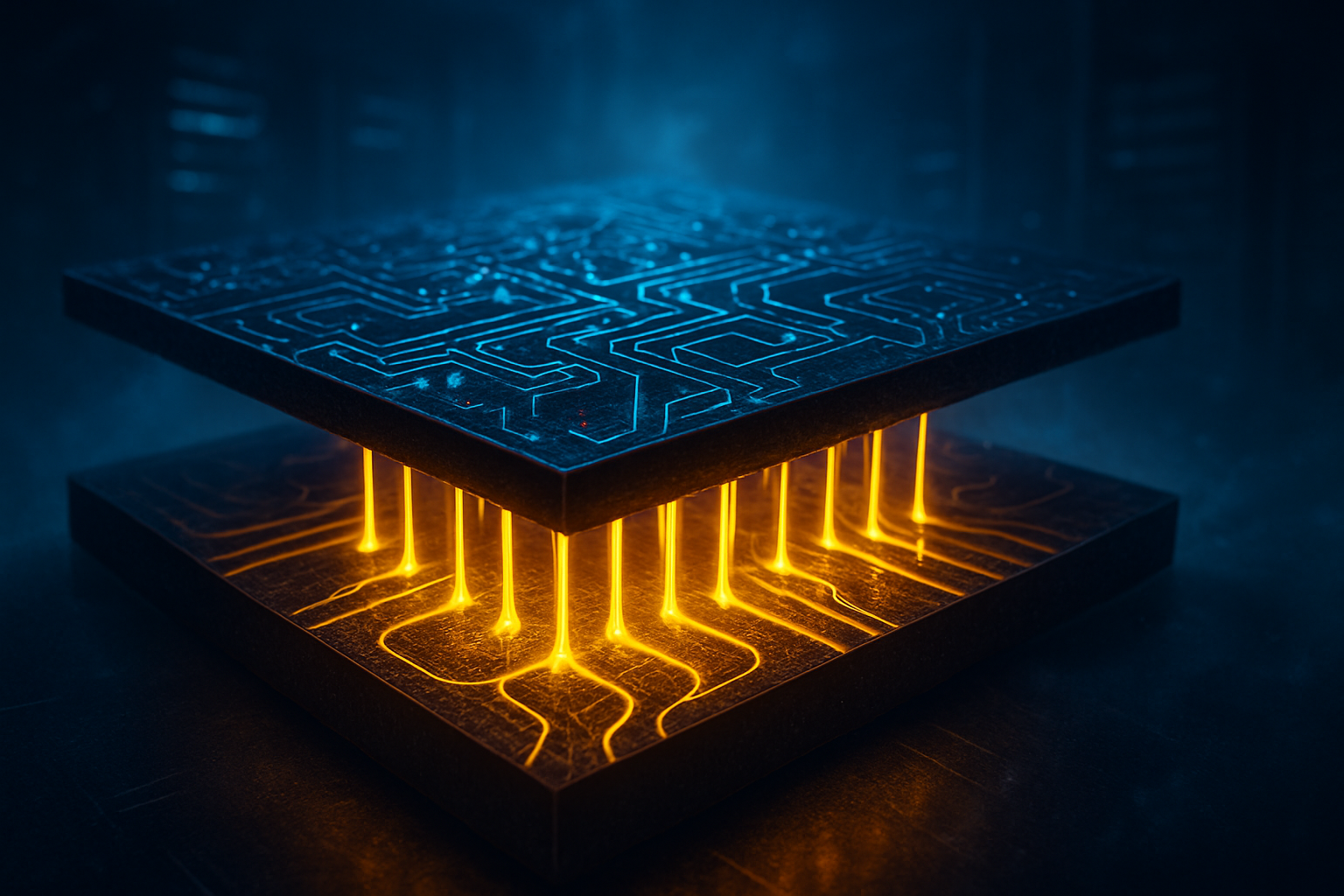
    The semiconductor industry has officially entered the "Angstrom Era," marked by the most radical architectural shift in chip manufacturing in over three decades. As of January 5, 2026, the traditional method of routing power through the front of a silicon wafer—a practice that has persisted since the dawn of the integrated circuit—is being abandoned in favor of Backside Power Delivery Networks (BSPDN). This transition is not merely an incremental improvement; it is a fundamental necessity driven by the insatiable energy demands of generative AI and the physical limitations of atomic-scale transistors.

    The immediate significance of this shift was underscored today at CES 2026, where Intel Corporation (Nasdaq:INTC) announced the broad market availability of its "Panther Lake" processors, the first consumer-grade chips to utilize high-volume backside power. By decoupling the power delivery from the signal routing, chipmakers are finally solving the "wiring bottleneck" that has plagued the industry. This development ensures that the next generation of AI accelerators, which are now pushing toward 1,000W to 1,500W per module, can receive stable electricity without the catastrophic voltage losses that would have rendered them inefficient or unworkable on older architectures.

    The Technical Divorce: PowerVia vs. Super Power Rail

    At the heart of this revolution are two competing technical philosophies: Intel’s PowerVia and Taiwan Semiconductor Manufacturing Company’s (NYSE:TSM) Super Power Rail. Historically, both power and data signals were routed through a complex "jungle" of metal layers on top of the transistors. As transistors shrunk to the 2nm and 1.8nm levels, these wires became so thin and crowded that resistance skyrocketed, leading to significant "IR drop"—a phenomenon where voltage decreases as it travels through the chip. BSPDN solves this by moving the power delivery to the reverse side of the wafer, effectively giving the chip two "fronts": one for data and one for energy.

    Intel’s PowerVia, debuting in the 18A (1.8nm) process node, utilizes a "nano-TSV" (Through Silicon Via) approach. In this implementation, Intel builds the transistors first, then flips the wafer to create small vertical connections that bridge the backside power layers to the metal layers on the front. This method is considered more manufacturable and has allowed Intel to claim a first-to-market advantage. Early data from Panther Lake production indicates a 30% improvement in voltage droop and a 6% frequency boost at identical power levels compared to traditional front-side delivery. Furthermore, by clearing the "congestion" on the front side, Intel has achieved a staggering 90% standard cell utilization, drastically increasing logic density.

    TSMC is taking a more aggressive, albeit delayed, approach with its A16 (1.6nm) node and its "Super Power Rail" technology. Unlike Intel’s nano-TSVs, TSMC’s implementation connects the backside power network directly to the source and drain of the transistors. This direct-contact method is significantly more complex to manufacture, requiring advanced material science to prevent contamination during the bonding process. However, the theoretical payoff is higher: TSMC targets an 8–10% speed improvement and up to a 20% power reduction. While Intel is shipping products today, TSMC is positioning its Super Power Rail as the "refined" version of BSPDN, slated for mass production in the second half of 2026 to power the next generation of high-end AI and mobile silicon.

    Strategic Dominance and the AI Arms Race

    The shift to backside power has created a new competitive landscape for tech giants and specialized AI labs. Intel’s early lead with 18A and PowerVia is a strategic masterstroke for its Foundry business. By proving the viability of BSPDN in high-volume consumer chips like Panther Lake, Intel is signaling to major fabless customers that it has solved the most difficult scaling challenge of the decade. This puts immense pressure on Samsung Electronics (KRX:005930), which is also racing to implement its own BSPDN version to remain competitive in the logic foundry market.

    For AI powerhouses like NVIDIA (Nasdaq:NVDA), the arrival of BSPDN is a lifeline. NVIDIA’s current "Blackwell" architecture and the upcoming "Rubin" platform (scheduled for late 2026) are pushing the limits of data center power infrastructure. With GPUs now drawing well over 1,000W, traditional power delivery would result in massive heat generation and energy waste. By adopting TSMC’s A16 process and Super Power Rail, NVIDIA can ensure that its future Rubin GPUs maintain high clock speeds and reliability even under the extreme workloads required for training trillion-parameter models.

    The primary beneficiaries of this development are the "Magnificent Seven" and other hyperscalers who operate massive data centers. Companies like Apple (Nasdaq:AAPL) and Alphabet (Nasdaq:GOOGL) are already reportedly in the queue for TSMC’s A16 capacity. The ability to pack more compute into the same thermal envelope allows these companies to maximize their return on investment for AI infrastructure. Conversely, startups that cannot secure early access to these advanced nodes may find themselves at a performance-per-watt disadvantage, potentially widening the gap between the industry leaders and the rest of the field.

    Solving the 1,000W Crisis in the AI Landscape

    The broader significance of BSPDN lies in its role as a "force multiplier" for AI scaling laws. For years, experts have worried that we would hit a "power wall" where the energy required to drive a chip would exceed its ability to dissipate heat. BSPDN effectively moves that wall. By thinning the silicon wafer to allow for backside connections, chipmakers also improve the thermal path from the transistors to the cooling solution. This is critical for the 1,000W+ power demands of modern AI accelerators, which would otherwise face severe thermal throttling.

    This architectural change mirrors previous industry milestones, such as the transition from planar transistors to FinFETs in the early 2010s. Just as FinFETs allowed the industry to continue scaling despite leakage current issues, BSPDN allows scaling to continue despite resistance issues. However, the transition is not without concerns. The manufacturing process for BSPDN is incredibly delicate; it involves bonding two wafers together with nanometer precision and then grinding one down to a thickness of just a few hundred nanometers. Any misalignment can result in total wafer loss, making yield management the primary challenge for 2026.

    Moreover, the environmental impact of this technology is a double-edged sword. While BSPDN makes chips more efficient on a per-calculation basis, the sheer performance gains it enables are likely to encourage even larger, more power-hungry AI clusters. As the industry moves toward 600kW racks for data centers, the efficiency gains of backside power will be essential just to keep the lights on, though they may not necessarily reduce the total global energy footprint of AI.

    The Horizon: Beyond 1.6 Nanometers

    Looking ahead, the successful deployment of PowerVia and Super Power Rail sets the stage for the sub-1nm era. Industry experts predict that the next logical step after BSPDN will be the integration of "optical interconnects" directly onto the backside of the die. Once the power delivery has been moved to the rear, the front side is theoretically "open" for even more dense signal routing, including light-based data transmission that could eliminate traditional copper wiring altogether for long-range on-chip communication.

    In the near term, the focus will shift to how these technologies handle the "Rubin" generation of GPUs and the "Panther Lake" successor, "Nova Lake." The challenge remains the cost: the complexity of backside power adds significant steps to the lithography process, which will likely keep the price of advanced AI silicon high. Analysts expect that by 2027, BSPDN will be the standard for all high-performance computing (HPC) chips, while budget-oriented mobile chips may stick to traditional front-side delivery for another generation to save on manufacturing costs.

    A New Foundation for Silicon

    The arrival of Backside Power Delivery marks a pivotal moment in the history of computing. It represents a "flipping of the script" in how we design and build the brains of our digital world. By physically separating the two most critical components of a chip—its energy and its information—engineers have unlocked a new path for Moore’s Law to continue into the Angstrom Era.

    The key takeaways from this transition are clear: Intel has successfully reclaimed a technical lead by being the first to market with PowerVia, while TSMC is betting on a more complex, higher-performance implementation to maintain its dominance in the AI accelerator market. As we move through 2026, the industry will be watching yield rates and the performance of NVIDIA’s next-generation chips to see which approach yields the best results. For now, the "Power Flip" has successfully averted a scaling crisis, ensuring that the next wave of AI breakthroughs will have the energy they need to come to life.


    This content is intended for informational purposes only and represents analysis of current AI developments.

    TokenRing AI delivers enterprise-grade solutions for multi-agent AI workflow orchestration, AI-powered development tools, and seamless remote collaboration platforms.
    For more information, visit https://www.tokenring.ai/.