Tag: Intel

  • The Great Unbundling of Silicon: How UCIe 3.0 is Powering a New Era of ‘Mix-and-Match’ AI Hardware

    The Great Unbundling of Silicon: How UCIe 3.0 is Powering a New Era of ‘Mix-and-Match’ AI Hardware

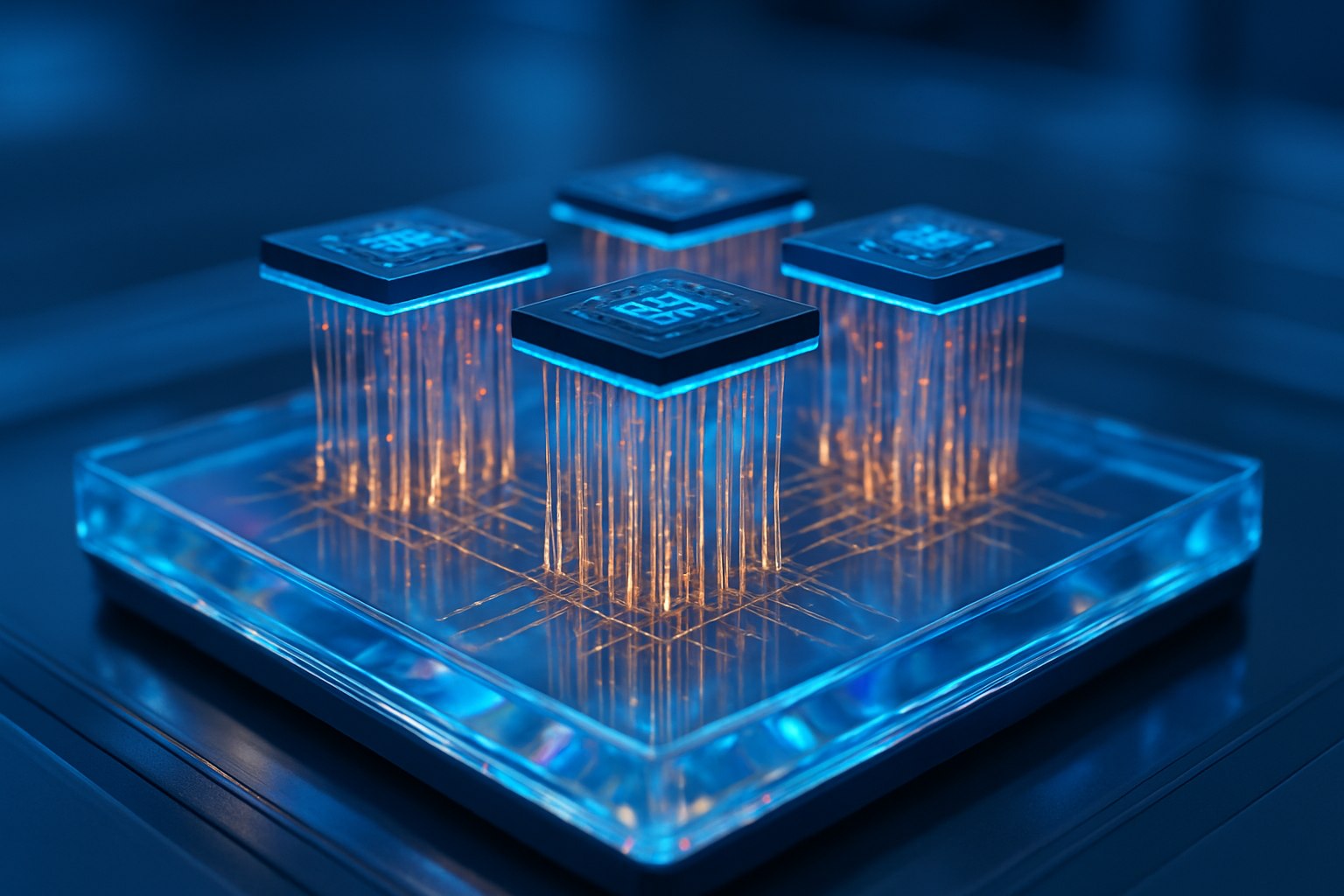
    The semiconductor industry has reached a pivotal turning point as the Universal Chiplet Interconnect Express (UCIe) standard enters full commercial maturity. As of late 2025, the release of the UCIe 3.0 specification has effectively dismantled the era of monolithic, "black box" processors, replacing it with a modular "mix and match" ecosystem. This development allows specialized silicon components—known as chiplets—from different manufacturers to be housed within a single package, communicating at speeds that were previously only possible within a single piece of silicon. For the artificial intelligence sector, this represents a massive leap forward, enabling the construction of hyper-specialized AI accelerators that can scale to meet the insatiable compute demands of next-generation large language models (LLMs).

    The immediate significance of this transition cannot be overstated. By standardizing how these chiplets communicate, the industry is moving away from proprietary, vendor-locked architectures toward an open marketplace. This shift is expected to slash development costs for custom AI silicon by up to 40% and reduce time-to-market by nearly a year for many fabless design firms. As the AI hardware race intensifies, UCIe 3.0 provides the "lingua franca" that ensures an I/O die from one vendor can work seamlessly with a compute engine from another, all while maintaining the ultra-low latency required for real-time AI inference and training.

    The Technical Backbone: From UCIe 1.1 to the 64 GT/s Breakthrough

    The technical evolution of the UCIe standard has been rapid, culminating in the August 2025 release of the UCIe 3.0 specification. While UCIe 1.1 focused on basic reliability and health monitoring for automotive and data center applications, and UCIe 2.0 introduced standardized manageability and 3D packaging support, the 3.0 update is a game-changer for high-performance computing. It doubles the data rate to 64 GT/s per lane, providing the massive throughput necessary for the "XPU-to-memory" bottlenecks that have plagued AI clusters. A key innovation in the 3.0 spec is "Runtime Recalibration," which allows links to dynamically adjust power and performance without requiring a system reboot—a critical feature for massive AI data centers that must remain operational 24/7.

    This new standard differs fundamentally from previous approaches like Intel Corporation (NASDAQ: INTC)’s proprietary Advanced Interface Bus (AIB) or Advanced Micro Devices, Inc. (NASDAQ: AMD)’s early Infinity Fabric. While those technologies proved the viability of chiplets, they were "closed loops" that prevented cross-vendor interoperability. UCIe 3.0, by contrast, defines everything from the physical layer (the actual wires and bumps) to the protocol layer, ensuring that a chiplet designed by a startup can be integrated into a larger system-on-chip (SoC) manufactured by a giant like NVIDIA Corporation (NASDAQ: NVDA). Initial reactions from the research community have been overwhelmingly positive, with engineers at the Open Compute Project (OCP) hailing it as the "PCIe moment" for internal chip communication.

    The Competitive Landscape: Giants and Challengers Align

    The shift toward a standardized chiplet ecosystem is creating a new hierarchy among tech giants. Intel Corporation (NASDAQ: INTC) has been the most aggressive proponent, having donated the initial specification to the consortium. Their recent launch of the Granite Rapids-D (Xeon 6 SoC) in early 2025 stands as one of the first high-volume products to fully leverage UCIe for modularity at the edge. Meanwhile, NVIDIA Corporation (NASDAQ: NVDA) has adapted its strategy; while it still champions its proprietary NVLink for high-end GPU clusters, it recently released "UCIe-ready" silicon bridges. These bridges allow customers to build custom AI accelerators that can talk directly to NVIDIA’s Blackwell and upcoming Rubin architectures, effectively turning NVIDIA’s hardware into a platform for third-party innovation.

    Taiwan Semiconductor Manufacturing Company (NYSE: TSM) and Samsung Electronics (KRX: 005930) are currently locked in a "foundry race" to provide the packaging technology that makes UCIe possible. TSMC’s 3DFabric and Samsung’s I-Cube/X-Cube technologies are the physical stages where these mix-and-match chiplets perform. In mid-2025, Samsung successfully demonstrated a 4nm chiplet prototype using IP from Synopsys, Inc. (NASDAQ: SNPS), proving that the "mix and match" dream is now a physical reality. This benefits smaller AI startups and fabless companies, who can now purchase "silicon-proven" UCIe blocks from providers like Cadence Design Systems, Inc. (NASDAQ: CDNS) instead of spending millions to design proprietary interconnect logic from scratch.

    Scaling AI: Efficiency, Cost, and the End of the "Reticle Limit"

    The broader significance of UCIe 3.0 lies in its ability to bypass the "reticle limit"—the physical size limit of a single silicon wafer die. As AI models grow, the chips needed to train them have become so large they are physically impossible to manufacture as a single piece of silicon without massive defects. By breaking the processor into smaller chiplets, manufacturers can achieve much higher yields and lower costs. This fits into the broader AI trend of "heterogeneous computing," where different parts of an AI task are handled by specialized hardware—such as a dedicated matrix multiplication die paired with a high-bandwidth memory (HBM) die and a low-power I/O die.

    However, this transition is not without concerns. The primary challenge remains "Standardized Manageability"—the difficulty of debugging a system when the components come from five different companies. If an AI server fails, determining which vendor’s chiplet caused the error becomes a complex legal and technical nightmare. Furthermore, while UCIe 3.0 provides the physical connection, the software stack required to manage these disparate components is still in its infancy. Despite these hurdles, the move toward UCIe is being compared to the transition from mainframe computers to modular PCs; it is an "unbundling" that democratizes high-performance silicon.

    The Horizon: Optical I/O and the 'Chiplet Store'

    Looking ahead, the near-term focus will be on the integration of Optical Compute Interconnects (OCI). Intel has already demonstrated a fully integrated optical I/O chiplet using UCIe that allows chiplets to communicate via fiber optics at 4TBps over distances up to 100 meters. This effectively turns an entire data center rack into a single, giant "virtual chip." In the long term, experts predict the rise of the "Chiplet Store"—a commercial marketplace where companies can buy pre-manufactured, specialized AI chiplets (like a dedicated "Transformer Engine" or a "Security Enclave") and have them assembled by a third-party packaging house.

    The challenges that remain are primarily thermal and structural. Stacking chiplets in 3D (as supported by UCIe 2.0 and 3.0) creates intense heat pockets that require advanced liquid cooling or new materials like glass substrates. Industry analysts predict that by 2027, more than 80% of all high-end AI processors will be UCIe-compliant, as the cost of maintaining proprietary interconnects becomes unsustainable even for the largest tech companies.

    A New Blueprint for the AI Age

    The maturation of the UCIe standard represents one of the most significant architectural shifts in the history of computing. By providing a standardized, high-speed interface for chiplets, the industry has unlocked a modular future that balances the need for extreme performance with the economic realities of semiconductor manufacturing. The "mix and match" ecosystem is no longer a theoretical concept; it is the foundation upon which the next decade of AI progress will be built.

    As we move into 2026, the industry will be watching for the first "multi-vendor" AI chips to hit the market—processors where the compute, memory, and I/O are sourced from entirely different companies. This development marks the end of the monolithic era and the beginning of a more collaborative, efficient, and innovative period in silicon design. For AI companies and investors alike, the message is clear: the future of hardware is no longer about who can build the biggest chip, but who can best orchestrate the most efficient ecosystem of chiplets.


    This content is intended for informational purposes only and represents analysis of current AI developments.

    TokenRing AI delivers enterprise-grade solutions for multi-agent AI workflow orchestration, AI-powered development tools, and seamless remote collaboration platforms.
    For more information, visit https://www.tokenring.ai/.

  • The Silent Revolution: How the AI PC Redefined Computing in 2025

    The Silent Revolution: How the AI PC Redefined Computing in 2025

    As we close out 2025, the personal computer is undergoing its most radical transformation since the introduction of the graphical user interface. What began as a buzzword in early 2024 has matured into a fundamental shift in computing architecture: the "AI PC" Revolution. By December 2025, AI-capable machines have moved from niche enthusiast hardware to a market standard, now accounting for over 40% of all global PC shipments. This shift represents a pivot away from the cloud-centric model that defined the last decade, bringing the power of massive neural networks directly onto the silicon sitting on our desks.

    The mainstreaming of Copilot+ PCs has fundamentally altered the relationship between users and their data. By integrating dedicated Neural Processing Units (NPUs) directly into the processor die, manufacturers have enabled a "local-first" AI strategy. This evolution is not merely about faster chatbots; it is about a new era of "Edge AI" where privacy, latency, and cost-efficiency are no longer traded off for intelligence. As the industry moves into 2026, the AI PC is no longer a luxury—it is the baseline for the modern digital experience.

    The Silicon Shift: Inside the 40 TOPS Standard

    The technical backbone of the AI PC revolution is the Neural Processing Unit (NPU), a specialized accelerator designed specifically for the mathematical workloads of deep learning. As of late 2025, the industry has coalesced around a strict performance floor: to earn the "Copilot+ PC" badge from Microsoft (NASDAQ: MSFT), a device must deliver at least 40 Trillion Operations Per Second (TOPS) on the NPU alone. This requirement has sparked an unprecedented "TOPS war" among silicon giants. Intel (NASDAQ: INTC) has responded with its Panther Lake (Core Ultra Series 3) architecture, which boasts a 5th-generation NPU targeting 50 TOPS and a total system output of nearly 180 TOPS when combining CPU and GPU resources.

    AMD (NASDAQ: AMD) has carved out a dominant position in the high-end workstation market with its Ryzen AI Max series, code-named "Strix Halo." These chips utilize a massive integrated memory architecture that allows them to run local models previously reserved for discrete, power-hungry GPUs. Meanwhile, Qualcomm (NASDAQ: QCOM) has disrupted the traditional x86 duopoly with its Snapdragon X2 Elite, which has pushed NPU performance to a staggering 80 TOPS. This leap in performance allows for the simultaneous execution of multiple Small Language Models (SLMs) like Microsoft’s Phi-3 or Google’s Gemini Nano, enabling the PC to interpret screen content, transcribe audio, and generate code in real-time without ever sending a packet of data to an external server.

    Disrupting the Status Quo: The Business of Local Intelligence

    The business implications of the AI PC shift are profound, particularly for the enterprise sector. For years, companies have been wary of the recurring "token costs" associated with cloud-based AI services. The transition to Edge AI allows organizations to shift from an OpEx (Operating Expense) model to a CapEx (Capital Expenditure) model. By investing in AI-capable hardware from vendors like Apple (NASDAQ: AAPL), whose M5 series chips have set new benchmarks for AI efficiency per watt, businesses can run high-volume inference tasks locally. This is estimated to reduce long-term AI deployment costs by as much as 60%, as the "per-query" billing of the cloud era is replaced by the one-time purchase of the device.

    Furthermore, the competitive landscape of the semiconductor industry has been reordered. Qualcomm's aggressive entry into the Windows ecosystem has forced Intel and AMD to prioritize power efficiency alongside raw performance. This competition has benefited the consumer, leading to a new class of "all-day" laptops that do not sacrifice AI performance when unplugged. Microsoft’s role has also evolved; the company is no longer just a software provider but a platform architect, dictating hardware specifications that ensure Windows remains the primary interface for the "Agentic AI" era.

    Data Sovereignty and the End of the Latency Tax

    Beyond the technical specs, the AI PC revolution is driven by the growing demand for data sovereignty. In an era of heightened regulatory scrutiny, including the full implementation of the EU AI Act and updated GDPR guidelines, the ability to process sensitive information locally is a game-changer. Edge AI ensures that medical records, legal briefs, and proprietary corporate data never leave the local SSD. This "Privacy by Design" approach has cleared the path for AI adoption in sectors like healthcare and finance, which were previously hamstrung by the security risks of cloud-based LLMs.

    Latency is the other silent killer that Edge AI has successfully neutralized. While cloud-based AI typically suffers from a 100-200ms "round-trip" delay, local NPU processing brings response times down to a near-instantaneous 5-20ms. This enables "Copilot Vision"—a feature where the AI can watch a user’s screen and provide contextual help in real-time—to feel like a natural extension of the operating system rather than a lagging add-on. This milestone in human-computer interaction is comparable to the shift from dial-up to broadband; once users experience zero-latency AI, there is no going back to the cloud-dependent past.

    Beyond the Chatbot: The Rise of Autonomous PC Agents

    Looking toward 2026, the focus is shifting from reactive AI to proactive, autonomous agents. The latest updates to the Windows Copilot Runtime have introduced "Agent Mode," where the AI PC can execute multi-step workflows across different applications. For example, a user can command their PC to "find the latest sales data, cross-reference it with the Q4 goals, and draft a summary email," and the NPU will orchestrate these tasks locally. Experts predict that the next generation of AI PCs will cross the 100 TOPS threshold, enabling devices to not only run models but also "fine-tune" them based on the user’s specific habits and data.

    The challenges remaining are largely centered on software optimization and battery life under sustained AI loads. While hardware has leaped forward, developers are still catching up, porting their applications to take full advantage of the NPU rather than defaulting to the CPU. However, with the emergence of standardized cross-platform libraries, the "AI-native" app ecosystem is expected to explode in the coming year. We are moving toward a future where the OS is no longer a file manager, but a personal coordinator that understands the context of every action the user takes.

    A New Era of Personal Computing

    The AI PC revolution of 2025 marks a definitive end to the "thin client" era of AI. We have moved from a world where intelligence was a distant service to one where it is a local utility, as essential and ubiquitous as electricity. The combination of high-TOPS NPUs, local Small Language Models, and a renewed focus on privacy has redefined what we expect from our devices. The PC is no longer just a tool for creation; it has become a cognitive partner that learns and grows with the user.

    As we look ahead, the significance of this development in AI history cannot be overstated. It represents the democratization of high-performance computing, putting the power of a 2023-era data center into a two-pound laptop. In the coming months, watch for the release of "Wave 3" AI PCs and the further integration of AI agents into the core of the operating system. The revolution is here, and it is running locally.


    This content is intended for informational purposes only and represents analysis of current AI developments.

    TokenRing AI delivers enterprise-grade solutions for multi-agent AI workflow orchestration, AI-powered development tools, and seamless remote collaboration platforms.
    For more information, visit https://www.tokenring.ai/.

  • The 2nm Frontier: Intel’s 18A and TSMC’s N2 Clash in the Battle for Silicon Supremacy

    The 2nm Frontier: Intel’s 18A and TSMC’s N2 Clash in the Battle for Silicon Supremacy

    As of December 18, 2025, the global semiconductor landscape has reached its most pivotal moment in a decade. The long-anticipated "2nm Foundry Battle" has moved from the laboratory to the factory floor, as Intel (NASDAQ: INTC) and Taiwan Semiconductor Manufacturing Company (TSMC) (NYSE: TSM) race to dominate the next era of high-performance computing. This transition marks the definitive end of the FinFET transistor era, which powered the digital age for over ten years, ushering in a new regime of Gate-All-Around (GAA) architectures designed specifically to meet the insatiable power and thermal demands of generative artificial intelligence.

    The stakes could not be higher for the two titans. For Intel, the successful high-volume manufacturing of its 18A node represents the culmination of CEO Pat Gelsinger’s "five nodes in four years" strategy, a daring bet intended to reclaim the manufacturing crown from Asia. For TSMC, the rollout of its N2 process is a defensive masterstroke, aimed at maintaining its 90% market share in advanced foundry services while transitioning its most prestigious clients—including Apple (NASDAQ: AAPL) and Nvidia (NASDAQ: NVDA)—to a more efficient, albeit more complex, transistor geometry.

    The Technical Leap: GAAFETs and the Backside Power Revolution

    At the heart of this conflict is the transition to Gate-All-Around (GAA) transistors, which both companies have now implemented at scale. Intel refers to its version as "RibbonFET," while TSMC utilizes a "Nanosheet" architecture. Unlike the previous FinFET design, where the gate surrounded the channel on three sides, GAA wraps the gate entirely around the channel, drastically reducing current leakage and allowing for finer control over the transistor's switching. Early data from December 2025 indicates that TSMC’s N2 node is delivering a 15% performance boost or a 30% reduction in power consumption compared to its 3nm predecessor. Intel’s 18A is showing similar gains, claiming a 15% performance-per-watt lead over its own Intel 3 node, positioning both companies at the absolute limit of physics.

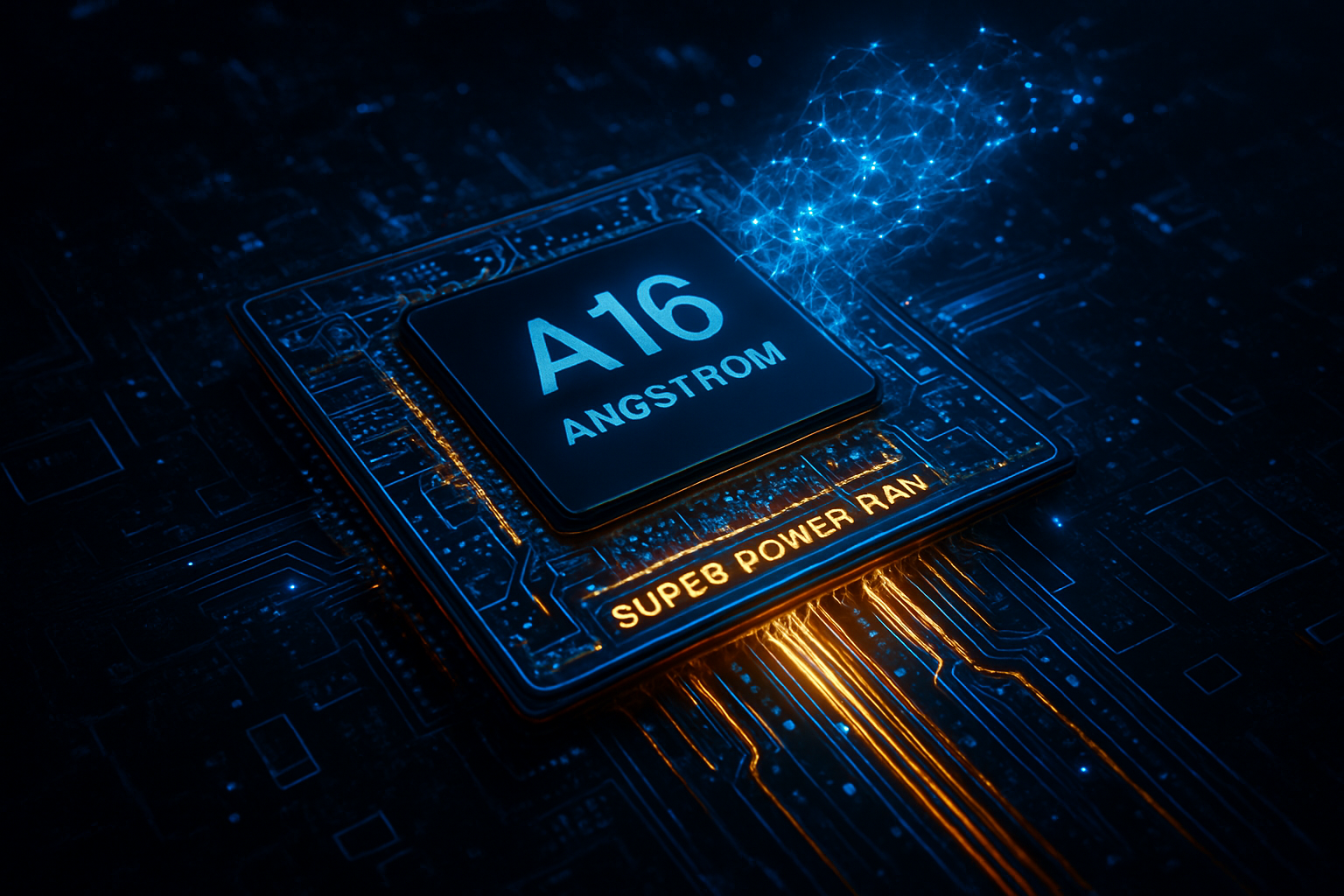
    The true technical differentiator in late 2025, however, is the implementation of Backside Power Delivery (BSPDN). Intel has taken an early lead here with its "PowerVia" technology, which is fully integrated into the 18A node. By moving the power delivery lines to the back of the wafer and away from the signal lines on the front, Intel has successfully reduced "voltage droop" and increased transistor density by nearly 30%. TSMC has opted for a more conservative path, launching its base N2 node without backside power to ensure higher initial yields. TSMC’s answer, the "Super Power Rail," is not expected to enter volume production until the A16 (1.6nm) node in late 2026, giving Intel a temporary architectural advantage in power efficiency for AI data center applications.

    Furthermore, the role of ASML (NASDAQ: ASML) has become a focal point of the 2nm era. Intel has aggressively adopted the new High-NA (0.55 NA) EUV lithography machines, being the first to use them for volume production on its R&D-heavy 18A and upcoming 14A lines. TSMC, conversely, has continued to rely on standard 0.33 NA EUV multi-patterning for its N2 node, arguing that the $380 million price tag per High-NA unit is not yet economically viable for its customers. This divergence in lithography strategy is the industry's biggest gamble: Intel is betting on hardware-led precision, while TSMC is betting on process-led cost efficiency.

    The Customer Tug-of-War: Microsoft, Nvidia, and the Apple Standard

    The market implications of these technical milestones are already reshaping the tech industry's power structures. Intel Foundry has secured a massive victory by signing Microsoft (NASDAQ: MSFT) as a lead customer for 18A. Microsoft is currently utilizing the node to manufacture its "Maia 3" AI accelerators, a move that reduces its dependence on external chip designers and solidifies Intel’s position as a viable alternative to TSMC for custom silicon. Additionally, Amazon (NASDAQ: AMZN) has deepened its partnership with Intel, leveraging 18A for its next-generation AWS Graviton processors, signaling that the "Intel Foundry" dream is no longer just a PowerPoint projection but a revenue-generating reality.

    Despite Intel’s gains, TSMC remains the "safe harbor" for the world’s most valuable tech companies. Apple has once again secured the lion's share of TSMC’s initial 2nm capacity for its upcoming A20 and M5 chips, ensuring that the iPhone 18 will likely be the most power-efficient consumer device on the market in 2026. Nvidia also remains firmly in the TSMC camp for its "Rubin" GPU architecture, citing TSMC’s superior CoWoS (Chip-on-Wafer-on-Substrate) advanced packaging as the critical factor for AI performance. The competitive implication is clear: while Intel is winning "bespoke" AI contracts, TSMC still owns the high-volume consumer and enterprise GPU markets.

    This shift is creating a dual-track ecosystem. Startups and mid-sized chip designers are finding themselves caught between the two. Intel is offering aggressive pricing and "sovereign supply chain" guarantees to lure companies away from Taiwan, while TSMC is leveraging its unparalleled yield rates—currently reported at 65-70% for N2—to maintain customer loyalty. For the first time in a decade, chip designers have a legitimate choice between two world-class foundries, a dynamic that is likely to drive down fabrication costs in the long run but creates short-term strategic headaches for procurement teams.

    Geopolitics and the AI Supercycle

    The 2nm battle is not occurring in a vacuum; it is the centerpiece of a broader geopolitical and technological shift. As of late 2025, the "AI Supercycle" has moved from training massive models to deploying them at the edge, requiring chips that are not just faster, but significantly cooler and more power-efficient. The 2nm node is the first "AI-native" manufacturing process, designed specifically to handle the thermal envelopes of high-density neural processing units (NPUs). Without the efficiency gains of GAA and backside power, the scaling of AI in mobile devices and localized servers would likely have hit a "thermal wall."

    Beyond the technology, the geographical distribution of these nodes is a matter of national security. Intel’s 18A production at its Fab 52 in Arizona is a cornerstone of the U.S. CHIPS Act's success, providing a domestic source for the world's most advanced semiconductors. TSMC’s expansion into Arizona and Japan has also progressed, but its most advanced 2nm production remains concentrated in Hsinchu and Kaohsiung, Taiwan. The ongoing tension in the Taiwan Strait continues to drive Western tech giants toward "China +1" manufacturing strategies, providing Intel with a competitive "geopolitical premium" that TSMC is working hard to neutralize through its own global expansion.

    This milestone is comparable to the transition from planar transistors to FinFETs in 2011. Just as FinFETs enabled the smartphone revolution, GAA and 2nm processes are enabling the "Agentic AI" era, where autonomous AI systems require constant, low-latency processing. The concerns, however, remain centered on cost. The price of a 2nm wafer is estimated to be over $30,000, a staggering figure that could limit the most advanced silicon to only the wealthiest tech companies, potentially widening the gap between "AI haves" and "AI have-nots."

    The Road to 1.4nm and Sub-Angstrom Silicon

    Looking ahead, the 2nm battle is merely the opening salvo in a decade-long war for sub-nanometer dominance. Both Intel and TSMC have already teased their roadmaps for 2027 and beyond. Intel’s "14A" (1.4nm) node is already in the early stages of R&D, with the company aiming to be the first to fully utilize High-NA EUV for every critical layer of the chip. TSMC is countering with its "A14" process, which will integrate the Super Power Rail and refined Nanosheet designs to reclaim the efficiency lead.

    The next major challenge for both companies will be the integration of new materials, such as two-dimensional (2D) semiconductors like molybdenum disulfide (MoS2) for the transistor channel, which could allow for scaling down to the "Angstrom" level (sub-1nm). Experts predict that by 2028, the industry will move toward "3D stacked" transistors, where Nanosheets are piled vertically to maximize density. The primary hurdle remains the "heat density" problem—as chips get smaller and more powerful, removing the heat generated in such a tiny area becomes a problem that even the most advanced liquid cooling may struggle to solve.

    A New Era for Silicon

    As 2025 draws to a close, the verdict on the 2nm battle is a split decision. Intel has successfully executed its technical roadmap, proving that it can manufacture world-class silicon with its 18A node and securing critical "sovereign" contracts from Microsoft and the U.S. Department of Defense. It has officially returned to the leading edge, ending years of stagnation. However, TSMC remains the undisputed king of volume and yield. Its N2 node, while more conservative in its initial power delivery design, offers the reliability and scale that the world’s largest consumer electronics companies require.

    The significance of this development in AI history cannot be overstated. The 2nm node provides the physical substrate upon which the next generation of artificial intelligence will be built. In the coming weeks and months, the industry will be watching the first independent benchmarks of Intel’s "Panther Lake" and the initial yield reports from TSMC’s N2 ramp-up. The race for 2025 dominance has ended in a high-speed draw, but the race for 2030 has only just begun.


    This content is intended for informational purposes only and represents analysis of current AI developments.

    TokenRing AI delivers enterprise-grade solutions for multi-agent AI workflow orchestration, AI-powered development tools, and seamless remote collaboration platforms.
    For more information, visit https://www.tokenring.ai/.
  • The Silicon Renaissance: US Mega-Fabs Enter Operational Phase as CHIPS Act Reshapes Global AI Power

    The Silicon Renaissance: US Mega-Fabs Enter Operational Phase as CHIPS Act Reshapes Global AI Power

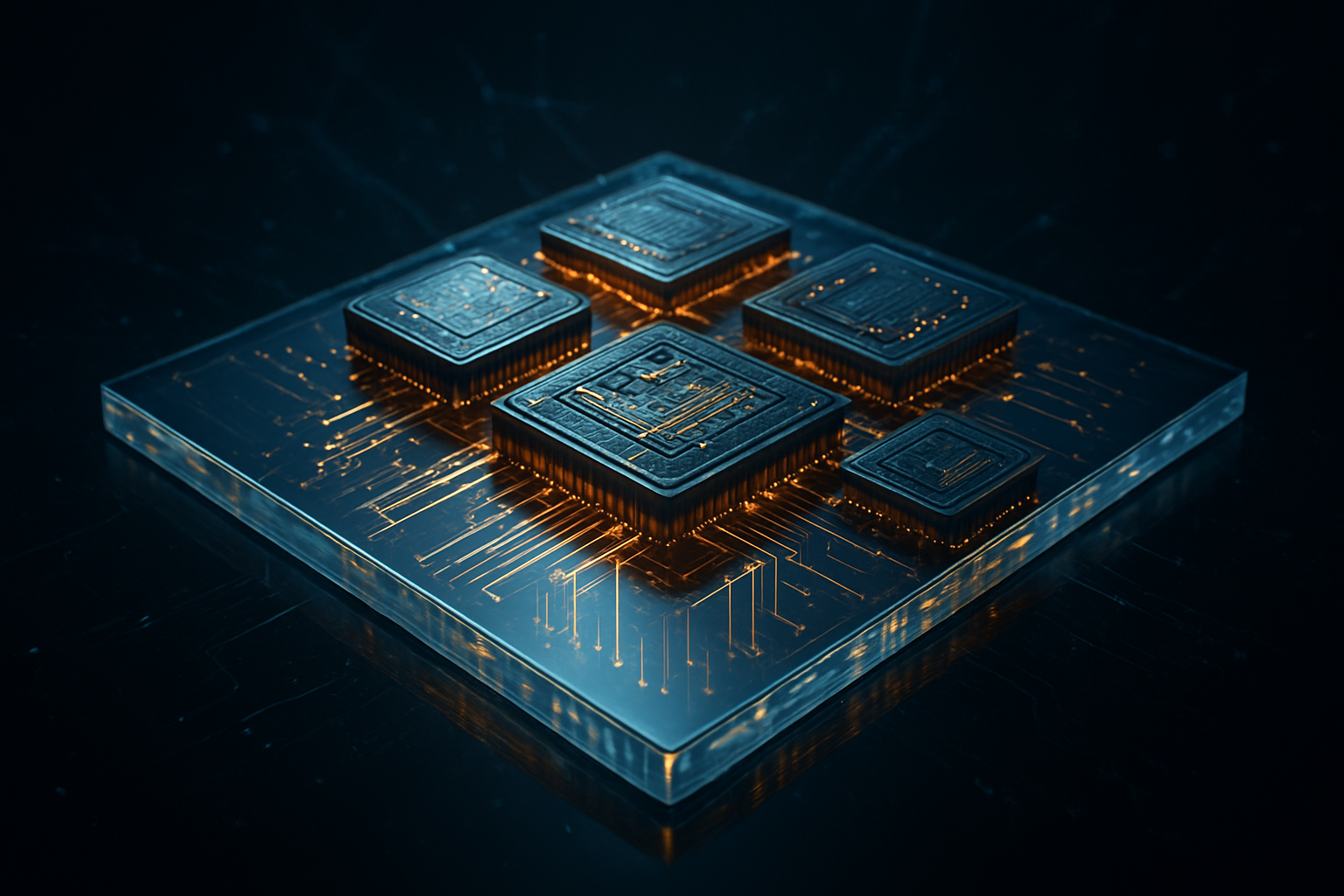
    As of December 18, 2025, the landscape of global technology has reached a historic inflection point. What began three years ago as a legislative ambition to reshore semiconductor manufacturing has manifested into a sprawling industrial reality across the American Sun Belt and Midwest. The implementation of the CHIPS and Science Act has moved beyond the era of press releases and groundbreaking ceremonies into a high-stakes operational phase, defined by the rise of "Mega-Fabs"—massive, multi-billion dollar complexes designed to secure the hardware foundation of the artificial intelligence revolution.

    This transition marks a fundamental shift in the geopolitical order of technology. For the first time in decades, the most advanced logic chips required for generative AI and autonomous systems are being etched onto silicon in Arizona and Ohio. However, the road to "Silicon Sovereignty" has been paved with unexpected policy pivots, including a controversial move by the U.S. government to take equity stakes in domestic champions, and a fierce race between Intel, TSMC, and Samsung to dominate the 2-nanometer (2nm) frontier on American soil.

    The Technical Frontier: 2nm Targets and High-NA EUV Integration

    The technical execution of these Mega-Fabs has become a litmus test for the next generation of computing. Intel (NASDAQ: INTC) has achieved a significant milestone at its Fab 52 in Arizona, which has officially commenced limited mass production of its 18A node (approximately 1.8nm equivalent). This node utilizes RibbonFET gate-all-around (GAA) architecture and PowerVia backside power delivery—technologies that Intel claims will provide a definitive lead over competitors in power efficiency. Meanwhile, Intel’s "Silicon Heartland" project in New Albany, Ohio, has faced structural delays, pushing its full operational status to 2030. To compensate, the Ohio site is now being outfitted with "High-NA" (High Numerical Aperture) Extreme Ultraviolet (EUV) lithography machines from ASML, skipping older generations to debut with post-14A nodes.

    TSMC (NYSE: TSM) continues to set the gold standard for operational efficiency in the U.S. Their Phoenix, Arizona, Fab 1 is currently in full high-volume production of 4nm chips, with yields reportedly matching those of its Taiwanese facilities—a feat many analysts thought impossible two years ago. In response to insatiable demand from AI giants, TSMC has accelerated the timeline for its third Arizona fab. Originally slated for the end of the decade, Fab 3 is now being fast-tracked to produce 2nm (N2) and A16 nodes by late 2028. This facility will be the first in the U.S. to utilize TSMC’s sophisticated nanosheet transistor structures at scale.

    Samsung (KRX: 005930) has taken a high-risk, high-reward approach in Taylor, Texas. After facing initial delays due to a lack of "anchor customers" for 4nm production, the South Korean giant recalibrated its strategy to skip directly to 2nm production for the site's 2026 opening. By focusing on 2nm from day one, Samsung aims to undercut TSMC on wafer pricing, targeting a cost of $20,000 per wafer compared to TSMC’s projected $30,000. This aggressive technical pivot is designed to lure AI chip designers who are looking for a domestic alternative to the TSMC monopoly.

    Market Disruptions and the New "Equity for Subsidies" Model

    The business of semiconductors has been transformed by a new "America First" industrial policy. In a landmark move in August 2025, the U.S. Department of Commerce finalized a deal to take a 9.9% equity stake in Intel (NASDAQ: INTC) in exchange for $8.9 billion in combined CHIPS Act grants and "Secure Enclave" funding. This "Equity for Subsidies" model has sent ripples through Wall Street, signaling that the U.S. government is no longer just a regulator or a customer, but a shareholder in the nation's foundry future. This move has stabilized Intel’s balance sheet during its massive Ohio expansion but has raised questions about long-term government interference in corporate strategy.

    For the primary consumers of these chips—NVIDIA (NASDAQ: NVDA), Apple (NASDAQ: AAPL), and AMD (NASDAQ: AMD)—the rise of domestic Mega-Fabs offers a strategic hedge against geopolitical instability in the Taiwan Strait. However, the transition is not without cost. While domestic production reduces the risk of supply chain decapitation, the "Silicon Renaissance" is proving expensive. Analysts estimate that chips produced in U.S. Mega-Fabs carry a 20% to 30% "reshoring premium" due to higher labor and energy costs. NVIDIA and Apple have already begun signaling that these costs will likely be passed down to enterprise customers in the form of higher prices for AI accelerators and high-end consumer hardware.

    The competitive landscape is also being reshaped by the "Trump Royalty"—a policy involving government-managed cuts on high-end AI chip exports. This has forced companies like NVIDIA to navigate a complex web of "managed access" for international sales, further incentivizing the use of U.S.-based fabs to ensure compliance with tightening national security mandates. The result is a bifurcated market where "Made in USA" silicon becomes the premium standard for security-cleared and high-performance AI applications.

    Sovereignty, Bottlenecks, and the Global AI Landscape

    The broader significance of the Mega-Fab era lies in the pursuit of AI sovereignty. As AI models become the primary engine of economic growth, the physical infrastructure that powers them has become a matter of national survival. The CHIPS Act implementation has successfully broken the 100% reliance on East Asian foundries for leading-edge logic. However, a critical vulnerability remains: the "Packaging Bottleneck." Despite the progress in fabrication, the majority of U.S.-made wafers must still be shipped to Taiwan or Southeast Asia for advanced packaging (CoWoS), which is essential for binding logic and memory into a single AI super-chip.

    Furthermore, the industry has identified a secondary crisis in High-Bandwidth Memory (HBM). While Intel and TSMC are building the "brains" of AI in the U.S., the "short-term memory"—HBM—remains concentrated in the hands of SK Hynix and Samsung’s Korean plants. Micron (NASDAQ: MU) is working to bridge this gap with its Idaho and New York expansions, but industry experts warn that HBM will remain the #1 supply chain risk for AI scaling through 2026.

    Potential concerns regarding the environmental and local impact of these Mega-Fabs have also surfaced. In Arizona and Texas, the sheer scale of water and electricity required to run these facilities is straining local infrastructure. A December 2025 report indicated that nearly 35% of semiconductor executives are concerned that the current U.S. power grid cannot sustain the projected energy needs of these sites as they reach full capacity. This has sparked a secondary boom in "SMRs" (Small Modular Reactors) and dedicated green energy projects specifically designed to power the "Silicon Heartland."

    The Road to 2030: Challenges and Future Applications

    Looking ahead, the next 24 months will focus on the "Talent War" and the integration of advanced packaging on U.S. soil. The Department of Commerce estimates a gap of 20,000 specialized cleanroom engineers needed to staff the Mega-Fabs currently under construction. Educational partnerships between chipmakers and universities in Ohio, Arizona, and Texas are being fast-tracked, but the labor shortage remains the most significant threat to the 2028-2030 production targets.

    In terms of applications, the availability of domestic 2nm and 18A silicon will enable a new class of "Edge AI" devices. We expect to see the emergence of highly autonomous robotics and localized LLM (Large Language Model) hardware that does not require cloud connectivity, powered by the low-latency, high-efficiency chips coming out of the Arizona and Texas clusters. The goal is no longer just to build chips for data centers, but to embed AI into the very fabric of American industrial and consumer infrastructure.

    Experts predict that the next phase of the CHIPS Act (often referred to in policy circles as "CHIPS 2.0") will focus heavily on these "missing links"—specifically advanced packaging and HBM manufacturing. Without these components, the Mega-Fabs remain powerful engines without a transmission, capable of producing the world's best silicon but unable to finalize the product within domestic borders.

    A New Era of Industrial Power

    The implementation of the CHIPS Act and the rise of U.S. Mega-Fabs represent the most significant shift in American industrial policy since the mid-20th century. By December 2025, the vision of a domestic "Silicon Renaissance" has moved from the halls of Congress to the cleanrooms of the Southwest. Intel, TSMC, and Samsung are now locked in a generational struggle for dominance, not just over nanometers, but over the future of the AI economy.

    The key takeaways for the coming year are clear: watch the yields at TSMC’s Arizona Fab 2, monitor the progress of Intel’s High-NA EUV installation in Ohio, and observe how Samsung’s 2nm price war impacts the broader market. While the challenges of energy, talent, and packaging remain formidable, the physical foundation for a new era of AI has been laid. The "Silicon Heartland" is no longer a slogan—it is an operational reality that will define the trajectory of technology for decades to come.


    This content is intended for informational purposes only and represents analysis of current AI developments.

    TokenRing AI delivers enterprise-grade solutions for multi-agent AI workflow orchestration, AI-powered development tools, and seamless remote collaboration platforms.
    For more information, visit https://www.tokenring.ai/.
  • The Angstrom Era Arrives: Intel and ASML Solidify Lead in High-NA EUV Commercialization

    The Angstrom Era Arrives: Intel and ASML Solidify Lead in High-NA EUV Commercialization

    As of December 18, 2025, the semiconductor industry has reached a historic inflection point. Intel Corporation (NASDAQ: INTC) has officially confirmed the successful acceptance testing and validation of the ASML Holding N.V. (NASDAQ: ASML) Twinscan EXE:5200B, the world’s first high-volume production High-NA Extreme Ultraviolet (EUV) lithography system. This milestone signals the formal beginning of the "Angstrom Era" for commercial silicon, as Intel moves its 14A (1.4nm-class) process node into the final stages of pre-production readiness.

    The partnership between Intel and ASML represents a multi-billion dollar gamble that is now beginning to pay dividends. By becoming the first mover in High-NA technology, Intel aims to reclaim its "process leadership" crown, which it lost to rivals over the last decade. The immediate significance of this development cannot be overstated: it provides the physical foundation for the next generation of AI accelerators and high-performance computing (HPC) chips that will power the increasingly complex Large Language Models (LLMs) of the late 2020s.

    Technical Mastery: 0.55 NA and the End of Multi-Patterning

    The transition from standard (Low-NA) EUV to High-NA EUV is the most significant leap in lithography in over twenty years. At the heart of this shift is the increase in the Numerical Aperture (NA) from 0.33 to 0.55. This change allows for a 1.7x increase in resolution, enabling the printing of features so small they are measured in Angstroms rather than nanometers. While standard EUV tools had begun to hit a physical limit, requiring "double-patterning" or even "quad-patterning" to achieve 2nm-class densities, the EXE:5200B allows Intel to print these critical layers in a single pass.

    Technically, the EXE:5200B is a marvel of engineering, capable of a throughput of 175 to 200 wafers per hour. It features an overlay accuracy of 0.7nm, a precision level necessary to align the dozens of microscopic layers that comprise a modern 1.4nm transistor. This reduction in patterning complexity is not just a matter of elegance; it drastically reduces manufacturing cycle times and eliminates the "stochastic" defects that often plague multi-patterning processes. Initial data from Intel’s D1X facility in Oregon suggests that the 14A node is already showing superior yield curves compared to the previous 18A node at a similar point in its development cycle.

    The industry’s reaction has been one of cautious awe. While skeptics initially pointed to the $400 million price tag per machine as a potential financial burden, the technical community has praised Intel’s "stitching" techniques. Because High-NA tools have a smaller exposure field—effectively half the size of standard EUV—Intel had to develop proprietary software and hardware solutions to "stitch" two halves of a chip design together seamlessly. By late 2025, these techniques have been proven stable, clearing the path for the mass production of massive AI "super-chips" that exceed traditional reticle limits.

    Shifting the Competitive Chessboard

    The commercialization of High-NA EUV has created a stark divergence in the strategies of the world’s leading foundries. While Intel has gone "all-in" on the new tools, Taiwan Semiconductor Manufacturing Company (NYSE: TSM), or TSMC, has taken a more conservative path. TSMC’s A14 node, scheduled for a similar timeframe, continues to rely on Low-NA EUV with advanced multi-patterning. TSMC’s leadership has argued that the cost-per-transistor remains lower with mature tools, but Intel’s early adoption of High-NA has effectively built a two-year "operational moat" in managing the complex optics and photoresist chemistries required for the 1.4nm era.

    This strategic lead is already attracting "AI-first" fabless companies. With the release of the Intel 14A PDK 0.5 (Process Design Kit) in late 2025, several major cloud service providers and AI chip startups have reportedly begun exploring Intel Foundry as a secondary or even primary source for their 2027 silicon. The ability to achieve 15% better performance-per-watt and a 20% increase in transistor density over 18A-P makes the 14A node an attractive target for those building the hardware for "Agentic AI" and trillion-parameter models.

    Samsung Electronics (KRX: 005930) finds itself in the middle ground, having recently received its first EXE:5200B modules to support its SF1.4 process. However, Intel’s head start in the Hillsboro R&D center means that Intel engineers have already spent two years "learning" the quirks of the High-NA light source and anamorphic lenses. This experience is critical; in the semiconductor world, knowing how to fix a tool when it goes down is as important as owning the tool itself. Intel’s deep integration with ASML has essentially turned the Oregon D1X fab into a co-development site for the future of lithography.

    The Broader Significance for the AI Revolution

    The move to High-NA EUV is not merely a corporate milestone; it is a vital necessity for the continued survival of Moore’s Law. As AI models grow in complexity, the demand for "compute density"—the amount of processing power packed into a square millimeter of silicon—has become the primary bottleneck for the industry. The 14A node represents the first time the industry has moved beyond the "nanometer" nomenclature into the "Angstrom" era, providing the physical density required to keep pace with the exponential growth of AI training requirements.

    This development also has significant geopolitical implications. The successful commercialization of High-NA tools within the United States (at Intel’s Oregon and upcoming Ohio sites) strengthens the domestic semiconductor supply chain. As AI becomes a core component of national security and economic infrastructure, the ability to manufacture the world’s most advanced chips on home soil using the latest lithography techniques is a major strategic advantage for the Western tech ecosystem.

    However, the transition is not without its concerns. The extreme cost of High-NA tools could lead to a further consolidation of the semiconductor industry, as only a handful of companies can afford the $400 million-per-machine entry fee. This "billionaire’s club" of chipmaking risks creating a monopoly on the most advanced AI hardware, potentially slowing down innovation in smaller labs that cannot afford the premium for 1.4nm wafers. Comparisons are already being drawn to the early days of EUV, where the high barrier to entry eventually forced several players out of the leading-edge race.

    The Road to 10A and Beyond

    Looking ahead, the roadmap for High-NA EUV is already extending into the next decade. Intel has already hinted at its "10A" node (1.0nm), which will likely utilize even more advanced versions of the High-NA platform. Experts predict that by 2028, the use of High-NA will expand beyond just the most critical metal layers to include a majority of the chip’s structure, further simplifying the manufacturing flow. We are also seeing the horizon for "Hyper-NA" lithography, which ASML is currently researching to push beyond the 0.75 NA mark in the 2030s.

    In the near term, the challenge for Intel and ASML will be scaling this technology from a few machines in Oregon to dozens of machines across Intel’s global "Smart Capital" network, including Fabs 52 and 62 in Arizona. Maintaining high yields while operating these incredibly sensitive machines in a high-volume environment will be the ultimate test of the partnership. Furthermore, the industry must develop new "High-NA ready" photoresists and masks that can withstand the higher energy density of the focused EUV light without degrading.

    A New Chapter in Computing History

    The successful acceptance of the ASML Twinscan EXE:5200B by Intel marks the end of the experimental phase for High-NA EUV and the beginning of its commercial life. It is a moment that will likely be remembered as the point when Intel reclaimed its technical momentum and redefined the limits of what is possible in silicon. The 14A node is more than just a process update; it is a statement of intent that the Angstrom era is here, and it is powered by the closest collaboration between a toolmaker and a manufacturer in the history of the industry.

    As we look toward 2026 and 2027, the focus will shift from tool installation to "wafer starts." The industry will be watching closely to see if Intel can translate its technical lead into market share gains against TSMC. For now, the message is clear: the path to the future of AI and high-performance computing runs through the High-NA lenses of ASML and the cleanrooms of Intel. The next eighteen months will be critical as the first 14A test chips begin to emerge, offering a glimpse into the hardware that will define the next decade of artificial intelligence.


    This content is intended for informational purposes only and represents analysis of current AI developments.

    TokenRing AI delivers enterprise-grade solutions for multi-agent AI workflow orchestration, AI-powered development tools, and seamless remote collaboration platforms.
    For more information, visit https://www.tokenring.ai/.
  • Tata’s Trillion-Dollar Bet: India’s Ascent in Global Electronics and AI-Driven Semiconductor Manufacturing

    Tata’s Trillion-Dollar Bet: India’s Ascent in Global Electronics and AI-Driven Semiconductor Manufacturing

    In a monumental strategic shift, the Tata Group, India's venerable conglomerate, is orchestrating a profound transformation in the global electronics and semiconductor landscape. With investments soaring into the tens of billions of dollars, Tata is not merely entering the high-tech manufacturing arena but is rapidly establishing India as a critical hub for advanced electronics assembly and semiconductor fabrication. This ambitious push, significantly underscored by its role in iPhone manufacturing and a landmark alliance with Intel (NASDAQ: INTC), signals India's determined leap towards technological self-reliance and its emergence as a formidable player in the global supply chain, with profound implications for the future of AI-powered devices.

    The immediate significance of Tata's endeavors is multifaceted. By acquiring Wistron Corp's iPhone manufacturing facility in November 2023 and a majority stake in Pegatron Technology India in January 2025, Tata Electronics has become the first Indian company to fully assemble iPhones, rapidly scaling its production capacity. Simultaneously, the group is constructing India's first semiconductor fabrication plant in Dholera, Gujarat, and an advanced Outsourced Semiconductor Assembly and Test (OSAT) facility in Jagiroad, Assam. These initiatives are not just about manufacturing; they represent India's strategic pivot to reduce its dependence on foreign imports, create a resilient domestic ecosystem, and position itself at the forefront of the next wave of technological innovation, particularly in artificial intelligence.

    Engineering India's Silicon Future: A Deep Dive into Tata's Technical Prowess

    Tata's technical strategy is a meticulously planned blueprint for end-to-end electronics and semiconductor manufacturing. The acquisition of Wistron's (TWSE: 3231) 44-acre iPhone assembly plant near Bengaluru, boasting eight production lines, was a pivotal move in November 2023. This facility, now rebranded as Tata Electronics Systems Solutions (TESS), has already commenced trial production for the upcoming iPhone 17 series and is projected to account for up to half of India's total iPhone output within the next two years. This rapid scaling is a testament to Tata's operational efficiency and Apple's (NASDAQ: AAPL) strategic imperative to diversify its manufacturing base.

    Beyond assembly, Tata's most impactful technical investments are in the foundational elements of modern electronics: semiconductors. The company is committing approximately $14 billion to its semiconductor ventures. The Dholera, Gujarat fabrication plant, a greenfield project in partnership with Taiwan's Powerchip Semiconductor Manufacturing Corporation (PSMC) (TWSE: 6770), is designed to produce up to 50,000 wafers per month at process nodes up to 28nm. This capability, anticipated to begin chip output around mid-2027, will cater to crucial sectors including AI, automotive, computing, and data storage. Concurrently, the OSAT facility in Jagiroad, Assam, representing an investment of around $3.2 billion, is expected to become operational by mid-2025, focusing on advanced packaging technologies like Wire Bond, Flip Chip, and Integrated Systems Packaging (ISP). This facility alone is projected to produce 48 million semiconductor chips per day.

    A recent and significant development in December 2025 was the strategic alliance between Tata Electronics and Intel (NASDAQ: INTC). Through a Memorandum of Understanding (MoU), the two giants will explore manufacturing and advanced packaging of Intel products at Tata's upcoming facilities. This partnership is particularly geared towards scaling AI-focused personal computing solutions for the Indian market, which is projected to be a global top-five market by 2030. This differs significantly from India's previous manufacturing landscape, which largely relied on assembling imported components. Tata's integrated approach aims to build indigenous capabilities from silicon to finished product, a monumental shift that has garnered enthusiastic reactions from industry experts who see it as a game-changer for India's technological autonomy.

    Reshaping the Tech Titans: Competitive Implications and Strategic Advantages

    Tata's aggressive expansion directly impacts several major players in the global technology ecosystem. Apple (NASDAQ: AAPL) is a primary beneficiary, gaining a crucial and rapidly scaling manufacturing partner outside of China. This diversification mitigates geopolitical risks, reduces potential tariff impacts, and strengthens its "Made in India" strategy, with Tata's output increasingly destined for the U.S. market. However, it also empowers Tata as a potential future competitor or an Original Design Manufacturer (ODM) that could broaden its client base.

    Intel (NASDAQ: INTC) stands to gain significantly from its partnership with Tata. By leveraging Tata's nascent fabrication and OSAT capabilities, Intel can enhance cost competitiveness, accelerate time-to-market, and improve operational agility for its products within India. The collaboration's focus on tailored AI PC solutions for the Indian market positions Intel to capitalize on India's burgeoning demand for AI-powered computing.

    For traditional Electronics Manufacturing Services (EMS) providers like Taiwan's Foxconn (TWSE: 2354) and Pegatron (TWSE: 4938), Tata's rise introduces heightened competition, particularly within India. While Foxconn remains a dominant player, Tata is rapidly consolidating its position through acquisitions and organic growth, becoming the only Indian company in Apple's iPhone assembly ecosystem. Other Indian manufacturers, while facing increased competition from Tata's scale, could also benefit from the development of a broader local supply chain and ecosystem.

    Globally, tech companies like Microsoft (NASDAQ: MSFT) and Dell (NYSE: DELL), seeking supply chain diversification, view Tata as a strategic advantage. Tata's potential to evolve into an ODM could offer them an integrated partner for a range of devices. The localized semiconductor manufacturing and advanced packaging capabilities, particularly with the Intel partnership's AI focus, will provide domestic access to critical hardware components, accelerating AI development within India and fostering a stronger indigenous AI ecosystem. Tata's vertical integration, government support through initiatives like the "India Semiconductor Mission," and access to India's vast domestic market provide it with formidable strategic advantages, potentially disrupting established manufacturing hubs and creating a more geo-resilient supply chain.

    India's Digital Dawn: Wider Significance in the Global AI Landscape

    Tata's audacious plunge into electronics and semiconductor manufacturing is more than a corporate expansion; it is a declaration of India's strategic intent to become a global technology powerhouse. This initiative is inextricably linked to the broader AI landscape, as the Intel partnership explicitly aims to expand AI-powered computing across India and scale tailored AI PC solutions. By manufacturing chips and assembling AI-enabled devices locally, Tata will support India's burgeoning AI sector, reducing costs, speeding up deployment, and fostering indigenous innovation in AI and machine learning across various industries.

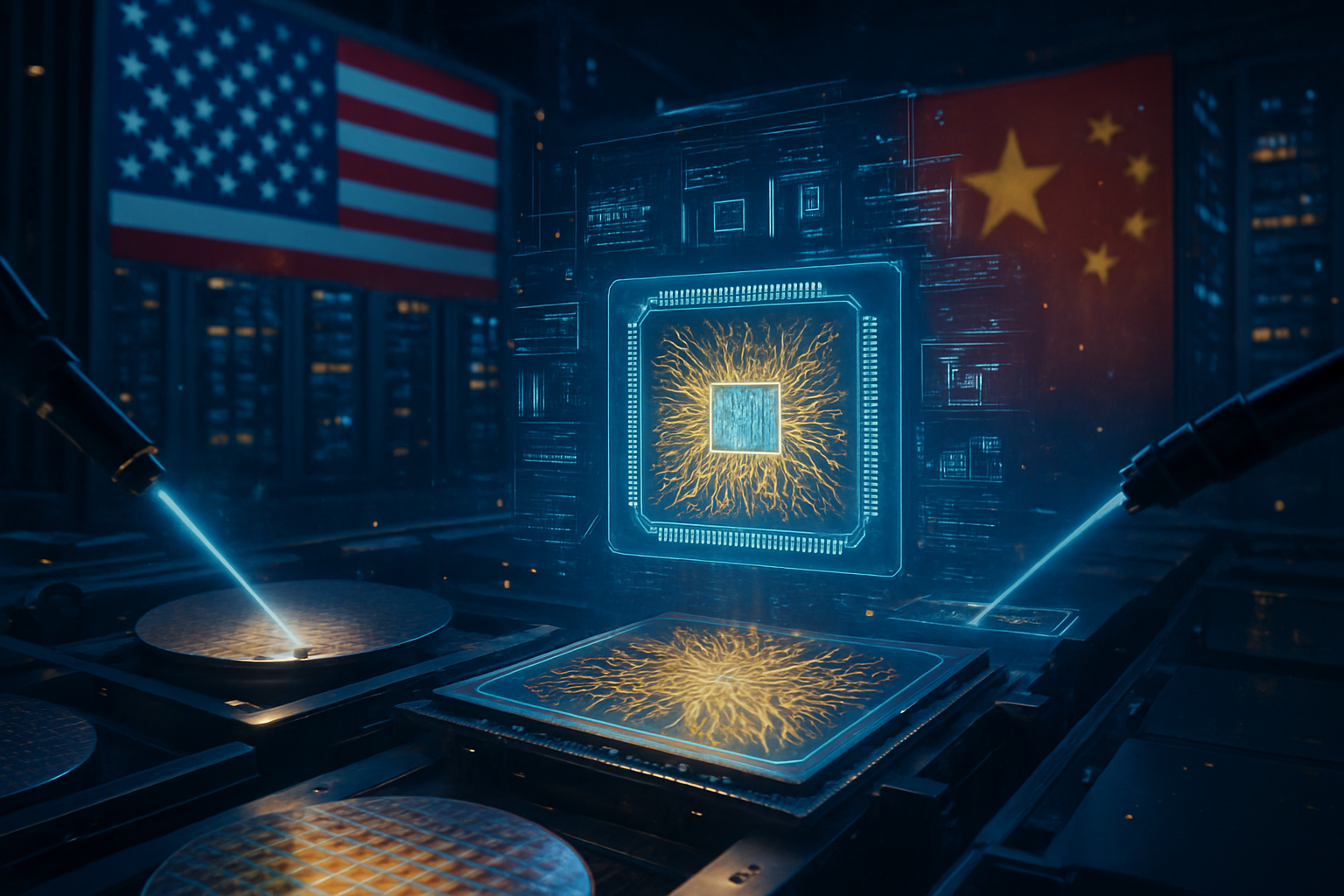
    This strategic pivot directly addresses evolving global supply chain trends and geopolitical considerations. The push for an "India-based geo-resilient electronics and semiconductor supply chain" is a direct response to vulnerabilities exposed by pandemic-induced disruptions and escalating U.S.-China trade tensions. India, positioning itself as a stable democracy and reliable investment destination, aims to attract more international players and integrate itself as a credible participant in global chip production. Apple's increasing production in India, partly driven by the threat of U.S. tariffs on China-manufactured goods, exemplifies this geopolitical realignment.

    The impacts are profound: significant economic growth, the creation of tens of thousands of high-skilled jobs, and the transfer of advanced technology and expertise to India. This will reduce India's import dependence, transforming it from a major chip importer to a self-sufficient, export-capable semiconductor producer, thereby enhancing national security and economic stability. However, potential concerns include challenges in securing critical raw materials, the immense capital and talent required to compete with established global hubs like Taiwan and South Korea, and unique logistical challenges such as protecting the Assam OSAT plant from wildlife, which could affect precision manufacturing. Tata's endeavors are often compared to India's earlier success in smartphone manufacturing self-reliance, but this push into semiconductors and advanced electronics represents a more ambitious trajectory, aiming to establish India as a key player in foundational technologies that will drive future global innovation.

    The Horizon Ahead: Future Developments and Expert Predictions

    The coming years promise a flurry of activity and transformative developments stemming from Tata's strategic investments. In the near term, the Vemgal, Karnataka OSAT facility, operational since December 2023, will be complemented by the major greenfield OSAT facility in Jagiroad, Assam, scheduled for commercial production by mid-2025, with a staggering capacity of 48 million chips per day. Concurrently, the Dholera, Gujarat fabrication plant is in an intensive construction phase, with trial production anticipated in early 2027 and the first wafers rolling out by mid-2027. The Intel (NASDAQ: INTC) partnership will see early manufacturing and packaging of Intel products at these facilities, alongside the rapid scaling of AI PC solutions in India.

    In iPhone manufacturing, Tata Electronics Systems Solutions (TESS) is already engaged in trial production for the iPhone 17 series. Experts predict that Apple (NASDAQ: AAPL) aims to produce all iPhones for the U.S. market in India by 2026, with Tata Group being a critical partner in achieving this goal. Beyond iPhones, Tata's units could diversify into assembling other Apple products, further deepening India's integration into Apple's supply chain.

    Longer-term, Tata Electronics is building a vertically integrated ecosystem, expanding across the entire semiconductor and electronics value chain. This will foster indigenous development through collaborations with entities like MeitY's Centre for Development of Advanced Computing (C-DAC), creating a robust local semiconductor design and IP ecosystem. The chips and electronic components produced will serve a wide array of high-growth sectors, including AI-powered computing, electric vehicles, computing and data storage, consumer electronics, industrial and medical devices, defense, and wireless communication.

    Challenges remain, particularly in securing a robust supply chain for critical raw materials, addressing the talent shortage by training engineers in specialized fields, and navigating intense global competition. Infrastructure and environmental factors, such as protecting the Assam plant from ground vibrations caused by elephants, also pose unique hurdles. Experts predict India's rising share in global electronics manufacturing, surpassing Vietnam as the world's second-largest exporter of mobile phones by FY26. The Intel-Tata partnership is expected to make India a top-five global market for AI PCs before 2030, contributing significantly to India's digital autonomy and achieving 35% domestic value addition in its electronics manufacturing ecosystem by 2030.

    A New Dawn for India's Tech Ambitions: The Trillion-Dollar Trajectory

    Tata Group's aggressive and strategic investments in electronics assembly and semiconductor manufacturing represent a watershed moment in India's industrial history. By becoming a key player in iPhone manufacturing and forging a landmark partnership with Intel (NASDAQ: INTC) for chip fabrication and AI-powered computing, Tata is not merely participating in the global technology sector but actively reshaping it. This comprehensive initiative, backed by the Indian government's "India Semiconductor Mission" and Production Linked Incentive (PLI) schemes, is poised to transform India into a formidable global hub for high-tech manufacturing, reducing import reliance and fostering digital autonomy.

    The significance of this development in AI history cannot be overstated. The localized production of advanced silicon, especially for AI applications, will accelerate AI development and adoption within India, fostering a stronger domestic AI ecosystem and potentially leading to new indigenous AI innovations. It marks a crucial step in democratizing access to cutting-edge hardware essential for the proliferation of AI across industries.

    In the coming weeks and months, all eyes will be on the progress of Tata's Dholera fab and Assam OSAT facilities, as well as the initial outcomes of the Intel partnership. The successful operationalization and scaling of these ventures will be critical indicators of India's capacity to execute its ambitious technological vision. This is a long-term play, but one that promises to fundamentally alter global supply chains, empower India's economic growth, and cement its position as a vital contributor to the future of artificial intelligence and advanced electronics.


    This content is intended for informational purposes only and represents analysis of current AI developments.

    TokenRing AI delivers enterprise-grade solutions for multi-agent AI workflow orchestration, AI-powered development tools, and seamless remote collaboration platforms.
    For more information, visit https://www.tokenring.ai/.
  • Intel Forges Ahead: 2D Transistors Break Through High-Volume Production Barriers, Paving Way for Future AI Chips

    Intel Forges Ahead: 2D Transistors Break Through High-Volume Production Barriers, Paving Way for Future AI Chips

    In a monumental leap forward for semiconductor technology, Intel Corporation (NASDAQ: INTC) has announced significant progress in the fabrication of 2D transistors, mere atoms thick, within standard high-volume manufacturing environments. This breakthrough, highlighted at recent International Electron Devices Meetings (IEDM) through 2023, 2024, and the most recent December 2025 event, signals a critical inflection point in the pursuit of extending Moore's Law and promises to unlock unprecedented capabilities for future chip manufacturing, particularly for next-generation AI hardware.

    The immediate significance of Intel's achievement cannot be overstated. By successfully integrating these ultra-thin materials into a 300-millimeter wafer fab process, the company is de-risking a technology once confined to academic labs and specialized research facilities. This development accelerates the timeline for evaluating and designing chips based on 2D materials, providing a clear pathway towards more powerful, energy-efficient processors essential for the escalating demands of artificial intelligence, high-performance computing, and edge AI applications.

    Atom-Scale Engineering: Unpacking Intel's 2D Transistor Breakthrough

    Intel's groundbreaking work, often in collaboration with research powerhouses like imec, centers on overcoming the formidable challenges of integrating atomically thin 2D materials into complex semiconductor manufacturing flows. The core of their innovation lies in developing fab-compatible contact and gate-stack integration schemes for 2D field-effect transistors (2DFETs). A key "world first" demonstration involved a selective oxide etch process that enables the formation of damascene-style top contacts. This sophisticated technique meticulously preserves the delicate integrity of the underlying 2D channels while allowing for low-resistance, scalable contacts using methods congruent with existing production tools. Furthermore, the development of manufacturable gate-stack modules has dismantled a significant barrier that previously hindered the industrial integration of 2D devices.

    The materials at the heart of this atomic-scale revolution are transition-metal dichalcogenides (TMDs). Specifically, Intel has leveraged molybdenum disulfide (MoS₂) and tungsten disulfide (WS₂) for n-type transistors, while tungsten diselenide (WSe₂) has been employed as the p-type channel material. These monolayer materials are not only chosen for their extraordinary thinness, which is crucial for extreme device scaling, but also for their superior electrical properties that promise enhanced performance in future computing architectures.

    Prior to these advancements, the integration of 2D materials faced numerous hurdles. The inherent fragility of these atomically thin channels made them highly susceptible to contamination and damage during processing. Moreover, early demonstrations were often limited to small wafers and custom equipment, far removed from the rigorous demands of 300-mm wafer high-volume production. Intel's latest announcements directly tackle these issues, showcasing 300-mm ready integration that addresses the complexities of low-resistance contact formation—a persistent challenge due to the lack of atomic "dangling bonds" in 2D materials.

    Initial reactions from the AI research community and industry experts have been overwhelmingly positive, albeit with a realistic understanding of the long-term productization timeline. While full commercial deployment of 2D transistors is still anticipated in the latter half of the 2030s or even the 2040s, the ability to perform early-stage process validation in a production-class environment is seen as a monumental step. Experts note that this de-risks future technology development, allowing for earlier device benchmarking, compact modeling, and design exploration, which is critical for maintaining the pace of innovation in an era where traditional silicon scaling is reaching its physical limits.

    Reshaping the AI Hardware Landscape: Implications for Tech Giants and Startups

    Intel's breakthrough in 2D transistor fabrication, particularly its RibbonFET Gate-All-Around (GAA) technology coupled with PowerVia backside power delivery, heralds a significant shift in the competitive dynamics of the artificial intelligence hardware industry. These innovations, central to Intel's aggressive 20A and 18A process nodes, promise substantial enhancements in performance-per-watt, reduced power consumption, and increased transistor density—all critical factors for the escalating demands of AI workloads, from training massive models to deploying generative AI at the edge.

    Intel (NASDAQ: INTC) itself stands to be a primary beneficiary, leveraging this technological lead to solidify its IDM 2.0 strategy and reclaim process technology leadership. The company's ambition to become a global foundry leader is gaining traction, exemplified by significant deals such as the estimated $15 billion agreement with Microsoft Corporation (NASDAQ: MSFT) for custom AI chips (Maia 2) on the 18A process. This validates Intel's foundry capabilities and advanced process technology, disrupting the traditional duopoly of Taiwan Semiconductor Manufacturing Company (NYSE: TSM), or TSMC, and Samsung Electronics Co., Ltd. (KRX: 005930) in advanced chip manufacturing. Intel's "systems foundry" approach, offering advanced process nodes alongside sophisticated packaging technologies like Foveros and EMIB, positions it as a crucial player for supply chain resilience, especially with U.S.-based manufacturing bolstered by CHIPS Act incentives.

    For other tech giants, the implications are varied. NVIDIA Corporation (NASDAQ: NVDA), currently dominant in AI hardware with its GPUs primarily fabricated by TSMC, could face intensified competition. While NVIDIA might explore diversifying its foundry partners, Intel is also a direct competitor with its Gaudi line of AI accelerators. Conversely, hyperscalers like Microsoft, Alphabet Inc. (NASDAQ: GOOGL) (Google), and Amazon.com, Inc. (NASDAQ: AMZN) stand to benefit immensely. Microsoft's commitment to Intel's 18A process for custom AI chips underscores a strategic move towards supply chain diversification and optimization. The enhanced performance and energy efficiency derived from RibbonFET and PowerVia are vital for powering their colossal, energy-intensive AI data centers and deploying increasingly complex AI models, mitigating supply bottlenecks and geopolitical risks.

    TSMC, while still a formidable leader, faces a direct challenge to its advanced offerings from Intel's 18A and 14A nodes. The "2nm race" is intense, and Intel's success could slightly erode TSMC's market concentration, especially as major customers seek to diversify their manufacturing base. Advanced Micro Devices, Inc. (NASDAQ: AMD), which has successfully leveraged TSMC's advanced nodes, might find new opportunities with Intel's expanded foundry services, potentially benefiting from increased competition among foundries. Moreover, AI hardware startups, designing specialized AI accelerators, could see lower barriers to entry. Access to leading-edge process technology like RibbonFET and PowerVia, previously dominated by a few large players, could democratize access to advanced silicon, fostering a more vibrant and competitive AI ecosystem.

    Beyond Silicon: The Broader Significance for AI and Sustainable Computing

    Intel's pioneering strides in 2D transistor technology transcend mere incremental improvements, representing a fundamental re-imagining of computing that holds profound implications for the broader AI landscape. This atomic-scale engineering is critical for addressing some of the most pressing challenges facing the industry today: the insatiable demand for energy efficiency, the relentless pursuit of performance scaling, and the burgeoning needs of edge AI and advanced neuromorphic computing.

    One of the most compelling advantages of 2D transistors lies in their potential for ultra-low power consumption. As the global Information and Communication Technology (ICT) ecosystem's carbon footprint continues to grow, technologies like 2D Tunnel Field-Effect Transistors (TFETs) promise substantially lower power per neuron fired in neuromorphic computing, potentially bringing chip energy consumption closer to that of the human brain. This quest for ultra-low voltage operation, aiming below 300 millivolts, is poised to dramatically decrease energy consumption and thermal dissipation, fostering more sustainable semiconductor manufacturing and enabling the deployment of AI in power-constrained environments.

    Furthermore, 2D materials offer a vital pathway to continued performance scaling as traditional silicon-based transistors approach their physical limits. Their atomically thin channels enable highly scaled devices, driving Intel's pursuit of Gate-All-Around (GAA) designs like RibbonFET and paving the way for future Complementary FETs (CFETs) that stack transistors vertically. This vertical integration is crucial for achieving the industry's ambitious goal of a trillion transistors on a package by 2030. The compact and energy-efficient nature of 2D transistors also makes them exceptionally well-suited for the explosive growth of Edge AI, enabling sophisticated AI capabilities directly on devices like smartphones and IoT, reducing reliance on cloud connectivity and empowering real-time applications. Moreover, this technology has strong implications for neuromorphic computing, bridging the energy efficiency gap between biological and artificial neural networks and potentially leading to AI systems that learn dynamically on-device with unprecedented efficiency.

    Despite the immense promise, significant concerns remain, primarily around manufacturing scalability and cost. Transitioning from laboratory demonstrations to high-volume manufacturing (HVM) for atomically thin materials presents nontrivial barriers, including achieving uniform, high-quality 2D channel growth, reliable layer transfer to 300mm wafers, and defect control. While Intel, in collaboration with partners like imec, is actively addressing these challenges through 300mm manufacturable integration, the initial production costs for 2D transistors are currently higher than conventional semiconductors. Furthermore, while 2D transistors aim to improve the energy efficiency of the chips themselves, the manufacturing process for advanced semiconductors remains highly resource-intensive. Intel has aggressive environmental commitments, but the complexity of new materials and processes will introduce new environmental considerations that require careful management.

    Compared to previous AI hardware milestones, Intel's 2D transistor breakthrough represents a more fundamental architectural shift. Past advancements, like FinFETs, focused on improving gate control within 3D silicon structures. RibbonFET is the next evolution, but 2D transistors offer a truly "beyond silicon" approach, pushing density and efficiency limits further than silicon alone can. This move towards 2D material-based GAA and CFETs signifies a deeper architectural change. Crucially, this technology directly addresses the "von Neumann bottleneck" by facilitating in-memory computing and neuromorphic architectures, integrating computation and memory, or adopting event-driven, brain-inspired processing. This represents a more radical re-architecture of computing, enabling orders of magnitude improvements in performance and efficiency that are critical for the continued exponential growth of AI capabilities.

    The Road Ahead: Future Horizons for 2D Transistors in AI

    Intel's advancements in 2D transistor technology are not merely a distant promise but a foundational step towards a future where computing is fundamentally more powerful and efficient. In the near term, within the next one to seven years, Intel is intensely focused on refining its Gate-All-Around (GAA) transistor designs, particularly the integration of atomically thin 2D materials like molybdenum disulfide (MoS₂) and tungsten diselenide (WSe₂) into RibbonFET channels. Recent breakthroughs have demonstrated record-breaking performance in both NMOS and PMOS GAA transistors using these 2D transition metal dichalcogenides (TMDs), indicating significant progress in overcoming integration hurdles through innovative gate oxide atomic layer deposition and low-temperature gate cleaning processes. Collaborative efforts, such as the multi-year project with CEA-Leti to develop viable layer transfer technology for high-quality 2D TMDs on 300mm wafers, are crucial for enabling large-scale manufacturing and extending transistor scaling beyond 2030. Experts anticipate early adoption in niche semiconductor and optoelectronic applications within the next few years, with broader implementation as manufacturing techniques mature.

    Looking further into the long term, beyond seven years, Intel's roadmap envisions a future where 2D materials are a standard component in high-performance and next-generation devices. The ultimate goal is to move beyond silicon entirely, stacking transistors in three dimensions and potentially replacing silicon in the distant future to achieve ultra-dense, trillion-transistor chips by 2030. This ambitious vision includes complex 3D integration of 2D semiconductors with silicon-based CMOS circuits, enhancing chip-level energy efficiency and expanding functionality. Industry roadmaps, including those from IMEC, IEEE, and ASML, indicate a significant shift towards 2D channel Complementary FETs (CFETs) beyond 2038, marking a profound evolution in chip architecture.

    The potential applications and use cases on the horizon are vast and transformative. 2D transistors, with their inherent sub-1nm channel thickness and enhanced electrostatic control, are ideally suited for next-generation high-performance computing (HPC) and AI processors, delivering both high performance and ultra-low power consumption. Their ultra-thin form factors and superior electron mobility also make them perfect candidates for flexible and wearable Internet of Things (IoT) devices, advanced sensing applications (biosensing, gas sensing, photosensing), and even novel memory and storage solutions. Crucially, these transistors are poised to contribute significantly to neuromorphic computing and in-memory computing, enabling ultra-low-power logic and non-volatile memory for AI architectures that more closely mimic the human brain.

    Despite this promising outlook, several significant scientific and technological challenges must be meticulously addressed for widespread commercialization. Material synthesis and quality remain paramount; consistently growing high-quality 2D material films over large 300mm wafers without damaging underlying silicon structures, which typically have lower temperature tolerances, is a major hurdle. Integration with existing infrastructure is another key challenge, particularly in forming reliable, low-resistance electrical contacts to 2D materials, which lack the "dangling bonds" of traditional silicon. Yield rates and manufacturability at an industrial scale, achieving consistent film quality, and developing stable doping schemes are also critical. Furthermore, current 2D semiconductor devices still lag behind silicon's performance benchmarks, especially for PMOS devices, and creating complementary logic circuits (CMOS) with 2D materials presents significant difficulties due to the different channel materials typically required for n-type and p-type transistors.

    Experts and industry roadmaps generally point to 2D transistors as a long-term solution for extending semiconductor scaling, with Intel currently anticipating productization in the second half of the 2030s or even the 2040s. The broader industry roadmap suggests a transition to 2D channel CFETs beyond 2038. However, some optimistic predictions from startups suggest that commercial-scale 2D semiconductors could be integrated into advanced chips much sooner, potentially within half a decade (around 2030) for specific applications. Intel's current focus on "de-risking" the technology by validating contact and gate integration processes in fab-compatible environments is a crucial step in this journey, signaling a gradual transition with initial implementations in niche applications leading to broader adoption as manufacturing techniques mature and costs become more favorable.

    A New Era for AI Hardware: The Dawn of Atomically Thin Transistors

    Intel's recent progress in fabricating 2D transistors within standard high-volume production environments marks a pivotal moment in the history of semiconductor technology and, by extension, the future of artificial intelligence. This breakthrough is not merely an incremental step but a foundational shift, demonstrating that the industry can move beyond the physical limitations of traditional silicon to unlock unprecedented levels of performance and energy efficiency. The ability to integrate atomically thin materials like molybdenum disulfide and tungsten diselenide into 300-millimeter wafer processes is de-risking a technology once considered futuristic, accelerating its path from the lab to potential commercialization.

    The key takeaways from this development are multifold: Intel is aggressively positioning itself as a leader in advanced foundry services, offering a viable alternative to the concentrated global manufacturing landscape. This will foster greater competition and supply chain resilience, directly benefiting hyperscalers and AI startups seeking cutting-edge, energy-efficient silicon for their demanding workloads. Furthermore, 2D transistors are essential for pushing Moore's Law further, enabling denser, more powerful chips that are crucial for the continued exponential growth of AI, from training massive generative models to deploying sophisticated AI at the edge. Their potential for ultra-low power consumption also addresses the critical need for more sustainable computing, mitigating the environmental impact of increasingly powerful AI systems.

    This development is comparable in significance to past milestones like the introduction of FinFETs, but it represents an even more radical re-architecture of computing. By facilitating advancements in neuromorphic computing and in-memory computing, 2D transistors promise to overcome the fundamental "von Neumann bottleneck," leading to orders of magnitude improvements in AI performance and efficiency. While challenges remain in areas such as material synthesis, achieving high yield rates, and seamless integration with existing infrastructure, Intel's collaborative research and strategic investments are systematically addressing these hurdles.

    In the coming weeks and months, the industry will be closely watching Intel's continued progress at research conferences and through further announcements regarding their 18A and future process nodes. The focus will be on the maturation of 2D material integration techniques and the refinement of manufacturing processes. As the timeline for widespread commercialization, currently anticipated in the latter half of the 2030s, potentially accelerates, the implications for AI hardware will only grow. This is the dawn of a new era for AI, powered by chips engineered at the atomic scale, promising a future of intelligence that is both more powerful and profoundly more efficient.


    This content is intended for informational purposes only and represents analysis of current AI developments.

    TokenRing AI delivers enterprise-grade solutions for multi-agent AI workflow orchestration, AI-powered development tools, and seamless remote collaboration platforms.
    For more information, visit https://www.tokenring.ai/.

  • Intel’s $3.5 Billion Investment in New Mexico Ignites U.S. Semiconductor Future

    Intel’s $3.5 Billion Investment in New Mexico Ignites U.S. Semiconductor Future

    Rio Rancho, NM – December 11, 2025 – In a strategic move poised to redefine the landscape of domestic semiconductor manufacturing, Intel Corporation (NASDAQ: INTC) has significantly bolstered its U.S. operations with a multiyear $3.5 billion investment in its Rio Rancho, New Mexico facility. Announced on May 3, 2021, this substantial capital infusion is dedicated to upgrading the plant for the production of advanced semiconductor packaging technologies, most notably Intel's groundbreaking 3D packaging innovation, Foveros. This forward-looking investment aims to establish the Rio Rancho campus as Intel's leading domestic hub for advanced packaging, creating hundreds of high-tech jobs and solidifying America's position in the global chip supply chain.

    The initiative represents a critical component of Intel's broader "IDM 2.0" strategy, championed by CEO Pat Gelsinger, which seeks to restore the company's manufacturing leadership and diversify the global semiconductor ecosystem. By focusing on advanced packaging, Intel is not only enhancing its own product capabilities but also positioning its Intel Foundry Services (IFS) as a formidable player in the contract manufacturing space, offering a crucial alternative to overseas foundries and fostering a more resilient and geographically balanced supply chain for the essential components driving modern technology.

    Foveros: A Technical Leap for AI and Advanced Computing

    Intel's Foveros technology is at the forefront of this investment, representing a paradigm shift from traditional chip manufacturing. First introduced in 2019, Foveros is a pioneering 3D face-to-face (F2F) die stacking packaging process that vertically integrates compute tiles, or chiplets. Unlike conventional 2D packaging, which places components side-by-side on a planar substrate, or even 2.5D packaging that uses passive interposers for side-by-side placement, Foveros enables true vertical stacking of active components like logic dies, memory, and FPGAs on top of a base logic die.

    The core of Foveros lies in its ultra-fine-pitched microbumps, typically 36 microns (µm), or even sub-10 µm in the more advanced Foveros Direct, which employs direct copper-to-copper hybrid bonding. This precision bonding dramatically shortens signal path distances between components, leading to significantly reduced latency and vastly improved bandwidth. This is a critical advantage over traditional methods, where wire parasitics increase with longer interconnects, degrading performance. Foveros also leverages an active interposer, a base die with through-silicon vias (TSVs) that can contain low-power components like I/O and power delivery, further enhancing integration. This heterogeneous integration capability allows the "mix and match" of chiplets fabricated on different process nodes (e.g., a 3nm CPU tile with a 14nm I/O tile) within a single package, offering unparalleled design flexibility and cost-effectiveness.

    Initial reactions from the AI research community and industry experts have been overwhelmingly positive. The move is seen as a strategic imperative for Intel to regain its competitive edge against rivals like Taiwan Semiconductor Manufacturing Company (TSMC) (TWSE: 2330) and Samsung Electronics Co., Ltd. (KRX: 005930), particularly in the high-demand advanced packaging sector. The ability to produce cutting-edge packaging domestically provides a secure and resilient supply chain for critical components, a concern that has been amplified by recent global events. Intel's commitment to Foveros in New Mexico, alongside other investments in Arizona and Ohio, underscores its dedication to increasing U.S. chipmaking capacity and establishing an end-to-end manufacturing process in the Americas.

    Competitive Implications and Market Dynamics

    This investment carries significant competitive implications for the entire AI and semiconductor industry. For major tech giants like Apple Inc. (NASDAQ: AAPL) and Qualcomm Incorporated (NASDAQ: QCOM), Intel's advanced packaging solutions, including Foveros, offer a crucial alternative to TSMC's CoWoS technology, which has faced supply constraints amidst surging demand for AI chips from companies like NVIDIA Corporation (NASDAQ: NVDA) and Advanced Micro Devices, Inc. (NASDAQ: AMD). Diversifying manufacturing paths reduces reliance on a single supplier, potentially shortening time-to-market for next-generation AI SoCs and mitigating supply chain risks. Intel's Gaudi 3 AI accelerator, for example, already leverages Foveros Direct 3D packaging to integrate with high-bandwidth memory, providing a critical edge in the competitive AI hardware market.

    For AI startups, Foveros could lower the barrier to entry for developing custom AI silicon. By enabling the "mix and match" of specialized IP blocks, memory, and I/O elements, Foveros offers design flexibility and potentially more cost-effective solutions. Startups can focus on innovating specific AI functionalities in chiplets, then integrate them using Intel's advanced packaging, rather than undertaking the immense cost and complexity of designing an entire monolithic chip from scratch. This modular approach fosters innovation and accelerates the development of specialized AI hardware.

    Intel is strategically positioning itself as a "full-stack provider of AI infrastructure and outsourced chipmaking." This involves differentiating its foundry services by highlighting its leadership in advanced packaging, actively promoting its capacity as an unconstrained alternative to competitors. The company is fostering ecosystem partnerships with industry leaders like Microsoft Corporation (NASDAQ: MSFT), Qualcomm, Synopsys, Inc. (NASDAQ: SNPS), and Cadence Design Systems, Inc. (NASDAQ: CDNS) to ensure broad adoption and support for its foundry services and packaging technologies. This comprehensive approach aims to disrupt existing product development paradigms, accelerate the industry-wide shift towards heterogeneous integration, and solidify Intel's market positioning as a crucial partner in the AI revolution.

    Wider Significance for the AI Landscape and National Security

    Intel's Foveros investment is deeply intertwined with the broader AI landscape, global supply chain resilience, and critical government initiatives. Advanced packaging technologies like Foveros are essential for continuing the trajectory of Moore's Law and meeting the escalating demands of modern AI workloads. The vertical stacking of chiplets provides significantly higher computing density, increased bandwidth, and reduced latency—all critical for the immense data processing requirements of AI, especially large language models (LLMs) and high-performance computing (HPC). Foveros facilitates the industry's paradigm shift toward disaggregated architectures, where chiplet-based designs are becoming the new standard for complex AI systems.

    This substantial investment in domestic advanced packaging facilities, particularly the $3.5 billion upgrade in New Mexico which led to the opening of Fab 9 in January 2024, is a direct response to the need for enhanced semiconductor supply chain management. It significantly reduces the industry's heavy reliance on packaging hubs predominantly located in Asia. By establishing high-volume advanced packaging operations in the U.S., Intel contributes to a more resilient global supply chain, mitigating risks associated with geopolitical events or localized disruptions. This move is a tangible manifestation of the U.S. CHIPS and Science Act, which allocated approximately $53 billion to revitalize the domestic semiconductor industry, foster American innovation, create jobs, and safeguard national security by reducing reliance on foreign manufacturing.

    The New Mexico facility, designated as Intel's leading advanced packaging manufacturing hub, represents a strategic asset for U.S. semiconductor sovereignty. It ensures that cutting-edge packaging capabilities are available domestically, providing a secure foundation for critical technologies and reducing vulnerability to external pressures. This investment is not merely about Intel's growth but about strengthening the entire U.S. technology ecosystem and ensuring its leadership in the age of AI.

    Future Developments and Expert Outlook

    In the near term (next 1-3 years), Intel is aggressively advancing Foveros. The company has already started high-volume production of Foveros 3D at the New Mexico facility for products like Core Ultra 'Meteor Lake' processors and Ponte Vecchio GPUs. Future iterations will feature denser interconnections with finer micro bump pitches (25-micron and 18-micron), and the introduction of Foveros Omni and Foveros Direct will offer enhanced flexibility and even greater interconnect density through direct copper-to-copper hybrid bonding. Intel Foundry is also expanding its offerings with Foveros-R and Foveros-B, and upcoming Clearwater Forest Xeon processors in 2025 will leverage Intel 18A process technology combined with Foveros Direct 3D and EMIB 3.5D packaging.

    Longer term, Foveros and advanced packaging are central to Intel's ambitious goal of placing one trillion transistors on a single chip package by 2030. Modular chiplet designs, specifically tailored for diverse AI workloads, are projected to become standard, alongside the integration of co-packaged optics (CPO) to drastically improve interconnect bandwidth. Future developments may include active interposers with embedded transistors, further enhancing in-package functionality. These advancements will support emerging fields such as quantum computing, neuromorphic systems, and biocompatible healthcare devices.

    Despite this promising outlook, challenges remain. Intel faces intense competition from TSMC and Samsung, and while its advanced packaging capacity is growing, market adoption and manufacturing complexity, including achieving optimal yield rates, are continuous hurdles. Experts, however, are optimistic. The advanced packaging market is projected to double its market share by 2030, reaching approximately $80 billion, with high-end performance packaging alone reaching $28.5 billion. This signifies a shift where advanced packaging is becoming a primary area of innovation, sometimes eclipsing the excitement previously reserved for cutting-edge process nodes. Expert predictions highlight the strategic importance of Intel's advanced packaging capacity for U.S. semiconductor sovereignty and its role in enabling the next generation of AI hardware.

    A New Era for U.S. Chipmaking

    Intel's $3.5 billion investment in its New Mexico facility for advanced Foveros 3D packaging marks a pivotal moment in the history of U.S. semiconductor manufacturing. This strategic commitment not only solidifies Intel's path back to leadership in chip technology but also significantly strengthens the domestic supply chain, creates high-value jobs, and aligns directly with national security objectives outlined in the CHIPS Act. By fostering a robust ecosystem for advanced packaging within the United States, Intel is building a foundation for future innovation in AI, high-performance computing, and beyond.

    The establishment of the Rio Rancho campus as a domestic hub for advanced packaging is a testament to the growing recognition that packaging is as critical as transistor scaling for unlocking the full potential of modern AI. The ability to integrate diverse chiplets into powerful, efficient, and compact packages will be the key differentiator in the coming years. As Intel continues to roll out more advanced iterations of Foveros and expands its foundry services, the industry will be watching closely for its impact on competitive dynamics, the development of next-generation AI accelerators, and the broader implications for technological sovereignty. This investment is not just about a facility; it's about securing America's technological future in an increasingly AI-driven world.


    This content is intended for informational purposes only and represents analysis of current AI developments.

    TokenRing AI delivers enterprise-grade solutions for multi-agent AI workflow orchestration, AI-powered development tools, and seamless remote collaboration platforms.
    For more information, visit https://www.tokenring.ai/.
  • Intel and Tata Forge $14 Billion Semiconductor Alliance, Reshaping Global Chip Landscape and India’s Tech Future

    Intel and Tata Forge $14 Billion Semiconductor Alliance, Reshaping Global Chip Landscape and India’s Tech Future

    New Delhi, India – December 8, 2025 – In a landmark strategic alliance poised to redefine the global semiconductor supply chain and catapult India onto the world stage of advanced manufacturing, Intel Corporation (NASDAQ: INTC) and the Tata Group announced a monumental collaboration today. This partnership centers around Tata Electronics' ambitious $14 billion (approximately ₹1.18 lakh crore) investment to establish India's first semiconductor fabrication (fab) facility in Dholera, Gujarat, and an Outsourced Semiconductor Assembly and Test (OSAT) plant in Assam. Intel is slated to be a pivotal initial customer for these facilities, exploring local manufacturing and packaging of its products, with a significant focus on rapidly scaling tailored AI PC solutions for the burgeoning Indian market.

    The agreement, formalized through a Memorandum of Understanding (MoU) on this date, marks a critical juncture for both entities. For Intel, it represents a strategic expansion of its global foundry services (IFS) and a diversification of its manufacturing footprint, particularly in a market projected to be a top-five global compute hub by 2030. For India, it’s a giant leap towards technological self-reliance and the realization of its "India Semiconductor Mission," aiming to create a robust, geo-resilient electronics and semiconductor ecosystem within the country.

    Technical Deep Dive: India's New Silicon Frontier and Intel's Foundry Ambitions

    The technical underpinnings of this deal are substantial, laying the groundwork for a new era of chip manufacturing in India. Tata Electronics, in collaboration with Taiwan's Powerchip Semiconductor Manufacturing Corporation (PSMC), is spearheading the Dholera fab, which is designed to produce chips using 28nm to 110nm technologies. These mature process nodes are crucial for a vast array of essential components, including power management ICs, display drivers, and microcontrollers, serving critical sectors such as automotive, IoT, consumer electronics, and industrial applications. The Dholera facility is projected to achieve a significant monthly production capacity of up to 50,000 wafers (300mm or 12-inch wafers).

    Beyond wafer fabrication, Tata is also establishing an advanced Outsourced Semiconductor Assembly and Test (OSAT) facility in Assam. This facility will be a key area of collaboration with Intel, exploring advanced packaging solutions in India. The total investment by Tata Electronics for these integrated facilities stands at approximately $14 billion. While the Dholera fab is slated for operations by mid-2027, the Assam OSAT facility could go live as early as April 2026, accelerating India's entry into the crucial backend of chip manufacturing.

    This alliance is a cornerstone of Intel's broader IDM 2.0 strategy, positioning Intel Foundry Services (IFS) as a "systems foundry for the AI era." Intel aims to offer full-stack optimization, from factory networks to software, leveraging its extensive engineering expertise to provide comprehensive manufacturing, advanced packaging, and integration services. By securing Tata as a key initial customer, Intel demonstrates its commitment to diversifying its global manufacturing capabilities and tapping into the rapidly growing Indian market, particularly for AI PC solutions. While the initial focus on 28nm-110nm nodes may not be Intel's cutting-edge (like its 18A or 14A processes), it strategically allows Intel to leverage these facilities for specific regional needs, packaging innovations, and to secure a foothold in a critical emerging market.

    Initial reactions from industry experts are largely positive, recognizing the strategic importance of the deal for both Intel and India. Experts laud the Indian government's strong support through initiatives like the India Semiconductor Mission, which makes such investments attractive. The appointment of former Intel Foundry Services President, Randhir Thakur, as CEO and Managing Director of Tata Electronics, underscores the seriousness of Tata's commitment and brings invaluable global expertise to India's burgeoning semiconductor ecosystem. While the focus on mature nodes is a practical starting point, it's seen as foundational for India to build robust manufacturing capabilities, which will be vital for a wide range of applications, including those at the edge of AI.

    Corporate Chessboard: Shifting Dynamics for Tech Giants and Startups

    The Intel-Tata alliance sends ripples across the corporate chessboard, promising to redefine competitive landscapes and open new avenues for growth, particularly in India.

    Tata Group (NSE: TATA) stands as a primary beneficiary. This deal is a monumental step in its ambition to become a global force in electronics and semiconductors. It secures a foundational customer in Intel and provides critical technology transfer for manufacturing and advanced packaging, positioning Tata Electronics across Electronics Manufacturing Services (EMS), OSAT, and semiconductor foundry services. For Intel (NASDAQ: INTC), this partnership significantly strengthens its Intel Foundry business by diversifying its supply chain and providing direct access to the rapidly expanding Indian market, especially for AI PCs. It's a strategic move to re-establish Intel as a major global foundry player.

    The implications for Indian AI companies and startups are profound. Local fab and OSAT facilities could dramatically reduce reliance on imports, potentially lowering costs and improving turnaround times for specialized AI chips and components. This fosters an innovation hub for indigenous AI hardware, leading to custom AI chips tailored for India's unique market needs, including multilingual processing. The anticipated creation of thousands of direct and indirect jobs will also boost the skilled workforce in semiconductor manufacturing and design, a critical asset for AI development. Even global tech giants with significant operations in India stand to benefit from a more localized and resilient supply chain for components.

    For major global AI labs like Google DeepMind, OpenAI, Meta AI (NASDAQ: META), and Microsoft AI (NASDAQ: MSFT), the direct impact on sourcing cutting-edge AI accelerators (e.g., advanced GPUs) from this specific fab might be limited initially, given its focus on mature nodes. However, the deal contributes to the overall decentralization of chip manufacturing, enhancing global supply chain resilience and potentially freeing up capacity at advanced fabs for leading-edge AI chips. The emergence of a robust Indian AI hardware ecosystem could also lead to Indian startups developing specialized AI chips for edge AI, IoT, or specific Indian language processing, which major AI labs might integrate into their products for the Indian market. The growth of India's sophisticated semiconductor industry will also intensify global competition for top engineering and research talent.

    Potential disruptions include a gradual shift in the geopolitical landscape of chip manufacturing, reducing over-reliance on concentrated hubs. The new capacity for mature node chips could introduce new competition for existing manufacturers, potentially leading to price adjustments. For Intel Foundry, securing Tata as a customer strengthens its position against pure-play foundries like TSMC (NYSE: TSM) and Samsung (KRX: 005930), albeit in different technology segments initially. This deal also provides massive impetus to India's "Make in India" initiatives, potentially encouraging more global companies to establish manufacturing footprints across various tech sectors in the country.

    A New Era: Broader Implications for Global Tech and Geopolitics

    The Intel-Tata semiconductor fab deal transcends mere corporate collaboration; it is a profound development with far-reaching implications for the broader AI landscape, global semiconductor supply chains, and international geopolitics.

    This collaboration is deeply integrated into the burgeoning AI landscape. The explicit goal to rapidly scale tailored AI PC solutions for the Indian market underscores the foundational role of semiconductors in driving AI adoption. India is projected to be among the top five global markets for AI PCs by 2030, and the chips produced at Tata's new facilities will cater to this escalating demand, alongside applications in automotive, wireless communication, and general computing. Furthermore, the manufacturing facilities themselves are envisioned to incorporate advanced automation powered by AI, machine learning, and data analytics to optimize efficiency, showcasing AI's pervasive influence even in its own production. Intel's CEO has highlighted that AI is profoundly transforming the world, creating an unprecedented opportunity for its foundry business, making this deal a critical component of Intel's long-term AI strategy.

    The most immediate and significant impact will be on global semiconductor supply chains. This deal is a strategic move towards creating a more resilient and diversified global supply chain, a critical objective for many nations following recent disruptions. By establishing a significant manufacturing base in India, the initiative aims to rebalance the heavy concentration of chip production in regions like China and Taiwan, positioning India as a "second base" for manufacturing. This diversification mitigates vulnerabilities to geopolitical tensions, natural disasters, or unforeseen bottlenecks, contributing to a broader "tech decoupling" effort by Western nations to reduce reliance on specific regions. India's focus on manufacturing, including legacy chips, aims to establish it as a reliable and stable supplier in the global chip value chain.

    Geopolitically, the deal carries immense weight. India's Prime Minister Narendra Modi's "India Semiconductor Mission," backed by $10 billion in incentives, aims to transform India into a global chipmaker, rivaling established powerhouses. This collaboration is seen by some analysts as part of a "geopolitical game" where countries seek to diversify semiconductor sources and reduce Chinese dominance by supporting manufacturing in "like-minded countries" such as India. Domestic chip manufacturing enhances a nation's "digital sovereignty" and provides "digital leverage" on the global stage, bolstering India's self-reliance and influence. The historical concentration of advanced semiconductor production in Taiwan has been a source of significant geopolitical risk, making the diversification of manufacturing capabilities an imperative.

    However, potential concerns temper the optimism. Semiconductor manufacturing is notoriously capital-intensive, with long lead times to profitability. Intel itself has faced significant challenges and delays in its manufacturing transitions, impacting its market dominance. The specific logistical challenges in India, such as the need for "elephant-proof" walls in Assam to prevent vibrations from affecting nanometer-level precision, highlight the unique hurdles. Comparing this to previous milestones, Intel's past struggles in AI and manufacturing contrast sharply with Nvidia's rise and TSMC's dominance. This current global push for diversified manufacturing, exemplified by the Intel-Tata deal, marks a significant departure from earlier periods of increased reliance on globalized supply chains. Unlike past stalled attempts by India to establish chip fabrication, the current government incentives and the substantial commitment from Tata, coupled with international partnerships, represent a more robust and potentially successful approach.

    The Road Ahead: Challenges and Opportunities for India's Silicon Dream

    The Intel-Tata semiconductor fab deal, while groundbreaking, sets the stage for a future fraught with both immense opportunities and significant challenges for India's burgeoning silicon dream.

    In the near-term, the focus will be on the successful establishment and operationalization of Tata Electronics' facilities. The Assam OSAT plant is expected to be operational by mid-2025, followed by the Dholera fab commencing operations by 2027. Intel's role as the first major customer will be crucial, with initial efforts centered on manufacturing and packaging Intel products specifically for the Indian market and developing advanced packaging capabilities. This period will be critical for demonstrating India's capability in high-volume, high-precision manufacturing.

    Long-term developments envision a comprehensive silicon and compute ecosystem in India. Beyond merely manufacturing, the partnership aims to foster innovation, attract further investment, and position India as a key player in a geo-resilient global supply chain. This will necessitate significant skill development, with projections of tens of thousands of direct and indirect jobs, addressing the current gap in specialized semiconductor fabrication and testing expertise within India's workforce. The success of this venture could catalyze further foreign investment and collaborations, solidifying India's position in the global electronics supply chain.

    The potential applications for the chips produced are vast, with a strong emphasis on the future of AI. The rapid scaling of tailored AI PC solutions for India's consumer and enterprise markets is a primary objective, leveraging Intel's AI compute designs and Tata's manufacturing prowess. These chips will also fuel growth in industrial applications, general consumer electronics, and the automotive sector. India's broader "India Semiconductor Mission" targets the production of its first indigenous semiconductor chip by 2025, a significant milestone for domestic capability.

    However, several challenges need to be addressed. India's semiconductor industry currently grapples with an underdeveloped supply chain, lacking critical raw materials like silicon wafers, high-purity gases, and ultrapure water. A significant shortage of specialized talent for fabrication and testing, despite a strong design workforce, remains a hurdle. As a relatively late entrant, India faces stiff competition from established global hubs with decades of experience and mature ecosystems. Keeping pace with rapidly evolving technology and continuous miniaturization in chip design will demand continuous, substantial capital investments. Past attempts by India to establish chip manufacturing have also faced setbacks, underscoring the complexities involved.

    Expert predictions generally paint an optimistic picture, with India's semiconductor market projected to reach $64 billion by 2026 and approximately $103.4 billion by 2030, driven by rising PC demand and rapid AI adoption. Tata Sons Chairman N Chandrasekaran emphasizes the group's deep commitment to developing a robust semiconductor industry in India, seeing the alliance with Intel as an accelerator to capture the "large and growing AI opportunity." The strong government backing through the India Semiconductor Mission is seen as a key enabler for this transformation. The success of the Intel-Tata partnership could serve as a powerful blueprint, attracting further foreign investment and collaborations, thereby solidifying India's position in the global electronics supply chain.

    Conclusion: India's Semiconductor Dawn and Intel's Strategic Rebirth

    The strategic alliance between Intel Corporation (NASDAQ: INTC) and the Tata Group (NSE: TATA), centered around a $14 billion investment in India's semiconductor manufacturing capabilities, marks an inflection point for both entities and the global technology landscape. This monumental deal, announced on December 8, 2025, is a testament to India's burgeoning ambition to become a self-reliant hub for advanced technology and Intel's strategic re-commitment to its foundry business.

    The key takeaways from this development are multifaceted. For India, it’s a critical step towards establishing an indigenous, geo-resilient semiconductor ecosystem, significantly reducing its reliance on global supply chains. For Intel, it represents a crucial expansion of its Intel Foundry Services, diversifying its manufacturing footprint and securing a foothold in one of the world's fastest-growing compute markets, particularly for AI PC solutions. The collaboration on mature node manufacturing (28nm-110nm) and advanced packaging will foster a comprehensive ecosystem, from design to assembly and test, creating thousands of skilled jobs and attracting further investment.

    Assessing this development's significance in AI history, it underscores the fundamental importance of hardware in the age of artificial intelligence. While not directly producing cutting-edge AI accelerators, the establishment of robust, diversified manufacturing capabilities is essential for the underlying components that power AI-driven devices and infrastructure globally. This move aligns with a broader trend of "tech decoupling" and the decentralization of critical manufacturing, enhancing global supply chain resilience and mitigating geopolitical risks associated with concentrated production. It signals a new chapter for Intel's strategic rebirth and India's emergence as a formidable player in the global technology arena.

    Looking ahead, the long-term impact promises to be transformative for India's economy and technological sovereignty. The successful operationalization of these fabs and OSAT facilities will not only create direct economic value but also foster an innovation ecosystem that could spur indigenous AI hardware development. However, challenges related to supply chain maturity, talent development, and intense global competition will require sustained effort and investment. What to watch for in the coming weeks and months includes further details on technology transfer, the progress of facility construction, and the initial engagement of Intel as a customer. The success of this venture will be a powerful indicator of India's capacity to deliver on its high-tech ambitions and Intel's ability to execute its revitalized foundry strategy.


    This content is intended for informational purposes only and represents analysis of current AI developments.

    TokenRing AI delivers enterprise-grade solutions for multi-agent AI workflow orchestration, AI-powered development tools, and seamless remote collaboration platforms.
    For more information, visit https://www.tokenring.ai/.
  • The Silicon Brains: Why AI’s Future is Forged in Advanced Semiconductors – Top 5 Stocks to Watch

    The Silicon Brains: Why AI’s Future is Forged in Advanced Semiconductors – Top 5 Stocks to Watch

    The relentless march of artificial intelligence (AI) is reshaping industries, redefining possibilities, and demanding an unprecedented surge in computational power. At the heart of this revolution lies a symbiotic relationship with the semiconductor industry, where advancements in chip technology directly fuel AI's capabilities, and AI, in turn, drives the innovation cycle for new silicon. As of December 1, 2025, this intertwined destiny presents a compelling investment landscape, with leading semiconductor companies emerging as the foundational architects of the AI era.

    This dynamic interplay has made the demand for specialized, high-performance, and energy-efficient chips more critical than ever. From training colossal neural networks to enabling real-time AI at the edge, the semiconductor industry is not merely a supplier but a co-creator of AI's future. Understanding this crucial connection is key to identifying the companies poised for significant growth in the years to come.

    The Unbreakable Bond: How Silicon Powers Intelligence and Intelligence Refines Silicon

    The intricate dance between AI and semiconductors is a testament to technological co-evolution. AI's burgeoning complexity, particularly with the advent of large language models (LLMs) and sophisticated machine learning algorithms, places immense demands on processing power, memory bandwidth, and energy efficiency. This insatiable appetite has pushed semiconductor manufacturers to innovate at an accelerated pace, leading to the development of specialized processors like Graphics Processing Units (GPUs), Tensor Processing Units (TPUs), Neural Processing Units (NPUs), and Application-Specific Integrated Circuits (ASICs), all meticulously engineered to handle AI workloads with unparalleled performance. Innovations in advanced lithography, 3D chip stacking, and heterogeneous integration are direct responses to AI's escalating requirements.

    Conversely, these cutting-edge semiconductors are the very bedrock upon which advanced AI systems are built. They provide the computational muscle necessary for complex calculations and data processing at speeds previously unimaginable. Advances in process nodes, such as 3nm and 2nm technology, allow for an exponentially greater number of transistors to be packed onto a single chip, translating directly into the performance gains crucial for developing and deploying sophisticated AI. Moreover, semiconductors are pivotal in democratizing AI, extending its reach beyond data centers to "edge" devices like smartphones, autonomous vehicles, and IoT sensors, where real-time, local processing with minimal power consumption is paramount.

    The relationship isn't one-sided; AI itself is becoming an indispensable tool within the semiconductor industry. AI-driven software is revolutionizing chip design by automating intricate layout generation, logic synthesis, and verification processes, significantly reducing development cycles and time-to-market. In manufacturing, AI-powered visual inspection systems can detect microscopic defects with far greater accuracy than human operators, boosting yield and minimizing waste. Furthermore, AI plays a critical role in real-time process control, optimizing manufacturing parameters, and enhancing supply chain management through advanced demand forecasting and inventory optimization. Initial reactions from the AI research community and industry experts consistently highlight this as a "ten-year AI cycle," emphasizing the long-term, foundational nature of this technological convergence.

    Navigating the AI-Semiconductor Nexus: Companies Poised for Growth

    The profound synergy between AI and semiconductors has created a fertile ground for companies at the forefront of this convergence. Several key players are not just riding the wave but actively shaping the future of AI through their silicon innovations. As of late 2025, these companies stand out for their market dominance, technological prowess, and strategic positioning.

    NVIDIA (NASDAQ: NVDA) remains the undisputed titan in AI chips. Its GPUs and AI accelerators, particularly the A100 Tensor Core GPU and the newer Blackwell Ultra architecture (like the GB300 NVL72 rack-scale system), are the backbone of high-performance AI training and inference. NVIDIA's comprehensive ecosystem, anchored by its CUDA software platform, is deeply embedded in enterprise and sovereign AI initiatives globally, making it a default choice for many AI developers and data centers. The company's leadership in accelerated and AI computing directly benefits from the multi-year build-out of "AI factories," with analysts projecting substantial revenue growth driven by sustained demand for its cutting-edge chips.

    Advanced Micro Devices (AMD) (NASDAQ: AMD) has emerged as a formidable challenger to NVIDIA, offering a robust portfolio of CPU, GPU, and AI accelerator products. Its EPYC processors deliver strong performance for data centers, including those running AI workloads. AMD's MI300 series is specifically designed for AI training, with a roadmap extending to the MI400 "Helios" racks for hyperscale applications, leveraging TSMC's advanced 3nm process. The company's ROCm software stack is also gaining traction as a credible, open-source alternative to CUDA, further strengthening its competitive stance. AMD views the current period as a "ten-year AI cycle," making significant strategic investments to capture a larger share of the AI chip market.

    Intel (NASDAQ: INTC), a long-standing leader in CPUs, is aggressively expanding its footprint in AI accelerators. Unlike many of its competitors, Intel operates its own foundries, providing a distinct advantage in manufacturing control and supply chain resilience. Intel's Gaudi AI Accelerators, notably the Gaudi 3, are designed for deep learning training and inference in data centers, directly competing with offerings from NVIDIA and AMD. Furthermore, Intel is integrating AI acceleration capabilities into its Xeon processors for data centers and edge computing, aiming for greater efficiency and cost-effectiveness in LLM operations. The company's foundry division is actively manufacturing chips for external clients, signaling its ambition to become a major contract manufacturer in the AI era.

    Taiwan Semiconductor Manufacturing Company (TSMC) (NYSE: TSM) is arguably the most critical enabler of the AI revolution, serving as the world's largest dedicated independent semiconductor foundry. TSMC manufactures the advanced chips for virtually all leading AI chip designers, including Apple, NVIDIA, and AMD. Its technological superiority in advanced process nodes (e.g., 3nm and below) is indispensable for producing the high-performance, energy-efficient chips demanded by AI systems. TSMC itself leverages AI in its operations to classify wafer defects and generate predictive maintenance charts, thereby enhancing yield and reducing downtime. The company projects its AI-related revenue to grow at a compound annual rate of 40% through 2029, underscoring the profound impact of AI demand on its business.

    Qualcomm (NASDAQ: QCOM) is a pioneer in mobile system-on-chip (SoC) architectures and a leader in edge AI. Its Snapdragon AI processors are optimized for on-device AI in smartphones, autonomous vehicles, and various IoT devices. These chips combine high performance with low power consumption, enabling AI processing directly on devices without constant cloud connectivity. Qualcomm's strategic focus on on-device AI is crucial as AI extends beyond data centers to real-time, local applications, driving innovation in areas like personalized AI assistants, advanced robotics, and intelligent sensor networks. The company's strengths in processing power, memory solutions, and networking capabilities position it as a key player in the expanding AI landscape.

    The Broader Implications: Reshaping the Global Tech Landscape

    The profound link between AI and semiconductors extends far beyond individual company performance, fundamentally reshaping the broader AI landscape and global technological trends. This symbiotic relationship is the primary driver behind the acceleration of AI development, enabling increasingly sophisticated models and diverse applications that were once confined to science fiction. The concept of "AI factories" – massive data centers dedicated to training and deploying AI models – is rapidly becoming a reality, fueled by the continuous flow of advanced silicon.

    The impacts are ubiquitous, touching every sector from healthcare and finance to manufacturing and entertainment. AI-powered diagnostics, personalized medicine, autonomous logistics, and hyper-realistic content creation are all direct beneficiaries of this technological convergence. However, this rapid advancement also brings potential concerns. The immense demand for cutting-edge chips raises questions about supply chain resilience, geopolitical stability, and the environmental footprint of large-scale AI infrastructure, particularly concerning energy consumption. The race for AI supremacy is also intensifying, drawing comparisons to previous technological gold rushes like the internet boom and the mobile revolution, but with potentially far greater societal implications.

    This era represents a significant milestone, a foundational shift akin to the invention of the microprocessor itself. The ability to process vast amounts of data at unprecedented speeds is not just an incremental improvement; it's a paradigm shift that will unlock entirely new classes of intelligent systems and applications.

    The Road Ahead: Future Developments and Uncharted Territories

    The horizon for AI and semiconductor development is brimming with anticipated breakthroughs and transformative applications. In the near term, we can expect the continued miniaturization of process nodes, pushing towards 2nm and even 1nm technologies, which will further enhance chip performance and energy efficiency. Novel chip architectures, including specialized AI accelerators beyond current GPU designs and advancements in neuromorphic computing, which mimics the structure and function of the human brain, are also on the horizon. These innovations promise to deliver even greater computational power for AI while drastically reducing energy consumption.

    Looking further out, the potential applications and use cases are staggering. Fully autonomous systems, from self-driving cars to intelligent robotic companions, will become more prevalent and capable. Personalized AI, tailored to individual needs and preferences, will seamlessly integrate into daily life, offering proactive assistance and intelligent insights. Advanced robotics and industrial automation, powered by increasingly intelligent edge AI, will revolutionize manufacturing and logistics. However, several challenges need to be addressed, including the continuous demand for greater power efficiency, the escalating costs associated with advanced chip manufacturing, and the global talent gap in AI research and semiconductor engineering. Experts predict that the "AI factory" model will continue to expand, leading to a proliferation of specialized AI hardware and a deepening integration of AI into every facet of technology.

    A New Era Forged in Silicon and Intelligence

    In summary, the current era marks a pivotal moment where the destinies of artificial intelligence and semiconductor technology are inextricably linked. The relentless pursuit of more powerful, efficient, and specialized chips is the engine driving AI's exponential growth, enabling breakthroughs that are rapidly transforming industries and societies. Conversely, AI is not only consuming these advanced chips but also actively contributing to their design and manufacturing, creating a self-reinforcing cycle of innovation.

    This development is not merely significant; it is foundational for the next era of technological advancement. The companies highlighted – NVIDIA (NASDAQ: NVDA), Advanced Micro Devices (AMD) (NASDAQ: AMD), Intel (NASDAQ: INTC), Taiwan Semiconductor Manufacturing Company (TSMC) (NYSE: TSM), and Qualcomm (NASDAQ: QCOM) – are at the vanguard of this revolution, strategically positioned to capitalize on the surging demand for AI-enabling silicon. Their continuous innovation and market leadership make them crucial players to watch in the coming weeks and months. The long-term impact of this convergence will undoubtedly reshape global economies, redefine human-computer interaction, and usher in an age of pervasive intelligence.


    This content is intended for informational purposes only and represents analysis of current AI developments.

    TokenRing AI delivers enterprise-grade solutions for multi-agent AI workflow orchestration, AI-powered development tools, and seamless remote collaboration platforms.
    For more information, visit https://www.tokenring.ai/.