Tag: Interoperability

  • The “USB-C of AI”: How Model Context Protocol (MCP) Unified the Fragmented Enterprise Landscape

    The “USB-C of AI”: How Model Context Protocol (MCP) Unified the Fragmented Enterprise Landscape

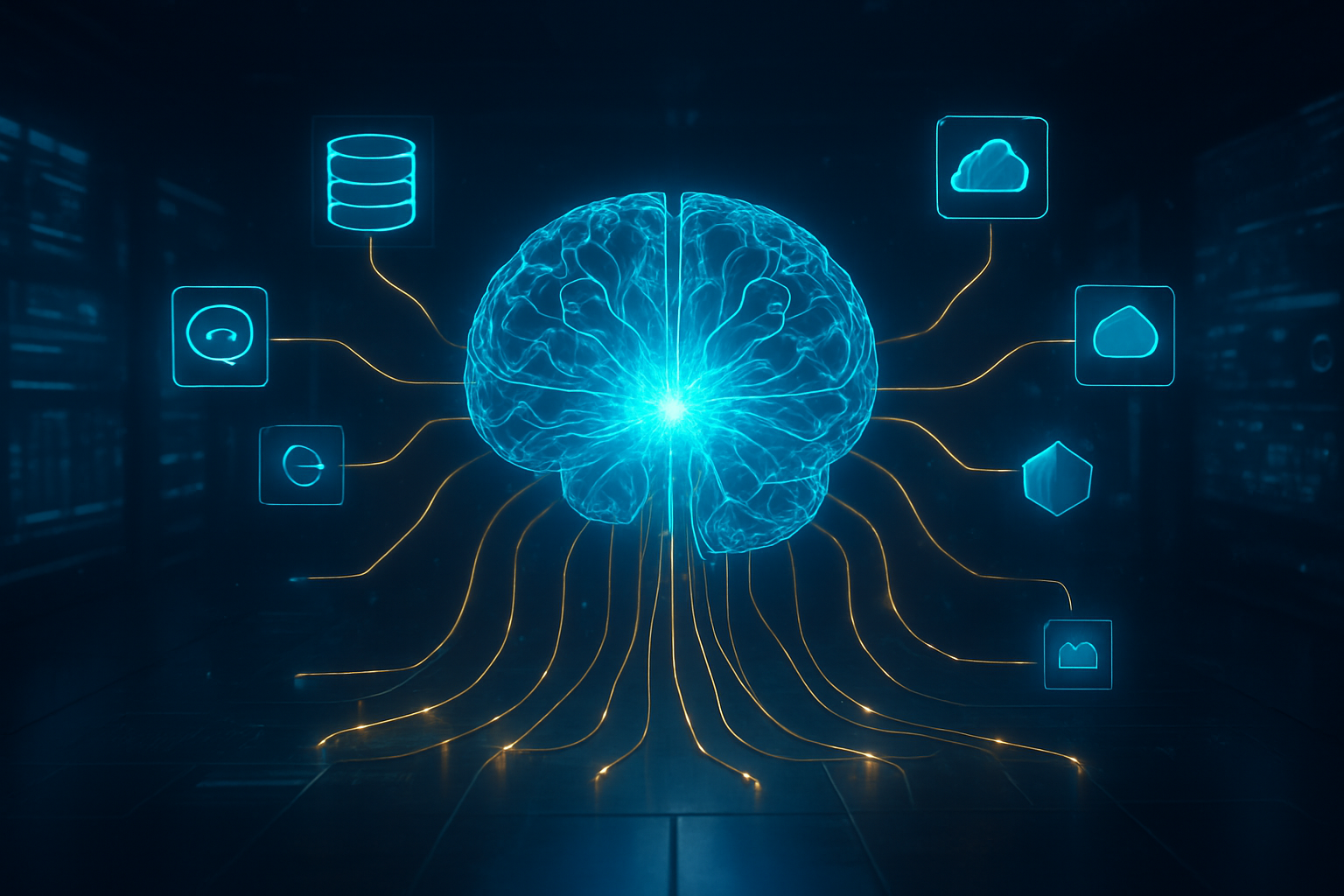
    The artificial intelligence industry has reached a pivotal milestone with the widespread adoption of the Model Context Protocol (MCP), an open standard that has effectively solved the "interoperability crisis" that once hindered enterprise AI deployment. Originally introduced by Anthropic in late 2024, the protocol has evolved into the universal language for AI agents, allowing them to move beyond isolated chat interfaces and seamlessly interact with complex data ecosystems including Slack, Google Drive, and GitHub. By January 2026, MCP has become the bedrock of the "Agentic Web," providing a secure, standardized bridge between Large Language Models (LLMs) and the proprietary data silos of the modern corporation.

    The significance of this development cannot be overstated; it marks the transition of AI from a curiosity capable of generating text to an active participant in business workflows. Before MCP, developers were forced to build bespoke, non-reusable integrations for every unique combination of AI model and data source—a logistical nightmare known as the "N x M" problem. Today, the protocol has reduced this complexity to a simple plug-and-play architecture, where a single MCP server can serve any compatible AI model, regardless of whether it is hosted by Anthropic, OpenAI, or Google.

    Technical Architecture: Bridging the Model-Data Divide

    Technically, MCP is a sophisticated framework built on a client-server architecture that utilizes JSON-RPC 2.0-based messaging. At its core, the protocol defines three primary primitives: Resources, which are URI-based data streams like a specific database row or a Slack thread; Tools, which are executable functions like "send an email" or "query SQL"; and Prompts, which act as pre-defined workflow templates that guide the AI through multi-step tasks. This structure allows AI applications to act as "hosts" that connect to various "servers"—lightweight programs that expose specific capabilities of an underlying software or database.

    Unlike previous attempts at AI integration, which often relied on rigid API wrappers or fragile "plugin" ecosystems, MCP supports both local communication via standard input/output (STDIO) and remote communication via HTTP with Server-Sent Events (SSE). This flexibility is what has allowed it to scale so rapidly. In late 2025, the protocol was further enhanced with the "MCP Apps" extension (SEP-1865), which introduced the ability for servers to deliver interactive UI components directly into an AI’s chat window. This means an AI can now present a user with a dynamic chart or a fillable form sourced directly from a secure enterprise database, allowing for a collaborative, "human-in-the-loop" experience.

    The initial reaction from the AI research community was overwhelmingly positive, as MCP addressed the fundamental limitation of "stale" training data. By providing a secure way for agents to query live data using the user's existing permissions, the protocol eliminated the need to constantly retrain models on new information. Industry experts have likened the protocol’s impact to that of the USB-C standard in hardware or the TCP/IP protocol for the internet—a universal interface that allows diverse systems to communicate without friction.

    Strategic Realignment: The Battle for the Enterprise Agent

    The shift toward MCP has reshaped the competitive landscape for tech giants. Microsoft (NASDAQ: MSFT) was an early and aggressive adopter, integrating native MCP support into Windows 11 and its Copilot Studio by mid-2025. This allowed Windows itself to function as an MCP server, giving AI agents unprecedented access to local file systems and window management. Similarly, Salesforce (NYSE: CRM) capitalized on the trend by launching official MCP servers for Slack and Agentforce, effectively turning every Slack channel into a structured data source that an AI agent can read from and write to with precision.

    Alphabet (NASDAQ: GOOGL) and Amazon (NASDAQ: AMZN) have also realigned their cloud strategies around this standard. Google’s Gemini models now utilize MCP to interface with Google Workspace, while Amazon Web Services has become the primary infrastructure provider for hosting the estimated 10,000+ public and private MCP servers now in existence. This standardization has significantly reduced "vendor lock-in." Enterprises can now swap their underlying LLM provider—moving from a Claude model to a GPT model, for instance—without having to rewrite the complex integration logic that connects their AI to their internal CRM or ERP systems.

    Startups have also found a fertile ground within the MCP ecosystem. Companies like Block (NYSE: SQ) and Cloudflare (NYSE: NET) have contributed heavily to the open-source libraries that make building MCP servers easier for small-scale developers. This has led to a democratic expansion of AI capabilities, where even niche software tools can become "AI-ready" overnight by deploying a simple MCP-compliant server.

    A Global Standard: The Agentic AI Foundation

    The broader significance of MCP lies in its governance. In December 2025, in a move to ensure the protocol remained a neutral industry standard, Anthropic donated MCP to the newly formed Agentic AI Foundation (AAIF) under the umbrella of the Linux Foundation. This move placed the future of AI interoperability in the hands of a consortium that includes Microsoft, OpenAI, and Meta, preventing any single entity from monopolizing the "connective tissue" of the AI economy.

    This milestone is frequently compared to the standardization of the web via HTML/HTTP. Just as the web flourished once browsers and servers could communicate through a common language, the "Agentic AI" era has truly begun now that models can interact with data in a predictable, secure manner. However, the rise of MCP has not been without concerns. Security experts have pointed out that while MCP respects existing user permissions, the sheer "autonomy" granted to agents through these connections increases the surface area for potential prompt injection attacks or data leakage if servers are not properly audited.

    Despite these challenges, the consensus is that MCP has moved the industry past the "chatbot" phase. We are no longer just talking to models; we are deploying agents that can navigate our digital world. The protocol provides a structured way to audit what an AI did, what data it accessed, and what tools it triggered, providing a level of transparency that was previously impossible with fragmented, ad-hoc integrations.

    Future Horizons: From Tools to Teammates

    Looking ahead to the remainder of 2026 and beyond, the next frontier for MCP is the development of "multi-agent orchestration." While current implementations typically involve one model connecting to many tools, the AAIF is currently working on standards that allow multiple AI agents—each with their own specialized MCP servers—to collaborate on complex projects. For example, a "Marketing Agent" might use its MCP connection to a creative suite to generate an ad, then pass that asset to a "Legal Agent" with an MCP connection to a compliance database for approval.

    Furthermore, we are seeing the emergence of "Personal MCPs," where individuals host their own private servers containing their emails, calendars, and personal files. This would allow a personal AI assistant to operate entirely on the user's local hardware while still possessing the contextual awareness of a cloud-based system. Challenges remain in the realm of latency and the standardization of "reasoning" between different agents, but experts predict that within two years, the majority of enterprise software will be shipped with a built-in MCP server as a standard feature.

    Conclusion: The Foundation of the AI Economy

    The Model Context Protocol has successfully transitioned from an ambitious proposal by Anthropic to the definitive standard for AI interoperability. By providing a universal interface for resources, tools, and prompts, it has solved the fragmentation problem that threatened to stall the enterprise AI revolution. The protocol’s adoption by giants like Microsoft, Salesforce, and Google, coupled with its governance by the Linux Foundation, ensures that it will remain a cornerstone of the industry for years to come.

    As we move into early 2026, the key takeaway is that the "walled gardens" of data are finally coming down—not through the compromise of security, but through the implementation of a better bridge. The impact of MCP is a testament to the power of open standards in driving technological progress. For businesses and developers, the message is clear: the era of the isolated AI is over, and the era of the integrated, agentic enterprise has officially arrived. Watch for an explosion of "agent-first" applications in the coming months as the full potential of this unified ecosystem begins to be realized.


    This content is intended for informational purposes only and represents analysis of current AI developments.

    TokenRing AI delivers enterprise-grade solutions for multi-agent AI workflow orchestration, AI-powered development tools, and seamless remote collaboration platforms.
    For more information, visit https://www.tokenring.ai/.
  • The Universal Language of Intelligence: How the Model Context Protocol (MCP) Unified the Global AI Agent Ecosystem

    The Universal Language of Intelligence: How the Model Context Protocol (MCP) Unified the Global AI Agent Ecosystem

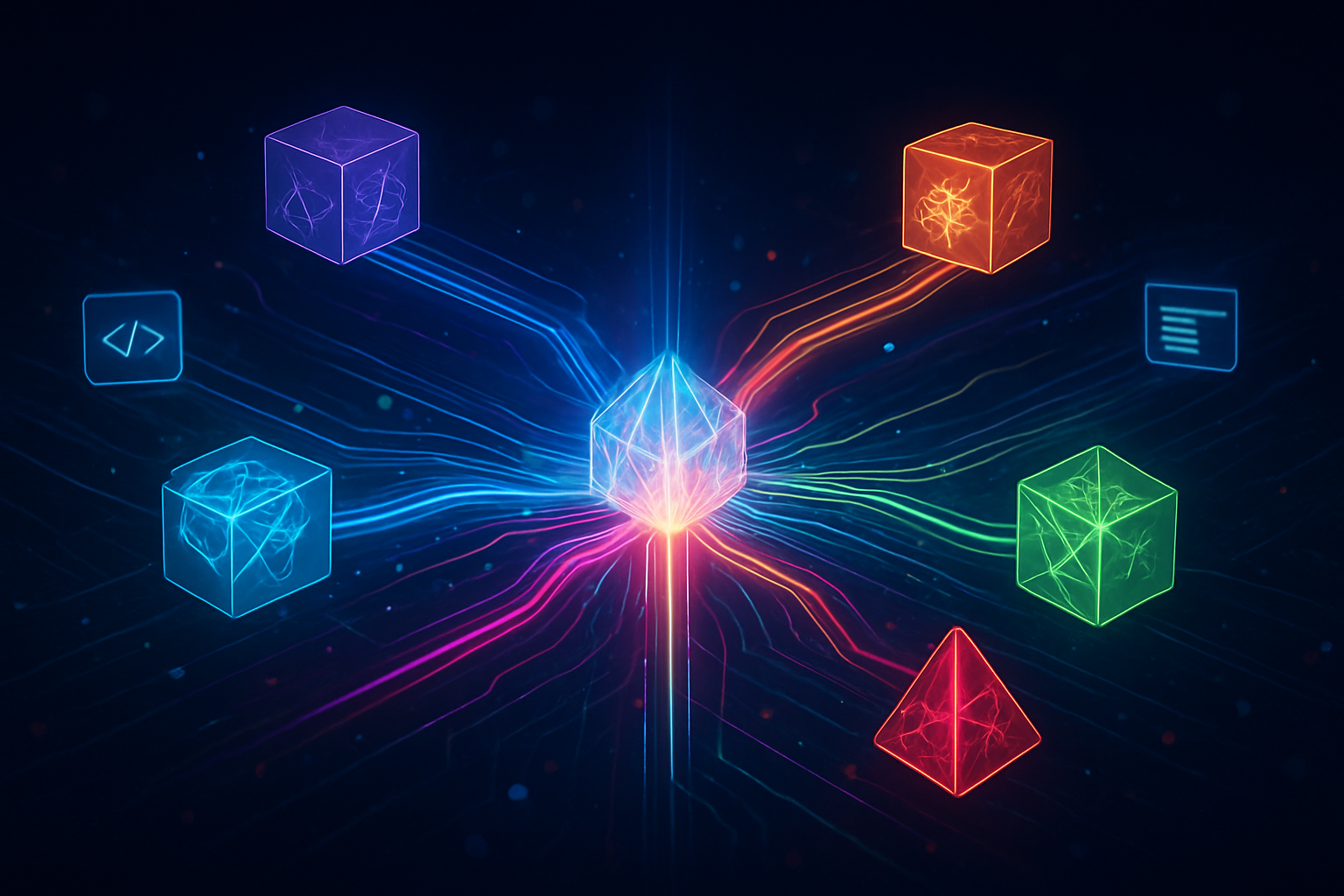
    As of January 2026, the artificial intelligence industry has reached a watershed moment. The "walled gardens" that once defined the early 2020s—where data stayed trapped in specific platforms and agents could only speak to a single provider’s model—have largely crumbled. This tectonic shift is driven by the Model Context Protocol (MCP), a standardized framework that has effectively become the "USB-C port for AI," allowing specialized agents from different providers to work together seamlessly across any data source or application.

    The significance of this development cannot be overstated. By providing a universal standard for how AI connects to the tools and information it needs, MCP has solved the industry's most persistent fragmentation problem. Today, a customer support agent running on a model from OpenAI can instantly leverage research tools built for Anthropic’s Claude, while simultaneously accessing live inventory data from a Microsoft (NASDAQ: MSFT) database, all without writing a single line of custom integration code. This interoperability has transformed AI from a series of isolated products into a fluid, interconnected ecosystem.

    Under the Hood: The Architecture of Universal Interoperability

    The Model Context Protocol is a client-server architecture built on top of the JSON-RPC 2.0 standard, designed to decouple the intelligence of the model from the data it consumes. At its core, MCP operates through three primary actors: the MCP Host (the user-facing application like an IDE or browser), the MCP Client (the interface within that application), and the MCP Server (the lightweight program that exposes specific data or functions). This differs fundamentally from previous approaches, where developers had to build "bespoke integrations" for every new combination of model and data source. Under the old regime, connecting five models to five databases required 25 different integrations; with MCP, it requires only one.

    The protocol defines four critical primitives: Resources, Tools, Prompts, and Sampling. Resources provide models with read-only access to files, database rows, or API outputs. Tools enable models to perform actions, such as sending an email or executing a code snippet. Prompts offer standardized templates for complex tasks, and the sophisticated "Sampling" feature allows an MCP server to request a completion from the Large Language Model (LLM) via the client—essentially enabling models to "call back" for more information or clarification. This recursive capability has allowed for the creation of nested agents that can handle multi-step, complex workflows that were previously impossible to automate reliably.

    The v1.0 stability release in late 2025 introduced groundbreaking features that have solidified MCP’s dominance in early 2026. This includes "Remote Transport" and OAuth 2.1 support, which transitioned the protocol from local computer connections to secure, cloud-hosted interactions. This update allows enterprise agents to access secure data across distributed networks using Role-Based Access Control (RBAC). Furthermore, the protocol now supports multi-modal context, enabling agents to interpret video, audio, and sensor data as first-class citizens. The AI research community has lauded these developments as the "TCP/IP moment" for the agentic web, moving AI from isolated curiosities to a unified, programmable layer of the internet.

    Initial reactions from industry experts have been overwhelmingly positive, with many noting that MCP has finally solved the "context window" problem not by making windows larger, but by making the data within them more structured and accessible. By standardizing how a model "asks" for what it doesn't know, the industry has seen a marked decrease in hallucinations and a significant increase in the reliability of autonomous agents.

    The Market Shift: From Proprietary Moats to Open Bridges

    The widespread adoption of MCP has rearranged the strategic map for tech giants and startups alike. Microsoft (NASDAQ: MSFT) and Alphabet Inc. (NASDAQ: GOOGL) have pivotally integrated MCP support into their core developer tools, Azure OpenAI and Vertex AI, respectively. By standardizing on MCP, these giants have reduced the friction for enterprise customers to migrate workloads, betting that their massive compute infrastructure and ecosystem scale will outweigh the loss of proprietary integration moats. Meanwhile, Amazon.com Inc. (NASDAQ: AMZN) has launched specialized "Strands Agents" via AWS, which are specifically optimized for MCP-compliant environments, signaling a move toward "infrastructure-as-a-service" for agents.

    Startups have perhaps benefited the most from this interoperability. Previously, a new AI agent company had to spend months building integrations for Salesforce (NYSE: CRM), Slack, and Jira before they could even prove their value to a customer. Now, by supporting a single MCP server, these startups can instantly access thousands of pre-existing data connectors. This has shifted the competitive landscape from "who has the best integrations" to "who has the best intelligence." Companies like Block Inc. (NYSE: SQ) have leaned into this by releasing open-source agent frameworks like "goose," which are powered entirely by MCP, allowing them to compete directly with established enterprise software by offering superior, agent-led experiences.

    However, this transition has not been without disruption. Traditional Integration-Platform-as-a-Service (iPaaS) providers have seen their business models challenged as the "glue" that connects applications is now being handled natively at the protocol level. Major enterprise players like SAP SE (NYSE: SAP) and IBM (NYSE: IBM) have responded by becoming first-class MCP server providers, ensuring their proprietary data is "agent-ready" rather than fighting the tide of interoperability. The strategic advantage has moved away from those who control the access points and toward those who provide the most reliable, context-aware intelligence.

    Market positioning is now defined by "protocol readiness." Large AI labs are no longer just competing on model benchmarks; they are competing on how effectively their models can navigate the vast web of MCP servers. For enterprise buyers, the risk of vendor lock-in has been significantly mitigated, as an MCP-compliant workflow can be moved from one model provider to another with minimal reconfiguration, forcing providers to compete on price, latency, and reasoning quality.

    Beyond Connectivity: The Global Context Layer

    In the broader AI landscape, MCP represents the transition from "Chatbot AI" to "Agentic AI." For the first time, we are seeing the emergence of a "Global Context Layer"—a digital commons where information and capabilities are discoverable and usable by any sufficiently intelligent machine. This mirrors the early days of the World Wide Web, where HTML and HTTP allowed any browser to view any website. MCP does for AI actions what HTTP did for text and images, creating a "Web of Tools" that agents can navigate autonomously to solve complex human problems.

    The impacts are profound, particularly in how we perceive data privacy and security. By standardizing the interface through which agents access data, the industry has also standardized the auditing of those agents. Human-in-the-Loop (HITL) features are now a native part of the MCP protocol, ensuring that high-stakes actions, such as financial transactions or sensitive data deletions, require a standardized authorization flow. This has addressed one of the primary concerns of the 2024-2025 period: the fear of "rogue" agents performing irreversible actions without oversight.

    Despite these advances, the protocol has sparked debates regarding "agentic drift" and the centralization of governance. Although Anthropic donated the protocol to the Agentic AI Foundation (AAIF) under the Linux Foundation in late 2025, a small group of tech giants still holds significant sway over the steering committee. Critics argue that as the world becomes increasingly dependent on MCP, the standards for how agents "see" and "act" in the world should be as transparent and democratized as possible to avoid a new form of digital hegemony.

    Comparisons to previous milestones, like the release of the first public APIs or the transition to mobile-first development, are common. However, the MCP breakthrough is unique because it standardizes the interaction between different types of intelligence. It is not just about moving data; it is about moving the capability to reason over that data, marking a fundamental shift in the architecture of the internet itself.

    The Autonomous Horizon: Intent and Physical Integration

    Looking ahead to the remainder of 2026 and 2027, the next frontier for MCP is the standardization of "Intent." While the current protocol excels at moving data and executing functions, experts predict the introduction of an "Intent Layer" that will allow agents to communicate their high-level goals and negotiate with one another more effectively. This would enable complex multi-agent economies where an agent representing a user could "hire" specialized agents from different providers to complete a task, automatically negotiating fees and permissions via MCP-based contracts.

    We are also on the cusp of seeing MCP move beyond the digital realm and into the physical world. Developers are already prototyping MCP servers for IoT devices and industrial robotics. In this near-future scenario, an AI agent could use MCP to "read" the telemetry from a factory floor and "invoke" a repair sequence on a robotic arm, regardless of the manufacturer. The challenge remains in ensuring low-latency communication for these real-time applications, an area where the upcoming v1.2 roadmap is expected to focus.

    The industry is also bracing for the "Headless Enterprise" shift. By 2027, many analysts predict that up to 50% of enterprise backend tasks will be handled by autonomous agents interacting via MCP servers, without any human interface required. This will necessitate new forms of monitoring and "agent-native" security protocols that go beyond traditional user logins, potentially using blockchain or other distributed ledgers to verify agent identity and intent.

    Conclusion: The Foundation of the Agentic Age

    The Model Context Protocol has fundamentally redefined the trajectory of artificial intelligence. By breaking down the silos between models and data, it has catalyzed a period of unprecedented innovation and interoperability. The shift from proprietary integrations to an open, standardized ecosystem has not only accelerated the deployment of AI agents but has also democratized access to powerful AI tools for developers and enterprises worldwide.

    In the history of AI, the emergence of MCP will likely be remembered as the moment when the industry grew up—moving from a collection of isolated, competing technologies to a cohesive, functional infrastructure. As we move further into 2026, the focus will shift from how agents connect to what they can achieve together. The "USB-C moment" for AI has arrived, and it has brought with it a new era of collaborative intelligence.

    For businesses and developers, the message is clear: the future of AI is not a single, all-powerful model, but a vast, interconnected web of specialized intelligences speaking the same language. In the coming months, watch for the expansion of MCP into vertical-specific standards, such as "MCP-Medical" or "MCP-Finance," which will further refine how AI agents operate in highly regulated and complex industries.


    This content is intended for informational purposes only and represents analysis of current AI developments.

    TokenRing AI delivers enterprise-grade solutions for multi-agent AI workflow orchestration, AI-powered development tools, and seamless remote collaboration platforms.
    For more information, visit https://www.tokenring.ai/.
  • The Great Unification: Model Context Protocol (MCP) Becomes the Universal ‘USB-C for AI’

    The Great Unification: Model Context Protocol (MCP) Becomes the Universal ‘USB-C for AI’

    As the calendar turns to 2026, the artificial intelligence landscape has reached a pivotal milestone that many are calling the "Kubernetes moment" for the agentic era. The Model Context Protocol (MCP), an open-source standard originally introduced by Anthropic in late 2024, has officially transitioned from a promising corporate initiative to the bedrock of the global AI ecosystem. Following the formal donation of the protocol to the Agentic AI Foundation (AAIF) under the Linux Foundation in December 2025, the industry has seen a tidal wave of adoption that effectively ends the era of proprietary, siloed AI integrations.

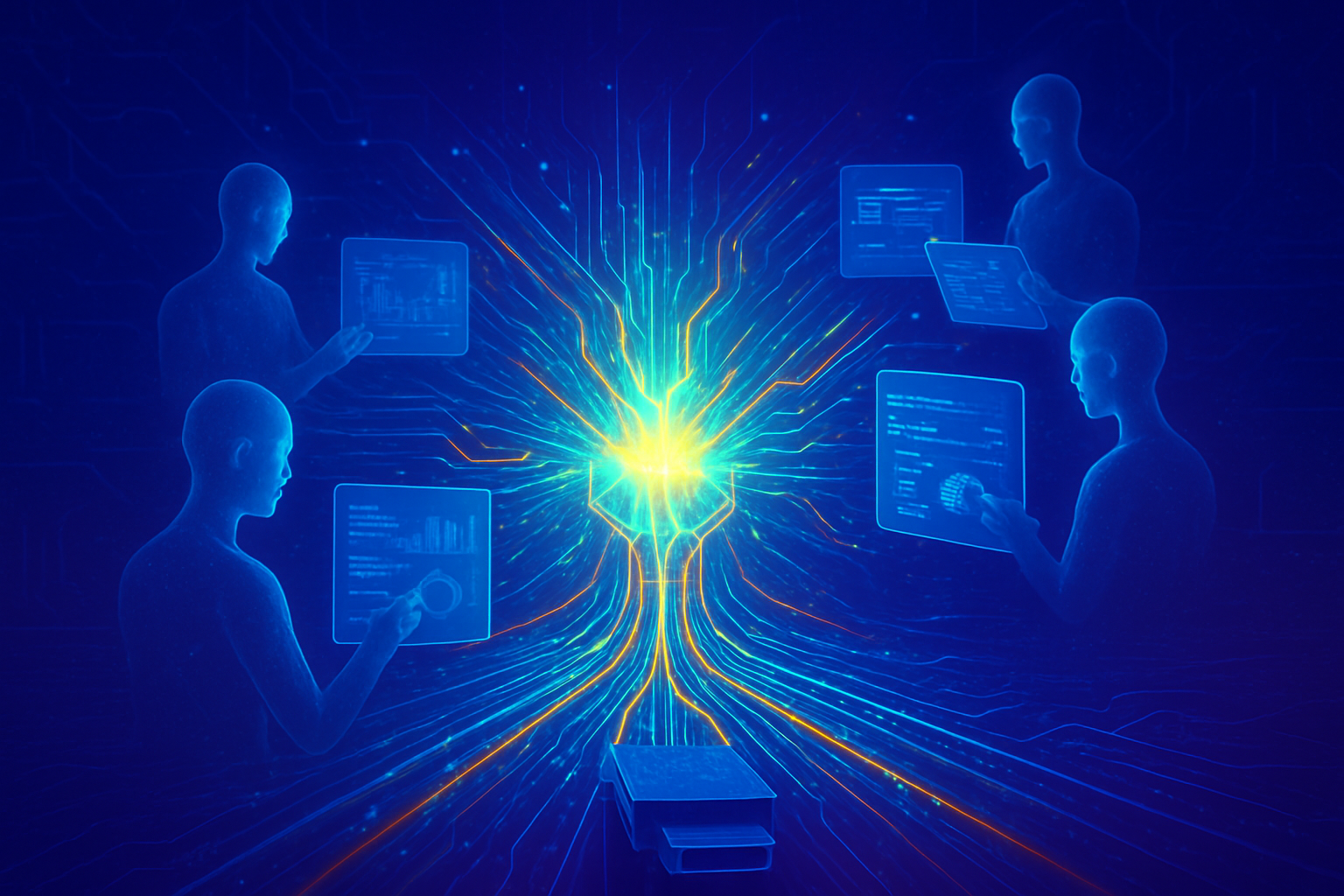
    This development marks the resolution of the fragmented "N×M" integration problem that plagued early AI development. Previously, every AI application had to build custom connectors for every data source or tool it intended to use. Today, with MCP serving as a universal interface, a single MCP server can provide data and functionality to any AI model—be it from OpenAI, Google (NASDAQ: GOOGL), or Microsoft (NASDAQ: MSFT)—instantly and securely. This shift has dramatically reduced developer friction, enabling a new generation of interoperable AI agents that can traverse diverse enterprise environments with unprecedented ease.

    Standardizing the Agentic Interface

    Technically, the Model Context Protocol is built on a client-server architecture utilizing JSON-RPC 2.0 for lightweight, standardized messaging. It provides a structured way for AI models (the "hosts") to interact with external systems through three core primitives: Resources, Tools, and Prompts. Resources allow models to pull in read-only data like database records or live documentation; Tools enable models to perform actions such as executing code or sending messages; and Prompts provide the templates that guide how a model should interact with these capabilities. This standardized approach replaces the thousands of bespoke API wrappers that developers previously had to maintain.

    One of the most significant technical advancements integrated into the protocol in late 2025 was the "Elicitation" feature. This allows MCP servers to "ask back"—enabling a tool to pause execution and request missing information or user clarification directly through the AI agent. Furthermore, the introduction of asynchronous task-based workflows has allowed agents to trigger long-running processes, such as complex data migrations, and check back on their status later. This evolution has moved AI from simple chat interfaces to sophisticated, multi-step operational entities.

    The reaction from the research community has been overwhelmingly positive. Experts note that by decoupling the model from the data source, MCP allows for "Context Engineering" at scale. Instead of stuffing massive amounts of irrelevant data into a model's context window, agents can now surgically retrieve exactly what they need at the moment of execution. This has not only improved the accuracy of AI outputs but has also significantly reduced the latency and costs associated with long-context processing.

    A New Competitive Landscape for Tech Giants

    The widespread adoption of MCP has forced a strategic realignment among the world’s largest technology firms. Microsoft (NASDAQ: MSFT) has been among the most aggressive, integrating MCP as a first-class standard across Windows 11, GitHub, and its Azure AI Foundry. By positioning itself as "open-by-design," Microsoft is attempting to capture the developer market by making its ecosystem the easiest place to build and deploy interoperable agents. Similarly, Google (NASDAQ: GOOGL) has integrated native MCP support into its Gemini models and SDKs, ensuring that its powerful multimodal capabilities can seamlessly plug into existing enterprise data.

    For major software providers like Salesforce (NYSE: CRM), SAP (NYSE: SAP), and ServiceNow (NYSE: NOW), the move to MCP represents a massive strategic advantage. These companies have released official MCP servers for their respective platforms, effectively turning their vast repositories of enterprise data into "plug-and-play" context for any AI agent. This eliminates the need for these companies to build their own proprietary LLM ecosystems to compete with the likes of OpenAI; instead, they can focus on being the premium data and tool providers for the entire AI industry.

    However, the shift also presents challenges for some. Startups that previously built their value proposition solely on "connectors" for AI are finding their moats evaporated by the universal standard. The competitive focus has shifted from how a model connects to data to what it does with that data. Market positioning is now defined by the quality of the MCP servers provided and the intelligence of the agents consuming them, rather than the plumbing that connects the two.

    The Global Significance of Interoperability

    The rise of MCP is more than just a technical convenience; it represents a fundamental shift in the AI landscape away from walled gardens and toward a collaborative, modular future. By standardizing how agents communicate, the industry is avoiding the fragmentation that often hinders early-stage technologies. This interoperability is essential for the vision of "Agentic AI"—autonomous systems that can work across different platforms to complete complex goals without human intervention at every step.

    Comparisons to previous milestones, such as the adoption of HTTP for the web or SQL for databases, are becoming common. Just as those standards allowed for the explosion of the internet and modern data management, MCP is providing the "universal plumbing" for the intelligence age. This has significant implications for data privacy and security as well. Because MCP provides a standardized way to handle permissions and data access, enterprises can implement more robust governance frameworks that apply to all AI models interacting with their data, rather than managing security on a model-by-model basis.

    There are, of course, concerns. As AI agents become more autonomous and capable of interacting with a wider array of tools, the potential for unintended consequences increases. The industry is currently grappling with how to ensure that a standardized protocol doesn't also become a standardized vector for prompt injection or other security vulnerabilities. The transition to foundation-led governance under the Linux Foundation is seen as a critical step in addressing these safety and security challenges through community-driven best practices.

    Looking Ahead: The W3C and the Future of Identity

    The near-term roadmap for MCP is focused on even deeper integration and more robust standards. In April 2026, the World Wide Web Consortium (W3C) is scheduled to begin formal discussions regarding "MCP-Identity." This initiative aims to standardize how AI agents authenticate themselves across the web, essentially giving agents their own digital passports. This would allow an agent to prove its identity, its owner's permissions, and its safety certifications as it moves between different MCP-compliant servers.

    Experts predict that the next phase of development will involve "Server-to-Server" MCP communication, where different data sources can negotiate with each other on behalf of an agent to optimize data retrieval. We are also likely to see the emergence of specialized MCP "marketplaces" where developers can share and monetize sophisticated tools and data connectors. The challenge remains in ensuring that the protocol remains lightweight enough for edge devices while powerful enough for massive enterprise clusters.

    Conclusion: A Foundation for the Agentic Era

    The adoption of the Model Context Protocol as a global industry standard is a watershed moment for artificial intelligence. By solving the interoperability crisis, the industry has cleared the path for AI agents to become truly useful, ubiquitous tools in both personal and professional settings. The transition from a proprietary Anthropic tool to a community-governed standard has ensured that the future of AI will be built on a foundation of openness and collaboration.

    As we move further into 2026, the success of MCP will be measured by its invisibility. Like the protocols that power the internet, the most successful version of MCP is one that developers and users take for granted. For now, the tech world should watch for the upcoming W3C identity standards and the continued growth of the MCP server registry, which has already surpassed 10,000 public integrations. The era of the siloed AI is over; the era of the interconnected agent has begun.


    This content is intended for informational purposes only and represents analysis of current AI developments.

    TokenRing AI delivers enterprise-grade solutions for multi-agent AI workflow orchestration, AI-powered development tools, and seamless remote collaboration platforms.
    For more information, visit https://www.tokenring.ai/.
  • Anthropic Shatters AI Walled Gardens with Launch of ‘Agent Skills’ Open Standard

    Anthropic Shatters AI Walled Gardens with Launch of ‘Agent Skills’ Open Standard

    In a move that signals a paradigm shift for the artificial intelligence industry, Anthropic (Private) officially released its "Agent Skills" framework as an open standard on December 18, 2025. By transitioning what was once a proprietary feature of the Claude ecosystem into a universal protocol, Anthropic aims to establish a common language for "procedural knowledge"— the specialized, step-by-step instructions that allow AI agents to perform complex real-world tasks. This strategic pivot, coming just weeks before the close of 2025, represents a direct challenge to the "walled garden" approach of competitors, promising a future where AI agents are fully interoperable across different platforms, models, and development environments.

    The launch of the Agent Skills open standard is being hailed as the "Android moment" for the agentic AI era. By donating the standard to the Agentic AI Foundation (AAIF)—a Linux Foundation-backed organization co-founded by Anthropic, OpenAI (Private), and Block (NYSE: SQ)—Anthropic is betting that the path to enterprise dominance lies in transparency and portability rather than proprietary lock-in. This development completes a "dual-stack" of open AI standards, following the earlier success of the Model Context Protocol (MCP), and provides the industry with a unified blueprint for how agents should connect to data and execute complex workflows.

    Modular Architecture and Technical Specifications

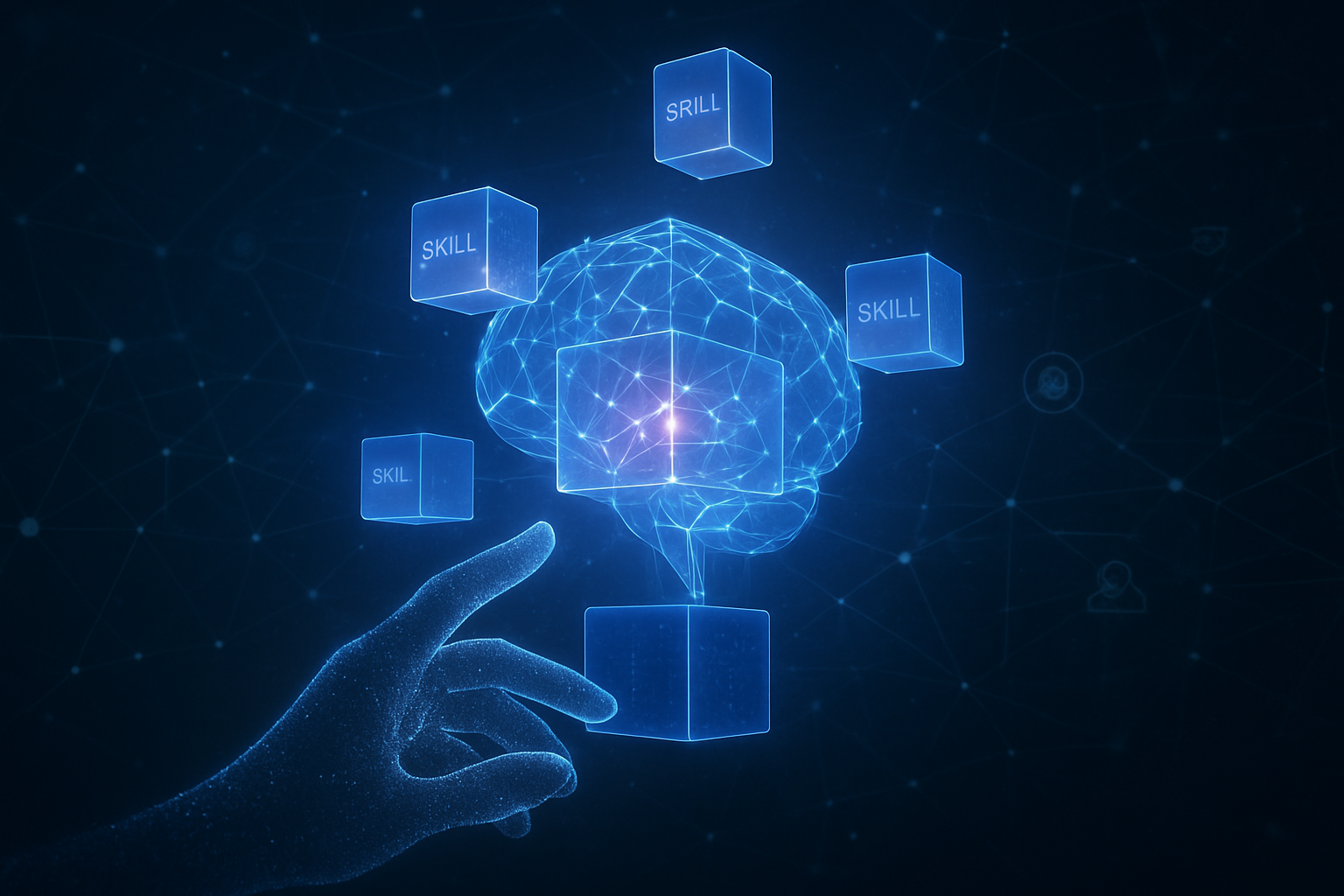
    At the heart of the Agent Skills standard is a modular framework known as "Progressive Disclosure." This architecture solves a fundamental technical hurdle in AI development: the "context window bloat" that occurs when an agent is forced to hold too many instructions at once. Instead of stuffing thousands of lines of code and documentation into a model's system prompt, Agent Skills allows for a three-tiered loading process. Level 1 involves lightweight metadata that acts as a "hook," allowing the agent to recognize when a specific skill is needed. Level 2 triggers the dynamic loading of a SKILL.md file—a hybrid of YAML metadata and Markdown instructions—into the active context. Finally, Level 3 enables the execution of deterministic scripts (Python or Javascript) and the referencing of external resources only when required.

    This approach differs significantly from previous "Custom GPT" or "Plugin" models, which often relied on opaque, platform-specific backends. The Agent Skills standard utilizes a self-contained filesystem directory structure, making a skill as portable as a text file. Technical specifications require a secure, sandboxed code execution environment where scripts run separately from the model’s main reasoning loop. This ensures that even if a model "hallucinates," the actual execution of the task remains grounded in deterministic code. The AI research community has reacted with cautious optimism, noting that while the standard simplifies agent development, the requirement for robust sandboxing remains a significant infrastructure challenge for smaller providers.

    Strategic Impact on the Tech Ecosystem

    The strategic implications for the tech landscape are profound, particularly for giants like Microsoft (NASDAQ: MSFT) and Alphabet (NASDAQ: GOOGL). By making Agent Skills an open standard, Anthropic is effectively commoditizing the "skills" layer of the AI stack. This benefits startups and enterprise developers who can now "build once" and deploy their agents across Claude, ChatGPT, or Microsoft Copilot without rewriting their core logic. Microsoft has already announced deep integration of the standard into VS Code and GitHub, while enterprise mainstays like Atlassian (NASDAQ: TEAM) and Salesforce (NYSE: CRM) have begun transitioning their internal agentic workflows to the new framework to avoid vendor lock-in.

    For major AI labs, the launch creates a competitive fork in the road. While OpenAI has historically favored a more controlled ecosystem with its GPT Store, the industry-wide pressure for interoperability has forced a defensive adoption of the Agent Skills standard. Market analysts suggest that Anthropic’s enterprise market share has surged in late 2025 precisely because of this "open-first" philosophy. Companies that were previously hesitant to invest heavily in a single model's proprietary ecosystem are now viewing the Agent Skills framework as a safe, future-proof foundation for their AI investments. This disruption is likely to devalue proprietary "agent marketplaces" in favor of open-source skill repositories.

    Global Significance and the Rise of the Agentic Web

    Beyond the technical and corporate maneuvering, the Agent Skills standard represents a significant milestone in the evolution of the "Agentic Web." We are moving away from an era where users interact with standalone chatbots and toward an ecosystem of interconnected agents that can pass tasks to one another across different platforms. This mirrors the early days of the internet when protocols like HTTP and SMTP broke down the barriers between isolated computer networks. However, this shift is not without its concerns. The ease of sharing "procedural knowledge" raises questions about intellectual property—if a company develops a highly efficient "skill" for financial auditing, the open nature of the standard may make it harder to protect that trade secret.

    Furthermore, the widespread adoption of standardized agent execution raises the stakes for AI safety and security. While the standard mandates sandboxing and restricts network access for scripts, the potential for "prompt injection" to trigger unintended skill execution remains a primary concern for cybersecurity experts. Comparisons are being drawn to the "DLL Hell" of early Windows computing; as agents begin to rely on dozens of modular skills from different authors, the complexity of ensuring those skills don't conflict or create security vulnerabilities grows exponentially. Despite these hurdles, the consensus among industry leaders is that standardization is the only viable path toward truly autonomous AI systems.

    Future Developments and Use Cases

    Looking ahead, the near-term focus will likely shift toward the creation of "Skill Registries"—centralized or decentralized hubs where developers can publish and version-control their Agent Skills. We can expect to see the emergence of specialized "Skill-as-a-Service" providers who focus solely on refining the procedural knowledge for niche industries like legal discovery, molecular biology, or high-frequency trading. As models become more capable of self-correction, the next frontier will be "Self-Synthesizing Skills," where an AI agent can observe a human performing a task and automatically generate the SKILL.md and associated scripts to replicate it.

    The long-term challenge remains the governance of these standards. While the Agentic AI Foundation provides a neutral ground for collaboration, the interests of the "Big Tech" sponsors may eventually clash with those of the open-source community. Experts predict that by mid-2026, we will see the first major "Skill Interoperability" lawsuits, which will further define the legal boundaries of AI-generated workflows. For now, the focus remains on adoption, with the goal of making AI agents as ubiquitous and easy to deploy as a standard web application.

    Conclusion: A New Era of Interoperable Intelligence

    Anthropic's launch of the Agent Skills open standard marks the end of the "Model Wars" and the beginning of the "Standardization Wars." By prioritizing interoperability over proprietary control, Anthropic has fundamentally altered the trajectory of AI development, forcing the industry to move toward a more transparent and modular future. The key takeaway for businesses and developers is clear: the value of AI is shifting from the raw power of the model to the portability and precision of the procedural knowledge it can execute.

    In the coming weeks, the industry will be watching closely to see how quickly the "Skill" ecosystem matures. With major players like Amazon (NASDAQ: AMZN) and Meta (NASDAQ: META) expected to announce their own integrations with the standard in early 2026, the era of the walled garden is rapidly coming to a close. As we enter the new year, the Agent Skills framework stands as a testament to the idea that for AI to reach its full potential, it must first learn to speak a common language.


    This content is intended for informational purposes only and represents analysis of current AI developments.

    TokenRing AI delivers enterprise-grade solutions for multi-agent AI workflow orchestration, AI-powered development tools, and seamless remote collaboration platforms.
    For more information, visit https://www.tokenring.ai/.
  • Anthropic Launches “Agent Skills” Open Standard: The New Universal Language for AI Interoperability

    Anthropic Launches “Agent Skills” Open Standard: The New Universal Language for AI Interoperability

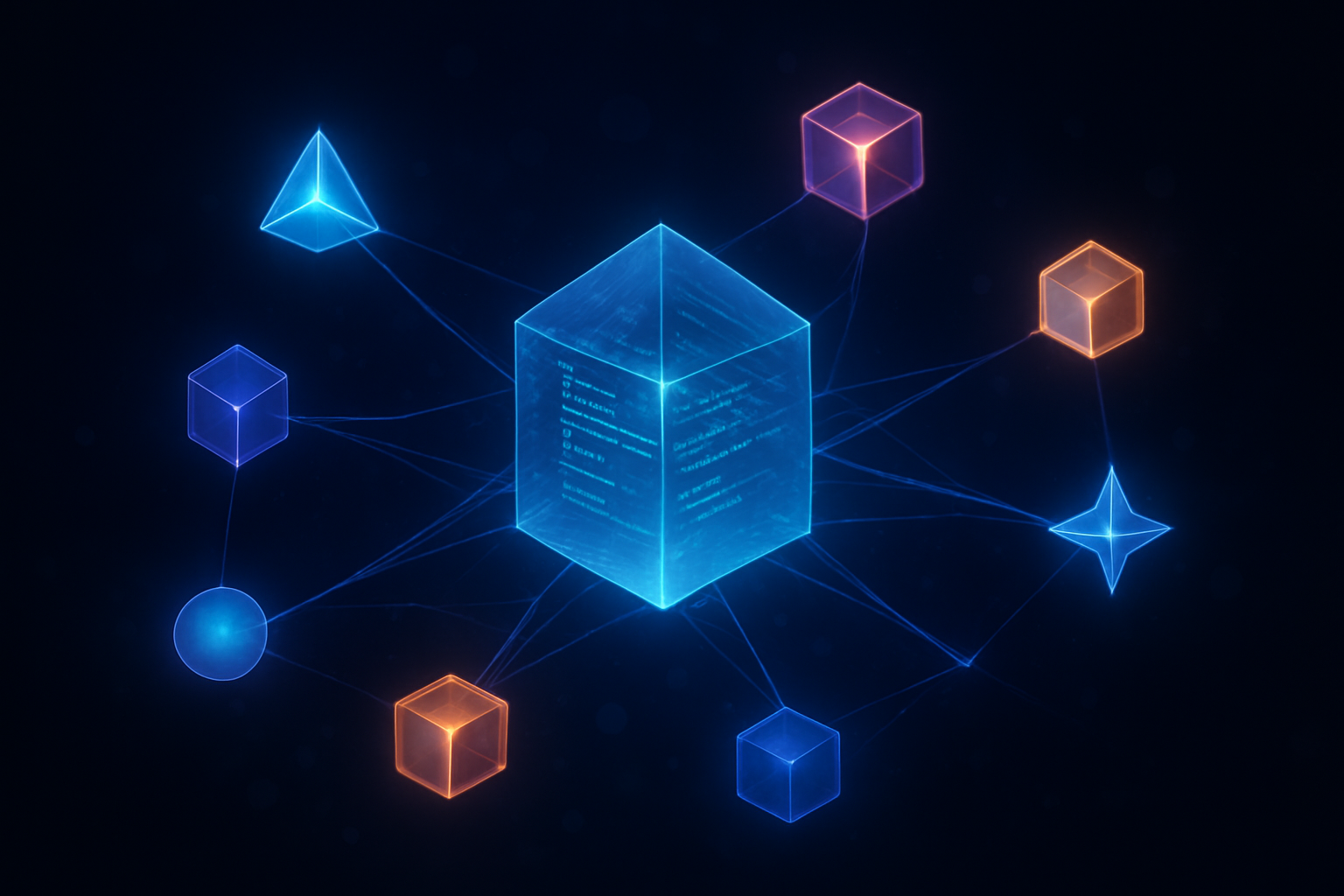
    In a move that industry analysts are calling the most significant step toward a unified artificial intelligence ecosystem to date, Anthropic has officially launched its "Agent Skills" open standard. Released in December 2025, this protocol establishes a universal language for AI agents, allowing them to communicate, share specialized capabilities, and collaborate across different platforms and model providers. By donating the standard to the newly formed Agentic AI Foundation (AAIF)—a Linux Foundation-backed alliance—Anthropic is effectively attempting to end the "walled garden" era of AI development.

    The immediate significance of this announcement cannot be overstated. For the first time, a specialized workflow designed for a Claude-based agent can be seamlessly understood and executed by an OpenAI (Private) ChatGPT instance or a Microsoft (NASDAQ: MSFT) Copilot. This shift moves the industry away from a fragmented landscape of proprietary "GPTs" and "Actions" toward a cohesive, interoperable "Agentic Web" where the value lies not just in the underlying model, but in the portable skills that agents can carry with them across the digital world.

    The Architecture of Interoperability: How "Agent Skills" Works

    Technically, the Agent Skills standard is built on the principle of "Progressive Disclosure," a design philosophy intended to solve the "context window bloat" that plagues modern AI agents. Rather than forcing a model to ingest thousands of lines of instructions for every possible task, the standard uses a directory-based format centered around a SKILL.md file. This file combines YAML metadata for technical specifications with Markdown for procedural instructions. When an agent encounters a task, it navigates three levels of disclosure: first scanning metadata to see if a skill is relevant, then loading specific instructions, and finally accessing external scripts or resources only when execution is required.

    This approach differs fundamentally from previous attempts at agent orchestration, which often relied on rigid API definitions or model-specific fine-tuning. By decoupling an agent’s capabilities from its core architecture, Agent Skills allows for "Universal Portability." A skill authored for a creative task in Figma can be stored in a GitHub (owned by Microsoft (NASDAQ: MSFT)) repository and utilized by any agent with the appropriate permissions. The standard also introduces an experimental allowed-tools field, which provides a security sandbox by explicitly listing which system-level tools—such as Python or Bash—a specific skill is permitted to invoke.

    Initial reactions from the AI research community have been overwhelmingly positive. Researchers have praised the standard's simplicity, noting that it leverages existing web standards like Markdown and YAML rather than inventing a complex new syntax. "We are finally moving from agents that are 'smarter' to agents that are 'more useful,'" noted one lead researcher at the AAIF launch event. The consensus is that by standardizing how skills are packaged, the industry can finally scale multi-agent systems that work together in real-time without manual "hand-holding" by human developers.

    A Strategic Shift: From Model Wars to Ecosystem Dominance

    The launch of Agent Skills marks a pivotal moment for the major players in the AI race. For Anthropic—backed by significant investments from Amazon (NASDAQ: AMZN) and Alphabet (NASDAQ: GOOGL)—this is a bid to become the "infrastructure layer" of the AI era. By open-sourcing the standard, Anthropic is positioning itself as the neutral ground where all agents can meet. This strategy mirrors the early days of the internet, where companies that defined the protocols (like TCP/IP or HTML) ultimately wielded more long-term influence than those who merely built the first browsers.

    Tech giants are already lining up to support the standard. OpenAI has reportedly begun testing a "Skills Editor" that allows users to export their Custom GPTs into the open Agent Skills format, while Microsoft has integrated the protocol directly into VS Code. This allows developer teams to store "Golden Skills"—verified, secure workflows—directly within their codebases. For enterprise software leaders like Salesforce (NYSE: CRM) and Atlassian (NASDAQ: TEAM), the standard provides a way to make their proprietary data and workflows accessible to any agent an enterprise chooses to deploy, reducing vendor lock-in and increasing the utility of their platforms.

    However, the competitive implications are complex. While the standard promotes collaboration, it also levels the playing field, making it harder for companies to lock users into a specific ecosystem based solely on unique features. Startups in the "Agentic Workflow" space stand to benefit the most, as they can now build specialized skills that are instantly compatible with the massive user bases of the larger model providers. The focus is shifting from who has the largest parameter count to who has the most robust and secure library of "Agent Skills."

    The Wider Significance: Building the Foundation of the Agentic Web

    In the broader AI landscape, the Agent Skills standard is being viewed as the "USB-C moment" for artificial intelligence. Just as a universal charging standard simplified the hardware world, Agent Skills aims to simplify the software world by ensuring that intelligence is modular and transferable. This fits into a 2025 trend where "agentic workflows" have surpassed "chatbot interfaces" as the primary way businesses interact with AI. The standard provides the necessary plumbing for a future where agents from different companies can "hand off" tasks to one another—for example, a travel agent AI booking a flight and then handing the itinerary to a calendar agent to manage the schedule.

    Despite the excitement, the move has raised significant concerns regarding security and safety. If an agent can "download" a new skill on the fly, the potential for malicious skills to be introduced into a workflow is a real threat. The AAIF is currently working on a "Skill Verification" system, similar to a digital signature for software, to ensure that skills come from trusted sources. Furthermore, the ease of cross-platform collaboration raises questions about data privacy: if a Microsoft agent uses an Anthropic skill to process data on a Google server, who is responsible for the security of that data?

    Comparisons are already being made to the launch of the Model Context Protocol (MCP) in late 2024. While MCP focused on how agents connect to data sources, Agent Skills focuses on how they execute tasks. Together, these two standards represent the "dual-stack" of the modern AI era. This development signals that the industry is maturing, moving past the "wow factor" of generative text and into the practicalities of autonomous, cross-functional labor.

    The Road Ahead: What’s Next for AI Agents?

    Looking forward, the next 12 to 18 months will likely see a surge in "Skill Marketplaces." Companies like Zapier and Notion are already preparing to launch directories of pre-certified skills that can be "installed" into any compliant agent. We can expect to see the rise of "Composable AI," where complex enterprise processes—like legal discovery or supply chain management—are broken down into dozens of small, interoperable skills that can be updated and swapped out independently of the underlying model.

    The next major challenge will be "Cross-Agent Arbitration." When two agents from different providers collaborate on a task, how do they decide which one takes the lead, and how is the "compute cost" shared between them? Experts predict that 2026 will be the year of "Agent Economics," where protocols are developed to handle the micro-transactions and resource allocation required for a multi-agent economy to function at scale.

    A New Chapter in AI History

    The release of the Agent Skills open standard by Anthropic is more than just a technical update; it is a declaration of interdependence in an industry that has, until now, been defined by fierce competition and proprietary silos. By creating a common framework for what an agent can do, rather than just what it can say, Anthropic and its partners in the AAIF have laid the groundwork for a more capable, flexible, and integrated digital future.

    As we move into 2026, the success of this standard will depend on adoption and the rigorous enforcement of safety protocols. However, the initial momentum suggests that the "Agentic Web" is no longer a theoretical concept but a rapidly manifesting reality. For businesses and developers, the message is clear: the era of the isolated AI is over. The era of the collaborative agent has begun.


    This content is intended for informational purposes only and represents analysis of current AI developments.

    TokenRing AI delivers enterprise-grade solutions for multi-agent AI workflow orchestration, AI-powered development tools, and seamless remote collaboration platforms.
    For more information, visit https://www.tokenring.ai/.