
Tag: Investment

  • Tech Titans Tumble: Volatility Grips AI Stocks as Market Reevaluates Valuations and Fed Policy

    Tech Titans Tumble: Volatility Grips AI Stocks as Market Reevaluates Valuations and Fed Policy

    November 14, 2025 – The technology sector, a powerhouse of market gains throughout much of 2025, is currently navigating a period of intense volatility and a significant sell-off. As of mid-November, investor sentiment has shifted, driven primarily by mounting concerns over what many perceive as stretched valuations in artificial intelligence (AI) stocks and an evolving outlook on Federal Reserve interest rate policies. This recent downturn signals a crucial reevaluation of risk and a defensive pivot in market strategy, even as the sector maintains impressive year-to-date growth.

    Despite the recent turbulence, the immediate significance of this market movement is profound. It marks a clear defensive shift in investor sentiment, prompting a comprehensive reevaluation of risk appetites and the sustainability of recent growth trajectories, particularly within high-valuation tech assets. The market is bracing for continued volatility in the short term, underscoring a period of caution and strategic recalibration for both institutional and individual investors.

    A Deep Dive into the Tech Sector's Rollercoaster Ride

    The current market landscape sees major indices, including the tech-heavy Nasdaq Composite, the broader S&P 500, and the Dow Jones Industrial Average, all experiencing notable declines. The Morningstar US Technology Index, a key barometer for the sector, plummeted 5.6% from its peak on October 29, marking its most significant weekly drop since April. Similarly, the Nasdaq Composite underwent a 4.8% retracement from its recent high, highlighting the widespread nature of the sell-off across technology-focused investments.

    Despite this recent weakness, the overarching performance of tech stocks for the year remains robust. The Morningstar US Technology Index boasts a 22% increase since the beginning of 2025, while the Nasdaq 100 has also climbed approximately 22%, largely propelled by an unwavering optimism surrounding the transformative potential of artificial intelligence. The S&P 500 has posted a respectable year-to-date return of about 15.80%, and the Nasdaq Composite surged with a 19.8% year-to-date gain as of November 13, 2025. This dichotomy between strong annual performance and recent sharp declines underscores the sector's current state of flux.

    Market volatility has surged, with the VIX index, often referred to as the market's 'fear gauge,' increasing by approximately 10%. Tech stocks, known for their sensitivity to market fluctuations, have become prime targets for short sellers, with short interest reaching year-to-date highs in several tech subsectors. This growing skepticism signals a collective unease about current valuations and future growth prospects. Individual tech giants have not been immune; companies like Nvidia (NASDAQ: NVDA), Advanced Micro Devices (NASDAQ: AMD), Palantir Technologies (NYSE: PLTR), Tesla (NASDAQ: TSLA), Broadcom (NASDAQ: AVGO), Alphabet (NASDAQ: GOOGL), Amazon (NASDAQ: AMZN), Oracle (NYSE: ORCL), and Microsoft (NASDAQ: MSFT) have all seen shares decline in early to mid-November. Notably, Nvidia, which briefly became the first company to reach a staggering $5 trillion valuation in late October, experienced a sharp 9.1% fall in its share price in just one week. In contrast, some companies such as ServiceNow (NYSE: NOW) and Shopify (NYSE: SHOP) have reported robust revenue and earnings growth, attributed to strong demand for their AI-enabled solutions and operational efficiencies.

    The current market dynamics are influenced by several critical factors. The AI-fueled boom has been a primary driver of tech stock growth throughout 2025, with significant corporate investments in AI infrastructure by industry titans. However, concerns about "sky-high valuations" and the sustainability of the AI rally are now prompting investors to reassess their risk exposure. A major catalyst for current market instability is the shifting expectations regarding Federal Reserve interest rate cuts. The probability of a December 2025 rate cut has significantly dropped, following cautious remarks from Fed officials and mixed economic signals. The prospect of "higher for longer" interest rates dampens enthusiasm for high-growth tech stocks, as their future earnings are discounted more heavily in such an environment. Investors are also closely monitoring mixed economic indicators, including a softening U.S. labor market, which adds to the Fed's cautious stance. While many leading tech firms reported solid third-quarter earnings, these positive results have often been insufficient to alleviate investor worries about future returns given already elevated valuations. The upcoming earnings report from Nvidia (NASDAQ: NVDA) is particularly anticipated as a key test of continued optimism in the AI sector.

    Shifting Sands: How Volatility Reshapes the AI Landscape for Giants and Startups

    The current market volatility is profoundly reshaping the competitive landscape for AI companies, from established tech giants to burgeoning startups. An "infrastructure arms race" is in full swing, with massive capital flowing into foundational AI layers and specialized applications. Tech behemoths such as Nvidia (NASDAQ: NVDA), Microsoft (NASDAQ: MSFT), Alphabet (NASDAQ: GOOGL), and Amazon (NASDAQ: AMZN) are heavily investing in AI infrastructure, including advanced data centers and cutting-edge chips. Nvidia, with its dominant position in GPU production and its ubiquitous CUDA software platform, remains a critical enabler for AI training and inference, further solidifying the market power of a select few "Magnificent Seven" companies. This concentration, while driving innovation, can pose significant challenges for smaller players striving to compete.

    However, this intense competition also acts as a powerful catalyst for innovation. Startups are increasingly focusing on AI optimization, specialized workloads, and next-generation agentic AI applications, attracting substantial investor interest. The market is witnessing a crucial shift, moving beyond mere hype to a demand for demonstrable Return on Investment (ROI), compelling companies to deliver tangible value. While tech giants lead with their vast resources, the current volatility and elevated valuations introduce elements of disruption. Concerns about a potential "AI bubble," where valuations may be disconnected from underlying profitability, are growing. Companies like C3.ai (NYSE: AI) have experienced significant stock declines, reflecting a certain fragility in the AI sector and a reassessment of commercial viability. This heightened scrutiny forces all companies to prioritize solid fundamentals, earnings, and transparent business models over speculative growth.

    Despite the turbulence, the AI boom presents distinct strategic advantages for well-positioned entities. Tech giants, armed with robust balance sheets and substantial cash flow, can fund massive AI expenditures, enabling them to acquire top talent, invest heavily in R&D, and build extensive AI infrastructure. This financial muscle allows them to sustain years of losses while aggressively pursuing market dominance; for instance, Alphabet (NASDAQ: GOOGL) is leveraging its lucrative advertising business to secure major AI cloud deals. For startups, while funding for nascent projects is gradually increasing, some AI ventures are securing rounds of unprecedented scale. The current market environment, characterized by displaced talent possessing critical AI-relevant skills and an urgent market demand for innovative AI solutions, creates fertile ground for new company formation. Startups that can demonstrate real commercial traction and maintain a strong focus on fundamentals are proving resilient amidst the volatility.

    The funding and investment landscape reflects this dynamic. The venture capital market is experiencing a robust revival, with global investments in startups increasing by approximately 38% year-on-year by Q3 2025, reaching around $97 billion. Nearly half of all venture investments, roughly 46% in Q3, were directed toward AI-related companies. By November 2025, venture capitalists have poured a staggering $192.7 billion into AI startups, representing an unprecedented concentration of over half of total VC dollars flowing into the AI sector. Mega-rounds exceeding $500 million are again a significant component of the market, accounting for about one-third of all investments in Q3. However, alongside this exuberance, there's a growing apprehension about stretched valuations, with some AI startups frequently valued at 30-50 times their revenue, a significant deviation from conventional financial analysis. Warnings about "circular vendor financing," where major suppliers help fund customer purchases, also raise concerns about potentially artificial capital flows. The rapid adoption of AI is also fundamentally altering skill requirements across sectors, leading to a significant increase in job postings mentioning AI. While some companies are restructuring around AI and automation, potentially leading to job displacement, this displaced talent often possesses the very skills AI-forward companies desperately need, creating both challenges in upskilling the existing workforce and opportunities for acquiring specialized AI talent.

    Broader Economic Ripples: AI's Impact and Market Concerns

    The performance of the AI sector has far-reaching implications for the broader economy and the overall AI landscape. A massive wave of data center investment is underway, signaling profound confidence among leading AI companies in the widespread adoption of AI. This build-out is driven by exponentially growing demand for AI compute capabilities, which in turn fuels rapid technological advancements. Consequently, the costs of AI inference are declining dramatically; for example, the price to achieve GPT-4o-level performance on high-difficulty tasks has reportedly dropped up to 900x annually. This makes AI more accessible and powerful, driving its ubiquitous integration across all sectors, from investment management and healthcare to financial technology and autonomous vehicles. This surge in AI investments, concentrated among high-income households and leading-edge firms, contributes to a "K-shaped" economic recovery, where some sectors thrive while others lag, potentially amplifying market volatility and creating complex policy dilemmas for central banks.

    Despite the transformative potential, several significant concerns loom over the economic landscape. A major worry is the potential for an "AI bubble," with over half (54%) of institutional investors believing AI stocks are currently in a bubble as of October 2025. The Bank of England and the International Monetary Fund (IMF) have issued warnings regarding the risks of sharp declines in tech stocks and abrupt changes in financial conditions. Elevated valuations, particularly for companies like Palantir Technologies (NYSE: PLTR), which trades at over 700 times forward earnings, and Nvidia (NASDAQ: NVDA), with P/E ratios exceeding 50, raise serious questions about sustainability. A significant market correction in these bellwether companies could trigger broader market impacts. Furthermore, the market's upward trajectory is heavily concentrated in a few mega-cap tech companies—the "Magnificent Seven" (Apple (NASDAQ: AAPL), Microsoft (NASDAQ: MSFT), Alphabet (NASDAQ: GOOGL), Amazon (NASDAQ: AMZN), Nvidia (NASDAQ: NVDA), Meta Platforms (NASDAQ: META), and Tesla (NASDAQ: TSLA)). This concentration represents a significant vulnerability, as any faltering by these leaders could trigger a wider market downturn.

    Other concerns include the increasing web of investments between large private firms investing in AI, with few reporting tangible returns, which further fuels speculative bubble fears. The rapid advancement of AI also carries the risk of significant disruptions to the U.S. workforce, particularly in occupations susceptible to automation, potentially leading to wage declines and increased unemployment. Broader geopolitical risks, such as global energy supply instability and tensions between the U.S. and China, along with the prevalence of vendor-financed deals, are also identified as key factors that could impact the sustained growth of the AI boom. While not directly detailed, the "K-shaped" recovery suggests that consumer spending and confidence may be bifurcated, with high-income households benefiting from the tech and AI boom maintaining strong spending, while lower-income groups facing job disruption or wage stagnation might experience declining confidence and spending. Overall business investment in AI infrastructure remains robust, contributing to national GDP growth as companies aggressively invest in R&D and expand their business mix to capitalize on the AI supercycle. However, uncertainty surrounding the pace of AI adoption and the evolving regulatory environment may slow both widespread implementation and its immediate impact on employment for some firms.

    Comparisons to the late 1990s dot-com bubble are inevitable, but crucial differences exist. While current AI valuations are high and a source of concern, they are generally below the speculative extremes of the dot-com era. For instance, the average 2-year forward Price/Earnings (P/E) for major AI data center spenders (hyperscalers) is around 26 times, compared to nearly 70 times for market leaders at the peak of the dot-com bubble. Nvidia (NASDAQ: NVDA), trading at approximately 40 times forward earnings, contrasts sharply with Cisco's 2000 valuation of 200 times earnings. A key distinction is that today's tech leaders, particularly the "Magnificent Seven," are largely generating tangible earnings, significant revenues, and strong cash flows, which are actively funding their AI investments. This contrasts sharply with many dot-com companies that promised future profitability based on speculative metrics like "eyeballs" rather than actual cash generation; OpenAI's revenue is around $13 billion a year, and Anthropic targets a $9 billion 2025 run-rate, demonstrating real demand. Today's AI spending is largely funded by the profits and strong balance sheets of established tech giants, unlike the dot-com era where many fragile startups were fueled primarily by venture capital and public enthusiasm. The demand for AI compute is growing exponentially, driven by genuine technological revolutions like ChatGPT and cloud computing services, which are generating substantial revenues today, contrasting with the often-speculative business models of the dot-com era. Both periods saw massive infrastructure investments, but while the internet revolution was real, the share price of some infrastructure providers collapsed. Today's data center construction and chip manufacturing for AI represent similar investments, raising questions about returns for infrastructure providers, though Nvidia (NASDAQ: NVDA) currently dominates AI chip production with premium pricing and margins. Both cycles also show a concentration of market value, with today's "Magnificent Seven" driving much of the market gains, presenting a similar concentration risk to the dot-com leaders like Yahoo! and eBay, which lost significant market value when the bubble burst.

    The Road Ahead: Future Developments and Enduring Challenges for AI

    Looking ahead, the trajectory for tech stocks and Artificial Intelligence is characterized by both unprecedented growth and significant challenges. In the near term (2025-2026), tech stocks are broadly anticipated to continue their upward trend, with some analysts, like Wedbush, forecasting an 8-10% rise, largely propelled by the relentless AI revolution. Despite recent "white knuckle moments" and profit-taking leading to temporary declines, the underlying bullish sentiment for tech, especially AI-driven companies, remains robust. Big Tech companies are projected to significantly escalate capital expenditures into 2026, with some forecasts suggesting these outlays could approach $550 billion to $600 billion, providing the crucial infrastructure for the next phase of AI-driven expansion. Key players such as Nvidia (NASDAQ: NVDA), Microsoft (NASDAQ: MSFT), and Alphabet (NASDAQ: GOOGL) are expected to maintain their dominant positions in the AI stock landscape, benefiting from their leadership in AI chip design and comprehensive cloud services platforms.

    However, the pervasive concern about an "AI bubble" persists, with some experts warning of potential market corrections of 10-20% over the next two years. A key differentiator from the dot-com era, however, is that many leading AI companies today are profitable and cash-rich, providing a more stable foundation. From an AI development perspective, the next year or two will witness a "flurry of new AI services" from leading firms, pushing into lucrative markets such as education, government, medicine, energy, defense, and finance. Price hikes for top-tier AI services are also anticipated as generative AI becomes increasingly integrated into most software. Long-term projections are even more ambitious; the global AI market is projected to surge more than six-fold from $279.2 billion in 2024 to approximately $1.81 trillion by 2030. This growth is expected to lead to unprecedented market capitalizations, with companies like Nvidia (NASDAQ: NVDA), Microsoft (NASDAQ: MSFT), Alphabet (NASDAQ: GOOGL), and Apple (NASDAQ: AAPL) potentially exceeding $7 trillion by 2030. Nvidia, in particular, is positioned as a central figure in building AI infrastructure, with global data center capital spending forecast to reach $3 trillion to $4 trillion by 2030, of which Nvidia could capture a significant share. The long-term impact of AI on productivity and economic growth is substantial, with one analysis projecting AI could increase global GDP by 14% (around $15.7 trillion) by 2030. AI is also expected to fundamentally transform how humans work, freeing individuals from repetitive tasks to focus on higher-value, creative, and empathetic activities.

    Potential applications for AI span nearly every industry imaginable. In healthcare, it promises enhanced diagnostics, personalized treatment plans, robotic surgeries, and virtual nursing assistants. Finance stands to benefit from improved fraud detection, automated audits, precise loan evaluations, and sophisticated trading decisions. Retail could see hyper-personalized product recommendations, optimized inventory management, and frictionless checkout systems. Manufacturing will gain from streamlined production lines and predictive maintenance, while logistics and transportation will see optimized routes and improved supply chain management. Education, government, legal services, real estate, energy, agriculture, entertainment, and HR are all expected to experience medium to high impact from AI. The emergence of "agentic AI" solutions, capable of independently executing complex, multi-step tasks, marks a significant step towards fully autonomous AI systems that could redefine white-collar work and accelerate research and development across various scientific fields.

    Despite its immense promise, AI development and adoption face significant hurdles. Data quality, availability, and bias are paramount concerns, as AI models are only as good as the data they are trained on. Integrating AI also raises critical issues regarding privacy and security, necessitating robust data management and governance. Successful AI adoption requires substantial investment in IT infrastructure, computing power, and specialized personnel, which can be costly, and legacy systems can hinder integration. A significant lack of in-house AI expertise and skilled professionals poses a major challenge for many organizations. Ethical and regulatory concerns are also pressing, as the rapid evolution of AI outpaces regulation, creating a complex, fragmented landscape, especially in areas like bias, accountability, and the potential for misuse. The economic impact, including potential job displacement for up to 300 million jobs, widening economic inequality, and the risk of social instability, are significant societal concerns. Furthermore, resource scarcity, including shortages of critical components like chips, energy, and skilled labor, could slow down AI projects and data center expansions. The environmental impact due to the energy demands of AI models is also a growing concern. Experts largely agree that AI's influence will only deepen, with some predicting human-level artificial intelligence within decades, potentially leading to a "compressed 21st century" where decades of progress occur in years.

    A Transformative Era: Wrapping Up AI's Historic Significance

    The current AI boom, accelerating significantly in the 2020s, represents a historically significant period. It is uniquely characterized by the widespread adoption of generative AI technologies, such as large language models and AI image generators, alongside profound scientific advances like protein folding prediction. Unlike previous "AI winters" that followed periods of inflated expectations and limited practical applications, the current era is marked by tangible revenue generation across diverse business functions and substantial venture capital investments. AI is now considered a top organizational priority by over half of businesses and stands as arguably the most crucial technological advancement in many decades.

    The long-term impact of AI is poised to be truly transformative, fundamentally reshaping economies, societies, and human experiences. It promises vastly improved efficiency, significant economic growth, and revolutionary advancements in fields from healthcare to scientific discovery. However, this immense transformative power comes with profound ethical and societal responsibilities. Addressing critical challenges such as potential job displacement, data privacy, algorithmic bias, and the complex issue of AI systems operating beyond human control will be crucial to harnessing AI's myriad benefits while effectively mitigating its inherent risks. Proactive governance and robust ethical frameworks are not merely desirable but essential to ensure a sustainable and beneficial integration of AI into daily life.

    In the coming weeks and months, several key indicators and events warrant close attention. Nvidia's (NASDAQ: NVDA) upcoming Q3 earnings report on November 19 will serve as a crucial test of investor sentiment regarding AI and the broader tech market. Economic data, particularly upcoming FOMC interest rate decisions and inflation data (with CPI reports showing over 3.5% inflation), are anticipated to heavily influence market movements, with some analysts predicting a potential market dip starting in December. Regulatory developments are also paramount; the "Global 2026 AI regulatory outlook" webinar in December 2025 highlights the increasing focus on AI governance, and the EU's Artificial Intelligence Act, set to come into effect in stages in 2026 and particularly for high-risk AI systems by August 2027, will be a significant benchmark for global AI regulation. Expect continued debates on whether current tech stock valuations represent a bubble or a healthy correction within an uptrend, as recent profit-taking in major tech stocks signals ongoing investor caution. Monitoring reports on the continued increase in capital expenditure by tech giants for AI infrastructure will further validate the bullish AI thesis. Finally, observing the rollout of new AI services and their adoption rates across various industries, especially those targeting new revenue streams and addressing existing challenges, will provide critical insights into the real-world impact and future trajectory of this transformative technology.


    This content is intended for informational purposes only and represents analysis of current AI developments.

    TokenRing AI delivers enterprise-grade solutions for multi-agent AI workflow orchestration, AI-powered development tools, and seamless remote collaboration platforms.
    For more information, visit https://www.tokenring.ai/.
  • The Great Chip Reshuffle: Global Semiconductor Supply Chain Undergoing Historic Transformation

    The Great Chip Reshuffle: Global Semiconductor Supply Chain Undergoing Historic Transformation

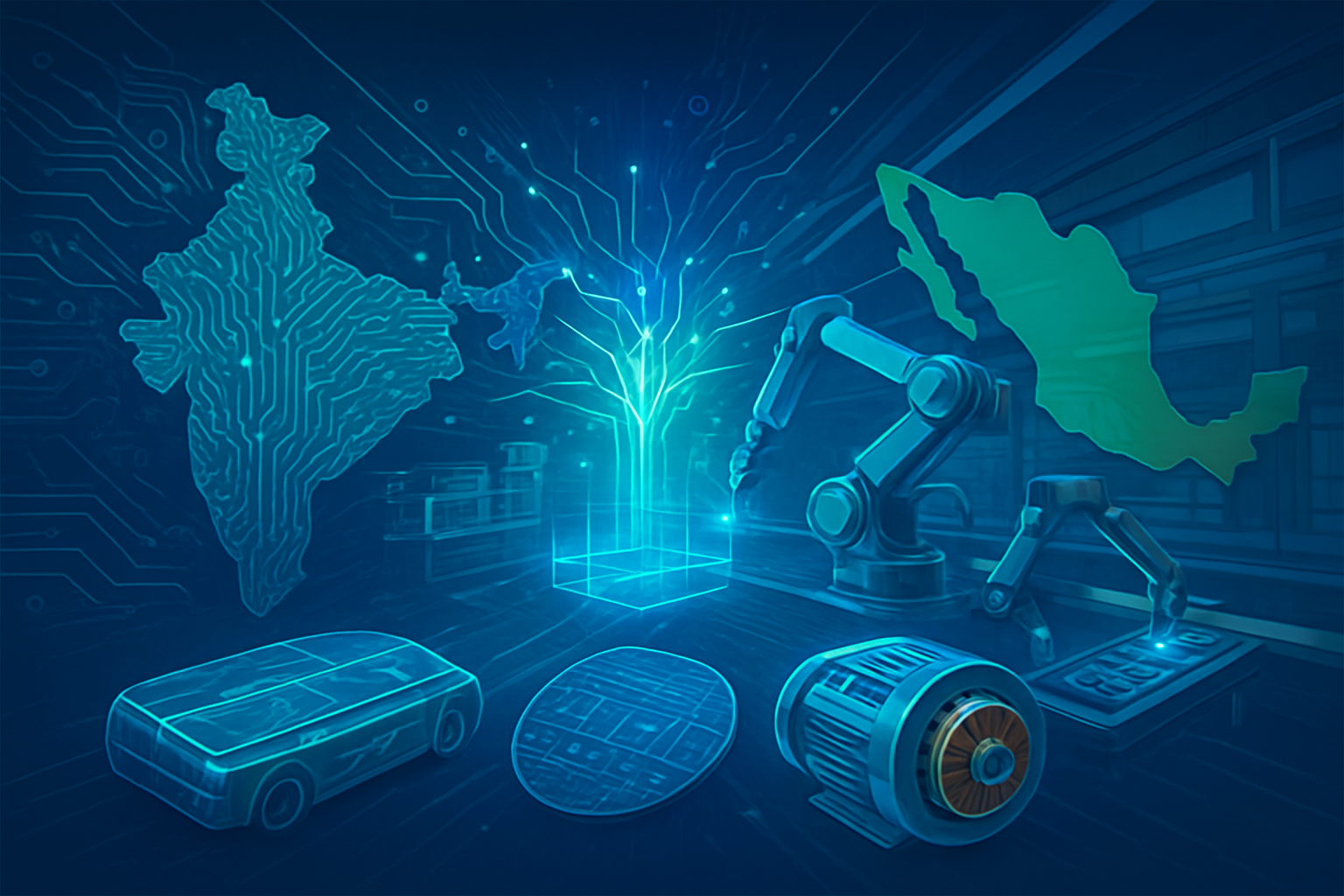
    The global semiconductor supply chain is in the midst of an unprecedented and historic transformation, driven by an insatiable demand for artificial intelligence (AI) and high-performance computing (HPC), coupled with a worldwide strategic imperative for resilience and diversification. With projected sales nearing $700 billion in 2025 and an anticipated climb to $1 trillion by 2030, the industry is witnessing an unparalleled surge in investment, a monumental expansion of manufacturing capabilities, and a complex recalibration of distribution networks. This profound shift is not merely a response to past supply disruptions but a proactive, geopolitically charged effort to secure the foundational technology of the 21st century.

    This re-configuration carries immediate and far-reaching significance, as nations and corporations alike race to establish secure and advanced chip production. The once-concentrated hubs of semiconductor manufacturing are giving way to a more distributed model, fueled by massive government incentives and private sector commitments. The implications span economic stability, national security, and the very pace of technological advancement, making the dynamics of the semiconductor supply chain a focal point for global industry and policy makers.

    Unprecedented Investment Fuels a Global Manufacturing Boom

    The current landscape of semiconductor development is characterized by a confluence of aggressive investment trends and an ambitious global manufacturing expansion. At the heart of this surge is the burgeoning demand for AI, which is redefining the industry's priorities. AI accelerators, particularly Graphics Processing Units (GPUs) and High-Bandwidth Memory (HBM), are driving significant capital expenditure, with HBM revenue alone expected to surge by up to 70% in 2025, reaching $21 billion. Cloud service providers are dramatically increasing their AI infrastructure investments, nearly doubling the total annual capital expenditure of the entire semiconductor industry. This focus is reflected in increased Research & Development (R&D) spending, with 72% of surveyed companies forecasting an increase, underscoring a strong commitment to innovation.

    Governments worldwide are playing a pivotal role, enacting substantial policies and providing funding to bolster domestic semiconductor production. The U.S. CHIPS and Science Act (passed in 2022) allocated approximately $53 billion, drawing over $500 billion in private sector commitments since 2020. Similar initiatives include the European Chips Act, India Semiconductor Mission, and programs in Japan. This government-backed impetus, combined with geopolitical considerations, is fostering regionalization and nearshoring efforts, with 74% of semiconductor organizations expecting to increase U.S. investments and 59% in Europe. This marks a significant departure from previous decades of highly centralized manufacturing, prioritizing resilience over pure cost efficiency.

    The result is a historic global build-out of manufacturing capacity. SEMI reports that 97 new high-volume fabs are planned to begin operation globally from 2023-2025, with 18 new construction projects in 2025 alone, and over 107 new fabs projected worldwide through 2028. In the United States, TSMC (NYSE: TSM) is making its largest single foreign direct investment with a $165 billion commitment to its Phoenix, Arizona, "GIGAFAB cluster," including three new fabrication plants, two advanced packaging facilities for AI, and a major R&D center. Samsung (KRX: 005930) is constructing a $17 billion fabrication plant near Austin, Texas, and has plans for 12 fabs in total in Austin and Taylor. Intel (NASDAQ: INTC) has received $8.5 billion in grants and $1.6 billion in loans from the CHIPS Act, building two new fabs in Chandler, Arizona, for 7nm semiconductors. Nvidia (NASDAQ: NVDA) committed $500 billion in April 2025 to manufacture its Blackwell chip and other AI infrastructure in Arizona and Texas. Meanwhile, Asia remains a dominant hub, hosting 82 of the 107 new fabs, with India approving 10 semiconductor manufacturing projects and China boosting mainstream node capacity. This decentralized approach, leveraging advanced technologies like Extreme Ultraviolet (EUV) lithography and 3D chip stacking, aims to mitigate geopolitical risks and enhance global supply stability.

    Reshaping the Competitive Landscape: Winners and Challengers

    The seismic shifts in the global semiconductor supply chain are profoundly impacting AI companies, tech giants, and startups, creating new competitive dynamics and strategic imperatives. Companies with robust R&D capabilities and the financial prowess to invest heavily in advanced manufacturing and packaging are poised to benefit significantly. Leading foundries like TSMC (NYSE: TSM) and Samsung (KRX: 005930), with their multi-billion-dollar investments in new fabs across the U.S. and Asia, are solidifying their positions as critical enablers of advanced AI and HPC chips. Their expansion directly addresses the demand for cutting-edge nodes and specialized components like HBM, which are bottlenecks for many AI developers.

    Integrated Device Manufacturers (IDMs) such as Intel (NASDAQ: INTC) and Micron (NASDAQ: MU) are leveraging government incentives to re-shore and expand their manufacturing footprint, aiming to regain market share and control over their supply chains. Intel's significant CHIPS Act funding and investment in new fabs are crucial for its strategy to become a leading foundry and compete directly with TSMC for external customers. Similarly, Micron's new DRAM fabs in Idaho and New York are vital for meeting the soaring demand for memory solutions critical to AI workloads. Chip designers like Nvidia (NASDAQ: NVDA), while fabless, are heavily invested in securing advanced manufacturing capacity through partnerships and direct commitments, ensuring the production of their high-demand GPUs and AI platforms.

    The competitive implications are stark. The race for advanced nodes and HBM is intensifying, with companies vying for limited capacity and expertise. This environment favors those with diversified supply chain strategies and strong government backing, potentially disrupting existing product lines that rely on older, more concentrated manufacturing models. Smaller AI startups, while benefiting from the availability of more powerful chips, may face challenges in securing priority access to cutting-edge components without strategic partnerships with major foundries or tech giants. Market positioning is increasingly defined by supply chain resilience and geographical diversification, transforming these from operational concerns into strategic advantages in a volatile geopolitical landscape.

    A New Era of Strategic Competition and Resilience

    The wider significance of these semiconductor supply chain dynamics extends far beyond the tech industry, touching upon global economics, national security, and the very fabric of technological progress. This transformation fits into a broader AI landscape where access to advanced chips is synonymous with technological sovereignty and economic power. AI is not just a consumer of chips; it is the primary demand driver, dictating investment priorities and accelerating innovation in chip design and manufacturing. The ability to produce, procure, and control advanced semiconductors has become a critical component of national security, leading to a geopolitical arms race for chip supremacy.

    The impacts are multi-faceted. Economically, the massive investments in new fabs are creating jobs and fostering regional economic growth in areas like Arizona, Texas, and New York in the U.S., and new semiconductor clusters in India and Southeast Asia. However, the costs are enormous, raising concerns about the sustainability of such investments without sustained demand and skilled labor. Geopolitically, the drive for decentralization aims to reduce reliance on single points of failure, particularly Taiwan, which produces a significant majority of the world's most advanced chips. This mitigates risks from natural disasters or conflicts but also fuels trade tensions, as exemplified by U.S. export controls on AI technologies to China and China's reciprocal bans on critical minerals like gallium and germanium.

    Comparisons to previous AI milestones underscore the current moment's gravity. While past breakthroughs focused on algorithms or software, the current era highlights the physical infrastructure—the chips—as the ultimate bottleneck and enabler. The pandemic-induced chip shortages of 2020-2023 served as a stark warning, propelling governments and industries to prioritize resilience. This period marks a new chapter where strategic competition over semiconductors is as significant as the race for AI algorithms itself, defining a new global order where technological leadership is inextricably linked to chip independence.

    The Horizon: AI-Driven Optimization and Continued Decentralization

    Looking ahead, the global semiconductor supply chain is poised for further evolution, driven by both technological advancements and persistent geopolitical forces. In the near term, the sheer number of new fabrication plants under construction means a continued ramp-up of manufacturing capacity, particularly for advanced nodes and HBM. This will alleviate some current bottlenecks, especially in the AI sector, but also introduce new challenges in managing potential oversupply in certain legacy segments. Geopolitical maneuvering will remain a constant, with countries continuing to refine their domestic incentive programs and export control policies, shaping the flow of technology and talent.

    Long-term developments are likely to include further decentralization of manufacturing, with more robust regional ecosystems emerging in North America, Europe, and India. This will be complemented by ongoing research into alternative materials (e.g., Gallium Nitride (GaN) and Silicon Carbide (SiC)) and advanced packaging techniques, pushing the boundaries of chip performance and efficiency. A significant trend on the horizon is the increasing application of AI and machine learning to optimize the supply chain itself—from predicting disruptions and managing inventory to designing more resilient chip architectures and automating factory processes. Experts predict that the semiconductor industry's path to $1 trillion by 2030 will be paved by sustained AI demand and a continuous drive for supply chain resilience.

    However, challenges persist. The enormous capital required to build and maintain cutting-edge fabs necessitates sustained investment and government support. A critical hurdle is the looming workforce shortage, as the demand for skilled engineers and technicians far outstrips the current supply, prompting companies to invest heavily in education and training partnerships. Managing the delicate balance between securing supply and avoiding market oversupply in a cyclical industry will also be crucial. What experts predict will happen next is a continued strategic focus on building robust, geographically diversified, and technologically advanced semiconductor ecosystems, recognizing that control over chips is paramount for future innovation and national security.

    A New Chapter for Global Technology

    In summary, the global semiconductor supply chain is undergoing a fundamental and historic re-configuration, transforming from a largely centralized, efficiency-driven model to a decentralized, resilience-focused paradigm. The convergence of insatiable AI demand, unprecedented government incentives, and aggressive private sector investment is fueling a manufacturing boom unseen in decades. This era is defined by a strategic imperative to secure domestic chip production, mitigate geopolitical risks, and ensure the foundational technology for future innovations.

    The significance of this development in AI history cannot be overstated. It marks a shift where the physical infrastructure of AI—the chips—is as critical as the algorithms themselves, becoming a linchpin of national security and economic competitiveness. The massive capital deployment, the race for advanced nodes and HBM, and the emergence of new regional manufacturing hubs are all testament to this profound transformation.

    In the coming weeks and months, industry observers should closely watch the progress of new fab constructions, particularly the opening of facilities by TSMC (NYSE: TSM), Samsung (KRX: 005930), and Intel (NASDAQ: INTC) in the U.S. and other regions. Further geopolitical developments, especially regarding export controls and trade relations between major powers, will continue to shape the industry's trajectory. Advancements in HBM and advanced packaging technologies will also be key indicators of how effectively the industry is meeting the demands of the AI revolution. This is not merely an adjustment but a foundational re-architecture of the global technological landscape.


    This content is intended for informational purposes only and represents analysis of current AI developments.

    TokenRing AI delivers enterprise-grade solutions for multi-agent AI workflow orchestration, AI-powered development tools, and seamless remote collaboration platforms.
    For more information, visit https://www.tokenring.ai/.

  • Navigating the AI Gold Rush: Fund Managers Grapple with TSMC Concentration Amidst Semiconductor Boom

    Navigating the AI Gold Rush: Fund Managers Grapple with TSMC Concentration Amidst Semiconductor Boom

    The artificial intelligence revolution is fueling an unprecedented surge in demand for advanced semiconductors, propelling the global chip market towards a projected trillion-dollar valuation by 2030. At the heart of this "silicon supercycle" lies Taiwan Semiconductor Manufacturing Company (TSMC) (NYSE: TSM), the undisputed leader in foundry services, whose cutting-edge fabrication capabilities are indispensable for the AI chips powering everything from data centers to generative AI models. However, for institutional fund managers, this concentrated reliance on TSMC presents a complex dilemma: how to capitalize on the explosive growth of AI semiconductors while navigating inherent investment limitations and significant geopolitical risks.

    This high-stakes environment forces fund managers to walk a tightrope, balancing the immense opportunities presented by AI's insatiable hunger for processing power with the very real challenges of portfolio overexposure and supply chain vulnerabilities. As the market cap of AI chip giants like Nvidia (NASDAQ: NVDA) dwarfs competitors, the pressure to invest in these critical enablers intensifies, even as strategic considerations around concentration and geopolitical stability necessitate careful, often self-imposed, investment caps on cornerstone companies like TSMC. The immediate significance for institutional investors is a heightened need for sophisticated risk management, strategic capital allocation, and a relentless search for diversification beyond the immediate AI darlings.

    The Indispensable Foundry and the AI Silicon Supercycle

    The insatiable demand for artificial intelligence is driving a profound transformation in the semiconductor industry, marked by a "silicon supercycle" that differs significantly from previous tech booms. This current surge is underpinned by the complex computational requirements of modern AI applications, particularly large language models (LLMs), generative AI, and advanced data center infrastructure. AI accelerators, including Graphics Processing Units (GPUs), Tensor Processing Units (TPUs), and Neural Processing Units (NPUs), are at the forefront of this demand. These specialized chips excel at parallel processing, a critical capability for machine learning algorithms, and often feature unique memory architectures like High-Bandwidth Memory (HBM) for ultra-fast data transfer. Their design prioritizes reduced precision arithmetic and energy efficiency, crucial for scaling AI operations.

    At the epicenter of this technological revolution is Taiwan Semiconductor Manufacturing Company (TSMC) (NYSE: TSM), an indispensable foundry whose technological leadership is unmatched. TSMC commands an estimated 70% of the global pure-play wafer foundry market, with its dominance in advanced process nodes (e.g., 3nm, 2nm) exceeding 90%. This means that roughly 90% of the world's most advanced semiconductors for high-performance computing (HPC) and AI are fabricated by TSMC. Major AI innovators like Nvidia (NASDAQ: NVDA), Apple (NASDAQ: AAPL), AMD (NASDAQ: AMD), Amazon (NASDAQ: AMZN), and Google (NASDAQ: GOOGL) are heavily reliant on TSMC for their cutting-edge AI chip designs. Beyond traditional manufacturing, TSMC's advanced packaging technologies, notably CoWoS (Chip-on-Wafer-on-Substrate), are pivotal. CoWoS integrates logic dies with HBM stacks, providing the ultra-fast data transmission and enhanced integration density required for AI supercomputing, with TSMC planning to triple its CoWoS production capacity by 2025.

    For fund managers, navigating this landscape is complicated by various investment limitations, often termed "stock caps." These are not always formal regulatory mandates but can be self-imposed or driven by broader diversification requirements. Regulatory frameworks like UCITS rules in Europe typically limit single-stock exposure to 10% of a fund's assets, while general portfolio diversification principles suggest limiting any individual holding to 10-20%. Sector-specific limits are also common. These caps are designed to manage portfolio risk, prevent over-reliance on a single asset, and ensure compliance. Consequently, even if a stock like TSMC or Nvidia demonstrates exceptional performance and strong fundamentals, fund managers might be compelled to underweight it relative to its market capitalization due to these concentration rules. This can restrict their ability to fully capitalize on growth but also mitigates potential downside risk.

    The current AI semiconductor boom stands in stark contrast to the dot-com bubble of the late 1990s. While that era was characterized by speculative hype, overpromising headlines, and valuations disconnected from revenue, today's AI surge is rooted in tangible real-world impact and established business models. Companies like Microsoft (NASDAQ: MSFT), Google, and Amazon are leading the charge, integrating AI into their core offerings and generating substantial revenue from APIs, subscriptions, and enterprise solutions. The demand for AI chips is driven by fundamental technological shifts and underlying earnings growth, rather than purely speculative future potential. While optimism is high, the financial community also exhibits a healthy degree of caution, with ongoing debates about a potential "AI bubble" and advice for selective investment. The tech community, meanwhile, emphasizes the continuous need for innovation in chip architecture and memory to keep pace with the exponentially growing computational demands of AI.

    Corporate Chessboard: Navigating Scarcity and Strategic Advantage

    The AI-driven semiconductor market, characterized by unprecedented demand and the bottleneck of advanced manufacturing capabilities, is profoundly reshaping the competitive landscape for AI companies, tech giants, and startups. This environment creates a corporate chessboard where strategic moves in chip design, supply chain management, and capital allocation determine who thrives.

    Tech giants, including Alphabet (NASDAQ: GOOGL), Amazon (NASDAQ: AMZN), Microsoft (NASDAQ: MSFT), and Meta (NASDAQ: META), are generally better positioned to navigate this high-stakes game. Their robust balance sheets and diversified portfolios enable them to absorb higher hardware costs and invest heavily in internal chip design capabilities. These companies are often priority customers for foundries like TSMC, securing crucial allocations of advanced chips. Many are actively developing custom AI silicon—such as Google's TPUs, Amazon's Trainium/Inferentia chips, and Apple's (NASDAQ: AAPL) neural engines—to reduce reliance on third-party vendors, optimize performance for specific AI workloads, and gain significant cost advantages. This trend towards vertical integration is a major competitive differentiator, with custom chips projected to capture over 40% of the AI chip market by 2030.

    Conversely, AI companies and startups, while brimming with innovation, face a more challenging environment. The soaring costs and potential supply chain constraints for advanced chips can create significant barriers to entry and scalability. Without the negotiating power or capital of tech giants, startups often encounter higher prices, longer lead times, and limited access to the most advanced silicon, which can slow their development cycles and create substantial financial hurdles. Some are adapting by optimizing their AI models for less powerful or older-generation chips, or by focusing on software-only solutions that can run on a wider range of hardware, though this can impact performance and market differentiation.

    The "TSMC stock caps," referring to the foundry's production capacity limitations, particularly for advanced packaging technologies like CoWoS, are a critical bottleneck. Despite TSMC's aggressive expansion plans to quadruple CoWoS output by late 2025, demand continues to outstrip supply, leading to higher prices and a relationship-driven market where long-term, high-margin customers receive priority. This scarcity intensifies the scramble for supply among tech giants and encourages them to diversify their foundry partners, potentially creating opportunities for competitors like Intel Foundry Services (NASDAQ: INTC) and Samsung Foundry (KRX: 005930). Companies like Nvidia (NASDAQ: NVDA), with its dominant GPU market share and proprietary CUDA software platform, continue to be primary beneficiaries, creating high switching costs for customers and reinforcing its market leadership. AMD (NASDAQ: AMD) is making significant inroads with its MI300X chip, positioning itself as a full-stack rival, while memory suppliers like SK Hynix (KRX: 000660), Samsung Electronics, and Micron Technology (NASDAQ: MU) are seeing surging demand for High-Bandwidth Memory (HBM). The overarching competitive implication is a rapid acceleration towards vertical integration, diversified sourcing, and relentless innovation in chip architecture and packaging to secure a strategic advantage in the AI era. This intense competition and supply chain strain also risk disrupting existing products and services across various industries, leading to increased costs, delayed AI project deployments, and potentially slower innovation across the board if not addressed strategically.

    A Geopolitical Chessboard and the New Industrial Revolution

    The AI-driven semiconductor market is far more than a mere component supplier; it is the indispensable architect shaping the trajectory of artificial intelligence itself, with profound wider significance for the global economy, geopolitics, and technological advancement. This market is experiencing explosive growth, with AI chips alone projected to reach US$400 billion in sales by 2027, driven by the insatiable demand for processing power across all AI applications.

    This boom fits squarely into the broader AI landscape as the fundamental enabler of advanced AI. From the training of massive generative AI models like Google's Gemini and OpenAI's Sora to the deployment of sophisticated edge AI in autonomous vehicles and IoT devices, specialized semiconductors provide the speed, energy efficiency, and computational muscle required. This symbiotic relationship creates a "virtuous cycle of innovation": AI fuels advancements in chip design and manufacturing, and better chips, in turn, unlock more sophisticated AI capabilities. This era stands apart from previous AI milestones, such as the early AI of the 1950s-80s or even the deep learning era of the 2010s, by the sheer scale and complexity of the models and the absolute reliance on high-performance, specialized hardware.

    TSMC's (NYSE: TSM) indispensable role as the "unseen architect" of this ecosystem, manufacturing over 90% of the world's most advanced chips, places it at the nexus of intense geopolitical competition. The concentration of its cutting-edge fabrication facilities in Taiwan, merely 110 miles from mainland China, creates a critical "chokepoint" in the global supply chain. This geographic vulnerability means that geopolitical tensions in the Taiwan Strait could have catastrophic global economic and technological consequences, impacting everything from smartphones to national defense systems. The "chip war" between the U.S. and China, characterized by export controls and retaliatory measures, further underscores the strategic importance of these chips, compelling nations to seek greater technological sovereignty and diversify supply chains.

    Beyond geopolitics, significant concerns arise from the economic concentration within the AI semiconductor industry. While the boom generates substantial profits, these gains are largely concentrated among a handful of dominant players, reinforcing the market power of companies like Nvidia (NASDAQ: NVDA) and TSMC. This creates barriers to entry for smaller firms and can lead to economic disparities. Furthermore, the immense energy consumption of AI training and large data centers, coupled with the resource-intensive nature of semiconductor manufacturing, raises serious environmental sustainability concerns. The rapid advancement of AI, enabled by these chips, also brings societal implications related to data privacy, algorithmic bias, and potential job displacement, demanding careful ethical consideration and proactive policy development. The long-term trend points towards pushing beyond Moore's Law with advanced packaging, exploring neuromorphic and quantum computing, and a relentless focus on energy efficiency, with AI itself becoming a co-creator in designing the next generation of semiconductors.

    The Road Ahead: Innovation, Specialization, and Strategic Adaptation

    The AI-driven semiconductor market is poised for continued explosive growth and transformative evolution, promising a future defined by ever-more sophisticated AI capabilities. In the near term, the focus remains on specialized chip architectures: advancements in Neural Processing Units (NPUs) for consumer devices, custom Application-Specific Integrated Circuits (ASICs) for dedicated AI tasks, and relentless innovation in Graphics Processing Units (GPUs) and Tensor Processing Units (TPUs) for high-performance computing. Critically, the demand for High-Bandwidth Memory (HBM) and advanced packaging technologies will intensify, as they are crucial for overcoming performance bottlenecks and enhancing energy efficiency. The push for AI at the edge, bringing processing closer to data sources, will also drive demand for low-power, high-performance chips in everything from smartphones to industrial sensors.

    Looking further ahead, long-term developments will venture into more revolutionary territory. Breakthroughs in on-chip optical communication using silicon photonics, novel power delivery methods, and advanced liquid cooling systems for massive GPU server clusters are on the horizon. Experts predict the semiconductor industry could reach a staggering $1.3 trillion by 2030, with generative AI alone contributing an additional $300 billion. The industry is also actively exploring neuromorphic designs, chips that mimic the human brain's structure and function, promising unprecedented efficiency for AI workloads. Continuous miniaturization to 3nm and beyond, coupled with AI-driven automation of chip design and manufacturing, will be pivotal in sustaining this growth trajectory.

    These advancements will unlock a vast array of new applications and use cases. In consumer electronics, AI-powered chips will enable real-time language translation, personalized health monitoring, and more intuitive device interactions. The automotive sector will see further leaps in Advanced Driver-Assistance Systems (ADAS) and fully autonomous vehicles, driven by AI semiconductors' ability for real-time decision-making. Data centers and cloud computing will continue to be foundational, processing the immense data volumes required by machine learning and generative AI. Edge computing will proliferate, enabling critical real-time decisions in industrial automation, smart infrastructure, and IoT devices. Healthcare will benefit from AI in diagnostics, personalized medicine, and advanced robotics, while telecommunications will leverage AI for enhanced 5G network management and predictive maintenance.

    However, this future is not without its challenges. The escalating costs of innovation, particularly for designing and manufacturing chips at smaller process nodes, create significant financial barriers. The increasing complexity of chip designs demands continuous advancements in automation and error detection. Power consumption and energy efficiency remain critical concerns, as large AI models require immense computational power, leading to high energy consumption and heat generation. Geopolitical tensions and supply chain constraints, as highlighted by the TSMC situation, will continue to drive efforts towards diversifying manufacturing footprints globally. Furthermore, talent shortages in this highly specialized field could hinder market expansion, and the environmental impact of resource-intensive chip production and AI operations will require sustainable solutions.

    For fund managers, navigating this dynamic landscape requires a nuanced and adaptive strategy. Experts advise focusing on key enablers and differentiated players within the AI infrastructure, such as leading GPU manufacturers (e.g., Nvidia (NASDAQ: NVDA)), advanced foundry services (e.g., TSMC (NYSE: TSM)), and suppliers of critical components like HBM. A long-term vision is paramount, as the market, despite its strong growth trends, is prone to cyclical fluctuations and potential "bumpy rides." Diversification beyond pure-play AI chips to include companies benefiting from the broader AI ecosystem (e.g., cooling solutions, power delivery, manufacturing equipment) can mitigate concentration risk. Fund managers must also monitor geopolitical and policy shifts, such as the U.S. CHIPS Act, which directly impact capital allocation and supply chain resilience. Finally, a cautious approach to valuations, focusing on companies with clear monetization pathways and sustainable business models, will be crucial to distinguish genuine growth from speculative hype in this rapidly evolving market.

    The Silicon Bedrock: A Future Forged in AI Chips

    The AI-driven semiconductor market stands as a pivotal force, reshaping the global technological and economic landscape with both unparalleled opportunities and significant challenges. At its core, this transformation is fueled by the insatiable demand for advanced computing power required by artificial intelligence, particularly generative AI and large language models. Taiwan Semiconductor Manufacturing Company (TSMC) (NYSE: TSM) remains an indispensable titan, underpinning the entire ecosystem with its cutting-edge manufacturing capabilities.

    Key Takeaways: The current era is defined by an "AI Supercycle," a symbiotic relationship where AI drives demand for increasingly sophisticated chips, and semiconductor advancements, in turn, unlock more powerful AI capabilities. Foundries like TSMC are not merely suppliers but fundamental global infrastructure pillars, with their manufacturing prowess dictating the pace of AI innovation. This necessitates massive capital investments across the industry to expand manufacturing capacity, driven by the relentless demand from hyperscale data centers and other AI applications. Consequently, semiconductors have ascended to a central role in global economics and national security, making geopolitical stability and supply chain resilience paramount.

    Significance in AI History: The developments in AI semiconductors represent a monumental milestone in AI history, akin to the invention of the transistor or the integrated circuit. They have enabled the exponential growth in data processing capabilities, extending the spirit of Moore's Law, and laying the foundation for transformative AI innovations. The unique aspect of this era is that AI itself is now actively shaping the very hardware foundation upon which its future capabilities will be built, creating a self-reinforcing loop of innovation that promises to redefine computing.

    Long-Term Impact: The long-term impact of AI on the semiconductor market is projected to be profoundly transformative. The industry is poised for sustained growth, fostering greater efficiency, innovation, and strategic planning. AI's contribution to global economic output is forecasted to be substantial, leading to a world where computing is more powerful, efficient, and inherently intelligent. AI will be embedded at every level of the hardware stack, permeating every facet of human life. The trend towards custom AI chips could also decentralize market power, fostering a more diverse and specialized ecosystem.

    What to Watch For in the Coming Weeks and Months: Investors and industry observers should closely monitor TSMC's progress in expanding its production capacity, particularly for advanced nodes and CoWoS packaging, as major clients like Nvidia (NASDAQ: NVDA) continue to request increased chip supplies. Announcements regarding new AI chip architectures and innovations from major players and emerging startups will signal the next wave of technological advancement. Global trade policies, especially those impacting U.S.-China semiconductor relations, will remain a critical factor, as they can reshape supply chains and market dynamics. Continued strategic investments by tech giants and semiconductor leaders in R&D and manufacturing will indicate confidence in long-term AI growth. Finally, market sentiment regarding AI stock valuations and any further indications of market corrections, particularly in light of TSMC's recent slowdown in monthly revenue growth, will be crucial. The pursuit of energy-efficient chip designs and sustainable manufacturing practices will also gain increasing prominence, driven by growing environmental concerns.

    The future of AI and, indeed, much of the digital world, will continue to be forged in silicon. The dynamic interplay between AI demand and semiconductor innovation will undoubtedly remain a dominant theme for the foreseeable future, demanding vigilance and strategic foresight from all participants.


    This content is intended for informational purposes only and represents analysis of current AI developments.

    TokenRing AI delivers enterprise-grade solutions for multi-agent AI workflow orchestration, AI-powered development tools, and seamless remote collaboration platforms.
    For more information, visit https://www.tokenring.ai/.
  • Capital Flight: Tech Investors Pivot to Traditional Sectors, Reshaping AI and Blockchain Futures

    Capital Flight: Tech Investors Pivot to Traditional Sectors, Reshaping AI and Blockchain Futures

    As 2025 draws to a close, the financial markets are witnessing a profound recalibration, marked by a significant investment rotation out of high-flying technology stocks and into more traditional, value-oriented industries. This seismic shift, driven by evolving macroeconomic conditions and a critical reassessment of tech valuations, signals a potential end to the prolonged dominance of growth-centric tech firms, ushering in an era where stability and established profitability are once again paramount. The immediate implications are particularly acute for the Artificial Intelligence (AI) and blockchain sectors, which have long been beneficiaries of speculative capital, now facing a more discerning and cautious investment landscape.

    This pivot is not merely a transient market fluctuation but rather a structural reorientation, reflecting a maturing market sentiment that prioritizes tangible assets and consistent earnings over speculative growth projections. The enthusiasm that propelled tech giants and nascent AI startups to unprecedented valuations is giving way to a sober evaluation of fundamentals, prompting investors to seek refuge in sectors historically known for their resilience and predictable returns. This recalibration promises to reshape the competitive dynamics within the tech industry, challenging business models reliant on continuous capital infusion and forcing a renewed focus on efficient growth and demonstrable value.

    The Great Reallocation: Unpacking the Capital Shift

    The current investment rotation represents a stark departure from the market dynamics that characterized much of the preceding decade. As of early November 2025, tech-heavy indices like the NASDAQ Composite have experienced considerable pressure, with some reports indicating a collective shedding of over $800 billion in market value from AI-focused stocks in a single week. This contrasts sharply with the robust performance of value stocks and traditional sectors such as financial services, energy, industrials, basic materials, and healthcare, which have consistently outperformed growth stocks throughout the year. For instance, the Russell 1000 Value has shown positive year-to-date returns, while international equities have seen substantial gains.

    This shift is fundamentally different from previous tech corrections. While past downturns often stemmed from specific industry bubbles or economic recessions, the current rotation appears more deliberate, driven by a confluence of factors including persistent inflation concerns, evolving expectations around Federal Reserve interest rate policies, and a broader reassessment of risk. Investors are increasingly skeptical of the lofty valuations within the tech sector, particularly those tied to the AI boom, which some analysts have begun to label an "AI bubble." The market is moving towards a model of "efficient growth," where companies must demonstrate a clear path to profitability and sustainable business models rather than relying solely on future potential.

    Initial reactions from the financial community underscore the gravity of this shift. Market strategists widely anticipate this rotation to continue well into 2026, accompanied by ongoing volatility and rapid changes in market leadership. Analysts are advising increased diversification, emphasizing the importance of spreading investments across various sectors, styles (growth vs. value), and geographical regions. The consensus points to a maturing market that is becoming less tolerant of speculative ventures and more focused on companies with strong fundamentals, stable earnings, and reasonable valuations. This sentiment is compelling tech companies, including those in AI and blockchain, to re-evaluate their strategies and accelerate their path to profitability.

    Shifting Tides: AI, Blockchain, and the Corporate Conundrum

    The investment rotation is sending ripples through the AI and blockchain ecosystems, forcing a recalibration of strategies for companies of all sizes. For AI startups, the era of easy capital for speculative ventures is waning. Many are now facing a "reality test," with valuations being scrutinized against fundamental profitability. Startups that can strategically reinvent their business models using AI, moving beyond mere productivity gains to create entirely new value propositions, are better positioned to thrive. Those requiring massive funding without immediate profit may struggle to secure new rounds or become attractive acquisition targets for larger, more diversified players.

    Tech giants such as Microsoft (NASDAQ: MSFT), Alphabet (NASDAQ: GOOGL), Amazon (NASDAQ: AMZN), and Meta Platforms (NASDAQ: META) continue to pour substantial resources into AI infrastructure. While their diversified revenue streams and deep pockets offer a buffer against market volatility, their massive AI spending is now under intense scrutiny. Investors are increasingly demanding clear evidence that these investments translate into tangible profits and sustainable competitive advantages, rather than simply contributing to an "arms race" for AI capabilities. The "Magnificent Seven" tech stocks, which have enjoyed significant growth, are experiencing pullbacks due to overextended valuations and investor reassessment, compelling them to demonstrate efficient growth and integrated AI-native applications.

    The blockchain sector is experiencing a significant pivot in venture capital, with funding increasingly shifting from crypto-specific projects towards AI. This has led to a funding drought for many blockchain startups, particularly those not directly integrating AI. While some innovative firms like Bitfarms (NASDAQ: BITF) are successfully pivoting their mining infrastructure to high-performance computing for AI, traditional crypto entities clinging to obsolete strategies are struggling. Interestingly, the broader altcoin market, especially the AI sub-sector within crypto, has shown resilience, benefiting from a "rotation to innovation" as capital reallocates from Bitcoin (CRYPTO: BTC) to AI-linked altcoins, DePIN (Decentralized Physical Infrastructure Networks), and gaming. However, the strong correlation between AI stocks and crypto also means that a significant correction in the perceived "AI bubble" could trigger substantial market volatility in illiquid altcoin markets.

    Traditional industries are emerging as significant beneficiaries of this capital shift. Sectors like financial services, energy, industrials, and healthcare are attracting investment due to their perceived stability, sustainable growth, and often lower valuations. Companies within these sectors that proactively embrace AI to optimize operations, enhance customer experiences, and scale growth—for instance, manufacturers implementing predictive maintenance or financial institutions leveraging AI for fraud detection—are gaining a significant competitive edge. This creates a fascinating dynamic where traditional businesses, by strategically adopting cutting-edge technology, are challenging the market positioning of established tech-native companies that are not agile enough to demonstrate immediate, profitable value. The demand for electricity from AI data centers, for example, is positioning utilities and energy infrastructure as long-term beneficiaries, further highlighting the interconnectedness of these shifts.

    Beyond the Hype: Wider Implications for AI and Blockchain's Evolution

    This investment rotation is more than just a market correction; it signifies a profound maturation of both the AI and blockchain sectors, compelling them to move beyond speculative hype towards demonstrable value and practical applications. It forces a critical look at the underlying fundamentals, distinguishing between genuine innovation with a clear path to profitability and ventures built on unfulfilled promises. This "Great Rotation" is intrinsically linked to broader macroeconomic shifts, including elevated interest rates and persistent inflation, which invariably make future earnings of growth stocks less appealing compared to the immediate stability of value investments.

    The wider impact is multifaceted. There's an increased scrutiny on ROI, with investors demanding clear revenue models and tangible business outcomes from AI and blockchain initiatives. This is particularly crucial given that a significant percentage of enterprise generative AI projects are reportedly failing due to poor data quality, inadequate risk controls, escalating costs, or an unclear business value proposition. This more disciplined approach is fostering a maturation of the industry, shifting from broad experimentation to a focus on practical implementation and specific use cases that deliver measurable value. It could also lead to consolidation, as smaller, less differentiated AI startups struggle for capital, forcing them to either prove their worth or become acquisition targets. A potential silver lining is that a slower pace of development, freed from intense funding pressure, might encourage a more deliberate and ethical approach to AI, fostering accountability and trustworthiness.

    However, concerns persist. Warnings about an "AI bubble" drawing parallels to the dot-com era are growing louder, with some AI stock valuations reaching comparable peaks. This raises the specter of a sharp market correction if expectations are not met. For blockchain, historical funding has been more volatile than AI, experiencing sharp declines during crypto market crashes and amidst regulatory uncertainty. While progress in regulatory frameworks is being made, the inherent volatility of assets like Bitcoin (CRYPTO: BTC) remains a challenge for broader institutional adoption. The current environment also highlights potential over-reliance on AI automation and issues related to data quality, accuracy, and inherent biases in AI models.

    Comparing this to previous AI milestones or market shifts, the current AI investment surge bears a striking resemblance to the internet boom of the late 1990s, complete with high valuations and a concentration of market capitalization in a few top companies. While the dot-com crash serves as a cautionary tale, some argue that the AI boom, unlike purely financial bubbles, is more of an "industrial" bubble. As Amazon (NASDAQ: AMZN) founder Jeff Bezos once suggested, even if this bubble bursts, society will still benefit from the underlying technological advancements. This disciplined market environment is pushing both AI and blockchain towards greater maturity, a stronger focus on real-world utility, and more sustainable growth models driven by demonstrable value rather than pure speculation, ultimately shaping a more robust and ethically conscious future for both transformative technologies.

    The Road Ahead: Navigating AI and Blockchain's Evolving Landscape

    The investment rotation, while presenting immediate challenges, is fundamentally reshaping the near-term and long-term trajectories of AI and blockchain, driving them towards more practical, value-driven applications. In the near term (2025-2026), AI will continue its rapid evolution from an experimental technology to a ubiquitous tool. Generative AI advancements, such as more capable chatbots with long-term memory and multimodal inputs (like Google's Gemini), will transform workflows across industries. AI assistants and copilots are becoming standard in software development and various enterprise applications, exemplified by Microsoft's (NASDAQ: MSFT) integration of AI copilots into its Microsoft 365 suite. There's a growing emphasis on domain-specific AI models tailored for particular business problems, rather than solely focusing on Artificial General Intelligence (AGI). Concurrently, AI governance and ethical frameworks are gaining prominence, with regulations like the EU's AI Act and the Colorado AI Act (effective February 2026) emerging to address concerns about data accuracy, bias, privacy, and security, especially for "high-risk" AI systems.

    For blockchain in the near term, the focus is shifting from speculative assets to foundational technologies and real-world utility. Decentralized Finance (DeFi) continues to evolve beyond trading, expanding into decentralized lending, borrowing, and insurance. A significant trend is the Real-World Asset (RWA) tokenization, where tangible assets like real estate and commodities are represented as digital tokens on a blockchain, attracting substantial investment. Blockchain as a Service (BaaS) offerings are democratizing access to blockchain technology, while advancements in interoperability and cross-chain solutions aim to simplify asset transfers between different blockchain platforms.

    Looking long term (beyond 2025, towards 2030), AI is expected to become profoundly powerful and deeply integrated into daily life. Ubiquitous AI assistants and agents will serve as personal tutors, career counselors, and even therapists, capable of autonomously managing complex tasks. AI will drive significant progress in scientific R&D, from accelerating drug discovery to assisting with formalizing mathematical proofs. The deployment of hundreds of thousands of humanoid robots is predicted, automating vast amounts of physical work. For blockchain, a majority of world trade is expected to leverage the technology, enhancing visibility and efficiency across global supply chains. A cross-border, blockchain-based, self-sovereign identity standard for individuals and assets is anticipated, alongside the rise of "trillion-dollar tokens" that support decentralized ecosystems, potentially replacing traditional corporate structures. Mainstream adoption of digital currencies and DeFi platforms will see blockchain becoming a cornerstone of the financial industry.

    The convergence of AI and blockchain promises novel applications. AI can enhance smart contracts, enabling them to respond dynamically to real-time data, while blockchain provides a secure, decentralized framework for managing and verifying the vast amounts of high-quality data crucial for AI systems. This synergy will revolutionize supply chain management, healthcare (secure patient records, early disease detection), and even the functioning of Decentralized Autonomous Organizations (DAOs) by enhancing decision-making and ensuring transparent records.

    However, significant challenges persist. For AI, these include ensuring data accuracy, quality, and mitigating bias, addressing the lack of proprietary data and in-house AI expertise, and navigating privacy and security concerns. Integrating AI systems with existing IT infrastructure also presents a hurdle due to high processing power and storage demands. For blockchain, scalability remains a critical issue, alongside the complexity of adoption, high implementation costs, and ongoing regulatory uncertainty. Interoperability between different blockchain networks and the energy consumption of certain consensus mechanisms also need to be addressed.

    Experts predict that AI will continue to dominate venture funding, with a strategic shift towards foundational AI technologies and domain-specific applications. Blockchain investments will increasingly focus on real-world utility, including stablecoins and RWAs. The synergy between AI and blockchain will deepen, with blockchain providing secure infrastructure for AI data management and verifiable AI inference. Increased regulatory clarity for both sectors is expected to unlock unprecedented institutional investment, leading to more mature and reliable market structures. Ultimately, both AI and blockchain are poised for mainstream adoption, transforming job markets, and becoming integral parts of daily life and global systems, driven by a renewed focus on demonstrable value and strategic integration.

    Conclusion: A New Era of Discerning Investment

    The investment rotation out of technology stocks in late 2025 marks a pivotal moment, signaling a maturation of both the AI and blockchain sectors. The era of speculative exuberance is giving way to a more discerning investment climate that prioritizes tangible value, profitability, and robust fundamentals. This "healthy correction" is not merely a setback but a necessary recalibration that will ultimately strengthen the foundations of these transformative technologies.

    Key takeaways include the pronounced sell-off in tech-heavy indices, driven by macroeconomic pressures and concerns over inflated valuations, particularly within the AI segment. While AI investment remains robust, it is increasingly concentrated in mega-deals for foundational model companies and infrastructure providers. Blockchain is also maturing, with a growing focus on real-world utility, institutional adoption, and regulatory clarity. The overarching theme is a demand for demonstrable utility and profitability, forcing companies in both sectors to prove their value beyond mere potential.

    This period represents a crucial inflection point in AI history. The unprecedented scale of investment in AI infrastructure is laying the groundwork for a new economy, but the simultaneous questioning of valuations ensures a transition from pure speculative enthusiasm to a more fundamental-driven approach. This will likely lead to consolidation within the AI startup landscape, as well as enhanced productivity and economic growth as AI solutions mature and integrate across industries. For blockchain, the long-term impact will be characterized by deeper institutional integration, the explosive growth of real-world asset tokenization, and enterprise adoption that moves beyond cryptocurrency hype.

    What to watch for in the coming weeks and months:

    • AI Earnings Reports: Upcoming earnings from key AI players like Nvidia (NASDAQ: NVDA) (November 19) and Broadcom (NASDAQ: AVGO) (December 12) will offer critical insights into continued AI-driven demand and revenue translation.
    • Central Bank Monetary Policy: Watch for signals from central banks, particularly the US Federal Reserve, regarding interest rate decisions in late 2025 and early 2026. Potential rate cuts could ease financial conditions, influencing investor appetite for growth stocks and riskier assets like crypto.
    • AI Funding Landscape: Observe whether the concentration of AI venture capital in mega-rounds continues, or if there's a more diversified investment flow into early-stage and niche AI solutions.
    • Blockchain Regulatory Developments: Further legislative clarity for cryptocurrencies and digital assets will significantly impact institutional confidence and investment.
    • Real-World Adoption: Track tangible signs of broader enterprise adoption and successful monetization of both AI and blockchain applications across various industries.
    • Market Sentiment: Monitor overall market sentiment toward technology stocks to gauge whether the current correction stabilizes or deepens.

    The coming period promises to be dynamic, challenging, and ultimately transformative, as AI and blockchain navigate this new era of discerning investment, solidifying their roles as indispensable pillars of the future economy.


    This content is intended for informational purposes only and represents analysis of current AI developments.

    TokenRing AI delivers enterprise-grade solutions for multi-agent AI workflow orchestration, AI-powered development tools, and seamless remote collaboration platforms.
    For more information, visit https://www.tokenring.ai/.

  • Technopark Phase IV: Kerala’s Ambitious Leap to Become a Global AI and Blockchain Powerhouse

    Technopark Phase IV: Kerala’s Ambitious Leap to Become a Global AI and Blockchain Powerhouse

    Thiruvananthapuram, Kerala – Technopark Phase IV, branded as Technocity, is rapidly solidifying its position as a pivotal emerging tech hub, poised to dramatically reshape the local and global technology landscape. This expansive 389-acre integrated IT township is not merely an expansion but a strategic initiative designed to catapult Kerala into the forefront of the global IT sector, with a specific and aggressive focus on fostering innovation and attracting investment in the burgeoning fields of Artificial Intelligence (AI) and blockchain. With several key projects already underway or recently announced, Technocity is quickly becoming a beacon for next-generation technological advancement.

    The immediate significance of Technopark Phase IV cannot be overstated. As of November 2025, the hub is actively building an ecosystem that promises to double Kerala's IT workforce within the next decade, generating substantial employment opportunities. It offers a compelling, cost-competitive, and sustainable alternative to established IT powerhouses like Bengaluru and Hyderabad, boasting lower operating costs and a deep pool of skilled engineering graduates. The visionary "walk-to-work" urban design, integrating technology campuses, research institutions, residential zones, and commercial hubs, aims to enhance the quality of life for IT professionals, making it an attractive destination for Global Capability Centres (GCCs), emerging technology companies, and Research & Development (R&D) units focused on cutting-edge domains.

    A Blueprint for Digital Dominance: Unpacking Technocity's Technical Prowess

    Technopark Phase IV's strategic design is meticulously crafted to cultivate a robust environment for technological breakthroughs, particularly in AI and blockchain. The masterplan, officially unveiled in August 2025, outlines an integrated IT micro-township that distinguishes itself through several key components and a holistic approach to innovation. Unlike conventional tech parks, Technocity aims for a symbiotic relationship between academia, industry, and entrepreneurship.

    At its core, the hub integrates prominent institutions such as the Digital University of Kerala and the upcoming Kerala Space Park, which together form a powerful research ecosystem. This integration provides direct access to a pipeline of highly skilled talent and facilitates collaborative research. A significant differentiator is the planned "Emerging Technology Hub" under the Kerala Startup Mission (KSUM), with construction for this five-story, five lakh sq. ft. facility, capable of hosting approximately 1,000 startups, scheduled to commence in May 2025. This dedicated space is designed to be a crucible for nascent businesses, providing essential infrastructure and mentorship. Furthermore, an MSME Technology Centre is included to nurture small and medium enterprises, ensuring a broad base of innovation. The "Freedom Square" project by KSUM, in collaboration with the Department of Tourism, expected to be operational before March 2026, will serve as a 24/7 co-creation hub, offering coworking spaces, meeting rooms, dormitories, and recreational areas, fostering an always-on collaborative culture. Perhaps most critically, a Digital Science Park, spearheaded by the Digital University Kerala, is in the pipeline, dedicated to advanced research in Artificial Intelligence (AI), Machine Learning (ML), robotics, and the Internet of Things (IoT), directly targeting the core technologies driving the next wave of digital transformation. The hub's explicit focus on attracting industries in "emerging sectors like space technology, AI, semiconductors, and cybersecurity" underscores its commitment to future-proof growth.

    Reshaping the Competitive Landscape: Implications for Tech Giants and Startups

    The rise of Technopark Phase IV carries significant competitive implications, poised to benefit a diverse range of companies from established tech giants to burgeoning startups, while potentially disrupting existing market dynamics. Its strategic advantages are designed to attract substantial investment and talent.

    One of the most prominent beneficiaries is Tata Consultancy Services (NSE: TCS), which is establishing a majestic 94-acre campus within Technocity, scheduled for commissioning in December 2024. This massive facility is specifically dedicated to advancing technologies such as IoT, Blockchain, Data Analytics, and AI, indicating a clear alignment with Technocity's vision and providing a major anchor for the hub's specialized focus. For other major AI labs and tech companies, Technocity presents an attractive opportunity to establish Global Capability Centres (GCCs) or R&D units with significantly lower operating costs—estimated to be 30-40% less than in Bengaluru—and access to a vast, readily available talent pool of over 50,000 engineering graduates annually. This cost efficiency, combined with a strong innovation ecosystem, could incentivize companies to diversify their operational footprints, potentially leading to a decentralization of the Indian tech industry. For startups, especially those in AI and blockchain, the KSUM Emerging Technology Hub and "Freedom Square" offer invaluable resources: dedicated incubation spaces, mentorship, and a collaborative environment that can accelerate growth. The focused research in the Digital Science Park will also provide a fertile ground for spin-offs and partnerships. This influx of talent and infrastructure could lead to a surge in new products and services, potentially disrupting incumbents by introducing innovative solutions at a lower operational overhead. The competitive positioning of companies that choose to invest early in Technocity will be significantly enhanced, gaining strategic advantages through cost savings, talent access, and proximity to a vibrant innovation ecosystem.

    Technocity's Role in the Broader AI Landscape and Future Trends

    Technopark Phase IV's emergence is not an isolated event but a critical development within the broader global AI and technology landscape, reflecting a growing trend of decentralization and specialization in tech hubs. Its focused approach on AI, blockchain, IoT, and space technology positions it as a significant player in shaping future technological trends.

    This development fits into the broader AI landscape by contributing to the diversification of global AI research and development centers. As AI becomes more pervasive, the need for specialized ecosystems that can nurture specific sub-fields and applications grows. Technocity's emphasis on areas like AI, ML, robotics, and IoT through the Digital Science Park and the TCS campus directly addresses this need, potentially fostering unique advancements. The impacts are multifaceted: economically, it promises to significantly boost Kerala's GDP and employment figures; technologically, it aims to create a vibrant innovation corridor for cutting-edge research and product development. Potential concerns might include the challenge of scaling infrastructure rapidly enough to meet demand, ensuring a continuous supply of highly specialized talent, and maintaining the quality of life as the region grows. However, the "walk-to-work" model and integrated urban planning aim to mitigate some of these issues. Comparisons to previous AI milestones and breakthroughs highlight Technocity's strategic importance: much like Silicon Valley became synonymous with software and hardware innovation, and hubs like Bengaluru with IT services, Technocity aims to carve out a niche as a center for emerging deep technologies, providing a dedicated environment for complex AI and blockchain solutions that require sustained research and development. It represents a deliberate move towards creating a future-ready economy grounded in advanced digital capabilities.

    The Horizon Ahead: Expected Developments and Future Applications

    The trajectory of Technopark Phase IV points towards a future teeming with innovation and transformative applications, with several key developments already slated for the near and long term. The foundation being laid today is designed to support a continuous evolution of technology and industry.

    In the near term, the commissioning of the Tata Consultancy Services (NSE: TCS) campus in December 2024 will be a major milestone, significantly bolstering the hub's capabilities in IoT, Blockchain, Data Analytics, and AI. The commencement of construction for the KSUM Emerging Technology Startup Hub in May 2025 signals a rapid expansion of startup incubation facilities, promising a surge in new ventures. Furthermore, the "Freedom Square" project, expected to be operational before March 2026, will amplify the collaborative environment for students, startups, and industry leaders. The ongoing "QUAD" project, with its ambitious investment of INR 1600 crores and an RFP for its first IT building invited in May 2025, indicates a continuous build-out of state-of-the-art IT infrastructure. Looking further ahead, the Digital Science Park, led by Digital University Kerala, is poised to become a crucible for advanced research, driving breakthroughs in AI, ML, robotics, and IoT. Potential applications and use cases on the horizon include AI-powered solutions for healthcare, smart city management, advanced robotics for manufacturing and logistics, secure blockchain applications for supply chain and finance, and sophisticated data analytics for various industries. Challenges that need to be addressed include attracting top-tier global talent, fostering a robust venture capital ecosystem to fund innovative startups, and ensuring that the regulatory framework keeps pace with rapid technological advancements. Experts predict that Technocity will not only attract major companies but also cultivate a vibrant local startup scene, positioning Kerala as a global talent pool for emerging technologies.

    A New Dawn for Digital Innovation: Technopark Phase IV's Enduring Legacy

    Technopark Phase IV stands as a testament to Kerala's ambitious vision for a future defined by digital innovation and technological leadership. Its strategic development, with a keen focus on creating a specialized ecosystem for Artificial Intelligence and blockchain, marks a significant chapter in the evolution of global tech hubs.

    The key takeaways from Technocity's emergence are its deliberate integration of academia and industry, its aggressive pursuit of emerging technologies, and its commitment to providing a cost-effective yet high-quality environment for businesses. The ongoing and upcoming projects, from the Tata Consultancy Services (NSE: TCS) campus to the KSUM Emerging Technology Hub and the Digital Science Park, underscore a comprehensive strategy to attract investment, foster innovation, and cultivate a highly skilled workforce. This development's significance in AI history lies in its potential to create a new model for tech hub growth – one that is integrated, specialized, and sustainable, moving beyond the traditional, often sprawling, generic tech park model. The long-term impact is expected to be profound, transforming Kerala into a major global IT destination, driving economic growth, and contributing significantly to advancements in AI, blockchain, and related fields. In the coming weeks and months, observers should watch for further announcements regarding tenant companies, the progress of key construction projects like the KSUM hub and the QUAD IT building, and the initial research outputs from the Digital Science Park. Technopark Phase IV is not just building infrastructure; it is building the future of technology in India and beyond.


    This content is intended for informational purposes only and represents analysis of current AI developments.

    TokenRing AI delivers enterprise-grade solutions for multi-agent AI workflow orchestration, AI-powered development tools, and seamless remote collaboration platforms.
    For more information, visit https://www.tokenring.ai/.

  • SoftBank Divests Entire Nvidia Stake in Monumental Shift Towards OpenAI and AI Applications

    SoftBank Divests Entire Nvidia Stake in Monumental Shift Towards OpenAI and AI Applications

    TOKYO, Japan – November 11, 2025 – In a seismic strategic maneuver that sent ripples across the global technology landscape, SoftBank Group (TYO: 9984) announced today the complete divestment of its remaining stake in chip giant Nvidia (NASDAQ: NVDA). The Japanese conglomerate offloaded 32.1 million shares in October 2025, netting a staggering $5.83 billion. This significant portfolio rebalancing, revealed alongside SoftBank's robust second-quarter fiscal 2025 results, is not merely a profit-taking exercise but a profound commitment to a new direction: an "all-in" bet on artificial intelligence, spearheaded by a massive investment in OpenAI.

    The divestment underscores a pivotal moment in SoftBank's investment philosophy, signaling a strategic rotation from foundational AI infrastructure providers to direct investments in cutting-edge AI application and platform companies. With Nvidia's market valuation soaring to an unprecedented $5 trillion in October 2025, SoftBank's move to capitalize on these gains to fuel its ambitious AI agenda, particularly its deepening ties with OpenAI, highlights a belief in the next frontier of AI development and deployment.

    A Strategic Pivot: From Infrastructure to Application Dominance

    SoftBank's decision to liquidate its Nvidia holdings, which it had gradually rebuilt to approximately $3 billion by March 2025, marks a significant shift in its investment thesis. The $5.83 billion generated from the sale played a crucial role in funding SoftBank's impressive Q2 net profit of ¥2.5 trillion ($16.2 billion) and, more importantly, is earmarked for substantial new investments. SoftBank's Chief Financial Officer, Yoshimitsu Goto, explicitly stated that a "large" investment exceeding $30 billion in OpenAI necessitated the divestment of existing assets. This isn't SoftBank's first dance with Nvidia; the conglomerate previously sold its entire position in January 2019, a move founder Masayoshi Son later expressed regret over as Nvidia's stock subsequently skyrocketed. This time, however, the sale appears driven by a proactive strategic reorientation rather than a reactive one.

    The timing of the sale also invites speculation. While SoftBank benefits from Nvidia's peak valuation, becoming the first company to hit a $5 trillion market cap in October 2025, the underlying motivation appears to be less about an "AI bubble" and more about strategic resource allocation. Sources close to SoftBank indicate the sale was unrelated to concerns about AI valuations. Instead, it reflects a deliberate shift in focus: moving capital from hardware and infrastructure plays, where Nvidia dominates with its high-performance GPUs, towards companies at the forefront of AI model development and application. SoftBank's unwavering belief in OpenAI's potential as a key growth driver, evidenced by its Vision Fund's second-quarter profit largely driven by gains from OpenAI and PayPay, underpins this bold move.

    This strategic pivot positions SoftBank to play a more direct role in shaping the "artificial superintelligence era." By investing heavily in OpenAI, SoftBank aims to combine its foundational chip design expertise through Arm Holdings (NASDAQ: ARM) with OpenAI's advanced AI capabilities, creating a formidable ecosystem. This integrated approach suggests a long-term vision where SoftBank seeks to provide not just the underlying silicon but also the intelligence that runs on it, moving up the AI value chain.

    Reshaping the AI Competitive Landscape

    SoftBank's monumental investment in OpenAI, reportedly ranging from "more than $30 billion" to a total of up to $40 billion, including $22.5 billion slated for December 2025, has immediate and far-reaching implications for the AI competitive landscape. OpenAI, already a dominant force, now receives an unprecedented capital injection that will undoubtedly accelerate its research, development, and deployment efforts. This infusion of funds will enable OpenAI to push the boundaries of large language models, multimodal AI, and potentially new forms of artificial general intelligence (AGI), solidifying its lead against rivals like Google (NASDAQ: GOOGL)'s DeepMind, Anthropic, and Meta Platforms (NASDAQ: META) AI.

    For Nvidia (NASDAQ: NVDA), while the direct divestment by SoftBank removes a major shareholder, its market position as the indispensable supplier of AI hardware remains largely unchallenged. SoftBank's move is more about internal portfolio management than a vote of no confidence in Nvidia's technology. In fact, SoftBank remains deeply enmeshed in broader AI initiatives that will continue to rely heavily on Nvidia's GPUs. The ambitious $500 billion Stargate project, for instance, aims to build AI-focused data centers across the U.S. in partnership with OpenAI and Oracle (NYSE: ORCL), an initiative that will be a massive consumer of Nvidia's high-performance computing solutions. This suggests that while SoftBank has exited its direct investment, its strategic interests still align with Nvidia's continued success in the AI infrastructure space.

    The competitive implications for other AI companies are significant. Startups in the AI application layer, particularly those leveraging OpenAI's APIs or models, could see increased opportunities for collaboration or acquisition by a well-capitalized OpenAI. Tech giants with their own in-house AI research labs will face heightened pressure to innovate and scale their offerings to keep pace with OpenAI's accelerated development. This influx of capital into OpenAI could also lead to a talent war, as top AI researchers and engineers are drawn to the resources and ambitious projects that such funding enables.

    Broader Significance and the AI Gold Rush

    SoftBank's divestment and subsequent OpenAI investment represent a defining moment in the broader AI landscape, signaling a maturation of the "AI gold rush." Initially, the focus was heavily on the picks and shovels – the hardware and foundational infrastructure provided by companies like Nvidia. Now, the emphasis appears to be shifting towards those who can effectively mine the "gold" – the companies developing and deploying advanced AI models and applications that deliver tangible value. This move by SoftBank, a bellwether for technology investments, could inspire other major investment firms to re-evaluate their portfolios and potentially shift capital towards AI application and platform leaders.

    The impacts are multi-faceted. On one hand, it validates the immense value and future potential of companies like OpenAI, reinforcing the narrative that AI is not just a technological trend but a fundamental economic transformation. On the other hand, it highlights the increasing cost of playing at the highest levels of AI development, with SoftBank's $30 billion-plus commitment setting a new benchmark for strategic investments in the sector. Potential concerns include the concentration of power and influence in a few dominant AI entities, and the ethical implications of accelerating the development of increasingly powerful AI systems without commensurate advancements in safety and governance.

    This event draws comparisons to previous AI milestones, such as Google's acquisition of DeepMind or Microsoft's (NASDAQ: MSFT) multi-billion dollar investment in OpenAI. However, SoftBank's complete divestment from a major AI infrastructure player to fund an AI application leader represents a distinct strategic shift, indicating a growing confidence in the commercial viability and transformative power of advanced AI models. It underscores a belief that the greatest returns and societal impact will come from those who can harness AI to build new products, services, and even industries.

    The Horizon: AI's Next Chapter Unfolds

    Looking ahead, the implications of SoftBank's strategic shift are profound. In the near-term, expect an accelerated pace of innovation from OpenAI, potentially leading to breakthroughs in AI capabilities across various domains, from content generation and scientific discovery to autonomous systems. The massive capital injection will likely fuel expanded compute resources, talent acquisition, and ambitious research projects, pushing the boundaries of what AI can achieve. We might see new product announcements, more robust API offerings, and deeper integrations of OpenAI's models into various enterprise and consumer applications.

    Longer-term, this investment could solidify OpenAI's position as a foundational AI platform provider, similar to how cloud providers like Amazon (NASDAQ: AMZN) Web Services or Microsoft Azure underpin much of the digital economy. Potential applications and use cases on the horizon include highly personalized AI assistants, advanced drug discovery platforms, fully autonomous industrial systems, and even contributions to solving grand challenges like climate change through AI-driven simulations and optimizations. The collaboration with Arm Holdings (NASDAQ: ARM) also hints at a future where OpenAI's intelligence is deeply integrated into next-generation hardware, from mobile devices to specialized AI accelerators.

    However, significant challenges remain. Scaling AI models sustainably, ensuring ethical development, mitigating biases, and addressing job displacement concerns will be paramount. Regulatory frameworks will need to evolve rapidly to keep pace with technological advancements. Experts predict that the coming years will be characterized by intense competition, rapid technological evolution, and a continued focus on responsible AI development. The "artificial superintelligence era" that SoftBank envisions will require not just capital and compute, but also careful stewardship.

    A New Era of AI Investment

    SoftBank's decision to sell its entire stake in Nvidia to finance a colossal investment in OpenAI marks a watershed moment in the history of AI. It signifies a clear pivot in investment strategy, moving from hardware-centric plays to an "all-in" commitment to the developers of cutting-edge AI models and applications. The key takeaway is the reaffirmation of OpenAI's pivotal role in shaping the future of artificial intelligence and the immense financial resources now being poured into accelerating its mission.

    This development is not merely a financial transaction but a strategic realignment that could redefine the competitive landscape of the AI industry. It underscores the belief that the next wave of value creation in AI will come from advanced software and intelligent systems that can leverage foundational infrastructure to deliver transformative solutions. The significance of this move in AI history will be measured by the pace of innovation it unlocks at OpenAI and the subsequent impact on industries worldwide.

    In the coming weeks and months, all eyes will be on OpenAI's announcements regarding its new projects, partnerships, and technological advancements, as well as how SoftBank's Vision Fund continues to evolve its AI-focused portfolio. This strategic divestment and investment is a powerful testament to the ongoing AI revolution, signaling that the race for artificial general intelligence is intensifying, with SoftBank now firmly betting on a future powered by OpenAI.


    This content is intended for informational purposes only and represents analysis of current AI developments.

    TokenRing AI delivers enterprise-grade solutions for multi-agent AI workflow orchestration, AI-powered development tools, and seamless remote collaboration platforms.
    For more information, visit https://www.tokenring.ai/.

  • Investment and Market Trends in the Semiconductor Sector

    Investment and Market Trends in the Semiconductor Sector

    The semiconductor industry is currently a hotbed of activity, experiencing an unprecedented surge in investment and market valuation, primarily fueled by the insatiable demand for Artificial Intelligence (AI) and high-performance computing. As of November 2025, the sector is not only projected for significant growth, aiming for approximately $697 billion in sales this year—an 11% year-over-year increase—but is also on a trajectory to reach a staggering $1 trillion by 2030. This robust outlook has translated into remarkable stock performance, with the market capitalization of the top 10 global chip companies nearly doubling to $6.5 trillion by December 2024. However, this bullish sentiment is tempered by recent market volatility and the persistent influence of geopolitical factors.

    The current landscape is characterized by a dynamic interplay of technological advancements, strategic investments, and evolving global trade policies, making the semiconductor sector a critical barometer for the broader tech industry. The relentless pursuit of AI capabilities across various industries ensures that chips remain at the core of innovation, driving both economic growth and technological competition on a global scale.

    Unpacking the Market Dynamics: AI, Automotive, and Beyond

    The primary engine propelling the semiconductor market forward in 2025 is undoubtedly Artificial Intelligence and the burgeoning demands of cloud computing. The hunger for AI accelerators, particularly Graphics Processing Units (GPUs) and High-Bandwidth Memory (HBM), is insatiable. Projections indicate that HBM revenue alone is set to surge by up to 70% in 2025, reaching an impressive $21 billion, underscoring the critical role of specialized memory in AI workloads. Hyperscale data centers continue to be major consumers, driving substantial demand for advanced processors and sophisticated memory solutions.

    Beyond the dominant influence of AI, several other sectors are contributing significantly to the semiconductor boom. The automotive semiconductor market is on track to exceed $85 billion in 2025, marking a 12% growth. This expansion is attributed to the increasing semiconductor content per vehicle, the rapid adoption of electric vehicles (EVs), and the integration of advanced safety features. While some segments faced temporary inventory oversupply earlier in 2025, a robust recovery is anticipated in the latter half of the year, particularly for power devices, microcontrollers, and analog ICs, all critical components in the ongoing EV revolution. Furthermore, the Internet of Things (IoT) and the continued expansion of 5G networks are fueling demand for specialized chips, with a significant boom expected by mid-year as 5G and AI functionalities reach critical mass. Even consumer electronics, while considered mature, are projected to grow at an 8% to 9% CAGR, driven by augmented reality (AR) and extended reality (XR) applications, along with an anticipated PC refresh cycle as Microsoft ends Windows 10 support in October 2025.

    Investment patterns reflect this optimistic outlook, with 63% of executives expecting to increase capital spending in 2025. Semiconductor companies are poised to allocate approximately $185 billion to capital expenditures this year, aimed at expanding manufacturing capacity by 7% to meet escalating demand. A notable trend is the significant increase in Research and Development (R&D) spending, with 72% of respondents forecasting an increase, signaling a strong commitment to innovation and maintaining technological leadership. Analyst sentiments are generally positive for 2025, forecasting continued financial improvement and new opportunities. However, early November 2025 saw a "risk-off" sentiment emerge, leading to a widespread sell-off in AI-related semiconductor stocks due to concerns about stretched valuations and the impact of U.S. export restrictions to China, temporarily erasing billions in market value globally. Despite this, the long-term growth trajectory driven by AI continues to inspire optimism among many analysts.

    Corporate Beneficiaries and Competitive Realities

    The AI-driven surge has created clear winners and intensified competition among key players in the semiconductor arena. NVIDIA (NASDAQ: NVDA) remains an undisputed leader in GPUs and AI chips, experiencing sustained high demand from data centers and AI technology providers. The company briefly surpassed a $5 trillion market capitalization in early November 2025, becoming the first publicly traded company to reach this milestone, though it later corrected to around $4.47 trillion amidst market adjustments. NVIDIA is also strategically expanding its custom chip business, collaborating with tech giants like Amazon (NASDAQ: AMZN), Meta (NASDAQ: META), Microsoft (NASDAQ: MSFT), Google (NASDAQ: GOOGL), and OpenAI to develop specialized AI silicon.

    Other companies have also shown remarkable stock performance. Micron Technology Inc. (NASDAQ: MU) saw its stock soar by 126.47% over the past year. Advanced Micro Devices (NASDAQ: AMD) was up 47% year-to-date as of July 29, 2025, despite experiencing a recent tumble in early November. Broadcom (NASDAQ: AVGO) also saw declines in early November but reported a staggering 220% year-over-year increase in AI revenue in fiscal 2024. Other strong performers include ACM Research (NASDAQ: ACMR), KLA Corp (NASDAQ: KLAC), and Lam Research (NASDAQ: LRCX).

    The competitive landscape is further shaped by the strategic moves of integrated device manufacturers (IDMs), fabless design firms, foundries, and equipment manufacturers. TSMC (NYSE: TSM) (Taiwan Semiconductor Manufacturing Company) maintains its dominant position as the world's largest contract chip manufacturer, holding over 50% of the global foundry market. Its leadership in advanced process nodes (3nm and 2nm) is crucial for producing chips for major AI players. Intel (NASDAQ: INTC) continues to innovate in high-performance computing and AI solutions, focusing on its 18A process development and expanding its foundry services. Samsung Electronics (KRX: 005930) excels in memory chips (DRAM and NAND) and high-end logic, with its foundry division also catering to the AI and HPC sectors. ASML Holding (NASDAQ: ASML) remains indispensable as the dominant supplier of extreme ultraviolet (EUV) lithography machines, critical for manufacturing the most advanced chips. Furthermore, tech giants like Amazon Web Services (AWS), Google, and Microsoft are increasingly developing their own custom AI and cloud processors (e.g., Google's Axion, Microsoft's Azure Maia 100 and Cobalt 100) to optimize their cloud infrastructure and reduce reliance on external suppliers, indicating a significant shift in the competitive dynamics.

    Broader Significance and Geopolitical Undercurrents

    The current trends in the semiconductor sector are deeply intertwined with the broader AI landscape and global technological competition. The relentless pursuit of more powerful and efficient AI models necessitates continuous innovation in chip design and manufacturing, pushing the boundaries of what's possible in computing. This development has profound impacts across industries, from autonomous vehicles and advanced robotics to personalized medicine and smart infrastructure. The increased investment and rapid advancements in AI chips are accelerating the deployment of AI solutions, transforming business operations, and creating entirely new markets.

    However, this rapid growth is not without its concerns. Geopolitical factors, particularly the ongoing U.S.-China technology rivalry, cast a long shadow over the industry. The U.S. government has implemented and continues to adjust export controls on advanced semiconductor technologies, especially AI chips, to restrict market access for certain countries. New tariffs, potentially reaching 10%, are raising manufacturing costs, making fab operation in the U.S. up to 50% more expensive than in Asia. While there are considerations to roll back some stringent AI chip export restrictions, the uncertainty remains a significant challenge for global supply chains and market access.

    The CHIPS and Science Act, passed in August 2022, is a critical policy response, allocating $280 billion to boost domestic semiconductor manufacturing and innovation in the U.S. The 2025 revisions to the CHIPS Act are broadening their focus beyond manufacturers to include distributors, aiming to strengthen the entire semiconductor ecosystem. This act has already spurred over 100 projects and attracted more than $540 billion in private investments, highlighting a concerted effort to enhance supply chain resilience and reduce dependency on foreign suppliers. The cyclical nature of the industry, combined with AI-driven growth, could lead to supply chain imbalances in 2025, with potential over-supply in traditional memory markets and under-supply in traditional segments as resources are increasingly channeled toward AI-specific production.

    Charting the Future: Innovation and Integration

    Looking ahead, the semiconductor sector is poised for continued innovation and deeper integration into every facet of technology. Near-term developments are expected to focus on further advancements in AI chip architectures, including specialized neural processing units (NPUs) and custom ASICs designed for specific AI workloads, pushing the boundaries of energy efficiency and processing power. The integration of AI capabilities at the edge, moving processing closer to data sources, will drive demand for low-power, high-performance chips in devices ranging from smartphones to industrial sensors. The ongoing development of advanced packaging technologies will also be crucial for enhancing chip performance and density.

    In the long term, experts predict a significant shift towards more heterogeneous computing, where different types of processors and memory are tightly integrated to optimize performance for diverse applications. Quantum computing, while still in its nascent stages, represents a potential future frontier that could dramatically alter the demand for specialized semiconductor components. Potential applications on the horizon include fully autonomous systems, hyper-personalized AI experiences, and advanced medical diagnostics powered by on-device AI. However, challenges remain, including the escalating costs of advanced manufacturing, the need for a skilled workforce, and navigating complex geopolitical landscapes. Experts predict that the focus on sustainable manufacturing practices and the development of next-generation materials will also become increasingly critical in the years to come.

    A Sector Transformed: The AI Imperative

    In summary, the semiconductor sector in November 2025 stands as a testament to the transformative power of Artificial Intelligence. Driven by unprecedented demand for AI chips and high-performance computing, investment patterns are robust, stock performances have been explosive, and analysts remain largely optimistic about long-term growth. Key takeaways include the pivotal role of AI and cloud computing as market drivers, the significant capital expenditures aimed at expanding manufacturing capacity, and the strategic importance of government initiatives like the CHIPS Act in shaping the industry's future.

    This development marks a significant milestone in AI history, underscoring that the advancement of AI is inextricably linked to the evolution of semiconductor technology. The race for technological supremacy in AI is, at its heart, a race for chip innovation and manufacturing prowess. While recent market volatility and geopolitical tensions present challenges, the underlying demand for AI capabilities ensures that the semiconductor industry will remain a critical and dynamic force. In the coming weeks and months, observers should closely watch for further announcements regarding new AI chip architectures, updates on global trade policies, and the continued strategic investments by tech giants and semiconductor leaders. The future of AI, and indeed much of the digital world, will be forged in silicon.


    This content is intended for informational purposes only and represents analysis of current AI developments.

    TokenRing AI delivers enterprise-grade solutions for multi-agent AI workflow orchestration, AI-powered development tools, and seamless remote collaboration platforms.
    For more information, visit https://www.tokenring.ai/.

  • ASML Holding NV: Navigating the AI Frontier Amidst Analyst Battles and Geopolitical Currents

    ASML Holding NV: Navigating the AI Frontier Amidst Analyst Battles and Geopolitical Currents

    ASML Holding NV (NASDAQ: ASML), the Dutch technology giant and undisputed monarch of advanced lithography, finds itself at the epicenter of the artificial intelligence (AI) revolution as November 2025 unfolds. As the sole provider of Extreme Ultraviolet (EUV) lithography systems—the indispensable tools for crafting the world's most sophisticated microchips—ASML is charting a course through an investment landscape marked by both overwhelming optimism from analyst titans and cautious undercurrents driven by geopolitical complexities and valuation concerns. The contrasting expert opinions highlight the intricate balance between ASML's unparalleled technological moat and the volatile external forces shaping the semiconductor industry's future.

    The immediate significance of these diverse views is profound. For investors, it underscores the strategic importance of ASML as a foundational enabler of AI, offering robust long-term growth prospects. However, it also signals potential short-term volatility, urging a nuanced approach to an asset widely considered a linchpin of global technology. The company's recent strong performance, particularly in Q3 2025 bookings, and a series of analyst upgrades reaffirm confidence, yet the shadow of export controls and market cyclicality keeps a segment of the analytical community on a more tempered "Hold" stance.

    The Battle of Titans: Unpacking ASML's Diverse Analyst Landscape

    The analytical community largely converges on a "Moderate Buy" consensus for ASML Holding NV, a testament to its critical and near-monopolistic position in the semiconductor equipment market. Out of 27 Wall Street analysts, 21 recommend "Buy" or "Strong Buy," with only 6 suggesting a "Hold" rating, and no "Sell" recommendations. However, a closer look reveals a fascinating divergence in price targets and underlying rationales, showcasing a true "battle of titans" among financial experts.

    Bullish Stances: The Indispensable Enabler of AI

    The most prominent bullish arguments center on ASML's unparalleled technological leadership and its pivotal role in the AI-driven future. Firms like Rothschild Redburn, a notable "analyst titan," upgraded ASML from "Neutral" to "Buy" on November 7, 2025, dramatically raising its price target to €1200 from €900. This bullish shift is explicitly tied to a highly positive outlook on High Numerical Aperture (High-NA) EUV lithography, citing significant improvements in field stitching and the accelerating adoption of chiplets for AI compute applications. Rothschild Redburn's analyst, Timm Schulze-Melander, forecasts lithography intensity to climb to 23% of wafer fabrication equipment (WFE) capital expenditure by 2030, driven by advanced transistor architectures like gate-all-around (GAA), directly benefiting ASML.

    Other major players echoing this sentiment include JPMorgan (NYSE: JPM), which lifted its price target to $1,175 from $957 in October 2025, maintaining an "overweight" rating. Citi (NYSE: C) also holds a "Buy" rating, anticipating ASML's 2025 revenue to land between €35-40 billion, bolstered by the late ramp-up of Taiwan Semiconductor Manufacturing Company's (NYSE: TSM) N2 technology and heightened demand for High Bandwidth Memory (HBM). These analysts emphasize ASML's near-monopoly in EUV, its strong order book (with Q3 2025 bookings exceeding expectations at €5.4 billion), robust financial performance, and the insatiable, long-term demand for advanced chips across AI, 5G, and other high-tech sectors. ASML's own forecast for approximately 15% net sales growth in 2025 further fuels this optimism.

    Bearish/Neutral Stances: Valuation, Geopolitics, and Cyclical Headwinds

    While fewer in number, the more cautious voices highlight valid concerns. Bernstein SocGen Group, for instance, reiterated a "Market Perform" (equivalent to Hold) rating with a $935 price target in November 2025. This stance often reflects a belief that the stock is fairly valued at current levels, or that immediate catalysts for significant outperformance are lacking.

    A primary concern for neutral analysts revolves around ASML's valuation. With a P/E ratio often above 30x (and reaching 37x in November 2025), some argue the stock is expensive, especially after recent rallies. Millennial Dividends, through Seeking Alpha, downgraded ASML to "Hold" in November 2025, citing this elevated valuation and geopolitical risks, arguing that the risk/reward profile is no longer attractive despite strong fundamentals.

    Another significant point of contention is the semiconductor industry's inherent cyclicality and geopolitical headwinds. ASML itself lowered its 2025 revenue forecast in late 2024 from €30-40 billion to €30-35 billion, attributing it to a slower-than-expected recovery in non-AI chip markets and delayed investments. Geopolitical tensions, particularly US-China trade restrictions, are a tangible headwind. ASML expects its China revenue to normalize to 20-25% by 2026, down from nearly 50% in early 2024, due to tightened U.S. export controls. These factors, alongside potential customer overcapacity and delayed orders, temper the enthusiasm for some analysts, who prioritize the near-term operational challenges over the long-term technological dominance.

    The contrasting views thus hinge on whether analysts emphasize ASML's undeniable technological moat and the structural growth of AI demand versus the short-term impact of market cyclicality, geopolitical uncertainties, and a premium valuation.

    ASML's Ripple Effect: Shaping the AI Ecosystem

    ASML's (NASDAQ: ASML) market position is not merely strong; it is foundational, making it an an indispensable arbiter of progress for the entire AI ecosystem. Its near-monopoly on EUV lithography means that virtually every cutting-edge AI chip, from the most powerful GPUs to custom ASICs, relies on ASML's technology for its very existence. This unique leverage profoundly impacts AI companies, tech giants, and nascent startups.

    Beneficiaries: The Titans of AI and Cloud

    The primary beneficiaries of ASML's advancements are the tech giants and major AI companies at the forefront of AI development. Chip manufacturers such as Taiwan Semiconductor Manufacturing Company (TSMC) (NYSE: TSM), Samsung (KRX: 005930), and Intel (NASDAQ: INTC) are critically dependent on ASML's EUV and High-NA EUV machines to fabricate their most advanced logic and memory chips. Without access to these systems, they simply cannot produce the sub-5nm and future sub-2nm nodes essential for modern AI.

    Consequently, AI chip designers like NVIDIA (NASDAQ: NVDA), Advanced Micro Devices (NASDAQ: AMD), and the hyperscale cloud providers—Amazon (NASDAQ: AMZN) (AWS), Google (NASDAQ: GOOGL), and Microsoft (NASDAQ: MSFT)—which design and deploy custom AI accelerators, directly benefit. ASML's technology enables these companies to continuously push the boundaries of AI performance, efficiency, and scale, allowing them to train larger models, process more data, and deliver more sophisticated AI services. This competitive edge translates into market leadership and strategic advantages in the global AI race.

    Challenges: Startups and Geopolitically Constrained Players

    While indirectly benefiting from the overall advancement of AI hardware, smaller AI startups face higher barriers to entry. The immense costs and complexities associated with accessing leading-edge semiconductor fabrication, intrinsically linked to ASML's technology, mean that only well-funded entities can operate at the forefront.

    The most significant challenges are reserved for chipmakers and AI companies in regions targeted by export controls, particularly China. U.S. restrictions, enforced through the Dutch government, prohibit the sale of ASML's most advanced EUV (and increasingly some DUV) systems to Mainland China. This severely curtails the ability of Chinese firms, such as Huawei (SHE: 002502), to produce leading-edge AI chips domestically. This forces them to invest heavily in developing nascent, less advanced domestic alternatives (e.g., 28nm process technology from SiCarrier) or to rely on older nodes, creating a significant technological gap. This geopolitical fragmentation risks bifurcating the global AI ecosystem, with differing levels of hardware capability.

    Competitive Implications and Potential Disruptions

    ASML's near-monopoly creates a unique competitive dynamic. Major foundries must aggressively secure access to ASML's latest machines to maintain their technological edge. The limited supply and exorbitant cost of EUV systems mean that access itself becomes a competitive differentiator. This dynamic reinforces the strategic advantage of nations and companies with strong ties to ASML.

    While ASML's EUV technology is virtually irreplaceable for advanced logic chips, nascent alternatives are emerging. Canon's (NYSE: CAJ) Nanoimprint Lithography (NIL) is reportedly capable of 5nm and potentially 2nm patterning, using significantly less power than EUV. However, its slower speed and suitability for memory rather than complex processors limit its immediate threat. Chinese domestic efforts, such as those by SiCarrier and Prinano, are also underway, but experts widely agree they are years away from matching ASML's EUV capabilities for advanced logic. These alternatives, if successful in the long term, could offer cheaper options and reduce reliance on ASML in specific segments, but they are not expected to disrupt ASML's dominance in leading-edge AI chip manufacturing in the near to medium term.

    As of November 2025, ASML's market positioning remains exceptionally strong, buttressed by its next-generation High-NA EUV systems (EXE:5000 and EXE:5200) shipping to customers like Intel, poised to enable sub-2nm nodes. This technological lead, combined with a robust order backlog (€38 billion as of Q1 2025) and strategic investments (such as a $1.5 billion investment in AI startup Mistral AI in September 2025), cements ASML's indispensable role in the ongoing AI hardware race.

    The Wider Significance: ASML as the AI Era's Keystone

    ASML Holding NV's (NASDAQ: ASML) role transcends mere equipment supply; it is the keystone of the modern semiconductor industry and, by extension, the entire AI landscape. As of November 2025, its unique technological dominance not only drives innovation but also shapes geopolitical strategies, highlights critical supply chain vulnerabilities, and sets the pace for future technological breakthroughs.

    Fitting into the Broader AI Landscape and Trends

    ASML's EUV lithography is the fundamental enabler of "more compute for less energy"—the mantra of the AI era. Without its ability to etch increasingly smaller and more complex patterns onto silicon wafers, the relentless pursuit of AI advancements, from generative models to autonomous systems, would grind to a halt. ASML's technology allows for higher transistor densities, greater processing power, and improved energy efficiency, all critical for training and deploying sophisticated AI algorithms. The company itself integrates AI and machine learning into its EUV systems for process optimization, demonstrating a symbiotic relationship with the very technology it enables. Its strategic investment in Mistral AI further underscores its commitment to exploring the full potential of AI across its operations and products.

    The demand for ASML's EUV systems is projected to grow by 30% in 2025, directly fueled by the insatiable appetite for AI chips, which are expected to contribute over $150 billion to semiconductor revenue in 2025 alone. This positions ASML not just as a supplier but as the foundational infrastructure provider for the global AI build-out.

    Geopolitical Echoes and Potential Concerns

    ASML's strategic importance has unfortunately thrust it into the heart of geopolitical tensions, particularly the escalating US-China tech rivalry. The Dutch government, under immense pressure from the United States, has imposed stringent export restrictions, banning ASML's most advanced EUV machines and, since January 2025, certain DUV systems from being sold to Mainland China. These controls aim to curb China's access to leading-edge chip technology, thereby limiting its AI and military capabilities.

    This has led to several critical concerns:

    • Supply Chain Concentration: ASML's near-monopoly creates a single point of failure for the global semiconductor industry. Any disruption to ASML, whether from natural disasters or geopolitical events, would have catastrophic ripple effects across the global economy.
    • Export Control Impact: While these controls align with US strategic interests, they cause significant revenue volatility for ASML (projecting a "significant decline" in China sales for 2026) and strain international relations. There's a risk of further tightening, potentially impacting ASML's DUV business, which could accelerate China's push for technological self-sufficiency, ironically undermining long-term US leadership. ASML is actively diversifying its supply chain to reduce reliance on US components.
    • Tariffs: The looming threat of US tariffs on EU goods, potentially including semiconductor manufacturing tools, could increase costs for chipmakers, potentially slowing down critical fab expansion needed for AI.

    Comparisons to AI Milestones

    ASML's role is akin to historical breakthroughs that fundamentally reshaped computing:

    • The Transistor (1947): Enabled miniaturization. ASML's EUV pushes this to atomic scales, making modern AI chips possible.
    • The Integrated Circuit (late 1950s): Allowed multiple components on a single chip, driving Moore's Law. ASML's EUV is the technology sustaining Moore's Law into the sub-nanometer era, directly enabling the dense circuits vital for AI.
    • The GPU (late 1990s): Revolutionized parallel processing for AI. ASML's machines are essential for manufacturing these very GPUs, allowing them to achieve the performance required for today's large language models and complex AI workloads.

    In essence, ASML is not just contributing to AI; it is providing the indispensable manufacturing infrastructure that makes the current AI revolution physically possible. Without its continuous innovation, the rapid advancements in AI we witness today would be severely constrained.

    The Horizon: ASML's Future in a Hyper-Connected AI World

    Looking ahead, ASML Holding NV (NASDAQ: ASML) is poised to continue its pivotal role in shaping the future of technology, driven by an ambitious roadmap for lithography innovation and an ever-expanding array of AI-powered applications. However, this trajectory is also fraught with technological and geopolitical challenges that will define its path.

    Expected Near-Term and Long-Term Developments

    ASML's technological leadership is set to be further cemented by its next-generation High-NA EUV systems. The EXE platform, with its 0.55 numerical aperture, is on track to enable high-volume manufacturing of sub-2nm logic nodes and leading-edge DRAM in 2025-2026. Early feedback from customers like Intel (NASDAQ: INTC) and Samsung (KRX: 005930) has been promising, with significant progress in wafer processing and cycle time reduction. Taiwan Semiconductor Manufacturing Company (TSMC) (NYSE: TSM) is also expected to formalize its High-NA roadmap by April 2026, signaling broader industry adoption. Beyond High-NA, ASML is already researching "Hyper-NA" EUV technology for the early 2030s, aiming for a 0.75 numerical aperture to push transistor densities even further.

    Beyond traditional chip scaling, ASML is diversifying into advanced packaging solutions, shipping its first Advanced Packaging product, the TWINSCAN XT:260 i-line scanner, in Q3 2025. This move acknowledges that future performance gains will increasingly come from innovative chip integration as much as from raw transistor density.

    Potential Applications and Use Cases

    The demand for ASML's advanced lithography equipment will continue to be fueled by a wide array of emerging technologies:

    • Artificial Intelligence: This remains the primary catalyst, driving the need for increasingly powerful and efficient chips in AI accelerators, data centers, and edge AI devices. ASML anticipates 2025 and 2026 to be strong growth years propelled by AI investments.
    • Automotive: The shift to electric vehicles (EVs), advanced driver-assistance systems (ADAS), and autonomous driving will require vast quantities of sophisticated semiconductors.
    • Internet of Things (IoT) and Industrial Automation: The proliferation of connected devices and smart factories will create continuous demand for specialized chips.
    • Healthcare: Advanced chips will enable innovations like "lab-on-a-chip" solutions for rapid diagnostics.
    • 5G/6G Communications and Renewable Energy: These sectors demand high-performance components for faster connectivity and efficient energy management.
    • Quantum Computing and Robotics: While still in nascent stages, these fields represent long-term drivers for ASML's cutting-edge technology, including humanoid robotics.

    Challenges That Need to Be Addressed

    Despite its strong position, ASML faces significant headwinds:

    • Geopolitical Tensions: US-China trade disputes and export controls remain a major concern. ASML anticipates a "significant decline" in its China sales for 2026 due to these restrictions, which now extend to certain DUV systems and critical maintenance services. ASML is actively working to diversify its supply chain away from US-centric components to mitigate these risks. The prospect of new US tariffs on EU goods could also raise costs.
    • Technological Hurdles: Pushing the limits of lithography comes with inherent challenges. The immense power consumption and cost of AI computing necessitate solutions for "more compute for less energy." The commercialization of Hyper-NA EUV faces obstacles like light polarization effects and the need for new resist materials. Furthermore, continued miniaturization may require transitioning to novel channel materials with superior electron mobility, demanding new deposition and etch capabilities.
    • "AI Nationalism": Export controls could lead to a bifurcation of the global semiconductor ecosystem, with different regions developing independent, potentially incompatible, technological paths.

    Expert Predictions

    Experts and ASML's own forecasts paint a picture of sustained, albeit sometimes volatile, growth. ASML projects approximately 15% net sales growth for 2025, with strong gross margins. While the outlook for 2026 is tempered by "increasing uncertainty" due to macroeconomic and geopolitical developments, ASML does not expect total net sales to fall below 2025 levels. Long-term, ASML maintains a robust outlook, projecting annual sales between €44 billion and €60 billion by 2030, driven by global wafer demand and increasing EUV adoption outside China. AI is consistently identified as the primary growth engine for the semiconductor industry, expected to exceed $1 trillion by 2030. However, analysts also anticipate a continued reshaping of the global semiconductor landscape, with China's push for self-sufficiency posing a long-term challenge to ASML's market dominance if rapid innovation is not maintained by other nations.

    The Unstoppable Engine: ASML's Enduring Impact on AI

    As November 2025 draws to a close, ASML Holding NV (NASDAQ: ASML) stands as an irrefutable testament to technological ingenuity and strategic indispensability in the global economy. Its near-monopoly on advanced lithography equipment, particularly EUV, solidifies its role not just as a participant but as the fundamental enabler of the artificial intelligence revolution. The contrasting opinions of financial analysts—ranging from fervent bullishness driven by AI's insatiable demand to cautious "Holds" due to valuation and geopolitical headwinds—underscore the complex yet compelling narrative surrounding this Dutch powerhouse.

    Summary of Key Takeaways:

    • Technological Dominance: ASML's EUV and forthcoming High-NA EUV systems are irreplaceable for producing the most advanced chips, directly sustaining Moore's Law and enabling next-generation AI.
    • AI as a Growth Catalyst: The burgeoning demand for AI chips is the primary driver for ASML's robust order book and projected revenue growth, with EUV sales expected to surge by 30% in 2025.
    • Geopolitical Crossroads: ASML is caught in the crosshairs of US-China tech rivalry, facing export controls that will significantly impact its China sales from 2026 onwards, leading to supply chain diversification efforts.
    • Strong Financials, Premium Valuation: The company exhibits strong financial performance and a healthy outlook, but its premium valuation remains a point of contention for some analysts.
    • Long-Term Resilience: Despite short-term volatilities, ASML's foundational role and continuous innovation pipeline ensure its long-term strategic importance.

    Assessment of Significance in AI History:
    ASML's significance in AI history cannot be overstated. It is the manufacturing linchpin that transforms abstract AI algorithms into tangible, high-performance computing power. Without ASML's ability to etch billions of transistors onto a silicon wafer at sub-nanometer scales, the current era of generative AI, large language models, and advanced machine learning would simply not exist. It represents the physical infrastructure upon which the entire digital AI economy is being built, making it as critical to AI's advancement as the invention of the transistor or the integrated circuit.

    Final Thoughts on Long-Term Impact:
    The long-term impact of ASML will be defined by its continued ability to push the boundaries of lithography, enabling the semiconductor industry to meet the ever-increasing demands of AI, quantum computing, and other emerging technologies. Its strategic investments in AI startups like Mistral AI indicate a proactive approach to integrating AI into its own operations and expanding its influence across the tech ecosystem. While geopolitical pressures and the cyclical nature of the semiconductor market will introduce periodic challenges, ASML's unchallenged technological moat, coupled with the structural demand for advanced computing, positions it as an essential, long-term investment for those betting on the relentless march of technological progress.

    What to Watch For in the Coming Weeks and Months:

    • Q4 2025 Earnings and Full-Year Guidance: Investors will keenly await ASML's Q4 results and its confirmed full-year 2025 performance against its strong guidance.
    • 2026 Outlook: The detailed 2026 outlook, expected in January 2026, will be crucial for understanding the anticipated impact of reduced China sales and broader market conditions.
    • High-NA EUV Adoption: Updates on the qualification and adoption timelines for High-NA EUV by key customers, especially TSMC's formal roadmap in April 2026, will signal future growth.
    • Geopolitical Developments: Any new shifts in US-China trade policy, export controls, or potential tariffs will significantly influence ASML's operational environment.
    • Share Buyback Program: The announcement of a new share buyback program in January 2026 will indicate ASML's capital allocation strategy.
    • Customer Capex Plans: Monitoring the capital expenditure plans of major chip manufacturers will provide insights into future order volumes for ASML's equipment.

    This content is intended for informational purposes only and represents analysis of current AI developments.

    TokenRing AI delivers enterprise-grade solutions for multi-agent AI workflow orchestration, AI-powered development tools, and seamless remote collaboration platforms.
    For more information, visit https://www.tokenring.ai/.

  • The AI Rollercoaster: Cooling Sentiment Triggers Tech Stock Recalibration

    The AI Rollercoaster: Cooling Sentiment Triggers Tech Stock Recalibration

    The intoxicating wave of optimism surrounding artificial intelligence, which propelled tech stocks to unprecedented heights, is now encountering a significant shift. As of November 7, 2025, investor sentiment towards AI is beginning to cool, prompting a critical re-evaluation of market valuations and business models across the technology sector. This immediate shift from speculative exuberance to a more pragmatic demand for tangible returns is reshaping market trends and company performance, signaling a maturation phase for the AI industry.

    For months, the promise of AI's transformative power fueled rallies, pushing valuations of leading tech giants to stratospheric levels. However, a growing chorus of caution is now evident in market performance, with recent weeks witnessing sharp declines across tech stocks and broader market sell-offs. This downturn is attributed to factors such as unrealized expectations, overvaluation concerns, intensifying competition, and a broader "risk-off" sentiment among investors, reminiscent of Gartner's "Trough of Disillusionment" within the technology hype cycle.

    Market Correction: Tech Giants Feel the Chill

    The cooling AI sentiment has profoundly impacted major tech stocks and broader market indices, leading to a significant recalibration. The tech-heavy Nasdaq Composite has been particularly affected, recording its largest one-day percentage drop in nearly a month (2%) and heading for its worst week since March. The S&P 500 also saw a substantial fall (over 1%), largely driven by tech stocks, while the Dow Jones Industrial Average is poised for its biggest weekly loss in four weeks. This market movement reflects a growing investor apprehension over stretched valuations and a re-evaluation of AI's immediate profitability.

    Leading the decline are several "Magnificent Seven" AI-related stocks and other prominent semiconductor companies. Nvidia (NASDAQ: NVDA), a key AI chipmaker, saw its stock fall 5%, losing approximately $800 billion in market capitalization over a few days in early November 2025, following its brief achievement of a $5 trillion valuation in October. This dip was exacerbated by reports of U.S. government restrictions on selling its latest scaled-down AI chips to China. Palantir Technologies (NYSE: PLTR) slumped almost 8% despite raising its revenue outlook, partly due to prominent short-seller Michael Burry's bet against it. Other tech giants such as Amazon (NASDAQ: AMZN), Apple (NASDAQ: AAPL), Microsoft (NASDAQ: MSFT), Tesla (NASDAQ: TSLA), Alphabet (NASDAQ: GOOGL), and Meta Platforms (NASDAQ: META) also experienced one-day falls, with Advanced Micro Devices (NASDAQ: AMD) dropping 7% in a single day.

    Investor perceptions have shifted from "unbridled optimism" to a "risk-off" mood, characterized by caution and prudence. The market is increasingly differentiating between companies genuinely leveraging AI for value creation and those whose valuations were inflated by speculative enthusiasm. There is growing skepticism over AI's immediate profitability, with a demand for tangible returns and sustainable business models. Many AI companies are trading at extremely high price-to-earnings ratios, implying they are "priced for perfection," where even small earnings misses can trigger sharp declines. For instance, OpenAI, despite a $340 billion valuation, is projected to lose $14 billion in 2025 and not be profitable until 2029, highlighting the disconnect between market expectations and financial substance.

    Comparisons to the dot-com bubble of the late 1990s are frequent, with both periods seeing rapidly appreciating tech stocks and speculative valuations driven by optimism. However, key differences exist: current AI leaders often maintain solid earnings and are investing heavily in infrastructure, unlike many unprofitable dot-com companies. The massive capital expenditures by hyperscalers like Google, Microsoft, and Amazon on AI data centers and supporting infrastructure provide a more robust earnings foundation and a fundamental investment not seen in the dot-com era. Nevertheless, the market is exhibiting a "clear risk-off move" as concerns over lofty tech valuations continue to impact investor sentiment.

    Shifting Sands: Impact on AI Companies, Tech Giants, and Startups

    The cooling AI sentiment is creating a bifurcated landscape, challenging pure-play AI companies and startups while solidifying the strategic advantages of diversified tech giants. This period is intensifying competition and shifting the focus from speculative growth to demonstrable value.

    Companies that are most vulnerable include pure-play AI startups with unproven monetization strategies, high cash burn rates, or those merely "AI-washing" their services. Many early-stage ventures face a tougher funding environment, potentially leading to shutdowns or acquisitions at distressed valuations, as venture capital funding, while still significant, demands clearer revenue models over mere research demonstrations. Overvalued companies, like Palantir Technologies, despite strong results, are seeing their stocks scrutinized due to valuations based on assumptions of "explosive, sustained growth with no competition." Companies reliant on restricted markets, such as Nvidia with its advanced AI chips to China, are also experiencing significant headwinds.

    Conversely, diversified tech giants and hyperscalers like Microsoft (NASDAQ: MSFT), Alphabet (NASDAQ: GOOGL), and Amazon (NASDAQ: AMZN) are proving more resilient. Their robust balance sheets, diversified revenue streams, and dominant cloud infrastructures (Azure, Google Cloud, AWS) provide a buffer against sector-specific corrections. These companies directly benefit from the AI infrastructure buildout, supplying foundational computing power and services, and possess the capital for substantial, internally financed AI investments. AI infrastructure providers, including those offering data center cooling systems and specialized chips like Broadcom (NASDAQ: AVGO) and Taiwan Semiconductor Manufacturing Co. (NYSE: TSM), are also poised to thrive as the underlying demand for AI compute capacity remains strong.

    The competitive landscape in AI hardware, long dominated by Nvidia, is seeing increased activity. Qualcomm (NASDAQ: QCOM) is preparing to ship AI chip computing clusters, and Advanced Micro Devices (NASDAQ: AMD) is launching new GPUs. Furthermore, major technology firms are developing their own AI chips, and Chinese chipmakers are aiming to triple AI chip output to reduce reliance on foreign technology. This signifies a shift to "delivery" over "dazzle," with the industry now demanding concrete profitability from massive AI investments. The potential for disruption also extends to existing products and services if AI models continue to face limitations like "hallucinations" or ethical concerns, leading to a loss of public confidence. Regulatory hurdles, such as the EU's AI Act, are also slowing down deployment. Strategically, companies are compelled to manage expectations, focus on long-term foundational research, and demonstrate genuine AI-driven value creation with a clear path to profitability to maintain market positioning.

    A Maturation Phase: Broader Significance and Historical Parallels

    The cooling of AI sentiment represents a critical maturation phase within the broader AI landscape, moving beyond speculative fervor to a more grounded assessment of its capabilities and limitations. This transition aligns with the "trough of disillusionment" in the Gartner Hype Cycle, where initial inflated expectations give way to a period of more realistic evaluation. It signifies a crucial shift towards practicality, demanding clear revenue models, demonstrable ROI, and a focus on sustainable, ethical AI solutions.

    This recalibration is also fueling increased scrutiny and regulation, with global initiatives like the EU's AI Act addressing concerns about bias, privacy, deepfakes, and misinformation. The immense energy and water demands of AI data centers have emerged as a significant environmental concern, prompting calls for transparency and the development of more energy-efficient cooling solutions. While venture capital into AI startups may have slowed, investment in foundational AI infrastructure—GPUs, advanced data centers, and cooling technologies—remains robust, indicating a bifurcated investment landscape that favors established players and those with clear paths to profitability.

    Historically, this period echoes previous "AI winters" in the 1970s and late 1980s, which followed exaggerated claims and technological shortcomings, leading to reduced funding. The key lesson from these past cycles is the importance of managing expectations, focusing on value creation, and embracing gradual, incremental progress. Unlike previous winters, however, today's AI advancements, particularly in generative AI, are demonstrating immediate and tangible economic value across many industries. There is higher institutional participation, and AI is recognized as a more foundational technology with broader applications, suggesting potentially more enduring benefits despite the current correction. This period is vital for AI to mature, integrate more deeply into industries, and deliver on its transformative potential responsibly.

    The Road Ahead: Future Developments and Enduring Challenges

    Despite the current cooling sentiment, the trajectory of AI development continues to advance, albeit with a more pragmatic focus. Near-term developments (next 1-5 years) will see continued refinement of generative AI, leading to more capable chatbots, multimodal AI systems, and the emergence of smaller, more efficient models with long-term memory. AI assistants and copilots will become deeply embedded in everyday software and workflows, driving greater automation and efficiency across industries. Customized AI models, trained on proprietary datasets, will deliver highly tailored solutions in sectors like healthcare, finance, and education. Regulatory and ethical frameworks, like the EU AI Act, will also mature, imposing stricter requirements on high-risk applications and emphasizing transparency and cybersecurity.

    In the long term (beyond 5 years), the industry anticipates even more transformative shifts. While debated, some forecasters predict a 50% chance of Artificial General Intelligence (AGI) by 2040, with more speculative predictions suggesting superintelligence by 2027. AI systems are expected to function as strategic partners in C-suites, providing real-time data analysis and personalized insights. Agentic AI systems will autonomously anticipate needs and manage complex workflows. Hardware innovation, including quantum computing and specialized silicon, will enable faster computations with reduced power consumption. By 2030-2040, AI is predicted to enable nearly all businesses to run carbon-neutral enterprises by optimizing energy consumption and reducing waste.

    However, several critical challenges must be addressed. Financial sustainability remains a key concern, with a re-evaluation of high valuations and a demand for profitability challenging startups. Ethical and bias issues, data privacy and security, and the need for transparency and explainability (XAI) in AI decision-making processes are paramount. The immense computational demands of complex AI algorithms lead to increased costs and energy consumption, while the potential exhaustion of high-quality human-generated data for training models by 2026 poses a data availability challenge. Furthermore, AI-driven automation is expected to disrupt job markets, necessitating workforce reskilling, and the proliferation of AI-generated content can exacerbate misinformation. Experts generally remain optimistic about AI's long-term positive impact, particularly on productivity, the economy, healthcare, and education, but advocate for a "cautious optimist" approach, prioritizing safety research and responsible development.

    A New Era: Maturation and Sustainable Growth

    The current cooling of AI sentiment is not an end but a critical evolution, compelling the industry to mature and focus on delivering genuine value. This period, though potentially volatile, sets the stage for AI's more responsible, sustainable, and ultimately, more profound impact on the future. The key takeaway is a shift from speculative hype to a demand for practical, profitable, and ethical applications, driving a market recalibration that favors financial discipline and demonstrable returns.

    This development holds significant weight in AI history, aligning with historical patterns of technological hype cycles but differing through the foundational investments in AI infrastructure and the tangible economic value already being demonstrated. It represents a maturation phase, evolving AI from a research field into a commercial gold rush and now into a more integrated, strategic enterprise tool. The long-term impact will likely foster a more resilient and impactful AI ecosystem, unlocking significant productivity gains and contributing substantially to economic growth, albeit over several years. Societal implications will revolve around ethical use, accountability, regulatory frameworks, and the transformation of the workforce.

    In the coming weeks and months, several key indicators will shape the narrative. Watch for upcoming corporate earnings reports from major AI chipmakers and cloud providers, which will offer crucial insights into market stability. Monitor venture capital and investment patterns to see if the shift towards profitability and infrastructure investment solidifies. Progress in AI-related legislation and policy discussions globally will be critical for shaping public trust and industry development. Finally, observe concrete examples of companies successfully scaling AI pilot projects into full production and demonstrating clear return on investment, as this will be a strong indicator of AI's enduring value. This period of re-evaluation is essential for AI to achieve its full transformative potential in a responsible and sustainable manner.


    This content is intended for informational purposes only and represents analysis of current AI developments.

    TokenRing AI delivers enterprise-grade solutions for multi-agent AI workflow orchestration, AI-powered development tools, and seamless remote collaboration platforms.
    For more information, visit https://www.tokenring.ai/.

  • Navigating the AI Gold Rush: Top Stocks Poised for Growth as of November 2025

    Navigating the AI Gold Rush: Top Stocks Poised for Growth as of November 2025

    As the calendar turns to November 2025, the artificial intelligence sector continues its meteoric rise, solidifying its position as the most transformative force in global technology and finance. Investors are keenly watching a select group of companies that are not just participating in the AI revolution but are actively defining its trajectory. From the foundational hardware powering advanced models to the sophisticated software driving enterprise transformation, the landscape of AI investment is rich with opportunity, albeit accompanied by the inherent volatility of a rapidly evolving market.

    This analysis delves into the leading AI stocks recommended as of November 5th, highlighting the strategic advantages that position them for continued success and the overarching market trends shaping investment decisions in this dynamic domain. The focus remains on companies demonstrating robust technological leadership, significant market penetration, and a clear path to generating substantial returns from their AI endeavors.

    The Pillars of AI: Hardware, Cloud, and Specialized Solutions

    The AI ecosystem is multifaceted, built upon layers of innovation ranging from silicon to sophisticated algorithms. At its core are the semiconductor giants, whose advanced chips provide the computational backbone for all AI operations. Nvidia (NASDAQ: NVDA) remains the undisputed titan in this arena, with its Graphics Processing Units (GPUs) being indispensable for AI training and inference. The company's CUDA software platform further entrenches its competitive moat, fostering a developer ecosystem that is hard to replicate. Similarly, Advanced Micro Devices (NASDAQ: AMD) is recognized as a formidable contender, offering powerful chips that are increasingly critical for AI workloads, garnering strong buy ratings from analysts despite recent market fluctuations. Crucially, Taiwan Semiconductor Manufacturing (NYSE: TSM), the world's largest contract chip manufacturer, underpins much of this innovation, with demand from global tech giants ensuring its sustained growth in AI revenue for years to come. Other hardware enablers like Broadcom (NASDAQ: AVGO) and Super Micro Computer (NASDAQ: SMCI) are also integral, featured prominently in AI-focused ETFs for their contributions to infrastructure.

    Beyond raw processing power, the enterprise AI and cloud solutions segment is dominated by tech behemoths leveraging their vast ecosystems. Microsoft (NASDAQ: MSFT) stands out for its deep integration with OpenAI, providing early access to cutting-edge GPT models and rapidly embedding AI across its Azure, Windows, Office, and Dynamics platforms. This strategy has fueled significant growth in Azure AI services, demonstrating strong enterprise adoption. Alphabet (NASDAQ: GOOGL), Google's parent company, continues its substantial AI investments, enhancing its search algorithms, ad targeting, and cloud services through AI, cementing its position alongside Microsoft and Nvidia as a long-term AI leader. Amazon (NASDAQ: AMZN), through Amazon Web Services (AWS), provides the essential cloud infrastructure for countless AI companies, while also developing proprietary AI chip designs to offer cost-effective alternatives. Specialized software providers like Palantir Technologies (NYSE: PLTR), with its data analytics and AI software expanding from government to commercial sectors, and Snowflake (NYSE: SNOW), critical for data warehousing and analytics, further exemplify the breadth of enterprise AI solutions.

    The landscape also features innovative players focusing on specialized AI applications. Yiren Digital Ltd (NYSE: YRD) in China leverages AI for digital financial services, recently gaining approval for its "Zhiyu Large Model" to enhance insurance operations. Innodata, Inc (NASDAQ: INOD) plays a vital role in the generative AI boom by providing high-quality training data and platforms. Companies like Gorilla Technology Group, Inc (NASDAQ: GRRR) offer AI-driven solutions for security and business intelligence, showcasing the diverse applications of AI across various industries.

    Competitive Dynamics and Market Positioning

    The proliferation of AI is fundamentally reshaping competitive dynamics across the tech industry. Companies like Nvidia and Microsoft are not just benefiting from the AI wave; they are actively dictating its direction through their foundational technologies and extensive platforms. Nvidia's CUDA ecosystem creates a powerful network effect, making it difficult for competitors to dislodge its market dominance in high-performance AI computing. Microsoft's strategic investment in OpenAI and its rapid integration of generative AI across its product suite give it a significant edge in attracting and retaining enterprise customers, potentially disrupting existing software markets and forcing competitors to accelerate their own AI adoption.

    The massive capital expenditures by tech giants like Meta (NASDAQ: META), Microsoft, Alphabet, and Amazon underscore the high stakes involved. These investments in AI infrastructure are not merely incremental; they are strategic moves designed to secure long-term competitive advantages, potentially creating higher barriers to entry for smaller players. However, this also creates opportunities for companies like Super Micro Computer and TSMC, which provide the essential hardware and manufacturing capabilities. Startups, while facing intense competition from these giants, can still thrive by focusing on niche applications, specialized AI models, or innovative service delivery that leverages existing cloud infrastructure. The shift towards agentic AI, where autonomous AI systems can plan and execute multi-step workflows, presents a new frontier for disruption and strategic positioning, with companies like Salesforce (NYSE: CRM) already embedding such capabilities.

    The Broader AI Landscape and Its Societal Implications

    The current wave of AI advancements fits into a broader trend of ubiquitous AI integration, where artificial intelligence is no longer a fringe technology but an embedded component across all sectors. This pervasive integration is expected to transform investment management, healthcare, financial technology, and autonomous vehicles, among others. The global AI market is projected to reach an astounding $1,339.1 billion by 2030, growing at an annual rate of 36.6%, signaling a sustained period of expansion. The focus is increasingly shifting from theoretical AI capabilities to demonstrable Return on Investment (ROI), with businesses under pressure to show tangible benefits from their generative AI deployments.

    However, this rapid expansion is not without its concerns. The high valuations of many AI stocks raise questions about potential market speculation and the risk of an "AI bubble," where prices may outstrip fundamental value. The intense competition and rapid pace of innovation mean that companies failing to adapt quickly risk obsolescence. Furthermore, the immense energy demands of AI development and operation pose a significant challenge. Data centers, already consuming 1.5% of global electricity in 2024, are projected to consume 4.4% by 2030, necessitating a substantial ramp-up in grid capacity and renewable energy sources. Geopolitical tensions, particularly between the US and China, also introduce risks to supply chains and market access. Regulatory uncertainties surrounding AI ethics, data privacy, and intellectual property are emerging as critical factors that could impact operational frameworks and profitability.

    Charting Future Developments and Expert Predictions

    Looking ahead, the near-term future of AI will likely see continued deepening of AI integration across enterprise workflows, with a stronger emphasis on practical applications that drive efficiency and competitive advantage. The concept of "agentic AI" – autonomous AI systems capable of complex task execution – is expected to mature rapidly, leading to the emergence of more sophisticated "virtual coworkers" that can handle multi-step processes. Experts predict a continued surge in demand for specialized AI talent and a further blurring of lines between human and AI-driven tasks in various industries.

    Long-term developments include advancements in quantum computing, with companies like Quantum Computing Inc. (NASDAQ: QUBT) poised to play a crucial role in future AI hardware innovation, potentially unlocking new frontiers in computational power for AI. The healthcare sector is particularly ripe for AI-driven transformation, from drug discovery to personalized medicine, attracting significant investment. However, addressing the scalability of energy infrastructure, navigating complex regulatory landscapes, and mitigating the risks of market overvaluation will be critical challenges that need to be overcome to sustain this growth. Experts foresee a future where AI becomes an even more integral part of daily life, but also one where ethical considerations and responsible development take center stage.

    A New Era of Intelligence: Key Takeaways and Outlook

    The current AI investment landscape, as of November 2025, is characterized by unprecedented growth, profound technological advancements, and significant market opportunities. Key takeaways include the indispensable role of hardware providers like Nvidia and TSMC, the transformative power of cloud-based AI solutions from Microsoft and Alphabet, and the emergence of specialized AI applications across diverse sectors. The shift towards agentic AI and a focus on demonstrable ROI are defining market trends, pushing companies to move beyond hype to tangible value creation.

    This period marks a significant chapter in AI history, comparable to the early days of the internet or mobile computing in its potential for societal and economic impact. The long-term implications suggest a future where AI is not just a tool but a foundational layer of global infrastructure, enhancing productivity, driving innovation, and reshaping industries. However, investors must remain vigilant about potential risks, including high valuations, intense competition, energy constraints, and geopolitical factors.

    In the coming weeks and months, watch for further announcements regarding AI integration in major enterprise software, advancements in energy-efficient AI hardware, and evolving regulatory frameworks. The performance of key players like Nvidia, Microsoft, and Alphabet will continue to serve as bellwethers for the broader AI market. The journey of AI is just beginning, and understanding its current trajectory is crucial for navigating the opportunities and challenges that lie ahead.


    This content is intended for informational purposes only and represents analysis of current AI developments.

    TokenRing AI delivers enterprise-grade solutions for multi-agent AI workflow orchestration, AI-powered development tools, and seamless remote collaboration platforms.
    For more information, visit https://www.tokenring.ai/.