Tag: iOS 26

  • The Intelligence Leap: Apple Intelligence and the Dawn of the iOS 20 Era

    The Intelligence Leap: Apple Intelligence and the Dawn of the iOS 20 Era

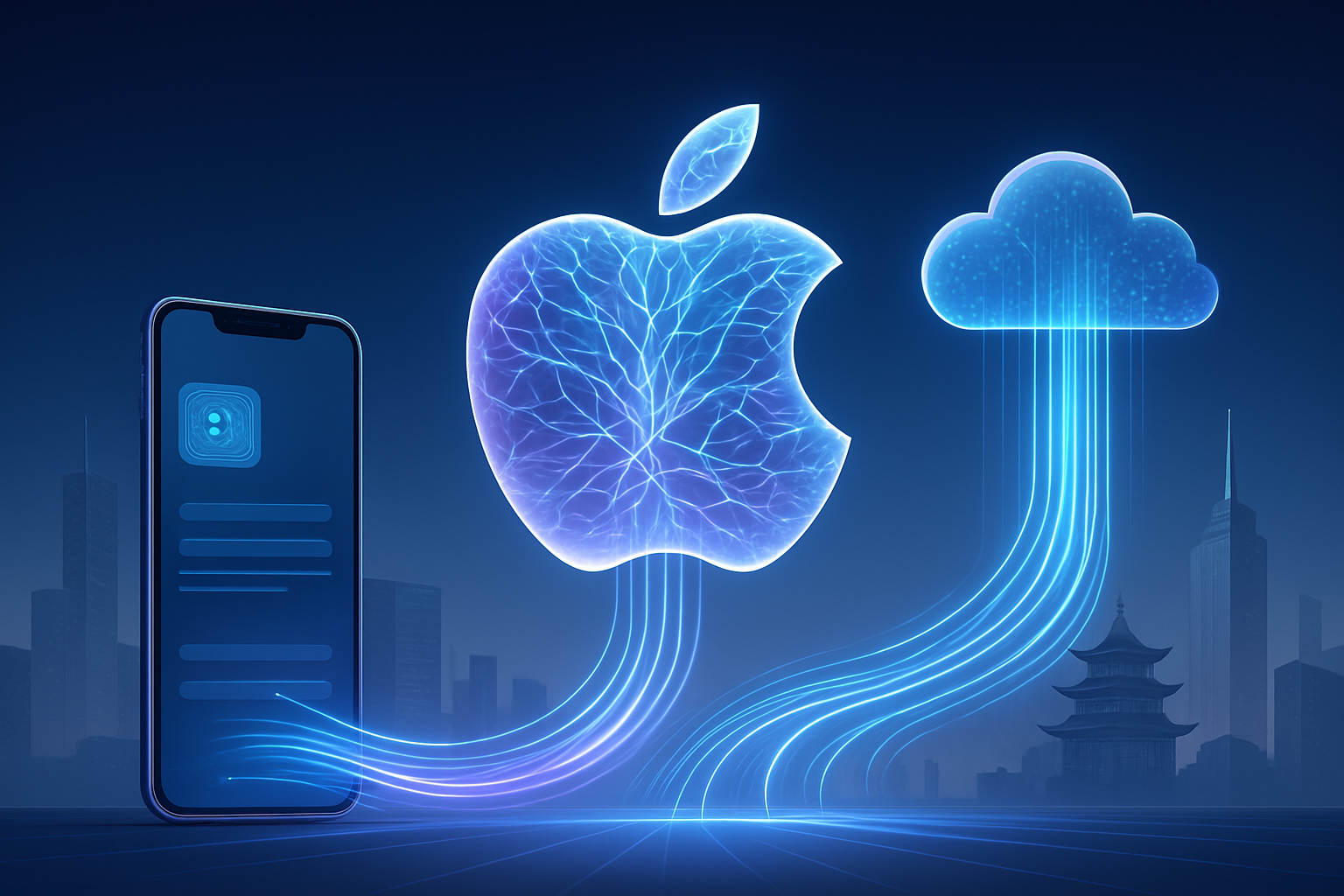
    CUPERTINO, CA — Apple (NASDAQ: AAPL) has officially ushered in what it calls the "Intelligence Era" with the full-scale launch of Apple Intelligence across its latest software ecosystem. While the transition from iOS 18 to the current iOS 26 numbering system initially surprised the industry, the milestone commonly referred to as the "iOS 20" generational leap has finally arrived, bringing a sophisticated, privacy-first AI architecture to hundreds of millions of users. This release represents a fundamental shift in computing, moving away from a collection of apps and toward an integrated, agent-based operating system powered by on-device foundation models.

    The significance of this launch lies in Apple’s unique approach to generative AI: a hybrid architecture that prioritizes local processing while selectively utilizing high-capacity cloud models. By launching the highly anticipated Foundation Models API, Apple is now allowing third-party developers to tap into the same 3-billion parameter on-device models that power Siri, effectively commoditizing high-end AI features for the entire App Store ecosystem.

    Technical Mastery on the Edge: The 3-Billion Parameter Powerhouse

    The technical backbone of this update is the Apple Foundation Model (AFM), a proprietary transformer model specifically optimized for the Neural Engine in the A19 and A20 Pro chips. Unlike cloud-heavy competitors, Apple’s model utilizes advanced 2-bit and 4-bit quantization techniques to run locally with sub-second latency. This allows for complex tasks—such as text generation, summarization, and sentiment analysis—to occur entirely on the device without the need for an internet connection. Initial benchmarks from the AI research community suggest that while the 3B model lacks the broad "world knowledge" of larger LLMs, its efficiency in task-specific reasoning and "On-Screen Awareness" is unrivaled in the mobile space.

    The launch also introduces the "Liquid Glass" design system, a new UI paradigm where interface elements react dynamically to the AI's processing. For example, when a user asks Siri to "send the document I was looking at to Sarah," the OS uses computer vision and semantic understanding to identify the open file and the correct contact, visually highlighting the elements as they are moved between apps. Experts have noted that this "semantic intent" layer is what truly differentiates Apple from existing "chatbot" approaches; rather than just talking to a box, users are interacting with a system that understands the context of their digital lives.

    Market Disruptions: The End of the "AI Wrapper" Era

    The release of the Foundation Models API has sent shockwaves through the tech industry, particularly affecting AI startups. By offering "Zero-Cost Inference," Apple has effectively neutralized the business models of many "wrapper" apps—services that previously charged users for simple AI tasks like PDF summarization or email drafting. Developers can now implement these features with as few as three lines of Swift code, leveraging the on-device hardware rather than paying for expensive tokens from providers like OpenAI or Anthropic.

    Strategically, Apple’s partnership with Alphabet Inc. (NASDAQ: GOOGL) to integrate Google Gemini as a "world knowledge" fallback has redefined the competitive landscape. By positioning Gemini as an opt-in tool for high-level reasoning, Apple (NASDAQ: AAPL) has successfully maintained its role as the primary interface for the user, while offloading the most computationally expensive and "hallucination-prone" tasks to Google’s infrastructure. This positioning strengthens Apple's market power, as it remains the "curator" of the AI experience, deciding which third-party models get access to its massive user base.

    A New Standard for Privacy: The Private Cloud Compute Model

    Perhaps the most significant aspect of the launch is Apple’s commitment to "Private Cloud Compute" (PCC). Recognizing that some tasks remain too complex for even the A20 chip, Apple has deployed a global network of "Baltra" servers—custom Apple Silicon-based hardware designed as stateless enclaves. When a request is too heavy for the device, it is sent to PCC, where the data is processed without ever being stored or accessible to Apple employees.

    This architecture addresses the primary concern of the modern AI landscape: the trade-off between power and privacy. Unlike traditional cloud AI, where user prompts often become training data, Apple's system is built for "verifiable privacy." Independent security researchers have already begun auditing the PCC source code, a move that has been praised by privacy advocates as a landmark in corporate transparency. This shift forces competitors like Microsoft (NASDAQ: MSFT) and Meta (NASDAQ: META) to justify their own data collection practices as the "Apple standard" becomes the new baseline for consumer expectations.

    The Horizon: Siri 2.0 and the Road to iOS 27

    Looking ahead, the near-term roadmap for Apple Intelligence is focused on the "Siri 2.0" rollout, currently in beta for the iOS 26.4 cycle. This update is expected to fully integrate the "Agentic AI" capabilities of the Foundation Models API, allowing Siri to execute multi-step actions across dozens of third-party apps autonomously. For instance, a user could soon say, "Book a table for four at a nearby Italian place and add it to the shared family calendar," and the system will handle the reservation, confirmation, and scheduling without further input.

    Predicting the next major milestone, experts anticipate the launch of the iPhone 16e in early spring, which will serve as the entry-point device for these AI features. Challenges remain, particularly regarding the "aggressive guardrails" Apple has placed on its models. Developers have noted that the system's safety layers can sometimes be over-cautious, refusing to summarize certain types of content. Apple will need to fine-tune these parameters to ensure the AI remains helpful without becoming frustratingly restrictive.

    Conclusion: A Definitive Turning Point in AI History

    The launch of Apple Intelligence and the transition into the iOS 20/26 era marks the moment AI moved from a novelty to a fundamental utility. By prioritizing on-device processing and empowering developers through the Foundation Models API, Apple has created a scalable, private, and cost-effective ecosystem that its competitors will likely be chasing for years.

    Key takeaways from this launch include the normalization of edge-based AI, the rise of the "agentic" interface, and a renewed industry focus on verifiable privacy. As we look toward the upcoming WWDC and the eventual transition to iOS 27, the tech world will be watching closely to see how the "Liquid Glass" experience evolves and whether the partnership with Google remains a cornerstone of Apple’s cloud strategy. For now, one thing is certain: the era of the "smart" smartphone has officially been replaced by the era of the "intelligent" companion.


    This content is intended for informational purposes only and represents analysis of current AI developments.

    TokenRing AI delivers enterprise-grade solutions for multi-agent AI workflow orchestration, AI-powered development tools, and seamless remote collaboration platforms.
    For more information, visit https://www.tokenring.ai/.
  • The Intelligence Revolution: Apple’s iOS 26 and 27 to Redefine Personal Computing with Gemini-Powered Siri and Real-Time Translation

    The Intelligence Revolution: Apple’s iOS 26 and 27 to Redefine Personal Computing with Gemini-Powered Siri and Real-Time Translation

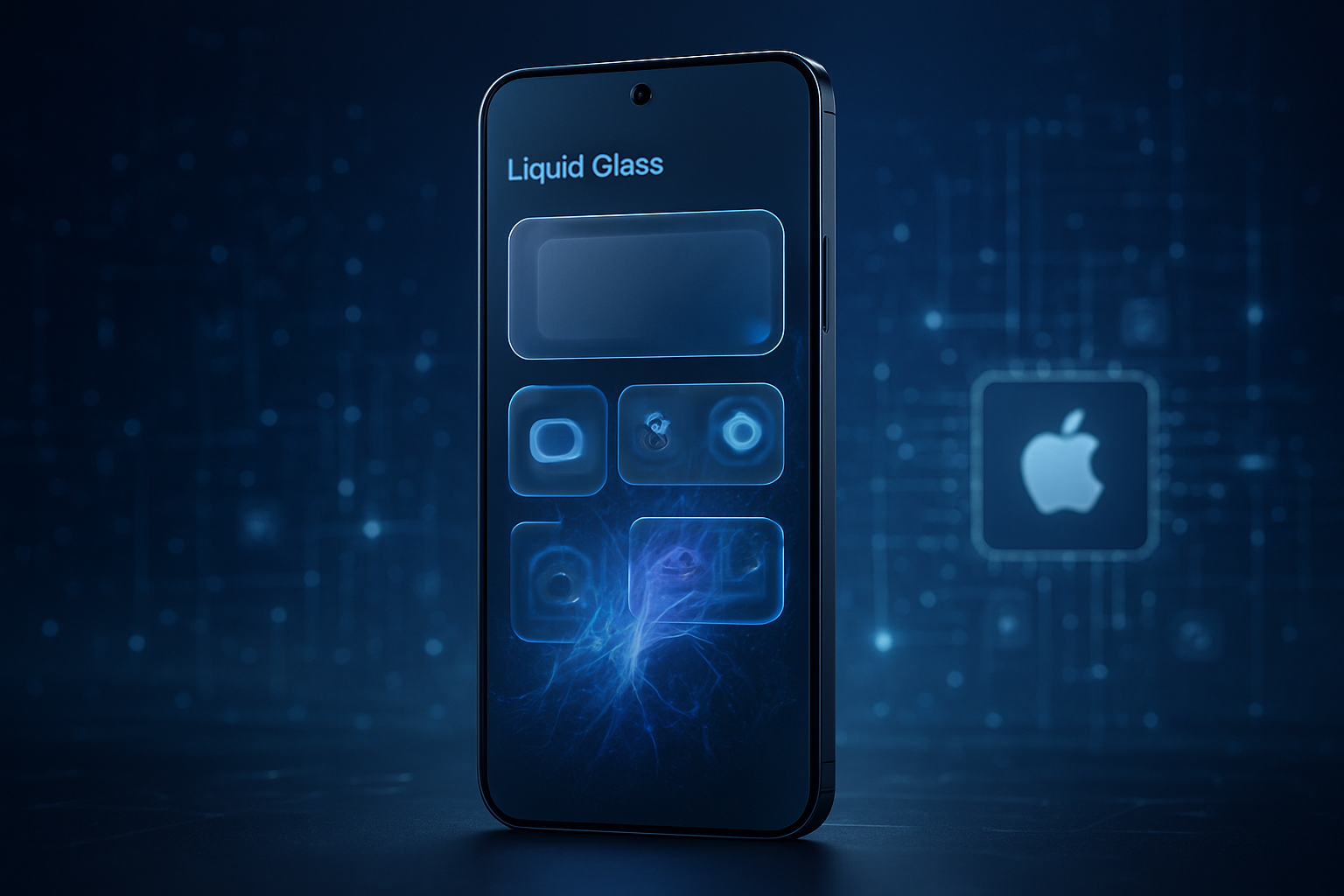
    As the world enters the mid-point of 2026, Apple Inc. (NASDAQ: AAPL) is preparing to fundamentally rewrite the rules of the smartphone experience. With the current rollout of iOS 26.4 and the first developer previews of the upcoming iOS 27, the tech giant is shifting its "Apple Intelligence" initiative from a set of helpful tools into a comprehensive, proactive operating system. This evolution is marked by a historic deepening of its partnership with Alphabet Inc. (NASDAQ: GOOGL), integrating Google’s advanced Gemini models directly into the core of the iPhone’s user interface.

    The significance of this development cannot be overstated. By moving beyond basic generative text and image tools, Apple is positioning the iPhone as a "proactive agent" rather than a passive device. The centerpiece of this transition—live, multi-modal translation in FaceTime and a Siri that possesses full "on-screen awareness"—represents a milestone in the democratization of high-end AI, making complex neural processing a seamless part of everyday communication and navigation.

    Bridging the Linguistic Divide: Technical Breakthroughs in iOS 26

    The technical backbone of iOS 26 is defined by its hybrid processing architecture. While previous iterations relied heavily on on-device small language models (SLMs), iOS 26 introduces a refined version of Apple’s Private Cloud Compute (PCC). This allows the device to offload massive workloads, such as Live Translation in FaceTime, to Apple’s carbon-neutral silicon servers without compromising end-to-end encryption. In practice, FaceTime now offers "Live Translated Captions," which use advanced Neural Engine acceleration to convert spoken dialogue into text overlays in real-time. Unlike third-party translation apps, this system maintains the original audio's tonality while providing a low-latency subtitle stream, a feat achieved through a new "Speculative Decoding" technique that predicts the next likely words in a sentence to reduce lag.

    Furthermore, Siri has undergone a massive architecture shift. The integration of Google’s Gemini 3 Pro allows Siri to handle multi-turn, complex queries that were previously impossible. The standout technical capability is "On-Screen Awareness," where the AI utilizes a dedicated vision transformer to understand the context of what a user is viewing. If a user is looking at a complex flight itinerary in an email, they can simply say, "Siri, add this to my calendar and find a hotel near the arrival gate," and the system will parse the visual data across multiple apps to execute the command. This differs from previous approaches by eliminating the need for developers to manually add "Siri Shortcuts" for every action; the AI now "sees" and interacts with the UI just as a human would.

    The Strategic Alliance: Apple, Google, and the Competitive Landscape

    The integration of Google Gemini into the Apple ecosystem marks a strategic masterstroke for both Apple and Alphabet Inc. (NASDAQ: GOOGL). For Apple, it provides an immediate answer to the aggressive AI hardware pushes from competitors while allowing them to maintain their "Privacy First" branding by routing Gemini queries through their proprietary Private Cloud Compute gateway. For Google, the deal secures their LLM as the default engine for the world’s most lucrative mobile user base, effectively countering the threat posed by OpenAI and Microsoft Corp (NASDAQ: MSFT). This partnership effectively creates a duopoly in the personal AI space, making it increasingly difficult for smaller AI startups to find a foothold in the "OS-level" assistant market.

    Industry experts view this as a defensive move against the rise of "AI-first" hardware like the Rabbit R1 or the Humane AI Pin, which sought to bypass the traditional app-based smartphone model. By baking these capabilities into iOS 26 and 27, Apple is making standalone AI gadgets redundant. The competitive implications extend to the translation and photography sectors as well. Professional translation services and high-end photo editing software suites are facing disruption as Apple’s "Semantic Search" and "Generative Relighting" tools in the Photos app provide professional-grade results with zero learning curve, all included in the price of the handset.

    Societal Implications and the Broader AI Landscape

    The move toward a system-wide, Gemini-powered Siri reflects a broader trend in the AI landscape: the transition from "Generative AI" to "Agentic AI." We are no longer just asking a bot to write a poem; we are asking it to manage our lives. This shift brings significant benefits, particularly in accessibility. Live Translation in FaceTime and Phone calls democratizes global communication, allowing individuals who speak different languages to connect without barriers. However, this level of integration also raises profound concerns regarding digital dependency and the "black box" nature of AI decision-making. As Siri gains the ability to take actions on a user's behalf—like emailing an accountant or booking a trip—the potential for algorithmic error or bias becomes a critical point of discussion.

    Comparatively, this milestone is being likened to the launch of the original App Store in 2008. Just as the App Store changed how we interacted with the web, the "Intelligence" rollout in iOS 26 and 27 is changing how we interact with the OS itself. Apple is effectively moving toward an "Intent-Based UI," where the grid of apps becomes secondary to a conversational interface that can pull data from any source. This evolution challenges the traditional business models of apps that rely on manual user engagement and "screen time," as Siri begins to provide answers and perform tasks without the user ever needing to open the app's primary interface.

    The Horizon: Project 'Campos' and the Road to iOS 27

    Looking ahead to the release of iOS 27 in late 2026, Apple is reportedly working on a project codenamed "Campos." This update is expected to transition Siri from a voice assistant into a full-fledged AI Chatbot that rivals the multimodal capabilities of GPT-5. Internal leaks suggest that iOS 27 will introduce "Ambient Intelligence," where the device utilizes the iPhone’s various sensors—including the microphone, camera, and LIDAR—to anticipate user needs before they are even voiced. For example, if the device senses the user is in a grocery store, it might automatically surface a recipe and a shopping list based on what it knows is in the user's smart refrigerator.

    Another major frontier is the integration of AI into Apple Maps. Future updates are expected to feature "Satellite Intelligence," using AI to enhance navigation in areas without cellular coverage by interpreting low-resolution satellite imagery in real-time to provide high-detail pathfinding. Challenges remain, particularly regarding battery life and thermal management. Running massive transformer models, even with the efficiency of Apple's M-series and A-series chips, puts an immense strain on hardware. Experts predict that the next few years will see a "silicon arms race," where the limiting factor for AI software won't be the algorithms themselves, but the ability of the hardware to power them without overheating.

    A New Chapter in the Silicon Valley Saga

    The rollout of Apple Intelligence features in iOS 26 and 27 represents a pivotal moment in the history of the smartphone. By successfully integrating third-party LLMs like Google Gemini while maintaining a strict privacy-centric architecture, Apple has managed to close the "intelligence gap" that many feared would leave them behind in the AI race. The key takeaways from this rollout are clear: AI is no longer a standalone feature; it is the fabric of the operating system. From real-time translation in FaceTime to the proactive "Visual Intelligence" in Maps and Photos, the iPhone is evolving into a cognitive peripheral.

    As we look toward the final quarters of 2026, the tech industry will be watching closely to see how users adapt to this new level of automation. The success of iOS 27 and Project "Campos" will likely determine the trajectory of personal computing for the next decade. For now, the "Intelligence Revolution" is well underway, and Apple’s strategic pivot has ensured its place at the center of the AI-powered future.


    This content is intended for informational purposes only and represents analysis of current AI developments.

    TokenRing AI delivers enterprise-grade solutions for multi-agent AI workflow orchestration, AI-powered development tools, and seamless remote collaboration platforms.
    For more information, visit https://www.tokenring.ai/.
  • Apple Intelligence Reaches Maturity: iOS 26 Redefines the iPhone Experience with Live Translation and Agentic Siri

    Apple Intelligence Reaches Maturity: iOS 26 Redefines the iPhone Experience with Live Translation and Agentic Siri

    As the first week of 2026 comes to a close, Apple (NASDAQ: AAPL) has officially entered a new era of personal computing. The tech giant has begun the wide-scale rollout of the latest iteration of its AI ecosystem, integrated into the newly rebranded iOS 26. Moving away from its traditional numbering to align with the calendar year, Apple is positioning this release as the "full vision" of Apple Intelligence, transforming the iPhone from a collection of apps into a proactive, agentic assistant.

    The significance of this release cannot be overstated. While 2024 and 2025 were characterized by experimental AI features and "beta" tags, the early 2026 update—internally codenamed "Luck E"—represents a stabilized, privacy-first AI platform that operates almost entirely on-device. With a focus on seamless communication and deep semantic understanding, Apple is attempting to solidify its lead in the "Edge AI" market, challenging the cloud-centric models of its primary rivals.

    The Technical Core: On-Device Intelligence and Semantic Mastery

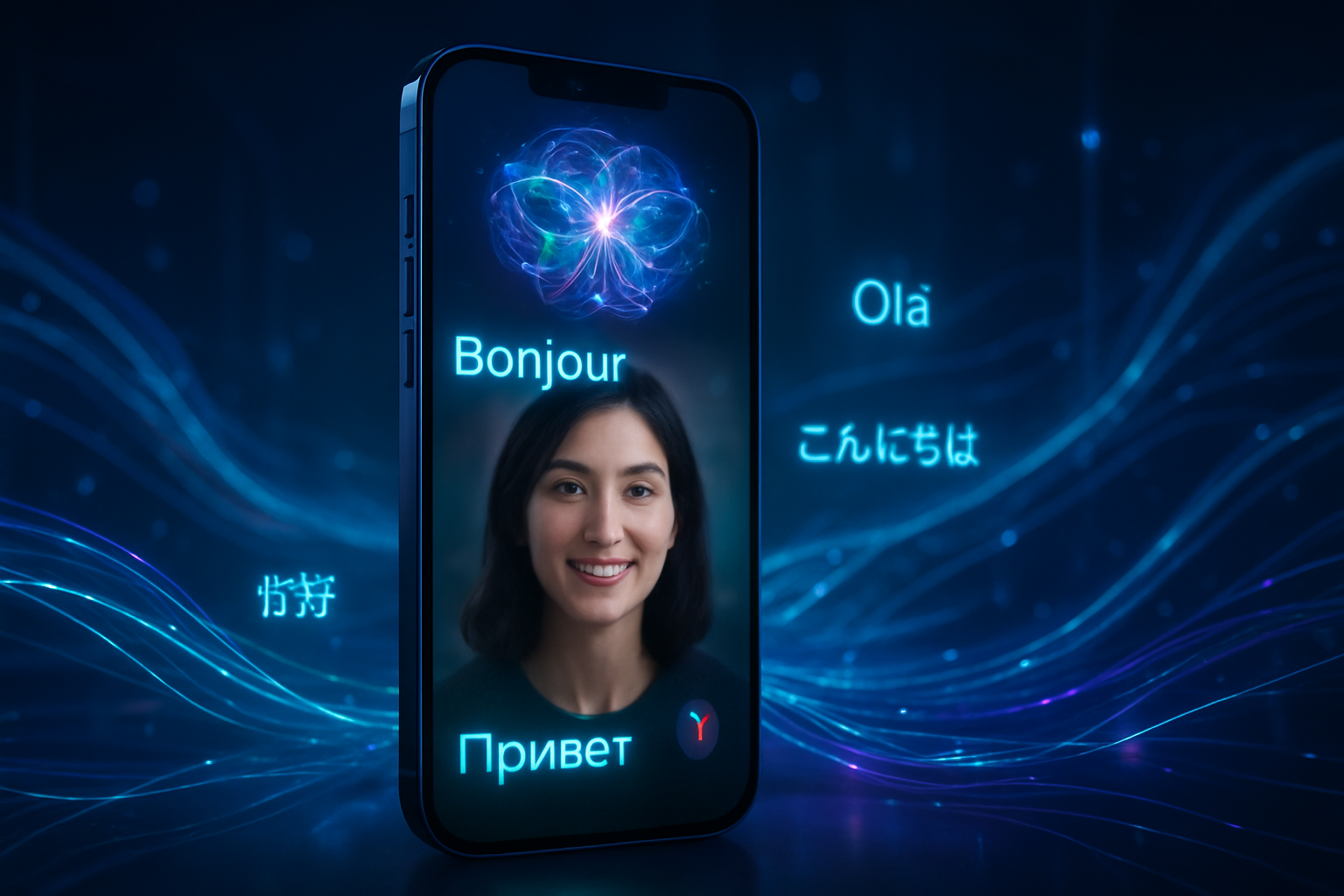
    The centerpiece of the iOS 26 rollout is the introduction of Live Translation for calls, a feature that the industry has anticipated since the first Neural Engines were introduced. Unlike previous translation tools that required third-party apps or cloud processing, iOS 26 provides two-way, real-time spoken translation directly within the native Phone app. Utilizing a specialized version of Apple’s Large Language Models (LLMs) optimized for the A19 and A20 chips, the system translates the user’s voice into the recipient’s language and vice-versa, with a latency of less than 200 milliseconds. This "Real-Time Interpreter" also extends to FaceTime, providing live, translated captions that appear as an overlay during video calls.

    Beyond verbal communication, Apple has overhauled the Messages app with AI-powered semantic search. Moving past simple keyword matching, the new search engine understands intent and context. A user can now ask, "Where did Sarah say she wanted to go for lunch next Tuesday?" and the system will cross-reference message history, calendar availability, and even shared links to provide a direct answer. This is powered by a local index that maps "personal context" without ever sending the data to a central server, a technical feat that Apple claims is unique to its hardware-software integration.

    The creative suite has also seen a dramatic upgrade. Image Playground has shed its earlier "cartoonish" aesthetic for a more sophisticated, photorealistic engine. Users can now generate images in advanced artistic styles—including high-fidelity oil paintings and hyper-realistic digital renders—leveraging a deeper partnership with OpenAI for certain cloud-based creative tasks. Furthermore, Genmoji has evolved to include "Emoji Mixing," allowing users to merge existing Unicode emojis or create custom avatars from their Photos library that mirror specific facial expressions and hairstyles with uncanny accuracy.

    The Competitive Landscape: The Battle for the AI Edge

    The rollout of iOS 26 has sent ripples through the valuation of the world’s largest tech companies. As of early January 2026, Apple remains in a fierce battle with Alphabet (NASDAQ: GOOGL) and Nvidia (NASDAQ: NVDA) for market dominance. By prioritizing "Edge AI"—processing data on the device rather than the cloud—Apple has successfully differentiated itself from Google’s Gemini and Microsoft’s (NASDAQ: MSFT) Copilot, which still rely heavily on data center throughput.

    This strategic pivot has significant implications for the broader industry:

    • Hardware as a Moat: The advanced features of iOS 26 require the massive NPU (Neural Processing Unit) overhead found in the iPhone 17 and iPhone 15 Pro or later. This is expected to trigger what analysts call the "Siri Surge," a massive upgrade cycle as users on older hardware are left behind by the AI revolution.
    • Disruption of Translation Services: Dedicated translation hardware and standalone apps are facing an existential threat as Apple integrates high-quality, offline translation into the core of the operating system.
    • New Revenue Models: Apple has used this rollout to scale Apple Intelligence Pro, a $9.99 monthly subscription that offers priority access to Private Cloud Compute for complex tasks and high-volume image generation. This move signals a shift from a hardware-only revenue model to an "AI-as-a-Service" ecosystem.

    Privacy, Ethics, and the Broader AI Landscape

    As Apple Intelligence becomes more deeply woven into the fabric of daily life, the broader AI landscape is shifting toward "Personal Context Awareness." Apple’s approach stands in contrast to the "World Knowledge" models of 2024. While competitors focused on knowing everything about the internet, Apple has focused on knowing everything about you—while keeping that knowledge locked in a "black box" of on-device security.

    However, this level of integration is not without concerns. Privacy advocates have raised questions about "On-Screen Awareness," a feature where Siri can "see" what is on a user's screen to provide context-aware help. Although Apple utilizes Private Cloud Compute (PCC)—a breakthrough in verifiable server-side security—to handle tasks that exceed on-device capabilities, the psychological barrier of an "all-seeing" AI remains a hurdle for mainstream adoption.

    Comparatively, this milestone is being viewed as the "iPhone 4 moment" for AI. Just as the iPhone 4 solidified the smartphone as an essential tool for the modern era, iOS 26 is seen as the moment generative AI transitioned from a novelty into an invisible, essential utility.

    The Horizon: From Personal Assistants to Autonomous Agents

    Looking ahead, the early 2026 rollout is merely the foundation for Apple's long-term "Agentic" roadmap. Experts predict that the next phase will involve "cross-app autonomy," where Siri will not only find information but execute multi-step tasks—such as booking a flight, reserving a hotel, and notifying family members—all from a single prompt.

    The challenges remain significant. Scaling these models to work across the entire ecosystem, including the Apple Watch and Vision Pro, requires further breakthroughs in power efficiency and model compression. Furthermore, as AI begins to handle more personal communications, the industry must grapple with the potential for "AI hallucination" in critical contexts like legal or medical translations.

    A New Chapter in the Silicon Valley Narrative

    The launch of iOS 26 and the expanded Apple Intelligence suite marks a definitive turning point in the AI arms race. By successfully integrating live translation, semantic search, and advanced generative tools into a privacy-first framework, Apple has proven that the future of AI may not live in massive, energy-hungry data centers, but in the pockets of billions of users.

    The key takeaways from this rollout are clear: AI is no longer a standalone product; it is a layer of the operating system. As we move through the first quarter of 2026, the tech world will be watching closely to see how consumers respond to the "Apple Intelligence Pro" subscription and whether the "Siri Surge" translates into the record-breaking hardware sales that investors are banking on. For now, the iPhone has officially become more than a phone—it is a sentient, or at least highly intelligent, digital companion.


    This content is intended for informational purposes only and represents analysis of current AI developments.

    TokenRing AI delivers enterprise-grade solutions for multi-agent AI workflow orchestration, AI-powered development tools, and seamless remote collaboration platforms.
    For more information, visit https://www.tokenring.ai/.
  • The 2026 AI Supercycle: Apple’s iPhone 17 Pro and iOS 26 Redefine the Personal Intelligence Era

    The 2026 AI Supercycle: Apple’s iPhone 17 Pro and iOS 26 Redefine the Personal Intelligence Era

    As 2026 dawns, the technology industry is witnessing what analysts are calling the most significant hardware upgrade cycle in over a decade. Driven by the full-scale deployment of Apple Intelligence, the "AI Supercycle" has moved from a marketing buzzword to a tangible market reality. At the heart of this shift is the iPhone 17 Pro, a device that has fundamentally changed the consumer relationship with mobile technology by transitioning the smartphone from a passive tool into a proactive, agentic companion.

    The release of the iPhone 17 Pro in late 2025, coupled with the groundbreaking iOS 26 software architecture, has triggered a massive wave of device replacements. For the first time, the value proposition of a new smartphone is defined not by the quality of its camera or the brightness of its screen, but by its "Neural Capacity"—the ability to run sophisticated, multi-step AI agents locally without compromising user privacy.

    Technical Powerhouse: The A19 Pro and the 12GB RAM Standard

    The technological foundation of this supercycle is the A19 Pro chip, manufactured on TSMC’s refined 3nm (N3P) process. While previous chip iterations focused on incremental gains in peak clock speeds, the A19 Pro delivers a staggering 40% boost in sustained performance. This leap is not merely a result of transistor density but a fundamental redesign of the iPhone’s internal architecture. For the first time, Apple (NASDAQ: AAPL) has integrated a vapor chamber cooling system into the Pro lineup, allowing the A19 Pro to maintain high-performance states for extended periods during intensive local LLM (Large Language Model) processing.

    To support these advanced AI capabilities, Apple has established 12GB of LPDDR5X RAM as the new baseline for the Pro series. This memory expansion was a technical necessity for "local agentic intelligence." Unlike the 8GB models of the previous generation, the 12GB configuration allows the iPhone 17 Pro to keep a 3-billion-parameter language model resident in its memory. This ensures that the device can perform complex tasks—such as real-time language translation, semantic indexing of a user's entire file system, and on-device image generation—with zero latency and without needing to ping a remote server.

    Initial reactions from the AI research community have been overwhelmingly positive, particularly regarding Apple's "Neural Accelerators" integrated directly into the GPU cores. Industry experts note that this approach differs significantly from competitors who often rely on cloud-heavy processing. By prioritizing local execution, Apple has effectively bypassed the "latency wall" that has hindered the adoption of voice-based AI assistants in the past, making the new Siri feel instantaneous and conversational.

    Market Dominance and the Competitive Moat

    The 2026 supercycle has placed Apple in a dominant strategic position, forcing competitors like Samsung and Google (NASDAQ: GOOGL) to accelerate their own on-device AI roadmaps. By tightly coupling its custom silicon with the iOS 26 ecosystem, Apple has created a "privacy moat" that is difficult for data-driven advertising companies to replicate. The integration of Private Cloud Compute (PCC) has been the masterstroke in this strategy; when a task exceeds the iPhone’s local processing power, it is handed off to Apple Silicon-based servers in a "stateless" environment where data is never stored and is mathematically inaccessible to Apple itself.

    This development has caused a significant disruption in the app economy. Traditional apps are increasingly being replaced by "intent-based" interactions where users interact with Siri rather than opening individual applications. This shift has forced developers to move away from traditional UI design and toward "App Intents," ensuring their services are discoverable by the iOS 26 agentic engine. Tech giants that rely on high "time-in-app" metrics are now pivoting to ensure they remain relevant in a world where the OS, not the app, manages the user’s workflow.

    A New Paradigm: Agentic Siri and Privacy-First AI

    The broader significance of the 2026 AI Supercycle lies in the evolution of Siri from a voice-activated search tool into a multi-step digital agent. Within the iOS 26 framework, Siri is now capable of executing complex, cross-app sequences. A user can provide a single prompt like, "Find the contract I received in Mail yesterday, highlight the changes in the indemnity clause, and draft a summary for my legal team in Slack," and the system handles the entire chain of events autonomously. This is made possible by "Semantic Indexing," which allows the AI to understand the context and relationships between data points across different applications.

    This milestone marks a departure from the "chatbot" era of 2023 and 2024. The societal impact is profound, as it democratizes high-level productivity tools that were previously the domain of power users. However, this advancement has also raised concerns regarding "algorithmic dependency." As users become more reliant on AI agents to manage their professional and personal lives, questions about the transparency of the AI’s decision-making process and the potential for "hallucinated" actions in critical workflows remain at the forefront of public debate.

    The Road Ahead: iOS 26.4 and the Future of Human-AI Interaction

    Looking forward to the rest of 2026, the industry is anticipating the release of iOS 26.4, which is rumored to introduce "Proactive Anticipation" features. This would allow the iPhone to suggest and even pre-execute tasks based on a user’s habitual patterns and real-time environmental context. For example, if the device detects a flight delay, it could automatically notify contacts, reschedule calendar appointments, and book a ride-share without the user needing to initiate the request.

    The long-term challenge for Apple will be maintaining the delicate balance between utility and privacy. As Siri becomes more deeply embedded in the user’s digital life, the volume of sensitive data processed by Private Cloud Compute will grow exponentially. Experts predict that the next frontier will involve "federated learning," where the AI models themselves are updated and improved based on user interactions without the raw data ever leaving the individual’s device.

    Closing the Loop on the AI Supercycle

    The 2026 AI Supercycle represents a watershed moment in the history of personal computing. By combining the 40% performance boost of the A19 Pro with the 12GB RAM standard and the agentic capabilities of iOS 26, Apple has successfully transitioned the smartphone into the "Intelligence" era. The key takeaway for the industry is that hardware still matters; the most sophisticated software in the world is limited by the silicon it runs on, and Apple’s vertical integration has allowed it to set a new bar for what a mobile device can achieve.

    As we move through the first quarter of 2026, the focus will remain on how effectively these AI agents can handle the complexities of the real world. The significance of this development cannot be overstated—it is the moment when AI stopped being a feature and started being the interface. For consumers and investors alike, the coming months will be a test of whether this new "Personal Intelligence" can deliver on its promise of a more efficient, privacy-focused digital future.


    This content is intended for informational purposes only and represents analysis of current AI developments.

    TokenRing AI delivers enterprise-grade solutions for multi-agent AI workflow orchestration, AI-powered development tools, and seamless remote collaboration platforms.
    For more information, visit https://www.tokenring.ai/.
  • Apple’s Global AI Conquest: The Great Wall of Intelligence and the Alibaba Pivot

    Apple’s Global AI Conquest: The Great Wall of Intelligence and the Alibaba Pivot

    As 2025 draws to a close, Apple Inc. (NASDAQ: AAPL) has successfully transitioned from a perceived laggard in the generative AI race to a dominant "AI Orchestrator." The global rollout of Apple Intelligence, culminating in a landmark partnership with Alibaba Group Holding Ltd (NYSE: BABA) for the Chinese market, marks a pivotal moment in the history of consumer technology. By deeply embedding artificial intelligence into the core of iOS, Apple has effectively moved AI from a standalone novelty into a seamless, proactive layer of daily computing for over a billion users worldwide.

    The significance of this rollout cannot be overstated. While competitors rushed to launch cloud-heavy chatbots, Apple spent the last eighteen months perfecting a "Privacy-First" hybrid model that balances on-device processing with its revolutionary Private Cloud Compute (PCC). This strategy has not only redefined user expectations for digital privacy but has also allowed Apple to navigate the complex geopolitical landscape of China, where it has successfully integrated localized AI models to meet strict regulatory requirements while maintaining the cohesive user experience that defines its brand.

    The Technical Architecture of Siri 2.0 and the "Digital Border"

    The 2025 iteration of Apple Intelligence, showcased in the latest releases of iOS, represents a fundamental shift in how humans interact with machines. At the heart of this advancement is "Siri 2.0," an agentic AI system that possesses full on-screen awareness and cross-app action capabilities. Unlike previous iterations that relied on simple voice-to-text triggers, the new Siri can understand the context of what a user is looking at—whether it's an email, a photo, or a complex spreadsheet—and perform multi-step tasks across different applications. For instance, a user can now command Siri to "take the address from this email and add it to my Friday calendar event with a fifteen-minute buffer," a task that requires semantic understanding of both the content and the user's personal schedule.

    To bring these features to the Chinese market, Apple orchestrated a sophisticated technical "digital border." Because global partners like OpenAI are restricted in China, Apple collaborated with Alibaba to integrate its Tongyi Qianwen (Qwen) large language models into the iOS ecosystem. This partnership involves a localized version of Apple Intelligence where Alibaba provides the "intelligence layer" for general tasks, while Baidu (NASDAQ: BIDU) handles specialized functions like Visual Intelligence and localized search. This system underwent a rigorous "2,000-question test" by the Cyberspace Administration of China (CAC), requiring the AI to successfully navigate sensitive political and social queries to gain commercial approval.

    Initial reactions from the AI research community have been overwhelmingly positive, particularly regarding Apple’s Private Cloud Compute (PCC). By late 2025, Apple began publishing public software images of every PCC production build, allowing independent security researchers to verify that user data is never stored or accessible to the company. This "verifiable transparency" has set a new industry benchmark, forcing rivals like Alphabet Inc. (NASDAQ: GOOGL) and Samsung Electronics Co., Ltd. (OTC: SSNLF) to rethink their own cloud-based AI architectures to compete with Apple's privacy-centric model.

    Market Positioning and the "Sherlocking" of AI Startups

    The global rollout has fundamentally altered the competitive landscape of the tech industry. Apple has positioned itself as the "AI Orchestrator," a gatekeeper that allows users to "plug in" their preferred third-party models—such as ChatGPT or Google Gemini—while keeping the core user data within Apple's secure environment. This strategy has commoditized the underlying LLMs, preventing any single AI lab from owning the user relationship. While OpenAI has benefited from massive distribution through Apple's ecosystem, it now finds itself in a position where its "intelligence" is just one of many options available to the iOS user.

    The impact on the broader startup ecosystem has been more disruptive. Many specialized AI applications that focused on singular tasks like grammar correction, basic photo editing, or automated scheduling have been "Sherlocked"—a term used when Apple integrates a startup's core functionality directly into the operating system. With system-wide "Writing Tools" and "Image Playground" now native to iOS, many independent AI developers are being forced to pivot toward building deep integrations with Apple Intelligence rather than trying to compete as standalone platforms.

    In the Chinese market, the Alibaba partnership has been a masterstroke. After facing declining sales in early 2025 due to "patriotic buying" of domestic brands like Huawei, Apple saw a 37% year-over-year surge in iPhone sales in late 2025. By offering a fully compliant, localized AI experience that feels identical to the global version, Apple has recaptured the affluent demographic in China that values both high-end hardware and seamless software integration.

    The Broader Significance: Privacy as a Product

    Apple's AI strategy represents a significant milestone in the broader AI landscape, signaling a shift away from "data-at-any-cost" toward "privacy-by-design." For years, the tech industry operated under the assumption that powerful AI required a trade-off in personal privacy. Apple has challenged this narrative by proving that complex, agentic AI can function on-device or within a verifiable cloud environment. This move fits into a larger trend of consumer pushback against data harvesting and represents a major victory for digital rights advocates.

    However, the localized rollout in China has also raised concerns about the fragmentation of the internet. The "digital border" Apple has created ensures that an iPhone in Shanghai operates with a fundamentally different "truth" than an iPhone in San Francisco, as the Alibaba-powered models are tuned to comply with local censorship laws. This highlights a potential future where AI is not a global, unifying technology, but a localized one that reflects the political and social values of the region in which it resides.

    Comparatively, this rollout is being viewed as the "iPhone moment" for generative AI. Just as the original iPhone moved the internet from the desktop to the pocket, Apple Intelligence has moved the power of large language models from the data center to the palm of the hand. It marks the transition from "chatting with an AI" to "living with an AI" that manages one's digital life autonomously.

    Future Developments and the A19 Era

    Looking ahead to 2026, experts predict that Apple will further lean into hardware-level AI optimization. The recently released iPhone 17 series, powered by the A19 chip, features a significantly enhanced Neural Engine specifically designed for the "Siri 2.0" agentic workflows. Near-term developments are expected to include deeper integration with the Apple Vision Pro, where "Visual Intelligence" will allow the headset to understand and interact with the user's physical surroundings in real-time, providing an augmented reality experience that is contextually aware.

    The next major challenge for Apple will be the expansion of "Actionable AI." While Siri can now perform tasks across apps, the next frontier is "Agentic Autonomy," where the AI can proactively manage tasks without a direct prompt—such as automatically rescheduling a meeting when it detects a flight delay or proactively suggesting a gift for a friend's upcoming birthday based on past conversations. These developments will require even more sophisticated on-device reasoning and further refinements to the Private Cloud Compute infrastructure.

    A New Chapter in AI History

    The global rollout of Apple Intelligence and the successful navigation of the Chinese market through the Alibaba partnership mark the beginning of a new era for Apple. By prioritizing privacy and deep OS integration, Apple has not only secured its position in the AI age but has also set the standard for how AI should be delivered to the masses. The company’s climb to a $4 trillion market capitalization in late 2025 is a testament to the success of this "patience and privacy" strategy.

    Key takeaways from this development include the successful localization of AI in restricted markets, the emergence of the "AI Orchestrator" model, and the validation of verifiable privacy as a core product feature. In the coming months, the industry will be watching closely to see how Google and Samsung respond to Apple's "Siri 2.0" and whether the Alibaba-powered Apple Intelligence in China can maintain its momentum against domestic rivals. For now, Apple has once again proven that while it may not always be the first to a new technology, its ability to refine and integrate that technology into the lives of millions is unparalleled.


    This content is intended for informational purposes only and represents analysis of current AI developments.

    TokenRing AI delivers enterprise-grade solutions for multi-agent AI workflow orchestration, AI-powered development tools, and seamless remote collaboration platforms.
    For more information, visit https://www.tokenring.ai/.