Tag: iPhone 18

  • Silicon Supremacy: Apple Secures Lion’s Share of TSMC 2nm Output to Power the AI-First Era

    Silicon Supremacy: Apple Secures Lion’s Share of TSMC 2nm Output to Power the AI-First Era

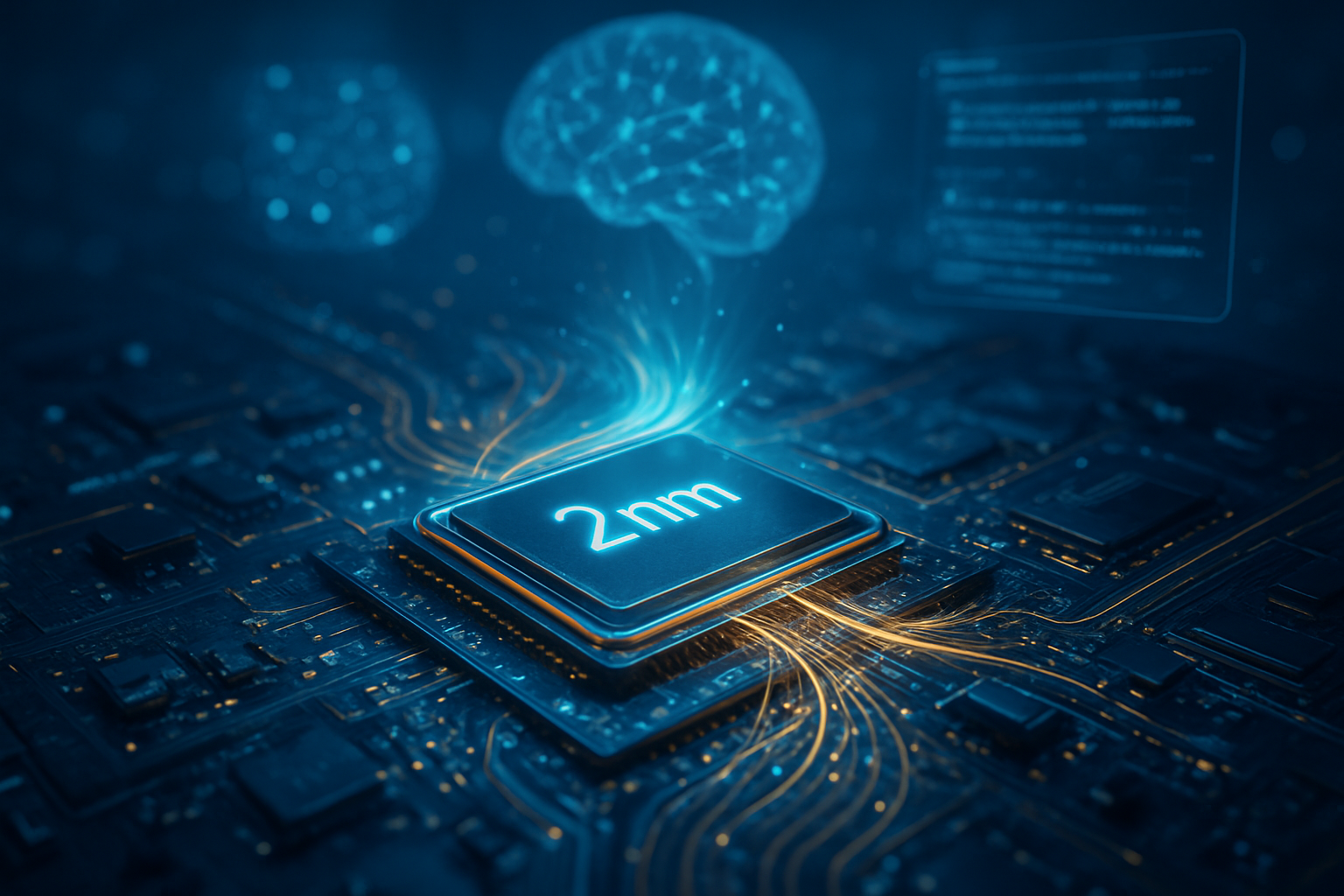
    As the global race for semiconductor dominance intensifies, Apple Inc. (NASDAQ: AAPL) has executed a decisive strategic maneuver to consolidate its lead in the mobile and personal computing markets. Recent supply chain reports confirm that Apple has successfully reserved over 50% of the initial 2nm (N2) manufacturing capacity from Taiwan Semiconductor Manufacturing Company (NYSE: TSM / TPE: 2330) for the 2026 calendar year. This multi-billion dollar commitment ensures that Apple will be the first—and for a time, the only—major player with the volume required to bring 2nm-based consumer electronics to the mass market.

    The move marks a critical juncture in the evolution of "on-device AI." By monopolizing the world's most advanced silicon production lines, Apple is positioning its upcoming iPhone 18 and M6-powered MacBooks as the premier platforms for generative AI. This "first-mover" advantage is designed to create a performance and efficiency gap so wide that competitors may struggle to catch up for several hardware cycles, effectively turning the semiconductor supply chain into a defensive moat.

    The Dawn of GAAFET: Inside the A20 Pro and M6 Architecture

    At the heart of this transition is a fundamental shift in transistor technology. After years of utilizing FinFET (Fin Field-Effect Transistor) architecture, the 2nm N2 node introduces Gate-all-around (GAAFET) nanosheet technology. Unlike the previous design where the gate contacted the channel on three sides, GAAFET wraps the gate entirely around the channel. This provides significantly better electrostatic control, drastically reducing current leakage—a primary hurdle for mobile chip performance. Technical specifications for the N2 node suggest a 10–15% speed boost at the same power level or a staggering 25–30% reduction in power consumption compared to the current 3nm (N3P) processes.

    The upcoming A20 Pro chip, slated for the iPhone 18 Pro series in late 2026, is expected to leverage a new Wafer-Level Multi-Chip Module (WMCM) packaging technique. This "RAM-on-Wafer" approach integrates the CPU, GPU, and high-bandwidth memory directly onto a single silicon structure. By reducing the physical distance data must travel between the processor and memory, Apple aims to achieve the ultra-low latency required for real-time generative AI tasks, such as live video translation and complex local LLM (Large Language Model) processing.

    Industry experts have reacted with a mix of awe and concern. While the research community praises the engineering feat of mass-producing nanosheet transistors, many note that the barrier to entry for advanced silicon has never been higher. The integration of Super High-Performance Metal-Insulator-Metal (SHPMIM) capacitors within the 2nm node will further stabilize power delivery, allowing the M6 processor family—destined for a redesigned MacBook Pro lineup—to maintain peak performance during heavy AI workloads without the thermal throttling that plagues current-generation competitors.

    Strategic Starvation: Depriving the Competition

    Apple’s move to seize more than half of TSMC’s initial 2nm output is more than a production necessity; it is a tactical strike against the broader ecosystem. Major chip designers like Qualcomm (NASDAQ: QCOM) and MediaTek (TWSE: 2454) now find themselves in a precarious position. With Apple occupying the majority of the N2 lines, these competitors are reportedly being forced to skip the standard 2nm node and wait for the "N2P" (enhanced 2nm) variant, which is not expected to reach high-volume production until late 2026 or early 2027.

    This "strategic starvation" of the supply chain means that for the better part of 2026, flagship Android devices may be relegated to refined versions of 3nm technology while Apple scales the 2nm wall. For Qualcomm, this poses a significant threat to its Snapdragon 8 series market share, particularly as premium smartphone buyers increasingly prioritize battery life and "AI-readiness." MediaTek, which has been making inroads into the high-end market with its Dimensity chips, may see its momentum blunted if it cannot offer a 2nm alternative to global OEMs (Original Equipment Manufacturers).

    The market positioning here is clear: Apple is using its massive cash reserves to buy time. By the time Qualcomm and MediaTek can access 2nm at scale, Apple will likely be refining its second-generation 2nm designs or looking toward 1.4nm (A14) prototyping. This cycle of capacity locking prevents a level playing field, ensuring that the most efficient "AI PCs" and smartphones bear the Apple logo during the most critical growth phase of the AI industry.

    The Global Semiconductor Chessboard and the AI Landscape

    This development fits into a broader trend of "vertical integration" where tech giants no longer just design software, but also dictate the physical limits of their hardware. In the current AI landscape, the bottleneck is no longer just algorithmic; it is thermal and electrical. As generative AI models move from the cloud to the "edge" (on-device), the device with the most efficient transistors wins. Apple’s 2nm reservation is a bet that the future of AI will be won by those who can run the largest models with the smallest battery drain.

    However, this concentration of manufacturing power raises concerns regarding supply chain resiliency. With over 50% of the world's most advanced chips destined for a single company, any disruption at TSMC's Hsinchu or Chiayi facilities could have a cascading effect on the global economy. Furthermore, the rising cost of 2nm wafers—rumored to exceed $30,000 per unit—suggests that the "silicon divide" between premium and budget devices will only widen.

    The 2nm transition is being compared to the 2012 shift to 28nm, a milestone that redefined mobile computing. But unlike 2012, the stakes today involve national security and global AI leadership. Apple’s aggressive stance highlights the reality that in 2026, silicon is the ultimate currency of power. Those who do not own the capacity are essentially tenants in a landscape owned by the few who can afford the entry price.

    Looking Ahead: From 2nm to the 1.4nm Horizon

    As we look toward the latter half of 2026, the first 2nm devices will undergo their true test in the hands of consumers. Beyond the iPhone 18 and M6 MacBooks, rumors suggest a second-generation Apple Vision Pro featuring an "R2" chip built on the 2nm process. This would be a game-changer for spatial computing, potentially doubling the device's battery life or enabling the high-fidelity AR rendering that the first generation struggled to maintain.

    The long-term roadmap already points toward 1.4nm (A14) production by 2028. TSMC has already begun exploratory work on these "Angstrom-era" nodes, which will likely require even more exotic materials and High-NA EUV (Extreme Ultraviolet) lithography. The challenge for Apple and TSMC will be maintaining yields; as transistors shrink toward the atomic scale, quantum tunneling and heat dissipation become exponentially harder to manage.

    Experts predict that the success of the 2nm node will trigger a new wave of "custom silicon" from other giants like Google and Amazon, who may seek to build their own dedicated factories or form tighter alliances with Intel Foundry or Samsung. The next 24 months will determine if Apple’s gamble on 2nm pays off or if the astronomical costs of these chips lead to a plateau in consumer demand.

    A New Era of Hardware-Software Synergy

    Apple’s reservation of the majority of TSMC’s 2nm capacity is a watershed moment for the technology industry. It represents the final transition from the "mobile-first" era to the "AI-first" era, where hardware specifications are dictated entirely by the requirements of neural networks. By securing the A20 Pro and M6 production lines, Apple has effectively cornered the market on efficiency for the foreseeable future.

    The significance of this development in AI history cannot be overstated. It marks the point where the physical limits of silicon became the primary driver of AI capability. As the first 2nm wafers begin to roll off the lines in Taiwan, the tech world will be watching to see if this "first-mover" strategy delivers the revolutionary user experiences Apple has promised.

    In the coming months, keep a close eye on TSMC’s yield reports and the response from the Android ecosystem. If Qualcomm and MediaTek cannot secure a viable path to N2P, we may see a significant shift in the competitive landscape of the premium smartphone market. For now, Apple remains the undisputed king of the silicon supply chain, with a clear path to 2026 dominance.


    This content is intended for informational purposes only and represents analysis of current AI developments.

    TokenRing AI delivers enterprise-grade solutions for multi-agent AI workflow orchestration, AI-powered development tools, and seamless remote collaboration platforms.
    For more information, visit https://www.tokenring.ai/.
  • Apple’s Golden Jubilee: The 2026 ‘Apple Intelligence’ Blitz and the Future of Consumer AI

    Apple’s Golden Jubilee: The 2026 ‘Apple Intelligence’ Blitz and the Future of Consumer AI

    As Apple Inc. (NASDAQ:AAPL) approaches its 50th anniversary on April 1, 2026, the tech giant is reportedly preparing for the most aggressive product launch cycle in its history. Dubbed the "Apple Intelligence Blitz," internal leaks and supply chain reports suggest a roadmap featuring more than 20 new AI-integrated products designed to transition the company from a hardware-centric innovator to a leader in agentic, privacy-first artificial intelligence. This milestone year is expected to be defined by the full-scale deployment of "Apple Intelligence" across every category of the company’s ecosystem, effectively turning Siri into a fully autonomous digital agent.

    The significance of this anniversary cannot be overstated. Since its founding in a garage in 1976, Apple has revolutionized personal computing, music, and mobile telephony. However, the 2026 blitz represents a strategic pivot toward "ambient intelligence." By integrating advanced Large Language Models (LLMs) and custom silicon directly into its hardware, Apple aims to create a seamless, context-aware environment where the operating system anticipates user needs. With a current date of January 5, 2026, the industry is just weeks away from the first wave of these announcements, which analysts predict will set the standard for consumer AI for the next decade.

    The technical backbone of the 2026 blitz is the evolution of Apple Intelligence from a set of discrete features into a unified, system-wide intelligence layer. Central to this is the rumored "Siri 2.0," which is expected to utilize a hybrid architecture. This architecture reportedly combines on-device processing for privacy-sensitive tasks with a massive expansion of Apple’s Private Cloud Compute (PCC) for complex reasoning. Industry insiders suggest that Apple has optimized its upcoming A20 Pro chip, built on a groundbreaking 2nm process, to feature a Neural Engine with four times the peak compute performance of previous generations. This allows for local execution of LLMs with billions of parameters, reducing latency and ensuring that user data never leaves the device.

    Beyond the iPhone, the "HomePad"—a dedicated 7-inch smart display—is expected to debut as the first device running "homeOS." This new operating system is designed to be the central nervous system of the AI-integrated home, using Visual Intelligence to recognize family members and adjust environments automatically. Furthermore, the AirPods Pro 3 are rumored to include miniature infrared cameras. These sensors will enable "Visual Intelligence" for the ears, allowing the AI to "see" what the user sees, providing real-time navigation cues, object identification, and gesture-based controls without the need for a screen.

    This approach differs significantly from existing cloud-heavy AI models from competitors. While companies like Alphabet Inc. (NASDAQ:GOOGL) and Microsoft Corp. (NASDAQ:MSFT) rely on massive data center processing, Apple is doubling down on "Edge AI." By mandating 12GB of RAM as the new baseline for all 2026 devices—including the budget-friendly iPhone 17e and a new low-cost MacBook—Apple is ensuring that its AI remains responsive and private. Initial reactions from the AI research community have been cautiously optimistic, praising Apple’s commitment to "on-device-first" architecture, though some wonder if the company can match the raw generative power of cloud-only models like OpenAI’s GPT-5.

    The 2026 blitz is poised to disrupt the entire consumer electronics landscape, placing immense pressure on traditional AI labs and hardware manufacturers. For years, Google and Amazon.com Inc. (NASDAQ:AMZN) have dominated the smart home market, but Apple’s "homeOS" and the HomePad could quickly erode that lead by offering superior privacy and ecosystem integration. Companies like NVIDIA Corp. (NASDAQ:NVDA) stand to benefit from the continued demand for high-end chips used in Apple’s Private Cloud Compute centers, while Qualcomm Inc. (NASDAQ:QCOM) may face headwinds as Apple reportedly prepares to debut its first in-house 5G modem in the iPhone 18 Pro, further consolidating its vertical integration.

    Major AI labs are also watching closely. Apple’s rumored partnership to white-label a "custom Gemini model" for specific high-level Siri queries suggests a strategic alliance that could sideline other LLM providers. By controlling both the hardware and the AI layer, Apple creates a "walled garden" that is increasingly difficult for third-party AI services to penetrate. This strategic advantage allows Apple to capture the entire value chain of the AI experience, from the silicon in the pocket to the software in the cloud.

    Startups in the AI hardware space, such as those developing wearable AI pins or glasses, may find their market share evaporated by Apple’s integrated approach. If the AirPods Pro 3 can provide similar "visual AI" capabilities through a device millions of people already wear, the barrier to entry for new hardware players becomes nearly insurmountable. Market analysts suggest that Apple's 2026 strategy is less about being first to AI and more about being the company that successfully normalizes it for the masses.

    The broader significance of the 50th Anniversary Blitz lies in the normalization of "Agentic AI." For the first time, a major tech company is moving away from chatbots that simply answer questions toward agents that perform actions. The 2026 software updates are expected to allow Siri to perform multi-step tasks across different apps—such as finding a flight confirmation in Mail, checking a calendar for conflicts, and booking an Uber—all with a single voice command. This represents a shift in the AI landscape from "generative" to "functional," where the value is found in time saved rather than text produced.

    However, this transition is not without concerns. The sheer scale of Apple’s AI integration raises questions about digital dependency and the "black box" nature of algorithmic decision-making. While Apple’s focus on privacy through on-device processing and Private Cloud Compute addresses many data security fears, the potential for AI hallucinations in a system that controls home security or financial transactions remains a critical challenge. Comparisons are already being made to the launch of the original iPhone in 2007; just as that device redefined our relationship with the internet, the 2026 blitz could redefine our relationship with autonomy.

    Furthermore, the environmental impact of such a massive hardware cycle cannot be ignored. While Apple has committed to carbon neutrality, the production of over 20 new AI-integrated products and the expansion of AI-specific data centers will test the company’s sustainability goals. The industry will be watching to see if Apple can balance its aggressive technological expansion with its environmental responsibilities.

    Looking ahead, the 2026 blitz is just the beginning of a multi-year roadmap. Near-term developments following the April anniversary are expected to include the formal unveiling of "Apple Glass," a pair of lightweight AR spectacles that serve as an iPhone accessory, focusing on AI-driven heads-up displays. Long-term, the integration of AI into health tech—specifically rumored non-invasive blood glucose monitoring in the Apple Watch Series 12—could transform the company into a healthcare giant.

    The biggest challenge on the horizon remains the "AI Reasoning Gap." While current LLMs are excellent at language, they still struggle with perfect logic and factual accuracy. Experts predict that Apple will spend the latter half of 2026 and 2027 refining its "Siri Orchestration Engine" to ensure that as the AI becomes more autonomous, it also becomes more reliable. We may also see the debut of the "iPhone Fold" or "iPhone Ultra" late in the year, providing a new form factor optimized for multi-window AI multitasking.

    Apple’s 50th Anniversary Blitz is more than a celebration of the past; it is a definitive claim on the future. By launching an unprecedented 20+ AI-integrated products, Apple is signaling that the era of the "smart" device is over, and the era of the "intelligent" device has begun. The key takeaways are clear: vertical integration of silicon and software is the new gold standard, privacy is the primary competitive differentiator, and the "agentic" assistant is the next major user interface.

    As we move toward the April 1st milestone, the tech world will be watching for the official "Spring Blitz" event. This moment in AI history may be remembered as the point when artificial intelligence moved out of the browser and into the fabric of everyday life. For consumers and investors alike, the coming months will reveal whether Apple’s massive bet on "Apple Intelligence" will secure its dominance for the next 50 years.


    This content is intended for informational purposes only and represents analysis of current AI developments.

    TokenRing AI delivers enterprise-grade solutions for multi-agent AI workflow orchestration, AI-powered development tools, and seamless remote collaboration platforms.
    For more information, visit https://www.tokenring.ai/.

  • The AI Eye: How Next-Gen Mobile Camera Semiconductors Are Forging the iPhone 18’s Visionary Future

    The AI Eye: How Next-Gen Mobile Camera Semiconductors Are Forging the iPhone 18’s Visionary Future

    The dawn of 2026 is rapidly approaching, and with it, the anticipation for Apple's (NASDAQ:AAPL) iPhone 18 grows. Beyond mere incremental upgrades, industry insiders and technological blueprints point to a revolutionary leap in mobile photography, driven by a new generation of semiconductor technology that blurs the lines between capturing an image and understanding it. These advancements are not just about sharper pictures; they are about embedding sophisticated artificial intelligence directly into the very fabric of how our smartphones perceive the world, promising an era of AI-enhanced imaging that transcends traditional photography.

    This impending transformation is rooted in breakthroughs in image sensors, advanced Image Signal Processors (ISPs), and powerful Neural Processing Units (NPUs). These components are evolving to handle unprecedented data volumes, perform real-time scene analysis, and execute complex computational photography tasks with remarkable efficiency. The immediate significance is clear: the iPhone 18 and its contemporaries are poised to democratize professional-grade photography, making advanced imaging capabilities accessible to every user, while simultaneously transforming the smartphone camera into an intelligent assistant capable of understanding and interacting with its environment in ways previously unimaginable.

    Engineering Vision: The Semiconductor Heartbeat of AI Imaging

    The technological prowess enabling the iPhone 18's rumored camera system stems from a confluence of groundbreaking semiconductor innovations. At the forefront are advanced image sensors, exemplified by Sony's (NYSE:SONY) pioneering 2-Layer Transistor Pixel stacked CMOS sensor. This design ingeniously separates photodiodes and pixel transistors onto distinct substrate layers, effectively doubling the saturation signal level and dramatically widening dynamic range while significantly curbing noise. The result is superior image quality, particularly in challenging low-light or high-contrast scenarios, a critical improvement for AI algorithms that thrive on clean, detailed data. This marks a significant departure from conventional single-layer designs, offering a foundational hardware leap for computational photography.

    Looking further ahead, both Sony (NYSE:SONY) and Samsung (KRX:005930) are reportedly exploring even more ambitious multi-layered stacked sensor architectures, with whispers of a 3-layer stacked sensor (PD-TR-Logic) potentially destined for Apple's (NASDAQ:AAPL) future iPhones. These designs aim to reduce processing speeds by minimizing data travel distances, potentially unlocking resolutions nearing 500-600 megapixels. Complementing these advancements are Samsung's "Humanoid Sensors," which seek to integrate AI directly onto the image sensor, allowing for on-sensor data processing. This paradigm shift, also pursued by SK Hynix with its combined AI chip and image sensor units, enables faster processing, lower power consumption, and improved object recognition by processing data at the source, moving beyond traditional post-capture analysis.

    The evolution extends beyond mere pixel capture. Modern camera modules are increasingly integrating AI and machine learning capabilities directly into their Image Signal Processors (ISPs) and dedicated Neural Processing Units (NPUs). These on-device AI processors are the workhorses for real-time scene analysis, object detection, and sophisticated image enhancement, reducing reliance on cloud processing. Chipsets from MediaTek (TPE:2454) and Samsung's (KRX:005930) Exynos series, for instance, are designed with powerful integrated CPU, GPU, and NPU cores to handle complex AI tasks, enabling advanced computational photography techniques like multi-frame HDR, noise reduction, and super-resolution. This on-device processing capability is crucial for the iPhone 18, ensuring privacy, speed, and efficiency for its advanced AI imaging features.

    The initial reactions from the AI research community and industry experts have been overwhelmingly positive, emphasizing the transformative potential of these integrated hardware-software solutions. Experts foresee a future where the camera is not just a recording device but an intelligent interpreter of reality. The shift towards on-sensor AI and more powerful on-device NPUs is seen as critical for overcoming the physical limitations of mobile camera optics, allowing software and AI to drive the majority of image quality improvements and unlock entirely new photographic and augmented reality experiences.

    Industry Tremors: Reshaping the AI and Tech Landscape

    The advent of next-generation mobile camera semiconductors, deeply integrated with AI capabilities, is poised to send ripples across the tech industry, profoundly impacting established giants and creating new avenues for nimble startups. Apple (NASDAQ:AAPL), with its vertically integrated approach, stands to further solidify its premium market position. By designing custom silicon with advanced neural engines, Apple can deliver highly optimized, secure, and personalized AI experiences, from cinematic-grade video to advanced photo editing, reinforcing its control over the entire user journey. The iPhone 18 will undoubtedly showcase this tight hardware-software synergy.

    Component suppliers like Sony (NYSE:SONY) and Samsung (KRX:005930) are locked in an intense race to innovate. Sony, the dominant image sensor supplier, is developing AI-enhanced sensors with on-board edge processing, such as the IMX500, minimizing the need for external processors and offering faster, more secure, and power-efficient solutions. However, Samsung's aggressive pursuit of "Humanoid Sensors" and its ambition to replicate human vision by 2027, potentially with 500-600 megapixel capabilities and "invisible" object detection, positions it as a formidable challenger, aiming to surpass Sony in the "On-Sensor AI" domain. For its own Galaxy devices, this translates to real-time optimization and advanced editing features powered by Galaxy AI, sharpening its competitive edge against Apple.

    Qualcomm (NASDAQ:QCOM) and MediaTek (TPE:2454), key providers of mobile SoCs, are embedding sophisticated AI capabilities into their platforms. Qualcomm's Snapdragon chips leverage Cognitive ISPs and powerful AI Engines for real-time semantic segmentation and contextual camera optimizations, maintaining its leadership in the Android ecosystem. MediaTek's Dimensity chipsets focus on power-efficient AI and imaging, supporting high-resolution cameras and generative AI features, strengthening its position, especially in high-end Android markets outside the US. Meanwhile, TSMC (NYSE:TSM), as the leading semiconductor foundry, remains an indispensable partner, providing the cutting-edge manufacturing processes essential for these complex, AI-centric components.

    This technological shift also creates fertile ground for AI startups. Companies specializing in ultra-efficient computer vision models, real-time 3D mapping, object tracking, and advanced image manipulation for edge devices can carve out niche markets or partner with larger tech firms. The competitive landscape is moving beyond raw hardware specifications to the sophistication of AI algorithms and seamless hardware-software integration. Vertical integration will offer a significant advantage, while component suppliers must continue to specialize, and the democratization of "professional" imaging capabilities could disrupt the market for entry-level dedicated cameras.

    Beyond the Lens: Wider Implications of AI Vision

    The integration of next-generation mobile camera semiconductors and AI-enhanced imaging extends far beyond individual devices, signifying a profound shift in the broader AI landscape and our interaction with technology. This advancement is a cornerstone of the broader "edge AI" trend, pushing sophisticated processing from the cloud directly onto devices. By enabling real-time scene recognition, advanced computational photography, and generative AI capabilities directly on a smartphone, devices like the iPhone 18 become intelligent visual interpreters, not just recorders. This aligns with the pervasive trend of making AI ubiquitous and deeply embedded in our daily lives, offering faster, more secure, and more responsive user experiences.

    The societal impacts are far-reaching. The democratization of professional-grade photography empowers billions, fostering new forms of digital storytelling and creative expression. AI-driven editing makes complex tasks intuitive, transforming smartphones into powerful creative companions. Furthermore, AI cameras are central to the evolution of Augmented Reality (AR) and Virtual Reality (VR), seamlessly blending digital content with the real world for applications in gaming, shopping, and education. Beyond personal use, these cameras are revolutionizing security through instant facial recognition and behavior analysis, and impacting healthcare with enhanced patient monitoring and diagnostics.

    However, these transformative capabilities come with significant concerns, most notably privacy. The widespread deployment of AI-powered cameras, especially with facial recognition, raises fears of pervasive mass surveillance and the potential for misuse of sensitive biometric data. The computational demands of running complex, real-time AI algorithms also pose challenges for battery life and thermal management, necessitating highly efficient NPUs and advanced cooling solutions. Moreover, the inherent biases in AI training data can lead to discriminatory outcomes, and the rise of generative AI tools for image manipulation (deepfakes) presents serious ethical dilemmas regarding misinformation and the authenticity of digital content.

    This era of AI-enhanced mobile camera technology represents a significant milestone, evolving from simpler "auto modes" to intelligent, context-aware scene understanding. It marks the "third wave" of smartphone camera innovation, moving beyond mere megapixels and lens size to computational photography that leverages software and powerful processors to overcome physical limitations. While making high-quality photography accessible to all, its nuanced impact on professional photography is still unfolding, even as mirrorless cameras also integrate AI. The shift to robust on-device AI, as seen in the iPhone 18's anticipated capabilities, is a key differentiator from earlier, cloud-dependent AI applications, marking a fundamental leap in intelligent visual processing.

    The Horizon of Vision: Future Trajectories of AI Imaging

    Looking ahead, the trajectory of AI-enhanced mobile camera technology, underpinned by cutting-edge semiconductors, promises an even more intelligent and immersive visual future for devices like the iPhone 18. In the near term (1-3 years), we can expect continuous refinement of existing computational photography, leading to unparalleled image quality across all conditions, smarter scene and object recognition, and more sophisticated real-time AI-generated enhancements for both photos and videos. AI-powered editing will become even more intuitive, with generative tools seamlessly modifying images and reconstructing backgrounds, as already demonstrated by current flagship devices. The focus will remain on robust on-device AI processing, leveraging dedicated NPUs to ensure privacy, speed, and efficiency.

    In the long term (3-5+ years), mobile cameras will evolve into truly intelligent visual assistants. This includes advanced 3D imaging and depth perception for highly realistic AR experiences, contextual recognition that allows cameras to interpret and act on visual information in real-time (e.g., identifying landmarks and providing historical context), and further integration of generative AI to create entirely new content from prompts or to suggest optimal framing. Video capabilities will reach new heights with intelligent tracking, stabilization, and real-time 4K HDR in challenging lighting. Experts predict that AI will become the bedrock of the mobile experience, with nearly all smartphones incorporating AI by 2025, transforming the camera into a "production partner" for content creation.

    The next generation of semiconductors will be the bedrock for these advancements. The iPhone 18 Pro, anticipated in 2026, is rumored to feature powerful new chips, potentially Apple's (NASDAQ:AAPL) M5, offering significant boosts in processing power and AI capabilities. Dedicated Neural Engines and NPUs will be crucial for handling complex machine learning tasks on-device, ensuring efficiency and security. Advanced sensor technology, such as rumored 200MP sensors from Samsung (KRX:005930) utilizing three-layer stacked CMOS image sensors with wafer-to-wafer hybrid bonding, will further enhance low-light performance and detail. Furthermore, features like variable aperture for the main camera and advanced packaging technologies like TSMC's (NYSE:TSM) CoWoS will improve integration and boost "Apple intelligence" capabilities, enabling a truly multimodal AI experience that processes and connects information across text, images, voice, and sensor data.

    Challenges remain, particularly concerning power consumption for complex AI algorithms, ensuring user privacy amidst vast data collection, mitigating biases in AI, and balancing automation with user customization. However, the potential applications are immense: from enhanced content creation for social media, interactive learning and shopping via AR, and personalized photography assistants, to advanced accessibility features and robust security monitoring. Experts widely agree that generative AI features will become so essential that future phones lacking this technology may feel archaic, fundamentally reshaping our expectations of mobile photography and visual interaction.

    A New Era of Vision: Concluding Thoughts on AI's Camera Revolution

    The advancements in next-generation mobile camera semiconductor technology, particularly as they converge to define devices like the iPhone 18, herald a new era in artificial intelligence. The key takeaway is a fundamental shift from cameras merely capturing light to actively understanding and intelligently interpreting the visual world. This profound integration of AI into the very hardware of mobile imaging systems is democratizing high-quality photography, making professional-grade results accessible to everyone, and transforming the smartphone into an unparalleled visual processing and creative tool.

    This development marks a significant milestone in AI history, pushing sophisticated machine learning to the "edge" of our devices. It underscores the increasing importance of computational photography, where software and dedicated AI hardware overcome the physical limitations of mobile optics, creating a seamless blend of art and algorithm. While offering immense benefits in creativity, accessibility, and new applications across various industries, it also demands careful consideration of ethical implications, particularly regarding privacy, data security, and the potential for AI bias and content manipulation.

    In the coming weeks and months, we should watch for further announcements from key players like Apple (NASDAQ:AAPL), Samsung (KRX:005930), and Sony (NYSE:SONY) regarding their next-generation chipsets and sensor technologies. The ongoing innovation in NPUs and on-sensor AI will be critical indicators of how quickly these advanced capabilities become mainstream. The evolving regulatory landscape around AI ethics and data privacy will also play a crucial role in shaping the deployment and public acceptance of these powerful new visual technologies. The future of mobile imaging is not just about clearer pictures; it's about smarter vision, fundamentally altering how we perceive and interact with our digital and physical realities.


    This content is intended for informational purposes only and represents analysis of current AI developments.

    TokenRing AI delivers enterprise-grade solutions for multi-agent AI workflow orchestration, AI-powered development tools, and seamless remote collaboration platforms.
    For more information, visit https://www.tokenring.ai/.