
Tag: ISM

  • India’s Silicon Leap: 10 Major Semiconductor Projects Approved in Massive $18 Billion Strategic Push

    India’s Silicon Leap: 10 Major Semiconductor Projects Approved in Massive $18 Billion Strategic Push

    As of late 2025, India has officially crossed a historic threshold in its quest for technological sovereignty, with the central government greenlighting a total of 10 major semiconductor projects. Representing a cumulative investment of over $18.2 billion (₹1.60 lakh crore), this aggressive expansion under the India Semiconductor Mission (ISM) marks the country’s transition from a global hub for software services to a high-stakes player in hardware manufacturing. The approved projects, which range from high-volume logic fabs to specialized assembly and packaging units, are designed to insulate the domestic economy from global supply chain shocks while positioning India as a critical "China Plus One" alternative for the global electronics industry.

    The immediate significance of this $18 billion windfall cannot be overstated. By securing commitments from global giants and domestic conglomerates alike, India is addressing a critical deficit in its industrial portfolio. The mission is no longer a collection of policy proposals but a physical reality; as of December 2025, several pilot lines have already begun operations, and the first "Made-in-India" chips are expected to enter the commercial market within the coming months. This development is set to catalyze a domestic ecosystem that could eventually rival established hubs in East Asia, fundamentally altering the global semiconductor map.

    Technical Milestones: From 28nm Logic to Advanced Glass Substrates

    The technical centerpiece of this mission is the Tata Electronics (TEPL) mega-fab in Dholera, Gujarat. In partnership with Powerchip Semiconductor Manufacturing Corp (PSMC), this facility represents India’s first commercial-scale 300mm (12-inch) wafer fab. The facility is engineered to produce chips at the 28nm, 40nm, 55nm, 90nm, and 110nm nodes. While these are not the "leading-edge" 3nm nodes used in the latest flagship smartphones, they are the "workhorse" nodes essential for automotive electronics, 5G infrastructure, and IoT devices—sectors where global demand remains most volatile.

    Beyond logic fabrication, the mission has placed a heavy emphasis on Advanced Packaging and OSAT (Outsourced Semiconductor Assembly and Test). Micron Technology (NASDAQ: MU) is nearing completion of its $2.75 billion ATMP facility in Sanand, which will focus on DRAM and NAND memory products. Meanwhile, Tata Semiconductor Assembly and Test (TSAT) is building a massive unit in Morigaon, Assam, capable of producing 48 million chips per day using advanced Flip Chip and Integrated System in Package (ISIP) technologies. Perhaps most technically intriguing is the approval of 3D Glass Solutions, which is establishing a unit in Odisha to manufacture embedded glass substrates—a critical component for the next generation of high-performance AI accelerators that require superior thermal management and signal integrity compared to traditional organic substrates.

    A New Competitive Landscape: Winners and Market Disruptors

    The approval of these 10 projects creates a new hierarchy within the Indian corporate landscape. CG Power and Industrial Solutions (NSE: CGPOWER), part of the Murugappa Group, has already inaugurated its pilot line in Sanand in late 2025, positioning itself as an early mover in the specialized chip market for the automotive and 5G sectors. Similarly, Kaynes Technology India Ltd (NSE: KAYNES) has transitioned from an electronics manufacturer to a semiconductor player, with its Kaynes Semicon division slated for full-scale commercial production in early 2026. These domestic firms are benefiting from a 50% fiscal support model from the government, giving them a significant capital advantage over regional competitors.

    For global tech giants, India’s emergence offers a strategic hedge. HCL Technologies Ltd (NSE: HCLTECH), through its joint venture with Foxconn, is securing a foothold in the display driver and logic unit market, ensuring that the massive Indian consumer electronics market can be serviced locally. The competitive implications extend to major AI labs and hardware providers; as India ramps up its domestic capacity, the cost of hardware for local AI startups is expected to drop, potentially sparking a localized boom in AI application development. This disrupts the existing model where Indian firms were entirely dependent on imports from Taiwan, Korea, and China, granting Indian companies a strategic advantage in regional market positioning.

    Geopolitics and the AI Hardware Race

    This $18 billion investment is a cornerstone of the broader "India AI" initiative. By building the hardware foundation, India is ensuring that its sovereign AI goals are not hamstrung by external export controls or geopolitical tensions. This fits into the global trend of "techno-nationalism," where nations view semiconductor capacity as a prerequisite for national security. The ISM’s focus on Silicon Carbide (SiC) through projects like SiCSem Private Limited in Odisha also highlights a strategic pivot toward the future of electric vehicles (EVs) and renewable energy grids, areas where traditional silicon reaches its physical limits.

    However, the rapid expansion is not without its concerns. Critics point to the immense water and power requirements of semiconductor fabs, which could strain local infrastructure in states like Gujarat. Furthermore, while the $18 billion investment is substantial, it remains a fraction of the hundreds of billions being spent by the U.S. and China. The success of India’s mission will depend on its ability to maintain policy consistency over the next decade and successfully integrate into the global "value-added" chain rather than just serving as a low-cost assembly hub.

    The Horizon: ISM 2.0 and the Road to 2030

    Looking ahead to 2026 and 2027, the focus will shift from construction to yield optimization and talent development. The Indian government is already hinting at "ISM 2.0," which is expected to offer even deeper incentives for "leading-edge" nodes (sub-7nm) and specialized R&D centers. Near-term developments will include the rollout of the first commercial batches of memory chips from the Micron plant and the commencement of equipment installation at the Tata-PSMC fab.

    The most anticipated milestone on the horizon is the potential entry of a major global foundry like Intel (NASDAQ: INTC) or Samsung (KRX: 005930), which the government is reportedly courting for the next phase of the mission. Experts predict that by 2030, India could account for nearly 10% of global semiconductor assembly and testing capacity. The challenge remains the "talent war"; while India has a vast pool of chip designers, the specialized workforce required for fab operations is still being built through intensive university partnerships and international training programs.

    Conclusion: India’s Entry into the Silicon Elite

    The approval of these 10 projects and the deployment of $18 billion represents a watershed moment in India’s industrial history. By the end of 2025, the narrative has shifted from "Can India make chips?" to "How fast can India scale?" The key takeaways are clear: the country has successfully attracted world-class partners like Micron and Renesas Electronics (TSE: 6723), established a multi-state manufacturing footprint, and moved into advanced packaging technologies that are vital for the AI era.

    This development is a significant chapter in the global semiconductor story, signaling the end of an era of extreme geographic concentration in chip making. In the coming months, investors and industry analysts should watch for the first commercial shipments from the Sanand and Morigaon facilities, as well as the announcement of the ISM 2.0 framework. If India can successfully navigate the complexities of high-tech manufacturing, it will not only secure its own digital future but also become an indispensable pillar of the global technology economy.


    This content is intended for informational purposes only and represents analysis of current AI and semiconductor developments.

    TokenRing AI delivers enterprise-grade solutions for multi-agent AI workflow orchestration, AI-powered development tools, and seamless remote collaboration platforms.
    For more information, visit https://www.tokenring.ai/.
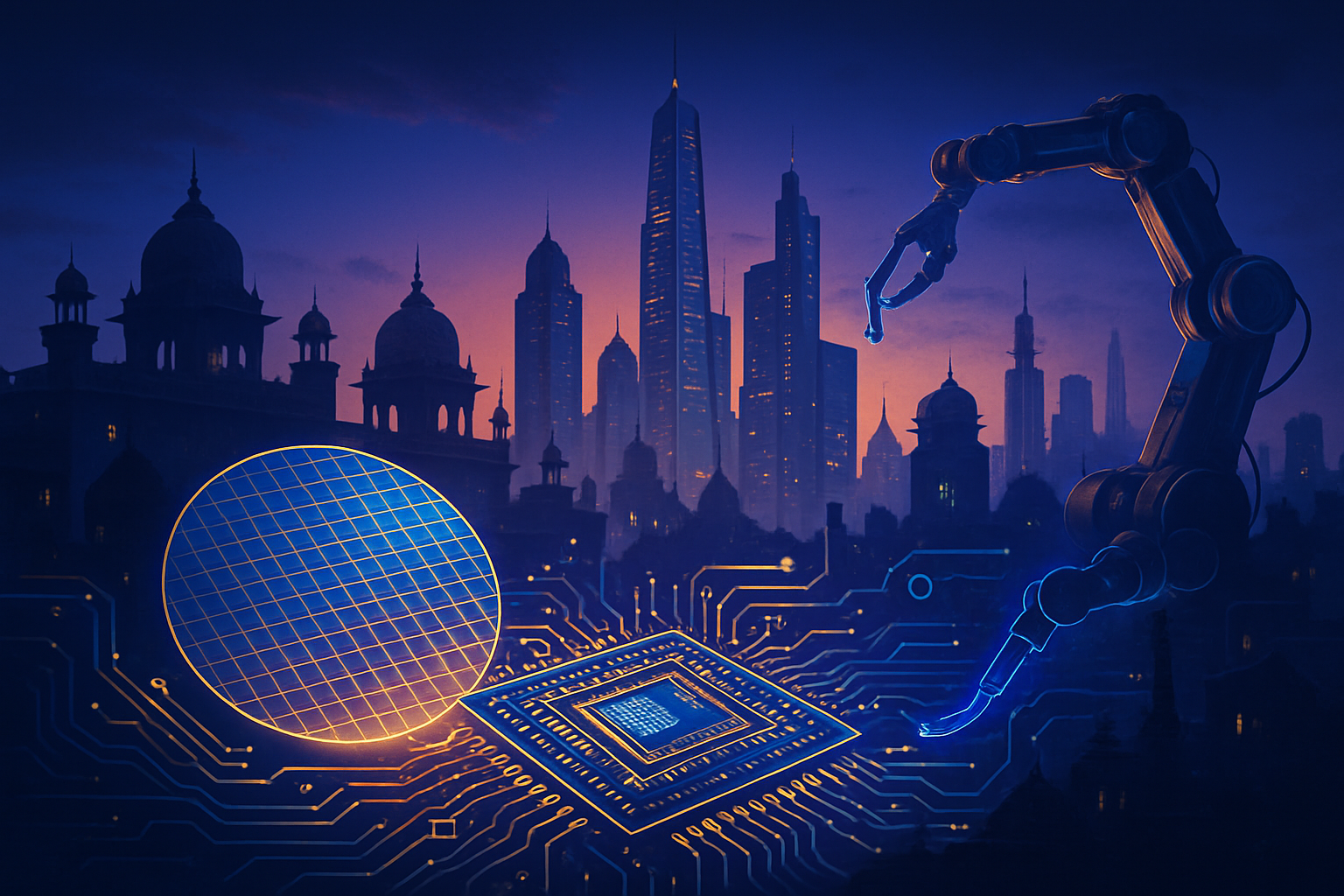
  • India Unleashes Semiconductor Revolution: Rs 1.6 Lakh Crore Investment Ignites Domestic Chip Manufacturing

    India Unleashes Semiconductor Revolution: Rs 1.6 Lakh Crore Investment Ignites Domestic Chip Manufacturing

    New Delhi, India – October 22, 2025 – India has taken a monumental leap towards technological self-reliance with the recent approval of 10 ambitious semiconductor projects, boasting a cumulative investment exceeding Rs 1.6 lakh crore (approximately $18.23 billion). Announced by Union Minister Ashwini Vaishnaw on October 18, 2025, this decisive move under the flagship India Semiconductor Mission (ISM) marks a pivotal moment in the nation's journey to establish a robust, indigenous semiconductor ecosystem. The projects, strategically spread across six states, are poised to drastically reduce India's reliance on foreign chip imports, secure critical supply chains, and position the country as a formidable player in the global semiconductor landscape.

    This massive infusion of capital and strategic focus underscores India's unwavering commitment to becoming a global manufacturing and design hub for electronics. The initiative is expected to catalyze unprecedented economic growth, generate hundreds of thousands of high-skilled jobs, and foster a vibrant ecosystem of innovation, from advanced chip design to cutting-edge manufacturing and packaging. It's a clear signal that India is not just aspiring to be a consumer of technology but a significant producer and innovator, securing its digital future and enhancing its strategic autonomy in an increasingly chip-dependent world.

    A Deep Dive into India's Chipmaking Blueprint: Technical Prowess and Strategic Diversification

    The 10 approved projects represent a diverse and technologically advanced portfolio, meticulously designed to cover various critical aspects of semiconductor manufacturing, from fabrication to advanced packaging. This multi-pronged approach under the India Semiconductor Mission (ISM) aims to build a comprehensive value chain, addressing both current demands and future technological imperatives.

    Among the standout initiatives, SiCSem Private Limited, in collaboration with UK-based Clas-SiC Wafer Fab Ltd., is set to establish India's first commercial Silicon Carbide (SiC) compound semiconductor fabrication facility in Bhubaneswar, Odisha. This is a crucial step as SiC chips are vital for high-power, high-frequency applications found in electric vehicles, 5G infrastructure, and renewable energy systems – sectors where India has significant growth ambitions. Another significant project in Odisha involves 3D Glass Solutions Inc. setting up an advanced packaging and embedded glass substrate facility, focusing on cutting-edge packaging technologies essential for miniaturization and performance enhancement of integrated circuits.

    Further bolstering India's manufacturing capabilities, Continental Device India Private Limited (CDIL) is expanding its Mohali, Punjab plant to produce a wide array of discrete semiconductors including MOSFETs, IGBTs, schottky bypass diodes, and transistors, with an impressive annual capacity of 158.38 million units. This expansion is critical for meeting the burgeoning demand for power management and switching components across various industries. Additionally, Tata Electronics is making substantial strides with an estimated $11 billion fab plant in Gujarat and an OSAT (Outsourced Semiconductor Assembly and Test) facility in Assam, signifying a major entry by an Indian conglomerate into large-scale chip manufacturing and advanced packaging. Not to be overlooked, global giant Micron Technology (NASDAQ: MU) is investing over $2.75 billion in an assembly, testing, marking, and packaging (ATMP) plant, further cementing international confidence in India’s emerging semiconductor ecosystem. These projects collectively represent a departure from previous, more fragmented efforts by providing substantial financial incentives (up to 50% of project costs) and a unified strategic vision, making India a truly attractive destination for high-tech manufacturing. The focus on diverse technologies, from SiC to advanced packaging and traditional silicon-based devices, demonstrates a comprehensive strategy to cater to a wide spectrum of the global chip market.

    Reshaping the AI and Tech Landscape: Corporate Beneficiaries and Competitive Shifts

    The approval of these 10 semiconductor projects under the India Semiconductor Mission is poised to send ripples across the global technology industry, particularly impacting AI companies, tech giants, and startups alike. The immediate beneficiaries are undoubtedly the companies directly involved in the approved projects, such as SiCSem Private Limited, 3D Glass Solutions Inc., Continental Device India Private Limited (CDIL), and Tata Electronics. Their strategic investments are now backed by significant government support, providing a crucial competitive edge in establishing advanced manufacturing capabilities. Micron Technology (NASDAQ: MU), as a global leader, stands to gain from diversified manufacturing locations and access to India's rapidly growing market and talent pool.

    The competitive implications for major AI labs and tech companies are profound. As India develops its indigenous chip manufacturing capabilities, it will reduce the global supply chain vulnerabilities that have plagued the industry in recent years. This will lead to greater stability and potentially lower costs for companies reliant on semiconductors, including those developing AI hardware and running large AI models. Companies like Google (NASDAQ: GOOGL), Microsoft (NASDAQ: MSFT), and Amazon (NASDAQ: AMZN), which are heavily invested in AI infrastructure and cloud computing, could benefit from more reliable and potentially localized chip supplies, reducing their dependence on a concentrated few global foundries. For Indian tech giants and startups, this initiative creates an unprecedented opportunity. Domestic availability of advanced chips and packaging services will accelerate innovation in AI, IoT, automotive electronics, and telecommunications. Startups focused on hardware design and embedded AI solutions will find it easier to prototype, manufacture, and scale their products within India, fostering a new wave of deep tech innovation. This could potentially disrupt existing product development cycles and market entry strategies, as companies with localized manufacturing capabilities gain strategic advantages in terms of cost, speed, and intellectual property protection. The market positioning of companies that invest early and heavily in leveraging India's new semiconductor ecosystem will be significantly enhanced, allowing them to capture a larger share of the burgeoning Indian and global electronics markets.

    A New Era of Geopolitical and Technological Significance

    India's monumental push into semiconductor manufacturing transcends mere economic ambition; it represents a profound strategic realignment within the broader global AI and technology landscape. This initiative positions India as a critical player in the ongoing geopolitical competition for technological supremacy, particularly in an era where chips are the new oil. By building domestic capabilities, India is not only safeguarding its own digital economy but also contributing to the diversification of global supply chains, a crucial concern for nations worldwide after recent disruptions. This move aligns with a global trend of nations seeking greater self-reliance in critical technologies, mirroring efforts in the United States, Europe, and China.

    The impact of this initiative extends to national security, as indigenous chip production reduces vulnerabilities to external pressures and ensures the integrity of vital digital infrastructure. It also signals India's intent to move beyond being just an IT services hub to becoming a hardware manufacturing powerhouse, thereby enhancing its 'Make in India' vision. Potential concerns, however, include the immense capital expenditure required, the need for a highly skilled workforce, and the challenge of competing with established global giants that have decades of experience and massive economies of scale. Comparisons to previous AI milestones, such as the development of large language models or breakthroughs in computer vision, highlight that while AI software innovations are crucial, the underlying hardware infrastructure is equally, if not more, foundational. India's semiconductor mission is a foundational milestone, akin to building the highways upon which future AI innovations will travel, ensuring that the nation has control over its technological destiny rather than being solely dependent on external forces.

    The Road Ahead: Anticipating Future Developments and Addressing Challenges

    The approval of these 10 projects is merely the first major stride in India's long-term semiconductor journey. In the near term, we can expect to see rapid progress in the construction and operationalization of these facilities, with a strong focus on meeting ambitious production timelines. The government's continued financial incentives and policy support will be crucial in overcoming initial hurdles and attracting further investments. Experts predict a significant ramp-up in the domestic production of a range of chips, from power management ICs and discrete components to more advanced logic and memory chips, particularly as the Tata Electronics fab in Gujarat comes online.

    Longer-term developments will likely involve the expansion of these initial projects, the approval of additional fabs, and a deepening of the ecosystem to include upstream (materials, equipment) and downstream (design, software integration) segments. Potential applications and use cases on the horizon are vast, spanning the entire spectrum of the digital economy: smarter automotive systems, advanced telecommunications infrastructure (5G/6G), robust defense electronics, sophisticated AI hardware accelerators, and a new generation of IoT devices. However, significant challenges remain. The immediate need for a highly skilled workforce – from process engineers to experienced fab operators – is paramount. India will need to rapidly scale its educational and vocational training programs to meet this demand. Additionally, ensuring a stable and competitive energy supply, robust water management, and a streamlined regulatory environment will be critical for sustained success. Experts predict that while India's entry will be challenging, its large domestic market, strong engineering talent pool, and geopolitical significance will allow it to carve out a substantial niche, potentially becoming a key alternative supply chain partner in the next decade.

    Charting India's Semiconductor Future: A Concluding Assessment

    India's approval of 10 semiconductor projects worth over Rs 1.6 lakh crore under the India Semiconductor Mission represents a transformative moment in the nation's technological and economic trajectory. The key takeaway is a clear and decisive shift towards self-reliance in a critical industry, moving beyond mere consumption to robust domestic production. This initiative is not just about manufacturing chips; it's about building strategic autonomy, fostering a high-tech ecosystem, and securing India's position in the global digital order.

    This development holds immense significance in AI history as it lays the foundational hardware infrastructure upon which future AI advancements in India will be built. Without a secure and indigenous supply of advanced semiconductors, the growth of AI, IoT, and other emerging technologies would remain vulnerable to external dependencies. The long-term impact is poised to be profound, catalyzing job creation, stimulating exports, attracting further foreign direct investment, and ultimately contributing to India's vision of a $5 trillion economy. As these projects move from approval to implementation, the coming weeks and months will be crucial. We will be watching for progress in facility construction, talent acquisition, and the forging of international partnerships that will further integrate India into the global semiconductor value chain. This initiative is a testament to India's strategic foresight and its determination to become a leading force in the technological innovations of the 21st century.


    This content is intended for informational purposes only and represents analysis of current AI developments.

    TokenRing AI delivers enterprise-grade solutions for multi-agent AI workflow orchestration, AI-powered development tools, and seamless remote collaboration platforms.
    For more information, visit https://www.tokenring.ai/.