Tag: Job Displacement

  • AI’s Double-Edged Sword: Job Displacement and Creation Reshape the Global Workforce

    AI’s Double-Edged Sword: Job Displacement and Creation Reshape the Global Workforce

    The accelerating integration of Artificial Intelligence (AI) into industries worldwide is forging a new economic reality, presenting a dual impact on the global job market. While AI's automation capabilities threaten to displace millions of existing roles, particularly in routine and administrative tasks, it simultaneously acts as a powerful catalyst for the creation of entirely new professions and the transformation of others. This profound shift necessitates an urgent re-evaluation of workforce development strategies, educational paradigms, and governmental policies to navigate what many, including Senator Mark Warner, describe as an impending period of significant social and economic disruption.

    The immediate significance of this dual impact is the imperative for rapid adaptation. Industries are bracing for transitional unemployment as workers in AI-exposed occupations face displacement, even as a surge in demand for AI specialists and complementary human skills emerges. This dynamic underscores a transformative era in the job market, demanding continuous learning and strategic preparedness from individuals, businesses, and policymakers alike to harness AI's productivity gains while mitigating its disruptive potential.

    The Algorithmic Reshaping of Work: Specifics of Displacement and Emergence

    The current wave of AI advancement is characterized by its ability to perform tasks previously considered the exclusive domain of human intellect. Generative AI, in particular, has demonstrated capabilities in writing code, drafting content, and analyzing complex datasets with unprecedented speed and scale. This differs significantly from previous automation waves, which primarily impacted manual labor. Now, white-collar and knowledge-based roles are increasingly susceptible.

    Specific details reveal a stark picture of both loss and opportunity. Roles such as customer service representatives, data entry clerks, telemarketers, and even entry-level programmers are at high risk of displacement as AI-powered chatbots, virtual assistants, and code-generating tools become more sophisticated. Labor market research firm Challenger, Gray & Christmas reported over 48,000 job cuts in the US directly attributable to AI so far in 2025, with a significant portion occurring just last month (October 2025). Goldman Sachs (NYSE: GS) estimates that AI could displace 300 million full-time equivalent jobs globally. Initial reactions from the AI research community acknowledge these trends, emphasizing the efficiency gains but also the ethical imperative to manage the societal transition responsibly.

    Conversely, AI is a potent engine for job creation, fostering roles that demand unique human attributes or specialized AI expertise. New positions like AI specialists, data scientists, machine learning engineers, prompt engineers, AI ethicists, and AI operations (MLOps) specialists are in high demand. These roles are crucial for designing, developing, deploying, and managing AI systems, as well as ensuring their ethical and effective integration. The World Economic Forum projects that AI could create 97 million new jobs by 2025, potentially outpacing the number of jobs lost. This shift requires workers to develop a blend of technical skills alongside uniquely human capabilities such as creativity, critical thinking, and emotional intelligence, which remain beyond AI's current grasp. The technical specifications of modern AI, particularly large language models and advanced machine learning algorithms, allow for complex problem-solving and pattern recognition, driving both the automation of routine tasks and the need for human oversight and strategic direction in AI development and application.

    Corporate Maneuvers in the AI-Driven Job Market

    The dual impact of AI on the job market is profoundly influencing the strategies and competitive landscapes of AI companies, tech giants, and startups. Companies that successfully integrate AI to augment human capabilities and create new value propositions stand to benefit significantly, while those slow to adapt risk disruption.

    Tech giants like Microsoft (NASDAQ: MSFT), Google (NASDAQ: GOOGL), and Amazon (NASDAQ: AMZN) are heavily investing in AI research and development, not only to enhance their product offerings but also to streamline internal operations. These companies are at the forefront of developing AI tools that can automate tasks, thereby potentially reducing the need for certain types of human labor while simultaneously creating demand for AI specialists within their own ranks. Their strategic advantage lies in their vast resources, data access, and ability to attract top AI talent, allowing them to shape the future of work through their platforms and services. Startups focusing on niche AI applications, such as AI-powered development tools or multi-agent AI workflow orchestration, are also poised for growth, catering to the evolving needs of businesses seeking to leverage AI efficiently.

    However, the competitive implications extend to potential disruption for existing products and services across various sectors. Companies that rely on traditional service models, administrative processes, or manufacturing techniques are facing pressure to adopt AI or risk being outcompeted by more efficient, AI-augmented rivals. This dynamic is leading to a wave of acquisitions and partnerships as larger entities seek to absorb innovative AI technologies and talent. Market positioning is increasingly defined by a company's AI maturity – its ability to develop, deploy, and ethically manage AI solutions that either displace human tasks for efficiency or, more ideally, empower human workers to achieve higher productivity and innovation. The challenge for all companies, from established tech giants to agile startups, is to navigate this transition by strategically investing in AI while also addressing the societal implications of job displacement and fostering the creation of new, valuable roles.

    Wider Implications: A Societal Crossroads

    The integration of AI into the job market represents more than just a technological upgrade; it signifies a fundamental shift in the broader AI landscape and societal structure. This development fits into a larger trend of automation that has historically reshaped economies, from the agricultural revolution to the industrial age. However, AI's unique capability to automate cognitive tasks sets it apart, raising new and complex concerns.

    One of the most vocal critics regarding the societal implications is Senator Mark Warner. He has expressed significant concerns about the potential for widespread job displacement, particularly in entry-level white-collar positions, predicting unemployment rates as high as 10-20% within the next five years for some demographics. Senator Warner emphasizes the critical lack of comprehensive data on how AI is truly affecting the U.S. labor market, stating that "good policy starts with good data." Without a clear picture of job elimination, worker retraining, and emerging opportunities, he warns of "a level of social disruption that's unprecedented" by 2028 due to economic frustration among young workers and families burdened by higher education costs. His concerns extend to algorithmic bias and the potential for AI's disruptive power on financial markets, leading him to introduce legislation like the Financial Artificial Intelligence Risk Reduction Act and the bipartisan AI-Related Job Impacts Clarity Act, which aims to mandate data sharing on AI's workforce effects.

    Comparisons to previous AI milestones, such as the advent of expert systems or early machine learning, highlight the current era's accelerated pace and broader impact. Unlike previous breakthroughs, today's AI systems are more general-purpose, capable of learning from vast datasets and performing diverse tasks, making their reach into the job market far more extensive. The potential concerns are not merely about job losses but also about widening income inequality, the need for robust social safety nets, and the ethical governance of AI to prevent misuse or the exacerbation of existing biases. The wider significance lies in the urgent need for a coordinated response from governments, industries, and educational institutions to ensure that AI serves as a tool for societal progress rather than a source of instability.

    Charting the Future: Navigating AI's Evolving Impact

    Looking ahead, the trajectory of AI's impact on the job market suggests both continued disruption and exciting new avenues for human endeavor. In the near-term, we can expect an acceleration of job displacement in highly routine and predictable roles across various sectors, coupled with an increasing demand for specialized AI skills. Companies will continue to experiment with AI integration, leading to further optimization of workflows and, in some cases, reductions in headcount as efficiency gains become more pronounced.

    Long-term developments are likely to see a more symbiotic relationship between humans and AI. Experts predict the emergence of entirely new industries and job categories that are currently unimaginable, driven by AI's ability to unlock new capabilities and solve complex problems. Potential applications and use cases on the horizon include highly personalized education systems, advanced AI-driven healthcare diagnostics, and sophisticated environmental management tools, all of which will require human oversight, ethical guidance, and creative problem-solving. Challenges that need to be addressed include developing scalable and accessible retraining programs for displaced workers, ensuring equitable access to AI education, and establishing robust regulatory frameworks to govern AI's development and deployment responsibly.

    What experts predict will happen next is a continuous evolution of job roles, where the emphasis shifts from performing repetitive tasks to tasks requiring critical thinking, creativity, emotional intelligence, and complex problem-solving. The workforce will need to embrace lifelong learning, constantly acquiring new skills to remain relevant in an AI-augmented economy. The focus will move towards human-AI collaboration, where AI acts as a powerful tool that enhances human productivity and allows individuals to concentrate on higher-value, more strategic work.

    A New Era of Work: Key Takeaways and Future Watchpoints

    The current era of AI development marks a pivotal moment in the history of work, characterized by an unprecedented dual impact on the global job market. The key takeaways from this transformation are clear: AI is undeniably displacing existing jobs, particularly those involving routine and predictable tasks, while simultaneously acting as a powerful engine for the creation of new roles that demand advanced technical skills and uniquely human attributes. This dynamic underscores the urgent need for a societal shift towards continuous learning, adaptability, and strategic investment in workforce retraining.

    The significance of this development in AI history cannot be overstated. Unlike previous technological revolutions, AI's ability to automate cognitive tasks means its reach extends into white-collar professions, challenging established notions of work and value creation. The concerns raised by figures like Senator Mark Warner regarding potential widespread unemployment and social disruption highlight the critical need for proactive policy-making and ethical governance to ensure AI serves humanity's best interests.

    In the long term, the impact of AI is likely to foster a more productive and innovative global economy, but only if the transition is managed thoughtfully and equitably. The challenge lies in mitigating the short-term disruptions of job displacement while maximizing the long-term benefits of job creation and augmentation. What to watch for in the coming weeks and months includes further announcements from major tech companies regarding AI integration into their products and services, governmental responses to the emerging job market shifts, and the development of new educational and retraining initiatives designed to equip the workforce for an AI-powered future. The success of this transition will depend on a collaborative effort from all stakeholders to harness AI's potential while safeguarding societal well-being.


    This content is intended for informational purposes only and represents analysis of current AI developments.

    TokenRing AI delivers enterprise-grade solutions for multi-agent AI workflow orchestration, AI-powered development tools, and seamless remote collaboration platforms.
    For more information, visit https://www.tokenring.ai/.
  • The Looming Shadow: How AI Job Displacement Fears Are Fueling a Political Firestorm

    The Looming Shadow: How AI Job Displacement Fears Are Fueling a Political Firestorm

    The rapid ascent of artificial intelligence, particularly generative AI, has cast a long shadow over the global workforce, igniting widespread societal anxieties about job displacement. As AI systems demonstrate increasingly sophisticated capabilities, performing tasks once considered exclusively human, these fears are not merely economic concerns but are morphing into potent political weapons, shaping public discourse and influencing movements worldwide. The debate extends beyond simple automation, touching upon fundamental questions of human value, economic equity, and the very fabric of democratic societies.

    The Technical Underpinnings of Anxiety: AI's New Frontier in Job Transformation

    The current wave of AI advancements, spearheaded by generative AI and advanced automation, is fundamentally reshaping the labor market through technical mechanisms that differ significantly from historical technological shifts. Unlike previous industrial revolutions that primarily automated manual, routine "brawn" tasks, modern AI is now targeting "brainpower" and cognitive functions, bringing white-collar professions into the crosshairs of disruption.

    Generative AI models, such as large language models (LLMs), excel at tasks involving writing, reading, reasoning, structuring, and synthesizing information. This directly impacts roles in copywriting, legal document review, report drafting, and content generation. AI's ability to process vast datasets, identify patterns, and make predictions is automating market research, financial modeling, and even aspects of strategic consulting. This allows organizations to optimize workflows and talent deployment by automating data processing and identifying insights that humans might overlook.

    While earlier automation waves focused on physical labor, the current AI paradigm is increasingly affecting roles like data entry clerks, administrative assistants, customer service representatives, accountants, and even entry-level software developers. Experts like those at the World Economic Forum predict that 83 million jobs could be displaced by 2027, with 5% of global jobs already fully automated. Goldman Sachs Research (NYSE: GS) estimated in August 2025 that 6-7% of the U.S. workforce could be displaced if AI is widely adopted, affecting up to 300 million jobs globally. This shift is characterized not just by full job replacement but by the "hollowing out" of roles, where AI automates 30-40% of an employee's workload, reducing the need for entry-level positions and compressing career progression opportunities. However, many experts also emphasize that AI often augments human capabilities, freeing workers for more complex, creative, and strategic tasks.

    Political Weaponization and its Ripple Effect on the Tech Industry

    The widespread societal anxieties surrounding AI-driven job displacement are proving to be fertile ground for political weaponization. Political groups are leveraging fears of mass unemployment and economic disruption to mobilize support, promote protectionist policies, and sow distrust in existing economic and political systems. The rhetoric often frames AI as a threat to traditional employment, potentially exacerbating class tensions and fueling calls for government control over AI development.

    This political climate significantly influences the strategies and competitive landscape for AI companies, tech giants, and startups. Major tech firms like Alphabet (NASDAQ: GOOGL), Microsoft (NASDAQ: MSFT), and Amazon (NASDAQ: AMZN) are compelled to publicly articulate commitments to ethical AI principles to build trust and mitigate negative perceptions. They are investing heavily in AI infrastructure, data centers, and specialized AI chips, even as some, like Amazon (NASDAQ: AMZN), announced 14,000 corporate job cuts in late 2025, explicitly linking these reductions to accelerating AI investments and a push for greater efficiency. This indicates a strategic pivot towards AI-driven efficiency and innovation, often accompanied by efforts to shape the regulatory landscape through self-regulation to preempt more restrictive government intervention.

    Companies that stand to benefit in this environment include the major tech giants with their vast resources, as well as AI startups focused on "human-in-the-loop" solutions that augment human work rather than purely displace it. Consulting firms and AI ethics specialists are also seeing increased demand as organizations grapple with responsible AI development. Conversely, companies with less adaptable workforces, those failing to genuinely address ethical concerns, or industries highly susceptible to automation face significant challenges, including reputational damage and potential regulatory backlash. The "AI Governance Chasm," where innovation outpaces oversight, places these firms in a critical position to either lead responsible development or face increased scrutiny.

    The Broader Canvas: Societal Impacts Beyond Economics

    The wider significance of AI job displacement anxieties extends far beyond mere economic statistics, touching upon the very foundations of social cohesion, public trust, and democratic processes. A majority of U.S. adults believe AI will lead to fewer jobs over the next two decades, a sentiment that, when weaponized, can erode social cohesion. Work provides more than just economic sustenance; it offers identity, purpose, and social connection. Widespread job loss, if not effectively managed, can lead to increased inequality and social upheaval, potentially destabilizing societies.

    Public trust is also at risk. The automation of tasks requiring human judgment or empathy, coupled with the "black box" nature of many powerful AI algorithms, can undermine faith in systems that influence daily life, from law enforcement to social media. A lack of transparency fosters distrust and can lead to public backlash.

    Perhaps most critically, AI poses substantial risks to democratic processes. The ability of generative AI to produce disinformation and misinformation at scale threatens to saturate the public information space, making it difficult for citizens to distinguish between authentic and fabricated content. This can lead to a loss of trust in news reporting and legal processes, undermining the foundations of democracy. AI-driven platforms can promote divisive content, exacerbate societal polarization through algorithmic bias, and enable political bots to flood online platforms with partisan content. The "liar's dividend" effect means that real events can be easily dismissed as AI-generated deepfakes, further eroding truth and accountability. This phenomenon, while echoing historical concerns about propaganda, is amplified by AI's unprecedented speed, scale, and sophistication.

    Glimpsing the Horizon: Future Developments and Lingering Challenges

    In the near term (1-5 years), AI will continue to automate routine tasks across sectors, leading to increased efficiency and productivity. However, this period will also see specific roles like administrative assistants, accountants, and even computer programmers facing higher risks of displacement. Long-term (beyond 5 years), experts anticipate a transformative period, with some projecting 30% of jobs automatable by the mid-2030s and up to 50% by 2045. While new jobs are expected to emerge, the shift will necessitate a dramatic change in required skills, emphasizing critical thinking, digital fluency, creativity, and emotional intelligence.

    Political responses are already taking shape, focusing on comprehensive upskilling and reskilling programs, the promotion of ethical employment policies, and the exploration of solutions like Universal Basic Income (UBI) to mitigate economic impacts. The call for robust governance frameworks and regulations to ensure fairness, transparency, and accountability in AI development is growing louder, with some states enacting laws for bias audits in AI-driven employment decisions.

    Potential applications on the horizon include highly efficient AI-powered HR support, advanced search functions, intelligent document processing, hyper-personalized customer experiences, and enhanced cybersecurity. In the political sphere, AI will revolutionize campaigning through voter data analysis and tailored messaging, but also presents the risk of AI-driven policy development being influenced by biased models and the proliferation of sophisticated deepfakes in elections.

    Significant challenges remain. Ethically, AI grapples with inherent biases in algorithms, the "black box" problem of explainability, and critical concerns about privacy, security, and accountability. Policy challenges include bridging skill gaps, developing adaptive regulatory frameworks to prevent algorithmic bias and protect data, addressing potential economic inequality, and combating AI-generated misinformation in political discourse. Experts predict AI will become deeply integrated into all aspects of life, augmenting human abilities but also posing risks to privacy and societal civility. The future of work will involve a new partnership between humans and machines, demanding continuous learning and a focus on uniquely human competencies.

    A Pivotal Juncture: Assessing AI's Historical Significance

    The current era marks a pivotal juncture in AI history, comparable to an industrial revolution. The rapid development and widespread adoption of generative AI have accelerated discussions and impacts, bringing theoretical concerns into immediate reality. Its significance lies in the capacity not just to automate manual labor but to perform complex cognitive tasks, fundamentally altering the value of human labor in ways previous technological shifts did not. The long-term impact is expected to be profoundly transformative, with a significant portion of jobs potentially automated or transformed by 2040-2050. The ultimate effect on living standards and social cohesion remains a critical, unanswered question.

    In the coming weeks and months, several critical elements warrant close observation. The development and implementation of robust legal frameworks and ethical guidelines for AI, particularly concerning job displacement, algorithmic bias, and its use in political campaigns, will be crucial. Watch how governments, educational institutions, and companies respond with comprehensive retraining and upskilling initiatives. Pay attention to company transparency regarding AI adoption strategies and their impact on the workforce, focusing on worker augmentation over full automation. The impact on entry-level employment, a group already disproportionately affected, will be a key indicator. Finally, as major elections approach globally, the prevalence and effectiveness of AI-generated deepfakes and misinformation, and the countermeasures developed to protect electoral integrity, will be paramount. This period demands proactive measures and collaborative efforts from policymakers, industry leaders, and individuals alike to navigate the complexities of AI's societal integration.


    This content is intended for informational purposes only and represents analysis of current AI developments.

    TokenRing AI delivers enterprise-grade solutions for multi-agent AI workflow orchestration, AI-powered development tools, and seamless remote collaboration platforms.
    For more information, visit https://www.tokenring.ai/.

  • Amazon’s Robotic Revolution: A Glimpse into a Future Without 600,000 Human Jobs

    Amazon’s Robotic Revolution: A Glimpse into a Future Without 600,000 Human Jobs

    Seattle, WA – October 22, 2025 – Amazon.com Inc. (NASDAQ: AMZN) is reportedly poised to usher in a new era of automation, with internal documents suggesting the e-commerce giant is considering using advanced robotics and artificial intelligence to fill roles that would otherwise require hiring an additional 600,000 workers by 2033. This ambitious strategy, driven by anticipated sales growth and a relentless pursuit of efficiency, signals a profound shift in the company's operational model and casts a long shadow over the future of work in the logistics and retail sectors.

    The immediate significance of this development is multifaceted. It highlights an accelerating trend towards large-scale automation, where robots are not merely assisting human workers but are strategically deployed to "flatten the hiring curve" for future growth. For the labor market, this foreshadows a potential long-term reduction in new job opportunities for repetitive tasks, intensifying the debate around job displacement, the ethics of automation, and the urgent need for workforce retraining. While Amazon has reportedly pushed back against the full scope of these leaked documents, emphasizing its role as a job creator, the underlying internal considerations underscore a strategic imperative to leverage AI and robotics for unprecedented operational cost savings and efficiency gains.

    The Technical Backbone of Amazon's Automated Future

    Amazon's journey into large-scale automation is built upon a sophisticated and continuously evolving array of robotic systems and AI-powered platforms. The company already operates over 750,000 robots globally, and its future plans involve a deeper integration of these technologies into every facet of its fulfillment network.

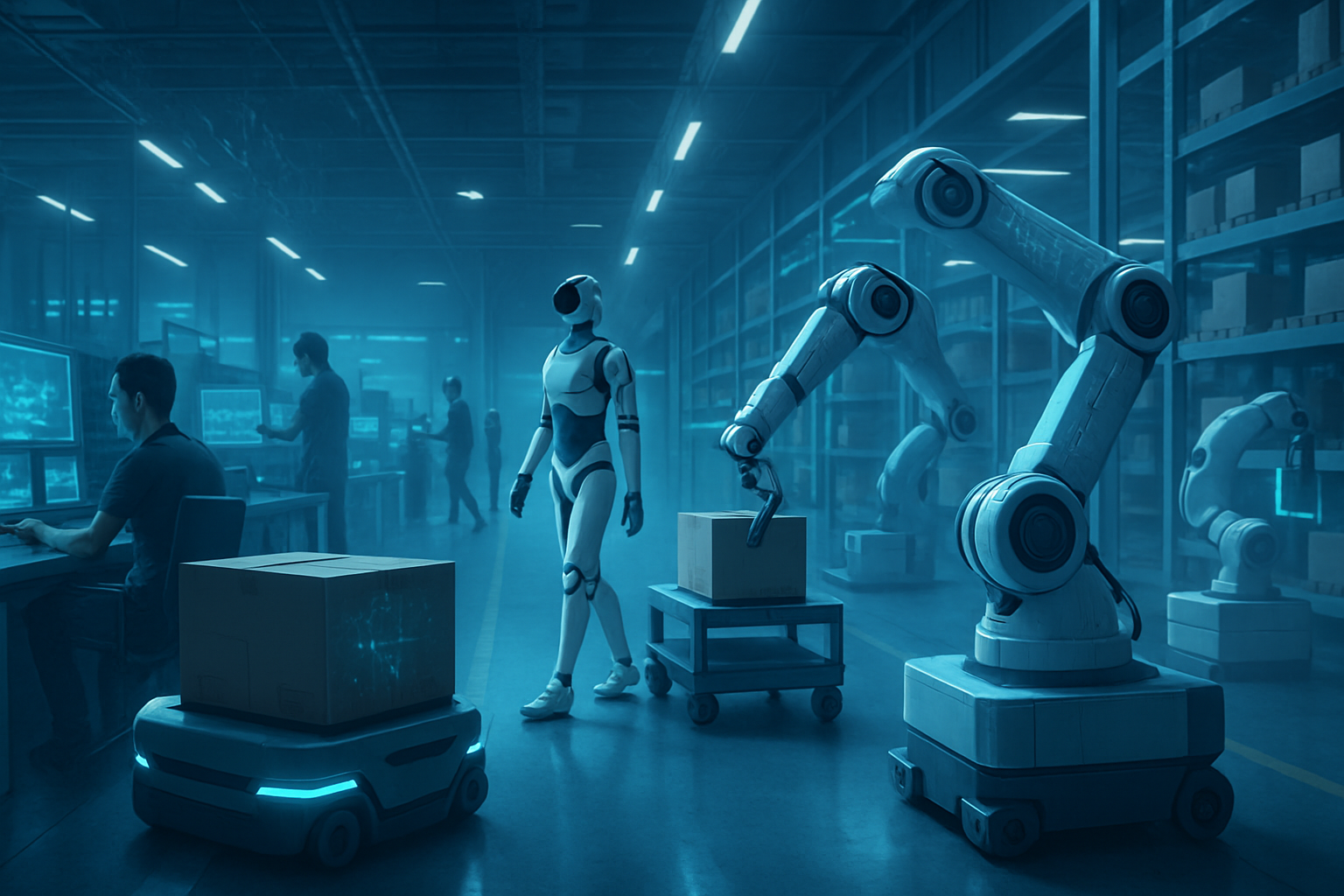
    At the core of this transformation are diverse robotic units. The foundational Kiva Robots (now Amazon Robotics drive units) autonomously move entire shelving units to human operators, a "goods-to-person" system that revolutionized warehouse efficiency. More recently, Amazon introduced Proteus, its first fully autonomous mobile robot (AMR) designed to safely navigate and work alongside human employees in shared spaces, using advanced perception and navigation to avoid collisions. For intricate tasks, robotic arms like Sparrow leverage computer vision and AI to detect, select, and handle individual products of varying shapes and sizes, a significant leap from older systems that handled uniform packages. Cardinal assists with heavy lifting and sorting, capable of moving over 20kg packages.

    Perhaps the most forward-looking development is the integration of Digit, a bipedal humanoid robot from Agility Robotics. Digit's two-legged design allows it to navigate environments built for humans, including stairs and uneven terrains, making it adaptable to existing infrastructure. Initial tests involve tasks like tote recycling. Additionally, integrated systems like Sequoia combine mobile robots, gantry systems, and robotic arms with ergonomic workstations to identify and store inventory up to 75% faster and reduce order processing time by 25%. The Hercules drive unit further improves storage density, and Vulcan, Amazon's first robot with a sense of touch, enhances delicate item manipulation.

    Technically, this scale of automation differs from previous approaches in several key ways. The emphasis on human-robot coexistence (Proteus, Digit) allows for seamless integration into shared workspaces, moving beyond the caged-off environments of traditional industrial robots. The development of advanced dexterity and perception (Sparrow, Vulcan) enables robots to handle the vast diversity of Amazon's inventory, a task previously requiring human precision. The bipedal navigation of Digit opens up new possibilities for automation in complex, multi-level facilities. Critically, these systems are powered by integrated AI and machine learning, enabling real-time decision-making, optimal fleet orchestration (e.g., the DeepFleet generative AI model), and continuous operational optimization, a far cry from pre-programmed, rigid automation.

    Initial reactions from the AI research community and industry experts are mixed. While the efficiency gains and technological innovation are widely acknowledged, there are significant concerns about the potential for large-scale job displacement. Nobel laureate Daron Acemoglu has expressed apprehension that Amazon's success in automation could be emulated by other companies, leading to widespread labor market shifts. Amazon, however, counters by highlighting the creation of new, higher-skilled roles in robotics maintenance and engineering, and its investment in upskilling programs for its workforce.

    Reshaping the AI and Tech Landscape

    Amazon's aggressive push into large-scale AI and robotics is not just an internal operational shift; it's a seismic event that is reshaping the competitive dynamics across the entire tech industry, from AI companies and tech giants to specialized startups.

    Amazon (NASDAQ: AMZN) itself stands to be the primary beneficiary. By automating up to 75% of its warehouse operations, the company anticipates billions in annual savings by 2027, leading to higher operating margins and enabling faster delivery times. This strategic advantage in cost leadership and efficiency is crucial for maintaining its dominance in e-commerce. The internal documents reportedly project savings of approximately 30 cents per item processed, translating to an estimated $12.6 billion in operational cost savings between 2025 and 2027.

    The development creates a lucrative environment for specialized AI and robotics startups. Companies like Agility Robotics (developer of Digit), Figure AI, Swiss-Mile, Skild AI, Rightbot, and Instock are direct beneficiaries, receiving investments from Amazon's venture arms and gaining opportunities to integrate their technologies into Amazon's massive operational network. This provides crucial validation and accelerates their growth. Semiconductor and AI chip manufacturers, such as NVIDIA (NASDAQ: NVDA), also stand to gain significantly from the increased demand for high-powered AI computing infrastructure required to run these sophisticated robotic systems.

    For other tech giants, Amazon's move intensifies the "AI arms race." Competitors in retail and logistics, including Walmart (NYSE: WMT), Target (NYSE: TGT), and FedEx (NYSE: FDX), are compelled to accelerate their own automation strategies to match Amazon's speed and cost efficiency. In the cloud computing arena, Amazon Web Services (AWS) benefits as the underlying infrastructure for Amazon's vast AI and robotics operations, further solidifying its market position against rivals like Microsoft Azure (NASDAQ: MSFT) and Google Cloud (NASDAQ: GOOGL). This competitive pressure drives all major players to invest heavily in proprietary AI infrastructure and advanced AI services.

    The potential disruption to existing products and services is significant. The entire logistics and supply chain industry is being redefined, with Amazon's integrated AI-powered robots slashing shipping costs and accelerating delivery times, setting new industry benchmarks that challenge traditional delivery services. This shift also disrupts workforce dynamics, necessitating massive retraining initiatives as demand for traditional warehouse roles declines while demand for higher-skilled technical and supervisory roles surges. Amazon's strategic advantages lie in unparalleled cost reduction, enhanced customer experience through faster and more reliable delivery, operational resilience against labor shortages, and a data-driven optimization "flywheel" that continuously improves its AI systems.

    A Wider Lens: Implications for Society and the Future of Work

    Amazon's large-scale AI and robotics adoption is more than just a corporate strategy; it's a real-world demonstration of advanced AI's profound impact on society, pushing the boundaries of what's possible while raising critical questions about the future of work and social equity. This development fits squarely within the broader trend of hyper-automation, where intelligent technologies are integrated to automate processes end-to-end.

    The impacts on employment are perhaps the most significant. While Amazon projects avoiding 600,000 hires by 2033, it also claims to have created over 700 new categories of skilled jobs, such as robotics technicians and systems engineers, and upskilled over 700,000 employees. This suggests a polarization of the labor market, where low- and medium-skilled jobs face increasing pressure, while demand for high-skilled technical roles escalates. The nature of work itself is transforming, with robots handling repetitive and physically demanding tasks, theoretically allowing humans to focus on more complex problem-solving and supervisory roles.

    However, this transition comes with potential concerns. The displacement of a large number of low-skilled jobs without adequate reskilling programs could exacerbate income inequality, particularly in communities heavily reliant on logistics employment. There are also concerns about worker welfare and surveillance, as AI-powered systems monitor performance, potentially leading to increased pressure and algorithmic management. The ethical implications extend to algorithmic bias in decision-making and the privacy of data collected from workers. Furthermore, some analyses suggest that automation may disproportionately affect minority workers, who constitute a significant portion of Amazon's warehouse workforce.

    Comparing this to previous AI milestones, Amazon's acquisition of Kiva Systems in 2012 was a pivotal moment for warehouse automation. However, the current drive represents an acceleration beyond mere productivity enhancement. It's about fundamentally reshaping the workforce by flattening hiring curves and actively seeking to replace future labor demand. Unlike earlier industrial revolutions that unfolded over decades, the rapid pace of AI integration means these shifts are occurring within years, necessitating a far more agile societal response. This marks a significant step towards the "Amazonian Era" where algorithmic systems control fundamental aspects of work, setting a precedent for industries worldwide.

    The Road Ahead: Challenges and Expert Predictions

    The trajectory of Amazon's AI and robotics strategy points towards a future characterized by increasingly autonomous and intelligent operations, but not without significant challenges and ongoing societal adjustments.

    In the near term (1-3 years), Amazon aims for a substantial increase in automation, with 75% of certain fulfillment tasks managed by machines. This includes replicating highly automated warehouses, like the one in Shreveport, across 40 facilities by late 2027. The deployment of "cobots" designed to work safely alongside humans will expand, and generative AI models like "DeepFleet" will further optimize robot efficiency. Deeper interoperability among AI services and expanded on-device AI capabilities are also expected.

    Long-term (beyond 3 years), by 2033, Amazon's goal of automating 75% of overall operations to avoid 600,000 hires will drive a complete re-imagining of its workforce. AI is expected to become foundational across its ecosystem, from personalized recommendations and hyper-intelligent customer service agents to AI-guided business decisions. Applications will extend beyond logistics to areas like sustainability (optimizing energy, reducing waste), healthcare, finance, and education, with AWS playing a pivotal role in democratizing AI solutions for enterprises.

    However, several challenges need to be addressed. The most pressing is the job displacement issue and the massive undertaking of reskilling and upskilling the existing workforce to fill new, higher-skilled roles in robotics maintenance, AI engineering, and data analysis. The pace of technological change risks outstripping the ability of many workers to adapt. Ethical concerns regarding algorithmic bias, data privacy, and worker surveillance will require robust frameworks and transparent governance. Worker safety and conditions also remain a concern, as some studies suggest a correlation between automation and increased injury rates or mental strain due to the pressure to keep pace with machines. Technical integration and reliability of complex AI systems, along with potential regulatory scrutiny and labor pushback, are also significant hurdles.

    Experts predict a profound transformation of the workplace. Amazon CEO Andy Jassy anticipates that AI will reduce the company's total corporate workforce over the next few years due to efficiency gains, even as new roles emerge. MIT professor Daron Acemoglu warns that Amazon could shift from being a "net job creator to a net job destroyer." While some experts predict the displacement of 85 million jobs globally by 2025, others suggest the emergence of 97 million new roles better suited to human-machine collaboration. The consensus points to a future of sophisticated human-machine collaboration, but one that demands massive investments in retraining, support programs, and thoughtful long-term planning to navigate the socio-economic shifts and prevent widespread unemployment. Employees who become proficient in AI will be best positioned for the roles of tomorrow.

    A New Frontier in Automation

    Amazon's reported consideration of using robots to absorb the demand for 600,000 additional workers marks a pivotal moment in the history of AI and automation. It underscores the unparalleled efficiency and cost savings that advanced robotics can deliver, profoundly impacting Amazon's market positioning and forcing competitors to accelerate their own technological adoption.

    The long-term impact of this development will be felt across industries and societies. It accelerates the shift towards a hybrid human-robot workforce, demanding a proactive approach to education, workforce retraining, and the development of ethical guidelines for AI deployment. As Amazon continues to push the boundaries of automation, the world will be watching closely to see how this technological leap balances innovation with its broader societal responsibilities. The coming weeks and months will likely bring further details on Amazon's implementation plans, the evolution of its robotic fleet, and the ongoing dialogue surrounding the future of work in an increasingly automated world.


    This content is intended for informational purposes only and represents analysis of current AI developments.

    TokenRing AI delivers enterprise-grade solutions for multi-agent AI workflow orchestration, AI-powered development tools, and seamless remote collaboration platforms.
    For more information, visit https://www.tokenring.ai/.
  • AI: The Death Knell for Human Creativity or Its Grand Redefinition? The Sora Revolution and the Enduring Value of Art

    AI: The Death Knell for Human Creativity or Its Grand Redefinition? The Sora Revolution and the Enduring Value of Art

    The advent of advanced generative artificial intelligence, epitomized by OpenAI's groundbreaking Sora model, has ignited a fervent debate across creative industries and society at large. Sora, a text-to-video AI, has demonstrated an astonishing capability to transform descriptive text into realistic and imaginative video clips, pushing the boundaries of what machines can "create." This technological leap forces a critical examination: will AI ultimately stifle the very essence of human creativity, rendering human-made art obsolete, or will it instead serve as an unprecedented tool, redefining artistic expression and unlocking new realms of imaginative possibility? The immediate significance of such powerful AI lies in its potential to democratize video production, accelerate creative workflows, and challenge long-held notions of authorship and artistic value.

    Unpacking Sora: A Technical Marvel Reshaping Visual Storytelling

    OpenAI's Sora stands as a monumental achievement in generative AI, leveraging a sophisticated Diffusion Transformer (DiT) architecture. This innovative approach combines the strengths of diffusion models, which excel at generating intricate details by progressively refining noise into coherent images, with the global composition and long-range dependency understanding of transformer architectures. Crucially, Sora processes video data as "spacetime latent patches," a unified representation that allows it to handle diverse training data with varying resolutions and durations, ensuring remarkable temporal consistency and coherence throughout generated videos.

    Sora's technical prowess allows it to generate high-fidelity videos up to one minute long, complete with detailed scenes, complex camera movements, and multiple characters exhibiting nuanced emotions. It demonstrates an emergent understanding of 3D consistency and object permanence, tracking subjects even when they momentarily leave the frame. This represents a significant leap over previous generative video models, which often struggled with maintaining consistent subjects, realistic motion, and narrative coherence over extended durations. Earlier models frequently produced outputs marred by glitches or a "stop-motion reel" effect. While models like RunwayML (Gen-3 Alpha) offer cinematic quality, Sora generally surpasses them in photorealism and the absence of artifacts. Google's (NASDAQ: GOOGL) Veo 3.1 and Meta's (NASDAQ: META) Make-A-Video have made strides, but Sora's comprehensive approach to spatial and temporal understanding sets a new benchmark.

    Initial reactions from the AI research community and industry experts have been a mix of awe and apprehension. Many have hailed Sora as a "ChatGPT moment for video," recognizing its potential to democratize filmmaking and serve as a powerful tool for rapid prototyping, storyboarding, and concept visualization. Dr. Jim Fan, a senior AI research scientist at Nvidia, described Sora as akin to a "data-driven physics engine," capable of simulating aspects of the physical world. However, alongside the excitement, significant concerns have been raised regarding the hyper-realistic nature of Sora's outputs, particularly the potential for misinformation, deepfakes, and the erosion of trust in digital content. OpenAI acknowledges these risks, implementing restrictions on harmful content and tagging generated videos with C2PA metadata, though the effectiveness of such measures remains a subject of ongoing scrutiny.

    The Shifting Sands: AI Companies, Tech Giants, and Startups in the Generative Video Era

    The rise of advanced generative video AI like Sora is fundamentally reshaping the competitive landscape for AI companies, tech giants, and startups alike, creating both immense opportunities and significant disruptive pressures.

    AI Model Developers and Innovators such as OpenAI (Sora), Google (Veo, Gemini), and Meta (Vibes, Movie Gen) are at the forefront, vying for leadership in foundational AI models. Their continued investment in research and development, coupled with strategic integrations into their existing ecosystems, will determine their market dominance. Companies like HeyGen, Runway, Fliki, InVideo, Lumen5, and Synthesia, which offer user-friendly AI video generation platforms, stand to benefit immensely by democratizing access to professional-quality content creation. These tools empower small and medium-sized businesses (SMBs), independent creators, and marketing agencies to produce high-impact video content without the traditional overheads.

    For tech giants, the implications are profound. Meta (NASDAQ: META), with its heavy reliance on video consumption across Instagram and Facebook, is actively integrating generative AI to boost user engagement and advertising effectiveness. Its "Video Expansion" and "Image Animation" tools for advertisers have already shown promising results in increasing click-through and conversion rates. However, Sora's emergence as a standalone social media app presents direct competition for user attention, potentially challenging Meta's core platforms if it offers a "substantially differentiated user experience." Meta is aggressively building out its AI infrastructure and reorganizing to accelerate product decisions in this competitive race.

    Similarly, Google (NASDAQ: GOOGL) is deeply invested, with its DeepMind division deploying advanced models like Gemini, capable of generating videos, translating, and summarizing content. Google's state-of-the-art video generation model, "Veo" (currently Veo 3.1), aims to be a "filmmaker's companion," offering advanced creative controls and integration into Google AI Studio and Vertex AI. While Google's Search business and Gemini offerings remain competitive, Sora's capabilities pose new pressures for YouTube and other content platforms. Both Google and Meta are undergoing internal shifts to operate more nimbly in the AI era, emphasizing responsible AI deployment and workforce transformation.

    Startups face a dual reality. On one hand, generative video AI democratizes content creation, allowing them to produce professional-quality videos quickly and affordably, leveling the playing field against larger enterprises. New AI-native startups are emerging, leveraging powerful AI models to develop innovative products. On the other hand, the low barrier to entry means intense competition. Startups must differentiate themselves beyond simply "using AI" and clearly articulate their unique value proposition. Traditional video production companies, videographers, editors, and agencies relying on conventional, labor-intensive methods face significant disruption, as AI offers more efficient and cost-effective alternatives. Creative professionals across various disciplines may also see job roles redefined or consolidated, necessitating the acquisition of new "hybrid skill sets" to thrive in an AI-augmented environment.

    The Broader Canvas: Creativity, Authenticity, and the Value of Human Art in an AI Age

    The societal implications of advanced generative AI like Sora extend far beyond corporate balance sheets, deeply touching the very definition of human creativity and the enduring value of human-made art. This technological wave is a critical component of a "third digital revolution" centered on creativity, offering unprecedented tools while simultaneously igniting existential questions.

    Generative AI acts as a powerful catalyst, augmenting human creativity by serving as a brainstorming partner, automating repetitive tasks, and democratizing access to artistic expression. Artists can now rapidly prototype ideas, explore new styles, and overcome creative blocks with remarkable speed. This accessibility empowers individuals without traditional artistic training to produce high-quality work, challenging established artistic hierarchies. However, this raises a fundamental concern: does content generated by algorithms, devoid of personal experience, emotional depth, or a unique worldview, truly constitute "art"? Critics argue that while technically proficient, AI-generated content often lacks the intrinsic value derived from human intentionality, struggle, and the personal story embedded within human-made creations. Studies have shown that audiences generally value art labeled as human-made significantly higher than AI-generated art, suggesting that the perceived human effort and passion imbue art with an irreplaceable intrinsic worth.

    This debate fits into a broader AI landscape where systems are increasingly capable of mimicking human-like intelligence and creativity. Sora, with its ability to transform text into photorealistic videos, pushes the boundaries of visual storytelling, allowing filmmakers and content creators to materialize ambitious visions previously constrained by budget or technical limitations. Yet, this advancement also intensifies concerns about job displacement. Creative fields such as writing, graphic design, photography, illustration, and video editing face potential reductions in human roles as AI tools become more adept at producing high-quality, cost-effective work. A 2024 study indicated that 75% of film companies adopting AI had reduced or eliminated jobs, with projections suggesting over 100,000 U.S. entertainment jobs could be disrupted by 2026. While some argue AI will augment rather than replace, this necessitates a significant shift in required skills, giving rise to new roles like "AI-Creative Director" and "Creative Prompt Engineer."

    The issue of artistic authenticity is particularly complex. Many argue that AI-generated art, being the product of algorithms and data patterns, lacks the emotional resonance, personal experience, and cultural context that define human artistry. It recombines existing patterns rather than truly inventing. This absence of lived experience can lead to art that feels impersonal or derivative. Furthermore, intellectual property and copyright issues loom large. AI systems are trained on vast datasets, often including copyrighted material, raising questions about infringement and fair compensation. The lack of legal recognition for AI as an author capable of holding copyright creates ambiguity around ownership and rights. The ability of AI to mimic artistic styles with disturbing fidelity also makes distinguishing human-made from machine-made art increasingly challenging, potentially undermining the artistic integrity of individual creators.

    The Horizon of Imagination: Future Developments in AI Creativity

    The trajectory of generative AI in creative fields points towards a future of increasingly sophisticated human-AI collaboration, pushing the boundaries of what is artistically possible while demanding robust ethical and legal frameworks.

    In the near term, we can expect a surge in sophisticated hybrid human-AI workflows. Creative professionals will increasingly leverage AI as a co-pilot, a brainstorming partner that rapidly prototypes concepts, automates mundane tasks like initial asset generation or color correction, and offers real-time feedback. This will free artists to focus on higher-level conceptualization and emotional depth. Multimodal AI will become more prevalent, with single platforms seamlessly integrating text, image, audio, and video generation, allowing for cross-medium creative synthesis. AI tools will also become more adaptive and collaborative, learning a user's unique artistic style and providing personalized assistance, thereby enhancing human-AI creative partnerships. The ongoing democratization of creativity will continue, making professional-level content creation accessible to a broader audience without extensive technical training.

    Looking towards long-term developments, AI is poised to become an ever-evolving co-creator, adapting to individual artistic styles and interacting in real-time to adjust parameters and generate ideas instantly. We might see AI mastering human-like expression and emotion in voice synthesis, and developing adaptive soundtracks for immersive experiences like video games and live events. This evolution will fundamentally redefine what it means to be an artist and the nature of originality, fostering entirely new forms of art, music, and design. Crucially, the long-term will also necessitate the establishment of robust ethical guidelines and legal frameworks to address persistent issues of intellectual property, authorship, and responsible AI use.

    The potential applications and use cases on the horizon are vast. In visual arts and design, AI will continue to generate photorealistic images, abstract art, product designs, and architectural concepts, blending diverse influences. For film and animation, AI will not only generate visuals and complex scenes but also aid in post-production tasks like editing and resolution enhancement. In writing, AI will generate articles, scripts, marketing copy, and assist in creative writing, overcoming writer's block. Music and sound design will see AI composing original pieces, generating melodies, and streamlining production processes. Video games and virtual reality will benefit from AI generating lifelike graphics, character designs, and complex virtual environments, adding unprecedented depth to player experiences.

    However, several challenges need to be addressed for AI creativity tools to reach their full potential responsibly. The most pressing remains copyright and intellectual property (IP) rights. Who owns AI-generated content, especially when models are trained on copyrighted material without consent or compensation? Recent court rulings reinforce the requirement for human authorship, necessitating new legal frameworks. Authenticity and originality will continue to be debated, as AI's creativity is inherently tied to its training data, raising concerns about aesthetic standardization and a reduction in the diversity of ideas. Job displacement and economic impact remain a significant concern, requiring societal adaptations and reskilling initiatives. Ethical concerns and bias in AI models, and the potential for misuse (e.g., misinformation, deepfakes), demand robust safeguards and transparency. Finally, establishing clear transparency and accountability for AI-generated material, including labeling, is crucial to ensure audiences understand the origin of the work and to maintain trust.

    A New Renaissance or a Creative Reckoning? The Path Ahead for AI and Art

    The emergence of advanced generative AI models like OpenAI's Sora marks a pivotal moment in the history of artificial intelligence and its profound relationship with human creativity. The key takeaway is that AI is not merely a tool for automation but a burgeoning co-creator, capable of augmenting human ingenuity in unprecedented ways. It promises to democratize content creation, accelerate workflows, and unlock novel forms of artistic expression. However, this transformative power comes with significant challenges: the ongoing debate surrounding the value of human-made art versus machine-generated content, the potential for widespread job displacement in creative industries, and the complex ethical and legal quandaries surrounding intellectual property, authenticity, and the responsible use of AI.

    Sora's long-term significance in AI history lies in its groundbreaking ability to generate high-fidelity, temporally consistent video from text, pushing the boundaries of AI's understanding and simulation of the physical world. It sets a new benchmark for generative models, hinting at a future where AI could serve as a powerful engine for storytelling and visual creation across industries. Yet, this very capability intensifies the need for critical societal dialogue and robust frameworks to navigate the implications.

    In the coming weeks and months, several key areas warrant close observation. We must watch for the development of clearer ethical frameworks and regulations governing AI art, particularly concerning copyright and fair compensation for artists. The evolution of human-AI collaboration models will be crucial, focusing on how AI can genuinely augment human capabilities rather than replace them. The emergence of hybrid skill sets in creative professionals, blending traditional artistic expertise with AI proficiency, will be a defining trend. Furthermore, the ongoing battle against misinformation and deepfakes will intensify, requiring advancements in detection technologies and societal adaptations. Finally, the public and artistic reception of AI-generated art will continue to shape its integration, as the inherent human desire for emotional depth and personal connection in art remains a powerful force. The journey of AI and creativity is not one of simple replacement, but a complex evolution demanding careful stewardship to ensure a future where technology elevates, rather than diminishes, the human spirit of creation.


    This content is intended for informational purposes only and represents analysis of current AI developments.

    TokenRing AI delivers enterprise-grade solutions for multi-agent AI workflow orchestration, AI-powered development tools, and seamless remote collaboration platforms.
    For more information, visit https://www.tokenring.ai/.