Tag: Jobs

  • The Great AI Disconnect: Why Warnings of Job Displacement Fall on Unconcerned Ears

    The Great AI Disconnect: Why Warnings of Job Displacement Fall on Unconcerned Ears

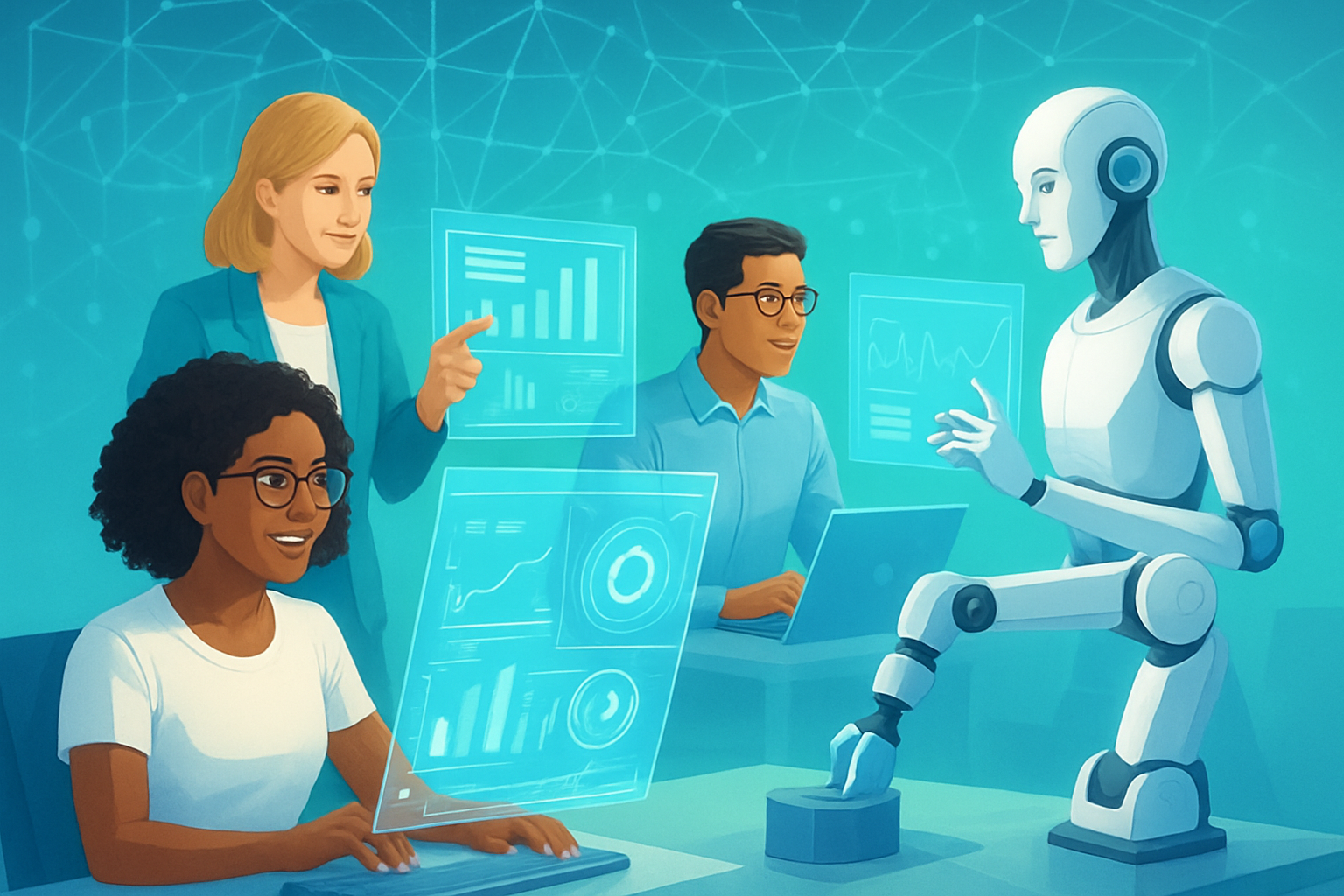
    Despite a chorus of expert warnings about the transformative and potentially disruptive impact of artificial intelligence on the global workforce, a curious paradox persists: the public largely remains unconcerned about AI's direct threat to their own jobs. As of November 2025, surveys consistently reveal a significant disconnect between a general acknowledgment of AI's job-eliminating potential and individual optimism regarding personal employment security. This widespread public apathy, often termed "optimism bias," presents a formidable challenge for policymakers, educators, and industry leaders attempting to prepare for the inevitable shifts in the labor market.

    This article delves into the heart of this perception gap, exploring the multifaceted reasons behind public unconcern even when confronted with stark warnings from luminaries like AI pioneer Geoffrey Hinton. Understanding this disconnect is crucial for effective workforce planning, policy development, and fostering a societal readiness for an increasingly AI-driven future.

    The Curious Case of Collective Concern, Individual Calm

    The technical specifics of this societal phenomenon lie not in AI's capabilities but in human psychology and historical precedent. While the public broadly accepts that AI will reshape industries and displace workers, the granular understanding of how it will impact their specific roles often remains elusive, leading to a deferral of concern.

    Recent data paints a clear picture of this nuanced sentiment. A July 2025 Marist Poll indicated that a striking 67% of Americans believe AI will eliminate more jobs than it creates. This sentiment is echoed by an April 2025 Pew Research Center survey, where 64% of U.S. adults foresaw fewer jobs over the next two decades due to AI. Yet, juxtaposed against these macro concerns is a striking personal optimism: a November 2025 poll revealed that while 72% worried about AI reducing overall jobs, less than half (47%) were concerned about their personal job security. This "it won't happen to me" mentality is a prominent psychological buffer.

    Several factors contribute to this pervasive unconcern. Many view AI primarily as a tool for augmentation rather than outright replacement, enhancing productivity and automating mundane tasks, thereby freeing humans for more complex work. This perspective is reinforced by the historical precedent of past technological revolutions, where new industries and job categories emerged to offset those lost. Furthermore, an "awareness-action gap" exists; while people are aware of AI's rise, they often lack concrete understanding of its specific impact on their daily work or clear pathways for reskilling. The perceived vulnerability of jobs also varies, with the public often underestimating AI's potential to impact roles that experts deem highly susceptible, such as truck drivers or even certain white-collar professions.

    Corporate Strategies in a Climate of Public Complacency

    This prevailing public sentiment—or lack thereof—significantly influences the strategic decisions of AI companies, tech giants, and startups. With less immediate pressure from a largely unconcerned workforce, many companies are prioritizing AI adoption for efficiency gains and productivity enhancements rather than preemptive, large-scale reskilling initiatives.

    Companies like Alphabet (NASDAQ: GOOGL), Microsoft (NASDAQ: MSFT), and Amazon (NASDAQ: AMZN), major players in AI development and deployment, stand to benefit from this public complacency as it allows for smoother integration of AI into operations without significant labor pushback. Their focus often remains on developing AI that complements human tasks, such as AI-powered development tools or multi-agent AI workflow orchestration offered by companies like TokenRing AI, rather than explicitly marketing AI as a job-replacing technology. This approach allows them to improve their competitive positioning by reducing operational costs and accelerating innovation.

    The competitive implications are significant. Tech companies that can effectively integrate AI to boost productivity without triggering widespread public alarm gain a strategic advantage. This allows them to disrupt existing products and services by offering more efficient, AI-enhanced alternatives. Startups entering the AI space also find fertile ground for developing solutions that address specific business pain points, often framed as augmentation tools, which are more readily accepted by a workforce not actively fearing displacement. However, this climate could also lead to a lag in robust workforce planning and policy development, potentially creating greater friction down the line when AI's transformative effects become undeniable and more acutely felt by individual workers.

    Broader Significance and Societal Implications

    The disconnect between expert warnings and public unconcern for AI's impact on jobs holds profound wider significance, shaping the broader AI landscape and societal trends. It risks creating a false sense of security that could impede proactive adaptation to a rapidly evolving labor market.

    This phenomenon fits into a broader trend of technological advancement often outpacing societal readiness. While previous industrial revolutions saw job displacement, they also created new opportunities, often over decades. The concern with AI is the pace of change and the nature of the jobs it can affect, extending beyond manual labor to cognitive tasks previously considered exclusively human domains. The current public unconcern could lead to a significant lag in government policy responses, educational reforms, and corporate reskilling programs. Without a perceived urgent threat, the impetus for large-scale investment in future-proofing the workforce diminishes. This could exacerbate economic inequality and social disruption when AI's impact becomes more pronounced.

    Comparisons to past AI milestones, such as the rise of automation in manufacturing or the internet's impact on information-based jobs, highlight a crucial difference: the current wave of AI, particularly generative AI, demonstrates capabilities that were once science fiction. While the public might be drawing on historical parallels, the scope and speed of AI's potential disruption may render those comparisons incomplete. Potential concerns include a future where a significant portion of the workforce is unprepared for the demands of an AI-augmented or AI-dominated job market, leading to mass unemployment or underemployment if effective transition strategies are not in place.

    The Horizon: Evolving Perceptions and Proactive Measures

    Looking ahead, the current state of public unconcern regarding AI's impact on jobs is unlikely to persist indefinitely. As AI becomes more ubiquitous and its effects on specific job roles become undeniable, public perception is expected to evolve, moving from general apprehension to more direct and personal concern.

    In the near term, we can expect continued integration of AI as a productivity tool across various industries. Companies will likely focus on demonstrating AI's ability to enhance human capabilities, framing it as a co-worker rather than a replacement. However, as AI's sophistication grows, particularly in areas like autonomous decision-making and creative tasks, the "it won't happen to me" mentality will be increasingly challenged. Experts predict a growing awareness-action gap will need to be addressed, pushing for more concrete educational programs and reskilling initiatives.

    Long-term developments will likely involve a societal reckoning with the need for universal basic income or other social safety nets if widespread job displacement occurs, though this remains a highly debated topic. Potential applications on the horizon include highly personalized AI tutors for continuous learning, AI-powered career navigators to help individuals adapt to new job markets, and widespread adoption of AI in fields like healthcare and creative industries, which will inevitably alter existing roles. The main challenge will be to transition from a reactive stance to a proactive one, fostering a culture of continuous learning and adaptability. Experts predict that successful societies will be those that invest heavily in human capital development, ensuring that citizens are equipped with the critical thinking, creativity, and problem-solving skills that AI cannot easily replicate.

    Navigating the Future of Work: A Call for Collective Awareness

    In wrapping up, the current public unconcern about AI's impact on jobs, despite expert warnings, represents a critical juncture in AI history. Key takeaways include the pervasive "optimism bias," the perception of AI as an augmenting tool, and the historical precedent of job creation as primary drivers of this complacency. While understandable, this disconnect carries significant implications for future workforce planning and societal resilience.

    The significance of this development lies in its potential to delay necessary adaptations. If individuals, corporations, and governments remain in a state of unconcern, the transition to an AI-driven economy could be far more disruptive than it needs to be. The challenge is to bridge the gap between general awareness and specific, actionable understanding of AI's impact.

    In the coming weeks and months, it will be crucial to watch for shifts in public sentiment as AI technologies mature and become more integrated into daily work life. Pay attention to how companies like International Business Machines (NYSE: IBM) and NVIDIA (NASDAQ: NVDA) articulate their AI strategies, particularly concerning workforce implications. Look for increased dialogue from policymakers regarding future-of-work initiatives, reskilling programs, and potential social safety nets. Ultimately, a collective awakening to AI's full potential, both transformative and disruptive, will be essential for navigating the future of work successfully.


    This content is intended for informational purposes only and represents analysis of current AI developments.

    TokenRing AI delivers enterprise-grade solutions for multi-agent AI workflow orchestration, AI-powered development tools, and seamless remote collaboration platforms.
    For more information, visit https://www.tokenring.ai/.
  • The AI Earthquake: Which Jobs Will Be Transformed (or Replaced) by the Cognitive Revolution?

    The AI Earthquake: Which Jobs Will Be Transformed (or Replaced) by the Cognitive Revolution?

    The relentless march of artificial intelligence is ushering in a profound and irreversible transformation of the global workplace. Experts are sounding the alarm, warning that a wide array of job sectors face significant impact, prompting a critical need for widespread reskilling and the rapid emergence of entirely new professions. This technological revolution, particularly driven by generative AI, is not merely automating tasks; it's fundamentally reshaping career paths, redefining human-machine collaboration, and challenging traditional notions of work itself. As of November 6, 2025, the implications of these advancements are becoming clearer, pointing towards an era where adaptability and continuous learning are not just advantageous, but essential for professional survival.

    The Technical Tsunami: How Generative AI Is Redefining Work

    The current wave of AI, spearheaded by advanced generative models, marks a pivotal technical evolution in automation. Unlike previous iterations that focused on replicating predefined, repetitive tasks, generative AI excels at producing novel content, solving complex problems, and engaging in cognitive processes once thought exclusive to humans. This fundamental shift is having a direct and often disruptive impact on specific job roles across industries.

    For instance, in software development, AI copilots like GitHub Copilot, powered by Large Language Models (LLMs) based on the transformer architecture, are generating functional code snippets, components, and tests. Trained on vast code repositories (exceeding 715 terabytes of programming data), these systems can produce contextually relevant solutions, detect bugs, and refactor code, enabling developers to complete tasks up to 56% faster. Similarly, graphic designers and digital artists are leveraging tools like DALL-E, Midjourney, and Stable Diffusion, which utilize Generative Adversarial Networks (GANs) and Diffusion Models. These AIs generate images from text prompts, perform style transfers, and automate mundane tasks like resizing and background removal, allowing designers to explore new aesthetics and overcome creative blocks. Content creators and writers, including those in marketing and journalism, are seeing LLMs like GPT-4 and Claude streamline their work by producing initial drafts, summarizing texts, personalizing content, and optimizing for SEO, all while maintaining contextual relevance and grammatical coherence.

    This differs significantly from previous automation waves, such as Robotic Process Automation (RPA), which was rigid and rule-based, primarily impacting blue-collar and repetitive clerical work. Generative AI, by contrast, operates on implicit patterns learned from massive datasets, allowing it to learn, adapt, and generate novel outputs for undefined processes. It doesn't aim to remove the human entirely but to augment human skills, keeping individuals in the loop for refinement, fact-checking, and strategic insight. While past automation focused on physical strength or explicit analytical tasks, current AI is uniquely poised to influence white-collar, professional, and creative jobs, demanding a re-evaluation of skills and a greater focus on human-AI collaboration. Initial reactions from the AI research community and industry experts are a mix of excitement over productivity gains and concern over job displacement, particularly for entry-level white-collar roles, emphasizing the need for continuous upskilling and a focus on uniquely human capabilities.

    Corporate Chessboard: AI's Strategic Impact on Tech Giants and Startups

    The transformative power of AI is not only reshaping individual job functions but also dramatically altering the competitive landscape for AI companies, established tech giants, and agile startups. Companies that can effectively leverage AI for workforce transformation and integrate it into their core operations stand to gain significant market advantages.

    AI infrastructure providers are among the primary beneficiaries. Companies like NVIDIA (NASDAQ: NVDA) and AMD (NASDAQ: AMD), which produce the high-performance chips essential for AI training and deployment, are experiencing unprecedented demand. Similarly, major cloud service providers such as Amazon Web Services (AWS), a subsidiary of Amazon (NASDAQ: AMZN), Google Cloud from Alphabet (NASDAQ: GOOGL), and Microsoft Azure from Microsoft (NASDAQ: MSFT), are critical enablers of the AI revolution, providing the scalable computing resources needed for AI development. These companies are not just selling infrastructure; they are integrating AI deeply into their own services, enhancing efficiency and creating new value propositions.

    Tech giants are strategically navigating this shift with a blend of targeted hiring and workforce adjustments. Amazon (NASDAQ: AMZN) CEO Andy Jassy has indicated that AI agents will reduce the total corporate workforce, necessitating fewer people for current jobs but more for new types of roles. Google (NASDAQ: GOOGL) CEO Sundar Pichai believes AI will be a net job creator, yet the company has undertaken layoffs, particularly in cloud divisions, as AI integration streamlines workflows. Microsoft (NASDAQ: MSFT), with its significant investment in OpenAI, is pivoting to an "AI-first" workforce strategy, prioritizing roles in machine learning, cloud infrastructure for AI, and prompt engineering over generalist positions. Meta (NASDAQ: META) is aggressively recruiting top AI talent, even as it has cut jobs within its AI unit, aiming for a more agile operation. Even IBM (NYSE: IBM) has reported AI replacing jobs in human resources while simultaneously reinvesting in higher-value roles in software engineering and AI consulting.

    The competitive implications are profound. A fierce "talent war" for top AI specialists is driving up salaries and forcing companies to adopt unconventional recruitment strategies. Strategic partnerships, like Microsoft's stake in OpenAI, are becoming crucial for accessing cutting-edge AI advancements. The race to integrate AI into existing product portfolios and develop entirely new AI-powered services is accelerating innovation. Companies that can effectively retrain and upskill their workforce to collaborate with AI, adopting an "AI-first" mindset, will secure a strategic advantage. Conversely, companies that fail to adapt risk significant disruption to their existing products and services, particularly in areas like customer service, content creation, software development, and administrative functions, as AI democratizes previously specialized skills.

    The Wider Significance: Reshaping Society and Labor Paradigms

    The integration of AI into the global economy extends far beyond corporate balance sheets, instigating a profound societal shift that challenges existing labor paradigms and demands proactive policy responses. This transformation is not merely another technological upgrade; it represents a unique evolutionary stage with wide-ranging ethical, economic, and social implications.

    In the broader AI landscape, the technology is driving unprecedented operational efficiencies and innovation, but also creating significant job churn. While the World Economic Forum (WEF) initially projected a net gain of 58 million jobs by 2025 due to AI, more recent reports suggest a potential net loss of 14 million jobs over the next five years, with 83 million displaced and 69 million created. This dynamism underscores the urgent need for continuous adaptation. The societal impacts are complex, particularly concerning income inequality. Many believe AI will exacerbate disparities, as high-skilled workers may initially benefit more from AI-driven productivity. However, some studies suggest AI can also boost the productivity of lower-skilled workers in certain professions, potentially reducing inequality through an "inverse skill-bias." To mitigate negative societal impacts, proactive labor policies are essential, including education reform, comprehensive labor market policies, and enhanced social safety nets that promote professional development and training in AI capabilities and ethical considerations.

    Potential concerns are significant. Ethical implications and bias in AI systems can lead to discriminatory outcomes in hiring and performance evaluations, demanding fairness, transparency, and accountability in AI deployment. A prominent concern is human deskilling, where over-reliance on AI could erode critical cognitive skills like judgment, intuition, and ethical reasoning. To counter this, a "human-in-the-loop" approach is advocated, where AI augments human judgment rather than replacing it. Compared to previous AI milestones, such as early automation or the internet revolution, the current wave of generative AI is distinct because it can automate non-routine cognitive tasks previously considered unique to human intelligence. While past technological revolutions ultimately created more jobs than they destroyed, the speed and breadth of current AI adoption could lead to a faster rate of worker displacement, making the transition period particularly challenging for some workers and necessitating a different approach to policy and workforce development than in previous eras.

    Glimpse into Tomorrow: Future Developments and the AI-Augmented Workforce

    The trajectory of AI's impact on jobs points towards a future characterized by continuous evolution, demanding foresight and strategic adaptation from individuals and institutions alike. Both near-term and long-term developments suggest a workplace profoundly reshaped by intelligent systems, with new applications emerging and significant challenges requiring proactive solutions.

    In the near term (1-5 years), AI will continue to automate routine and repetitive tasks, particularly in white-collar and entry-level positions. Data entry, basic coding, administrative support, and customer service are already seeing significant AI integration, with some experts predicting the elimination of half of all entry-level white-collar jobs within five years. However, this period will also see AI boosting productivity and augmenting human capabilities, allowing workers to focus on more complex, creative, and interpersonal aspects of their roles. The World Economic Forum estimates that while 85 million jobs may be displaced, as many as 97 million new jobs could be created, leading to a net gain. The skills required for work are expected to change by 70% over the next five years, emphasizing critical evaluation and the ability to effectively guide AI systems.

    Looking to the long term (beyond 5 years, up to 2030-2050), AI is expected to drive a profound structural change in the labor market. McKinsey projects that up to 30% of hours worked in the US economy could be automated by 2030, requiring 12 million occupational transitions. Goldman Sachs predicts AI could replace 300 million full-time jobs globally by 2030, but also anticipates a productivity boom that could increase global GDP by 7%, creating new jobs and fields. This hyper-automation will extend beyond individual tasks to integrate AI across entire workflows, with roles emphasizing human qualities like creativity, emotional intelligence, strategic thinking, and complex problem-solving becoming increasingly vital. Potential applications on the horizon include AI-powered project management, advanced marketing analytics, predictive healthcare diagnostics, legal research automation, and hyper-automated business operations. However, significant challenges need to be addressed, including widespread job displacement and potential economic inequality, the immense need for reskilling and upskilling, and critical ethical concerns such as bias, privacy, and the potential for human deskilling. Experts predict that AI will primarily transform tasks within jobs rather than entirely eliminating whole professions, stressing that "Your job will not be taken by AI; it will be taken by a person who knows how to use AI." The future will heavily involve human-AI collaboration, with a strong emphasis on adaptability and continuous learning.

    The AI Horizon: Navigating the Evolving Employment Landscape

    The ongoing impact of artificial intelligence on the global job market is a defining narrative of our era, representing a complex interplay of disruption, innovation, and adaptation. As we stand in late 2025, the picture emerging from this technological revolution is one of profound transformation, demanding a proactive and thoughtful approach from all stakeholders.

    The key takeaways are clear: AI will lead to significant job churn, both displacing and creating roles, with a particular impact on routine white-collar and entry-level positions. It will augment human capabilities, boosting productivity and allowing for a focus on higher-value tasks. Crucially, the skills required for success are rapidly evolving, emphasizing critical thinking, creativity, and the ability to effectively collaborate with AI. This development marks a significant juncture in AI history, distinguishing itself from previous technological revolutions by its ability to automate complex cognitive tasks. While historical parallels suggest net job creation in the long run, the speed and breadth of AI adoption present unique challenges, particularly in managing frictional unemployment during the transition.

    The long-term impact points towards a more dynamic labor market, demanding lifelong learning and adaptation. If managed effectively, AI promises higher productivity and improved living standards, potentially leading to shifts in work-life balance. However, the equitable distribution of these benefits and the severity of the transition period will heavily depend on government policies, investment in education, retraining programs, and robust social safety nets. The coming weeks and months will be crucial for observing several trends: continued layoff announcements explicitly linked to AI efficiency, sector-specific impacts (especially in white-collar professions), the acceleration of generative AI adoption rates, shifts in skill demand, and the responses from governments and corporations regarding retraining initiatives and regulatory frameworks. Monitoring economic indicators like unemployment rates and productivity growth will provide further insights into AI's macro-level influence.

    Ultimately, AI's impact on jobs is a complex and evolving story. It promises immense productivity gains and economic growth, but it necessitates a massive re-evaluation of skills, education, and social support systems to ensure a just and prosperous transition for the global workforce.


    This content is intended for informational purposes only and represents analysis of current AI developments.

    TokenRing AI delivers enterprise-grade solutions for multi-agent AI workflow orchestration, AI-powered development tools, and seamless remote collaboration platforms.
    For more information, visit https://www.tokenring.ai/.

  • Yale Study Delivers Sobering News: AI’s Job Impact “Minimal” So Far, Challenging Apocalyptic Narratives

    Yale Study Delivers Sobering News: AI’s Job Impact “Minimal” So Far, Challenging Apocalyptic Narratives

    New Haven, CT – October 5, 2025 – A groundbreaking new study from Yale University's Budget Lab, released this week, is sending ripples through the artificial intelligence community and public discourse, suggesting that generative AI has had a remarkably minimal impact on the U.S. job market to date. The research directly confronts widespread fears and even "apocalyptic predictions" of mass unemployment, offering a nuanced perspective that calls for evidence-based policy rather than speculative alarm. This timely analysis arrives as AI's presence in daily life and enterprise solutions continues to expand, prompting a critical re-evaluation of its immediate societal footprint.

    The study's findings are particularly significant for the TokenRing AI audience, which closely monitors breaking AI news, machine learning advancements, and the strategic moves of leading AI companies. By meticulously analyzing labor market data since the public debut of ChatGPT in late 2022, Yale researchers provide a crucial counter-narrative, indicating that the much-hyped AI revolution, at least in terms of job displacement, is unfolding at a far more gradual pace than many have anticipated. This challenges not only public perception but also the strategic outlooks of tech giants and startups betting on rapid AI-driven transformation.

    Deconstructing the Data: A Methodical Look at AI's Footprint on Employment

    The Yale study, spearheaded by Martha Gimbel, Molly Kinder, Joshua Kendall, and Maddie Lee from the Budget Lab, often in collaboration with the Brookings Institution, employed a rigorous methodology to assess AI's influence over roughly 33 months of U.S. labor market data, spanning from November 2022. Researchers didn't just look at raw job numbers; they delved into historical comparisons, juxtaposing current trends with past technological shifts like the advent of personal computers and the internet, as far back as the 1940s and 50s. A key metric was the "occupational mix," measuring the composition of jobs and its rate of change, alongside an analysis of occupations theoretically "exposed" to AI automation.

    The core conclusion is striking: there has been no discernible or widespread disruption to the broader U.S. labor market. The occupational mix has not shifted significantly faster in the wake of generative AI than during earlier periods of technological transformation. While a marginal one-percentage-point increase in the pace of occupational shifts was observed, these changes often predated ChatGPT's launch and were deemed insufficient to signal a major AI-driven upheaval. Crucially, the study found no consistent relationship between measures of AI use or theoretical exposure and actual job losses or gains, even in fields like law, finance, customer service, and professional services, which are often cited as highly vulnerable.

    This challenges previous, more alarmist projections that often relied on theoretical exposure rather than empirical observation of actual job market dynamics. While some previous analyses suggested broad swathes of jobs were immediately at risk, the Yale study suggests that the practical integration and impact of AI on job roles are far more complex and slower than initially predicted. Initial reactions from the broader AI research community have been mixed; while some studies, including those from the United Nations International Labour Organization (2023) and a University of Chicago and Copenhagen study (April 2025), have also suggested modest employment effects, a notable counterpoint comes from a Stanford Digital Economy Lab study. That Stanford research, using anonymized payroll data from late 2022 to mid-2025, indicated a 13% relative decline in employment for 22-25 year olds in highly exposed occupations, a divergence Yale acknowledges but attributes potentially to broader labor market weaknesses.

    Corporate Crossroads: Navigating a Slower AI Integration Landscape

    For AI companies, tech giants, and startups, the Yale study's findings present a complex picture that could influence strategic planning and market positioning. Companies like Google (NASDAQ: GOOGL), Microsoft (NASDAQ: MSFT), and OpenAI, which have heavily invested in and promoted generative AI, might find their narrative of immediate, widespread transformative impact tempered by these results. While the long-term potential of AI remains undeniable, the study suggests that the immediate competitive advantage might not come from radical job displacement but rather from incremental productivity gains and efficiency improvements.

    This slower pace of job market disruption could mean a longer runway for companies to integrate AI tools into existing workflows rather than immediately replacing human roles. For enterprise-grade solutions providers like TokenRing AI, which focuses on multi-agent AI workflow orchestration and AI-powered development tools, this could underscore the value of augmentation over automation. The emphasis shifts from "replacing" to "enhancing," allowing companies to focus on solutions that empower human workers, improve collaboration, and streamline processes, rather than solely on cost-cutting through headcount reduction.

    The study implicitly challenges the "move fast and break things" mentality when it comes to AI's societal impact. It suggests that AI, at its current stage, is behaving more like a "normal technology" with an evolutionary impact, akin to the decades-long integration of personal computers, rather than a sudden revolution. This might lead to a re-evaluation of product roadmaps and marketing strategies, with a greater focus on demonstrating tangible productivity benefits and upskilling initiatives rather than purely on the promise of radical automation. Companies that can effectively showcase how their AI tools empower employees and create new value, rather than just eliminate jobs, may gain a significant strategic advantage in a market increasingly sensitive to ethical AI deployment and responsible innovation.

    Broader Implications: Reshaping Public Debate and Policy Agendas

    The Yale study's findings carry profound wider significance, particularly in reshaping public perception and influencing future policy debates around AI and employment. By offering a "reassuring message to an anxious public," the research directly contradicts the often "apocalyptic predictions" from some tech executives, including OpenAI CEO Sam Altman and Anthropic CEO Dario Amodei, who have warned of significant job displacement. This evidence-based perspective could help to calm fears and foster a more rational discussion about AI's role in society, moving beyond sensationalism.

    This research fits into a broader AI landscape that has seen intense debate over job automation, ethical considerations, and the need for responsible AI development. The study's call for "evidence, not speculation" is a critical directive for policymakers worldwide. It highlights the urgent need for transparency from major AI companies, urging them to share comprehensive usage data at both individual and enterprise levels. Without this data, researchers and policymakers are essentially "flying blind into one of the most significant technological shifts of our time," unable to accurately monitor and understand AI's true labor market impacts.

    The study's comparison to previous technological shifts is also crucial. It suggests that while AI's long-term transformative potential remains immense, its immediate effects on employment may mirror the slower, more evolutionary patterns seen with other disruptive technologies. This perspective could inform educational reforms, workforce development programs, and social safety net discussions, shifting the focus from immediate crisis management to long-term adaptation and skill-building. The findings also underscore the importance of distinguishing between theoretical AI exposure and actual, measured impact, providing a more grounded basis for future economic forecasting.

    The Horizon Ahead: Evolution, Not Revolution, for AI and Jobs

    Looking ahead, the Yale study suggests that the near-term future of AI's impact on jobs will likely be characterized by continued evolution rather than immediate revolution. Experts predict a more gradual integration of AI tools, focusing on augmenting human capabilities and improving efficiency across various sectors. Rather than mass layoffs, the more probable scenario involves a subtle shift in job roles, where workers increasingly collaborate with AI systems, offloading repetitive or data-intensive tasks to machines while focusing on higher-level problem-solving, creativity, and interpersonal skills.

    Potential applications and use cases on the horizon will likely center on enterprise-grade solutions that enhance productivity and decision-making. We can expect to see further development in AI-powered assistants for knowledge workers, advanced analytics tools that inform strategic decisions, and intelligent automation for specific, well-defined processes within companies. The focus will be on creating synergistic human-AI teams, where the AI handles data processing and pattern recognition, while humans provide critical thinking, ethical oversight, and contextual understanding.

    However, significant challenges still need to be addressed. The lack of transparent usage data from AI companies remains a critical hurdle for accurate assessment and policy formulation. Furthermore, the observed, albeit slight, disproportionate impact on recent graduates warrants closer investigation to understand if this is a nascent trend of AI-driven opportunity shifts or simply a reflection of broader labor market dynamics for early-career workers. Experts predict that the coming years will be crucial for developing robust frameworks for AI governance, ethical deployment, and continuous workforce adaptation to harness AI's benefits responsibly while mitigating potential risks.

    Wrapping Up: A Call for Evidence-Based Optimism

    The Yale University study serves as a pivotal moment in the ongoing discourse about artificial intelligence and its impact on the future of work. Its key takeaway is a powerful one: while AI's potential is vast, its immediate, widespread disruption to the job market has been minimal, challenging the prevalent narrative of impending job apocalypse. This assessment provides a much-needed dose of evidence-based optimism, urging us to approach AI's integration with a clear-eyed understanding of its current capabilities and limitations, rather than succumbing to speculative fears.

    The study's significance in AI history lies in its empirical challenge to widely held assumptions, shifting the conversation from theoretical risks to observed realities. It underscores that technological transformations, even those as profound as AI, often unfold over decades, allowing societies time to adapt and innovate. The long-term impact will depend not just on AI's capabilities, but on how effectively policymakers, businesses, and individuals adapt to these evolving tools, focusing on skill development, ethical deployment, and data transparency.

    In the coming weeks and months, it will be crucial to watch for how AI companies respond to the call for greater data sharing, and how policymakers begin to integrate these findings into their legislative agendas. Further research will undoubtedly continue to refine our understanding, particularly regarding the nuanced effects on different demographics and industries. For the TokenRing AI audience, this study reinforces the importance of focusing on practical, value-driven AI solutions that augment human potential, rather than chasing speculative visions of wholesale automation. The future of work with AI appears to be one of collaboration and evolution, not immediate replacement.


    This content is intended for informational purposes only and represents analysis of current AI developments.

    TokenRing AI delivers enterprise-grade solutions for multi-agent AI workflow orchestration, AI-powered development tools, and seamless remote collaboration platforms. For more information, visit https://www.tokenring.ai/.