Tag: Leadership

  • Nike’s Tech-Infused Turnaround: CEO Elliott Hill Reshapes Leadership to “Win Now”

    Nike’s Tech-Infused Turnaround: CEO Elliott Hill Reshapes Leadership to “Win Now”

    In a decisive move to rekindle growth and reassert its market dominance, sportswear titan Nike (NYSE:NKE) has embarked on a significant leadership restructuring under the renewed stewardship of CEO Elliott Hill. Having returned to the helm on October 14, 2024, Hill has wasted no time in unveiling a comprehensive "Win Now" turnaround strategy, with technology firmly positioned not as a supporting player, but as an integrated operational core. This strategic recalibration, marked by a bold reorganization of executive roles and a deep embedding of digital capabilities, signals a profound shift in how Nike intends to innovate, produce, and connect with its global consumer base.

    The shakeup, which culminates with key appointments effective just days from now on December 8, 2025, underscores a commitment to operational agility and end-to-end digital transformation. The company is strategically dismantling traditional silos, merging technology functions directly into its core supply chain and operational leadership. This move is designed to accelerate decision-making, enhance efficiency, and leverage advanced digital tools to drive product innovation and a more personalized consumer experience, moving beyond recent revenue challenges and inventory overstock.

    A New Digital Architecture: Technology Embedded, Not Separate

    The most striking aspect of Nike's technological pivot under Elliott Hill is the strategic re-imagination of its digital architecture. In a significant departure from previous structures, the role of Executive Vice President, Chief Technology Officer (CTO) has been eliminated, leading to the departure of Dr. Muge Dogan. This signals a clear intent to move away from a standalone technology department, instead integrating technology capabilities directly into the operational fabric of the company.

    This integration is epitomized by the appointment of Venkatesh Alagirisamy as Executive Vice President, Chief Operating Officer (COO), effective December 8, 2025. A nearly 20-year Nike veteran, Alagirisamy will now oversee Technology alongside Supply Chain, Planning, Operations, Manufacturing, and Sustainability. This consolidation under a single COO aims to foster an end-to-end digital transformation, ensuring that technology is not merely a tool but an intrinsic component of how Nike designs, produces, delivers, and sells its products. This approach differs significantly from previous models where technology often functioned as a separate, albeit crucial, support unit. By embedding technology at this foundational level, Nike seeks to improve speed, collaboration, and execution across all business processes, from advanced material science in product development to predictive analytics in demand forecasting. Initial reactions from industry experts suggest this could be a blueprint for legacy brands seeking to truly digitize their operations, rather than just adding digital layers.

    Competitive Implications and Market Repercussions

    Nike's aggressive tech integration and leadership shakeup carry significant implications for the broader AI and tech industries, as well as its direct competitors. By placing technology at the heart of its "Win Now" strategy, Nike is likely to intensify its demand for cutting-edge AI, data analytics, and automation solutions. This could translate into increased opportunities for specialized AI startups and enterprise tech providers offering solutions in supply chain optimization, personalized marketing, generative design, and advanced manufacturing. Companies adept at leveraging AI for demand prediction, inventory management, and customer segmentation stand to benefit from Nike's renewed focus.

    For rival sportswear giants like Adidas (XTRA:ADS) and Under Armour (NYSE:UAA), Nike's move presents a formidable challenge and a potential catalyst for their own accelerated digital transformation efforts. Nike's strategy to rebuild wholesale relationships and re-engage with platforms like Amazon (NASDAQ:AMZN) in 2025, while simultaneously enhancing its direct-to-consumer digital experience, suggests a sophisticated omnichannel approach powered by integrated technology. This could disrupt existing product and service offerings in the retail tech space, pushing vendors to provide more holistic, integrated solutions rather than siloed applications. Nike's market positioning will be strengthened by its ability to leverage data and AI to create more responsive supply chains, highly personalized consumer journeys, and innovative products that resonate deeply with athletes and consumers, potentially setting a new industry standard for tech-driven retail.

    Broader Significance in the AI and Retail Landscape

    Nike's strategic shift under Elliott Hill is more than just a corporate restructuring; it's a significant indicator of broader trends in the AI landscape and the future of retail. By dissolving the traditional CTO role and embedding technology within core operations, Nike is acknowledging that digital capabilities are no longer a distinct function but an inherent part of every business process. This aligns with the growing understanding that true digital transformation requires a holistic, integrated approach where AI, data, and automation permeate every aspect of an enterprise, from design to delivery.

    This move underscores the increasing importance of agile organizational structures capable of responding rapidly to market changes and consumer demands. The emphasis on data and AI integration for product development, supply chain optimization, and consumer experience reflects a wider industry pivot towards hyper-personalization and predictive analytics. While promising immense efficiency and tailored experiences, this also raises potential concerns regarding data privacy and the ethical implications of AI in consumer profiling. Nike's commitment to rebuilding its athletic core through technology also serves as a benchmark for how legacy brands can leverage modern AI advancements to revitalize their brand identity, contrasting with earlier AI milestones that focused more on foundational research than integrated business application.

    The Road Ahead: Hyper-Personalization and Predictive Innovation

    Looking ahead, Nike's tech-infused turnaround promises a future characterized by hyper-personalization and predictive innovation. In the near term, we can expect to see further integration of AI in Nike's design processes, potentially leading to generative design tools that accelerate product development and customization options for consumers. AI-driven analytics will likely refine manufacturing processes, optimizing material usage and reducing waste, while machine learning algorithms will power more precise inventory management, aiming for the promised normalization by Q2 2026. Marketing efforts will become increasingly sophisticated, leveraging AI to deliver highly targeted campaigns and personalized product recommendations across its balanced omnichannel strategy.

    In the long term, the implications are even more profound. Experts predict that Nike could become a leader in truly adaptive apparel, where AI-powered materials and sensors provide real-time performance feedback and adapt to environmental conditions or individual athlete needs. Challenges remain, particularly in attracting and retaining top-tier AI and tech talent in a competitive market, ensuring the ethical deployment of AI, and maintaining the brand's authentic connection to sport amidst increasing technological reliance. However, if successfully executed, Nike's strategy could establish a new paradigm for how global brands leverage AI to drive both innovation and sustained growth, setting a precedent for what's next in the convergence of sportswear and advanced technology.

    A New Era for the Swoosh: Tech at the Core

    Nike's leadership shakeup and its "Win Now" strategy under CEO Elliott Hill represent a pivotal moment in the company's storied history, signaling a bold departure from past approaches. The key takeaway is the profound embedding of technology directly into the operational heart of the organization, moving beyond a siloed tech department to a fully integrated digital enterprise. This strategic pivot, effective with key appointments like Venkatesh Alagirisamy as COO overseeing technology from December 8, 2025, underscores a commitment to agility, efficiency, and a data-driven approach across all facets of the business.

    This development is highly significant in the AI landscape, demonstrating how a global consumer brand is leveraging advanced digital capabilities to address complex business challenges, from inventory management and supply chain optimization to personalized consumer engagement and product innovation. It reflects a growing trend where AI is no longer a futuristic concept but a practical, indispensable tool for competitive advantage. In the coming weeks and months, the industry will be closely watching for the tangible results of this ambitious turnaround plan, particularly the impact on Nike's financial performance, the unveiling of new tech-driven products, and the effectiveness of its reimagined omnichannel strategy. Nike's journey will serve as a critical case study for how legacy brands can navigate the complexities of digital transformation to secure their future in an increasingly AI-powered world.


    This content is intended for informational purposes only and represents analysis of current AI developments.

    TokenRing AI delivers enterprise-grade solutions for multi-agent AI workflow orchestration, AI-powered development tools, and seamless remote collaboration platforms.
    For more information, visit https://www.tokenring.ai/.'

  • AI-Driven Success: Darden’s DC Tech Connect Unveils Five Pivotal Lessons for the Future of Tech

    AI-Driven Success: Darden’s DC Tech Connect Unveils Five Pivotal Lessons for the Future of Tech

    Darden's third annual DC Tech Connect event, convened on October 24, 2025, by the Batten Institute for Entrepreneurship, Innovation and Technology, gathered a distinguished assembly of students, alumni, and industry leaders. The event, held at Darden's Sands Family Grounds in the DC Metro area, served as a crucial forum for immersing MBA candidates in the dynamic technology sector. With a keen focus on Artificial Intelligence, the discussions illuminated critical career pathways, evolving industry trends, and the profound implications of AI for both individuals and enterprises. For TokenRing AI readers, the insights garnered offer an invaluable blueprint for navigating the complexities and capitalizing on the immense opportunities presented by the latest AI advancements.

    The Five Essential Pillars: Navigating the AI Frontier

    The conference meticulously outlined five essential lessons for achieving sustained success in a technology sector increasingly defined by AI. These insights represent a strategic shift from traditional tech paradigms, emphasizing adaptability, ethical considerations, and a deep understanding of AI's strategic implications.

    1. AI Literacy is Non-Negotiable: A resounding takeaway was the absolute necessity for universal AI literacy. Speakers stressed that regardless of one's specific job function, a comprehensive understanding of AI strategy and its practical applications is paramount. As one expert succinctly put it, "It doesn't really matter what job you have anymore. Someone is going to ask you what your AI strategy is point blank. And so, you should probably have an answer for that." This marks a significant departure from previous eras where deep coding or specialized technical skills were the sole determinants of success. Today, strategic comprehension of AI's capabilities, limitations, and ethical dimensions is becoming a fundamental requirement for all professionals, differentiating those who merely react to AI from those who can leverage it proactively.

    2. The Power of Networks and Nonlinear Career Paths: The event heavily emphasized the critical role of strong professional networks and the embrace of nonlinear career trajectories. Building robust relationships within the Darden community and the broader tech ecosystem was highlighted as being as vital as, if not more so than, a traditional résumé for career advancement. Unlike past models that often favored linear progression within large corporations, the current tech landscape, particularly with the rise of agile AI startups, rewards individuals who can navigate diverse roles, explore opportunities beyond established tech giants, and leverage their network to uncover unforeseen pathways.

    3. Embrace Ambiguity and Drive Disruption: Success in the fast-paced, often uncertain tech environment, especially within the startup ecosystem, demands a unique ability to think clearly and make decisive choices amidst ambiguity—a skill metaphorically described as "swimming in ambiguity." Furthermore, professionals were urged to proactively "stay ahead of the curve and drive disruption, not merely react to it." This lesson is particularly pertinent in the age of generative AI, where technological advancements frequently challenge established paradigms and necessitate a forward-thinking, disruptive mindset to maintain relevance and create new value.

    4. Human Creativity and Collaborative Leadership Remain Paramount: Despite the accelerating advancements in AI, the conference underscored that success in the technology sector will not solely hinge on technical AI proficiency. Instead, it will be profoundly shaped by enduring human qualities such as creativity, innovation, and collaborative leadership. While AI can automate tasks and generate insights, the ability to conceptualize novel solutions, foster interdisciplinary teamwork, and lead with vision remains an irreplaceable human asset, distinguishing truly impactful projects and leaders in the AI era.

    5. Prioritize Impact and Opportunity Creation (and Ethical Considerations): Beyond conventional financial motivations, attendees were encouraged to consider the broader impact they aspire to create in the world and the types of opportunities they wish to forge for themselves and others. This lesson was intrinsically linked to the critical importance of ethical innovation in AI development and deployment. As AI becomes more integrated into societal structures, understanding and actively addressing the ethical implications of emerging technologies—from bias in algorithms to data privacy—is no longer a peripheral concern but a central tenet of responsible and sustainable technological leadership.

    Reshaping the Competitive Landscape: Implications for AI Companies and Tech Giants

    The lessons emanating from Darden's DC Tech Connect event carry significant implications for the competitive dynamics among AI companies, tech giants, and nascent startups. Companies that successfully integrate these principles into their organizational culture and strategic planning stand to gain a considerable advantage.

    Agile startups, by their very nature, are well-positioned to benefit from embracing ambiguity and driving disruption. Their ability to pivot rapidly and innovate without the inertia of larger organizations makes them ideal candidates to implement these lessons. Conversely, established tech giants like Alphabet (NASDAQ: GOOGL), Microsoft (NASDAQ: MSFT), and Amazon (NASDAQ: AMZN) will need to strategically foster internal environments that encourage AI literacy across all departments, promote nonlinear career development, and empower employees to embrace calculated risks. Those that succeed in this internal transformation will better retain top talent and maintain their competitive edge.

    The competitive landscape will likely see disruption to existing products and services that fail to integrate AI strategically or ethically. Companies clinging to outdated business models without a robust AI strategy risk obsolescence. Market positioning will increasingly favor organizations that can demonstrate not only technical AI prowess but also a strong ethical framework and a commitment to creating meaningful impact. For major AI labs, the imperative is clear: move beyond pure research to focus on responsible deployment and widespread AI education within their own ranks and for their clientele.

    The Broader Significance: AI's Evolving Role in Society

    The insights from Darden's DC Tech Connect event resonate deeply within the broader AI landscape and current technology trends. These lessons signify a maturation of the AI field, moving beyond initial fascination with raw computational power to a more holistic understanding of AI's strategic application, ethical governance, and human integration.

    The increasing emphasis on AI literacy highlights a crucial societal shift: AI is no longer a niche technical domain but a foundational layer impacting every industry and facet of daily life. This has profound impacts on education, demanding new curricula that emphasize AI strategy, ethics, and interdisciplinary problem-solving. Potential concerns include the widening of an "AI literacy gap," where those without access to this crucial knowledge may be left behind in the evolving workforce. Ethical considerations, such as algorithmic bias, data security, and the societal impact of automation, were not just mentioned but framed as central to responsible innovation. This contrasts with earlier AI milestones, which often prioritized breakthrough capabilities over their broader societal implications. The current focus signals a more conscientious approach to technological advancement, demanding that innovators consider the "why" and "how" of AI, not just the "what."

    The Horizon: Anticipating Future AI Developments

    Based on the discussions at Darden's DC Tech Connect, the near-term and long-term developments in AI and the technology sector are poised for continued rapid evolution, guided by these essential lessons.

    In the near term, we can expect a surge in demand for roles at the intersection of AI and strategy, ethics, and interdisciplinary collaboration. Companies will increasingly seek AI strategists who can translate complex technical capabilities into actionable business outcomes, and AI ethicists who can ensure responsible and equitable deployment. The proliferation of generative AI will continue, but with a heightened focus on fine-tuning models for specific industry applications and ensuring their outputs are aligned with human values. Long-term, AI is predicted to become an invisible, pervasive layer across all business functions, making universal AI fluency as essential as basic digital literacy. Potential applications on the horizon include highly personalized learning systems, advanced predictive analytics for societal challenges, and AI-powered tools that augment human creativity in unprecedented ways. However, significant challenges remain, including the need for continuous upskilling of the global workforce, the establishment of robust international ethical AI frameworks, and fostering genuine human-AI collaboration that leverages the strengths of both. Experts predict a future where AI acts as a powerful co-pilot, enhancing human capabilities rather than merely replacing them, provided these foundational lessons are embraced.

    A New Paradigm for Tech Success: The Road Ahead

    Darden's third annual DC Tech Connect event offered a compelling vision for success in the AI-driven technology sector, underscoring a fundamental shift in what it means to be a leader and innovator. The five essential lessons—non-negotiable AI literacy, the power of networks and nonlinear paths, embracing ambiguity and driving disruption, the primacy of human creativity and collaborative leadership, and prioritizing impact and ethical opportunity creation—represent a comprehensive framework for navigating the complexities of the modern tech landscape.

    This development signifies a crucial turning point in AI history, moving beyond the initial "wow" factor of technological breakthroughs to a more mature and responsible application of AI. It emphasizes that long-term impact will be forged not just through technical prowess, but through strategic foresight, ethical consideration, and uniquely human attributes. In the coming weeks and months, we should watch for companies that demonstrably invest in enterprise-wide AI education, the emergence of new roles that blend technical AI skills with strategic and ethical acumen, and a continued emphasis on building resilient professional networks in an increasingly distributed work environment. Those who heed these lessons will not only survive but thrive, shaping a future where AI serves humanity with intelligence and integrity.


    This content is intended for informational purposes only and represents analysis of current AI developments.

    TokenRing AI delivers enterprise-grade solutions for multi-agent AI workflow orchestration, AI-powered development tools, and seamless remote collaboration platforms.
    For more information, visit https://www.tokenring.ai/.

  • AI’s Executive Ascent: Reshaping Strategic Decisions and Leadership in Late 2025

    AI’s Executive Ascent: Reshaping Strategic Decisions and Leadership in Late 2025

    Artificial intelligence has transitioned from an emerging technology to a fundamental pillar of corporate strategy and leadership, profoundly reshaping the business landscape as of late 2025. This evolution is marked by AI’s unparalleled ability to deliver advanced insights, automate complex processes, and necessitate a redefinition of leadership competencies across diverse industries. Companies that fail to integrate AI risk losing relevance and competitiveness in an increasingly data-driven world.

    The immediate significance lies in AI's role as a critical "co-pilot" in the executive suite, enabling faster, more accurate, and proactive strategic decision-making. From anticipating market shifts to optimizing complex supply chains, AI is augmenting human intelligence, moving organizations from reactive to adaptive strategies. This paradigm shift demands that leaders become AI-literate strategists, capable of interpreting AI outputs and integrating these insights into actionable business plans, while also navigating the ethical and societal implications of this powerful technology.

    The Technical Core: Advancements Fueling AI-Driven Leadership

    The current transformation in business leadership is underpinned by several sophisticated AI advancements that fundamentally differ from previous approaches, offering unprecedented capabilities for prediction, explanation, and optimization.

    Generative AI (GenAI) and Large Language Models (LLMs) are at the forefront, deployed for strategic planning, accelerating innovation, and automating various business functions. Modern LLMs, such as GPT-4 (1.8T parameters) and Claude 3 (2T parameters), demonstrate advanced natural language understanding, reasoning, and code generation. A significant stride is multimodality, allowing these models to process and generate text, images, audio, and video, crucial for applications like virtual assistants and medical diagnostics. Unlike traditional strategic planning, which relied on human-intensive brainstorming and manual data analysis, GenAI acts as a "strategic co-pilot," offering faster scenario modeling and rapid prototyping, shifting strategies from static to dynamic. The AI research community and industry experts are cautiously optimistic, emphasizing the need for responsible development and the shift from general-purpose LLMs to specialized, fine-tuned models for domain-specific accuracy and compliance.

    Explainable AI (XAI) is becoming indispensable for building trust, ensuring regulatory compliance, and mitigating risks. Tools like SHAP (SHapley Additive exPlanations) and LIME (Local Interpretable Model-agnostic Explanations) provide transparency into AI's "black box" decisions. SHAP rigorously attributes feature contributions to predictions, while LIME offers local explanations for individual outcomes. This contrasts sharply with earlier deep learning models that often provided accurate predictions without clear insights into their internal logic, making XAI crucial for ethical considerations, bias detection, and adherence to regulations like the upcoming EU AI Act.

    Causal AI is gaining traction by moving beyond mere correlation to identify cause-and-effect relationships. Utilizing frameworks like Directed Acyclic Graphs (DAGs) and Judea Pearl's Do-Calculus, Causal AI enables leaders to answer "why" questions and simulate the impact of potential actions. This is a significant leap from traditional predictive AI, which excels at identifying patterns but cannot explain underlying reasons, allowing leaders to make decisions based on true causal drivers and avoid costly missteps from spurious correlations.

    Reinforcement Learning (RL) is a powerful paradigm for optimizing multi-step processes and dynamic decision-making. RL systems involve an agent interacting with an environment, learning an optimal "policy" through rewards and penalties. Unlike supervised or unsupervised learning, RL doesn't require pre-labeled data and is applied to optimize complex processes like supply chain management and financial trading strategies, offering an adaptive solution for dynamic, uncertain environments.

    Corporate Ripples: AI's Impact on Tech Giants, AI Companies, and Startups

    The pervasive integration of AI into strategic decision-making is fundamentally reshaping the competitive landscape, creating distinct winners and challenges across the tech industry.

    Tech Giants such as Microsoft (NASDAQ: MSFT), Amazon (NASDAQ: AMZN), and Alphabet (NASDAQ: GOOGL) are early and significant beneficiaries, consolidating value at the top of the market. They are making substantial investments in AI infrastructure, talent, models, and applications. Microsoft, with its Azure cloud platform and strategic investment in OpenAI, offers comprehensive AI solutions. Amazon Web Services (AWS) dominates AI-powered cloud computing, while Alphabet leverages Google Cloud for AI workloads and integrates its Gemini models across its vast user base, also forming partnerships with AI startups like Anthropic. Oracle (NYSE: ORCL) is aggressively expanding its data center capacity, investing in AI database platforms and agentic AI opportunities, with hundreds of agents already live across its applications. These hyperscalers are not just developing new AI products but embedding AI to enhance existing services, deepen customer engagement, and optimize internal operations, further solidifying their market dominance.

    Dedicated AI Companies are at the forefront, specializing in cutting-edge solutions and providing the foundational infrastructure for the global AI buildout. Companies like NVIDIA (NASDAQ: NVDA) with its GPUs and CUDA software, TSMC (NYSE: TSM) for advanced chip manufacturing, and AMD (NASDAQ: AMD) with its AI-capable chips, are indispensable. Specialized AI service providers, such as Pace Generative, focusing on AI visibility and generative optimization, are also gaining traction by offering targeted solutions. AI database platforms, enabling secure access and analysis of private data using advanced reasoning models, are experiencing significant growth, highlighting the demand for specialized tools.

    Startups are leveraging AI as their backbone for innovation, enabling them to scale faster, optimize operations, and achieve a competitive edge. AI allows startups to automate repetitive tasks like customer support, streamline data analysis, and deliver highly personalized customer experiences through predictive analytics. Their inherent agility enables rapid AI integration and a focus on targeted, innovative applications. However, startups face intense competition for AI talent and resources against the tech giants. The competitive landscape is also seeing a shift towards "responsible AI" as a differentiator, with companies prioritizing ethical practices gaining trust and navigating complex regulatory environments. Potential disruptions include workforce transformation, as AI may displace jobs while creating new ones, and challenges in data governance and ethical concerns, which can lead to project failures if not addressed proactively.

    A Broader Lens: AI's Wider Significance and Societal Implications

    The pervasive integration of AI into strategic decisions and leadership roles represents a profound shift in the broader AI landscape, moving beyond incremental improvements to systemic transformation. This era, often dubbed an "AI renaissance," is characterized by unprecedented opportunities but also significant concerns.

    This development marks a transition from AI primarily automating tasks to becoming an integrated, autonomous, and transformative strategic partner. Unlike previous waves of automation that focused on efficiency, current AI, particularly generative and agentic AI, is redefining leadership by making complex decisions, providing strategic foresight, and even exhibiting a degree of autonomous creativity. The launch of generative AI tools like ChatGPT in late 2022 served as a major tipping point, demonstrating AI's ability to create content and solutions, paving the way for the current era of Agentic AI in early 2025, where autonomous systems can act with minimal human intervention.

    The positive impacts are immense: enhanced efficiency and productivity as AI automates routine tasks, superior decision-making through data-driven insights, accelerated innovation, and personalized leadership development. AI can also help identify systemic biases in processes, fostering more diverse and inclusive outcomes if implemented carefully.

    However, significant concerns loom. Ethical dilemmas are paramount, including the potential for AI systems to perpetuate and amplify biases if trained on historically flawed data, leading to discrimination. The "black box problem" of opaque AI algorithms eroding trust and accountability, making Explainable AI (XAI) crucial. Data privacy and security are constant concerns, demanding robust measures to prevent misuse. Over-reliance on AI can undermine human judgment, emotional intelligence, and critical thinking, leading to skill atrophy. Workforce transformation poses challenges of job displacement and the need for massive reskilling. Integration complexity, cybersecurity risks, and regulatory compliance (e.g., EU AI Act) are ongoing hurdles. The immense energy and computational demands of AI also raise sustainability questions.

    Compared to previous AI milestones, this era emphasizes human-AI collaboration, where AI augments rather than replaces human capabilities. While earlier AI focused on predictive systems, the current trend extends to intelligent agents that can plan, execute, and coordinate complex tasks autonomously. The challenges are now less technical and more "human," involving cultural adaptation, trust-building, and redefining professional identity in an AI-augmented world.

    The Horizon: Future Developments in AI and Leadership

    The trajectory of AI's influence on strategic decisions and leadership is set for continuous and profound evolution, with both near-term and long-term developments promising to redefine organizational structures and the very essence of strategic thinking.

    In the near term (late 2025 and beyond), leaders will increasingly rely on AI for data-driven decision-making, leveraging real-time data and predictive analytics for proactive responses to market changes. AI will automate more routine tasks, freeing leaders for high-impact strategic initiatives. Talent management will be revolutionized by AI tools improving recruitment, retention, and performance. Corporate governance and risk management will be strengthened by AI's ability to detect fraud and ensure compliance. A critical development is the rise of AI literacy as a core leadership competency, requiring leaders to understand AI's capabilities, limitations, and ethical implications.

    Looking further ahead, long-term developments include the emergence of "AI-coached leadership," where virtual AI coaches provide real-time advice, and "AI-first leadership," where AI is fully integrated into core operations and culture. Leaders will navigate "algorithmic competition," where rivals leverage AI systems at unprecedented speeds. Autonomous AI agents will become more capable, leading to hybrid teams of humans and AI. Strategic planning will evolve into a continuous, real-time process, dynamically adapting to shifting competitive landscapes.

    Potential applications and use cases on the horizon are vast: advanced predictive analytics for market forecasting, operational optimization across global supply chains, personalized leadership and employee development, strategic workforce planning, enhanced customer experiences through AI agents, and AI-powered crisis management. AI will also accelerate innovation and product development, while automated productivity tools will streamline daily tasks for leaders.

    However, significant challenges must be addressed. Balancing AI insights with human judgment, emotional intelligence, and ethical considerations is paramount to prevent over-reliance. Ethical and legal implications—data privacy, algorithmic bias, transparency, and accountability—demand robust governance frameworks. The AI literacy and skills gap across the workforce requires continuous upskilling. Cultural transformation towards data-driven decision-making and human-AI collaboration is essential. Data quality and security remain critical concerns. Experts predict 2025 as an inflection point where leadership success will be defined by responsible and strategic AI integration. They foresee a pragmatic AI adoption, focusing on measurable short-term value, with agentic AI primarily augmenting human tasks. Gartner predicts over 2,000 "death by AI" legal claims by the end of 2026 due to insufficient AI risk guardrails, highlighting the urgency of robust AI governance.

    The AI Epoch: A Comprehensive Wrap-Up

    As of late 2025, AI's transformative grip on strategic decisions and leadership marks a pivotal moment in AI history. It's an era where AI is no longer a peripheral tool but a deeply embedded, indispensable layer within enterprise operations, workflows, and customer experiences. This "defining disruption" necessitates a fundamental re-evaluation of how organizations are structured, how decisions are made, and what skills are required for effective leadership.

    The key takeaways underscore AI's role in augmented decision intelligence, freeing leaders from micromanagement for strategic oversight, demanding new AI-literate competencies, and prioritizing ethical AI governance. The shift towards human-AI collaboration is essential, recognizing that AI augments human capabilities rather than replacing them. This period is seen as an inflection point where AI becomes a default, integrated component, comparable to the internet's advent but accelerating at an even faster pace.

    Looking long-term, by 2030, effective leadership will be inextricably linked to AI fluency, strong ethical stewardship, and data-informed agility. While AI will empower leaders with unprecedented strategic foresight, human attributes like emotional intelligence, empathy, and nuanced ethical judgment will remain irreplaceable. The future will see AI further transform workforce planning, organizational design, and talent management, fostering more adaptive and inclusive corporate cultures.

    In the coming weeks and months, watch for a concentrated effort by organizations to scale AI initiatives beyond pilot stages to full operationalization. The rise of agentic AI systems, capable of reasoning, planning, and taking autonomous actions across enterprise applications, will accelerate significantly, with predictions that they will handle up to 30% of routine digital operations in major enterprises by 2026. Intensified focus on ethical AI and regulation will bring clearer frameworks for data usage, bias mitigation, and accountability. Organizations will heavily invest in upskilling and AI literacy initiatives, while simultaneously grappling with persistent challenges like data quality, talent shortages, and seamless integration with legacy IT systems. The expansion of AI into the physical world (embodied AI and robotics) and the evolution of cybersecurity to an "AI-driven defense" model will also gain momentum. As AI matures, it will become increasingly "invisible," seamlessly integrated into daily business operations, demanding constant vigilance, adaptive leadership, and a steadfast commitment to ethical innovation.


    This content is intended for informational purposes only and represents analysis of current AI developments.

    TokenRing AI delivers enterprise-grade solutions for multi-agent AI workflow orchestration, AI-powered development tools, and seamless remote collaboration platforms.
    For more information, visit https://www.tokenring.ai/.

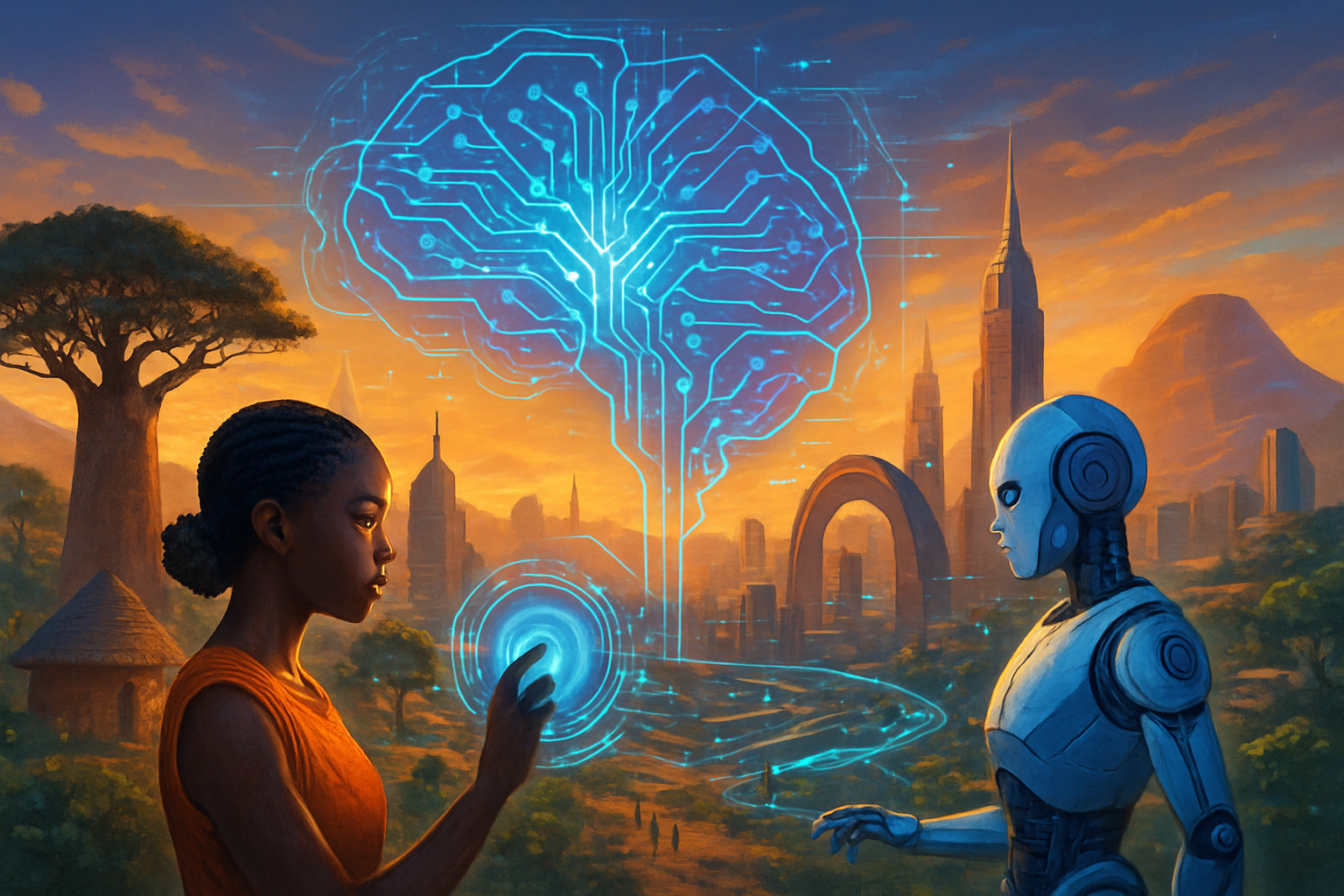
  • Africa’s AI Awakening: New Leadership Books Chart a Course for a Tech Revolution

    Africa’s AI Awakening: New Leadership Books Chart a Course for a Tech Revolution

    Accra, Ghana & Johannesburg, South Africa – November 1, 2025 – As the global discourse on Artificial Intelligence continues to intensify, a new wave of thought leadership from Africa is emerging, championing the continent's pivotal role in the Fourth and Fifth Industrial Revolutions. At the forefront of this movement is the recently launched book, Decade of Kingdom African Intelligence 25 High Career in STEM AI ABM, co-authored by H.E. Rev. Dr. Asie Kabuki Ocansey and Professor Mohammed Samarah. Unveiled at the International Conference on Innovation, Scientific Research, and Emerging Technologies (ICISET) in Ghana, this seminal work serves as an urgent call to action for African leaders to proactively harness AI for continental development and address its unique challenges. Concurrently, Dr. Mark Nasila's impactful African Artificial Intelligence: Discovering Africa's AI Identity, published earlier this year, further solidifies the narrative of an Africa poised to define its own AI future. Together, these publications signal a critical juncture, advocating for homegrown innovation, strategic leadership, and ethical deployment of AI to unlock unprecedented growth and autonomy across the continent.

    These books arrive at a crucial moment, challenging the traditional paradigm where Africa is often viewed as a consumer rather than a creator of technology. Their immediate significance lies in reframing the narrative, urging a shift towards self-sufficiency, talent development, and the integration of AI solutions tailored to the continent's specific needs and socio-cultural contexts. The emphasis is not merely on adopting AI, but on adapting it, ensuring that the technology serves as a powerful catalyst for equitable development and economic empowerment.

    Forging Africa's AI Identity: A Deep Dive into Strategic Imperatives

    Decade of Kingdom African Intelligence 25 High Career in STEM AI ABM lays down three foundational principles for Africa's technological ascent: immediate action to transform the continent's future, the recognition of technology and AI as fundamental human rights for all Africans, and the indispensable need for collaboration and cooperation to accelerate continental progress. Dr. Ocansey and Professor Samarah's work specifically advocates for empowering Africans to transition from being passive consumers to active co-designers and creators of technology. This involves a strategic focus on training individuals to become employers, fostering a robust entrepreneurial ecosystem where "entrepreneurship leads enterprise," and cultivating homegrown expertise to support ambitious infrastructure projects like smart cities, thereby reducing reliance on external talent. A pilot program, mentioned in conjunction with the book's launch, has already facilitated advanced technology studies for numerous African students at the University of Maryland, Baltimore County (UMBC), demonstrating a practical commitment to capacity building.

    Complementing this vision, Dr. Mark Nasila's African Artificial Intelligence: Discovering Africa's AI Identity provides a vital blueprint, arguing that AI is as transformative as historical innovations like fire or the wheel. Nasila's central thesis is the imperative for Africa to develop its own distinct AI solutions, leveraging data as a crucial African resource. His book delves into foundational AI insights and offers practical implementation strategies across diverse sectors, from agriculture and healthcare to finance and education, drawing heavily on his expertise in transforming financial systems. This approach starkly differs from previous models where African nations often adopted technologies developed elsewhere without sufficient customization or local ownership, leading to solutions that sometimes failed to address unique continental challenges effectively. The initial reactions to both books highlight their reception as inspiring and urgent appeals for proactive, context-aware AI leadership, with Nasila's book, in particular, being lauded as a "blueprint for Africa's technological future."

    Competitive Implications and Market Dynamics in a Self-Sufficient Africa

    The vision articulated in these books carries profound implications for AI companies, tech giants, and burgeoning startups. African tech companies and local startups stand to be the primary beneficiaries of this renewed emphasis on homegrown talent and tailored AI solutions. The call to empower Africans as co-designers and entrepreneurs directly fuels the growth of local innovation hubs and incubators, creating a fertile ground for startups to develop AI applications specifically designed for African markets. This strategic shift could lead to a significant increase in venture capital flowing into African tech, as investors seek to back solutions that resonate deeply with local needs and cultural nuances.

    For major global AI labs and tech companies (e.g., Alphabet (NASDAQ: GOOGL), Microsoft (NASDAQ: MSFT)), the competitive landscape in Africa may evolve. While opportunities for partnership and collaboration with local entities will likely increase, a more self-sufficient Africa, developing its own AI identity, could reduce the continent's reliance on entirely imported solutions. This might necessitate a re-evaluation of market entry strategies, favoring deeper localization, technology transfer, and co-development models over simple product deployment. Potential disruption to existing products or services could arise if locally developed, contextually relevant AI solutions outperform generic global offerings in specific African markets. The emphasis on data as an African resource, as highlighted by Dr. Nasila, also suggests that control over and utilization of local data will become a critical strategic advantage for companies operating within the continent, potentially favoring those with strong local presence and data governance frameworks.

    Reshaping the Global AI Narrative: Africa's Unique Contribution

    These literary contributions fit squarely into the broader global AI landscape by injecting a much-needed African perspective into the discourse. Historically, much of AI development and ethical frameworks have been shaped by Western and East Asian contexts. These books, particularly Responsible AI in Africa: Challenges and Opportunities (edited by Damian O. Eke), advocate for African values, interests, and principles to be at the core of AI's design and deployment on the continent. This includes integrating African philosophies such as Ubuntu into AI applications, fostering a more inclusive and human-centric approach to technology. The impacts are far-reaching: from enhancing digital literacy and building robust data infrastructure to developing contextually appropriate AI policies and securing adequate funding, Africa is poised to address its unique development challenges through AI.

    The potential concerns, as critically addressed by Dr. Nasila and contributors to Responsible AI in Africa, include ethical considerations, the risk of job displacement, and exacerbating inequality if AI is not implemented thoughtfully. However, by proactively shaping its AI identity, Africa can mitigate these risks, learning from the pitfalls observed in more developed AI ecosystems. This proactive stance marks a significant shift from previous AI milestones, where African nations were often recipients of technology rather than active participants in its conceptualization and ethical framing. This movement is not just about technological advancement; it's about technological sovereignty and ensuring that AI serves as a tool for empowerment, not exploitation.

    The Horizon: Anticipating AI's Transformative Power in Africa

    Looking ahead, the insights from these books suggest a vibrant future for AI in Africa. Expected near-term developments include a surge in AI applications tailored for critical sectors such as agriculture, where AI can optimize crop yields and manage water resources; healthcare, with AI-powered diagnostics and telemedicine expanding access to care; finance, through AI-driven financial inclusion and fraud detection; and education, via personalized learning platforms. The pilot program for advanced technology studies at UMBC, linked to Dr. Ocansey's work, exemplifies the kind of capacity building that will fuel these applications.

    However, significant challenges remain. Insufficient digital literacy, a lack of robust data infrastructure, inadequate policy frameworks, and consistent funding are hurdles that need to be addressed systematically. Experts predict a continued focus on developing ethical AI guidelines that resonate with African values, emphasizing fairness, transparency, and accountability. The call for Africa to "shape its own AI identity" means that future developments will likely prioritize solutions that are sustainable, inclusive, and directly contribute to the United Nations' Sustainable Development Goals. What experts predict next is a deeper integration of AI into national development strategies, fostering regional collaborations, and a growing number of African-led AI innovations gaining global recognition.

    A New Chapter in AI History: Africa's Definitive Voice

    The emergence of books like Decade of Kingdom African Intelligence 25 High Career in STEM AI ABM and African Artificial Intelligence: Discovering Africa's AI Identity marks a pivotal moment in AI history, not just for Africa, but for the global AI community. They collectively deliver a powerful message: Africa is not merely catching up; it is actively defining its own technological future. Key takeaways include the urgent need for proactive leadership, the recognition of technology as a human right, the imperative of homegrown innovation, and the strategic leveraging of data and talent to address unique continental challenges.

    These developments signify a profound shift in the AI landscape, moving towards a more diverse and inclusive global conversation. The emphasis on context-aware, ethically grounded AI solutions, deeply rooted in African values, offers a compelling model for responsible technological advancement worldwide. In the coming weeks and months, the world should watch for increased investment in African AI startups, the establishment of more regional AI research centers, and the continued development of policy frameworks that support ethical and equitable AI deployment across the continent. Africa's tech revolution, guided by its own visionaries, is not just a dream—it's an unfolding reality that promises to reshape the future of AI.


    This content is intended for informational purposes only and represents analysis of current AI developments.

    TokenRing AI delivers enterprise-grade solutions for multi-agent AI workflow orchestration, AI-powered development tools, and seamless remote collaboration platforms.
    For more information, visit https://www.tokenring.ai/.