Tag: Liquid Cooling

  • The Great Chill: How 1,800W GPUs Forced the Data Center Liquid Cooling Revolution of 2026

    The Great Chill: How 1,800W GPUs Forced the Data Center Liquid Cooling Revolution of 2026

    The era of the "air-cooled" data center is officially coming to a close. As of January 2026, the artificial intelligence industry has hit a thermal wall that fans and air conditioning can no longer climb. Driven by the relentless power demands of next-generation silicon, the transition to liquid cooling has accelerated from a niche engineering choice to a global infrastructure mandate. Recent industry forecasts confirm that 38% of all data centers worldwide have now implemented liquid cooling solutions, a staggering jump from just 20% two years ago.

    This shift represents more than just a change in plumbing; it is a fundamental redesign of how the world’s digital intelligence is manufactured. As NVIDIA (NASDAQ: NVDA) begins the wide-scale rollout of its Rubin architecture, the power density of AI clusters has reached a point where traditional air cooling is physically incapable of removing heat fast enough to prevent chips from melting. The "AI Factory" has arrived, and it is running on a steady flow of coolant.

    The 1,000W Barrier and the Death of Air

    The primary catalyst for this infrastructure revolution is the skyrocketing Thermal Design Power (TDP) of modern AI accelerators. NVIDIA’s Blackwell Ultra (GB300) chips, which dominated the market through late 2025, pushed power envelopes to approximately 1,400W per GPU. However, the true "extinction event" for air cooling arrived with the 2026 debut of the Vera Rubin architecture. These chips are reaching a projected 1,800W per GPU, making them nearly twice as power-hungry as the flagship chips of the previous generation.

    At these power levels, the physics of air cooling simply break down. To cool a modern AI rack—which now draws between 250kW and 600kW—using air alone would require airflow velocities exceeding 15,000 cubic feet per minute. Industry experts describe this as "hurricane-force winds" inside a server room, creating noise levels and air turbulence that are physically damaging to equipment and impractical for human operators. Furthermore, air is an inefficient medium for heat transfer; liquid has nearly 4,000 times the heat-carrying capacity of air, allowing it to absorb and transport thermal energy from 1,800W chips with surgical precision.

    The industry has largely split into two technical camps: Direct-to-Chip (DTC) cold plates and immersion cooling. DTC remains the dominant choice, accounting for roughly 65-70% of the liquid cooling market in 2026. This method involves circulating coolant through metal plates directly attached to the GPU and CPU, allowing data centers to keep their existing rack formats while achieving a Power Usage Effectiveness (PUE) of 1.1. Meanwhile, immersion cooling—where entire servers are submerged in a non-conductive dielectric fluid—is gaining traction in the most extreme high-density tiers, offering a near-perfect PUE of 1.02 by eliminating fans entirely.

    The New Titans of Infrastructure

    The transition to liquid cooling has reshuffled the deck for hardware providers and infrastructure giants. Supermicro (NASDAQ: SMCI) has emerged as an early leader, currently claiming roughly 70% of the direct liquid cooling (DLC) market. By leveraging its "Data Center Building Block Solutions," the company has positioned itself to deliver fully integrated, liquid-cooled racks at a scale its competitors are still struggling to match, with revenue targets for fiscal year 2026 reaching as high as $40 billion.

    However, the "picks and shovels" of this revolution extend beyond the server manufacturers. Infrastructure specialists like Vertiv (NYSE: VRT) and Schneider Electric (EPA: SU) have become the "Silicon Sovereigns" of the 2026 economy. Vertiv has seen its valuation soar as it provides the mission-critical cooling loops and 800 VDC power portfolios required for 1-megawatt AI racks. Similarly, Schneider Electric’s strategic acquisition of Motivair in 2025 has allowed it to dominate the direct-to-chip portfolio, offering standardized reference designs that support the massive 132kW-per-rack requirements of NVIDIA’s latest clusters.

    For hyperscalers like Microsoft (NASDAQ: MSFT), Alphabet (NASDAQ: GOOGL), and Amazon (NASDAQ: AMZN), the adoption of liquid cooling is a strategic necessity. Those who can successfully manage the thermodynamics of these 2026-era "AI Factories" gain a significant competitive advantage in training larger models at a lower cost per token. The ability to pack more compute into a smaller physical footprint allows these giants to maximize the utility of their existing real estate, even as the power demands of their AI workloads continue to double every few months.

    Beyond Efficiency: The Rise of the AI Factory

    This transition marks a broader shift in the philosophy of data center design. NVIDIA CEO Jensen Huang has popularized the concept of the "AI Factory," where the data center is no longer viewed as a storage warehouse, but as an industrial plant that produces intelligence. In this paradigm, the primary unit of measure is no longer "uptime," but "tokens per second per watt." Liquid cooling is the essential lubricant for this industrial process, enabling the "gigawatt-scale" facilities that are now becoming the standard for frontier model training.

    The environmental implications of this shift are also profound. By reducing cooling energy consumption by 40% to 50%, liquid cooling is helping the industry manage the massive surge in total power demand. Furthermore, the high-grade waste heat captured by liquid systems is far easier to repurpose than the low-grade heat from air-cooled exhausts. In 2026, we are seeing the first wave of "circular" data centers that pipe their 60°C (140°F) waste heat directly into district heating systems or industrial processes, turning a cooling problem into a community asset.

    Despite these gains, the transition has not been without its challenges. The industry is currently grappling with a shortage of specialized plumbing components and a lack of standardized "quick-disconnect" fittings, which has led to some interoperability headaches. There are also lingering concerns regarding the long-term maintenance of immersion tanks and the potential for leaks in direct-to-chip systems. However, compared to the alternative—thermal throttling and the physical limits of air—these are seen as manageable engineering hurdles rather than deal-breakers.

    The Horizon: 2-Phase Cooling and 1MW Racks

    Looking ahead to the remainder of 2026 and into 2027, the industry is already eyeing the next evolution: two-phase liquid cooling. While current single-phase systems rely on the liquid staying in a liquid state, two-phase systems allow the coolant to boil and turn into vapor at the chip surface, absorbing massive amounts of latent heat. This technology is expected to be necessary as GPU power consumption moves toward the 2,000W mark.

    We are also seeing the emergence of modular, liquid-cooled "data centers in a box." These pre-fabricated units can be deployed in weeks rather than years, allowing companies to add AI capacity at the "edge" or in regions where traditional data center construction is too slow. Experts predict that by 2028, the concept of a "rack" may disappear entirely, replaced by integrated compute-cooling modules that resemble industrial engines more than traditional server cabinets.

    The most significant challenge on the horizon is the sheer scale of power delivery. While liquid cooling has solved the heat problem, the electrical grid must now keep up with the demand of 1-megawatt racks. We expect to see more data centers co-locating with nuclear power plants or investing in on-site small modular reactors (SMRs) to ensure a stable supply of the "fuel" their AI factories require.

    A Structural Shift in AI History

    The 2026 transition to liquid cooling will likely be remembered as a pivotal moment in the history of computing. It represents the point where AI hardware outpaced the traditional infrastructure of the 20th century, forcing a complete rethink of the physical environment required for digital thought. The 38% adoption rate we see today is just the beginning; by the end of the decade, an air-cooled AI server will likely be as rare as a vacuum tube.

    Key takeaways for the coming months include the performance of infrastructure stocks like Vertiv and Schneider Electric as they fulfill the massive backlog of cooling orders, and the operational success of the first wave of Rubin-based AI Factories. Investors and researchers should also watch for advancements in "coolant-to-grid" heat reuse projects, which could redefine the data center's role in the global energy ecosystem.

    As we move further into 2026, the message is clear: the future of AI is not just about smarter algorithms or bigger datasets—it is about the pipes, the pumps, and the fluid that keep the engines of intelligence running cool.


    This content is intended for informational purposes only and represents analysis of current AI developments.

    TokenRing AI delivers enterprise-grade solutions for multi-agent AI workflow orchestration, AI-powered development tools, and seamless remote collaboration platforms.
    For more information, visit https://www.tokenring.ai/.
  • The 1,400W Barrier: Why Liquid Cooling is Now Mandatory for Next-Gen AI Data Centers

    The 1,400W Barrier: Why Liquid Cooling is Now Mandatory for Next-Gen AI Data Centers

    The semiconductor industry has officially collided with a thermal wall that is fundamentally reshaping the global data center landscape. As of late 2025, the release of next-generation AI accelerators, most notably the AMD Instinct MI355X (NASDAQ: AMD), has pushed individual chip power consumption to a staggering 1,400 watts. This unprecedented energy density has rendered traditional air cooling—the backbone of enterprise computing for decades—functionally obsolete for high-performance AI clusters.

    This thermal crisis is driving a massive infrastructure pivot. Leading manufacturers like NVIDIA (NASDAQ: NVDA) and AMD are no longer designing their flagship silicon for standard server fans; instead, they are engineering chips specifically for liquid-to-chip and immersion cooling environments. As the industry moves toward "AI Factories" capable of drawing over 100kW per rack, the transition to liquid cooling has shifted from a high-end luxury to an operational mandate, sparking a multi-billion dollar gold rush for specialized thermal management hardware.

    The Dawn of the 1,400W Accelerator

    The technical specifications of the latest AI hardware reveal why air cooling has reached its physical limit. The AMD Instinct MI355X, built on the cutting-edge CDNA 4 architecture and a 3nm process node, represents a nearly 100% increase in power draw over the MI300 series from just two years ago. At 1,400W, the heat generated by a single chip is comparable to a high-end kitchen toaster, but concentrated into a space smaller than a credit card. NVIDIA has followed a similar trajectory; while the standard Blackwell B200 GPU draws between 1,000W and 1,200W, the late-2025 Blackwell Ultra (GB300) matches AMD’s 1,400W threshold.

    Industry experts note that traditional air cooling relies on moving massive volumes of air across heat sinks. At 1,400W per chip, the airflow required to prevent thermal throttling would need to be so fast and loud that it would vibrate the server components to the point of failure. Furthermore, the "delta T"—the temperature difference between the chip and the cooling medium—is now so narrow that air simply cannot carry heat away fast enough. Initial reactions from the AI research community suggest that without liquid cooling, these chips would lose up to 30% of their peak performance due to thermal downclocking, effectively erasing the generational gains promised by the move to 3nm and 5nm processes.

    The shift is also visible in the upcoming NVIDIA Rubin architecture, slated for late 2026. Early samples of the Rubin R100 suggest power draws of 1,800W to 2,300W per chip, with "Ultra" variants projected to hit a mind-bending 3,600W by 2027. This roadmap has forced a "liquid-first" design philosophy, where the cooling system is integrated into the silicon packaging itself rather than being an afterthought for the server manufacturer.

    A Multi-Billion Dollar Infrastructure Pivot

    This thermal shift has created a massive strategic advantage for companies that control the cooling supply chain. Supermicro (NASDAQ: SMCI) has positioned itself at the forefront of this transition, recently expanding its "MegaCampus" facilities to produce up to 6,000 racks per month, half of which are now Direct Liquid Cooled (DLC). Similarly, Dell Technologies (NYSE: DELL) has aggressively pivoted its enterprise strategy, launching the Integrated Rack 7000 Series specifically designed for 100kW+ densities in partnership with immersion specialists.

    The real winners, however, may be the traditional power and thermal giants who are now seeing their "boring" infrastructure businesses valued like high-growth tech firms. Eaton (NYSE: ETN) recently announced a $9.5 billion acquisition of Boyd Thermal to provide "chip-to-grid" solutions, while Schneider Electric (EPA: SU) and Vertiv (NYSE: VRT) are seeing record backlogs for Coolant Distribution Units (CDUs) and manifolds. These components—the "secondary market" of liquid cooling—have become the most critical bottleneck in the AI supply chain. An in-rack CDU now commands an average selling price of $15,000 to $30,000, creating a secondary market expected to exceed $25 billion by the early 2030s.

    Hyperscalers like Microsoft (NASDAQ: MSFT), Meta (NASDAQ: META), and Alphabet/Google (NASDAQ: GOOGL) are currently in the midst of a massive retrofitting campaign. Microsoft recently unveiled an AI supercomputer designed for "GPT-Next" that utilizes exclusively liquid-cooled racks, while Meta has pushed for a new 21-inch rack standard through the Open Compute Project to accommodate the thicker piping and high-flow manifolds required for 1,400W chips.

    The Broader AI Landscape and Sustainability Concerns

    The move to liquid cooling is not just about performance; it is a fundamental shift in how the world builds and operates compute power. For years, the industry measured efficiency via Power Usage Effectiveness (PUE). Traditional air-cooled data centers often hover around a PUE of 1.4 to 1.6. Liquid cooling systems can drive this down to 1.05 or even 1.01, significantly reducing the overhead energy spent on cooling. However, this efficiency comes at a cost of increased complexity and potential environmental risks, such as the use of specialized fluorochemicals in two-phase cooling systems.

    There are also growing concerns regarding the "water-energy nexus." While liquid cooling is more energy-efficient, many systems still rely on evaporative cooling towers that consume millions of gallons of water. In response, Amazon (NASDAQ: AMZN) and Google have begun experimenting with "waterless" two-phase cooling and closed-loop systems to meet sustainability goals. This shift mirrors previous milestones in computing history, such as the transition from vacuum tubes to transistors or the move from single-core to multi-core processors, where a physical limitation forced a total rethink of the underlying architecture.

    Compared to the "AI Summer" of 2023, the landscape in late 2025 is defined by "AI Factories"—massive, specialized facilities that look more like chemical processing plants than traditional server rooms. The 1,400W barrier has effectively bifurcated the market: companies that can master liquid cooling will lead the next decade of AI advancement, while those stuck with air cooling will be relegated to legacy workloads.

    The Future: From Liquid-to-Chip to Total Immersion

    Looking ahead, the industry is already preparing for the post-1,400W era. As chips approach the 2,000W mark with the NVIDIA Rubin architecture, even Direct-to-Chip (D2C) water cooling may hit its limits due to the extreme flow rates required. Experts predict a rapid rise in two-phase immersion cooling, where servers are submerged in a non-conductive liquid that boils and condenses to carry away heat. While currently a niche solution used by high-end researchers, immersion cooling is expected to go mainstream as rack densities surpass 200kW.

    Another emerging trend is the integration of "Liquid-to-Air" CDUs. These units allow legacy data centers that lack facility-wide water piping to still host liquid-cooled AI racks by exhausting the heat back into the existing air-conditioning system. This "bridge technology" will be crucial for enterprise companies that cannot afford to build new billion-dollar data centers but still need to run the latest AMD and NVIDIA hardware.

    The primary challenge remaining is the supply chain for specialized components. The global shortage of high-grade aluminum alloys and manifolds has led to lead times of over 40 weeks for some cooling hardware. As a result, companies like Vertiv and Eaton are localized production in North America and Europe to insulate the AI build-out from geopolitical trade tensions.

    Summary and Final Thoughts

    The breach of the 1,400W barrier marks a point of no return for the tech industry. The AMD MI355X and NVIDIA Blackwell Ultra have effectively ended the era of the air-cooled data center for high-end AI. The transition to liquid cooling is now the defining infrastructure challenge of 2026, driving massive capital expenditure from hyperscalers and creating a lucrative new market for thermal management specialists.

    Key takeaways from this development include:

    • Performance Mandate: Liquid cooling is no longer optional; it is required to prevent 30%+ performance loss in next-gen chips.
    • Infrastructure Gold Rush: Companies like Vertiv, Eaton, and Supermicro are seeing unprecedented growth as they provide the "plumbing" for the AI revolution.
    • Sustainability Shift: While more energy-efficient, the move to liquid cooling introduces new challenges in water consumption and specialized chemical management.

    In the coming months, the industry will be watching the first large-scale deployments of the NVIDIA NVL72 and AMD MI355X clusters. Their thermal stability and real-world efficiency will determine the pace at which the rest of the world’s data centers must be ripped out and replumbed for a liquid-cooled future.


    This content is intended for informational purposes only and represents analysis of current AI developments.

    TokenRing AI delivers enterprise-grade solutions for multi-agent AI workflow orchestration, AI-powered development tools, and seamless remote collaboration platforms.
    For more information, visit https://www.tokenring.ai/.

  • The Great Chill: How NVIDIA’s 1,000W+ Blackwell and Rubin Chips Ended the Era of Air-Cooled Data Centers

    The Great Chill: How NVIDIA’s 1,000W+ Blackwell and Rubin Chips Ended the Era of Air-Cooled Data Centers

    As 2025 draws to a close, the data center industry has reached a definitive tipping point: the era of the fan-cooled server is over for high-performance computing. The catalyst for this seismic shift has been the arrival of NVIDIA’s (NASDAQ: NVDA) Blackwell and the newly announced Rubin GPU architectures, which have pushed thermal design power (TDP) into territory once thought impossible for silicon. With individual chips now drawing well over 1,000 watts, the physics of air—its inability to carry heat away fast enough—has forced a total architectural rewrite of the world’s digital infrastructure.

    This transition is not merely a technical upgrade; it is a multi-billion dollar industrial pivot. As of December 2025, major colocation providers and hyperscalers have stopped asking if they should implement liquid cooling and are now racing to figure out how fast they can retrofit existing halls. The immediate significance is clear: the success of the next generation of generative AI models now depends as much on plumbing and fluid dynamics as it does on neural network architecture.

    The 1,000W Threshold and the Physics of Heat

    The technical specifications of the 2025 hardware lineup have made traditional cooling methods physically obsolete. NVIDIA’s Blackwell B200 GPUs, which became the industry standard earlier this year, operate at a TDP of 1,200W, while the GB200 Superchip modules—combining two Blackwell GPUs with a Grace CPU—demand a staggering 2,700W per unit. However, it is the Rubin architecture, slated for broader rollout in 2026 but already being integrated into early-access "AI Factories," that has truly broken the thermal ceiling. Rubin chips are reaching 1,800W to 2,300W, with the "Ultra" variants projected to hit 3,600W.

    This level of heat density creates what engineers call the "airflow wall." To cool a single rack of Rubin-based servers using air, the volume of air required would need to move at speeds that would create hurricane-force winds inside the server room, potentially damaging components and creating noise levels that exceed safety regulations. Furthermore, air cooling reaches a physical efficiency limit at roughly 1W per square millimeter of chip area; Blackwell and Rubin have surged far past this, making "micro-throttling"—where a chip rapidly slows down to avoid melting—an unavoidable consequence of air-based systems.

    To combat this, the industry has standardized on Direct-to-Chip (DLC) cooling. Unlike previous liquid cooling attempts that were often bespoke, 2025 has seen the rise of Microchannel Cold Plates (MCCP). These plates, mounted directly onto the silicon, feature internal channels as small as 50 micrometers, allowing dielectric fluids or water-glycol mixes to flow within a hair's breadth of the GPU die. This method is significantly more efficient than air, as liquid has over 3,000 times the heat-carrying capacity of air by volume, allowing for rack densities that have jumped from 15kW to over 140kW in a single year.

    Strategic Realignment: Equinix and Digital Realty Lead the Charge

    The shift to liquid cooling has fundamentally altered the competitive landscape for data center operators and hardware providers. Equinix (NASDAQ: EQIX) and Digital Realty (NYSE: DLR) have emerged as the primary beneficiaries of this transition, leveraging their massive capital reserves to "liquid-ready" their global portfolios. Equinix recently announced that over 100 of its International Business Exchange centers are now fully equipped for liquid cooling, while Digital Realty has standardized its "Direct Liquid Cooling" offering across 50% of its 300+ sites. These companies are no longer just providing space and power; they are providing advanced thermal management as a premium service.

    For NVIDIA, the move to liquid cooling is a strategic necessity to maintain its dominance. By partnering with Digital Realty to launch the "AI Factory Research Center" in Virginia, NVIDIA is ensuring that its most powerful chips have a home that can actually run them at 100% utilization. This creates a high barrier to entry for smaller AI chip startups; it is no longer enough to design a fast processor—you must also design the complex liquid-cooling loops and partner with global infrastructure giants to ensure that processor can be deployed at scale.

    Cloud giants like Amazon (NASDAQ: AMZN) and Microsoft (NASDAQ: MSFT) are also feeling the pressure, as they must now decide whether to retrofit aging air-cooled data centers or build entirely new "liquid-first" facilities. This has led to a surge in the market for specialized cooling components. Companies providing the "plumbing" of the AI age—such as Manz AG or specialized pump manufacturers—are seeing record demand. The strategic advantage has shifted to those who can secure the supply chain for coolants, manifolds, and quick-disconnect valves, which have become as critical as the HBM3e memory chips themselves.

    The Sustainability Imperative and the Nuclear Connection

    Beyond the technical hurdles, the transition to liquid cooling is a pivotal moment for global energy sustainability. Traditional air-cooled data centers often have a Power Usage Effectiveness (PUE) of 1.5, meaning for every watt used for computing, half a watt is wasted on cooling. Liquid cooling has the potential to bring PUE down to a remarkable 1.05. In the context of 2025’s global energy constraints, this 30-40% reduction in wasted power is the only way the AI boom can continue without collapsing local power grids.

    The massive power draw of these 1,000W+ chips has also forced a marriage between the data center and the nuclear power industry. Equinix’s 2025 agreement with Oklo (NYSE: OKLO) for 500MW of nuclear power and its collaboration with Rolls-Royce (LSE: RR) for small modular reactors (SMRs) highlight the desperation for stable, high-density energy. We are witnessing a shift where data centers are being treated less like office buildings and more like heavy industrial plants, requiring their own dedicated power plants and specialized waste-heat recovery systems that can pump excess heat into local municipal heating grids.

    However, this transition also raises concerns about the "digital divide" in infrastructure. Older data centers that cannot be retrofitted for liquid cooling are rapidly becoming "legacy" sites, suitable only for low-power web hosting or storage, rather than AI training. This has led to a valuation gap in the real estate market, where "liquid-ready" facilities command massive premiums, potentially centralizing AI power into the hands of a few elite operators who can afford the billions in required upgrades.

    Future Horizons: From Cold Plates to Immersion Cooling

    Looking ahead, the thermal demands of AI hardware show no signs of plateauing. Industry roadmaps for the post-Rubin era, including the rumored "Feynman" architecture, suggest chips that could draw between 6,000W and 9,000W per module. This will likely push the industry away from Direct-to-Chip cooling and toward total Immersion Cooling, where entire server blades are submerged in non-conductive dielectric fluid. While currently a niche solution in 2025, immersion cooling is expected to become the standard for "Gigascale" AI clusters by 2027.

    The next frontier will also involve "Phase-Change" cooling, which uses the evaporation of specialized fluids to absorb even more heat than liquid alone. Experts predict that the challenges of 2026 will revolve around the environmental impact of these fluids and the massive amounts of water required for cooling towers, even in "closed-loop" systems. We may see the emergence of "underwater" or "arctic" data centers becoming more than just experiments as companies seek natural heat sinks to offset the astronomical thermal output of future AI models.

    A New Era for Digital Infrastructure

    The shift to liquid cooling in 2025 marks the end of the "PC-era" of data center design and the beginning of the "Industrial AI" era. The 1,000W+ power draw of NVIDIA’s Blackwell and Rubin chips has acted as a catalyst, forcing a decade's worth of infrastructure evolution into a single eighteen-month window. Air, once the reliable medium of the digital age, has simply run out of breath, replaced by the silent, efficient flow of liquid loops.

    As we move into 2026, the key metrics for AI success will be PUE, rack density, and thermal overhead. The companies that successfully navigated this transition—NVIDIA, Equinix, and Digital Realty—have cemented their roles as the architects of the AI future. For the rest of the industry, the message is clear: adapt to the liquid era, or be left to overheat in the past. Watch for further announcements regarding small modular reactors and regional heat-sharing mandates as the integration of AI infrastructure and urban planning becomes the next major trend in the tech landscape.


    This content is intended for informational purposes only and represents analysis of current AI developments.

    TokenRing AI delivers enterprise-grade solutions for multi-agent AI workflow orchestration, AI-powered development tools, and seamless remote collaboration platforms.
    For more information, visit https://www.tokenring.ai/.
  • Microsoft’s ‘Fairwater’ Goes Live: The Rise of the 2-Gigawatt AI Superfactory

    Microsoft’s ‘Fairwater’ Goes Live: The Rise of the 2-Gigawatt AI Superfactory

    As 2025 draws to a close, the landscape of artificial intelligence is being physically reshaped by massive infrastructure projects that dwarf anything seen in the cloud computing era. Microsoft (NASDAQ: MSFT) has officially reached a milestone in this transition with the operational launch of its "Fairwater" data center initiative. Moving beyond the traditional model of distributed server farms, Project Fairwater introduces the concept of the "AI Superfactory"—a high-density, liquid-cooled powerhouse designed to sustain the next generation of frontier AI models.

    The completion of the flagship Fairwater 1 facility in Mount Pleasant, Wisconsin, and the activation of Fairwater 2 in Atlanta, Georgia, represent a multi-billion dollar bet on the future of generative AI. By integrating hundreds of thousands of NVIDIA (NASDAQ: NVDA) Blackwell GPUs into a single, unified compute fabric, Microsoft is positioning itself to overcome the "compute wall" that has threatened to slow the progress of large language model development. This development marks a pivotal moment where the bottleneck for AI progress shifts from algorithmic efficiency to the sheer physical limits of power and cooling.

    The Engineering of an AI Superfactory

    At the heart of the Fairwater project is the deployment of NVIDIA’s Grace Blackwell (GB200 and the newly released GB300) clusters at an unprecedented scale. Unlike previous generations of data centers that relied on air-cooled racks peaking at 20–40 kilowatts (kW), Fairwater utilizes a specialized two-story architecture designed for high-density compute. These facilities house NVL72 rack-scale systems, which deliver a staggering 140 kW of power density per rack. To manage the extreme thermal output of these chips, Microsoft has implemented a state-of-the-art closed-loop liquid cooling system. This system is filled once during construction and recirculated continuously, achieving "near-zero" operational water waste—a critical advancement as data center water consumption becomes a flashpoint for environmental regulation.

    The Wisconsin site alone features the world’s second-largest water-cooled chiller plant, utilizing an array of 172 massive industrial fans to dissipate heat without evaporating local water supplies. Technically, Fairwater differs from previous approaches by treating multiple buildings as a single logical supercomputer. Linked by a dedicated "AI WAN" (Wide Area Network) consisting of over 120,000 miles of proprietary fiber, these sites can coordinate massive training runs across geographic distances with minimal latency. Initial reactions from the hardware community have been largely positive, with engineers at Data Center World 2025 praising the two-story layout for shortening physical cable lengths, thereby reducing signal degradation in the NVLink interconnects.

    A Tri-Polar Arms Race: Market and Competitive Implications

    The launch of Fairwater is a direct response to the aggressive infrastructure plays by Microsoft’s primary rivals. While Google (NASDAQ: GOOGL) has long held a lead in liquid cooling through its internal TPU (Tensor Processing Unit) programs, and Amazon (NASDAQ: AMZN) has focused on modular, cost-efficient "Liquid-to-Air" retrofits, Microsoft’s strategy is one of sheer, unadulterated scale. By securing the lion's share of NVIDIA's Blackwell Ultra (GB300) supply for late 2025, Microsoft is attempting to maintain its lead as the primary host for OpenAI’s most advanced models. This move is strategically vital, especially following industry reports that Microsoft lost earlier contracts to Oracle (NYSE: ORCL) due to deployment delays in late 2024.

    Financially, the stakes could not be higher. Microsoft’s capital expenditure is projected to hit $80 billion for the 2025 fiscal year, a figure that has caused some trepidation among investors. However, market analysts from Citi and Bernstein suggest that this investment is effectively "de-risked" by the overwhelming demand for Azure AI services. The ability to offer dedicated Blackwell clusters at scale provides Microsoft with a significant competitive advantage in the enterprise sector, where Fortune 500 companies are increasingly seeking "sovereign-grade" AI capacity that can handle massive fine-tuning and inference workloads without the bottlenecks associated with older H100 hardware.

    Breaking the Power Wall and the Sustainability Crisis

    The broader significance of Project Fairwater lies in its attempt to solve the "AI Power Wall." As AI models require exponentially more energy, the industry has faced criticism over its impact on local power grids. Microsoft has addressed this by committing to match 100% of Fairwater’s energy use with carbon-free sources, including a dedicated 250 MW solar project in Wisconsin. Furthermore, the shift to closed-loop liquid cooling addresses the growing concern over data center water usage, which has historically competed with agricultural and municipal needs during summer months.

    This project represents a fundamental shift in the AI landscape, mirroring previous milestones like the transition from CPU to GPU-based training. However, it also raises concerns about the centralization of AI power. With only a handful of companies capable of building 2-gigawatt "Superfactories," the barrier to entry for independent AI labs and startups continues to rise. The sheer physical footprint of Fairwater—consuming more power than a major metropolitan city—serves as a stark reminder that the "cloud" is increasingly a massive, energy-hungry industrial machine.

    The Horizon: From 2 GW to Global Super-Clusters

    Looking ahead, the Fairwater architecture is expected to serve as the blueprint for Microsoft’s global expansion. Plans are already underway to replicate the Wisconsin design in the United Kingdom and Norway throughout 2026. Experts predict that the next phase will involve the integration of small modular reactors (SMRs) directly into these sites to provide a stable, carbon-free baseload of power that the current grid cannot guarantee. In the near term, we expect to see the first "trillion-parameter" models trained entirely within the Fairwater fabric, potentially leading to breakthroughs in autonomous scientific discovery and advanced reasoning.

    The primary challenge remains the supply chain for liquid cooling components and specialized power transformers, which have seen lead times stretch into 2027. Despite these hurdles, the industry consensus is that the era of the "megawatt data center" is over, replaced by the "gigawatt superfactory." As Microsoft continues to scale Fairwater, the focus will likely shift toward optimizing the software stack to handle the immense complexity of distributed training across these massive, liquid-cooled clusters.

    Conclusion: A New Era of Industrial AI

    Microsoft’s Project Fairwater is more than just a data center expansion; it is the physical manifestation of the AI revolution. By successfully deploying 140 kW racks and Grace Blackwell clusters at a gigawatt scale, Microsoft has set a new benchmark for what is possible in AI infrastructure. The transition to advanced liquid cooling and zero-operational water waste demonstrates that the industry is beginning to take its environmental responsibilities seriously, even as its hunger for power grows.

    In the coming weeks and months, the tech world will be watching for the first performance benchmarks from the Fairwater-hosted clusters. If the "Superfactory" model delivers the expected gains in training efficiency and latency reduction, it will likely force a massive wave of infrastructure reinvestment across the entire tech sector. For now, Fairwater stands as a testament to the fact that in the race for AGI, the winners will be determined not just by code, but by the steel, silicon, and liquid cooling that power it.


    This content is intended for informational purposes only and represents analysis of current AI developments.

    TokenRing AI delivers enterprise-grade solutions for multi-agent AI workflow orchestration, AI-powered development tools, and seamless remote collaboration platforms.
    For more information, visit https://www.tokenring.ai/.
  • The End of Air Cooling? Liquid Cooling Becomes Mandatory for AI Data Centers

    The End of Air Cooling? Liquid Cooling Becomes Mandatory for AI Data Centers

    As of late 2025, the data center industry has reached a definitive "thermal tipping point." The era of massive fans and giant air conditioning units keeping the world’s servers cool is rapidly drawing to a close, replaced by a quieter, more efficient, and far more powerful successor: direct-to-chip liquid cooling. This shift is no longer a matter of choice or experimental efficiency; it has become a hard physical requirement for any facility hoping to house the latest generation of artificial intelligence hardware.

    The driving force behind this infrastructure revolution is the sheer power density of the newest AI accelerators. With a single server rack now consuming as much electricity as a small suburban neighborhood, traditional air-cooling methods have hit a physical "ceiling." As NVIDIA and AMD push the boundaries of silicon performance, the industry is being forced to replumb the modern data center from the ground up to prevent these multi-million dollar machines from literally melting under their own workloads.

    The 140kW Rack: Why Air Can No Longer Keep Up

    The technical catalyst for this transition is the arrival of "megawatt-class" rack architectures. In previous years, a high-density server rack might pull 15 to 20 kilowatts (kW). However, the flagship NVIDIA (NASDAQ: NVDA) Blackwell GB200 NVL72 system, which became the industry standard in 2025, demands a staggering 120kW to 140kW per rack. To put this in perspective, air cooling becomes physically impossible or economically unviable at approximately 35kW to 40kW per rack. Beyond this "Air Ceiling," the volume of air required to move heat away from the chips would need to travel at near-supersonic speeds, creating noise levels and turbulence that would be unmanageable.

    To solve this, manufacturers have turned to Direct-to-Chip (D2C) liquid cooling. This technology utilizes specialized "cold plates" made of high-conductivity copper that are mounted directly onto the GPUs and CPUs. A coolant—typically a mixture of water and propylene glycol like the industry-standard PG25—is pumped through these plates to absorb heat. Liquid is roughly 3,000 times more effective at heat transfer than air, allowing it to manage the 1,200W TDP of an NVIDIA B200 or the 1,400W peak output of the AMD (NASDAQ: AMD) Instinct MI355X. Initial reactions from the research community have been overwhelmingly positive, noting that liquid cooling not only prevents thermal throttling but also allows for more consistent clock speeds, which is critical for long-running LLM training jobs.

    The New Infrastructure Giants: Winners in the Liquid Cooling Race

    This shift has created a massive windfall for infrastructure providers who were once considered "boring" utility companies. Vertiv Holdings Co (NYSE: VRT) has emerged as a primary winner, serving as a key partner for NVIDIA’s Blackwell systems by providing the Coolant Distribution Units (CDUs) and manifolds required to manage the complex fluid loops. Similarly, Schneider Electric (OTC: SBGSY), after its strategic $850 million acquisition of Motivair in late 2024, has solidified its position as a leader in high-performance thermal management. These companies are no longer just selling racks; they are selling integrated liquid ecosystems.

    The competitive landscape for data center operators like Equinix, Inc. (NASDAQ: EQIX) and Digital Realty has also been disrupted. Legacy data centers designed for air cooling are facing expensive retrofitting challenges, while "greenfield" sites built specifically for liquid cooling are seeing unprecedented demand. Server OEMs like Super Micro Computer, Inc. (NASDAQ: SMCI) and Dell Technologies Inc. (NYSE: DELL) have also had to pivot, with Supermicro reporting that over half of its AI server shipments in 2025 now feature liquid cooling as the default configuration. This transition has effectively created a two-tier market: those with liquid-ready facilities and those left behind with aging, air-cooled hardware.

    Sustainability and the Global AI Landscape

    Beyond the technical necessity, the mandatory adoption of liquid cooling is having a profound impact on the broader AI landscape’s environmental footprint. Traditional data centers are notorious water consumers, often using evaporative cooling towers that lose millions of gallons of water to the atmosphere. Modern liquid-cooled designs are often "closed-loop," significantly reducing water consumption by up to 70%. Furthermore, the Power Usage Effectiveness (PUE) of liquid-cooled facilities is frequently below 1.1, a massive improvement over the 1.5 to 2.0 PUE seen in older air-cooled sites.

    However, this transition is not without its concerns. The sheer power density of these new racks is putting immense strain on local power grids. While liquid cooling is more efficient, the total energy demand of a 140kW rack is still immense. This has led to comparisons with the mainframe era of the 1960s and 70s, where computers were similarly water-cooled and required dedicated power substations. The difference today is the scale; rather than one mainframe per company, we are seeing thousands of these high-density racks deployed in massive clusters, leading to a "power grab" where AI labs are competing for access to high-capacity electrical grids.

    Looking Ahead: From 140kW to 1 Megawatt Racks

    The transition to liquid cooling is far from over. Experts predict that the next generation of AI chips, such as NVIDIA’s projected "Rubin" architecture, will push rack densities even further. We are already seeing the first pilot programs for 250kW racks, and some modular data center designs are targeting 1-megawatt clusters within a single enclosure by 2027. This will likely necessitate a shift from Direct-to-Chip cooling to "Immersion Cooling," where entire server blades are submerged in non-conductive, dielectric fluids.

    The challenges remaining are largely operational. Standardizing "Universal Quick Disconnect" (UQD) connectors to ensure leak-proof maintenance is a top priority for the Open Compute Project (OCP). Additionally, the industry must train a new generation of data center technicians who are as comfortable with plumbing and fluid dynamics as they are with networking and software. As AI models continue to grow in complexity, the hardware that supports them must become increasingly exotic, moving further away from the traditional server room and closer to a high-tech industrial chemical plant.

    A New Paradigm for the AI Era

    The mandatory shift to liquid cooling marks the end of the "commodity" data center. In 2025, the facility itself has become as much a part of the AI stack as the software or the silicon. The ability to move heat efficiently is now a primary bottleneck for AI progress, and those who master the liquid-cooled paradigm will have a significant strategic advantage in the years to come.

    As we move into 2026, watch for further consolidation in the cooling market and the emergence of new standards for "heat reuse," where the waste heat from AI data centers is used to provide district heating for nearby cities. The transition from air to liquid is more than just a technical upgrade; it is a fundamental redesign of the physical foundation of the digital world, necessitated by our insatiable hunger for artificial intelligence.


    This content is intended for informational purposes only and represents analysis of current AI developments.

    TokenRing AI delivers enterprise-grade solutions for multi-agent AI workflow orchestration, AI-powered development tools, and seamless remote collaboration platforms.
    For more information, visit https://www.tokenring.ai/.
  • The Silicon Squeeze: How Advanced Packaging and the ‘Thermal Wall’ are Redefining the AI Arms Race

    The Silicon Squeeze: How Advanced Packaging and the ‘Thermal Wall’ are Redefining the AI Arms Race

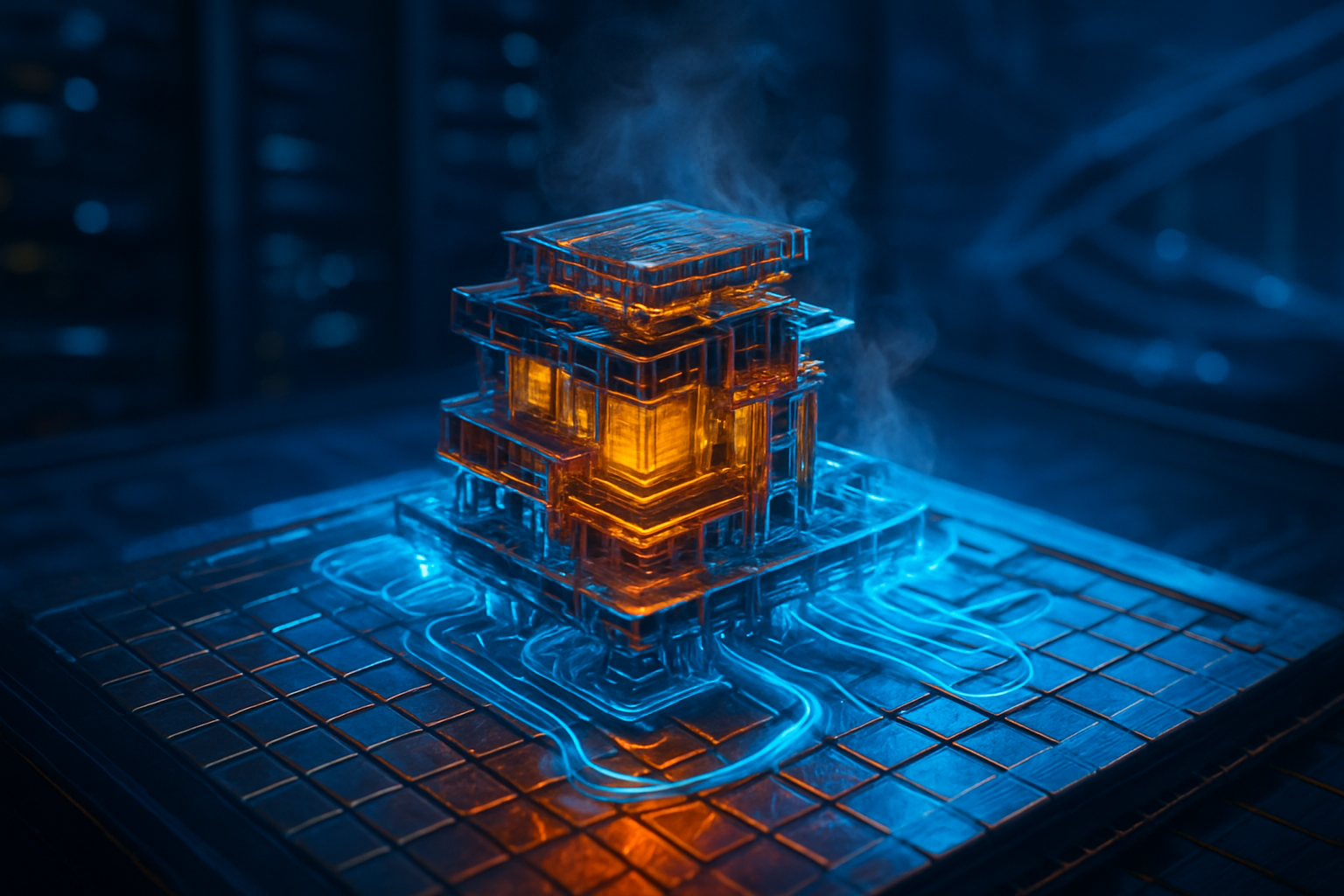
    As of December 23, 2025, the global race for artificial intelligence supremacy has shifted from a battle over transistor counts to a desperate scramble for physical space and thermal relief. While the industry spent the last decade focused on shrinking logic gates, the primary constraints of 2025 are no longer the chips themselves, but how they are tied together and kept from melting. Advanced packaging—specifically TSMC’s Chip-on-Wafer-on-Substrate (CoWoS) technology—and the looming "thermal wall" have emerged as the twin gatekeepers of AI progress, dictating which companies can ship products and which data centers can stay online.

    This shift represents a fundamental change in semiconductor economics. For giants like Nvidia (NASDAQ: NVDA) and AMD (NASDAQ: AMD), the challenge is no longer just designing the world’s most powerful GPU; it is securing a spot in the highly specialized "backend" factories where these chips are assembled into massive, multi-die systems. As power densities reach unprecedented levels, the industry is simultaneously undergoing a forced migration toward liquid cooling, a transition that is minting new winners in the infrastructure space while threatening to leave air-cooled legacy facilities in the dust.

    The Technical Frontier: CoWoS-L and the Rise of the 'Silicon Skyscraper'

    At the heart of the current supply bottleneck is TSMC (NYSE: TSM) and its proprietary CoWoS technology. In 2025, the industry has transitioned heavily toward CoWoS-L (Local Silicon Interconnect), a sophisticated packaging method that uses tiny silicon bridges to link multiple compute dies and High Bandwidth Memory (HBM) modules. This approach allows Nvidia’s Blackwell and the upcoming Rubin architectures to function as a single, massive processor, bypassing the physical size limits of traditional chip manufacturing. By the end of 2025, TSMC is expected to reach a monthly CoWoS capacity of 75,000 to 80,000 wafers—nearly double its 2024 output—yet demand from hyperscalers continues to outpace this expansion.

    Technical specifications for these next-gen accelerators have pushed packaging to its breaking point. Current AI chips are now exceeding the "reticle limit," the maximum size a single chip can be printed on a wafer. To solve this, engineers are stacking chips vertically and horizontally, creating what industry experts call "silicon skyscrapers." However, this density introduces a phenomenon known as Coefficient of Thermal Expansion (CTE) mismatch. When these multi-layered stacks heat up, different materials—silicon, organic substrates, and solder—expand at different rates. In early 2025, this led to significant yield challenges for high-end GPUs, as microscopic cracks formed in the interconnects, forcing a redesign of the substrate layers to ensure structural integrity under extreme heat.

    Initial reactions from the AI research community have been a mix of awe and concern. While these packaging breakthroughs have enabled a 30x increase in inference performance for large language models, the complexity of the manufacturing process has created a "tiered" AI market. Only the largest tech companies can afford the premium for CoWoS-allocated chips, leading to a widening gap between the "compute-rich" and the "compute-poor." Researchers at leading labs note that while the logic is faster, the latency involved in moving data across these complex packaging interconnects remains the final frontier for optimizing model training.

    Market Impact: The New Power Brokers of the AI Supply Chain

    The scarcity of advanced packaging has reshaped the competitive landscape, turning backend assembly into a strategic weapon. While TSMC remains the undisputed leader, the sheer volume of demand has forced a new "split manufacturing" model. TSMC now focuses on the high-margin "Chip-on-Wafer" (CoW) stage, while outsourcing the "on Substrate" (oS) assembly to Outsourced Semiconductor Assembly and Test (OSAT) providers. This has been a massive boon for companies like ASE Technology (NYSE: ASX) and Amkor Technology (NASDAQ: AMKR), which have become essential partners for Nvidia and AMD. ASE, in particular, has seen its specialized facilities in Taiwan become dedicated extensions of the Nvidia supply chain, handling the final assembly for the Blackwell B200 and GB200 systems.

    For the major AI labs, this bottleneck has necessitated a shift in strategy. Microsoft (NASDAQ: MSFT), Google (NASDAQ: GOOGL), and Amazon (NASDAQ: AMZN) are no longer just competing on software; they are increasingly designing their own custom AI silicon (ASICs) to bypass the standard GPU queues. However, even these custom chips require CoWoS packaging, leading to a "co-opetition" where tech giants must negotiate for packaging capacity alongside their primary rivals. This has given TSMC unprecedented pricing power and a strategic advantage that some analysts believe will persist through 2027, as new facilities like AP8 in Tainan only begin to reach full scale in late 2025.

    The Thermal Wall: Liquid Cooling Becomes Mandatory

    As chip designs become denser, the industry has hit the "thermal wall." In 2025, top-tier AI accelerators are reaching Thermal Design Power (TDP) ratings of 1,200W to 2,700W per module. At these levels, traditional air cooling is physically incapable of dissipating heat fast enough to prevent the silicon from throttling or sustaining permanent damage. This has triggered a massive infrastructure pivot: liquid cooling is no longer an exotic option for enthusiasts; it is a mandatory requirement for AI data centers. Direct-to-Chip (D2C) cooling, where liquid-filled cold plates sit directly on the processor, has become the standard for the newest Nvidia GB200 NVL72 racks.

    This transition has catapulted infrastructure companies into the spotlight. Vertiv (NYSE: VRT) and Delta Electronics have seen record growth as they race to provide the Coolant Distribution Units (CDUs) and manifolds required to manage the heat of 100kW+ server racks. The wider significance of this shift cannot be overstated; it represents the end of the "air-cooled era" of computing. Data center operators are now forced to retrofit old facilities with liquid piping—a costly and complex endeavor—or build entirely new "AI Factories" from the ground up. This has also raised environmental concerns, as the massive power requirements of these liquid-cooled clusters place immense strain on regional power grids, leading to a surge in interest for small modular reactors (SMRs) to power the next generation of AI hubs.

    Future Horizons: Microfluidics and 3D Integration

    Looking ahead to 2026 and 2027, the industry is exploring even more radical solutions to the packaging and thermal dilemmas. One of the most promising developments is microfluidic cooling, where cooling channels are etched directly into the silicon or the interposer itself. By bringing the coolant within micrometers of the heat-generating transistors, researchers believe they can handle power densities exceeding 3kW per chip. Microsoft and TSMC are reportedly already testing these "in-chip" cooling systems for future iterations of the Maia accelerator series, which could potentially reduce thermal resistance by 15% compared to current cold-plate technology.

    Furthermore, the move toward 3D IC (Integrated Circuit) stacking—where logic is stacked directly on top of logic—will require even more advanced thermal management. Experts predict that the next major milestone will be the integration of optical interconnects directly into the package. By using light instead of electricity to move data between chips, manufacturers can significantly reduce the heat generated by traditional copper wiring. However, the challenge of aligning lasers with sub-micron precision within a mass-produced package remains a significant hurdle that the industry is racing to solve by the end of the decade.

    Summary and Final Thoughts

    The developments of 2025 have made one thing clear: the future of AI is as much a feat of mechanical and thermal engineering as it is of computer science. The CoWoS bottleneck has demonstrated that even the most brilliant algorithms are at the mercy of physical manufacturing capacity. Meanwhile, the "thermal wall" has forced a total reimagining of data center architecture, moving the industry toward a liquid-cooled future that was once the stuff of science fiction.

    As we look toward 2026, the key indicators of success will be the ramp-up of TSMC’s AP8 and AP7 facilities and the ability of OSATs like Amkor and ASE to take on more complex packaging roles. For investors and industry observers, the focus should remain on the companies that bridge the gap between silicon and the physical world. The AI revolution is no longer just in the cloud; it is in the pipes, the pumps, and the microscopic bridges of the world’s most advanced packages.


    This content is intended for informational purposes only and represents analysis of current AI developments.

    TokenRing AI delivers enterprise-grade solutions for multi-agent AI workflow orchestration, AI-powered development tools, and seamless remote collaboration platforms.
    For more information, visit https://www.tokenring.ai/.

  • AI’s New Frontier: Specialized Chips and Next-Gen Servers Fuel a Computational Revolution

    AI’s New Frontier: Specialized Chips and Next-Gen Servers Fuel a Computational Revolution

    The landscape of artificial intelligence is undergoing a profound transformation, driven by an unprecedented surge in specialized AI chips and groundbreaking server technologies. These advancements are not merely incremental improvements; they represent a fundamental reshaping of how AI is developed, deployed, and scaled, from massive cloud data centers to the furthest reaches of edge computing. This computational revolution is not only enhancing performance and efficiency but is also fundamentally enabling the next generation of AI models and applications, pushing the boundaries of what's possible in machine learning, generative AI, and real-time intelligent systems.

    This "supercycle" in the semiconductor market, fueled by an insatiable demand for AI compute, is accelerating innovation at an astonishing pace. Companies are racing to develop chips that can handle the immense parallel processing demands of deep learning, alongside server infrastructures designed to cool, power, and connect these powerful new processors. The immediate significance of these developments lies in their ability to accelerate AI development cycles, reduce operational costs, and make advanced AI capabilities more accessible, thereby democratizing innovation across the tech ecosystem and setting the stage for an even more intelligent future.

    The Dawn of Hyper-Specialized AI Silicon and Giga-Scale Infrastructure

    The core of this revolution lies in a decisive shift from general-purpose processors to highly specialized architectures meticulously optimized for AI workloads. While Graphics Processing Units (GPUs) from companies like NVIDIA (NASDAQ: NVDA) continue to dominate, particularly for training colossal language models, the industry is witnessing a proliferation of Application-Specific Integrated Circuits (ASICs) and Neural Processing Units (NPUs). These custom-designed chips are engineered to execute specific AI algorithms with unparalleled efficiency, offering significant advantages in speed, power consumption, and cost-effectiveness for large-scale deployments.

    NVIDIA's Hopper architecture, epitomized by the H100 and the more recent H200 Tensor Core GPUs, remains a benchmark, offering substantial performance gains for AI processing and accelerating inference, especially for large language models (LLMs). The eagerly anticipated Blackwell B200 chip promises even more dramatic improvements, with claims of up to 30 times faster performance for LLM inference workloads and a staggering 25x reduction in cost and power consumption compared to its predecessors. Beyond NVIDIA, major cloud providers and tech giants are heavily investing in proprietary AI silicon. Google (NASDAQ: GOOGL) continues to advance its Tensor Processing Units (TPUs) with the v5 iteration, primarily for its cloud infrastructure. Amazon Web Services (AWS, NASDAQ: AMZN) is making significant strides with its Trainium3 AI chip, boasting over four times the computing performance of its predecessor and a 40 percent reduction in energy use, with Trainium4 already in development. Microsoft (NASDAQ: MSFT) is also signaling its strategic pivot towards optimizing hardware-software co-design with its Project Athena. Other key players include AMD (NASDAQ: AMD) with its Instinct MI300X, Qualcomm (NASDAQ: QCOM) with its AI200/AI250 accelerator cards and Snapdragon X processors for edge AI, and Apple (NASDAQ: AAPL) with its M5 system-on-a-chip, featuring a next-generation 10-core GPU architecture and Neural Accelerator for enhanced on-device AI. Furthermore, Cerebras (private) continues to push the boundaries of chip scale with its Wafer-Scale Engine (WSE-2), featuring trillions of transistors and hundreds of thousands of AI-optimized cores. These chips also prioritize advanced memory technologies like HBM3e and sophisticated interconnects, crucial for handling the massive datasets and real-time processing demands of modern AI.

    Complementing these chip advancements are revolutionary changes in server technology. "AI-ready" and "Giga-Scale" data centers are emerging, purpose-built to deliver immense IT power (around a gigawatt) and support tens of thousands of interconnected GPUs with high-speed interconnects and advanced cooling. Traditional air-cooled systems are proving insufficient for the intense heat generated by high-density AI servers, making Direct-to-Chip Liquid Cooling (DLC) the new standard, rapidly moving from niche high-performance computing (HPC) environments to mainstream hyperscale data centers. Power delivery architecture is also being revolutionized, with collaborations like Infineon and NVIDIA exploring 800V high-voltage direct current (HVDC) systems to efficiently distribute power and address the increasing demands of AI data centers, which may soon require a megawatt or more per IT rack. High-speed interconnects like NVIDIA InfiniBand and NVLink-Switch, alongside AWS’s NeuronSwitch-v1, are critical for ultra-low latency communication between thousands of GPUs. The deployment of AI servers at the edge is also expanding, reducing latency and enhancing privacy for real-time applications like autonomous vehicles, while AI itself is being leveraged for data center automation, and serverless computing simplifies AI model deployment by abstracting server management.

    Reshaping the AI Competitive Landscape

    These profound advancements in AI computing hardware are creating a seismic shift in the competitive landscape, benefiting some companies immensely while posing significant challenges and potential disruptions for others. NVIDIA (NASDAQ: NVDA) stands as the undeniable titan, with its GPUs and CUDA ecosystem forming the bedrock of most AI development and deployment. The company's continued innovation with H200 and the upcoming Blackwell B200 ensures its sustained dominance in the high-performance AI training and inference market, cementing its strategic advantage and commanding a premium for its hardware. This position enables NVIDIA to capture a significant portion of the capital expenditure from virtually every major AI lab and tech company.

    However, the increasing investment in custom silicon by tech giants like Google (NASDAQ: GOOGL), Amazon Web Services (AWS, NASDAQ: AMZN), and Microsoft (NASDAQ: MSFT) represents a strategic effort to reduce reliance on external suppliers and optimize their cloud services for specific AI workloads. Google's TPUs give it a unique advantage in running its own AI models and offering differentiated cloud services. AWS's Trainium and Inferentia chips provide cost-performance benefits for its cloud customers, potentially disrupting NVIDIA's market share in specific segments. Microsoft's Project Athena aims to optimize its vast AI operations and cloud infrastructure. This trend indicates a future where a few hyperscalers might control their entire AI stack, from silicon to software, creating a more fragmented, yet highly optimized, hardware ecosystem. Startups and smaller AI companies that cannot afford to design custom chips will continue to rely on commercial offerings, making access to these powerful resources a critical differentiator.

    The competitive implications extend to the entire supply chain, impacting semiconductor manufacturers like TSMC (NYSE: TSM), which fabricates many of these advanced chips, and component providers for cooling and power solutions. Companies specializing in liquid cooling technologies, for instance, are seeing a surge in demand. For existing products and services, these advancements mean an imperative to upgrade. AI models that were once resource-intensive can now run more efficiently, potentially lowering costs for AI-powered services. Conversely, companies relying on older hardware may find themselves at a competitive disadvantage due to higher operational costs and slower performance. The strategic advantage lies with those who can rapidly integrate the latest hardware, optimize their software stacks for these new architectures, and leverage the improved efficiency to deliver more powerful and cost-effective AI solutions to the market.

    Broader Significance: Fueling the AI Revolution

    These advancements in AI chips and server technology are not isolated technical feats; they are foundational pillars propelling the broader AI landscape into an era of unprecedented capability and widespread application. They fit squarely within the overarching trend of AI industrialization, where the focus is shifting from theoretical breakthroughs to practical, scalable, and economically viable deployments. The ability to train larger, more complex models faster and run inference with lower latency and power consumption directly translates to more sophisticated natural language processing, more realistic generative AI, more accurate computer vision, and more responsive autonomous systems. This hardware revolution is effectively the engine behind the ongoing "AI moment," enabling the rapid evolution of models like GPT-4, Gemini, and their successors.

    The impacts are profound. On a societal level, these technologies accelerate the development of AI solutions for critical areas such as healthcare (drug discovery, personalized medicine), climate science (complex simulations, renewable energy optimization), and scientific research, by providing the raw computational power needed to tackle grand challenges. Economically, they drive a massive investment cycle, creating new industries and jobs in hardware design, manufacturing, data center infrastructure, and AI application development. The democratization of powerful AI capabilities, through more efficient and accessible hardware, means that even smaller enterprises and research institutions can now leverage advanced AI, fostering innovation across diverse sectors.

    However, this rapid advancement also brings potential concerns. The immense energy consumption of AI data centers, even with efficiency improvements, raises questions about environmental sustainability. The concentration of advanced chip design and manufacturing in a few regions creates geopolitical vulnerabilities and supply chain risks. Furthermore, the increasing power of AI models enabled by this hardware intensifies ethical considerations around bias, privacy, and the responsible deployment of AI. Comparisons to previous AI milestones, such as the ImageNet moment or the advent of transformers, reveal that while those were algorithmic breakthroughs, the current hardware revolution is about scaling those algorithms to previously unimaginable levels, pushing AI from theoretical potential to practical ubiquity. This infrastructure forms the bedrock for the next wave of AI breakthroughs, making it a critical enabler rather than just an accelerator.

    The Horizon: Unpacking Future Developments

    Looking ahead, the trajectory of AI computing is set for continuous, rapid evolution, marked by several key near-term and long-term developments. In the near term, we can expect to see further refinement of specialized AI chips, with an increasing focus on domain-specific architectures tailored for particular AI tasks, such as reinforcement learning, graph neural networks, or specific generative AI models. The integration of memory directly onto the chip or even within the processing units will become more prevalent, further reducing data transfer bottlenecks. Advancements in chiplet technology will allow for greater customization and scalability, enabling hardware designers to mix and match specialized components more effectively. We will also see a continued push towards even more sophisticated cooling solutions, potentially moving beyond liquid cooling to more exotic methods as power densities continue to climb. The widespread adoption of 800V HVDC power architectures will become standard in next-generation AI data centers.

    In the long term, experts predict a significant shift towards neuromorphic computing, which seeks to mimic the structure and function of the human brain. While still in its nascent stages, neuromorphic chips hold the promise of vastly more energy-efficient and powerful AI, particularly for tasks requiring continuous learning and adaptation. Quantum computing, though still largely theoretical for practical AI applications, remains a distant but potentially transformative horizon. Edge AI will become ubiquitous, with highly efficient AI accelerators embedded in virtually every device, from smart appliances to industrial sensors, enabling real-time, localized intelligence and reducing reliance on cloud infrastructure. Potential applications on the horizon include truly personalized AI assistants that run entirely on-device, autonomous systems with unprecedented decision-making capabilities, and scientific simulations that can unlock new frontiers in physics, biology, and materials science.

    However, significant challenges remain. Scaling manufacturing to meet the insatiable demand for these advanced chips, especially given the complexities of 3nm and future process nodes, will be a persistent hurdle. Developing robust and efficient software ecosystems that can fully harness the power of diverse and specialized hardware architectures is another critical challenge. Energy efficiency will continue to be a paramount concern, requiring continuous innovation in both hardware design and data center operations to mitigate environmental impact. Experts predict a continued arms race in AI hardware, with companies vying for computational supremacy, leading to even more diverse and powerful solutions. The convergence of hardware, software, and algorithmic innovation will be key to unlocking the full potential of these future developments.

    A New Era of Computational Intelligence

    The advancements in AI chips and server technology mark a pivotal moment in the history of artificial intelligence, heralding a new era of computational intelligence. The key takeaway is clear: specialized hardware is no longer a luxury but a necessity for pushing the boundaries of AI. The shift from general-purpose CPUs to hyper-optimized GPUs, ASICs, and NPUs, coupled with revolutionary data center infrastructures featuring advanced cooling, power delivery, and high-speed interconnects, is fundamentally enabling the creation and deployment of AI models of unprecedented scale and capability. This hardware foundation is directly responsible for the rapid progress we are witnessing in generative AI, large language models, and real-time intelligent applications.

    This development's significance in AI history cannot be overstated; it is as crucial as algorithmic breakthroughs in allowing AI to move from academic curiosity to a transformative force across industries and society. It underscores the critical interdependency between hardware and software in the AI ecosystem. Without these computational leaps, many of today's most impressive AI achievements would simply not be possible. The long-term impact will be a world increasingly imbued with intelligent systems, operating with greater efficiency, speed, and autonomy, profoundly changing how we interact with technology and solve complex problems.

    In the coming weeks and months, watch for continued announcements from major chip manufacturers regarding next-generation architectures and partnerships, particularly concerning advanced packaging, memory technologies, and power efficiency. Pay close attention to how cloud providers integrate these new technologies into their offerings and the resulting price-performance improvements for AI services. Furthermore, observe the evolving strategies of tech giants as they balance proprietary silicon development with reliance on external vendors. The race for AI computational supremacy is far from over, and its progress will continue to dictate the pace and direction of the entire artificial intelligence revolution.


    This content is intended for informational purposes only and represents analysis of current AI developments.

    TokenRing AI delivers enterprise-grade solutions for multi-agent AI workflow orchestration, AI-powered development tools, and seamless remote collaboration platforms.
    For more information, visit https://www.tokenring.ai/.
  • AI’s Cool Revolution: Liquid Cooling Unlocks Next-Gen Data Centers

    AI’s Cool Revolution: Liquid Cooling Unlocks Next-Gen Data Centers

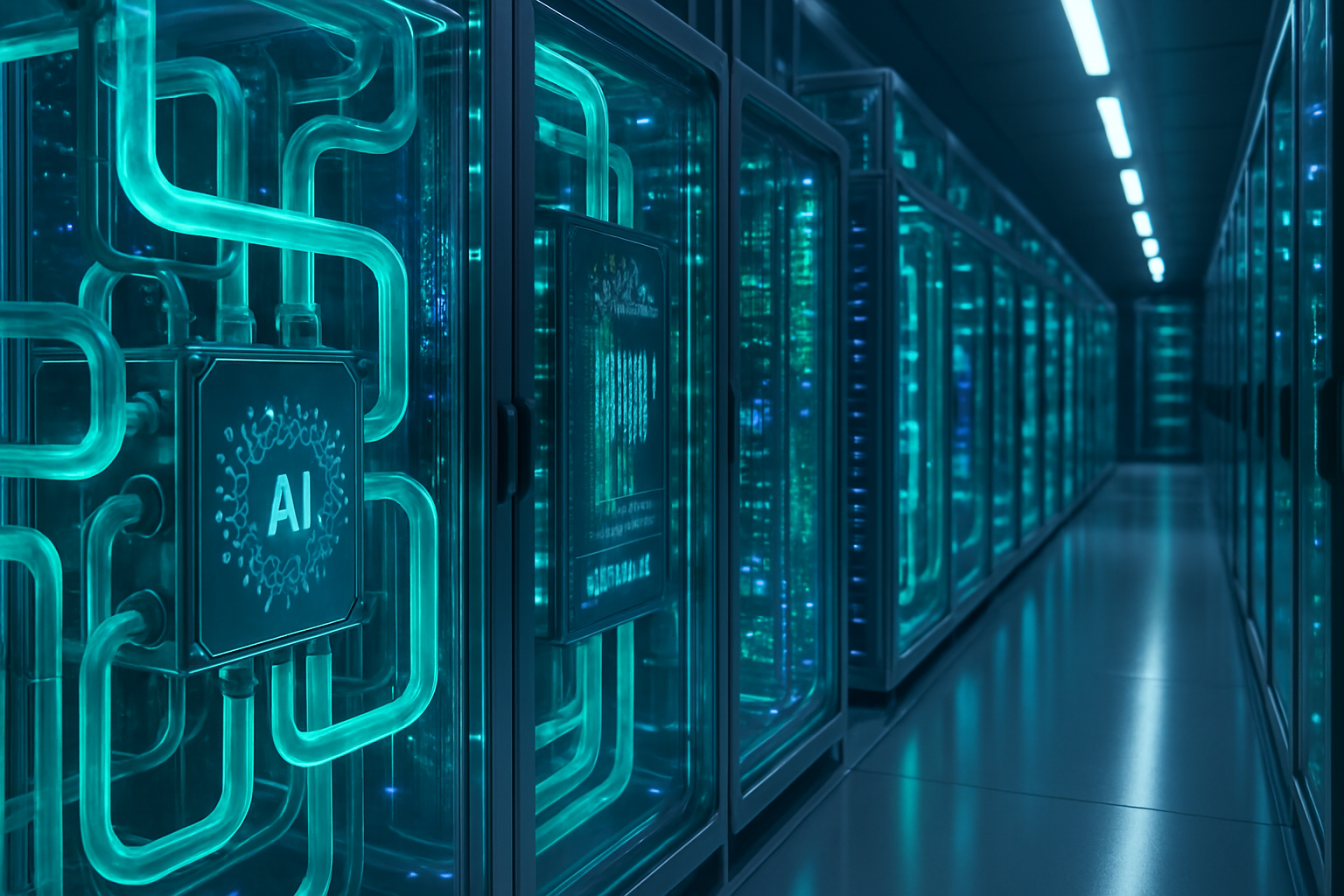
    The relentless pursuit of artificial intelligence has ignited an unprecedented demand for computational power, pushing the boundaries of traditional data center design. A silent revolution is now underway, as massive new data centers, purpose-built for AI workloads, are rapidly adopting advanced liquid cooling technologies. This pivotal shift is not merely an incremental upgrade but a fundamental re-engineering of infrastructure, promising to unlock unprecedented performance, dramatically improve energy efficiency, and pave the way for a more sustainable future for the AI industry.

    This strategic pivot towards liquid cooling is a direct response to the escalating heat generated by powerful AI accelerators, such as GPUs, which are the backbone of modern machine learning and generative AI. By moving beyond the limitations of air cooling, these next-generation data centers are poised to deliver the thermal management capabilities essential for training and deploying increasingly complex AI models, ensuring optimal hardware performance and significantly reducing operational costs.

    The Deep Dive: Engineering AI's Thermal Frontier

    The technical demands of cutting-edge AI workloads have rendered conventional air-cooling systems largely obsolete. GPUs and other AI accelerators can generate immense heat, with power densities per rack now exceeding 50kW and projected to reach 100kW or more in the near future. Traditional air cooling struggles to dissipate this heat efficiently, leading to "thermal throttling" – a situation where hardware automatically reduces its performance to prevent overheating, directly impacting AI training times and model inference speeds. Liquid cooling emerges as the definitive solution, offering superior heat transfer capabilities.

    There are primarily two advanced liquid cooling methodologies gaining traction: Direct Liquid Cooling (DLC), also known as direct-to-chip cooling, and Immersion Cooling. DLC involves circulating a non-conductive coolant through cold plates mounted directly onto hot components like CPUs and GPUs. This method efficiently captures heat at its source before it can dissipate into the data center environment. Innovations in DLC include microchannel cold plates and advanced microfluidics, with companies like Microsoft (NASDAQ: MSFT) developing techniques that pump coolant through tiny channels etched directly into silicon chips, proving up to three times more effective than conventional cold plate methods. DLC offers flexibility, often integrated into existing server architectures with minimal adjustments, and is seen as a leading solution for its efficiency and scalability.

    Immersion cooling, on the other hand, takes a more radical approach by fully submerging servers or entire IT equipment in a non-conductive dielectric fluid. This fluid directly absorbs and dissipates heat. Single-phase immersion keeps the fluid liquid, circulating it through heat exchangers, while two-phase immersion utilizes a fluorocarbon-based liquid that boils at low temperatures. Heat from servers vaporizes the fluid, which then condenses, creating a highly efficient, self-sustaining cooling cycle that can absorb 100% of the heat from IT components. This enables significantly higher computing density per rack and ensures hardware runs at peak performance without throttling. While immersion cooling offers superior heat dissipation, it requires a more significant infrastructure redesign and specialized maintenance, posing initial investment and compatibility challenges. Hybrid solutions, combining D2C with rear-door heat exchangers (RDHx), are also gaining favor to maximize efficiency.

    Initial reactions from the AI research community and industry experts are overwhelmingly positive. The consensus is that liquid cooling is no longer a niche or experimental technology but a fundamental requirement for the next generation of AI infrastructure. Industry leaders like Google (NASDAQ: GOOGL) have already deployed liquid-cooled TPU pods, quadrupling compute density within existing footprints. Companies like Schneider Electric (EPA: SU) are expanding their liquid cooling portfolios with megawatt-class Coolant Distribution Units (CDUs) and Dynamic Cold Plates, signaling a broad industry commitment. Experts predict that within the next two to three years, every new AI data center will be fully liquid-cooled, underscoring its critical role in sustaining AI's rapid growth.

    Reshaping the AI Landscape: Corporate Impacts and Competitive Edges

    The widespread adoption of liquid-cooled data centers is poised to dramatically reshape the competitive landscape for AI companies, tech giants, and startups alike. Companies at the forefront of this transition stand to gain significant strategic advantages, while others risk falling behind in the race for AI dominance. The immediate beneficiaries are the hyperscale cloud providers and AI research labs that operate their own data centers, as they can directly implement and optimize these advanced cooling solutions.

    Tech giants such as Google (NASDAQ: GOOGL), Microsoft (NASDAQ: MSFT), and Amazon (NASDAQ: AMZN), through its Amazon Web Services (AWS) division, are already heavily invested in building out AI-specific infrastructure. Their ability to deploy and scale liquid cooling allows them to offer more powerful, efficient, and cost-effective AI compute services to their customers. This translates into a competitive edge, enabling them to host larger, more complex AI models and provide faster training times, which are crucial for attracting and retaining AI developers and enterprises. These companies also benefit from reduced operational expenditures due to lower energy consumption for cooling, improving their profit margins in a highly competitive market.

    For specialized AI hardware manufacturers like NVIDIA (NASDAQ: NVDA), the shift towards liquid cooling is a boon. Their high-performance GPUs, which are the primary drivers of heat generation, necessitate these advanced cooling solutions to operate at their full potential. As liquid cooling becomes standard, it enables NVIDIA to design even more powerful chips without being constrained by thermal limitations, further solidifying its market leadership. Similarly, startups developing innovative liquid cooling hardware and integration services, such as those providing specialized fluids, cold plates, and immersion tanks, are experiencing a surge in demand and investment.

    The competitive implications extend to smaller AI labs and startups that rely on cloud infrastructure. Access to liquid-cooled compute resources means they can develop and deploy more sophisticated AI models without the prohibitive costs of building their own specialized data centers. However, those without access to such advanced infrastructure, or who are slower to adopt, may find themselves at a disadvantage, struggling to keep pace with the computational demands of the latest AI breakthroughs. This development also has the potential to disrupt existing data center service providers that have not yet invested in liquid cooling capabilities, as their offerings may become less attractive for high-density AI workloads. Ultimately, the companies that embrace and integrate liquid cooling most effectively will be best positioned to drive the next wave of AI innovation and capture significant market share.

    The Broader Canvas: AI's Sustainable Future and Unprecedented Power

    The emergence of massive, liquid-cooled data centers represents a pivotal moment that transcends mere technical upgrades; it signifies a fundamental shift in how the AI industry addresses its growing energy footprint and computational demands. This development fits squarely into the broader AI landscape as the technology moves from research labs to widespread commercial deployment, necessitating infrastructure that can scale efficiently and sustainably. It underscores a critical trend: the physical infrastructure supporting AI is becoming as complex and innovative as the algorithms themselves.

    The impacts are far-reaching. Environmentally, liquid cooling offers a significant pathway to reducing the carbon footprint of AI. Traditional data centers consume vast amounts of energy, with cooling often accounting for 30-40% of total power usage. Liquid cooling, being inherently more efficient, can slash these figures by 15-30%, leading to substantial energy savings and a lower reliance on fossil fuels. Furthermore, the ability to capture and reuse waste heat from liquid-cooled systems for district heating or industrial processes represents a revolutionary step towards a circular economy for data centers, transforming them from energy sinks into potential energy sources. This directly addresses growing concerns about the environmental impact of AI and supports global sustainability goals.

    However, potential concerns also arise. The initial capital expenditure for retrofitting existing data centers or building new liquid-cooled facilities can be substantial, potentially creating a barrier to entry for smaller players. The specialized nature of these systems also necessitates new skill sets for data center operators and maintenance staff. There are also considerations around the supply chain for specialized coolants and components. Despite these challenges, the overwhelming benefits in performance and efficiency are driving rapid adoption.

    Comparing this to previous AI milestones, the development of liquid-cooled AI data centers is akin to the invention of the graphical processing unit (GPU) itself, or the breakthroughs in deep learning architectures like transformers. Just as GPUs provided the computational muscle for early deep learning, and transformers enabled large language models, liquid cooling provides the necessary thermal headroom to unlock the next generation of these advancements. It’s not just about doing current tasks faster, but enabling entirely new classes of AI models and applications that were previously thermally or economically unfeasible. This infrastructure milestone ensures that the physical constraints do not impede the intellectual progress of AI, paving the way for unprecedented computational power to fuel future breakthroughs.

    Glimpsing Tomorrow: The Horizon of AI Infrastructure

    The trajectory of liquid-cooled AI data centers points towards an exciting and rapidly evolving future, with both near-term and long-term developments poised to redefine the capabilities of artificial intelligence. In the near term, we can expect to see a rapid acceleration in the deployment of hybrid cooling solutions, combining direct-to-chip cooling with advanced rear-door heat exchangers, becoming the de-facto standard for high-density AI racks. The market for specialized coolants and cooling hardware will continue to innovate, offering more efficient, environmentally friendly, and cost-effective solutions. We will also witness increased integration of AI itself into the cooling infrastructure, with AI algorithms optimizing cooling parameters in real-time based on workload demands, predicting maintenance needs, and further enhancing energy efficiency.

    Looking further ahead, the long-term developments are even more transformative. Immersion cooling, particularly two-phase systems, is expected to become more widespread as the industry matures and addresses current challenges related to infrastructure redesign and maintenance. This will enable ultra-high-density computing, allowing for server racks that house exponentially more AI accelerators than currently possible, pushing compute density to unprecedented levels. We may also see the rise of modular, prefabricated liquid-cooled data centers that can be deployed rapidly and efficiently in various locations, including remote areas or directly adjacent to renewable energy sources, further enhancing sustainability and reducing latency.

    Potential applications and use cases on the horizon are vast. More powerful and efficient AI infrastructure will enable the development of truly multimodal AI systems that can seamlessly process and generate information across text, images, audio, and video with human-like proficiency. It will accelerate scientific discovery, allowing for faster simulations in drug discovery, materials science, and climate modeling. Autonomous systems, from self-driving cars to advanced robotics, will benefit from the ability to process massive amounts of sensor data in real-time. Furthermore, the increased compute power will fuel the creation of even larger and more capable foundational models, leading to breakthroughs in general AI capabilities.

    However, challenges remain. The standardization of liquid cooling interfaces and protocols is crucial to ensure interoperability and reduce vendor lock-in. The responsible sourcing and disposal of coolants, especially in immersion systems, need continuous attention to minimize environmental impact. Furthermore, the sheer scale of energy required, even with improved efficiency, necessitates a concerted effort towards integrating these data centers with renewable energy grids. Experts predict that the next decade will see a complete overhaul of data center design, with liquid cooling becoming as ubiquitous as server racks are today. The focus will shift from simply cooling hardware to optimizing the entire energy lifecycle of AI compute, making data centers not just powerful, but also profoundly sustainable.

    The Dawn of a Cooler, Smarter AI Era

    The rapid deployment of massive, liquid-cooled data centers marks a defining moment in the history of artificial intelligence, signaling a fundamental shift in how the industry addresses its insatiable demand for computational power. This isn't merely an evolutionary step but a revolutionary leap, providing the essential thermal infrastructure to sustain and accelerate the AI revolution. By enabling higher performance, unprecedented energy efficiency, and a significant pathway to sustainability, liquid cooling is poised to be as transformative to AI compute as the invention of the GPU itself.

    The key takeaways are clear: liquid cooling is now indispensable for modern AI workloads, offering superior heat dissipation that allows AI accelerators to operate at peak performance without thermal throttling. This translates into faster training times, more complex model development, and ultimately, more capable AI systems. The environmental benefits, particularly the potential for massive energy savings and waste heat reuse, position these new data centers as critical components in building a more sustainable tech future. For companies, embracing this technology is no longer optional; it's a strategic imperative for competitive advantage and market leadership in the AI era.

    The long-term impact of this development cannot be overstated. It ensures that the physical constraints of heat generation do not impede the intellectual progress of AI, effectively future-proofing the industry's infrastructure for decades to come. As AI models continue to grow in size and complexity, the ability to efficiently cool high-density compute will be the bedrock upon which future breakthroughs are built, from advanced scientific discovery to truly intelligent autonomous systems.

    In the coming weeks and months, watch for announcements from major cloud providers and AI companies detailing their expanded liquid cooling deployments and the performance gains they achieve. Keep an eye on the emergence of new startups offering innovative cooling solutions and the increasing focus on the circular economy aspects of data center operations, particularly waste heat recovery. The era of the "hot" data center is drawing to a close, replaced by a cooler, smarter, and more sustainable foundation for artificial intelligence.

    This content is intended for informational purposes only and represents analysis of current AI developments.

    TokenRing AI delivers enterprise-grade solutions for multi-agent AI workflow orchestration, AI-powered development tools, and seamless remote collaboration platforms.
    For more information, visit https://www.tokenring.ai/.