
Tag: Lithography

  • Substrate Secures $100M to Revolutionize US Chip Manufacturing with Novel Laser Technology

    Substrate Secures $100M to Revolutionize US Chip Manufacturing with Novel Laser Technology

    In a significant development poised to reshape the global semiconductor landscape, Substrate, a stealthy startup backed by tech titan Peter Thiel, announced today, October 28, 2025, it has successfully raised over $100 million in a new funding round. This substantial investment is earmarked for an ambitious mission: to establish advanced computer chip manufacturing capabilities within the United States, leveraging a groundbreaking, proprietary lithography technology that promises to drastically cut production costs and reduce reliance on overseas supply chains.

    The announcement sends ripples through an industry grappling with geopolitical tensions and a fervent push for domestic chip production. With a valuation now exceeding $1 billion, Substrate aims to challenge the established order of semiconductor giants and bring a critical component of modern technology back to American soil. The funding round saw participation from prominent investors, including Peter Thiel's Founders Fund, General Catalyst, and In-Q-Tel, a government-backed non-profit dedicated to funding technologies vital for U.S. defense and intelligence agencies, underscoring the strategic national importance of Substrate's endeavor.

    A New Era of Lithography: Halving Costs with Particle Accelerators

    Substrate's core innovation lies in its proprietary lithography technology, which, while not explicitly "laser-based" in the traditional sense, represents a radical departure from current industry standards. Instead of relying solely on the complex and immensely expensive extreme ultraviolet (EUV) lithography machines predominantly supplied by ASML Holding (NASDAQ: ASML), Substrate claims its solution utilizes a proprietary particle accelerator to funnel light through a more compact and efficient machine. This novel approach, according to founder James Proud, has the potential to halve the cost of advanced chip production.

    The current semiconductor manufacturing process, particularly at the cutting edge, is dominated by EUV lithography, a technology that employs laser-pulsed tin plasma to etch intricate patterns onto silicon wafers. These machines are monumental in scale, cost hundreds of millions of dollars each, and are incredibly complex to operate, forming a near-monopoly for ASML. Substrate's assertion that its device can achieve results comparable to ASML's most advanced machines, but at a fraction of the cost and complexity, is a bold claim that has garnered both excitement and skepticism within the industry. If successful, this could democratize access to advanced chip manufacturing, allowing for the construction of advanced fabs for "single-digit billions" rather than the tens of billions currently required. The company has aggressively recruited over 50 employees from leading tech companies and national laboratories, signaling a serious commitment to overcoming the immense technical hurdles.

    Reshaping the Competitive Landscape: Opportunities and Disruptions

    Substrate's emergence, backed by significant capital and a potentially disruptive technology, carries profound implications for the semiconductor industry's competitive dynamics. Chip designers and manufacturers, particularly those reliant on external foundries, could see substantial benefits. Companies like NVIDIA (NASDAQ: NVDA), Advanced Micro Devices (NASDAQ: AMD), and even tech giants developing their own custom silicon like Apple (NASDAQ: AAPL) and Google (NASDAQ: GOOGL), could gain access to more cost-effective and secure domestic manufacturing options. This would alleviate concerns around supply chain vulnerabilities and geopolitical risks associated with manufacturing concentrated in Asia, particularly Taiwan Semiconductor Manufacturing Company (NYSE: TSM).

    The competitive implications for existing players are significant. ASML, with its near-monopoly on advanced lithography, faces a potential long-term challenger, though Substrate's technology is still in its early stages. Foundries like TSMC and Samsung (KRX: 005930), which have invested heavily in current-generation EUV technology and massive fabrication plants, might face pressure to adapt or innovate further if Substrate's cost-reduction claims prove viable at scale. For startups and smaller players, a more accessible and affordable advanced manufacturing pathway could lower barriers to entry, fostering a new wave of innovation in chip design and specialized silicon. The U.S. government's strategic interest, evidenced by In-Q-Tel's involvement, suggests a potential for direct government contracts and incentives, further bolstering Substrate's market positioning as a national asset in semiconductor independence.

    Broader Significance: A Pillar of National Security and Economic Resilience

    Substrate's ambitious initiative transcends mere technological advancement; it is a critical component of the broader strategic imperative to bolster national security and economic resilience. The concentration of advanced semiconductor manufacturing in East Asia has long been identified as a significant vulnerability for the United States, particularly in an era of heightened geopolitical competition. The "CHIPS and Science Act," passed in 2022, committed billions in federal funding to incentivize domestic semiconductor production, and Substrate's privately funded, yet strategically aligned, efforts perfectly complement this national agenda.

    The potential impact extends beyond defense and intelligence. A robust domestic chip manufacturing ecosystem would secure supply chains for a vast array of industries, from automotive and telecommunications to consumer electronics and cutting-edge AI hardware. This move aligns with a global trend of nations seeking greater self-sufficiency in critical technologies. While the promise of halving production costs is immense, the challenge of building a complete, high-volume manufacturing ecosystem from scratch, including the intricate supply chain for materials and specialized equipment, remains daunting. Government scientists and industry experts have voiced skepticism about Substrate's ability to achieve its aggressive timeline of mass production by 2028, highlighting the immense capital intensity and decades of accumulated expertise that underpin the current industry leaders. This development, if successful, would be comparable to past milestones where new manufacturing paradigms dramatically shifted industrial capabilities, potentially marking a new chapter in the U.S.'s technological leadership.

    The Road Ahead: Challenges and Expert Predictions

    The path forward for Substrate is fraught with both immense opportunity and formidable challenges. In the near term, the company will focus on perfecting its proprietary lithography technology and scaling its manufacturing capabilities. The stated goal of achieving mass production of chips by 2028 is incredibly ambitious, requiring rapid innovation and significant capital deployment for building its own network of fabs. Success hinges not only on the technical efficacy of its particle accelerator-based lithography but also on its ability to establish a reliable and cost-effective supply chain for all the ancillary materials and processes required for advanced chip fabrication.

    Longer term, if Substrate proves its technology at scale, potential applications are vast. Beyond general-purpose computing, its cost-effective domestic manufacturing could accelerate innovation in specialized AI accelerators, quantum computing components, and advanced sensors crucial for defense and emerging technologies. Experts predict that while Substrate faces an uphill battle against deeply entrenched incumbents and highly complex manufacturing processes, the strategic importance of its mission, coupled with significant backing, gives it a fighting chance. The involvement of In-Q-Tel suggests a potential fast-track for government contracts and partnerships, which could provide the necessary impetus to overcome initial hurdles. However, many analysts remain cautious, emphasizing that the semiconductor industry is littered with ambitious startups that failed to cross the chasm from R&D to high-volume, cost-competitive production. The coming years will be a critical test of Substrate's claims and capabilities.

    A Pivotal Moment for US Semiconductor Independence

    Substrate's $100 million funding round marks a pivotal moment in the ongoing global race for semiconductor dominance and the U.S.'s determined push for chip independence. The key takeaway is the bold attempt to disrupt the highly concentrated and capital-intensive advanced lithography market with a novel, cost-saving technology. This development is significant not only for its potential technological breakthrough but also for its strategic implications for national security, economic resilience, and the diversification of the global semiconductor supply chain.

    In the annals of AI and technology history, this endeavor could be remembered as either a groundbreaking revolution that reshaped manufacturing or a testament to the insurmountable barriers of entry in advanced semiconductors. The coming weeks and months will likely bring more details on Substrate's technical progress, recruitment efforts, and potential partnerships. Industry observers will be closely watching for initial demonstrations of its lithography capabilities and any further announcements regarding its manufacturing roadmap. The success or failure of Substrate will undoubtedly have far-reaching consequences, influencing future investment in domestic chip production and the competitive strategies of established industry titans.


    This content is intended for informational purposes only and represents analysis of current AI developments.

    TokenRing AI delivers enterprise-grade solutions for multi-agent AI workflow orchestration, AI-powered development tools, and seamless remote collaboration platforms.
    For more information, visit https://www.tokenring.ai/.

  • The Unseen Architects: How Semiconductor Equipment Makers Are Powering the AI Revolution

    The Unseen Architects: How Semiconductor Equipment Makers Are Powering the AI Revolution

    The global artificial intelligence (AI) landscape is undergoing an unprecedented transformation, driven by an insatiable demand for more powerful, efficient, and sophisticated chips. At the heart of this revolution, often unseen by the broader public, are the semiconductor equipment makers – the foundational innovators providing the advanced tools and processes necessary to forge these cutting-edge AI silicon. As of late 2025, these companies are not merely suppliers; they are active partners in innovation, deeply embedding AI, machine learning (ML), and advanced automation into their own products and manufacturing processes to meet the escalating complexities of AI chip production.

    The industry is currently experiencing a significant rebound, with global semiconductor manufacturing equipment sales projected to reach record highs in 2025 and continue growing into 2026. This surge is predominantly fueled by AI-driven investments in data centers, high-performance computing, and next-generation consumer devices. Equipment manufacturers are at the forefront, enabling the production of leading-edge logic, memory, and advanced packaging solutions that are indispensable for the continuous advancement of AI capabilities, from large language models (LLMs) to autonomous systems.

    Precision Engineering Meets Artificial Intelligence: The Technical Core

    The advancements spearheaded by semiconductor equipment manufacturers are deeply technical, leveraging AI and ML to redefine every stage of chip production. One of the most significant shifts is the integration of predictive maintenance and equipment monitoring. AI algorithms now meticulously analyze real-time operational data from complex machinery in fabrication plants (fabs), anticipating potential failures before they occur. This proactive approach dramatically reduces costly downtime and optimizes maintenance schedules, a stark contrast to previous reactive or time-based maintenance models.

    Furthermore, AI-powered automated defect detection and quality control systems are revolutionizing inspection processes. Computer vision and deep learning algorithms can now rapidly and accurately identify microscopic defects on wafers and chips, far surpassing the speed and precision of traditional manual or less sophisticated automated methods. This not only improves overall yield rates but also accelerates production cycles by minimizing human error. Process optimization and adaptive calibration also benefit immensely from ML models, which analyze vast datasets to identify inefficiencies, optimize workflows, and dynamically adjust equipment parameters in real-time to maintain optimal operating conditions. Companies like ASML (AMS: ASML), a dominant player in lithography, are at the vanguard of this integration. In a significant development in September 2025, ASML made a strategic investment of €1.3 billion in Mistral AI, with the explicit goal of embedding advanced AI capabilities directly into its lithography equipment. This move aims to reduce defects, enhance yield rates through real-time process optimization, and significantly improve computational lithography. ASML's deep reinforcement learning systems are also demonstrating superior decision-making in complex manufacturing scenarios compared to human planners, while AI-powered digital twins are being utilized to simulate and optimize lithography processes with unprecedented accuracy. This paradigm shift transforms equipment from passive tools into intelligent, self-optimizing systems.

    Reshaping the Competitive Landscape for AI Innovators

    The technological leadership of semiconductor equipment makers has profound implications for AI companies, tech giants, and startups across the globe. Companies like Applied Materials (NASDAQ: AMAT) and Tokyo Electron (TSE: 8035) stand to benefit immensely from the escalating demand for advanced manufacturing capabilities. Applied Materials, for instance, launched its "EPIC Advanced Packaging" initiative in late 2024 to accelerate the development and commercialization of next-generation chip packaging solutions, directly addressing the critical needs of AI and high-performance computing (HPC). Tokyo Electron is similarly investing heavily in new factories for circuit etching equipment, anticipating sustained growth from AI-related spending, particularly for advanced logic ICs for data centers and memory chips for AI smartphones and PCs.

    The competitive implications are substantial. Major AI labs and tech companies, including those designing their own AI accelerators, are increasingly reliant on these equipment makers to bring their innovative chip designs to fruition. The ability to access and leverage the most advanced manufacturing processes becomes a critical differentiator. Companies that can quickly adopt and integrate chips produced with these cutting-edge tools will gain a strategic advantage in developing more powerful and energy-efficient AI products and services. This dynamic also fosters a more integrated ecosystem, where collaboration between chip designers, foundries, and equipment manufacturers becomes paramount for accelerating AI innovation. The increased complexity and cost of leading-edge manufacturing could also create barriers to entry for smaller startups, though specialized niche players in design or software could still thrive by leveraging advanced foundry services.

    The Broader Canvas: AI's Foundational Enablers

    The role of equipment makers fits squarely into the broader AI landscape as foundational enablers. The explosive growth in AI demand, particularly from generative AI and large language models (LLMs), is the primary catalyst. Projections indicate that global AI in semiconductor devices market size will grow by over $112 billion by 2029, at a CAGR of 26.9%, underscoring the critical need for advanced manufacturing capabilities. This sustained demand is driving innovations in several key areas.

    Advanced packaging, for instance, has emerged as a "breakout star" in 2024-2025. It's crucial for overcoming the physical limitations of traditional chip design, enabling the heterogeneous integration of separately manufactured chiplets into a single, high-performance package. This is vital for AI accelerators and data center CPUs, allowing for unprecedented levels of performance and energy efficiency. Similarly, the rapid evolution of High-Bandwidth Memory (HBM) is directly driven by AI, with significant investments in manufacturing capacity to meet the needs of LLM developers. The relentless pursuit of leading-edge nodes, such as 2nm and soon 1.4nm, is also a direct response to AI's computational demands, with investments in sub-2nm wafer equipment projected to more than double from 2024 to 2028. Beyond performance, energy efficiency is a growing concern for AI data centers, and equipment makers are developing technologies and forging alliances to create more power-efficient AI solutions, with AI integration in semiconductor devices expected to reduce data center energy consumption by up to 45% by 2025. These developments mark a significant milestone, comparable to previous breakthroughs in transistor scaling and lithography, as they directly enable the next generation of AI capabilities.

    The Horizon: Autonomous Fabs and Unprecedented AI Integration

    Looking ahead, the semiconductor equipment industry is poised for even more transformative developments. Near-term expectations include further advancements in AI-driven process control, leading to even higher yields and greater efficiency in chip fabrication. The long-term vision encompasses the realization of fully autonomous fabs, where AI, IoT, and machine learning orchestrate every aspect of manufacturing with minimal human intervention. These "smart manufacturing" environments will feature predictive issue identification, optimized resource allocation, and enhanced flexibility in production lines, fundamentally altering how chips are made.

    Potential applications and use cases on the horizon include highly specialized AI accelerators designed with unprecedented levels of customization for specific AI workloads, enabled by advanced packaging and novel materials. We can also expect further integration of AI directly into the design process itself, with AI assisting in the creation of new chip architectures and optimizing layouts for performance and power. Challenges that need to be addressed include the escalating costs of developing and deploying leading-edge equipment, the need for a highly skilled workforce capable of managing these AI-driven systems, and the ongoing geopolitical complexities that impact global supply chains. Experts predict a continued acceleration in the pace of innovation, with a focus on collaborative efforts across the semiconductor value chain to rapidly bring cutting-edge technologies from research to commercial reality.

    A New Era of Intelligence, Forged in Silicon

    In summary, the semiconductor equipment makers are not just beneficiaries of the AI revolution; they are its fundamental architects. Their relentless innovation in integrating AI, machine learning, and advanced automation into their manufacturing tools is directly enabling the creation of the powerful, efficient, and sophisticated chips that underpin every facet of modern AI. From predictive maintenance and automated defect detection to advanced packaging and next-generation lithography, their contributions are indispensable.

    This development marks a pivotal moment in AI history, underscoring that the progress of artificial intelligence is inextricably linked to the physical world of silicon manufacturing. The strategic investments by companies like ASML and Applied Materials highlight a clear commitment to leveraging AI to build better AI. The long-term impact will be a continuous cycle of innovation, where AI helps build the infrastructure for more advanced AI, leading to breakthroughs in every sector imaginable. In the coming weeks and months, watch for further announcements regarding collaborative initiatives, advancements in 2nm and sub-2nm process technologies, and the continued integration of AI into manufacturing workflows, all of which will shape the future of artificial intelligence.


    This content is intended for informational purposes only and represents analysis of current AI developments.

    TokenRing AI delivers enterprise-grade solutions for multi-agent AI workflow orchestration, AI-powered development tools, and seamless remote collaboration platforms.
    For more information, visit https://www.tokenring.ai/.

  • Semiconductor Titans: A Comparative Analysis of ASML and Texas Instruments’ Indispensable Roles

    Semiconductor Titans: A Comparative Analysis of ASML and Texas Instruments’ Indispensable Roles

    In the intricate and increasingly vital world of semiconductor manufacturing, two giants, ASML Holding N.V. (AMS: ASML) and Texas Instruments Incorporated (NASDAQ: TXN), stand as pillars, each wielding distinct yet equally indispensable influence. While ASML provides the cutting-edge machinery that enables the creation of the world's most advanced microchips, Texas Instruments supplies the foundational analog and embedded processing components that bring these electronic systems to life across myriad applications. This comparative analysis delves into their unique technological contributions, market impact, and strategic importance, illuminating how these seemingly disparate entities are both crucial for the relentless march of technological progress, particularly in the burgeoning era of artificial intelligence.

    ASML, a Dutch multinational, holds a near-monopolistic grip on the most advanced photolithography equipment, the sophisticated tools that print the microscopic patterns onto silicon wafers. Its Extreme Ultraviolet (EUV) lithography machines are the linchpin for producing chips at the 5nm node and beyond, making it an irreplaceable enabler for leading-edge foundries like TSMC, Samsung, and Intel. Conversely, Texas Instruments, an American multinational, dominates the market for analog chips and embedded processors, which constitute the "brains" and "senses" of countless electronic devices. From automotive systems to industrial automation and personal electronics, TI's components manage power, convert real-world signals, and provide essential control, forming the bedrock upon which complex digital systems are built.

    The Microscopic Art of Lithography vs. The World of Analog Intelligence

    ASML's technological prowess is centered on photolithography, a process akin to projecting extremely intricate blueprints onto silicon. At the forefront of this is its Extreme Ultraviolet (EUV) lithography, a marvel of engineering that employs 13.5 nm wavelength light generated by firing a high-energy laser at molten tin droplets. This ultra-short wavelength allows for the printing of features as small as 13 nanometers, enabling the production of chips with transistor densities required for 5nm, 3nm, and even future 2nm process nodes. This differs fundamentally from previous Deep Ultraviolet (DUV) systems, which use longer wavelengths and require complex multi-patterning techniques for smaller features, making EUV a critical leap for cost-effective and high-volume manufacturing of advanced chips. ASML is already pushing the boundaries with its next-generation High Numerical Aperture (High-NA) EUV systems (EXE platforms), designed to further improve resolution and enable sub-2nm nodes, directly addressing the escalating demands of AI accelerators and high-performance computing. The industry's reaction has been one of awe and dependence; without ASML's continuous innovation, Moore's Law would have significantly slowed, impacting the very foundation of modern computing.

    Texas Instruments, on the other hand, operates in the equally vital, albeit less visible, realm of analog and embedded processing. Its analog chips are the unsung heroes that interface the digital world with the physical. They manage power, convert analog signals (like temperature, sound, or pressure) into digital data, and vice-versa, ensuring stable and efficient operation of electronic systems. Unlike general-purpose digital processors, TI's analog integrated circuits are designed for specific tasks, optimizing performance, power consumption, and reliability for real-world conditions. Its embedded processors, including microcontrollers (MCUs) and digital signal processors (DSPs), provide the dedicated computing power for control and signal processing within a vast array of devices, from automotive safety systems to smart home appliances. This differs from the high-speed, general-purpose processing seen in CPUs or GPUs, focusing instead on efficiency, real-time control, and specialized functions. Industry experts recognize TI's extensive portfolio and manufacturing capabilities as crucial for ensuring the widespread adoption and reliable functioning of intelligent systems across diverse sectors, providing the essential "glue" that makes advanced digital components functional in practical applications.

    Strategic Imperatives and Ecosystem Impact

    The distinct roles of ASML and Texas Instruments create unique competitive implications within the semiconductor ecosystem. ASML's near-monopoly in EUV lithography grants it immense strategic importance; it is a critical gatekeeper for advanced chip manufacturing. Companies like Taiwan Semiconductor Manufacturing Company (NYSE: TSM), Samsung (KRX: 005930), and Intel (NASDAQ: INTC) are heavily reliant on ASML's machines to produce their leading-edge processors, memory, and specialized AI chips. This dependence means ASML's technological roadmaps and production capacity directly influence the competitive landscape of the entire semiconductor industry. Any disruption to ASML's supply or innovation could have cascading effects, impacting the ability of tech giants to deliver next-generation products. ASML's continuous advancements, like High-NA EUV, ensure that these chipmakers can continue shrinking transistors, which is paramount for the performance gains required by demanding AI workloads.

    Texas Instruments' broad portfolio of analog and embedded processing solutions positions it as a foundational supplier across an incredibly diverse customer base, exceeding 100,000 companies. Its strategic focus on industrial and automotive markets (which account for approximately 75% of its revenue) means it stands to benefit significantly from the ongoing electrification of vehicles, the rise of industrial automation, and the proliferation of IoT devices. While TI faces competition from companies like Analog Devices (NASDAQ: ADI) and NXP Semiconductors (NASDAQ: NXPI), its extensive product catalog, robust manufacturing capabilities (with a significant portion of its production in-house), and long-standing customer relationships provide a strong competitive edge. TI's components are crucial for enabling the energy efficiency, sensing capabilities, and real-time control necessary for AI at the edge and in embedded systems. Its strategic importance lies in providing the reliable, high-performance building blocks that allow innovative applications, even those leveraging ASML-enabled advanced digital chips, to function effectively in the real world.

    Broader Significance in the AI Landscape

    Both ASML and Texas Instruments are fundamentally shaping the broader AI landscape, albeit from different vantage points. ASML's lithography technology is the primary driver behind the miniaturization and increased computational power of the processors that underpin sophisticated AI models. Without the ability to pack billions of transistors into a tiny space, the complex neural networks and massive datasets that characterize modern AI would be computationally unfeasible. ASML's advancements directly enable the creation of more powerful GPUs, TPUs, and specialized AI accelerators, allowing for faster training, more efficient inference, and the development of increasingly complex AI algorithms. Its role is to continuously push the physical boundaries of what's possible, ensuring that the hardware foundation for AI continues to evolve at a rapid pace.

    Texas Instruments' significance lies in enabling the widespread deployment and practical application of AI, particularly at the edge. While ASML provides the means to build the "brains" of AI, TI provides the "nervous system" and "senses." Its analog chips are essential for accurately collecting real-world data (e.g., from sensors in autonomous vehicles or industrial robots) and converting it into a format that AI processors can understand. Its embedded processors then provide the localized intelligence and control, enabling AI models to run efficiently on devices with limited power and computational resources. This is crucial for applications like predictive maintenance in factories, advanced driver-assistance systems (ADAS) in cars, and energy management in smart grids. Potential concerns, particularly for ASML, revolve around geopolitical tensions and export controls, as its technology is deemed strategically vital. For TI, the challenge lies in maintaining its market leadership amidst increasing competition and the need to continuously innovate its vast product portfolio to meet evolving industry demands.

    Future Horizons: The Path Ahead

    Looking ahead, both ASML and Texas Instruments are poised for significant developments, each addressing the evolving needs of the technology sector. For ASML, the near-term focus will be on the successful ramp-up and adoption of its High-NA EUV systems. These machines are expected to unlock the next generation of chip manufacturing, enabling 2nm and even sub-2nm process nodes, which are critical for future AI advancements, quantum computing, and high-performance computing. Experts predict that High-NA EUV will become as indispensable as current EUV technology, further solidifying ASML's strategic position. Challenges include the immense cost and complexity of these systems, requiring significant R&D investment and close collaboration with leading chipmakers. Long-term, ASML will likely explore even more advanced patterning technologies, potentially moving beyond light-based lithography as physical limits are approached.

    Texas Instruments' future developments will likely center on expanding its industrial and automotive portfolios, with a strong emphasis on power management, advanced sensing, and robust embedded processing for AI at the edge. Expected applications include more sophisticated radar and vision systems for autonomous vehicles, highly integrated power solutions for electric vehicles and renewable energy, and low-power, high-performance microcontrollers for industrial IoT and robotics. Challenges for TI include managing its extensive product lifecycle, ensuring supply chain resilience, and adapting its manufacturing capabilities to meet increasing demand. Experts predict a continued focus on vertical integration and manufacturing efficiency to maintain cost leadership and supply stability, especially given the global emphasis on semiconductor self-sufficiency. Both companies will play pivotal roles in enabling the next wave of innovation, from truly autonomous systems to more intelligent and energy-efficient infrastructure.

    A Symbiotic Future: Powering the Digital Age

    In summary, ASML Holding and Texas Instruments represent two distinct yet symbiotically linked forces driving the semiconductor industry forward. ASML, with its unparalleled lithography technology, is the master enabler, providing the foundational tools for the creation of increasingly powerful and miniaturized digital processors that fuel the AI revolution. Its EUV and future High-NA EUV systems are the gatekeepers to advanced nodes, directly impacting the computational horsepower available for complex AI models. Texas Instruments, through its expansive portfolio of analog and embedded processing, provides the essential interface and intelligence that allows these advanced digital chips to interact with the real world, manage power efficiently, and enable AI to be deployed across a vast array of practical applications, from smart factories to electric cars.

    The significance of their combined contributions to AI history cannot be overstated. ASML ensures that the "brains" of AI can continue to grow in power and efficiency, while TI ensures that AI can have "senses" and effectively control its environment. Their ongoing innovations are not just incremental improvements but foundational advancements that dictate the pace and scope of technological progress. In the coming weeks and months, industry watchers should keenly observe ASML's progress in deploying High-NA EUV systems and Texas Instruments' continued expansion into high-growth industrial and automotive segments. The interplay between these two titans will continue to define the capabilities and reach of the digital age, particularly as AI becomes ever more pervasive.

    This content is intended for informational purposes only and represents analysis of current AI developments.

    TokenRing AI delivers enterprise-grade solutions for multi-agent AI workflow orchestration, AI-powered development tools, and seamless remote collaboration platforms.
    For more information, visit https://www.tokenring.ai/.
  • The New Era of Silicon: Advanced Packaging and Chiplets Revolutionize AI Performance

    The New Era of Silicon: Advanced Packaging and Chiplets Revolutionize AI Performance

    The semiconductor industry is undergoing a profound transformation, driven by the escalating demands of Artificial Intelligence (AI) for unprecedented computational power, speed, and efficiency. At the heart of this revolution are advancements in chip packaging and the emergence of chiplet technology, which together are extending performance scaling beyond traditional transistor miniaturization. These innovations are not merely incremental improvements but represent a foundational shift that is redefining how computing systems are built and optimized for the AI era, with significant implications for the tech landscape as of October 2025.

    This critical juncture is characterized by a rapid evolution in chip packaging technologies and the widespread adoption of chiplet architectures, collectively pushing the boundaries of performance scaling beyond traditional transistor miniaturization. This shift is enabling the creation of more powerful, efficient, and specialized AI hardware, directly addressing the limitations of traditional monolithic chip designs and the slowing of Moore's Law.

    Technical Foundations of the AI Hardware Revolution

    The advancements driving this new era of silicon are multifaceted, encompassing sophisticated packaging techniques, groundbreaking lithography systems, and a paradigm shift in chip design.

    Nikon's DSP-100 Digital Lithography System: Precision for Advanced Packaging

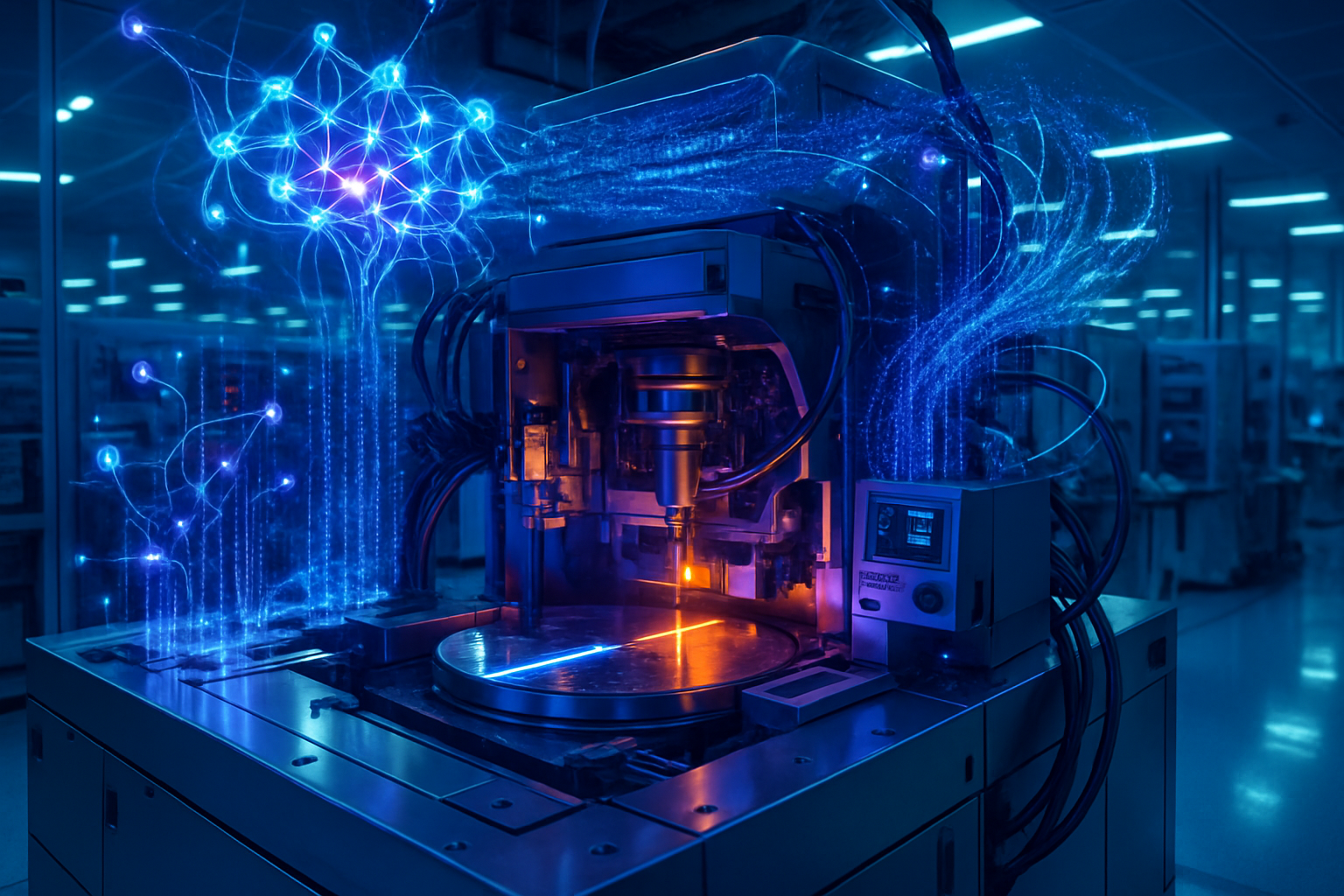
    Nikon has introduced a pivotal tool for advanced packaging with its Digital Lithography System DSP-100. Orders for this system commenced in July 2025, with a scheduled release in Nikon's (TYO: 7731) fiscal year 2026. The DSP-100 is specifically designed for back-end semiconductor manufacturing processes, supporting next-generation chiplet integrations and heterogeneous packaging applications with unparalleled precision and scalability.

    A standout feature is its maskless technology, which utilizes a spatial light modulator (SLM) to directly project circuit patterns onto substrates. This eliminates the need for photomasks, thereby reducing production costs, shortening development times, and streamlining the manufacturing process. The system supports large square substrates up to 600x600mm, a significant advancement over the limitations of 300mm wafers. For 100mm-square packages, the DSP-100 can achieve up to nine times higher productivity per substrate compared to using 300mm wafers, processing up to 50 panels per hour. It delivers a high resolution of 1.0μm Line/Space (L/S) and excellent overlay accuracy of ≤±0.3μm, crucial for the increasingly fine circuit patterns in advanced packages. This innovation directly addresses the rising demand for high-performance AI devices in data centers by enabling more efficient and cost-effective advanced packaging.

    It is important to clarify that while Nikon has a history of extensive research in Extreme Ultraviolet (EUV) lithography, it is not a current commercial provider of EUV systems for leading-edge chip fabrication. The DSP-100 focuses on advanced packaging rather than the sub-3nm patterning of individual chiplets themselves, a domain largely dominated by ASML (AMS: ASML).

    Chiplet Technology: Modular Design for Unprecedented Performance

    Chiplet technology represents a paradigm shift from monolithic chip design, where all functionalities are integrated onto a single large die, to a modular "lego-block" approach. Small, specialized integrated circuits (ICs), or chiplets, perform specific tasks (e.g., compute, memory, I/O, AI accelerators) and are interconnected within a single package.

    This modularity offers several architectural benefits over monolithic designs:

    • Improved Yield and Cost Efficiency: Manufacturing smaller chiplets significantly increases the likelihood of producing defect-free dies, boosting overall yield and allowing for the selective use of expensive advanced process nodes only for critical components.
    • Enhanced Performance and Power Efficiency: By allowing each chiplet to be designed and fabricated with the most suitable process technology for its specific function, overall system performance can be optimized. Close proximity of chiplets within advanced packages, facilitated by high-bandwidth and low-latency interconnects, dramatically reduces signal travel time and power consumption.
    • Greater Scalability and Customization: Designers can mix and match chiplets to create highly customized solutions tailored for diverse AI applications, from high-performance computing (HPC) to edge AI, and for handling the escalating complexity of large language models (LLMs).
    • Reduced Time-to-Market: Reusing validated chiplets across multiple products or generations drastically cuts down development cycles.
    • Overcoming Reticle Limits: Chiplets effectively circumvent the physical size limitations (reticle limits) inherent in manufacturing monolithic dies.

    Advanced Packaging Techniques: The Glue for Chiplets

    Advanced packaging techniques are indispensable for the effective integration of chiplets, providing the necessary high-density interconnections, efficient power delivery, and robust thermal management required for high-performance AI systems.

    • 2.5D Packaging: In this approach, multiple components, such as CPU/GPU dies and High-Bandwidth Memory (HBM) stacks, are placed side-by-side on a silicon or organic interposer. This technique dramatically increases bandwidth and reduces latency between components, crucial for AI workloads.
    • 3D Packaging: This involves vertically stacking active dies, leading to even greater integration density. 3D packaging directly addresses the "memory wall" problem by enabling significantly higher bandwidth between processing units and memory through technologies like Through-Silicon Vias (TSVs), which provide high-density vertical electrical connections.
    • Hybrid Bonding: A cutting-edge 3D packaging technique that facilitates direct copper-to-copper (Cu-Cu) connections at the wafer level. This method achieves ultra-fine interconnect pitches, often in the single-digit micrometer range, and supports bandwidths up to 1000 GB/s while maintaining high energy efficiency. Hybrid bonding is a key enabler for the tightly integrated, high-performance systems crucial for modern AI.
    • Fan-Out Packaging (FOPLP/FOWLP): These techniques eliminate the need for traditional package substrates by embedding the dies directly into a molding compound, allowing for more I/O connections in a smaller footprint. Fan-out panel-level packaging (FOPLP) is a significant trend, supporting larger substrates than traditional wafer-level packaging and offering superior production efficiency.

    The semiconductor industry and AI community have reacted very positively to these advancements, recognizing them as critical enablers for developing high-performance, power-efficient, and scalable computing systems, especially for the massive computational demands of AI workloads.

    Competitive Landscape and Corporate Strategies

    The shift to advanced packaging and chiplet technology has profound competitive implications, reshaping the market positioning of tech giants and creating significant opportunities for others. As of October 2025, companies with strong ties to leading foundries and early access to advanced packaging capacities hold a strategic advantage.

    NVIDIA (NASDAQ: NVDA) is a primary beneficiary and driver of advanced packaging demand, particularly for its AI accelerators. Its H100 GPU, for instance, leverages 2.5D CoWoS (Chip-on-Wafer-on-Substrate) packaging to integrate a powerful GPU and six HBM stacks. NVIDIA CEO Jensen Huang emphasizes advanced packaging as critical for semiconductor innovation. Notably, NVIDIA is reportedly investing $5 billion in Intel's advanced packaging services, signaling packaging's new role as a competitive edge and providing crucial second-source capacity.

    Intel (NASDAQ: INTC) is heavily invested in chiplet technology through its IDM 2.0 strategy and advanced packaging technologies like Foveros (3D stacking) and EMIB (Embedded Multi-die Interconnect Bridge, a 2.5D solution). Intel is deploying multiple "tiles" (chiplets) in its Meteor Lake and upcoming Arrow Lake processors, allowing for CPU, GPU, and AI performance scaling. Intel Foundry Services (IFS) offers these advanced packaging services to external customers, positioning Intel as a key player. Microsoft (NASDAQ: MSFT) has commissioned Intel to manufacture custom AI accelerator and data center chips using its 18A process technology and "system-level foundry" strategy.

    AMD (NASDAQ: AMD) has been a pioneer in chiplet architecture adoption. Its Ryzen and EPYC processors extensively use chiplets, and its Instinct MI300 series (MI300A for AI/HPC accelerators) integrates GPU, CPU, and memory chiplets in a single package using advanced 2.5D and 3D packaging techniques, including hybrid bonding for 3D V-Cache. This approach provides high throughput, scalability, and energy efficiency, offering a competitive alternative to NVIDIA.

    TSMC (TPE: 2330 / NYSE: TSM), the world's largest contract chipmaker, is fortifying its indispensable role as the foundational enabler for the global AI hardware ecosystem. TSMC is heavily investing in expanding its advanced packaging capacity, particularly for CoWoS and SoIC (System on Integrated Chips), to meet the "very strong" demand for HPC and AI chips. Its expanded capacity is expected to ease the CoWoS crunch and enable the rapid deployment of next-generation AI chips.

    Samsung (KRX: 005930) is actively developing and expanding its advanced packaging solutions to compete with TSMC and Intel. Through its SAINT (Samsung Advanced Interconnection Technology) program and offerings like I-Cube (2.5D packaging) and X-Cube (3D IC packaging), Samsung aims to merge memory and processors in significantly smaller sizes. Samsung Foundry recently partnered with Arm (NASDAQ: ARM), ADTechnology, and Rebellions to develop an AI CPU chiplet platform for data centers.

    ASML (AMS: ASML), while not directly involved in packaging, plays a critical indirect role. Its advanced lithography tools, particularly its High-NA EUV technology, are essential for manufacturing the leading-edge wafers and interposers that form the basis of advanced packaging and chiplets.

    AI Companies and Startups also stand to benefit. Tech giants like Google (NASDAQ: GOOGL), Amazon (NASDAQ: AMZN), and Microsoft are heavily reliant on advanced packaging and chiplets for their custom AI chips and data center infrastructure. Chiplet technology enables smaller AI startups to leverage pre-designed components, reducing R&D time and costs, and fostering innovation by lowering the barrier to entry for specialized AI hardware development.

    The industry is moving away from traditional monolithic chip designs towards modular chiplet architectures, addressing the physical and economic limits of Moore's Law. Advanced packaging has become a strategic differentiator and a new battleground for competitive advantage, with securing innovation and capacity in packaging now as crucial as breakthroughs in silicon design.

    Wider Significance and AI Landscape Impact

    These advancements in chip packaging and chiplet technology are not merely technical feats; they are fundamental to addressing the "insatiable demand" for scalable AI infrastructure and are reshaping the broader AI landscape.

    Fit into Broader AI Landscape and Trends:
    AI workloads, especially large generative language models, require immense computational resources, vast memory bandwidth, and high-speed interconnects. Advanced packaging (2.5D/3D) and chiplets are critical for building powerful AI accelerators (GPUs, ASICs, NPUs) that can handle these demands by integrating multiple compute cores, memory interfaces, and specialized AI accelerators into a single package. For data center infrastructure, these technologies enable custom silicon solutions to affordably scale AI performance, manage power consumption, and address the "memory wall" problem by dramatically increasing bandwidth between processing units and memory. Innovations like co-packaged optics (CPO), which integrate optical I/O directly to the AI accelerator interface using advanced packaging, are replacing traditional copper interconnects to reduce power and latency in multi-rack AI clusters.

    Impacts on Performance, Power, and Cost:

    • Performance: Advanced packaging and chiplets lead to optimized performance by enabling higher interconnect density, shorter signal paths, reduced electrical resistance, and significantly increased memory bandwidth. This results in faster data transfer, lower latency, and higher throughput, crucial for AI applications.
    • Power: These technologies contribute to substantial power efficiency gains. By optimizing the layout and interconnection of components, reducing interconnect lengths, and improving memory hierarchies, advanced packages can lower energy consumption. Chiplet-based approaches can lead to 30-40% lower energy consumption for the same workload compared to monolithic designs, translating into significant savings for data centers.
    • Cost: While advanced packaging itself can involve complex processes, it ultimately offers cost advantages. Chiplets improve manufacturing yields by allowing smaller dies, and heterogeneous integration enables the use of more cost-optimal manufacturing nodes for different components. Panel-level packaging with systems like Nikon's DSP-100 can further reduce production costs through higher productivity and maskless technology.

    Potential Concerns:

    • Complexity: The integration of multiple chiplets and the intricate nature of 2.5D/3D stacking introduce significant design and manufacturing complexity, including challenges in yield management, interconnect optimization, and especially thermal management due to increased function density.
    • Standardization: A major hurdle for realizing a truly open chiplet ecosystem is the lack of universal standards. While initiatives like the Universal Chiplet Interconnect Express (UCIe) aim to foster interoperability between chiplets from different vendors, proprietary die-to-die interconnects still exist, complicating broader adoption.
    • Supply Chain and Geopolitical Factors: Concentrating critical manufacturing capacity in specific regions raises geopolitical implications and concerns about supply chain disruptions.

    Comparison to Previous AI Milestones:
    These advancements, while often less visible than breakthroughs in AI algorithms or computing architectures, are equally fundamental to the current and future trajectory of AI. They represent a crucial engineering milestone that provides the physical infrastructure necessary to realize and deploy algorithmic and architectural breakthroughs at scale. Just as the development of GPUs revolutionized deep learning, chiplets extend this trend by enabling even finer-grained specialization, allowing for bespoke AI hardware. Unlike previous milestones primarily driven by increasing transistor density (Moore's Law), the current shift leverages advanced packaging and heterogeneous integration to achieve performance gains when silicon scaling limits are being approached. This redefines how computational power is achieved, moving from monolithic scaling to modular optimization.

    The Road Ahead: Future Developments and Challenges

    The future of chip packaging and chiplet technology is poised for transformative growth, driven by the escalating demands for higher performance, greater energy efficiency, and more specialized computing solutions.

    Expected Near-Term (1-5 years) and Long-Term (Beyond 5 years) Developments:
    In the near term, chiplet-based designs will see broader adoption beyond high-end CPUs and GPUs, extending to a wider range of processors. The Universal Chiplet Interconnect Express (UCIe) standard is expected to mature rapidly, fostering a more robust ecosystem for chiplet interoperability. Sophisticated heterogeneous integration, including the widespread adoption of 2.5D and 3D hybrid bonding, will become standard practice for high-performance AI and HPC systems. AI will increasingly play a role in optimizing chiplet-based semiconductor design.

    Long-term, the industry is poised for fully modular semiconductor designs, with custom chiplets optimized for specific AI workloads dominating future architectures. The transition from 2.5D to more prevalent 3D heterogeneous computing will become commonplace. Further miniaturization, sustainable packaging, and integration with emerging technologies like quantum computing and photonics are also on the horizon.

    Potential Applications and Use Cases:
    The modularity, flexibility, and performance benefits of chiplets and advanced packaging are driving their adoption across a wide range of applications:

    • High-Performance Computing (HPC) and Data Centers: Crucial for generative AI, machine learning, and AI accelerators, enabling unparalleled speed and energy efficiency.
    • Consumer Electronics: Powering more powerful and efficient AI companions in smartphones, AR/VR devices, and wearables.
    • Automotive: Essential for advanced autonomous vehicles, integrating high-speed sensors, real-time AI processing, and robust communication systems.
    • Internet of Things (IoT) and Telecommunications: Enabling customized silicon for diverse IoT applications and vital for 5G and 6G networks.

    Challenges That Need to Be Addressed:
    Despite the immense potential, several significant challenges must be overcome for the widespread adoption of chiplets and advanced packaging:

    • Standardization: The lack of a truly open chiplet marketplace due to proprietary die-to-die interconnects remains a major hurdle.
    • Thermal Management: Densely packed multi-chiplet architectures create complex thermal management challenges, requiring advanced cooling solutions.
    • Design Complexity: Integrating multiple chiplets requires advanced engineering, robust testing, and sophisticated Electronic Design Automation (EDA) tools.
    • Testing and Validation: Ensuring the quality and reliability of chiplet-based systems is complex, requiring advancements in "known-good-die" (KGD) testing and system-level validation.
    • Supply Chain Coordination: Ensuring the availability of compatible chiplets from different suppliers requires robust supply chain management.

    Expert Predictions:
    Experts are overwhelmingly positive, predicting chiplets will be found in almost all high-performance computing systems, crucial for reducing inter-chip communication power and achieving necessary memory bandwidth. They are seen as revolutionizing AI hardware by driving demand for specialized and efficient computing architectures, breaking the memory wall for generative AI, and accelerating innovation. The global chiplet market is experiencing remarkable growth, projected to reach hundreds of billions of dollars by the next decade. AI-driven design automation tools are expected to become indispensable for optimizing complex chiplet-based designs.

    Comprehensive Wrap-Up and Future Outlook

    The convergence of chiplets and advanced packaging technologies represents a "foundational shift" that will profoundly influence the trajectory of Artificial Intelligence. This pivotal moment in semiconductor history is characterized by a move from monolithic scaling to modular optimization, directly addressing the challenges of the "More than Moore" era.

    Summary of Key Takeaways:

    • Sustaining AI Innovation Beyond Moore's Law: Chiplets and advanced packaging provide an alternative pathway to performance gains, ensuring the rapid pace of AI innovation continues.
    • Overcoming the "Memory Wall" Bottleneck: Advanced packaging, especially 2.5D and 3D stacking with HBM, dramatically increases bandwidth between processing units and memory, enabling AI accelerators to process information much faster and more efficiently.
    • Enabling Specialized and Efficient AI Hardware: This modular approach allows for the integration of diverse, purpose-built processing units into a single, highly optimized package, crucial for developing powerful, energy-efficient chips demanded by today's complex AI models.
    • Cost and Energy Efficiency: Chiplets and advanced packaging enable manufacturers to optimize cost by using the most suitable process technology for each component and improve energy efficiency by minimizing data travel distances.

    Assessment of Significance in AI History:
    This development echoes and, in some ways, surpasses the impact of previous hardware breakthroughs, redefining how computational power is achieved. It provides the physical infrastructure necessary to realize and deploy algorithmic and architectural breakthroughs at scale, solidifying the transition of AI from theoretical models to widespread practical applications.

    Final Thoughts on Long-Term Impact:
    Chiplet-based designs are poised to become the new standard for complex, high-performance computing systems, especially within the AI domain. This modularity will be critical for the continued scalability of AI, enabling the development of more powerful and efficient AI models previously thought unimaginable. The long-term impact will also include the widespread integration of co-packaged optics (CPO) and an increasing reliance on AI-driven design automation.

    What to Watch for in the Coming Weeks and Months (October 2025 Context):

    • Accelerated Adoption of 2.5D and 3D Hybrid Bonding: Expect to see increasingly widespread adoption of these advanced packaging technologies as standard practice for high-performance AI and HPC systems.
    • Maturation of the Chiplet Ecosystem and Interconnect Standards: Watch for further standardization efforts, such as the Universal Chiplet Interconnect Express (UCIe), which are crucial for enabling seamless cross-vendor chiplet integration.
    • Full Commercialization of HBM4 Memory: Anticipated in late 2025, HBM4 will provide another significant leap in memory bandwidth for AI accelerators.
    • Nikon DSP-100 Initial Shipments: Following orders in July 2025, initial shipments of Nikon's DSP-100 digital lithography system are expected in fiscal year 2026. Its impact on increasing production efficiency for large-area advanced packaging will be closely monitored.
    • Continued Investment and Geopolitical Dynamics: Expect aggressive and sustained investments from leading foundries and IDMs into advanced packaging capacity, often bolstered by government initiatives like the U.S. CHIPS Act.
    • Increasing Role of AI in Packaging and Design: The industry is increasingly leveraging AI for improving yield management in multi-die assembly and optimizing EDA platforms.
    • Emergence of New Materials and Architectures: Keep an eye on advancements in novel materials like glass-core substrates and the increasing integration of Co-Packaged Optics (CPO).

    This content is intended for informational purposes only and represents analysis of current AI developments.

    TokenRing AI delivers enterprise-grade solutions for multi-agent AI workflow orchestration, AI-powered development tools, and seamless remote collaboration platforms.
    For more information, visit https://www.tokenring.ai/.