Tag: Llama 4

  • Beyond the Noise: How Meta’s ‘Conversation Focus’ is Redefining Personal Audio and the Hearing Aid Industry

    Beyond the Noise: How Meta’s ‘Conversation Focus’ is Redefining Personal Audio and the Hearing Aid Industry

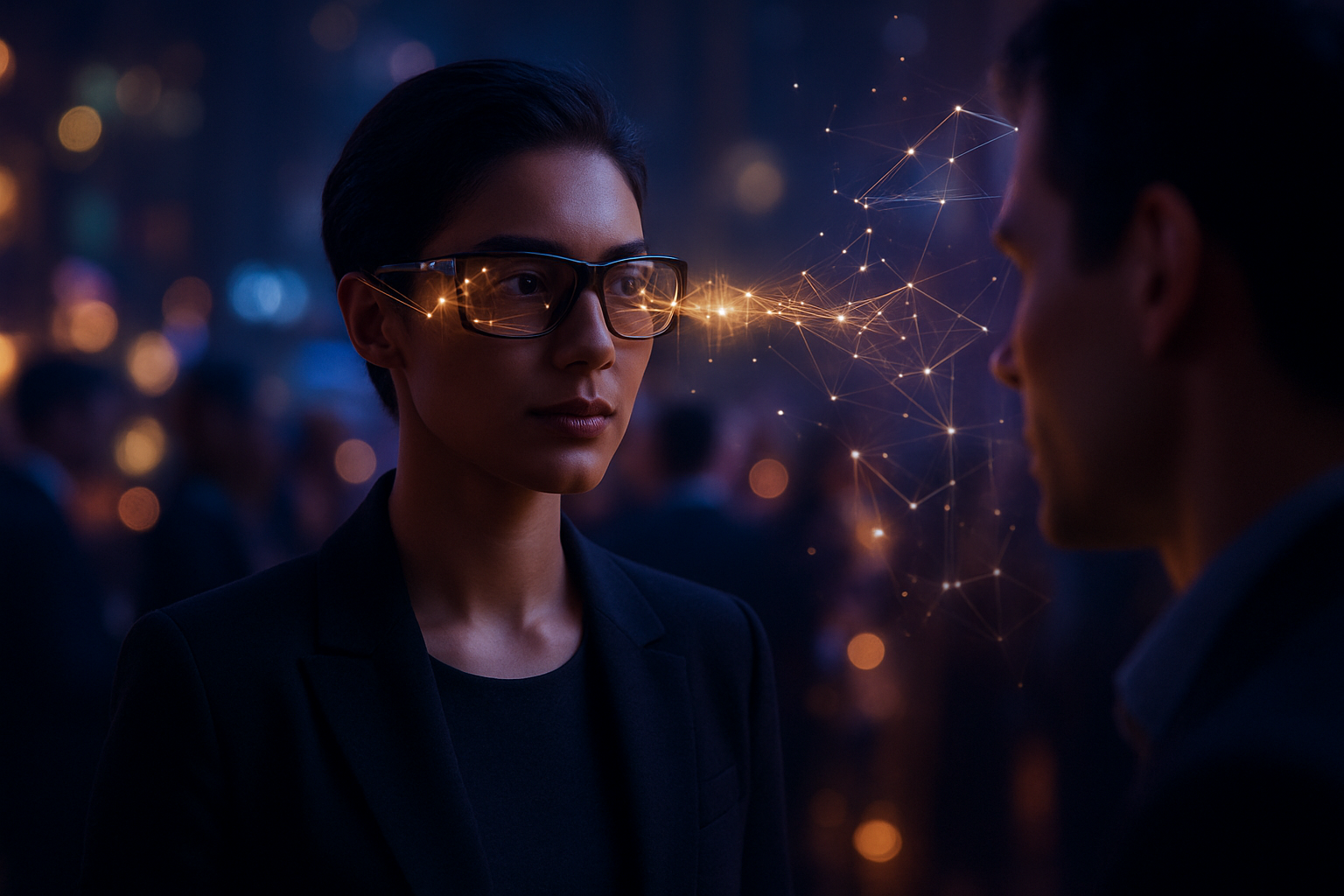
    As the calendar turns to early 2026, the artificial intelligence landscape is no longer dominated solely by chatbots and image generators. Instead, the focus has shifted to the "ambient AI" on our faces. Meta Platforms Inc. (NASDAQ: META) has taken a decisive lead in this transition with the full rollout of its "Conversation Focus" feature—a sophisticated AI-driven audio suite for its Ray-Ban Meta and Oakley Meta smart glasses. By solving the "cocktail party problem," this technology allows wearers to isolate and amplify a single human voice in a chaotic, noisy room, transforming a stylish accessory into a powerful tool for sensory enhancement.

    The immediate significance of this development cannot be overstated. For decades, isolating specific speech in high-decibel environments was a challenge reserved for high-end, medical-grade hearing aids costing thousands of dollars. With the v21 software update in late 2025 and the early 2026 expansion to its new "Display" models, Meta has effectively democratized "superhuman hearing." This move bridges the gap between consumer electronics and assistive health technology, making it socially acceptable—and even trendy—to wear augmented audio devices in public settings.

    The Science of Silence: Neural Beamforming and Llama Integration

    Technically, "Conversation Focus" represents a massive leap over previous directional audio attempts. At its core, the system utilizes a five-to-six microphone array embedded in the frames of the glasses. Traditional beamforming uses simple geometry to focus on sounds coming from a specific direction, but Meta’s approach utilizes "Neural Beamforming." This process uses on-device neural networks to dynamically estimate acoustic weights in real-time, distinguishing between a friend’s voice and the "diffuse noise" of a clattering restaurant or a passing train.

    Powered by the Qualcomm (NASDAQ: QCOM) Snapdragon AR1+ Gen 1 chipset, the glasses process this audio locally with a latency of less than 20 milliseconds. This local execution is critical for both privacy and the "naturalness" of the conversation. The AI creates a focused "audio bubble" with a radius of approximately 1.8 meters (6 feet). When the wearer gazes at a speaker, the AI identifies that speaker’s specific vocal timbre and applies an adaptive gain, lifting the voice by roughly 6 decibels relative to the background noise.

    The integration of Meta’s own Small Language Models (SLMs), specifically variants of Llama 3.2-1B and the newly released Llama 4, allows the glasses to move beyond simple filtering. The AI can now understand the intent of the user. If a wearer turns their head but remains engaged with the original speaker, the AI can maintain the "lock" on that voice using spatial audio anchors. Initial reactions from the AI research community have been overwhelmingly positive, with experts at AICerts and Counterpoint Research noting that Meta has successfully moved the needle from "gimmicky recording glasses" to "indispensable daily-use hardware."

    A Market in Flux: The Disruptive Power of 'Hearables'

    The strategic implications of Conversation Focus are rippling through the tech sector, placing Meta in direct competition with both Silicon Valley giants and traditional medical companies. By partnering with EssilorLuxottica (EPA: EL), Meta has secured a global retail footprint of over 18,000 stores, including LensCrafters and Sunglass Hut. This gives Meta a physical distribution advantage that Apple Inc. (NASDAQ: AAPL) and Alphabet Inc. (NASDAQ: GOOGL) are currently struggling to match in the eyewear space.

    For the traditional hearing aid industry, dominated by players like Sonova (SWX: SOON) and Demant, this is a "Blackberry moment." While these companies offer FDA-cleared medical devices, Meta’s $300–$400 price point and Ray-Ban styling are cannibalizing the "mild-to-moderate" hearing loss segment. Apple has responded by adding "Hearing Aid Mode" to its AirPods Pro, but Meta’s advantage lies in the form factor: it is socially awkward to wear earbuds during a dinner party, but perfectly normal to wear glasses. Meanwhile, Google has shifted to an ecosystem strategy, partnering with Warby Parker (NYSE: WRBY) to bring its Gemini AI to a variety of frames, though it currently lags behind Meta in audio isolation precision.

    The Social Contract: Privacy and the 'New Glasshole' Debate

    The broader significance of AI-powered hearing is as much social as it is technical. We are entering an era of "selective reality," where two people in the same room may no longer share the same auditory experience. While this enhances accessibility for those with sensory processing issues, it has sparked a fierce debate over "sensory solipsism"—the idea that users are becoming disconnected from their shared environment by filtering out everything but their immediate interests.

    Privacy concerns have also resurfaced with a vengeance. Unlike cameras, which usually have a physical or LED indicator, "Conversation Focus" involves always-on microphones that can process and potentially transcribe ambient conversations. In the European Union, the EU AI Act has placed such real-time biometric processing under high-risk classification, leading to regulatory friction. Critics argue that "superhuman hearing" is a polite term for "eavesdropping," raising questions about consent in public-private spaces like coffee shops or offices. The "New Glasshole" debate of 2026 isn't about people taking photos; it's about whether the person across from you is using AI to index every word you say.

    Looking Ahead: Holograms and Neural Interfaces

    The future of Meta’s eyewear roadmap is even more ambitious. The "Conversation Focus" feature is seen as a foundational step toward "Project Orion," Meta's upcoming holographic glasses. In the near term, experts predict that Llama 4 will enable "Intent-Based Hearing," where the glasses can automatically switch focus based on who the wearer is looking at or even when a specific keyword—like the user's name—is whispered in a crowd.

    We are also seeing the first clinical trials for "Cognitive Load Reduction." Research suggests that by using AI to reduce the effort required to listen in noisy rooms, these glasses could potentially slow the onset of cognitive decline in seniors. Furthermore, Meta is expected to integrate its EMG (Electromyography) wristband technology, allowing users to control their audio bubble with subtle finger pinches rather than voice commands, making the use of AI hearing even more discrete.

    A New Era of Augmented Humanity

    The launch of Conversation Focus marks a pivotal moment in AI history. It represents the point where AI transitioned from being a digital assistant on a screen to an active filter for our biological senses. By tackling the complex "cocktail party problem," Meta has moved beyond the realm of social media and into the realm of human enhancement.

    In the coming months, watch for the inevitable regulatory battles in the EU and North America regarding audio privacy and consent. Simultaneously, keep an eye on Apple’s rumored "Vision Glasses" and Google’s Gemini-integrated eyewear, as the battle for the "front-row seat to the human experience"—the face—intensifies. For now, Meta has the clear lead, proving that the future of AI isn't just about what we see, but how we hear the world around us.


    This content is intended for informational purposes only and represents analysis of current AI developments.

    TokenRing AI delivers enterprise-grade solutions for multi-agent AI workflow orchestration, AI-powered development tools, and seamless remote collaboration platforms.
    For more information, visit https://www.tokenring.ai/.
  • Meta Shatters Open-Weights Ceiling with Llama 4 ‘Behemoth’: A Two-Trillion Parameter Giant

    Meta Shatters Open-Weights Ceiling with Llama 4 ‘Behemoth’: A Two-Trillion Parameter Giant

    In a move that has sent shockwaves through the artificial intelligence industry, Meta Platforms, Inc. (NASDAQ: META) has officially entered the "trillion-parameter" era with the limited research rollout of its Llama 4 "Behemoth" model. This latest flagship represents the crown jewel of the Llama 4 family, a suite of models designed to challenge the dominance of proprietary AI giants. By moving to a sophisticated Mixture-of-Experts (MoE) architecture, Meta has not only surpassed the raw scale of its previous generations but has also redefined the performance expectations for open-weights AI.

    The release marks a pivotal moment in the ongoing battle between open and closed AI ecosystems. While the Llama 4 "Scout" and "Maverick" models have already begun powering a new wave of localized and enterprise-grade applications, the "Behemoth" model serves as a technological demonstration of Meta’s unmatched compute infrastructure. With the industry now pivoting toward agentic AI—models capable of reasoning through complex, multi-step tasks—Llama 4 Behemoth is positioned as the foundation for the next decade of intelligent automation, effectively narrowing the gap between public research and private labs.

    The Architecture of a Giant: 2 Trillion Parameters and MoE Innovation

    Technically, Llama 4 Behemoth is a radical departure from the dense transformer architectures utilized in the Llama 3 series. The model boasts an estimated 2 trillion total parameters, utilizing a Mixture-of-Experts (MoE) framework that activates approximately 288 billion parameters for any single token. This approach allows the model to maintain the reasoning depth of a trillion-parameter system while keeping inference costs and latency manageable for high-end research environments. Trained on a staggering 30 trillion tokens across a massive cluster of NVIDIA Corporation (NASDAQ: NVDA) H100 and B200 GPUs, Behemoth represents one of the most resource-intensive AI projects ever completed.

    Beyond sheer scale, the Llama 4 family introduces "early-fusion" native multimodality. Unlike previous versions that relied on separate "adapter" modules to process visual or auditory data, Llama 4 models are trained from the ground up to understand text, images, and video within a single unified latent space. This allows Behemoth to perform "human-like" interleaved reasoning, such as analyzing a video of a laboratory experiment and generating a corresponding research paper with complex mathematical formulas simultaneously. Initial reactions from the AI research community have been overwhelmingly positive, with experts noting that the model's performance on the GPQA Diamond benchmark—a gold standard for graduate-level scientific reasoning—rivals the most advanced proprietary models from OpenAI and Google.

    The efficiency gains are equally notable. By leveraging FP8 precision training and specialized kernels, Meta has optimized Behemoth to run on the latest Blackwell architecture from NVIDIA, maximizing throughput for large-scale deployments. This technical feat is supported by a 10-million-token context window in the smaller "Scout" variant, though Behemoth's specific context limits remain in a staggered rollout. The industry consensus is that Meta has successfully moved beyond being a "fast follower" and is now setting the architectural standard for how high-parameter MoE models should be structured for general-purpose intelligence.

    A Seismic Shift in the Competitive Landscape

    The arrival of Llama 4 Behemoth fundamentally alters the strategic calculus for AI labs and tech giants alike. For companies like Alphabet Inc. (NASDAQ: GOOGL) and Microsoft Corporation (NASDAQ: MSFT), which have invested billions in proprietary models like Gemini and GPT, Meta’s commitment to open-weights models creates a "pricing floor" that is rapidly rising. As Meta provides near-frontier capabilities for the cost of compute alone, the premium that proprietary providers can charge for generic reasoning tasks is expected to shrink. This disruption is particularly acute for startups, which can now build sophisticated, specialized agents on top of Llama 4 without being locked into a single provider’s API ecosystem.

    Furthermore, Meta's massive $72 billion infrastructure investment in 2025 has granted the company a unique strategic advantage: the ability to use Behemoth as a "teacher" model. By employing advanced distillation techniques, Meta is able to condense the "intelligence" of the 2-trillion-parameter Behemoth into the smaller Maverick and Scout models. This allows developers to access "frontier-lite" performance on much more affordable hardware. This "trickle-down" AI strategy ensures that even if Behemoth remains restricted to high-tier research, its impact will be felt across the entire Llama 4 ecosystem, solidifying Meta's role as the primary provider of the "Linux of AI."

    The market implications extend to hardware as well. The immense requirements to run a model of Behemoth's scale have accelerated a "hardware arms race" among enterprise data centers. As companies scramble to host Llama 4 instances locally to maintain data sovereignty, the demand for high-bandwidth memory and interconnects has reached record highs. Meta’s move effectively forces competitors to either open their own models to maintain community relevance or significantly outpace Meta in raw intelligence—a gap that is becoming increasingly difficult to maintain as open-weights models close in on the frontier.

    Redefining the Broader AI Landscape

    The release of Llama 4 Behemoth fits into a broader trend of "industrial-scale" AI where the barrier to entry is no longer just algorithmic ingenuity, but the sheer scale of compute and data. By successfully training a model on 30 trillion tokens, Meta has pushed the boundaries of the "scaling laws" that have governed AI development for the past five years. This milestone suggests that we have not yet reached a point of diminishing returns for model size, provided that the data quality and architectural efficiency (like MoE) continue to evolve.

    However, the release has also reignited the debate over the definition of "open source." While Meta continues to release the weights of the Llama family, the restrictive "Llama Community License" for large-scale commercial entities has drawn criticism from the Open Source Initiative. Critics argue that a model as powerful as Behemoth, which requires tens of millions of dollars in hardware to run, is "open" only in a theoretical sense for the average developer. This has led to concerns regarding the centralization of AI power, where only a handful of trillion-dollar corporations possess the infrastructure to actually utilize the world's most advanced "open" models.

    Despite these concerns, the significance of Llama 4 Behemoth as a milestone in AI history cannot be overstated. It represents the first time a model of this magnitude has been made available outside of the walled gardens of the big-three proprietary labs. This democratization of high-reasoning AI is expected to accelerate breakthroughs in fields ranging from drug discovery to climate modeling, as researchers worldwide can now inspect, tune, and iterate on a model that was previously accessible only behind a paywalled API.

    The Horizon: From Chatbots to Autonomous Agents

    Looking forward, the Llama 4 family—and Behemoth specifically—is designed to be the engine of the "Agentic Era." Experts predict that the next 12 to 18 months will see a shift away from static chatbots toward autonomous AI agents that can navigate software, manage schedules, and conduct long-term research projects with minimal human oversight. The native multimodality of Llama 4 is the key to this transition, as it allows agents to "see" and interact with computer interfaces just as a human would.

    Near-term developments will likely focus on the release of specialized "Reasoning" variants of Llama 4, designed to compete with the latest logical-inference models. There is also significant anticipation regarding the "distillation cycle," where the insights gained from Behemoth are baked into even smaller, 7-billion to 10-billion parameter models capable of running on high-end consumer laptops. The challenge for Meta and the community will be addressing the safety and alignment risks inherent in a model with Behemoth’s capabilities, as the "open" nature of the weights makes traditional guardrails more difficult to enforce globally.

    A New Era for Open-Weights Intelligence

    In summary, the release of Meta’s Llama 4 family and the debut of the Behemoth model represent a definitive shift in the AI power structure. Meta has effectively leveraged its massive compute advantage to provide the global community with a tool that rivals the best proprietary systems in the world. Key takeaways include the successful implementation of MoE at a 2-trillion parameter scale, the rise of native multimodality, and the increasing viability of open-weights models for enterprise and frontier research.

    As we move further into 2026, the industry will be watching closely to see how OpenAI and Google respond to this challenge. The "Behemoth" has set a new high-water mark for what an open-weights model can achieve, and its long-term impact on the speed of AI innovation is likely to be profound. For now, Meta has reclaimed the narrative, positioning itself not just as a social media giant, but as the primary architect of the world's most accessible high-intelligence infrastructure.


    This content is intended for informational purposes only and represents analysis of current AI developments.

    TokenRing AI delivers enterprise-grade solutions for multi-agent AI workflow orchestration, AI-powered development tools, and seamless remote collaboration platforms.
    For more information, visit https://www.tokenring.ai/.

  • Meta’s AI Evolution: Llama 3.3 Efficiency Records and the Dawn of Llama 4 Agentic Intelligence

    Meta’s AI Evolution: Llama 3.3 Efficiency Records and the Dawn of Llama 4 Agentic Intelligence

    As of January 15, 2026, the artificial intelligence landscape has reached a pivotal juncture where raw power is increasingly balanced by extreme efficiency. Meta Platforms Inc. (NASDAQ: META) has solidified its position at the center of this shift, with its Llama 3.3 model becoming the industry standard for cost-effective, high-performance deployment. By achieving "405B-class" performance within a compact 70-billion-parameter architecture, Meta has effectively democratized frontier-level AI, allowing enterprises to run state-of-the-art models on significantly reduced hardware footprints.

    However, the industry's eyes are already fixed on the horizon as early benchmarks for the highly anticipated Llama 4 series begin to surface. Developed under the newly formed Meta Superintelligence Labs (MSL), Llama 4 represents a fundamental departure from its predecessors, moving toward a natively multimodal, Mixture-of-Experts (MoE) architecture. This upcoming generation aims to move beyond simple chat interfaces toward "agentic AI"—systems capable of autonomous multi-step reasoning, tool usage, and real-world task execution, signaling Meta's most aggressive push yet to dominate the next phase of the AI revolution.

    The Technical Leap: Distillation, MoE, and the Behemoth Architecture

    The technical achievement of Llama 3.3 lies in its unprecedented efficiency. While the previous Llama 3.1 405B required massive clusters of NVIDIA (NASDAQ: NVDA) H100 GPUs to operate, Llama 3.3 70B delivers comparable—and in some cases superior—results on a single node. Benchmarks show Llama 3.3 scoring a 92.1 on IFEval for instruction following and 50.5 on GPQA Diamond for professional-grade reasoning, matching or beating the 405B behemoth. This was achieved through advanced distillation techniques, where the larger model served as a "teacher" to the 70B variant, condensing its vast knowledge into a more agile framework that is roughly 88% more cost-effective to deploy.

    Llama 4, however, introduces an entirely new architectural paradigm for Meta. Moving away from monolithic dense models, the Llama 4 suite—codenamed Maverick, Scout, and Behemoth—utilizes a Mixture-of-Experts (MoE) design. Llama 4 Maverick (400B), the anticipated workhorse of the series, utilizes only 17 billion active parameters across 128 experts, allowing for rapid inference without sacrificing the model's massive knowledge base. Early leaks suggest an ELO score of ~1417 on the LMSYS Chatbot Arena, which would place it comfortably ahead of established rivals like OpenAI’s GPT-4o and Alphabet Inc.’s (NASDAQ: GOOGL) Gemini 2.0 Flash.

    Perhaps the most startling technical specification is found in Llama 4 Scout (109B), which boasts a record-breaking 10-million-token context window. This capability allows the model to "read" and analyze the equivalent of dozens of long novels or massive codebases in a single prompt. Unlike previous iterations that relied on separate vision or audio adapters, the Llama 4 family is natively multimodal, trained from the ground up to process video, audio, and text simultaneously. This integration is essential for the "agentic" capabilities Meta is touting, as it allows the AI to perceive and interact with digital environments in a way that mimics human-like observation and action.

    Strategic Maneuvers: Meta's Pivot Toward Superintelligence

    The success of Llama 3.3 has forced a strategic re-evaluation among major AI labs. By providing a high-performance, open-weight model that can compete with the most advanced proprietary systems, Meta has effectively undercut the "API-only" business models of many startups. Companies such as Groq and specialized cloud providers have seen a surge in demand as developers flock to host Llama 3.3 on their own infrastructure, seeking to avoid the high costs and privacy concerns associated with closed-source ecosystems.

    Yet, as Meta prepares for the full rollout of Llama 4, there are signs of a strategic shift. Under the leadership of Alexandr Wang—the founder of Scale AI who recently took on a prominent role at Meta—the company has begun discussing Projects "Mango" and "Avocado." Rumors circulating in early 2026 suggest that while the Llama 4 Maverick and Scout models will remain open-weight, the flagship "Behemoth" (a 2-trillion-plus parameter model) and the upcoming Avocado model may be semi-proprietary or closed-source. This represents a potential pivot from Mark Zuckerberg’s long-standing "fully open" stance, as the company grapples with the immense compute costs and safety implications of true superintelligence.

    Competitive pressure remains high as Microsoft Corp. (NASDAQ: MSFT) and Amazon.com Inc. (NASDAQ: AMZN) continue to invest heavily in their own model lineages through partnerships with OpenAI and Anthropic. Meta’s response has been to double down on infrastructure. The company is currently constructing a "tens of gigawatts" AI data center in Louisiana, a $50 billion investment designed specifically to train Llama 5 and future iterations of the Avocado/Mango models. This massive commitment to physical infrastructure underscores Meta's belief that the path to AI dominance is paved with both architectural ingenuity and sheer computational scale.

    The Wider Significance: Agentic AI and the Infrastructure Race

    The transition from Llama 3.3 to Llama 4 is more than just a performance boost; it marks the transition of the AI landscape into the "Agentic Era." For the past three years, the industry has focused on generative capabilities—the ability to write text or create images. The benchmarks surfacing for Llama 4 suggest a focus on "agency"—the ability for an AI to actually do things. This includes autonomously navigating web browsers, managing complex software workflows, and conducting multi-step research without human intervention. This shift has profound implications for the labor market and the nature of digital interaction, moving AI from a "chat" experience to a "do" experience.

    However, this rapid advancement is not without its controversies. Reports from former Meta scientists, including voices like Yann LeCun, have surfaced in early 2026 suggesting that Meta may have "fudged" initial Llama 4 benchmarks by cherry-picking the best-performing variants for specific tests rather than providing a holistic view of the model's capabilities. These allegations highlight the intense pressure on AI labs to maintain an "alpha" status in a market where a few points on a benchmark can result in billions of dollars in market valuation.

    Furthermore, the environmental and economic impact of the massive infrastructure required for models like Llama 4 Behemoth cannot be ignored. Meta’s $50 billion Louisiana data center project has sparked a renewed debate over the energy consumption of AI. As models grow more capable, the "efficiency" showcased in Llama 3.3 becomes not just a feature, but a necessity for the long-term sustainability of the industry. The industry is watching closely to see if Llama 4’s MoE architecture can truly deliver on the promise of scaling intelligence without a corresponding exponential increase in energy demand.

    Looking Ahead: The Road to Llama 5 and Beyond

    The near-term roadmap for Meta involves the release of "reasoning-heavy" point updates to the Llama 4 series, similar to the chain-of-thought processing seen in OpenAI’s "o" series models. These updates are expected to focus on advanced mathematics, complex coding tasks, and scientific discovery. By the second quarter of 2026, the focus is expected to shift entirely toward "Project Avocado," which many insiders believe will be the model that finally bridges the gap between Large Language Models and Artificial General Intelligence (AGI).

    Applications for these upcoming models are already appearing on the horizon. From fully autonomous AI software engineers to real-time, multimodal personal assistants that can "see" through smart glasses (like Meta's Ray-Ban collection), the integration of Llama 4 into the physical and digital world will be seamless. The challenge for Meta will be navigating the regulatory hurdles that come with "agentic" systems, particularly regarding safety, accountability, and the potential for autonomous AI to be misused.

    Final Thoughts: A Paradigm Shift in Progress

    Meta’s dual-track strategy—maximizing efficiency with Llama 3.3 while pushing the boundaries of scale with Llama 4—has successfully kept the company at the forefront of the AI arms race. The key takeaway for the start of 2026 is that efficiency is no longer the enemy of power; rather, it is the vehicle through which power becomes practical. Llama 3.3 has proven that you don't need the largest model to get the best results, while Llama 4 is proving that the future of AI lies in "active" agents rather than "passive" chatbots.

    As we move further into 2026, the significance of Meta’s "Superintelligence Labs" will become clearer. Whether the company maintains its commitment to open-source or pivots toward a more proprietary model for its most advanced "Behemoth" systems will likely define the next decade of AI development. For now, the tech world remains on high alert, watching for the official release of the first Llama 4 Maverick weights and the first real-world demonstrations of Meta’s agentic future.


    This content is intended for informational purposes only and represents analysis of current AI developments.

    TokenRing AI delivers enterprise-grade solutions for multi-agent AI workflow orchestration, AI-powered development tools, and seamless remote collaboration platforms.
    For more information, visit https://www.tokenring.ai/.

  • The Sparse Revolution: How Mixture of Experts (MoE) Became the Unchallenged Standard for Frontier AI

    The Sparse Revolution: How Mixture of Experts (MoE) Became the Unchallenged Standard for Frontier AI

    As of early 2026, the architectural debate that once divided the artificial intelligence community has been decisively settled. The "Mixture of Experts" (MoE) design, once an experimental approach to scaling, has now become the foundational blueprint for every major frontier model, including OpenAI’s GPT-5, Meta’s Llama 4, and Google’s Gemini 3. By replacing massive, monolithic "dense" networks with a decentralized system of specialized sub-modules, AI labs have finally broken through the "Energy Wall" that threatened to stall the industry just two years ago.

    This shift represents more than just a technical tweak; it is a fundamental reimagining of how machines process information. In the current landscape, the goal is no longer to build the largest model possible, but the most efficient one. By activating only a fraction of their total parameters for any given task, these sparse models provide the reasoning depth of a multi-trillion parameter system with the speed and cost-profile of a much smaller model. This evolution has transformed AI from a resource-heavy luxury into a scalable utility capable of powering the global agentic economy.

    The Mechanics of Intelligence: Gating, Experts, and Sparse Activation

    At the heart of the MoE dominance is a departure from the "dense" architecture used in models like the original GPT-3. In a dense model, every single parameter—the mathematical weights of the neural network—is activated to process every single word or "token." In contrast, MoE models like Mixtral 8x22B and the newly released Llama 4 Scout utilize a "sparse" framework. The model is divided into dozens or even hundreds of "experts"—specialized Feed-Forward Networks (FFNs) that have been trained to excel in specific domains such as Python coding, legal reasoning, or creative writing.

    The "magic" happens through a component known as the Gating Network, or the Router. When a user submits a prompt, this router instantaneously evaluates the input and determines which experts are best equipped to handle it. In 2026’s top-tier models, "Top-K" routing is the gold standard, typically selecting the best two experts from a pool of up to 256. This means that while a model like DeepSeek-V4 may boast a staggering 1.5 trillion total parameters, it only "wakes up" about 30 billion parameters to answer a specific question. This sparse activation allows for sub-linear scaling, where a model’s knowledge base can grow exponentially while its computational cost remains relatively flat.

    The technical community has also embraced "Shared Experts," a refinement that ensures model stability. Pioneers like DeepSeek and Mistral AI introduced layers that are always active to handle basic grammar and logic, preventing a phenomenon known as "routing collapse" where certain experts are never utilized. This hybrid approach has allowed MoE models to surpass the performance of the massive dense models of 2024, proving that specialized, modular intelligence is superior to a "jack-of-all-trades" monolithic structure. Initial reactions from researchers at institutions like Stanford and MIT suggest that MoE has effectively extended the life of Moore’s Law for AI, allowing software efficiency to outpace hardware limitations.

    The Business of Efficiency: Why Big Tech is Betting Billions on Sparsity

    The transition to MoE has fundamentally altered the strategic playbooks of the world’s largest technology companies. For Microsoft (NASDAQ: MSFT), the primary backer of OpenAI, MoE is the key to enterprise profitability. By deploying GPT-5 as a "System-Level MoE"—which routes simple tasks to a fast model and complex reasoning to a "Thinking" expert—Azure can serve millions of users simultaneously without the catastrophic energy costs that a dense model of similar capability would incur. This efficiency is the cornerstone of Microsoft’s "Planet-Scale" AI initiative, aimed at making high-level reasoning as cheap as a standard web search.

    Meta (NASDAQ: META) has used MoE to maintain its dominance in the open-source ecosystem. Mark Zuckerberg’s strategy of "commoditizing the underlying model" relies on the Llama 4 series, which uses a highly efficient MoE architecture to allow "frontier-level" intelligence to run on localized hardware. By reducing the compute requirements for its largest models, Meta has made it possible for startups to fine-tune 400B-parameter models on a single server rack. This has created a massive competitive moat for Meta, as their open MoE architecture becomes the default "operating system" for the next generation of AI startups.

    Meanwhile, Alphabet (NASDAQ: GOOGL) has integrated MoE deeply into its hardware-software vertical. Google’s Gemini 3 series utilizes a "Hybrid Latent MoE" specifically optimized for their in-house TPU v6 chips. These chips are designed to handle the high-speed "expert shuffling" required when tokens are passed between different parts of the processor. This vertical integration gives Google a significant margin advantage over competitors who rely solely on third-party hardware. The competitive implication is clear: in 2026, the winners are not those with the most data, but those who can route that data through the most efficient expert architecture.

    The End of the Dense Era and the Geopolitical "Architectural Voodoo"

    The rise of MoE marks a significant milestone in the broader AI landscape, signaling the end of the "Brute Force" era of scaling. For years, the industry followed "Scaling Laws" which suggested that simply adding more parameters and more data would lead to better models. However, the sheer energy demands of training 10-trillion parameter dense models became a physical impossibility. MoE has provided a "third way," allowing for continued intelligence gains without requiring a dedicated nuclear power plant for every data center. This shift mirrors previous breakthroughs like the move from CPUs to GPUs, where a change in architecture provided a 10x leap in capability that hardware alone could not deliver.

    However, this "architectural voodoo" has also created new geopolitical and safety concerns. In 2025, Chinese firms like DeepSeek demonstrated that they could match the performance of Western frontier models by using hyper-efficient MoE designs, even while operating under strict GPU export bans. This has led to intense debate in Washington regarding the effectiveness of hardware-centric sanctions. If a company can use MoE to get "GPT-5 performance" out of "H800-level hardware," the traditional metrics of AI power—FLOPs and chip counts—become less reliable.

    Furthermore, the complexity of MoE brings new challenges in model reliability. Some experts have pointed to an "AI Trust Paradox," where a model might be brilliant at math in one sentence but fail at basic logic in the next because the router switched to a less-capable expert mid-conversation. This "intent drift" is a primary focus for safety researchers in 2026, as the industry moves toward autonomous agents that must maintain a consistent "persona" and logic chain over long periods of time.

    The Future: Hierarchical Experts and the Edge

    Looking ahead to the remainder of 2026 and 2027, the next frontier for MoE is "Hierarchical Mixture of Experts" (H-MoE). In this setup, experts themselves are composed of smaller sub-experts, allowing for even more granular routing. This is expected to enable "Ultra-Specialized" models that can act as world-class experts in niche fields like quantum chemistry or hyper-local tax law, all within a single general-purpose model. We are also seeing the first wave of "Mobile MoE," where sparse models are being shrunk to run on consumer devices, allowing smartphones to switch between "Camera Experts" and "Translation Experts" locally.

    The biggest challenge on the horizon remains the "Routing Problem." As models grow to include thousands of experts, the gating network itself becomes a bottleneck. Researchers are currently experimenting with "Learned Routing" that uses reinforcement learning to teach the model how to best allocate its own internal resources. Experts predict that the next major breakthrough will be "Dynamic MoE," where the model can actually "spawn" or "merge" experts in real-time based on the data it encounters during inference, effectively allowing the AI to evolve its own architecture on the fly.

    A New Chapter in Artificial Intelligence

    The dominance of Mixture of Experts architecture is more than a technical victory; it is the realization of a more modular, efficient, and scalable form of artificial intelligence. By moving away from the "monolith" and toward the "specialist," the industry has found a way to continue the rapid pace of advancement that defined the early 2020s. The key takeaways are clear: parameter count is no longer the sole metric of power, inference economics now dictate market winners, and architectural ingenuity has become the ultimate competitive advantage.

    As we look toward the future, the significance of this shift cannot be overstated. MoE has democratized high-performance AI, making it possible for a wider range of companies and researchers to participate in the frontier of the field. In the coming weeks and months, keep a close eye on the release of "Agentic MoE" frameworks, which will allow these specialized experts to not just think, but act autonomously across the web. The era of the dense model is over; the era of the expert has only just begun.


    This content is intended for informational purposes only and represents analysis of current AI developments.

    TokenRing AI delivers enterprise-grade solutions for multi-agent AI workflow orchestration, AI-powered development tools, and seamless remote collaboration platforms.
    For more information, visit https://www.tokenring.ai/.