Tag: MacBook Pro

  • Apple’s MacBook Pro Redesign with Touch and Hole-Punch Screen Signals Major AI Chip Revolution

    Apple’s MacBook Pro Redesign with Touch and Hole-Punch Screen Signals Major AI Chip Revolution

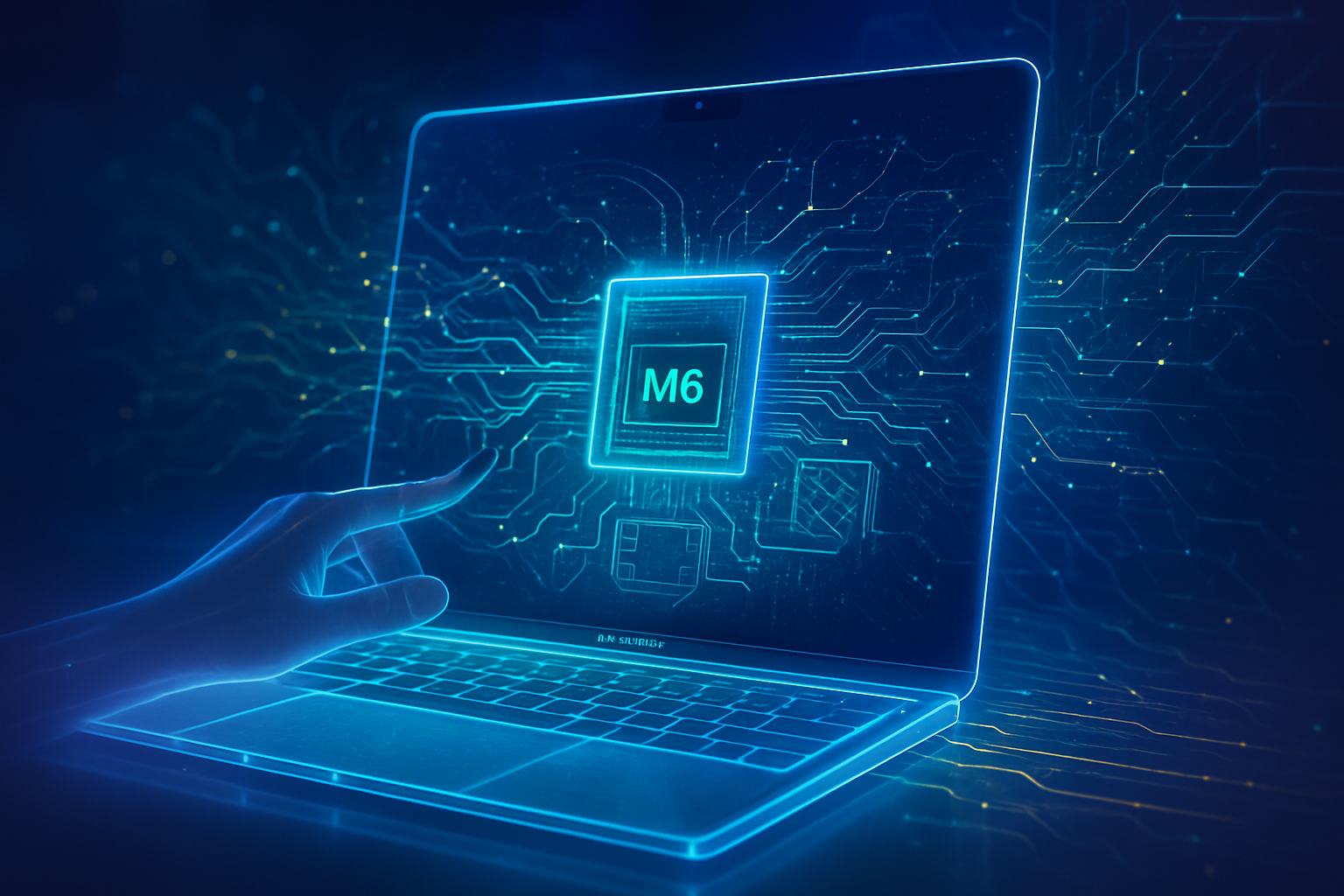
    Apple (NASDAQ: AAPL) is reportedly gearing up for a monumental shift in its product strategy, with rumors pointing to a high-end MacBook Pro featuring a touch-enabled OLED display and a sleek hole-punch camera cutout. Expected to launch in late 2026 or early 2027, this development marks a significant departure from Apple's long-standing philosophy of keeping macOS and iOS experiences distinct. Beyond the immediate user experience enhancements, this strategic pivot carries profound implications for the AI chip market, demanding unprecedented on-device AI processing capabilities from Apple's custom silicon to power a new era of interactive and intelligent computing.

    This move is not merely an aesthetic or ergonomic upgrade; it represents Apple's definitive entry into the "AI PC" race, where on-device artificial intelligence is paramount for seamless user interaction, enhanced security, and optimized performance. The integration of a touch interface on a Mac, combined with advanced display technology, will necessitate a substantial leap in the power and efficiency of the Neural Engine within Apple's upcoming M6 chips, setting a new benchmark for what users can expect from their high-performance laptops.

    Technical Evolution: A Deeper Dive into Apple's Next-Gen MacBook Pro

    The rumored MacBook Pro redesign is poised to introduce a suite of cutting-edge technologies that will redefine the laptop experience. Central to this overhaul is the adoption of OLED displays, replacing the current mini-LED technology. These "tandem OLED" panels, likely mirroring the advancements seen in the 2024 iPad Pro, promise superior contrast ratios with true blacks, more vibrant colors, potentially higher brightness levels, and improved power efficiency – crucial for extending battery life in a touch-enabled device.

    The most significant technical departure is the touch screen integration. Historically, Apple co-founder Steve Jobs expressed strong reservations about vertical touchscreens on laptops. However, evolving user expectations, particularly from younger generations accustomed to touch interfaces, have evidently prompted this strategic reconsideration. The touch functionality will complement the existing trackpad and keyboard, offering an additional input method. To mitigate common issues like display wobbling, Apple is reportedly developing "reinforced hinge and screen hardware," alongside utilizing "on-cell touch technology" for a responsive and integrated touch experience. Furthermore, the controversial notch, introduced in 2021, is expected to be replaced by a more streamlined hole-punch camera cutout. Speculation suggests this hole-punch could evolve to incorporate features akin to the iPhone's Dynamic Island, dynamically displaying alerts or background activities, thereby offering a more immersive display and reclaiming valuable menu bar space.

    Beyond the display, the new MacBook Pros are rumored to undergo their first major chassis redesign since 2021, featuring a thinner and lighter build. At the heart of these machines will be Apple's M6 family of chips. These chips are anticipated to be among the first from Apple to leverage TSMC's cutting-edge 2nm manufacturing process, promising substantial advancements in raw speed, computational power, and energy efficiency. This follows the recent release of the M5 chip in October 2025, which already boosted AI performance with a "Neural Accelerator in each GPU core." The M6 is expected to further enhance these dedicated AI components, which are vital for offloading complex machine learning tasks. Initial reactions from the tech community are a mix of excitement for the potential of a touch-enabled Mac and cautious optimism regarding Apple's implementation, given its previous stance.

    Reshaping the AI Chip Landscape and Competitive Dynamics

    Apple's (NASDAQ: AAPL) foray into a touch-enabled MacBook Pro with advanced display technology carries profound implications for the AI chip market and the competitive landscape. The enhanced interactivity of a touchscreen, especially if coupled with a Dynamic Island-like functionality, will necessitate a dramatic increase in on-device AI processing capabilities. This directly translates to an even more powerful and efficient Neural Engine (NPU) within the M6 chip. These dedicated AI components are critical for processing advanced touch and gesture inputs, enabling intelligent handwriting recognition, real-time object manipulation, and more intuitive creative tools directly on the screen, all without relying on cloud processing.

    This strategic move positions Apple to intensify its competition with other major players in the "AI PC" space. Companies like Intel (NASDAQ: INTC), AMD (NASDAQ: AMD), and Qualcomm (NASDAQ: QCOM) are already heavily investing in integrating dedicated NPUs and AI-centric features into their latest processors. Apple's M6 chips, built on a 2nm process and featuring significantly upgraded Neural Engines, will set a formidable benchmark for on-device AI performance, potentially disrupting existing product lines and forcing competitors to accelerate their own AI hardware roadmaps. The ability to run larger and more complex AI models locally on the device, with superior power efficiency, will give Apple a significant strategic advantage in the burgeoning market for AI-powered productivity and creative applications.

    Furthermore, this development could spur innovation among AI software developers and startups. A touch-enabled Mac with robust on-device AI capabilities opens up new avenues for applications that leverage intelligent gesture recognition, real-time machine learning inference, and personalized user experiences. Companies specializing in AI-driven design tools, educational software, and accessibility features stand to benefit, as the new MacBook Pro provides a powerful and intuitive platform for their innovations. The enhanced security features, potentially including AI-enhanced facial recognition and real-time threat detection, will also solidify Apple's market positioning as a leader in secure and intelligent computing.

    Wider Significance: Blurring Lines and Pushing Boundaries

    This strategic evolution of the MacBook Pro fits squarely within the broader AI landscape, signaling a clear trend towards ubiquitous on-device AI. As users demand more immediate, private, and personalized experiences, the reliance on cloud-based AI is increasingly being supplemented by powerful local processing. Apple's move validates this shift, demonstrating a commitment to bringing sophisticated AI capabilities directly to the user's fingertips, literally. The integration of touch on a Mac, long resisted, indicates Apple's recognition that the lines between traditional computing and mobile interaction are blurring, driven by the intuitive nature of AI-powered interfaces.

    The impacts of this development are far-reaching. For users, it promises a more fluid and intuitive interaction with their professional tools, potentially unlocking new levels of creativity and productivity through direct manipulation and intelligent assistance. For developers, it opens up a new frontier for creating AI-powered applications that leverage the unique combination of touch input, powerful M6 silicon, and the macOS ecosystem. However, potential concerns include the anticipated higher pricing due to advanced components like OLED panels and touch integration, as well as the challenge of maintaining Apple's renowned battery life with these more demanding features. AI will play a critical role in dynamic power allocation and system optimization to address these challenges.

    Comparing this to previous AI milestones, Apple's integration of the Neural Engine in its A-series and M-series chips has consistently pushed the boundaries of on-device AI, enabling features like Face ID, computational photography, and real-time voice processing. This new MacBook Pro, with its touch interface and advanced AI capabilities, could be seen as a similar landmark, comparable to the original iPhone's impact on mobile computing, by fundamentally altering how users interact with their personal computers and how AI is woven into the fabric of the operating system. It represents a maturation of the "AI PC" concept, moving beyond mere buzzwords to tangible, user-facing innovation.

    The Horizon: Future Developments and Expert Predictions

    Looking ahead, the introduction of a touch-enabled MacBook Pro with enhanced AI capabilities is merely the first step in a longer evolutionary journey for Apple's computing lineup. Near-term developments will likely focus on refining the software experience to fully leverage the touch interface and the advanced Neural Engine. We can expect significant updates to macOS that integrate touch-optimized gestures, new multi-touch applications, and deeper AI-powered functionalities across native apps. The "hole-punch" display could evolve further, potentially integrating Face ID for enhanced security and more sophisticated augmented reality applications directly on the laptop screen.

    In the long term, the potential applications and use cases are vast. We could see advanced gesture control that goes beyond simple taps and swipes, enabling more nuanced interactions for creative professionals. AI-powered real-time translation, intelligent content creation tools, and hyper-personalized user interfaces that adapt to individual work styles are all on the horizon. The M6 chip's 2nm process and powerful NPU will be foundational for running increasingly complex large language models (LLMs) and diffusion models locally, enabling offline AI capabilities that are both fast and private. Challenges will undoubtedly include optimizing power efficiency for sustained performance with the OLED touch screen and continuously addressing software integration to ensure a seamless and intuitive user experience that avoids fragmentation between touch and non-touch Macs.

    Experts predict that this move will solidify Apple's position as a leader in integrated hardware and AI. Analysts foresee a future where the distinction between Mac and iPad continues to blur, potentially leading to more convertible or modular designs that offer the best of both worlds. The success of this new MacBook Pro will largely depend on Apple's ability to deliver a cohesive software experience that justifies the touch interface and fully harnesses the power of its custom AI silicon. What to watch for in the coming weeks and months, leading up to the expected late 2026/early 2027 launch, will be further leaks and official announcements detailing the specific AI features and software optimizations that will accompany this groundbreaking hardware.

    Comprehensive Wrap-up: A Defining Moment for the AI PC

    Apple's (NASDAQ: AAPL) rumored high-end MacBook Pro with a touch screen and hole-punch display represents a defining moment in the evolution of personal computing and the burgeoning "AI PC" era. The key takeaways are clear: Apple is making a significant strategic pivot towards integrating touch into its Mac lineup, driven by evolving user expectations and the imperative to deliver advanced on-device AI capabilities. This shift will be powered by the next-generation M6 chips, leveraging a 2nm manufacturing process and a substantially enhanced Neural Engine, designed to handle complex AI tasks for intuitive user interaction, advanced security, and optimized performance.

    This development's significance in AI history cannot be overstated. It marks a decisive move by one of the world's most influential technology companies to fully embrace the potential of integrated hardware and AI at the core of its professional computing platform. The long-term impact will likely reshape user expectations for laptops, intensify competition in the AI chip market, and catalyze innovation in AI-powered software. It underscores a future where personal computers are not just tools, but intelligent companions capable of anticipating needs and enhancing human creativity.

    As we look towards late 2026 and early 2027, the tech world will be closely watching how Apple executes this vision. The success of this new MacBook Pro will hinge on its ability to deliver a truly seamless and intuitive experience that leverages the power of its custom AI silicon while maintaining the Mac's core identity. This is more than just a new laptop; it's a statement about the future of computing, where touch and AI are no longer optional but fundamental to the user experience.


    This content is intended for informational purposes only and represents analysis of current AI developments.

    TokenRing AI delivers enterprise-grade solutions for multi-agent AI workflow orchestration, AI-powered development tools, and seamless remote collaboration platforms.
    For more information, visit https://www.tokenring.ai/.

  • Apple’s M5 Chip Ushers in a New Era for On-Device AI on MacBooks and iPad Pros

    Apple’s M5 Chip Ushers in a New Era for On-Device AI on MacBooks and iPad Pros

    Cupertino, CA – October 15, 2025 – In a landmark announcement poised to redefine the landscape of personal computing and artificial intelligence, Apple (NASDAQ: AAPL) today unveiled its latest generation of MacBook Pro and iPad Pro models, powered by the groundbreaking M5 chip. This new silicon, featuring unprecedented advancements in AI processing, marks a significant leap forward for on-device AI capabilities, promising users faster, more private, and more powerful intelligent experiences directly from their devices. The immediate significance of the M5 lies in its ability to supercharge Apple Intelligence features and enable complex AI workflows locally, moving the frontier of AI from the cloud firmly onto consumer hardware.

    The M5 Chip: A Technical Deep Dive into Apple's AI Powerhouse

    The M5 chip, meticulously engineered on a third-generation 3-nanometer process, represents a monumental stride in processor design, particularly concerning artificial intelligence. At its core, the M5 boasts a redesigned 10-core GPU architecture, now uniquely integrating a dedicated Neural Accelerator within each core. This innovative integration dramatically accelerates GPU-based AI workloads, achieving over four times the peak GPU compute performance for AI compared to its predecessor, the M4 chip, and an astonishing six-fold increase over the M1 chip. Complementing this is an enhanced 16-core Neural Engine, Apple's specialized hardware for AI acceleration, which significantly boosts performance across a spectrum of AI tasks. While the M4's Neural Engine delivered 38 trillion operations per second (TOPS), the M5's improved engine pushes these capabilities even further, enabling more complex and demanding AI models to run with unprecedented fluidity.

    Further enhancing its AI prowess, the M5 chip features a substantial increase in unified memory bandwidth, now reaching 153GB/s—a nearly 30 percent increase over the M4 chip's 120GB/s. This elevated bandwidth is critical for efficiently handling larger and more intricate AI models directly on the device, with the base M5 chip supporting up to 32GB of unified memory. Beyond these AI-specific enhancements, the M5 integrates an updated 10-core CPU, delivering up to 15% faster multithreaded performance than the M4, and a 10-core GPU that provides up to a 45% increase in graphics performance. These general performance improvements synergistically contribute to more efficient and responsive AI processing, making the M5 a true all-rounder for demanding computational tasks.

    The technical specifications of the M5 chip diverge significantly from previous generations by embedding AI acceleration more deeply and broadly across the silicon. Unlike earlier approaches that might have relied more heavily on general-purpose cores or a singular Neural Engine, the M5's integration of Neural Accelerators within each GPU core signifies a paradigm shift towards ubiquitous AI processing. This architectural choice not only boosts raw AI performance but also allows for greater parallelization of AI tasks, making applications like diffusion models in Draw Things or large language models in webAI run with remarkable speed. Initial reactions from the AI research community highlight the M5 as a pivotal moment, demonstrating Apple's commitment to pushing the boundaries of what's possible with on-device AI, particularly concerning privacy-preserving local execution of advanced models.

    Reshaping the AI Industry: Implications for Companies and Competitive Dynamics

    The introduction of Apple's M5 chip is set to send ripples across the AI industry, fundamentally altering the competitive landscape for tech giants, AI labs, and startups alike. Companies heavily invested in on-device AI, particularly those developing applications for image generation, natural language processing, and advanced video analytics, stand to benefit immensely. Developers utilizing Apple's Foundation Models framework will find a significantly more powerful platform for their innovations, enabling them to deploy more sophisticated and responsive AI features directly to users. This development empowers a new generation of AI-driven applications that prioritize privacy and real-time performance, potentially fostering a boom in creative and productivity tools.

    The competitive implications for major AI labs and tech companies are profound. While cloud-based AI will continue to thrive for massive training workloads, the M5's capabilities challenge the necessity of constant cloud reliance for inference and fine-tuning on consumer devices. Companies like Google (NASDAQ: GOOGL), Microsoft (NASDAQ: MSFT), and Amazon (NASDAQ: AMZN), which have heavily invested in cloud AI infrastructure, may need to recalibrate their strategies to address the growing demand for powerful local AI processing. Apple's emphasis on on-device AI, coupled with its robust ecosystem, could attract developers who prioritize data privacy and low-latency performance, potentially siphoning talent and innovation away from purely cloud-centric platforms.

    Furthermore, the M5 could disrupt existing products and services that currently rely on cloud processing for relatively simple AI tasks. For instance, enhanced on-device capabilities for photo editing, video enhancement, and real-time transcription could reduce subscription costs for cloud-based services or push them to offer more advanced, computationally intensive features. Apple's strategic advantage lies in its vertical integration, allowing it to optimize hardware and software in unison to achieve unparalleled AI performance and efficiency. This market positioning strengthens Apple's hold in the premium device segment and establishes it as a formidable player in the burgeoning AI hardware market, potentially spurring other chip manufacturers to accelerate their own on-device AI initiatives.

    The Broader AI Landscape: A Shift Towards Decentralized Intelligence

    The M5 chip's debut marks a significant moment in the broader AI landscape, signaling a discernible trend towards decentralized intelligence. For years, the narrative around advanced AI has been dominated by massive cloud data centers and their immense computational power. While these will remain crucial for training foundation models, the M5 demonstrates a powerful shift in where AI inference and application can occur. This move aligns with a growing societal demand for enhanced data privacy and security, as processing tasks are kept local to the user's device, mitigating risks associated with transmitting sensitive information to external servers.

    The impacts of this shift are multifaceted. On one hand, it democratizes access to powerful AI, making sophisticated tools available to a wider audience without the need for constant internet connectivity or concerns about data sovereignty. On the other hand, it raises new considerations regarding power consumption, thermal management, and the overall carbon footprint of increasingly powerful consumer devices, even with Apple's efficiency claims. Compared to previous AI milestones, such as the initial breakthroughs in deep learning or the widespread adoption of cloud AI services, the M5 represents a milestone in accessibility and privacy for advanced AI. It's not just about what AI can do, but where and how it can do it, prioritizing the user's direct control and data security.

    This development fits perfectly into the ongoing evolution of AI, where the focus is broadening from pure computational power to intelligent integration into daily life. The M5 chip allows for seamless, real-time AI experiences that feel less like interacting with a remote server and more like an inherent capability of the device itself. This could accelerate the development of personalized AI agents, more intuitive user interfaces, and entirely new categories of applications that leverage the full potential of local intelligence. While concerns about the ethical implications of powerful AI persist, Apple's on-device approach offers a partial answer by giving users greater control over their data and AI interactions.

    The Horizon of AI: Future Developments and Expert Predictions

    The launch of the M5 chip is not merely an end in itself but a significant waypoint on Apple's long-term AI roadmap. In the near term, we can expect to see a rapid proliferation of AI-powered applications optimized specifically for the M5's architecture. Developers will likely leverage the enhanced Neural Engine and GPU accelerators to bring more sophisticated features to existing apps and create entirely new categories of software that were previously constrained by hardware limitations. This includes more advanced real-time video processing, hyper-realistic augmented reality experiences, and highly personalized on-device language models that can adapt to individual user preferences with unprecedented accuracy.

    Longer term, the M5's foundation sets the stage for even more ambitious AI integrations. Experts predict that future iterations of Apple silicon will continue to push the boundaries of on-device AI, potentially leading to truly autonomous device-level intelligence that can anticipate user needs, manage complex workflows proactively, and interact with the physical world through advanced computer vision and robotics. Potential applications span from intelligent personal assistants that operate entirely offline to sophisticated health monitoring systems capable of real-time diagnostics and personalized interventions.

    However, challenges remain. Continued advancements will demand even greater power efficiency to maintain battery life, especially as AI models grow in complexity. The balance between raw computational power and thermal management will be a constant engineering hurdle. Furthermore, ensuring the robustness and ethical alignment of increasingly autonomous on-device AI will be paramount. Experts predict that the next wave of innovation will not only be in raw performance but also in the development of more efficient AI algorithms and specialized hardware-software co-design that can unlock new levels of intelligence while adhering to strict privacy and security standards. The M5 is a clear signal that the future of AI is personal, powerful, and profoundly integrated into our devices.

    A Defining Moment for On-Device Intelligence

    Apple's M5 chip represents a defining moment in the evolution of artificial intelligence, particularly for its integration into consumer devices. The key takeaways from this launch are clear: Apple is doubling down on on-device AI, prioritizing privacy, speed, and efficiency through a meticulously engineered silicon architecture. The M5's next-generation GPU with integrated Neural Accelerators, enhanced 16-core Neural Engine, and significantly increased unified memory bandwidth collectively deliver a powerful platform for a new era of intelligent applications. This development not only supercharges Apple Intelligence features but also empowers developers to deploy larger, more complex AI models directly on user devices.

    The significance of the M5 in AI history cannot be overstated. It marks a pivotal shift from a predominantly cloud-centric AI paradigm to one where powerful, privacy-preserving intelligence resides at the edge. This move has profound implications for the entire tech industry, fostering innovation in on-device AI applications, challenging existing competitive dynamics, and aligning with a broader societal demand for data security. The long-term impact will likely see a proliferation of highly personalized, responsive, and secure AI experiences that seamlessly integrate into our daily lives, transforming how we interact with technology.

    In the coming weeks and months, the tech world will be watching closely to see how developers leverage the M5's capabilities. Expect a surge in new AI-powered applications across the MacBook and iPad Pro ecosystems, pushing the boundaries of creativity, productivity, and personal assistance. This launch is not just about a new chip; it's about Apple's vision for the future of AI, a future where intelligence is not just powerful, but also personal and private.


    This content is intended for informational purposes only and represents analysis of current AI developments.

    TokenRing AI delivers enterprise-grade solutions for multi-agent AI workflow orchestration, AI-powered development tools, and seamless remote collaboration platforms.
    For more information, visit https://www.tokenring.ai/.