
Tag: Machine Learning

  • Caltech’s AI+Science Conference Kicks Off: Unveiling the Future of Interdisciplinary Discovery

    Caltech’s AI+Science Conference Kicks Off: Unveiling the Future of Interdisciplinary Discovery

    Pasadena, CA – November 10, 2025 – The highly anticipated AI+Science Conference, a collaborative endeavor between the California Institute of Technology (Caltech) and the University of Chicago, commences today, November 10th, at Caltech's Pasadena campus. This pivotal event, generously sponsored by the Margot and Tom Pritzker Foundation, is poised to be a landmark gathering for researchers, industry leaders, and policymakers exploring the profound and transformative role of artificial intelligence and machine learning in scientific discovery across a spectrum of disciplines. The conference aims to highlight the cutting-edge integration of AI into scientific methodologies, fostering unprecedented advancements in fields ranging from biology and physics to climate modeling and neuroscience.

    The conference's immediate significance lies in its capacity to accelerate scientific progress by showcasing how AI is fundamentally reshaping research paradigms. By bringing together an elite and diverse group of experts from core AI and domain sciences, the event serves as a crucial incubator for networking, discussions, and partnerships that are expected to influence future research directions, industry investments, and entrepreneurial ventures. A core objective is also to train a new generation of scientists equipped with the interdisciplinary expertise necessary to seamlessly integrate AI into their scientific endeavors, thereby tackling complex global challenges that were once considered intractable.

    AI's Deep Dive into Scientific Frontiers: Technical Innovations and Community Reactions

    The AI+Science Conference is delving deep into the technical intricacies of AI's application across scientific domains, illustrating how advanced machine learning models are not merely tools but integral partners in the scientific method. Discussions are highlighting specific advancements such as AI-driven enzyme design, which leverages neural networks to predict and optimize protein structures for novel industrial and biomedical applications. In climate modeling, AI is being employed to accelerate complex simulations, offering more rapid and accurate predictions of environmental changes than traditional computational fluid dynamics models alone. Furthermore, breakthroughs in brain-machine interfaces are showcasing AI's ability to decode neural signals with unprecedented precision, offering new hope for individuals with paralysis by improving the control and responsiveness of prosthetic limbs and communication devices.

    These AI applications represent a significant departure from previous approaches, where computational methods were often limited to statistical analysis or brute-force simulations. Today's AI, particularly deep learning and reinforcement learning, can identify subtle patterns in massive datasets, generate novel hypotheses, and even design experiments, often exceeding human cognitive capabilities in speed and scale. For instance, in materials science, AI can predict the properties of new compounds before they are synthesized, drastically reducing the time and cost associated with experimental trial and error. This shift is not just about efficiency; it's about fundamentally changing the nature of scientific inquiry itself, moving towards an era of AI-augmented discovery.

    Initial reactions from the AI research community and industry experts gathered at Caltech are overwhelmingly positive, tinged with a healthy dose of excitement and a recognition of the ethical responsibilities that accompany such powerful tools. Many researchers are emphasizing the need for robust, interpretable AI models that can provide transparent insights into their decision-making processes, particularly in high-stakes scientific applications. There's a strong consensus that the interdisciplinary collaboration fostered by this conference is essential for developing AI systems that are not only powerful but also reliable, fair, and aligned with human values. The announcement of the inaugural Margot and Tom Pritzker Prize for AI in Science Research Excellence, with each awardee receiving a $50,000 prize, further underscores the community's commitment to recognizing and incentivizing groundbreaking work at this critical intersection.

    Reshaping the Landscape: Corporate Implications and Competitive Dynamics

    The profound advancements showcased at the AI+Science Conference carry significant implications for AI companies, tech giants, and startups alike, promising to reshape competitive landscapes and unlock new market opportunities. Companies specializing in AI infrastructure, such as NVIDIA (NASDAQ: NVDA) with its GPU technologies and Google (NASDAQ: GOOGL) with its Tensor Processing Units (TPUs), stand to benefit immensely as scientific research increasingly demands high-performance computing for training and deploying sophisticated AI models. Similarly, cloud service providers like Amazon Web Services (NASDAQ: AMZN) and Microsoft Azure (NASDAQ: MSFT) will see heightened demand for their scalable AI platforms and data storage solutions, as scientific datasets continue to grow exponentially.

    The competitive implications for major AI labs and tech companies are substantial. Those actively investing in fundamental AI research with a strong focus on scientific applications, such as DeepMind (Alphabet Inc. subsidiary) and Meta AI (NASDAQ: META), will gain strategic advantages. Their ability to translate cutting-edge AI breakthroughs into tools that accelerate scientific discovery can attract top talent, secure valuable partnerships with academic institutions and national laboratories, and potentially lead to the development of proprietary AI models specifically tailored for scientific problem-solving. This focus on "AI for science" could become a new battleground for innovation and talent acquisition.

    Potential disruption to existing products or services is also on the horizon. Traditional scientific software vendors may need to rapidly integrate advanced AI capabilities into their offerings or risk being outmaneuvered by newer, AI-first solutions. Startups specializing in niche scientific domains, armed with deep expertise in both AI and a specific scientific field (e.g., AI for drug discovery, AI for materials design), are particularly well-positioned to disrupt established players. Their agility and specialized focus allow them to quickly develop and deploy highly effective AI tools that address specific scientific challenges, potentially leading to significant market positioning and strategic advantages in emerging scientific AI sectors.

    The Broader Tapestry: AI's Place in Scientific Evolution

    The AI+Science Conference underscores a critical juncture in the broader AI landscape, signaling a maturation of AI beyond consumer applications and into the foundational realms of scientific inquiry. This development fits squarely within the trend of AI becoming an indispensable "general-purpose technology," akin to electricity or the internet, capable of augmenting human capabilities across nearly every sector. It highlights a shift from AI primarily optimizing existing processes to AI actively driving discovery and generating new knowledge, pushing the boundaries of what is scientifically possible.

    The impacts are far-reaching. By accelerating research in areas like personalized medicine, renewable energy, and climate resilience, AI in science holds the potential to address some of humanity's most pressing grand challenges. Faster drug discovery cycles, more efficient material design, and improved predictive models for natural disasters are just a few examples of the tangible benefits. However, potential concerns also emerge, including the need for robust validation of AI-generated scientific insights, the risk of algorithmic bias impacting research outcomes, and the equitable access to powerful AI tools to avoid exacerbating existing scientific disparities.

    Comparisons to previous AI milestones reveal the magnitude of this shift. While early AI breakthroughs focused on symbolic reasoning or expert systems, and more recent ones on perception (computer vision, natural language processing), the current wave emphasizes AI as an engine for hypothesis generation and complex systems modeling. This mirrors, in a way, the advent of powerful microscopes or telescopes, which opened entirely new vistas for human observation and understanding. AI is now providing a "computational microscope" into the hidden patterns and mechanisms of the universe, promising a new era of scientific enlightenment.

    The Horizon of Discovery: Future Trajectories of AI in Science

    Looking ahead, the interdisciplinary application of AI in scientific research is poised for exponential growth, with expected near-term and long-term developments that promise to revolutionize virtually every scientific discipline. In the near term, we can anticipate the widespread adoption of AI-powered tools for automated data analysis, experimental design, and literature review, freeing up scientists to focus on higher-level conceptualization and interpretation. The development of more sophisticated "AI copilots" for researchers, capable of suggesting novel experimental pathways or identifying overlooked correlations in complex datasets, will become increasingly commonplace.

    On the long-term horizon, the potential applications and use cases are even more profound. We could see AI systems capable of autonomously conducting entire research cycles, from hypothesis generation and experimental execution in robotic labs to data analysis and even drafting scientific papers. AI could unlock breakthroughs in fundamental physics by discovering new laws from observational data, or revolutionize material science by designing materials with bespoke properties at the atomic level. Personalized medicine will advance dramatically with AI models capable of simulating individual patient responses to various treatments, leading to highly tailored therapeutic interventions.

    However, significant challenges need to be addressed to realize this future. The development of AI models that are truly interpretable and trustworthy for scientific rigor remains paramount. Ensuring data privacy and security, especially in sensitive areas like health and genetics, will require robust ethical frameworks and technical safeguards. Furthermore, fostering a new generation of scientists with dual expertise in both AI and a specific scientific domain is crucial, necessitating significant investment in interdisciplinary education and training programs. Experts predict that the next decade will witness a symbiotic evolution, where AI not only assists scientists but actively participates in the creative process of discovery, leading to unforeseen scientific revolutions and a deeper understanding of the natural world.

    A New Era of Scientific Enlightenment: The AI+Science Conference's Enduring Legacy

    The AI+Science Conference at Caltech marks a pivotal moment in the history of science and artificial intelligence, solidifying the critical role of AI as an indispensable engine for scientific discovery. The key takeaway from this gathering is clear: AI is no longer a peripheral tool but a central, transformative force that is fundamentally reshaping how scientific research is conducted, accelerating the pace of breakthroughs, and enabling the exploration of previously inaccessible frontiers. From designing novel enzymes to simulating complex climate systems and enhancing human-machine interfaces, the conference has vividly demonstrated AI's capacity to unlock unprecedented scientific potential.

    This development's significance in AI history cannot be overstated. It represents a maturation of AI beyond its commercial applications, positioning it as a foundational technology for generating new knowledge and addressing humanity's most pressing challenges. The emphasis on interdisciplinary collaboration and the responsible development of AI for scientific purposes will likely set a precedent for future research and ethical guidelines. The convergence of AI with traditional scientific disciplines is creating a new paradigm of "AI-augmented science," where human ingenuity is amplified by the computational power and pattern recognition capabilities of advanced AI systems.

    As the conference concludes, the long-term impact promises a future where scientific discovery is faster, more efficient, and capable of tackling problems of immense complexity. What to watch for in the coming weeks and months includes the dissemination of research findings presented at the conference, the formation of new collaborative research initiatives between academic institutions and industry, and further announcements regarding the inaugural Margot and Tom Pritzker Prize winners. The seeds planted at Caltech today are expected to blossom into a new era of scientific enlightenment, driven by the symbiotic relationship between artificial intelligence and human curiosity.


    This content is intended for informational purposes only and represents analysis of current AI developments.

    TokenRing AI delivers enterprise-grade solutions for multi-agent AI workflow orchestration, AI-powered development tools, and seamless remote collaboration platforms.
    For more information, visit https://www.tokenring.ai/.

  • AI Revolutionizes Industrial Automation: Opportunities Abound, But Caution Urged by ISA

    AI Revolutionizes Industrial Automation: Opportunities Abound, But Caution Urged by ISA

    The landscape of industrial automation is undergoing a profound transformation, driven by the accelerating integration of Artificial Intelligence (AI). This paradigm shift, highlighted by industry insights as recent as November 7, 2025, promises unprecedented gains in efficiency, adaptability, and intelligent decision-making across manufacturing sectors. From optimizing complex workflows to predicting maintenance needs with remarkable accuracy, AI is poised to redefine the capabilities of modern factories and supply chains.

    However, this technological frontier is not without its complexities. The International Society of Automation (ISA), a leading global organization for automation professionals, has adopted a pragmatic stance, both encouraging innovation and urging responsible, ethical deployment. Through its recent position paper, "Industrial AI and Its Impact on Automation," published on November 6, 2025, the ISA emphasizes the critical need for standards-driven pathways to ensure human safety, system reliability, and data integrity as AI systems become increasingly pervasive.

    The Intelligent Evolution of Industrial Automation: From Algorithms to Generative AI

    The journey of AI in industrial automation has evolved dramatically, moving far beyond the early, rudimentary algorithms that characterized initial attempts at smart manufacturing. Historically, automation systems relied on pre-programmed logic and fixed rules, offering consistency but lacking the flexibility to adapt to dynamic environments. The advent of machine learning marked a significant leap, enabling systems to learn from data patterns to optimize processes, perform predictive maintenance, and enhance quality control. This allowed for greater efficiency and reduced downtime by anticipating failures rather than reacting to them.

    Today, the sector is witnessing a further revolution with the rise of advanced AI, including generative AI systems. These sophisticated models can not only analyze and learn from existing data but also generate new solutions, designs, and operational strategies. For instance, AI is now being integrated directly into Programmable Logic Controllers (PLCs) to provide predictive intelligence, allowing industrial systems to anticipate machine failures, optimize energy consumption, and dynamically adjust production schedules in real-time. This capability moves industrial automation from merely responsive to truly proactive and self-optimizing.

    The benefits to robotics and automation are substantial. AI-powered robotics are no longer confined to repetitive tasks; they can now perceive, learn, and interact with their environment with greater autonomy and precision. Advanced sensing technologies, such as dual-range motion sensors with embedded edge AI capabilities, enable real-time, low-latency processing directly at the sensor level. This innovation is critical for applications in industrial IoT (Internet of Things) and factory automation, allowing robots to autonomously classify events and monitor conditions with minimal power consumption, significantly enhancing their operational intelligence and flexibility. This differs profoundly from previous approaches where robots required explicit programming for every conceivable scenario, making them less adaptable to unforeseen changes or complex, unstructured environments.

    Initial reactions from the AI research community and industry experts are largely enthusiastic, acknowledging the transformative potential while also highlighting the need for robust validation and ethical frameworks. Experts point to AI's ability to accelerate design and manufacturing processes through advanced simulation engines, significantly cutting development timelines and reducing costs, particularly in high-stakes industries. However, there's a consensus that the success of these advanced AI systems hinges on high-quality data and careful integration with existing operational technology (OT) infrastructure to unlock their full potential.

    Competitive Dynamics: Who Benefits from the AI Automation Boom?

    The accelerating integration of AI into industrial automation is reshaping the competitive landscape, creating immense opportunities for a diverse range of companies, from established tech giants to nimble startups specializing in AI solutions. Traditional industrial automation companies like Siemens (ETR: SIE), Rockwell Automation (NYSE: ROK), and ABB (SIX: ABBN) stand to benefit significantly by embedding advanced AI capabilities into their existing product lines, enhancing their PLCs, distributed control systems (DCS), and robotics offerings. These companies can leverage their deep domain expertise and established customer bases to deliver integrated AI solutions that address specific industrial challenges.

    Tech giants such as Google (NASDAQ: GOOGL), Microsoft (NASDAQ: MSFT), and Amazon (NASDAQ: AMZN) are also poised to capture a substantial share of this market through their cloud AI platforms, machine learning services, and edge computing solutions. Their extensive research and development in AI, coupled with scalable infrastructure, enable them to provide the underlying intelligence and data processing power required for sophisticated industrial AI applications. Partnerships between these tech giants and industrial automation leaders are becoming increasingly common, blurring traditional industry boundaries and fostering hybrid solutions.

    Furthermore, a vibrant ecosystem of AI startups is emerging, specializing in niche areas like predictive maintenance algorithms, AI-driven quality inspection, generative AI for industrial design, and specialized AI for robotic vision. These startups often bring cutting-edge research and agile development to market, challenging incumbents with innovative, focused solutions. Their ability to rapidly iterate and adapt to specific industry needs positions them as key players in driving specialized AI adoption. The competitive implications are significant: companies that successfully integrate and deploy AI will gain substantial strategic advantages in efficiency, cost reduction, and product innovation, potentially disrupting those that lag in adoption.

    The market positioning is shifting towards providers who can offer comprehensive, end-to-end AI solutions that seamlessly integrate with existing operational technology. This includes not just the AI models themselves but also robust data infrastructure, cybersecurity measures, and user-friendly interfaces for industrial operators. Companies that can demonstrate explainability and reliability in their AI systems, especially for safety-critical applications, will build greater trust and market share. This development is driving a strategic imperative for all players to invest heavily in AI R&D, talent acquisition, and strategic partnerships to maintain competitiveness in this rapidly evolving sector.

    Broader Significance: A New Era of Intelligent Industry

    The integration of AI into industrial automation represents a pivotal moment in the broader AI landscape, signaling a maturation of AI from experimental research to tangible, real-world impact across critical infrastructure. This trend aligns with the overarching movement towards Industry 4.0 and the creation of "smart factories," where interconnected systems, real-time data analysis, and intelligent automation optimize every aspect of production. The ability of AI to enable systems to learn, adapt, and self-optimize transforms industrial operations from merely automated to truly intelligent, offering unprecedented levels of efficiency, flexibility, and resilience.

    The impacts are far-reaching. Beyond the immediate gains in productivity and cost reduction, AI in industrial automation is a key enabler for achieving ambitious sustainability goals. By optimizing energy consumption, reducing waste, and improving resource utilization, AI-driven systems contribute significantly to environmental, social, and governance (ESG) objectives. This aligns with a growing global emphasis on sustainable manufacturing practices. Moreover, AI enhances worker safety by enabling robots to perform dangerous tasks and by proactively identifying potential hazards through advanced monitoring.

    However, this transformative shift also raises significant concerns. The increasing autonomy of AI systems in critical industrial processes necessitates rigorous attention to ethical considerations, transparency, and accountability. Questions surrounding data privacy and security become paramount, especially as AI systems ingest vast amounts of sensitive operational data. The potential for job displacement due to automation is another frequently discussed concern, although organizations like the ISA emphasize that AI often creates new job roles and repurposes existing ones, requiring workforce reskilling rather than outright elimination. This calls for proactive investment in education and training to prepare the workforce for an new AI-augmented future.

    Compared to previous AI milestones, such as the development of expert systems or early machine vision, the current wave of AI in industrial automation is characterized by its pervasive integration, real-time adaptability, and the ability to handle unstructured data and complex decision-making. The emergence of generative AI further elevates this, allowing for creative problem-solving and rapid innovation in design and process optimization. This marks a fundamental shift from AI as a tool for specific tasks to AI as an intelligent orchestrator of entire industrial ecosystems.

    The Horizon of Innovation: Future Developments in Industrial AI

    The trajectory of AI in industrial automation points towards a future characterized by even greater autonomy, interconnectedness, and intelligence. In the near term, we can expect continued advancements in edge AI, enabling more powerful and efficient processing directly on industrial devices, reducing latency and reliance on centralized cloud infrastructure. This will facilitate real-time decision-making in critical applications and enhance the robustness of smart factory operations. Furthermore, the integration of AI with 5G technology will unlock new possibilities for ultra-reliable low-latency communication (URLLC), supporting highly synchronized robotic operations and pervasive sensor networks across vast industrial complexes.

    Long-term developments are likely to include the widespread adoption of multi-agent AI systems, where different AI entities collaborate autonomously to achieve complex production goals, dynamically reconfiguring workflows and responding to unforeseen challenges. The application of generative AI will expand beyond design optimization to include the autonomous generation of control logic, maintenance schedules, and even new material formulations, accelerating innovation cycles significantly. We can also anticipate the development of more sophisticated human-robot collaboration paradigms, where AI enhances human capabilities rather than merely replacing them, leading to safer, more productive work environments.

    Potential applications and use cases on the horizon include fully autonomous lights-out manufacturing facilities that can adapt to fluctuating demand with minimal human intervention, AI-driven circular economy models that optimize material recycling and reuse across the entire product lifecycle, and hyper-personalized production lines capable of manufacturing bespoke products at mass-production scale. AI will also play a crucial role in enhancing supply chain resilience, predicting disruptions, and optimizing logistics in real-time.

    However, several challenges need to be addressed for these future developments to materialize responsibly. These include the continuous need for robust cybersecurity measures to protect increasingly intelligent and interconnected systems from novel AI-specific attack vectors. The development of universally accepted ethical guidelines and regulatory frameworks for autonomous AI in critical infrastructure will be paramount. Furthermore, the challenge of integrating advanced AI with a diverse landscape of legacy industrial systems will persist, requiring innovative solutions for interoperability. Experts predict a continued focus on explainable AI (XAI) to build trust and ensure transparency in AI-driven decisions, alongside significant investments in workforce upskilling to manage and collaborate with these advanced systems.

    A New Industrial Revolution: Intelligent Automation Takes Center Stage

    The integration of AI into industrial automation is not merely an incremental upgrade; it represents a fundamental shift towards a new industrial revolution. The key takeaways underscore AI's unparalleled ability to drive efficiency, enhance adaptability, and foster intelligent decision-making across manufacturing and operational technology. From the evolution of basic algorithms to the sophisticated capabilities of generative AI, the sector is witnessing a profound transformation that promises optimized workflows, predictive maintenance, and significantly improved quality control. The International Society of Automation's (ISA) dual stance of encouragement and caution highlights the critical balance required: embracing innovation while prioritizing responsible, ethical, and standards-driven deployment to safeguard human safety, system reliability, and data integrity.

    This development's significance in AI history cannot be overstated. It marks a transition from AI primarily serving digital realms to becoming an indispensable, embedded intelligence within the physical world's most critical infrastructure. This move is creating intelligent factories and supply chains that are more resilient, sustainable, and capable of unprecedented levels of customization and efficiency. The ongoing convergence of AI with other transformative technologies like IoT, 5G, and advanced robotics is accelerating the vision of Industry 4.0, making intelligent automation the centerpiece of future industrial growth.

    Looking ahead, the long-term impact will be a redefinition of industrial capabilities and human-machine collaboration. While challenges such as high initial investment, data security, and workforce adaptation remain, the trajectory is clear: AI will continue to permeate every layer of industrial operations. What to watch for in the coming weeks and months includes further announcements from major industrial players regarding AI solution deployments, the release of new industry standards and ethical guidelines from organizations like the ISA, and continued innovation from startups pushing the boundaries of what AI can achieve in real-world industrial settings. The journey towards fully intelligent and autonomous industrial ecosystems has truly begun.


    This content is intended for informational purposes only and represents analysis of current AI developments.

    TokenRing AI delivers enterprise-grade solutions for multi-agent AI workflow orchestration, AI-powered development tools, and seamless remote collaboration platforms.
    For more information, visit https://www.tokenring.ai/.

  • AI Chip Wars Escalate: Nvidia’s Blackwell Unleashes Trillion-Parameter Power as Qualcomm Enters the Data Center Fray

    AI Chip Wars Escalate: Nvidia’s Blackwell Unleashes Trillion-Parameter Power as Qualcomm Enters the Data Center Fray

    The artificial intelligence landscape is witnessing an unprecedented acceleration in hardware innovation, with two industry titans, Nvidia (NASDAQ: NVDA) and Qualcomm (NASDAQ: QCOM), spearheading the charge with their latest AI chip architectures. Nvidia's Blackwell platform, featuring the groundbreaking GB200 Grace Blackwell Superchip and fifth-generation NVLink, is already rolling out, promising up to a 30x performance leap for large language model (LLM) inference. Simultaneously, Qualcomm has officially thrown its hat into the AI data center ring with the announcement of its AI200 and AI250 chips, signaling a strategic and potent challenge to Nvidia's established dominance by focusing on power-efficient, cost-effective rack-scale AI inference.

    As of late 2024 and early 2025, these developments are not merely incremental upgrades but represent foundational shifts in how AI models will be trained, deployed, and scaled. Nvidia's Blackwell is poised to solidify its leadership in high-end AI training and inference, catering to the insatiable demand from hyperscalers and major AI labs. Meanwhile, Qualcomm's strategic entry, though with commercial availability slated for 2026 and 2027, has already sent ripples through the market, promising a future of intensified competition, diverse choices for enterprises, and potentially lower total cost of ownership for deploying generative AI at scale. The immediate impact is a palpable surge in AI processing capabilities, setting the stage for more complex, efficient, and accessible AI applications across industries.

    A Technical Deep Dive into Next-Generation AI Architectures

    Nvidia's Blackwell architecture, named after the pioneering mathematician David Blackwell, represents a monumental leap in GPU design, engineered to power the next generation of AI and accelerated computing. At its core is the Blackwell GPU, the largest ever produced by Nvidia, boasting an astonishing 208 billion transistors fabricated on TSMC's custom 4NP process. This GPU employs an innovative dual-die design, where two massive dies function cohesively as a single unit, interconnected by a blazing-fast 10 TB/s NV-HBI interface. A single Blackwell GPU can deliver up to 20 petaFLOPS of FP4 compute power. The true powerhouse, however, is the GB200 Grace Blackwell Superchip, which integrates two Blackwell Tensor Core GPUs with an Nvidia Grace CPU, leveraging NVLink-C2C for 900 GB/s bidirectional bandwidth. This integration, along with 192 GB of HBM3e memory providing 8 TB/s bandwidth per B200 GPU, sets a new standard for memory-intensive AI workloads.

    A cornerstone of Blackwell's scalability is the fifth-generation NVLink, which doubles the bandwidth of its predecessor to 1.8 TB/s bidirectional throughput per GPU. This allows for seamless, high-speed communication across an astounding 576 GPUs, a necessity for training and deploying trillion-parameter AI models. The NVLink Switch further extends this interconnect across multiple servers, enabling model parallelism across vast GPU clusters. The flagship GB200 NVL72 is a liquid-cooled, rack-scale system comprising 36 GB200 Superchips, effectively creating a single, massive GPU cluster capable of 1.44 exaFLOPS (FP4) of compute performance. Blackwell also introduces a second-generation Transformer Engine that accelerates LLM inference and training, supporting new precisions like 8-bit floating point (FP8) and a novel 4-bit floating point (NVFP4) format, while leveraging advanced dynamic range management for accuracy. This architecture offers a staggering 30 times faster real-time inference for trillion-parameter LLMs and 4 times faster training compared to H100-based systems, all while reducing energy consumption per inference by up to 25 times.

    In stark contrast, Qualcomm's AI200 and AI250 chips are purpose-built for rack-scale AI inference in data centers, with a strong emphasis on power efficiency, cost-effectiveness, and memory capacity for generative AI. While Nvidia targets the full spectrum of AI, from training to inference at the highest scale, Qualcomm strategically aims to disrupt the burgeoning inference market. The AI200 and AI250 chips leverage Qualcomm's deep expertise in mobile NPU technology, incorporating the Qualcomm AI Engine which includes the Hexagon NPU, Adreno GPU, and Kryo/Oryon CPU. A standout innovation in the AI250 is its "near-memory computing" (NMC) architecture, which Qualcomm claims delivers over 10 times the effective memory bandwidth and significantly lower power consumption by minimizing data movement.

    Both the AI200 and AI250 utilize high-capacity LPDDR memory, with the AI200 supporting an impressive 768 GB per card. This choice of LPDDR provides greater memory capacity at a lower cost, crucial for the memory-intensive requirements of large language models and multimodal models, especially for large-context-window applications. Qualcomm's focus is on optimizing performance per dollar per watt, aiming to drastically reduce the total cost of ownership (TCO) for data centers. Their rack solutions feature direct liquid cooling and are designed for both scale-up (PCIe) and scale-out (Ethernet) capabilities. The AI research community and industry experts have largely applauded Nvidia's Blackwell as a continuation of its technological dominance, solidifying its "strategic moat" with CUDA and continuous innovation. Qualcomm's entry, while not yet delivering commercially available chips, is viewed as a bold and credible challenge, with its focus on TCO and power efficiency offering a compelling alternative for enterprises, potentially diversifying the AI hardware landscape and intensifying competition.

    Industry Impact: Shifting Sands in the AI Hardware Arena

    The introduction of Nvidia's Blackwell and Qualcomm's AI200/AI250 chips is poised to reshape the competitive landscape for AI companies, tech giants, and startups alike. Nvidia's (NASDAQ: NVDA) Blackwell platform, with its unprecedented performance gains and scalability, primarily benefits hyperscale cloud providers like Microsoft (NASDAQ: MSFT), Amazon (NASDAQ: AMZN), Google (NASDAQ: GOOGL), and Meta (NASDAQ: META), who are at the forefront of AI model development and deployment. These companies, already Nvidia's largest customers, will leverage Blackwell to train even larger and more complex models, accelerating their AI research and product roadmaps. Server makers and leading AI companies also stand to gain immensely from the increased throughput and energy efficiency, allowing them to offer more powerful and cost-effective AI services. This solidifies Nvidia's strategic advantage in the high-end AI training market, particularly outside of China due to export restrictions, ensuring its continued leadership in the AI supercycle.

    Qualcomm's (NASDAQ: QCOM) strategic entry into the data center AI inference market with the AI200/AI250 chips presents a significant competitive implication. While Nvidia has a strong hold on both training and inference, Qualcomm is directly targeting the rapidly expanding AI inference segment, which is expected to constitute a larger portion of AI workloads in the future. Qualcomm's emphasis on power efficiency, lower total cost of ownership (TCO), and high memory capacity through LPDDR memory and near-memory computing offers a compelling alternative for enterprises and cloud providers looking to deploy generative AI at scale more economically. This could disrupt existing inference solutions by providing a more cost-effective and energy-efficient option, potentially leading to a more diversified supplier base and reduced reliance on a single vendor.

    The competitive implications extend beyond just Nvidia and Qualcomm. Other AI chip developers, such as AMD (NASDAQ: AMD), Intel (NASDAQ: INTC), and various startups, will face increased pressure to innovate and differentiate their offerings. Qualcomm's move signals a broader trend of specialized hardware for AI workloads, potentially leading to a more fragmented but ultimately more efficient market. Companies that can effectively integrate these new chip architectures into their existing infrastructure or develop new services leveraging their unique capabilities will gain significant market positioning and strategic advantages. The potential for lower inference costs could also democratize access to advanced AI, enabling a wider range of startups and smaller enterprises to deploy sophisticated AI models without prohibitive hardware expenses, thereby fostering further innovation across the industry.

    Wider Significance: Reshaping the AI Landscape and Addressing Grand Challenges

    The introduction of Nvidia's Blackwell and Qualcomm's AI200/AI250 chips signifies a profound evolution in the broader AI landscape, addressing critical trends such as the relentless pursuit of larger AI models, the urgent need for energy efficiency, and the ongoing efforts towards the democratization of AI. Nvidia's Blackwell architecture, with its capability to handle trillion-parameter and multi-trillion-parameter models, is explicitly designed to be the cornerstone for the next era of high-performance AI infrastructure. This directly accelerates the development and deployment of increasingly complex generative AI, data analytics, and high-performance computing (HPC) workloads, pushing the boundaries of what AI can achieve. Its superior processing speed and efficiency also tackle the growing concern of AI's energy footprint; Nvidia highlights that training ultra-large AI models with 2,000 Blackwell GPUs would consume 4 megawatts over 90 days, a stark contrast to 15 megawatts for 8,000 older GPUs, demonstrating a significant leap in power efficiency.

    Qualcomm's AI200/AI250 chips, while focused on inference, also contribute significantly to these trends. By prioritizing power efficiency and a lower Total Cost of Ownership (TCO), Qualcomm aims to democratize access to high-performance AI inference, challenging the traditional reliance on general-purpose GPUs for all AI workloads. Their architecture, optimized for running large language models (LLMs) and multimodal models (LMMs) efficiently, is crucial for the increasing demand for real-time generative AI applications in data centers. The AI250's near-memory computing architecture, promising over 10 times higher effective memory bandwidth and significantly reduced power consumption, directly addresses the memory wall problem and the escalating energy demands of AI. Both companies, through their distinct approaches, are enabling the continued growth of sophisticated generative AI models, addressing the critical need for energy efficiency, and striving to make powerful AI capabilities more accessible.

    However, these advancements are not without potential concerns. The sheer computational power and high-density designs of these new chips translate to substantial power requirements. High-density racks with Blackwell GPUs, for instance, can demand 60kW to 120kW, and Qualcomm's racks draw 160 kW, necessitating advanced cooling solutions like liquid cooling. This stresses existing electrical grids and raises significant environmental questions. The cutting-edge nature and performance also come with a high price tag, potentially creating an "AI divide" where smaller research groups and startups might struggle to access these transformative technologies. Furthermore, Nvidia's robust CUDA software ecosystem, while a major strength, can contribute to vendor lock-in, posing a challenge for competitors and hindering diversification in the AI software stack. Geopolitical factors, such as export controls on advanced semiconductors, also loom large, impacting global availability and adoption.

    Comparing these to previous AI milestones reveals both evolutionary and revolutionary steps. Blackwell represents a dramatic extension of previous GPU generations like Hopper and Ampere, introducing FP4 precision and a second-generation Transformer Engine specifically to tackle the scaling challenges of modern LLMs, which were not as prominent in earlier designs. The emphasis on massive multi-GPU scaling with enhanced NVLink for trillion-parameter models pushes boundaries far beyond what was feasible even a few years ago. Qualcomm's entry as an inference specialist, leveraging its mobile NPU heritage, marks a significant diversification of the AI chip market. This specialization, reminiscent of Google's Tensor Processing Units (TPUs), signals a maturing AI hardware market where dedicated solutions can offer substantial advantages in TCO and efficiency for production deployment, challenging the GPU's sole dominance in certain segments. Both companies' move towards delivering integrated, rack-scale AI systems, rather than just individual chips, also reflects the immense computational and communication demands of today's AI workloads, marking a new era in AI infrastructure development.

    Future Developments: The Road Ahead for AI Silicon

    The trajectory of AI chip architecture is one of relentless innovation, with both Nvidia and Qualcomm already charting ambitious roadmaps that extend far beyond their current offerings. For Nvidia (NASDAQ: NVDA), the Blackwell platform, while revolutionary, is just a stepping stone. The near-term will see the release of Blackwell Ultra (B300 series) in the second half of 2025, promising enhanced compute performance and a significant boost to 288GB of HBM3E memory. Nvidia has committed to an annual release cadence for its data center platforms, with major new architectures every two years and "Ultra" updates in between, ensuring a continuous stream of advancements. These chips are set to drive massive investments in data centers and cloud infrastructure, accelerating generative AI, scientific computing, advanced manufacturing, and large-scale simulations, forming the backbone of future "AI factories" and agentic AI platforms.

    Looking further ahead, Nvidia's next-generation architecture, Rubin, named after astrophysicist Vera Rubin, is already in the pipeline. The Rubin GPU and its companion CPU, Vera, are scheduled for mass production in late 2025 and will be available in early 2026. Manufactured by TSMC using a 3nm process node and featuring HBM4 memory, Rubin is projected to offer 50 petaflops of performance in FP4, a substantial increase from Blackwell's 20 petaflops. An even more powerful Rubin Ultra is planned for 2027, expected to double Rubin's performance to 100 petaflops and deliver up to 15 ExaFLOPS of FP4 inference compute in a full rack configuration. Rubin will also incorporate NVLink 6 switches (3600 GB/s) and CX9 network cards (1,600 Gb/s) to support unprecedented data transfer needs. Experts predict Rubin will be a significant step towards Artificial General Intelligence (AGI) and is already slated for use in supercomputers like Los Alamos National Laboratory's Mission and Vision systems. Challenges for Nvidia include navigating geopolitical tensions and export controls, maintaining its technological lead through continuous R&D, and addressing the escalating power and cooling demands of "gigawatt AI factories."

    Qualcomm (NASDAQ: QCOM), while entering the data center market with the AI200 (commercial availability in 2026) and AI250 (2027), also has a clear and aggressive strategic roadmap. The AI200 will support 768GB of LPDDR memory per card for cost-effective, high-capacity inference. The AI250 will introduce an innovative near-memory computing architecture, promising over 10 times higher effective memory bandwidth and significantly lower power consumption, marking a generational leap in efficiency for AI inference workloads. Qualcomm is committed to an annual cadence for its data center roadmap, focusing on industry-leading AI inference performance, energy efficiency, and total cost of ownership (TCO). These chips are primarily optimized for demanding inference workloads such as large language models, multimodal models, and generative AI tools. Early deployments include a partnership with Saudi Arabia's Humain, which plans to deploy 200 megawatts of data center racks powered by AI200 chips starting in 2026.

    Qualcomm's broader AI strategy aims for "intelligent computing everywhere," extending beyond data centers to encompass hybrid, personalized, and agentic AI across mobile, PC, wearables, and automotive devices. This involves always-on sensing and personalized knowledge graphs to enable proactive, contextually-aware AI assistants. The main challenges for Qualcomm include overcoming Nvidia's entrenched market dominance (currently over 90%), clearly validating its promised performance and efficiency gains, and building a robust developer ecosystem comparable to Nvidia's CUDA. However, experts like Qualcomm CEO Cristiano Amon believe the AI market is rapidly becoming competitive, and companies investing in efficient architectures will be well-positioned for the long term. The long-term future of AI chip architectures will likely be a hybrid landscape, utilizing a mixture of GPUs, ASICs, FPGAs, and entirely new chip architectures tailored to specific AI workloads, with innovations like silicon photonics and continued emphasis on disaggregated compute and memory resources driving efficiency and bandwidth gains. The global AI chip market is projected to reach US$257.6 billion by 2033, underscoring the immense investment and innovation yet to come.

    Comprehensive Wrap-up: A New Era of AI Silicon

    The advent of Nvidia's Blackwell and Qualcomm's AI200/AI250 chips marks a pivotal moment in the evolution of artificial intelligence hardware. Nvidia's Blackwell platform, with its GB200 Grace Blackwell Superchip and fifth-generation NVLink, is a testament to the pursuit of extreme-scale AI, delivering unprecedented performance and efficiency for trillion-parameter models. Its 208 billion transistors, advanced Transformer Engine, and rack-scale system architecture are designed to power the most demanding AI training and inference workloads, solidifying Nvidia's (NASDAQ: NVDA) position as the dominant force in high-performance AI. In parallel, Qualcomm's (NASDAQ: QCOM) AI200/AI250 chips represent a strategic and ambitious entry into the data center AI inference market, leveraging the company's mobile DNA to offer highly energy-efficient and cost-effective solutions for large language models and multimodal inference at scale.

    Historically, Nvidia's journey from gaming GPUs to the foundational CUDA platform and now Blackwell, has consistently driven the advancements in deep learning. Blackwell is not just an upgrade; it's engineered for the "generative AI era," explicitly tackling the scale and complexity that define today's AI breakthroughs. Qualcomm's AI200/AI250, building on its Cloud AI 100 Ultra lineage, signifies a crucial diversification beyond its traditional smartphone market, positioning itself as a formidable contender in the rapidly expanding AI inference segment. This shift is historically significant as it introduces a powerful alternative focused on sustainability and economic efficiency, challenging the long-standing dominance of general-purpose GPUs across all AI workloads.

    The long-term impact of these architectures will likely see a bifurcated but symbiotic AI hardware ecosystem. Blackwell will continue to drive the cutting edge of AI research, enabling the training of ever-larger and more complex models, fueling unprecedented capital expenditure from hyperscalers and sovereign AI initiatives. Its continuous innovation cycle, with the Rubin architecture already on the horizon, ensures Nvidia will remain at the forefront of AI computing. Qualcomm's AI200/AI250, conversely, could fundamentally reshape the AI inference landscape. By offering a compelling alternative that prioritizes sustainability and economic efficiency, it addresses the critical need for cost-effective, widespread AI deployment. As AI becomes ubiquitous, the sheer volume of inference tasks will demand highly efficient solutions, where Qualcomm's offerings could gain significant traction, diversifying the competitive landscape and making AI more accessible and sustainable.

    In the coming weeks and months, several key indicators will reveal the trajectory of these innovations. For Nvidia Blackwell, watch for updates in upcoming earnings reports (such as Q3 FY2026, scheduled for November 19, 2025) regarding the Blackwell Ultra ramp and overall AI infrastructure backlog. The adoption rates by major hyperscalers and sovereign AI initiatives, alongside any further developments on "downgraded" Blackwell variants for the Chinese market, will be crucial. For Qualcomm AI200/AI250, the focus will be on official shipping announcements and initial deployment reports, particularly the success of partnerships with companies like Hewlett Packard Enterprise (HPE) and Core42. Crucially, independent benchmarks and MLPerf results will be vital to validate Qualcomm's claims regarding capacity, energy efficiency, and TCO, shaping its competitive standing against Nvidia's inference offerings. Both companies' ongoing development of their AI software ecosystems and any new product roadmap announcements will also be critical for developer adoption and future market dynamics.


    This content is intended for informational purposes only and represents analysis of current AI developments.

    TokenRing AI delivers enterprise-grade solutions for multi-agent AI workflow orchestration, AI-powered development tools, and seamless remote collaboration platforms.
    For more information, visit https://www.tokenring.ai/.

  • The Edge Revolution: How AI Processors are Decentralizing Intelligence and Reshaping the Future

    The Edge Revolution: How AI Processors are Decentralizing Intelligence and Reshaping the Future

    In a significant paradigm shift, Artificial Intelligence is moving out of the centralized cloud and into the devices that generate data, thanks to the rapid advancement of Edge AI processors. These specialized computing units are designed to execute AI algorithms and models directly on local "edge" devices—from smartphones and cameras to industrial machinery and autonomous vehicles. This decentralization of intelligence is not merely an incremental upgrade but a fundamental transformation, promising to unlock unprecedented levels of real-time responsiveness, data privacy, and operational efficiency across virtually every industry.

    The immediate significance of Edge AI lies in its ability to process data at its source, dramatically reducing latency and enabling instantaneous decision-making critical for mission-critical applications. By minimizing data transmission to distant cloud servers, Edge AI also bolsters data privacy and security, reduces bandwidth requirements and associated costs, and enhances system reliability even in environments with intermittent connectivity. This evolution marks a pivotal moment, addressing the limitations of purely cloud-dependent AI and paving the way for a truly ubiquitous and intelligent ecosystem.

    Technical Prowess: The Engine Behind On-Device Intelligence

    Edge AI processors are characterized by their specialized architectures, meticulously engineered for efficiency and performance within strict power and thermal constraints. At their core are dedicated AI accelerators, including Neural Processing Units (NPUs), Graphics Processing Units (GPUs), Digital Signal Processors (DSPs), Field-Programmable Gate Arrays (FPGAs), and Application-Specific Integrated Circuits (ASICs). NPUs, for instance, are purpose-built for neural network computations, accelerating tasks like matrix multiplication and convolution operations with high energy efficiency, offering more AI operations per watt than traditional CPUs or general-purpose GPUs. Companies like Intel (NASDAQ: INTC) with its AI Boost and AMD (NASDAQ: AMD) with its XDNA are integrating these units directly into their mainstream processors, while specialized players like Google (NASDAQ: GOOGL) with its Coral TPU and EdgeCortix with its SAKURA-I chips offer highly optimized ASICs for specific inference tasks.

    These processors leverage significant advancements in AI model optimization, such as quantization (reducing numerical precision) and pruning (removing redundant nodes), which dramatically shrink the memory footprint and computational overhead of complex neural networks like MobileNet or TinyML models. This allows sophisticated AI to run effectively on resource-constrained devices, often operating within strict Thermal Design Power (TDP) limits, typically between 1W and 75W, far less than data center GPUs. Power efficiency is paramount, with metrics like TOPS/Watt (Tera Operations Per Second per Watt) becoming a key differentiator. The architectural trend is towards heterogeneous computing environments, combining various processor types within a single chip to optimize for performance, power, and cost, ensuring responsiveness for time-sensitive applications while maintaining flexibility for updates.

    The fundamental difference from traditional cloud-based AI lies in the processing location. Cloud AI relies on remote, centralized data centers, incurring latency and requiring extensive data transmission. Edge AI processes data locally, eliminating these bottlenecks and enabling real-time decision-making crucial for applications like autonomous vehicles, where milliseconds matter. This localized processing also inherently enhances data privacy by minimizing the transmission of sensitive information to third-party cloud services and ensures offline capability, making devices resilient to network outages. While cloud AI still offers immense computational power for training large, complex models, Edge AI excels at efficient, low-latency inference, bringing AI's practical benefits directly to the point of action. The AI research community and industry experts widely acknowledge Edge AI as an "operational necessity," particularly for mission-critical applications, though they also point to challenges in resource constraints, development tools, and power management.

    A New Battleground: Corporate Impact and Market Dynamics

    The rise of Edge AI processors is creating a dynamic and intensely competitive landscape, reshaping strategic priorities for tech giants and opening new avenues for startups. Companies providing the foundational silicon stand to benefit immensely. NVIDIA (NASDAQ: NVDA), a leader in cloud AI GPUs, is aggressively expanding its edge presence with platforms like Jetson for robotics and embedded AI, and investing in AI-RAN products for next-generation networks. Intel (NASDAQ: INTC) is making a strong push with its Core Ultra processors and Tiber Edge Platform, aiming to integrate AI processing with high-performance computing at the edge, while AMD (NASDAQ: AMD) is also intensifying its efforts in AI computing with competitive GPUs and processors.

    Qualcomm (NASDAQ: QCOM), a powerhouse in mobile, IoT, and automotive, is exceptionally well-positioned in the Edge AI semiconductor market. Its Snapdragon processors provide AI acceleration across numerous devices, and its Edge AI Box solutions target smart cities and factories, leveraging its mobile DNA for power-efficient, cost-effective inference at scale. Google (NASDAQ: GOOGL), through its custom Edge TPU and ML Kit platform, is optimizing its AI for on-device processing, as are other hyperscalers developing custom silicon to reduce dependency and optimize performance. Apple (NASDAQ: AAPL), with its Neural Engine Unit and Core ML, has been a pioneer in on-device AI for its vast ecosystem. Beyond these giants, companies like Samsung (KRX: 005930), MediaTek (TPE: 2454), and Arm Holdings (NASDAQ: ARM) are crucial players, alongside specialized startups like Hailo, Mythic, and Ambarella (NASDAQ: AMBA), which are developing ultra-efficient AI silicon tailored for specific edge applications.

    Edge AI is poised to disrupt numerous sectors by shifting from a cloud-centric "data transmission -> decision -> command" model to "on-site perception -> real-time decision -> intelligent service." This will fundamentally restructure device forms, business models, and value distribution in areas like AIoT, autonomous driving, and industrial automation. For instance, in healthcare, Edge AI enables real-time patient monitoring and diagnostics on wearables, protecting sensitive data locally. In manufacturing, it facilitates predictive maintenance and quality control directly on the factory floor. This decentralization also impacts business models, potentially shifting profitability towards "smart service subscriptions" that offer continuous, scenario-defined intelligent services. Strategic advantages are being forged through specialized hardware development, robust software ecosystems (like NVIDIA's CUDA or Intel's OpenVINO), vertical integration, strategic partnerships, and a strong focus on energy efficiency and privacy-centric AI.

    Wider Significance: A New Era of Ubiquitous Intelligence

    The wider significance of Edge AI processors cannot be overstated; they represent a crucial evolutionary step in the broader AI landscape. While cloud AI was instrumental in the initial training of complex models and generative AI, Edge AI addresses its inherent limitations, fostering a hybrid landscape where cloud AI handles large-scale training and analytics, and edge AI manages real-time inference and immediate actions. This decentralization of AI is akin to the shift from mainframe to client-server computing or the rise of cloud computing itself, bringing intelligence closer to the end-user and data source.

    The impacts are far-reaching. On data privacy, Edge AI offers a robust solution by processing sensitive information locally, minimizing its exposure during network transmission and simplifying compliance with regulations like GDPR. Techniques such as federated learning allow collaborative model training without sharing raw data, further enhancing privacy. From a sustainability perspective, Edge AI contributes to a "Green AI" approach by reducing the energy consumption associated with transmitting and processing vast amounts of data in energy-intensive cloud data centers, lowering bandwidth usage and greenhouse gas emissions. It also enables energy optimization in smart factories, homes, and medical devices. Furthermore, Edge AI is a catalyst for new business models, enabling cost reduction through optimized infrastructure, real-time insights for ultra-fast decision-making (e.g., instant fraud detection), and new service-based models that offer personalized, intelligent services.

    However, Edge AI also introduces potential concerns. Security is a primary challenge, as decentralized edge devices are often physically accessible and resource-constrained, making them vulnerable to tampering, unauthorized access, and adversarial attacks. Robust encryption, secure boot processes, and tamper-detection mechanisms are essential. Complexity is another hurdle; deploying sophisticated AI models on devices with limited computational power, memory, and battery life requires aggressive optimization, which can sometimes degrade accuracy. Managing and updating models across thousands of geographically dispersed devices, coupled with the lack of standardized tools and diverse hardware capabilities, adds significant layers of complexity to development and deployment. Despite these challenges, Edge AI marks a pivotal moment, transitioning AI from a predominantly centralized paradigm to a more distributed, ubiquitous, and real-time intelligent ecosystem.

    The Horizon: Future Developments and Expert Predictions

    The future of Edge AI processors promises continuous innovation, driven by the insatiable demand for more powerful, efficient, and autonomous AI. In the near term (1-3 years), expect to see a relentless focus on increasing performance and energy efficiency, with chips capable of hundreds of TOPS at low power consumption. Specialized architectures—more powerful TPUs, NPUs, and ASICs—will continue to evolve, tailored for specific AI workloads. The widespread rollout of 5G networks will further accelerate Edge AI capabilities, providing the necessary high-speed, low-latency connectivity for large-scale, real-time deployments. Compute density and miniaturization will remain key, enabling complex AI models to run on even smaller, more resource-constrained devices, often integrated into hybrid edge-to-cloud processing systems.

    Looking to the long term (3+ years and beyond), the landscape becomes even more revolutionary. Neuromorphic computing, with its brain-inspired architectures that integrate memory and processing, is poised to offer unparalleled energy efficiency and real-time learning capabilities directly at the edge. This will enable continuous adaptation and intelligence in autonomous systems, robotics, and decentralized medical AI. The integration of neuromorphic AI with future 6G networks and even quantum computing holds the promise of ultra-low-latency, massively parallel processing at the edge. Federated learning will become increasingly dominant, allowing AI systems to learn dynamically across vast networks of devices without centralizing sensitive data. Advanced chip architectures like RISC-V processors optimized for AI inference, in-memory compute, and 3D chip stacking will push the boundaries of performance and power delivery.

    These advancements will unlock a myriad of new applications: truly autonomous vehicles making instant decisions, intelligent robots performing complex tasks independently, smart cities optimizing traffic and public safety in real-time, and pervasive AI in healthcare for remote diagnostics and personalized monitoring. However, challenges remain. Hardware limitations, power consumption, scalability, security, and the complexity of model optimization and deployment across diverse devices are critical hurdles. Experts predict that Edge AI will become the primary driver of real-time, autonomous intelligence, with hybrid AI architectures combining cloud training with edge inference becoming the norm. The global market for Edge AI chips is forecast for significant growth, with consumer electronics, industrial, and automotive sectors leading the charge, as major tech companies and governments heavily invest in this transformative technology.

    The Dawn of Distributed Intelligence: A Concluding Perspective

    The journey of Edge AI processors from a niche concept to a mainstream technological imperative marks a profound moment in AI history. We are witnessing a fundamental shift from centralized, cloud-dependent intelligence to a more distributed, ubiquitous, and real-time intelligent ecosystem. The key takeaways underscore its ability to deliver unparalleled speed, enhanced privacy, reduced costs, and improved reliability, making AI practical and pervasive across an ever-expanding array of real-world applications.

    This development is not merely an incremental improvement; it is a strategic evolution that addresses the inherent limitations of purely cloud-based AI, particularly in an era dominated by the exponential growth of IoT devices and the demand for instantaneous, secure decision-making. Its long-term impact promises to be transformative, revolutionizing industries from healthcare and automotive to manufacturing and smart cities, while enhancing data privacy and fostering new economic models driven by intelligent services.

    In the coming weeks and months, watch closely for new hardware releases from industry giants like NVIDIA (NASDAQ: NVDA), AMD (NASDAQ: AMD), Intel (NASDAQ: INTC), and Qualcomm (NASDAQ: QCOM), as well as innovative startups. Pay attention to the maturation of software ecosystems, open-source frameworks, and the seamless integration of 5G connectivity. Emerging trends like "thick edge" training, micro and thin edge intelligence, TinyML, federated learning, and neuromorphic computing will define the next wave of innovation. Edge AI is not just a technological trend; it is the dawn of distributed intelligence, promising a future where AI operates at the source, powering industries, cities, and everyday life with unprecedented efficiency and autonomy.


    This content is intended for informational purposes only and represents analysis of current AI developments.

    TokenRing AI delivers enterprise-grade solutions for multi-agent AI workflow orchestration, AI-powered development tools, and seamless remote collaboration platforms.
    For more information, visit https://www.tokenring.ai/.

  • Small Models, Big Shift: AI’s New Era of Efficiency and Specialization

    Small Models, Big Shift: AI’s New Era of Efficiency and Specialization

    The artificial intelligence landscape is undergoing a profound transformation, moving away from the sole pursuit of increasingly massive AI models towards the development and deployment of smaller, more efficient, and specialized solutions. This emerging trend, dubbed the "small models, big shift," signifies a pivotal moment in AI history, challenging the long-held belief that "bigger is always better." It promises to democratize access to advanced AI capabilities, accelerate innovation, and pave the way for more sustainable and practical applications across industries.

    This shift is driven by a growing recognition of the inherent limitations and exorbitant costs associated with colossal models, coupled with the remarkable capabilities demonstrated by their more compact counterparts. By prioritizing efficiency, accessibility, and task-specific optimization, small AI models are set to redefine how AI is developed, deployed, and integrated into our daily lives and enterprise operations.

    The Technical Underpinnings of a Leaner AI Future

    The "small models, big shift" is rooted in significant technical advancements that enable AI models to achieve high performance with a fraction of the parameters and computational resources of their predecessors. These smaller models, often referred to as Small Language Models (SLMs) or "tiny AI," typically range from a few million to approximately 10 billion parameters, a stark contrast to the hundreds of billions or even trillions seen in Large Language Models (LLMs) like GPT-4.

    Technically, SLMs leverage optimized architectures and sophisticated training techniques. Many employ simplified transformer architectures, enhanced with innovations like sparse attention mechanisms (e.g., sliding-window attention in Microsoft's (NASDAQ: MSFT) Phi-3 series) and parameter sharing to reduce computational overhead. A cornerstone for creating efficient SLMs is knowledge distillation, where a smaller "student" model is trained to mimic the outputs and internal features of a larger, more complex "teacher" model. This allows the student model to generalize effectively with fewer parameters. Other techniques include pruning (removing redundant connections) and quantization (reducing the precision of numerical values, e.g., from 32-bit to 4-bit, to significantly cut memory and computational requirements). Crucially, SLMs often benefit from highly curated, "textbook-quality" synthetic data, which boosts their reasoning skills without inflating their parameter count.

    These technical differences translate into profound practical advantages. SLMs require significantly less computational power, memory, and energy, enabling them to run efficiently on consumer-grade hardware, mobile devices, and even microcontrollers, eliminating the need for expensive GPUs and large-scale cloud infrastructure for many tasks. This contrasts sharply with LLMs, which demand immense computational resources and energy for both training and inference, leading to high operational costs and a larger carbon footprint. While LLMs excel in complex, open-ended reasoning and broad knowledge, SLMs often deliver comparable or even superior performance for specific, domain-specific tasks, thanks to their specialized training. The AI research community and industry experts have largely welcomed this trend, citing the economic benefits, the democratization of AI, and the potential for ubiquitous edge AI deployment as major advantages. NVIDIA (NASDAQ: NVDA) research, for instance, has explicitly challenged the "bigger is always better" assumption, suggesting SLMs can handle a significant portion of AI agent tasks without performance compromise, leading to substantial cost savings.

    Reshaping the AI Competitive Landscape

    The "small models, big shift" is profoundly reshaping the competitive dynamics for AI companies, tech giants, and startups alike, fostering a new era of innovation and accessibility. This trend is driven by the realization that "right-sizing AI" – aligning model capabilities with specific business needs – often yields better results than simply chasing scale.

    Tech giants, while historically leading the charge in developing massive LLMs, are actively embracing this trend. Companies like Google (NASDAQ: GOOGL) with its Gemma family, Microsoft (NASDAQ: MSFT) with its Phi series, and IBM (NYSE: IBM) with its Granite Nano models are all developing and releasing compact versions of their powerful AI. This allows them to expand market reach by offering more affordable and accessible AI solutions to small and medium-sized enterprises (SMEs), optimize existing services with efficient, specialized AI for improved performance and reduced latency, and address specific enterprise use cases requiring speed, privacy, and compliance through edge deployment or private clouds.

    However, the trend is particularly advantageous for AI startups and smaller businesses. It drastically lowers the financial and technical barriers to entry, enabling them to innovate and compete without the massive capital investments traditionally required for AI development. Startups can leverage open-source frameworks and cloud-based services with smaller models, significantly reducing infrastructure and training costs. This allows them to achieve faster time to market, focus on niche specialization, and build competitive advantages by developing highly tailored solutions that might outperform larger general-purpose models in specific domains. Companies specializing in specific industries, like AiHello in Amazon advertising, are already demonstrating significant growth and profitability by adopting this "domain-first AI" approach. The competitive landscape is shifting from who can build the largest model to who can build the most effective, specialized, and efficient model for a given task, democratizing AI innovation and making operational excellence a key differentiator.

    A Broader Significance: AI's Maturing Phase

    The "small models, big shift" represents a crucial redirection within the broader AI landscape, signaling a maturing phase for the industry. It aligns with several key trends, including the democratization of AI, the expansion of Edge AI and the Internet of Things (IoT), and a growing emphasis on resource efficiency and sustainability. This pivot challenges the "bigger is always better" paradigm that characterized the initial LLM boom, recognizing that for many practical applications, specialized, efficient, and affordable smaller models offer a more sustainable and impactful path.

    The impacts are wide-ranging. Positively, it drives down costs, accelerates processing times, and enhances accessibility, fostering innovation from a more diverse community. It also improves privacy and security by enabling local processing of sensitive data and contributes to environmental sustainability through reduced energy consumption. However, potential concerns loom. Small models may struggle with highly complex or nuanced tasks outside their specialization, and their performance is heavily dependent on high-quality, relevant data, with a risk of overfitting. A significant concern is model collapse, a phenomenon where AI models trained on increasingly synthetic, AI-generated data can degrade in quality over time, leading to a loss of originality, amplification of biases, and ultimately, the production of unreliable or nonsensical outputs. This risk is exacerbated by the widespread proliferation of AI-generated content, potentially diminishing the pool of pure human-generated data for future training.

    Comparing this to previous AI milestones, the current shift moves beyond the early AI efforts constrained by computational power, the brittle expert systems of the 1980s, and even the "arms race" for massive deep learning models and LLMs of the late 2010s. While the release of OpenAI's (private) GPT-3 in 2020 marked a landmark moment for general intelligence, the "small models, big shift" acknowledges that for most real-world applications, a "fit-for-purpose" approach with efficient, specialized models offers a more practical and sustainable future. It envisions an ecosystem where both massive foundational models and numerous specialized smaller models coexist, each optimized for different purposes, leading to more pervasive, practical, and accessible AI solutions.

    The Horizon: Ubiquitous, Adaptive, and Agentic AI

    Looking ahead, the "small models, big shift" is poised to drive transformative developments in AI, leading to more ubiquitous, adaptive, and intelligent systems. In the near term (next 1-3 years), we can expect continued advancements in optimization techniques like 4-bit quantization, drastically reducing model size with minimal accuracy trade-offs. The proliferation of specialized chips (e.g., Apple's Neural Engine, Qualcomm (NASDAQ: QCOM) Hexagon, Google (NASDAQ: GOOGL) Tensor) will accelerate on-device AI, enabling models like Microsoft's (NASDAQ: MSFT) Phi-3 Mini to demonstrate performance comparable to larger models on specific reasoning, math, and coding tasks. Hybrid AI architectures, combining local models with cloud fallback and vector memory, will become more prevalent, allowing for personalized, immediate, and context-aware interactions.

    In the long term (next 5-10 years), small AI models are expected to power truly "invisible AI" integrated into our daily lives. This includes phones summarizing emails offline, smart glasses translating signs in real-time, and personal AI assistants running entirely on local hardware. The emphasis will move beyond merely running pre-trained models to enabling on-device learning and adaptation, improving privacy as data remains local. Experts foresee a future dominated by agentic AI systems, where networks of smaller, specialized models are orchestrated to solve complex sub-tasks, offering superior cost, latency, robustness, and maintainability for decomposable problems. Potential applications span smart devices in IoT, industrial automation, agriculture, healthcare (e.g., patient monitoring with local data), finance (on-premise fraud detection), and enhanced mobile experiences with private, offline AI.

    However, challenges remain. Small models may still struggle with highly complex language comprehension or open-ended creative tasks. The development complexity of distillation and quantization techniques requires specialized expertise. Ensuring high-quality data to avoid overfitting and bias, especially in sensitive applications, is paramount. Moreover, the sheer volume of new AI-generated content poses a threat of "model collapse" if future models are trained predominantly on synthetic data. Experts like Igor Izraylevych, CEO of S-PRO, predict that "the future of AI apps won't be decided in the cloud. It will be decided in your pocket," underscoring the shift towards personalized, on-device intelligence. ABI Research estimates approximately 2.5 billion TinyML devices globally by 2030, generating over US$70 billion in economic value, highlighting the immense market potential.

    A New Chapter for AI: Efficiency as the North Star

    The "small models, big shift" represents a pivotal moment in artificial intelligence, moving beyond the era of brute-force computation to one where intelligent design, efficiency, and widespread applicability are paramount. The key takeaways are clear: AI is becoming more cost-effective, accessible, specialized, and privacy-preserving. This shift is democratizing innovation, enabling a broader array of developers and businesses to harness the power of AI without prohibitive costs or computational demands.

    Its significance in AI history cannot be overstated. It marks a maturation of the field, demonstrating that optimal performance often comes not from sheer scale, but from tailored efficiency. This new paradigm will lead to a future where AI is deeply embedded in our daily lives, from edge devices to enterprise solutions, all operating with unprecedented speed and precision. The long-term impact promises accelerated innovation, widespread AI integration, and a more sustainable technological footprint, though it will also necessitate significant investments in workforce upskilling and robust ethical governance frameworks.

    In the coming weeks and months, watch for continued advancements in model compression techniques, a proliferation of open-source small models from major players and the community, and increased enterprise adoption in niche areas. Expect to see further hardware innovation for edge AI and the development of sophisticated frameworks for orchestrating multiple specialized AI agents. Ultimately, the "small models, big shift" signals that the future of AI is not solely about building the biggest brain, but about creating a vast, intelligent ecosystem of specialized, efficient, and impactful solutions that are accessible to all.


    This content is intended for informational purposes only and represents analysis of current AI developments.

    TokenRing AI delivers enterprise-grade solutions for multi-agent AI workflow orchestration, AI-powered development tools, and seamless remote collaboration platforms.
    For more information, visit https://www.tokenring.ai/.

  • AI Unlocks Cosmic Secrets: Revolutionizing Discovery in Physics and Cosmology

    AI Unlocks Cosmic Secrets: Revolutionizing Discovery in Physics and Cosmology

    Artificial Intelligence (AI) is ushering in an unprecedented era of scientific discovery, fundamentally transforming how researchers in fields like cosmology and physics unravel the universe's most profound mysteries. By leveraging sophisticated algorithms and machine learning techniques, AI is proving instrumental in sifting through colossal datasets, identifying intricate patterns, and formulating hypotheses that would otherwise remain hidden to human observation. This technological leap is not merely an incremental improvement; it represents a paradigm shift, significantly accelerating the pace of discovery and pushing the boundaries of human knowledge about the cosmos.

    The immediate significance of AI's integration into scientific research is multifaceted. It dramatically speeds up data processing, allowing scientists to analyze information from telescopes, particle accelerators, and simulations in a fraction of the time previously required. This efficiency not only uncovers novel insights but also minimizes human error, optimizes experimental designs, and ultimately reduces the cost and resources associated with groundbreaking research. From mapping dark matter to detecting elusive gravitational waves and classifying distant galaxies with remarkable accuracy, AI is becoming an indispensable collaborator in humanity's quest to understand the fundamental fabric of reality.

    Technical Deep Dive: AI's Precision in Unveiling the Universe

    AI's role in scientific discovery is marked by its ability to process, interpret, and derive insights from datasets of unprecedented scale and complexity, far surpassing traditional methods. This is particularly evident in fields like exoplanet detection, dark matter mapping, gravitational wave analysis, and particle physics at CERN's Large Hadron Collider (LHC).

    In exoplanet detection, AI, leveraging deep learning models such as Convolutional Neural Networks (CNNs) and Random Forest Classifiers (RFCs), analyzes stellar light curves to identify subtle dips indicative of planetary transits. These models are trained on vast datasets encompassing various celestial phenomena, enabling them to distinguish true planetary signals from astrophysical noise and false positives with over 95% accuracy. Unlike traditional methods that often rely on manual inspection, specific statistical thresholds, or labor-intensive filtering, AI learns to recognize intrinsic planetary features, even for planets with irregular orbits that might be missed by conventional algorithms like the Box-Least-Squares (BLS) method. NASA's ExoMiner, for example, not only accelerates discovery but also provides explainable AI insights into its decisions. The AI research community views this as a critical advancement, essential for managing the deluge of data from missions like Kepler, TESS, and the James Webb Space Telescope.

    For dark matter mapping, AI is revolutionizing our ability to infer the distribution and quantity of this elusive cosmic component. Researchers at ETH Zurich developed a deep learning model that, when trained on cosmological simulations, can estimate the amount of dark matter in the universe with 30% greater accuracy than traditional statistical analyses. Another algorithm, "Inception," from EPFL, can differentiate between the effects of self-interacting dark matter and active galactic nuclei with up to 80% accuracy, even amidst observational noise. These AI models do not rely on pre-assigned shapes or functional forms for dark matter distribution, allowing for non-parametric inference across various galaxy types. This marks a significant departure from previous methods that were often limited by predefined physical models and struggled to extract maximum information from cosmological maps. Experts laud AI's potential to accelerate dark matter research and reduce uncertainties in cosmological parameters, though challenges remain in validating algorithms with real data and ensuring model interpretability.

    In gravitational wave analysis, AI, particularly deep learning models, is being integrated for signal detection, classification, and rapid parameter estimation. Algorithms like DINGO-BNS (Deep INference for Gravitational-wave Observations from Binary Neutron Stars) can characterize merging neutron star systems in approximately one second, a stark contrast to the hours required by the fastest traditional methods. While traditional detection relies on computationally intensive matched filtering against vast template banks, AI offers superior efficiency and the ability to extract features without explicit likelihood evaluations. Simulation-based inference (SBI) using deep neural architectures learns directly from simulated events, implicitly handling complex noise structures. This allows AI to achieve similar sensitivity to matched filtering but at orders of magnitude faster speeds, making it indispensable for next-generation observatories like the Einstein Telescope and Cosmic Explorer. The gravitational-wave community views AI as a powerful "intelligent augmentation," crucial for real-time localization of sources and multi-messenger astronomy.

    Finally, at the Large Hadron Collider (LHC), AI, especially machine learning and deep learning, is critical for managing the staggering data rates—40 million collisions per second. AI algorithms are deployed in real-time trigger systems to filter interesting events, perform physics object reconstruction, and ensure detector alignment and calibration within strict latency requirements. Unlike historical methods that relied on manually programmed selection criteria and subsequent human review, modern AI bypasses conventional reconstruction steps, directly processing raw detector data for end-to-end particle reconstruction. This enables anomaly detection to search for unpredicted new particles without complete labeling information, significantly enhancing sensitivity to exotic physics signatures. Particle physicists, early adopters of ML, have formed collaborations like the Inter-experimental Machine Learning (IML) Working Group, recognizing AI's transformative role in handling "big data" challenges and potentially uncovering new fundamental physics.

    Corporate Orbit: AI's Reshaping of the Tech Landscape

    The integration of AI into scientific discovery, particularly in cosmology and physics, is creating a new frontier for innovation and competition, significantly impacting both established tech giants and agile startups. Companies across the AI hardware, software, and cloud computing spectrum stand to benefit immensely, while specialized scientific AI platforms are emerging as key players.

    AI Hardware Companies are at the foundational layer, providing the immense computational power required for AI's complex models. NVIDIA (NASDAQ: NVDA) remains a dominant force with its GPUs and CUDA platform, essential for accelerating scientific AI training and inference. Its collaborations, such as with Synopsys, underscore its strategic positioning in physics simulations and materials exploration. Competitors like AMD (NASDAQ: AMD) are also making significant strides, partnering with national laboratories to deliver AI supercomputers tailored for scientific computing. Intel (NASDAQ: INTC) continues to offer advanced CPUs, GPUs, and specialized AI chips, while private companies like Graphcore and Cerebras are pushing the boundaries with purpose-built AI processors for complex workloads. Google (NASDAQ: GOOGL), through its custom Tensor Processing Units (TPUs), also plays a crucial role in its internal AI initiatives.

    In the realm of AI Software and Cloud Computing, the major players are providing the platforms and tools that democratize access to advanced AI capabilities. Google (NASDAQ: GOOGL) offers a comprehensive suite via Google Cloud Platform (GCP) and Google DeepMind, with services like TensorFlow and Vertex AI, and research aimed at solving tough scientific problems. Microsoft (NASDAQ: MSFT) with Azure, and Amazon (NASDAQ: AMZN) with Amazon Web Services (AWS), provide extensive cloud resources and machine learning platforms like Azure Machine Learning and Amazon SageMaker, critical for scaling scientific AI research. IBM (NYSE: IBM) also contributes with its AI chips and a strong focus on quantum computing, a specialized area of physics. Furthermore, specialized cloud AI platforms from companies like Saturn Cloud and Nebius Cloud are emerging to offer cost-effective, on-demand access to high-performance GPUs for AI/ML teams.

    A new wave of Specialized Scientific AI Platforms and Startups is directly addressing the unique challenges of scientific research. Companies like PhysicsX (private) are leveraging AI to engineer physical systems across industries, embedding intelligence from design to operations. PhysicsAI (private) focuses on deep learning in spacetime for simulations and synthetic data generation. Schrödinger Inc (NASDAQ: SDGR) utilizes physics-based computational platforms for drug discovery and materials science, demonstrating AI's direct application in physics principles. Startups like Lila Sciences are developing "scientific superintelligence platforms" and "fully autonomous labs," aiming to accelerate hypothesis generation and experimental design. These companies are poised to disrupt traditional research paradigms by offering highly specialized, AI-driven solutions that augment human creativity and streamline the scientific workflow.

    The competitive landscape is evolving into a race for "scientific superintelligence," with major AI labs like OpenAI and Google DeepMind increasingly focusing on developing AI systems capable of generating novel scientific ideas. Success will hinge on deep domain integration, where AI expertise is effectively combined with profound scientific knowledge. Companies with vast scientific datasets and robust AI infrastructure will establish significant competitive moats. This shift also portends a disruption of traditional R&D processes, accelerating discovery timelines and potentially rendering slower, more costly methods obsolete. The rise of "Science as a Service" through cloud-connected autonomous laboratories, powered by AI and robotics, could democratize access to cutting-edge experimental capabilities globally. Strategically, companies that develop end-to-end AI platforms, specialize in specific scientific domains, prioritize explainable AI (XAI) for trust, and foster collaborative ecosystems will gain a significant market advantage, ultimately shaping the future of scientific exploration.

    Wider Significance: AI's Transformative Role in the Scientific Epoch

    The integration of AI into scientific discovery is not merely a technical advancement; it represents a profound shift within the broader AI landscape, leveraging cutting-edge developments in machine learning, deep learning, natural language processing (NLP), and generative AI. This convergence is driving a data-centric approach to science, where AI efficiently processes vast datasets to identify patterns, generate hypotheses, and simulate complex scenarios. The trend is towards cross-disciplinary applications, with AI acting as a generalist tool that bridges specialized fields, democratizing access to advanced research capabilities, and fostering human-AI collaboration.

    The impacts of this integration are profound. AI is significantly accelerating research timelines, enabling breakthroughs in fields ranging from drug discovery to climate modeling. It can generate novel hypotheses, design experiments, even automate aspects of laboratory work, leading to entirely new avenues of inquiry. For instance, AI algorithms have found solutions for quantum entanglement experiments that previously stumped human scientists for weeks. AI excels at predictive modeling, forecasting everything from disease outbreaks to cosmic phenomena, and is increasingly seen as a partner capable of autonomous research, from data analysis to scientific paper drafting.

    However, this transformative power comes with significant concerns. Data bias is a critical issue; AI models, trained on existing data, can inadvertently reproduce and amplify societal biases, potentially leading to discriminatory outcomes in applications like healthcare. The interpretability of many advanced AI models, often referred to as "black boxes," poses a challenge to scientific transparency and reproducibility. Understanding how an AI arrives at a conclusion is crucial for validating its findings, especially in high-stakes scientific endeavors.

    Concerns also arise regarding job displacement for scientists. As AI automates tasks from literature reviews to experimental design, the evolving role of human scientists and the long-term impact on the scientific workforce remain open questions. Furthermore, academic misconduct and research integrity face new challenges with AI's ability to generate content and manipulate data, necessitating new guidelines for attribution and validation. Over-reliance on AI could also diminish human understanding of underlying mechanisms, and unequal access to advanced AI resources could exacerbate existing inequalities within the scientific community.

    Comparing this era to previous AI milestones reveals a significant leap. Earlier AI systems were predominantly rule-driven and narrowly focused. Today's AI, powered by sophisticated machine learning, learns from massive datasets, enabling unprecedented accuracy in pattern recognition, prediction, and generation. While early AI struggled with tasks like handwriting recognition, modern AI has rapidly surpassed human capabilities in complex perception and, crucially, in generating original content. The invention of Generative Adversarial Networks (GANs) in 2014, for example, paved the way for current generative AI. This shift moves AI from being a mere assistive tool to a collaborative, and at times autonomous, partner in scientific discovery, capable of contributing to original research and even authoring papers.

    Ethical considerations are paramount. Clear guidance is needed on accountability and responsibility when AI systems make errors or contribute significantly to scientific findings. The "black-box" nature of some AI models clashes with scientific principles of transparency and reproducibility, demanding new ethical norms. Maintaining trust in science requires addressing biases, ensuring interpretability, and preventing misconduct. Privacy protection in handling vast datasets, often containing sensitive information, is also critical. Ultimately, the development and deployment of AI in science must consider broader societal impacts, including equity and access, to ensure that AI serves as a responsible and transformative force in the pursuit of knowledge.

    Future Developments: The Horizon of AI-Driven Science

    The trajectory of AI in scientific discovery points towards an increasingly autonomous and collaborative future, promising to redefine the pace and scope of human understanding in cosmology and physics. Both near-term and long-term developments envision AI as a transformative force, from augmenting human research to potentially leading independent scientific endeavors.

    In the near term, AI will solidify its role as a powerful force multiplier. We can expect a proliferation of hybrid models where human scientists and AI collaborate intimately, with AI handling the labor-intensive aspects of research. Enhanced data analysis will continue to be a cornerstone, with AI algorithms rapidly identifying patterns, classifying celestial bodies with high accuracy (e.g., 98% for galaxies, 96% for exoplanets), and sifting through the colossal data streams from telescopes and experiments like the LHC. Faster simulations will become commonplace, as AI models learn from prior simulations to make accurate predictions with significantly reduced computational cost, crucial for complex physical systems in astrophysics and materials science. A key development is the rise of autonomous labs, which combine AI with robotic platforms to design, execute, and analyze experiments independently. These "self-driving labs" are expected to dramatically cut the time and cost for discovering new materials and automate entire research cycles. Furthermore, AI will play a critical role in quantum computing, identifying errors, predicting noise patterns, and optimizing quantum error correction codes, essential for advancing beyond the current "noisy intermediate-scale quantum" (NISQ) era.

    Looking further ahead, long-term developments envision increasingly autonomous AI systems capable of creative and critical contributions to the scientific process. Fully autonomous scientific agents could continuously learn from vast scientific databases, identify novel research questions, design and execute experiments, analyze results, and publish findings with minimal human intervention. In cosmology and physics, AI is expected to enable more precise cosmological measurements, potentially halving uncertainties in estimating parameters like dark matter and dark energy. Future upgrades to the LHC in the 2030s, coupled with advanced AI, are poised to enable unprecedented measurements, such as observing Higgs boson self-coupling, which could unlock fundamental insights into the universe. AI will also facilitate the creation of high-resolution simulations of the universe more cheaply and quickly, allowing scientists to test theories and compare them to observational data at unprecedented levels of detail. The long-term synergy between AI and quantum computing is also profound, with quantum computing potentially supercharging AI algorithms to tackle problems far beyond classical capabilities, potentially leading to a "singularity" in computational power.

    Despite this immense potential, several challenges need to be addressed. Data quality and bias remain critical, as AI models are only as good as the data they are trained on, and biased datasets can lead to misleading conclusions. Transparency and explainability are paramount, as the "black-box" nature of many deep learning models can hinder trust and critical evaluation of AI-generated insights. Ethical considerations and human oversight become even more crucial as AI systems gain autonomy, particularly concerning accountability for errors and the potential for unintended consequences, such as the accidental creation of hazardous materials in autonomous labs. Social and institutional barriers, including data fragmentation and infrastructure inequities, must also be overcome to ensure equitable access to powerful AI tools.

    Experts predict an accelerated evolution of AI in scientific research. Near-term, increased collaboration and hybrid intelligence will define the scientific landscape, with humans focusing on strategic direction and ethical oversight. Long-term, AI is predicted to evolve into an independent agent, capable of generating hypotheses and potentially co-authoring Nobel-worthy research. Some experts are bullish about the timeline for Artificial General Intelligence (AGI), predicting its arrival around 2040, or even earlier by some entrepreneurs, driven by continuous advancements in computing power and quantum computing. This could lead to superhuman predictive capabilities, where AI models can forecast research outcomes with greater accuracy than human experts, guiding experimental design. The vision of globally connected autonomous labs working in concert to generate and test new hypotheses in real-time promises to dramatically accelerate scientific progress.

    Comprehensive Wrap-Up: Charting the New Era of Discovery

    The integration of AI into scientific discovery represents a truly revolutionary period, fundamentally reshaping the landscape of innovation and accelerating the pace of knowledge acquisition. Key takeaways highlight AI's unparalleled ability to process vast datasets, identify intricate patterns, and automate complex tasks, significantly streamlining research in fields like cosmology and physics. This transformation moves AI beyond a mere computational aid to a "co-scientist," capable of generating hypotheses, designing experiments, and even drafting research papers, marking a crucial step towards Artificial General Intelligence (AGI). Landmark achievements, such as AlphaFold's protein structure predictions, underscore AI's historical significance and its capacity for solving previously intractable problems.

    In the long term, AI is poised to become an indispensable and standard component of the scientific research process. The rise of "AI co-scientists" will amplify human ingenuity, allowing researchers to pursue more ambitious questions and accelerate their agendas. The role of human scientists will evolve towards defining meaningful research questions, providing critical evaluation, and contextualizing AI-generated insights. This symbiotic relationship is expected to lead to an unprecedented acceleration of discoveries across all scientific domains. However, continuous development of robust ethical guidelines, regulatory frameworks, and comprehensive training will be essential to ensure responsible use, prevent misuse, and maximize the societal benefits of AI in science. The concept of "human-aware AI" that can identify and overcome human cognitive biases holds the potential to unlock discoveries far beyond our current conceptual grasp.

    In the coming weeks and months, watch for continued advancements in AI's ability to analyze cosmological datasets for more precise constraints on dark matter and dark energy, with frameworks like SimBIG already halving uncertainties. Expect further improvements in AI for classifying cosmic events, such as exploding stars and black holes, with increased transparency in their explanations. In physics, AI will continue to be a creative partner in experimental design, potentially proposing unconventional instrument designs for gravitational wave detectors. AI will remain crucial for particle physics discoveries at the LHC and will drive breakthroughs in materials science and quantum systems, leading to the autonomous discovery of new phases of matter. A significant focus will also be on developing AI systems that are not only accurate but also interpretable, robust, and ethically aligned with scientific goals, ensuring that AI remains a trustworthy and transformative partner in our quest to understand the universe.


    This content is intended for informational purposes only and represents analysis of current AI developments.

    TokenRing AI delivers enterprise-grade solutions for multi-agent AI workflow orchestration, AI-powered development tools, and seamless remote collaboration platforms.
    For more information, visit https://www.tokenring.ai/.

  • BP Strikes Oil with AI: A New Era of Exploration Success

    BP Strikes Oil with AI: A New Era of Exploration Success

    London, UK – November 4, 2025 – In a testament to the transformative power of artificial intelligence, energy giant BP (London Stock Exchange: BP) is leveraging advanced AI technologies to achieve unprecedented success in oil and gas exploration. The company recently credited AI for delivering its strongest exploration performance in years, a significant announcement made during its third-quarter earnings discussions for 2025. This strategic integration of AI is not merely optimizing existing processes but fundamentally reshaping how the energy sector approaches the complex and high-stakes endeavor of discovering new hydrocarbon reserves.

    BP's embrace of AI marks a pivotal shift in the industry, demonstrating how cutting-edge computational power and sophisticated algorithms can unlock efficiencies and insights previously unimaginable. The company's proactive investment in AI-driven platforms and partnerships is yielding tangible results, from accelerating data analysis to dramatically improving the accuracy of drilling predictions. This success story underscores AI's growing role as an indispensable tool, not just for operational efficiency but for strategic advantage in a global energy landscape that demands both innovation and sustainability.

    Unearthing Insights: The Technical Prowess of BP's AI Arsenal

    BP's remarkable exploration performance is underpinned by a sophisticated suite of AI technologies and strategic collaborations. A cornerstone of this success is its long-standing partnership with Palantir Technologies Inc. (NYSE: PLTR), which was extended in September 2024 to integrate new AI capabilities via Palantir's AIP software. This collaboration has enabled BP to construct a "digital twin" of its extensive oil and gas operations, aggregating real-time data from over two million sensors into a unified operational picture. Palantir's AI Platform (AIP) empowers BP to utilize large language models (LLMs) to analyze vast datasets, providing actionable insights and suggesting courses of action, thereby accelerating human decision-making while mitigating potential AI "hallucinations."

    Beyond its work with Palantir, BP has made strategic investments in specialized AI firms. In 2019, BP invested $5 million in Belmont Technology to deploy its cloud-based machine-learning platform, affectionately known as "Sandy." This platform excels at integrating disparate geological, geophysical, reservoir, and historical project information, identifying novel connections and workflows to construct intricate "knowledge-graphs" of BP's subsurface assets. Sandy is designed to interpret complex data and run simulations up to 10,000 times faster than conventional methods, aiming for a staggering 90% reduction in the time required for data collection, interpretation, and simulation, ultimately compressing project lifecycles from initial exploration to detailed reservoir modeling.

    Further enhancing its AI capabilities, BP previously invested $20 million in Beyond Limits, a cognitive computing company applying technology initially developed for deep space exploration to challenging offshore environments. This technology aims to speed up operational insights and automate processes, with potential synergies arising from its integration with Belmont's knowledge-graphs. These advancements represent a significant departure from traditional, more labor-intensive, and time-consuming manual data analysis and simulation methods. Historically, geoscientists would spend months or even years sifting through seismic data and well logs. Now, AI platforms can process and interpret this data in a fraction of the time, identify subtle patterns, and generate predictive models with unprecedented accuracy, leading to a much higher exploration success rate and reducing costly dry holes. Initial reactions from the AI research community highlight the impressive scale and complexity of data being managed, positioning BP as a leader in industrial AI application.

    Reshaping the AI and Energy Tech Landscape

    BP's significant success with AI in exploration has profound implications for AI companies, tech giants, and startups alike. Companies like Palantir Technologies (NYSE: PLTR) and Belmont Technology stand to benefit immensely, as BP's endorsement serves as a powerful validation of their platforms' capabilities in a high-stakes industrial setting. This success story can attract more energy companies seeking similar efficiencies and competitive advantages, leading to increased demand for specialized AI solutions in the oil and gas sector. Palantir, in particular, solidifies its position as a critical partner for large-scale industrial data integration and AI deployment.

    The competitive landscape for major AI labs and tech companies will intensify as the energy sector recognizes the untapped potential of AI. While general-purpose AI models are becoming more accessible, BP's experience underscores the value of highly specialized, domain-specific AI applications. This could spur tech giants like Google (NASDAQ: GOOGL), Microsoft (NASDAQ: MSFT), and Amazon (NASDAQ: AMZN) to further develop and market their cloud AI services and custom solutions tailored for the energy industry. Startups focusing on niche areas such as AI for seismic interpretation, reservoir modeling, or drilling optimization could see a surge in investment and acquisition interest.

    This development also poses a potential disruption to existing products and services within the energy tech sector. Traditional geological software providers and data analytics firms that have not adequately integrated advanced AI capabilities may find their offerings becoming less competitive. BP's ability to reduce well planning time by 90% and achieve nearly 97% upstream reliability through AI sets a new benchmark, compelling competitors to accelerate their own AI adoption. Furthermore, the strategic advantages gained by early adopters like BP – including significant cost savings of $1.6 billion between 2021 and 2024, with a goal of $2 billion by 2026 – will force a re-evaluation of market positioning and investment strategies across the entire industry.

    Wider Significance in the AI Landscape

    BP's AI-driven exploration success fits squarely within the broader trend of industrial AI adoption, showcasing how AI is moving beyond consumer applications and into core heavy industries. This development highlights the increasing maturity of AI technologies, particularly in areas like machine learning, predictive analytics, and knowledge graph construction, to handle complex, real-world challenges with high economic impact. It underscores the critical role of data integration and digital twins in creating comprehensive, actionable insights from vast and diverse datasets, a significant trend across manufacturing, logistics, and now, energy exploration.

    The impacts are multi-faceted. Environmentally, more accurate exploration can lead to fewer exploratory wells and reduced operational footprints, though the primary goal remains hydrocarbon extraction. Economically, the enhanced efficiency and higher success rates translate into lower operational costs and potentially more stable energy supplies, which can have ripple effects on global markets. However, potential concerns include the ethical implications of AI-driven resource extraction, the energy consumption of large AI models, and the need for robust cybersecurity measures to protect sensitive operational data. Comparisons to previous AI milestones, such as AI's impact on drug discovery or financial trading, reveal a consistent pattern: when AI is applied to data-rich, complex problems, it can unlock efficiencies and capabilities that human analysis alone cannot match. This move by BP solidifies the notion that AI is not just an efficiency tool but a strategic imperative for resource-intensive industries.

    The Horizon: Future Developments and Applications

    Looking ahead, the successful deployment of AI in BP's exploration efforts signals a trajectory of continuous innovation. In the near term, we can expect further refinement of existing AI models, leading to even greater accuracy in predicting drilling "kicks" (currently at 98%) and further reductions in well planning and simulation times. The integration of advanced sensor technologies, coupled with edge AI processing, will likely provide real-time subsurface insights, allowing for dynamic adjustments during drilling operations. We could also see the expansion of AI into optimizing reservoir management throughout the entire lifecycle of a field, from initial discovery to enhanced oil recovery techniques.

    Potential applications on the horizon are vast. AI could be used to design more efficient drilling paths, minimize environmental impact by predicting optimal well placement, and even autonomously manage certain aspects of offshore operations. The development of "explainable AI" (XAI) will be crucial, allowing geoscientists to understand why an AI model made a particular prediction, fostering trust and enabling better collaboration between human experts and AI systems. Challenges that need to be addressed include the ongoing need for high-quality, labeled data to train sophisticated AI models, the computational demands of increasingly complex algorithms, and the development of robust regulatory frameworks for AI deployment in critical infrastructure. Experts predict that the next wave of innovation will involve multi-agent AI systems that can coordinate across different operational domains, leading to fully autonomous or semi-autonomous exploration and production workflows.

    A New Chapter in Energy and AI

    BP's leveraging of artificial intelligence for significant success in oil and gas exploration marks a pivotal moment in both the energy sector and the broader narrative of AI's impact. The key takeaway is clear: AI is no longer a futuristic concept but a present-day, value-generating asset, capable of transforming core industrial processes. BP's reported 12 exploration discoveries year-to-date in Q3 2025, including the largest find in 25 years with the Bumerangue discovery offshore Brazil, directly attributed to AI-driven insights, solidifies this development's significance in AI history. It demonstrates AI's capacity to not only optimize but to enable breakthroughs in fields traditionally reliant on human intuition and extensive manual analysis.

    This strategic pivot by BP highlights a fundamental shift in how global energy companies will operate in the coming decades. The long-term impact will likely see AI becoming deeply embedded in every facet of the energy value chain, from exploration and production to refining, distribution, and even renewable energy development. As AI capabilities continue to advance, driven by innovations in machine learning, data science, and computational power, its role in ensuring energy security and driving efficiency will only grow. What to watch for in the coming weeks and months are similar announcements from other major energy players, increased investment in AI startups specializing in energy solutions, and the ongoing evolution of AI platforms designed to tackle the unique complexities of resource industries. The era of AI-powered energy exploration has truly begun.


    This content is intended for informational purposes only and represents analysis of current AI developments.

    TokenRing AI delivers enterprise-grade solutions for multi-agent AI workflow orchestration, AI-powered development tools, and seamless remote collaboration platforms.
    For more information, visit https://www.tokenring.ai/.
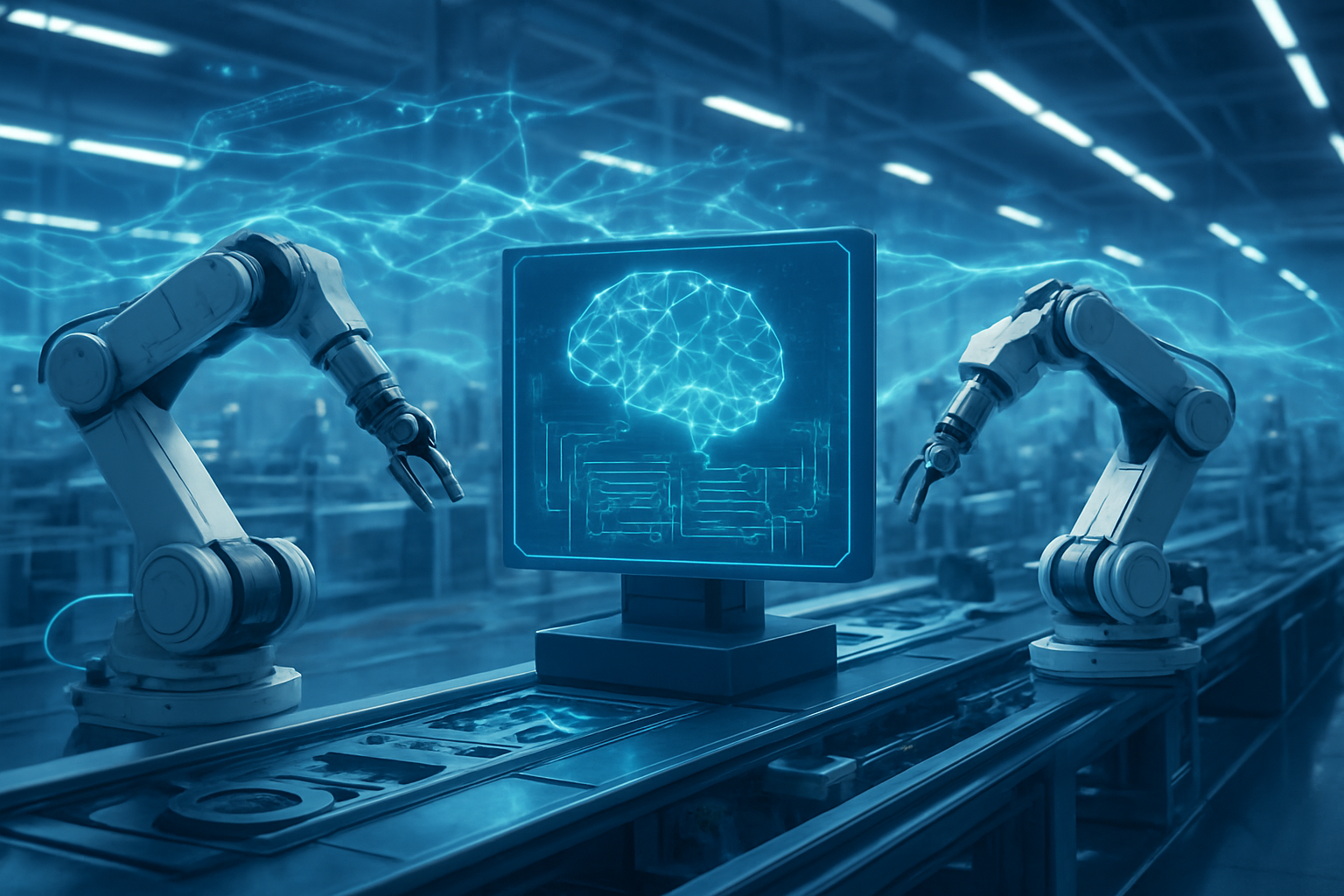
  • The AI Revolution in Finance: CFOs Unlock Billions in Back-Office Efficiency

    The AI Revolution in Finance: CFOs Unlock Billions in Back-Office Efficiency

    In a transformative shift, Chief Financial Officers (CFOs) are increasingly turning to Artificial Intelligence (AI) to revolutionize their back-office operations, moving beyond traditional financial oversight to become strategic drivers of efficiency and growth. This widespread adoption is yielding substantial payoffs, fundamentally reshaping how finance departments operate by delivering unprecedented speed, transparency, and automation. The immediate significance lies in AI's capacity to streamline complex, data-intensive tasks, freeing human capital for higher-value strategic initiatives and enabling real-time, data-driven decision-making.

    This strategic embrace of AI positions finance leaders to not only optimize cost control and forecasting but also to enhance organizational resilience in a rapidly evolving business landscape. By automating routine processes and providing actionable insights, AI is allowing CFOs to proactively shape their companies' financial futures, fostering agility and competitive advantage in an era defined by digital innovation.

    Technical Foundations of the Financial AI Renaissance

    The core of this back-office revolution lies in the sophisticated application of several key AI technologies, each bringing unique capabilities to the finance function. These advancements differ significantly from previous, more rigid automation methods, offering dynamic and intelligent solutions.

    Robotic Process Automation (RPA), often augmented with AI and Machine Learning (ML), employs software bots to mimic human interactions with digital systems. These bots can automate high-volume, rule-based tasks such as data entry, invoice processing, and account reconciliation. Unlike traditional automation, which required deep system integration and custom coding, RPA operates at the user interface level, making it quicker and more flexible to deploy. This allows businesses to automate processes without overhauling their entire IT infrastructure. Initial reactions from industry experts highlight RPA's profound impact on reducing operational costs and liberating human workers from mundane, repetitive tasks. For example, RPA bots can automatically extract data from invoices, validate it against purchase orders, and initiate payment, drastically reducing manual errors and speeding up the accounts payable cycle.

    Predictive Analytics leverages historical and real-time data with statistical algorithms and ML techniques to forecast future financial outcomes and identify potential risks. This technology excels at processing vast, complex datasets, uncovering hidden patterns that traditional, simpler forecasting methods often miss. While traditional methods rely on averages and human intuition, predictive analytics incorporates a broader range of variables, including external market factors, to provide significantly higher accuracy. CFOs are utilizing these models for more precise sales forecasts, cash flow optimization, and credit risk management, shifting from reactive reporting to proactive strategy.

    Natural Language Processing (NLP) empowers computers to understand, interpret, and generate human language, both written and spoken. In finance, NLP is crucial for extracting meaningful insights from unstructured textual data, such as contracts, news articles, and financial reports. Unlike older keyword-based searches, NLP understands context and nuance, enabling sophisticated analysis. Industry experts view NLP as transformative for reducing manual work, accelerating trades, and assessing risks. For instance, NLP can scan thousands of loan agreements to extract key terms and risk factors, significantly cutting down manual review time, or analyze market sentiment from news feeds to inform investment decisions.

    Finally, Machine Learning (ML) algorithms are the backbone of many AI applications, designed to identify patterns, correlations, and make predictions or decisions without explicit programming. ML models continuously learn and adapt from new data, making them highly effective for complex, high-dimensional financial datasets. While traditional statistical models require pre-specified relationships, ML, especially deep learning, excels at discovering non-linear interactions. ML is critical for advanced fraud detection, where it analyzes thousands of variables in real-time to flag suspicious transactions, and for credit scoring, assessing creditworthiness with greater accuracy by integrating diverse data sources. The AI research community acknowledges ML's power but also raises concerns about model interpretability (the "black box" problem) and data privacy, especially in a regulated sector like finance.

    Industry Shifts: Who Benefits and Who Disrupts

    The widespread adoption of AI by CFOs in back-office operations is creating significant ripple effects across the technology landscape, benefiting a diverse range of companies while disrupting established norms.

    Tech giants like Alphabet (NASDAQ: GOOGL), Microsoft (NASDAQ: MSFT), and Amazon (NASDAQ: AMZN) are particularly well-positioned to capitalize on this trend. Their extensive cloud infrastructure (Google Cloud, Microsoft Azure, AWS) provides the scalable computing power and data storage necessary for complex AI deployments. These companies also invest heavily in frontier AI research, allowing them to integrate advanced AI capabilities directly into their enterprise software solutions and ERP systems. Their ability to influence policy and set industry standards for AI governance further solidifies their competitive advantage.

    Specialized AI solution providers focused on finance are also seeing a surge in demand. Companies offering AI governance platforms, compliance software, and automated solutions for specific finance functions like fraud detection, real-time transaction monitoring, and automated reconciliation are thriving. These firms can offer tailored, industry-specific solutions that address unique financial challenges. Similarly, Fintech innovators that embed AI into their core offerings, such as digital lending platforms or robo-advisors, are able to streamline their processes, enhance operational efficiency, and improve customer experiences, gaining a competitive edge.

    For AI startups, this environment presents both opportunities and challenges. Agile startups with niche solutions that address specific, underserved market needs within the finance back office can innovate quickly and gain traction. However, the high cost and complexity of developing and training large AI models, coupled with the need for robust legal and ethical frameworks, create significant barriers to entry. This may lead to consolidation, favoring larger entities with substantial monetary and human capital resources.

    The competitive implications are profound. Market positioning is increasingly tied to a company's commitment to "Trustworthy AI," emphasizing ethical principles, transparency, and regulatory compliance. Firms that control various parts of the AI supply chain, from hardware (like GPUs from NVIDIA (NASDAQ: NVDA)) to software and infrastructure, gain a strategic advantage. This AI-driven transformation is disrupting existing products and services by automating routine tasks, shifting workforce roles towards higher-value activities, and enabling the creation of hyper-personalized financial products. Mid-sized financial firms, in particular, may struggle to make the necessary investments, leading to a potential polarization of market players.

    Wider Significance: A Paradigm Shift for Finance

    The integration of AI into finance back-office operations transcends mere technological enhancement; it represents a fundamental paradigm shift with far-reaching implications for the broader AI landscape, the finance industry, and the economy as a whole. This development aligns with a global trend where AI is increasingly automating cognitive tasks, moving beyond simple rule-based automation to intelligent, adaptive systems.

    In the broader AI landscape, this trend highlights the maturation of AI technologies from experimental tools to essential business enablers. The rise of Generative AI (GenAI) and the anticipation of "agentic AI" systems, capable of autonomous, multi-step workflows, signify a move towards more sophisticated, human-like reasoning in financial operations. This empowers CFOs to evolve from traditional financial stewards to strategic leaders, driving growth and resilience through data-driven insights.

    The impacts on the finance industry are profound: increased efficiency and cost savings are paramount, with studies indicating significant productivity enhancements (e.g., 38%) and operational cost reductions (e.g., 40%) for companies adopting AI. This translates to enhanced decision-making, as AI processes vast datasets in real-time, providing actionable insights for forecasting and risk management. Improved fraud detection and regulatory compliance are also critical benefits, strengthening financial security and adherence to complex regulations.

    However, this transformation is not without its concerns. Job displacement is a dominant worry, particularly for routine back-office roles, with some estimates suggesting a significant portion of banking and insurance jobs could be affected. This necessitates substantial reskilling and upskilling efforts for the workforce. Ethical AI considerations are also paramount, including algorithmic bias stemming from historical data, the "black box" problem of opaque AI decision-making, and the potential for generative AI to produce convincing misinformation or "hallucinations." Data privacy and security remain critical fears, given the vast amounts of sensitive financial data processed by AI systems, raising concerns about breaches and misuse. Furthermore, the increasing dependency on technology for critical operations introduces risks of system failures and cyberattacks, while regulatory challenges struggle to keep pace with rapid AI advancements.

    Compared to previous AI milestones, such as early expert systems or even Robotic Process Automation (RPA), the current wave of AI is more transformative. While RPA automated repetitive tasks, today's AI, particularly with GenAI, is changing underlying business models and impacting cognitive skills, making finance a leading sector in the "third machine age." This parallels the "third machine age," automating white-collar cognitive tasks and positioning AI as the defining technological shift of the 2020s, akin to the internet or cloud computing.

    Future Horizons: The Evolving Role of the CFO

    The trajectory of AI in finance back-office operations points towards an increasingly autonomous, intelligent, and strategic future. Both near-term and long-term developments promise to further redefine financial management.

    In the near-term (1-3 years), we can expect widespread adoption of intelligent workflow automation, integrating RPA with ML and GenAI to handle entire workflows, from invoice processing to payroll. AI tools will achieve near-perfect accuracy in data entry and processing, while real-time fraud detection and compliance monitoring will become standard. Predictive analytics will fully empower finance teams to move from historical reporting to proactive optimization, anticipating operational needs and risks.

    Longer-term (beyond 3 years), the vision includes the rise of "agentic AI" systems. These autonomous agents will pursue goals, make decisions, and take actions with limited human input, orchestrating complex, multi-step workflows in areas like the accounting close process and intricate regulatory reporting. AI will transition from a mere efficiency tool to a strategic partner, deeply embedded in business strategies, providing advanced scenario planning and real-time strategic insights.

    Potential applications on the horizon include AI-driven contract analysis that can not only extract key terms but also draft counter-offers, and highly sophisticated cash flow forecasting that integrates real-time market data with external factors for dynamic precision. However, significant challenges remain. Overcoming integration with legacy systems is crucial, as is ensuring high-quality, consistent data for AI models. Addressing employee resistance through clear communication and robust training programs is vital, alongside bridging the persistent shortage of skilled AI talent. Data privacy, cybersecurity, and mitigating algorithmic bias will continue to demand rigorous attention, necessitating robust AI governance frameworks.

    Experts predict a profound restructuring of white-collar work, with AI dominating repetitive tasks within the next 15 years, as anticipated by leaders like Jamie Dimon of JPMorgan Chase (NYSE: JPM) and Larry Fink of BlackRock (NYSE: BLK). This will free finance professionals to focus on higher-value, strategic initiatives, complex problem-solving, and tasks requiring human judgment. AI is no longer a luxury but an absolute necessity for businesses seeking growth and competitiveness.

    A key trend is the emergence of agentic AI, offering autonomous digital coworkers capable of orchestrating end-to-end workflows, from invoice handling to proactive compliance monitoring. This will require significant organizational changes, team education, and updated operational risk policies. Enhanced data governance is symbiotic with AI, as AI can automate governance tasks like data classification and compliance tracking, while robust governance ensures data quality and ethical AI implementation. Critically, the CFO's role is evolving from a financial steward to a strategic leader, driving AI adoption, scrutinizing its ROI, and mitigating associated risks, ultimately leading the transition to a truly data-driven finance organization.

    A New Era of Financial Intelligence

    The ongoing integration of AI into finance back-office operations represents a watershed moment in the history of both artificial intelligence and financial management. The key takeaways underscore AI's unparalleled ability to automate, accelerate, and enhance the accuracy of core financial processes, delivering substantial payoffs in efficiency and strategic insight. This is not merely an incremental improvement but a fundamental transformation, marking an "AI evolution" where technology is no longer a peripheral tool but central to financial strategy and operations.

    This development's significance in AI history lies in its widespread commercialization and its profound impact on cognitive tasks, making finance a leading sector in the "third machine age." Unlike earlier, more limited applications, today's AI is reshaping underlying business models and demanding a new skill set from finance professionals, emphasizing data literacy and analytical interpretation.

    Looking ahead, the long-term impact will be characterized by an irreversible shift towards more agile, resilient, and data-driven financial operations. The roles of CFOs and their teams will continue to evolve, focusing on strategic advisory, risk management, and value creation, supported by increasingly sophisticated AI tools. This will foster a truly data-driven culture, where real-time insights guide every major financial decision.

    In the coming weeks and months, watch for accelerated adoption of generative AI for document processing and reporting, with a strong emphasis on demonstrating clear ROI for AI initiatives. Critical areas to observe include efforts to address data quality and legacy system integration, alongside significant investments in upskilling finance talent for an AI-augmented future. The evolution of cybersecurity measures and AI governance frameworks will also be paramount, as financial institutions navigate the complex landscape of ethical AI and regulatory compliance. The success of CFOs in strategically integrating AI will define competitive advantage and shape the future of finance for decades to come.


    This content is intended for informational purposes only and represents analysis of current AI developments.

    TokenRing AI delivers enterprise-grade solutions for multi-agent AI workflow orchestration, AI-powered development tools, and seamless remote collaboration platforms.
    For more information, visit https://www.tokenring.ai/.
  • Google’s AI-Powered Play Store Summaries: A New Era for App Discovery

    Google’s AI-Powered Play Store Summaries: A New Era for App Discovery

    In a significant stride towards enhancing user experience and streamlining app discovery, Google (NASDAQ: GOOGL) has begun rolling out AI-generated app review summaries within its Google Play Store. This innovative feature, which condenses countless user reviews into a concise, digestible paragraph, aims to provide users with an immediate grasp of an application's overall sentiment, highlighting both its strengths and weaknesses. The rollout, initiated in late October and early November 2025, marks a pivotal moment in the ongoing integration of artificial intelligence into everyday digital platforms, promising to reshape how users interact with and select mobile applications.

    The immediate significance of this development is multi-faceted. For millions of users navigating the vast landscape of the Play Store, these AI summaries offer a welcome respite from the often-overwhelming task of sifting through thousands of individual reviews. By providing a quick, holistic overview, Google aims to empower users to make faster, more informed download decisions, thereby enhancing the efficiency and satisfaction of the app browsing experience. For developers, while primarily user-facing, the feature offers an AI-curated snapshot of public sentiment, potentially aiding in quicker identification of prevalent issues or popular features without extensive manual analysis. This move aligns with Google's broader strategy to infuse AI, particularly its Gemini model, across its ecosystem, simplifying information digestion and reinforcing its position at the forefront of AI innovation.

    The Technical Backbone: How AI Distills User Voices

    At its core, Google's AI-generated app review summaries leverage sophisticated Natural Language Processing (NLP) techniques to process and synthesize vast quantities of user feedback. While Google has not disclosed the precise NLP models, the functionality strongly indicates the application of advanced transformer architectures, similar to those found in large language models (LLMs) like Gemini, for sentiment analysis, topic modeling, and text summarization. The system reads through numerous reviews, identifies common themes, and then generates a balanced, coherent summary paragraph, typically three to four sentences long, under a "Users are saying" heading. This goes beyond simple keyword counting or statistical aggregation, employing generative models to cluster and paraphrase sentiments into a more human-like narrative.

    Accompanying these summaries are interactive "chips" or buttons, allowing users to filter reviews by specific topics such as "performance," "design," "stability," or "ads." This capability provides a deeper, targeted insight into particular aspects of an app, enabling users to drill down into areas of specific interest or concern. This approach significantly differs from previous methods, which often relied on displaying aggregate star ratings or simply listing the most popular individual reviews. The AI-driven synthesis offers a more comprehensive and nuanced overview, condensing diverse feedback into a single, coherent narrative that highlights an app's overall pros and cons. The feature is available for apps with a "sufficient number of reviews" and has been observed on Play Store versions 48.5.23-31.

    Initial reactions from the AI research community and industry experts have been largely positive regarding the utility of the feature, praising its ability to save users time. However, concerns have also been raised regarding the accuracy and reliability of the summaries, particularly the potential for overgeneralization, loss of context, and occasional factual errors. Experts emphasize that these summaries should serve as a starting point for users, not a definitive judgment, and stress the importance of transparency, including clear labeling of AI-generated content and direct links to original reviews.

    Reshaping the Competitive Landscape: Winners and Challengers

    Google's integration of AI review summaries into the Play Store has significant implications for AI companies, tech giants, and startups alike. Google (NASDAQ: GOOGL) itself stands to benefit immensely by enhancing the Play Store's user experience, increasing engagement, and solidifying its market positioning as a leader in practical AI integration. This move further encourages app usage and downloads within its Android ecosystem. Developers of well-reviewed apps will also likely see their strengths highlighted, potentially boosting visibility and download rates. AI infrastructure providers, supplying the underlying computing power and specialized AI chips, will also experience increased demand as AI integration becomes more widespread.

    However, Google is not pioneering this specific application. Apple (NASDAQ: AAPL) introduced a similar feature to its App Store earlier in 2025, and Amazon (NASDAQ: AMZN) has long utilized AI for summarizing product reviews. This indicates a competitive parity rather than a groundbreaking advantage, pushing all major tech players to continuously refine their AI summarization capabilities. Microsoft (NASDAQ: MSFT), while not operating a primary app store in the same vein, will likely continue to integrate similar AI-powered synthesis across its software and services, reflecting the industry-wide expectation for intelligent content features.

    For startups, the impact is a double-edged sword. Well-regarded apps with positive feedback may gain quicker visibility. However, startups with fewer reviews might not qualify for an AI summary, making it harder to compete. Concerns also exist that inaccurate or overgeneralized summaries could misrepresent unique selling points or amplify niche negative feedback. This development necessitates an evolution in App Store Optimization (ASO) strategies, with a greater emphasis on cultivating high-quality, concise reviews that AI can effectively summarize, and a focus on quickly addressing issues highlighted by the AI. Third-party review analysis tools may also face disruption, needing to pivot their offerings as AI provides immediate, accessible alternatives.

    Wider Significance: AI's March into Everyday Experience

    Google's AI-generated app review summaries represent more than just a new feature; they are a clear manifestation of a broader AI trend – the pervasive integration of advanced AI into everyday user experiences to enhance information accessibility and streamline decision-making. This initiative builds upon significant advancements in Natural Language Processing (NLP) and generative AI, which have revolutionized text understanding and generation. It signifies a shift from mere statistical aggregation of reviews to AI actively interpreting and synthesizing complex user sentiments into coherent narratives.

    The impacts are profound. On the one hand, information accessibility is significantly enhanced, allowing users to quickly grasp the essence of an app without cognitive overload. This streamlines the app selection process and saves time. On the other hand, critical questions arise regarding user trust. The potential for AI to overgeneralize, misinterpret, or even "hallucinate" information could lead to misinformed decisions if users rely solely on these summaries. Transparency, including clear "Summarized by Google AI" labels and direct links to original reviews, is paramount to maintaining user confidence.

    Content moderation also gains a new dimension, as AI assists in filtering spam and identifying key themes. However, the challenge lies in the AI's ability to represent diverse opinions fairly and detect nuanced context, raising concerns about potential algorithmic bias. The "black box" nature of many AI models, where the decision-making process is opaque, further complicates error correction and accountability.

    Compared to foundational AI breakthroughs like the invention of neural networks or the transformer architecture, Google's AI review summaries are an application and refinement of existing powerful AI tools. Its true significance lies in democratizing access to AI-powered information processing on a massive scale, demonstrating how advanced AI is moving from niche applications to integral features in widely used consumer platforms, thereby impacting daily digital interactions for millions.

    The Horizon: What's Next for AI in App Stores

    The integration of AI into app stores is only just beginning, with a trajectory pointing towards increasingly intelligent and personalized experiences. In the near term (1-2 years), we can expect a broader rollout of AI-generated review summaries across more languages and regions, accompanied by continuous refinement in accuracy and reliability. Both Google and Apple (NASDAQ: AAPL) are expected to enhance these features, potentially offering more dynamic and real-time updates to reflect the latest user feedback. AI will also drive even more sophisticated hyper-personalization in app recommendations and search, with "ask a question" features providing context-aware comparisons and suggestions. Developers will see AI playing a crucial role in App Store Optimization (ASO), automating content quality checks and providing deeper insights for listing optimization.

    Looking further ahead (3-5+ years), experts predict that AI will evolve to become the "brain" of the smartphone, orchestrating various apps to fulfill complex user requests without direct app interaction. Generative AI could revolutionize app creation and customization, enabling individuals to create personalized AI plugins and assisting developers in code generation, UI design, and bug identification, significantly shortening development cycles. Apps will become proactively adaptive, anticipating user needs and adjusting interfaces and content in real-time. Advanced AI will also bolster security and fraud detection within app ecosystems.

    However, significant challenges remain. Ensuring the absolute accuracy of AI summaries and mitigating inherent biases in training data are ongoing priorities. Maintaining real-time relevance as apps constantly evolve with updates and new features poses a complex technical hurdle. The transparency and explainability of AI models will need to improve to build greater user trust and address compliance issues. Furthermore, the risk of manipulation, where AI could be used to generate misleading reviews, necessitates robust authentication and moderation mechanisms. Experts widely predict a future where AI is not just a feature but a standard, embedded capability in applications, transforming them into smarter, personalized tools that drive user engagement and retention.

    A New Chapter in Digital Engagement

    Google's (NASDAQ: GOOGL) introduction of AI-generated app review summaries in the Play Store marks a pivotal moment in the evolution of digital platforms. This development signifies a clear shift towards leveraging advanced artificial intelligence to simplify complex information, enhance user experience, and streamline decision-making in the app ecosystem. The immediate impact is a more efficient and informed app discovery process for users, while for developers, it offers a distilled view of public sentiment, highlighting areas for improvement and success.

    In the broader context of AI history, this initiative underscores the practical application of sophisticated NLP and generative AI models, moving them from research labs into the hands of millions of everyday users. It's an evolutionary step that builds upon foundational AI breakthroughs, democratizing access to intelligent information processing. The long-term impact on the tech industry will see continued investment in AI-driven personalization, content synthesis, and optimization across all major platforms, intensifying the competitive landscape among tech giants.

    As we move forward, key areas to watch include the continued expansion of this feature to more regions and languages, ongoing improvements in AI accuracy and bias mitigation, and the deeper integration of AI capabilities across the Play Store, potentially including AI-powered Q&A and enhanced app highlights. The evolution of developer tools to leverage these AI insights will also be crucial. Ultimately, Google's AI-generated review summaries herald a new chapter in digital engagement, where intelligence and personalization become the bedrock of the app experience, reshaping how we discover, use, and perceive mobile technology.


    This content is intended for informational purposes only and represents analysis of current AI developments.

    TokenRing AI delivers enterprise-grade solutions for multi-agent AI workflow orchestration, AI-powered development tools, and seamless remote collaboration platforms.
    For more information, visit https://www.tokenring.ai/.

  • AI Revolutionizes Pharma Supply Chains: A New Era of Localized Resilience and Efficiency

    AI Revolutionizes Pharma Supply Chains: A New Era of Localized Resilience and Efficiency

    The pharmaceutical industry is experiencing a profound and immediate transformation as Artificial Intelligence (AI) becomes a strategic imperative for localizing supply chains, fundamentally enhancing both resilience and efficiency through intelligent logistics and regional optimization. This shift, driven by geopolitical concerns, trade tariffs, and the lessons learned from global disruptions like the COVID-19 pandemic, is no longer a futuristic concept but a present-day reality, reshaping how life-saving medicines are produced, moved, and monitored globally.

    As of October 31, 2025, AI's proven ability to compress timelines, reduce costs, and enhance the precision of drug delivery is promising a more efficient and patient-centric healthcare landscape. Its integration is rapidly becoming the foundation for resilient, transparent, and agile pharmaceutical supply chains, ensuring essential medications are available when and where they are needed most.

    Detailed Technical Coverage: The AI Engine Driving Localization

    AI advancements are profoundly transforming pharmaceutical supply chain localization, addressing long-standing challenges with sophisticated technical solutions. This shift is driven by the undeniable need for more regional manufacturing and distribution, moving away from a sole reliance on traditional globalized supply chains.

    Several key AI technologies are at the forefront of this transformation. Predictive Analytics and Machine Learning (ML) models, including regression, time-series analysis (e.g., ARIMA, Prophet), Gradient Boosting Machines (GBM), and Deep Learning (DL) strategies, analyze vast datasets—historical sales, market trends, epidemiological patterns, and even real-time social media sentiment—to forecast demand with remarkable accuracy. For localized supply chains, these models can incorporate regional demographics, local disease outbreaks, and specific health awareness campaigns to anticipate fluctuations more precisely within a defined geographic area, minimizing stockouts or costly overstocking. This represents a significant leap from traditional statistical forecasting, offering proactive rather than reactive capabilities.

    Reinforcement Learning (RL), with models like Deep Q-Networks (DQN), focuses on sequential decision-making. An AI agent learns optimal policies by interacting with a dynamic environment, optimizing drug routing, inventory replenishment, and demand forecasting using real-time data like GPS tracking and warehouse levels. This allows for adaptive decision-making vital for localized distribution networks that must respond quickly to regional needs, unlike static, rule-based systems of the past. Complementing this, Digital Twins create virtual replicas of physical objects or processes, continuously updated with real-time data from IoT sensors, serialization data, and ERP systems. These dynamic models enable "what-if" scenario planning for localized hubs, simulating the impact of regional events and allowing for proactive contingency planning, providing unprecedented visibility and risk management.

    Further enhancing these capabilities, Computer Vision algorithms are deployed for automated quality control, detecting defects in manufacturing with greater accuracy than manual methods, particularly crucial for ensuring consistent quality at local production sites. Natural Language Processing (NLP) analyzes vast amounts of unstructured text data, such as regulatory databases and supplier news, to help companies stay updated with evolving global and local regulations, streamlining compliance documentation. While not strictly AI, Blockchain Integration is frequently combined with AI to provide a secure, immutable ledger for transactions, enhancing transparency and traceability. AI can then monitor this blockchain data for irregularities, preventing fraud and improving regulatory compliance, especially against the threat of counterfeit drugs in localized networks.

    Impact on Industry Players: Reshaping the Competitive Landscape

    The integration of AI into pharmaceutical supply chain localization is driving significant impacts across AI companies, tech giants, and startups, creating new opportunities and competitive pressures.

    Pure-play AI companies, specializing in machine learning and predictive analytics, stand to benefit immensely. They offer tailored solutions for critical pain points such as highly accurate demand forecasting, inventory optimization, automated quality control, and sophisticated risk management. Their competitive advantage lies in deep specialization and the ability to demonstrate a strong return on investment (ROI) for specific use cases, though they must navigate stringent regulatory environments and integrate with existing pharma systems. These companies are often at the forefront of developing niche solutions that can rapidly improve efficiency and resilience.

    Tech giants like Alphabet (NASDAQ: GOOGL), Amazon (NASDAQ: AMZN), Microsoft (NASDAQ: MSFT), and SAP (NYSE: SAP) possess significant advantages due to their extensive cloud infrastructure, data analytics platforms, and existing AI capabilities. They are well-positioned to offer comprehensive, end-to-end solutions that span the entire pharmaceutical value chain, from drug discovery to patient delivery. Their robust platforms provide the scalability, security, and computing power needed to process the vast amounts of real-time data crucial for localized supply chains. These giants often consolidate the market by acquiring innovative AI startups, leveraging their resources to establish "Intelligence Centers of Excellence" and provide sophisticated tools for regulatory compliance automation.

    Startups in the AI and pharmaceutical supply chain space face both immense opportunities and significant challenges. Their agility allows them to identify and address niche problems, such as highly specialized solutions for regional demand sensing or optimizing last-mile delivery in specific geographical areas. To succeed, they must differentiate themselves with unique intellectual property, speed of innovation, and a deep understanding of specific localization challenges. Innovative startups can quickly introduce novel solutions, compelling established companies to innovate or acquire their technologies, often aiming for acquisition by larger tech giants or pharmaceutical companies seeking to integrate cutting-edge AI capabilities. Partnerships are crucial for leveraging larger infrastructures and market access.

    Pharmaceutical companies themselves, such as Moderna (NASDAQ: MRNA), Pfizer (NYSE: PFE), and GSK (NYSE: GSK), are among the primary beneficiaries. Those that proactively integrate AI gain a competitive edge by improving operational efficiency, reducing costs, minimizing stockouts, enhancing patient safety, and accelerating time-to-market for critical medicines. Logistics and 3PL providers are also adopting AI to streamline operations, manage inventory, and enhance compliance, especially for temperature-sensitive drugs. The market is seeing increased competition and consolidation, a shift towards data-driven decisions, and the disruption of traditional, less adaptive supply chain management systems, emphasizing the importance of resilient and agile ecosystems.

    Wider Significance and Societal Impact: A Pillar of Public Health

    The wider significance of AI in pharmaceutical supply chain localization is profound, touching upon global public health, economic stability, and national security. By facilitating the establishment of regional manufacturing and distribution hubs, AI helps mitigate the risks of drug shortages, which have historically caused significant disruptions to patient care. This localization, powered by AI, ensures a more reliable and uninterrupted supply of medications, especially temperature-sensitive biologics and vaccines, which are critical for patient well-being. The ability to predict and prevent disruptions locally, optimize inventory for regional demand, and streamline local manufacturing processes translates directly into better health outcomes and greater access to essential medicines.

    This development fits squarely within broader AI landscape trends, leveraging advanced machine learning, deep learning, and natural language processing for sophisticated data analysis. Its integration with IoT for real-time monitoring and robotics for automation aligns with the industry's shift towards data-driven decision-making and smart factories. Furthermore, the combination of AI with blockchain technology for enhanced transparency and traceability is a key aspect of the evolving digital supply network, securing records and combating fraud.

    The impacts are overwhelmingly positive: enhanced resilience and agility, reduced drug shortages, improved patient access, and significant operational efficiency leading to cost reductions. AI-driven solutions can achieve up to 94% accuracy in demand forecasting, reduce inventory by up to 30%, and cut logistics costs by up to 20%. It also improves quality control, prevents fraud, and streamlines complex regulatory compliance across diverse localized settings. However, challenges persist. Data quality and integration remain a significant hurdle, as AI's effectiveness is contingent on accurate, high-quality, and integrated data from fragmented sources. Data security and privacy are paramount, given the sensitive nature of pharmaceutical and patient data, requiring robust cybersecurity measures and compliance with regulations like GDPR and HIPAA. Regulatory and ethical challenges arise from AI's rapid evolution, often outpacing existing GxP guidelines, alongside concerns about decision-making transparency and potential biases. High implementation costs, a significant skill gap in AI expertise, and the complexity of integrating new AI solutions into legacy systems are also considerable barriers.

    Comparing this to previous AI milestones, the current application marks a strategic imperative rather than a novelty, with AI now considered foundational for critical infrastructure. It represents a transition from mere automation to intelligent, adaptive systems capable of proactive decision-making, leveraging big data in ways previously unattainable. The rapid pace of AI adoption in this sector, even faster than the internet or electricity in their early days, underscores its transformative power and marks a significant evolution in AI's journey from research to widespread, critical application.

    The Road Ahead: Future Developments Shaping Pharma Logistics

    The future of AI in pharmaceutical supply chain localization promises a profound transformation, moving towards highly autonomous and personalized supply chain models, while also requiring careful navigation of persistent challenges.

    In the near-term (1-3 years), we can expect enhanced productivity and inventory management, with machine learning significantly reducing stockouts and excess inventory, gaining competitive edges for early adopters by 2025. Real-time visibility and monitoring, powered by AI-IoT integration, will provide unprecedented control over critical conditions, especially for cold chain management. Predictive analytics will revolutionize demand and risk forecasting, allowing proactive mitigation of disruptions. AI-powered authentication, often combined with blockchain, will strengthen security against counterfeiting. Generative AI will also play a role in improving real-time data collection and visibility.

    Long-term developments (beyond 3 years) will see the rise of AI-driven autonomous supply chain management, where self-learning and self-optimizing logistics systems make real-time decisions with minimal human oversight. Advanced Digital Twins will create virtual simulations of entire supply chain processes, enabling comprehensive "what-if" scenario planning and risk management. The industry is also moving towards hyper-personalized supply chains, where AI analyzes individual patient data to optimize inventory and distribution for specific medication needs. Synergistic integration of AI with blockchain, IoT, and robotics will create a comprehensive Pharma Supply Chain 4.0 ecosystem, ensuring product integrity and streamlining operations from manufacturing to last-mile delivery. Experts predict AI will act as "passive knowledge," optimizing functions beyond just the supply chain, including drug discovery and regulatory submissions.

    Potential applications on the horizon include optimized sourcing and procurement, further manufacturing efficiency with automated quality control, and highly localized production and distribution planning leveraging AI to navigate tariffs and regional regulations. Warehouse management, logistics, and patient-centric delivery will be revolutionized, potentially integrating with direct-to-patient models. Furthermore, AI will contribute significantly to sustainability by optimizing inventory to reduce drug wastage and promoting eco-friendly logistics.

    However, significant challenges must be addressed. The industry still grapples with complex, fragmented data landscapes and the need for high-quality, integrated data. Regulatory and compliance hurdles remain substantial, requiring AI applications to meet strict, evolving GxP guidelines with transparency and explainability. High implementation costs, a persistent shortage of in-house AI expertise, and the complexity of integrating new AI solutions into existing legacy systems are also critical barriers. Data privacy and cybersecurity, organizational resistance to change, and ethical dilemmas regarding AI bias and accountability are ongoing concerns that require robust solutions and clear strategies.

    Experts predict an accelerated digital transformation, with AI delivering tangible business impact by 2025, enabling a shift to interconnected Digital Supply Networks (DSN). The integration of AI in pharma logistics is set to deepen, leading to autonomous systems and a continued drive towards localization due to geopolitical concerns. Crucially, AI is seen as an opportunity to amplify human capabilities, fostering human-AI collaboration rather than widespread job displacement, ensuring that the industry moves towards a more intelligent, resilient, and patient-centric future.

    Conclusion: A New Era for Pharma Logistics

    The integration of AI into pharmaceutical supply chain localization marks a pivotal moment, fundamentally reshaping an industry critical to global health. This is not merely an incremental technological upgrade but a strategic transformation, driven by the imperative to build more resilient, efficient, and transparent systems in an increasingly unpredictable world.

    The key takeaways are clear: AI is delivering enhanced efficiency and cost reduction, significantly improving demand forecasting and inventory optimization, and providing unprecedented supply chain visibility and transparency. It is bolstering risk management, ensuring automated quality control and patient safety, and crucially, facilitating the strategic shift towards localized supply chains. This enables quicker responses to regional needs and reduces reliance on vulnerable global networks. AI is also streamlining complex regulatory compliance, a perennial challenge in the pharmaceutical sector.

    In the broader history of AI, this development stands out as a strategic imperative, transitioning supply chain management from reactive to proactive. It leverages the full potential of digitalization, augmenting human capabilities rather than replacing them, and is globalizing at an unprecedented pace. The comprehensive impact across the entire drug production process, from discovery to patient delivery, underscores its profound significance.

    Looking ahead, the long-term impact promises unprecedented resilience in pharmaceutical supply chains, leading to improved global health outcomes through reliable access to medications, including personalized treatments. Sustained cost efficiency will fuel further innovation, while optimized practices will contribute to more sustainable and ethical supply chains. The journey will involve continued digitalization, the maturation of "Intelligence Centers of Excellence," expansion of agentic AI and digital twins, and advanced AI-powered logistics for cold chain management. Evolving regulatory frameworks will be crucial, alongside a strong focus on ethical AI and robust "guardrails" to ensure safe, transparent, and accountable deployment, with human oversight remaining paramount.

    What to watch for in the coming weeks and months includes the intensified drive for full digitalization across the industry, the establishment of more dedicated AI "Intelligence Centers of Excellence," and the increasing deployment of AI agents for automation. The development and adoption of "digital twins" will accelerate, alongside further advancements in AI-powered logistics for temperature-sensitive products. Regulatory bodies will likely introduce clearer guidelines for AI in pharma, and the synergistic integration of AI with blockchain and IoT will continue to evolve, creating ever more intelligent and interconnected supply chain ecosystems. The ongoing dialogue around ethical AI and human-AI collaboration will also be a critical area of focus.


    This content is intended for informational purposes only and represents analysis of current AI developments.

    TokenRing AI delivers enterprise-grade solutions for multi-agent AI workflow orchestration, AI-powered development tools, and seamless remote collaboration platforms.
    For more information, visit https://www.tokenring.ai/.