Tag: Manufacturing

  • The Unseen Architects: How Semiconductor Equipment Makers Are Powering the AI Revolution

    The Unseen Architects: How Semiconductor Equipment Makers Are Powering the AI Revolution

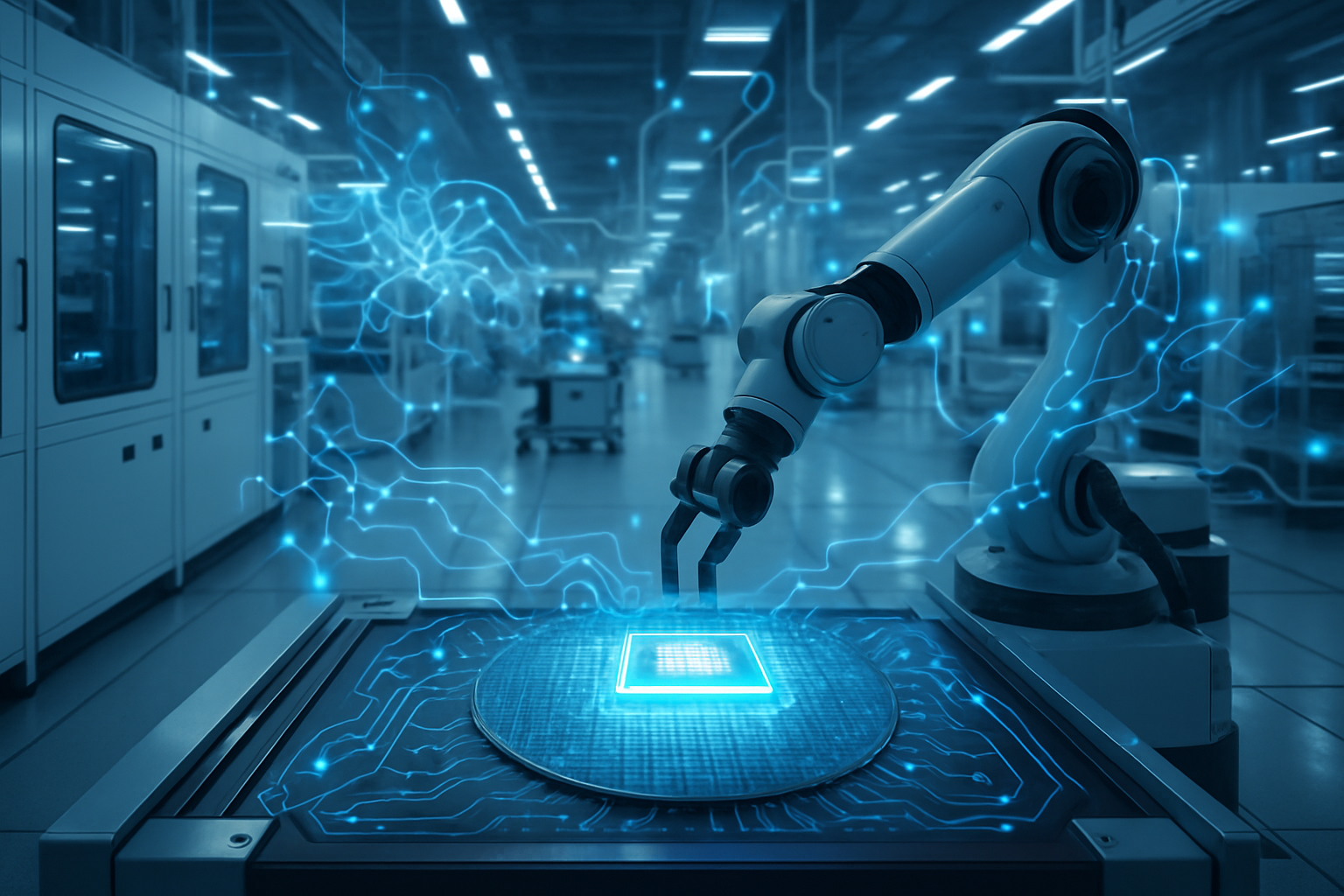
    The global artificial intelligence (AI) landscape is undergoing an unprecedented transformation, driven by an insatiable demand for more powerful, efficient, and sophisticated chips. At the heart of this revolution, often unseen by the broader public, are the semiconductor equipment makers – the foundational innovators providing the advanced tools and processes necessary to forge these cutting-edge AI silicon. As of late 2025, these companies are not merely suppliers; they are active partners in innovation, deeply embedding AI, machine learning (ML), and advanced automation into their own products and manufacturing processes to meet the escalating complexities of AI chip production.

    The industry is currently experiencing a significant rebound, with global semiconductor manufacturing equipment sales projected to reach record highs in 2025 and continue growing into 2026. This surge is predominantly fueled by AI-driven investments in data centers, high-performance computing, and next-generation consumer devices. Equipment manufacturers are at the forefront, enabling the production of leading-edge logic, memory, and advanced packaging solutions that are indispensable for the continuous advancement of AI capabilities, from large language models (LLMs) to autonomous systems.

    Precision Engineering Meets Artificial Intelligence: The Technical Core

    The advancements spearheaded by semiconductor equipment manufacturers are deeply technical, leveraging AI and ML to redefine every stage of chip production. One of the most significant shifts is the integration of predictive maintenance and equipment monitoring. AI algorithms now meticulously analyze real-time operational data from complex machinery in fabrication plants (fabs), anticipating potential failures before they occur. This proactive approach dramatically reduces costly downtime and optimizes maintenance schedules, a stark contrast to previous reactive or time-based maintenance models.

    Furthermore, AI-powered automated defect detection and quality control systems are revolutionizing inspection processes. Computer vision and deep learning algorithms can now rapidly and accurately identify microscopic defects on wafers and chips, far surpassing the speed and precision of traditional manual or less sophisticated automated methods. This not only improves overall yield rates but also accelerates production cycles by minimizing human error. Process optimization and adaptive calibration also benefit immensely from ML models, which analyze vast datasets to identify inefficiencies, optimize workflows, and dynamically adjust equipment parameters in real-time to maintain optimal operating conditions. Companies like ASML (AMS: ASML), a dominant player in lithography, are at the vanguard of this integration. In a significant development in September 2025, ASML made a strategic investment of €1.3 billion in Mistral AI, with the explicit goal of embedding advanced AI capabilities directly into its lithography equipment. This move aims to reduce defects, enhance yield rates through real-time process optimization, and significantly improve computational lithography. ASML's deep reinforcement learning systems are also demonstrating superior decision-making in complex manufacturing scenarios compared to human planners, while AI-powered digital twins are being utilized to simulate and optimize lithography processes with unprecedented accuracy. This paradigm shift transforms equipment from passive tools into intelligent, self-optimizing systems.

    Reshaping the Competitive Landscape for AI Innovators

    The technological leadership of semiconductor equipment makers has profound implications for AI companies, tech giants, and startups across the globe. Companies like Applied Materials (NASDAQ: AMAT) and Tokyo Electron (TSE: 8035) stand to benefit immensely from the escalating demand for advanced manufacturing capabilities. Applied Materials, for instance, launched its "EPIC Advanced Packaging" initiative in late 2024 to accelerate the development and commercialization of next-generation chip packaging solutions, directly addressing the critical needs of AI and high-performance computing (HPC). Tokyo Electron is similarly investing heavily in new factories for circuit etching equipment, anticipating sustained growth from AI-related spending, particularly for advanced logic ICs for data centers and memory chips for AI smartphones and PCs.

    The competitive implications are substantial. Major AI labs and tech companies, including those designing their own AI accelerators, are increasingly reliant on these equipment makers to bring their innovative chip designs to fruition. The ability to access and leverage the most advanced manufacturing processes becomes a critical differentiator. Companies that can quickly adopt and integrate chips produced with these cutting-edge tools will gain a strategic advantage in developing more powerful and energy-efficient AI products and services. This dynamic also fosters a more integrated ecosystem, where collaboration between chip designers, foundries, and equipment manufacturers becomes paramount for accelerating AI innovation. The increased complexity and cost of leading-edge manufacturing could also create barriers to entry for smaller startups, though specialized niche players in design or software could still thrive by leveraging advanced foundry services.

    The Broader Canvas: AI's Foundational Enablers

    The role of equipment makers fits squarely into the broader AI landscape as foundational enablers. The explosive growth in AI demand, particularly from generative AI and large language models (LLMs), is the primary catalyst. Projections indicate that global AI in semiconductor devices market size will grow by over $112 billion by 2029, at a CAGR of 26.9%, underscoring the critical need for advanced manufacturing capabilities. This sustained demand is driving innovations in several key areas.

    Advanced packaging, for instance, has emerged as a "breakout star" in 2024-2025. It's crucial for overcoming the physical limitations of traditional chip design, enabling the heterogeneous integration of separately manufactured chiplets into a single, high-performance package. This is vital for AI accelerators and data center CPUs, allowing for unprecedented levels of performance and energy efficiency. Similarly, the rapid evolution of High-Bandwidth Memory (HBM) is directly driven by AI, with significant investments in manufacturing capacity to meet the needs of LLM developers. The relentless pursuit of leading-edge nodes, such as 2nm and soon 1.4nm, is also a direct response to AI's computational demands, with investments in sub-2nm wafer equipment projected to more than double from 2024 to 2028. Beyond performance, energy efficiency is a growing concern for AI data centers, and equipment makers are developing technologies and forging alliances to create more power-efficient AI solutions, with AI integration in semiconductor devices expected to reduce data center energy consumption by up to 45% by 2025. These developments mark a significant milestone, comparable to previous breakthroughs in transistor scaling and lithography, as they directly enable the next generation of AI capabilities.

    The Horizon: Autonomous Fabs and Unprecedented AI Integration

    Looking ahead, the semiconductor equipment industry is poised for even more transformative developments. Near-term expectations include further advancements in AI-driven process control, leading to even higher yields and greater efficiency in chip fabrication. The long-term vision encompasses the realization of fully autonomous fabs, where AI, IoT, and machine learning orchestrate every aspect of manufacturing with minimal human intervention. These "smart manufacturing" environments will feature predictive issue identification, optimized resource allocation, and enhanced flexibility in production lines, fundamentally altering how chips are made.

    Potential applications and use cases on the horizon include highly specialized AI accelerators designed with unprecedented levels of customization for specific AI workloads, enabled by advanced packaging and novel materials. We can also expect further integration of AI directly into the design process itself, with AI assisting in the creation of new chip architectures and optimizing layouts for performance and power. Challenges that need to be addressed include the escalating costs of developing and deploying leading-edge equipment, the need for a highly skilled workforce capable of managing these AI-driven systems, and the ongoing geopolitical complexities that impact global supply chains. Experts predict a continued acceleration in the pace of innovation, with a focus on collaborative efforts across the semiconductor value chain to rapidly bring cutting-edge technologies from research to commercial reality.

    A New Era of Intelligence, Forged in Silicon

    In summary, the semiconductor equipment makers are not just beneficiaries of the AI revolution; they are its fundamental architects. Their relentless innovation in integrating AI, machine learning, and advanced automation into their manufacturing tools is directly enabling the creation of the powerful, efficient, and sophisticated chips that underpin every facet of modern AI. From predictive maintenance and automated defect detection to advanced packaging and next-generation lithography, their contributions are indispensable.

    This development marks a pivotal moment in AI history, underscoring that the progress of artificial intelligence is inextricably linked to the physical world of silicon manufacturing. The strategic investments by companies like ASML and Applied Materials highlight a clear commitment to leveraging AI to build better AI. The long-term impact will be a continuous cycle of innovation, where AI helps build the infrastructure for more advanced AI, leading to breakthroughs in every sector imaginable. In the coming weeks and months, watch for further announcements regarding collaborative initiatives, advancements in 2nm and sub-2nm process technologies, and the continued integration of AI into manufacturing workflows, all of which will shape the future of artificial intelligence.


    This content is intended for informational purposes only and represents analysis of current AI developments.

    TokenRing AI delivers enterprise-grade solutions for multi-agent AI workflow orchestration, AI-powered development tools, and seamless remote collaboration platforms.
    For more information, visit https://www.tokenring.ai/.
  • AI Supercharges Semiconductor Manufacturing: A New Era of Efficiency and Innovation Dawns

    AI Supercharges Semiconductor Manufacturing: A New Era of Efficiency and Innovation Dawns

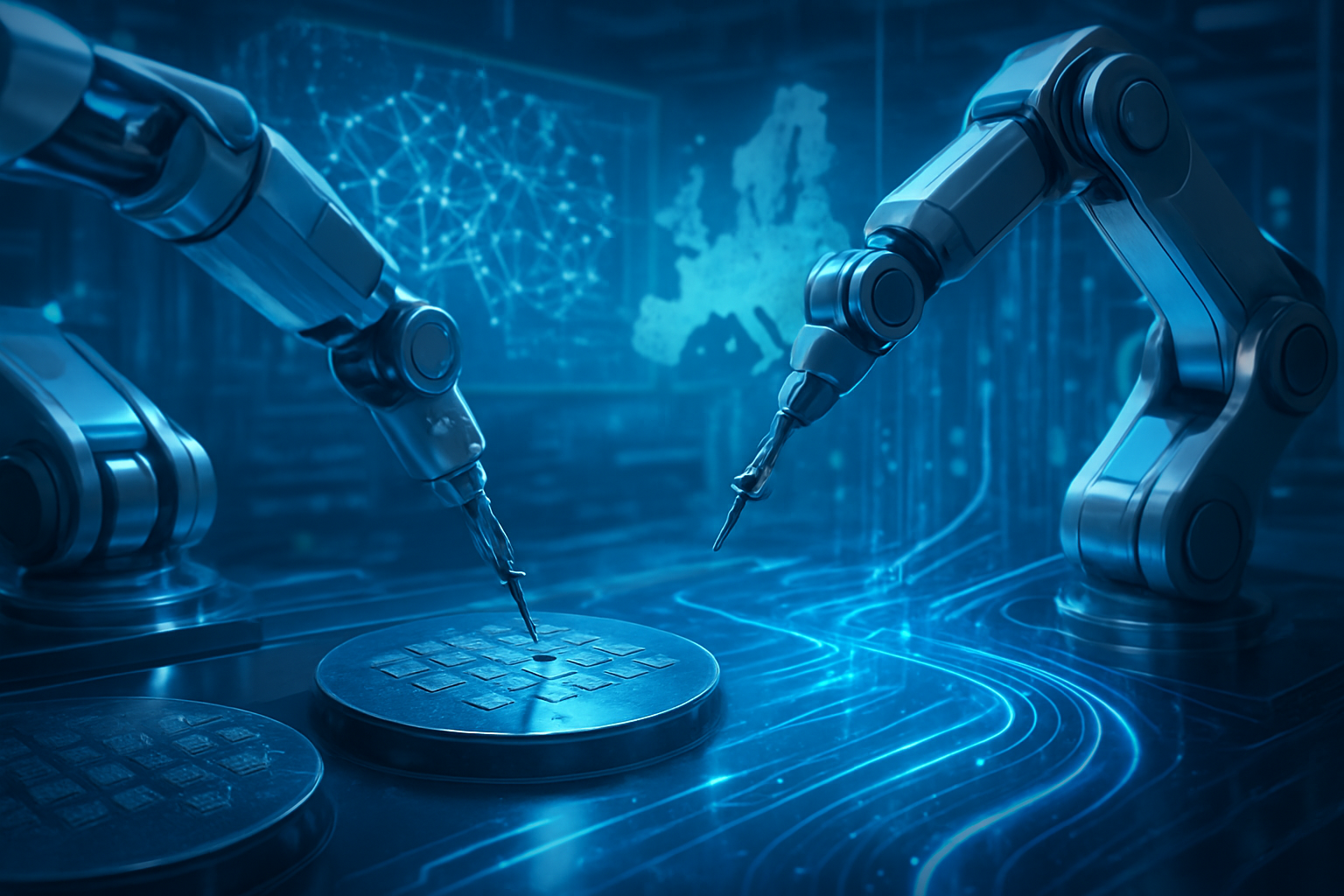
    The semiconductor industry, the bedrock of the modern digital economy, is undergoing a profound transformation driven by the integration of artificial intelligence (AI) and machine learning (ML). As of October 2025, these advanced technologies are no longer just supplementary tools but have become foundational pillars, enabling unprecedented levels of efficiency, precision, and speed across the entire chip lifecycle. This paradigm shift is critical for addressing the escalating complexity of chip design and manufacturing, as well as the insatiable global demand for increasingly powerful and specialized semiconductors that fuel everything from cloud computing to edge AI devices.

    AI's immediate significance in semiconductor manufacturing lies in its ability to optimize intricate processes, predict potential failures, and accelerate innovation at a scale previously unimaginable. From enhancing yield rates in high-volume fabrication plants to dramatically compressing chip design cycles, AI is proving indispensable. This technological leap promises not only substantial cost reductions and faster time-to-market for new products but also ensures the production of higher quality, more reliable chips, cementing AI's role as the primary catalyst for the industry's evolution.

    The Algorithmic Forge: Technical Deep Dive into AI's Manufacturing Revolution

    The technical advancements brought by AI into semiconductor manufacturing are multifaceted and deeply impactful. At the forefront are sophisticated AI-powered solutions for yield optimization and process control. Companies like Lam Research (NASDAQ: LRCX) have introduced tools, such as their Fabtex™ Yield Optimizer, which leverage virtual silicon digital twins. These digital replicas, combined with real-time factory data, allow AI algorithms to analyze billions of data points, identify subtle process variations, and recommend real-time adjustments to parameters like temperature, pressure, and chemical composition. This proactive approach can reduce yield detraction by up to 30%, systematically targeting and mitigating yield-limiting mechanisms that previously required extensive manual analysis and trial-and-error.

    Beyond process control, advanced defect detection and quality control have seen revolutionary improvements. Traditional human inspection, often prone to error and limited by speed, is being replaced by AI-driven automated optical inspection (AOI) systems. These systems, utilizing deep learning and computer vision, can detect microscopic defects, cracks, and irregularities on wafers and chips with unparalleled speed and accuracy. Crucially, these AI models can identify novel or unknown defects, adapting to new challenges as manufacturing processes evolve or new materials are introduced, ensuring only the highest quality products proceed to market.

    Predictive maintenance (PdM) for semiconductor equipment is another area where AI shines. By continuously analyzing vast streams of sensor data and equipment logs, ML algorithms can anticipate equipment failures long before they occur. This allows for scheduled, proactive maintenance, significantly minimizing costly unplanned downtime, reducing overall maintenance expenses by preventing catastrophic breakdowns, and extending the operational lifespan of incredibly expensive and critical manufacturing tools. The benefits include a reported 10-20% increase in equipment uptime and up to a 50% reduction in maintenance planning time. Furthermore, AI-driven Electronic Design Automation (EDA) tools, exemplified by Synopsys (NASDAQ: SNPS) DSO.ai and Cadence (NASDAQ: CDNS) Cerebrus, are transforming chip design. These tools automate complex design tasks like layout generation and optimization, allowing engineers to explore billions of possible transistor arrangements and routing topologies in a fraction of the time. This dramatically compresses design cycles, with some advanced 5nm chip designs seeing optimization times reduced from six months to six weeks, a 75% improvement. Generative AI is also emerging, assisting in the creation of entirely new design architectures and simulations. These advancements represent a significant departure from previous, more manual and iterative design and manufacturing approaches, offering a level of precision, speed, and adaptability that human-centric methods could not achieve.

    Shifting Tides: AI's Impact on Tech Giants and Startups

    The integration of AI into semiconductor manufacturing is reshaping the competitive landscape, creating new opportunities for some while posing significant challenges for others. Major semiconductor manufacturers and foundries stand to benefit immensely. Companies like Taiwan Semiconductor Manufacturing Company (TSMC) (NYSE: TSM), Intel (NASDAQ: INTC), and Samsung (KRX: 005930) are heavily investing in AI-driven process optimization, defect detection, and predictive maintenance to maintain their lead in producing the most advanced chips. Their ability to leverage AI for higher yields and faster ramp-up times for new process nodes (e.g., 3nm, 2nm) directly translates into a competitive advantage in securing contracts from major fabless design firms.

    Equipment manufacturers such as ASML (NASDAQ: ASML), a critical supplier of lithography systems, and Lam Research (NASDAQ: LRCX), specializing in deposition and etch, are integrating AI into their tools to offer more intelligent, self-optimizing machinery. This creates a virtuous cycle where AI-enhanced equipment produces better chips, further driving demand for AI-integrated solutions. EDA software providers like Synopsys (NASDAQ: SNPS) and Cadence (NASDAQ: CDNS) are experiencing a boom, as their AI-powered design tools become indispensable for navigating the complexities of advanced chip architectures, positioning them as critical enablers of next-generation silicon.

    The competitive implications for major AI labs and tech giants are also profound. Companies like NVIDIA (NASDAQ: NVDA), which not only designs its own AI-optimized GPUs but also relies heavily on advanced manufacturing, benefit from the overall improvement in semiconductor production efficiency. Their ability to get more powerful, higher-quality chips faster impacts their AI hardware roadmaps and their competitive edge in AI development. Furthermore, startups specializing in AI for industrial automation, computer vision for quality control, and predictive analytics for factory operations are finding fertile ground, offering niche solutions that complement the broader industry shift. This disruption means that companies that fail to adopt AI will increasingly lag in cost-efficiency, quality, and time-to-market, potentially losing market share to more agile, AI-driven competitors.

    A New Horizon: Wider Significance in the AI Landscape

    The pervasive integration of AI into semiconductor manufacturing is a pivotal development that profoundly impacts the broader AI landscape and global technological trends. Firstly, it directly addresses the escalating demand for compute power, which is the lifeblood of modern AI. By making chip production more efficient and cost-effective, AI in manufacturing enables the creation of more powerful GPUs, TPUs, and specialized AI accelerators at scale. This, in turn, fuels advancements in large language models, complex neural networks, and edge AI applications, creating a self-reinforcing cycle where AI drives better chip production, which in turn drives better AI.

    This development also has significant implications for data centers and edge AI deployments. More efficient semiconductor manufacturing means cheaper, more powerful, and more energy-efficient chips for cloud infrastructure, supporting the exponential growth of AI workloads. Simultaneously, it accelerates the proliferation of AI at the edge, enabling real-time decision-making in autonomous vehicles, IoT devices, and smart infrastructure without constant reliance on cloud connectivity. However, this increased reliance on advanced manufacturing also brings potential concerns, particularly regarding supply chain resilience and geopolitical stability. The concentration of advanced chip manufacturing in a few regions means that disruptions, whether from natural disasters or geopolitical tensions, could have cascading effects across the entire global tech industry, impacting everything from smartphone production to national security.

    Comparing this to previous AI milestones, the current trend is less about a single breakthrough algorithm and more about the systemic application of AI to optimize a foundational industry. It mirrors the industrial revolution's impact on manufacturing, but with intelligence rather than mechanization as the primary driver. This shift is critical because it underpins all other AI advancements; without the ability to produce ever more sophisticated hardware efficiently, the progress of AI itself would inevitably slow. The ability of AI to enhance its own hardware manufacturing is a meta-development, accelerating the entire field and setting the stage for future, even more transformative, AI applications.

    The Road Ahead: Exploring Future Developments and Challenges

    Looking ahead, the future of semiconductor manufacturing, heavily influenced by AI, promises even more transformative developments. In the near term, we can expect continued refinement of AI models for hyper-personalized manufacturing processes, where each wafer run or even individual die can have its fabrication parameters dynamically adjusted by AI for optimal performance and yield. The integration of quantum computing (QC) simulations with AI for materials science and device physics is also on the horizon, potentially unlocking new materials and architectures that are currently beyond our computational reach. AI will also play a crucial role in the development and scaling of advanced lithography techniques beyond extreme ultraviolet (EUV), such as high-NA EUV and eventually even more exotic methods, by optimizing the incredibly complex optical and chemical processes involved.

    Long-term, the vision includes fully autonomous "lights-out" fabrication plants, where AI agents manage the entire manufacturing process from design optimization to final testing with minimal human intervention. This could lead to a significant reduction in human error and a massive increase in throughput. The rise of 3D stacking and heterogeneous integration will also be heavily reliant on AI for complex design, assembly, and thermal management challenges. Experts predict that AI will be central to the development of neuromorphic computing architectures and other brain-inspired chips, as AI itself will be used to design and optimize these novel computing paradigms.

    However, significant challenges remain. The cost of implementing and maintaining advanced AI systems in fabs is substantial, requiring significant investment in data infrastructure, specialized hardware, and skilled personnel. Data privacy and security within highly sensitive manufacturing environments are paramount, especially as more data is collected and shared across AI systems. Furthermore, the "explainability" of AI models—understanding why an AI makes a particular decision or adjustment—is crucial for regulatory compliance and for engineers to trust and troubleshoot these increasingly autonomous systems. What experts predict will happen next is a continued convergence of AI with advanced robotics and automation, leading to a new era of highly flexible, adaptable, and self-optimizing manufacturing ecosystems, pushing the boundaries of Moore's Law and beyond.

    A Foundation Reimagined: The Enduring Impact of AI in Silicon

    In summary, the integration of AI and machine learning into semiconductor manufacturing represents one of the most significant technological shifts of our time. The key takeaways are clear: AI is driving unprecedented gains in manufacturing efficiency, quality, and speed, fundamentally altering how chips are designed, fabricated, and optimized. From sophisticated yield prediction and defect detection to accelerated design cycles and predictive maintenance, AI is now an indispensable component of the semiconductor ecosystem. This transformation is not merely incremental but marks a foundational reimagining of an industry that underpins virtually all modern technology.

    This development's significance in AI history cannot be overstated. It highlights AI's maturity beyond mere software applications, demonstrating its critical role in enhancing the very hardware that powers AI itself. It's a testament to AI's ability to optimize complex physical processes, pushing the boundaries of what's possible in advanced engineering and high-volume production. The long-term impact will be a continuous acceleration of technological progress, enabling more powerful, efficient, and specialized computing devices that will further fuel innovation across every sector, from healthcare to space exploration.

    In the coming weeks and months, we should watch for continued announcements from major semiconductor players regarding their AI adoption strategies, new partnerships between AI software firms and manufacturing equipment providers, and further advancements in AI-driven EDA tools. The ongoing race for smaller, more powerful, and more energy-efficient chips will be largely won by those who most effectively harness the power of AI in their manufacturing processes. The future of silicon is intelligent, and AI is forging its path.


    This content is intended for informational purposes only and represents analysis of current AI developments.

    TokenRing AI delivers enterprise-grade solutions for multi-agent AI workflow orchestration, AI-powered development tools, and seamless remote collaboration platforms.
    For more information, visit https://www.tokenring.ai/.

  • India’s Semiconductor Surge: Powering the Future of Global AI

    India’s Semiconductor Surge: Powering the Future of Global AI

    India is aggressively charting a course to become a global powerhouse in semiconductor manufacturing and design, a strategic pivot with profound implications for the future of artificial intelligence and the broader technology sector. Driven by a vision of 'AtmaNirbharta' or self-reliance, the nation is rapidly transitioning from a predominantly design-focused hub to an end-to-end semiconductor value chain player, encompassing fabrication, assembly, testing, marking, and packaging (ATMP) operations. This ambitious push, backed by substantial government incentives and significant private investment, is not merely about economic growth; it's a calculated move to de-risk global supply chains, accelerate AI hardware development, and solidify India's position as a critical node in the evolving technological landscape.

    The immediate significance of India's burgeoning semiconductor industry, particularly in the period leading up to October 2025, cannot be overstated. As geopolitical tensions continue to reshape global trade and manufacturing, India offers a crucial alternative to concentrated East Asian supply chains, enhancing resilience and reducing vulnerabilities. For the AI sector, this means a potential surge in global capacity for advanced AI hardware, from high-performance computing (HPC) resources powered by thousands of GPUs to specialized chips for electric vehicles, 5G, and IoT. With its existing strength in semiconductor design talent and a rapidly expanding manufacturing base, India is poised to become an indispensable partner in the global quest for AI innovation and technological sovereignty.

    From Concept to Commercialization: India's Technical Leap in Chipmaking

    India's semiconductor ambition is rapidly translating into tangible technical advancements and operational milestones. At the forefront is the monumental Tata-PSMC fabrication plant in Dholera, Gujarat, a joint venture between Tata Electronics (NSE: TATAELXSI) and Taiwan's Powerchip Semiconductor Manufacturing Corporation (PSMC). With an investment of ₹91,000 crore (approximately $11 billion), this facility, initiated in March 2024, is slated to begin rolling out chips by September-October 2025, a year ahead of schedule. This 12-inch wafer fab will produce up to 50,000 wafers per month on mature nodes (28nm to 110nm), crucial for high-demand sectors like automotive, power management ICs, display drivers, and microcontrollers – all foundational to embedded AI applications.

    Complementing this manufacturing push is the rapid growth in outsourced semiconductor assembly and test (OSAT) capabilities. Kaynes Semicon (NSE: KAYNES), for instance, has established a high-capacity OSAT facility in Sanand, Gujarat, with a ₹3,300 crore investment. This facility, which rolled out India's first commercially made chip module in October 2025, is designed to produce up to 6.3 million chips per day, catering to high-reliability markets including automotive, industrial, data centers, aerospace, and defense. This strategic backward integration is vital for India to reduce import dependence and become a competitive hub for advanced packaging. Furthermore, the Union Cabinet approved four additional semiconductor manufacturing projects in August 2025, including SiCSem Private Limited (Odisha) for India's first commercial Silicon Carbide (SiC) compound semiconductor fabrication facility, crucial for next-generation power electronics and high-frequency applications.

    Beyond manufacturing, India is making significant strides in advanced chip design. The nation inaugurated its first centers for advanced 3-nanometer (nm) chip design in Noida and Bengaluru in May 2025. This was swiftly followed by British semiconductor firm ARM establishing a 2-nanometer (nm) chip development presence in Bengaluru in September 2025. These capabilities place India among a select group of nations globally capable of designing such cutting-edge chips, which are essential for enhancing device performance, reducing power consumption, and supporting future AI, mobile computing, and high-performance systems. The India AI Mission, backed by a ₹10,371 crore outlay, further solidifies this by providing over 34,000 GPUs to startups, researchers, and students at subsidized rates, creating the indispensable hardware foundation for indigenous AI development.

    Initial reactions from the AI research community and industry experts have been largely positive, albeit with cautious optimism. Experts view the Tata-PSMC fab as a "key milestone" for India's semiconductor journey, positioning it as a crucial alternative supplier and strengthening global supply chains. The advanced packaging efforts by companies like Kaynes Semicon are seen as vital for reducing import dependence and aligning with the global "China +1" diversification strategy. The leap into 2nm and 3nm design capabilities is particularly lauded, placing India at the forefront of advanced chip innovation. However, analysts also point to the immense capital expenditure required, the need to bridge the skill gap between design and manufacturing, and the importance of consistent policy stability as ongoing challenges.

    Reshaping the AI Industry Landscape

    India's accelerating semiconductor ambition is poised to significantly reshape the competitive landscape for AI companies, tech giants, and startups globally. Domestic players like Tata Electronics (NSE: TATAELXSI) and Kaynes Semicon (NSE: KAYNES) are direct beneficiaries, establishing themselves as pioneers in India's chip manufacturing and packaging sectors. International partners such as PSMC and Clas-SiC Wafer Fab Ltd. are gaining strategic footholds in a rapidly expanding market, while companies like ARM are leveraging India's deep talent pool for advanced R&D. Samsung (KRX: 005930) is also investing to transform its Indian research center into a global AI semiconductor design hub, signaling a broader trend of tech giants deepening their engagement with India's ecosystem.

    For major AI labs and tech companies worldwide, India's emergence as a semiconductor hub offers crucial competitive advantages. It provides a diversified and more resilient supply chain, reducing reliance on single geographic regions and mitigating risks associated with geopolitical tensions or natural disasters. This increased stability could lead to more predictable costs and availability of critical AI hardware, impacting everything from data center infrastructure to edge AI devices. Companies seeking to implement a 'China +1' strategy will find India an increasingly attractive destination for manufacturing and R&D, fostering new strategic partnerships and collaborations.

    Potential disruption to existing products or services primarily revolves around supply chain dynamics. While a fully mature Indian semiconductor industry is still some years away, the immediate impact is a gradual de-risking of global operations. Companies that are early movers in partnering with Indian manufacturers or establishing operations within the country stand to gain strategic advantages in market positioning, potentially securing better access to components and talent. This could lead to a shift in where future AI hardware innovation and production are concentrated, encouraging more localized and regionalized supply chains.

    The market positioning of India itself is dramatically enhanced. From being a consumer and design service provider, India is transforming into a producer and innovator of foundational technology. This shift not only attracts foreign direct investment but also fosters a vibrant domestic ecosystem for AI startups, who will have more direct access to locally manufactured chips and a supportive hardware infrastructure, including the high-performance computing resources offered by the India AI Mission. This strategic advantage extends to sectors like electric vehicles, 5G, and defense, where indigenous chip capabilities are paramount.

    Broader Implications and Global Resonance

    India's semiconductor ambition is not merely an economic endeavor; it's a profound strategic realignment with significant ramifications for the broader AI landscape and global geopolitical trends. It directly addresses the critical need for supply chain resilience, a lesson painfully learned during recent global disruptions. By establishing domestic manufacturing capabilities, India contributes to a more diversified and robust global semiconductor ecosystem, reducing the world's vulnerability to single points of failure. This aligns perfectly with the global trend towards technological sovereignty and de-risking critical supply chains.

    The impacts extend far beyond chip production. Economically, the approved projects represent a cumulative investment of ₹1.6 lakh crore (approximately $18.23 billion), creating thousands of direct and indirect high-tech jobs and stimulating ancillary industries. This contributes significantly to India's vision of becoming a $5 trillion economy and a global manufacturing hub. For national security, self-reliance in semiconductors is paramount, as chips are the bedrock of modern defense systems, critical infrastructure, and secure communication. The 'AtmaNirbharta' drive ensures that India has control over the foundational technology underpinning its digital future and AI advancements.

    Potential concerns, however, remain. The semiconductor industry is notoriously capital-intensive, requiring sustained, massive investments and a long gestation period for returns. While India has a strong talent pool in chip design (20% of global design engineers), there's a significant skill gap in specialized semiconductor manufacturing and fab operations, which the government is actively trying to bridge by training 85,000 engineers. Consistent policy stability and ease of doing business are also crucial to sustain investor confidence and ensure long-term growth in a highly competitive global market.

    Comparing this to previous AI milestones, India's semiconductor push can be seen as laying the crucial physical infrastructure necessary for the next wave of AI breakthroughs. Just as the development of powerful GPUs by companies like NVIDIA (NASDAQ: NVDA) enabled the deep learning revolution, and the advent of cloud computing provided scalable infrastructure, India's move to secure its own chip supply and design capabilities is a foundational step. It ensures that future AI innovations within India and globally are not bottlenecked by supply chain vulnerabilities or reliance on external entities, fostering an environment for independent and ethical AI development.

    The Road Ahead: Future Developments and Challenges

    The coming years are expected to witness a rapid acceleration of India's semiconductor journey. The Tata-PSMC fab in Dholera is poised to begin commercial production by late 2025, marking a significant milestone for indigenous chip manufacturing. This will be followed by the operationalization of other approved projects, including the SiCSem facility in Odisha and the expansion of Continental Device India Private Limited (CDIL) in Punjab. The continuous development of 2nm and 3nm chip design capabilities, supported by global players like ARM and Samsung, indicates India's intent to move up the technology curve beyond mature nodes.

    Potential applications and use cases on the horizon are vast and transformative. A robust domestic semiconductor industry will directly fuel India's ambitious AI Mission, providing the necessary hardware for advanced machine learning research, large language model development, and high-performance computing. It will also be critical for the growth of electric vehicles, where power management ICs and microcontrollers are essential; for 5G and future communication technologies; for the Internet of Things (IoT); and for defense and aerospace applications, ensuring strategic autonomy. The India AI Mission Portal, with its subsidized GPU access, will democratize AI development, fostering innovation across various sectors.

    However, significant challenges need to be addressed for India to fully realize its ambition. The ongoing need for a highly skilled workforce in manufacturing, particularly in complex fab operations, remains paramount. Continuous and substantial capital investment, both domestic and foreign, will be required to build and maintain state-of-the-art facilities. Furthermore, fostering a vibrant ecosystem of homegrown fabless companies and ensuring seamless technology transfer from global partners are crucial. Experts predict that while India will become a significant player, the journey to becoming a fully self-reliant and leading-edge semiconductor nation will be a decade-long endeavor, requiring sustained political will and strategic execution.

    A New Era of AI Innovation and Global Resilience

    India's determined push into semiconductor manufacturing and design represents a pivotal moment in the nation's technological trajectory and holds profound significance for the global AI landscape. The key takeaways include a strategic shift towards self-reliance, massive government incentives, substantial private investments, and a rapid progression from design-centric to an end-to-end value chain player. Projects like the Tata-PSMC fab and Kaynes Semicon's OSAT facility, alongside advancements in 2nm/3nm chip design and the foundational India AI Mission, underscore a comprehensive national effort.

    This development's significance in AI history cannot be overstated. By diversifying the global semiconductor supply chain, India is not just securing its own digital future but also contributing to the stability and resilience of AI innovation worldwide. It ensures that the essential hardware backbone for advanced AI research and deployment is less susceptible to geopolitical shocks, fostering a more robust and distributed ecosystem. This strategic autonomy will enable India to develop ethical and indigenous AI solutions tailored to its unique needs and values, further enriching the global AI discourse.

    The long-term impact will see India emerge as an indispensable partner in the global technology order, not just as a consumer or a service provider, but as a critical producer of foundational technologies. What to watch for in the coming weeks and months includes the successful commencement of commercial production at the Tata-PSMC fab, further investment announcements in advanced nodes, the expansion of the India AI Mission's resources, and continued progress in developing a skilled manufacturing workforce. India's semiconductor journey is a testament to its resolve to power the next generation of AI and secure its place as a global technology leader.


    This content is intended for informational purposes only and represents analysis of current AI developments.

    TokenRing AI delivers enterprise-grade solutions for multi-agent AI workflow orchestration, AI-powered development tools, and seamless remote collaboration platforms.
    For more information, visit https://www.tokenring.ai/.

  • AI Unleashes a New Silicon Revolution: Transforming Chips from Blueprint to Billions

    AI Unleashes a New Silicon Revolution: Transforming Chips from Blueprint to Billions

    The semiconductor industry is experiencing an unprecedented surge, fundamentally reshaped by the pervasive integration of Artificial Intelligence across every stage, from intricate chip design to advanced manufacturing and diverse applications. As of October 2025, AI is not merely an enhancement but the indispensable backbone driving innovation, efficiency, and exponential growth, propelling the global semiconductor market towards an anticipated $697 billion in 2025. This profound symbiotic relationship sees AI not only demanding ever more powerful chips but also empowering the very creation of these advanced silicon marvels, accelerating development cycles, optimizing production, and unlocking novel device functionalities.

    In chip design, AI-driven Electronic Design Automation (EDA) tools have emerged as game-changers, leveraging machine learning and generative AI to automate complex tasks like schematic generation, layout optimization, and defect prediction, drastically compressing design cycles. Tools like Synopsys' (NASDAQ: SNPS) DSO.ai have reportedly reduced 5nm chip design optimization from six months to just six weeks, marking a 75% reduction in time-to-market. Beyond speed, AI enhances design quality by exhaustively exploring billions of transistor arrangements and routing topologies and is crucial for detecting hardware Trojans with 97% accuracy, securing the supply chain. Concurrently, AI's impact on manufacturing is equally transformative, with AI-powered predictive maintenance anticipating equipment failures to minimize downtime and save costs, and advanced algorithms optimizing processes to achieve up to 30% improvement in yields and 95% accuracy in defect detection. This integration extends to supply chain management, where AI optimizes logistics and forecasts demand to build more resilient networks. The immediate significance of this AI integration is evident in the burgeoning demand for specialized AI accelerators—GPUs, NPUs, and ASICs—that are purpose-built for machine learning workloads and are projected to drive the AI chip market beyond $150 billion in 2025. This "AI Supercycle" fuels an era where semiconductors are not just components but the very intelligence enabling everything from hyperscale data centers and cutting-edge edge computing devices to the next generation of AI-infused consumer electronics.

    The Silicon Architects: AI's Technical Revolution in Chipmaking

    AI has profoundly transformed semiconductor chip design and manufacturing by enabling unprecedented automation, optimization, and the exploration of novel architectures, significantly accelerating development cycles and enhancing product quality. In chip design, AI-driven Electronic Design Automation (EDA) tools have become indispensable. Solutions like Synopsys' (NASDAQ: SNPS) DSO.ai and Cadence (NASDAQ: CDNS) Cerebrus leverage machine learning algorithms, including reinforcement learning, to optimize complex designs for power, performance, and area (PPA) at advanced process nodes such as 5nm, 3nm, and the emerging 2nm. This differs fundamentally from traditional human-centric design, which often treats components separately and relies on intuition. AI systems can explore billions of possible transistor arrangements and routing topologies in a fraction of the time, leading to innovative and often "unintuitive" circuit patterns that exhibit enhanced performance and energy efficiency characteristics. For instance, Synopsys (NASDAQ: SNPS) reported that DSO.ai reduced the design optimization cycle for a 5nm chip from six months to just six weeks, representing a 75% reduction in time-to-market. Beyond optimizing traditional designs, AI is also driving the creation of entirely new semiconductor architectures tailored for AI workloads, such as neuromorphic chips, which mimic the human brain for vastly lower energy consumption in AI tasks.

    In semiconductor manufacturing, AI advancements are revolutionizing efficiency, yield, and quality control. AI-powered real-time monitoring and predictive analytics have become crucial in fabrication plants ("fabs"), allowing for the detection and mitigation of issues at speeds unattainable by conventional methods. Advanced machine learning models analyze vast datasets from optical inspection systems and electron microscopes to identify microscopic defects that are invisible to traditional inspection tools. TSMC (NYSE: TSM), for example, reported a 20% increase in yield on its 3nm production lines after implementing AI-driven defect detection technologies. Applied Materials (NASDAQ: AMAT) has introduced new AI-powered manufacturing systems, including the Kinex Bonding System for integrated die-to-wafer hybrid bonding with improved accuracy and throughput, and the Centura Xtera Epi System for producing void-free Gate-All-Around (GAA) transistors at 2nm nodes, significantly boosting performance and reliability while cutting gas use by 50%. These systems move beyond manual or rule-based process control, leveraging AI to analyze comprehensive manufacturing data (far exceeding the 5-10% typically analyzed by human engineers) to identify root causes of yield degradation and optimize process parameters autonomously.

    Initial reactions from the AI research community and industry experts are overwhelmingly positive, acknowledging these AI advancements as "indispensable for sustainable AI growth." Experts from McKinsey & Company note that the surge in generative AI is pushing the industry to innovate faster, approaching a "new S-curve" of technological advancement. However, alongside this optimism, concerns persist regarding the escalating energy consumption of AI and the stability of global supply chains. The industry is witnessing a significant shift towards an infrastructure and energy-intensive build-out, with the "AI designing chips for AI" approach becoming standard to create more efficient hardware. Projections for the global semiconductor market nearing $800 billion in 2025, with the AI chip market alone surpassing $150 billion, underscore the profound impact of AI. Emerging trends also include the use of AI to bolster chip supply chain security, with University of Missouri researchers developing an AI-driven method that achieves 97% accuracy in detecting hidden hardware trojans in chip designs, a critical step beyond traditional, time-consuming detection processes.

    Reshaping the Tech Landscape: Impact on AI Companies, Tech Giants, and Startups

    The increasing integration of AI in the semiconductor industry is profoundly reshaping the technological landscape, creating a symbiotic relationship where AI drives demand for more advanced chips, and these chips, in turn, enable more powerful and efficient AI systems. This transformation, accelerating through late 2024 and 2025, has significant implications for AI companies, tech giants, and startups alike. The global AI chip market alone is projected to surpass $150 billion in 2025 and is anticipated to reach $460.9 billion by 2034, highlighting the immense growth and strategic importance of this sector.

    AI companies are directly impacted by advancements in semiconductors as their ability to develop and deploy cutting-edge AI models, especially large language models (LLMs) and generative AI, hinges on powerful and efficient hardware. The shift towards specialized AI chips, such as Application-Specific Integrated Circuits (ASICs), neuromorphic chips, in-memory computing, and photonic chips, offers unprecedented levels of efficiency, speed, and energy savings for AI workloads. This allows AI companies to train larger, more complex models faster and at lower operational costs. Startups like Cerebras and Graphcore, which specialize in AI-dedicated chips, have already disrupted traditional markets and attracted significant investments. However, the high initial investment and operational costs associated with developing and integrating advanced AI systems and hardware remain a challenge for some.

    Tech giants, including Alphabet (NASDAQ: GOOGL), Amazon (NASDAQ: AMZN), Microsoft (NASDAQ: MSFT), and Apple (NASDAQ: AAPL), are heavily invested in the AI semiconductor race. Many are developing their own custom AI accelerators, such as Google's (NASDAQ: GOOGL) Tensor Processing Units (TPUs), Amazon Web Services (AWS) Graviton, Trainium, and Inferentia processors, and Microsoft's (NASDAQ: MSFT) Azure Maia 100 AI accelerator and Azure Cobalt 100 cloud CPU. This strategy provides strategic independence, allowing them to optimize performance and cost for their massive-scale AI workloads, thereby disrupting the traditional cloud AI services market. Custom silicon also helps these giants reduce reliance on third-party processors and enhances energy efficiency for their cloud services. For example, Google's (NASDAQ: GOOGL) Axion processor, its first custom Arm-based CPU for data centers, offers approximately 60% greater energy efficiency compared to conventional CPUs. The demand for AI-optimized hardware is driving these companies to continuously innovate and integrate advanced chip architectures.

    AI integration in semiconductors presents both opportunities and challenges for startups. Cloud-based design tools are lowering barriers to entry, enabling startups to access advanced resources without substantial upfront infrastructure investments. This accelerated chip development process makes semiconductor ventures more appealing to investors and entrepreneurs. Startups focusing on niche, ultra-efficient solutions like neuromorphic computing, in-memory processing, or specialized photonic AI chips can disrupt established players, especially for edge AI and IoT applications where low power and real-time processing are critical. Examples of such emerging players include Tenstorrent and SambaNova Systems, specializing in high-performance AI inference accelerators and hardware for large-scale deep learning models, respectively. However, startups face the challenge of competing with well-established companies that possess vast datasets and large engineering teams.

    Companies deeply invested in advanced chip design and manufacturing are the primary beneficiaries. NVIDIA (NASDAQ: NVDA) remains the undisputed market leader in AI GPUs, holding approximately 80-85% of the AI chip market. Its H100 and next-generation Blackwell architectures are crucial for training large language models (LLMs), ensuring sustained high demand. NVIDIA's (NASDAQ: NVDA) brand value nearly doubled in 2025 to USD 87.9 billion due to high demand for its AI processors. TSMC (NYSE: TSM), as the world's largest dedicated semiconductor foundry, manufactures the advanced chips for major clients like NVIDIA (NASDAQ: NVDA), Apple (NASDAQ: AAPL), AMD (NASDAQ: AMD), and Amazon (NASDAQ: AMZN). It reported a record 39% jump in third-quarter profit for 2025, with its high-performance computing (HPC) division contributing over 55% of its total revenues. TSMC's (NYSE: TSM) advanced node capacity (3nm, 5nm, 2nm) is sold out for years, driven primarily by AI demand. AMD (NASDAQ: AMD) is emerging as a strong challenger in the AI chip market with its Instinct MI300X and upcoming MI350 accelerators, securing significant multi-year agreements. AMD's (NASDAQ: AMD) data center and AI revenue grew 80% year-on-year, demonstrating success in penetrating NVIDIA's (NASDAQ: NVDA) market. Intel (NASDAQ: INTC), despite facing challenges in the AI chip market, is making strides with its 18A process node expected in late 2024/early 2025 and plans to ship over 100 million AI PCs by the end of 2025. Intel (NASDAQ: INTC) also develops neuromorphic chips like Loihi 2 for energy-efficient AI. Qualcomm (NASDAQ: QCOM) leverages AI to develop chips for next-generation applications, including autonomous vehicles and immersive AR/VR experiences. EDA Tool Companies like Synopsys (NASDAQ: SNPS) and Cadence (NASDAQ: CDNS) are revolutionizing chip design with AI-driven tools, significantly reducing design cycles.

    The competitive landscape is intensifying significantly. Major AI labs and tech companies are in an "AI arms race," recognizing that those with the resources to adopt or develop custom hardware will gain a substantial edge in training larger models, deploying more efficient inference, and reducing operational costs. The ability to design and control custom silicon offers strategic advantages like tailored performance, cost efficiency, and reduced reliance on external suppliers. Companies that fail to adapt their hardware strategies risk falling behind. Even OpenAI is reportedly developing its own custom AI chips, collaborating with semiconductor giants like Broadcom (NASDAQ: AVGO) and TSMC (NYSE: TSM), aiming for readiness by 2026 to enhance efficiency and control over its AI hardware infrastructure.

    The shift towards specialized, energy-efficient AI chips is disrupting existing products and services by enabling more powerful and efficient AI integration. Neuromorphic and in-memory computing solutions will become more prevalent in specialized edge AI applications, particularly in IoT, automotive, and robotics, where low power and real-time processing are paramount, leading to far more capable and pervasive AI tasks on battery-powered devices. AI-enabled PCs are projected to make up 43% of all PC shipments by the end of 2025, transforming personal computing with features like Microsoft (NASDAQ: MSFT) Co-Pilot and Apple's (NASDAQ: AAPL) AI features. Tech giants developing custom silicon are disrupting the traditional cloud AI services market by offering tailored, cost-effective, and higher-performance solutions for their own massive AI workloads. AI is also optimizing semiconductor manufacturing processes, enhancing yield, reducing downtime through predictive maintenance, and improving supply chain resilience by forecasting demand and mitigating risks, leading to operational cost reductions and faster recovery from disruptions.

    Strategic advantages are clear for companies that effectively integrate AI into semiconductors: superior performance and efficiency from specialized AI chips, reduced time-to-market due to AI-driven EDA tools, customization capabilities for specific application needs, and operational cost reductions between 15% and 25% through AI-driven automation and analytics. Companies like NVIDIA (NASDAQ: NVDA), with its established ecosystem, and TSMC (NYSE: TSM), with its technological moat in advanced manufacturing, maintain market leadership. Tech giants designing their own chips gain control over their hardware infrastructure, ensuring optimized performance and cost for their proprietary AI workloads. Overall, the period leading up to and including October 2025 is characterized by an accelerating shift towards specialized AI hardware, with significant investments in new manufacturing capacity and R&D. While a few top players are capturing the majority of economic profit, the entire ecosystem is being transformed, fostering innovation, but also creating a highly competitive environment.

    The Broader Canvas: AI in Semiconductors and the Global Landscape

    The integration of Artificial Intelligence (AI) into the semiconductor industry represents a profound and multifaceted transformation, acting as both a primary consumer and a critical enabler of advanced AI capabilities. This symbiotic relationship is driving innovation across the entire semiconductor value chain, with significant impacts on the broader AI landscape, economic trends, geopolitical dynamics, and introducing new ethical and environmental concerns.

    AI is being integrated into nearly every stage of the semiconductor lifecycle, from design and manufacturing to testing and supply chain management. AI-driven Electronic Design Automation (EDA) tools are revolutionizing chip design by automating and optimizing complex tasks like floorplanning, circuit layout, routing schemes, and logic flows, significantly reducing design cycles. In manufacturing, AI enhances efficiency and reduces costs through real-time monitoring, predictive analytics, and defect detection, leading to increased yield rates and optimized material usage. AI also optimizes supply chain management, improving logistics, demand forecasting, and risk management. The surging demand for AI is driving the development of specialized AI chips like GPUs, TPUs, NPUs, and ASICs, designed for optimal performance and energy efficiency in AI workloads.

    AI integration in semiconductors is a cornerstone of several broader AI trends. It is enabling the rise of Edge AI and Decentralization, with chips optimized for local processing on devices in autonomous vehicles, industrial automation, and augmented reality. This synergy is also accelerating AI for Scientific Discovery, forming a virtuous cycle where AI tools help create advanced chips, which in turn power breakthroughs in personalized medicine and complex simulations. The explosion of Generative AI and Large Language Models (LLMs) is driving unprecedented demand for computational power, fueling the semiconductor market to innovate faster. Furthermore, the industry is exploring New Architectures and Materials like chiplets, neuromorphic computing, and 2D materials to overcome traditional silicon limitations.

    Economically, the global semiconductor market is projected to reach nearly $700 billion in 2025, with AI technologies accounting for a significant share. The AI chip market alone is projected to surpass $150 billion in 2025, leading to substantial economic profit. Technologically, AI accelerates the development of next-generation chips, while advancements in semiconductors unlock new AI capabilities, creating a powerful feedback loop. Strategically and geopolitically, semiconductors, particularly AI chips, are now viewed as critical strategic assets. Geopolitical competition, especially between the United States and China, has led to export controls and supply chain restrictions, driving a shift towards regional manufacturing ecosystems and a race for technological supremacy, creating a "Silicon Curtain."

    However, this transformation also raises potential concerns. Ethical AI in Hardware is a new challenge, ensuring ethical considerations are embedded from the hardware level upwards. Energy Consumption is a significant worry, as AI technologies are remarkably energy-intensive, with data centers consuming a growing portion of global electricity. TechInsights forecasts a 300% increase in CO2 emissions from AI accelerators alone between 2025 and 2029. Job Displacement due to automation in manufacturing is a concern, though AI is also expected to create new job opportunities. Complex legal questions about inventorship, authorship, and ownership of Intellectual Property (IP) arise with AI-generated chip designs. The exorbitant costs could lead to Concentration of Power among a few large players, and Data Security and Privacy are paramount with the analysis of vast amounts of sensitive design and manufacturing data.

    The current integration of AI in semiconductors marks a profound milestone, distinct from previous AI breakthroughs. Unlike earlier phases where AI was primarily a software layer, this era is characterized by the sheer scale of computational resources deployed and AI's role as an active "co-creator" in chip design and manufacturing. This symbiotic relationship creates a powerful feedback loop where AI designs better chips, which then power more advanced AI, demanding even more sophisticated hardware. This wave represents a more fundamental redefinition of AI's capabilities, analogous to historical technological revolutions, profoundly reshaping multiple sectors by enabling entirely new paradigms of intelligence.

    The Horizon of Innovation: Future Developments in AI and Semiconductors

    The integration of Artificial Intelligence (AI) into the semiconductor industry is rapidly accelerating, promising to revolutionize every stage of the chip lifecycle from design and manufacturing to testing and supply chain management. This symbiotic relationship, where AI both demands advanced chips and helps create them, is set to drive significant advancements in the near term (up to 2030) and beyond.

    In the coming years, AI will become increasingly embedded in semiconductor operations, leading to faster innovation, improved efficiency, and reduced costs. AI-Powered Design Automation will see significant enhancements through generative AI and machine learning, automating complex tasks like layout optimization, circuit design, verification, and testing, drastically cutting design cycles. Google's (NASDAQ: GOOGL) AlphaChip, which uses reinforcement learning for floorplanning, exemplifies this shift. Smart Manufacturing and Predictive Maintenance in fabs will leverage AI for real-time process control, anomaly detection, and yield enhancement, reducing costly downtime by up to 50%. Advanced Packaging and Heterogeneous Integration will be optimized by AI, crucial for technologies like 3D stacking and chiplet-based architectures. The demand for Specialized AI Chips (HPC chips, Edge AI semiconductors, ASICs) will skyrocket, and neuromorphic computing will enable more energy-efficient AI processing. AI will also enhance Supply Chain Optimization for greater resilience and efficiency. The semiconductor market is projected to reach $1 trillion by 2030, with AI and automotive electronics as primary growth drivers.

    Looking beyond 2030, AI's role will deepen, leading to more fundamental transformations. A profound long-term development is the emergence of AI systems capable of designing other AI chips, creating a "virtuous cycle." AI will play a pivotal role in New Materials Discovery for advanced nodes and specialized applications. Quantum-Enhanced AI (Quantum-EDA) is predicted, where quantum computing will enhance AI simulations. Manufacturing processes will become highly autonomous and Self-Optimizing Manufacturing Ecosystems, with AI models continuously refining fabrication parameters.

    The breadth of AI's application in semiconductors is expanding across the entire value chain: automated layout generation, predictive maintenance for complex machinery, AI-driven analytics for demand forecasting, accelerating the research and development of new high-performance materials, and the design and optimization of purpose-built chips for AI workloads, including GPUs, NPUs, and ASICs for edge computing and high-performance data centers.

    Despite the immense potential, several significant challenges must be overcome. High Initial Investment and Operational Costs for advanced AI systems remain a barrier. Data Scarcity and Quality, coupled with proprietary restrictions, hinder effective AI model training. A Talent Gap of interdisciplinary professionals proficient in both AI algorithms and semiconductor technology is a significant hurdle. The "black-box" nature of some AI models creates challenges in Interpretability and Validation. As transistor sizes approach atomic dimensions, Physical Limitations like quantum tunneling and heat dissipation require AI to help navigate these fundamental limits. The resource-intensive nature of chip production and AI models raises Sustainability and Energy Consumption concerns. Finally, Data Privacy and IP Protection are paramount when integrating AI into design workflows involving sensitive intellectual property.

    Industry leaders and analysts predict a profound and accelerating transformation. Jensen Huang, CEO of NVIDIA (NASDAQ: NVDA), and other experts emphasize the symbiotic relationship where AI is both the ultimate consumer and architect of advanced chips. Huang predicts an "Agentic AI" boom, demanding 100 to 1,000 times more computing resources, driving a multi-trillion dollar AI infrastructure boom. By 2030, the primary AI computing workload will shift from model training to inference, favoring specialized hardware like ASICs. AI tools are expected to democratize chip design, making it more accessible. Foundries will expand their role to full-stack integration, leveraging AI for continuous energy efficiency gains. Companies like TSMC (NYSE: TSM) are already using AI to boost energy efficiency, classify wafer defects, and implement predictive maintenance. The industry will move towards AI-driven operations to achieve exponential scale, processing vast amounts of manufacturing data that human engineers cannot.

    A New Era of Intelligence: The AI-Semiconductor Nexus

    The integration of Artificial Intelligence (AI) into the semiconductor industry marks a profound transformation, moving beyond incremental improvements to fundamentally reshaping how chips are designed, manufactured, and utilized. This "AI Supercycle" is driven by an insatiable demand for powerful processing, fundamentally changing the technological and economic landscape.

    AI's pervasive influence is evident across the entire semiconductor value chain. In chip design, generative AI and machine learning algorithms are automating complex tasks, optimizing circuit layouts, accelerating simulations and prototyping, and significantly reducing design cycles from months to mere weeks. In manufacturing, AI revolutionizes fabrication processes by improving precision and yield through predictive maintenance, AI-enhanced defect detection, and optimized manufacturing parameters. In testing and verification, AI enhances chip reliability by identifying potential weaknesses early. Beyond production, AI is optimizing the notoriously complex semiconductor supply chain through accurate demand forecasting, intelligent inventory management, and logistics optimization. The burgeoning demand for specialized AI chips—including GPUs, specialized AI accelerators, and ASICs—is the primary catalyst for this industry boom, driving unprecedented revenue growth. Despite the immense opportunities, challenges persist, including high initial investment and operational costs, a global talent shortage, and geopolitical tensions.

    This development represents a pivotal moment, a foundational shift akin to a new industrial revolution. The deep integration of AI in semiconductors underscores a critical trend in AI history: the intrinsic link between hardware innovation and AI progress. The emergence of "chips designed by AI" is a game-changer, fostering an innovation flywheel where AI accelerates chip design, which in turn powers more sophisticated AI capabilities. This symbiotic relationship is crucial for scaling AI from autonomous systems to cutting-edge AI processing across various applications.

    Looking ahead, the long-term impact of AI in semiconductors will usher in a world characterized by ubiquitous AI, where intelligent systems are seamlessly integrated into every aspect of daily life and industry. This AI investment phase is still in its nascent stages, suggesting a sustained period of growth that could last a decade or more. We can expect the continued emergence of novel architectures, including AI-designed chips, self-optimizing "autonomous fabs," and advancements in neuromorphic and quantum computing. This era signifies a strategic repositioning of global technological power and a redefinition of technological progress itself. Addressing sustainability will become increasingly critical, and the workforce will see a significant evolution, with engineers needing to adapt their skill sets.

    The period from October 2025 onwards will be crucial for observing several key developments. Anticipate further announcements from leading chip manufacturers like NVIDIA (NASDAQ: NVDA), Intel (NASDAQ: INTC), and AMD (NASDAQ: AMD) regarding their next-generation AI accelerators and architectures. Keep an eye on the continued aggressive expansion of advanced packaging technologies and the surging demand for High-Bandwidth Memory (HBM). Watch for new strategic partnerships between AI developers, semiconductor manufacturers, and equipment suppliers. The influence of geopolitical tensions on semiconductor production and distribution will remain a critical factor, with efforts towards supply chain regionalization. Look for initial pilot programs and further investments towards self-optimizing factories and the increasing adoption of AI at the edge. Monitor advancements in energy-efficient chip designs and manufacturing processes as the industry grapples with the significant environmental footprint of AI. Finally, investors will closely watch the sustainability of high valuations for AI-centric semiconductor stocks and any shifts in competitive dynamics. Industry conferences in the coming months will likely feature significant announcements and insights into emerging trends. The semiconductor industry, propelled by AI, is not just growing; it is undergoing a fundamental re-architecture that will dictate the pace and direction of technological progress for decades to come.


    This content is intended for informational purposes only and represents analysis of current AI developments.

    TokenRing AI delivers enterprise-grade solutions for multi-agent AI workflow orchestration, AI-powered development tools, and seamless remote collaboration platforms.
    For more information, visit https://www.tokenring.ai/.

  • AI’s Silicon Forge: Semiconductor Equipment Innovations Powering the Next Computing Revolution

    AI’s Silicon Forge: Semiconductor Equipment Innovations Powering the Next Computing Revolution

    The semiconductor manufacturing equipment industry finds itself at the epicenter of a technological renaissance as of late 2025, driven by an insatiable global demand for advanced chips that are the bedrock of artificial intelligence (AI) and high-performance computing (HPC). This critical sector is not merely keeping pace but actively innovating, with record-breaking sales of manufacturing tools and a concerted push towards more efficient, automated, and sustainable production methodologies. The immediate significance for the broader tech industry is profound: these advancements are directly fueling the AI revolution, enabling the creation of more powerful and efficient AI chips, accelerating innovation cycles, and laying the groundwork for a future where intelligent systems are seamlessly integrated into every facet of daily life and industry.

    The current landscape is defined by transformative shifts, including the pervasive integration of AI across the manufacturing lifecycle—from chip design to defect detection and predictive maintenance. Alongside this, breakthroughs in advanced packaging, such as heterogeneous integration and 3D stacking, are overcoming traditional scaling limits, while next-generation lithography, spearheaded by ASML Holding N.V. (NASDAQ: ASML) with its High-NA EUV systems, continues to shrink transistor features. These innovations are not just incremental improvements; they represent foundational shifts that are directly enabling the next wave of technological advancement, with AI at its core, promising unprecedented performance and efficiency in the silicon that powers our digital world.

    The Microscopic Frontier: Unpacking the Technical Revolution in Chip Manufacturing

    The technical advancements in semiconductor manufacturing equipment are nothing short of revolutionary, pushing the boundaries of physics and engineering to create the minuscule yet immensely powerful components that drive modern technology. At the forefront is the pervasive integration of AI, which is transforming the entire chip fabrication lifecycle. AI-driven Electronic Design Automation (EDA) tools are now automating complex design tasks, from layout generation to logic synthesis, significantly accelerating development cycles and optimizing chip designs for unparalleled performance, power efficiency, and area. Machine learning algorithms can predict potential performance issues early in the design phase, compressing timelines from months to mere weeks.

    Beyond design, AI is a game-changer in manufacturing execution. Automated defect detection systems, powered by computer vision and deep learning, are inspecting wafers and chips with greater speed and accuracy than human counterparts, often exceeding 99% accuracy. These systems can identify microscopic flaws and previously unknown defect patterns, drastically improving yield rates and minimizing material waste. Furthermore, AI is enabling predictive maintenance by analyzing sensor data from highly complex and expensive fabrication equipment, anticipating potential failures or maintenance needs before they occur. This proactive approach to maintenance dramatically improves overall equipment effectiveness (OEE) and reliability, preventing costly downtime that can run into millions of dollars per hour.

    These advancements represent a significant departure from previous, more manual or rules-based approaches. The shift to AI-driven optimization and control allows for real-time adjustments and precise command over manufacturing processes, maximizing resource utilization and efficiency at scales previously unimaginable. The semiconductor research community and industry experts have largely welcomed these developments with enthusiasm, recognizing them as essential for sustaining Moore's Law and meeting the escalating demands of advanced computing. Initial reactions highlight the potential for not only accelerating chip development but also democratizing access to cutting-edge manufacturing capabilities through increased automation and efficiency, albeit with concerns about the immense capital investment required for these advanced tools.

    Another critical area of technical innovation lies in advanced packaging technologies. As traditional transistor scaling approaches physical and economic limits, heterogeneous integration and chiplets are emerging as crucial strategies. This involves combining diverse components—such as CPUs, GPUs, memory, and I/O dies—within a single package. Technologies like 2.5D integration, where dies are placed side-by-side on a silicon interposer, and 3D stacking, which involves vertically layering dies, enable higher interconnect density and improved signal integrity. Hybrid bonding, a cutting-edge technique, is now entering high-volume manufacturing, proving essential for complex 3D chip structures and high-bandwidth memory (HBM) modules critical for AI accelerators. These packaging innovations represent a paradigm shift from monolithic chip design, allowing for greater modularity, performance, and power efficiency without relying solely on shrinking transistor sizes.

    Corporate Chessboard: The Impact on AI Companies, Tech Giants, and Startups

    The current wave of innovation in semiconductor manufacturing equipment is reshaping the competitive landscape, creating clear beneficiaries, intensifying rivalries, and posing significant strategic advantages for those who can leverage these advancements. Companies at the forefront of producing these critical tools, such as ASML Holding N.V. (NASDAQ: ASML), Applied Materials, Inc. (NASDAQ: AMAT), Lam Research Corporation (NASDAQ: LRCX), and KLA Corporation (NASDAQ: KLAC), stand to benefit immensely. Their specialized technologies, from lithography and deposition to etching and inspection, are indispensable for fabricating the next generation of AI-centric chips. These firms are experiencing robust demand, driven by foundry expansions and technology upgrades across the globe.

    For major AI labs and tech giants like NVIDIA Corporation (NASDAQ: NVDA), Intel Corporation (NASDAQ: INTC), Taiwan Semiconductor Manufacturing Company Limited (NYSE: TSM), and Samsung Electronics Co., Ltd. (KRX: 005930), access to and mastery of these advanced manufacturing processes are paramount. Companies like TSMC and Samsung, as leading foundries, are making massive capital investments in High-NA EUV, advanced packaging lines, and AI-driven automation to maintain their technological edge and attract top-tier chip designers. Intel, with its ambitious IDM 20.0 strategy, is also heavily investing in its manufacturing capabilities, including novel transistor architectures like Gate-All-Around (GAA) and backside power delivery, to regain process leadership and compete directly with foundry giants. The ability to produce chips at 2nm and 1.4nm nodes, along with sophisticated packaging, directly translates into superior performance and power efficiency for their AI accelerators and CPUs, which are critical for their cloud, data center, and consumer product offerings.

    This development could potentially disrupt existing products and services that rely on older, less efficient manufacturing nodes or packaging techniques. Companies that fail to adapt or secure access to leading-edge fabrication capabilities risk falling behind in the fiercely competitive AI hardware race. Startups, while potentially facing higher barriers to entry due to the immense cost of advanced chip design and fabrication, could also benefit from the increased efficiency and capabilities offered by AI-driven EDA tools and more accessible advanced packaging solutions, allowing them to innovate with specialized AI accelerators or niche computing solutions. Market positioning is increasingly defined by a company's ability to leverage these cutting-edge tools to deliver chips that offer a decisive performance-per-watt advantage, which is the ultimate currency in the AI era. Strategic alliances between chip designers and equipment manufacturers, as well as between designers and foundries, are becoming ever more crucial to secure capacity and drive co-optimization.

    Broader Horizons: The Wider Significance in the AI Landscape

    The advancements in semiconductor manufacturing equipment are not isolated technical feats; they are foundational pillars supporting the broader AI landscape and significantly influencing its trajectory. These developments fit perfectly into the ongoing "Generative AI Supercycle," which demands unprecedented computational power. Without the ability to manufacture increasingly complex, powerful, and energy-efficient chips, the ambitious goals of advanced machine learning, large language models, and autonomous systems would remain largely aspirational. The continuous refinement of lithography, packaging, and transistor architectures directly enables the scaling of AI models, allowing for greater parameter counts, faster training times, and more sophisticated inference capabilities at the edge and in the cloud.

    The impacts are wide-ranging. Economically, the industry is witnessing robust growth, with semiconductor manufacturing equipment sales projected to reach record highs in 2025 and beyond, indicating sustained investment and confidence in future demand. Geopolitically, the race for semiconductor sovereignty is intensifying, with nations like the U.S. (through the CHIPS and Science Act), Europe, and Japan investing heavily to reshore or expand domestic manufacturing capabilities. This aims to create more resilient and localized supply chains, reducing reliance on single regions and mitigating risks from geopolitical tensions. However, this also raises concerns about potential fragmentation of the global supply chain and increased costs if efficiency is sacrificed for self-sufficiency.

    Compared to previous AI milestones, such as the rise of deep learning or the introduction of powerful GPUs, the current manufacturing advancements are less about a new algorithmic breakthrough and more about providing the essential physical infrastructure to realize those breakthroughs at scale. It's akin to the invention of the printing press for the spread of literacy; these tools are the printing presses for intelligence. Potential concerns include the environmental footprint of these energy-intensive manufacturing processes, although the industry is actively addressing this through "green fab" initiatives focusing on renewable energy, water conservation, and waste reduction. The immense capital expenditure required for leading-edge fabs also concentrates power among a few dominant players, potentially limiting broader access to advanced manufacturing capabilities.

    Glimpsing Tomorrow: Future Developments and Expert Predictions

    Looking ahead, the semiconductor manufacturing equipment industry is poised for continued rapid evolution, driven by the relentless pursuit of more powerful and efficient computing for AI. In the near term, we can expect the full deployment of High-NA EUV lithography systems by companies like ASML, enabling the production of chips at 2nm and 1.4nm process nodes. This will unlock even greater transistor density and performance gains, directly benefiting AI accelerators. Alongside this, the widespread adoption of Gate-All-Around (GAA) transistors and backside power delivery networks will become standard in leading-edge processes, providing further leaps in power efficiency and performance.

    Longer term, research into post-EUV lithography solutions and novel materials will intensify. Experts predict continued innovation in advanced packaging, with a move towards even more sophisticated 3D stacking and heterogeneous integration techniques that could see entirely new architectures emerge, blurring the lines between chip and system. Further integration of AI and machine learning into every aspect of the manufacturing process, from materials discovery to quality control, will lead to increasingly autonomous and self-optimizing fabs. Potential applications and use cases on the horizon include ultra-low-power edge AI devices, vastly more capable quantum computing hardware, and specialized chips for new computing paradigms like neuromorphic computing.

    However, significant challenges remain. The escalating cost of developing and acquiring next-generation equipment is a major hurdle, requiring unprecedented levels of investment. The industry also faces a persistent global talent shortage, particularly for highly specialized engineers and technicians needed to operate and maintain these complex systems. Geopolitical factors, including trade restrictions and the ongoing push for supply chain diversification, will continue to influence investment decisions and regional manufacturing strategies. Experts predict a future where chip design and manufacturing become even more intertwined, with co-optimization across the entire stack becoming crucial. The focus will shift not just to raw performance but also to application-specific efficiency, driving the development of highly customized chips for diverse AI workloads.

    The Silicon Foundation of AI: A Comprehensive Wrap-Up

    The current era of semiconductor manufacturing equipment innovation represents a pivotal moment in the history of technology, serving as the indispensable foundation for the burgeoning artificial intelligence revolution. Key takeaways include the pervasive integration of AI into every stage of chip production, from design to defect detection, which is dramatically accelerating development and improving efficiency. Equally significant are breakthroughs in advanced packaging and next-generation lithography, spearheaded by High-NA EUV, which are enabling unprecedented levels of transistor density and performance. Novel transistor architectures like GAA and backside power delivery are further pushing the boundaries of power efficiency.

    This development's significance in AI history cannot be overstated; it is the physical enabler of the sophisticated AI models and applications that are now reshaping industries globally. Without these advancements in the silicon forge, the computational demands of generative AI, autonomous systems, and advanced machine learning would outstrip current capabilities, effectively stalling progress. The long-term impact will be a sustained acceleration in technological innovation across all sectors reliant on computing, leading to more intelligent, efficient, and interconnected devices and systems.

    In the coming weeks and months, industry watchers should keenly observe the progress of High-NA EUV tool deliveries and their integration into leading foundries, as well as the initial production yields of 2nm and 1.4nm nodes. The competitive dynamics between major chipmakers and foundries, particularly concerning GAA transistor adoption and advanced packaging capacity, will also be crucial indicators of future market leadership. Finally, developments in national semiconductor strategies and investments will continue to shape the global supply chain, impacting everything from chip availability to pricing. The silicon beneath our feet is actively being reshaped, and with it, the very fabric of our AI-powered future.


    This content is intended for informational purposes only and represents analysis of current AI developments.

    TokenRing AI delivers enterprise-grade solutions for multi-agent AI workflow orchestration, AI-powered development tools, and seamless remote collaboration platforms.
    For more information, visit https://www.tokenring.ai/.

  • The Dawn of AI-Era Silicon: How AI is Revolutionizing Semiconductor Design and Manufacturing

    The Dawn of AI-Era Silicon: How AI is Revolutionizing Semiconductor Design and Manufacturing

    The semiconductor industry is at the precipice of a fundamental and irreversible transformation, driven not just by the demand for Artificial Intelligence (AI) but by AI itself. This profound shift is ushering in the era of "AI-era silicon," where AI is becoming both the ultimate consumer of advanced chips and the architect of their creation. This symbiotic relationship is accelerating innovation across every stage of the semiconductor lifecycle, from initial design and materials discovery to advanced manufacturing and packaging. The immediate significance is the creation of next-generation chips that are faster, more energy-efficient, and highly specialized, tailored precisely for the insatiable demands of advanced AI applications like generative AI, large language models (LLMs), and autonomous systems. This isn't merely an incremental improvement; it's a paradigm shift that promises to redefine the limits of computational power and efficiency.

    Technical Deep Dive: AI Forging the Future of Chips

    The integration of AI into semiconductor design and manufacturing marks a radical departure from traditional methodologies, largely replacing human-intensive, iterative processes with autonomous, data-driven optimization. This technical revolution is spearheaded by leading Electronic Design Automation (EDA) companies and tech giants, leveraging sophisticated AI techniques, particularly reinforcement learning and generative AI, to tackle the escalating complexity of modern chip architectures.

    Google's pioneering AlphaChip exemplifies this shift. Utilizing a reinforcement learning (RL) model, AlphaChip addresses the notoriously complex and time-consuming task of chip floorplanning. Floorplanning, the arrangement of components on a silicon die, significantly impacts a chip's power consumption and speed. AlphaChip treats this as a game, iteratively placing components and learning from the outcomes. Its core innovation lies in an edge-based graph neural network (Edge-GNN), which understands the intricate relationships and interconnections between chip components. This allows it to generate high-quality floorplans in under six hours, a task that traditionally took human engineers months. AlphaChip has been instrumental in designing the last three generations of Google's (NASDAQ: GOOGL) custom AI accelerators, the Tensor Processing Unit (TPU), including the latest Trillium (6th generation), and Google Axion Processors. While initial claims faced some scrutiny regarding comparison methodologies, AlphaChip remains a landmark application of RL to real-world engineering.

    Similarly, Cadence's (NASDAQ: CDNS) Cerebrus, part of its Cadence.AI portfolio, employs a unique reinforcement learning engine to automate and scale digital chip design across the entire RTL-to-signoff implementation flow. Cerebrus focuses on optimizing Power, Performance, and Area (PPA) and boasts up to 20% better PPA and a 10X improvement in engineering productivity. Its latest iteration, Cadence Cerebrus AI Studio, introduces "agentic AI" workflows, where autonomous AI agents orchestrate entire design optimization methodologies for multi-block, multi-user SoC designs. This moves beyond assisting engineers to having AI manage complex, holistic design processes. Customers like MediaTek (TWSE: 2454) have reported significant die area and power reductions using Cerebrus, validating its real-world impact.

    Not to be outdone, Synopsys (NASDAQ: SNPS) offers a comprehensive suite of AI-driven EDA solutions under Synopsys.ai. Its flagship, DSO.ai (Design Space Optimization AI), launched in 2020, uses reinforcement learning to autonomously search for optimization targets in vast solution spaces, achieving superior PPA with reported power reductions of up to 15% and significant die size reductions. DSO.ai has been used in over 200 commercial chip tape-outs. Beyond design, Synopsys.ai extends to VSO.ai (Verification Space Optimization AI) for faster functional testing and TSO.ai (Test Space Optimization AI) for manufacturing test optimization. More recently, Synopsys introduced Synopsys.ai Copilot, leveraging generative AI to streamline tasks like documentation searches and script generation, boosting engineer productivity by up to 30%. The company is also developing "AgentEngineer" technology for higher levels of autonomous execution. These tools collectively transform the design workflow from manual iteration to autonomous, data-driven optimization, drastically reducing time-to-market and improving chip quality.

    Industry Impact: Reshaping the Competitive Landscape

    The advent of AI-era silicon is not just a technological marvel; it's a seismic event reshaping the competitive dynamics of the entire tech industry, creating clear winners and posing significant challenges.

    NVIDIA (NASDAQ: NVDA) stands as a colossal beneficiary, its market capitalization surging due to its dominant GPU architecture and the ubiquitous CUDA software ecosystem. Its chips are the backbone of AI training and inference, offering unparalleled parallel processing capabilities. NVIDIA's new Blackwell GPU architecture and GB200 Grace Blackwell Superchip are poised to further extend its lead. Intel (NASDAQ: INTC) is strategically pivoting, developing new data center GPUs like "Crescent Island" and leveraging Intel Foundry Services (IFS) to manufacture chips for others, including Microsoft's (NASDAQ: MSFT) Maia 2 AI accelerator. This shift aims to regain lost ground in the AI chip market. AMD (NASDAQ: AMD) is aggressively challenging NVIDIA with its Instinct GPUs (e.g., MI300 series), gaining traction with hyperscalers, and powering AI in Copilot PCs with its Ryzen AI Pro 300 series.

    EDA leaders Synopsys and Cadence are solidifying their positions by embedding AI across their product portfolios. Their AI-driven tools are becoming indispensable, offering "full-stack AI-driven EDA solutions" that enable chip designers to manage increasing complexity, automate tasks, and achieve superior quality faster. For foundries like TSMC (NYSE: TSM), AI is critical for both internal operations and external demand. TSMC uses AI to boost energy efficiency, classify wafer defects, and implement predictive maintenance, improving yield and reducing downtime. It manufactures virtually all high-performance AI chips and anticipates substantial revenue growth from AI-specific chips, reinforcing its competitive edge.

    Major AI labs and tech giants like Google, Meta (NASDAQ: META), Microsoft, and Amazon (NASDAQ: AMZN) are increasingly designing their own custom AI chips (ASICs) to optimize performance, efficiency, and cost for their specific AI workloads, reducing reliance on external suppliers. This "insourcing" of chip design creates both opportunities for collaboration with foundries and competitive pressure for traditional chipmakers. The disruption extends to time-to-market, which is dramatically accelerated by AI, and the potential democratization of chip design as AI tools make complex tasks more accessible. Emerging trends like rectangular panel-level packaging for larger AI chips could even disrupt traditional round silicon wafer production, creating new supply chain ecosystems.

    Wider Significance: A Foundational Shift for AI Itself

    The integration of AI into semiconductor design and manufacturing is not just about making better chips; it's about fundamentally altering the trajectory of AI development itself. This represents a profound milestone, distinct from previous AI breakthroughs.

    This era is characterized by a symbiotic relationship where AI acts as a "co-creator" in the chip lifecycle, optimizing every aspect from design to manufacturing. This creates a powerful feedback loop: AI designs better chips, which then power more advanced AI, demanding even more sophisticated hardware, and so on. This self-accelerating cycle is crucial for pushing the boundaries of what AI can achieve. As traditional scaling challenges Moore's Law, AI-driven innovation in design, advanced packaging (like 3D integration), heterogeneous computing, and new materials offers alternative pathways for continued performance gains, ensuring the computational resources for future AI breakthroughs remain viable.

    The shift also underpins the growing trend of Edge AI and decentralization, moving AI processing from centralized clouds to local devices. This paradigm, driven by the need for real-time decision-making, reduced latency, and enhanced privacy, relies heavily on specialized, energy-efficient AI-era silicon. This marks a maturation of AI, moving towards a hybrid ecosystem of centralized and distributed computing, enabling intelligence to be pervasive and embedded in everyday devices.

    However, this transformative era is not without its concerns. Job displacement due to automation is a significant worry, though experts suggest AI will more likely augment engineers in the near term, necessitating widespread reskilling. The inherent complexity of integrating AI into already intricate chip design processes, coupled with the exorbitant costs of advanced fabs and AI infrastructure, could concentrate power among a few large players. Ethical considerations, such as algorithmic bias and the "black box" nature of some AI decisions, also demand careful attention. Furthermore, the immense computational power required by AI workloads and manufacturing processes raises concerns about energy consumption and environmental impact, pushing for innovations in sustainable practices.

    Future Developments: The Road Ahead for Intelligent Silicon

    The future of AI-driven semiconductor design and manufacturing promises a continuous cascade of innovations, pushing the boundaries of what's possible in computing.

    In the near term (1-3 years), we can expect further acceleration of design cycles through more sophisticated AI-powered EDA tools that automate layout, simulation, and code generation. Enhanced defect detection and quality control will see AI-driven visual inspection systems achieve even higher accuracy, often surpassing human capabilities. Predictive maintenance, leveraging AI to analyze sensor data, will become standard, reducing unplanned downtime by up to 50%. Real-time process optimization and yield optimization will see AI dynamically adjusting manufacturing parameters to ensure uniform film thickness, reduce micro-defects, and maximize throughput. Generative AI will increasingly streamline workflows, from eliminating waste to speeding design iterations and assisting workers with real-time adjustments.

    Looking to the long term (3+ years), the vision is one of autonomous semiconductor manufacturing, with "self-healing fabs" where machines detect and resolve issues with minimal human intervention, combining AI with IoT and digital twins. A profound development will be AI designing AI chips, creating a virtuous cycle where AI tools continuously improve their ability to design even more advanced hardware, potentially leading to the discovery of new materials and architectures. The pursuit of smaller process nodes (2nm and beyond) will continue, alongside extensive research into 2D materials, ferroelectrics, and neuromorphic designs that mimic the human brain. Heterogeneous integration and advanced packaging (3D integration, chiplets) will become standard to minimize data travel and reduce power consumption in high-performance AI systems. Explainable AI (XAI) will also become crucial to demystify "black-box" models, enabling better interpretability and validation.

    Potential applications on the horizon are vast, from generative design where natural-language specifications translate directly into Verilog code ("ChipGPT"), to AI auto-generating testbenches and assertions for verification. In manufacturing, AI will enable smart testing, predicting chip failures at the wafer sort stage, and optimizing supply chain logistics through real-time demand forecasting. Challenges remain, including data scarcity, the interpretability of AI models, a persistent talent gap, and the high costs associated with advanced fabs and AI integration. Experts predict an "AI supercycle" for at least the next five to ten years, with the global AI chip market projected to surpass $150 billion in 2025 and potentially reach $1.3 trillion by 2030. The industry will increasingly focus on heterogeneous integration, AI designing its own hardware, and a strong emphasis on sustainability.

    Comprehensive Wrap-up: Forging the Future of Intelligence

    The convergence of AI and the semiconductor industry represents a pivotal transformation, fundamentally reshaping how microchips are conceived, designed, manufactured, and utilized. This "AI-era silicon" is not merely a consequence of AI's advancements but an active enabler, creating a symbiotic relationship that propels both fields forward at an unprecedented pace.

    Key takeaways highlight AI's pervasive influence: accelerating chip design through automated EDA tools, optimizing manufacturing with predictive maintenance and defect detection, enhancing supply chain resilience, and driving the emergence of specialized AI chips. This development signifies a foundational shift in AI history, creating a powerful virtuous cycle where AI designs better chips, which in turn enable more sophisticated AI models. It's a critical pathway for pushing beyond traditional Moore's Law scaling, ensuring that the computational resources for future AI breakthroughs remain viable.

    The long-term impact promises a future of abundant, specialized, and energy-efficient computing, unlocking entirely new applications across diverse fields from drug discovery to autonomous systems. This will reshape economic landscapes and intensify competitive dynamics, necessitating unprecedented levels of industry collaboration, especially in advanced packaging and chiplet-based architectures.

    In the coming weeks and months, watch for continued announcements from major foundries regarding AI-driven yield improvements, the commercialization of new AI-powered manufacturing and EDA tools, and the unveiling of innovative, highly specialized AI chip designs. Pay attention to the deeper integration of AI into mainstream consumer devices and further breakthroughs in design-technology co-optimization (DTCO) and advanced packaging. The synergy between AI and semiconductor technology is forging a new era of computational capability, promising to unlock unprecedented advancements across nearly every technological frontier. The journey ahead will be characterized by rapid innovation, intense competition, and a transformative impact on our digital world.


    This content is intended for informational purposes only and represents analysis of current AI developments.

    TokenRing AI delivers enterprise-grade solutions for multi-agent AI workflow orchestration, AI-powered development tools, and seamless remote collaboration platforms.
    For more information, visit https://www.tokenring.ai/.
  • Elon Musk’s ‘Bakery’ Forges the Future of Space Travel with Mass-Produced Starship Heat Shields

    Elon Musk’s ‘Bakery’ Forges the Future of Space Travel with Mass-Produced Starship Heat Shields

    BOCA CHICA, TX – October 17, 2025 – In a development poised to revolutionize space exploration, Elon Musk’s aptly named 'Bakery' in Florida is in full swing, mass-producing advanced ceramic heat shield tiles that are critical to the rapid reusability of SpaceX (NASDAQ:SPCX) Starship. This highly automated facility represents a pivotal shift in aerospace manufacturing, moving from bespoke, handcrafted components to industrial-scale production, a key enabler for Starship’s ambitious mission to make humanity a multiplanetary species.

    The immediate significance of this innovation cannot be overstated. The 'Bakery' is not just producing tiles; it's baking the foundation for Starship's rapid reusability, aiming for an aircraft-like operational tempo with minimal turnaround time between flights. This industrial-scale efficiency is designed to drastically drive down the cost of space missions, transforming the economic equation of space exploration and making frequent journeys to the Moon, Mars, and beyond a tangible reality.

    Engineering Resilience: The Starship Heat Shield's Technical Edge

    Starship's thermal protection system (TPS) is a marvel of modern engineering, comprising approximately 18,000 hexagonal ceramic heat shield tiles that cover over 50% of its surface. These tiles, made from advanced silica-based ceramics and often coated with black borosilicate glass, are designed to endure extreme atmospheric reentry temperatures exceeding 1,400°C (2,500°F). Their hexagonal shape, precise pin-mounted attachments, and small expansion gaps allow them to flex and absorb immense thermal and aerodynamic stresses without cracking, a significant improvement over previous designs. Recent innovations like "Crunchwrap Tiles" and "Vulcan felt" further enhance their protective capabilities against plasma leaks.

    The 'Bakery' manufacturing process stands in stark contrast to historical approaches, most notably NASA’s Space Shuttle program. While the Space Shuttle relied on thousands of uniquely shaped, handcrafted tiles that required extensive, months-long refurbishment, SpaceX's facility is a high-tech, automated production center capable of churning out thousands of uniform tiles daily – some reports indicate up to 7,000 tiles per day, with one tile every 13 seconds. This rapid, consistent production, with each tile taking approximately 40 hours from raw material to finished product, is crucial for achieving Starship's goal of near-immediate reflight. Initial reactions from the aerospace community, while acknowledging the immense innovation and scale, have also highlighted the persistent technical challenges of ensuring the long-term durability and rapid refurbishment of these tiles, a hurdle even Elon Musk identifies as "the biggest technology challenge remaining for Starship."

    Reshaping the Aerospace Industry: Competitive Shifts and Market Advantages

    SpaceX's advancements in heat shield manufacturing are sending ripples across the aerospace industry, creating both opportunities and competitive pressures. SpaceX (NASDAQ:SPCX) itself stands as the primary beneficiary, as enhanced heat shield technology directly underpins Starship's rapid reusability and significantly reduced launch costs, solidifying its strategic advantage in the burgeoning commercial space sector. Suppliers of advanced ceramic materials and specialized stainless steel alloys, as well as providers of automation and manufacturing technology, could also see increased demand as the industry strives to match SpaceX's production cadence.

    For established aerospace giants like Boeing (NYSE:BA) and Lockheed Martin (NYSE:LMT), and even national space agencies, Starship's projected low-cost, high-frequency launch capabilities necessitate a re-evaluation of current product offerings and business models. The traditional paradigm of expensive, expendable rockets is facing significant disruption. This forces a shift in R&D focus towards more durable, rapidly reusable, and cost-effective thermal protection systems. Smaller aerospace startups and "New Space" companies, however, stand to benefit immensely from the drastically reduced cost of access to space, which could unlock new markets in space manufacturing, tourism, and resource utilization. SpaceX's vertically integrated "Bakery" model also grants it greater control over quality, intellectual property, and production schedules, reducing reliance on external suppliers for a critical component and further cementing its market leadership.

    A New Era of Space Exploration: Broader Implications and Concerns

    The Starship reusable heat shield technology is not merely an engineering feat; it's a foundational element for a new era of space exploration, fitting squarely into the broader trend towards greater reusability and accessibility. By dramatically lowering launch costs—potentially to under $100 per kilogram to orbit—and enabling unprecedented launch frequency, Starship aims to make ambitious missions to the Moon, Mars, and beyond economically viable within existing budgets. This capability is critical for establishing large satellite constellations, space stations, and permanent lunar or Martian bases, including its role as the Human Landing System for NASA's (NASDAQ:NASA) Artemis program.

    However, significant concerns and challenges persist. The technical hurdles of ensuring the heat shield's long-term durability against extreme temperatures (up to 2,600°F) and the violent shaking of reentry remain paramount. Early test flights have seen tiles fall off or sections of the heat shield burn through, underscoring the ongoing need for refinement. The complexity of rapid refurbishment for thousands of tiles, coupled with the intricate process of in-orbit refueling for deep-space missions, adds further operational challenges. Environmentally, concerns regarding sonic booms and ecological disruption from frequent launches continue to draw scrutiny. Compared to the Space Shuttle's notoriously fragile and labor-intensive tiles, Starship's standardized, mass-produced design represents a major leap, aiming to overcome the Shuttle's limitations in turnaround time and maintenance, thereby pushing the boundaries of what is possible in reusable spaceflight.

    The Road Ahead: Future Developments and Expert Predictions

    In the near term, SpaceX is relentlessly focused on iterative improvements and rigorous testing of its heat shield. This includes continuous refinements to tile materials and designs, the strategic integration of ablative sublayers for secondary protection, and enhanced gap sealing techniques like the "crunch wrap." The "Bakery" itself will continue to evolve, integrating new material and design changes into its automated production lines. Long-term developments could see more radical innovations, though the immediate focus remains on perfecting the existing tiled system. While concepts like transpiration cooling for metallic heat shields have been explored, their complexity has deferred their implementation, but the ongoing experimentation with metallic tiles signifies a commitment to pushing material science boundaries.

    Experts predict an aggressive development and testing timeline for Starship. SpaceX aims for a significantly accelerated flight cadence, with internal plans suggesting up to 25 launches in a single year by 2026, and eventually even hourly launches for the Super Heavy booster during optimal Mars transfer windows. Elon Musk himself has stated that, barring major setbacks, SpaceX aims to demonstrate full reusability of Starship within the next year, delivering over 100 tons to a functional orbit. The heat shield remains a primary focus, with ongoing innovation in material science and design crucial for achieving rapid reusability without extensive refurbishment. Key milestones to watch include perfecting the booster catch with the launch tower arms and demonstrating reliable in-orbit refueling, both essential for Starship's full operational capability and deep-space missions. Furthermore, the transition to Starship Version 3 (V3) prototypes, expected to fly next year, will incorporate further design improvements, including revised flap positions to enhance heat shield performance.

    A Transformative Trajectory: The Enduring Impact of Starship's Heat Shield

    The advancements in Starship's heat shield technology, forged in the automated ovens of Elon Musk's 'Bakery,' represent a transformative moment in aerospace history. The key takeaway is clear: this is not just about protecting a spacecraft; it's about unlocking a new era of space travel. By enabling rapid and full reusability, SpaceX is poised to democratize access to space, drastically reduce costs, and accelerate human exploration beyond Earth.

    The long-term impact will be profound, facilitating the establishment of permanent lunar bases, Martian settlements, and extensive orbital infrastructure, bringing humanity closer to becoming a multi-planetary species. The iterative development philosophy applied to the heat shield will likely inspire entirely new thermal protection system designs across the industry. In the coming weeks and months, the aerospace community will be closely watching the data from recent flight tests, the effectiveness of new gap-sealing technologies, and the continued progress of the "Starfactory" in Florida. The success of Starship's heat shield is not merely a technical achievement; it is the linchpin for a future where frequent, affordable, and sustainable access to space is a reality, fundamentally reshaping our relationship with the cosmos.


    This content is intended for informational purposes only and represents analysis of current AI developments.

    TokenRing AI delivers enterprise-grade solutions for multi-agent AI workflow orchestration, AI-powered development tools, and seamless remote collaboration platforms.
    For more information, visit https://www.tokenring.ai/.

  • A New Era of Chips: US and Europe Battle for Semiconductor Sovereignty

    A New Era of Chips: US and Europe Battle for Semiconductor Sovereignty

    The global semiconductor landscape is undergoing a monumental transformation as the United States and Europe embark on ambitious, state-backed initiatives to revitalize their domestic chip manufacturing capabilities. Driven by the stark realities of supply chain vulnerabilities exposed during recent global crises and intensifying geopolitical competition, these strategic pushes aim to onshore or nearshore the production of these foundational technologies. This shift marks a decisive departure from decades of globally specialized manufacturing, signaling a new era where technological sovereignty and national security are paramount, fundamentally reshaping the future of artificial intelligence, defense, and economic power.

    The US CHIPS and Science Act, enacted in August 2022, and the European Chips Act, which came into force in September 2023, are the cornerstones of this global re-industrialization effort. These legislative frameworks commit hundreds of billions of dollars and euros in subsidies, tax credits, and research funding to attract leading semiconductor firms and foster an indigenous ecosystem. The goal is clear: to reduce dependence on a highly concentrated East Asian manufacturing base, particularly Taiwan, and establish resilient, secure, and technologically advanced domestic supply chains that can withstand future disruptions and secure a competitive edge in the rapidly evolving digital world.

    The Technical Crucible: Mastering Advanced Node Manufacturing

    The aspiration to bring semiconductor manufacturing back home involves navigating an incredibly complex technical landscape, particularly when it comes to producing advanced chips at 5nm, 3nm, and even sub-3nm nodes. This endeavor requires overcoming significant hurdles in lithography, transistor architecture, material science, and integration.

    At the heart of advanced chip fabrication is Extreme Ultraviolet (EUV) lithography. Pioneered by ASML (AMS: ASML), the Dutch tech giant and sole global supplier of EUV machines, this technology uses light with a minuscule 13.5 nm wavelength to etch patterns on silicon wafers with unprecedented precision. Producing chips at 7nm and below is impossible without EUV, and the transition to 5nm and 3nm nodes demands further advancements in EUV power source stability, illumination uniformity, and defect reduction. ASML is already developing next-generation High-NA EUV systems, capable of printing even finer features (8nm resolution), with the first systems delivered in late 2023 and high-volume manufacturing anticipated by 2025-2026. These machines, costing upwards of $400 million each, underscore the immense capital and technological barriers to entry.

    Beyond lithography, chipmakers must contend with evolving transistor architectures. While FinFET (Fin Field-Effect Transistor) technology has served well for 5nm, its limitations in managing signal movement and current leakage necessitate a shift for 3nm. Companies like Samsung (KRX: 005930) are transitioning to Gate-All-Around (GAAFETs), such as nanosheet FETs, which offer better control over current leakage and improved performance. TSMC (NYSE: TSM) is also exploring similar advanced FinFET or nanosheet options. Integrating novel materials, ensuring atomic-scale reliability, and managing the immense cost of building and operating advanced fabs—which can exceed $15-20 billion—further compound the technical challenges.

    The current initiatives represent a profound shift from previous approaches to semiconductor supply chains. For decades, the industry optimized for efficiency through global specialization, with design often in the US, manufacturing in Asia, and assembly elsewhere. This model, while cost-effective, proved fragile. The CHIPS Acts explicitly aim to reverse this by providing massive government subsidies and tax credits, directly incentivizing domestic manufacturing. This comprehensive approach also invests heavily in research and development, workforce training, and strengthening the entire semiconductor ecosystem, a holistic strategy that differs significantly from simply relying on market forces. Initial reactions from the semiconductor industry have been largely positive, evidenced by the surge in private investments, though concerns about talent shortages, the high cost of domestic production, and geopolitical restrictions (like those limiting advanced manufacturing expansion in China) remain.

    Reshaping the Corporate Landscape: Winners, Losers, and Strategic Shifts

    The governmental push for domestic semiconductor production is dramatically reshaping the competitive landscape for major chip manufacturers, tech giants, and even nascent AI startups. Billions in subsidies and tax incentives are driving unprecedented investments, leading to significant shifts in market positioning and strategic advantages.

    Intel (NASDAQ: INTC) stands as a primary beneficiary, leveraging the US CHIPS Act to fuel its ambitious IDM 2.0 strategy, which includes becoming a major foundry service provider. Intel has received substantial federal grants, totaling billions, to support its manufacturing and advanced packaging operations across Arizona, New Mexico, Ohio, and Oregon, with a planned total investment exceeding $100 billion in the U.S. Similarly, its proposed €33 billion mega-fab in Magdeburg, Germany, aligns with the European Chips Act, positioning Intel to reclaim technological leadership and strengthen its advanced chip manufacturing presence in both regions. This strategic pivot allows Intel to directly compete with foundry leaders like TSMC and Samsung, albeit with the challenge of managing massive capital expenditures and ensuring sufficient demand for its new foundry services.

    TSMC (NYSE: TSM), the undisputed leader in contract chipmaking, has committed over $65 billion to build three leading-edge fabs in Arizona, with plans for 2nm and more advanced production. This significant investment, partly funded by over $6 billion from the CHIPS Act, helps TSMC diversify its geographical production base, mitigating geopolitical risks associated with its concentration in Taiwan. While establishing facilities in the US entails higher operational costs, it strengthens customer relationships and provides a more secure supply chain for global tech companies. TSMC is also expanding into Europe with a joint venture in Dresden, Germany, signaling a global response to regional incentives. Similarly, Samsung (KRX: 005930) has secured billions under the CHIPS Act for its expansion in Central Texas, planning multiple new fabrication plants and an R&D fab, with total investments potentially exceeding $50 billion. This bolsters Samsung's foundry capabilities outside South Korea, enhancing its competitiveness in advanced chip manufacturing and packaging, particularly for the burgeoning AI chip market.

    Equipment manufacturers like ASML (AMS: ASML) and Applied Materials (NASDAQ: AMAT) are indispensable enablers of this domestic production surge. ASML, with its monopoly on EUV lithography, benefits from increased demand for its cutting-edge machines, regardless of which foundry builds new fabs. Applied Materials, as the largest US producer of semiconductor manufacturing equipment, also sees a direct boost from new fab construction, with the CHIPS Act supporting its R&D initiatives like the "Materials-to-Fab" Center. However, these companies are also vulnerable to geopolitical tensions and export controls, which can disrupt their global sales and supply chains.

    For tech giants like Apple (NASDAQ: AAPL), Google (NASDAQ: GOOGL), Amazon (NASDAQ: AMZN), and Microsoft (NASDAQ: MSFT), the primary benefit is enhanced supply chain resilience, reducing their dependency on overseas manufacturing and mitigating future chip shortages. While domestic production might lead to higher chip costs, the security of supply for advanced AI accelerators and other critical components is paramount for their AI development and cloud services. AI startups also stand to gain from better access to advanced chips and increased R&D funding, fostering innovation. However, they may face challenges from higher chip costs and potential market entry barriers, emphasizing reliance on cloud providers or strategic partnerships. The "guardrails" of the CHIPS Act, which prohibit funding recipients from expanding advanced manufacturing in countries of concern, also force companies to recalibrate their global strategies.

    Beyond the Fab: Geopolitics, National Security, and Economic Reshaping

    The strategic push for domestic semiconductor production extends far beyond factory walls, carrying profound wider significance for the global AI landscape, geopolitical stability, national security, and economic structures. These initiatives represent a fundamental re-evaluation of globalization in critical technology sectors.

    At the core is the foundational importance of semiconductors for the broader AI landscape and trends. Advanced chips are the lifeblood of modern AI, providing the computational power necessary for training and deploying sophisticated models. By securing a stable domestic supply, the US and Europe aim to accelerate AI innovation, reduce bottlenecks, and maintain a competitive edge in a technology that is increasingly central to economic and military power. The CHIPS Act, with its additional $200 billion for AI, quantum computing, and robotics research, and the European Chips Act's focus on smaller, faster chips and advanced design, directly support the development of next-generation AI accelerators and neuromorphic designs, enabling more powerful and efficient AI applications across every sector.

    Geopolitically, these acts are a direct response to the vulnerabilities exposed by the concentration of advanced chip manufacturing in East Asia, particularly Taiwan, a flashpoint for potential conflict. Reducing this reliance is a strategic imperative to mitigate catastrophic economic disruption and enhance "strategic autonomy" and sovereignty. The initiatives are explicitly aimed at countering the technological rise of China and strengthening the position of the US and EU in the global technology race. This "techno-nationalist" approach marks a significant departure from traditional liberal market policies and is already reshaping global value chains, with coordinated export controls on chip technology becoming a tool of foreign policy.

    National security is a paramount driver. Semiconductors are integral to defense systems, critical infrastructure, and advanced military technologies. The US CHIPS Act directly addresses the vulnerability of the U.S. military supply chain, which relies heavily on foreign-produced microchips for advanced weapons systems. Domestic production ensures a resilient supply chain for defense applications, guarding against disruptions and risks of tampering. The European Chips Act similarly emphasizes securing supply chains for national security and economic independence.

    Economically, the projected impacts are substantial. The US CHIPS Act, with its roughly $280 billion allocation, is expected to create tens of thousands of high-paying jobs and support millions more, aiming to triple US manufacturing capacity and reduce the semiconductor trade deficit. The European Chips Act, with its €43 billion investment, targets similar benefits, including job creation, regional economic development, and increased resilience. However, these benefits come with challenges: the immense cost of building state-of-the-art fabs (averaging $10 billion per facility), significant labor shortages (a projected shortfall of 67,000 skilled workers in the US by 2030), and higher manufacturing costs compared to Asia.

    Potential concerns include the risk of trade wars and market distortion. The substantial subsidies have drawn criticism for adopting policies similar to those the US has accused China of using. China has already initiated a WTO dispute over US sanctions related to the CHIPS Act. Such protectionist measures could trigger retaliatory actions, harming global trade. Moreover, government intervention through subsidies risks distorting market dynamics, potentially leading to oversupply or inefficient resource allocation if not carefully managed.

    Comparing this to previous technological shifts, semiconductors are the "brains of modern electronics" and the "fundamental building blocks of our digital world," akin to the transformative impact of the steam engine, electricity, or the internet. Just as nations once sought control over coal, oil, or steel, the ability to design and manufacture advanced semiconductors is now seen as paramount for economic competitiveness, national security, and technological leadership in the 21st century.

    The Road Ahead: Innovation, Integration, and Geopolitical Tensions

    The domestic semiconductor production initiatives in the US and Europe are setting the stage for significant near-term and long-term developments, characterized by continuous technological evolution, new applications, and persistent challenges. Experts predict a dynamic future for an industry central to global progress.

    In the near term, the focus will be on the continued acceleration of regionalization and reshoring efforts, driven by the substantial governmental investments. We can expect to see more groundbreaking announcements of new fab constructions and expansions, with companies like TSMC (NYSE: TSM) and Intel (NASDAQ: INTC) aiming for volume production of 2nm nodes by late 2025. The coming months will be critical for the allocation of remaining CHIPS Act funds and the initial operationalization of newly built facilities, testing the efficacy of these massive investments.

    Long-term developments will be dominated by pushing the boundaries of miniaturization and integration. While traditional transistor scaling is reaching physical limits, innovations like Gate-All-Around (GAA) transistors and the exploration of new materials such as 2D materials (e.g., graphene), Gallium Nitride (GaN), and Silicon Carbide (SiC) will define the "Angstrom Era" of chipmaking. Advanced packaging is emerging as a critical avenue for performance enhancement, involving heterogeneous integration, 2.5D and 3D stacking, and hybrid bonding techniques. These advancements will enable more powerful, energy-efficient, and customized chips.

    These technological leaps will unlock a vast array of new potential applications and use cases. AI and Machine Learning (AI/ML) acceleration will see specialized generative AI chips transforming how AI models are trained and deployed, enabling faster processing for large language models and real-time AI services. Autonomous vehicles will benefit from advanced sensor integration and real-time data processing. The Internet of Things (IoT) will proliferate with low-power, high-performance chips enabling seamless connectivity and edge AI. Furthermore, advanced semiconductors are crucial for 5G and future 6G networks, high-performance computing (HPC), advanced healthcare devices, space exploration, and more efficient energy systems.

    However, significant challenges remain. The critical workforce shortage—from construction workers to highly skilled engineers and technicians—is a global concern that could hinder the ambitious timelines. High manufacturing costs in the US and Europe, up to 35% higher than in Asia, present a long-term economic hurdle, despite initial subsidies. Geopolitical factors, including ongoing trade wars, export restrictions, and competition for attracting chip companies, will continue to shape global strategies and potentially slow innovation if resources are diverted to duplicative infrastructure. Environmental concerns regarding the immense power demands of AI-driven data centers and the use of harmful chemicals in chip production also need innovative solutions.

    Experts predict the semiconductor industry will reach $1 trillion in global sales by 2030, with the AI chip market alone exceeding $150 billion in 2025. A shift towards chiplet-based architectures from monolithic chips is anticipated, driving customization. While the industry will become more global, regionalization and reshoring efforts will continue to reshape manufacturing footprints. Geopolitical tensions are expected to remain a dominant factor, influencing policies and investments. Sustained commitment, particularly through the extension of investment tax credits, is considered crucial for maintaining domestic growth.

    A Foundational Shift: Securing the Digital Future

    The global push for domestic semiconductor production represents one of the most significant industrial policy shifts of the 21st century. It is a decisive acknowledgment that semiconductors are not merely components but the fundamental building blocks of modern society, underpinning everything from national security to the future of artificial intelligence.

    The key takeaway is that the era of purely optimized, globally specialized semiconductor supply chains, driven solely by cost efficiency, is giving way to a new paradigm prioritizing resilience, security, and technological sovereignty. The US CHIPS Act and European Chips Act are not just economic stimuli; they are strategic investments in national power and future innovation. Their success will be measured not only in the number of fabs built but in the robustness of the ecosystems they foster, the talent they cultivate, and their ability to withstand the inevitable geopolitical and economic pressures.

    This development holds immense significance for the history of AI. By securing a stable and advanced supply of computational power, these initiatives lay the essential hardware foundation for the next generation of AI breakthroughs. Without cutting-edge chips, the most advanced AI models cannot be trained or deployed efficiently. Therefore, these semiconductor policies are intrinsically linked to the future pace and direction of AI innovation.

    In the long term, the impact will be a more diversified and resilient global semiconductor industry, albeit one potentially characterized by higher costs and increased regional competition. The coming weeks and months will be crucial for observing the initial outputs from new fabs, the success in attracting and training the necessary workforce, and how geopolitical dynamics continue to influence investment decisions and supply chain strategies. The world is watching as nations vie for control over the very silicon that powers our digital future.


    This content is intended for informational purposes only and represents analysis of current AI developments.

    TokenRing AI delivers enterprise-grade solutions for multi-agent AI workflow orchestration, AI-powered development tools, and seamless remote collaboration platforms.
    For more information, visit https://www.tokenring.ai/.

  • The AI Architects: How AI is Redefining the Blueprint of Future Silicon

    October 15, 2025 – The semiconductor industry, the foundational bedrock of all modern technology, is undergoing a profound and unprecedented transformation, not merely by artificial intelligence, but through artificial intelligence. AI is no longer just the insatiable consumer of advanced chips; it has evolved into a sophisticated co-creator, revolutionizing every facet of semiconductor design and manufacturing. From the intricate dance of automated chip design to the vigilant eye of AI-driven quality control, this symbiotic relationship is accelerating an "AI supercycle" that promises to deliver the next generation of powerful, efficient, and specialized hardware essential for the escalating demands of AI itself.

    This paradigm shift is critical as the complexity of modern chips skyrockets, and the race for computational supremacy intensifies. AI-powered tools are compressing design cycles, optimizing manufacturing processes, and uncovering architectural innovations previously beyond human intuition. This deep integration is not just an incremental improvement; it's a fundamental redefinition of how silicon is conceived, engineered, and brought to life, ensuring that as AI models become more sophisticated, the underlying hardware infrastructure can evolve at an equally accelerated pace to meet those escalating computational demands.

    Unpacking the Technical Revolution: AI's Precision in Silicon Creation

    The technical advancements driven by AI in semiconductor design and manufacturing represent a significant departure from traditional, often manual, and iterative methodologies. AI is introducing unprecedented levels of automation, optimization, and precision across the entire silicon lifecycle.

    At the heart of this revolution are AI-powered Electronic Design Automation (EDA) tools. Traditionally, the process of placing billions of transistors and routing their connections on a chip was a labor-intensive endeavor, often taking months. Today, AI, particularly reinforcement learning, can explore millions of placement options and optimize chip layouts and floorplanning in mere hours. Google's AI-designed Tensor Processing Unit (TPU) layout, achieved through reinforcement learning, stands as a testament to this, exploring vast design spaces to optimize for Power, Performance, and Area (PPA) metrics far more quickly than human engineers. Companies like Synopsys (NASDAQ: SNPS) with its DSO.ai and Cadence Design Systems (NASDAQ: CDNS) with Cerebrus are integrating similar capabilities, fundamentally altering how engineers approach chip architecture. AI also significantly enhances logic optimization and synthesis, analyzing hardware description language (HDL) code to reduce power consumption and improve performance, adapting designs based on past patterns.

    Generative AI is emerging as a particularly potent force, capable of autonomously generating, optimizing, and validating semiconductor designs. By studying thousands of existing chip layouts and performance results, generative AI models can learn effective configurations and propose novel design variants. This enables engineers to explore a much broader design space, leading to innovative and sometimes "unintuitive" designs that surpass human-created ones. Furthermore, generative AI systems can efficiently navigate the intricate 3D routing of modern chips, considering signal integrity, power distribution, heat dissipation, electromagnetic interference, and manufacturing yield, while also autonomously enforcing design rules. This capability extends to writing new architecture or even functional code for chip designs, akin to how Large Language Models (LLMs) generate text.

    In manufacturing, AI-driven quality control is equally transformative. Traditional defect detection methods are often slow, operator-dependent, and prone to variability. AI-powered systems, leveraging machine learning algorithms like Convolutional Neural Networks (CNNs), scrutinize vast amounts of wafer images and inspection data. These systems can identify and classify subtle defects at nanometer scales with unparalleled speed and accuracy, often exceeding human capabilities. For instance, TSMC (Taiwan Semiconductor Manufacturing Company) has implemented deep learning systems achieving 95% accuracy in defect classification, trained on billions of wafer images. This enables real-time quality control and immediate corrective actions. AI also analyzes production data to identify root causes of yield loss, enabling predictive maintenance and process optimization, reducing yield detraction by up to 30% and improving equipment uptime by 10-20%.

    Initial reactions from the AI research community and industry experts are overwhelmingly positive. AI is seen as an "indispensable ally" and a "game-changer" for creating cutting-edge semiconductor technologies, with projections for the global AI chip market reflecting this strong belief. While there's enthusiasm for increased productivity, innovation, and the strategic importance of AI in scaling complex models like LLMs, experts also acknowledge challenges. These include the immense data requirements for training AI models, the "black box" nature of some AI decisions, difficulties in integrating AI into existing EDA tools, and concerns over the ownership of AI-generated designs. Geopolitical factors and a persistent talent shortage also remain critical considerations.

    Corporate Chessboard: Shifting Fortunes for Tech Giants and Startups

    The integration of AI into semiconductor design and manufacturing is fundamentally reshaping the competitive landscape, creating significant strategic advantages and potential disruptions across the tech industry.

    NVIDIA (NASDAQ: NVDA) continues to hold a dominant position, commanding 80-85% of the AI GPU market. The company is leveraging AI internally for microchip design optimization and factory automation, further solidifying its leadership with platforms like Blackwell and Vera Rubin. Its comprehensive CUDA ecosystem remains a formidable competitive moat. However, it faces increasing competition from AMD (NASDAQ: AMD), which is emerging as a strong contender, particularly for AI inference workloads. AMD's Instinct MI series (MI300X, MI350, MI450) offers compelling cost and memory advantages, backed by strategic partnerships with companies like Microsoft Azure and an open ecosystem strategy with its ROCm software stack.

    Intel (NASDAQ: INTC) is undergoing a significant transformation, actively implementing AI across its production processes and pioneering neuromorphic computing with its Loihi chips. Under new leadership, Intel's strategy focuses on AI inference, energy efficiency, and expanding its Intel Foundry Services (IFS) with future AI chips like Crescent Island, aiming to directly challenge pure-play foundries.

    The Electronic Design Automation (EDA) sector is experiencing a renaissance. Synopsys (NASDAQ: SNPS) and Cadence Design Systems (NASDAQ: CDNS) are at the forefront, embedding AI into their core design tools. Synopsys.ai (including DSO.ai, VSO.ai, TSO.ai) and Cadence.AI (including Cerebrus, Verisium, Virtuoso Studio) are transforming chip design by automating complex tasks, applying generative AI, and aiming for "Level 5 autonomy" in design, potentially reducing development cycles by 30-50%. These companies are becoming indispensable to chip developers, cementing their market leadership.

    ASML (NASDAQ: ASML), with its near-monopoly in Extreme Ultraviolet (EUV) lithography, remains an indispensable enabler of advanced chip production, essential for sub-7nm process nodes critical for AI. The surging demand for AI hardware directly benefits ASML, which is also applying advanced AI models across its product portfolio. TSMC (Taiwan Semiconductor Manufacturing Company), as the world's leading pure-play foundry, is a primary beneficiary, fabricating advanced chips for NVIDIA, AMD, and custom ASIC developers, leveraging its mastery of EUV and upcoming 2nm GAAFET processes. Memory manufacturers like Samsung, SK Hynix, and Micron are also directly benefiting from the surging demand for High-Bandwidth Memory (HBM), crucial for AI workloads, leading to intense competition for next-generation HBM4 supply.

    Hyperscale cloud providers like Google, Amazon, and Microsoft are heavily investing in developing their own custom AI chips (ASICs), such as Google's TPUs and Amazon's Graviton and Trainium. This vertical integration strategy aims to reduce dependency on third-party suppliers, tailor hardware precisely to their software needs, optimize performance, and control long-term costs. AI-native startups are also significant purchasers of AI-optimized servers, driving demand across the supply chain. Chinese tech firms, spurred by a strategic ambition for technological self-reliance and US export restrictions, are accelerating efforts to develop proprietary AI chips, creating new dynamics in the global market.

    The disruption caused by AI in semiconductors includes rolling shortages and inflated prices for GPUs and high-performance memory. Companies that rapidly adopt new manufacturing processes (e.g., sub-7nm EUV nodes) gain significant performance and efficiency leads, potentially rendering older hardware obsolete. The industry is witnessing a structural transformation from traditional CPU-centric computing to parallel processing, heavily reliant on GPUs. While AI democratizes and accelerates chip design, making it more accessible, it also exacerbates supply chain vulnerabilities due to the immense cost and complexity of bleeding-edge nodes. Furthermore, the energy-hungry nature of AI workloads requires significant adaptations from electricity and infrastructure suppliers.

    A New Foundation: AI's Broader Significance in the Tech Landscape

    AI's integration into semiconductor design signifies a pivotal and transformative shift within the broader artificial intelligence landscape. It moves beyond AI merely utilizing advanced chips to AI actively participating in their creation, fostering a symbiotic relationship that drives unprecedented innovation, enhances efficiency, and impacts costs, while also raising critical ethical and societal concerns.

    This development is a critical component of the wider AI ecosystem. The burgeoning demand for AI, particularly generative AI, has created an urgent need for specialized, high-performance semiconductors capable of efficiently processing vast datasets. This demand, in turn, propels significant R&D and capital investment within the semiconductor industry, creating a virtuous cycle where advancements in AI necessitate better chips, and these improved chips enable more sophisticated AI applications. Current trends highlight AI's capacity to not only optimize existing chip designs but also to inspire entirely new architectural paradigms specifically tailored for AI workloads, including TPUs, FPGAs, neuromorphic chips, and heterogeneous computing solutions.

    The impacts on efficiency, cost, and innovation are profound. AI drastically accelerates chip design cycles, compressing processes that traditionally took months or years into weeks or even days. Google DeepMind's AlphaChip, for instance, has been shown to reduce design time from months to mere hours and improve wire length by up to 6% in TPUs. This speed and automation directly translate to cost reductions by lowering labor and machinery expenditures and optimizing designs for material cost-effectiveness. Furthermore, AI is a powerful engine for innovation, enabling the creation of highly complex and capable chip architectures that would be impractical or impossible to design using traditional methods. Researchers are leveraging AI to discover novel functionalities and create unusual, counter-intuitive circuitry designs that often outperform even the best standard chips.

    Despite these advantages, the integration of AI in semiconductor design presents several concerns. The automation of design and manufacturing tasks raises questions about job displacement for traditional roles, necessitating comprehensive reskilling and upskilling programs. Ethical AI in design is crucial, requiring principles of transparency, accountability, and fairness. This includes mitigating bias in algorithms trained on historical datasets, ensuring robust data privacy and security in hardware, and addressing the "black box" problem of AI-designed components. The significant environmental impact of energy-intensive semiconductor manufacturing and the vast computational demands of AI development also remain critical considerations.

    Comparing this to previous AI milestones reveals a deeper transformation. Earlier AI advancements, like expert systems, offered incremental improvements. However, the current wave of AI, powered by deep learning and generative AI, is driving a more fundamental redefinition of the entire semiconductor value chain. This shift is analogous to historical technological revolutions, where a core enabling technology profoundly reshaped multiple sectors. The rapid pace of innovation, unprecedented investment, and the emergence of self-optimizing systems (where AI designs AI) suggest an impact far exceeding many earlier AI developments. The industry is moving towards an "innovation flywheel" where AI actively co-designs both hardware and software, creating a self-reinforcing cycle of continuous advancement.

    The Horizon of Innovation: Future Developments in AI-Driven Silicon

    The trajectory of AI in semiconductors points towards a future of unprecedented automation, intelligence, and specialization, with both near-term enhancements and long-term, transformative shifts on the horizon.

    In the near term (2024-2026), AI's role will largely focus on perfecting existing processes. This includes further streamlining automated design layout and optimization through advanced EDA tools, enhancing verification and testing with more sophisticated machine learning models, and bolstering predictive maintenance in fabs to reduce downtime. Automated defect detection will become even more precise, and AI will continue to optimize manufacturing parameters in real-time for improved yields. Supply chain and logistics will also see greater AI integration for demand forecasting and inventory management.

    Looking further ahead (beyond 2026), the vision is of truly AI-designed chips and autonomous EDA systems capable of generating next-generation processors with minimal human intervention. Future semiconductor factories are expected to become "self-optimizing and autonomous fabs," with generative AI acting as central intelligence to modify processes in real-time, aiming for a "zero-defect manufacturing" ideal. Neuromorphic computing, with AI-powered chips mimicking the human brain, will push boundaries in energy efficiency and performance for AI workloads. AI and machine learning will also be crucial in advanced materials discovery for sub-2nm nodes, 3D integration, and thermal management. The industry anticipates highly customized chip designs for specific applications, fostering greater collaboration across the semiconductor ecosystem through shared AI models.

    Potential applications on the horizon are vast. In design, AI will assist in high-level synthesis and architectural exploration, further optimizing logic synthesis and physical design. Generative AI will serve as automated IP search assistants and enhance error log analysis. AI-based design copilots will provide real-time support and natural language interfaces to EDA tools. In manufacturing, AI will power advanced process control (APC) systems, enabling real-time process adjustments and dynamic equipment recalibrations. Digital twins will simulate chip performance, reducing reliance on physical prototypes, while AI optimizes energy consumption and verifies material quality with tools like "SpectroGen." Emerging applications include continued investment in specialized AI-specific architectures, high-performance, low-power chips for edge AI solutions, heterogeneous integration, and 3D stacking of silicon, silicon photonics for faster data transmission, and in-memory computing (IMC) for substantial improvements in speed and energy efficiency.

    However, several significant challenges must be addressed. The high implementation costs of AI-driven solutions, coupled with the increasing complexity of advanced node chip design and manufacturing, pose considerable hurdles. Data scarcity and quality remain critical, as AI models require vast amounts of consistent, high-quality data, which is often fragmented and proprietary. The immense computational power and energy consumption of AI workloads demand continuous innovation in energy-efficient processors. Physical limitations are pushing Moore's Law to its limits, necessitating exploration of new materials and 3D stacking. A persistent talent shortage in AI and semiconductor development, along with challenges in validating AI models and navigating complex supply chain disruptions and geopolitical risks, all require concerted industry effort. Furthermore, the industry must prioritize sustainability to minimize the environmental footprint of chip production and AI-driven data centers.

    Experts predict explosive growth, with the global AI chip market projected to surpass $150 billion in 2025 and potentially reach $1.3 trillion by 2030. Deloitte Global forecasts AI chips, particularly Gen AI chips, to achieve sales of US$400 billion by 2027. AI is expected to become the "backbone of innovation" within the semiconductor industry, driving diversification and customization of AI chips. Significant investments are pouring into AI tools for chip design, and memory innovation, particularly HBM, is seeing unprecedented demand. New manufacturing processes like TSMC's 2nm (expected in 2025) and Intel's 18A (late 2024/early 2025) will deliver substantial power reductions. The industry is also increasingly turning to novel materials and refined processes, and potentially even nuclear energy, to address environmental concerns. While some jobs may be replaced by AI, experts express cautious optimism that the positive impacts on innovation and productivity will outweigh the negatives, with autonomous AI-driven EDA systems already demonstrating wide industry adoption.

    The Dawn of Self-Optimizing Silicon: A Concluding Outlook

    The revolution of AI in semiconductor design and manufacturing is not merely an evolutionary step but a foundational shift, redefining the very essence of how computing hardware is created. The marriage of artificial intelligence with silicon engineering is yielding chips of unprecedented complexity, efficiency, and specialization, powering the next generation of AI while simultaneously being designed by it.

    The key takeaways are clear: AI is drastically shortening design cycles, optimizing for critical PPA metrics beyond human capacity, and transforming quality control with real-time, highly accurate defect detection and yield optimization. This has profound implications, benefiting established giants like NVIDIA, Intel, and AMD, while empowering EDA leaders such as Synopsys and Cadence, and reinforcing the indispensable role of foundries like TSMC and equipment providers like ASML. The competitive landscape is shifting, with hyperscale cloud providers investing heavily in custom ASICs to control their hardware destiny.

    This development marks a significant milestone in AI history, distinguishing itself from previous advancements by creating a self-reinforcing cycle where AI designs the hardware that enables more powerful AI. This "innovation flywheel" promises a future of increasingly autonomous and optimized silicon. The long-term impact will be a continuous acceleration of technological progress, enabling AI to tackle even more complex challenges across all industries.

    In the coming weeks and months, watch for further announcements from major chip designers and EDA vendors regarding new AI-powered design tools and methodologies. Keep an eye on the progress of custom ASIC development by tech giants and the ongoing innovation in specialized AI architectures and memory technologies like HBM. The challenges of data, talent, and sustainability will continue to be focal points, but the trajectory is set: AI is not just consuming silicon; it is forging its future.


    This content is intended for informational purposes only and represents analysis of current AI developments.

    TokenRing AI delivers enterprise-grade solutions for multi-agent AI workflow orchestration, AI-powered development tools, and seamless remote collaboration platforms.
    For more information, visit https://www.tokenring.ai/.
  • Beneath the Silicon: MoSi2 Heating Elements Emerge as Critical Enablers for Next-Gen AI Chips

    Beneath the Silicon: MoSi2 Heating Elements Emerge as Critical Enablers for Next-Gen AI Chips

    As the world hurls towards an increasingly AI-driven future, the foundational technologies that enable advanced artificial intelligence are undergoing silent but profound transformations. Among these, the Molybdenum Disilicide (MoSi2) heating element market is rapidly ascending, poised for substantial growth between 2025 and 2032. These high-performance elements, often unseen, are absolutely critical to the intricate processes of semiconductor manufacturing, particularly in the creation of the sophisticated chips that power AI. With market projections indicating a robust Compound Annual Growth Rate (CAGR) of 5.6% to 7.1% over the next seven years, this specialized segment is set to become an indispensable pillar supporting the relentless innovation in AI hardware.

    The immediate significance of MoSi2 heating elements lies in their unparalleled ability to deliver and maintain the extreme temperatures and precise thermal control required for advanced wafer processing, crystal growth, epitaxy, and heat treatment in semiconductor fabrication. As AI models grow more complex and demand ever-faster, more efficient processing, the underlying silicon must be manufactured with unprecedented precision and purity. MoSi2 elements are not merely components; they are enablers, directly contributing to the yield, quality, and performance of the next generation of AI-centric semiconductors, ensuring the stability and reliability essential for cutting-edge AI applications.

    The Crucible of Innovation: Technical Prowess of MoSi2 Heating Elements

    MoSi2 heating elements are intermetallic compounds known for their exceptional high-temperature performance, operating reliably in air at temperatures up to 1800°C or even 1900°C. This extreme thermal capability is a game-changer for semiconductor foundries, which require increasingly higher temperatures for processes like rapid thermal annealing (RTA) and chemical vapor deposition (CVD) to create smaller, more complex transistor architectures. The elements achieve this resilience through a unique self-healing mechanism: at elevated temperatures, MoSi2 forms a protective, glassy layer of silicon dioxide (SiO2) on its surface, which prevents further oxidation and significantly extends its operational lifespan.

    Technically, MoSi2 elements stand apart from traditional metallic heating elements (like Kanthal alloys) or silicon carbide (SiC) elements due to their superior oxidation resistance at very high temperatures and their excellent thermal shock resistance. While SiC elements offer high temperature capabilities, MoSi2 elements often provide better stability and a longer service life in oxygen-rich environments at the highest temperature ranges, reducing downtime and maintenance costs in critical manufacturing lines. Their ability to withstand rapid heating and cooling cycles without degradation is particularly beneficial for batch processes in semiconductor manufacturing where thermal cycling is common. This precise control and durability ensure consistent wafer quality, crucial for the complex multi-layer structures of AI processors.

    Initial reactions from the semiconductor research community and industry experts underscore the growing reliance on these advanced heating solutions. As feature sizes shrink to nanometer scales and new materials are introduced into chip designs, the thermal budgets and processing windows become incredibly tight. MoSi2 elements provide the necessary precision and stability, allowing engineers to push the boundaries of materials science and process development. Without such robust and reliable high-temperature sources, achieving the required material properties and defect control for high-performance AI chips would be significantly more challenging, if not impossible.

    Shifting Sands: Competitive Landscape and Strategic Advantages

    The escalating demand for MoSi2 heating elements directly impacts a range of companies, from material science innovators to global semiconductor equipment manufacturers and, ultimately, the major chipmakers. Companies like Kanthal (a subsidiary of Sandvik Group (STO: SAND)), I Squared R Element Co., Inc., Henan Songshan Lake Materials Technology Co., Ltd., and JX Advanced Metals are at the forefront, benefiting from increased orders and driving innovation in element design and manufacturing. These suppliers are crucial for equipping the fabrication plants of tech giants such as Taiwan Semiconductor Manufacturing Company (TSMC (NYSE: TSM)), Intel Corporation (NASDAQ: INTC), and Samsung Electronics Co., Ltd. (KRX: 005930), which are continuously investing in advanced manufacturing capabilities for their AI chip production.

    The competitive implications are significant. Companies that can provide MoSi2 elements with enhanced efficiency, longer lifespan, and greater customization stand to gain substantial market share. This fosters a competitive environment focused on R&D, leading to elements with improved thermal shock resistance, higher purity, and more complex geometries tailored for specific furnace designs. For semiconductor equipment manufacturers, integrating state-of-the-art MoSi2 heating systems into their annealing, CVD, and epitaxy furnaces becomes a key differentiator, offering their clients superior process control and higher yields.

    This development also reinforces the strategic advantage of regions with robust semiconductor ecosystems, particularly in Asia-Pacific, which is projected to be the fastest-growing market for MoSi2 elements. The ability to produce high-performance AI chips relies heavily on access to advanced manufacturing technologies, and reliable access to these critical heating elements is a non-negotiable factor. Any disruption in the supply chain or a lack of innovation in this sector could directly impede the progress of AI hardware development, highlighting the interconnectedness of seemingly disparate technological fields.

    The Broader AI Landscape: Enabling the Future of Intelligence

    The proliferation and advancement of MoSi2 heating elements fit squarely into the broader AI landscape as a foundational enabler of next-generation computing hardware. While AI itself is a software-driven revolution, its capabilities are intrinsically tied to the performance and efficiency of the underlying silicon. Faster, more power-efficient, and densely packed AI accelerators—from GPUs to specialized NPUs—all depend on sophisticated manufacturing processes that MoSi2 elements facilitate. This technological cornerstone underpins the development of more complex neural networks, faster inference times, and more efficient training of large language models.

    The impacts are far-reaching. By enabling the production of more advanced semiconductors, MoSi2 elements contribute to breakthroughs in various AI applications, including autonomous vehicles, advanced robotics, medical diagnostics, and scientific computing. They allow for the creation of chips with higher transistor densities and improved signal integrity, which are crucial for processing the massive datasets that fuel AI. Without the precise thermal control offered by MoSi2, achieving the necessary material properties for these advanced chip designs would be significantly more challenging, potentially slowing the pace of AI innovation.

    Potential concerns primarily revolve around the supply chain stability and the continuous innovation required to meet ever-increasing demands. As the semiconductor industry scales, ensuring a consistent supply of high-purity MoSi2 materials and manufacturing capacity for these elements will be vital. Comparisons to previous AI milestones, such as the initial breakthroughs in deep learning, highlight that while the spotlight often falls on algorithms and software, the hardware advancements that make them possible are equally transformative. MoSi2 heating elements represent one such silent, yet monumental, hardware enabler, akin to the development of better lithography tools or purer silicon wafers in earlier eras.

    The Road Ahead: Innovations and Challenges on the Horizon

    Looking ahead from 2025, the MoSi2 heating element market is expected to witness continuous innovation, driven by the relentless demands of the semiconductor industry and other high-temperature applications. Near-term developments will likely focus on enhancing element longevity, improving energy efficiency further, and developing more sophisticated control systems for even finer temperature precision. Long-term, we can anticipate advancements in material composites that combine MoSi2 with other high-performance ceramics or intermetallics to create elements with even greater thermal stability, mechanical strength, and resistance to harsh processing environments.

    Potential applications and use cases are expanding beyond traditional furnace heating. Researchers are exploring the integration of MoSi2 elements into more localized heating solutions for advanced material processing, additive manufacturing, and even novel energy generation systems. The ability to create customized shapes and sizes will facilitate their adoption in highly specialized equipment, pushing the boundaries of what's possible in high-temperature industrial processes.

    However, challenges remain. The cost of MoSi2 elements, while justified by their performance, can be higher than traditional alternatives, necessitating continued efforts in cost-effective manufacturing. Scaling production to meet the burgeoning global demand, especially from the Asia-Pacific region's expanding industrial base, will require significant investment. Furthermore, ongoing research into alternative materials that can offer similar or superior performance at comparable costs will be a continuous challenge. Experts predict that as AI's demands for processing power grow, the innovation in foundational technologies like MoSi2 heating elements will become even more critical, driving a cycle of mutual advancement between hardware and software.

    A Foundation for the Future of AI

    In summary, the MoSi2 heating element market, with its projected growth from 2025 to 2032, represents a cornerstone technology for the future of artificial intelligence. Its ability to provide ultra-high temperatures and precise thermal control is indispensable for manufacturing the advanced semiconductors that power AI's most sophisticated applications. From enabling finer transistor geometries to ensuring the purity and integrity of critical chip components, MoSi2 elements are quietly but powerfully driving the efficiency and production capabilities of the AI hardware ecosystem.

    This development underscores the intricate web of technologies that underpin major AI breakthroughs. While algorithms and data capture headlines, the materials science and engineering behind the hardware provide the very foundation upon which these innovations are built. The long-term impact of robust, efficient, and reliable heating elements cannot be overstated, as they directly influence the speed, power consumption, and capabilities of every AI system. As we move into the latter half of the 2020s, watching the advancements in MoSi2 technology and its integration into next-generation manufacturing processes will be crucial for anyone tracking the true trajectory of artificial intelligence.


    This content is intended for informational purposes only and represents analysis of current AI developments.

    TokenRing AI delivers enterprise-grade solutions for multi-agent AI workflow orchestration, AI-powered development tools, and seamless remote collaboration platforms.
    For more information, visit https://www.tokenring.ai/.