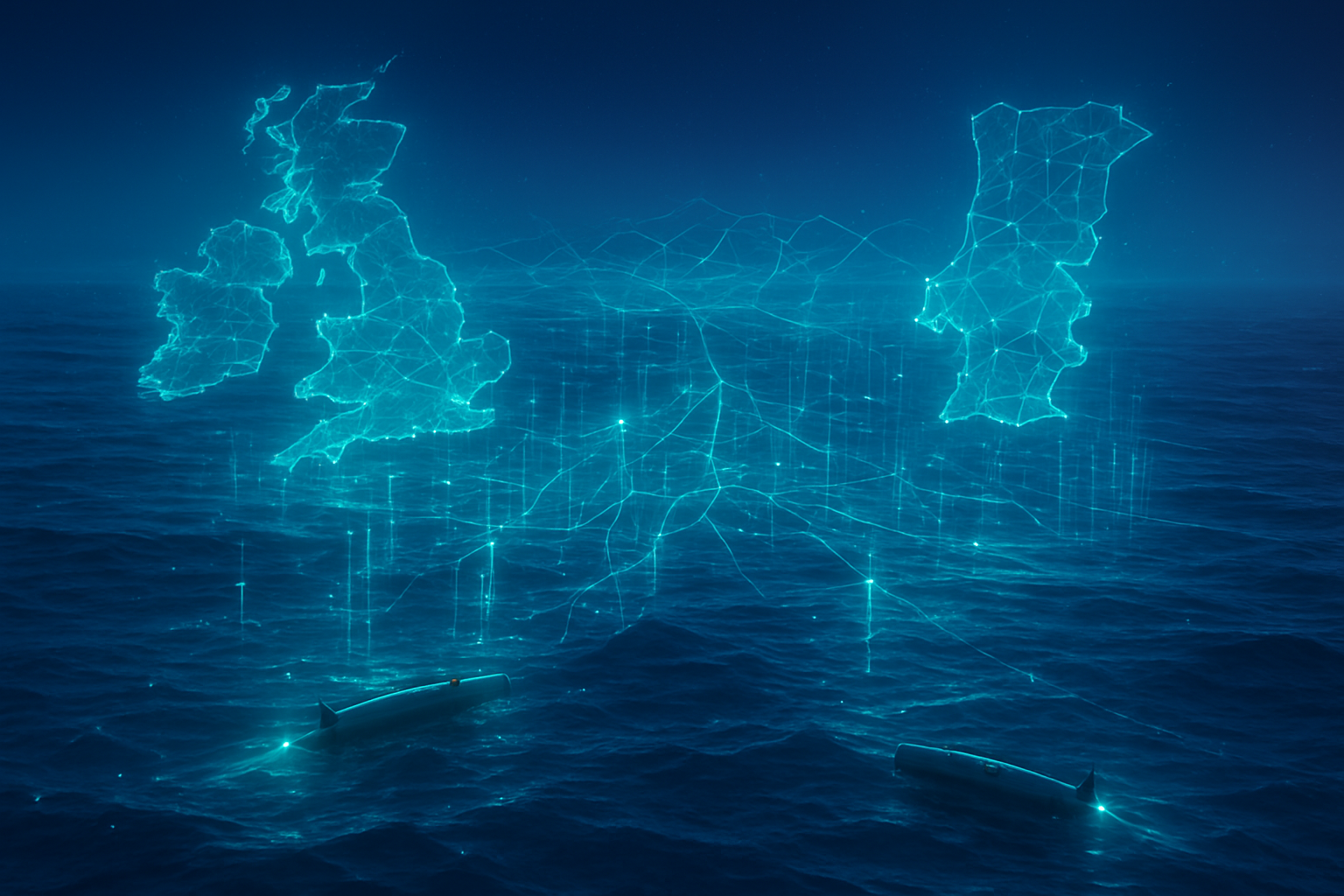
In a landmark move poised to significantly advance global efforts in ocean science and climate understanding, the United Kingdom and Portugal have deepened their robust research collaboration. This cross-border initiative, emblematic of a growing international trend, leverages cutting-edge technology and shared scientific expertise to unravel the complex mysteries of the world's oceans, which are crucial regulators of Earth's climate. As the planet faces unprecedented environmental challenges, such partnerships are proving indispensable in gathering critical data, refining climate models, and informing policy for a sustainable future.
The immediate significance of this enhanced collaboration lies in its potential to accelerate our comprehension of vital oceanic processes, from deep-sea currents to marine biodiversity. By pooling resources and intellectual capital, both nations are better equipped to tackle global issues such as climate change, marine pollution, and the sustainable use of ocean resources. This alliance not only fortifies bilateral scientific ties but also sets a precedent for how international cooperation can drive impactful research and innovation in critical environmental domains.
Unveiling Ocean Secrets: A Deep Dive into Collaborative Science and Technology
The UK-Portugal ocean research collaboration is multifaceted, built upon a foundation of shared strategic goals and a commitment to leveraging advanced scientific and technological capabilities. A cornerstone of this partnership is the UK's full membership in the Atlantic International Research (AIR) Centre since 2019. This initiative fosters scientific cooperation across the Atlantic, encompassing critical areas like oceans, space, energy, and climate change science, involving researchers from 15 countries. Further solidifying this alliance, the 2022 UK-Portugal Joint Declaration on Bilateral Cooperation explicitly highlights "Climate and Ocean" as a key thematic area for reinforced collaboration.
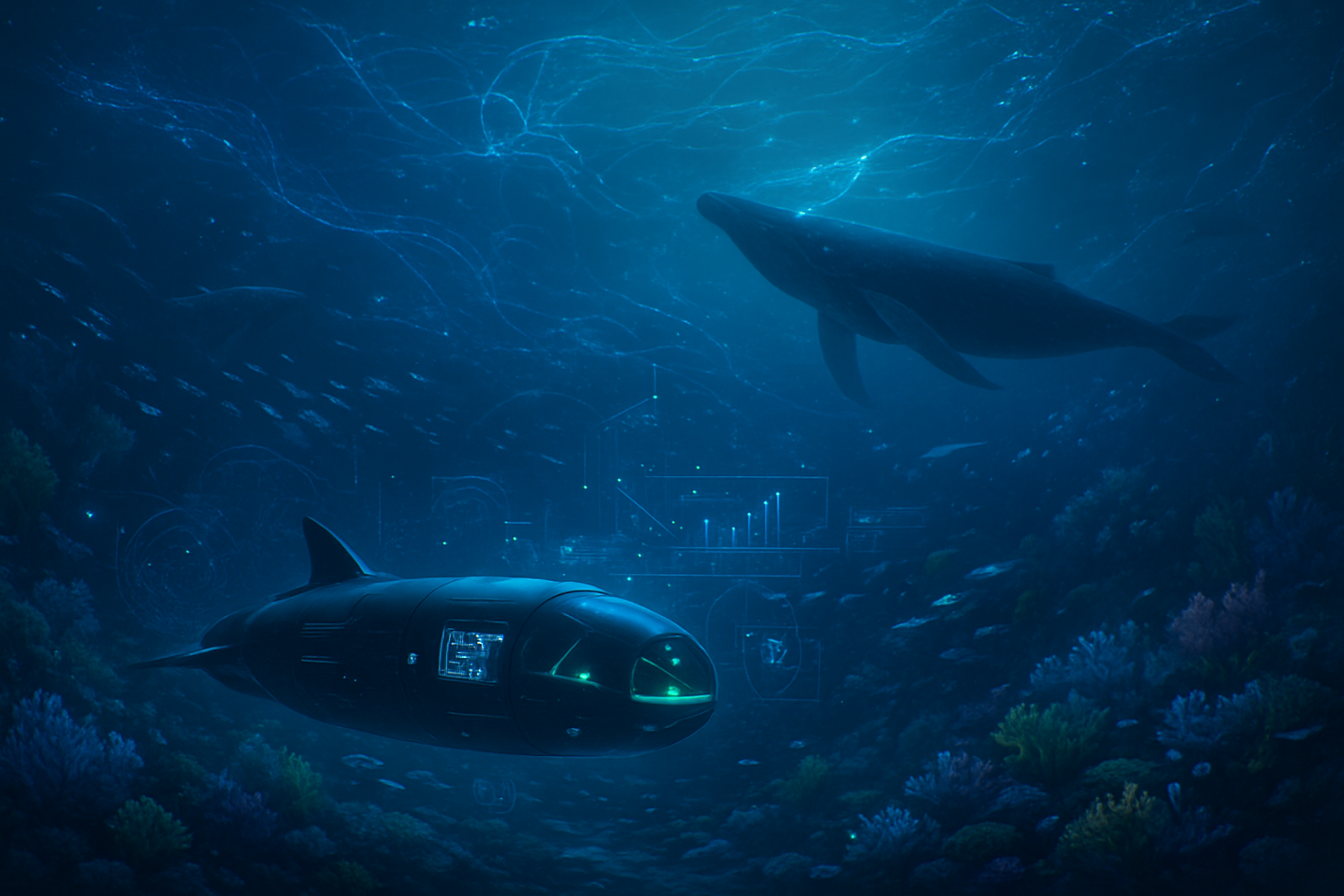
Technically, the collaboration employs a range of sophisticated tools and methodologies. The UK's National Oceanography Centre (NOC) plays a pivotal role, with its advanced research vessel, RRS Discovery, making strategic visits to Lisbon. These expeditions are vital for data collection, deploying state-of-the-art sensors, autonomous underwater vehicles (AUVs), and remotely operated vehicles (ROVs) to gather information on ocean currents, temperature, salinity, and marine ecosystems. Such data is crucial for understanding the Atlantic Meridional Overturning Circulation (AMOC), a major ocean current system that significantly influences global climate patterns. The Challenger 150 program, co-coordinated by researchers from Portugal (CESAM/DBio) and the UK (University of Plymouth) under the UN Decade of Ocean Science for Sustainable Development, exemplifies the deep scientific integration.
This collaborative approach marks a significant departure from fragmented national efforts. Historically, ocean research, while often international, sometimes lacked the formalized, comprehensive strategic alignment seen in partnerships like the UK-Portugal model. By integrating efforts within frameworks like the AIR Centre and specific bilateral declarations, the partnership ensures a more coordinated, sustained, and impactful research agenda. Initial reactions from the broader AI research community and industry experts emphasize the critical importance of such integrated, cross-disciplinary approaches, recognizing that understanding complex systems like the global ocean requires a convergence of diverse expertise and technological resources, including advanced AI for data analysis and modeling.
Ripples of Influence: Impact on AI Companies, Tech Giants, and Startups
The advancements stemming from international ocean research partnerships, particularly those involving sophisticated data collection and analysis, create significant opportunities and competitive implications across the technology sector. Companies specializing in AI, big data analytics, and sensor technology stand to benefit immensely.
For AI companies and tech giants like Alphabet (NASDAQ: GOOGL), Microsoft (NASDAQ: MSFT), and IBM (NYSE: IBM), which possess robust cloud computing infrastructure and AI development platforms, these partnerships offer new frontiers for application. The vast amounts of oceanographic data collected—from satellite imagery and buoy sensors to AUV readings—require advanced machine learning algorithms for processing, pattern recognition, and predictive modeling. Companies offering AI-powered solutions for data fusion, anomaly detection, and climate forecasting will find a burgeoning market. Startups focusing on niche areas such as marine robotics, real-time ocean monitoring systems, and AI-driven ecological modeling could see increased demand for their specialized services and products.
The competitive landscape is subtly shifting as well. While traditional marine science institutions are at the forefront of data collection, the interpretation and actionable insights derived from this data increasingly depend on AI capabilities. This could lead to partnerships between research institutions and AI firms, where the latter provide the analytical horsepower. Companies that can develop more accurate and efficient AI models for ocean climate prediction, marine resource management, or even disaster preparedness (e.g., tsunami warnings) will gain a strategic advantage. This development could disrupt existing products or services in environmental consulting, maritime logistics, and even parts of the insurance industry by providing more precise risk assessments based on enhanced oceanographic understanding. Market positioning will favor those capable of integrating diverse data streams and applying advanced AI to generate actionable intelligence for governments, industries, and conservation efforts.
A Broader Horizon: Wider Significance in the AI and Climate Landscape
These landmark international ocean research partnerships, exemplified by the UK-Portugal collaboration, resonate deeply within the broader AI landscape and global climate trends. They underscore a critical shift in how humanity approaches grand scientific challenges – moving beyond isolated national endeavors towards integrated, globalized scientific enterprises powered by advanced technology.
In the broader AI landscape, these partnerships highlight the increasing demand for AI that can operate on massive, heterogeneous datasets, often in real-time. The complexity of oceanographic data, which includes everything from physical measurements to biological observations and satellite imagery, pushes the boundaries of current AI capabilities, driving innovation in areas like multi-modal AI, spatio-temporal reasoning, and explainable AI. The insights gained from these collaborations contribute directly to the development of more robust and reliable AI models for environmental forecasting and resource management.
The impacts on climate understanding are profound. By providing more accurate data on ocean warming, acidification, sea-level rise, and the dynamics of critical currents like AMOC, these partnerships enable scientists to refine climate models and improve predictions of future climate scenarios. This enhanced understanding is vital for informing global climate policies, adaptation strategies, and mitigation efforts. Potential concerns, however, include data privacy and security, given the sensitive nature of some environmental data, and the equitable distribution of technological benefits, ensuring that developing nations also have access to and can utilize these advanced tools and insights. Comparisons to previous AI milestones, such as the development of large language models or breakthroughs in medical imaging, reveal a similar pattern: once a critical mass of data and computational power is achieved, AI can unlock previously unattainable levels of understanding and predictive capability, now being applied to the vast and complex system of our oceans.
Charting Future Courses: Expected Developments and Emerging Applications
The future of international ocean research partnerships, particularly those leveraging advanced AI and technological integration, promises a wave of transformative developments and applications. In the near-term, we can expect a continued expansion of global ocean observing systems, with an increasing deployment of autonomous platforms like gliders, buoys, and underwater drones equipped with AI-powered sensors capable of real-time data analysis and adaptive sampling.
Long-term developments will likely include the creation of sophisticated digital twins of ocean regions, allowing for high-fidelity simulations of oceanic processes and climate impacts, enabling more precise scenario planning. AI will play an even greater role in processing vast datasets from these systems, identifying subtle patterns indicative of climate shifts or ecosystem changes that human analysis might miss. Potential applications on the horizon are diverse, ranging from advanced warning systems for extreme weather events and tsunamis, to optimized shipping routes that minimize fuel consumption and environmental impact, and precision aquaculture that monitors ocean health to ensure sustainable food production. AI could also revolutionize marine conservation efforts by identifying illegal fishing activities or tracking endangered species with unprecedented accuracy.
However, several challenges need to be addressed. Interoperability between different national data systems and technological platforms remains a hurdle, requiring common standards and protocols. The sheer computational power needed to process and model global ocean data will also demand further advancements in high-performance computing and energy-efficient AI. Experts predict that the next phase will involve a greater emphasis on integrating biological and ecological data with physical oceanography, driven by AI, to develop a holistic understanding of ocean health. This will lead to more effective, evidence-based solutions for managing marine resources and mitigating climate change impacts.
The Deep Blue's New Dawn: A Concluding Assessment
The emergence and strengthening of landmark international ocean research partnerships, exemplified by the UK-Portugal collaboration, mark a pivotal moment in both ocean science and the broader application of artificial intelligence. These alliances are not merely about sharing resources; they represent a fundamental shift towards a unified, global approach to understanding and protecting our planet's most vital resource—the ocean. The immediate takeaway is clear: complex, transboundary challenges like climate change and ocean degradation necessitate equally complex, transboundary solutions, with AI acting as a crucial enabler.
This development's significance in AI history is profound. It showcases AI's transition from primarily data-centric applications in consumer technology and enterprise to grand scientific challenges with direct societal and environmental impacts. The demands of oceanographic research—handling massive, diverse, and often sparse datasets from harsh environments—are pushing AI's capabilities in areas like robust environmental modeling, sensor fusion, and autonomous decision-making in remote systems. This represents a critical milestone, demonstrating AI's potential as a powerful tool for scientific discovery and planetary stewardship.
Looking ahead, the long-term impact will be a more informed global community, equipped with superior predictive capabilities regarding climate change and ocean health. This will empower policymakers, industries, and conservationists to make more effective decisions. What to watch for in the coming weeks and months includes further announcements of integrated data platforms, new AI models specifically trained on diverse oceanographic data, and the expansion of these collaborative models to include more nations, especially those most vulnerable to ocean climate impacts. The tides of collaboration are rising, and with them, a new dawn for ocean science, illuminated by the power of artificial intelligence.
This content is intended for informational purposes only and represents analysis of current AI developments.
TokenRing AI delivers enterprise-grade solutions for multi-agent AI workflow orchestration, AI-powered development tools, and seamless remote collaboration platforms.
For more information, visit https://www.tokenring.ai/.