Tag: Market Cap

  • Micron Technology: Powering the AI Revolution and Reshaping the Semiconductor Landscape

    Micron Technology: Powering the AI Revolution and Reshaping the Semiconductor Landscape

    Micron Technology (NASDAQ: MU) has emerged as an undeniable powerhouse in the semiconductor industry, propelled by the insatiable global demand for high-bandwidth memory (HBM) – the critical fuel for the burgeoning artificial intelligence (AI) revolution. The company's recent stellar stock performance and escalating market capitalization underscore a profound re-evaluation of memory's role, transforming it from a cyclical commodity to a strategic imperative in the AI era. As of November 2025, Micron's market cap hovers around $245 billion, cementing its position as a key market mover and a bellwether for the future of AI infrastructure.

    This remarkable ascent is not merely a market anomaly but a direct reflection of Micron's strategic foresight and technological prowess in delivering the high-performance, energy-efficient memory solutions that underpin modern AI. With its HBM3e chips now powering the most advanced AI accelerators from industry giants, Micron is not just participating in the AI supercycle; it is actively enabling the computational leaps that define it, driving unprecedented growth and reshaping the competitive landscape of the global tech industry.

    The Technical Backbone of AI: Micron's Memory Innovations

    Micron Technology's deep technical expertise in memory solutions, spanning DRAM, High Bandwidth Memory (HBM), and NAND, forms the essential backbone for today's most demanding AI and high-performance computing (HPC) workloads. These technologies are meticulously engineered for unprecedented bandwidth, low latency, expansive capacity, and superior power efficiency, setting them apart from previous generations and competitive offerings.

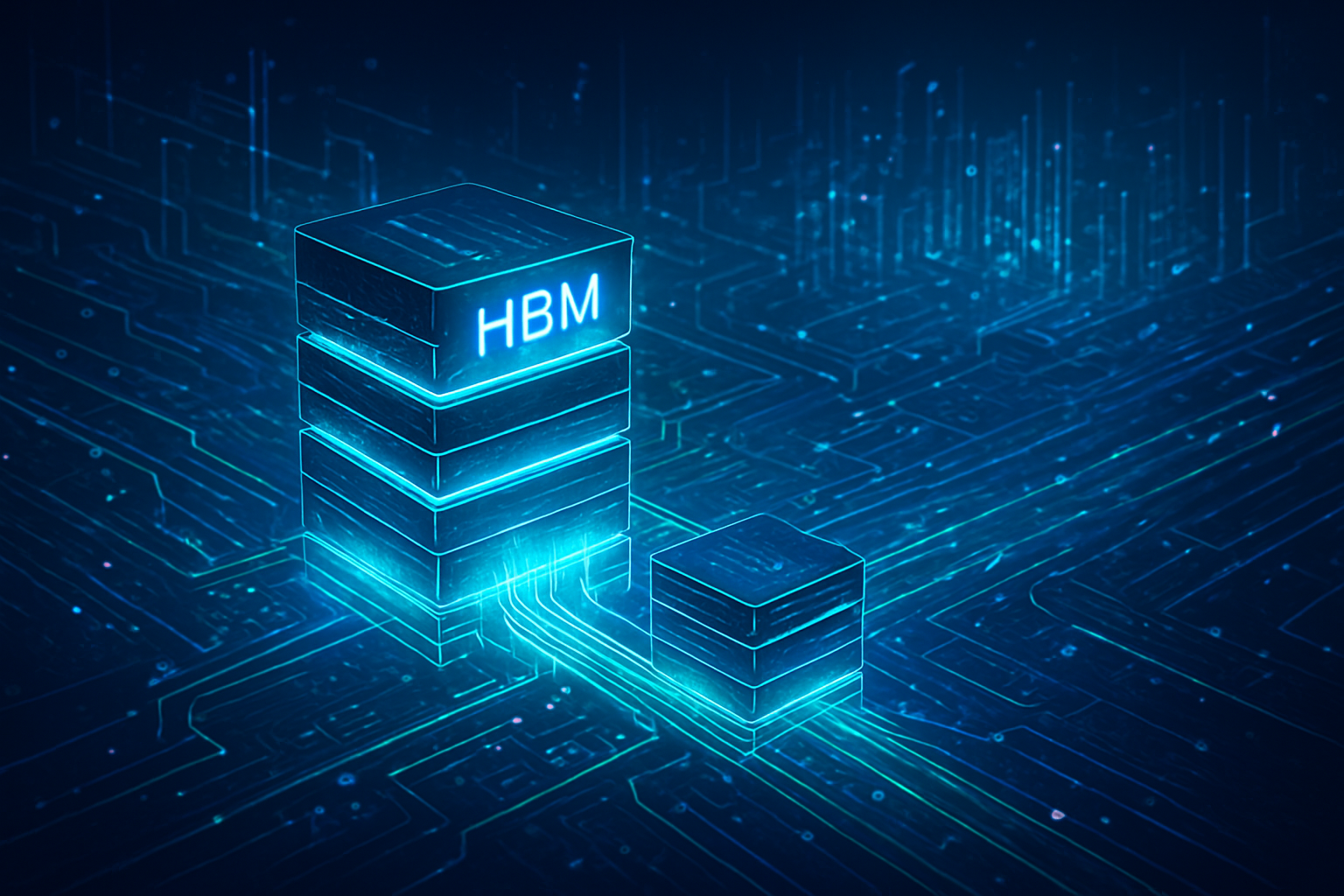
    At the forefront is Micron's HBM, a critical component for AI training and inference. Its HBM3E, for instance, delivers industry-leading performance with bandwidth exceeding 1.2 TB/s and pin speeds greater than 9.2 Gbps. Available in 8-high stacks with 24GB capacity and 12-high stacks with 36GB capacity, the 8-high cube offers 50% more memory capacity per stack. Crucially, Micron's HBM3E boasts 30% lower power consumption than competitors, a vital differentiator for managing the immense energy and thermal challenges of AI data centers. This efficiency is achieved through advanced CMOS innovations, Micron's 1β process technology, and advanced packaging techniques. The company is also actively sampling HBM4, promising even greater bandwidth (over 2.0 TB/s per stack) and a 20% improvement in power efficiency, with plans for a customizable base die for enhanced caches and specialized AI/HPC interfaces.

    Beyond HBM, Micron's LPDDR5X, built on the world's first 1γ (1-gamma) process node, achieves data rates up to 10.7 Gbps with up to 20% power savings. This low-power, high-speed DRAM is indispensable for AI at the edge, accelerating on-device AI applications in mobile phones and autonomous vehicles. The use of Extreme Ultraviolet (EUV) lithography in the 1γ node enables denser bitline and wordline spacing, crucial for high-speed I/O within strict power budgets. For data centers, Micron's DDR5 MRDIMMs offer up to a 39% increase in effective memory bandwidth and 40% lower latency, while CXL (Compute Express Link) memory expansion modules provide a flexible way to pool and disaggregate memory, boosting read-only bandwidth by 24% and mixed read/write bandwidth by up to 39% across HPC and AI workloads.

    In the realm of storage, Micron's advanced NAND flash, particularly its 232-layer 3D NAND (G8 NAND) and 9th Generation (G9) TLC NAND, provides the foundational capacity for the colossal datasets that AI models consume. The G8 NAND offers over 45% higher bit density and the industry's fastest NAND I/O speed of 2.4 GB/s, while the G9 TLC NAND boasts an industry-leading transfer speed of 3.6 GB/s and is integrated into Micron's PCIe Gen6 NVMe SSDs, delivering up to 28 GB/s sequential read speeds. These advancements are critical for data ingestion, persistent storage, and rapid data access in AI training and retrieval-augmented generation (RAG) pipelines, ensuring seamless data flow throughout the AI lifecycle.

    Reshaping the AI Ecosystem: Beneficiaries and Competitive Dynamics

    Micron Technology's advanced memory solutions are not just components; they are enablers, profoundly impacting the strategic positioning and competitive dynamics of AI companies, tech giants, and innovative startups across the globe. The demand for Micron's high-performance memory is directly fueling the ambitions of the most prominent players in the AI race.

    Foremost among the beneficiaries are leading AI chip developers and hyperscale cloud providers. NVIDIA (NASDAQ: NVDA), a dominant force in AI accelerators, relies heavily on Micron's HBM3E chips for its next-generation Blackwell Ultra, H100, H800, and H200 Tensor Core GPUs. This symbiotic relationship is crucial for NVIDIA's projected $150 billion in AI chip sales in 2025. Similarly, AMD (NASDAQ: AMD) is integrating Micron's HBM3E into its upcoming Instinct MI350 Series GPUs, targeting large AI model training and HPC. Hyperscale cloud providers like Microsoft (NASDAQ: MSFT), Google (NASDAQ: GOOGL), and Amazon (NASDAQ: AMZN) are significant consumers of Micron's memory and storage, utilizing them to scale their AI capabilities, manage distributed AI architectures, and optimize energy consumption in their vast data centers, even as they develop their own custom AI chips. Major AI labs, including OpenAI, also require "tons of compute, tons of memory" for their cutting-edge AI infrastructure, making them key customers.

    The competitive landscape within the memory sector has intensified dramatically, with Micron positioned as a leading contender in the high-stakes HBM market, alongside SK Hynix (KRX: 000660) and Samsung (KRX: 005930). Micron's HBM3E's 30% lower power consumption offers a significant competitive advantage, translating into substantial operational cost savings and more sustainable AI data centers for its customers. As the only major U.S.-based memory manufacturer, Micron also enjoys a unique strategic advantage in terms of supply chain resilience and geopolitical considerations. However, the aggressive ramp-up in HBM production by competitors could lead to a potential oversupply by 2027, potentially impacting pricing. Furthermore, reported delays in Micron's HBM4 could temporarily cede an advantage to its rivals in the next generation of HBM.

    The impact extends beyond the data center. Smartphone manufacturers leverage Micron's LPDDR5X for on-device AI, enabling faster experiences and longer battery life for AI-powered features. The automotive industry utilizes LPDDR5X and GDDR6 for advanced driver-assistance systems (ADAS), while the gaming sector benefits from GDDR6X and GDDR7 for immersive, AI-enhanced gameplay. Micron's strategic reorganization into customer-focused business units—Cloud Memory Business Unit (CMBU), Core Data Center Business Unit (CDBU), Mobile and Client Business Unit (MCBU), and Automotive and Embedded Business Unit (AEBU)—further solidifies its market positioning, ensuring tailored solutions for each segment of the AI ecosystem. With its entire 2025 HBM production capacity sold out and bookings extending into 2026, Micron has secured robust demand, driving significant revenue growth and expanding profit margins.

    Wider Significance: Micron's Role in the AI Landscape

    Micron Technology's pivotal role in the AI landscape transcends mere component supply; it represents a fundamental re-architecture of how AI systems are built and operated. The company's continuous innovations in memory and storage are not just keeping pace with AI's demands but are actively shaping its trajectory, addressing critical bottlenecks and enabling capabilities previously thought impossible.

    This era marks a profound shift where memory has transitioned from a commoditized product to a strategic asset. In previous technology cycles, memory was often a secondary consideration, but the AI revolution has elevated advanced memory, particularly HBM, to a critical determinant of AI performance and innovation. We are witnessing an "AI supercycle," a period of structural and persistent demand for specialized memory infrastructure, distinct from prior boom-and-bust patterns. Micron's advancements in HBM, LPDDR, GDDR, and advanced NAND are directly enabling faster training and inference for AI models, supporting larger models and datasets with billions of parameters, and enhancing multi-GPU and distributed computing architectures. The focus on energy efficiency in technologies like HBM3E and 1-gamma DRAM is also crucial for mitigating the substantial energy demands of AI data centers, contributing to more sustainable and cost-effective AI operations.

    Moreover, Micron's solutions are vital for the burgeoning field of edge AI, facilitating real-time processing and decision-making on devices like autonomous vehicles and smartphones, thereby reducing reliance on cloud infrastructure and enhancing privacy. This expansion of AI from centralized cloud data centers to the intelligent edge is a key trend, and Micron is a crucial enabler of this distributed AI model.

    Despite its strong position, Micron faces inherent challenges. Intense competition from rivals like SK Hynix and Samsung in the HBM market could lead to pricing pressures. The "memory wall" remains a persistent bottleneck, where the speed of processing often outpaces memory delivery, limiting AI performance. Balancing performance with power efficiency is an ongoing challenge, as is the complexity and risk associated with developing entirely new memory technologies. Furthermore, the rapid evolution of AI makes it difficult to predict future needs, and geopolitical factors, such as regulations mandating domestic AI chips, could impact market access. Nevertheless, Micron's commitment to technological leadership and its strategic investments position it as a foundational player in overcoming these challenges and continuing to drive AI advancement.

    The Horizon: Future Developments and Expert Predictions

    Looking ahead, Micron Technology is poised for continued significant developments in the AI and semiconductor landscape, with a clear roadmap for advancing HBM, CXL, and process node technologies. These innovations are critical for sustaining the momentum of the AI supercycle and addressing the ever-growing demands of future AI workloads.

    In the near term (late 2024 – 2026), Micron is aggressively scaling its HBM3E production, with its 24GB 8-High solution already integrated into NVIDIA (NASDAQ: NVDA) H200 Tensor Core GPUs. The company is also sampling its 36GB 12-High HBM3E, promising superior performance and energy efficiency. Micron aims to significantly increase its HBM market share to 20-25% by 2026, supported by capacity expansion, including a new HBM packaging facility in Singapore by 2026. Simultaneously, Micron's CZ120 CXL memory expansion modules are in sample availability, designed to provide flexible memory scaling for various workloads. In DRAM, the 1-gamma (1γ) node, utilizing EUV lithography, is being sampled, offering speed increases and lower power consumption. For NAND, volume production of 232-layer 3D NAND (G8) and G9 TLC NAND continues to drive performance and density.

    Longer term (2027 and beyond), Micron's HBM roadmap includes HBM4, projected for mass production in 2025, offering a 40% increase in bandwidth and 70% reduction in power consumption compared to HBM3E. HBM4E is anticipated by 2028, targeting 48GB to 64GB stack capacities and over 2 TB/s bandwidth, followed by HBM5 (2029) and HBM6 (2032) with even more ambitious bandwidth targets. CXL 3.0/3.1 will be crucial for memory pooling and disaggregation, enabling dynamic memory access for CPUs and GPUs in complex AI/HPC workloads. Micron's DRAM roadmap extends to the 1-delta (1δ) node, potentially skipping the 8th-generation 10nm process for a direct leap to a 9nm DRAM node. In NAND, the company envisions 500+ layer 3D NAND for even greater storage density.

    These advancements will unlock a wide array of potential applications: HBM for next-generation LLM training and AI accelerators, CXL for optimizing data center performance and TCO, and low-power DRAM for enabling sophisticated AI on edge devices like AI PCs, smartphones, AR/VR headsets, and autonomous vehicles. However, challenges persist, including intensifying competition, technological hurdles (e.g., reported HBM4 yield challenges), and the need for scalable and resilient supply chains. Experts remain overwhelmingly bullish, predicting Micron's fiscal 2025 earnings to surge by nearly 1000%, driven by the AI-driven supercycle. The HBM market is projected to expand from $4 billion in 2023 to over $25 billion by 2025, potentially exceeding $100 billion by 2030, directly fueling Micron's sustained growth and profitability.

    A New Era: Micron's Enduring Impact on AI

    Micron Technology's journey as a key market cap stock mover is intrinsically linked to its foundational role in powering the artificial intelligence revolution. The company's strategic investments, relentless innovation, and leadership in high-bandwidth, low-power, and high-capacity memory solutions have firmly established it as an indispensable enabler of modern AI.

    The key takeaway is clear: advanced memory is no longer a peripheral component but a central strategic asset in the AI era. Micron's HBM solutions, in particular, are facilitating the "computational leaps" required for cutting-edge AI acceleration, from training massive language models to enabling real-time inference at the edge. This period of intense AI-driven demand and technological innovation is fundamentally re-architecting the global technology landscape, with Micron at its epicenter.

    The long-term impact of Micron's contributions is expected to be profound and enduring. The AI supercycle promises a new paradigm of more stable pricing and higher margins for leading memory manufacturers, positioning Micron for sustained growth well into the next decade. Its strategic focus on HBM and next-generation technologies like HBM4, coupled with investments in energy-efficient solutions and advanced packaging, are crucial for maintaining its leadership and supporting the ever-increasing computational demands of AI while prioritizing sustainability.

    In the coming weeks and months, industry observers and investors should closely watch Micron's upcoming fiscal first-quarter results, anticipated around December 17, for further insights into its performance and outlook. Continued strong demand for AI-fueled memory into 2026 will be a critical indicator of the supercycle's longevity. Progress in HBM4 development and adoption, alongside the competitive landscape dominated by Samsung (KRX: 005930) and SK Hynix (KRX: 000660), will shape market dynamics. Additionally, overall pricing trends for standard DRAM and NAND will provide a broader view of the memory market's health. While the fundamentals are strong, the rapid climb in Micron's stock suggests potential for short-term volatility, and careful assessment of growth potential versus current valuation will be essential. Micron is not just riding the AI wave; it is helping to generate its immense power.


    This content is intended for informational purposes only and represents analysis of current AI developments.

    TokenRing AI delivers enterprise-grade solutions for multi-agent AI workflow orchestration, AI-powered development tools, and seamless remote collaboration platforms.
    For more information, visit https://www.tokenring.ai/.

  • Nvidia Shatters Records: AI Powerhouse Hits $5 Trillion Market Cap, Reshaping Global Economy

    Nvidia Shatters Records: AI Powerhouse Hits $5 Trillion Market Cap, Reshaping Global Economy

    In a historic moment for the technology and financial worlds, Nvidia Corporation (NASDAQ: NVDA) officially achieved an unprecedented $5 trillion market capitalization on Wednesday, October 29, 2025. This landmark valuation, reached during early market trading as shares surged, solidifies Nvidia's position as the world's most valuable company and underscores the profound and accelerating dominance of artificial intelligence in the global stock market. The milestone comes less than four months after the Silicon Valley chipmaker first breached the $4 trillion mark in July 2025, reflecting an extraordinary period of growth fueled by insatiable demand for its AI hardware and software.

    The immediate reaction to Nvidia's record-breaking valuation was a significant rally in its stock, with shares climbing 4.5% to 5% in early trading. This surge was driven by a confluence of factors, including overwhelming demand for Nvidia's cutting-edge Graphics Processing Units (GPUs) – considered the indispensable engine for modern AI applications – and strategic announcements made during its recent GTC DC event. CEO Jensen Huang's revelation of "visibility into half a trillion in sales for Grace Blackwell and Vera Rubin through 2026," alongside his projection of a potential $3-$4 trillion annual infrastructure spending in AI by 2030, further bolstered investor confidence, cementing Nvidia's role as the foundational infrastructure provider for the burgeoning AI revolution.

    The Unseen Architecture: Nvidia's Technical Prowess Driving the AI Era

    Nvidia's meteoric rise to a $5 trillion market capitalization is not merely a financial anomaly but a direct reflection of its unparalleled technological leadership and vertically integrated strategy in artificial intelligence. The company's comprehensive ecosystem, spanning groundbreaking GPU architectures, the ubiquitous CUDA software platform, and continuous innovations across its AI software stack, has created a formidable moat that differentiates it significantly from competitors.

    At the heart of Nvidia's AI prowess are its revolutionary GPU architectures, meticulously designed for unparalleled performance in AI training and inference. The Blackwell architecture, unveiled in March 2024, represents a monumental leap forward. Chips like the B100, B200, Blackwell Ultra, and the GB200 Grace Blackwell Superchip pack an astounding 208 billion transistors, manufactured using a custom TSMC 4NP process. Blackwell GPUs are engineered for extraordinary efficiency in content generation and inference workloads, with the GB200 combining ultra-efficient CPU and GPU designs to deliver unprecedented performance for complex simulations, deep learning models, and large language applications. Its second-generation Transformer Engine, custom Blackwell Tensor Core technology, and new micro-scaling precision formats accelerate both inference and training for large language models (LLMs) and Mixture-of-Experts (MoE) models. Nvidia has already shipped 6 million Blackwell chips and anticipates $500 billion in cumulative revenue from Blackwell and the upcoming Rubin products through 2026. Furthermore, Blackwell integrates NVIDIA Confidential Computing, providing hardware-based security for sensitive data and AI models.

    Building on this, Nvidia introduced the Vera Rubin next-generation GPU family, with systems slated to ship in the second half of 2026. The Vera Rubin platform, comprising a Rubin GPU and a Vera CPU (Nvidia's first custom-designed processor based on an Olympus core architecture), promises even greater capabilities. When paired, the Vera CPU and Rubin GPU system can achieve inference performance of up to 50 petaflops, more than double that of the Blackwell generation, and boast up to 288 gigabytes of fast memory. The Rubin architecture, particularly the Rubin CPX GPU, is purpose-built for "massive-context AI," enabling models to reason across millions of tokens of knowledge simultaneously, thereby reducing inference costs and unlocking advanced developer capabilities. The Vera Rubin NVL144 CPX platform is projected to deliver 8 exaflops of AI performance and 100TB of fast memory in a single rack, necessitating increased adoption of liquid cooling solutions due to its immense performance demands.

    Beyond hardware, the Compute Unified Device Architecture (CUDA) platform is arguably Nvidia's most significant competitive advantage. This proprietary parallel computing platform and programming model allows software to leverage Nvidia GPUs for accelerated general-purpose processing, transforming GPUs from mere graphics tools into powerful AI engines. CUDA's nearly two-decade head start has fostered a vast developer base (over 4 million global developers) and an optimized software stack that is deeply embedded in major AI frameworks like TensorFlow and PyTorch. This robust ecosystem creates substantial "vendor lock-in," making it challenging and costly for developers and companies to switch to alternative platforms offered by competitors like Advanced Micro Devices, Inc. (NASDAQ: AMD) (ROCm) or Intel Corporation (NASDAQ: INTC) (oneAPI).

    Nvidia's software innovations extend to the CUDA-X Suite of libraries, the enterprise-grade NVIDIA AI Enterprise software suite for AI development and deployment, and the NGC Catalog for GPU-optimized software. Its Omniverse platform for virtual simulations has gained traction in AI-driven sectors, combining virtual environments with generative AI to train robots. Initial reactions from the AI research community and industry experts have been overwhelmingly positive, recognizing Nvidia's critical role in the "AI Supercycle." Experts emphasize Nvidia's "strategic moat," largely attributed to CUDA, and its continuous technological leadership, which promises significant leaps in deep learning performance, memory, and networking efficiency. The market's exceptional response, culminating in the $5 trillion valuation, reflects profound investor confidence in Nvidia's sustained exponential growth.

    Reshaping the AI Battleground: Impact on Tech Giants and Startups

    Nvidia's unprecedented market capitalization and its entrenched dominance in AI hardware and software are sending ripple effects throughout the entire technology ecosystem, profoundly impacting other AI companies, established tech giants, and nascent startups. Its strategic advantages, built on technological superiority and a robust ecosystem, are reshaping competitive dynamics and investment trends.

    Several entities stand to benefit directly from Nvidia's ascendancy. Taiwan Semiconductor Manufacturing Company (NYSE: TSM), as Nvidia's primary foundry, is a major beneficiary, dedicating substantial capacity to GPU production. Similarly, SK Hynix Inc. (KRX: 000660), a key supplier of high-bandwidth memory (HBM), has reportedly sold out its entire 2025 memory chip supply due to Nvidia's demand. Cloud Service Providers (CSPs) like Microsoft Corporation (NASDAQ: MSFT) Azure, Amazon.com, Inc. (NASDAQ: AMZN) Web Services (AWS), Alphabet Inc. (NASDAQ: GOOGL) Cloud, and Oracle Corporation (NYSE: ORCL) Cloud Infrastructure are significant consumers of Nvidia's GPUs, integrating them into their AI-as-a-service offerings to meet surging demand. Companies that build their AI solutions on Nvidia's CUDA ecosystem, such as Palantir Technologies Inc. (NYSE: PLTR) and Zoom Video Communications, Inc. (NASDAQ: ZM), also benefit from superior performance and widespread adoption. Furthermore, industry-specific integrators like Eli Lilly and Company (NYSE: LLY) in drug discovery and Nokia Corporation (NYSE: NOK) in 5G/6G AI-RAN are leveraging Nvidia's technology to accelerate innovation within their fields.

    However, Nvidia's dominance presents significant competitive challenges for its rivals. AMD and Intel, while making strides with their Instinct MI300X/MI350 series and Gaudi 3 chips, respectively, struggle to match Nvidia's comprehensive CUDA ecosystem and entrenched developer base. AMD, holding a smaller market share, is advocating for open alternatives to Nvidia's "walled garden," and has secured deals with OpenAI and Oracle for AI processors. Intel's Gaudi chips, aiming for cost-effectiveness, have yet to gain substantial traction. More critically, Nvidia's largest customers—the hyperscalers Google, Microsoft, and Amazon—are heavily investing in developing their own custom AI silicon (e.g., Google's TPUs, Amazon's Trainium, Microsoft's Maia) to reduce dependency and optimize for specific workloads. This strategic pivot, particularly in inference tasks, represents a long-term challenge to Nvidia's market share and pricing power. Qualcomm Incorporated (NASDAQ: QCOM) is also entering the data center AI chip market with its AI200 and AI250 processors, focusing on performance per watt and cost efficiency for inference. Chinese chipmakers like Huawei and Cambricon are actively challenging Nvidia within China, a situation exacerbated by U.S. export restrictions on advanced AI chips.

    The pervasive influence of Nvidia's technology also introduces potential disruptions. The high demand and pricing for Nvidia's GPUs mean that businesses investing in AI face rising hardware costs, potentially impacting the profitability and scalability of their AI initiatives. The deep integration of Nvidia's chips into customer software and hardware ecosystems creates significant switching costs, limiting flexibility and potentially stifling innovation outside the Nvidia ecosystem. Furthermore, Nvidia's reliance on TSMC (NYSE: TSM) for manufacturing exposes the industry to supply chain vulnerabilities. Nvidia's near-monopoly in certain high-performance AI chip segments has also attracted antitrust scrutiny from global regulators, including the U.S. Department of Justice (DOJ), raising concerns about market concentration and potential anti-competitive practices. Despite these challenges, Nvidia's market positioning is defined by its comprehensive AI platform, continuous innovation, strategic partnerships, and diversification into autonomous vehicles, industrial AI, robotics, and sovereign AI, solidifying its role as the foundational infrastructure provider for the global AI industry.

    The Broader Canvas: AI's Reshaping of Society and Economy

    Nvidia's ascent to a $5 trillion market capitalization on October 29, 2025, is far more than a financial headline; it is a powerful barometer of the profound shifts occurring in the global AI landscape and a clear signal of AI's transformative impact on society and the economy. This valuation, now surpassing the GDP of many nations, including India, and roughly equaling Germany's projected nominal GDP for 2025, underscores a fundamental re-evaluation by financial markets of companies at the epicenter of technological change.

    Nvidia's dominance is deeply intertwined with the broader AI landscape and emerging trends. Its GPUs form the essential backbone of AI development and deployment, driving an unprecedented global investment in data centers and AI infrastructure. The company is strategically moving beyond being solely a GPU vendor to becoming a global AI infrastructure leader, enabling "AI factories" for hyperscalers and governments (sovereign AI), and potentially expanding into its own "AI cloud" services. This full-stack approach encompasses compute, connectivity, and applications, with advancements like the Blackwell GPU architecture, Project Digits for democratizing AI, and the NeMo framework for managing AI agents. Nvidia is also deeply embedding its technology across various industries through strategic alliances, including building seven new AI supercomputers for the U.S. Department of Energy, a $1 billion investment in Nokia for AI-native 6G networks, and partnerships with Palantir for data analytics and CrowdStrike for AI-driven cybersecurity. Its work in autonomous vehicles (with Uber) and robotics (through NVIDIA Cosmos and Omniverse) further illustrates its pervasive influence. Moreover, Nvidia's advanced chips have become a flashpoint in the geopolitical tech rivalry between the U.S. and China, with export controls significantly impacting its market access in China, highlighting its strategic importance in national infrastructure.

    The societal and economic impacts are far-reaching. AI is projected to contribute a staggering $15.7 trillion to the global economy by 2030, with AI-related capital expenditures already surpassing the U.S. consumer as the primary driver of economic growth in the first half of 2025. Nvidia's performance is a primary catalyst for this surge, solidifying AI as the central investment theme of the decade. CEO Jensen Huang envisions "AI factories" driving a new industrial revolution, reshaping industries from semiconductors and cloud computing to healthcare and robotics. However, this transformation also raises concerns about job market disruption, with projections suggesting up to 100 million jobs could be lost in the next decade due to AI, raising risks of increased unemployment and social strife. Furthermore, the exponential demand for AI computing power is fueling a massive increase in energy-intensive data centers, which could account for a substantial percentage of national electricity demand, raising significant environmental concerns regarding carbon emissions and water usage.

    Nvidia's meteoric rise also brings forth significant concerns, particularly regarding market bubbles and monopolies. The rapid ascent and frothy valuations of AI-linked tech stocks have ignited a debate about whether this constitutes a market bubble, reminiscent of the dot-com era. Institutions like the Bank of England and the IMF have cautioned about potential market overheating and the risk of a sharp repricing if the AI boom's momentum falters. Nvidia's near-monopolistic share of the AI chip market (estimated 75% to 92%) has also attracted scrutiny from global regulators over potential antitrust violations, raising concerns about stifled innovation, increased prices, and a harmful dependency on a single provider that could create systemic risks. Regulators are investigating concerns that Nvidia might be implementing illegal tying agreements by promoting exclusive use of its chips and complementary AI services.

    Comparing Nvidia's current market trajectory to previous AI milestones and tech booms reveals both parallels and distinctions. While other tech giants like Apple Inc. (NASDAQ: AAPL) and Microsoft Corporation (NASDAQ: MSFT) have recently surpassed multi-trillion-dollar valuations, Nvidia's rapid ascent to $5 trillion is unique in its speed, adding a trillion dollars in mere months. This mirrors the infrastructure build-out of the internet boom, which required massive investments in fiber optics and servers, with AI now necessitating an equivalent build-out of data centers and powerful GPUs. Just as the internet spawned new business models, AI is creating opportunities in autonomous systems, personalized medicine, and advanced analytics. While some draw parallels to the dot-com bubble, many analysts distinguish Nvidia's rise by the tangible demand for its products and its foundational role in a transformative technology. However, the concentration of deals among a few major AI players and the dependence within this ecosystem do raise concerns about systemic risk and a potential "contagion" effect if AI promises fall short.

    The Road Ahead: Navigating AI's Future Frontier

    Nvidia's historic $5 trillion market capitalization positions it at the vanguard of the AI revolution, but the road ahead is dynamic, filled with both immense opportunities and significant challenges. The company's future trajectory, and by extension, much of the AI market's evolution, will be shaped by its continued innovation, strategic responses to competition, and the broader geopolitical and economic landscape.

    In the near term (next 1-2 years), Nvidia is poised for continued robust financial performance. Demand for its Blackwell and Hopper GPUs is expected to remain exceptionally strong, with Data Center revenue projected to reach around $110.5 billion for fiscal year 2025 and $170.8 billion for fiscal year 2026. The full-scale production of Blackwell, coupled with the anticipated commercialization of the next-generation Rubin architecture in late 2026, will maintain Nvidia's leadership in high-end AI training. Strategic partnerships, including a $1 billion investment in Nokia for AI-RAN innovation, a $100 billion agreement with OpenAI, and collaborations with Intel and Dell, will deepen its market penetration. Nvidia has disclosed visibility into $0.5 trillion of cumulative revenue for its Blackwell and Rubin products in calendar 2025 and 2026, signaling sustained demand.

    Looking further ahead (beyond 2 years), Nvidia's long-term strategy involves a significant pivot from solely being a GPU vendor to becoming a global AI infrastructure leader. This includes enabling "AI factories" for hyperscalers and governments (sovereign AI) and potentially expanding into its own "AI cloud" services. The introduction of NVLink Fusion, designed to allow custom CPUs and accelerators from other companies to connect directly to Nvidia GPUs, signals a strategic move towards a more open, ecosystem-driven AI infrastructure model. Nvidia is aggressively expanding into new revenue streams such as physical AI, robotics (e.g., Isaac GRZ N1 model for humanoid robots), and the industrial metaverse (Omniverse), representing multi-billion dollar opportunities. Further investment in software platforms like Mission Control and CUDA-X libraries, alongside its commitment to 6G technology, underscores its holistic approach to the AI stack. Experts predict AI opportunities will become a multi-trillion-dollar market within the next five years, with AI infrastructure spending potentially reaching $3 trillion-$4 trillion per year by 2030.

    Potential applications and use cases on the horizon are vast. Nvidia's AI technologies are set to revolutionize generative AI and LLMs, robotics and autonomous systems (humanoid robots, robotaxis), healthcare and life sciences (genomics, AI agents for healthcare, biomolecular foundation models), the industrial metaverse (digital twins), telecommunications (AI-native 6G networks), and scientific discovery (climate modeling, quantum simulations). Its push into enterprise AI, including partnerships with Palantir for data analytics and CrowdStrike for AI-driven cybersecurity, highlights the pervasive integration of AI across industries.

    However, Nvidia faces several significant challenges. Intensifying competition from hyperscale cloud providers developing their own custom AI silicon (Google's TPUs, Amazon's Trainium, Microsoft's Maia) could erode Nvidia's market share, particularly in inference workloads. Rival chipmakers such as AMD, Intel, Qualcomm, and Chinese companies like Huawei and Cambricon are also making concerted efforts to capture parts of the data center and edge AI markets. Geopolitical tensions and U.S. export controls on advanced AI technology remain a major risk, potentially impacting 10-15% of Nvidia's revenue from China and causing its market share there to drop significantly. Market concentration and antitrust scrutiny are also growing concerns. Some analysts also point to the possibility of "double-ordering" by some top customers and a potential tapering off of AI training needs within the next 18 months, leading to a cyclical downturn in revenue beginning in 2026.

    Despite these challenges, experts generally predict that Nvidia will maintain its leadership in high-end AI training and accelerated computing through continuous innovation and the formidable strength of its CUDA ecosystem. While its dominant market share may gradually erode due to intensifying competition, Nvidia's overall revenue is expected to continue growing as the total addressable market for AI expands. Analysts forecast continued stock growth for Nvidia, with some predicting a price target of $206-$288 by the end of 2025 and potentially a $6 trillion market capitalization by late 2026. However, skeptical buy-side analysts caution that the market might be "priced for elevated expectations," and a pullback could occur if AI enthusiasm fades or if competitors gain more significant traction.

    A New Era: Nvidia's Legacy and the Future of AI

    Nvidia's achievement of a $5 trillion market capitalization on October 29, 2025, is more than just a financial record; it is a defining moment in the history of artificial intelligence and a testament to the company's transformative impact on the global economy. This unprecedented valuation solidifies Nvidia's role as the indispensable backbone of the AI revolution, a position it has meticulously built through relentless innovation in hardware and software.

    The key takeaways from this milestone are clear: Nvidia's dominance in AI hardware, driven by its cutting-edge GPUs like Blackwell and the upcoming Rubin architectures, is unparalleled. Its robust CUDA software ecosystem creates a powerful network effect, fostering a loyal developer community and high switching costs. This technological superiority, coupled with exceptional financial performance and strategic diversification into critical sectors like data centers, robotics, autonomous vehicles, and 6G technology, underpins its explosive and sustained growth.

    In the annals of AI history, Nvidia is no longer merely a chipmaker; it has become the foundational infrastructure provider, empowering everything from generative AI models and large language models (LLMs) to advanced robotics and autonomous systems. This achievement sets a new benchmark for corporate value, demonstrating the immense economic potential of companies at the forefront of transformative technological shifts. By providing powerful and accessible AI computing tools, Nvidia is accelerating global AI innovation and adoption, effectively democratizing access to this revolutionary technology.

    The long-term impact of Nvidia's dominance is expected to be profound and far-reaching. Its sustained innovation in accelerated computing will continue to drive the rapid advancement and deployment of AI across virtually every industry, shaping the future digital economy. However, this future will also be marked by an intensified competitive landscape, with rivals and hyperscalers developing their own AI chips to challenge Nvidia's market share. Geopolitical tensions, particularly regarding U.S. export controls to China, will remain a significant factor influencing Nvidia's market opportunities and strategies.

    In the coming weeks and months, industry observers will be closely watching several key areas. Geopolitical developments, especially any further discussions between the U.S. and China regarding advanced AI chip exports, will be critical. Nvidia's upcoming earnings reports and forward guidance will provide crucial insights into its financial health and future projections. The introduction of new hardware generations and continuous advancements in its CUDA software platform will indicate its ability to maintain its technological edge. The progress of competitors in developing viable alternative AI hardware and software solutions, as well as the success of hyperscalers' in-house chip efforts, will shape future market dynamics. Finally, the broader AI market adoption trends and ongoing debates about potential "AI bubbles" will continue to influence investor sentiment and market stability. Nvidia's journey is a testament to the power of focused innovation, and its future will largely dictate the pace and direction of the global AI revolution.

  • Apple Hits $4 Trillion Market Cap: AI’s Undercurrent Fuels Tech’s Unprecedented Surge

    Apple Hits $4 Trillion Market Cap: AI’s Undercurrent Fuels Tech’s Unprecedented Surge

    In a historic moment for the technology sector, Apple Inc. (NASDAQ: AAPL) officially achieved a staggering $4 trillion market capitalization on Tuesday, October 28, 2025. This monumental valuation, primarily propelled by the robust demand for its recently launched iPhone 17 series, solidifies Apple's position as a titan in the global economy and underscores a broader, transformative trend: the undeniable and increasingly critical role of artificial intelligence in driving the earnings and valuations of major technology companies. While iPhone sales provided the immediate thrust, the underlying currents of AI innovation and integration across its ecosystem are increasingly vital to Apple's sustained growth and the overall tech market's unprecedented rally.

    Apple now stands as only the third company to reach this rarefied financial air, following in the footsteps of AI chip powerhouse Nvidia Corp. (NASDAQ: NVDA) and software giant Microsoft Corp. (NASDAQ: MSFT), both of which crossed the $4 trillion threshold in July 2025. This sequence of milestones within a single year highlights a pivotal era where technological advancement, particularly in artificial intelligence, is not merely enhancing products but fundamentally reshaping market dynamics and investor expectations, placing AI at the very heart of corporate strategy and financial success for the world's most valuable enterprises.

    AI's Pervasive Influence: From Cloud Infrastructure to On-Device Intelligence

    The ascension of tech giants like Apple, Microsoft, and Nvidia to unprecedented valuations is inextricably linked to the pervasive and increasingly sophisticated integration of artificial intelligence across their product lines and services. For Apple, while the immediate surge to $4 trillion was fueled by the iPhone 17's market reception, its long-term strategy involves embedding "Apple Intelligence" — a suite of AI-powered features — directly into its hardware and software ecosystem. The iPhone 17 series boasts "advanced AI integration," building upon the foundations laid by the iPhone 16 (released in 2024), which introduced capabilities like custom emoji creation, intelligent photo organization, and enhanced computational photography. These on-device AI advancements differentiate Apple's offerings by providing personalized, private, and powerful user experiences that leverage the company's proprietary silicon and optimized software.

    This approach contrasts with the more overt, cloud-centric AI strategies of competitors. Microsoft Corp. (NASDAQ: MSFT), for instance, has seen its market cap soar largely due to its leadership in enterprise AI, particularly through its Azure cloud platform, which hosts a vast array of AI services, including large language models (LLMs) and generative AI tools. Its AI business is projected to achieve an annual revenue run rate of $10 billion, demonstrating how AI infrastructure and services are becoming core revenue streams. Similarly, Amazon.com Inc. (NASDAQ: AMZN) with Amazon Web Services (AWS), and Alphabet Inc. (NASDAQ: GOOGL) with Google Cloud, are considered the "arteries of the AI economy," driving significant enterprise budgets as companies rush to adopt AI capabilities. These cloud divisions provide the computational backbone and sophisticated AI models that power countless applications, from data analytics to advanced machine learning, setting a new standard for enterprise-grade AI deployment.

    The technical difference lies in the deployment model: Apple's on-device AI prioritizes privacy and real-time processing, optimizing for individual user experiences and leveraging its deep integration of hardware and software. This contrasts with the massive, centralized computational power of cloud AI, which offers scale and flexibility for a broader range of applications and enterprise solutions. Initial reactions from the AI research community and industry experts indicate a growing appreciation for both approaches. While some analysts initially perceived Apple as a laggard in the generative AI race, the tangible, user-facing AI features in its latest iPhones, coupled with CEO Tim Cook's commitment to "significantly growing its investments" in AI, suggest a more nuanced and strategically integrated AI roadmap. The market is increasingly rewarding companies that can demonstrate not just AI investment, but effective monetization and differentiation through AI.

    Reshaping the Tech Landscape: Competitive Implications and Market Dynamics

    The current AI-driven market surge is fundamentally reshaping the competitive landscape for AI companies, established tech giants, and burgeoning startups alike. Companies that have successfully integrated AI into their core offerings stand to benefit immensely. Nvidia Corp. (NASDAQ: NVDA), for example, has cemented its position as the undisputed leader in AI hardware, with its GPUs being indispensable for training and deploying advanced AI models. Its early and sustained investment in AI-specific chip architecture has given it a significant strategic advantage, directly translating into its own $4 trillion valuation milestone earlier this year. Similarly, Microsoft's aggressive push into generative AI with its Copilot offerings and Azure AI services has propelled it ahead in the enterprise AI space, challenging traditional software paradigms and creating new revenue streams.

    For Apple, the competitive implications of its AI strategy are profound. By focusing on on-device intelligence and seamlessly integrating AI into its ecosystem, Apple aims to enhance user loyalty and differentiate its premium hardware. The "Apple Intelligence" suite, while perhaps not as overtly "generative" as some cloud-based AI, enhances core functionalities, making devices more intuitive and powerful. This could disrupt existing products by setting a new bar for user experience and privacy in personal computing. Apple's highly profitable Services division, encompassing iCloud, Apple Pay, Apple Music, and the App Store, is also a major beneficiary, as AI undoubtedly plays a role in enhancing these services and maintaining the company's strong user ecosystem and brand loyalty. The strategic advantage lies in its closed ecosystem, allowing for deep optimization of AI models for its specific hardware, potentially offering superior performance and efficiency compared to cross-platform solutions.

    Startups in the AI space face both immense opportunities and significant challenges. While venture capital continues to pour into AI companies, the cost of developing and deploying cutting-edge AI, particularly large language models, is astronomical. This creates a "winner-take-most" dynamic where tech giants with vast resources can acquire promising startups or out-compete them through sheer scale of investment in R&D and infrastructure. However, specialized AI startups focusing on niche applications or groundbreaking foundational models can still carve out significant market positions, often becoming attractive acquisition targets for larger players. The market positioning is clear: companies that can demonstrate tangible, monetizable AI solutions, whether in hardware, cloud services, or integrated user experiences, are gaining significant strategic advantages and driving market valuations to unprecedented heights.

    Broader Significance: AI as the New Industrial Revolution

    The current wave of AI-driven innovation, epitomized by market milestones like Apple's $4 trillion valuation, signifies a broader trend that many are calling the new industrial revolution. This era is characterized by the widespread adoption of machine learning, large language models, and advanced cognitive computing across virtually every sector. The impact extends far beyond the tech industry, touching healthcare, finance, manufacturing, and creative fields, promising unprecedented efficiency, discovery, and personalization. This fits into the broader AI landscape as a maturation phase, where initial research breakthroughs are now being scaled and integrated into commercial products and services, moving AI from the lab to the mainstream.

    The impacts are multifaceted. Economically, AI is driving productivity gains and creating new industries, but also raising concerns about job displacement and the concentration of wealth among a few dominant tech players. Socially, AI is enhancing connectivity and access to information, yet it also presents challenges related to data privacy, algorithmic bias, and the spread of misinformation. Potential concerns include the ethical implications of autonomous AI systems, the escalating energy consumption of large AI models, and the geopolitical competition for AI dominance. Regulators globally are grappling with how to govern this rapidly evolving technology without stifling innovation.

    Comparing this to previous AI milestones, such as Deep Blue beating Garry Kasparov in chess or AlphaGo defeating the world's best Go players, highlights a shift from narrow AI triumphs to broad, general-purpose AI capabilities. While those earlier milestones demonstrated AI's ability to master specific, complex tasks, today's generative AI and integrated intelligence are showing capabilities that mimic human creativity and reasoning across a wide array of domains. This current phase is marked by the commercialization and democratization of powerful AI tools, making them accessible to businesses and individuals, thus accelerating their transformative potential and underscoring their significance in AI history.

    The Road Ahead: Future Developments and Emerging Challenges

    The trajectory of AI development suggests a future brimming with both extraordinary potential and significant challenges. In the near-term, experts predict continued advancements in multimodal AI, allowing systems to seamlessly process and generate information across various formats—text, images, audio, and video—leading to more intuitive and comprehensive user experiences. We can expect further optimization of on-device AI, making smartphones, wearables, and other edge devices even more intelligent and capable of handling complex AI tasks locally, enhancing privacy and reducing reliance on cloud connectivity. Long-term developments are likely to include more sophisticated autonomous AI agents, capable of performing multi-step tasks and collaborating with humans in increasingly complex ways, alongside breakthroughs in areas like quantum AI and neuromorphic computing, which could unlock entirely new paradigms of AI processing.

    Potential applications and use cases on the horizon are vast. Imagine AI companions that offer personalized health coaching and mental wellness support, intelligent assistants that manage every aspect of your digital and physical life, or AI-powered scientific discovery tools that accelerate breakthroughs in medicine and materials science. In enterprise, AI will continue to revolutionize data analysis, customer service, and supply chain optimization, leading to unprecedented levels of efficiency and innovation. For consumers, AI will make devices more proactive, predictive, and personalized, anticipating needs before they are explicitly stated.

    However, several challenges need to be addressed. The ethical development and deployment of AI remain paramount, requiring robust frameworks for transparency, accountability, and bias mitigation. The energy consumption of increasingly large AI models poses environmental concerns, necessitating research into more efficient architectures and sustainable computing. Data privacy and security will become even more critical as AI systems process vast amounts of personal information. Furthermore, the "talent gap" in AI research and engineering continues to be a significant hurdle, requiring substantial investment in education and workforce development. Experts predict that the next few years will see a strong focus on "responsible AI" initiatives, the development of specialized AI hardware, and a push towards democratizing AI development through more accessible tools and platforms, all while navigating the complex interplay of technological advancement and societal impact.

    A New Era of AI-Driven Prosperity and Progress

    Apple's achievement of a $4 trillion market capitalization, occurring alongside similar milestones for Nvidia and Microsoft, serves as a powerful testament to the transformative power of artificial intelligence in the modern economy. The key takeaway is clear: AI is no longer a futuristic concept but a tangible, revenue-generating force that is fundamentally reshaping how technology companies operate, innovate, and create value. While Apple's recent surge was tied to hardware sales, its integrated AI strategy, coupled with the cloud-centric AI dominance of its peers, underscores a diversified approach to leveraging this profound technology.

    This development's significance in AI history cannot be overstated. It marks a transition from AI as a research curiosity to AI as the central engine of economic growth and technological advancement. It highlights a period where the "Magnificent Seven" tech companies, fueled by their AI investments, continue to exert unparalleled influence on global markets. The long-term impact will likely see AI becoming even more deeply embedded in every facet of our lives, from personal devices to critical infrastructure, driving unprecedented levels of automation, personalization, and intelligence.

    As we look to the coming weeks and months, several factors warrant close observation. Apple is poised to report its fiscal Q4 2025 results on Thursday, October 30, 2025, with strong iPhone 17 sales and growing services revenue expected to reinforce its market position. Beyond Apple, the broader tech sector will continue to demonstrate the monetization potential of their AI strategies, with investors scrutinizing earnings calls for evidence of tangible returns on massive AI investments. The ongoing competition among tech giants for AI talent and market share, coupled with evolving regulatory landscapes and geopolitical considerations, will define the next chapter of this AI-driven era. The journey to a truly intelligent future is well underway, and these financial milestones are but markers on its accelerating path.


    This content is intended for informational purposes only and represents analysis of current AI developments.

    TokenRing AI delivers enterprise-grade solutions for multi-agent AI workflow orchestration, AI-powered development tools, and seamless remote collaboration platforms.
    For more information, visit https://www.tokenring.ai/.

  • AI-Fueled Boom Propels Semiconductor Market: Teradyne (NASDAQ: TER) at the Forefront of the Testing Revolution

    AI-Fueled Boom Propels Semiconductor Market: Teradyne (NASDAQ: TER) at the Forefront of the Testing Revolution

    The artificial intelligence revolution is reshaping the global technology landscape, and its profound impact is particularly evident in the semiconductor industry. As the demand for sophisticated AI chips escalates, so too does the critical need for advanced testing and automation solutions. This surge is creating an unprecedented investment boom, significantly influencing the market capitalization and investment ratings of key players, with Teradyne (NASDAQ: TER) emerging as a prime beneficiary.

    As of late 2024 and extending into October 2025, AI has transformed the semiconductor sector from a historically cyclical industry into one characterized by robust, structural growth. The global semiconductor market is on a trajectory to reach $697 billion in 2025, driven largely by the insatiable appetite for AI and high-performance computing (HPC). This explosive growth has led to a remarkable increase in the combined market capitalization of the top 10 global chip companies, which soared by 93% from mid-December 2023 to mid-December 2024. Teradyne, a leader in automated test equipment (ATE), finds itself strategically positioned at the nexus of this expansion, providing the essential testing infrastructure that underpins the development and deployment of next-generation AI hardware.

    The Precision Edge: Teradyne's Role in AI Chip Validation

    The relentless pursuit of more powerful and efficient AI models necessitates increasingly complex and specialized semiconductor architectures. From Graphics Processing Units (GPUs) and Application-Specific Integrated Circuits (ASICs) to advanced High-Bandwidth Memory (HBM), each new chip generation demands rigorous, high-precision testing to ensure reliability, performance, and yield. This is where Teradyne's expertise becomes indispensable.

    Teradyne's Semiconductor Test segment, particularly its System-on-a-Chip (SoC) testing capabilities, has been identified as a dominant growth driver, especially for AI applications. The company’s core business revolves around validating computer chips for diverse applications, including critical AI hardware for data centers and edge devices. Teradyne's CEO, Greg Smith, has underscored AI compute as the primary driver for its semiconductor test business throughout 2025. The company has proactively invested in enhancing its position in the compute semiconductor test market, now the largest and fastest-growing segment in semiconductor testing. Teradyne reportedly captures approximately 50% of the non-GPU AI ASIC designs, a testament to its market leadership and specialized offerings. Recent innovations include the Magnum 7H memory tester, engineered specifically for the intricate challenges of testing HBM – a critical component for high-performance AI GPUs. They also introduced the ETS-800 D20 system for power semiconductor testing, catering to the increasing power demands of AI infrastructure. These advancements allow for more comprehensive and efficient testing of complex AI chips, reducing time-to-market and improving overall quality, a stark difference from older, less specialized testing methods that struggled with the sheer complexity and parallel processing demands of modern AI silicon. Initial reactions from the AI research community and industry experts highlight the crucial role of such advanced testing in accelerating AI innovation, noting that robust testing infrastructure is as vital as the chip design itself.

    Reshaping the AI Ecosystem: Beneficiaries and Competitive Dynamics

    Teradyne's advancements in AI-driven semiconductor testing have significant implications across the AI ecosystem, benefiting a wide array of companies from established tech giants to agile startups. The primary beneficiaries are the major AI chip designers and manufacturers, including NVIDIA (NASDAQ: NVDA), Intel (NASDAQ: INTC), AMD (NASDAQ: AMD), and various custom ASIC developers. These companies rely on Teradyne's sophisticated ATE to validate their cutting-edge AI processors, ensuring they meet the stringent performance and reliability requirements for deployment in data centers, AI PCs, and edge AI devices.

    The competitive landscape for major AI labs and tech companies is also being reshaped. Companies that can quickly and reliably bring high-performance AI hardware to market gain a significant competitive edge. Teradyne's solutions enable faster design cycles and higher yields, directly impacting the ability of its customers to innovate and scale their AI offerings. This creates a virtuous cycle where Teradyne's testing prowess empowers its customers to develop superior AI chips, which in turn drives further demand for Teradyne's equipment. While Teradyne's direct competitors in the ATE space, such as Advantest (TYO: 6857) and Cohu (NASDAQ: COHU), are also vying for market share in the AI testing domain, Teradyne's strategic investments and specific product innovations like the Magnum 7H for HBM testing give it a strong market position. The potential for Teradyne to secure significant business from a dominant player like NVIDIA for testing equipment could further solidify its long-term outlook and disrupt existing product or service dependencies within the supply chain.

    Broader Implications and the AI Landscape

    The ascendance of AI-driven testing solutions like those offered by Teradyne fits squarely into the broader AI landscape's trend towards specialization and optimization. As AI models grow in size and complexity, the underlying hardware must keep pace, and the ability to thoroughly test these intricate components becomes a bottleneck if not addressed with equally advanced solutions. This development underscores a critical shift: the "picks and shovels" providers for the AI gold rush are becoming just as vital as the gold miners themselves.

    The impacts are multi-faceted. On one hand, it accelerates AI development by ensuring the quality and reliability of the foundational hardware. On the other, it highlights the increasing capital expenditure required to stay competitive in the AI hardware space, potentially raising barriers to entry for smaller players. Potential concerns include the escalating energy consumption of AI systems, which sophisticated testing can help optimize for efficiency, and the geopolitical implications of semiconductor supply chain control, where robust domestic testing capabilities become a strategic asset. Compared to previous AI milestones, such as the initial breakthroughs in deep learning, the current focus on hardware optimization and testing represents a maturation of the industry, moving beyond theoretical advancements to practical, scalable deployment. This phase is about industrializing AI, making it more robust and accessible. The market for AI-enabled testing, specifically, is projected to grow from $1.01 billion in 2025 to $3.82 billion by 2032, exhibiting a compound annual growth rate (CAGR) of 20.9%, underscoring its significant and growing role.

    The Road Ahead: Anticipated Developments and Challenges

    Looking ahead, the trajectory for AI-driven semiconductor testing, and Teradyne's role within it, points towards continued innovation and expansion. Near-term developments are expected to focus on further enhancements to test speed, parallel testing capabilities, and the integration of AI within the testing process itself – using AI to optimize test patterns and fault detection. Long-term, the advent of new computing paradigms like neuromorphic computing and quantum computing will necessitate entirely new generations of testing equipment, presenting both opportunities and challenges for companies like Teradyne.

    Potential applications on the horizon include highly integrated "system-in-package" testing, where multiple AI chips and memory components are tested as a single unit, and more sophisticated diagnostic tools that can predict chip failures before they occur. The challenges, however, are substantial. These include keeping pace with the exponential growth in chip complexity, managing the immense data generated by testing, and addressing the ongoing shortage of skilled engineering talent. Experts predict that the competitive advantage will increasingly go to companies that can offer holistic testing solutions, from design verification to final production test, and those that can seamlessly integrate testing with advanced packaging technologies. The continuous evolution of AI architectures, particularly the move towards more heterogeneous computing, will demand highly flexible and adaptable testing platforms.

    A Critical Juncture for AI Hardware and Testing

    In summary, the AI-driven surge in the semiconductor industry represents a critical juncture, with companies like Teradyne playing an indispensable role in validating the hardware that powers this technological revolution. The robust demand for AI chips has directly translated into increased market capitalization and positive investment sentiment for companies providing essential infrastructure, such as advanced automated test equipment. Teradyne's strategic investments in SoC and HBM testing, alongside its industrial automation solutions, position it as a key enabler of AI innovation.

    This development signifies the maturation of the AI industry, where the focus has broadened from algorithmic breakthroughs to the foundational hardware and its rigorous validation. The significance of this period in AI history cannot be overstated; reliable and efficient hardware testing is not merely a support function but a critical accelerator for the entire AI ecosystem. As we move forward, watch for continued innovation in testing methodologies, deeper integration of AI into the testing process, and the emergence of new testing paradigms for novel computing architectures. The success of the AI revolution will, in no small part, depend on the precision and efficiency with which its foundational silicon is brought to life.


    This content is intended for informational purposes only and represents analysis of current AI developments.

    TokenRing AI delivers enterprise-grade solutions for multi-agent AI workflow orchestration, AI-powered development tools, and seamless remote collaboration platforms.
    For more information, visit https://www.tokenring.ai/.