Tag: Market Growth

  • Air Shower Market Soars: A Clear Indication of Accelerating Semiconductor Manufacturing Expansion

    Air Shower Market Soars: A Clear Indication of Accelerating Semiconductor Manufacturing Expansion

    The global cleanroom technology market, particularly the critical segment of air showers, is experiencing a robust surge, signaling an unprecedented expansion in global semiconductor manufacturing capabilities. Valued at approximately USD 7.69 billion in 2024 and projected to reach USD 10.82 billion by 2030, the broader cleanroom market is growing at a significant CAGR of 5.9%. More specifically, the semiconductor cleanroom market is set to expand even faster, from USD 8.08 billion in 2025 to USD 11.88 billion by 2030, at an impressive CAGR of 8.0%. This escalating demand underscores the industry's relentless pursuit of ultra-clean environments, indispensable for producing the next generation of advanced microchips.

    Air showers, serving as the frontline defense against particulate contamination, are a cornerstone of this growth. With the global air shower market, estimated at USD 5.50 billion in 2023, expected to reach USD 7.30 billion by 2029, their indispensable role in maintaining the pristine conditions required for modern chip fabrication is undeniable. This vigorous expansion is directly tied to the explosive global demand for advanced semiconductors powering AI, IoT, 5G, electric vehicles, and high-performance computing, all of which necessitate increasingly complex and miniaturized chips produced in environments where even microscopic particles can cause catastrophic defects.

    The Unseen Guardians: How Air Showers Enable Precision Manufacturing

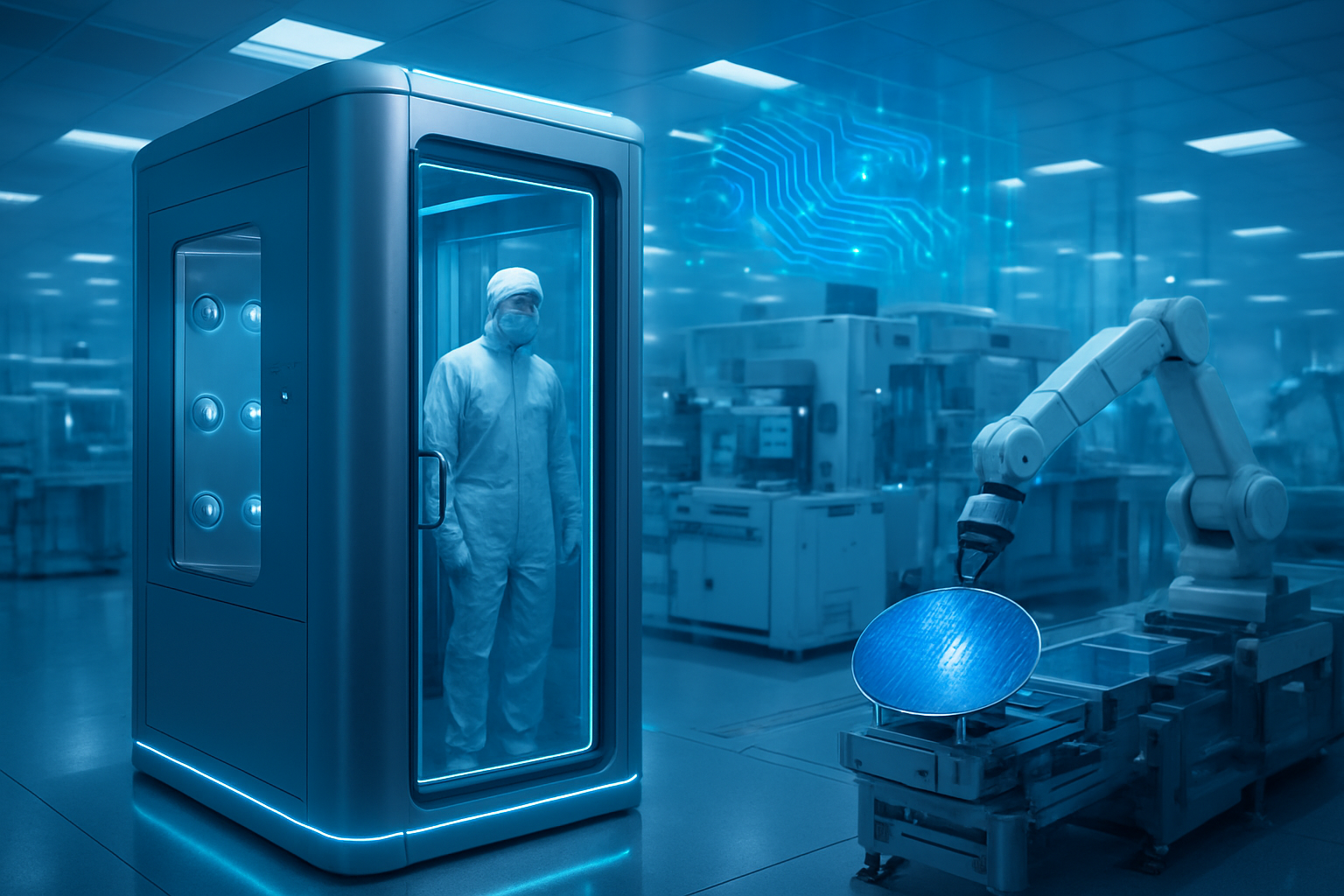
    At the heart of advanced semiconductor manufacturing lies the meticulous control of environmental contamination. Air showers are purpose-built transition chambers positioned at the entry points of cleanrooms, acting as a crucial barrier between less clean areas and the ultra-sensitive fabrication zones. Their function is deceptively simple yet profoundly effective: to forcefully remove particulate matter from personnel and materials before they enter critical processing areas. This is achieved through high-velocity jets of HEPA (High-Efficiency Particulate Air) or ULPA (Ultra-Low Penetration Air) filtered air, which effectively dislodge dust, skin flakes, and other mobile contaminants from cleanroom garments.

    These systems are vital for achieving and maintaining the stringent ISO cleanroom classifications (ee.g., ISO Class 1-5) mandated for advanced semiconductor processes such as photolithography, where even a single 0.3-micron particle can render a microchip unusable. Unlike passive contamination control methods, air showers actively decontaminate, significantly reducing the human-borne particulate load. Modern air showers often integrate smart controls, energy-saving features, and advanced filtration, representing a continuous evolution from simpler designs to highly sophisticated, automated systems that align with Industry 4.0 principles in semiconductor fabs, enhancing operational efficiency and minimizing human interaction.

    The semiconductor industry's consensus is clear: air showers are not merely supplementary equipment but a fundamental requirement for achieving high wafer yields and ensuring device reliability. Their efficacy directly translates into reduced product defects and significant cost savings, as contamination-related yield losses can be staggeringly expensive, with production downtime potentially exceeding $500,000 per hour. This makes the investment in advanced air shower technology a critical component of profit protection and quality assurance for chip manufacturers worldwide.

    A Tailwind for Cleanroom Innovators and Chipmakers Alike

    The accelerating growth in cleanroom technology and air showers presents a significant boon for a specialized cohort of companies. Manufacturers of cleanroom equipment and integrated solutions, such as Cleanroom Technology Holdings Ltd. (HKG: 02337) and Terra Universal, Inc. (Privately held), stand to benefit immensely from the increased demand for new fab construction and upgrades. Similarly, companies specializing in air shower systems, like Airtech Japan, Ltd. (TYO: 6291) or M+W Group (part of Exyte AG, Privately held), will see expanded market opportunities.

    For major semiconductor manufacturers such as Taiwan Semiconductor Manufacturing Company (TSMC) (NYSE: TSM), Samsung Electronics Co., Ltd. (KRX: 005930), and Intel Corporation (NASDAQ: INTC), the availability of advanced cleanroom infrastructure is not just a competitive advantage but an operational imperative. These companies are investing billions in new fabrication plants globally, and the robust growth in cleanroom technology ensures they can meet the stringent environmental demands of cutting-edge chip production. This development reinforces the strategic advantage of regions with strong cleanroom supply chains, potentially influencing future fab location decisions.

    While not a disruption to existing products, the advancements in cleanroom technology enable the disruption of previous manufacturing limitations. By facilitating the production of smaller, more complex chips with higher yields, these technologies empower semiconductor companies to push the boundaries of innovation. The competitive landscape will likely see increased R&D into more energy-efficient, modular, and AI-integrated cleanroom solutions, as companies vie to offer the most cost-effective and high-performance contamination control systems.

    The Foundation of a New Silicon Age

    The surging market for cleanroom technology and air showers is more than just a niche trend; it's a foundational element of the broader global semiconductor expansion, underpinning the very fabric of the emerging "Silicon Age." This growth directly supports geopolitical initiatives like the U.S. CHIPS and Science Act and similar efforts in Europe and Asia, aimed at bolstering domestic chip production and supply chain resilience. Without advanced cleanroom capabilities, the ambitious goals of these initiatives would be unattainable.

    The impacts are far-reaching: higher volumes of advanced chips will fuel innovation across industries, from more powerful AI models and pervasive IoT devices to safer autonomous vehicles and faster 5G networks. This proliferation of cutting-edge technology will, in turn, drive economic growth and enhance global connectivity. However, this expansion also brings potential concerns, primarily the immense capital expenditure required for state-of-the-art cleanroom facilities and their significant energy consumption. The demand for highly specialized talent to design, operate, and maintain these complex environments also presents a challenge.

    In comparison to previous milestones, the current focus on cleanroom technology echoes past breakthroughs in lithography or material science that enabled successive generations of chip miniaturization. Just as advancements in steppers and reticles were crucial for moving from micron-scale to nanometer-scale manufacturing, the sophisticated evolution of cleanroom environments, including air showers, is now indispensable for pushing into sub-5 nanometer nodes and advanced packaging technologies. It highlights a fundamental truth in semiconductor manufacturing: the environment is as critical as the process itself.

    The Horizon: Smarter, Greener Cleanrooms

    Looking ahead, the trajectory for cleanroom technology and air showers points towards increased integration with smart factory concepts and sustainability initiatives. Near-term developments are expected to include more sophisticated IoT sensors for real-time environmental monitoring, coupled with AI-powered analytics for predictive maintenance and optimized contamination control. This will allow for more dynamic adjustments to air flow, filtration, and personnel entry protocols, further enhancing efficiency and yield.

    Long-term, modular cleanroom designs are gaining traction, offering greater flexibility and scalability for rapid deployment and adaptation to evolving manufacturing needs. There will also be a strong emphasis on energy efficiency, with innovations in HVAC systems, fan filter units, and air shower designs aimed at reducing the substantial power footprint of these facilities. Experts predict a continuous drive towards fully automated cleanroom environments, minimizing human intervention and thereby reducing the primary source of contamination.

    The challenges remain significant: maintaining ultra-low contamination levels as chip features shrink further, managing the escalating costs of construction and operation, and developing greener technologies will be paramount. Nevertheless, the relentless pace of semiconductor innovation ensures that the cleanroom technology sector will continue to evolve, finding new ways to create the pristine conditions essential for the microchips of tomorrow.

    The Unseen Foundation of Tomorrow's Tech

    The escalating market growth of cleanroom technology, particularly air showers, stands as a clear and compelling indicator of the vigorous expansion underway in global semiconductor manufacturing. This isn't merely an ancillary market; it's the fundamental enabler for the production of the advanced microchips that power our increasingly digital world. The relentless demand for semiconductors, driven by emerging technologies, necessitates an equally relentless pursuit of pristine manufacturing environments.

    The significance of this development cannot be overstated. It underscores the critical role of contamination control in achieving high yields and quality in chip fabrication, directly impacting the availability and cost of everything from smartphones to supercomputers. As major chipmakers invest unprecedented sums in new fabs across the globe, the cleanroom industry, with air showers at its vanguard, is proving to be an indispensable partner in this ambitious undertaking.

    In the coming weeks and months, industry watchers should keenly observe continued investment trends in cleanroom infrastructure, innovations in energy-efficient designs, and the integration of AI and automation into contamination control systems. These developments will not only shape the future of semiconductor manufacturing but also determine the pace at which next-generation technologies permeate our lives. The humble air shower, often overlooked, is in fact a powerful symbol of humanity's ongoing quest for precision and progress.


    This content is intended for informational purposes only and represents analysis of current AI developments.

    TokenRing AI delivers enterprise-grade solutions for multi-agent AI workflow orchestration, AI-powered development tools, and seamless remote collaboration platforms.
    For more information, visit https://www.tokenring.ai/.

  • Palantir’s Q3 Triumph: A Landmark Validation for AI Software Deployment

    Palantir’s Q3 Triumph: A Landmark Validation for AI Software Deployment

    Palantir Technologies (NYSE: PLTR) has delivered a stunning third-quarter 2024 performance, reporting record revenue and its largest profit in company history, largely propelled by the surging adoption of its Artificial Intelligence Platform (AIP). Released on November 4, 2024, these results are not merely a financial success story for the data analytics giant but stand as a pivotal indicator of the successful deployment and profound market validation for enterprise-grade AI software solutions. The figures underscore a critical turning point where AI, once a realm of experimental promise, is now demonstrably delivering tangible, transformative value across diverse sectors.

    The company's robust financial health, characterized by a 30% year-over-year revenue increase to $726 million and a GAAP net income of $144 million, signals an accelerating demand for practical AI applications that solve complex real-world problems. This quarter's achievements solidify Palantir's position at the forefront of the AI revolution, showcasing a viable and highly profitable pathway for companies specializing in operational AI. It strongly suggests that the market is not just ready but actively seeking sophisticated AI platforms capable of driving significant efficiencies and strategic advantages.

    Unpacking the AI Engine: Palantir's AIP Breakthrough

    Palantir's Q3 2024 success is inextricably linked to the escalating demand and proven efficacy of its Artificial Intelligence Platform (AIP). While Palantir has long been known for its data integration and operational platforms like Foundry and Gotham, AIP represents a significant evolution, specifically designed to empower organizations to build, deploy, and manage AI models and applications at scale. AIP differentiates itself by focusing on the "last mile" of AI – enabling users, even those without deep technical expertise, to leverage large language models (LLMs) and other AI capabilities directly within their operational workflows. This involves integrating diverse data sources, ensuring data quality, and providing a secure, governed environment for AI model development and deployment.

    Technically, AIP facilitates the rapid deployment of AI solutions by abstracting away much of the underlying complexity. It offers a suite of tools for data integration, model training, evaluation, and deployment, all within a secure and compliant framework. What sets AIP apart from many generic AI development platforms is its emphasis on operationalization and decision-making in critical environments, particularly in defense, intelligence, and heavily regulated commercial sectors. Unlike previous approaches that often required extensive custom development and specialized data science teams for each AI use case, AIP provides a configurable and scalable architecture that allows for quicker iteration and broader adoption across an organization. For instance, its ability to reduce insurance underwriting time from weeks to hours or to aid in humanitarian de-mining operations in Ukraine highlights its practical, impact-driven capabilities, far beyond mere theoretical AI potential. Initial reactions from the AI research community and industry experts have largely focused on AIP's pragmatic approach to AI deployment, noting its success in bridging the gap between cutting-edge AI research and real-world operational challenges, particularly in sectors where data governance and security are paramount.

    Reshaping the AI Landscape: Implications for Industry Players

    Palantir's stellar Q3 performance, driven by AIP's success, has profound implications for a wide array of AI companies, tech giants, and startups. Companies that stand to benefit most are those focused on practical, deployable AI solutions that offer clear ROI, especially in complex enterprise and government environments. This includes other operational AI platform providers, data integration specialists, and AI consulting firms that can help organizations implement and leverage such powerful platforms. Palantir's results validate a market appetite for end-to-end AI solutions, rather than fragmented tools.

    The competitive implications for major AI labs and tech companies are significant. While hyperscalers like Amazon (NASDAQ: AMZN), Google (NASDAQ: GOOGL), and Microsoft (NASDAQ: MSFT) offer extensive AI infrastructure and foundational models, Palantir's success with AIP demonstrates the critical need for a robust application layer that translates raw AI power into specific, high-impact business outcomes. This could spur greater investment by tech giants into their own operational AI platforms or lead to increased partnerships and acquisitions of companies specializing in this domain. For startups, Palantir's validation of the operational AI market is a double-edged sword: it proves the market exists and is lucrative, but also raises the bar for entry, requiring solutions that are not just innovative but also secure, scalable, and capable of demonstrating immediate value. Potential disruption to existing products or services could arise for companies offering piecemeal AI solutions that lack the comprehensive, integrated approach of AIP. Palantir's strategic advantage lies in its deep expertise in handling sensitive data and complex workflows, positioning it uniquely in sectors where trust and compliance are paramount.

    Wider Significance: A New Era of Operational AI

    Palantir's Q3 2024 results fit squarely into the broader AI landscape as a definitive signal that the era of "operational AI" has arrived. This marks a shift from a focus on foundational model development and academic breakthroughs to the practical, real-world deployment of AI for critical decision-making and workflow automation. It underscores a significant trend where organizations are moving beyond experimenting with AI to actively integrating it into their core operations to achieve measurable business outcomes. The impacts are far-reaching: increased efficiency, enhanced decision-making capabilities, and the potential for entirely new operational paradigms across industries.

    This success also highlights the increasing maturity of the enterprise AI market. While concerns about AI ethics, data privacy, and job displacement remain pertinent, Palantir's performance demonstrates that companies are finding ways to implement AI responsibly and effectively within existing regulatory and operational frameworks. Comparisons to previous AI milestones, such as the rise of big data analytics or cloud computing, are apt. Just as those technologies transformed how businesses managed information and infrastructure, operational AI platforms like AIP are poised to revolutionize how organizations leverage intelligence to act. It signals a move beyond mere data insight to automated, intelligent action, a critical step in the evolution of AI from a theoretical concept to an indispensable operational tool.

    The Road Ahead: Future Developments in Operational AI

    The strong performance of Palantir's AIP points to several expected near-term and long-term developments in the operational AI space. In the near term, we can anticipate increased competition and innovation in platforms designed to bridge the gap between raw AI capabilities and practical enterprise applications. Companies will likely focus on enhancing user-friendliness, expanding integration capabilities with existing enterprise systems, and further specializing AI solutions for specific industry verticals. The "unrelenting AI demand" cited by Palantir suggests a continuous expansion of use cases, moving beyond initial applications to more complex, multi-agent AI workflows.

    Potential applications and use cases on the horizon include highly automated supply chain optimization, predictive maintenance across vast industrial networks, advanced cybersecurity threat detection and response, and sophisticated public health management systems. The integration of AI into government operations, as seen with the Maven Smart System contract, indicates a growing reliance on AI for national security and defense. However, challenges remain, primarily concerning data governance, ensuring AI interpretability and explainability, and addressing the ethical implications of autonomous decision-making. Experts predict a continued focus on "human-in-the-loop" AI systems that augment human intelligence rather than fully replace it, alongside robust frameworks for AI safety and accountability. The development of more sophisticated, domain-specific large language models integrated into operational platforms will also be a key area of growth.

    A Watershed Moment for Enterprise AI

    Palantir Technologies' exceptional third-quarter 2024 results represent a watershed moment in the history of enterprise AI. The key takeaway is clear: the market for operational AI software that delivers tangible, measurable value is not just emerging but is rapidly expanding and proving highly profitable. Palantir's AIP has demonstrated that sophisticated AI can be successfully deployed at scale across both commercial and government sectors, driving significant efficiencies and strategic advantages. This success validates the business model for AI platforms that focus on the practical application and integration of AI into complex workflows, moving beyond theoretical potential to concrete outcomes.

    This development's significance in AI history cannot be overstated; it marks a crucial transition from AI as a research curiosity or a niche tool to a fundamental pillar of modern enterprise operations. The long-term impact will likely see AI becoming as ubiquitous and essential as cloud computing or enterprise resource planning systems are today, fundamentally reshaping how organizations make decisions, manage resources, and interact with their environments. In the coming weeks and months, watch for other enterprise AI providers to highlight similar successes, increased M&A activity in the operational AI space, and further announcements from Palantir regarding AIP's expanded capabilities and customer base. This is a clear signal that the future of AI is not just intelligent, but also intensely operational.


    This content is intended for informational purposes only and represents analysis of current AI developments.

    TokenRing AI delivers enterprise-grade solutions for multi-agent AI workflow orchestration, AI-powered development tools, and seamless remote collaboration platforms.
    For more information, visit https://www.tokenring.ai/.
  • AI in Fintech Market Set to Explode, Projecting a Staggering US$ 70 Billion by 2033

    AI in Fintech Market Set to Explode, Projecting a Staggering US$ 70 Billion by 2033

    The financial technology (Fintech) landscape is on the cusp of a profound transformation, with Artificial Intelligence (AI) poised to drive unprecedented growth. Recent market projections indicate that the global AI in Fintech market is expected to surge to an astonishing US$ 70.3 billion by 2033. This represents a monumental leap from its current valuation, underscoring AI's pivotal role in reshaping the future of banking, investment, and financial services worldwide.

    This explosive growth is not merely a forecast but a reflection of the deep integration of AI across critical financial functions. From fortifying defenses against sophisticated fraud to crafting hyper-personalized banking experiences and revolutionizing algorithmic trading, AI is rapidly becoming an indispensable backbone of the financial sector. The immediate significance of this projection lies in its signal to financial institutions: adapt or risk obsolescence. AI is no longer a futuristic concept but a present-day imperative, driving efficiency, enhancing security, and unlocking new avenues for revenue and customer engagement.

    AI's Technical Revolution in Finance: Beyond Automation

    The projected ascent of the AI in Fintech market is underpinned by concrete technical advancements that are fundamentally altering how financial operations are conducted. At its core, AI's transformative power in finance stems from its ability to process, analyze, and derive insights from vast datasets at speeds and scales unattainable by human analysts or traditional rule-based systems. This capability is particularly evident in three critical areas: fraud detection, personalized banking, and algorithmic trading.

    In fraud detection, AI leverages sophisticated machine learning (ML) algorithms, including neural networks and deep learning models, to identify anomalous patterns in real-time transaction data. Unlike older, static rule-based systems that could be easily bypassed by evolving fraud tactics, AI systems continuously learn and adapt. They analyze millions of data points—transaction amounts, locations, times, recipient information, and historical user behavior—to detect subtle deviations that signify potential fraudulent activity. For instance, a sudden large international transaction from an account that typically makes small, local purchases would immediately flag the AI, even if it falls within a user's spending limit. This proactive, adaptive approach significantly reduces false positives while catching a higher percentage of genuine fraud, leading to substantial savings for institutions and enhanced security for customers. Companies like Mastercard (NYSE: MA) and IBM (NYSE: IBM) have already collaborated to integrate IBM's Watson AI into Mastercard's fraud management tools, demonstrating this shift.

    Personalized banking, once a niche offering, is becoming a standard expectation thanks to AI. AI-powered analytics process customer data—spending habits, financial goals, risk tolerance, and life events—to offer tailored products, services, and financial advice. This includes everything from customized loan offers and investment portfolio recommendations to proactive alerts about potential overdrafts or savings opportunities. Natural Language Processing (NLP) drives intelligent chatbots and virtual assistants, providing 24/7 customer support, answering complex queries, and even executing transactions, thereby enhancing customer experience and loyalty. The technical capability here lies in AI's ability to segment customers dynamically and predict their needs, moving beyond generic demographic-based recommendations to truly individual financial guidance.

    Algorithmic trading has been revolutionized by AI, moving beyond simple quantitative models to incorporate predictive analytics and reinforcement learning. AI algorithms can analyze market sentiment from news feeds, social media, and economic reports, identify complex arbitrage opportunities, and execute high-frequency trades with unparalleled speed and precision. These systems can adapt to changing market conditions, learn from past trading outcomes, and optimize strategies in real-time, leading to potentially higher returns and reduced risk. For example, AI can identify intricate correlations between seemingly unrelated assets or predict market movements based on micro-fluctuations that human traders would miss. Goldman Sachs (NYSE: GS) Investment Group's launch of Marquee, an AI-powered trading platform, exemplifies this technical shift towards more sophisticated, AI-driven trading strategies.

    These advancements collectively represent a paradigm shift from traditional, reactive financial processes to proactive, intelligent, and adaptive systems. The difference lies in AI's capacity for continuous learning, pattern recognition in unstructured data, and real-time decision-making, which fundamentally surpasses the limitations of previous rule-based or human-centric approaches.

    Competitive Battleground: Who Stands to Gain (and Lose)

    The projected boom in the AI in Fintech market is setting the stage for an intense competitive landscape, with significant implications for established tech giants, innovative startups, and traditional financial institutions alike. Companies that effectively harness AI will solidify their market positions, while those that lag risk significant disruption.

    Tech giants like Google (NASDAQ: GOOGL), Amazon (NASDAQ: AMZN), and Microsoft (NASDAQ: MSFT) are poised to be major beneficiaries. Their cloud computing platforms (Google Cloud, AWS, Azure) provide the essential infrastructure for AI development and deployment in finance. Financial institutions are increasingly migrating their data and operations to these cloud environments, often leveraging the AI services offered by these providers. Recent partnerships, such as UniCredit's 10-year MoU with Google Cloud for digital transformation and Apex Fintech Solutions' collaboration with Google Cloud to modernize capital markets technology, underscore this trend. These tech behemoths also possess vast R&D capabilities in AI, allowing them to develop and offer advanced AI tools, from specialized machine learning models to comprehensive AI platforms, directly to the financial sector.

    Specialized AI Fintech startups are also critical players, often focusing on niche solutions that can be rapidly scaled. These agile companies are developing innovative AI applications for specific problems, such as hyper-personalized lending, AI-driven credit scoring for underserved populations, or advanced regulatory compliance (RegTech) solutions. Their ability to innovate quickly and often partner with or be acquired by larger financial institutions or tech companies positions them for significant growth. The competitive implication here is that traditional banks that fail to innovate internally will increasingly rely on these external partners or risk losing market share to more technologically advanced competitors, including challenger banks built entirely on AI.

    Traditional financial institutions (e.g., banks, asset managers, insurance companies) face a dual challenge and opportunity. They possess invaluable customer data and established trust, but often struggle with legacy IT infrastructure and slower adoption cycles. Those that successfully integrate AI into their core operations—as exemplified by Goldman Sachs' Marquee platform or Sage's plans to use AWS AI services for accounting—will gain significant strategic advantages. These advantages include reduced operational costs through automation, enhanced customer satisfaction through personalization, superior risk management, and the ability to develop new, data-driven revenue streams. Conversely, institutions that resist AI adoption risk becoming less competitive, losing customers to more agile fintechs, and struggling with higher operational costs and less effective fraud prevention. The market positioning will increasingly favor institutions that can demonstrate robust AI capabilities and a clear AI strategy.

    The potential for disruption is immense. AI can disintermediate traditional financial services, allowing new entrants to offer superior, lower-cost alternatives. For example, AI-driven robo-advisors can provide investment management at a fraction of the cost of human advisors, potentially disrupting wealth management. Similarly, AI-powered credit scoring can challenge traditional lending models, expanding access to credit while also requiring traditional lenders to re-evaluate their own risk assessment methodologies. The strategic advantage will ultimately lie with companies that can not only develop powerful AI but also seamlessly integrate it into their existing workflows and customer experiences, demonstrating a clear return on investment.

    The Broader AI Landscape: Reshaping Finance and Society

    The projected growth of AI in Fintech is not an isolated phenomenon but a critical component of the broader AI revolution, reflecting deeper trends in data utilization, automation, and intelligent decision-making across industries. This financial transformation has significant implications for the wider economy, societal structures, and even ethical considerations.

    Within the broader AI landscape, the financial sector's embrace of AI highlights the increasing maturity and practical application of advanced machine learning techniques. The ability of AI to handle massive, complex, and often sensitive financial data demonstrates a growing trust in these technologies. This trend aligns with the broader push towards data-driven decision-making seen in healthcare, manufacturing, retail, and logistics. The financial industry, with its stringent regulatory requirements and high stakes, serves as a powerful proving ground for AI's robustness and reliability.

    The impacts extend beyond mere efficiency gains. AI in Fintech can foster greater financial inclusion by enabling new credit scoring models that assess individuals with limited traditional credit histories. By analyzing alternative data points—such as utility payments, mobile phone usage, or even social media behavior (with appropriate ethical safeguards)—AI can provide access to loans and financial services for previously underserved populations, particularly in developing economies. This has the potential to lift millions out of poverty and stimulate economic growth.

    However, the rapid adoption of AI also brings potential concerns. Job displacement is a significant worry, as AI automates many routine financial tasks, from data entry to customer service and even some analytical roles. While AI is expected to create new jobs requiring different skill sets, a societal challenge lies in managing this transition and retraining the workforce. Furthermore, the increasing reliance on AI for critical financial decisions raises questions about algorithmic bias. If AI models are trained on biased historical data, they could perpetuate or even amplify discriminatory practices in lending, insurance, or credit scoring. Ensuring fairness, transparency, and accountability in AI algorithms is paramount, necessitating robust regulatory oversight and ethical AI development frameworks.

    Compared to previous AI milestones, such as the early expert systems or the rise of rule-based automation, today's AI in Fintech represents a leap in cognitive capabilities. It's not just following rules; it's learning, adapting, and making probabilistic decisions. This is akin to the shift from simple calculators to sophisticated predictive analytics engines. The sheer scale of data processing and the complexity of patterns AI can discern mark a new era, moving from assistive technology to truly transformative intelligence. The current date of 11/5/2025 places us firmly in the midst of this accelerating adoption curve, with many of the recent announcements from 2024 and early 2025 indicating a strong, continuing trend.

    The Road Ahead: Innovations and Challenges on the Horizon

    As the AI in Fintech market hurtles towards its US$ 70.3 billion valuation by 2033, the horizon is dotted with anticipated innovations and formidable challenges that will shape its trajectory. Experts predict a future where AI becomes even more deeply embedded, moving beyond current applications to power truly autonomous and predictive financial ecosystems.

    In the near-term, we can expect significant advancements in hyper-personalized financial advisory services. AI will move beyond recommending products to proactively managing personal finances, anticipating needs, and even executing financial decisions on behalf of users (with explicit consent and robust safeguards). This could manifest as AI agents that dynamically rebalance investment portfolios based on market shifts and personal goals, or automatically optimize spending and savings to meet future objectives. The integration of AI with advanced biometric authentication and blockchain technologies is also on the horizon, promising enhanced security and immutable transaction records, further bolstering trust in digital financial systems.

    Generative AI, specifically Large Language Models (LLMs) and Small Language Models (SLMs), will play an increasingly vital role. Beyond chatbots, LLMs will be used to analyze complex financial documents, generate market reports, assist in due diligence for mergers and acquisitions, and even draft legal contracts, significantly reducing the time and cost associated with these tasks. Sage's plans to use AWS AI services for tailored LLMs in accounting is a prime example of this emerging application.

    Looking further ahead, quantum computing's integration with AI could unlock unprecedented capabilities in financial modeling, risk assessment, and cryptographic security, though this remains a longer-term prospect. AI-powered decentralized finance (DeFi) applications could also emerge, offering peer-to-peer financial services with enhanced transparency and efficiency, potentially disrupting traditional banking structures even further.

    However, the path forward is not without its challenges. Regulatory frameworks must evolve rapidly to keep pace with AI's advancements, addressing issues of data privacy, algorithmic accountability, market manipulation, and consumer protection. The development of robust explainable AI (XAI) systems is crucial, especially in finance, where understanding why an AI made a particular decision is vital for compliance and trust. Cybersecurity threats will also become more sophisticated, requiring continuous innovation in AI-powered defense mechanisms. Finally, the talent gap in AI expertise within the financial sector remains a significant hurdle, necessitating massive investment in education and training. Experts predict that successful navigation of these challenges will determine which institutions truly thrive in the AI-driven financial future.

    The Dawn of Intelligent Finance: A Comprehensive Wrap-up

    The projected growth of the global AI in Fintech market to US$ 70.3 billion by 2033 marks a definitive turning point in the history of finance. This isn't merely an incremental improvement but a fundamental re-architecture of how financial services are conceived, delivered, and consumed. The key takeaways are clear: AI is no longer optional; it is the strategic imperative for survival and growth in the financial sector. Its prowess in fraud detection, personalized banking, and algorithmic trading is already transforming operations, driving efficiencies, and enhancing customer experiences, laying the groundwork for an even more intelligent future.

    This development holds immense significance in the broader narrative of AI history. It represents a mature application of AI in one of the most regulated and critical industries, demonstrating the technology's capability to handle high-stakes environments with precision and adaptability. The shift from rule-based systems to continuously learning, adaptive AI models signifies a leap in artificial intelligence's practical utility, moving from theoretical promise to tangible, economic impact. This milestone underscores AI's role not just as a tool, but as a core engine of innovation and competitive differentiation.

    In the long term, the pervasive integration of AI is expected to democratize access to sophisticated financial tools, foster greater financial inclusion globally, and create a more resilient and responsive financial system. However, realizing this positive vision hinges on proactive engagement with the accompanying challenges: developing ethical AI, establishing clear regulatory guardrails, ensuring data privacy, and upskilling the workforce.

    In the coming weeks and months, watch for continued strategic partnerships between tech giants and financial institutions, further announcements of AI-powered product launches, and evolving regulatory discussions around AI governance in finance. The journey towards an AI-first financial world is well underway, and its unfolding will undoubtedly be one of the most compelling stories of the decade.


    This content is intended for informational purposes only and represents analysis of current AI developments.

    TokenRing AI delivers enterprise-grade solutions for multi-agent AI workflow orchestration, AI-powered development tools, and seamless remote collaboration platforms.
    For more information, visit https://www.tokenring.ai/.

  • The Trillion-Dollar Race: AI Supercharge Fuels Unprecedented Semiconductor Investment Boom

    The Trillion-Dollar Race: AI Supercharge Fuels Unprecedented Semiconductor Investment Boom

    The global semiconductor sector is in the midst of an unprecedented investment boom, driven primarily by the insatiable demand stemming from the Artificial Intelligence (AI) revolution. This "AI Supercycle" is not merely a cyclical uptick but a fundamental reorientation of the industry, propelling massive capital expenditures, fostering strategic acquisitions, and catalyzing a global scramble for enhanced manufacturing capacity and resilient supply chains. With projections indicating a market valuation reaching $1 trillion by 2030, and potentially over $2 trillion by 2032, the immediate significance of these trends is clear: semiconductors are the bedrock of the AI era, and nations and corporations alike are pouring resources into securing their position in this critical technological frontier.

    This intense period of expansion and innovation reflects a global recognition of semiconductors as a strategic asset, crucial for economic growth, national security, and technological leadership. From advanced AI accelerators to high-bandwidth memory, the demand for cutting-edge chips is reshaping investment priorities, forcing companies to commit colossal sums to research, development, and the construction of state-of-the-art fabrication facilities across continents. The ripple effects of these investments are profound, influencing everything from geopolitical alliances to the pace of technological advancement, and setting the stage for a new era of digital transformation.

    Unprecedented Capital Inflows Drive Global Fab Expansion and Technological Leaps

    The current investment landscape in the semiconductor industry is characterized by staggering capital expenditures and an aggressive build-out of manufacturing capacity worldwide, fundamentally driven by the escalating requirements of AI and high-performance computing (HPC). After a strong rebound of 19-19.1% growth in 2024, pushing global sales to approximately $627.6 billion, the market is projected to expand by another 11-15% in 2025, reaching an estimated $697 billion. This growth is predominantly fueled by the Memory and Logic Integrated Circuit segments, with High-Bandwidth Memory (HBM) alone experiencing an astounding 200% growth in 2024 and an anticipated 70% increase in 2025, directly attributable to AI demand.

    To meet this surging demand, the industry is slated to allocate approximately $185 billion to capital expenditures in 2025, leading to a 7% expansion in global manufacturing capacity. The semiconductor manufacturing equipment market is forecast to reach $125.5 billion in sales in 2025. Major players are making colossal commitments: Micron Technology (NASDAQ: MU) plans a $200 billion investment in the U.S., including new leading-edge fabs in Idaho and New York, aimed at establishing end-to-end advanced HBM packaging capabilities. Intel (NASDAQ: INTC) is similarly constructing three new semiconductor fabs in the United States, while GlobalFoundries (NASDAQ: GFS) has announced a €1.1 billion expansion of its Dresden, Germany site, targeting over one million wafers per year by late 2028, supported by the European Chips Act.

    In Asia, Taiwan Semiconductor Manufacturing Company (TSMC) (NYSE: TSM) is doubling its Chip-on-Wafer-on-Substrate (CoWoS) advanced packaging capacity in both 2024 and 2025, with monthly capacity projected to surge from 35,000-40,000 wafers to 80,000. Japan has pledged significant subsidies, totaling ¥1.2 trillion (about $7.8 billion), for TSMC's new facilities in Kumamoto. Globally, 97 new high-volume fabs are planned between 2023 and 2025, with 32 expected to commence operations in 2025. This unprecedented wave of investment, heavily bolstered by government incentives like the U.S. CHIPS Act and similar initiatives in Europe and Asia, underscores a global imperative to localize manufacturing and strengthen semiconductor supply chains, diverging significantly from previous cycles that often prioritized cost-efficiency over geographical diversification.

    This current wave of investment differs from previous cycles primarily in its AI-centric nature and the geopolitical impetus behind it. While past expansions were often driven by consumer electronics or mobile computing, the "AI Supercycle" demands specialized hardware—advanced GPUs, HBM, and high-performance logic—that requires cutting-edge process nodes and complex packaging technologies. Initial reactions from the AI research community and industry experts highlight the criticality of hardware innovation alongside algorithmic breakthroughs, emphasizing that the future of AI is intrinsically linked to the ability to produce these sophisticated chips at scale. The sheer volume and strategic nature of these investments signal a profound shift in how the world views and funds semiconductor development, moving it to the forefront of national strategic interests.

    Competitive Landscape Heats Up: Beneficiaries, Disruptions, and Strategic Maneuvers

    The current investment trends are reshaping the competitive landscape, creating clear beneficiaries, potential disruptions, and driving strategic maneuvers among AI companies, tech giants, and startups alike. Companies at the forefront of AI chip design and manufacturing, such as NVIDIA (NASDAQ: NVDA), AMD (NASDAQ: AMD), and TSMC (NYSE: TSM), stand to benefit immensely from the surging demand for AI accelerators and advanced packaging. NVIDIA, with its dominant position in AI GPUs, continues to see unprecedented orders, while AMD is rapidly expanding its MI series accelerators, competing directly in the high-growth AI server market. TSMC, as the leading foundry for these advanced chips, is experiencing overwhelming demand for its cutting-edge process nodes and CoWoS packaging technology.

    The competitive implications extend to memory manufacturers like Micron Technology (NASDAQ: MU) and Samsung Electronics (KRX: 005930), which are heavily investing in HBM production to cater to the memory-intensive requirements of AI workloads. Intel (NASDAQ: INTC), traditionally a CPU powerhouse, is aggressively pushing its foundry services and AI chip portfolio (e.g., Gaudi accelerators) to regain market share and position itself as a comprehensive provider in the AI era. These investments are not just about capacity; they are about securing technological leadership in critical components that define AI performance.

    Strategic acquisitions are also playing a crucial role in consolidating market positions and expanding technological capabilities. In October 2025, NXP Semiconductors (NASDAQ: NXPI) completed acquisitions of Aviva Links and Kinara, Inc., bolstering its offerings in automotive networking, in-vehicle connectivity, and industrial & IoT markets—all sectors increasingly integrating AI. Similarly, onsemi (NASDAQ: ON) finalized its acquisition of Vcore power technologies from Aura Semiconductor, strengthening its power management portfolio specifically for AI data center applications. These targeted acquisitions allow companies to quickly integrate specialized IP and talent, enhancing their product roadmaps and competitive edge.

    Furthermore, geopolitical factors are driving significant consolidation and strategic shifts, particularly in China. In September 2025, China's two largest foundry companies, Hua Hong Semiconductor (SSE: 688347) and Semiconductor Manufacturing International Corp. (SMIC) (HKEX: 00981), initiated substantial internal acquisitions to create "national champions" and streamline their fragmented supply chains amidst U.S. export controls. This strategic imperative aims to build self-sufficiency and foster integrated solutions across the semiconductor value chain, potentially disrupting existing global supply dynamics and forcing other nations to further localize their manufacturing efforts to mitigate risks. The market positioning and strategic advantages are increasingly tied not just to technological prowess, but also to supply chain resilience and national strategic alignment.

    The Broader Canvas: Geopolitics, Supply Chains, and the AI Epoch

    The current investment surge in the semiconductor sector transcends mere economic activity; it is a profound realignment within the broader AI landscape, carrying significant geopolitical and societal implications. This "AI Supercycle" is not just about faster chips; it's about enabling the next generation of AI models, from large language models (LLMs) to advanced robotics and autonomous systems, which will redefine industries and human-computer interaction. The sheer demand for computational power has made hardware breakthroughs as critical as algorithmic advancements, firmly embedding semiconductor capabilities at the core of national technological competitiveness.

    The impacts are wide-ranging. Economically, the industry's growth contributes substantially to global GDP, creating high-value jobs and fostering innovation ecosystems. However, potential concerns include the immense capital intensity, which could lead to market concentration and erect high barriers to entry for new players. The environmental footprint of fab construction and operation, particularly water and energy consumption, is also a growing concern that requires sustainable solutions. Geopolitically, the race for semiconductor supremacy has intensified, with nations like the U.S. (CHIPS Act), Europe (European Chips Act), Japan, and India offering massive subsidies to attract manufacturing, aiming to diversify supply chains away from perceived risks and achieve technological sovereignty. This trend marks a significant departure from the globally integrated, just-in-time supply chains of the past, signaling a new era of regionalized production and strategic independence.

    Comparisons to previous AI milestones reveal a unique characteristic of this epoch: the hardware constraint is more pronounced than ever. While earlier AI advancements focused on algorithmic improvements and data availability, the current frontier of generative AI and foundation models is bottlenecked by the availability of specialized, high-performance chips. This makes the current investment cycle a critical juncture, as it determines the physical infrastructure upon which the future of AI will be built. The global push for localization and resilience in semiconductor manufacturing is a direct response to past supply chain disruptions and escalating geopolitical tensions, signifying a long-term shift in global industrial policy.

    The Road Ahead: Innovations, Challenges, and Expert Predictions

    Looking ahead, the semiconductor sector is poised for continuous, rapid evolution, driven by the relentless demands of AI and emerging technologies. In the near term, we can expect continued significant capital expenditures, particularly in advanced packaging solutions like CoWoS and next-generation HBM, as these are critical bottlenecks for AI accelerator performance. The race to develop and mass-produce chips at 2nm and even 1.4nm process nodes will intensify, with companies like TSMC, Samsung, and Intel investing heavily in research and development to achieve these technological feats. We will also see further integration of AI into chip design and manufacturing processes themselves, leading to more efficient and complex chip architectures.

    Potential applications on the horizon are vast, ranging from even more powerful and efficient AI data centers, enabling real-time processing of massive datasets, to pervasive AI at the edge in autonomous vehicles, smart cities, and advanced robotics. The convergence of AI with other transformative technologies like quantum computing and advanced materials science will likely spawn entirely new categories of semiconductor devices. For instance, neuromorphic computing, which mimics the human brain's structure, holds promise for ultra-low-power AI, while photonics integration could revolutionize data transfer speeds within and between chips.

    However, significant challenges need to be addressed. The global talent shortage in semiconductor engineering and manufacturing remains a critical bottleneck, necessitating increased investment in education and workforce development, as evidenced by cooperation between Vietnam and Taiwan (China) in this area. Managing the escalating power consumption of AI chips and data centers is another pressing concern, driving innovation in energy-efficient architectures and cooling technologies. Furthermore, geopolitical tensions and export controls will continue to shape investment decisions and supply chain strategies, potentially leading to further fragmentation and regionalization of the industry. Experts predict that the focus will increasingly shift from simply increasing transistor density to optimizing chip architectures for specific AI workloads, alongside advancements in heterogeneous integration and system-in-package solutions. The next frontier will likely involve a holistic approach to chip design, moving beyond individual components to integrated, AI-optimized systems.

    A New Era For Silicon: The AI Supercycle's Defining Moment

    In summary, the global semiconductor sector is undergoing a transformative period marked by unprecedented investment, rapid technological advancement, and significant geopolitical recalibration. The "AI Supercycle" has firmly established itself as the primary catalyst, driving massive capital expenditures into new fabrication plants, advanced packaging capabilities, and cutting-edge process nodes. Market growth projections, reaching a potential $2 trillion valuation by 2032, underscore the long-term confidence in this sector's pivotal role in the digital economy. Strategic acquisitions and partnerships are consolidating market power and enhancing specialized capabilities, while government incentives are actively reshaping global supply chains towards greater resilience and regional self-sufficiency.

    This development's significance in AI history cannot be overstated. It represents a defining moment where the physical infrastructure—the silicon—is recognized as equally crucial as the algorithms and data for pushing the boundaries of artificial intelligence. The shift from a cost-driven, globally optimized supply chain to a geopolitically influenced, regionally diversified model signifies a permanent change in how semiconductors are produced and traded. The implications for technological leadership, economic stability, and national security are profound and long-lasting.

    In the coming weeks and months, industry observers should closely watch the progress of major fab constructions and expansions, particularly those supported by national chip acts. Further strategic acquisitions aimed at consolidating specialized technologies or securing critical intellectual property are also likely. Additionally, the evolution of advanced packaging solutions, the emergence of new memory technologies, and the continued efforts to address the talent gap and power consumption challenges will be key indicators of the industry's trajectory. The semiconductor industry is not just building chips; it is building the foundational infrastructure for the AI-driven future, making its current trajectory one of the most critical stories in technology today.


    This content is intended for informational purposes only and represents analysis of current AI developments.

    TokenRing AI delivers enterprise-grade solutions for multi-agent AI workflow orchestration, AI-powered development tools, and seamless remote collaboration platforms.
    For more information, visit https://www.tokenring.ai/.

  • AI Revolutionizes Pharma: Market Soars Towards $65 Billion by 2033, Promising a New Era of Medicine

    AI Revolutionizes Pharma: Market Soars Towards $65 Billion by 2033, Promising a New Era of Medicine

    The pharmaceutical industry is on the cusp of a profound transformation, driven by the accelerating integration of Artificial Intelligence (AI). Projections indicate that the global AI in pharmaceutical market is set to explode, reaching an astounding valuation of over $65 billion by 2033. This represents not merely a significant market expansion but a fundamental shift in how drugs are discovered, developed, and delivered, heralding an era of unprecedented efficiency and personalized care.

    This projected growth underscores a critical turning point where advanced computational power and sophisticated algorithms are becoming indispensable tools in the fight against disease. The promise of AI to drastically cut down the time and cost associated with drug development, coupled with its ability to unlock novel therapeutic pathways, is attracting massive investment and fostering groundbreaking collaborations across the life sciences and technology sectors.

    The Algorithmic Engine Driving Pharmaceutical Innovation

    The journey to a $65 billion market is paved with remarkable technical advancements and strategic applications of AI across the entire pharmaceutical value chain. At its core, AI is revolutionizing drug discovery and design. Deep learning models and Generative Adversarial Networks (GANs) are now capable of de novo designing drug molecules, generating optimized molecular structures, and predicting novel compounds with specific pharmacological and safety profiles. This is a significant departure from traditional high-throughput screening methods, which are often time-consuming and resource-intensive, yielding a high failure rate. Companies like Exscientia, with its Centaur Chemist platform, have already demonstrated the ability to rapidly progress AI-designed cancer drugs into clinical trials, showcasing the speed and precision that AI brings. Insilico Medicine, another leader, leverages its Pharma.AI platform for end-to-end drug discovery, particularly focusing on aging research with a robust pipeline.

    Beyond initial discovery, AI's technical capabilities extend deeply into preclinical testing, clinical trials, and even manufacturing. Machine learning (ML) algorithms analyze complex datasets to identify molecular properties, predict drug-target interactions, and determine optimal dosages with greater accuracy than ever before. Natural Language Processing (NLP) and Large Language Models (LLMs) are sifting through vast biomedical literature, clinical trial records, and omics data to uncover hidden connections between existing drugs and new disease indications, accelerating drug repurposing efforts. This differs from previous approaches by moving from hypothesis-driven research to data-driven discovery, where AI can identify patterns and insights that human researchers might miss. The AI research community and industry experts have reacted with a mix of excitement and cautious optimism, recognizing the immense potential while also acknowledging the need for robust validation and ethical considerations. The development of "Lab in a Loop" systems, integrating generative AI directly into iterative design and testing cycles, exemplifies the cutting-edge of this integration, promising to further compress development timelines.

    Reshaping the Competitive Landscape: Winners and Disruptors

    The surge in AI adoption within pharmaceuticals is profoundly reshaping the competitive landscape, creating immense opportunities for both established tech giants and nimble AI-first biotech startups, while posing potential disruptions for those slow to adapt. Companies specializing in AI-driven drug discovery, such as BenevolentAI, which integrates vast biomedical datasets with AI to accelerate drug discovery through its Knowledge Graph, and Recursion Pharmaceuticals, which industrializes drug discovery via an AI-enabled human biology map, stand to benefit immensely. Atomwise Inc., a pioneer in AI-driven small molecule discovery with its AtomNet platform, is also positioned for significant growth.

    Major pharmaceutical companies are not merely observing this trend; they are actively engaging through strategic partnerships, acquisitions, and substantial internal investments. Pfizer (NYSE: PFE), for instance, has partnered with IBM Watson (NYSE: IBM) for drug discovery in immuno-oncology and integrates AI into its clinical trials. Sanofi (NASDAQ: SNY) has invested in the plai platform with Aily Labs and collaborated with Insilico Medicine. Novartis (NYSE: NVS) is extensively using AI across its projects, collaborating with tech titans like Microsoft and NVIDIA (NASDAQ: NVDA). These collaborations highlight a symbiotic relationship where pharma giants provide domain expertise and resources, while AI startups bring cutting-edge computational power. The competitive implications are clear: companies that effectively integrate AI will gain significant strategic advantages in speed to market, cost efficiency, and the ability to tackle previously intractable diseases. This could disrupt traditional R&D models, making drug development more agile and less reliant on lengthy, expensive empirical testing.

    Broader Implications and Societal Impact

    The projected growth of AI in the pharmaceutical industry to over $65 billion by 2033 is a pivotal development within the broader AI landscape, aligning with the trend of AI permeating critical sectors. This integration fits into the larger narrative of AI moving from theoretical research to practical, high-impact applications. The implications are far-reaching: from accelerating the discovery of treatments for rare diseases to making personalized medicine a widespread reality. AI's ability to analyze genomic, proteomic, and clinical data at scale promises therapies tailored to individual patient profiles, minimizing adverse effects and maximizing efficacy.

    However, this transformative potential is not without its concerns. Ethical considerations surrounding data privacy, algorithmic bias in patient selection or drug design, and the transparency of AI decision-making processes are paramount. Regulatory frameworks will need to evolve rapidly to keep pace with these technological advancements, ensuring patient safety and equitable access. Compared to previous AI milestones, such as DeepMind's AlphaFold's breakthrough in protein structure prediction, the current phase in pharma represents the critical transition from foundational scientific discovery to direct clinical and commercial application. The impact on public health could be monumental, leading to a significant reduction in healthcare costs due to more efficient drug development and more effective treatments, ultimately improving global health outcomes.

    The Horizon: Future Developments and Uncharted Territories

    Looking ahead, the next decade promises even more sophisticated applications and integrations of AI in pharmaceuticals. Near-term developments are expected to focus on refining existing AI platforms for greater accuracy and speed, particularly in areas like de novo molecular design and predictive toxicology. The increasing use of generative AI for designing not just molecules, but entire biological systems or therapeutic modalities, is on the horizon. Long-term, experts predict the emergence of fully autonomous "AI labs" capable of conducting iterative cycles of design, synthesis, and testing with minimal human intervention, further accelerating the pace of discovery.

    Potential applications on the horizon include AI-driven smart manufacturing facilities that can adapt production based on real-time demand and supply chain dynamics, and advanced pharmacovigilance systems capable of predicting adverse drug reactions before they occur. Challenges that need to be addressed include the integration of disparate data sources, the development of explainable AI models to build trust among clinicians and regulators, and overcoming the high computational demands of complex AI algorithms. Experts predict a future where AI is not just an assistant but a co-creator in drug development, leading to a continuous pipeline of innovative therapies and a fundamental shift in how healthcare is delivered.

    A New Chapter in Medical History

    The projected growth of the AI in pharmaceutical market to over $65 billion by 2033 is more than a financial forecast; it marks the beginning of a new chapter in medical history. The key takeaways are clear: AI is poised to dramatically reduce the time and cost of bringing new drugs to market, enable truly personalized medicine, and fundamentally reshape the competitive dynamics of the pharmaceutical industry. This development's significance in AI history lies in its demonstration of AI's capability to tackle some of humanity's most complex and critical challenges—those related to health and disease—with unprecedented efficacy.

    As we move forward, the long-term impact will be measured not just in market value, but in lives saved, diseases cured, and the overall improvement of human well-being. What to watch for in the coming weeks and months are continued announcements of strategic partnerships, breakthroughs in AI-designed drug candidates entering later-stage clinical trials, and the evolution of regulatory guidelines to accommodate these transformative technologies. The fusion of AI and pharmaceuticals is set to redefine the boundaries of what is possible in medicine, promising a healthier future for all.


    This content is intended for informational purposes only and represents analysis of current AI developments.

    TokenRing AI delivers enterprise-grade solutions for multi-agent AI workflow orchestration, AI-powered development tools, and seamless remote collaboration platforms. For more information, visit https://www.tokenring.ai/.